



Octanoic acid
Based on 3 publication(s) in Google Scholar
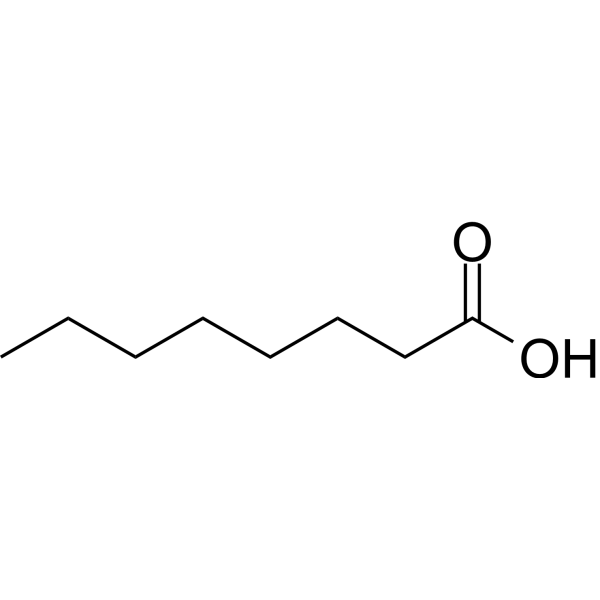
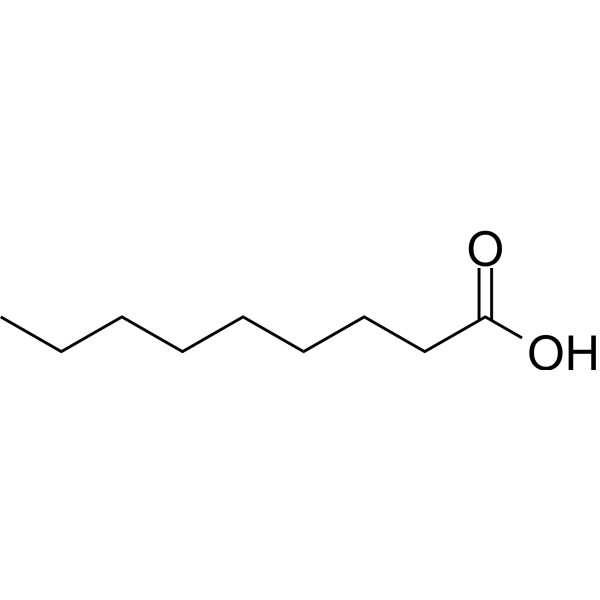
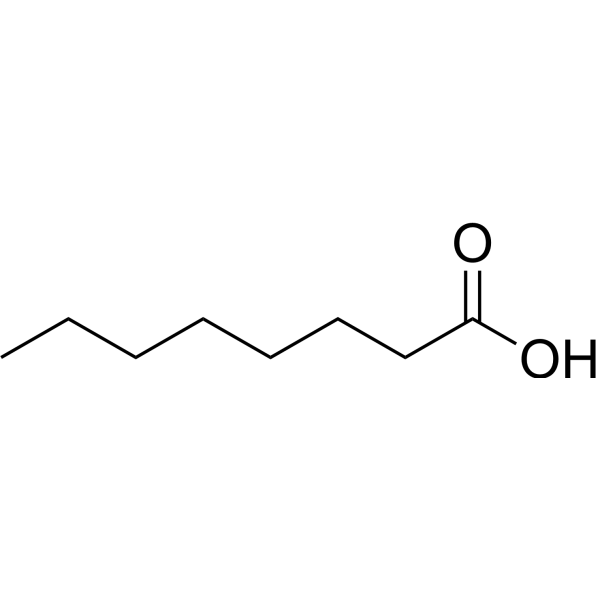
Octanoic acid (Caprylic acid) is an oily liquid with a slightly unpleasant rancid taste and used commercially in the production of esters used in perfumery and also in the manufacture of dyes. Octanoic acid is also a tremor-suppressing agent.
For research use only. We do not sell to patients.
- Purity : 99.68%
- CAS No.: 124-07-2
- Formula: C8H16O2
- Molecular Weight:144.21
-
Storage:
Store at room temperature 3 years.
In solvent -80°C, 2 years , -20°C, 1 year

To place orders, for customer services and technical support, please contact: MedChemExpress USA
Tel: 609-228-6898 E-mail: [email protected] [email protected]


-
 Biological Activity
-
Chemical Information
-
Solvent & Solubility
- Purity & Documentation
- References
-
 Help & FAQs


Publications Citing Use of MedChemExpress (MCE) Octanoic acid
More Customer Validation & Images

-
WB
-
Cell Proliferation/Viability Assay
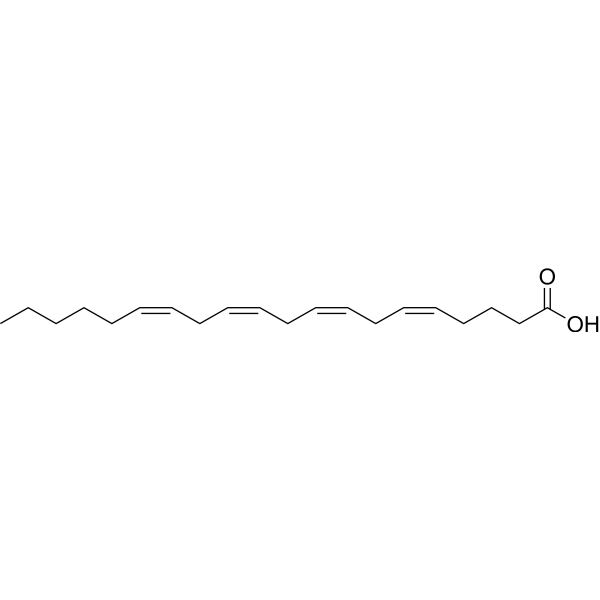
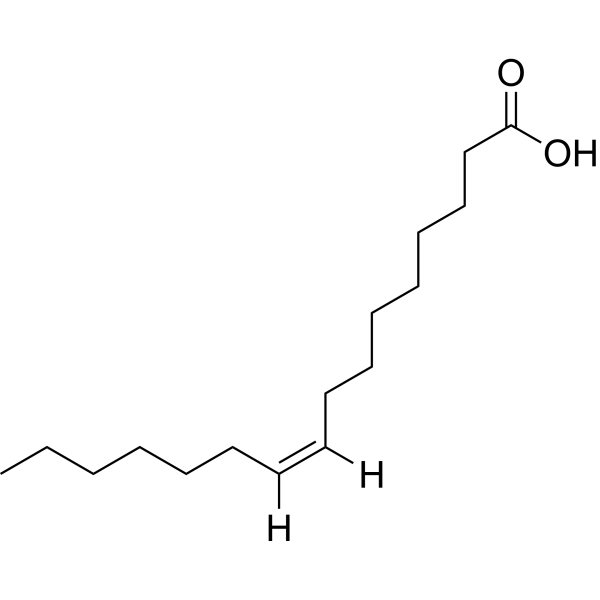
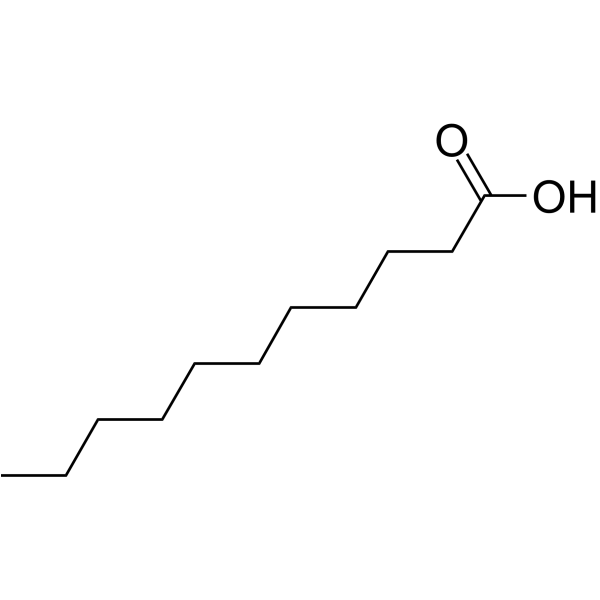
All Endogenous Metabolite Isoforms
More

Biological Activity
Description
IC50 & Target
|
Human Endogenous Metabolite |
Cellular Effect
|
Cell Line

|
Type | Value | Description | References |
|---|---|---|---|---|
| CHO | EC50 |
>100 μM
Compound: 16
|
Agonist activity at recombinant human GPR84 expressed in CHO cell membranes co-expressing beta-arrestin2 assessed as beta-arrestin 2 recruitment measured after 90 mins by beta-galactosidase based PathHunter assay
Agonist activity at recombinant human GPR84 expressed in CHO cell membranes co-expressing beta-arrestin2 assessed as beta-arrestin 2 recruitment measured after 90 mins by beta-galactosidase based PathHunter assay
|
[PMID: 31721581] |
| CHO | EC50 |
>100 μM
Compound: 16
|
Agonist activity at recombinant human GPR84 expressed in CHO cell membranes co-expressing beta-arrestin2 assessed as inhibition of forskolin-stimulated [3H]cAMP accumulation preincubated for 5 mins followed by forskolin stimulation and measured after 15 m
Agonist activity at recombinant human GPR84 expressed in CHO cell membranes co-expressing beta-arrestin2 assessed as inhibition of forskolin-stimulated [3H]cAMP accumulation preincubated for 5 mins followed by forskolin stimulation and measured after 15 m
|
[PMID: 31721581] |
In Vitro
Octanoic acid (0-0.5 mM, 0.5 h) potentiates glucose-stimulated insulin secretion (GSIS) in MIN6 cells, via Olfr15 though the PLC-IP3 pathway[4].
Octanoic acid (0-10 mM, 48 h) induces neurite outgrowth in PC12 cells, and activates p38 MAPK and ERK pathways[5].
MedChemExpress (MCE) has not independently confirmed the accuracy of these methods. They are for reference only.
-
Cell Line:PC12 cells
-
Concentration:3 mM
-
Incubation Time:0-24 h
-
Result:Increased p38 MAPK, ERK, and JNK level.
In Vivo
Octanoic acid (150 mg/kg, oral gavage) shows protective effects in the mouse model of PD induced by MPTP (HY-15608)[2].
Octanoic acid (1.3 mg, p.o.) promotes branched-chain amino acid (BCAA) catabolism in rats by activating BCKDC via decreasing the bound form of BCKDH kinase (BDK)[3].
MedChemExpress (MCE) has not independently confirmed the accuracy of these methods. They are for reference only.


Chemical Information
-
CAS No. 124-07-2
-
Appearance Solid-Liquid Mixture
-
Molecular Weight 144.21
-
Formula C8H16O2
-
Color Colorless to light yellow
-
SMILES
CCCCCCCC(O)=O
-
Synonyms
Caprylic acid
-
Structure Classification
-
Initial Source
-
Shipping
Room temperature in continental US; may vary elsewhere.
-
Storage
Store at room temperature 3 years
In solvent -80°C 2 years -20°C 1 year


Publications (3)
-
Journal Impact Factor
-
Most Recent
-
Mol Cell
CPT1A induction following epigenetic perturbation promotes MAVS palmitoylation and activation to potentiate antitumor immunity. [Abstract]2023 Dec 7;83(23):4370-4385.e9. PMID: 38016475 -
Nutrients
Medium-Chain Fatty Acids Selectively Sensitize Cancer Cells to Ferroptosis by Inducing CD36 and ACSL4. [Abstract]2025 Feb 25;17(5):794. PMID: 40077664
Octanoic acid purchased from MedChemExpress. Usage Cited in: Nutrients. 2025 Feb 25;17(5):794. [Abstract]
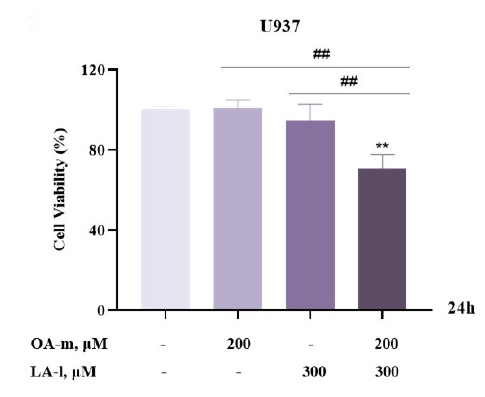
Compared with the untreated group, Octanoic acid (OA-m) (200 μM; 24 h), DA-m or LA-l alone did not significantly affect cell viability. However, the combination of OA-m with LA-l decreased U937 cell viability to 70.7%.
-
Biochem Biophys Res Commun
2026 Mar 12:804:153358. PMID: 41619507
Octanoic acid purchased from MedChemExpress. Usage Cited in: Biochem Biophys Res Commun. 2026 Mar 12:804:153358. [Abstract]
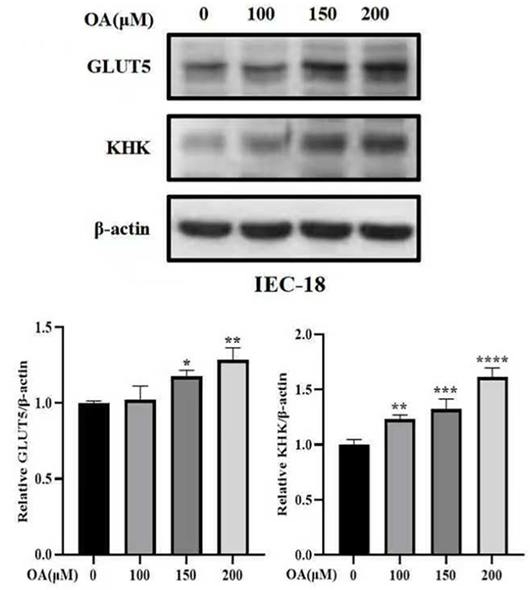
Effects of Octanoic acid (OA) (100, 150, 200 μM; 24 h) on the expression of the fructose transporter GLUT5 and ketohexokinase (KHK) in IEC-18 intestinal epithelial cells.


Solvent & Solubility
In Vitro:
DMSO : 100 mg/mL (693.43 mM; ultrasonic and warming and heat to 60°C; Hygroscopic DMSO has a significant impact on the solubility of product, please use newly opened DMSO)
Please refer to the solubility information to select the appropriate solvent. Once prepared, please aliquot and store the solution to prevent product inactivation from repeated freeze-thaw cycles.
Storage method and period of stock solution: -80°C, 2 years; -20°C, 1 year. When stored at -80°C, please use it within 2 years. When stored at -20°C, please use it within 1 year.
Please refer to the solubility information to select the appropriate solvent. Once prepared, please aliquot and store the solution to prevent product inactivation from repeated freeze-thaw cycles.
Storage method and period of stock solution: -80°C, 2 years; -20°C, 1 year. When stored at -80°C, please use it within 2 years. When stored at -20°C, please use it within 1 year.
Concentration (start) × Volume (start) = Concentration (final) × Volume (final)
In Vivo:
Select the appropriate dissolution method based on your experimental animal and administration route.
- For the following dissolution methods, please ensure to first prepare a clear stock solution using an In Vitro approach and then sequentially add co-solvents:
- To ensure reliable experimental results, the clarified stock solution can be appropriately stored based on storage conditions. As for the working solution for In Vivo experiments, it is recommended to prepare freshly and use it on the same day.
- The percentages shown for the solvents indicate their volumetric ratio in the final prepared solution. If precipitation or phase separation occurs during preparation, heat and/or sonication can be used to aid dissolution.
Add each solvent one by one: 10% DMSO 40% PEG300 5% Tween-80 45% Saline
Solubility: ≥ 2.08 mg/mL (14.42 mM); Clear solution
This protocol yields a clear solution of ≥ 2.08 mg/mL (saturation unknown).
Taking 1 mL working solution as an example, add 100 μL DMSO stock solution (20.8 mg/mL) to 400 μL PEG300, and mix evenly; then add 50 μL Tween-80 and mix evenly; then add 450 μL Saline to adjust the volume to 1 mL.
Preparation of Saline: Dissolve 0.9 g sodium chloride in ddH₂O and dilute to 100 mL to obtain a clear Saline solution.
Add each solvent one by one: 10% DMSO 90% (20% SBE-β-CD in Saline)
Solubility: ≥ 2.08 mg/mL (14.42 mM); Clear solution
This protocol yields a clear solution of ≥ 2.08 mg/mL (saturation unknown).
Taking 1 mL working solution as an example, add 100 μL DMSO stock solution (20.8 mg/mL) to 900 μL 20% SBE-β-CD in Saline, and mix evenly.
Preparation of 20% SBE-β-CD in Saline (4°C, storage for one week): 2 g SBE-β-CD powder is dissolved in 10 mL Saline, completely dissolve until clear.
In Vivo Dissolution Calculator
Please enter the basic information of animal experiments:
-
-
-
-
Recommended: Prepare an additional quantity of animals to account for potential losses during experiments.
Please enter your animal formula composition:
-
%DMSO +
Recommended: Keep the proportion of DMSO in working solution below 2% if your animal is weak.
-
%+
-
+%Tween-80 + +
-
%Saline +
The co-solvents required include: DMSO, . All of co-solvents are available by MedChemExpress (MCE). , Tween 80. All of co-solvents are available by MedChemExpress (MCE).
Working solution concentration: 0.22 mg/mL
Method for preparing stock solution: mg drug dissolved in μL DMSO. Stock solution concentration: mg/mL.
1. Take μL DMSO stock solution;
2. Add μL .
μL , mix evenly;
3. Then add μL Tween 80, mix evenly;
4. Then add μL
Please ensure that the stock solution in the first step is dissolved to a clear state, and add co-solvents in sequence. You can use ultrasonic heating (ultrasonic cleaner, recommended frequency 20-40 kHz), vortexing, etc. to assist dissolution.


Purity & Documentation
-
Data Sheet (271 KB)
-
SDS (477 KB)
- English - EN (477 KB)
- Français - FR (477 KB)
- Deutsch - DE (477 KB)
- Norwegian - NO (477 KB)
- Español - ES (477 KB)
- Swedish - SV (477 KB)
- Italian - IT (477 KB)
- Korean - KR (477 KB)
- Portuguese - PT (477 KB)
-
Handling Instructions (2659 KB)
References
[1]. Nahab FB, et al. Octanoic acid suppresses harmaline-induced tremor in mouse model of essential tremor. Neurotherapeutics. 2012 Jul;9(3):635-8. [Content Brief]
[2]. Joniec-Maciejak I, et al. Octanoic acid prevents reduction of striatal dopamine in the MPTP mouse model of Parkinson's disease. Pharmacol Rep. 2018 Oct;70(5):988-992. [Content Brief]
[3]. Kadota Y, et al. Octanoic acid promotes branched-chain amino acid catabolisms via the inhibition of hepatic branched-chain alpha-keto acid dehydrogenase kinase in rats. Metabolism. 2015 Sep;64(9):1157-64. [Content Brief]
[4]. Leem J, et al. Octanoic acid potentiates glucose-stimulated insulin secretion and expression of glucokinase through the olfactory receptor in pancreatic β-cells. Biochem Biophys Res Commun. 2018 Sep 3;503(1):278-284. [Content Brief]
[5]. Kamata Y, et al. Induction of neurite outgrowth in PC12 cells by the medium-chain fatty acid octanoic acid. Neuroscience. 2007 May 25;146(3):1073-81. [Content Brief]


Complete Stock Solution Preparation Table
Please refer to the solubility information to select the appropriate solvent. Once prepared, please aliquot and store the solution to prevent product inactivation from repeated freeze-thaw cycles.
Storage method and period of stock solution: -80°C, 2 years; -20°C, 1 year. When stored at -80°C, please use it within 2 years. When stored at -20°C, please use it within 1 year.
| Optional Solvent | Concentration Solvent Mass | 1 mg | 5 mg | 10 mg | 25 mg |
|---|---|---|---|---|---|
| DMSO | 1 mM | 6.9343 mL | 34.6717 mL | 69.3433 mL | 173.3583 mL |
| 5 mM | 1.3869 mL | 6.9343 mL | 13.8687 mL | 34.6717 mL | |
| 10 mM | 0.6934 mL | 3.4672 mL | 6.9343 mL | 17.3358 mL | |
| 15 mM | 0.4623 mL | 2.3114 mL | 4.6229 mL | 11.5572 mL | |
| 20 mM | 0.3467 mL | 1.7336 mL | 3.4672 mL | 8.6679 mL | |
| 25 mM | 0.2774 mL | 1.3869 mL | 2.7737 mL | 6.9343 mL | |
| 30 mM | 0.2311 mL | 1.1557 mL | 2.3114 mL | 5.7786 mL | |
| 40 mM | 0.1734 mL | 0.8668 mL | 1.7336 mL | 4.3340 mL | |
| 50 mM | 0.1387 mL | 0.6934 mL | 1.3869 mL | 3.4672 mL | |
| 60 mM | 0.1156 mL | 0.5779 mL | 1.1557 mL | 2.8893 mL | |
| 80 mM | 0.0867 mL | 0.4334 mL | 0.8668 mL | 2.1670 mL | |
| 100 mM | 0.0693 mL | 0.3467 mL | 0.6934 mL | 1.7336 mL |


Octanoic acid Related Classifications
HY-41417 Related Classifications
 Powered by Bioz