



Citronellal

Based on 1 Customer Validation
Citronellal is a monoterpene that can be found in the essential oils in various aromatic species of plants, with antiinflammatory and antinociceptive properties. Citronellal attenuates mechanical nociception, mediated in part by the NO-cGMP-ATP-sensitive K+ channel pathway. Citronellal induces reduction of spontaneuous activity, ataxia, analgesia, and sedation in vivo. Citronellal can attenuate mechanical nociception response in mouse model.
Nur für Forschungszwecke. Wir verkaufen nicht an Patienten.
- Reinheit : 99.28%
- CAS. Nr.: 106-23-0
- Formel: C10H18O
- Molecular Weight:154.25
-
Speicherung:
4°C, stored under nitrogen
* In solvent : -80°C, 6 months; -20°C, 1 month (stored under nitrogen)

To place orders, for customer services and technical support, please contact: MedChemExpress USA
Tel: 609-228-6898 E-mail: [email protected] [email protected]


-
 Biologische Aktivität
-
Chemical Information
-
Lösungsmittel & Löslichkeit
- Protokoll
- Reinheit & Dokumentation
- Verweise
-
 Help & FAQs


-
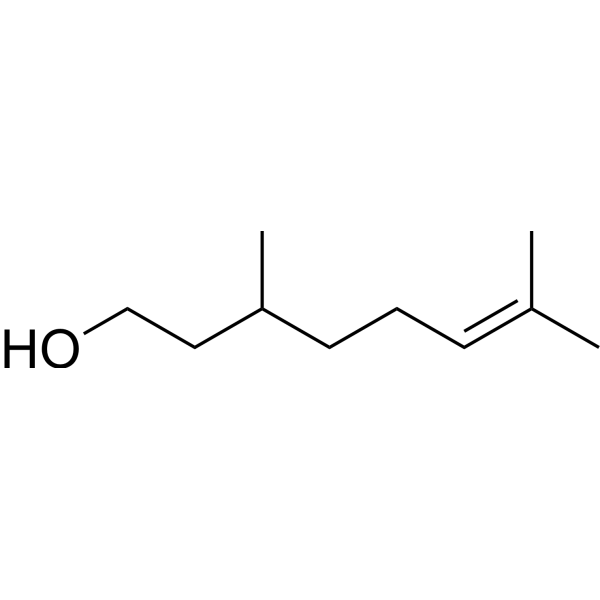
HY-W010201
CitronellolApoptosis Inducer -

HY-N7126R
Citronellal (Standard)Monoterpenea -
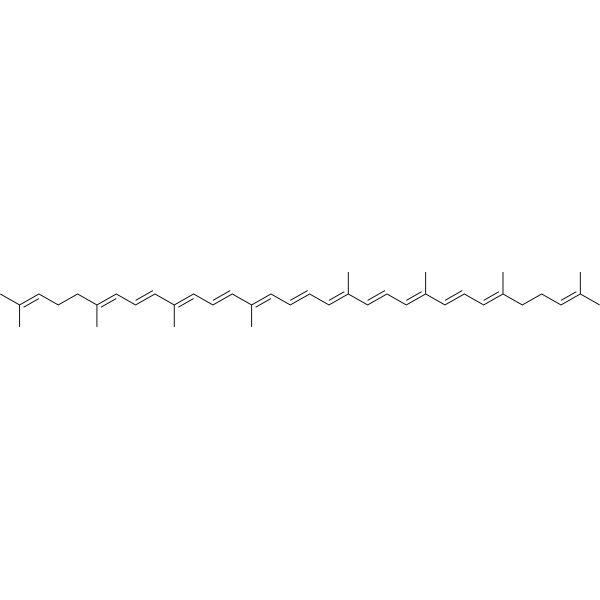
HY-N0287
LycopeneAntioxidant -
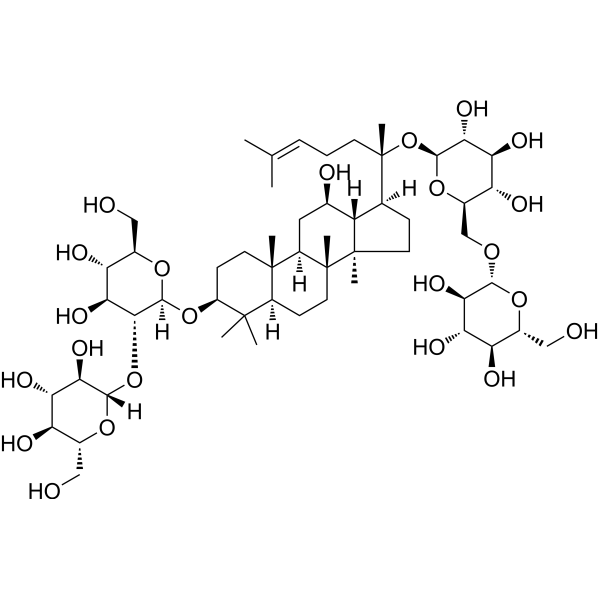
HY-N0039
Ginsenoside Rb1Autophagy Inducer -
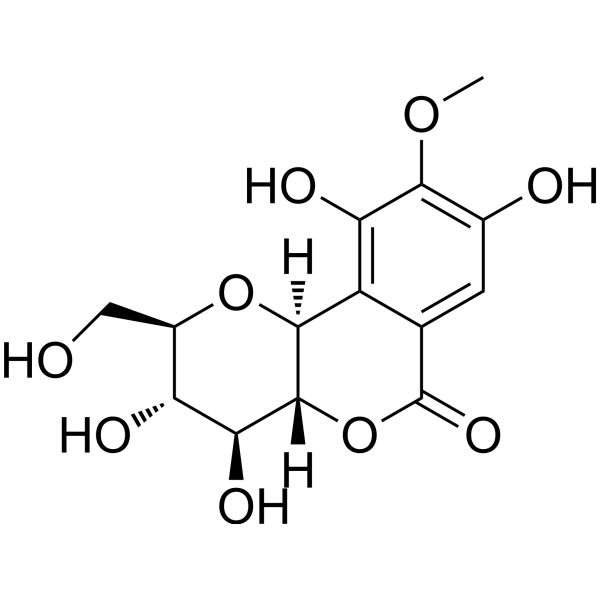
HY-N0017
BergeninBacterial Inhibitor -
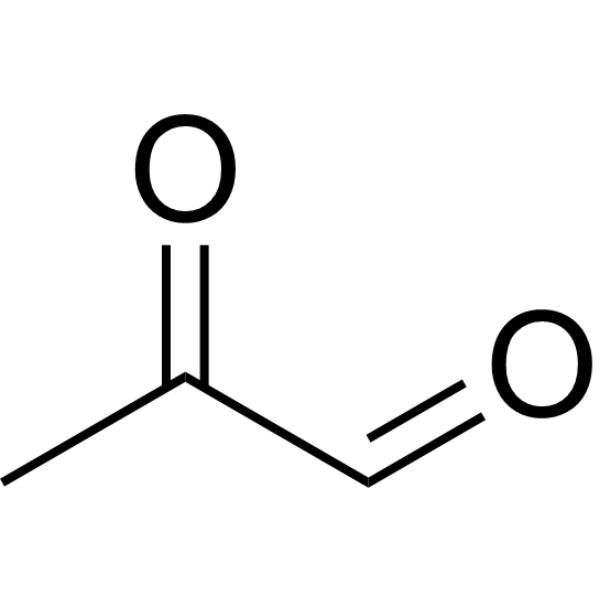
HY-W020014
Pyruvic aldehyde (40%w/w in water)Cell Stabilizer -
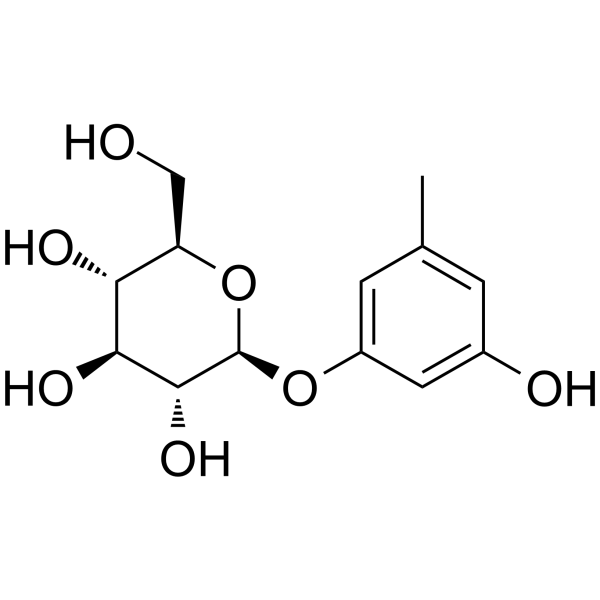
HY-N0008
Orcinol glucosidep38 Agonist -
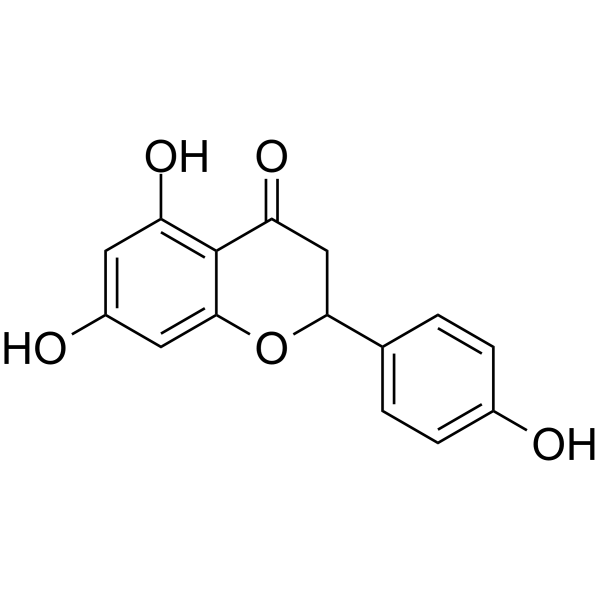
HY-W011641
(±)-NaringeninAnti-inflammatory Agents -
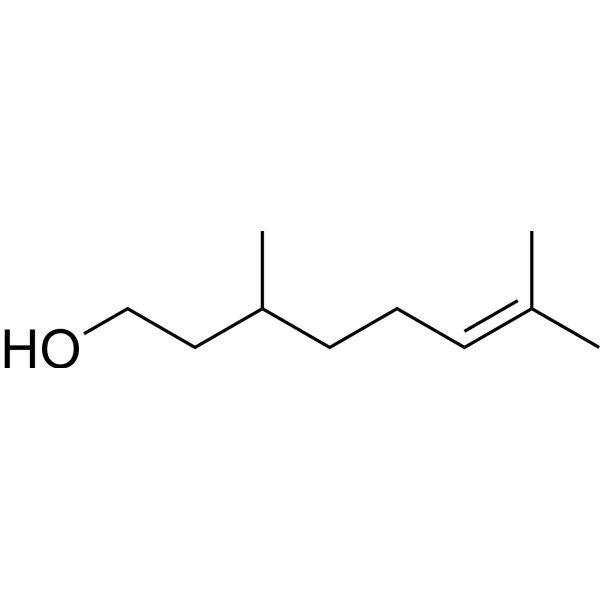
HY-W010201R
Citronellol (Standard)Apoptosis Inducer -
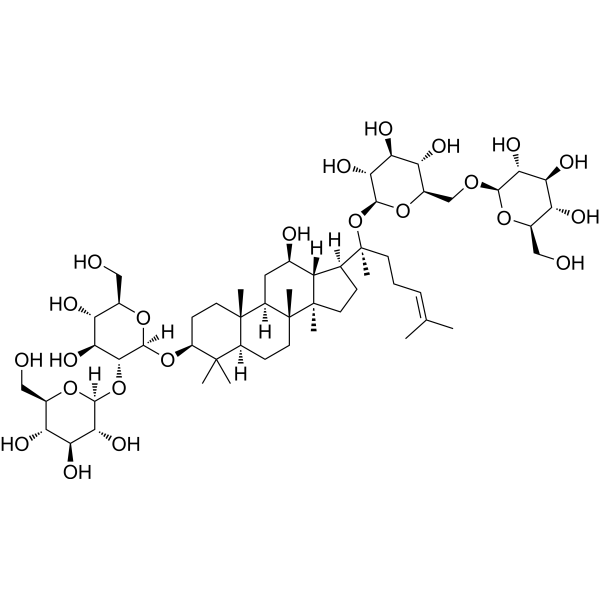
HY-N0039R
Ginsenoside Rb1 (Standard) -
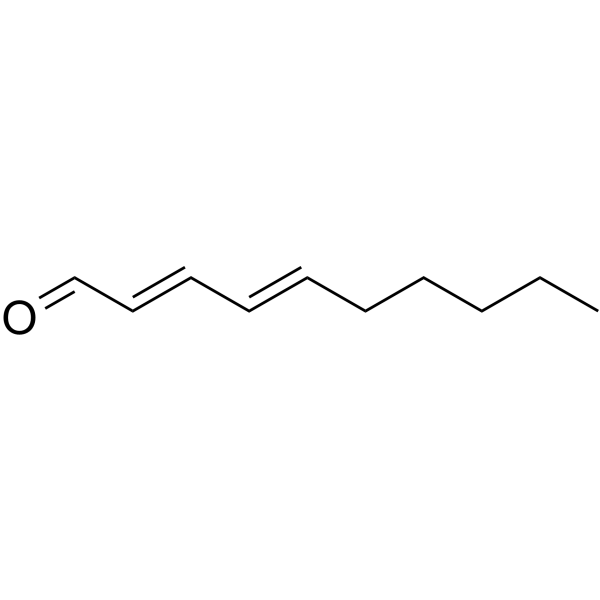
HY-W013627
trans,trans-2,4-DecadienalLipid Peroxidation Product


Biologische Aktivität
Beschreibung
In Vivo
Citronellal (200 mg/kg, i.p., single dose) significantly increases the reaction time and latency time to the thermal stimulus in Swiss mouse model[1].
Citronellal (25-100 mg/kg, i.p., single dose) significantly reduces the mechanical nociception induced by Carrageenan (CG) (HY-125474) in Swiss mice[2].
MedChemExpress (MCE) has not independently confirmed the accuracy of these methods. They are for reference only.
-
Animal Model:Male Swiss mice (30-35 g, 2-3 months)[1]
-
Dosage:50, 100, 200 mg/kg
-
Administration:Intraperitoneal injection (i.p.)
-
Result:Decreased spontaneous activity, palpebral ptosis, ataxia, analgesia, and sedation.
Increased sleeping time.
Singnificantly reduced the number of writhing movements in a dose-dependent manner.
-
Animal Model:Male Swiss mice (28-32 g, 2-3 months)[2]
-
Dosage:25, 50, 100 mg/kg
-
Administration:Intraperitoneal injection (i.p.)
-
Result:Significantly reduced mechanical nociception induced by TNF-α.


Chemical Information
-
CAS. Nr. 106-23-0
-
Appearance Liquid (Density: 0.8±0.1 g/cm3)
-
Molecular Weight 154.25
-
Formel C10H18O
-
Color Colorless to light yellow
-
SMILES
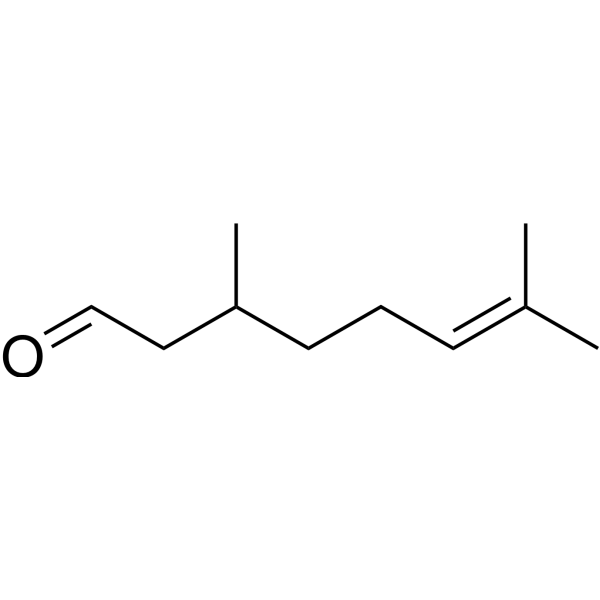
C/C(C)=C\CCC(C)CC=O
-
Structure Classification
-
Initial Source
-
Versand
Room temperature in continental US; may vary elsewhere.
-
Speicherung
4°C, stored under nitrogen
* In solvent : -80°C, 6 months; -20°C, 1 month (stored under nitrogen)


Lösungsmittel & Löslichkeit
In Vitro:
DMSO : 100 mg/mL (648.30 mM; Need ultrasonic; Hygroscopic DMSO has a significant impact on the solubility of product, please use newly opened DMSO)
Please refer to the solubility information to select the appropriate solvent. Once prepared, please aliquot and store the solution to prevent product inactivation from repeated freeze-thaw cycles.
Storage method and period of stock solution: -80°C, 6 months; -20°C, 1 month (stored under nitrogen). When stored at -80°C, please use it within 6 months. When stored at -20°C, please use it within 1 month.
Please refer to the solubility information to select the appropriate solvent. Once prepared, please aliquot and store the solution to prevent product inactivation from repeated freeze-thaw cycles.
Storage method and period of stock solution: -80°C, 6 months; -20°C, 1 month (stored under nitrogen). When stored at -80°C, please use it within 6 months. When stored at -20°C, please use it within 1 month.
Konzentration (Stammlösung) × Volumen (Stammlösung) = Konzentration (Ziellösung) × Volumen (Ziellösung)
In Vivo:
Select the appropriate dissolution method based on your experimental animal and administration route.
- For the following dissolution methods, please ensure to first prepare a clear stock solution using an In Vitro approach and then sequentially add co-solvents:
- To ensure reliable experimental results, the clarified stock solution can be appropriately stored based on storage conditions. As for the working solution for In Vivo experiments, it is recommended to prepare freshly and use it on the same day.
- The percentages shown for the solvents indicate their volumetric ratio in the final prepared solution. If precipitation or phase separation occurs during preparation, heat and/or sonication can be used to aid dissolution.
Add each solvent one by one: 10% DMSO 40% PEG300 5% Tween-80 45% Saline
Solubility: ≥ 2.5 mg/mL (16.21 mM); Clear solution
This protocol yields a clear solution of ≥ 2.5 mg/mL (saturation unknown).
Taking 1 mL working solution as an example, add 100 μL DMSO stock solution (25.0 mg/mL) to 400 μL PEG300, and mix evenly; then add 50 μL Tween-80 and mix evenly; then add 450 μL Saline to adjust the volume to 1 mL.
Preparation of Saline: Dissolve 0.9 g sodium chloride in ddH₂O and dilute to 100 mL to obtain a clear Saline solution.
Add each solvent one by one: 10% DMSO 90% (20% SBE-β-CD in Saline)
Solubility: ≥ 2.5 mg/mL (16.21 mM); Clear solution
This protocol yields a clear solution of ≥ 2.5 mg/mL (saturation unknown).
Taking 1 mL working solution as an example, add 100 μL DMSO stock solution (25.0 mg/mL) to 900 μL 20% SBE-β-CD in Saline, and mix evenly.
Preparation of 20% SBE-β-CD in Saline (4°C, storage for one week): 2 g SBE-β-CD powder is dissolved in 10 mL Saline, completely dissolve until clear.
In Vivo Dissolution Calculator
Please enter the basic information of animal experiments:
-
-
-
-
Recommended: Prepare an additional quantity of animals to account for potential losses during experiments.
Please enter your animal formula composition:
-
%DMSO +
Recommended: Keep the proportion of DMSO in working solution below 2% if your animal is weak.
-
%+
-
+%Tween-80 + +
-
%Saline +
The co-solvents required include: DMSO, . All of co-solvents are available by MedChemExpress (MCE). , Tween 80. All of co-solvents are available by MedChemExpress (MCE).
Working solution concentration: 0.22 mg/mL
Method for preparing stock solution: mg drug dissolved in μL DMSO. Stock solution concentration: mg/mL. * In solvent : -80°C, 6 months; -20°C, 1 month (stored under nitrogen)
1. Take μL DMSO stock solution;
2. Add μL .
μL , mix evenly;
3. Then add μL Tween 80, mix evenly;
4. Then add μL
Please ensure that the stock solution in the first step is dissolved to a clear state, and add co-solvents in sequence. You can use ultrasonic heating (ultrasonic cleaner, recommended frequency 20-40 kHz), vortexing, etc. to assist dissolution.


Reinheit & Dokumentation
-
Data Sheet (269 KB)
-
SDS (393 KB)
- English - EN (393 KB)
- Français - FR (393 KB)
- Deutsch - DE (393 KB)
- Norwegian - NO (393 KB)
- Español - ES (393 KB)
- Swedish - SV (393 KB)
- Italian - IT (393 KB)
- Korean - KR (393 KB)
- Portuguese - PT (393 KB)
-
Handling Instructions (2659 KB)
Verweise
[1]. Melo MS, et al. Antinociceptive effect of citronellal in mice. Pharm Biol. 2010 Apr;48(4):411-6. [Content Brief]
[2]. de Santana MT, et al. Citronellal, a monoterpene present in Java citronella oil, attenuates mechanical nociception response in mice. Pharm Biol. 2013 Sep;51(9):1144-9. [Content Brief]


Complete Stock Solution Preparation Table
Please refer to the solubility information to select the appropriate solvent. Once prepared, please aliquot and store the solution to prevent product inactivation from repeated freeze-thaw cycles.
Storage method and period of stock solution: -80°C, 6 months; -20°C, 1 month (stored under nitrogen). When stored at -80°C, please use it within 6 months. When stored at -20°C, please use it within 1 month.
| Optional Solvent | Concentration Solvent Mass | 1 mg | 5 mg | 10 mg | 25 mg |
|---|---|---|---|---|---|
| DMSO | 1 mM | 6.4830 mL | 32.4149 mL | 64.8298 mL | 162.0746 mL |
| 5 mM | 1.2966 mL | 6.4830 mL | 12.9660 mL | 32.4149 mL | |
| 10 mM | 0.6483 mL | 3.2415 mL | 6.4830 mL | 16.2075 mL | |
| 15 mM | 0.4322 mL | 2.1610 mL | 4.3220 mL | 10.8050 mL | |
| 20 mM | 0.3241 mL | 1.6207 mL | 3.2415 mL | 8.1037 mL | |
| 25 mM | 0.2593 mL | 1.2966 mL | 2.5932 mL | 6.4830 mL | |
| 30 mM | 0.2161 mL | 1.0805 mL | 2.1610 mL | 5.4025 mL | |
| 40 mM | 0.1621 mL | 0.8104 mL | 1.6207 mL | 4.0519 mL | |
| 50 mM | 0.1297 mL | 0.6483 mL | 1.2966 mL | 3.2415 mL | |
| 60 mM | 0.1080 mL | 0.5402 mL | 1.0805 mL | 2.7012 mL | |
| 80 mM | 0.0810 mL | 0.4052 mL | 0.8104 mL | 2.0259 mL | |
| 100 mM | 0.0648 mL | 0.3241 mL | 0.6483 mL | 1.6207 mL |


Citronellal Related Classifications
HY-N7126 Related Classifications
 Powered by Bioz