



Geraniaceae Extract
-
Geraniaceae Extract (20)

- 1
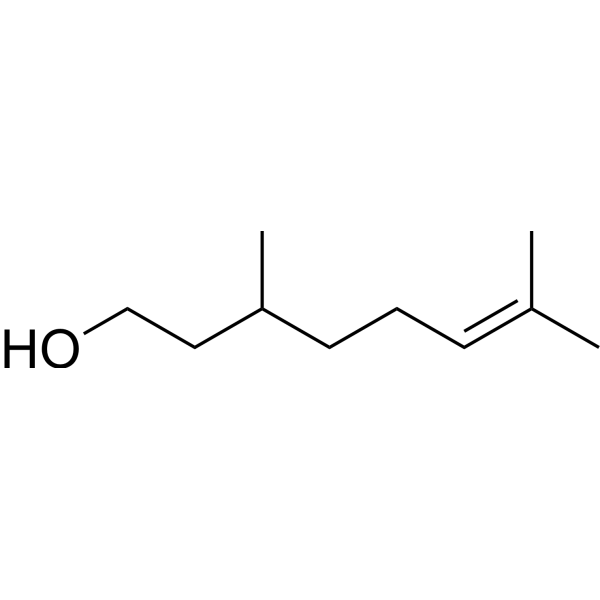
- Formel: C10H20O
- Molecular Weight: 156.27
Citronellol ((±)-Citronellol) is an orally active inducer of apoptosis. Citronellol can prevent oxidative stress, mitochondrial dysfunction, and apoptosis in the SH-SY5Y cell Parkinson's disease model induced by 6-OHDA by regulating the ROS-NO, MAPK/ERK, and PI3K/Akt signaling pathways. Citronellol can induce necroptosis in human lung cancer cells through the TNF-α pathway and accumulation of ROS. Citronellol can reduce the levels of LC-3 and p62 to regulate the autophagy pathway, inhibit oxidative stress and neuroinflammation, and thus have neuroprotective effects on Parkinson's rats. Citronellol exhibits anti-fungal activity against Trichophyton rubrum by inhibiting ergosterol synthesis.
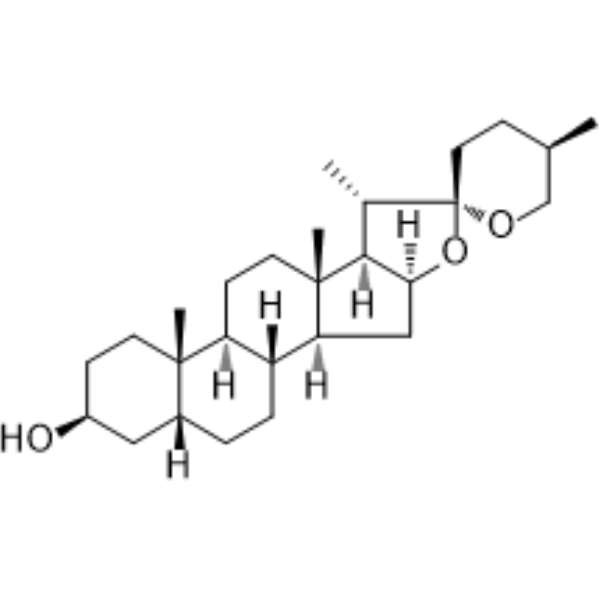
- Formel: C27H44O3
- Molecular Weight: 416.64
Smilagenin (SMI) is a small-molecule steroidal sapogenin from Anemarrhena asphodeloides and Pelargonium hortorum widely used in traditional Chinese medicine for treating chronic neurodegeneration diseases. Smilagenin (SMI) improves memory of aged rats by increasing the muscarinic receptor subtype 1 (M1)-receptor density. Smilagenin (SMI) attenuates Aβ(25-35)-induced neurodegenerationvia stimulating the gene expression of brain-derived neurotrophic factor, may represents a novel therapeutic strategy for AD.
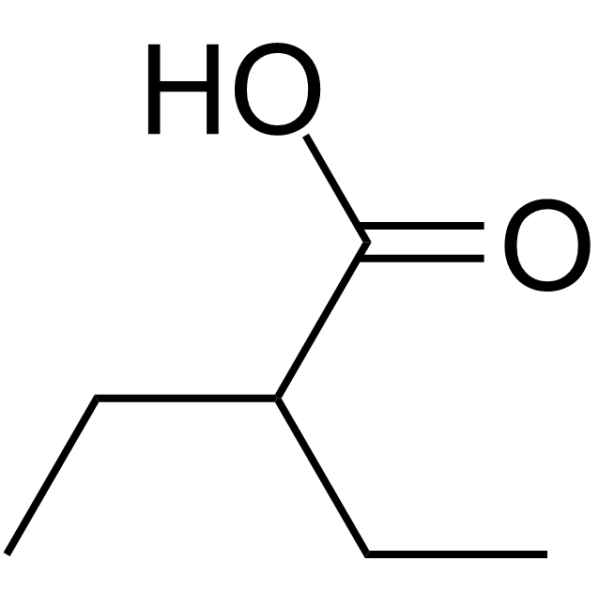
- Formel: C6H12O2
- Molecular Weight: 116.16
2-Ethylbutyric acid is a volatile fatty acid. 2-Ethylbutyric acid exhibits phytotoxicity. 2-Ethylbutyric acid is used as an internal standard in milk and dairy products and as an internal standard (IS) in the calibration of fecal VFA standards. 2-Ethylbutyric acid can be used in the research of embryonic development.
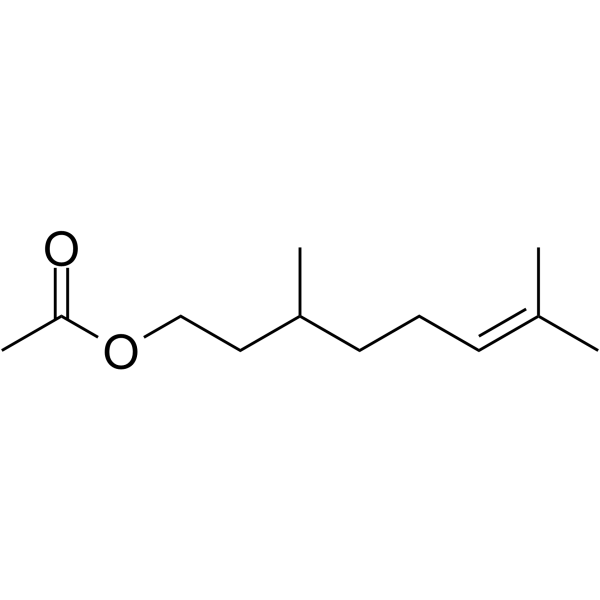
- Formel: C12H22O2
- Molecular Weight: 198.30
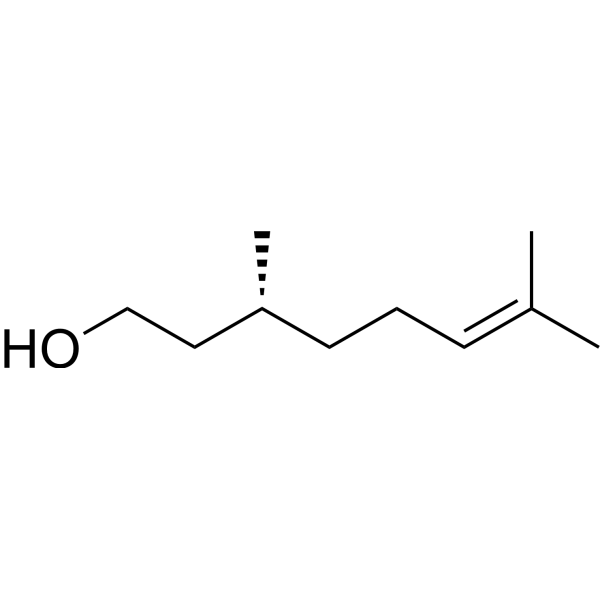
- Formel: C10H20O
- Molecular Weight: 156.27
(R)-Citronellol (D-Citronellol) is an alcoholic monoterpene found in geranium essential oil. (R)-Citronellol inhibits degranulation of mast cells and does not affect caffeine bitterness perception. (R)-Citronellol can be used in decorative cosmetics, toiletries as well as in non-cosmetic products.

- Formel: C6H12O2
- Molecular Weight: 116.16
2-Ethylbutyric acid (Standard) is an analytical standard of 2-Ethylbutyric acid (HY-W004154). This product is intended for research and analytical applications. 2-Ethylbutyric acid is a volatile fatty acid. 2-Ethylbutyric acid exhibits phytotoxicity. 2-Ethylbutyric acid is used as an internal standard in milk and dairy products and as an internal standard (IS) in the calibration of fecal VFA standards. 2-Ethylbutyric acid can be used in the research of embryonic development.

- Formel: C34H26O22
- Molecular Weight: 786.56
Colinin is a globulin protein. Colinin can be isolated from flaxseed.

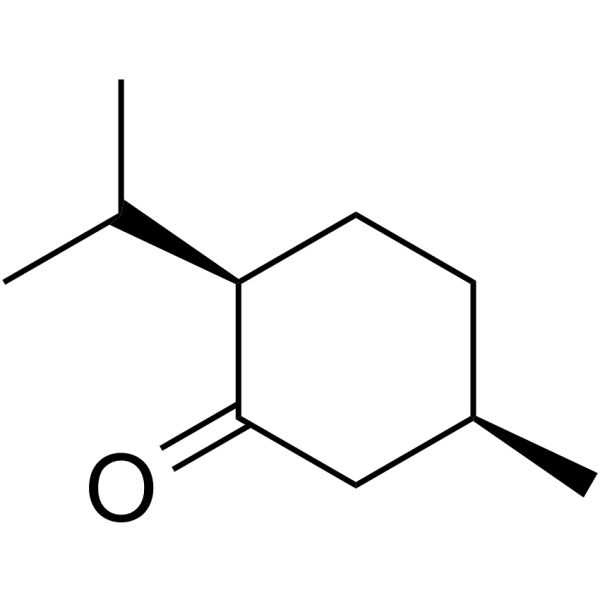
- Formel: C10H18O
- Molecular Weight: 154.25
(+)-Isomenthone is an enantiomer form of Menthone (HY-N2381). (+)-Isomenthone blocks TNF-α-triggered activation of the JNK and p38 MAPK pathways.(+)-Isomenthone inhibits TNF-α-mediated reductions in cell viability, increases in apoptosis, and downstream apoptotic events linked to pathway activation.(+)-Isomenthone protects human dermal fibroblasts against TNF-α-induced cell death under serum-deprived conditions.

- Formel: C14H26O2
- Molecular Weight: 226.36
Citronellyl butyrate is a terpenoid ester with antibacterial, antifungal and other biological activities. Citronellyl butyrate has inhibitory effects on both Staphylococcus aureus and Escherichia coli. Citronellyl butyrate has inhibitory and bactericidal effects on various strains of Candida albicans (MIC: 156-1250 μg/mL). Citronellyl butyrate can be used in the research of infectious conditions.
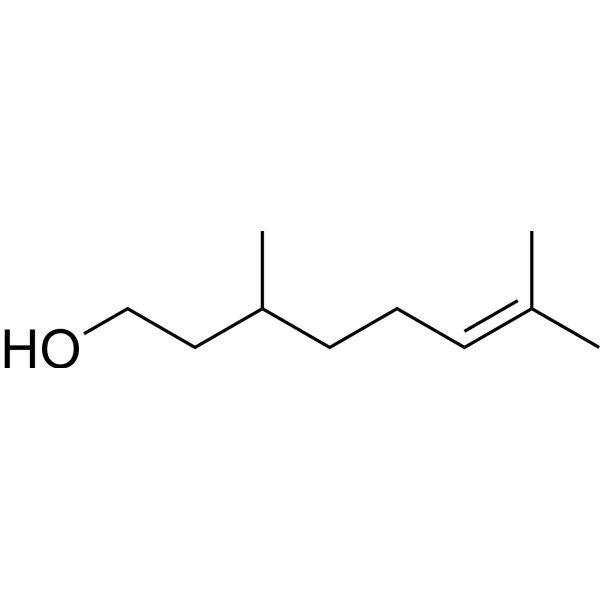
- Formel: C10H20O
- Molecular Weight: 156.27
Citronellol (Standard) is the analytical standard of Citronellol. Citronellol (Standard) is an orally active inducer of apoptosis. Citronellol (Standard) can prevent oxidative stress, mitochondrial dysfunction, and apoptosis in the SH-SY5Y cell Parkinson's disease model induced by 6-OHDA by regulating the ROS-NO, MAPK/ERK, and PI3K/Akt signaling pathways. Citronellol (Standard) can induce necroptosis in human lung cancer cells through the TNF-α pathway and accumulation of ROS. Citronellol (Standard) can reduce the levels of LC-3 and p62 to regulate the autophagy pathway, inhibit oxidative stress and neuroinflammation, and thus have neuroprotective effects on Parkinson's rats. Citronellol (Standard) exhibits anti-fungal activity against Trichophyton rubrum by inhibiting ergosterol synthesis.


- Formel: C54H84N16O21
Geranium oil serves as a partial agonist for estrogen receptor (ER), enhancing both the cytotoxicity induced by Tamoxifen (TMX) (HY-13757A) in GT1-7 cells and the adverse effects of TMX on the central nervous system. Geranium oil can be utilized in the research of neurological disorders such as dementia.

- Formel: C12H22O2
- Molecular Weight: 198.30
Citronellyl acetate (Standard) is the analytical standard of Citronellyl acetate (HY-N7144A). This product is intended for research and analytical applications. Citronellyl acetate is a monoterpene product of the secondary metabolism of plants, with antinociceptive activity. Citronellyl acetate exhibits pro-apoptotic activity in human hepatoma cells. Citronellyl acetate shows fungicidal, larvicidal, bactericidal and repelling/insecticidal effects.
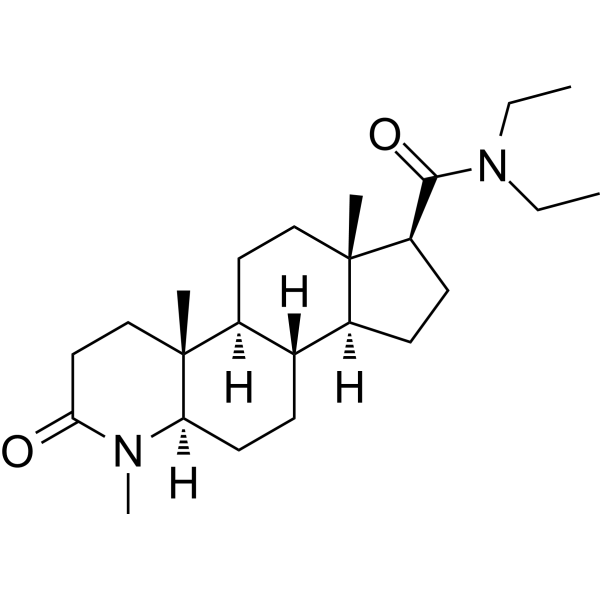
- Formel: C24H40N2O2
- Molecular Weight: 388.59
DMAA is an indirect sympathomimetic amine. DMAA constricts blood vessels and raises blood pressure. DMAA can be used for neurological and cardiovascular disease research.
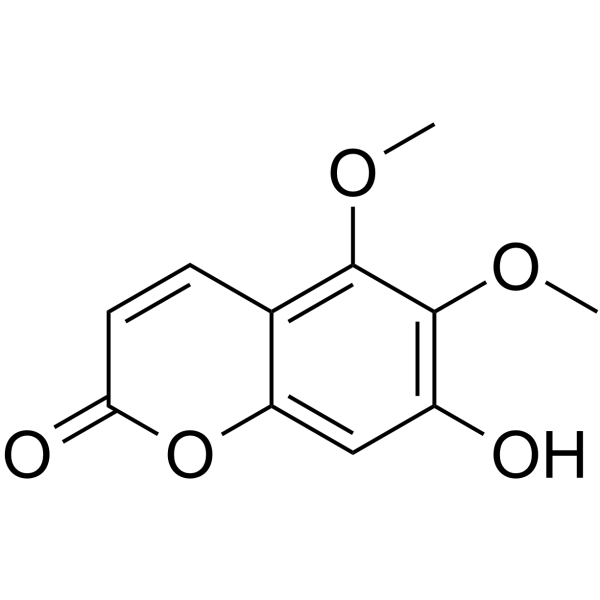
- Formel: C11H10O5
- Molecular Weight: 222.19

- Formel: C13H14O6
- Molecular Weight: 266.25
5,6,7,8-Tetramethoxycoumarin is a simple coumarin with phytotoxicity.

- Formel: C27H44O3
- Molecular Weight: 416.64
Smilagenin (Standard) is the analytical standard of Smilagenin. This product is intended for research and analytical applications. Smilagenin (SMI) is a small-molecule steroidal sapogenin from Anemarrhena asphodeloides and Pelargonium hortorum widely used in traditional Chinese medicine for treating chronic neurodegeneration diseases. Smilagenin (SMI) improves memory of aged rats by increasing the muscarinic receptor subtype 1 (M1)-receptor density. Smilagenin (SMI) attenuates Aβ(25-35)-induced neurodegenerationvia stimulating the gene expression of brain-derived neurotrophic factor, may represents a novel therapeutic strategy for AD.

- Formel: C20H32O6
- Molecular Weight: 368.46
Itol A is a Diterpenoids product that can be isolated from the herbs of Geranium wilfordii.

- Formel: C11H10O5
- Molecular Weight: 222.19
Umckalin (Standard) is the analytical standard of Umckalin (HY-N8712). Umckalin is Coumarin (HY-N0709) derivative that exhibits anti-inflammatory properties. Umckalin reduces phosphorylation of p38 MAPK, JNK, and ERK, lowers TNF-α, IL-6, IL-1β, NO, and PGE2 production. Umckalin can be used for the research of chronic inflammatory diseases.
- 1



