Search Result
Results for "
antipsychotic+activity
" in MedChemExpress (MCE) Product Catalog:
7
Isotope-Labeled Compounds
| Cat. No. |
Product Name |
Target |
Research Areas |
Chemical Structure |
-
- HY-14940
-
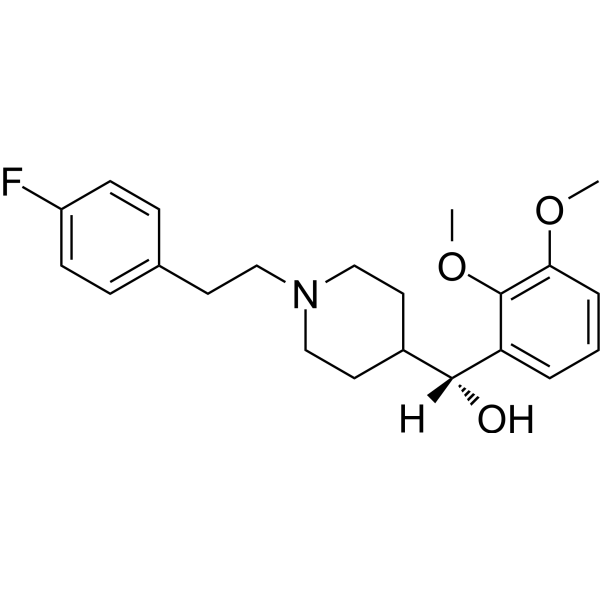
Volinanserin
Maximum Cited Publications
10 Publications Verification
MDL100907; M 100907
|
5-HT Receptor
|
Neurological Disease
|
|
Volinanserin is a potent and selective antagonist of 5-HT2 receptor, with a Ki of 0.36 nM, and shows 300-fold selectivity for 5-HT2 receptor over 5-HT1c, alpha-1 and DA D2 receptors. Volinanserin has antipsychotic activity.
|
-
-
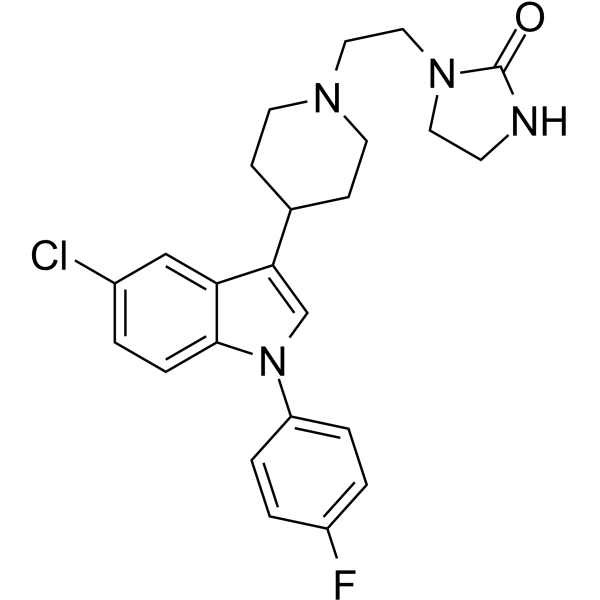
- HY-14543
-
-
-
- HY-101484A
-
|
|
Sigma Receptor
ATF6
|
Neurological Disease
|
|
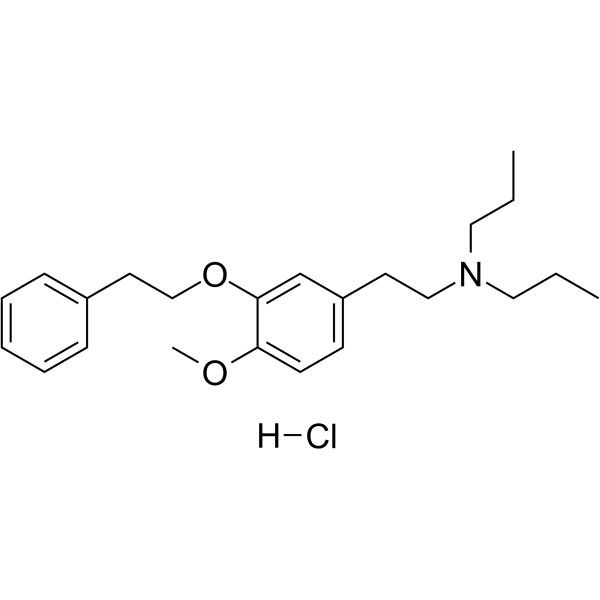
NE-100 hydrochloride is an orally active and selective sigma-1 receptor antagonist with an IC50 of 4.16 nM. NE-100 hydrochloride can improve cognitive impairment and has neuroprotective and antipsychotic activities. NE-100 hydrochloride can be used for research on nervous system diseases .
|
-
-
- HY-15793
-
|
(+)-DTBZ; (+)-α-Dihydrotetrabenazine; (+)-α-DHTBZ
|
Monoamine Transporter
|
Neurological Disease
|
|
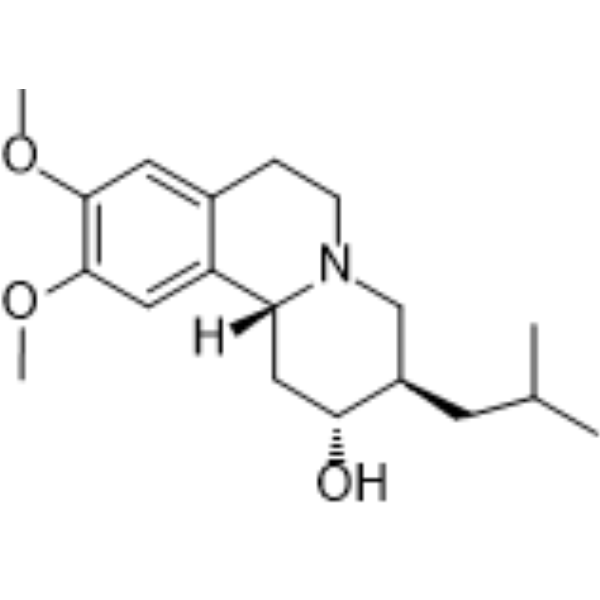
NBI-98782 is a high affinity and selectivity vesicular monoamine transporter 2 (VMAT2) inhibitor with a Ki of 3 nM. NBI-98782 has antipsychotic activity .
|
-
-
- HY-B0901
-
-
-
- HY-B0274
-
-
-
- HY-B0274A
-
-
-
- HY-14264
-
|
|
5-HT Receptor
|
Neurological Disease
|
|
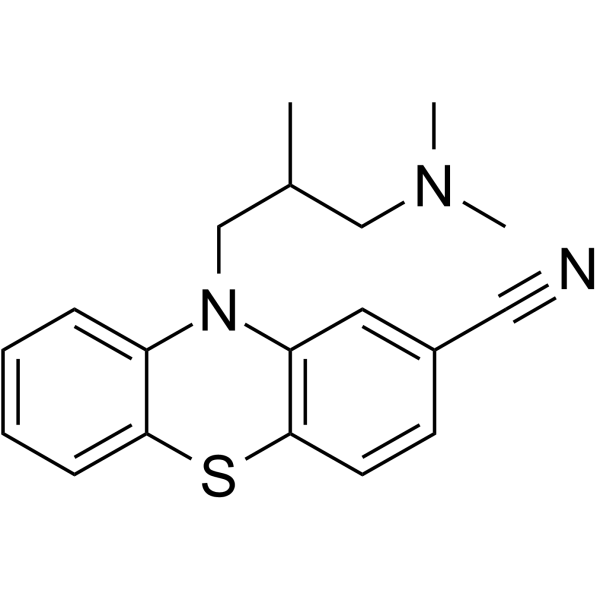
Cyamemazine is a neuroleptic agent that contains the phenothiazine chromophore. Cyamemazine is often used as an anxiolytic. Cyamemazine is a potent 5-HT3 (Ki of 12 nM), 5-HT2A (Ki = 1.5 nM) and 5-HT2C (Ki of 75 nM) receptors antagonist with antipsychotic activity .
|
-
-
- HY-107969
-
|
|
Dopamine Receptor
COX
NO Synthase
|
Neurological Disease
Cancer
|
|
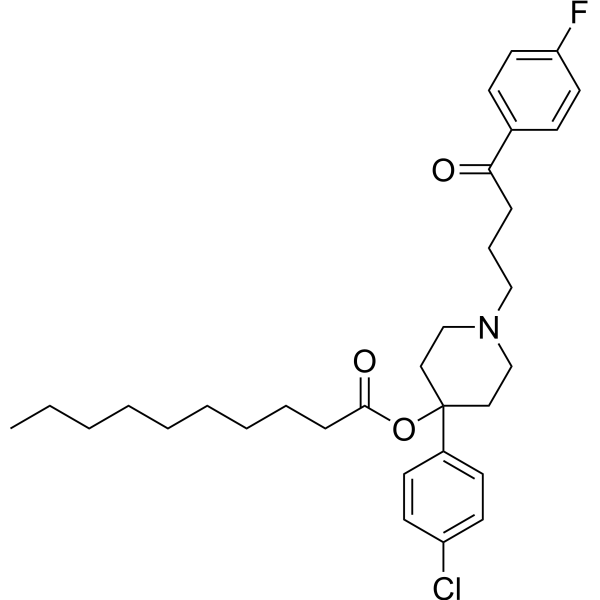
Haloperidol decanoate is a depot preparation of haloperidol, a commonly used butyrophenone derivative with antipsychotic activity. Haloperidol decanoate can increase the striatal D2 receptor in rat. Haloperidol decanoate can improve conditions of psychoses (mainly schizophrenia). Haloperidol decanoate can lead to increased accumulation of the dopamine metabolites homo-vanillic acid. Haloperidol decanoate can reduce intestinal transport, increase gastric emptying and reduce acid output in rat model .
|
-
-
- HY-A0019A
-
|
9-Hydroxyrisperidone palmitate
|
Dopamine Receptor
5-HT Receptor
|
Neurological Disease
|
|
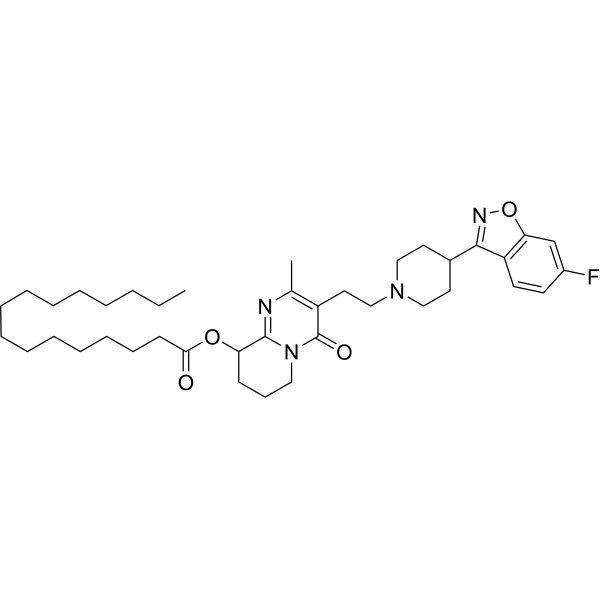
Paliperidone palmitate is an orally effective competitive antagonist of dopamine D2 receptors and 5-hydroxytryptamine 2A (5-HT2A) receptors that can cross the blood-brain barrier. Paliperidone palmitate competitively inhibits the effects of dopamine and 5-hydroxytryptamine by binding to dopamine D2 receptors and 5-HT2A receptors, regulating the balance of the neurotransmitter system and thus exerting antipsychotic activity. Paliperidone palmitate is mainly used in the research field of schizophrenia .
|
-
-
- HY-122015
-
|
|
Potassium Channel
|
Neurological Disease
|
|
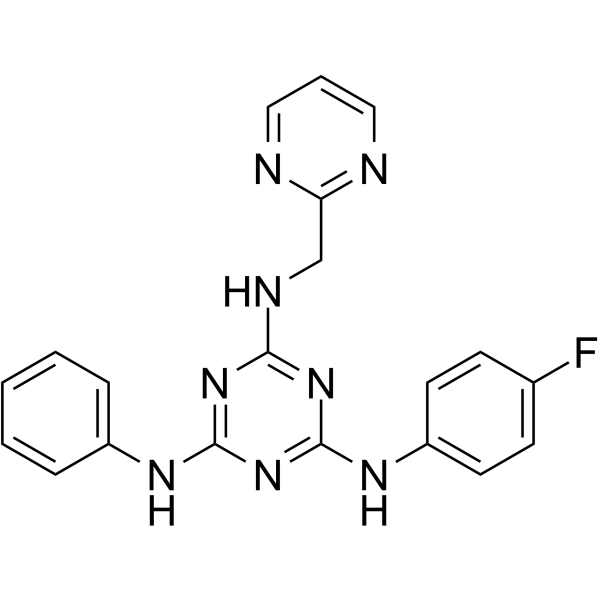
ASP2905 is an orally active potassium channel Kv12.2 inhibitor encoded by the Kcnh3/BEC1 gene. ASP2905 can cross the blood-brain barrier and has antipsychotic activities .
|
-
-
- HY-100703
-
|
Floropipamide; McN-JR 3345; R 3345
|
5-HT Receptor
Dopamine Receptor
|
Neurological Disease
|
|
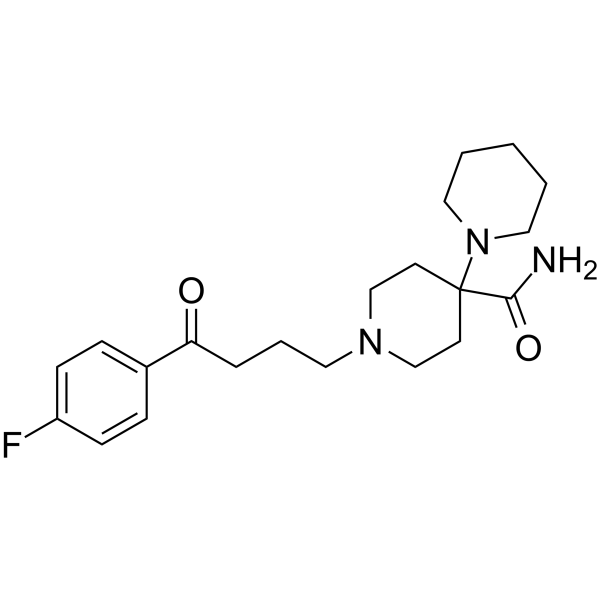
Pipamperone (Floropipamide) is a butyrophenone derivative and high-affinity antagonist of 5-HT2A receptor (pKi=8.2) and D4 receptor (pKi=8.0). Pipamperone is also a low-affinity antagonist of D2 receptor (pKi=6.7). Pipamperone affects neurotransmitter functions and exerts antipsychotic activity. Pipamperone is used in the research of mental disorders such as autism-related behavioral disorders and Alzheimer's disease .
|
-
-
- HY-100665
-
|
OPC-14857; DM-14857
|
5-HT Receptor
Dopamine Receptor
|
Neurological Disease
|
|
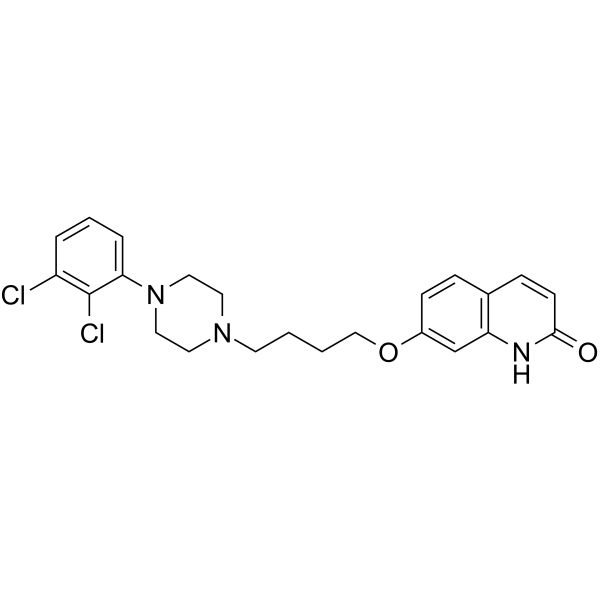
Dehydroaripiprazole (OPC-14857) is an active metabolite of Aripiprazole (HY-14546) and dopamine D2/D3 receptor partial agonist. Dehydroaripiprazole also has certain affinity for serotonin 5-HT1A, 5-HT2A and 5-HT2B receptors. Dehydroaripiprazole has antipsychotic activity equivalent to Aripiprazole .
|
-
-
- HY-131255
-
|
Ziprasidone Impurity C; Ziprasidone open ring impurity
|
5-HT Receptor
Dopamine Receptor
|
Neurological Disease
|
|
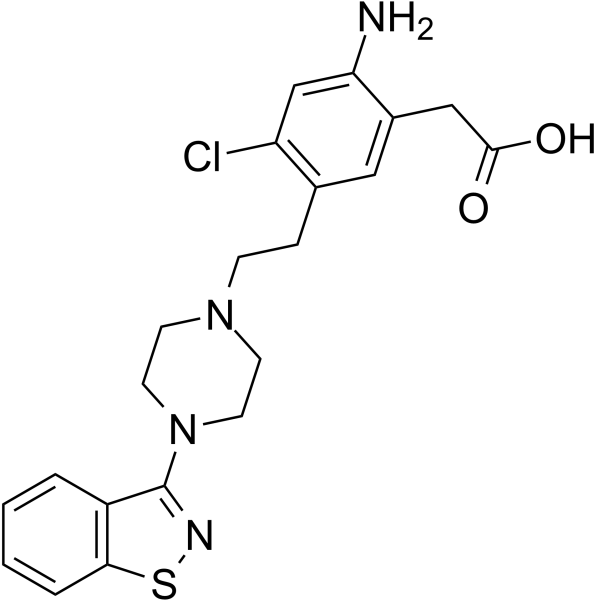
Ziprasidone amino acid (Ziprasidone Impurity C) is an impurity of Ziprasidone. Ziprasidone is a combined 5-HT (serotonin) and dopamine receptor antagonist. Ziprasidone exhibits potent effects of antipsychotic activity .
|
-
-
- HY-108512
-
|
|
Sigma Receptor
|
Neurological Disease
|
|
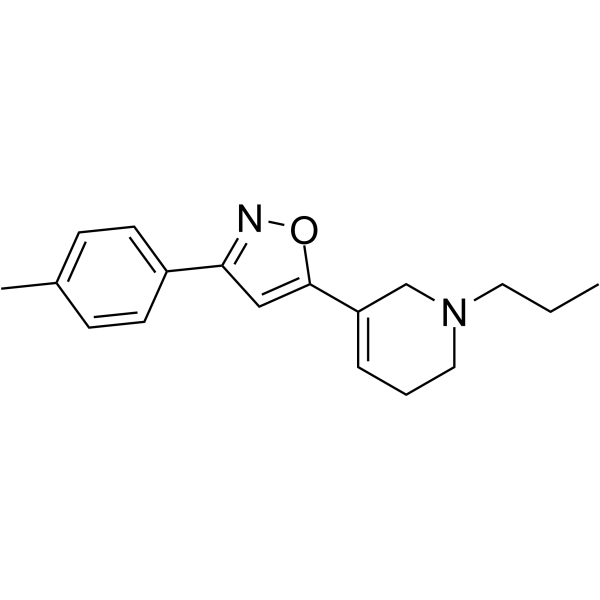
PD 144418 is a highly affinity, potent and selective sigma 1 (σ1) receptor ligand (Ki values of 0.08 nM and 1377 nM for σ1 and σ2 respectively). PD 144418 devoids of any significant affinity for other receptors, ion channels and enzymes. PD 144418 shows potential antipsychotic activity .
|
-
-
- HY-117829
-
UNC9994
2 Publications Verification
|
Dopamine Receptor
5-HT Receptor
Histamine Receptor
Arrestin
|
Neurological Disease
|
|
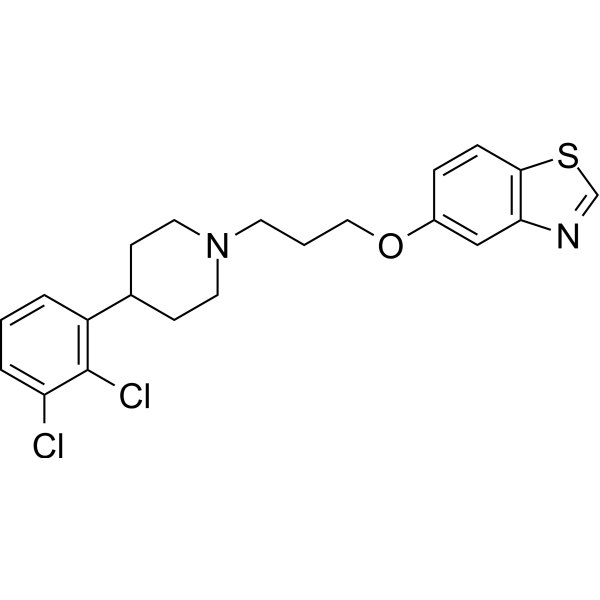
UNC9994, an analog of Aripiprazole, is a functionally selective β-arrestin-biased dopamine D2 receptor (D2R) agonist with EC50 <10 nM for β-arrestin-2 recruitment to D2 receptors. UNC9994 is simultaneously partial agonists of β-arrestin-2 translocation and antagonists of Gi-regulated cAMP production. Antipsychotic Activity .
|
-
-
- HY-147395
-
|
|
GPR52
|
Neurological Disease
|
|
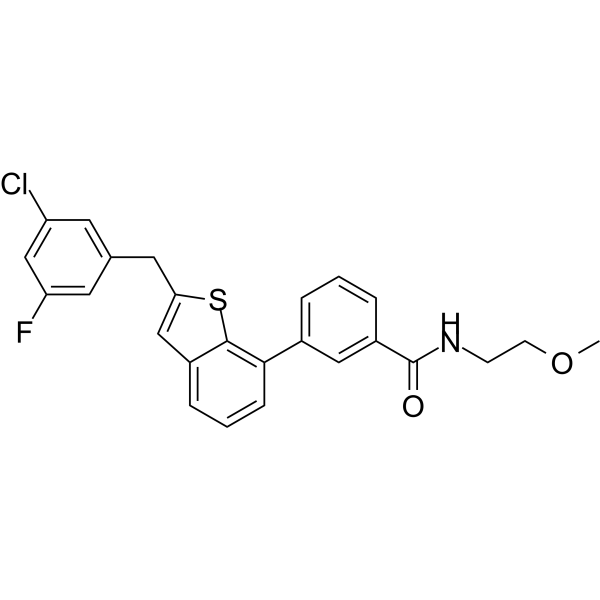
GPR52 agonist-1 is a potent, orally active and blood-brain barrier (BBB) penetrant GPR52 agonist with an pEC50 value of 7.53. GPR52 agonist-1 affects cAMP accumulation through direct interaction with GPR52. GPR52 agonist-1 can significantly suppress Methamphetamine-induced hyperactivity in mice. Antipsychotic activity .
|
-
-
- HY-112432
-
|
|
GlyT
|
Neurological Disease
|
|
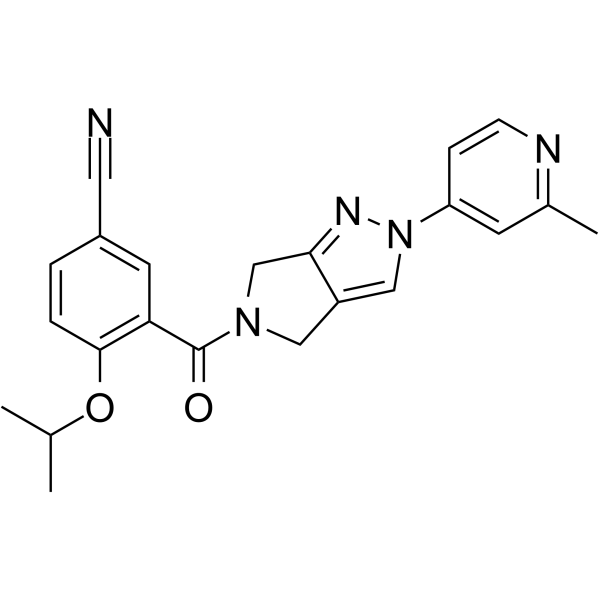
GlyT1 Inhibitor 1 is a potent and selective GlyT1 inhibitor with an IC50 of 38 nM for rGlyT1 . Antipsychotic activity .
|
-
-
- HY-14940S
-
|
MDL100907-d4 hydrochloride; M 100907-d4 hydrochloride
|
5-HT Receptor
|
Neurological Disease
|
|
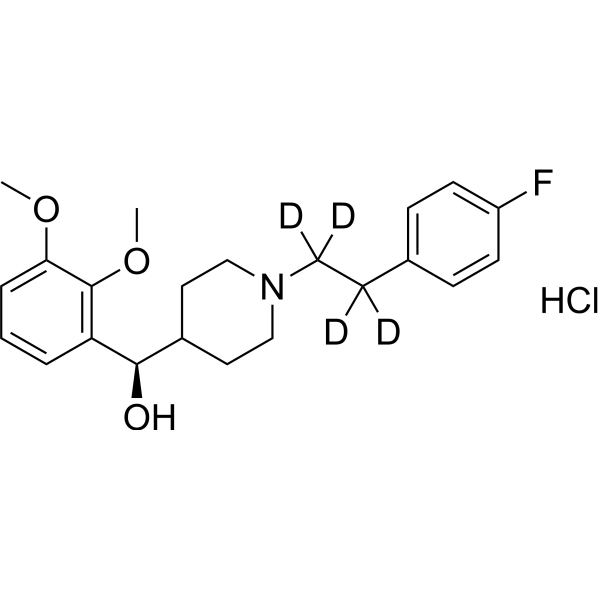
Volinanserin-d4 (hydrochloride) is the deuterium labeled Volinanserin hydrochlorid. Volinanserin is a potent and selective antagonist of 5-HT2 receptor, with a Ki of 0.36 nM, and shows 300-fold selectivity for 5-HT2 receptor over 5-HT1c, alpha-1 and DA D2 receptors. Volinanserin has antipsychotic activity .
|
-
-
- HY-108512A
-
|
|
Sigma Receptor
|
Neurological Disease
|
|
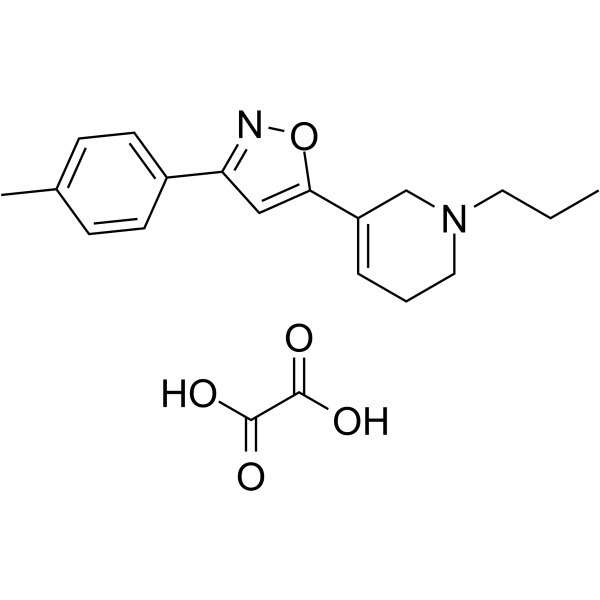
PD 144418 oxalate is a highly affinity, potent and selective sigma 1 (σ1) receptor ligand (Ki values of 0.08 nM and 1377 nM for σ1 and σ2 respectively). PD 144418 oxalate devoids of any significant affinity for other receptors, ion channels and enzymes. PD 144418 oxalate shows potential antipsychotic activity .
|
-
-
- HY-136281
-
|
|
Sigma Receptor
|
Neurological Disease
|
|
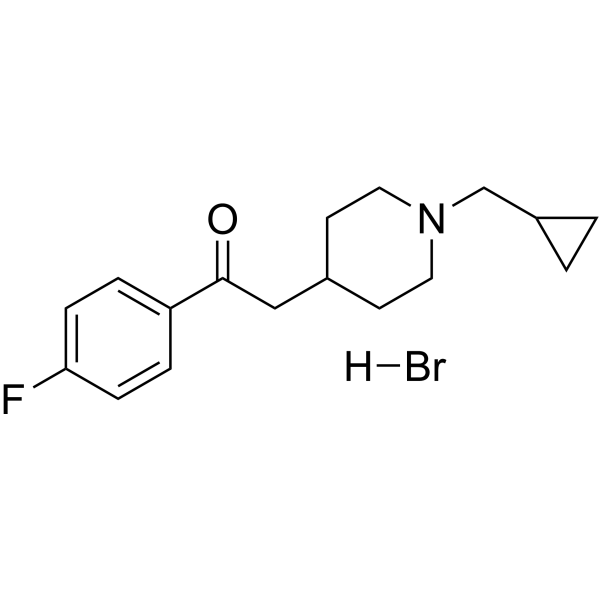
DuP 734 is a sigma receptor antagonist. DuP 734 is a selective and potent sigma and 5-HT2 receptor ligand with weak affinity for D2 receptors. DuP 734 may have antipsychotic activity without the liability of motor side effects typical of neuroleptics .
|
-
-
- HY-14940A
-
|
(S)-MDL100907; (S)-M 100907
|
5-HT Receptor
|
Neurological Disease
|
|
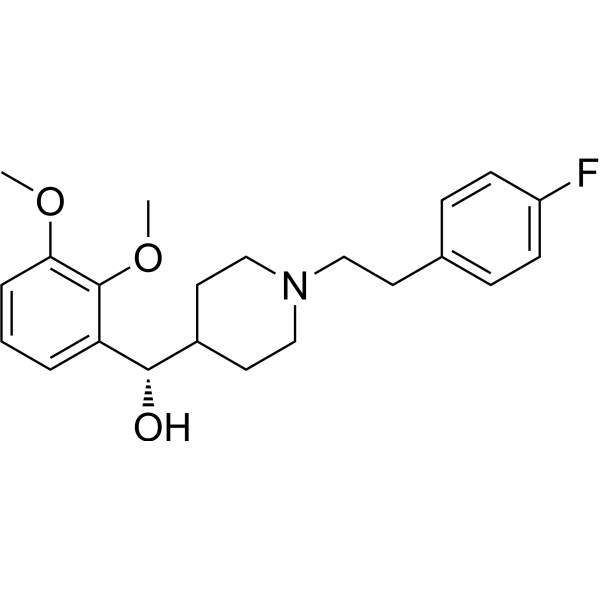
(S)-Volinanserin is an isform of Volinanserin (HY-14940). Volinanserin is a potent and selective antagonist of 5-HT2 receptor, with a Ki of 0.36 nM, and shows 300-fold selectivity for 5-HT2 receptor over 5-HT1c, alpha-1 and DA D2 receptors. Volinanserin has antipsychotic activity.
|
-
-
- HY-100971
-
|
AMI-193
|
5-HT Receptor
Dopamine Receptor
|
Neurological Disease
|
|
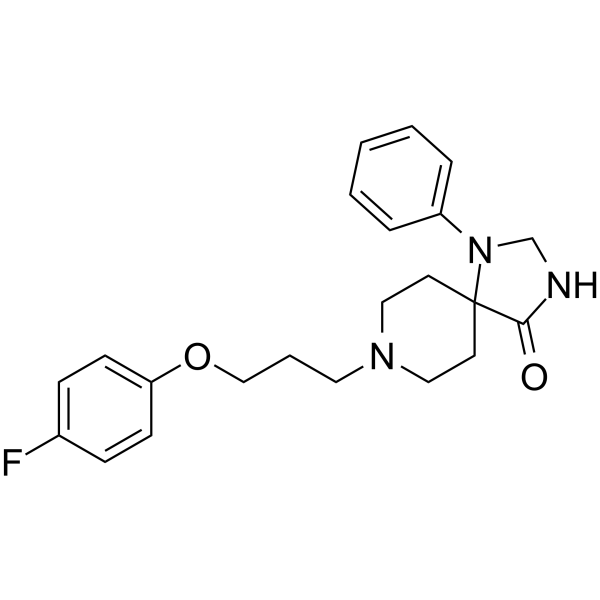
Spiramide (AMI-193) is a potent and selective antagonist of 5-HT2 and dopamine D2 receptor, with Kis of 2 nM and 3 nM, respectively. Spiramide has >2000-fold selectivity for 5-HT2 versus 5-HT1C (Ki=4300 nM) receptors. Spiramide exhibits antipsychotic activity .
|
-
-
- HY-W648166
-
|
|
Dopamine Receptor
|
Neurological Disease
|
|
Dopamine D2 receptor antagonist-3 (Example 17) is an orally active and selective dopamine D2 receptor antagonist with a pIC50 of 5.52. Dopamine D2 receptor antagonist-3 exhibits antipsychotic activity in the Apomorphine (HY-12723) induced agitation in rats. Dopamine D2 receptor antagonist-3 can be used for psychiatric and neurological disorders research .
|
-

-
- HY-127120
-
|
|
Dopamine Receptor
|
Neurological Disease
|
|
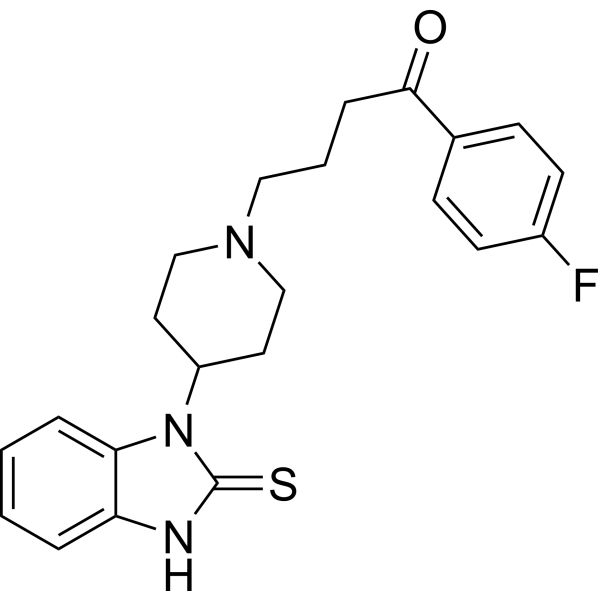
Timiperone has a strong affinity for cerebral dopamine D2 receptor. Timiperone has antipsychotic activity, and inhibits stereotyped behaviour. Timiperone can be used for research of schizophrenia .
|
-
-
- HY-14458
-
|
|
Phosphodiesterase (PDE)
|
Neurological Disease
|
|
SCH-1518291 (Compound 27) is an orally active PDE10A inhibitor. SCH-1518291 exhibits antipsychotic activity in an ADHD rat model. SCH-1518291 can be used in research on neurological disorders such as psychosis .
|
-

-
- HY-116855
-
|
|
mGluR
|
Neurological Disease
|
|
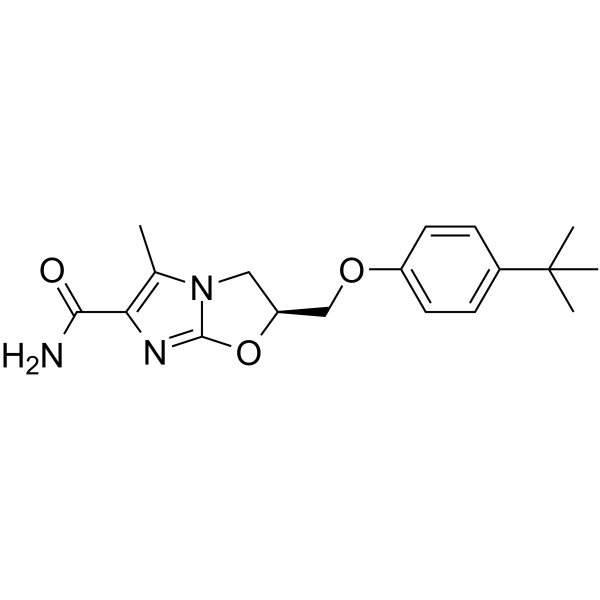
TASP0433864 is a selective positive allosteric modulator (PAM) of metabotropic glutamate 2 (mGlu2) receptor with EC50 values of 199 nM and 206 nM against human and rat mGlu2 receptors, respectively. TASP0433864 has antipsychotic activity .
|
-
-
- HY-170499
-
|
BI02982816
|
mGluR
|
Neurological Disease
|
|
VU6024578 (BI02982816) is a selective, orally active positive allosteric modulator (PAM) for metabotropic glutamate receptor (mGluR1), that activates human mGluR1 and rat mGluR1 with EC50 of 54 nM and 46 nM. VU6024578 exhibits antipsychotic activity in rats amphetamine-induced hyperactivity models and MK-801 (HY-15084B)-induced novel object recognition (NOR) models. VU6024578 is blood brain barrier penetrable .
|
-

-
- HY-100703A
-
|
Floropipamide dihydrochloride; McN-JR 3345 dihydrochloride; R 3345 dihydrochloride
|
Dopamine Receptor
5-HT Receptor
|
Neurological Disease
|
|
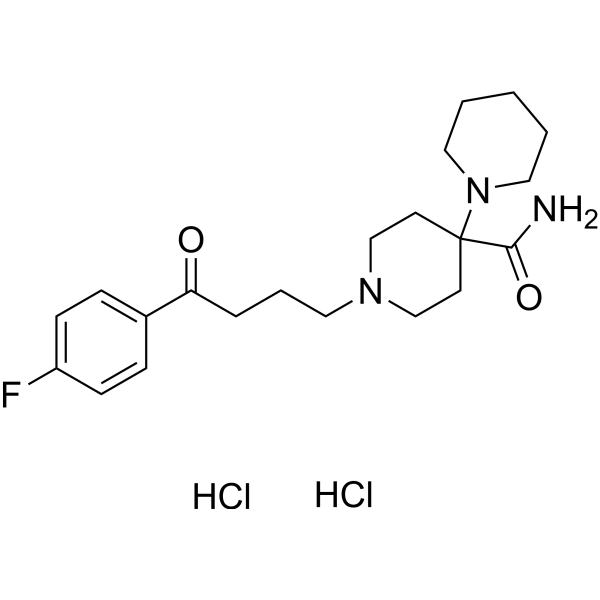
Pipamperone dihydrochloride (Floropipamide dihydrochloride) is a butyrophenone derivative and high-affinity antagonist of 5-HT2A receptor (pKi=8.2) and D4 receptor (pKi=8.0). Pipamperone dihydrochloride is also a low-affinity antagonist of D2 receptor (pKi=6.7). Pipamperone dihydrochloride affects neurotransmitter functions and exerts antipsychotic activity. Pipamperone dihydrochloride is used in the research of mental disorders such as autism-related behavioral disorders and Alzheimer's disease .
|
-
-
- HY-A0019AS
-
|
9-Hydroxyrisperidone palmitate-d4
|
Isotope-Labeled Compounds
Dopamine Receptor
5-HT Receptor
|
Neurological Disease
|
|
Paliperidone palmitate-d4 (9-Hydroxyrisperidone palmitate-d4) is the deuterium labeled Paliperidone palmitate (HY-A0019A). Paliperidone palmitate is an orally effective competitive antagonist of dopamine D2 receptors and 5-hydroxytryptamine 2A (5-HT2A) receptors that can cross the blood-brain barrier. Paliperidone palmitate competitively inhibits the effects of dopamine and 5-hydroxytryptamine by binding to dopamine D2 receptors and 5-HT2A receptors, regulating the balance of the neurotransmitter system and thus exerting antipsychotic activity. Paliperidone palmitate is mainly used in the research field of schizophrenia .
|
-

-
- HY-155378
-
-
-
- HY-167875
-
|
HRP 913
|
Dopamine Receptor
|
Neurological Disease
|
|
Neflumozide (HRP 913) is an orally active benzisoxazole derivative and a potent dopamine antagonist with antipsychotic activity. Neflumozide can be utilized in psychosis research .
|
-

-
- HY-14542S
-
-
-
- HY-B0901A
-
|
R-11333 hydrochloride
|
Dopamine Receptor
Bacterial
|
Neurological Disease
|
|
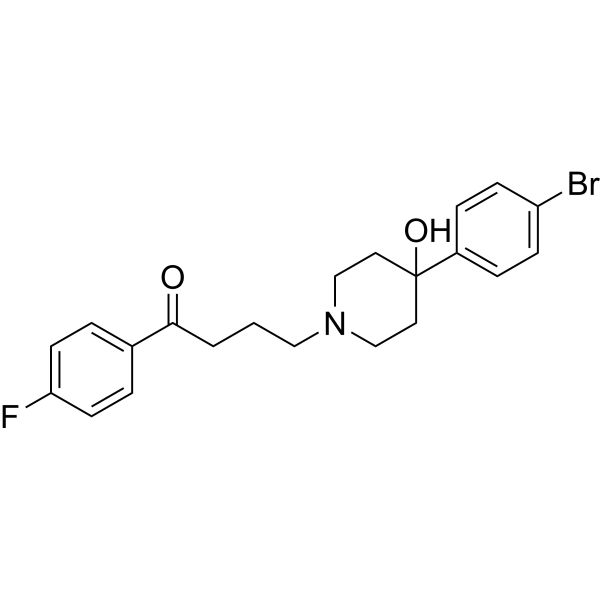
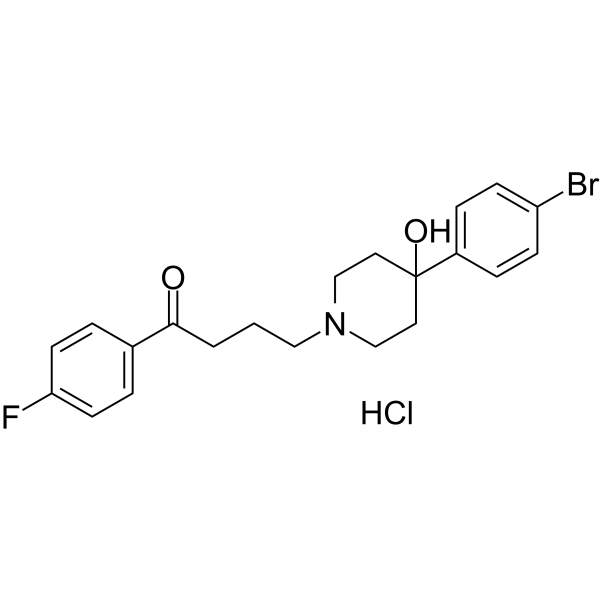
Bromperidol (R-11333) hydrochloride possesses antipsychotic activity, with a high affinity for central dopamine receptors D2. Bromperidol hydrochloride can kill Mycobacteria in a synergistic manner with Spectinomycin .
|
-
-
- HY-113575
-
|
OPC-14857 hydrochloride; DM-14857 hydrochloride
|
5-HT Receptor
|
Neurological Disease
|
|
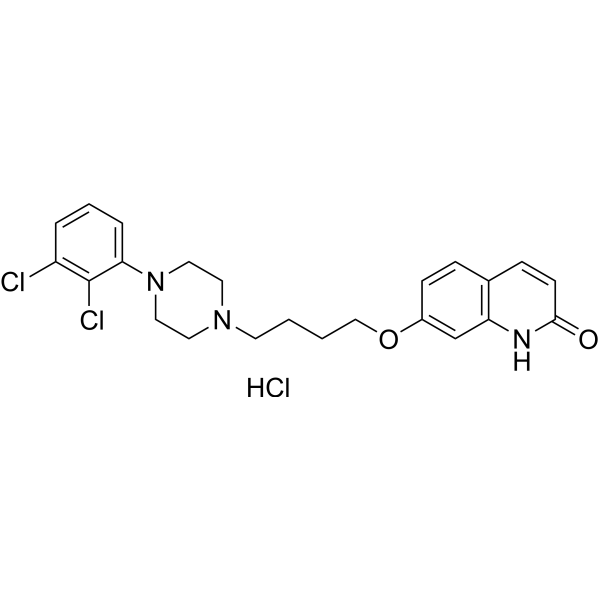
Dehydroaripiprazole (OPC-14857) hydrochloride is an active metabolite of Aripiprazole. Aripiprazole is an antipsychotic agent and is metabolized by CYP3A4 and CYP2D6 forming mainly Dehydroaripiprazole hydrochloride. Dehydroaripiprazole hydrochloride has with antipsychotic activity equivalent to Aripiprazole .
|
-
-
- HY-N12171
-
|
|
Bacterial
|
Infection
Neurological Disease
|
|
Isoreserpiline is an orally active and BBB-penetrable indole alkaloids with antibacterial and antipsychotic activity. Isoreserpiline is even more effective when used in combination with antibiotics and inhibits the activity of bacterial efflux pumps. Isoreserpiline improves Amphetamine-induced hyperactivity in mice .
|
-

-
- HY-106820
-
|
|
Dopamine Receptor
|
Neurological Disease
|
|
BRL 34778 is a potent, selective and orally active dopamine D2 receptor antagonist with a Ki of 2.14 nM. BRL 34778 exhibits antipsychotic activity with low activity for extrapyramidal effects and sedation. BRL 34778 can be used for the research of neurological disease, such as schizophrenia .
|
-

-
- HY-B0901R
-
|
R-11333 (Standard)
|
Reference Standards
Dopamine Receptor
Bacterial
|
Infection
Neurological Disease
|
|
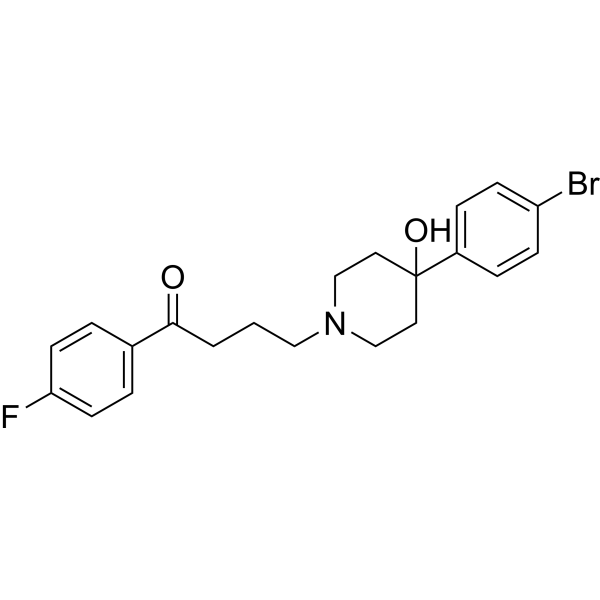
Bromperidol (Standard) is the analytical standard of Bromperidol. This product is intended for research and analytical applications. Bromperidol (R-11333) possesses antipsychotic activity, with a high affinity for central dopamine receptors D2. Bromperidol can kill Mycobacteria in a synergistic manner with Spectinomycin .
|
-
-
- HY-B0274AS
-
-
-
- HY-100665S
-
|
OPC-14857-d8; DM-14857-d8
|
Isotope-Labeled Compounds
5-HT Receptor
|
Neurological Disease
|
|
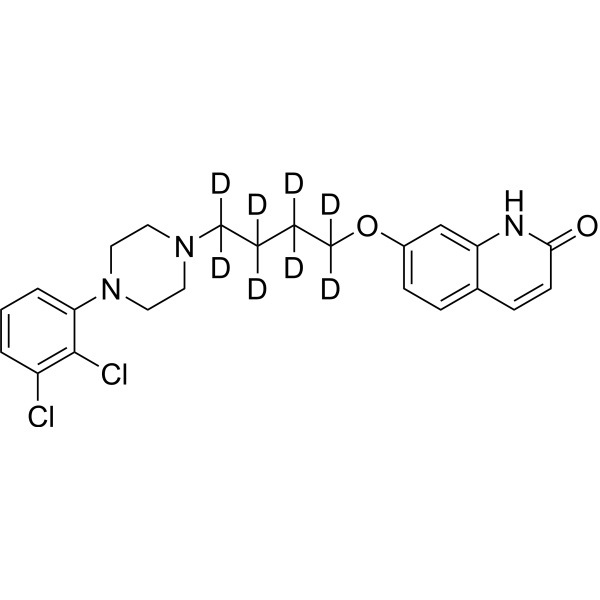
Dehydroaripiprazole-d8 is deuterium labeled Dehydroaripiprazole. Dehydroaripiprazole (OPC-14857) is an active metabolite of Aripiprazole. Aripiprazole is an antipsychotic agent and is metabolized by CYP3A4 and CYP2D6 forming mainly Dehydroaripiprazole. Dehydroaripiprazole has with antipsychotic activity equivalent to Aripiprazole .
|
-
-
- HY-119385
-
|
|
Dopamine Receptor
|
Neurological Disease
|
|
Savoxepin mesylate is a D2 dopamine receptor (D2 Dopamine Receptor) antagonist with antipsychotic activity. Savoxepin mesylate selectively blocks dopamine D2 receptors in the hippocampus while having no significant effect on D2 receptors in the striatum. This selective blockade helps reduce the risk of extrapyramidal side effects (EPS) .
|
-

-
- HY-B0274R
-
|
|
Reference Standards
Dopamine Receptor
Histamine Receptor
Bacterial
|
Neurological Disease
|
|
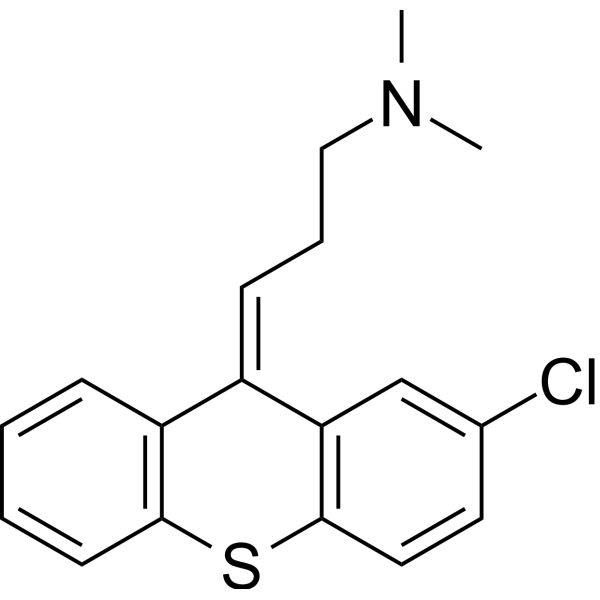
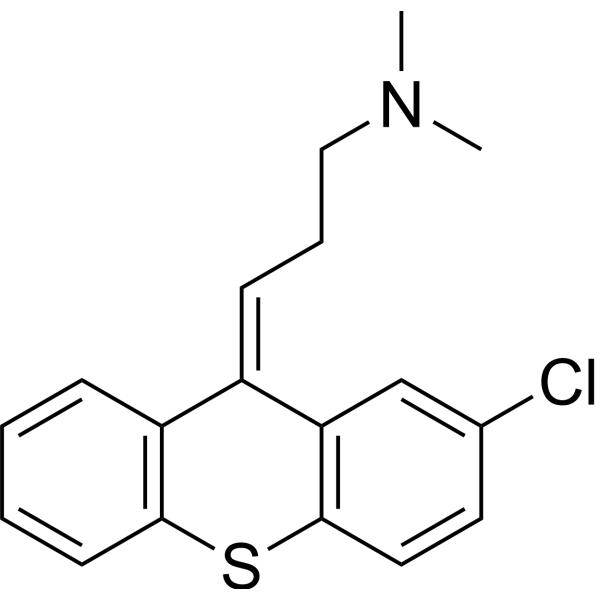
Chlorprothixene (Standard) is the analytical standard of Chlorprothixene. This product is intended for research and analytical applications. Chlorprothixene is a dopamine and histamine receptors antagonist with Kis of 18 nM, 2.96 nM, 4.56 nM, 9 nM and 3.75 nM for hD1, hD2, hD3, hD5 and hH1 receptors, respectively. Antipsychotic activity .
|
-
-
- HY-B0274AR
-
|
|
Reference Standards
Dopamine Receptor
Histamine Receptor
Bacterial
|
Neurological Disease
|
|
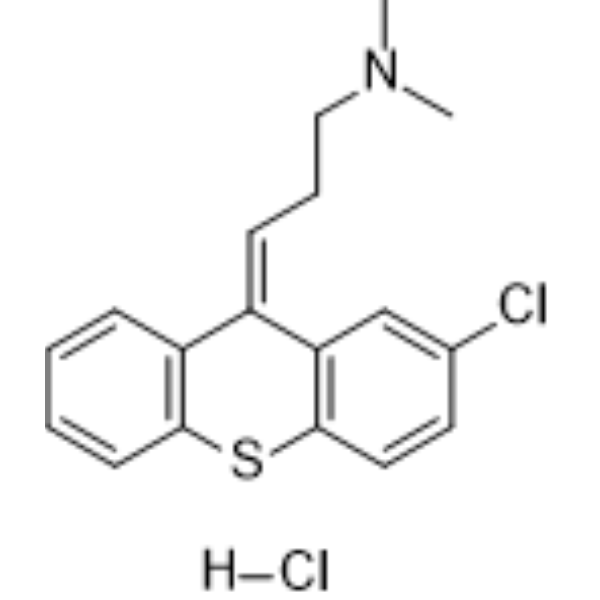
Chlorprothixene (hydrochloride) (Standard) is the analytical standard of Chlorprothixene (hydrochloride). This product is intended for research and analytical applications. Chlorprothixene hydrochloride is a dopamine and histamine receptors antagonist with Kis of 18 nM, 2.96 nM, 4.56 nM, 9 nM and 3.75 nM for hD1, hD2, hD3, hD5 and hH1 receptors, respectively. Antipsychotic activity .
|
-

-
- HY-14264S
-
|
|
Isotope-Labeled Compounds
5-HT Receptor
|
Neurological Disease
|
|
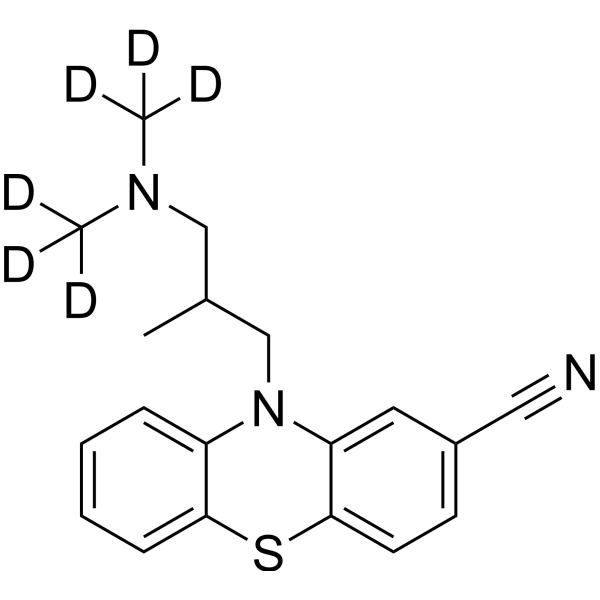
Cyamemazine-d6 is the deuterium labeled Cyamemazine. Cyamemazine is a neuroleptic agent that contains the phenothiazine chromophore. Cyamemazine is often used as an anxiolytic. Cyamemazine is a potent 5-HT3 (Ki of 12 nM), 5-HT2A (Ki = 1.5 nM) and 5-HT2C (Ki of 75 nM) receptors antagonist with antipsychotic activity .
|
-
-
- HY-14543R
-
-

-
- HY-14264R
-
|
|
5-HT Receptor
|
Neurological Disease
|
|
Cyamemazine (Standard) is the analytical standard of Cyamemazine. This product is intended for research and analytical applications. Cyamemazine is a neuroleptic agent that contains the phenothiazine chromophore. Cyamemazine is often used as an anxiolytic. Cyamemazine is a potent 5-HT3 (Ki of 12 nM), 5-HT2A (Ki = 1.5 nM) and 5-HT2C (Ki of 75 nM) receptors antagonist with antipsychotic activity .
|
-

-
- HY-101484AR
-
|
|
Reference Standards
Sigma Receptor
ATF6
|
Neurological Disease
|
|
NE-100 hydrochloride (Standard) is the analytical standard of NE-100 hydrochloride (HY-101484A). This product is intended for research and analytical applications. NE-100 hydrochloride is an orally active and selective sigma-1 receptor antagonist with an IC50 of 4.16 nM. NE-100 hydrochloride can improve cognitive impairment and has neuroprotective and antipsychotic activities. NE-100 hydrochloride can be used for research on nervous system diseases .
|
-

-
- HY-19186
-
|
CI 1007
|
Dopamine Receptor
|
Neurological Disease
|
|
PD-143188 (CI 1007) is a selective agonist targeting dopamine (DA) receptors, with Ki values of 25.5 nM and 16.6 nM for human D2 and D3 receptors, respectively and lower affinity for D4.2 receptors (Ki=90.9 nM). PD-143188 inhibits DA release, synthesis and metabolism, while reducing cellular cyclic AMP levels, exerting antipsychotic activity. PD-143188 is promising for research of psychopharmacology .
|
-

-
- HY-107969R
-
|
|
Dopamine Receptor
Reference Standards
COX
NO Synthase
|
Neurological Disease
|
|
Haloperidol decanoate (Standard) is the analytical standard of Haloperidol decanoate. This product is intended for research and analytical applications. Haloperidol decanoate is a depot preparation of haloperidol, a commonly used butyrophenone derivative with antipsychotic activity. Haloperidol decanoate can increase the striatal D2 receptor in rat. Haloperidol decanoate can improve conditions of psychoses (mainly schizophrenia). Haloperidol decanoate can lead to increased accumulation of the dopamine metabolites homo-vanillic acid. Haloperidol decanoate can reduce intestinal transport, increase gastric emptying and reduce acid output in rat model .
|
-

-
- HY-100665R
-
|
OPC-14857 (Standard); DM-14857 (Standard)
|
Reference Standards
5-HT Receptor
|
Neurological Disease
|
|
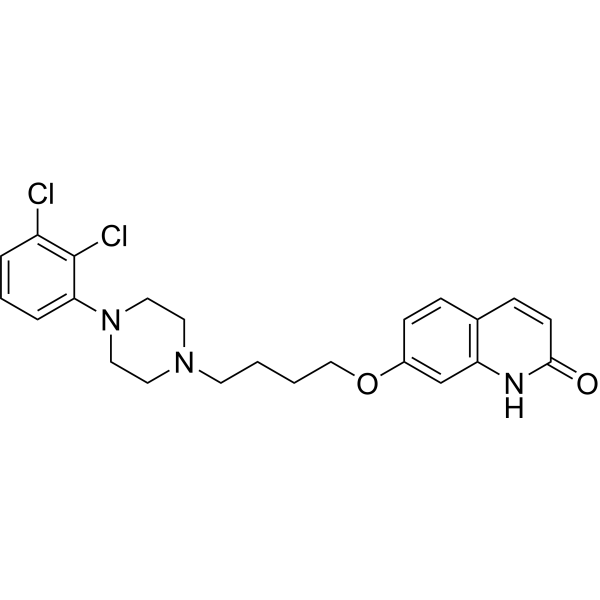
Dehydroaripiprazole (Standard) is the analytical standard of Dehydroaripiprazole. This product is intended for research and analytical applications. Dehydroaripiprazole (OPC-14857) is an active metabolite of Aripiprazole (HY-14546) and dopamine D2/D3 receptor partial agonist. Dehydroaripiprazole also has certain affinity for serotonin 5-HT1A, 5-HT2A and 5-HT2B receptors. Dehydroaripiprazole has antipsychotic activity equivalent to Aripiprazole .
|
-
- HY-100703S
-
|
Floropipamide-d10 dihydrochloride; McN-JR 3345-d10 dihydrochloride; R 3345-d10 dihydrochloride
|
Isotope-Labeled Compounds
Dopamine Receptor
5-HT Receptor
|
Neurological Disease
|
|
Pipamperone-d10 (Floropipamide-d10) dihydrochloride is a deuterated Pipamperone dihydrochloride (HY-100703A). Pipamperone dihydrochloride (Floropipamide dihydrochloride) is a butyrophenone derivative and high-affinity antagonist of 5-HT2A receptor (pKi=8.2) and D4 receptor (pKi=8.0). Pipamperone dihydrochloride is also a low-affinity antagonist of D2 receptor (pKi=6.7). Pipamperone dihydrochloride affects neurotransmitter functions and exerts antipsychotic activity. Pipamperone dihydrochloride is used in the research of mental disorders such as autism-related behavioral disorders and Alzheimer's disease .
|
-

- HY-100703R
-
|
Floropipamide (Standard); McN-JR 3345 (Standard); R 3345 (Standard)
|
Reference Standards
5-HT Receptor
Dopamine Receptor
|
Neurological Disease
|
|
Pipamperone (Standard) is the analytical standard of Pipamperone (HY-100703). This product is intended for research and analytical applications. Pipamperone (Floropipamide) is a butyrophenone derivative and high-affinity antagonist of 5-HT2A receptor (pKi=8.2) and D4 receptor (pKi=8.0). Pipamperone is also a low-affinity antagonist of D2 receptor (pKi=6.7). Pipamperone affects neurotransmitter functions and exerts antipsychotic activity. Pipamperone is used in the research of mental disorders such as autism-related behavioral disorders and Alzheimer's disease .
|
-

- HY-171328
-
|
|
Dopamine Receptor
|
Neurological Disease
|
|
RG-15 is the orally active antagonist for dopamine receptor that exhibits goof affinity to human D2 receptor and human D3 receptor with pKi of 8.23 and 10.49. RG-15 inhibits dopamine-stimulated [ 35S]GTPγS binding with IC50 of 21.2 nM (rat striatal membranes), 36.7 nM (mouse A9 cells expressing human D2L receptors) and 7.2 nM (CHO cells expressing human D3 receptors). RG-15 increases the turnover and biosynthesis of dopamine in mouse striatum and olfactory bulb, exhibiting antipsychotic activity .
|
-

- HY-A0019AR
-
|
9-Hydroxyrisperidone palmitate (Standard)
|
Dopamine Receptor
5-HT Receptor
Reference Standards
|
Neurological Disease
|
|
Paliperidone palmitate (Standard) is the analytical standard of Paliperidone palmitate. This product is intended for research and analytical applications. Paliperidone palmitate is an orally effective competitive antagonist of dopamine D2 receptors and 5-hydroxytryptamine 2A (5-HT2A) receptors that can cross the blood-brain barrier. Paliperidone palmitate competitively inhibits the effects of dopamine and 5-hydroxytryptamine by binding to dopamine D2 receptors and 5-HT2A receptors, regulating the balance of the neurotransmitter system and thus exerting antipsychotic activity. Paliperidone palmitate is mainly used in the research field of schizophrenia .
|
-

- HY-W724128
-
|
|
Drug Derivative
|
Neurological Disease
|
|
Cariprazine N-oxide (Compound DP-3) is the mono-oxidative degradation product of Cariprazine hydrochloride (HY-14763A). Cariprazine hydrochloride exhibits antipsychotic activity .
|
-

- HY-169837
-
-

| Cat. No. |
Product Name |
Category |
Target |
Chemical Structure |
| Cat. No. |
Product Name |
Chemical Structure |
-
- HY-14940S
-
|
|
|
Volinanserin-d4 (hydrochloride) is the deuterium labeled Volinanserin hydrochlorid. Volinanserin is a potent and selective antagonist of 5-HT2 receptor, with a Ki of 0.36 nM, and shows 300-fold selectivity for 5-HT2 receptor over 5-HT1c, alpha-1 and DA D2 receptors. Volinanserin has antipsychotic activity .
|
-
-
- HY-A0019AS
-
|
|
|
Paliperidone palmitate-d4 (9-Hydroxyrisperidone palmitate-d4) is the deuterium labeled Paliperidone palmitate (HY-A0019A). Paliperidone palmitate is an orally effective competitive antagonist of dopamine D2 receptors and 5-hydroxytryptamine 2A (5-HT2A) receptors that can cross the blood-brain barrier. Paliperidone palmitate competitively inhibits the effects of dopamine and 5-hydroxytryptamine by binding to dopamine D2 receptors and 5-HT2A receptors, regulating the balance of the neurotransmitter system and thus exerting antipsychotic activity. Paliperidone palmitate is mainly used in the research field of schizophrenia .
|
-
-
- HY-14542S
-
|
|
|
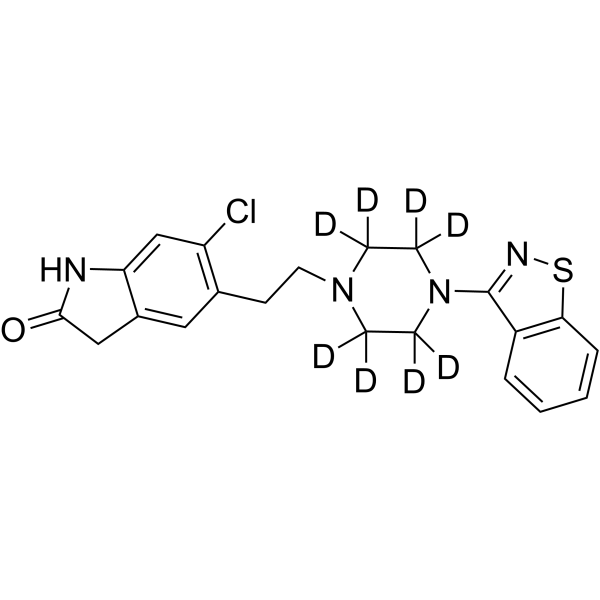
Ziprasidone-d88 is deuterium labeled Ziprasidone, which is a combined 5-HT (serotonin) and dopamine receptor antagonist which exhibits potent effects of antipsychotic activity.
|
-
-
- HY-B0274AS
-
|
|
|
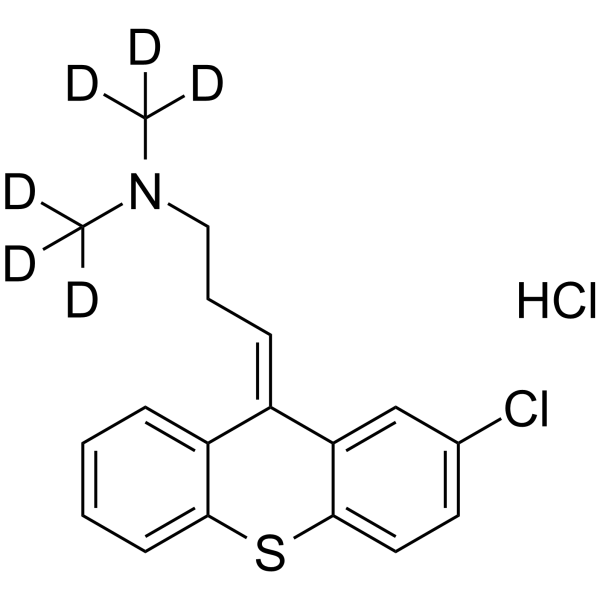
Chlorprothixene-d6 hydrochloride is the deuterium labeled Chlorprothixene hydrochloride. Chlorprothixene hydrochloride is a dopamine and histamine receptors antagonist with Kis of 18 nM, 2.96 nM, 4.56 nM, 9 nM and 3.75 nM for hD1, hD2, hD3, hD5 and hH1 receptors, respectively. Antipsychotic activity .
|
-
-
- HY-100665S
-
|
|
|
Dehydroaripiprazole-d8 is deuterium labeled Dehydroaripiprazole. Dehydroaripiprazole (OPC-14857) is an active metabolite of Aripiprazole. Aripiprazole is an antipsychotic agent and is metabolized by CYP3A4 and CYP2D6 forming mainly Dehydroaripiprazole. Dehydroaripiprazole has with antipsychotic activity equivalent to Aripiprazole .
|
-
-
- HY-14264S
-
|
|
|
Cyamemazine-d6 is the deuterium labeled Cyamemazine. Cyamemazine is a neuroleptic agent that contains the phenothiazine chromophore. Cyamemazine is often used as an anxiolytic. Cyamemazine is a potent 5-HT3 (Ki of 12 nM), 5-HT2A (Ki = 1.5 nM) and 5-HT2C (Ki of 75 nM) receptors antagonist with antipsychotic activity .
|
-
-
- HY-100703S
-
|
|
|
Pipamperone-d10 (Floropipamide-d10) dihydrochloride is a deuterated Pipamperone dihydrochloride (HY-100703A). Pipamperone dihydrochloride (Floropipamide dihydrochloride) is a butyrophenone derivative and high-affinity antagonist of 5-HT2A receptor (pKi=8.2) and D4 receptor (pKi=8.0). Pipamperone dihydrochloride is also a low-affinity antagonist of D2 receptor (pKi=6.7). Pipamperone dihydrochloride affects neurotransmitter functions and exerts antipsychotic activity. Pipamperone dihydrochloride is used in the research of mental disorders such as autism-related behavioral disorders and Alzheimer's disease .
|
-
Your information is safe with us. * Required Fields.
Inquiry Information
- Product Name:
- Cat. No.:
- Quantity:
- MCE Japan Authorized Agent:








