



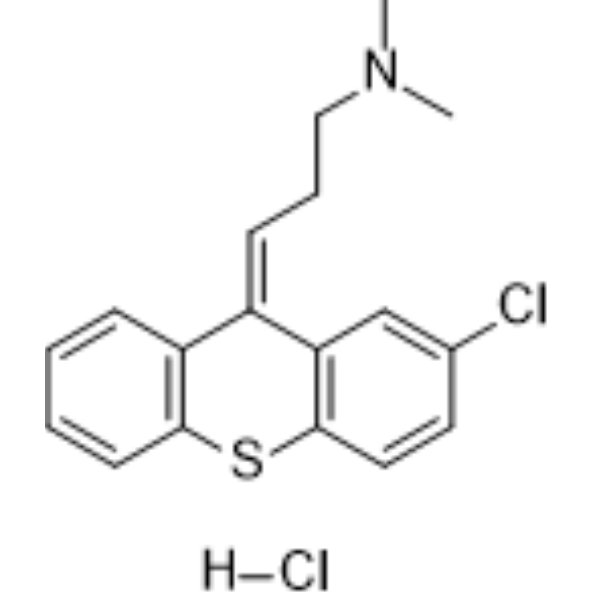
Chlorprothixene hydrochloride
Based on 2 publication(s) in Google Scholar
Chlorprothixene hydrochloride is a dopamine and histamine receptors antagonist with Kis of 18 nM, 2.96 nM, 4.56 nM, 9 nM and 3.75 nM for hD1, hD2, hD3, hD5 and hH1 receptors, respectively. Antipsychotic activity.
For research use only. We do not sell to patients.
- Purity : 99.91%
- CAS No.: 6469-93-8
- Formula: C18H19Cl2NS
- Molecular Weight:352.32
-
Storage:
4°C, sealed storage, away from moisture
* In solvent : -80°C, 6 months; -20°C, 1 month (sealed storage, away from moisture)

To place orders, for customer services and technical support, please contact: MedChemExpress USA
Tel: 609-228-6898 E-mail: [email protected] [email protected]


-
 Biological Activity
-
Chemical Information
-
Solvent & Solubility
- Purity & Documentation
- References
-
 Help & FAQs


-
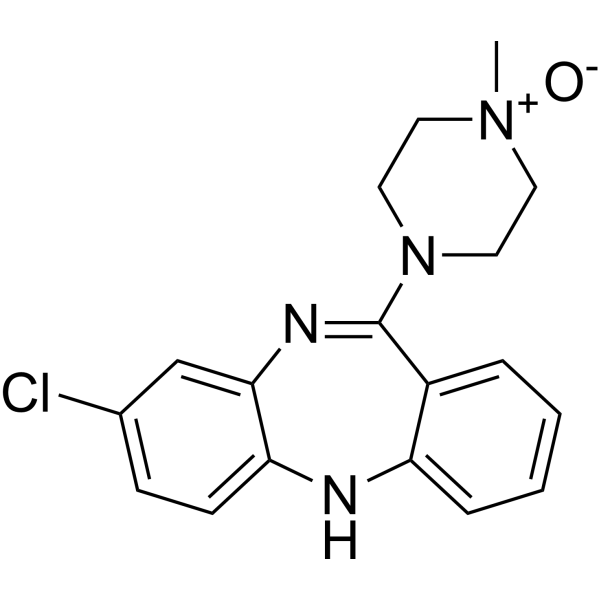
HY-17366
Clozapine N-oxideDREADD Activator -

HY-B0274AR
Chlorprothixene hydrochloride (Standard)Bacterial Inhibitor -
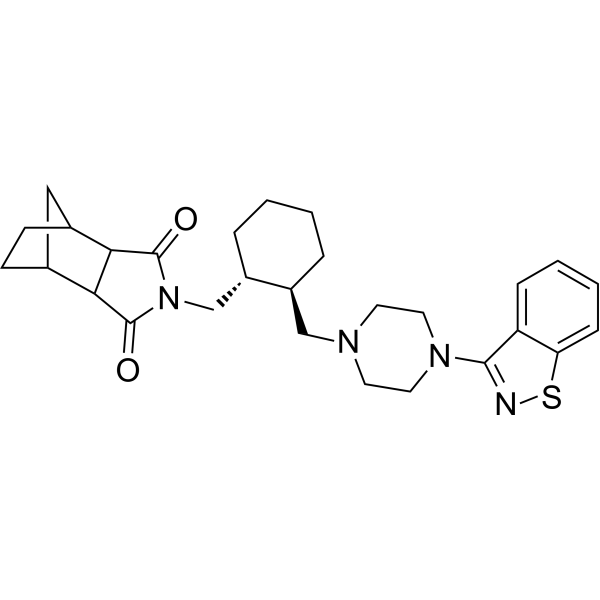
HY-B0032A
Lurasidone -
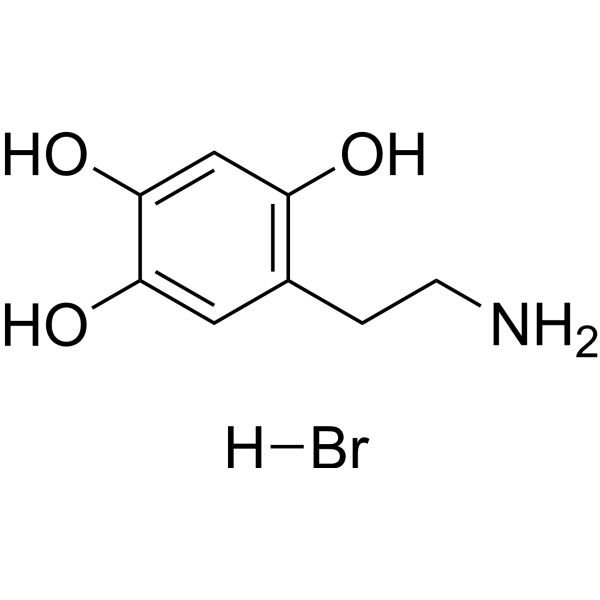
HY-B1081A
Oxidopamine hydrobromideNeurotoxin -
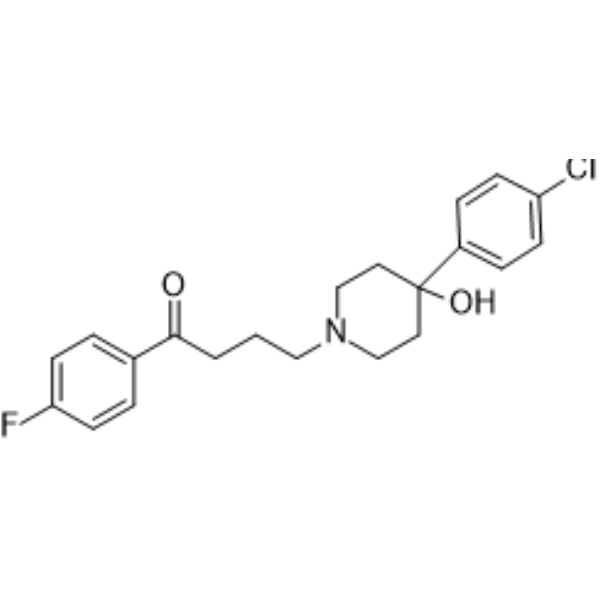
HY-14538
HaloperidolDopamine Receptor Antagonist -
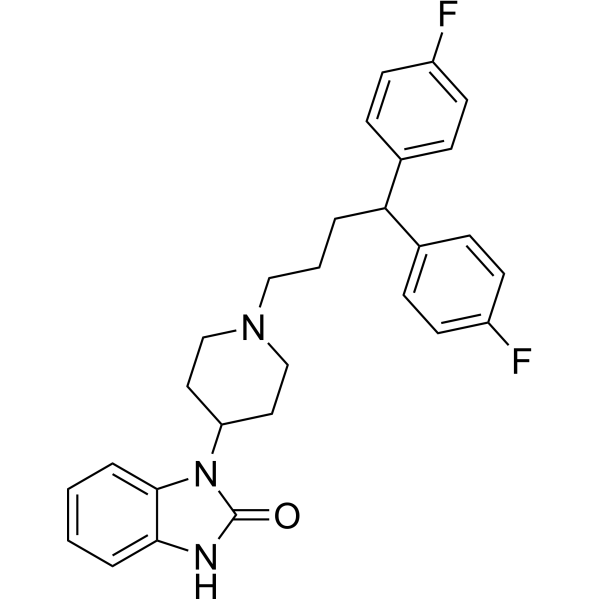
HY-12987
PimozideDopamine Receptor Antagonist -
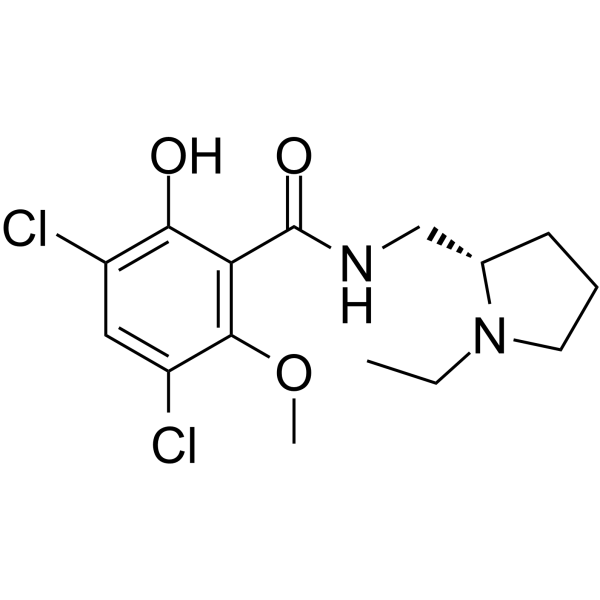
HY-103414
RacloprideDopamine D2/D3 Receptor Antagonist -
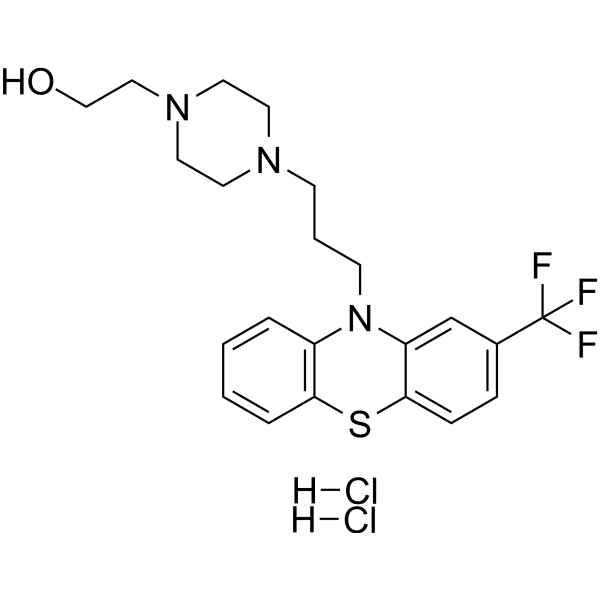
HY-A0081
Fluphenazine dihydrochlorideDopamine Receptor Inhibitor -

HY-17366R
Clozapine N-oxide (Standard)DREADD Activator -
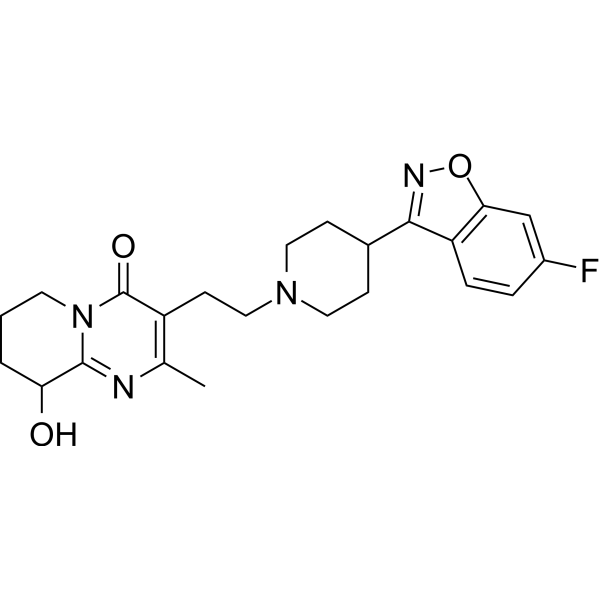
HY-A0019
PaliperidoneDopamine D2/5-HT2A Antagonist -
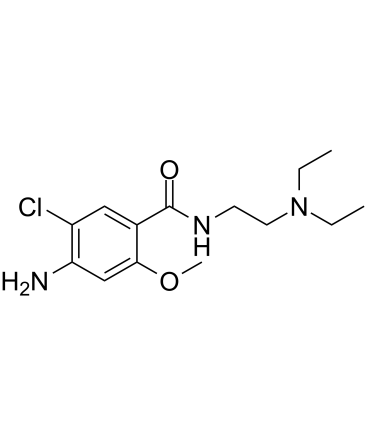
HY-17382
Metoclopramide5-HT3/D2 Receptor Antagonist -
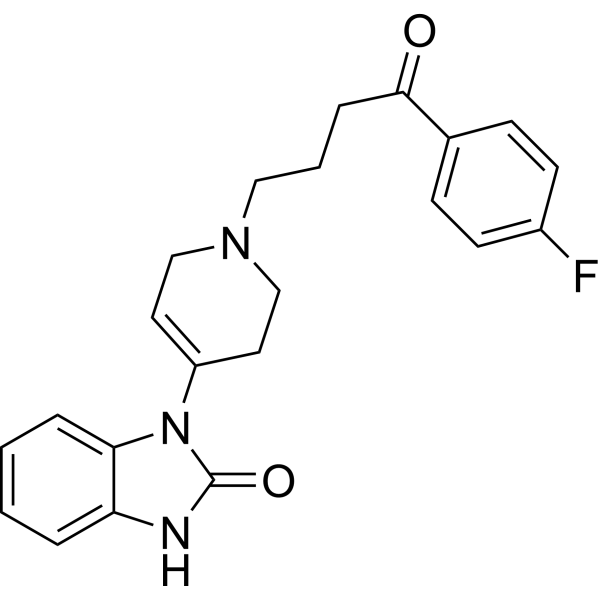
HY-B1240
DroperidolDopamine Receptor Antagonist
Publications Citing Use of MedChemExpress (MCE) Chlorprothixene hydrochloride
MoreAll Dopamine Receptor Isoforms
MoreAll Histamine Receptor Isoforms
More

Biological Activity
Description
IC50 & Target
[1]|
Human D1 Receptor 18 nM (Ki) |
Human D2 Receptor 2.96 nM (Ki) |
Human D3 Receptor 4.56 nM (Ki) |
Human D5 Receptor 9 nM (Ki) |
Human H1 Receptor 3.75 nM (Ki) |
In Vitro
Chlorprothixene binds to 5-HT receptors with pKis of 8.3, 8.5, and 9.4 for 5-HT7, 5-HT6 and 5-HT2, respectively[2].
MedChemExpress (MCE) has not independently confirmed the accuracy of these methods. They are for reference only. .


Chemical Information
-
CAS No. 6469-93-8
-
Appearance Solid
-
Molecular Weight 352.32
-
Formula C18H19Cl2NS
-
Color White to off-white
-
SMILES
CN(C)CC/C=C1C2=C(SC3=C\1C=CC=C3)C=CC(Cl)=C2.[H]Cl
-
Shipping
Room temperature in continental US; may vary elsewhere.
-
Storage
4°C, sealed storage, away from moisture
* In solvent : -80°C, 6 months; -20°C, 1 month (sealed storage, away from moisture)


Publications (2)
-
Journal Impact Factor
-
Most Recent
-
ACS Environ Au
Machine Learning-Assisted Recognition of Environmental Sulfur-Containing Chemicals in Nontargeted Mass Spectrometry Analysis of Inadequate Mass Resolution. [Abstract]2025 Aug 5;5(6):573-582. PMID: 41277996 -
Eur J Pharmacol
Parishin A alleviates insomnia by regulating hypothalamic-pituitary-adrenal axis homeostasis and directly targeting orexin receptor OX2. [Abstract]2025 Jul 5:998:177498. PMID: 40064224


Solvent & Solubility
In Vitro:
H2O : 25 mg/mL (70.96 mM; Need ultrasonic)
Ethanol : 25 mg/mL (70.96 mM; Need ultrasonic)
DMSO : 2.5 mg/mL (7.10 mM; Need ultrasonic; Hygroscopic DMSO has a significant impact on the solubility of product, please use newly opened DMSO)
Please refer to the solubility information to select the appropriate solvent. Once prepared, please aliquot and store the solution to prevent product inactivation from repeated freeze-thaw cycles.
Storage method and period of stock solution: -80°C, 6 months; -20°C, 1 month (sealed storage, away from moisture). When stored at -80°C, please use it within 6 months. When stored at -20°C, please use it within 1 month.
* Note: If you choose water as the stock solution, please dilute it to the working solution, then filter and sterilize it with a 0.22 μm filter before use.
Please refer to the solubility information to select the appropriate solvent. Once prepared, please aliquot and store the solution to prevent product inactivation from repeated freeze-thaw cycles.
Storage method and period of stock solution: -80°C, 6 months; -20°C, 1 month (sealed storage, away from moisture). When stored at -80°C, please use it within 6 months. When stored at -20°C, please use it within 1 month.
* Note: If you choose water as the stock solution, please dilute it to the working solution, then filter and sterilize it with a 0.22 μm filter before use.
Concentration (start) × Volume (start) = Concentration (final) × Volume (final)
In Vivo:
Select the appropriate dissolution method based on your experimental animal and administration route.
- For the following dissolution methods, please ensure to first prepare a clear stock solution using an In Vitro approach and then sequentially add co-solvents:
- To ensure reliable experimental results, the clarified stock solution can be appropriately stored based on storage conditions. As for the working solution for In Vivo experiments, it is recommended to prepare freshly and use it on the same day.
- The percentages shown for the solvents indicate their volumetric ratio in the final prepared solution. If precipitation or phase separation occurs during preparation, heat and/or sonication can be used to aid dissolution.
Add each solvent one by one: 10% EtOH 40% PEG300 5% Tween-80 45% Saline
Solubility: ≥ 2.5 mg/mL (7.10 mM); Clear solution
This protocol yields a clear solution of ≥ 2.5 mg/mL (saturation unknown).
Taking 1 mL working solution as an example, add 100 μL EtOH stock solution (25.0 mg/mL) to 400 μL PEG300, and mix evenly; then add 50 μL Tween-80 and mix evenly; then add 450 μL Saline to adjust the volume to 1 mL.
Preparation of Saline: Dissolve 0.9 g sodium chloride in ddH₂O and dilute to 100 mL to obtain a clear Saline solution.
Add each solvent one by one: 10% EtOH 90% (20% SBE-β-CD in Saline)
Solubility: ≥ 2.5 mg/mL (7.10 mM); Clear solution
This protocol yields a clear solution of ≥ 2.5 mg/mL (saturation unknown).
Taking 1 mL working solution as an example, add 100 μL EtOH stock solution (25.0 mg/mL) to 900 μL 20% SBE-β-CD in Saline, and mix evenly.
Preparation of 20% SBE-β-CD in Saline (4°C, storage for one week): 2 g SBE-β-CD powder is dissolved in 10 mL Saline, completely dissolve until clear.
Add each solvent one by one: 10% EtOH 90% Corn Oil
Solubility: ≥ 2.5 mg/mL (7.10 mM); Clear solution
This protocol yields a clear solution of ≥ 2.5 mg/mL (saturation unknown). If the continuous dosing period exceeds half a month, please choose this protocol carefully.
Taking 1 mL working solution as an example, add 100 μL EtOH stock solution (25.0 mg/mL) to 900 μL Corn oil, and mix evenly.
In Vivo Dissolution Calculator
Please enter the basic information of animal experiments:
-
-
-
-
Recommended: Prepare an additional quantity of animals to account for potential losses during experiments.
Working solution concentration: 0.22 mg/mL
This product has good water solubility, please refer to the measured solubility data in water/PBS/Saline for details.


Purity & Documentation
-
Data Sheet (275 KB)
-
SDS (479 KB)
- English - EN (479 KB)
- Français - FR (479 KB)
- Deutsch - DE (479 KB)
- Norwegian - NO (479 KB)
- Español - ES (479 KB)
- Swedish - SV (479 KB)
- Italian - IT (479 KB)
- Korean - KR (479 KB)
- Portuguese - PT (479 KB)
-
Handling Instructions (2659 KB)
References
[1]. Y von Coburg, et al. Potential utility of histamine H3 receptor antagonist pharmacophore in antipsychotics. Bioorg Med Chem Lett. 2009 Jan 15;19(2):538-42. [Content Brief]
[2]. B L Roth, et al. Binding of typical and atypical antipsychotic agents to 5-hydroxytryptamine-6 and 5-hydroxytryptamine-7 receptors. J Pharmacol Exp Ther. 1994 Mar;268(3):1403-10. [Content Brief]


Complete Stock Solution Preparation Table
Please refer to the solubility information to select the appropriate solvent. Once prepared, please aliquot and store the solution to prevent product inactivation from repeated freeze-thaw cycles.
Storage method and period of stock solution: -80°C, 6 months; -20°C, 1 month (sealed storage, away from moisture). When stored at -80°C, please use it within 6 months. When stored at -20°C, please use it within 1 month.
| Optional Solvent | Concentration Solvent Mass | 1 mg | 5 mg | 10 mg | 25 mg |
|---|---|---|---|---|---|
| DMSO / H2O / Ethanol | 1 mM | 2.8383 mL | 14.1916 mL | 28.3833 mL | 70.9582 mL |
| 5 mM | 0.5677 mL | 2.8383 mL | 5.6767 mL | 14.1916 mL | |
| H2O / Ethanol | 10 mM | 0.2838 mL | 1.4192 mL | 2.8383 mL | 7.0958 mL |
| 15 mM | 0.1892 mL | 0.9461 mL | 1.8922 mL | 4.7305 mL | |
| 20 mM | 0.1419 mL | 0.7096 mL | 1.4192 mL | 3.5479 mL | |
| 25 mM | 0.1135 mL | 0.5677 mL | 1.1353 mL | 2.8383 mL | |
| 30 mM | 0.0946 mL | 0.4731 mL | 0.9461 mL | 2.3653 mL | |
| 40 mM | 0.0710 mL | 0.3548 mL | 0.7096 mL | 1.7740 mL | |
| 50 mM | 0.0568 mL | 0.2838 mL | 0.5677 mL | 1.4192 mL | |
| 60 mM | 0.0473 mL | 0.2365 mL | 0.4731 mL | 1.1826 mL |
* Note: If you choose water as the stock solution, please dilute it to the working solution, then filter and sterilize it with a 0.22 μm filter before use.


Chlorprothixene hydrochloride Related Classifications
HY-B0274A Related Classifications
 Powered by Bioz