


1. Search Result
Search Result
Results for "

disulfide bonds

" in MedChemExpress (MCE) Product Catalog:

38

Inhibitors & Agonists

3

Screening Libraries

5

Biochemical Assay Reagents

7

Peptides

1

Inhibitory Antibodies

2

Isotope-Labeled Compounds

1

Click Chemistry

4

Oligonucleotides

Targets Recommended:
Cat. No. Product Name Target Research Areas Chemical Structure
  • HY-100017
    BAY-876
    Maximum Cited Publications
    52 Publications Verification

    GLUT Disulfidptosis Cancer
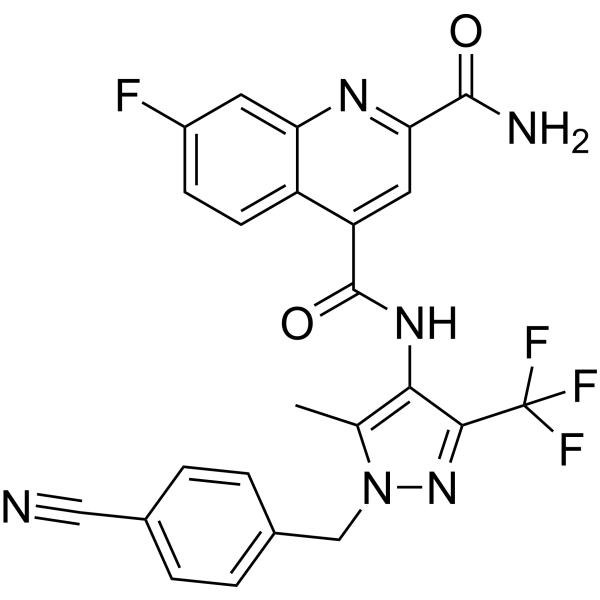
    BAY-876, a chemical probe, is an orally active and selective glucose transporter 1 (GLUT1) inhibitor with an IC50 of 2 nM. BAY-876 is >130-fold more selective for GLUT1 than GLUT2, GLUT3, and GLUT4. BAY-876 is also a potent blocker of glycolytic metabolism and ovarian cancer growth. In addition, BAY-876 can induce the formation of disulfide bonds in actin cytoskeletal proteins, leading to the occurrence of cellular disulfidptosis .
    BAY-876
  • HY-W010572

    alpha-Thioglycerol

    Biochemical Assay Reagents Others
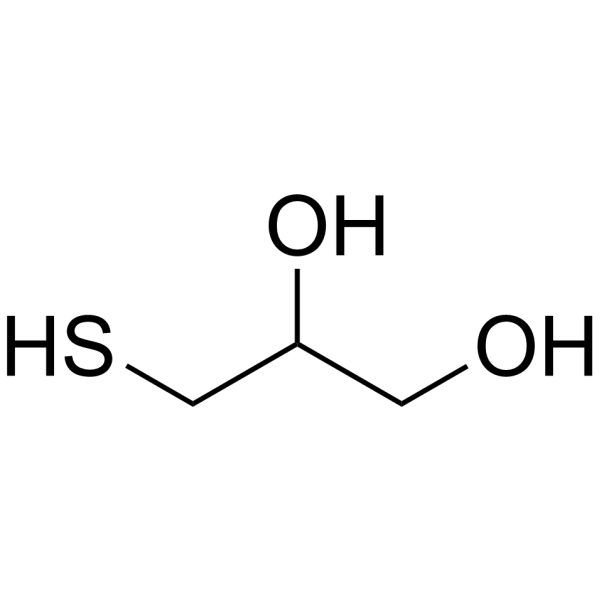
    1-Thioglycerol, commonly used as a reducing agent in various biochemical and biophysical applications, especially in protein chemistry and molecular biology, it can protect proteins from oxidation and denaturation, and can reduce disulfide bonds to thiols base, which can then be modified or analyzed. In addition, 1-Thioglycerol has been investigated for potential medical applications, including as an inhibitor of cystic fibrosis, which may help improve the function of lung cells, and has also been studied for Used in the preparation of metal nanoparticles and as a stabilizer for certain pharmaceutical preparations.
    1-Thioglycerol
  • HY-100432
    LOC14
    4 Publications Verification

    PDI Neurological Disease Inflammation/Immunology
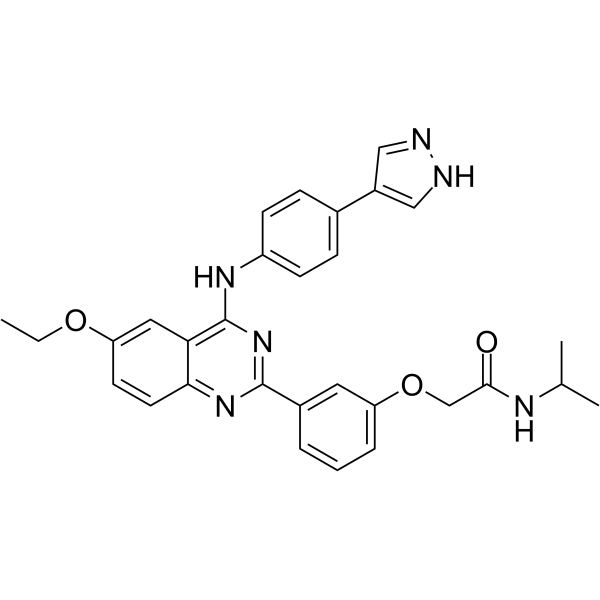
    LOC14 is a potent Protein disulfide isomerase (PDI) inhibitor with EC50 and Kd values of 500 nM and 62 nM, respectively. LOC14 exhibits high stability in mouse liver microsomes and blood plasma, low intrinsic microsome clearance, and low plasma-protein binding . LOC14 inhibits PDIA3 activity, decreases intramolecular disulfide bonds and subsequent oligomerization (maturation) of HA in lung epithelial cells .
    LOC14
  • HY-NP008

    Lipocalin Family Inflammation/Immunology
    β-Lactoglobulin, a major whey protein, is a small globular protein from the lipocalin family. β-Lactoglobulin is an important source of the essential and branched-chain amino acids (leucine, isoleucine, and valine). β-Lactoglobulin shows antioxidant properties, because it contains two disulfide bonds and one free thiol group. β-Lactoglobulin is a ligand transport agent. β-Lactoglobulin is one of the major allergens in milk and can be utilized in the research for developing safe hypoallergenic dairy products .
    β-Lactoglobulin
  • HY-145597
    KL-11743
    5 Publications Verification

    GLUT Disulfidptosis Metabolic Disease Cancer
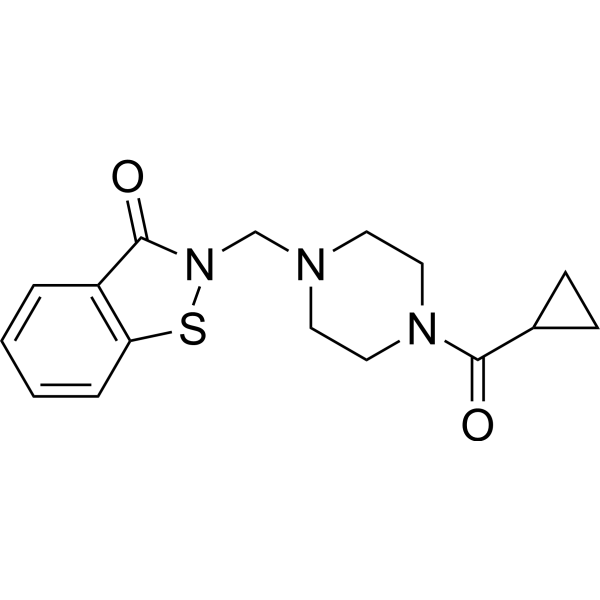
    KL-11743 is a potent, orally active, and glucose-competitive inhibitor of the class I glucose transporters, with IC50s of 115, 137, 90, and 68 nM for GLUT1, GLUT2, GLUT3, and GLUT4, respectively. KL-11743 specifically blocks glucose metabolism. KL-11743 can synergize with electron transport inhibitors to induce cell death. In addition, KL-11743 can induce the formation of disulfide bonds in actin cytoskeletal proteins, leading to the occurrence of cellular disulfidptosis .
    KL-11743
  • HY-100216
    SPDP
    5 Publications Verification

    SPDP Crosslinker; Py-ds-Prp-OSu

    ADC Linker Cancer
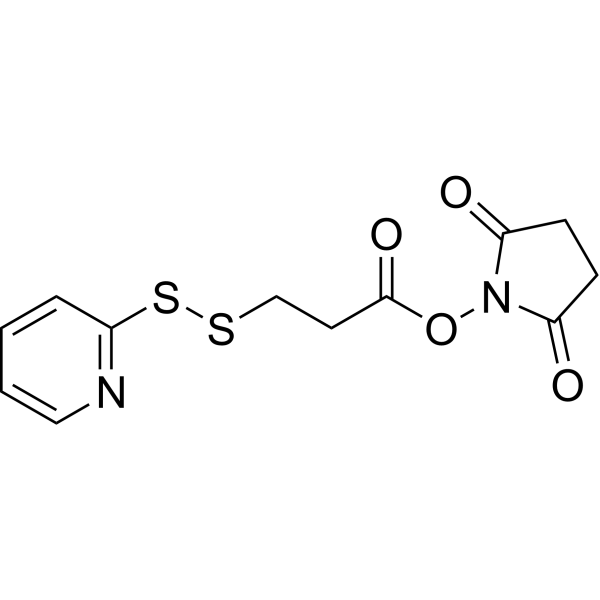
    SPDP (SPDP Crosslinker) is a short-chain crosslinker for amine-to-sulfhydryl conjugation via NHS-ester and pyridyldithiol reactive groups that form cleavable (reducible) disulfide bonds with cysteine sulfhydryls. It is a glutathione cleavable ADC linker used for the antibody-drug conjugates (ADCs) .
    SPDP
  • HY-Y1666

    Biochemical Assay Reagents Others
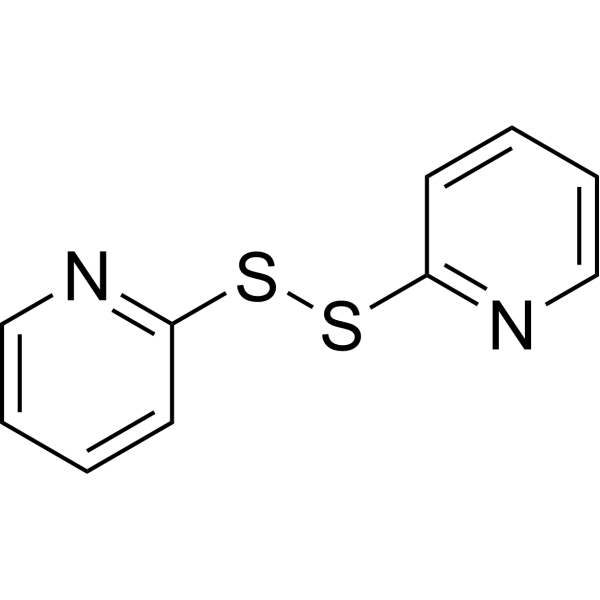
    2,2′-Dipyridyl disulfide is a useful reagent for the determination of sulfhydryl groups. 2,2′-Dipyridyl disulfide is a common reagent in peptide chemistry, often used in oxidation–reduction condensations to form peptide bonds or in coupling reactions to form disulfide-linked heterodimers .
    2,2′-Dipyridyl disulfide
  • HY-15917A
    L-Dithiothreitol
    2 Publications Verification

    Biochemical Assay Reagents Others
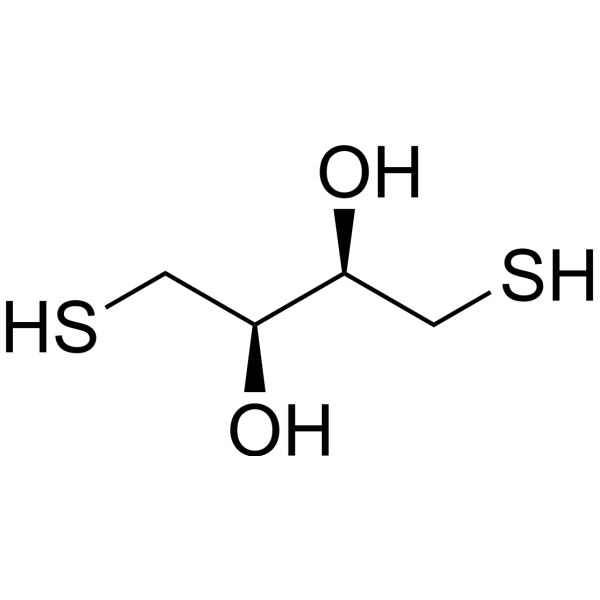
    L-Dithiothreitol (DTT) is a reducing agent commonly used in various biochemical applications to break disulfide bonds in proteins, thereby denaturing proteins or preventing the formation of unwanted aggregates. DTT has a unique chemical property that cleaves the sulfur-sulfur bond in the disulfide bond to form a sulfhydryl group. This makes it a useful tool for protein purification, enzyme assays, and protein structure studies.
    L-Dithiothreitol
  • HY-Y0682S

    EDTA-d12

    Isotope-Labeled Compounds Neurological Disease
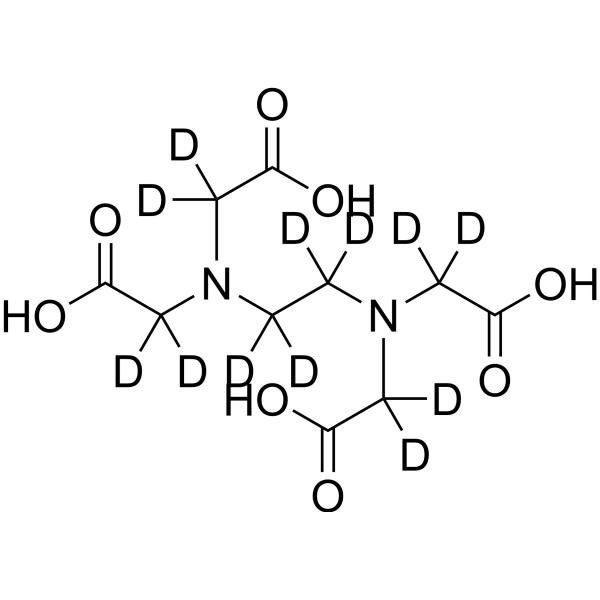
    Ethylenediaminetetraacetic acid-d12 is the deuterium labeled Ethylenediaminetetraacetic acid . Ethylenediaminetetraacetic acid (EDTA) is a metal chelators (binds to metal divalent and trivalent cations including calcium), which shows activities of anticoagulant and anti-hypercalcemic. Ethylenediaminetetraacetic acid decreases the metal ion-catalyzed oxidative damage to proteins, and allows maintenance of reducing environment during protein purification. Ethylenediaminetetraacetic acid can also decrease the formation of disulfide bonds .
    Ethylenediaminetetraacetic acid-d12
  • HY-P99612

    MORAb-202

    Antibody-Drug Conjugates (ADCs) Cancer
    Farletuzumab ecteribulin (MORAb-202) is an antibody-drug conjugate (ADC), consisting of the humanized anti-human folate receptor alpha (FRA) antibody Farletuzumab (HY-P99153) conjugated via reduced interchain disulfide bonds to Mal-PEG2-Val-Cit-PAB-eribulin. Farletuzumab ecteribulin has a agent-to-antibody ratio of 4.0. Farletuzumab ecteribulin is highly cytotoxic to FRA-positive cells in vitro. Farletuzumab ecteribulin has potent antitumor activity.
    Farletuzumab ecteribulin
  • HY-P10352A

    Bacterial Infection
    Pediocin PA-1 TFA is a class IIa bacteriocin that specifically binds to membrane proteins of susceptible Gram-positive bacteria (such as Listeria monocytogenes) to form voltage-independent hydrophilic pores, leading to dissipation of proton motive force, ATP depletion and cell death. Pediocin PA-1 TFA shows no significant activity against intact Gram-negative bacteria, strains carrying immunity genes and obligate anaerobic commensal gut microbiota, and its bactericidal function depends on the integrity of disulfide bonds, with activity lost upon reduction. Pediocin PA-1 TFA can be used not only as a food biopreservative but also for research on listeriosis .
    Pediocin PA 1 TFA
  • HY-139306

    Liposome Inflammation/Immunology
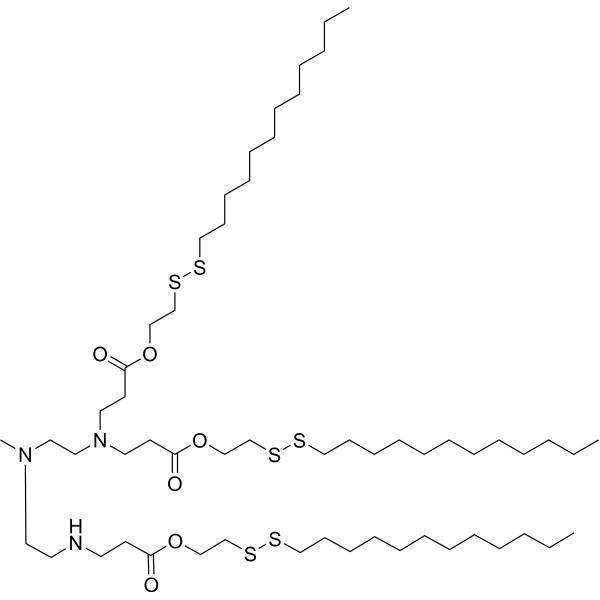
    BAMEAO16B is a lipid nanoparticle. BAMEAO16B integrated with disulfide bonds, can efficiently deliver Cas9 mRNA and sgRNA into cells while releasing RNA in response to the reductive intracellular environment for genome editing. BAMEAO16B can be used for the research of gene editing .
    BAMEA-O16B
  • HY-P991550

    CD22 Cancer
    RFB4 is an anti-CD22 monoclonal antibody. RFB4 can be fused with Pseudomonas aeruginosa exotoxin (PE38) via disulfide bonds to construct recombinant immunotoxins, such as RFB4 (dsFv)-PE38. RFB4 is applicable to the research of cancers including lymphoma .
    RFB4
  • HY-P10352

    Bacterial Infection
    Pediocin PA 1 is a class IIa bacteriocin that specifically binds to membrane proteins of susceptible Gram-positive bacteria (such as Listeria monocytogenes) to form voltage-independent hydrophilic pores, leading to dissipation of proton motive force, ATP depletion and cell death. Pediocin PA 1 shows no significant activity against intact Gram-negative bacteria, strains carrying immunity genes and obligate anaerobic commensal gut microbiota, and its bactericidal function depends on the integrity of disulfide bonds, with activity lost upon reduction. Pediocin PA 1 can be used not only as a food biopreservative but also for research on listeriosis .
    Pediocin PA 1
  • HY-W590531

    Biochemical Assay Reagents Liposome Others
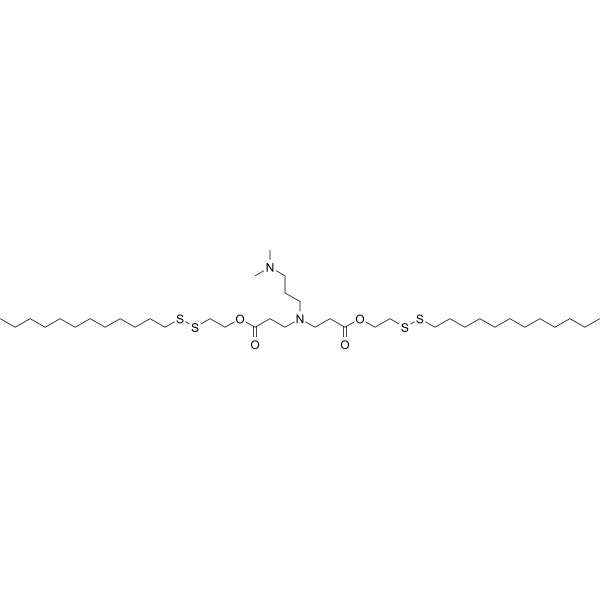
    80-O16B is an ionizable cationic lipid containing disulfide bonds that can be used to prepare lipid nanoparticles (LNP) .
    80-O16B
  • HY-W106411

    Dithio-bis-maleimidoethane

    Biochemical Assay Reagents Others
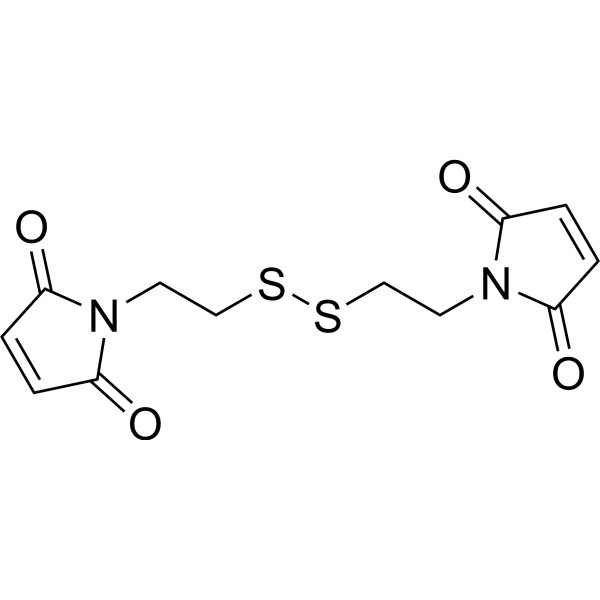
    DTME (dithio-bis-maleimidoethane) is a homobifunctional, maleimide crosslinker specifically designed for conjugation between sulfhydryl groups (-SH). DTME, whose molecular structure consists of two maleimide groups connected by an ethylene disulfide bridge, can specifically react with thiol - containing molecules (such as cysteine residues) to form stable covalent bonds. DTME allows crosslinks that can be cleaved with reducing agents such as DTT (HY-15917). DTME is commonly utilized to explore and characterize protein structure, particularly oligomerization, or protein interactions .
    DTME
  • HY-P1341

    Orexin A (17-33) (human, mouse, rat, bovine)

    Orexin Receptor (OX Receptor) Sigma Receptor Phospholipase Neurological Disease
    OXA (17-33) (Orexin A (17-33) (human, mouse, rat, bovine)) is the shortest active orexin peptide that selectively targets OX1 (EC50=8.29 nM), with 23-fold selectivity for the OX1 receptor over the OX2 receptor. The activity of OXA (17-33) depends on the Tyr17, Leu20, Asn25, His26 residues and the spatial conformation of the α-helix. OXA (17-33) activates signaling pathways involving inositol-1,4,5-trisphosphate receptor (IP3R), phospholipase D (PL-D) and choline-Sigma-1R, thereby increasing the cytoplasmic Ca 2+ level in nucleus accumbens neurons, an effect that is blocked by Sigma-1R antagonists. OXA (17-33) serves as an important biological probe for investigating the function of the OX1 receptor. OXA (17-33) can be modified via incorporation of mixed disulfide bonds of homocysteine and cysteamine, and is widely used in studies related to insomnia and narcolepsy .
    OXA(17-33)
  • HY-E70364

    Biochemical Assay Reagents Inflammation/Immunology
    IgdE protease is a cysteine protease, which is initially isolated from Streptococcus agalactiae. IgdE protease digests monoclonal antibodies (mAbs) of the IgG1 type specifically at their upper hinge region, produces Fc/2, hinge peptide dimers, and Fab fragment. IgdE protease can be used in disulfide bonds and free thiol analysis, as it requires no reducing agents for cleavage .
    IgdE protease
  • HY-172526

    Liposome Cancer
    4A3-SCC-10 is a biodegradable ionizable lipid containing disulfide bonds. 4A3-SCC-10 can be used to prepare lipid nanoparticles (LNPs) for the delivery of mRNA in vitro and in vivo. 4A3-SCC-10 can be used for broad applications such as gene editing, vaccine, and cancer detection .
    4A3-SCC-10
  • HY-P4087

    HIV Infection Cancer
    Cys(Npys)-(Arg)9 is a synthetic cationic cell-penetrating peptide with a reversible thiol-reactive nitropyridyl (Npys) group. Cys(Npys)-(Arg)9 efficiently mediates the internalization and delivery of various "cargo" such as proteins and antibodies by forming reversible disulfide bonds with surface-exposed cysteine residues. Cys(Npys)-(Arg)9 endows TALEN proteins with cell-penetrating activity, enabling gene knockout in mammalian cells and protein transduction in wheat microspores. Cys(Npys)-(Arg)9 can be conjugated with antibodies to form cationized IgG for enhancing endosomal escape of oligonucleotides, or form siRNA delivery complexes. When the molar ratio of Cys(Npys)-(Arg)9 to loaded molecules is higher than 1:1, it exerts certain cytotoxic effects on cells. Cys(Npys)-(Arg)9 can be used in studies related to oral squamous cell carcinoma and HIV infection .
    Cys(Npys)-(Arg)9
  • HY-W105699

    Ethylenediaminetetraacetic acid tetrasodium tetrahydrate

    Environmental Pollutants Biochemical Assay Reagents Others
    EDTA tetrasodium tetrahydrate is a metal chelator (binds to metal divalent and trivalent cations including calcium), which shows activities of anticoagulant and anti-hypercalcemic. EDTA tetrasodium tetrahydrate decreases the metal ion-catalyzed oxidative damage to proteins, and allows maintenance of reducing environment during protein purification. EDTA tetrasodium tetrahydrate can also decrease the formation of disulfide bonds .
    EDTA tetrasodium tetrahydrate
  • HY-129654

    Sodium (2-Sulfonatoethyl)methanethiosulfonate

    Biochemical Assay Reagents Others
    MTSES sodium (Sodium (2-Sulfonatoethyl)methanethiosulfonate) is a negatively charged, membrane-impermeable methanethiosulfonate (MTS). MTS is a compound that reacts with sulfhydryl groups to form mixed disulfide bonds and is often used to study cysteine ??residues on proteins.
    MTSES sodium
  • HY-Y0682S1

    EDTA-d16

    Isotope-Labeled Compounds Neurological Disease
    Ethylenediaminetetraacetic acid-d16 is the deuterium labeled Ethylenediaminetetraacetic acid . Ethylenediaminetetraacetic acid (EDTA) is a metal chelators (binds to metal divalent and trivalent cations including calcium), which shows activities of anticoagulant and anti-hypercalcemic. Ethylenediaminetetraacetic acid decreases the metal ion-catalyzed oxidative damage to proteins, and allows maintenance of reducing environment during protein purification. Ethylenediaminetetraacetic acid can also decrease the formation of disulfide bonds .
    Ethylenediaminetetraacetic acid-d16
  • HY-P2927

    PDI Cardiovascular Disease
    Protein disulfide isomerase is a prototypic thiol isomerase that catalyzes the formation and cleavage of thiol-disulfide bonds during protein folding in the endoplasmic reticulum (ER). Protein disulfide isomerase can be used for the study of cardiovascular diseases .
    Protein disulfide isomerase
  • HY-W615327

    Biochemical Assay Reagents Others
    Bis-sulfone NHS Ester is a bis-alkylating labeling reagent that is selective for the cysteine sulfur atoms from a native disulfide. These reagents undergo bis-alkylation to conjugate both thiols derived from the two cysteine residues of a reduced native disulfide bond such as the interchain disulfide bonds of an antibody. The reaction results in covalent rebridging of the disulfide bond via a three carbon bridge leaving the protein structurally intact.
    Bis-sulfone NHS ester
  • HY-P4087B

    HIV Others
    Cys(Npys)-(Arg)9 acetate is a synthetic cationic cell-penetrating peptide with a reversible thiol-reactive nitropyridyl (Npys) group. Cys(Npys)-(Arg)9 acetate efficiently mediates the internalization and delivery of various "cargo" such as proteins and antibodies by forming reversible disulfide bonds with surface-exposed cysteine residues. Cys(Npys)-(Arg)9 acetate endows TALEN proteins with cell-penetrating activity, enabling gene knockout in mammalian cells and protein transduction in wheat microspores. Cys(Npys)-(Arg)9 acetate can be conjugated with antibodies to form cationized IgG for enhancing endosomal escape of oligonucleotides, or form siRNA delivery complexes. When the molar ratio of Cys(Npys)-(Arg)9 acetate to loaded molecules is higher than 1:1, it exerts certain cytotoxic effects on cells. Cys(Npys)-(Arg)9 acetate can be used in studies related to oral squamous cell carcinoma and HIV infection .
    Cys(Npys)-(Arg)9 acetate
  • HY-172334

    Liposome Metabolic Disease
    2N12B is a bioreducible ionizable lipid containing disulfide bonds. 2N12B can be used to prepare lipid nanoparticles (LNPs) for the delivery of mRNA in vitro and in vivo. Lipid nanoparticles containing 2N12B can deliver siRNA to inhibit retinal neovascularization .
    2N12B
  • HY-W190952

    Biochemical Assay Reagents Others
    Bis-sulfone-PEG4-NHS Ester is a bis-alkylating labeling reagent that is selective for the cysteine sulfur atoms from a native disulfide. These reagents undergo bis-alkylation to conjugate both thiols derived from the two cysteine residues of a reduced native disulfide bond such as the interchain disulfide bonds of an antibody. The reaction results in covalent rebridging of the disulfide bond via a three carbon bridge leaving the protein structurally intact. The hydrophilic PEG spacer increases solubility in aqueous media.
    Bis-sulfone-PEG4-NHS ester
  • HY-131817

    DNA/RNA Synthesis Others
    5'-GMPS is an analogue of 5'-GMP and a substrate, competitive inhibitor or regulator of enzymes that interact with 5'-GMP. 5'-GMPS is suitable as a primer of RNA synthesis by T7 RNA polymerase .
    5'-GMPS
  • HY-159711

    Liposome Cancer
    PPPDA-O16B is a lipid containing disulfide bonds used for DNA delivery. PPPDA-O16B can encapsulate DNA plasmid, releasing DNA selectively via lipid degradation catalyzed by GSH .
    PPPDA-O16B
  • HY-W010572R

    alpha-Thioglycerol (Standard)

    Biochemical Assay Reagents Reference Standards Others
    1-Thioglycerol (Standard) is the analytical standard of 1-Thioglycerol. This product is intended for research and analytical applications. 1-Thioglycerol, commonly used as a reducing agent in various biochemical and biophysical applications, especially in protein chemistry and molecular biology, it can protect proteins from oxidation and denaturation, and can reduce disulfide bonds to thiols base, which can then be modified or analyzed. In addition, 1-Thioglycerol has been investigated for potential medical applications, including as an inhibitor of cystic fibrosis, which may help improve the function of lung cells, and has also been studied for Used in the preparation of metal nanoparticles and as a stabilizer for certain pharmaceutical preparations.
    1-Thioglycerol (Standard)
  • HY-116748

    PDI Phosphatase
    (±)-trans-1,2-Bis(2-mercaptoacetamido)cyclohexane is a small-molecule dithiol catalyst with a low thiol pKa value (8.3) and high reduction potential (-0.24 V), capable of mimicking PDI activity. It catalyzes the activation of scrambled ribonuclease A (scrambled ribonuclease A) and promotes the formation of native disulfide bonds, thereby significantly enhancing protein folding efficiency. Adding (±)-trans-1,2-Bis(2-mercaptoacetamido)cyclohexane to the culture medium of Saccharomyces cerevisiae can increase the secretion of exogenously expressed Schizosaccharomyces pombe acid phosphatase by more than threefold. (±)-trans-1,2-Bis(2-mercaptoacetamido)cyclohexane holds great potential for applications in protein production and secretion research .
    (±)-trans-1,2-Bis(2-mercaptoacetamido)cyclohexane
  • HY-W800627

    Biochemical Assay Reagents Others
    Bis-sulfone-PEG8-NHS Ester is a bis-alkylating labeling reagent that is selective for the cysteine sulfur atoms from a native disulfide. These reagents undergo bis-alkylation to conjugate both thiols derived from the two cysteine residues of a reduced native disulfide bond such as the interchain disulfide bonds of an antibody. The reaction results in covalent rebridging of the disulfide bond via a three carbon bridge leaving the protein structurally intact. The hydrophilic PEG spacer increases solubility in aqueous media.
    Bis-sulfone-PEG8-NHS ester
  • HY-100432R

    PDI Reference Standards Neurological Disease Inflammation/Immunology
    LOC14 (Standard) is the analytical standard of LOC14 (HY-100432). This product is intended for research and analytical applications. LOC14 is a potent Protein disulfide isomerase (PDI) inhibitor with EC50 and Kd values of 500 nM and 62 nM, respectively. LOC14 exhibits high stability in mouse liver microsomes and blood plasma, low intrinsic microsome clearance, and low plasma-protein binding . LOC14 inhibits PDIA3 activity, decreases intramolecular disulfide bonds and subsequent oligomerization (maturation) of HA in lung epithelial cells .
    LOC14 (Standard)
  • HY-100216R

    SPDP Crosslinker (Standard); Py-ds-Prp-OSu (Standard)

    ADC Linker Reference Standards Cancer
    SPDP (Standard) is the analytical standard of SPDP (HY-100216). This product is intended for research and analytical applications. SPDP (SPDP Crosslinker) is a short-chain crosslinker for amine-to-sulfhydryl conjugation via NHS-ester and pyridyldithiol reactive groups that form cleavable (reducible) disulfide bonds with cysteine sulfhydryls. It is a glutathione cleavable ADC linker used for the antibody-drug conjugates (ADCs) .
    SPDP (Standard)
  • HY-W591360

    Biochemical Assay Reagents Others
    Iodoacetamido-PEG6-azide is an aqueous soluble PEG linker containing an azide and a terminal Iodoacetamido group. The azide group can react with alkyne, BCN, DBCO via Click Chemistry to yield a stable triazole linkage. The Iodoacetamido moiety is commonly used to bind covalently with the thiol group of cysteine so the protein cannot form disulfide bonds.
    Iodoacetamido-PEG6-azide
  • HY-100017R

    Reference Standards GLUT Disulfidptosis Cancer
    BAY-876 (Standard) is the analytical standard of BAY-876 (HY-100017). This product is intended for research and analytical applications. BAY-876, a chemical probe, is an orally active and selective glucose transporter 1 (GLUT1) inhibitor with an IC50 of 2 nM. BAY-876 is >130-fold more selective for GLUT1 than GLUT2, GLUT3, and GLUT4. BAY-876 is also a potent blocker of glycolytic metabolism and ovarian cancer growth. In addition, BAY-876 can induce the formation of disulfide bonds in actin cytoskeletal proteins, leading to the occurrence of cellular disulfidptosis .
    BAY-876 (Standard)
  • HY-P4948

    Biochemical Assay Reagents Others
    Coumarin-phalloidin is a kind of phalloidin labeled with Coumarin (HY-N0709). Coumarin-phalloidin is a new type of actin probe that can be used for triple immunofluorescence microscopic observation of the cell skeleton .
    Coumarin-Phalloidin

Inquiry Online

Your information is safe with us. * Required Fields.

Salutation


Country or Region *

Applicant Name *


Organization Name *

Department *


Email Address *


Product Name *

Cat. No.


Requested quantity *

Phone Number *


Remarks

Inquiry Online

Inquiry Information

Product Name:
Cat. No.:
Quantity:
MCE Japan Authorized Agent:

