1. Search Result
Search Result
Results for "

gene-silencing

" in MedChemExpress (MCE) Product Catalog:

24

Inhibitors & Agonists

4

Biochemical Assay Reagents

2

Peptides

3

Natural
Products

2

Isotope-Labeled Compounds

13

Oligonucleotides

Cat. No. Product Name Target Research Areas Chemical Structure
  • HY-113217
    Cholesteryl oleate
    1 Publications Verification

    Liposome Endogenous Metabolite Metabolic Disease Cancer
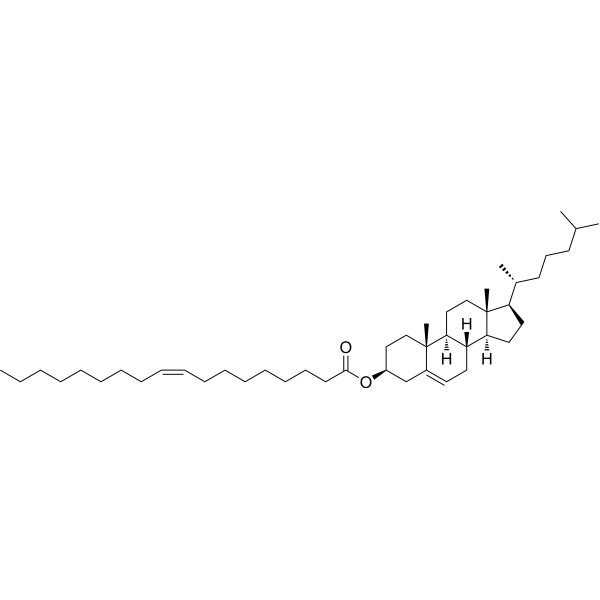
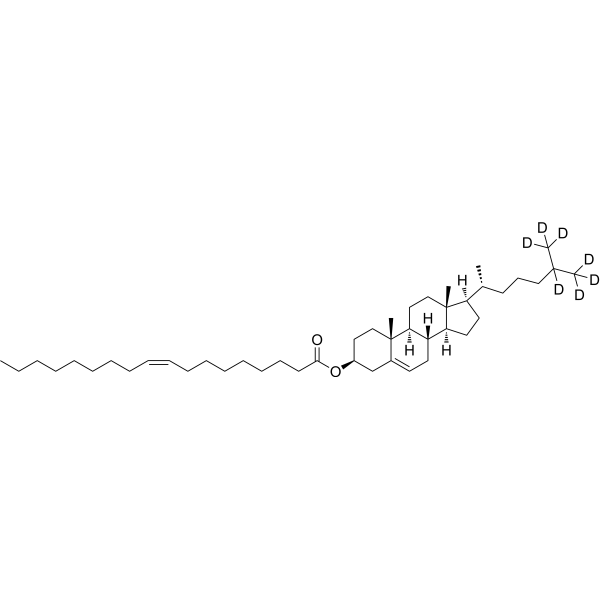
    Cholesteryl oleate is an ester compound formed from Cholesterol (HY-N0322) and Oleic acid (HY-N1446), which is involved in lipid transport, storage and cell membrane formation in living organisms. Cholesteryl oleate may serve as a potential biomarker for prostate cancer. Cholesteryl oleate can also prepare cationic solid lipid nanoparticles (SLNs) for efficient gene silencing .
    Cholesteryl oleate
  • HY-112758
    DLin-KC2-DMA
    Maximum Cited Publications
    9 Publications Verification

    Liposome Others
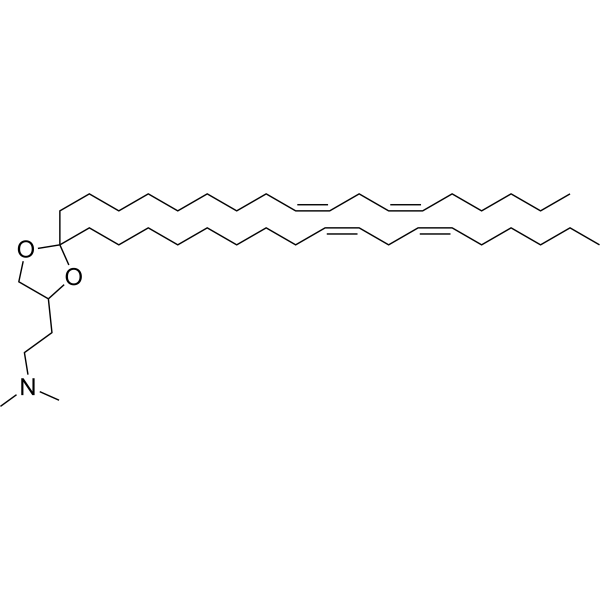
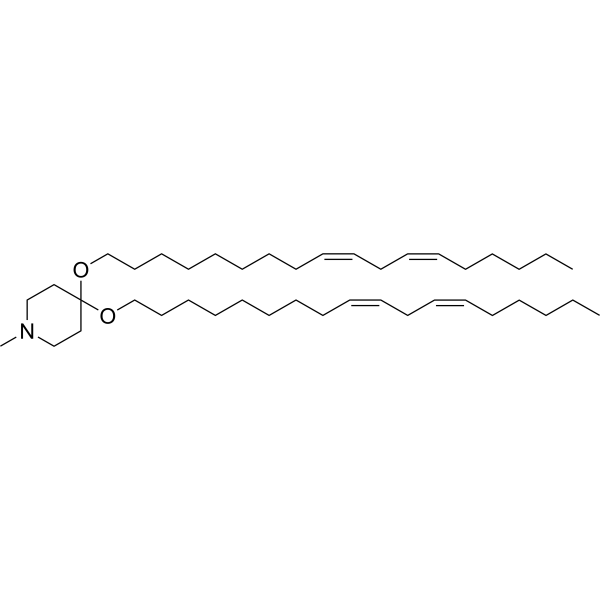
    DLin-KC2-DMA is an ionisable cationic lipid (pKa≈6) that is virtually non-toxic to antigen presenting cells (APCs). DLin-KC2-DMA produces significant siRNA-mediated gene silencing of GAPDH, when binds to lipid nanoparticles (LNP). DLin-KC2-DMA can be used in siRNA delivery studies .
    DLin-KC2-DMA
  • HY-139305
    CL4H6
    1 Publications Verification

    Liposome Cancer
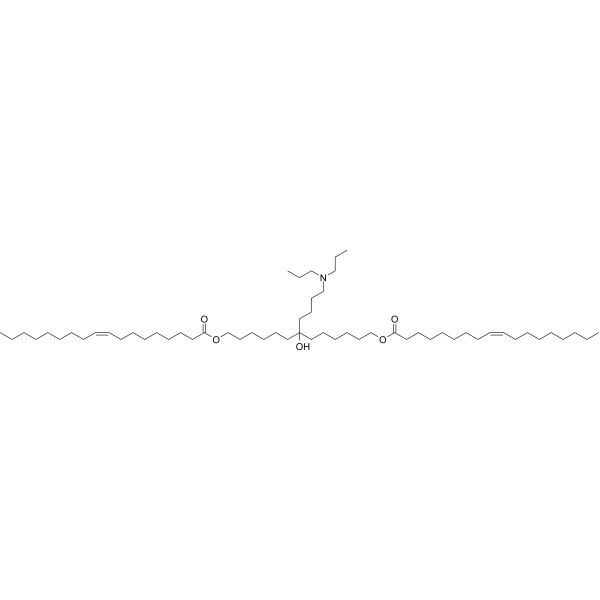
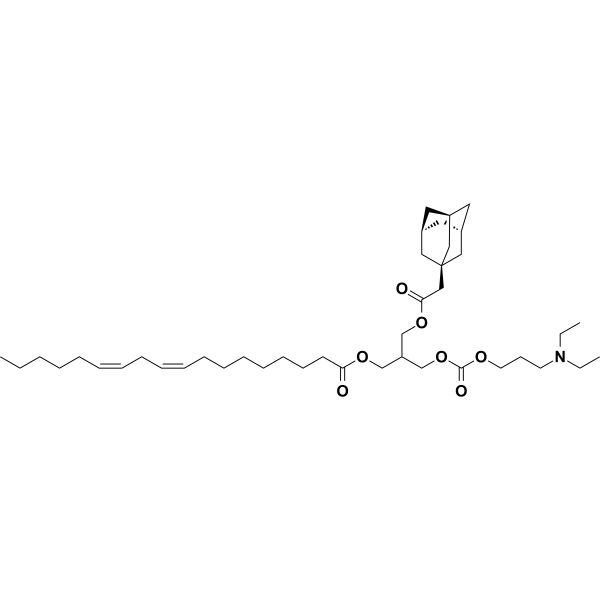
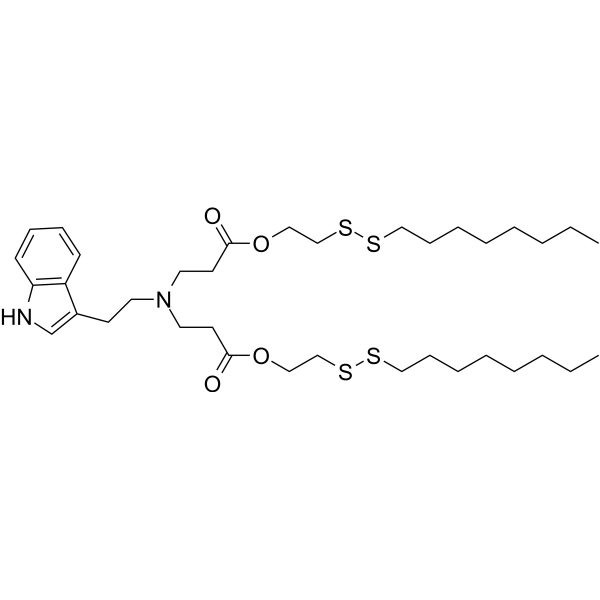
    CL4H6 is a pH-sensitive cationic lipid. CL4H6 is the main component of lipid nanoparticles (LNPs), which can be used to target and deliver siRNA, and induces a potent gene-silencing response .
    CL4H6
  • HY-152038

    Histone Methyltransferase Others
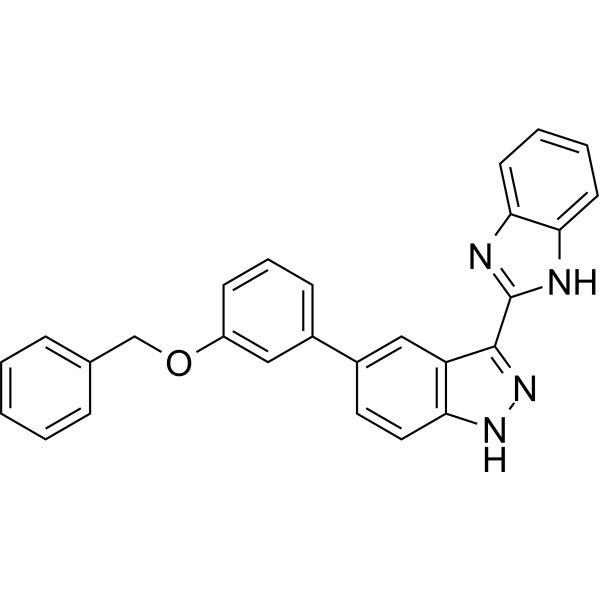
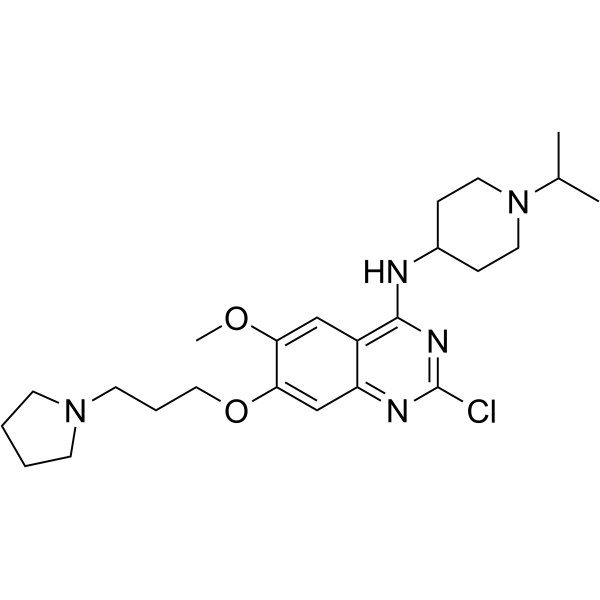
    SPEN-IN-1 (compound X1) is an inhibitor of SPEN which is a protein factor with a Kd value of 47 nM. SPEN-IN-1 has high selectivity for RepA, a 431-nucleotide domain in Xist (a non-coding RNA prototype) that comprises 8.5 units of a GC-rich motif responsible for gene silencing .
    SPEN-IN-1
  • HY-147087

    Liposome Cancer
    YSK 05 is a pH-sensitive cationic lipid. YSK 05 improves the intracellular trafficking of non-viral vectors. YSK 05-MEND shows significantly good gene silencing activity and hemolytic activity. YSK 05 overcomes the suppression of endosomal escape by PEGylation. YSK 05 effectively enhances siRNA delivery both in vitro and in vivo .
    YSK 05
  • HY-154974

    Liposome Cancer
    LNP Lipid-8 (11-A-M) is an ionizable single-tail multi-head lipid that can be used as a lipid nanoparticle (LNP) to deliver siRNA to T cells without targeting ligands. LNP Lipid-8 is more selective for T cells than other cell types such as hepatocytes. LNP Lipid-8 selectively delivers siRNA/sgRNA to T cells (especially CD8+ T cells) through endogenous lipid transport pathways, and can enter cells and release RNA through endocytosis to achieve gene silencing. LNP Lipid-8 loaded with GFP siRNA (siGFP) significantly led to GFP gene silencing in mouse models. LNP Lipid-8 showed good efficacy and safety in both cells and animals, without obvious liver targeting and toxicity. LNP Lipid-8 can be used for RNA delivery research in the fields of tumor immunotherapy and T cell-mediated autoimmune diseases .
    LNP Lipid-8
  • HY-P4086

    RABV nAChR Neurological Disease Cancer
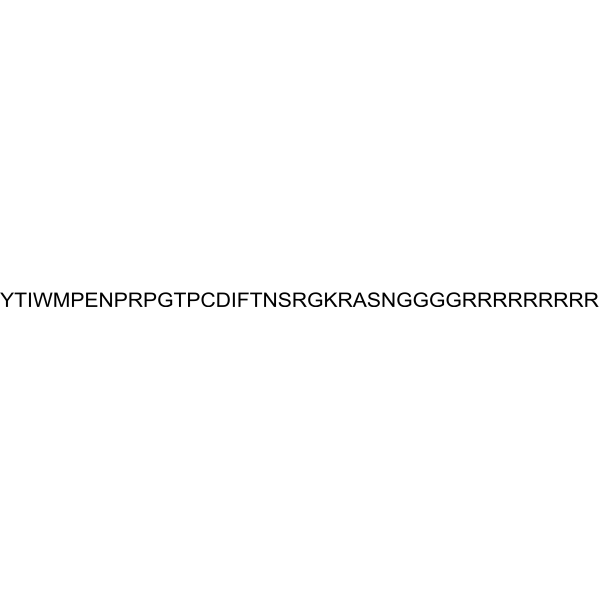
    Chimeric Rabies Virus Glycoprotein Fragment (RVG-9R) is a cell-penetrating peptide that is synthesized by adding nona-arginine motif to the carboxy terminus of RVG (rabies virus glycoprotein). Chimeric Rabies Virus Glycoprotein Fragment (RVG-9R) binds to
    nAChR
    on neuronal cells to mediate receptor-mediated endocytosis and targeted siRNA delivery. Chimeric Rabies Virus Glycoprotein Fragment (RVG-9R) protects complexed siRNA from degradation, enhances transcellular siRNA delivery in neuronal cells, and promotes efficient, pecific gene silencing. Chimeric Rabies Virus Glycoprotein Fragment (RVG-9R) can be used for the researches of neurological disease and cancer .
    Chimeric Rabies Virus Glycoprotein Fragment (RVG-9R)
  • HY-164583

    Phosphoramidites DNA/RNA Synthesis Others
    DMTr-2'-O-C22-rA-3'-CE-Phosphoramidite is an RNA phosphoramidite monomer. DMTr-2'-O-C22-rA-3'-CE-Phosphoramidite allows site-specific introduction of a 2'-O-C22 lipophilic modification at adenosine positions to construct double-stranded RNA (dsRNA) molecules with extrahepatic delivery capability. DMTr-2'-O-C22-rA-3'-CE-Phosphoramidite supports target gene silencing in skeletal muscle, cardiac muscle and adipose tissue by enhancing the lipophilicity and tissue uptake efficiency of dsRNA. DMTr-2'-O-C22-rA-3'-CE-Phosphoramidite can be used for the construction and mechanism research of nucleic acid silencing molecules .
    DMTr-2'-O-C22-rA-3'-CE-Phosphoramidite
  • HY-78574

    Nucleoside Antimetabolite/Analog Others
    N-Benzoylcytidine is a modified cytidine analogue that can be phosphorylated by uracil-cytidine kinase (UCK1 and UCK2). N-Benzoylcytidine can be used to synthesize 2-OH protective groups for solid-phase RNA synthesis, as well as synthetic oligonucleotides for UV induction and targeted gene silencing in zebrafish embryos .
    N-Benzoylcytidine
  • HY-113217S

    Isotope-Labeled Compounds Endogenous Metabolite Others
    Cholesteryl oleate-d7 is deuterium labeled Cholesteryl oleate. Cholesteryl oleate is an ester compound formed from Cholesterol (HY-N0322) and Oleic acid (HY-N1446), which is involved in lipid transport, storage and cell membrane formation in living organisms. Cholesteryl oleate may serve as a potential biomarker for prostate cancer. Cholesteryl oleate can also prepare cationic solid lipid nanoparticles (SLNs) for efficient gene silencing .
    Cholesteryl oleate-d7
  • HY-P4118

    Penetrating analog

    Amino Acid Derivatives Peptide-Drug Conjugates (PDCs) Others
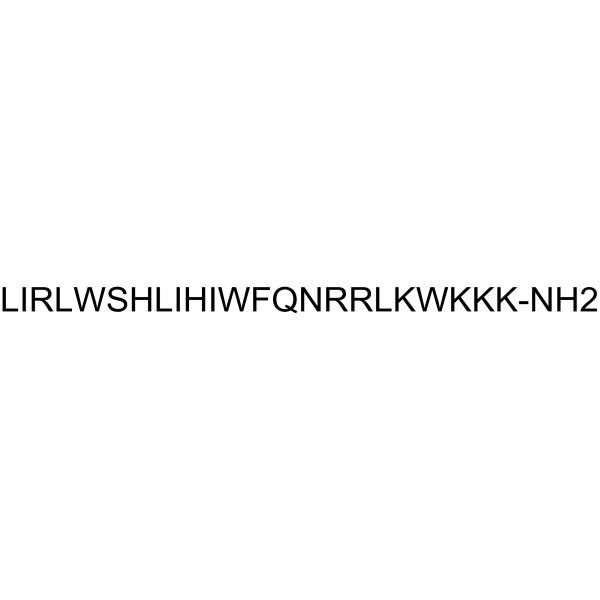
    EB1 peptide (Penetrating analog) is an endosomolytic agent and siRNA delivery agent. EB1 peptide forms an amphipathic alpha helix upon protonation in early-late endosomes, drives endosomal membrane permeabilization, and enables endocytosed siRNA escape into the cytosol. EB1 peptide facilitates biologically active siRNA cellular uptake and targeted gene silencing. EB1 peptide forms complexes with siRNA. EB1 peptide can be used for drug delivery research .
    EB1 peptide
  • HY-44062

    Histone Methyltransferase Inflammation/Immunology Cancer
    G9a-IN-1 (Compound 113) is a G9a protein inhibitor. G9A/EHMT2 is a nuclear histone lysine methyltransferase that catalyzes histone H3 lysine 9 dimethylation (H3K9me2), which is a reversible modification generally associated with transcriptional gene silencing. G9a-IN-1 can be used for the research of autoimmune disorders or cancer .
    G9a-IN-1
  • HY-137499

    Liposome Endogenous Metabolite Neurological Disease
    NT1-O12B, an endogenous chemical and a neurotransmitter-derived lipidoid (NT-lipidoid), is an effective carrier for enhanced brain delivery of several blood-brain barrier (BBB)-impermeable cargos. Doping NT1-O12B into BBB-impermeable lipid nanoparticles (LNPs) gives the LNPs the ability to cross the BBB. NT-lipidoids formulation not only facilitate cargo crossing of the BBB, but also delivery of the cargo into neuronal cells for functional gene silencing or gene recombination .
    NT1-O12B
  • HY-W570886

    DNA/RNA Synthesis Cancer
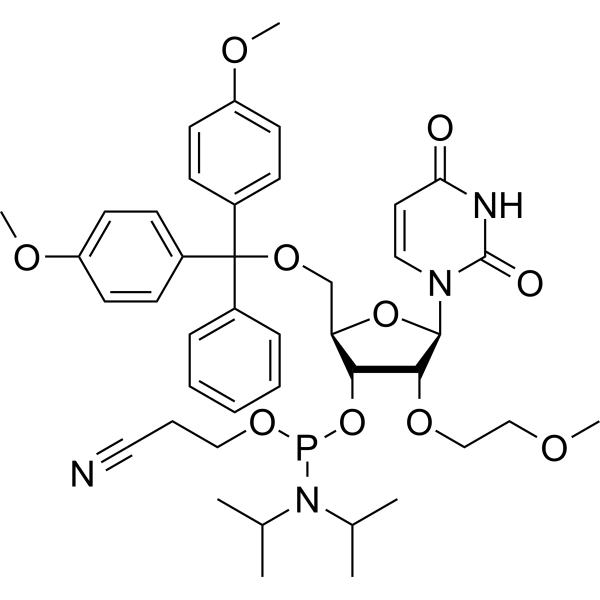
    2'-O-MOE-U is a nucleic acid modification group (Phosphoramidite) with 3'-exonuclease inhibitory activity. 2'-O-MOE-U also exhibits gene silencing activity and double-stranded oligonucleotide stability. By forming steric interactions with 3'-exonuclease residues, 2'-O-MOE-U anchors the 3'-end of the siRNA guide strand in the hAgo2 PAZ domain, thereby regulating double-stranded thermal stability and enhancing base-pairing specificity. 2'-O-MOE-U does not induce IFNα production, can be incorporated at multiple sites of siRNA to enhance RNAi activity, and produces a synergistic effect with 2'-F modification. 2'-O-MOE-U has been widely used in studies related to breast cancer and other diseases .
    2'-O-MOE-U
  • HY-164582

    Phosphoramidites DNA/RNA Synthesis Others
    DMTr-2'-O-C22-rC (Ac)-3'-CE-Phosphoramidite is an RNA phosphoramidite monomer. DMTr-2'-O-C22-rC (Ac)-3'-CE-Phosphoramidite enables site-specific introduction of 2'-O-C22 lipophilic modification at cytidine positions during oligonucleotide synthesis, which is used to construct double-stranded RNA (dsRNA) molecules with extrahepatic delivery capability. DMTr-2'-O-C22-rC (Ac)-3'-CE-Phosphoramidite supports target gene silencing in skeletal muscle, cardiac muscle and adipose tissue by enhancing the lipophilicity and tissue uptake efficiency of dsRNA. Construction and mechanism study of DMTr-2'-O-C22-rC (Ac)-3'-CE-Phosphoramidite nucleic acid silencing molecules .
    DMTr-2'-O-C22-rC(Ac)-3'-CE-Phosphoramidite
  • HY-164581

    Phosphoramidites DNA/RNA Synthesis Others
    DMTr-2'-O-C22-rG (ibu)-3'-CE-Phosphoramidite is an RNA phosphoramidite monomer for oligonucleotide synthesis. DMTr-2'-O-C22-rG (ibu)-3'-CE-Phosphoramidite enables site-specific introduction of 2'-O-C22 lipophilic modification at guanosine positions to construct double-stranded RNA (dsRNA) molecules with extrahepatic delivery capability. DMTr-2'-O-C22-rG (ibu)-3'-CE-Phosphoramidite supports target gene silencing in skeletal muscle, cardiac muscle and adipose tissue by enhancing the lipid solubility and tissue uptake efficiency of dsRNA. DMTr-2'-O-C22-rG (ibu)-3'-CE-Phosphoramidite can be used for the construction and mechanism research of nucleic acid silencing molecules .
    DMTr-2'-O-C22-rG(ibu)-3'-CE-Phosphoramidite
  • HY-122640

    Histone Methyltransferase Cancer
    NPD13668 is an EZH2-mediated gene silencing modulator. NPD13668 inhibits EZH2/PRC2 (polycomb repressive complex 2) activity. NPD13668 reactivates the expression of silenced H3K27me3 target genes together with depletion of the H3K27me3 modification. NPD13668 can be used for the study of prostate cancer and ovarian cancer .
    NPD13668
  • HY-145523

    Liposome Others
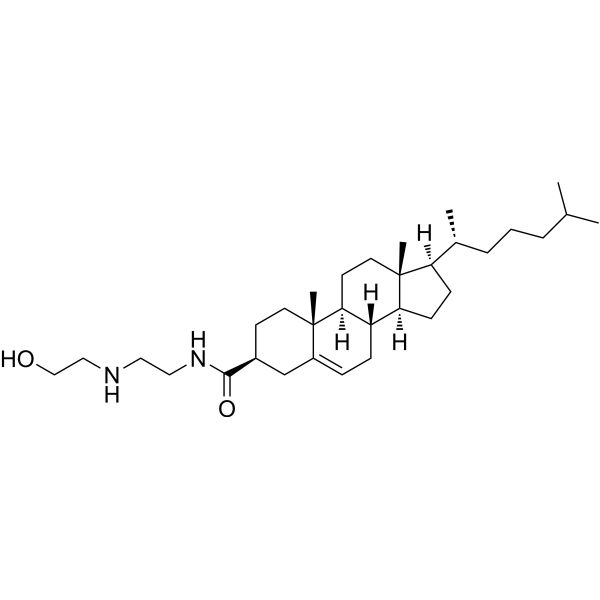
    OH-Chol is a cationic cholesterol derivative. OH-Chol can be used for siRNA delivery and gene silencing .
    OH-Chol
  • HY-136869

    Liposome Others
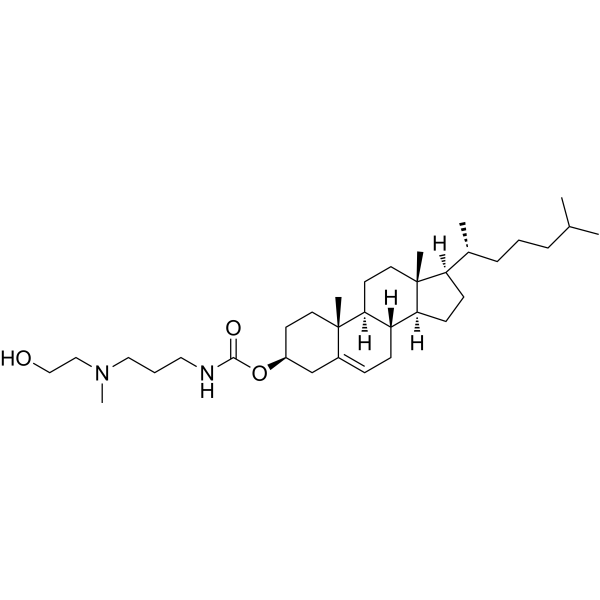
    MHAPC-Chol, a cationic cholesterol, results in a high gene silencing effect via high cellular association. MHAPC-Chol delivers siRNA to the liver .
    MHAPC-Chol
  • HY-160581

    Liposome Others
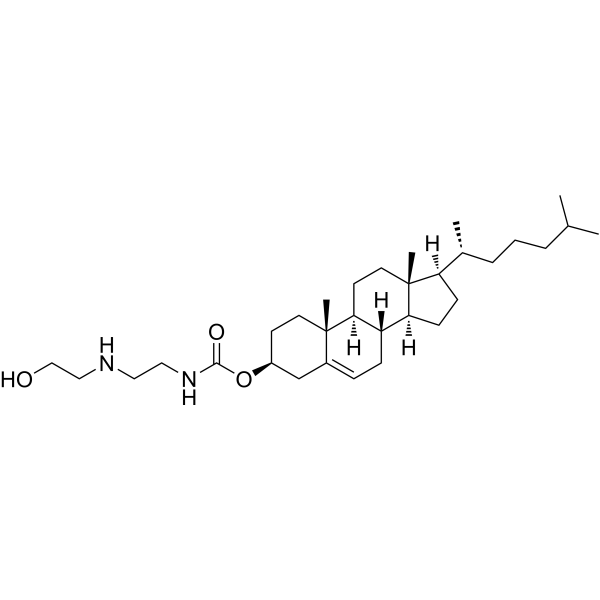
    OH-C-Chol is a cationic liposome that serves as a siRNA delivery vehicle. OH-C-Chol (LP-C) and OH-NC-Chol (LP-NC)/siRNA complexes (lipoplexes) showed better performance than NP-C and NP-NC/siRNA complexes (nanocomplexes), respectively. ) greater gene silencing effect .
    OH-C-Chol
  • HY-113217S1

    Isotope-Labeled Compounds Endogenous Metabolite Others
    Cholesteryl oleate-d7-1 is deuterium labeled Cholesteryl oleate. Cholesteryl oleate is an ester compound formed from Cholesterol (HY-N0322) and Oleic acid (HY-N1446), which is involved in lipid transport, storage and cell membrane formation in living organisms. Cholesteryl oleate may serve as a potential biomarker for prostate cancer. Cholesteryl oleate can also prepare cationic solid lipid nanoparticles (SLNs) for efficient gene silencing .
    Cholesteryl oleate-d7-1
  • HY-N17786

    Drug Derivative Others
    2-O-Methyl-D-xylose is a derivative of Xylose (HY-N0537). 2-O-Methyl-D-xylose can be used as a biomarker for the cell wall polysaccharide RG-II, and changes in its content reveal the destructive effect of gene silencing on the cell wall structure .
    2-O-Methyl-D-xylose
  • HY-181877

    HDAC Adenosine Receptor Cancer
    IHCH-3185 is an orally active class I HDAC inhibitor (HDAC1 IC50 =102.9 nM) and A2AR antagonist (A2AR Ki =7.6 nM). IHCH-3185 reverses immune gene silencing by inducing histone acetylation and blocks the adenosine signaling pathway to relieve T-cell suppression. IHCH-3185 exhibits antiproliferative activity, induces cell cycle arrest, and significantly improves the tumor microenvironment. IHCH-3185 reduces the proportion of regulatory T cells, increases the CD8 +/Treg ratio, and upregulates the expression of key factors such as H2-K1, Cxcl9 and Cxcl10. IHCH-3185 shows significant antitumor potential in CT26 and MC38 mouse tumor models and is suitable for related cancer research .
    IHCH-3185
  • HY-179499

    PROTACs Histone Methyltransferase Apoptosis Cancer
    PROTAC EZH2 Degrader-9 is orally active EZH2 PROTAC degrader degrading EZH2 via the ubiquitin-proteasome pathway. PROTAC EZH2 Degrader-9 downregulates PRC2 core subunits and potent inhibition of H3K27me3 without affecting common CRBN neosubstrates while it was selective over GSp'T1 and ikZF1/3. PROTAC EZH2 Degrader-9 exhibits potent antiproliferative activity against multiple cancer cell lines by inducing cell cycle and apoptosis. PROTAC EZH2 Degrader-9 reverses PRC2-mediated gene silencing and inhibiting EZH2 non-catalytic target gene activation. PROTAC EZH2 Degrader-9 can be used for leukemia, lymphoma, and non-small cell lung cancer research .
    PROTAC EZH2 Degrader-9

Inquiry Online

Your information is safe with us. * Required Fields.

Salutation


Country or Region *

Applicant Name *


Organization Name *

Department *


Email Address *


Product Name *

Cat. No.


Requested quantity *

Phone Number *


Remarks

Inquiry Online

Inquiry Information

Product Name:
Cat. No.:
Quantity:
MCE Japan Authorized Agent:

