Search Result
Results for "
peptide chemistry
" in MedChemExpress (MCE) Product Catalog:
4
Biochemical Assay Reagents
| Cat. No. |
Product Name |
Target |
Research Areas |
Chemical Structure |
-
- HY-145934
-
|
UDP-N-azidoacetylgalactosamine disodium
|
Biochemical Assay Reagents
OGT
Glycosidase
|
Metabolic Disease
|
|
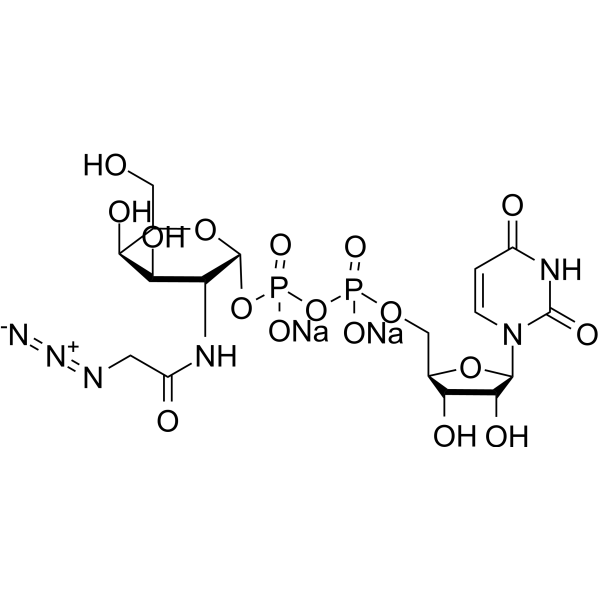
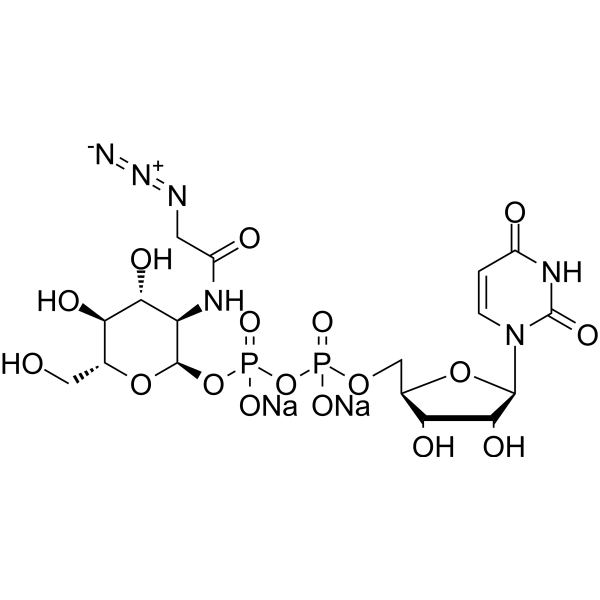
UDP-GalNAz (UDP-N-azidoacetylgalactosamine) disodium is the analogue of UDP-GalNAc disodium (HY-114365). UDP-GalNAc disodium is the donor substrate of many N-acetylgalactosaminyltransferases, enzymes which transfer GalNAc from the nucleotide sugar to a saccharide or peptide acceptor. UDP-GalNAz disodium is a click chemistry reagent, it contains an Azide group and can undergo copper-catalyzed azide-alkyne cycloaddition reaction (CuAAc) with molecules containing Alkyne groups. It can also undergo strain-promoted alkyne-azide cycloaddition (SPAAC) reactions with molecules containing DBCO or BCN groups .
|
-
-
- HY-140739
-
|
|
Liposome
|
Neurological Disease
Cancer
|
|
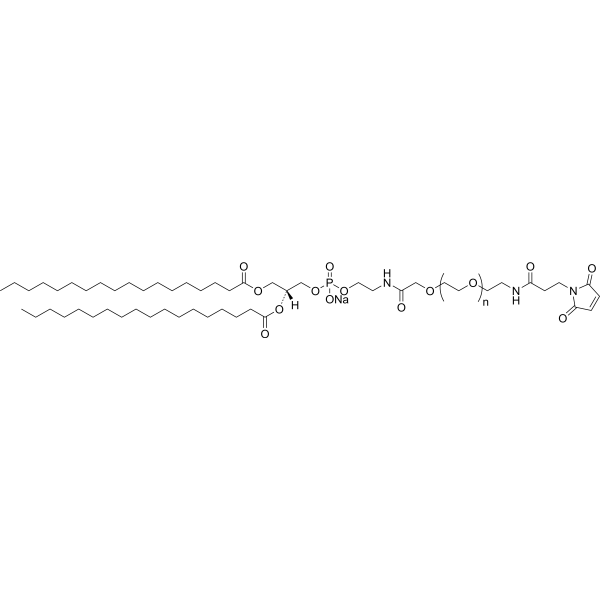
DSPE-PEG2000-Maleimide sodium (purity>95%) is a phospholipid-PEG conjugate. DSPE-PEG2000-Maleimide utilizes the amphiphilicity of DSPE to insert into the lipid bilayer of liposomes or nanoparticles. DSPE-PEG2000-Maleimide covalently couples to the sulfhydryl (-SH) of ligands (such as antibodies, peptides, or proteins) via thiol-maleimide click chemistry, giving the particles targeting capabilities. DSPE-PEG2000-Maleimide sodium (purity>95%) can be used in the researches of breast cancer, lymphoma, and inherited retinal degeneration .
|
-
-
- HY-Y1666
-
|
|
Biochemical Assay Reagents
|
Others
|
|
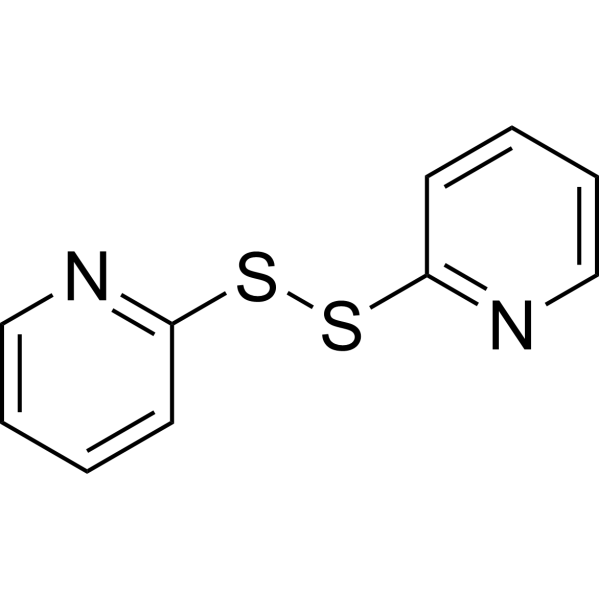
2,2′-Dipyridyl disulfide is a useful reagent for the determination of sulfhydryl groups. 2,2′-Dipyridyl disulfide is a common reagent in peptide chemistry, often used in oxidation–reduction condensations to form peptide bonds or in coupling reactions to form disulfide-linked heterodimers .
|
-
-
- HY-151696
-
|
|
ADC Linker
|
Others
|
|
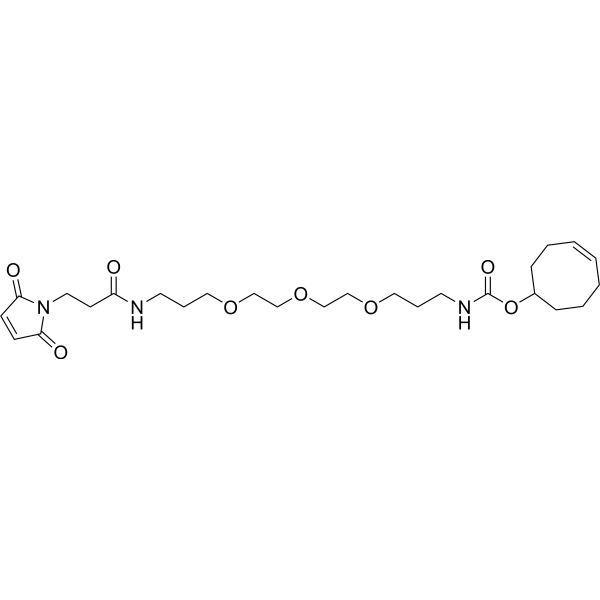
TCO-PEG3-maleimide (TCO-PEG3-NEM) is a click chemistry reagent. TCO-PEG3-maleimide efficiently binds TCO (trans-cyclooctene) moiety to thiol-containing molecules (such as antibodies, cysteine-containing peptides) .
|
-
-
- HY-145934A
-
|
|
OGT
Biochemical Assay Reagents
Glycosidase
|
Metabolic Disease
|
|
UDP-GlcNAz disodium is the analogue of UDP-GlcNAc disodium (HY-112174). UDP-GlcNAc disodium is the donor substrate of many N-acetylgalactosaminyltransferases, enzymes which transfer GlcNAc from the nucleotide sugar to a saccharide or peptide acceptor. UDP-GlcNAc disodium is a click chemistry reagent, it contains an Azide group and can undergo copper-catalyzed azide-alkyne cycloaddition reaction (CuAAc) with molecules containing Alkyne groups. It can also undergo strain-promoted alkyne-azide cycloaddition (SPAAC) reactions with molecules containing DBCO or BCN groups .
|
-
-
- HY-155788
-
|
|
Biochemical Assay Reagents
|
Others
|
|
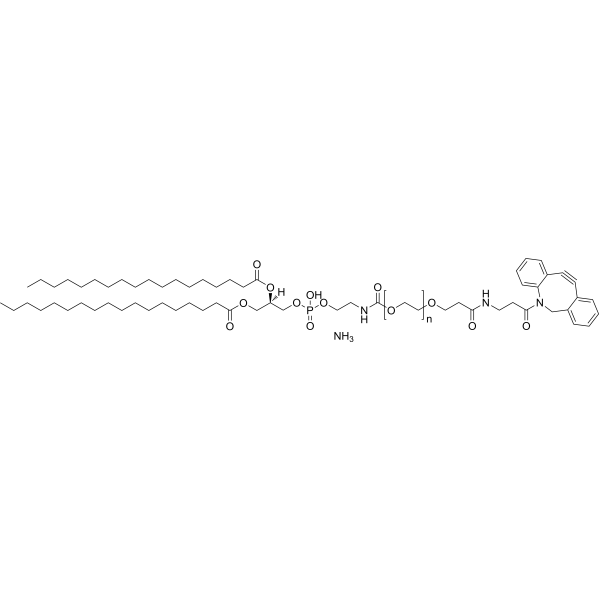
DSPE-PEG-DBCO ammonium is the ammonium salt form of DSPE-PEG-DBCO. DSPE-PEG-DBCO ammonium is utilized in copper-free click chemistry through SPAAC conjugation with an azido-functionalized peptide ligand. DSPE-PEG-DBCO ammonium is applied in drug-delivery and nanoparticle research .
|
-
-
- HY-W011412
-
|
|
Biochemical Assay Reagents
|
Others
|
|
TSTU is used as a coupling reagent in peptide chemistry. TSTU can convert carboxylic acids into the corresponding N-hydroxysuccinimidyl (NHS) esters. TSTU can be applied to the attachment of labels to peptides, proteins, etc .
|
-

-
- HY-D0820
-
|
Sulfo-Cyanine5-alkyne
|
Fluorescent Dye
|
Others
|
|
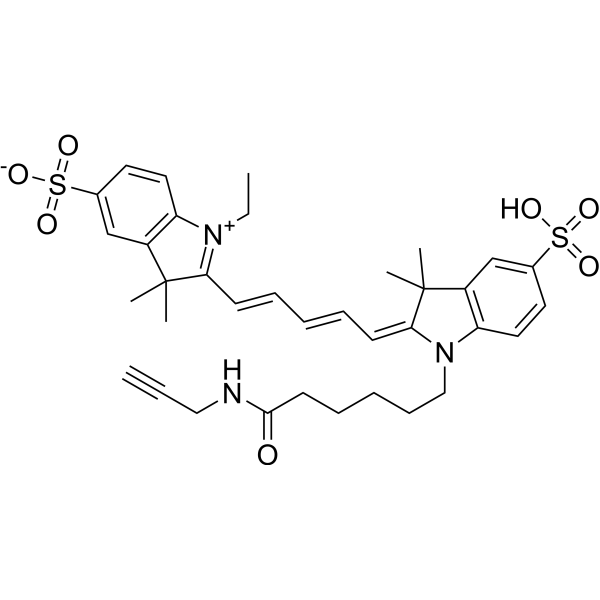
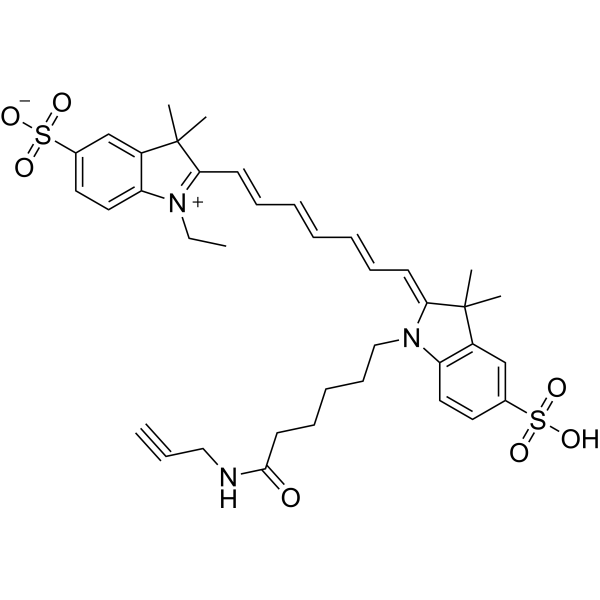
CY5-YNE (Sulfo-Cyanine5-alkyne) is a reactive dye for the labeling of amino-groups in peptides, proteins, and oligonucleotides (Ex: 650 nM; Em: 680 nm). CY5-YNE is a click chemistry reagent, it contains an Alkyne group and can undergo copper-catalyzed azide-alkyne cycloaddition (CuAAc) with molecules containing Azide groups.
|
-
-
- HY-151726
-
|
|
ADC Linker
|
Others
|
|
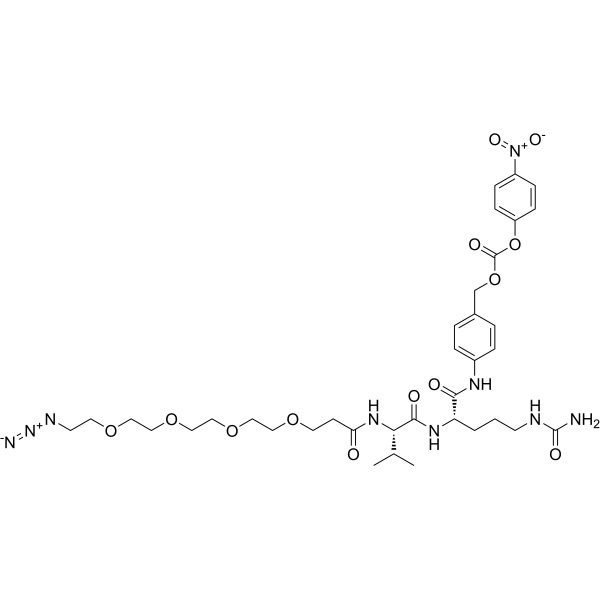
Azido-PEG(4)-Val-Cit-PAB-PNP is a cleavable peptide ADC linker. Azido-PEG(4)-Val-Cit-PAB-PNP is a click chemistry reagent containing an azide group. It contains an azide group and can undergo copper-catalyzed azide-alkyne cycloaddition (CuAAc) with molecules containing alkyne groups. It can also undergo ring strain-promoted alkyne-azide cycloaddition (SPAAC) with molecules containing DBCO or BCN groups.
|
-
-
- HY-151711
-
|
|
Fluorescent Dye
|
Others
|
|
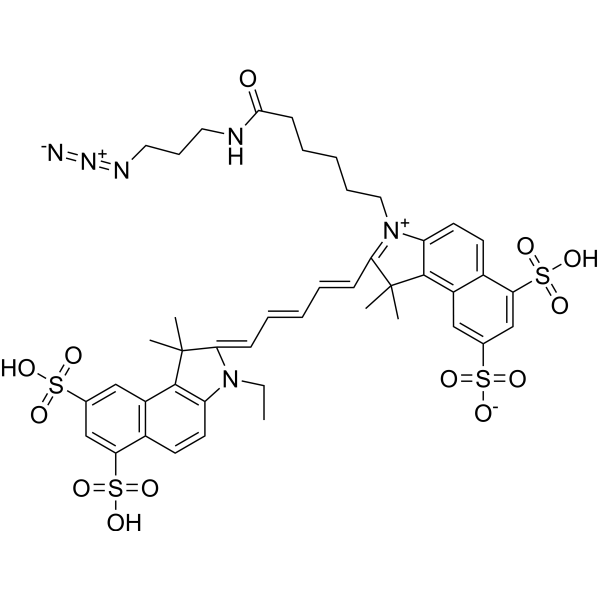
Sulfo-Cy5.5 Azide is a click chemistry reagent containing an azide group. Sulfo-Cy5.5 Azide is also a water-soluble dye (Ex=673 nm, Em=707 nm), which designed to label sensitive molecules such as peptides, proteins and oligonucleotides. It contains an azide group and can undergo copper-catalyzed azide-alkyne cycloaddition (CuAAc) with molecules containing alkyne groups. It can also undergo ring strain-promoted alkyne-azide cycloaddition (SPAAC) with molecules containing DBCO or BCN groups.
|
-
-
- HY-D0818
-
|
Sulfo-Cyanine3-alkyne
|
Fluorescent Dye
|
Others
|
|
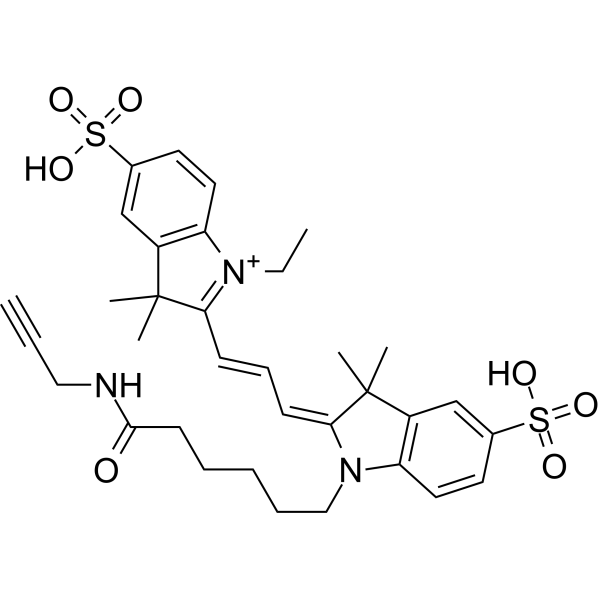
CY3-YNE (Sulfo-Cyanine3-alkyne) is a dye for the labeling of soluble proteins, peptides, and oligonucleotides/DNA. CY3-YNE is a click chemistry reagent, it contains an Alkyne group and can undergo copper-catalyzed azide-alkyne cycloaddition (CuAAc) with molecules containing Azide groups.
|
-
-
- HY-151859
-
|
|
Biochemical Assay Reagents
|
Others
|
|
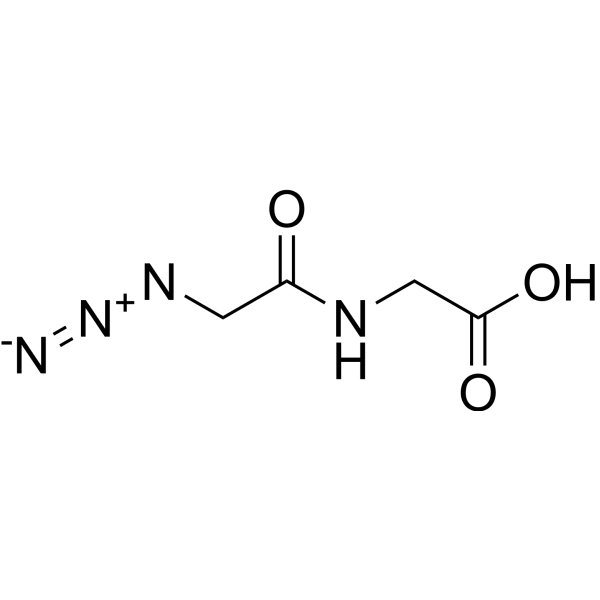
N3-Gly-Gly-Gly-OH is a click chemistry reagent containing an azide group. N3-Gly-Gly-OH undergoes copper-catalyzed azide-alkyne cycloaddition (CuAAc) with molecules containing an alkyne group. N3-Gly-Gly-OH also undergoes strain-promoted alkyne-azide cycloaddition (SPAAC) with molecules containing DBCO or BCN groups. N3-Gly-Gly-Gly-OH can be used to construct peptide-like ADC linkers via click chemistry .
|
-
-
- HY-151783
-
|
|
ADC Linker
|
Others
|
|
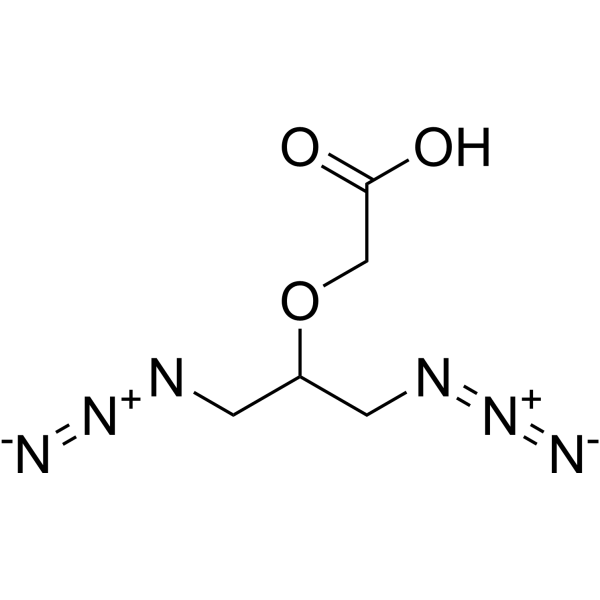
DAPOA is a click chemistry reagent containing an azide group. DAPOA can be used in peptide synthesis as a linker that can be further modified at the azido-groups using Staudinger ligation or click-chemistry . It contains an azide group and can undergo copper-catalyzed azide-alkyne cycloaddition (CuAAc) with molecules containing alkyne groups. It can also undergo ring strain-promoted alkyne-azide cycloaddition (SPAAC) with molecules containing DBCO or BCN groups.
|
-
-
- HY-D1052
-
|
|
Fluorescent Dye
|
Cancer
|
|
Cy7-YNE is a fluorescence labeling agent (Ex=700-770 nm,Em=790 nm). Cyanine dyes are used to label proteins, antibodies, and peptides. Cy7-YNE is a click chemistry reagent, it contains an Alkyne group and can undergo copper-catalyzed azide-alkyne cycloaddition (CuAAc) with molecules containing Azide groups.
|
-
-
- HY-151829
-
|
|
ADC Linker
|
Others
|
|
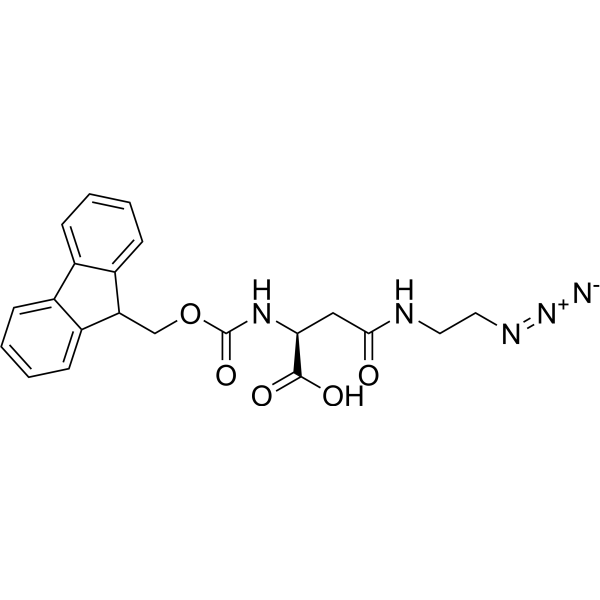
Fmoc-L-Asn(EDA-N3)-OH is a click chemistry reagent containing an azide group. This building block is reported in literature for the modification of Amanitin via Click Chemistry. Alpha-Amanitin is the deadliest member of the amatoxin peptide family produced by the death-cap mushroom A. phalloides. It is an orally available, rigid, bicyclic octapeptide and one of the most lethal known natural products (LD50 = 50-100 μg/kg) acting as highly selective allosteric inhibitor of the RNA polymerase II . It contains an azide group and can undergo copper-catalyzed azide-alkyne cycloaddition (CuAAc) with molecules containing alkyne groups. It can also undergo ring strain-promoted alkyne-azide cycloaddition (SPAAC) with molecules containing DBCO or BCN groups.
|
-
-
- HY-D2891
-
|
|
Fluorescent Dye
|
Others
|
|
5-TAMRA-DBCO is a fluorescent dye that combines 5-TAMRA (HY-15942) with a dibenzocyclooctyne (DBCO) moiety. 5-TAMRA-DBCO is able to copper-free click chemistry reactions with azide-functionalized molecules. 5-TAMRA-DBCO can be used for labeling proteins, peptides, nucleic acids (Ex/Em = 541/567 nm) .
|
-

-
- HY-151859A
-
|
|
Biochemical Assay Reagents
|
Others
|
|
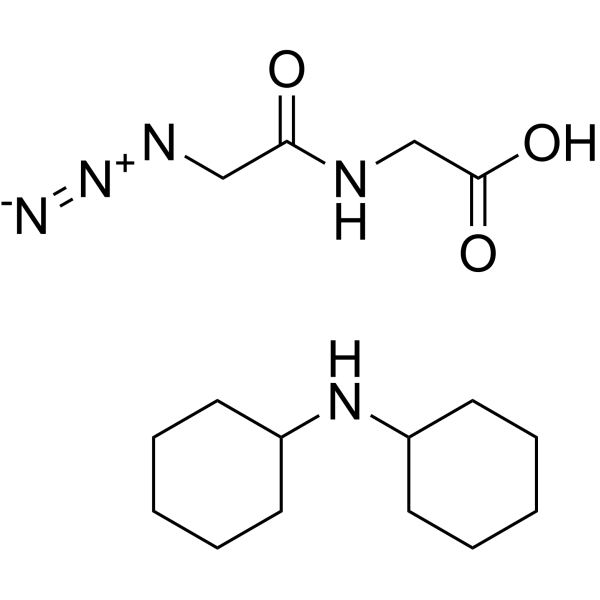
N3-Gly-Gly-OH DCHA is a click chemistry reagent containing an azide group. N3-Gly-Gly-OH DCHA undergoes copper-catalyzed azide-alkyne cycloaddition (CuAAc) with molecules containing an alkyne group. N3-Gly-Gly-OH DCHA also undergoes strain-promoted alkyne-azide cycloaddition (SPAAC) with molecules containing DBCO or BCN groups. N3-Gly-Gly-OH DCHA can be used to construct peptide-like ADC linkers via click chemistry .
|
-
-
- HY-151786
-
|
|
ADC Linker
|
Others
|
|
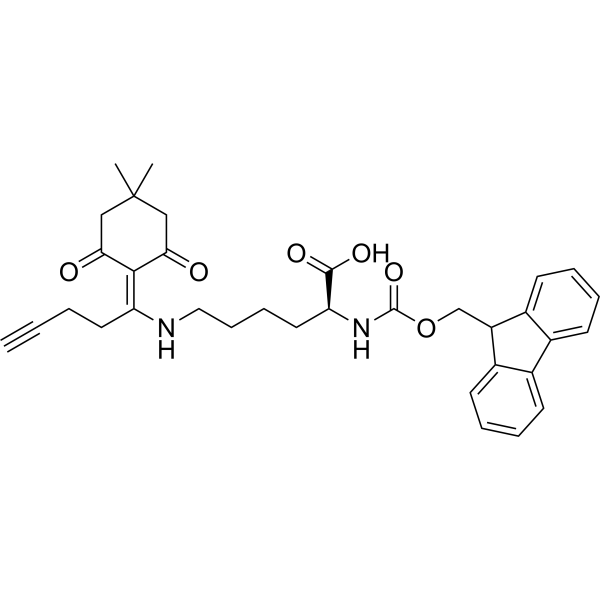
Fmoc-L-Lys(Pentynoyl-DIM)-OH is a click chemistry reagent containing an azide. Fmoc-L-Lys(Pentynoyl-DIM)-OH can be used as a SPPS building block for the “helping hand” strategy for purification of highly insoluble peptides. Solubilizing residues are attached to the Lys side-chains using Click-chemistry. The solubilizing tag can be removed with 1M hydrazine or hydroxylamine solution . It contains an azide group and can undergo copper-catalyzed azide-alkyne cycloaddition (CuAAc) with molecules containing alkyne groups. It can also undergo ring strain-promoted alkyne-azide cycloaddition (SPAAC) with molecules containing DBCO or BCN groups.
|
-
-
- HY-153486
-
|
|
Biochemical Assay Reagents
|
Others
|
|
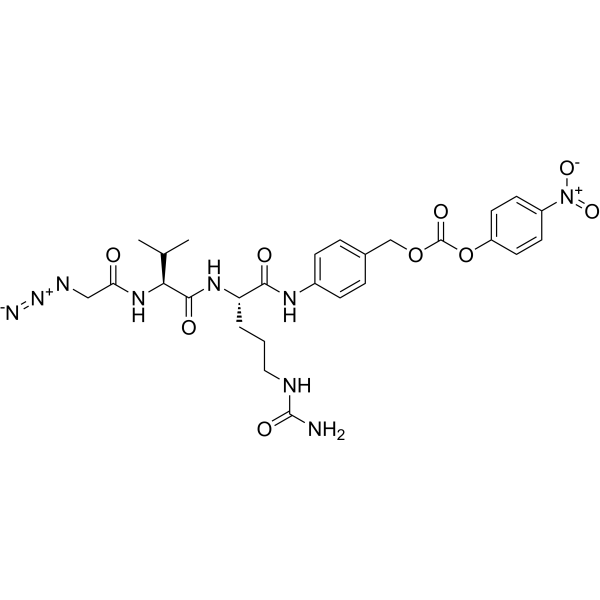
N3-VC-PAB-PNP is the intermediate of bicyclic peptide ligand STING conjugates . N3-VC-PAB-PNP is a click chemistry reagent, it contains an Azide group and can undergo copper-catalyzed azide-alkyne cycloaddition reaction (CuAAc) with molecules containing Alkyne groups. It can also undergo strain-promoted alkyne-azide cycloaddition (SPAAC) reactions with molecules containing DBCO or BCN groups.
|
-
-
- HY-W781921
-
|
|
Fluorescent Dye
|
Others
|
|
BP Fluor 488 Alkyne is a popular labeling dye used in Click Chemistry reactions. It will react with the azide group in antibody, proteins, peptides, amino-modified oligos, and other target molecules. The dye has an excitation peak at 499 nm and an emission peak at 520 nm. The conjugates are widely used in microscopy, flow cytometry, and other applications. BP Fluor 488 is a pure 5-sulfonated rhodamine molecule and it eliminates the lot-to-lot variation caused by two isomers ratio differences.
|
-

-
- HY-151678
-
|
|
ADC Linker
|
Others
|
|
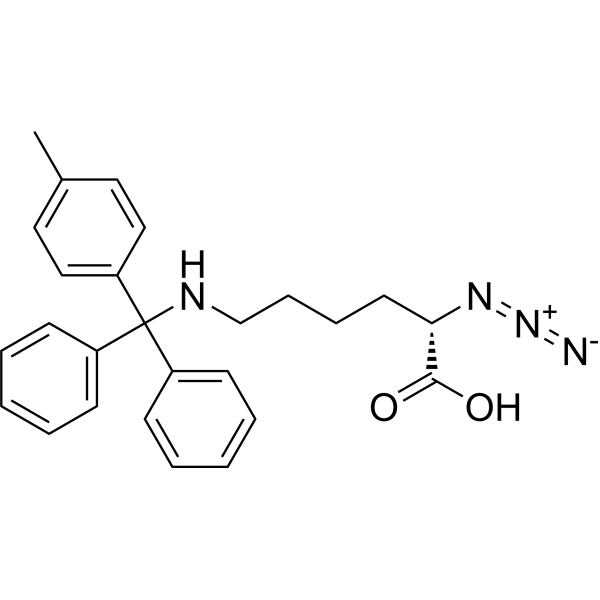
N3-L-Lys(Mtt)-OH is a click chemistry reagent containing an azide group. N3-L-Lys(Mtt)-OH can introduce azide functions into the amino acid building block of peptide sequences at the N-terminal position. It contains an azide group and can undergo copper-catalyzed azide-alkyne cycloaddition (CuAAc) with molecules containing alkyne groups. It can also undergo ring strain-promoted alkyne-azide cycloaddition (SPAAC) with molecules containing DBCO or BCN groups.
|
-
-
- HY-145934B
-
|
|
OGT
Biochemical Assay Reagents
Glycosidase
|
Metabolic Disease
|
|
UDP-GlcNAz is the analogue of UDP-GlcNAc disodium (HY-112174). UDP-GlcNAc disodium is the donor substrate of many N-acetylgalactosaminyltransferases, enzymes which transfer GlcNAc from the nucleotide sugar to a saccharide or peptide acceptor. UDP-GlcNAc disodium is a click chemistry reagent, it contains an Azide group and can undergo copper-catalyzed azide-alkyne cycloaddition reaction (CuAAc) with molecules containing Alkyne groups. It can also undergo strain-promoted alkyne-azide cycloaddition (SPAAC) reactions with molecules containing DBCO or BCN groups .
|
-

-
- HY-151824
-
|
|
ADC Linker
|
Others
|
|
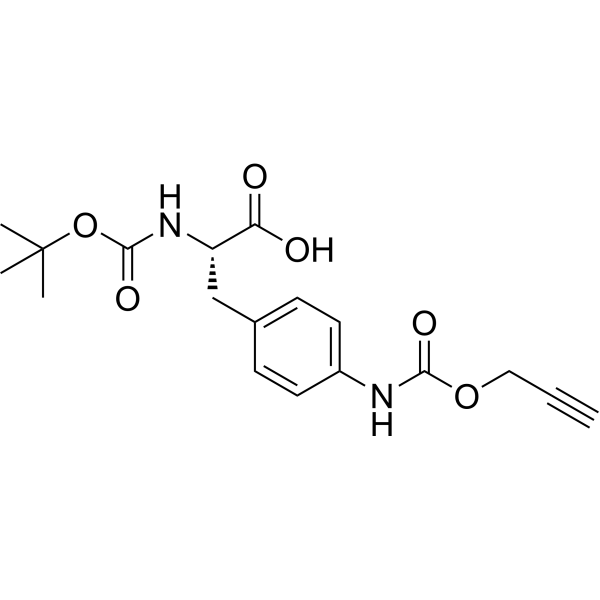
Boc-L-Phe(4-NH-Poc)-OH is a click chemistry reagent containing an azide group. Used as an orthogonally protected building block in peptide synthesis. Propargyloxycarbonyl, commonly abbreviated as Poc or Pryoc, can either be used as alkyne component for standard Click conjugation or in combination with tetrazine linkers in copper-free Diels-Alder type Click reactions. It also has applications as unusual protecting group for amines, hydroxy functions and as esters. All 3 are stable to neat TFA, but can be cleaved at ambient temperature with Co2(CO)8 in TFA:DCM. Deprotection with other transition metals like palladium have also been reported . Boc-L-Phe(4-NH-Poc)-OH is a click chemistry reagent, it contains an Alkyne group and can undergo copper-catalyzed azide-alkyne cycloaddition (CuAAc) with molecules containing Azide groups.
|
-
-
- HY-151826
-
|
|
ADC Linker
|
Others
|
|
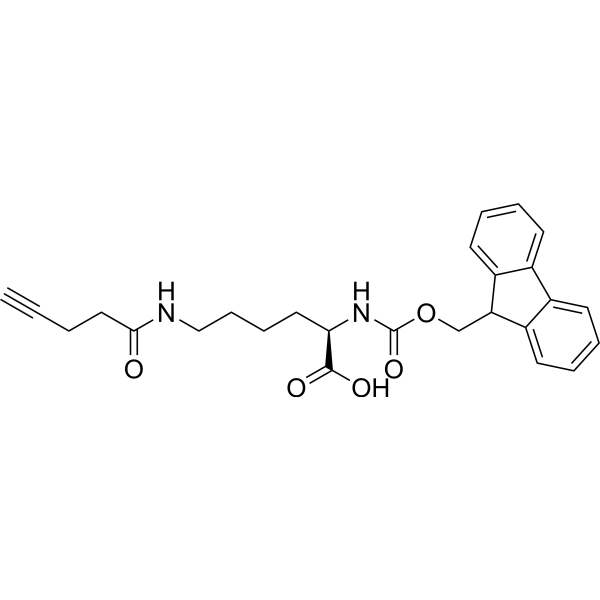
Fmoc-D-Lys(pentynoyl)-OH is a click chemistry reagent containing an azide group. Used to introduce alkyne functionality into peptides that can be further modified using Click-chemistry .
|
-
-
- HY-W142064
-
|
|
Antibiotic
|
Others
|
|
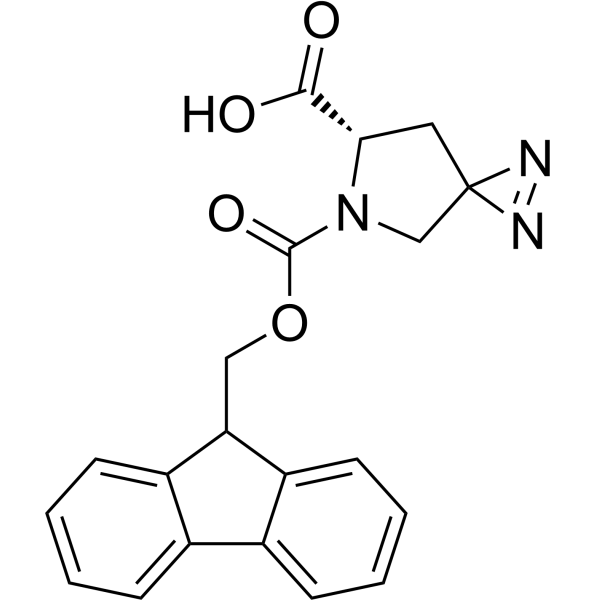
Fmoc-L-photo-proline is a photo-crosslinking amino acid which can be incorporated into synthetic peptides using solid-phase Fmoc chemistry. Fmoc-L-photo-proline can synthesis of cyclic peptidomimetic antibiotic and be used for preparation of diverse peptide-based photoaffinity probes research .
|
-
-
- HY-W451405
-
|
|
Biochemical Assay Reagents
|
Others
|
|
2,5-Dioxopyrrolidin-1-yl hept-6-ynoate is an amine reactive four carbon reagent that can be used for derivatizing peptides, antibodies, amine coated surfaces etc. The alkyne group reacts with azide-bearing compounds or biomolecules in copper catalyzed Click Chemistry reactions.
|
-

-
- HY-151780
-
|
|
ADC Linker
|
Others
|
|
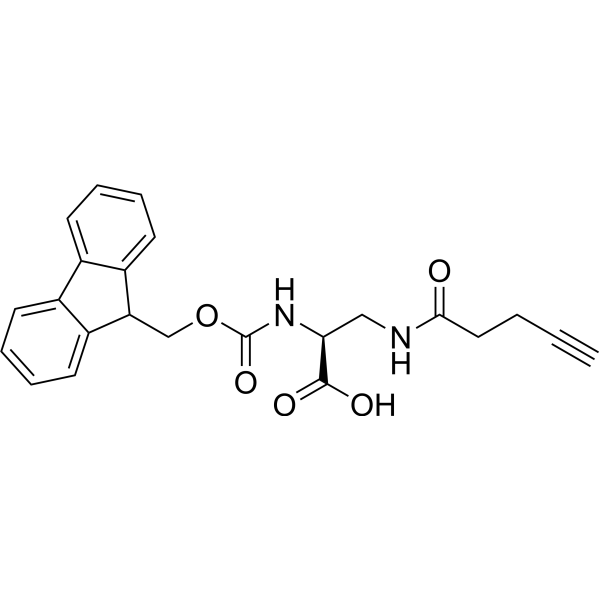
Fmoc-L-Dap(Pentynoyl)-OH is a click chemistry reagent containing an azide group. Fmoc-L-Dap(Pentynoyl)-OH serves as an amino acid building block for introducing alkyne functions into peptide sequences by standard Fmoc/tBu protocols. The alkyne residue can be engaged for copper catalyzed click reaction with organic azides or with tetrazines for copper-free conjugations . Fmoc-L-Dap(Pentynoyl)-OH is a click chemistry reagent, it contains an Alkyne group and can undergo copper-catalyzed azide-alkyne cycloaddition (CuAAc) with molecules containing Azide groups.
|
-
-
- HY-W800680
-
|
|
Fluorescent Dye
|
Others
|
|
BP Fluor 488 DBCO is a popular labeling dye used in copper-free Click Chemistry reactions. It will react with the azide group in antibody, proteins, peptides, amino-modified oligos, and other target molecules. The dye has an excitation peak at 499 nm and an emission peak at 520 nm. The conjugates are widely used in microscopy, flow cytometry, and other applications. BP Fluor 488 is a pure 5-sulfonated rhodamine molecule and it eliminates the lot-to-lot variation caused by two isomers ratio differences.
|
-

-
- HY-151837
-
|
|
ADC Linker
|
Others
|
|
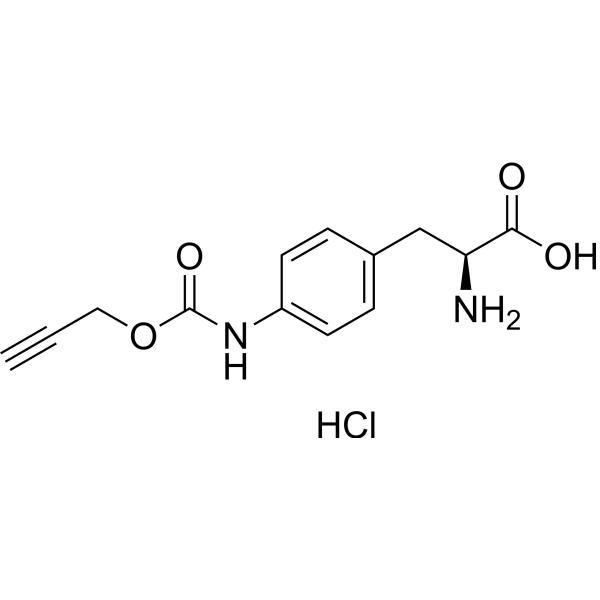
H-L-Phe(4-NH-Poc)-OH (hydrochloride) is a click chemistry reagent containing an azide group. Used as a modified Phe or Tyr analogue in protein and peptide biosynthesis. Propargyloxycarbonyl, commonly abbreviated as Poc or Pryoc, can either be used as alkyne component for standard Click conjugation or in combination with tetrazine linkers in copper-free Diels-Alder type Click reactions. It also has applications as unusual protecting group for amines, hydroxy functions and as esters. All 3 are stable to neat TFA, but can be cleaved at ambient temperature with Co2(CO)8 in TFA:DCM. Deprotection with other transition metals like palladium have also been reported . H-L-Phe(4-NH-Poc)-OH (hydrochloride) is a click chemistry reagent, it contains an Alkyne group and can undergo copper-catalyzed azide-alkyne cycloaddition (CuAAc) with molecules containing Azide groups.
|
-
-
- HY-140739A
-
|
|
Liposome
|
Neurological Disease
Cancer
|
|
DSPE-PEG2000-Maleimide free acid is a phospholipid-PEG conjugate. DSPE-PEG2000-Maleimide free acid utilizes the amphiphilicity of DSPE to insert into the lipid bilayer of liposomes or nanoparticles. DSPE-PEG2000-Maleimide free acid covalently couples to the sulfhydryl (-SH) of ligands (such as antibodies, peptides, or proteins) via thiol-maleimide click chemistry, giving the particles targeting capabilities. DSPE-PEG2000-Maleimide free acid can be used in the researches of breast cancer, lymphoma, and inherited retinal degeneration .
|
-

-
- HY-151738
-
|
|
ADC Linker
|
Others
|
|
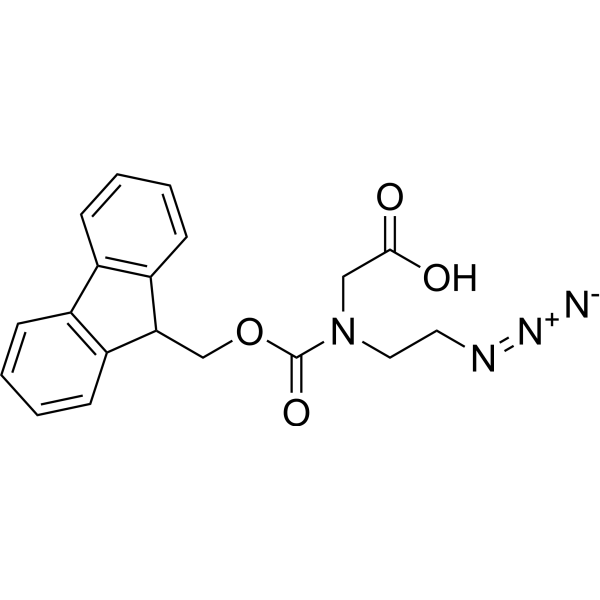
Fmoc-Aeg(N3)-OH is a click chemistry reagent containing an Azide. Alkylating the Nitrogen of an amide bond results in peptoid structures, which leads to conformational restrains, like N-methylation and allows backbone derivatisation. Altering cytotoxicity, bacterial cell selectivity and receptor pharmacology through formation of peptoid derivatives have been published for Cilengitide, Piscidin 1, and MC3, MC4 and MC5 receptor agonist. This building block enables design of macrocycles through intermolecular crosslinking or backbone stabilization through intermolecular ring-closure. This compound is a potential building block for the construction of (customized) peptide nucleic acids (PNAs) and for peptoid synthesis . Fmoc-Aeg(N3)-OH is a click chemistry reagent, it contains an Azide group and can undergo copper-catalyzed azide-alkyne cycloaddition reaction (CuAAc) with molecules containing Alkyne groups. It can also undergo strain-promoted alkyne-azide cycloaddition (SPAAC) reactions with molecules containing DBCO or BCN groups.
|
-
-
- HY-151783A
-
|
|
ADC Linker
|
Others
|
|
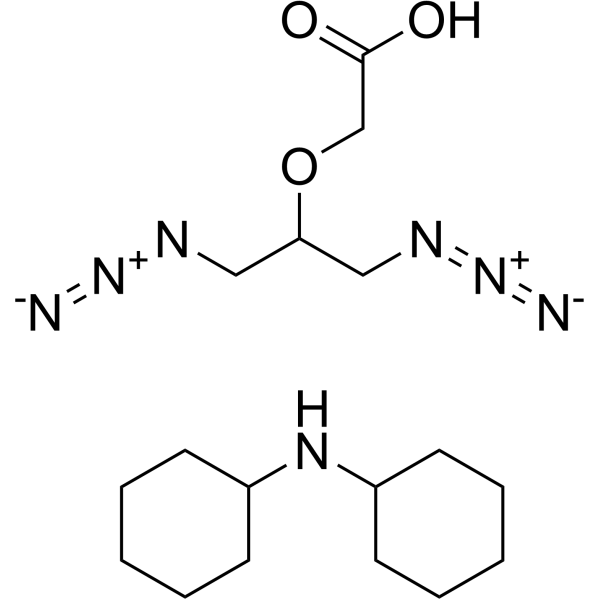
DAPOA DCHA is a click chemistry reagent containing an azide. DAPOA DCHA can be used in peptide synthesis as a linker that can be further modified at the azido-groups using Staudinger ligation or click-chemistry. This material can be used as a building block for dendrimeric structures . It contains an azide group and can undergo copper-catalyzed azide-alkyne cycloaddition (CuAAc) with molecules containing alkyne groups. It can also undergo ring strain-promoted alkyne-azide cycloaddition (SPAAC) with molecules containing DBCO or BCN groups.
|
-
-
- HY-151825
-
|
|
ADC Linker
|
Others
|
|
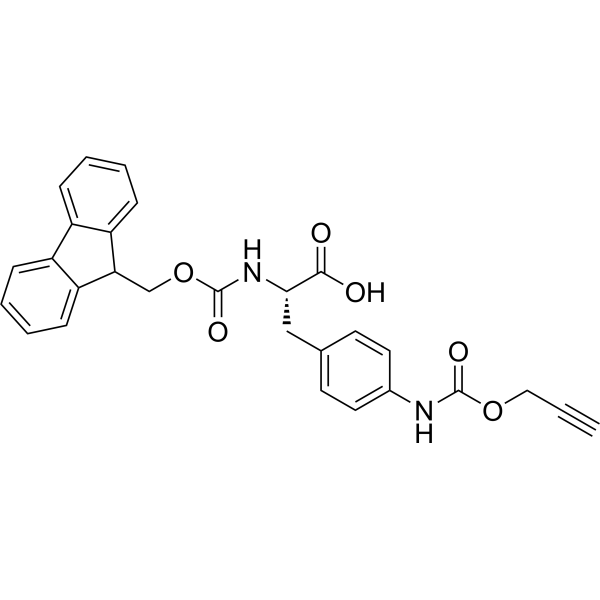
Fmoc-L-Phe(4-NH-Poc)-OH is a click chemistry reagent containing an azide group. Used as an orthogonally protected building block in solid-phase peptide synthesis. Poc-group can be further modified using Click-chemistry .
|
-
-
- HY-W800724
-
|
|
Biochemical Assay Reagents
|
Others
|
|
Methyltetrazine-PEG4-DBCO is a PEG linker with a terminal TCO reactive reagent and a DBCO group. DBCO is commonly used for copper-free Click Chemistry reactions. Methyltetrazine can be used to convert azido-containing peptides or proteins into tetrazine-modified peptides or protein without catalyst or axillary reagents.
|
-

-
- HY-172513
-
|
|
Biochemical Assay Reagents
|
Others
|
|
Methyltetrazine-PEG11-DBCO is a TCO reactive reagent with a DBCO group and water-soluble PEG spacer. This reagent can be used to convert azido-containing peptides or proteins into tetrazine-modified peptides or protein without catalyst or axillary reagents. DBCO is commonly used for copper-free Click Chemistry reactions.
|
-

-
- HY-W800723
-
|
|
Biochemical Assay Reagents
|
Others
|
|
Methyltetrazine-PEG2-DBCO is a TCO reactive reagent with a DBCO group and water-soluble PEG spacer. This reagent can be used to convert azido-containing peptides or proteins into tetrazine-modified peptides or protein without catalyst or axillary reagents. DBCO is commonly used for copper-free Click Chemistry reactions.
|
-

-
- HY-151787
-
|
|
ADC Linker
|
Others
|
|
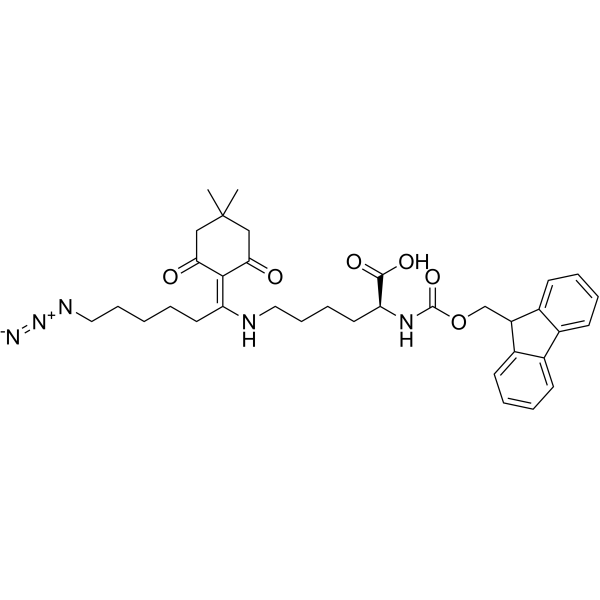
Fmoc-L-Lys(N3-Aca-DIM)-OH is a click chemistry reagent containing an azide group. Used as a SPPS building-block for the “helping hand” strategy for purification of highly insoluble peptides. Solubilizing residues are attached to the Lys side-chains using Click-chemistry. The solubilizing tag can be removed with 1M hydrazine or hydroxylamine solution . It contains an azide group and can undergo copper-catalyzed azide-alkyne cycloaddition (CuAAc) with molecules containing alkyne groups. It can also undergo ring strain-promoted alkyne-azide cycloaddition (SPAAC) with molecules containing DBCO or BCN groups.
|
-
-
- HY-D0820A
-
|
Sulfo-Cyanine5-alkyne triethylamine
|
Fluorescent Dye
|
Others
|
|
CY5-YNE (Sulfo-Cyanine5-alkyne) triethylamine is a reactive dye for the labeling of amino-groups in peptides, proteins, and oligonucleotides (Ex: 650 nM; Em: 680 nm). CY5-YNE triethylamine is a click chemistry reagent, it contains an Alkyne group and can undergo copper-catalyzed azide-alkyne cycloaddition (CuAAc) with molecules containing Azide groups.
|
-

-
- HY-147206
-
|
|
Fluorescent Dye
|
Others
|
|
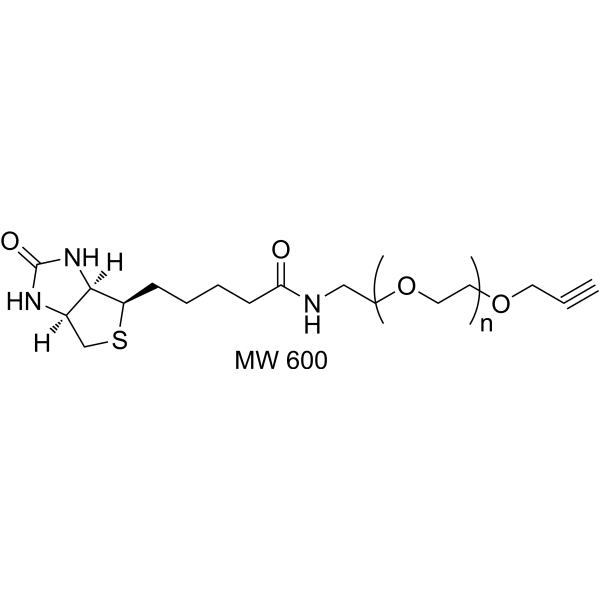
Biotin-PEG600-Alk is a Biotin-labeled Alkyne functionalized polyethylene glycol. Biotin-PEG600-Alk can be used to modify proteins, peptides, and oligonucleotides . Biotin-PEG600-Alk is a click chemistry reagent, it contains an Alkyne group and can undergo copper-catalyzed azide-alkyne cycloaddition (CuAAc) with molecules containing Azide groups.
|
-
-
- HY-112295
-
|
|
Biochemical Assay Reagents
|
Infection
|
|
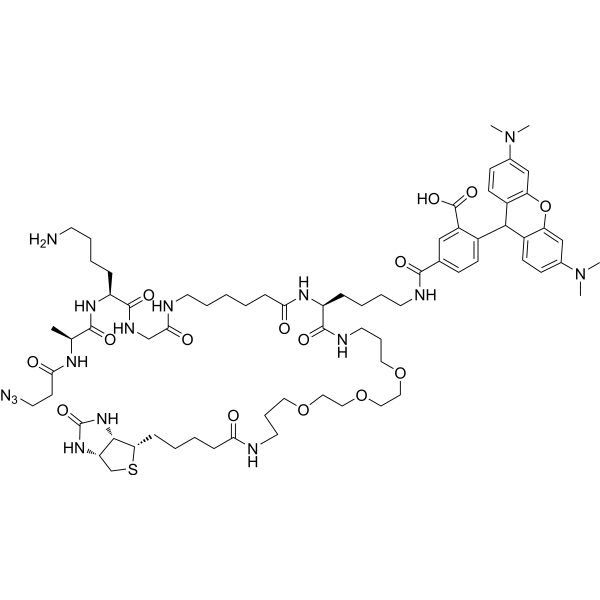
AzKTB is a capture reagent which bears a short trypsin-cleavable peptide sequence between the azide module and the TAMRA/PEG-biotin labels. AzKTB is a click chemistry reagent, it contains an Azide group and can undergo copper-catalyzed azide-alkyne cycloaddition reaction (CuAAc) with molecules containing Alkyne groups. It can also undergo strain-promoted alkyne-azide cycloaddition (SPAAC) reactions with molecules containing DBCO or BCN groups.
|
-
-
- HY-151778
-
|
|
ADC Linker
|
Others
|
|
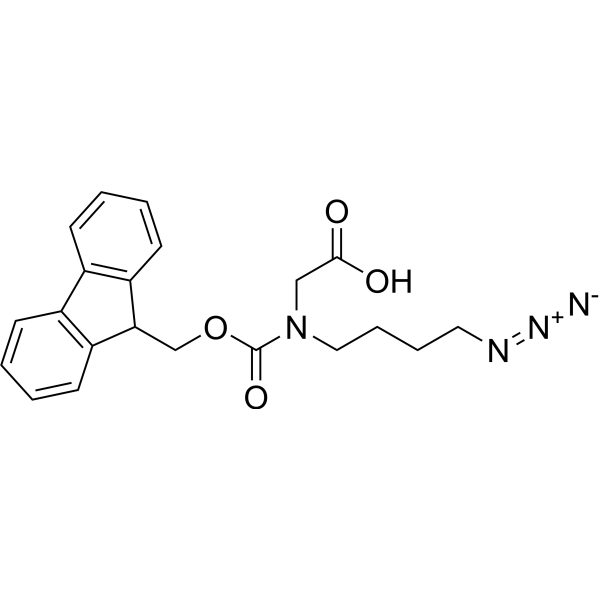
Fmoc-Abg(N3)-OH is a click chemistry reagent containing an azide group. Fmoc-Abg(N3)-OH has the potential to synthesize peptide nucleic acids (PNA) and peptoids. It contains an azide group and can undergo copper-catalyzed azide-alkyne cycloaddition (CuAAc) with molecules containing alkyne groups. It can also undergo ring strain-promoted alkyne-azide cycloaddition (SPAAC) with molecules containing DBCO or BCN groups.
|
-
-
- HY-P0132A
-
|
|
NO Synthase
|
Cancer
|
|
YIGSR-Lys(N3) is a peptide that can inhibit the tumour growth and metastasis of leukaemic cells. YIGSR blocks the cellular binding to laminin I via a 67-kDa laminin-binding protein, and inhibits shear-induced increase in eNOS expression of laminin cells . YIGSR-Lys(N3) is a click chemistry reagent, it contains an Azide group and can undergo copper-catalyzed azide-alkyne cycloaddition reaction (CuAAc) with molecules containing Alkyne groups. It can also undergo strain-promoted alkyne-azide cycloaddition (SPAAC) reactions with molecules containing DBCO or BCN groups.
|
-

-
- HY-W800702
-
|
|
Fluorescent Dye
|
Others
|
|
BP Fluor 555 Azide is a water-soluble, bright orange-fluorescent dye with excitation ideally suited for the 532 nm or 555 nm laser lines and visualized with TRITC (tetramethylrhodamine) filter sets. BP Fluor 555 conjugates of antibodies, peptides, and proteins are pH insensitive from pH 4 to pH 10. AF 555 conjugates ideally suited for detection of low abundance targets.
BP Fluor 555 Azide can be reacted with terminal alkynes via a copper-catalyzed click reaction (CuAAC). It also reacts with strained cyclooctyne via a copper-free “click chemistry” reaction to form a stable triazole and does not require Cu-catalyst or elevated temperatures. The brightness and photostability of this dye are best suited to direct imaging of low-abundance targets.
|
-

-
- HY-W090637
-
-

-
- HY-P11755
-
|
|
Drug Intermediate
|
Cancer
|
|
DBCO-P-LPK is a DBCO-modified colorectal cancer-specific binding peptide that serves as a key intermediate for targeted anticancer conjugates. DBCO-P-LPK enables the synthesis of the P-LPK-Camptothecin (HY-16560) conjugate. DBCO-P-LPK is applicable to the research of colorectal cancer .
|
-

-
- HY-W451460
-
|
|
Biochemical Assay Reagents
|
Others
|
|
2,5-Dioxopyrrolidin-1-yl 2-(prop-2-yn-1-yloxy)acetate is a Click Chemistry reagent with a propargyl group and an NHS ester group. The propargyl group can react with biomolecules containing azide group via copper catalyzed Click Chemistry reaction. The NHS ester is an amine reactive group which can be used for derivatizing peptides, antibodies, amine coated surfaces, etc.
|
-

-
- HY-185423
-
|
|
DNA/RNA Synthesis
Biochemical Assay Reagents
|
Cardiovascular Disease
|
|
PreQ1-DBCO is a strained cyclooctyne commonly used in click chemistry. PreQ1-DBCO undergoes TGT-catalyzed guanine base exchange in DNA oligonucleotide stem-loops to replace guanine. PreQ1-DBCO functionalizes custom DNA oligonucleotide sequences. DBCO-modified DNA oligonucleotides are conjugated with azide peptides via strain-promoted azide-alkyne click chemistry (SPAAC). PreQ1-DBCO can be used in studies of hemophilia B (Christmas disease) .
|
-

-
- HY-183038
-
|
|
Biochemical Assay Reagents
|
Others
|
|
2-Phenyl-1-octen-7-yn-1-one is an alkyne-functionalized enone with site-selective reactivity toward the N-terminal α-amino group of peptides and proteins. 2-Phenyl-1-octen-7-yn-1-one can undergo click chemistry with azides via its alkyne moiety to enable further protein functionalization. 2-Phenyl-1-octen-7-yn-1-one modifies unprotected peptide libraries as well as proteins including insulin, lysozyme, RNaseA and BCArg .
|
-

-
- HY-108010
-
|
|
Amyloid-β
|
Neurological Disease
|
|
Aftobetin is a non-invasive molecular probe used for the early diagnosis of Alzheimer's disease (AD). Aftobetin can specifically bind to the aggregated β-amyloid peptide (Aβ) in the lens of the eye, enabling the early diagnosis of AD through a rapid and painless detection method .
|
-

| Cat. No. |
Product Name |
Type |
-
- HY-D0820
-
|
Sulfo-Cyanine5-alkyne
|
Fluorescent Dyes
|
|
CY5-YNE (Sulfo-Cyanine5-alkyne) is a reactive dye for the labeling of amino-groups in peptides, proteins, and oligonucleotides (Ex: 650 nM; Em: 680 nm). CY5-YNE is a click chemistry reagent, it contains an Alkyne group and can undergo copper-catalyzed azide-alkyne cycloaddition (CuAAc) with molecules containing Azide groups.
|
-
- HY-151711
-
|
|
Fluorescent Dyes
|
|
Sulfo-Cy5.5 Azide is a click chemistry reagent containing an azide group. Sulfo-Cy5.5 Azide is also a water-soluble dye (Ex=673 nm, Em=707 nm), which designed to label sensitive molecules such as peptides, proteins and oligonucleotides. It contains an azide group and can undergo copper-catalyzed azide-alkyne cycloaddition (CuAAc) with molecules containing alkyne groups. It can also undergo ring strain-promoted alkyne-azide cycloaddition (SPAAC) with molecules containing DBCO or BCN groups.
|
-
- HY-D0818
-
|
Sulfo-Cyanine3-alkyne
|
Fluorescent Dyes
|
|
CY3-YNE (Sulfo-Cyanine3-alkyne) is a dye for the labeling of soluble proteins, peptides, and oligonucleotides/DNA. CY3-YNE is a click chemistry reagent, it contains an Alkyne group and can undergo copper-catalyzed azide-alkyne cycloaddition (CuAAc) with molecules containing Azide groups.
|
-
- HY-D1052
-
|
|
Fluorescent Dyes
|
|
Cy7-YNE is a fluorescence labeling agent (Ex=700-770 nm,Em=790 nm). Cyanine dyes are used to label proteins, antibodies, and peptides. Cy7-YNE is a click chemistry reagent, it contains an Alkyne group and can undergo copper-catalyzed azide-alkyne cycloaddition (CuAAc) with molecules containing Azide groups.
|
-
- HY-D2891
-
|
|
Fluorescent Dyes
|
|
5-TAMRA-DBCO is a fluorescent dye that combines 5-TAMRA (HY-15942) with a dibenzocyclooctyne (DBCO) moiety. 5-TAMRA-DBCO is able to copper-free click chemistry reactions with azide-functionalized molecules. 5-TAMRA-DBCO can be used for labeling proteins, peptides, nucleic acids (Ex/Em = 541/567 nm) .
|
-
- HY-W800680
-
|
|
Fluorescent Dyes
|
|
BP Fluor 488 DBCO is a popular labeling dye used in copper-free Click Chemistry reactions. It will react with the azide group in antibody, proteins, peptides, amino-modified oligos, and other target molecules. The dye has an excitation peak at 499 nm and an emission peak at 520 nm. The conjugates are widely used in microscopy, flow cytometry, and other applications. BP Fluor 488 is a pure 5-sulfonated rhodamine molecule and it eliminates the lot-to-lot variation caused by two isomers ratio differences.
|
-
- HY-W800702
-
|
|
Fluorescent Dyes
|
|
BP Fluor 555 Azide is a water-soluble, bright orange-fluorescent dye with excitation ideally suited for the 532 nm or 555 nm laser lines and visualized with TRITC (tetramethylrhodamine) filter sets. BP Fluor 555 conjugates of antibodies, peptides, and proteins are pH insensitive from pH 4 to pH 10. AF 555 conjugates ideally suited for detection of low abundance targets.
BP Fluor 555 Azide can be reacted with terminal alkynes via a copper-catalyzed click reaction (CuAAC). It also reacts with strained cyclooctyne via a copper-free “click chemistry” reaction to form a stable triazole and does not require Cu-catalyst or elevated temperatures. The brightness and photostability of this dye are best suited to direct imaging of low-abundance targets.
|
| Cat. No. |
Product Name |
Type |
-
- HY-140739
-
|
|
Biochemical Assay Reagents
|
|
DSPE-PEG2000-Maleimide sodium (purity>95%) is a phospholipid-PEG conjugate. DSPE-PEG2000-Maleimide utilizes the amphiphilicity of DSPE to insert into the lipid bilayer of liposomes or nanoparticles. DSPE-PEG2000-Maleimide covalently couples to the sulfhydryl (-SH) of ligands (such as antibodies, peptides, or proteins) via thiol-maleimide click chemistry, giving the particles targeting capabilities. DSPE-PEG2000-Maleimide sodium (purity>95%) can be used in the researches of breast cancer, lymphoma, and inherited retinal degeneration .
|
-
- HY-145934A
-
|
|
Biochemical Assay Reagents
|
|
UDP-GlcNAz disodium is the analogue of UDP-GlcNAc disodium (HY-112174). UDP-GlcNAc disodium is the donor substrate of many N-acetylgalactosaminyltransferases, enzymes which transfer GlcNAc from the nucleotide sugar to a saccharide or peptide acceptor. UDP-GlcNAc disodium is a click chemistry reagent, it contains an Azide group and can undergo copper-catalyzed azide-alkyne cycloaddition reaction (CuAAc) with molecules containing Alkyne groups. It can also undergo strain-promoted alkyne-azide cycloaddition (SPAAC) reactions with molecules containing DBCO or BCN groups .
|
-
- HY-W011412
-
|
|
Biochemical Assay Reagents
|
|
TSTU is used as a coupling reagent in peptide chemistry. TSTU can convert carboxylic acids into the corresponding N-hydroxysuccinimidyl (NHS) esters. TSTU can be applied to the attachment of labels to peptides, proteins, etc .
|
-
- HY-W090637
-
| Cat. No. |
Product Name |
Target |
Research Area |
-
- HY-P0132A
-
|
|
NO Synthase
|
Cancer
|
|
YIGSR-Lys(N3) is a peptide that can inhibit the tumour growth and metastasis of leukaemic cells. YIGSR blocks the cellular binding to laminin I via a 67-kDa laminin-binding protein, and inhibits shear-induced increase in eNOS expression of laminin cells . YIGSR-Lys(N3) is a click chemistry reagent, it contains an Azide group and can undergo copper-catalyzed azide-alkyne cycloaddition reaction (CuAAc) with molecules containing Alkyne groups. It can also undergo strain-promoted alkyne-azide cycloaddition (SPAAC) reactions with molecules containing DBCO or BCN groups.
|
-
- HY-P11755
-
|
|
Drug Intermediate
|
Cancer
|
|
DBCO-P-LPK is a DBCO-modified colorectal cancer-specific binding peptide that serves as a key intermediate for targeted anticancer conjugates. DBCO-P-LPK enables the synthesis of the P-LPK-Camptothecin (HY-16560) conjugate. DBCO-P-LPK is applicable to the research of colorectal cancer .
|
-
- HY-P1876D
-
|
|
Peptides
|
Others
|
|
Cys-NLS is a cysteine-containing nuclear localization signal peptide derived from the simian virus 40 large T antigen, which enhances nuclear import .
|
| Cat. No. |
Product Name |
|
Classification |
-
- HY-145934
-
|
UDP-N-azidoacetylgalactosamine disodium
|
|
Azide
|
|
UDP-GalNAz (UDP-N-azidoacetylgalactosamine) disodium is the analogue of UDP-GalNAc disodium (HY-114365). UDP-GalNAc disodium is the donor substrate of many N-acetylgalactosaminyltransferases, enzymes which transfer GalNAc from the nucleotide sugar to a saccharide or peptide acceptor. UDP-GalNAz disodium is a click chemistry reagent, it contains an Azide group and can undergo copper-catalyzed azide-alkyne cycloaddition reaction (CuAAc) with molecules containing Alkyne groups. It can also undergo strain-promoted alkyne-azide cycloaddition (SPAAC) reactions with molecules containing DBCO or BCN groups .
|
-
- HY-151696
-
|
|
|
TCO
|
|
TCO-PEG3-maleimide (TCO-PEG3-NEM) is a click chemistry reagent. TCO-PEG3-maleimide efficiently binds TCO (trans-cyclooctene) moiety to thiol-containing molecules (such as antibodies, cysteine-containing peptides) .
|
-
- HY-145934A
-
|
|
|
Azide
|
|
UDP-GlcNAz disodium is the analogue of UDP-GlcNAc disodium (HY-112174). UDP-GlcNAc disodium is the donor substrate of many N-acetylgalactosaminyltransferases, enzymes which transfer GlcNAc from the nucleotide sugar to a saccharide or peptide acceptor. UDP-GlcNAc disodium is a click chemistry reagent, it contains an Azide group and can undergo copper-catalyzed azide-alkyne cycloaddition reaction (CuAAc) with molecules containing Alkyne groups. It can also undergo strain-promoted alkyne-azide cycloaddition (SPAAC) reactions with molecules containing DBCO or BCN groups .
|
-
- HY-155788
-
|
|
|
DBCO
|
|
DSPE-PEG-DBCO ammonium is the ammonium salt form of DSPE-PEG-DBCO. DSPE-PEG-DBCO ammonium is utilized in copper-free click chemistry through SPAAC conjugation with an azido-functionalized peptide ligand. DSPE-PEG-DBCO ammonium is applied in drug-delivery and nanoparticle research .
|
-
- HY-D0820
-
|
Sulfo-Cyanine5-alkyne
|
|
Alkynes
Labeling and Fluorescence Imaging
|
|
CY5-YNE (Sulfo-Cyanine5-alkyne) is a reactive dye for the labeling of amino-groups in peptides, proteins, and oligonucleotides (Ex: 650 nM; Em: 680 nm). CY5-YNE is a click chemistry reagent, it contains an Alkyne group and can undergo copper-catalyzed azide-alkyne cycloaddition (CuAAc) with molecules containing Azide groups.
|
-
- HY-151726
-
|
|
|
Azide
|
|
Azido-PEG(4)-Val-Cit-PAB-PNP is a cleavable peptide ADC linker. Azido-PEG(4)-Val-Cit-PAB-PNP is a click chemistry reagent containing an azide group. It contains an azide group and can undergo copper-catalyzed azide-alkyne cycloaddition (CuAAc) with molecules containing alkyne groups. It can also undergo ring strain-promoted alkyne-azide cycloaddition (SPAAC) with molecules containing DBCO or BCN groups.
|
-
- HY-151711
-
|
|
|
Azide
Labeling and Fluorescence Imaging
|
|
Sulfo-Cy5.5 Azide is a click chemistry reagent containing an azide group. Sulfo-Cy5.5 Azide is also a water-soluble dye (Ex=673 nm, Em=707 nm), which designed to label sensitive molecules such as peptides, proteins and oligonucleotides. It contains an azide group and can undergo copper-catalyzed azide-alkyne cycloaddition (CuAAc) with molecules containing alkyne groups. It can also undergo ring strain-promoted alkyne-azide cycloaddition (SPAAC) with molecules containing DBCO or BCN groups.
|
-
- HY-D0818
-
|
Sulfo-Cyanine3-alkyne
|
|
Alkynes
|
|
CY3-YNE (Sulfo-Cyanine3-alkyne) is a dye for the labeling of soluble proteins, peptides, and oligonucleotides/DNA. CY3-YNE is a click chemistry reagent, it contains an Alkyne group and can undergo copper-catalyzed azide-alkyne cycloaddition (CuAAc) with molecules containing Azide groups.
|
-
- HY-151859
-
|
|
|
Azide
|
|
N3-Gly-Gly-Gly-OH is a click chemistry reagent containing an azide group. N3-Gly-Gly-OH undergoes copper-catalyzed azide-alkyne cycloaddition (CuAAc) with molecules containing an alkyne group. N3-Gly-Gly-OH also undergoes strain-promoted alkyne-azide cycloaddition (SPAAC) with molecules containing DBCO or BCN groups. N3-Gly-Gly-Gly-OH can be used to construct peptide-like ADC linkers via click chemistry .
|
-
- HY-151783
-
|
|
|
Azide
|
|
DAPOA is a click chemistry reagent containing an azide group. DAPOA can be used in peptide synthesis as a linker that can be further modified at the azido-groups using Staudinger ligation or click-chemistry . It contains an azide group and can undergo copper-catalyzed azide-alkyne cycloaddition (CuAAc) with molecules containing alkyne groups. It can also undergo ring strain-promoted alkyne-azide cycloaddition (SPAAC) with molecules containing DBCO or BCN groups.
|
-
- HY-D1052
-
|
|
|
Labeling and Fluorescence Imaging
Alkynes
|
|
Cy7-YNE is a fluorescence labeling agent (Ex=700-770 nm,Em=790 nm). Cyanine dyes are used to label proteins, antibodies, and peptides. Cy7-YNE is a click chemistry reagent, it contains an Alkyne group and can undergo copper-catalyzed azide-alkyne cycloaddition (CuAAc) with molecules containing Azide groups.
|
-
- HY-151829
-
|
|
|
Azide
|
|
Fmoc-L-Asn(EDA-N3)-OH is a click chemistry reagent containing an azide group. This building block is reported in literature for the modification of Amanitin via Click Chemistry. Alpha-Amanitin is the deadliest member of the amatoxin peptide family produced by the death-cap mushroom A. phalloides. It is an orally available, rigid, bicyclic octapeptide and one of the most lethal known natural products (LD50 = 50-100 μg/kg) acting as highly selective allosteric inhibitor of the RNA polymerase II . It contains an azide group and can undergo copper-catalyzed azide-alkyne cycloaddition (CuAAc) with molecules containing alkyne groups. It can also undergo ring strain-promoted alkyne-azide cycloaddition (SPAAC) with molecules containing DBCO or BCN groups.
|
-
- HY-D2891
-
|
|
|
DBCO
|
|
5-TAMRA-DBCO is a fluorescent dye that combines 5-TAMRA (HY-15942) with a dibenzocyclooctyne (DBCO) moiety. 5-TAMRA-DBCO is able to copper-free click chemistry reactions with azide-functionalized molecules. 5-TAMRA-DBCO can be used for labeling proteins, peptides, nucleic acids (Ex/Em = 541/567 nm) .
|
-
- HY-151859A
-
|
|
|
Azide
|
|
N3-Gly-Gly-OH DCHA is a click chemistry reagent containing an azide group. N3-Gly-Gly-OH DCHA undergoes copper-catalyzed azide-alkyne cycloaddition (CuAAc) with molecules containing an alkyne group. N3-Gly-Gly-OH DCHA also undergoes strain-promoted alkyne-azide cycloaddition (SPAAC) with molecules containing DBCO or BCN groups. N3-Gly-Gly-OH DCHA can be used to construct peptide-like ADC linkers via click chemistry .
|
-
- HY-151786
-
|
|
|
Alkynes
Azide
|
|
Fmoc-L-Lys(Pentynoyl-DIM)-OH is a click chemistry reagent containing an azide. Fmoc-L-Lys(Pentynoyl-DIM)-OH can be used as a SPPS building block for the “helping hand” strategy for purification of highly insoluble peptides. Solubilizing residues are attached to the Lys side-chains using Click-chemistry. The solubilizing tag can be removed with 1M hydrazine or hydroxylamine solution . It contains an azide group and can undergo copper-catalyzed azide-alkyne cycloaddition (CuAAc) with molecules containing alkyne groups. It can also undergo ring strain-promoted alkyne-azide cycloaddition (SPAAC) with molecules containing DBCO or BCN groups.
|
-
- HY-153486
-
|
|
|
Azide
|
|
N3-VC-PAB-PNP is the intermediate of bicyclic peptide ligand STING conjugates . N3-VC-PAB-PNP is a click chemistry reagent, it contains an Azide group and can undergo copper-catalyzed azide-alkyne cycloaddition reaction (CuAAc) with molecules containing Alkyne groups. It can also undergo strain-promoted alkyne-azide cycloaddition (SPAAC) reactions with molecules containing DBCO or BCN groups.
|
-
- HY-151678
-
|
|
|
Azide
|
|
N3-L-Lys(Mtt)-OH is a click chemistry reagent containing an azide group. N3-L-Lys(Mtt)-OH can introduce azide functions into the amino acid building block of peptide sequences at the N-terminal position. It contains an azide group and can undergo copper-catalyzed azide-alkyne cycloaddition (CuAAc) with molecules containing alkyne groups. It can also undergo ring strain-promoted alkyne-azide cycloaddition (SPAAC) with molecules containing DBCO or BCN groups.
|
-
- HY-151824
-
|
|
|
Alkynes
|
|
Boc-L-Phe(4-NH-Poc)-OH is a click chemistry reagent containing an azide group. Used as an orthogonally protected building block in peptide synthesis. Propargyloxycarbonyl, commonly abbreviated as Poc or Pryoc, can either be used as alkyne component for standard Click conjugation or in combination with tetrazine linkers in copper-free Diels-Alder type Click reactions. It also has applications as unusual protecting group for amines, hydroxy functions and as esters. All 3 are stable to neat TFA, but can be cleaved at ambient temperature with Co2(CO)8 in TFA:DCM. Deprotection with other transition metals like palladium have also been reported . Boc-L-Phe(4-NH-Poc)-OH is a click chemistry reagent, it contains an Alkyne group and can undergo copper-catalyzed azide-alkyne cycloaddition (CuAAc) with molecules containing Azide groups.
|
-
- HY-151826
-
|
|
|
Alkynes
|
|
Fmoc-D-Lys(pentynoyl)-OH is a click chemistry reagent containing an azide group. Used to introduce alkyne functionality into peptides that can be further modified using Click-chemistry .
|
-
- HY-151780
-
|
|
|
Alkynes
|
|
Fmoc-L-Dap(Pentynoyl)-OH is a click chemistry reagent containing an azide group. Fmoc-L-Dap(Pentynoyl)-OH serves as an amino acid building block for introducing alkyne functions into peptide sequences by standard Fmoc/tBu protocols. The alkyne residue can be engaged for copper catalyzed click reaction with organic azides or with tetrazines for copper-free conjugations . Fmoc-L-Dap(Pentynoyl)-OH is a click chemistry reagent, it contains an Alkyne group and can undergo copper-catalyzed azide-alkyne cycloaddition (CuAAc) with molecules containing Azide groups.
|
-
- HY-151837
-
|
|
|
Alkynes
|
|
H-L-Phe(4-NH-Poc)-OH (hydrochloride) is a click chemistry reagent containing an azide group. Used as a modified Phe or Tyr analogue in protein and peptide biosynthesis. Propargyloxycarbonyl, commonly abbreviated as Poc or Pryoc, can either be used as alkyne component for standard Click conjugation or in combination with tetrazine linkers in copper-free Diels-Alder type Click reactions. It also has applications as unusual protecting group for amines, hydroxy functions and as esters. All 3 are stable to neat TFA, but can be cleaved at ambient temperature with Co2(CO)8 in TFA:DCM. Deprotection with other transition metals like palladium have also been reported . H-L-Phe(4-NH-Poc)-OH (hydrochloride) is a click chemistry reagent, it contains an Alkyne group and can undergo copper-catalyzed azide-alkyne cycloaddition (CuAAc) with molecules containing Azide groups.
|
-
- HY-151738
-
|
|
|
Azide
|
|
Fmoc-Aeg(N3)-OH is a click chemistry reagent containing an Azide. Alkylating the Nitrogen of an amide bond results in peptoid structures, which leads to conformational restrains, like N-methylation and allows backbone derivatisation. Altering cytotoxicity, bacterial cell selectivity and receptor pharmacology through formation of peptoid derivatives have been published for Cilengitide, Piscidin 1, and MC3, MC4 and MC5 receptor agonist. This building block enables design of macrocycles through intermolecular crosslinking or backbone stabilization through intermolecular ring-closure. This compound is a potential building block for the construction of (customized) peptide nucleic acids (PNAs) and for peptoid synthesis . Fmoc-Aeg(N3)-OH is a click chemistry reagent, it contains an Azide group and can undergo copper-catalyzed azide-alkyne cycloaddition reaction (CuAAc) with molecules containing Alkyne groups. It can also undergo strain-promoted alkyne-azide cycloaddition (SPAAC) reactions with molecules containing DBCO or BCN groups.
|
-
- HY-151783A
-
|
|
|
Azide
|
|
DAPOA DCHA is a click chemistry reagent containing an azide. DAPOA DCHA can be used in peptide synthesis as a linker that can be further modified at the azido-groups using Staudinger ligation or click-chemistry. This material can be used as a building block for dendrimeric structures . It contains an azide group and can undergo copper-catalyzed azide-alkyne cycloaddition (CuAAc) with molecules containing alkyne groups. It can also undergo ring strain-promoted alkyne-azide cycloaddition (SPAAC) with molecules containing DBCO or BCN groups.
|
-
- HY-151825
-
|
|
|
Alkynes
|
|
Fmoc-L-Phe(4-NH-Poc)-OH is a click chemistry reagent containing an azide group. Used as an orthogonally protected building block in solid-phase peptide synthesis. Poc-group can be further modified using Click-chemistry .
|
-
- HY-W800724
-
|
|
|
DBCO
|
|
Methyltetrazine-PEG4-DBCO is a PEG linker with a terminal TCO reactive reagent and a DBCO group. DBCO is commonly used for copper-free Click Chemistry reactions. Methyltetrazine can be used to convert azido-containing peptides or proteins into tetrazine-modified peptides or protein without catalyst or axillary reagents.
|
-
- HY-172513
-
|
|
|
Tetrazine
DBCO
|
|
Methyltetrazine-PEG11-DBCO is a TCO reactive reagent with a DBCO group and water-soluble PEG spacer. This reagent can be used to convert azido-containing peptides or proteins into tetrazine-modified peptides or protein without catalyst or axillary reagents. DBCO is commonly used for copper-free Click Chemistry reactions.
|
-
- HY-W800723
-
|
|
|
DBCO
|
|
Methyltetrazine-PEG2-DBCO is a TCO reactive reagent with a DBCO group and water-soluble PEG spacer. This reagent can be used to convert azido-containing peptides or proteins into tetrazine-modified peptides or protein without catalyst or axillary reagents. DBCO is commonly used for copper-free Click Chemistry reactions.
|
-
- HY-151787
-
|
|
|
Azide
|
|
Fmoc-L-Lys(N3-Aca-DIM)-OH is a click chemistry reagent containing an azide group. Used as a SPPS building-block for the “helping hand” strategy for purification of highly insoluble peptides. Solubilizing residues are attached to the Lys side-chains using Click-chemistry. The solubilizing tag can be removed with 1M hydrazine or hydroxylamine solution . It contains an azide group and can undergo copper-catalyzed azide-alkyne cycloaddition (CuAAc) with molecules containing alkyne groups. It can also undergo ring strain-promoted alkyne-azide cycloaddition (SPAAC) with molecules containing DBCO or BCN groups.
|
-
- HY-147206
-
|
|
|
Alkynes
|
|
Biotin-PEG600-Alk is a Biotin-labeled Alkyne functionalized polyethylene glycol. Biotin-PEG600-Alk can be used to modify proteins, peptides, and oligonucleotides . Biotin-PEG600-Alk is a click chemistry reagent, it contains an Alkyne group and can undergo copper-catalyzed azide-alkyne cycloaddition (CuAAc) with molecules containing Azide groups.
|
-
- HY-112295
-
|
|
|
Azide
|
|
AzKTB is a capture reagent which bears a short trypsin-cleavable peptide sequence between the azide module and the TAMRA/PEG-biotin labels. AzKTB is a click chemistry reagent, it contains an Azide group and can undergo copper-catalyzed azide-alkyne cycloaddition reaction (CuAAc) with molecules containing Alkyne groups. It can also undergo strain-promoted alkyne-azide cycloaddition (SPAAC) reactions with molecules containing DBCO or BCN groups.
|
-
- HY-151778
-
|
|
|
Azide
|
|
Fmoc-Abg(N3)-OH is a click chemistry reagent containing an azide group. Fmoc-Abg(N3)-OH has the potential to synthesize peptide nucleic acids (PNA) and peptoids. It contains an azide group and can undergo copper-catalyzed azide-alkyne cycloaddition (CuAAc) with molecules containing alkyne groups. It can also undergo ring strain-promoted alkyne-azide cycloaddition (SPAAC) with molecules containing DBCO or BCN groups.
|
-
- HY-P11755
-
|
|
|
DBCO
|
|
DBCO-P-LPK is a DBCO-modified colorectal cancer-specific binding peptide that serves as a key intermediate for targeted anticancer conjugates. DBCO-P-LPK enables the synthesis of the P-LPK-Camptothecin (HY-16560) conjugate. DBCO-P-LPK is applicable to the research of colorectal cancer .
|
-
- HY-183038
-
|
|
|
Alkynes
|
|
2-Phenyl-1-octen-7-yn-1-one is an alkyne-functionalized enone with site-selective reactivity toward the N-terminal α-amino group of peptides and proteins. 2-Phenyl-1-octen-7-yn-1-one can undergo click chemistry with azides via its alkyne moiety to enable further protein functionalization. 2-Phenyl-1-octen-7-yn-1-one modifies unprotected peptide libraries as well as proteins including insulin, lysozyme, RNaseA and BCArg .
|
| Cat. No. |
Product Name |
|
Classification |
-
- HY-145934
-
|
UDP-N-azidoacetylgalactosamine disodium
|
|
Nucleotide Analogs
|
|
UDP-GalNAz (UDP-N-azidoacetylgalactosamine) disodium is the analogue of UDP-GalNAc disodium (HY-114365). UDP-GalNAc disodium is the donor substrate of many N-acetylgalactosaminyltransferases, enzymes which transfer GalNAc from the nucleotide sugar to a saccharide or peptide acceptor. UDP-GalNAz disodium is a click chemistry reagent, it contains an Azide group and can undergo copper-catalyzed azide-alkyne cycloaddition reaction (CuAAc) with molecules containing Alkyne groups. It can also undergo strain-promoted alkyne-azide cycloaddition (SPAAC) reactions with molecules containing DBCO or BCN groups .
|
-
- HY-140739
-
|
|
|
Pegylated Lipids
|
|
DSPE-PEG2000-Maleimide sodium (purity>95%) is a phospholipid-PEG conjugate. DSPE-PEG2000-Maleimide utilizes the amphiphilicity of DSPE to insert into the lipid bilayer of liposomes or nanoparticles. DSPE-PEG2000-Maleimide covalently couples to the sulfhydryl (-SH) of ligands (such as antibodies, peptides, or proteins) via thiol-maleimide click chemistry, giving the particles targeting capabilities. DSPE-PEG2000-Maleimide sodium (purity>95%) can be used in the researches of breast cancer, lymphoma, and inherited retinal degeneration .
|
-
- HY-140739A
-
|
|
|
Pegylated Lipids
|
|
DSPE-PEG2000-Maleimide free acid is a phospholipid-PEG conjugate. DSPE-PEG2000-Maleimide free acid utilizes the amphiphilicity of DSPE to insert into the lipid bilayer of liposomes or nanoparticles. DSPE-PEG2000-Maleimide free acid covalently couples to the sulfhydryl (-SH) of ligands (such as antibodies, peptides, or proteins) via thiol-maleimide click chemistry, giving the particles targeting capabilities. DSPE-PEG2000-Maleimide free acid can be used in the researches of breast cancer, lymphoma, and inherited retinal degeneration .
|
Your information is safe with us. * Required Fields.
Inquiry Information
- Product Name:
- Cat. No.:
- Quantity:
- MCE Japan Authorized Agent:








