Search Result
Results for "
4-chloro-7-fluoropyrrolo-1-2-a-quinoxaline-1-carbaldehyde
" in MedChemExpress (MCE) Product Catalog:
20
Biochemical Assay Reagents
9
Isotope-Labeled Compounds
| Cat. No. |
Nombre del producto |
Target |
Áreas de investigación |
Chemical Structure |
-
- HY-15067
-
DNQX
Maximum Cited Publications
11 Publications Verification
FG 9041
|
iGluR
|
Cancer
|
|
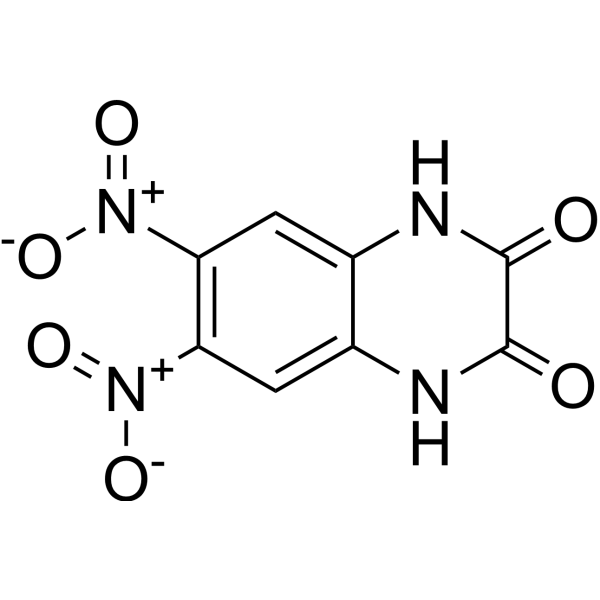
DNQX (FG 9041), a quinoxaline derivative, is a selective, potent competitive non-NMDA glutamate receptor antagonist (IC50s = 0.5, 2 and 40 μM for AMPA, kainate and NMDA receptors, respectively) .
|
-
-
- HY-W015650
-
|
|
Drug Derivative
|
Others
|
|
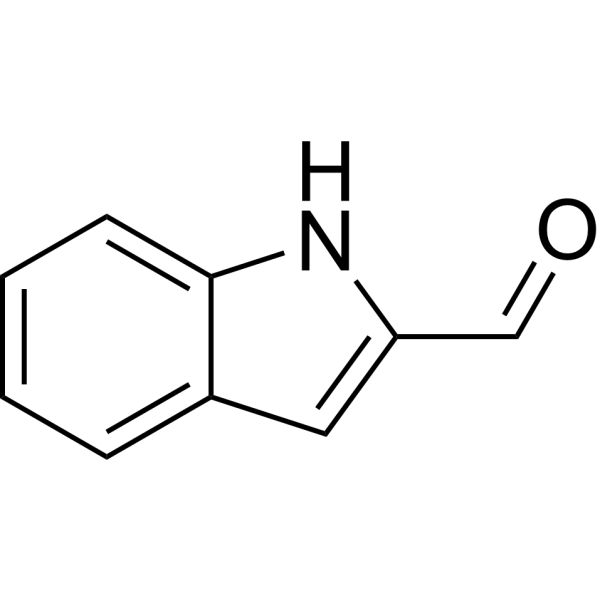
Indole-2-carbaldehyde is an indole derivative that can be used to reduce or remove localized fat deposits and/or tighten loose skin and soft tissues. Indole-2-carbaldehyde can be isolated from the fermentation broth of the coral symbiotic actinomycete Pseudonocardia sp. SCSIO 11457 and is used in cosmetic applications or pharmaceutical production .
|
-
-
- HY-115243
-
|
|
Biochemical Assay Reagents
|
Others
|
|
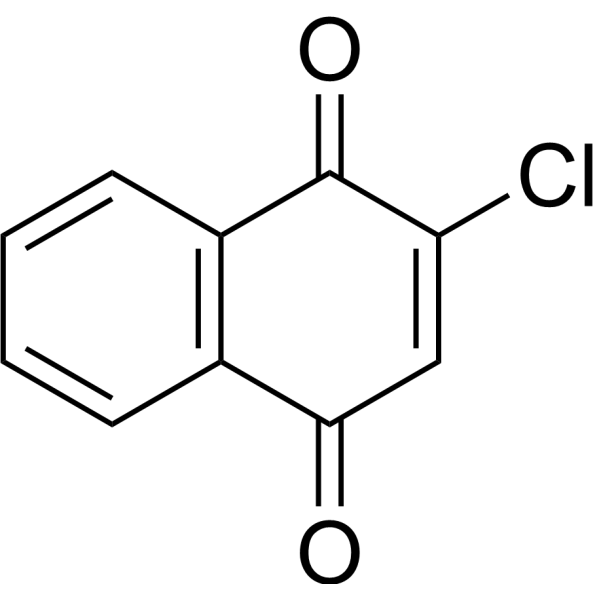
2-Chloro-1,4-naphthoquinone (chloro-K3) is a vitamin-K-dependent carboxylation antagonist with an IC50 value of 146 μM. 2-Chloro-1,4-naphthoquinone has cytotoxic activity .
|
-
-
- HY-W002251
-
|
|
Biochemical Assay Reagents
|
Others
|
|
Benzo[b]thiophene-3-carbaldehyde is a 3-formyl-substituted benzo[b]thiophene derivative that acts as an oxidizable substrate to convert to benzo[b]thiophene-3-carboxylic acid under liquid-phase conditions. Compared with analogs such as benzaldehyde and thiophene-2-carbaldehyde, Benzo[b]thiophene-3-carbaldehyde has lower oxidation difficulty, and can significantly increase the reaction rate in the presence of initiators (such as Na +Br - or DBA). Benzo[b]thiophene-3-carbaldehyde also serves as a key starting material for the synthesis of compounds including heteroaryl chalcones .
|
-
![Benzo[b]thiophene-3-carbaldehyde](//file.medchemexpress.com/product_pic/hy-w002251.gif)
-
- HY-W058423
-
|
|
Drug Intermediate
MAP4K
|
Cardiovascular Disease
Inflammation/Immunology
|
|
6-Bromo-3-fluoropyridine-2-carbaldehyde (synthetic intermediate of Compound I-90) is a synthetic intermediate. 6-Bromo-3-fluoropyridine-2-carbaldehyde can be used in the synthesis of HPK1 inhibitors. 6-Bromo-3-fluoropyridine-2-carbaldehyde is applicable to research on immune diseases and hematological diseases .
|
-

-
- HY-W007321
-
|
2-Formylimidazole
|
Biochemical Assay Reagents
|
Others
|
|
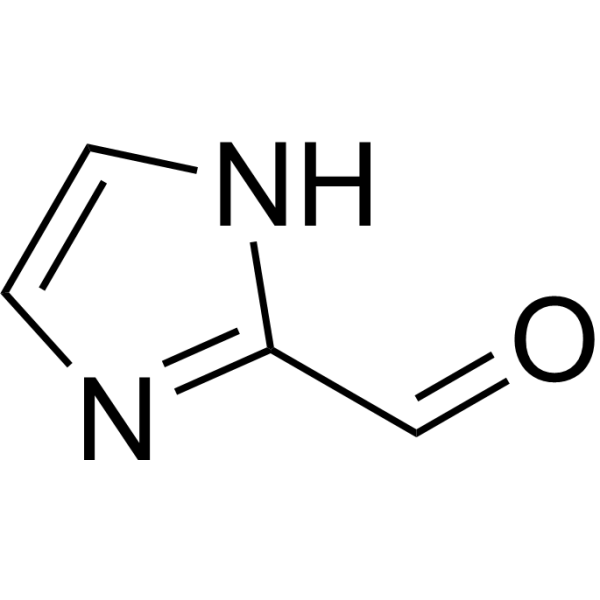
1H-Imidazole-2-carbaldehyde is a biochemical reagent that can be used as a biological material or organic compound for life science related research.
|
-
-
- HY-W452760
-
|
|
Ligands for E3 Ligase
|
Cancer
|
|
Glutarimide-(1-oxoisoindoline-5-carbaldehyde) is an E3 ubiquitin ligase cereblon (CRBN) ligand used to recruit the cereblon protein. Glutarimide-(1-oxoisoindoline-5-carbaldehyde) can be linked to a target protein ligand via a linker to form a PROTAC.
|
-

-
- HY-W091541
-
|
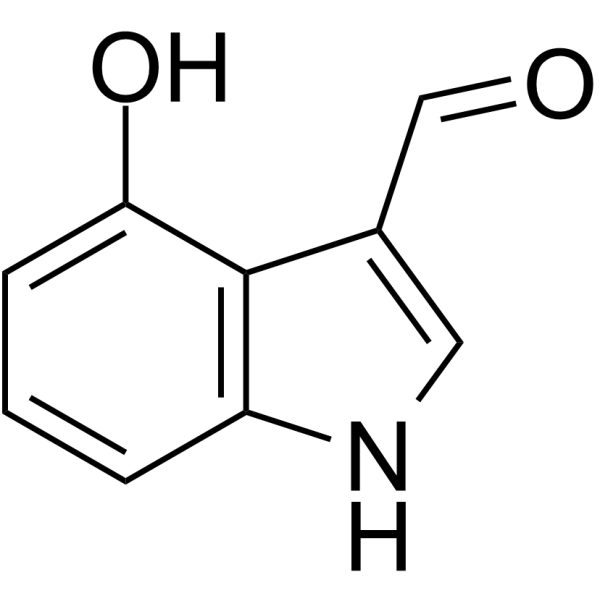
4-Hydroxyindole-3-carboxaldehyde
|
Endogenous Metabolite
|
Others
Inflammation/Immunology
|
|
4-Hydroxy-1H-indole-3-carbaldehyde (4-Hydroxyindole-3-carboxaldehyde) is a plant metabolite. 4-Hydroxy-1H-indole-3-carbaldehyde can be isolated from Capparis spinosa L. 4-Hydroxy-1H-indole-3-carbaldehyde can be used in the synthesis of fluorescent probe. 4-Hydroxy-1H-indole-3-carbaldehyde can be used in the study of inflammation-related diseases .
|
-
-
- HY-P10579
-
123B9
1 Publications Verification
|
Ephrin Receptor
|
Cancer
|
|
123B9, a tumor-homing agent, is a potent and selective EphA2 agonist with a Kd value of 4.0 μM. 123B9 selectively targets the EphA2 tyrosine kinase receptor ligand-binding domain. 123B9 does not appreciably inhibit the ligand binding domains of the most closely related EphA3 and EphA4 receptors .
|
-

-
- HY-W004801
-
|
|
Drug Intermediate
|
Others
|
|
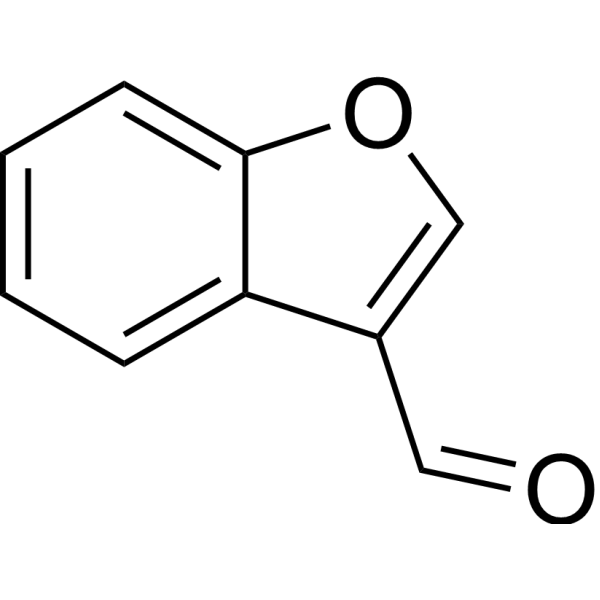
Benzofuran-3-carbaldehyde is a bioactive chemical, and can be used for the synthesis of active compound .
|
-
-
- HY-111857
-
|
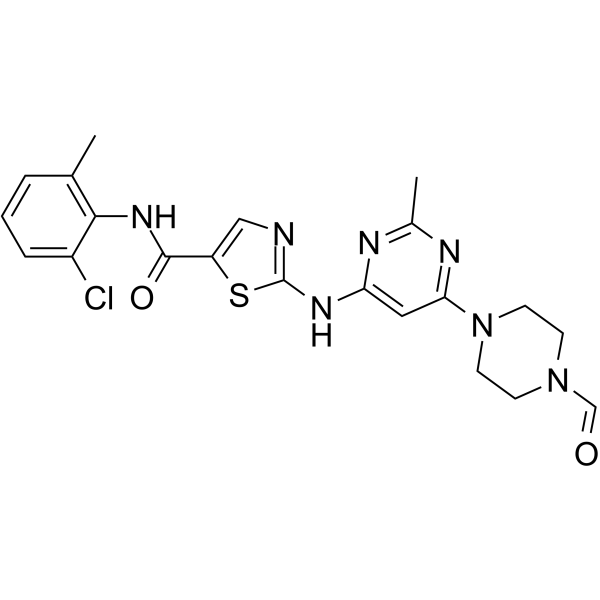
BMS-354825 carbaldehyde; PROTAC ABL binding moiety 4
|
Ligands for Target Protein for PROTAC
|
Cancer
|
|
Dasatinib carbaldehyde (BMS-354825 carbaldehyde), the Dasatinib (ABL inhibitor) based moiety, binds to IAP ligand via a linker to form SNIPER .
|
-
-
- HY-41514
-
|
|
Drug Intermediate
|
Others
|
|
3-Iodo-1-tetrahydropyran-2-yl-pyrazole-4-carbaldehyde is a drug intermediate for synthesis of various active compounds.
|
-

-
- HY-W012361
-
|
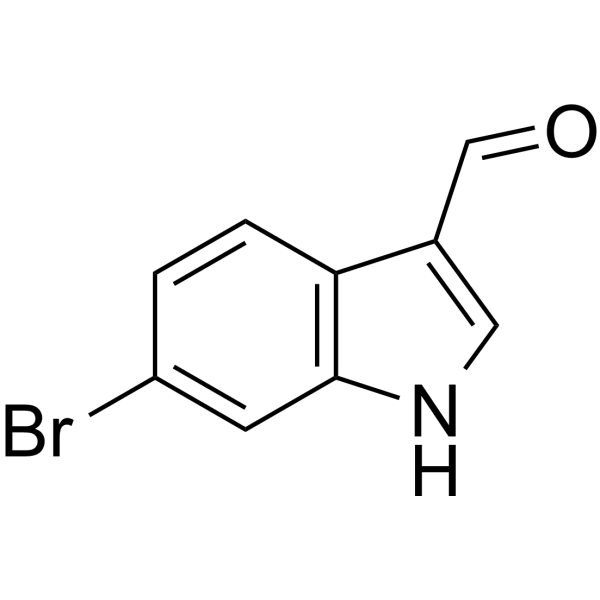
6-Bromoindole-3-carboxaldehyde
|
Biochemical Assay Reagents
|
Others
|
|
6-Bromo-1H-indole-3-carbaldehyde is a biochemical reagent that can be used as a biological material or organic compound for life science related research.
|
-
-
- HY-77049
-
|
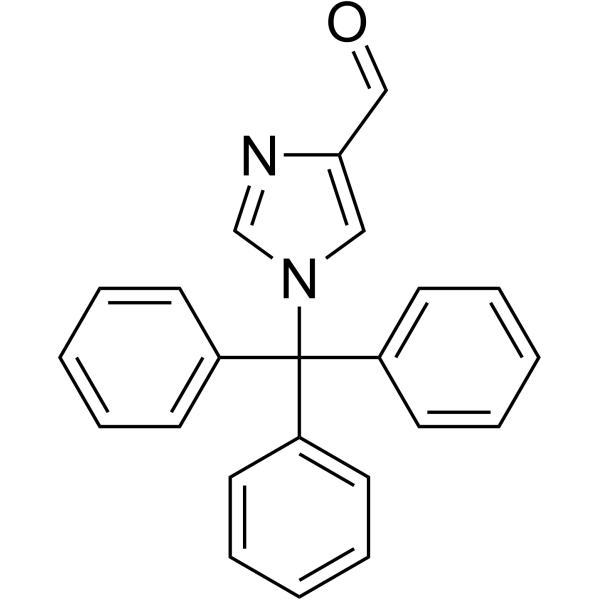
4-Formyl-1-tritylimidazole
|
Biochemical Assay Reagents
|
Others
|
|
1-Trityl-1H-imidazole-4-carbaldehyde is a biochemical reagent that can be used as a biological material or organic compound for life science related research.
|
-
-
- HY-W178327
-
|
|
Adenosine Receptor
|
Cancer
|
|
8-Chloro caffeine binds to adenosine receptors (Ki = 30 µM). 8-Chloro caffeine potentiates UV-induced chromosomal aberrations in Cl-I Chinese hamster embryonic lung cells. 8-Chloro caffeine is a derivative of the methylxanthine alkaloid caffeine .
|
-

-
- HY-N7427
-
-
-
- HY-32788
-
|
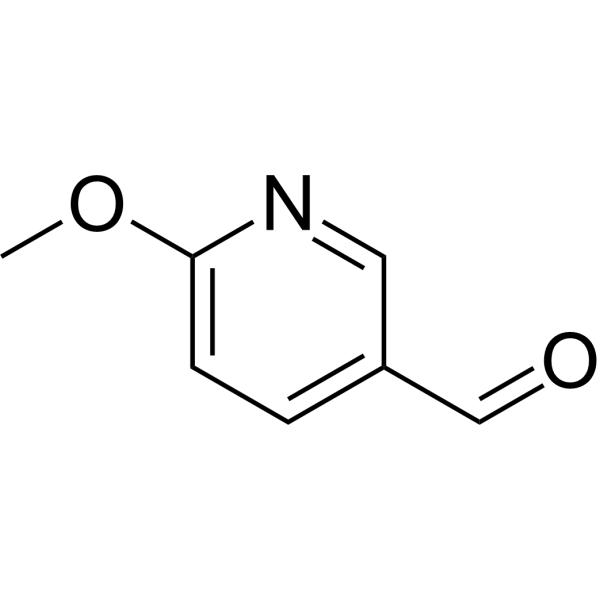
6-Methoxy-3-pyridinecarboxaldehyde
|
Biochemical Assay Reagents
|
Others
|
|
6-Methoxypyridine-3-carbaldehyde is a biochemical reagent that can be used as a biological material or organic compound for life science related research.
|
-
-
- HY-44924
-
|
|
Drug Intermediate
|
Others
|
|
1-Benzyl-2-methyl-1H-imidazole-5-carbaldehyde is a drug intermediate for synthesis of various active compounds.
|
-

-
- HY-W056267
-
|
|
PROTAC Linkers
|
Cancer
|
|
3-Boc-3-azaspiro[5.5]undecane-9-carbaldehyde is a PROTAC linker, and can be used for synthesis of PROTAC SOS1 degrader-8 (HY-161634) .
|
-
![3-Boc-3-azaspiro[5.5]undecane-9-carbaldehyde](//file.medchemexpress.com/product_pic/hy-w056267.gif)
-
- HY-W016215
-
|
|
Drug Derivative
|
Others
|
|
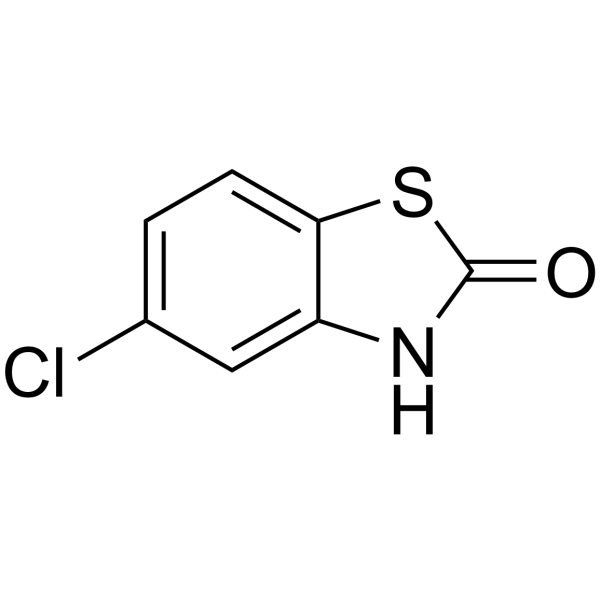
5-Chloro-2-benzothiazolinone is an active compound. 5-Chloro-2-benzothiazolinone can be used for the research of various biochemical studies .
|
-
-
- HY-W001993
-
|
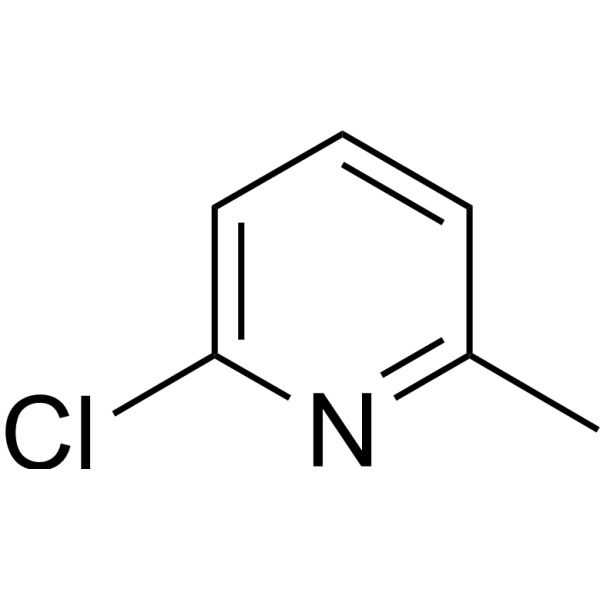
6-chloro-2-picoline
|
Biochemical Assay Reagents
|
Others
|
|
2-Chloro-6-methylpyridine is a biochemical reagent that can be used as a biological material or organic compound for life science related research.
|
-
-
- HY-60165
-
|
|
Drug Intermediate
|
Others
|
|
Pyrazine-2-carbaldehyde is a heterocyclic aromatic carbaldehyde and can be used as a drug intermediate.
|
-

-
- HY-W106860
-
|
|
Drug Intermediate
|
Cancer
|
|
9H-Carbazole-3-carbaldehyde is an anticancer agent that can be isolated from the stems of Lansium parasiticum (Lour.) Skeels. 9H-Carbazole-3-carbaldehyde shows significant cytotoxic activity in a variety of tumor cell lines, especially against H1299 and SMMC-7721 lung cancer cells with IC50 values of 6.19-26.84 μg/mL .
|
-

-
- HY-153349
-
|
|
Fluorescent Dye
|
Others
|
|
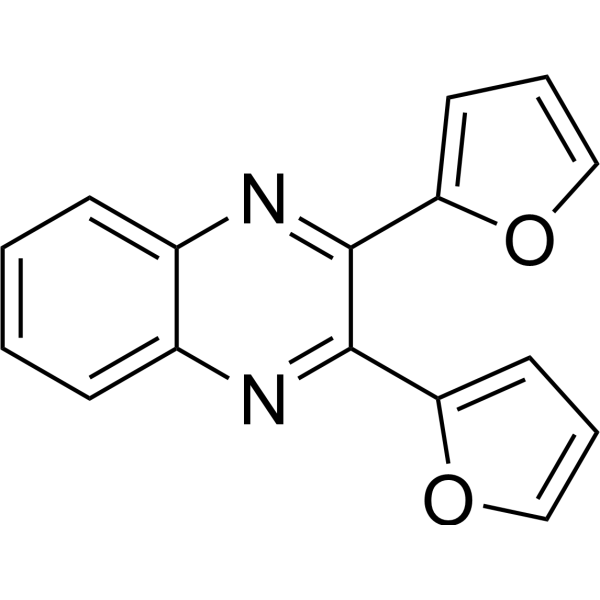
2,3-Di(furan-2-yl)quinoxaline (Compound 5) is a quinoxaline exhibiting blue fluorescence. 2,3-Di(furan-2-yl)quinoxaline is cell permeable and sufficiently bright at a micromolar concentration (1.5 μM) .
|
-
-
- HY-W1115222
-
|
|
E3 Ligase Ligand-Linker Conjugates
|
Cancer
|
|
(S)-Deoxy-thalidomide-(R)-pyrrolidine-3-carbaldehyde is an E3 ligase ligand-linker conjugate containing a CRBN-based ligand and linker, which can be used to synthesize PROTAC.
|
-

-
- HY-W016866
-
|
5-chlorosalicylic acid; 5-chloro-2-hydroxybenzoic acid
|
Biochemical Assay Reagents
|
Others
|
|
5-Chloro-2-hydroxybenzoic acid (5-Chlorosalicylic acid; 5-Chloro-2-hydroxybenzoic acid) is a biological material or organic compound that can be used in life science research .
|
-

-
- HY-70065
-
|
5-Amino-4-chloro-3-methylisoxazole
|
Drug Intermediate
|
Others
|
|
4-Chloro-3-methylisoxazol-5-amine (5-Amino-4-chloro-3-methylisoxazole) is a drug intermediate for synthesis of various active compounds.
|
-

-
- HY-20559
-
|
|
Drug Intermediate
|
Cancer
|
|
4-Chloro-3-nitrobenzoic acid is a benzoic acid derivative and an important intermediate for the synthesis of anticancer agents. 4-Chloro-3-nitrobenzoic acid shows low cytotoxicity against HepG2, A549 and HeLa cancer cells in vitro (>10,000 μM). 4-Chloro-3-nitrobenzoic acid can block thymidine uptake and inhibit lymphocyte growth. 4-Chloro-3-nitrobenzoic acid serves as a ligand for Cu (II) complexes and is used in the preparation of 10H-pyrazino[2,3-b][1,4]benzothiazine derivatives .
|
-

-
- HY-23695
-
|
|
Drug Intermediate
|
Others
|
|
4-Chloro-7-fluoropyrrolo[1,2-a]quinoxaline is a drug intermediate for synthesis of various active compounds.
|
-
![4-Chloro-7-fluoropyrrolo[1,2-a]quinoxaline](//file.medchemexpress.com/product_pic/hy-23695.gif)
-
- HY-W015887R
-
|
N-Formylmorpholine (Standard)
|
Reference Standards
|
|
|
Morpholine-4-carbaldehyde (Standard) is the analytical standard of Morpholine-4-carbaldehyde. This product is intended for research and analytical applications.
|
-

-
- HY-111849
-
|
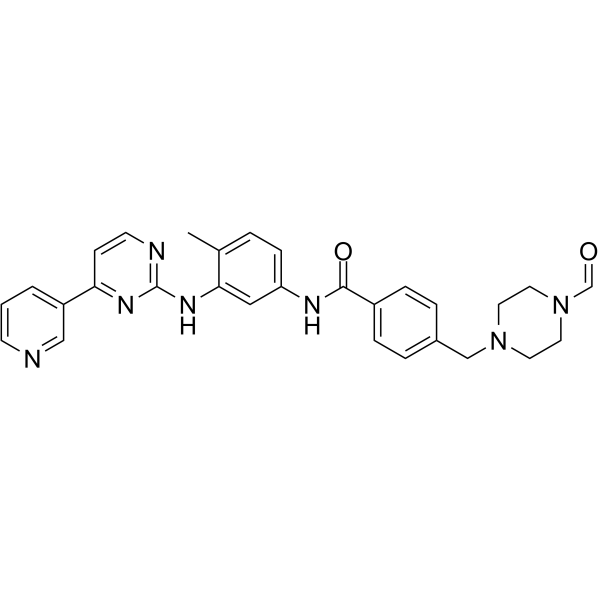
CGP-57148B carbaldehyde; STI571 carbaldehyde; PROTAC ABL binding moiety 1
|
Ligands for Target Protein for PROTAC
|
Cancer
|
|
Imatinib carbaldehyde (CGP-57148B carbaldehyde), the Imatinib (ABL inhibitor) based moiety, binds to IAP ligand via a linker to form SNIPER .
|
-
-
- HY-W016840
-
|
|
Biochemical Assay Reagents
|
Others
|
|
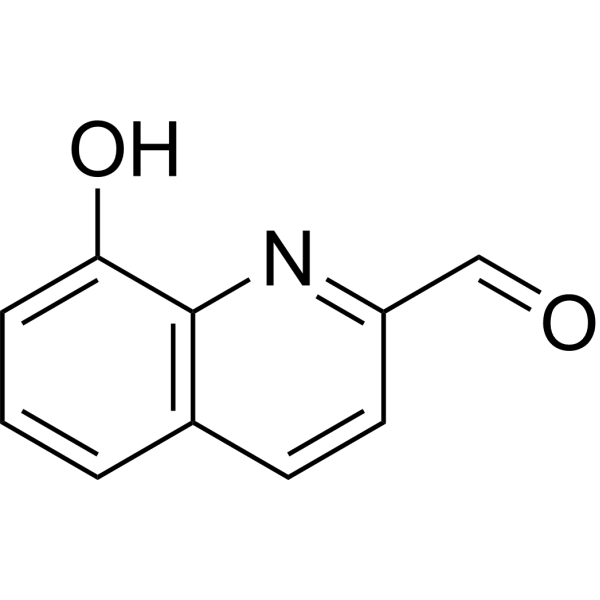
8-Hydroxyquinoline-2-carbaldehyde is a biochemical reagent that can be used as a biological material or organic compound for life science related research.
|
-
-
- HY-65067
-
|
|
Drug Intermediate
|
Others
|
|
2,4-Dimethyl-1H-imidazole-5-carbaldehyde is a drug intermediate for synthesis of various active compounds.
|
-

-
- HY-W008013
-
|
Indole-7-carboxaldehyde
|
Biochemical Assay Reagents
|
Others
|
|
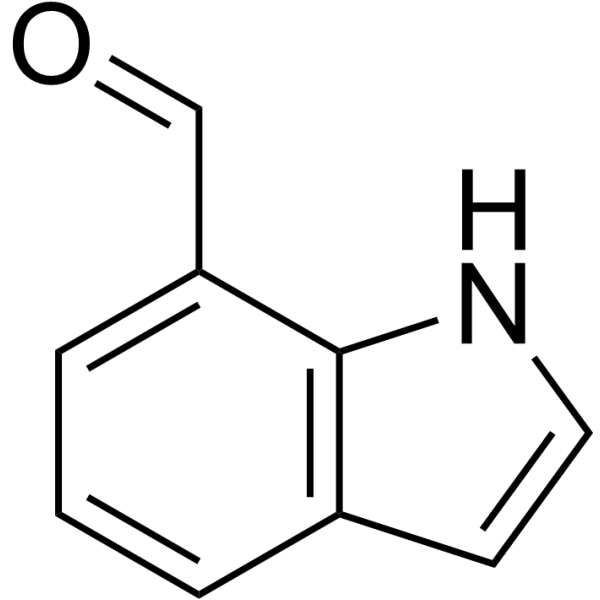
1H-Indole-7-carbaldehyde is a biochemical reagent that can be used as a biological material or organic compound for life science related research.
|
-
-
- HY-W700103
-
|
|
Isotope-Labeled Compounds
|
Others
|
|
2-Amino-3,4,8-trimethylimidazo[4,5-f]quinoxaline-d3 is the deuterium labeled 2-Amino-3,4,8-trimethylimidazo[4,5-f]quinoxaline.
|
-
![2-Amino-3,4,8-trimethylimidazo[4,5-f]quinoxaline-d3](//file.medchemexpress.com/product_pic/hy-w700103.gif)
-
- HY-W017519
-
|
Quinoxalin-2-one
|
Drug Intermediate
|
Others
|
|
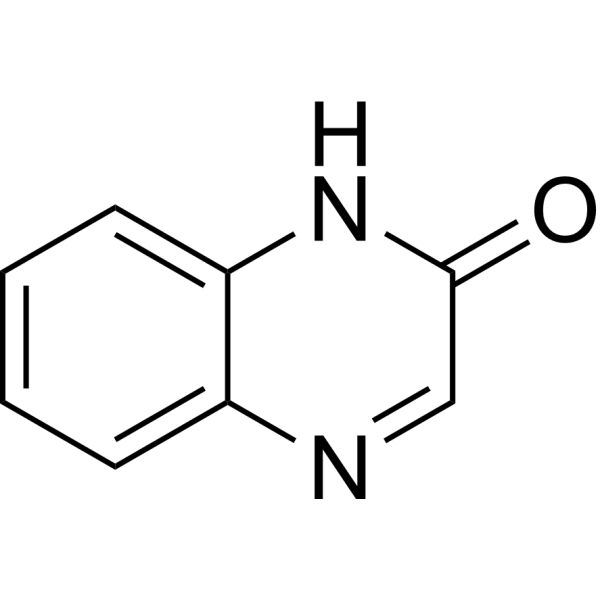
2-Quinoxalinol (2-hydroxyquinoxaline) is a 2-hydroxylated quinoxaline that possesses photocatalytic activity and interacts with various compounds, such as antioxidant vitamins and aromatic metabolites, including neurotransmitters and the pineal hormone melatonin .
|
-
-
- HY-170719
-
-

-
- HY-W010174
-
|
|
Drug Intermediate
|
Others
|
|
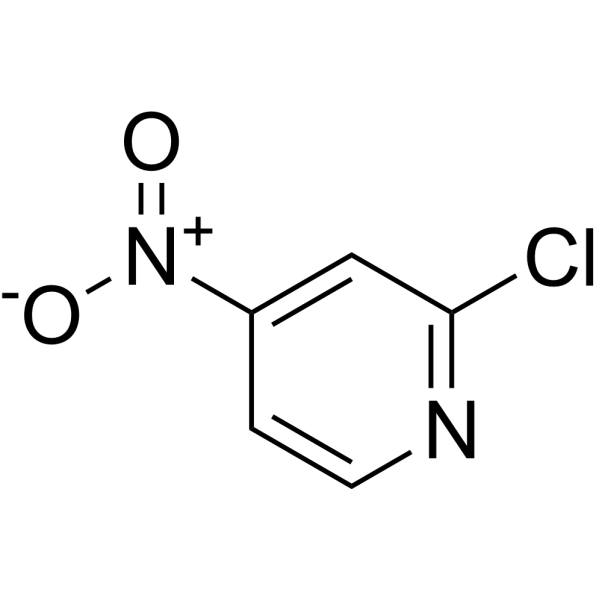
2-Chloro-4-nitropyridine is a drug intermediate in synthesizing other organic compounds, such as 2-chloro-4-ethoxypyridine and various RET kinase inhibitors .
|
-
-
- HY-32833
-
|
|
Biochemical Assay Reagents
Drug Intermediate
|
Others
|
|
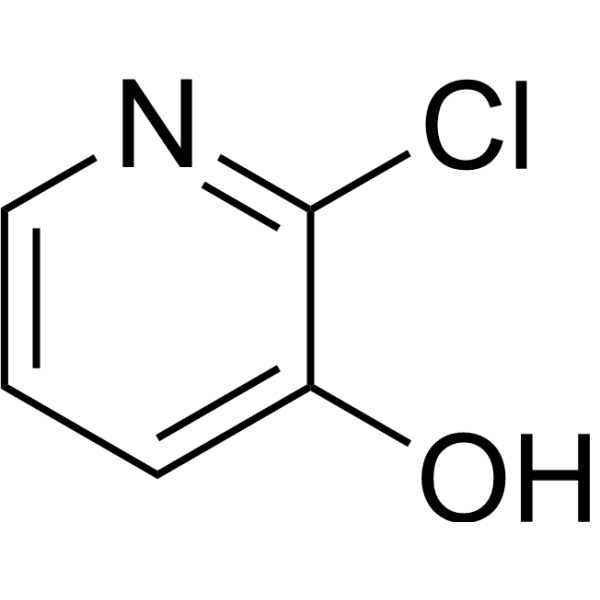
2-Chloro-3-pyridinol is a biochemical reagent that can be used as a biological material or organic compound for life science related research. 2-Chloro-3-pyridinol can also be used in the synthesis of other active compounds. In addition, 2-Chloro-3-pyridinol is a halopyridinol disinfection by-product in drinking water samples .
|
-
-
- HY-Y1190R
-
|
|
Reference Standards
|
|
|
2-Chloro-5-nitrobenzoic acid (Standard) is the analytical standard of 2-Chloro-5-nitrobenzoic acid. This product is intended for research and analytical applications.
|
-

-
- HY-41681
-
|
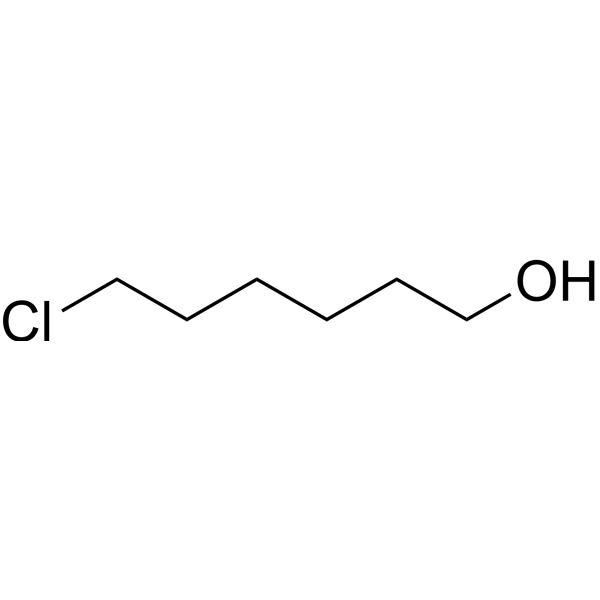
1-chloro-6-hexanol; 1-chloro-6-hydroxyhexane; 6-chlorohexanol
|
Biochemical Assay Reagents
|
Others
|
|
6-Chloro-1-hexanol is a biochemical reagent that can be used as a biological material or organic compound for life science related research.
|
-
-
- HY-32754
-
|
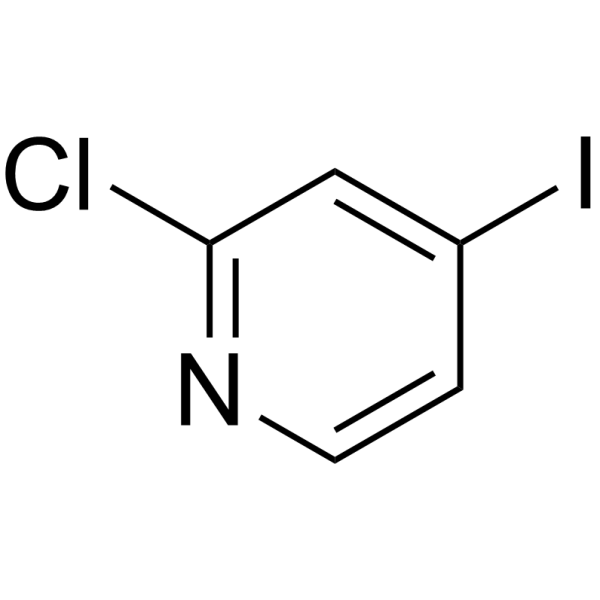
2-chloro-4-iodopyridine
|
Biochemical Assay Reagents
|
Others
|
|
2-Chloro-4-iodopyridine is a biochemical reagent that can be used as a biological material or organic compound for life science related research.
|
-
-
- HY-W002227
-
|
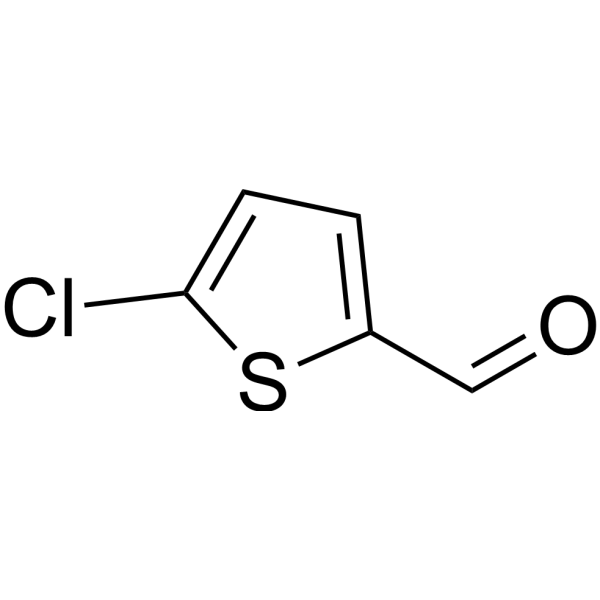
5-chloro-2-thiophenecarboxaldehyde
|
Biochemical Assay Reagents
|
Others
|
|
2-Chloro-5-thiophenecarboxaldehyde is a biochemical reagent that can be used as a biological material or organic compound for life science related research.
|
-
-
- HY-I0304
-
|
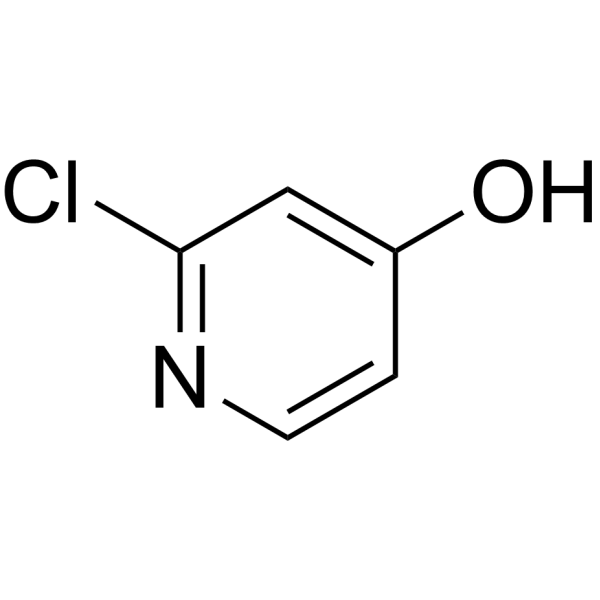
2-chloro-4-pyridinol
|
Biochemical Assay Reagents
|
Others
|
|
2-Chloro-4-hydroxypyridine is a biochemical reagent that can be used as a biological material or organic compound for life science related research.
|
-
-
- HY-W010423
-
|
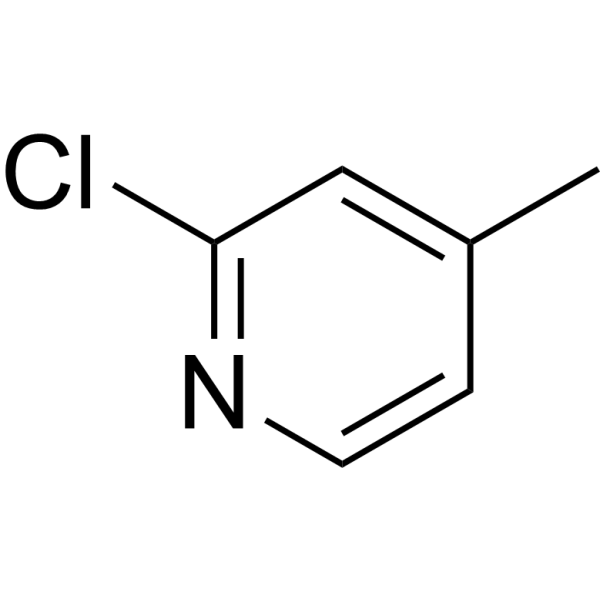
2-chloro-4-picoline
|
Biochemical Assay Reagents
|
Others
|
|
2-Chloro-4-methylpyridine is a biochemical reagent that can be used as a biological material or organic compound for life science related research.
|
-
-
- HY-W016866R
-
|
5-chlorosalicylic acid (Standard); 5-chloro-2-hydroxybenzoic acid (Standard)
|
Reference Standards
Biochemical Assay Reagents
|
Others
|
|
5-Chloro-2-hydroxybenzoic acid (5-Chlorosalicylic acid; 5-Chloro-2-hydroxybenzoic acid) is a biological material or organic compound that can be used in life science research .
|
-

-
- HY-Z1086
-
-

-
- HY-W005717
-
|
2-chloro-3-nitro-5-(trifluoromethyl)
|
Drug Intermediate
|
Others
|
|
2-Chloro-3-nitro-5-(trifluoromethyl)benzoic acid (2-Chloro-3-nitro-5-(trifluoromethyl)) is a drug intermediate for synthesis of various active compounds.
|
-

-
- HY-122040
-
-
-
- HY-W488313R
-
|
6-chloro-4-(2-chlorophenyl)-2-quinazolinecarboxaldehyde (Standard)
|
Reference Standards
|
|
|
6-Chloro-4-(2-chlorophenyl)quinazoline-2-carbaldehyde (Standard) is the analytical standard of 6-Chloro-4-(2-chlorophenyl)quinazoline-2-carbaldehyde. This product is intended for research and analytical applications.
|
-

- HY-W018677S
-
|
|
Antibiotic
|
Infection
|
|
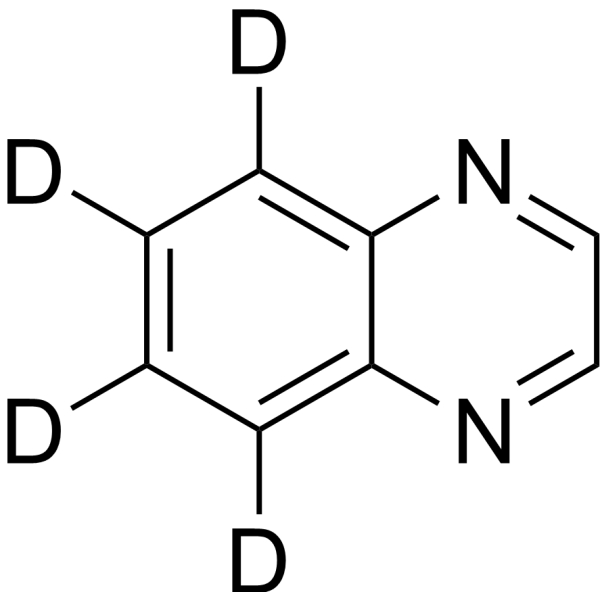
Quinoxaline-d4 is the deuterium labeled Quinoxaline . Quinoxaline is a chemical compound that acts as an intermediate for anti-tuberculosis agent Pyrazinamide. Quinoxaline presents a structure that is similar to quinolone antibiotics .
|
-
- HY-W012935
-
|
Piperidine-4-carboxaldehyde
|
PROTAC Linkers
|
Cancer
|
|
Piperidine-4-carbaldehyde (Piperidine-4-carboxaldehyde) is a PROTAC Linker. Piperidine-4-carbaldehyde can be used to optimize combined with the target protein affinity, thus improve the PROTAC the molecular degradation efficiency. Piperidine-4-carbaldehyde can be used in the CDK2 PROTACs (HY-161708) .
|
-

- HY-W586329
-
|
|
Ligands for E3 Ligase
|
Others
|
|
Thalidomide-4-carbaldehyde is a Thalidomide analogue with an aldehyde. Thalidomide recruiits E3 ligase for the ubiquitinylation and subsequent proteolysis of target proteins. The aldehyde is highly reactive towards amine nucleophiles through reductive amination among other reactions.
|
-

- HY-W451211
-
|
|
Ligands for E3 Ligase
|
Cancer
|
|
Thalidomide-5-carbaldehyde is a Thalidomide analogue with an aldehyde. Thalidomide recruiits E3 ligase for the ubiquitinylation and subsequent proteolysis of target proteins. The aldehyde is highly reactive towards amine nucleophiles through reductive amination among other reactions.
|
-

- HY-W004473R
-
|
|
Reference Standards
|
|
|
5-(2-Fluorophenyl)-1H-pyrrole-3-carbaldehyde (Standard) is the analytical standard of 5-(2-Fluorophenyl)-1H-pyrrole-3-carbaldehyde. This product is intended for research and analytical applications.
|
-

- HY-W014103R
-
|
5-(4-Nitrophenyl)furfural (Standard)
|
Reference Standards
|
|
|
5-(4-Nitrophenyl)furan-2-carbaldehyde (Standard) is the analytical standard of 5-(4-Nitrophenyl)furan-2-carbaldehyde. This product is intended for research and analytical applications.
|
-

- HY-W701060
-
|
|
Isotope-Labeled Compounds
|
Others
|
|
2-Amino-3-Methylimidazo[4,5-f]quinoxaline-d3 is the deuterium labeled 2-Amino-3-Methylimidazo[4,5-f]quinoxaline (HY-W585908).
|
-
![2-Amino-3-Methylimidazo[4,5-f]quinoxaline-d3](//file.medchemexpress.com/product_pic/hy-w701060.gif)
- HY-W026644
-
|
Acridine-9-carbaldehyde
|
Bacterial
|
Infection
Cancer
|
|
Acridine-9-carboxaldehyde (Acridine-9-carbaldehyde) is a bioactive compound with potential antibacterial and antitumor activities. Acridine-9-carboxaldehyde is widely used as a building block in compound development to synthesize various bioactive derivatives. Acridine-9-carboxaldehyde exhibits significant cytotoxicity against certain cancer cells, making it an important candidate in cancer inhibition research.
|
-

- HY-109887
-
|
|
Biochemical Assay Reagents
|
Others
|
|
3-Bromoimidazo[1,2-a]pyridine-6-carbaldehyde is a biochemical reagent that can be used for the preparation of (5Z)-5-[(3-acetylimidazo[1,2-α]pyridin-6-yl) methylidene]-1,3-thiazolidine-2,4-dione .
|
-
![3-Bromoimidazo[1,2-a]pyridine-6-carbaldehyde](//file.medchemexpress.com/product_pic/hy-109887.gif)
- HY-W017519R
-
|
Quinoxalin-2-one (Standard)
|
Drug Intermediate
Reference Standards
|
Others
|
|
2-Quinoxalinol (2-hydroxyquinoxaline) is a 2-hydroxylated quinoxaline that possesses photocatalytic activity and interacts with various compounds, such as antioxidant vitamins and aromatic metabolites, including neurotransmitters and the pineal hormone melatonin .
|
-

- HY-123354
-
|
|
Bacterial
|
Infection
|
|
SC 44914 is a quinoxaline compound with antibacterial effects. SC-44914 has activity against Campylobacter jejuni, C. coli, and Clostridium difficile .
|
-

- HY-170049
-
-

- HY-131251
-
-
- HY-W460141
-
|
|
Ligands for E3 Ligase
|
Cancer
|
|
Thalidomide 4-chloro is a chlorinated E3 ligase activator. Thalidomide 4-chloro may be used for further derivitization by substitution of chlorine.
|
-

- HY-168806
-
-

- HY-148718R
-
|
|
5-HT Receptor
Reference Standards
|
Neurological Disease
|
|
4-Chloro Trazodone (hydrochloride) (Standard) is the analytical standard of 4-Chloro Trazodone (hydrochloride). This product is intended for research and analytical applications. 4-Chloro Trazodone hydrochloride is an isomer of Trazodone hydrochloride (HY-B0478). Trazodone hydrochloride is an antidepressant belonging to the class of serotonin receptor antagonists and reuptake inhibitors for treatment of anxiety disorders .
|
-

- HY-173533
-
|
2-chloro TNP-Inosine 5'-triphosphate tetrasodium
|
Drug Derivative
|
Others
|
|
2-Chloro TNP-ITP (2-Chloro TNP-Inosine 5'-triphosphate) tetrasodium is an analog of Inosine-5'-triphosphate trisodium salt (HY-W013706) .
|
-

- HY-103163
-
-
- HY-W001146
-
|
|
Drug Intermediate
|
Metabolic Disease
|
|
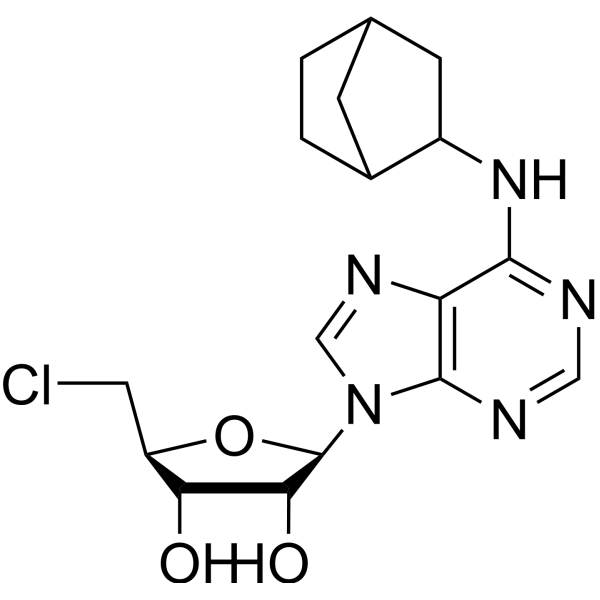
3-Chloro-4-hydroxyphenylacetic acid is a fungal metabolite. 3-Chloro-4-hydroxyphenylacetic acid is an active small molecule, that can be used as building block in synthesis of 17β-HSD2 inhibitors .
|
-

- HY-W352713
-
-

- HY-W702504
-
|
5-chloro-2-nitrodiphenylamine-d5
|
Isotope-Labeled Compounds
|
Others
|
|
5-Chloro-2-nitro-N-phenylaniline-d5 (5-Chloro-2-nitrodiphenylamine-d5) is the deuterium labeled 5-Chloro-2-nitro-N-phenylaniline (HY-W009507).
|
-

- HY-W106860R
-
|
|
Others
Reference Standards
|
Cancer
|
|
9H-Carbazole-3-carbaldehyde (Standard) is the analytical standard of 9H-Carbazole-3-carbaldehyde (HY-W106860). This product is intended for research and analytical applications. 9H-Carbazole-3-carbaldehyde is an anticancer agent that can be isolated from the stems of Lansium parasiticum (Lour.) Skeels. 9H-Carbazole-3-carbaldehyde shows significant cytotoxic activity in a variety of tumor cell lines, especially against H1299 and SMMC-7721 lung cancer cells with IC50 values of 6.19-26.84 μg/mL .
|
-

- HY-W248659
-
|
|
Drug Derivative
|
Others
|
|
1,7-Dimethylindole-3-carbaldehyde is an indole derivative that can be found in the marine cyanobacterium Lyngbya majuscula .
|
-

- HY-W075051
-
|
|
MOFs
|
Others
|
|
[2,2':6',2''-terpyridine]-4'-carbaldehyde is a metal-organic framework (MOF).
|
-
![[2,2':6',2''-terpyridine]-4'-carbaldehyde](//file.medchemexpress.com/product_pic/hy-w075051.gif)
- HY-180767
-
|
|
Drug Derivative
Bacterial
Topoisomerase
|
Infection
Cancer
|
|
Azithromycin-amide-C3-amide-quinoxaline (Compound 5f) is an Azithromycin (HY-17506) derivative and antibacterial agent. Azithromycin-amide-C3-amide-quinoxaline inhibits topoisoisomerase I with an IC50 of 120.7 μM. Azithromycin-amide-C3-amide-quinoxaline interacts with 70S E. coli ribosome with a Kd of 0.8 nM. Azithromycin-amide-C3-amide-quinoxaline inhibits bacterial translation with an IC50 of 0.7 μM. Azithromycin-amide-C3-amide-quinoxaline shows antibacterial potency against S. pneumonia ATCC 49619, S. aureus ATCC 29213, E. faecalis ATCC 29212 with MICs of 0.06 μg/mL, 2 μg/mL, 0.5 μg/mL, respectively. Azithromycin-amide-C3-amide-quinoxaline exhibits anticancer activity against prostate cancer, colon cancer .
|
-

- HY-W153350S
-
-
![1-Methyl-1H-benzo[d]imidazole-5-carbaldehyde-d3](//file.medchemexpress.com/product_pic/hy-w153350s.gif)
- HY-W091541R
-
|
4-Hydroxyindole-3-carboxaldehyde (Standard)
|
Endogenous Metabolite
Reference Standards
|
Others
Inflammation/Immunology
|
|
4-Hydroxy-1H-indole-3-carbaldehyde (Standard) is the analytical standard of 4-Hydroxy-1H-indole-3-carbaldehyde (HY-W091541). This product is intended for research and analytical applications. 4-Hydroxy-1H-indole-3-carbaldehyde (4-Hydroxyindole-3-carboxaldehyde) is a plant metabolite. 4-Hydroxy-1H-indole-3-carbaldehyde can be isolated from Capparis spinosa L. 4-Hydroxy-1H-indole-3-carbaldehyde can be used in the synthesis of fluorescent probe. 4-Hydroxy-1H-indole-3-carbaldehyde can be used in the study of inflammation-related diseases .
|
-

- HY-W1049933
-
|
|
MOFs
|
Others
|
|
4,4',4'',4'''-(Quinoxaline-2,3,6,7-tetrayl)tetrabenzoic acid is a metal-organic framework (MOF).
|
-

- HY-W075414
-
|
|
MOFs
|
Others
|
|
5-(4-(Bis(4-bromophenyl)amino)phenyl)thiophene-2-carbaldehyde is a metal-organic framework (MOF).
|
-

- HY-W107196R
-
|
|
Reference Standards
|
|
|
5-(2-Fluorophenyl)-1-(pyridin-3-ylsulfonyl)-1H-pyrrole-3-carbaldehyde (Standard) is the analytical standard of 5-(2-Fluorophenyl)-1-(pyridin-3-ylsulfonyl)-1H-pyrrole-3-carbaldehyde. This product is intended for research and analytical applications.
|
-

- HY-W585908
-
-
![2-Amino-3-methylimidazo[4,5-f]quinoxaline](//file.medchemexpress.com/product_pic/hy-w585908.gif)
- HY-N17161
-
|
|
Drug Derivative
|
Others
|
|
(E)-5-Hydroxy-6-isoprenyl-2-(pent-1-en-1-yl)benzofuran-4-carbaldehyde is a natural phenolic compound.
|
-

- HY-W456398
-
|
4‘-(1,2,2-Triphenylethenyl)biphenyl-4-formaldehyde
|
MOFs
|
Others
|
|
4'-(1,2,2-Triphenylvinyl)-[1,1'-biphenyl]-4-carbaldehyde(4‘-(1,2,2-Triphenylethenyl)biphenyl-4-formaldehyde) is a metal-organic framework (MOF).
|
-
![4'-(1,2,2-Triphenylvinyl)-[1,1'-biphenyl]-4-carbaldehyde](//file.medchemexpress.com/product_pic/hy-w456398.gif)
- HY-158927
-
|
5-chloro bk-MPA hydrochloride; 5Cl-bk-MPA hydrochloride
|
Drug Derivative
|
Neurological Disease
|
|
5-Chloro-2-thiothinone (5-Chloro bk-MPA) hydrochloride is structurally similar to known stimulants.
|
-

- HY-W702903
-
-

- HY-W560099
-
|
|
Biochemical Assay Reagents
|
Others
|
|
3-Chloro-4-methylaniline hydrochloride is an orally effective avicide. 3-Chloro-4-methylaniline hydrochloride causes death in avian species. 3-Chloro-4-methylaniline hydrochloride induces pericardial deposits in birds post-mortem .
|
-

- HY-W104754
-
|
2-chloro-4-(pyridin-4-yl)pyridine
|
MOFs
|
Others
|
|
2-Chloro-4,4'-bipyridine (2-Chloro-4-(pyridin-4-yl)pyridine) is a metal-organic framework (MOF).
|
-

- HY-176110
-
|
4-chloro-α-diethylamino valerophenone hydrochloride
|
Biochemical Assay Reagents
|
Others
|
|
4-Chloro-N,N-diethylpentedrone (hydrochloride) (4-Chloro-α-diethylamino valerophenone (hydrochloride)) is an cathione. 4-Chloro-N,N-diethylpentedrone (hydrochloride) can be studied in research or used for forensic applications.
|
-

- HY-141762S
-
-

- HY-141763S
-
-

- HY-166923S
-
-

- HY-W018783R
-
|
|
Reference Standards
|
|
|
3-Chloro-2-fluoroaniline (Standard) is the analytical standard of 3-Chloro-2-fluoroaniline. This product is intended for research and analytical applications.
|
-

- HY-Z1086R
-
|
|
Reference Standards
|
|
|
4-Chloro-2-methoxybenzonitrile (Standard) is the analytical standard of 4-Chloro-2-methoxybenzonitrile. This product is intended for research and analytical applications.
|
-

- HY-Y0408R
-
|
|
Reference Standards
|
|
|
3-Chloro-4-fluoronitrobenzene (Standard) is the analytical standard of 3-Chloro-4-fluoronitrobenzene. This product is intended for research and analytical applications.
|
-

- HY-W016163R
-
|
|
Reference Standards
|
|
|
5-Chloro-2-methoxybenzoic acid (Standard) is the analytical standard of 5-Chloro-2-methoxybenzoic acid. This product is intended for research and analytical applications.
|
-

- HY-114387
-
|
1,4,5,8,9,12-Hexaazatriphenylene
|
MOFs
|
Others
|
|
Dipyrazino[2,3-f:2',3'-h]quinoxaline (1,4,5,8,9,12-Hexaazatriphenylene) is a metal-organic framework (MOF).
|
-
![Dipyrazino[2,3-f:2',3'-h]quinoxaline](//file.medchemexpress.com/product_pic/hy-114387.gif)
- HY-W112406
-
|
|
MOFs
|
Others
|
|
4,4',4",4'"-(Pyrazino[2,3-g]quinoxaline-2,3,7,8-tetrayl)tetrabenzoic acid is a metal-organic framework (MOF).
|
-

- HY-180389
-
|
|
Drug Derivative
|
Others
|
|
3-Chloro-4-(octyloxy) aniline (Compound 299) is a phthalamide ester derivative. 3-Chloro-4-(octyloxy) aniline exhibits no antibacterial activity .
|
-

- HY-W585827R
-
-

- HY-W010299S
-
-
| Cat. No. |
Nombre del producto |
Type |
-
- HY-W015650
-
|
|
Biochemical Assay Reagents
|
|
Indole-2-carbaldehyde is an indole derivative that can be used to reduce or remove localized fat deposits and/or tighten loose skin and soft tissues. Indole-2-carbaldehyde can be isolated from the fermentation broth of the coral symbiotic actinomycete Pseudonocardia sp. SCSIO 11457 and is used in cosmetic applications or pharmaceutical production .
|
-
- HY-W002251
-
|
|
Biochemical Assay Reagents
|
|
Benzo[b]thiophene-3-carbaldehyde is a 3-formyl-substituted benzo[b]thiophene derivative that acts as an oxidizable substrate to convert to benzo[b]thiophene-3-carboxylic acid under liquid-phase conditions. Compared with analogs such as benzaldehyde and thiophene-2-carbaldehyde, Benzo[b]thiophene-3-carbaldehyde has lower oxidation difficulty, and can significantly increase the reaction rate in the presence of initiators (such as Na +Br - or DBA). Benzo[b]thiophene-3-carbaldehyde also serves as a key starting material for the synthesis of compounds including heteroaryl chalcones .
|
-
- HY-W007321
-
|
2-Formylimidazole
|
Biochemical Assay Reagents
|
|
1H-Imidazole-2-carbaldehyde is a biochemical reagent that can be used as a biological material or organic compound for life science related research.
|
-
- HY-W012361
-
|
6-Bromoindole-3-carboxaldehyde
|
Biochemical Assay Reagents
|
|
6-Bromo-1H-indole-3-carbaldehyde is a biochemical reagent that can be used as a biological material or organic compound for life science related research.
|
-
- HY-77049
-
|
4-Formyl-1-tritylimidazole
|
Biochemical Assay Reagents
|
|
1-Trityl-1H-imidazole-4-carbaldehyde is a biochemical reagent that can be used as a biological material or organic compound for life science related research.
|
-
- HY-32788
-
|
6-Methoxy-3-pyridinecarboxaldehyde
|
Biochemical Assay Reagents
|
|
6-Methoxypyridine-3-carbaldehyde is a biochemical reagent that can be used as a biological material or organic compound for life science related research.
|
-
- HY-W001993
-
|
6-chloro-2-picoline
|
Biochemical Assay Reagents
|
|
2-Chloro-6-methylpyridine is a biochemical reagent that can be used as a biological material or organic compound for life science related research.
|
-
- HY-W016866
-
|
5-chlorosalicylic acid; 5-chloro-2-hydroxybenzoic acid
|
Biochemical Assay Reagents
|
|
5-Chloro-2-hydroxybenzoic acid (5-Chlorosalicylic acid; 5-Chloro-2-hydroxybenzoic acid) is a biological material or organic compound that can be used in life science research .
|
-
- HY-20559
-
|
|
Biochemical Assay Reagents
|
|
4-Chloro-3-nitrobenzoic acid is a benzoic acid derivative and an important intermediate for the synthesis of anticancer agents. 4-Chloro-3-nitrobenzoic acid shows low cytotoxicity against HepG2, A549 and HeLa cancer cells in vitro (>10,000 μM). 4-Chloro-3-nitrobenzoic acid can block thymidine uptake and inhibit lymphocyte growth. 4-Chloro-3-nitrobenzoic acid serves as a ligand for Cu (II) complexes and is used in the preparation of 10H-pyrazino[2,3-b][1,4]benzothiazine derivatives .
|
-
- HY-W016840
-
|
|
Biochemical Assay Reagents
|
|
8-Hydroxyquinoline-2-carbaldehyde is a biochemical reagent that can be used as a biological material or organic compound for life science related research.
|
-
- HY-W008013
-
|
Indole-7-carboxaldehyde
|
Biochemical Assay Reagents
|
|
1H-Indole-7-carbaldehyde is a biochemical reagent that can be used as a biological material or organic compound for life science related research.
|
-
- HY-W010174
-
|
|
Biochemical Assay Reagents
|
|
2-Chloro-4-nitropyridine is a drug intermediate in synthesizing other organic compounds, such as 2-chloro-4-ethoxypyridine and various RET kinase inhibitors .
|
-
- HY-32833
-
|
|
Biochemical Assay Reagents
|
|
2-Chloro-3-pyridinol is a biochemical reagent that can be used as a biological material or organic compound for life science related research. 2-Chloro-3-pyridinol can also be used in the synthesis of other active compounds. In addition, 2-Chloro-3-pyridinol is a halopyridinol disinfection by-product in drinking water samples .
|
-
- HY-41681
-
|
1-chloro-6-hexanol; 1-chloro-6-hydroxyhexane; 6-chlorohexanol
|
Biochemical Assay Reagents
|
|
6-Chloro-1-hexanol is a biochemical reagent that can be used as a biological material or organic compound for life science related research.
|
-
- HY-32754
-
|
2-chloro-4-iodopyridine
|
Biochemical Assay Reagents
|
|
2-Chloro-4-iodopyridine is a biochemical reagent that can be used as a biological material or organic compound for life science related research.
|
-
- HY-W002227
-
|
5-chloro-2-thiophenecarboxaldehyde
|
Biochemical Assay Reagents
|
|
2-Chloro-5-thiophenecarboxaldehyde is a biochemical reagent that can be used as a biological material or organic compound for life science related research.
|
-
- HY-I0304
-
|
2-chloro-4-pyridinol
|
Biochemical Assay Reagents
|
|
2-Chloro-4-hydroxypyridine is a biochemical reagent that can be used as a biological material or organic compound for life science related research.
|
-
- HY-W010423
-
|
2-chloro-4-picoline
|
Biochemical Assay Reagents
|
|
2-Chloro-4-methylpyridine is a biochemical reagent that can be used as a biological material or organic compound for life science related research.
|
-
- HY-W016866R
-
|
5-chlorosalicylic acid (Standard); 5-chloro-2-hydroxybenzoic acid (Standard)
|
Biochemical Assay Reagents
|
|
5-Chloro-2-hydroxybenzoic acid (5-Chlorosalicylic acid; 5-Chloro-2-hydroxybenzoic acid) is a biological material or organic compound that can be used in life science research .
|
-
- HY-W352713
-
| Cat. No. |
Nombre del producto |
Target |
Research Area |
-
- HY-P10579
-
123B9
1 Publications Verification
|
Ephrin Receptor
|
Cancer
|
|
123B9, a tumor-homing agent, is a potent and selective EphA2 agonist with a Kd value of 4.0 μM. 123B9 selectively targets the EphA2 tyrosine kinase receptor ligand-binding domain. 123B9 does not appreciably inhibit the ligand binding domains of the most closely related EphA3 and EphA4 receptors .
|
| Cat. No. |
Nombre del producto |
Category |
Target |
Chemical Structure |
| Cat. No. |
Nombre del producto |
Chemical Structure |
-
- HY-W700103
-
|
|
|
2-Amino-3,4,8-trimethylimidazo[4,5-f]quinoxaline-d3 is the deuterium labeled 2-Amino-3,4,8-trimethylimidazo[4,5-f]quinoxaline.
|
-
-
- HY-W018677S
-
|
|
|
Quinoxaline-d4 is the deuterium labeled Quinoxaline . Quinoxaline is a chemical compound that acts as an intermediate for anti-tuberculosis agent Pyrazinamide. Quinoxaline presents a structure that is similar to quinolone antibiotics .
|
-
-
- HY-W701060
-
|
|
|
2-Amino-3-Methylimidazo[4,5-f]quinoxaline-d3 is the deuterium labeled 2-Amino-3-Methylimidazo[4,5-f]quinoxaline (HY-W585908).
|
-
-
- HY-W702504
-
|
|
|
5-Chloro-2-nitro-N-phenylaniline-d5 (5-Chloro-2-nitrodiphenylamine-d5) is the deuterium labeled 5-Chloro-2-nitro-N-phenylaniline (HY-W009507).
|
-
-
- HY-W153350S
-
|
|
|
1-Methyl-1H-benzo[d]imidazole-5-carbaldehyde-d3 is the deuterium labeled 1-Methyl-1H-benzo[d]imidazole-5-carbaldehyde.
|
-
-
- HY-141762S
-
|
|
|
2-Chloro Fenofibric acid-d6 is the deuterium labeled 2-Chloro Fenofibric acid .
|
-
-
- HY-141763S
-
|
|
|
3-Chloro Fenofibric acid-d6 is the deuterium labeled 3-Chloro Fenofibric acid .
|
-
-
- HY-166923S
-
|
|
|
2-Chloro dibenzofuran- 13C12 is 13C labeled 2-Chloro dibenzofuran .
|
-
-
- HY-W010299S
-
|
|
|
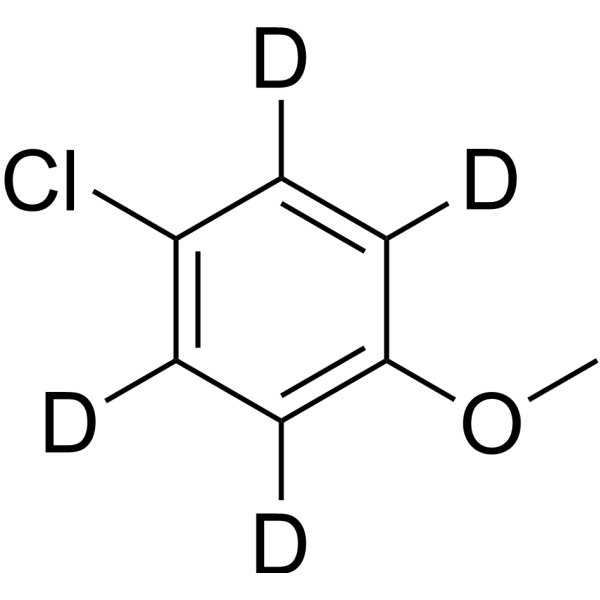
1-Chloro-4-methoxybenzene-d4 is the deuterium labeled 1-Chloro-4-methoxybenzene .
|
-
Your information is safe with us. * Required Fields.
Inquiry Information
- Nombre del producto:
- Cat. No.:
- Cantidad:
- MCE Japan Authorized Agent:





![Benzo[b]thiophene-3-carbaldehyde](http://file.medchemexpress.com/product_pic/hy-w002251.gif)


![3-Boc-3-azaspiro[5.5]undecane-9-carbaldehyde](http://file.medchemexpress.com/product_pic/hy-w056267.gif)


![4-Chloro-7-fluoropyrrolo[1,2-a]quinoxaline](http://file.medchemexpress.com/product_pic/hy-23695.gif)


![2-Amino-3,4,8-trimethylimidazo[4,5-f]quinoxaline-d3](http://file.medchemexpress.com/product_pic/hy-w700103.gif)


![2-Amino-3-Methylimidazo[4,5-f]quinoxaline-d3](http://file.medchemexpress.com/product_pic/hy-w701060.gif)

![3-Bromoimidazo[1,2-a]pyridine-6-carbaldehyde](http://file.medchemexpress.com/product_pic/hy-109887.gif)


![[2,2':6',2''-terpyridine]-4'-carbaldehyde](http://file.medchemexpress.com/product_pic/hy-w075051.gif)

![1-Methyl-1H-benzo[d]imidazole-5-carbaldehyde-d3](http://file.medchemexpress.com/product_pic/hy-w153350s.gif)


![2-Amino-3-methylimidazo[4,5-f]quinoxaline](http://file.medchemexpress.com/product_pic/hy-w585908.gif)

![4'-(1,2,2-Triphenylvinyl)-[1,1'-biphenyl]-4-carbaldehyde](http://file.medchemexpress.com/product_pic/hy-w456398.gif)


![Dipyrazino[2,3-f:2',3'-h]quinoxaline](http://file.medchemexpress.com/product_pic/hy-114387.gif)





