



BGP-15
Based on 3 publication(s) in Google Scholar
BGP-15 is a PARP inhibitor, with an IC50 and a Ki of 120 and 57 μM, respectively.
For research use only. We do not sell to patients.
- Purity : 99.57%
- CAS No.: 66611-37-8
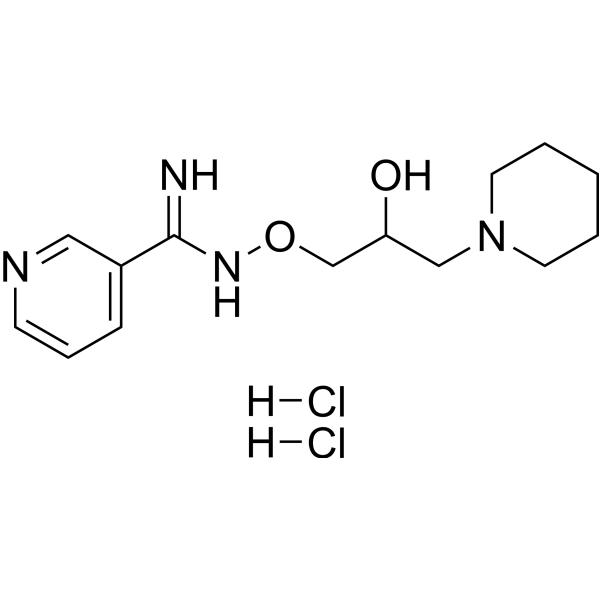
- Formula: C14H24Cl2N4O2
- Molecular Weight:351.27
-
Storage:
4°C, sealed storage, away from moisture
* In solvent : -80°C, 6 months; -20°C, 1 month (sealed storage, away from moisture)

To place orders, for customer services and technical support, please contact: MedChemExpress USA
Tel: 609-228-6898 E-mail: [email protected] [email protected]


-
 Biological Activity
-
Chemical Information
-
Solvent & Solubility
- Purity & Documentation
- References
-
 Help & FAQs


-
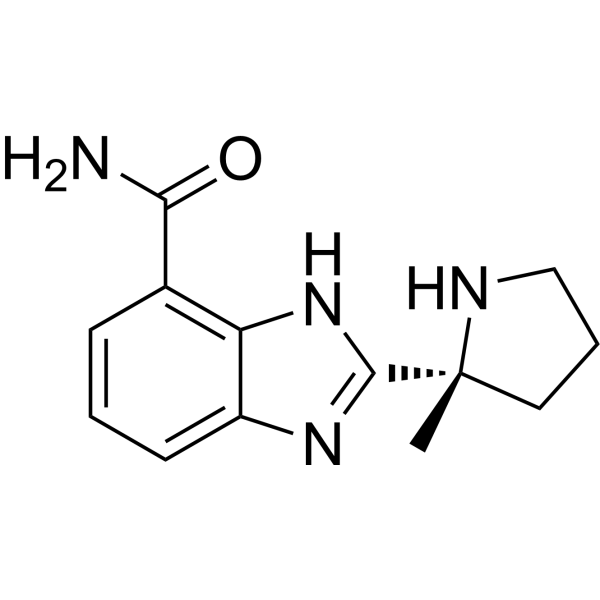
HY-10129
VeliparibPARP Inhibitor -
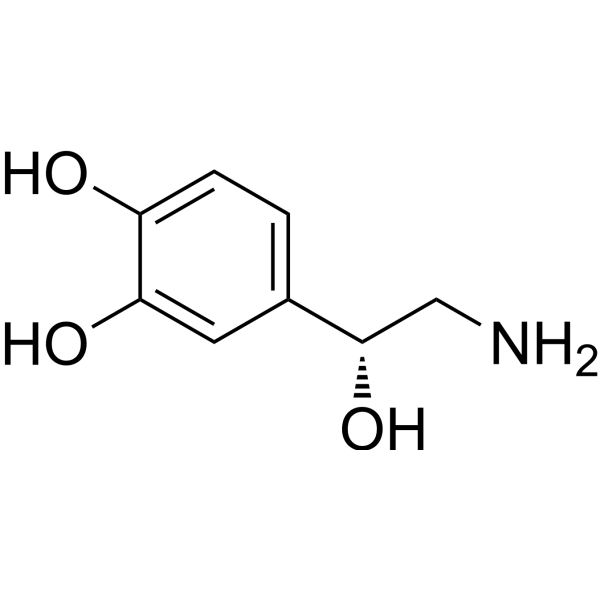
HY-13715
NorepinephrineAdrenergic Receptor Agonist -
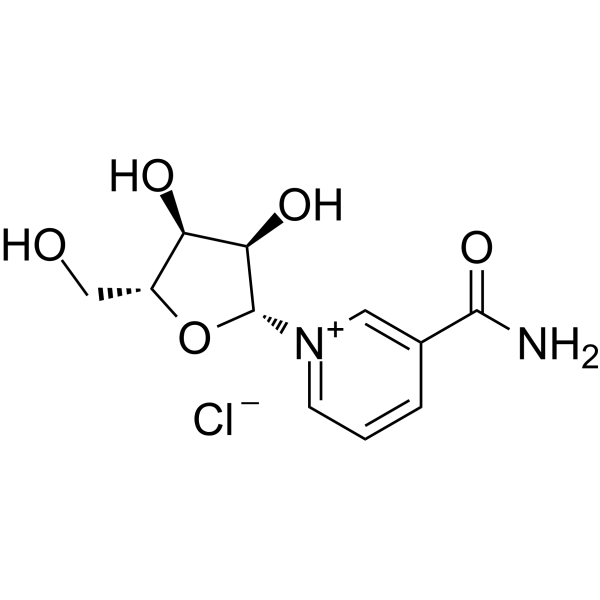
HY-123033A
Nicotinamide riboside chlorideEndogenous Metabolite -
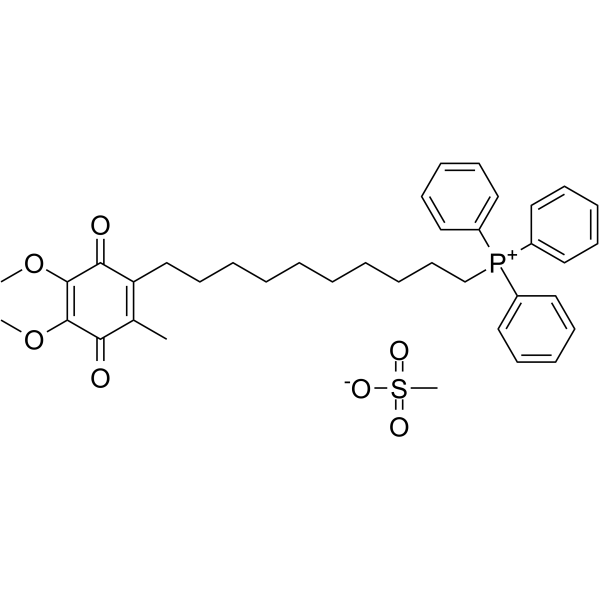
HY-100116A
Mitoquinone mesylateAntioxidant -
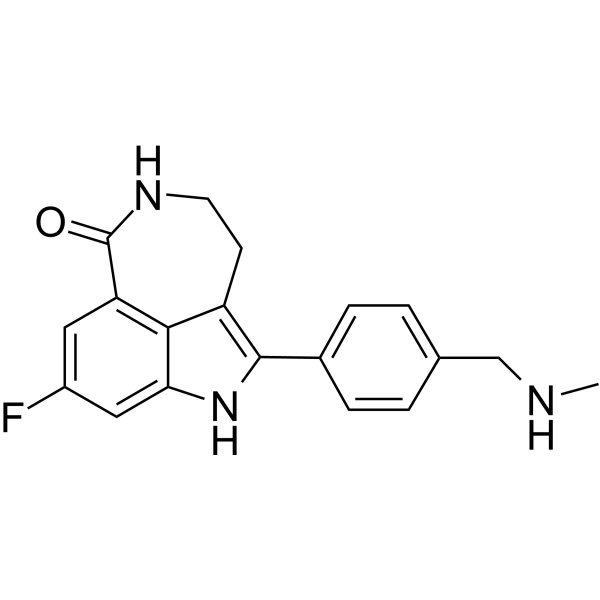
HY-10617A
RucaparibPARP Inhibitor -
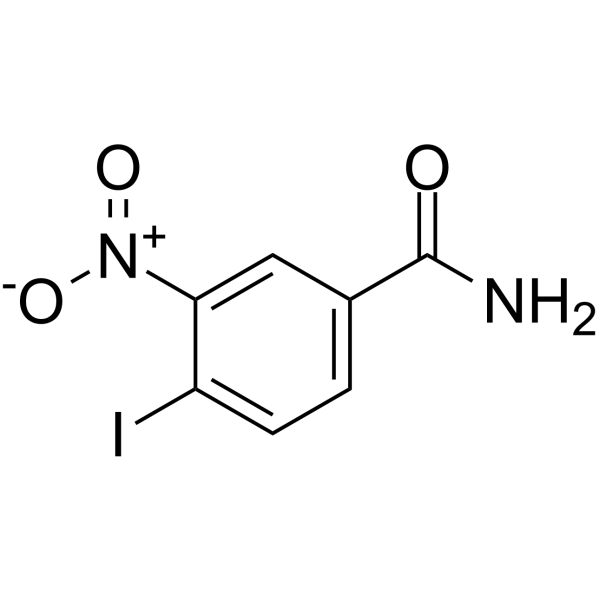
HY-12015
IniparibPARP1 Inhibitor -
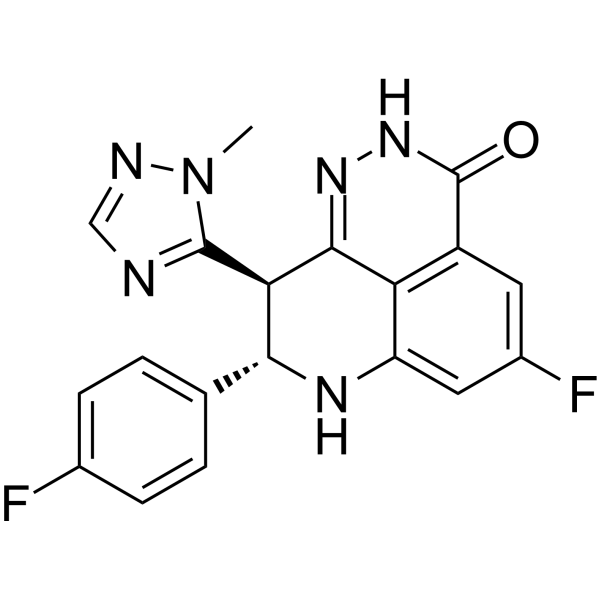
HY-16106
TalazoparibPARP Inhibitor -
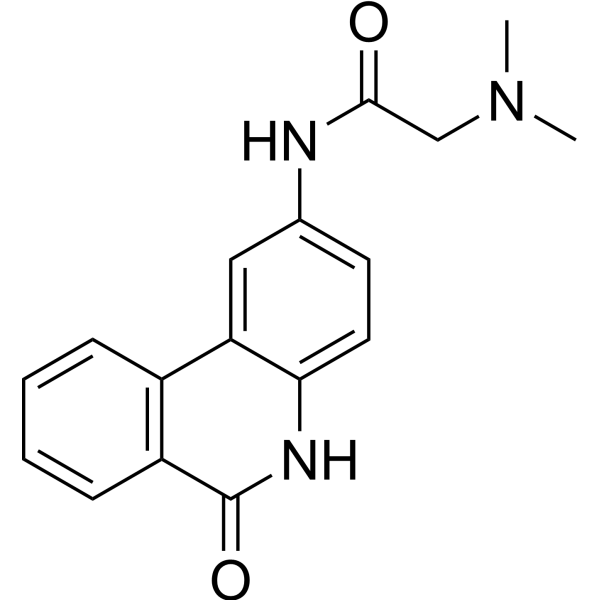
HY-13688A
PJ34PARP Inhibitor -
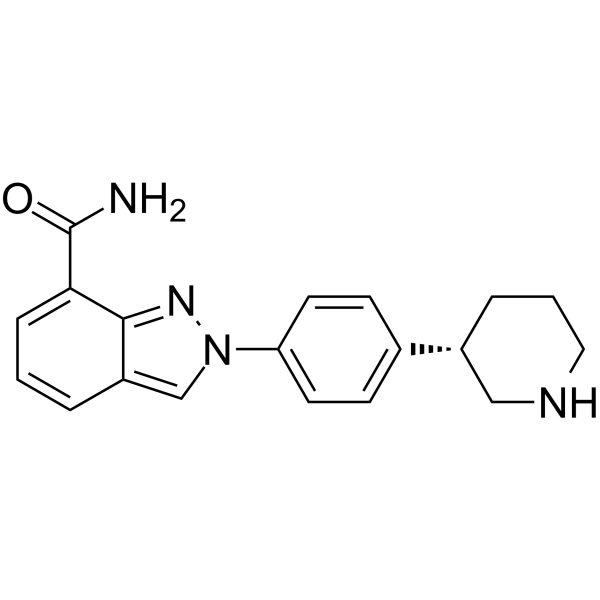
HY-10619
NiraparibPARP Inhibitor -
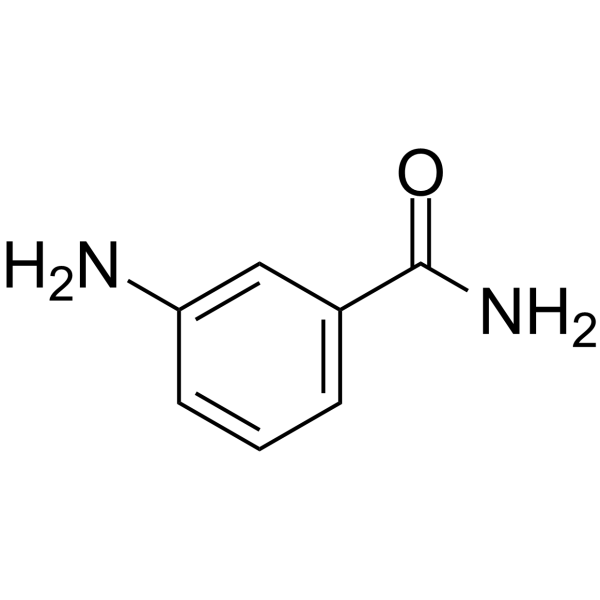
HY-12022
3-AminobenzamidePARP Inhibitor -
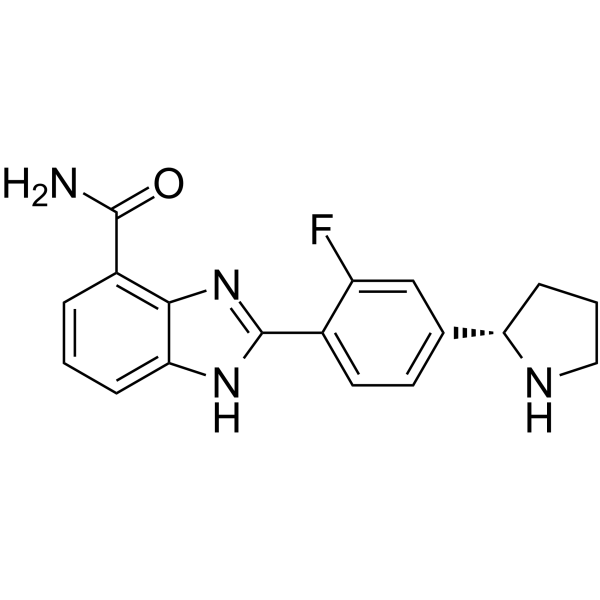
HY-10614
A-966492PARP1/2 Inhibitor -
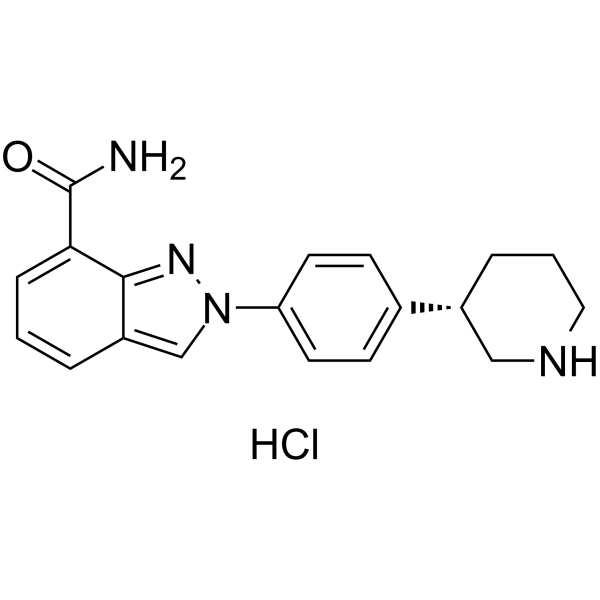
HY-10619A
Niraparib hydrochloridePARP Inhibitor
Publications Citing Use of MedChemExpress (MCE) BGP-15
More

Biological Activity
Description
IC50 & Target
[6]|
PARP 120 μM (IC50) |
In Vitro
BGP-15 (200 μM) prevents the imatinib mesylate-induced oxidative damages, attenuates the depletion of high-energy phosphates, alters the signaling effect of imatinib mesylate by preventing p38 MAP kinase and JNK activation, and induced the phosphorylation of Akt and GSK-3beta[5].
MedChemExpress (MCE) has not independently confirmed the accuracy of these methods. They are for reference only.
In Vivo
In a rat model, 10 days of BGP-15 treatment greatly improves diaphragm muscle fiber function (by about 100%), although it does not reverse diaphragm atrophy. The treatment also provides protection from myosin PTMs associated with HSP72 induction and PARP-1 inhibition, resulting in improvement of mitochondrial function and content[2].
BGP-15 (15 mg/kg per day in saline) treatment has no effect in Ntg mice or an independent cohort of normal adult wild-type mice based on morphology, cardiac function and ECG parameters. Treatment with BGP-15 attenuates the increase in atrial size and lung weight. BGP-15 treatment is able to prevent or reduce episodes of arrhythmia. BGP-15 treatment is associated with a reduced PR interval in the HF+AF model[3].
BGP-15 (10 and 30 mg/kg) increases insulin sensitivity by 50% and 70%, respectively, in cholesterol-fed but not in normal rabbits. After 5 days of treatment with BGP-15, the glucose infusion rate is increased in a dose-dependent manner in genetically insulin-resistant GK rats. The most effective dose is 20 mg/kg, which shows a 71% increase in insulin sensitivity compared to control group[4].
MedChemExpress (MCE) has not independently confirmed the accuracy of these methods. They are for reference only.
Clinical Trial
| NCT Number | Sponsor | Condition | Start Date |
Phase

|
|---|---|---|---|---|
| NCT01329991 | Plexxikon| | 2011-05 | PHASE1 |


Chemical Information
-
CAS No. 66611-37-8
-
Appearance Solid
-
Molecular Weight 351.27
-
Formula C14H24Cl2N4O2
-
Color Light yellow to yellow
-
SMILES
N=C(C1=CC=CN=C1)NOCC(O)CN2CCCCC2.[H]Cl.[H]Cl
-
Shipping
Room temperature in continental US; may vary elsewhere.
-
Storage
4°C, sealed storage, away from moisture
* In solvent : -80°C, 6 months; -20°C, 1 month (sealed storage, away from moisture)


Publications (3)
-
Journal Impact Factor
-
Most Recent
-
Redox Biol
Acetylated tau exacerbates learning and memory impairment by disturbing with mitochondrial homeostasis. [Abstract]2023 Jun:62:102697. PMID: 37037158 -
Int J Mol Sci
Biochemical Insights into the Effects of a Small Molecule Drug Candidate on Imatinib-Induced Cardiac Inflammation. [Abstract]2025 Jul 11;26(14):6661. PMID: 40724911 -
J Mol Med (Berl)
2019 Aug;97(8):1183-1193. PMID: 31201471


Solvent & Solubility
In Vitro:
H2O : 100 mg/mL (284.68 mM; Need ultrasonic)
DMSO : 11.33 mg/mL (32.25 mM; Need ultrasonic and warming; Hygroscopic DMSO has a significant impact on the solubility of product, please use newly opened DMSO)
Please refer to the solubility information to select the appropriate solvent. Once prepared, please aliquot and store the solution to prevent product inactivation from repeated freeze-thaw cycles.
Storage method and period of stock solution: -80°C, 6 months; -20°C, 1 month (sealed storage, away from moisture). When stored at -80°C, please use it within 6 months. When stored at -20°C, please use it within 1 month.
* Note: If you choose water as the stock solution, please dilute it to the working solution, then filter and sterilize it with a 0.22 μm filter before use.
Please refer to the solubility information to select the appropriate solvent. Once prepared, please aliquot and store the solution to prevent product inactivation from repeated freeze-thaw cycles.
Storage method and period of stock solution: -80°C, 6 months; -20°C, 1 month (sealed storage, away from moisture). When stored at -80°C, please use it within 6 months. When stored at -20°C, please use it within 1 month.
* Note: If you choose water as the stock solution, please dilute it to the working solution, then filter and sterilize it with a 0.22 μm filter before use.
Concentration (start) × Volume (start) = Concentration (final) × Volume (final)
In Vivo:
Select the appropriate dissolution method based on your experimental animal and administration route.
- For the following dissolution methods, please ensure to first prepare a clear stock solution using an In Vitro approach and then sequentially add co-solvents:
- To ensure reliable experimental results, the clarified stock solution can be appropriately stored based on storage conditions. As for the working solution for In Vivo experiments, it is recommended to prepare freshly and use it on the same day.
- The percentages shown for the solvents indicate their volumetric ratio in the final prepared solution. If precipitation or phase separation occurs during preparation, heat and/or sonication can be used to aid dissolution.
Add each solvent one by one: 10% DMSO 40% PEG300 5% Tween-80 45% Saline
Solubility: ≥ 2.5 mg/mL (7.12 mM); Clear solution
This protocol yields a clear solution of ≥ 2.5 mg/mL (saturation unknown).
Taking 1 mL working solution as an example, add 100 μL DMSO stock solution (25.0 mg/mL) to 400 μL PEG300, and mix evenly; then add 50 μL Tween-80 and mix evenly; then add 450 μL Saline to adjust the volume to 1 mL.
Preparation of Saline: Dissolve 0.9 g sodium chloride in ddH₂O and dilute to 100 mL to obtain a clear Saline solution.
Add each solvent one by one: 10% DMSO 90% (20% SBE-β-CD in Saline)
Solubility: ≥ 2.5 mg/mL (7.12 mM); Clear solution
This protocol yields a clear solution of ≥ 2.5 mg/mL (saturation unknown).
Taking 1 mL working solution as an example, add 100 μL DMSO stock solution (25.0 mg/mL) to 900 μL 20% SBE-β-CD in Saline, and mix evenly.
Preparation of 20% SBE-β-CD in Saline (4°C, storage for one week): 2 g SBE-β-CD powder is dissolved in 10 mL Saline, completely dissolve until clear.
For the following dissolution methods, please prepare the working solution directly:
It is recommended to prepare fresh solutions and use them promptly within a short period of time.
The percentages shown for the solvents indicate their volumetric ratio in the final prepared solution. If precipitation or phase separation occurs during preparation, heat and/or sonication can be used to aid dissolution.
Add each solvent one by one: PBS
Solubility: 100 mg/mL (284.68 mM); Clear solution; Need ultrasonic
In Vivo Dissolution Calculator
Please enter the basic information of animal experiments:
-
-
-
-
Recommended: Prepare an additional quantity of animals to account for potential losses during experiments.
Working solution concentration: 0.22 mg/mL
This product has good water solubility, please refer to the measured solubility data in water/PBS/Saline for details.


Purity & Documentation
-
Data Sheet (278 KB)
-
SDS (479 KB)
- English - EN (479 KB)
- Français - FR (479 KB)
- Deutsch - DE (479 KB)
- Norwegian - NO (479 KB)
- Español - ES (479 KB)
- Swedish - SV (479 KB)
- Italian - IT (479 KB)
- Korean - KR (479 KB)
- Portuguese - PT (479 KB)
-
Handling Instructions (2659 KB)
References
[1]. Kennedy TL, et al. BGP-15 Improves Aspects of the Dystrophic Pathology in mdx and dko Mice with Differing Efficacies in Heart and Skeletal Muscle. Am J Pathol. 2016 Dec;186(12):3246-3260 [Content Brief]
[2]. Salah H, et al. The chaperone co-inducer BGP-15 alleviates ventilation-induced diaphragm dysfunction. Sci Transl Med. 2016 Aug 3;8(350):350ra10 [Content Brief]
[3]. Sapra G, et al. The small-molecule BGP-15 protects against heart failure and atrial fibrillation in mice. Nat Commun. 2014 Dec 9;5:5705 [Content Brief]
[4]. Literati-Nagy B, et al. Improvement of insulin sensitivity by a novel drug candidate, BGP-15, in different animal studies. Metab Syndr Relat Disord. 2014 Mar;12(2):125-31 [Content Brief]
[5]. Sarszegi Z, et al. BGP-15, a PARP-inhibitor, prevents imatinib-induced cardiotoxicity by activating Akt and suppressing JNK and p38 MAP kinases. Mol Cell Biochem. 2012 Jun;365(1-2):129-37 [Content Brief]
[6]. Szabados E, et al. BGP-15, a nicotinic amidoxime derivate protecting heart from ischemia reperfusion injury through modulation of poly(ADP-ribose) polymerase. Biochem Pharmacol. 2000 Apr 15;59(8):937-45. [Content Brief]


Complete Stock Solution Preparation Table
Please refer to the solubility information to select the appropriate solvent. Once prepared, please aliquot and store the solution to prevent product inactivation from repeated freeze-thaw cycles.
Storage method and period of stock solution: -80°C, 6 months; -20°C, 1 month (sealed storage, away from moisture). When stored at -80°C, please use it within 6 months. When stored at -20°C, please use it within 1 month.
| Optional Solvent | Concentration Solvent Mass | 1 mg | 5 mg | 10 mg | 25 mg |
|---|---|---|---|---|---|
| DMSO / H2O | 1 mM | 2.8468 mL | 14.2341 mL | 28.4681 mL | 71.1703 mL |
| 5 mM | 0.5694 mL | 2.8468 mL | 5.6936 mL | 14.2341 mL | |
| 10 mM | 0.2847 mL | 1.4234 mL | 2.8468 mL | 7.1170 mL | |
| 15 mM | 0.1898 mL | 0.9489 mL | 1.8979 mL | 4.7447 mL | |
| 20 mM | 0.1423 mL | 0.7117 mL | 1.4234 mL | 3.5585 mL | |
| 25 mM | 0.1139 mL | 0.5694 mL | 1.1387 mL | 2.8468 mL | |
| 30 mM | 0.0949 mL | 0.4745 mL | 0.9489 mL | 2.3723 mL | |
| H2O | 40 mM | 0.0712 mL | 0.3559 mL | 0.7117 mL | 1.7793 mL |
| 50 mM | 0.0569 mL | 0.2847 mL | 0.5694 mL | 1.4234 mL | |
| 60 mM | 0.0474 mL | 0.2372 mL | 0.4745 mL | 1.1862 mL | |
| 80 mM | 0.0356 mL | 0.1779 mL | 0.3559 mL | 0.8896 mL | |
| 100 mM | 0.0285 mL | 0.1423 mL | 0.2847 mL | 0.7117 mL |
* Note: If you choose water as the stock solution, please dilute it to the working solution, then filter and sterilize it with a 0.22 μm filter before use.


BGP-15 Related Classifications
HY-100828 Related Classifications
 Powered by Bioz