Inflammation/Immunology
-
Inflammation/Immunology Related Products (20898)
Related Products (20898)

-
Antibodies (115)
-
Related Compound Screening Libraries (4)
-
MDL 105212A
 0 ImagesCat. No.: HY-105462CAS No.: 167261-60-1
MDL 105212A is a potent and orally active nonpeptide neurokinin receptor (NK-1/NK-2) tachykinin receptor antagonist. MDL 105212A can be used for the researches of inflammation, immunology and neurological disease, such as asthma.
-
ECL1i
 0 ImagesCat. No.: HY-P11553CAS No.: 1417312-35-6
ECL1i is an allosteric, selective CCR2 inhibitor. ECL1i specifically inhibits CCL2-/CCR2-mediated chemotaxis. ECL1i interferes with CCR2-positive cell recruitment and attenuates disease progression in experimental autoimmune encephalomyelitis.
-
14,15-Dehydro Leukotriene B4
 0 ImagesCat. No.: HY-115390CAS No.: 114616-11-4
14,15-Dehydro Leukotriene B4 (Compound 4) is a LTB4 receptor antagonist. 14,15-Dehydro Leukotriene B4 also has a higher binding affinity for BLT1 with a Ki value of 27 nM and BLT2 with a Ki value of 473 nM. 14,15-Dehydro Leukotriene B4 inhibits LTB4-induced release of lysozymes from rat polymorphonuclear leukoctyes with an IC50 value of 1 µM.
-
DNP-BSA
 0 ImagesCat. No.: HY-NP229
DNP-BSA is a multivalent antigen and protein-binding reagent. DNP-BSA binds to subdomain IIA (Site I) of bovine serum albumin via predominantly hydrophobic forces, with spontaneous complex formation via combined dynamic and static quenching. DNP-BSA induces cross-linking of IgE-bound FceRI, triggering tyrosine phosphorylation of FceRI β and γ subunits. DNP-BSA binds to anti-DNP IgE via its DNP groups, forming cross-links between IgE-FceRI complexes, with most DNP groups initially unavailable but transiently exposed for binding. DNP-BSA induces FITC fluorescence quenching in FITC-labeled anti-DNP IgE, proportional to occupied IgE Fab binding sites. DNP-BSA can be used for the research of allergy, inflammation, and contact sensitivity (allergic contact dermatitis).
-
Cholesterol oxidase-IN-1
 0 ImagesCat. No.: HY-175237
Cholesterol oxidase-IN-1 (Compound 4) is a Cholesterol oxidase inhibitor. Cholesterol oxidase-IN-1 has a superior binding affinity on cholesterol oxidase. Cholesterol oxidase-IN-1 can be used for infections and inflammatory diseases research.
-
TEMPOL-H
 0 ImagesCat. No.: HY-W319295CAS No.: 3637-10-3
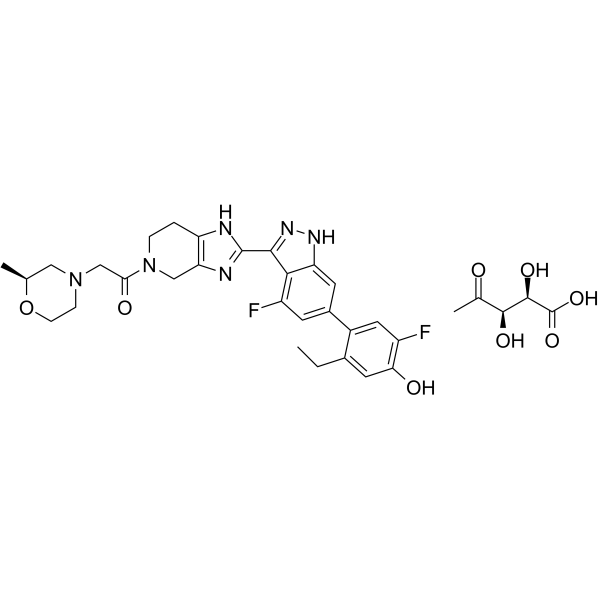
TEMPOL-H is the reduced hydroxylamine form of the stable nitroxide radical Tempol (HY-100561), and serves as the active metabolite of OT-551 (HY-W556870). TEMPOL-H acts as a potent antioxidant and free radical scavenger. TEMPOL-H protects retinal pigment epithelial cells from acute light-induced damage, and protects mice from lethal whole-body radiation. TEMPOL-H inhibits lens opacification in mice, prevents glutathione loss in rat lenses under stress, blocks protein leakage in rhesus monkey lenses under stress, and maintains the 3H-choline accumulation capacity of the lens. TEMPOL-H can be used in studies related to light-induced retinal pigment epithelial degeneration and age-related cataract.
-
Anti-L1-CAM Antibody
 0 ImagesCat. No.: HY-P992253
-
Penipanoid C
 0 ImagesCat. No.: HY-N16067CAS No.: 1442381-95-4
Penipanoid C (Compound 9) is a BRD4 inhibitor. Penipanoid C can be isolated from marine sediment-derived fungus Penicillium paneum SD-44. Penipanoid C has anti-inflammatory activity and cytotoxic activity against the SMMC-7721 cells. Penipanoid C can be used for inflammatory diseases research.

-
NEK7 degrader-4
 0 ImagesCat. No.: HY-177433CAS No.: 3069891-88-6
NEK7 degrader-4 is a NEK7 molecular glue degrader with a DC50 of 9 nM. NEK7 degrader-4 can be used for autoinflammatory and autoimmune disorders like multiple sclerosis, neurodegeneraive diseases like Alzheimer's disease and cardiovascular and melabolic disorders like pericarditis and Type 2 diabetes research.
-
Neohesperidin Dihydrochalcone-d3
 0 ImagesCat. No.: HY-N0154SSynonyms: Neohesperidin DC-d3; NHDC-d3
Neohesperidin Dihydrochalcone-d3 (Neohesperidin DC-d3; NHDC-d3) is the deuterium labeled Neohesperidin dihydrochalcone (HY-N0154). Neohesperidin dihydrochalcone is a synthetic glycoside chalcone, is added to various foods and beverages as a low caloric artificial sweetener.
-
AM11638
 0 ImagesCat. No.: HY-176544CAS No.: 3054510-97-0
-
AMOZ-CH-acid
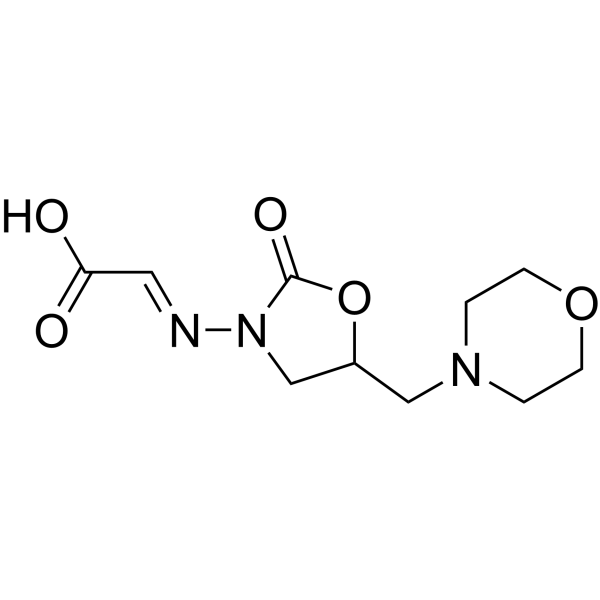 0 ImagesCat. No.: HY-161004CAS No.: 1416047-56-7
-
Oxaprozin-d5
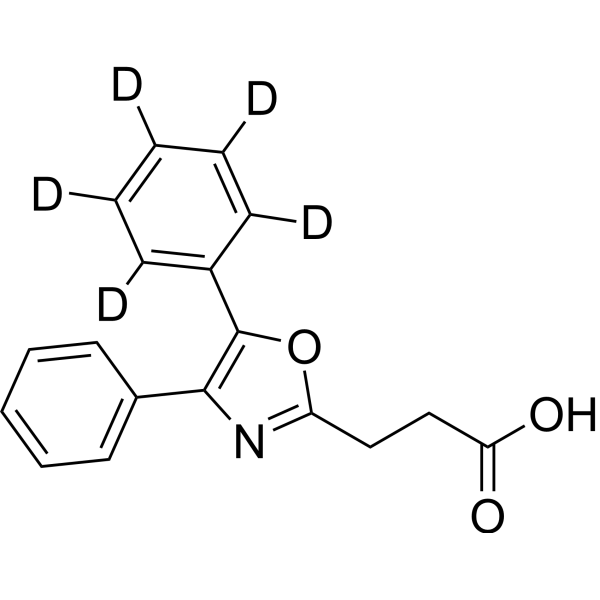 0 ImagesCat. No.: HY-B0808S1CAS No.: 2933758-40-6Synonyms: Oxaprozinum-d5; Wy21743-d5
-
Resmethrin-d6
 0 ImagesCat. No.: HY-114558S1Synonyms: Benzofuroline-d6; Isathrine-d6; Resmethrin-d6 (mixture of isomers)
Resmethrin-d6 (Benzofuroline-d6) is the deuterium labeled Resmethrin (HY-114558). Pemafibrate racemate (K13675 racemate) is the racemate of pemafibrate, and activates PPARα activity, with EC50s of 1 nM, >10 μM and 1.7 μM for h-PPARα, h-PPARγ and h-PPARδ, respectively.
-
PROTAC NLRP3 degrader-1
 0 ImagesCat. No.: HY-186342CAS No.: 3115501-20-4
PROTAC NLRP3 degrader-1 is a PROTAC degrader targeting NLRP3. PROTAC NLRP3 degrader-1 recruits VHL E3 ubiquitin ligase to form a ternary complex with NLRP3, inducing VHL-dependent ubiquitination and proteasomal degradation of the inflammasome sensor NLRP3. PROTAC NLRP3 degrader-1 reduces IL-1β release. PROTAC NLRP3 degrader-1 can be used for research on NLRP3-related inflammation, metabolic inflammation, and cancer.
-
AM-8722
 0 ImagesCat. No.: HY-187725CAS No.: 2230715-40-7
AM-8722 is an orally active inhibitor of bacterial DNA gyrase and topoisomerase IV. AM-8722 inhibits bacterial DNA synthesis and exhibits broad-spectrum antibacterial activity against Gram-positive and Gram-negative pathogens. AM-8722 can be used for research on bacterial septicemia and bacterial infections.
-
Salbutamol-BSA
 0 ImagesCat. No.: HY-NP0253A
Salbutamol-BSA is a conjugate of Salbutamol (HY-B1037) and BSA. By conjugating the antigen with protein adjuvants, the production of antigen-specific antibodies in vaccine models can be enhanced. The conjugate does not affect protein folding or disrupt the primary epitopes, and it can enhance cross-presentation and the generation of antigen-specific T cells.
-
Scutebarbatine W
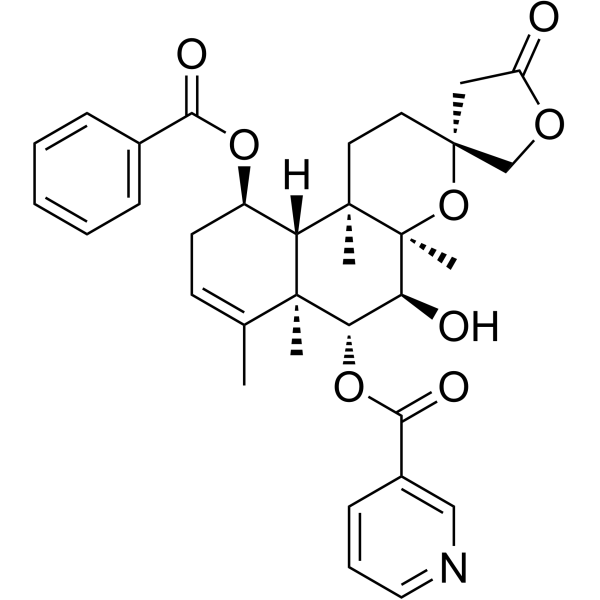 0 ImagesCat. No.: HY-N1262CAS No.: 1312716-25-8Synonyms: Scutehenanine B
Scutebarbatine W is a 13-spiro subtype neo-clerodane diterpenoid. Scutebarbatine W inhibits NO production with an IC50 value of 34.7 μM.