



Akt
PKB; Protein kinase B
Akt/PKB (Protein kinase B), a serine/threonine protein kinase with antiapoptotic activity, is one of the major downstream targets of PtdIns(3,4,5)P3 signaling pathway. It contains a pleckstrin homology domain (PH domain) that specifically binds PtdIns(3,4,5)P3 on the plasma membrane. Akt phosphorylation and activation are directly determined by the level of PtdIns(3,4,5)P3 on the plasma membrane, which is regulated by PI3K.
Akt consists of three isoforms: PKBα/Akt1, PKBβ/Akt2 and PKBγ/Akt3. Akt isoforms have an N-terminal PH (pleckstrin homology) domain and a kinase domain, which are separated by a 39-amino-acid hinge region. Catalytically active Akt regulates the function of numerous substrates involved in cell survival, growth, proliferation, metabolism and protein synthesis.
Akt is a crucial mediator of cell survival and its deactivation is implicated in various stress-induced pathological cell death and degenerative diseases.
Akt Isoform Specific Products
All Product Categories
-
Akt Inhibitors
(981)
View all products
-
Akt Agonists
(7)
View all products
-
Akt Activators
(296)
View all products
-
Akt Modulators
(25)
View all products
-
Akt Chemical
(1)
View all products
-
Akt Inducers
(9)
View all products
-
Akt Degraders
(11)
View all products
-
Akt Control
(1)
View all products
-
Akt Substrate
(1)
View all products
-
Akt Ligands
(6)
View all products
-
AKT Serine/Threonine Kinase 2 (AKT2) Proteins
(5)
View all products
-
AKT Serine/Threonine Kinase 3 (AKT3) Proteins
(6)
View all products
-
Akt Related Products (1447)
Related Products (1447)

-
Recombinant Proteins (11)
-
Antibodies (11)
-
Akt Isoform Comparison
-
YVPGP
 0 ImagesCat. No.: HY-P10992CAS No.: 2095286-57-8YVPGP is an oligopeptide exacted from Anthopleura anjunae. YVPGP has a significant antitumor activity by mediating PI3K/AKT/mTOR signaling pathway. YVPGP arrests DU-145 cells in the S phase and induces apoptosis via mitochondrial and death receptor pathways (caspase3, 7, 8, 9). YVPGP effectively inhibits tumor growth in DU-145 xenografts mice model, promising for prostate cancer research.
-
Levomilnacipran-d10 hydrochloride
 0 ImagesCat. No.: HY-14794ASCAS No.: 2747914-23-2Synonyms: (1S,2R)-Milnacipran-d10 hydrochloride; F2695-d10 hydrochlorideLevomilnacipran-d10 ((1S,2R)-Milnacipran-d10) hydrochloride is deuterium labeled Levomilnacipran hydrochloride (HY-B0168B). Levomilnacipran ((1S,2R)-Milnacipran) hydrochloride is the enantiomer of Milnacipran (HY-B0168) and a strong substrate of P-gp that can cross the blood-brain barrier. Levomilnacipran hydrochloride is a serotonin and norepinephrine reuptake inhibitor, with IC50 values of 10.5 nM and 19.0 nM, and Ki values of 92.2 nM and 1.2 nM for human norepinephrine transporter (NET) and serotonin transporter (SERT), respectively. Levomilnacipran hydrochloride has antidepressant and anxiolytic activities. Levomilnacipran hydrochloride can be used for the research of depression.
-
PI3K-IN-48
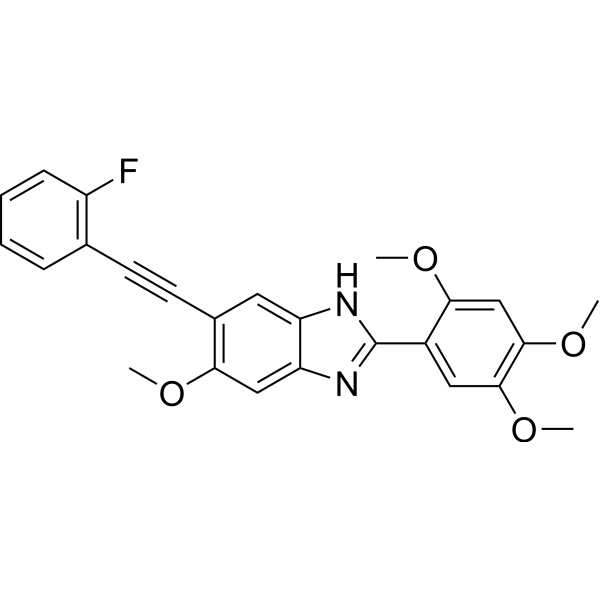 0 ImagesCat. No.: HY-156080CAS No.: 3052306-60-9PI3K-IN-48 is a PI3K inhibitor with IC50 value of 1.55 ± 0.18 μM for A549 cells. PI3K-IN-48 can induce G0/G1 phase arrest, cell apoptosis, and down-regulate expression of p-PI3K and p-Akt. PI3K-IN-48 can be used for human lung cancers diseases research.
-
Miltefosine-d4
 0 ImagesCat. No.: HY-13685S1Synonyms: HePC-d4; Hexadecyl phosphocholine-d4Miltefosine-d4 (HePC-d4) is deuterium labeled Miltefosine. Miltefosine is a broad spectrum antimicrobial, anti-leishmanial, phospholipid agent acting by inhibiting the PI3K/Akt activity. Miltefosine is an inhibitor of CTP-phosphocholine cytidyltransferase (CCT).
-
CHNQD-01426
 0 ImagesCat. No.: HY-177268CAS No.: 2673232-30-7CHNQD-01426 (Compound 4a) is an anticancer agent. CHNQD-01426 has cytotoxic activities against cancer cells. CHNQD-01426 significantly inhibits hepatocellular carcinoma cells proliferation via arresting S and G2/M phase cell cycle and induces apoptosis by inducing ROS production and elevating apoptosis-related proteins expression. CHNQD-01426 potently inhibits tumor growth in HepG2 xenograft mice model.
-
Brelgometon
 0 ImagesCat. No.: HY-187892CAS No.: 3060541-19-4Synonyms: ATH-1105Brelgometon (ATH-1105) is an orally active HGF/MET positive modulator. Brelgometon activates downstream ERK and AKT cascades. Brelgometon reduces pro-inflammatory cytokine levels and extranuclear TDP-43 aggregation; it also upregulates EAAT2 expression and improves mitochondrial function. Brelgometon protects neurons from excitotoxicity, inflammation, oxidative stress and mitochondrial dysfunction; it also maintains neurite length, neuromuscular junction integrity and sciatic nerve function. Brelgometon alleviates motor function deterioration, maintains body weight and prolongs survival in ALS transgenic mice. Brelgometon is applicable to research related to amyotrophic lateral sclerosis.
-
eNOS activator-1
 0 ImagesCat. No.: HY-189214eNOS activator-1 is an orally active, blood-brain barrier permeable endothelial nitric oxide synthase (eNOS) activator. eNOS activator-1 upregulates eNOS mRNA expression, enhances endogenous NO biosynthesis, and activates the eNOS signaling pathway to maintain blood-brain barrier integrity. eNOS activator-1 upregulates the protein expression levels of PI3K, AKT, p-PI3K, and p-AKT. eNOS activator-1 reduces oxidative stress levels by decreasing lipid peroxidation and restoring antioxidant enzyme activities. eNOS activator-1 upregulates the expression of tight junction proteins ZO-1 and occludin, increases Cav-1 expression, and inhibits MMP-9-mediated blood-brain barrier disruption. eNOS activator-1 can be used in the research of ischemic stroke.
-
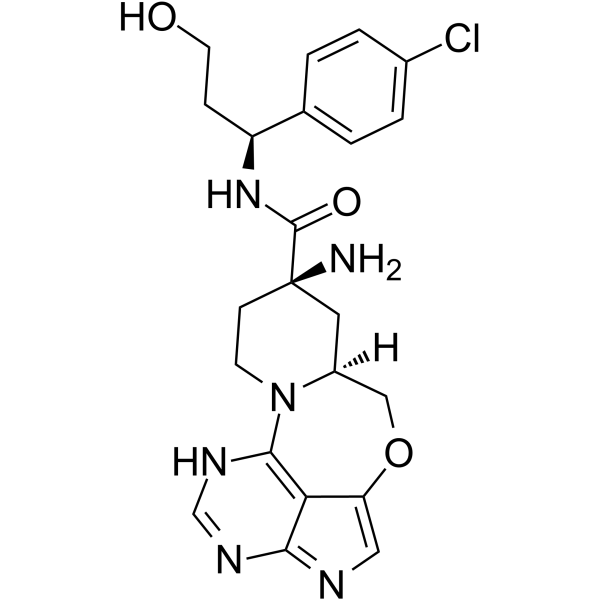
PROTAC Akt3 Degrader-1
 0 ImagesCat. No.: HY-175975CAS No.: 3048204-93-6
-
L-Valine-13C5,15N,d8
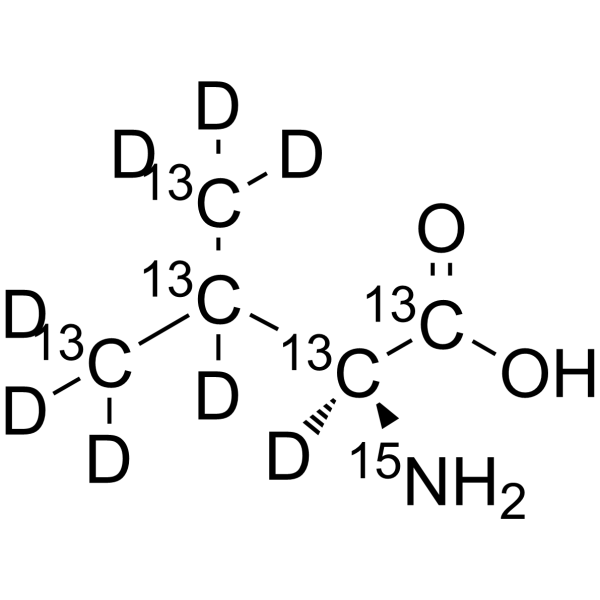 0 ImagesCat. No.: HY-N0717S2CAS No.: 1994261-62-9Synonyms: (S)-Valine-13C5,15N,d8L-Valine-13C5,15N,d8 ((S)-Valine-13C5,15N,d8) is the deuterium, 13C-, and 15N-labeled L-Valine (HY-N0717). L-Valine ((S)-Valine) is a nonlinear semiorganic material. L-Valine causes lipid peroxidation and accumulation of malondialdehyde (MDA), exhibits inhibitory activity against cyanobacteria. L-Valine inhibits multidrug-resistant bacteria through activation of PI3K/Akt signaling pathway and inhibition of arginase.
-
AKT-IN-10
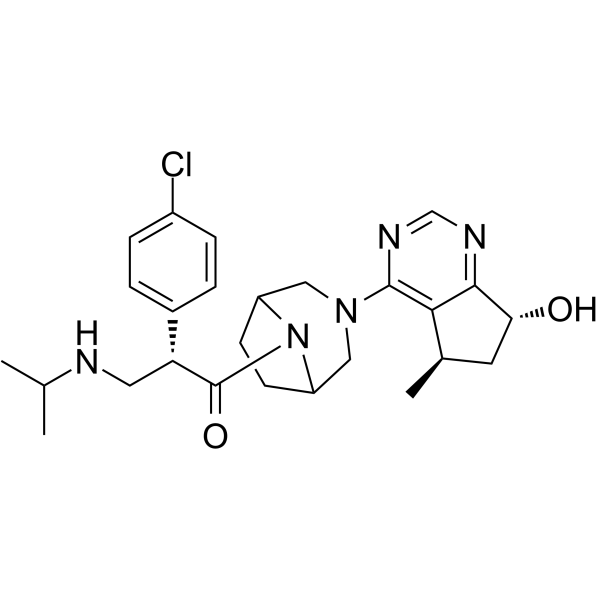 0 ImagesCat. No.: HY-144060CAS No.: 2709045-56-5AKT-IN-10 is a potent inhibitor of AKT. Protein kinase B (PKB, also known as AKT) is central to PI3K/AKT/mTOR signaling in cells, and its function is important for cell growth, survival, differentiation and metabolism. AKT-IN-10 has the potential for the research of breast and prostate cancer (extracted from patent WO2021185238A1, compound 4).
-
CAIX/XII/NAMPT-IN-1
 0 ImagesCat. No.: HY-181350CAIX/XII/NAMPT-IN-1 is a triple inhibitor of carbonic anhydrase IX/XII and nicotinamide phosphoribosyltransferase (NAMPT) with a hCA IX Ki of 78.1 nM, hCA XII Ki of 64.4 nM, and hNAMPT IC50 of 168 nM. CAIX/XII/NAMPT-IN-1 induces apoptosis, ROS accumulation, suppresses ERK/AKT signaling, inhibits DNA synthesis, and causes mitochondrial dysfunction. CAIX/XII/NAMPT-IN-1 exerts antiproliferative effects against multiple cancer cells under normoxic and hypoxic conditions. CAIX/XII/NAMPT-IN-1 can be used for the research of cancer, such as renal carcinoma, glioblastoma and colorectal cancer.

-
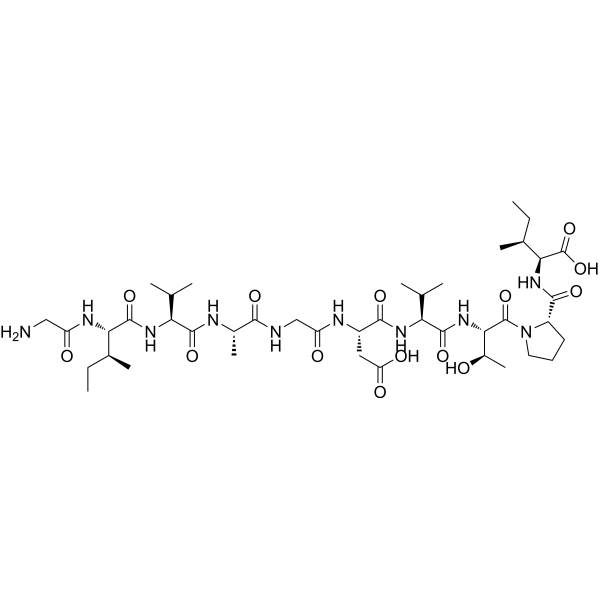
AKT-IN-27
 0 ImagesCat. No.: HY-172900AKT-IN-27 (4a) is a potential anticancer agent through selective therapeutic targeting of Akt-driven pathways. AKT-IN-27 (4a) induces apoptosis via caspase-3 activation, G2/M cell cycle arrest, and mitochondrial membrane potential disruption. AKT-IN-27 (4a) can be used in the research for TNBC (triple-negative breast cancer).

-
Syk/HDAC6-IN-1
 0 ImagesCat. No.: HY-184415Syk/HDAC6-IN-1 is a dual SYK/HDAC6 selective inhibitor with IC50 values of 0.19 nM (SYK) and 0.66 nM (HDAC6). Syk/HDAC6-IN-1 downregulates p-SYK to block downstream AKT/FOXO1 signaling, elevates acetylated histone H3 and α-tubulin via HDAC suppression, represses SREBF1 -mediated lipid biosynthetic pathways, triggers G0/G1 cell cycle arrest and robust mitochondrial-dependent caspase-3-mediated apoptosis in leukemia cells. Syk/HDAC6-IN-1 can be used for the research of FLT3-mutant acute myeloid leukemia.
-
Alborixin
 0 ImagesCat. No.: HY-167843CAS No.: 57760-36-8Alborixin is a polycyclic polyether ionophore Antibiotic. Alborixin is isolated from cultures of Streptomyces albus. Alborixin induces Autophagy via PTEN-mediated inhibition of the AKT pathway, thereby clearing Amyloid-β. Alborixin exhibits activity against Gram-positive bacteria and fungi. Alborixin can be used in the research of Alzheimer's disease.
-
Antitumor agent-86
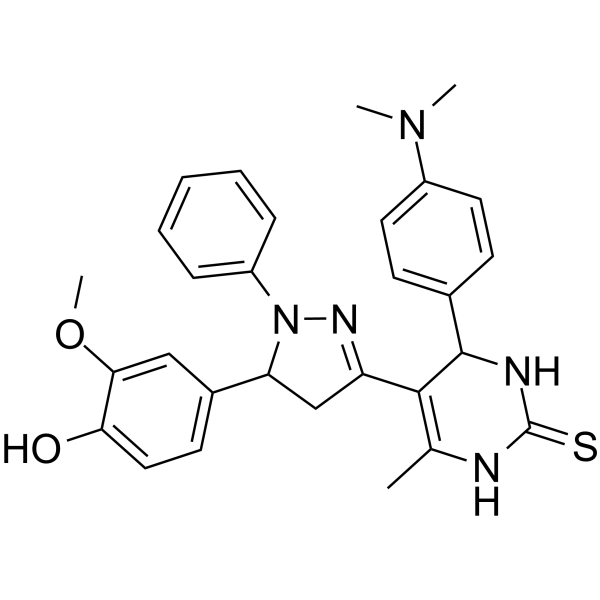 0 ImagesCat. No.: HY-152774CAS No.: 2907704-65-6
-
PROTAC FLT-3 degrader 3
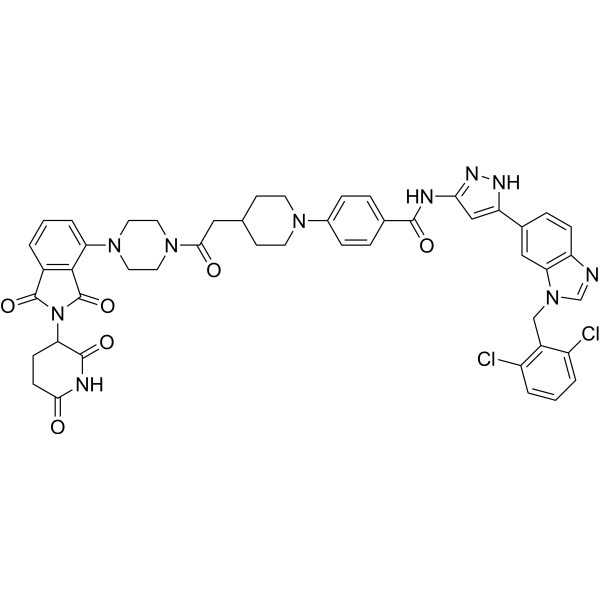 0 ImagesCat. No.: HY-161280PROTAC FLT-3 degrader 3 is a FLT-3 PROTAC degrader. PROTAC FLT-3 degrader 3 reduces the phosphorylation levels of FLT3-ITD, AKT, STAT5 and ERK. PROTAC FLT-3 degrader 3 induces apoptosis and cell cycle arrest in leukemia cells. PROTAC FLT-3 degrader 3 can be used for the research of acute myeloid leukemia.




