



Apoptosis
Apoptosis
Apoptosis is a distinctive form of cell death exhibiting specific morphological and biochemical characteristics, including cell membrane blebbing, chromatin condensation, genomic DNA fragmentation, and exposure of specific phagocytosis signaling molecules on the cell surface. Cells undergoing apoptosis differ from those dying through necrosis. Necrotic cells are usually recognized by the immune system as a danger signal and, thus, resulting in inflammation; in contrast, apoptotic death is quiet and orderly.
There are two major pathways of apoptotic cell death induction: The intrinsic pathway, also called the Bcl-2-regulated or mitochondrial pathway, is activated by various developmental cues or cytotoxic insults, such as viral infection, DNA damage and growth-factor deprivation, and is strictly controlled by the BCL-2 family of proteins. The extrinsic or death-receptor pathway is triggered by ligation of death receptors (members of the tumor necrosis factor (TNF) receptor family, such as Fas or TNF receptor-1 (TNFR1)) that contain an intracellular death domain, which can recruit and activate caspase-8 through the adaptor protein Fas-associated death domain (FADD; also known as MORT1) at the cell surface. This recruitment causes subsequent activation of downstream (effector) caspases, such as caspase-3, -6 or -7, without any involvement of the BCL-2 family.
Studies suggest that alterations in cell survival contribute to the pathogenesis of a number of human diseases, including cancer, viral infections, autoimmune diseases, neurodegenerative disorders, and AIDS (acquired immunodeficiency syndrome). Treatments designed to specifically alter the apoptotic threshold may have the potential to change the natural progression of some of these diseases.
All Product Categories
-
Apoptosis Inhibitors
(904)
View all products
-
Apoptosis Agonists
(7)
View all products
-
Apoptosis Antagonists
(9)
View all products
-
Apoptosis Activators
(363)
View all products
-
Apoptosis Modulators
(60)
View all products
-
Apoptosis Inducers
(7944)
View all products
-
Apoptosis Degrader
(1)
View all products
-
Apoptosis Controls
(33)
View all products
-
Apoptosis Related Products (9888)
Related Products (9888)

-
Antibodies (120)
-
VEGFR-2-IN-72
 0 ImagesCat. No.: HY-175553VEGFR-2-IN-72 is a selective VEGFR-2 inhibitor with an IC50 of 22.2 nM. VEGFR-2-IN-72 exhibits anticancer activity against HepG2 and Hep3B human HCC cell lines with IC50s of 15.7 and 2.4 μM. VEGFR-2-IN-72 can cause a mild blockage of the cell cycle and induce cell aopoptosis. VEGFR-2-IN-72 can used for the study of hepatocellular carcinoma (HCC).
-
NCD38
 0 ImagesCat. No.: HY-183202CAS No.: 1456907-39-3NCD38 is a Lysine-specific demethylase 1 (LSD1) inhibitor with a target IC50 of 0.59 μM. NCD38 selectively disrupts LSD1-GFI1B interactions, dissociates LSD1 and CoREST from the ERG super-enhancer. NCD38 increases apoptosis-related protein levels, induces apoptosis and reduces SOX2 and Oct4 levels. NCD38 can be used for the research of acute myeloid leukemia.
-
EGFR/VEGFR2-IN-10
 0 ImagesCat. No.: HY-179485EGFR/VEGFR2-IN-10 is a selective EGFR, VEGFR2 and COX2 inhibitor with IC50s of 8.5, 68 and 158 nM, respectively. EGFR/VEGFR2-IN-10 induces G1-phase cell cycle arrest in MCF-7 cells. EGFR/VEGFR2-IN-10 increases the Bax/Bcl-2 ratio, upregulates caspase-8, and elevates caspase-9 protein levels, confirming activation of the intrinsic apoptotic pathway. EGFR/VEGFR2-IN-10 demonstrates exceptional therapeutic potential by simultaneously inhibiting tumor proliferation, angiogenesis, and inflammation pathways while maintaining a favorable selectivity profile. EGFR/VEGFR2-IN-10 can be used as a research tool for cervical, liver, colon, and breast cancer studies.
-
Calcium propionate, United States Pharmacopeia (USP) Reference Standard
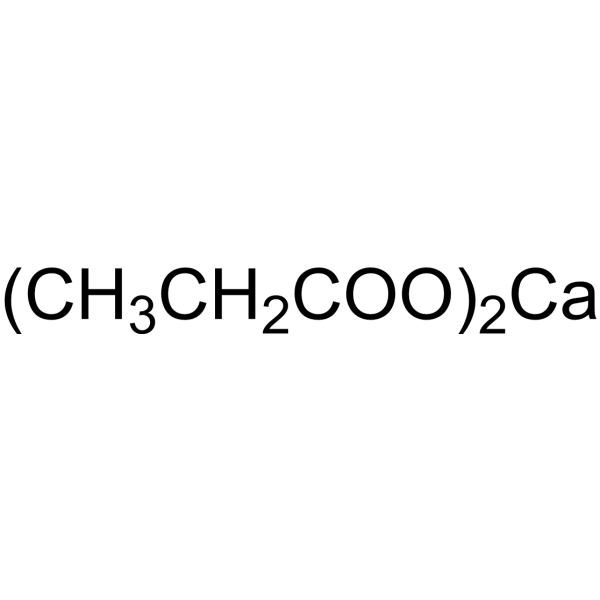 0 ImagesCalcium propionate, United States Pharmacopeia (USP) Reference Standard (Bioban-C (Pharmaceutical primary standard, USP)) is a calcium salt of Propionic acid with oral activity, which can be hydrolyzed into propionate and calcium ions. Calcium propionate, United States Pharmacopeia (USP) Reference Standard elevates intracellular ROS levels in tumor cells, depletes GSH, reduces mitochondrial membrane potential, and thereby induces tumor cell apoptosis. In mouse colitis models, Calcium propionate, United States Pharmacopeia (USP) Reference Standard modulates inflammatory factors such as IFN-γ, calprotectin, and Pglyrp3, ameliorating intestinal inflammation and metabolic disorders. In ruminants, Calcium propionate, United States Pharmacopeia (USP) Reference Standard serves as a gluconeogenic precursor, regulating rumen fermentation and microbial diversity; in high-fat diet rats, it alters gut microbiota composition and affects blood biochemical parameters. Calcium propionate, United States Pharmacopeia (USP) Reference Standard is commonly used as a food and feed additive, and is also used in research related to hypocalcemia, dyslipidemia, colitis, and lung cancer.
-
Antitumor agent-44
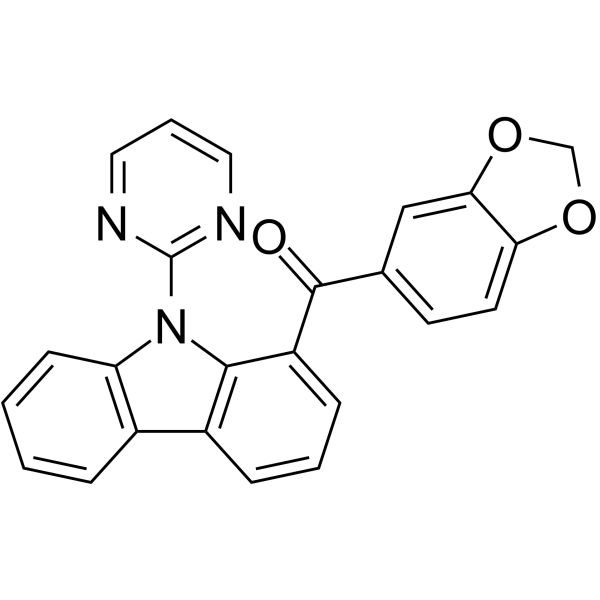 0 ImagesCat. No.: HY-144361CAS No.: 1811548-74-9Antitumor agent-44 (Compound 5n) disrupts the mitochondrial homeostasis, induces cell cycle arrest and apoptosis in human adenocarcinoma cells. Antitumor agent-44 (Compound 5n) possesses good anti-tumor activity in a lung-cancer-cell xenograft mice model.
-
Antitumor agent-132
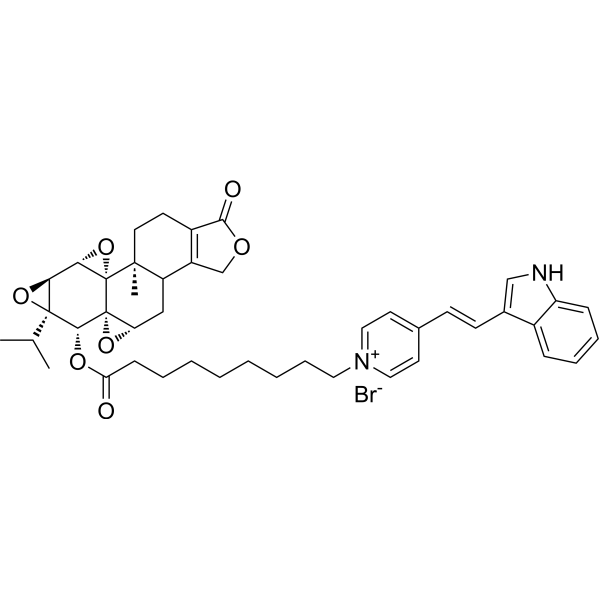 0 ImagesCat. No.: HY-162131Antitumor agent-132 (Compound F9) is an antitumor agent. Antitumor agent-132 induces cell apoptosis and increases intracellular reactive oxygen species and reduces MMP.
-
2,6-Dihydroxyacetophenone (Standard)
 0 Images2,6-Dihydroxyacetophenone (Standard) is the analytical standard of 2,6-Dihydroxyacetophenone (HY-Y0106). This product is intended for research and analytical applications. 2,6-Dihydroxyacetophenone, a polyphenolic derivative of Acetophenone (HY-Y0989), is an orally active mTOR inhibitor. 2,6-Dihydroxyacetophenone shows antioxidant activity. 2,6-Dihydroxyacetophenone inhibits cell growth and proliferation in CRC cells. 2,6-Dihydroxyacetophenone arrests at G0/G1 phase of cell cycle, induces apoptosis and suppresses cell migration in CRC cells. 2,6-Dihydroxyacetophenone inhibits xanthine oxidase (XOD) with an IC50 of 1.24 mM. 2,6-dihydroxyacetophenone improves uric acid metabolism in hyperuricemia mice, reduces plasma cholesterol in hypercholesterolemic rats, and inhibits lipid accumulation in HFD-induced obese mice. 2,6-Dihydroxyacetophenone can be used for the study of colorectal cancer (CRC), hyperuricemia and hypercholesterolemia.
-
SCH 2047069
 0 ImagesCat. No.: HY-122130CAS No.: 1146209-50-8Synonyms: MK-8267SCH 2047069 (MK-8267) is an orally active kinesin spindle protein (KSP) inhibitor (Kd: 0.5 nM) that can cross the blood-brain barrier. SCH 2047069 exhibits an IC50 value of ≤ 5 nM against the KSP ATPase. SCH 2047069 exhibits broad-spectrum antitumor activity. SCH 2047069 can induce mitotic arrest and apoptosis in tumor cells. SCH 2047069 can be used in the research of tumors such as ovarian cancer, colon cancer, glioblastoma, and lymphoma.
-
PROTAC BRD4 Degrader-42
 0 ImagesCat. No.: HY-180150PROTAC BRD4 Degrader-42 (Compound P6) is a PROTAC-based BRD4 degrader with a DC50 of 1.11 μM. PROTAC BRD4 Degrader-42 promotes the ubiquitination and degradation of BRD4. PROTAC BRD4 Degrader-42 downregulates c-Myc expression and induces Apoptosis by upregulating BAD and BAX protein expression. PROTAC BRD4 Degrader-42 also exhibits anticancer activity against myeloid monocytic leukemia.
-
EGFR-IN-174
 0 ImagesCat. No.: HY-178005EGFR-IN-174 is a potent EGFR inhibitor (IC50 = 0.17 μM) and also displays VEGFR-2 inhibition (IC50 = 0.2007 μM). EGFR-IN-174 exhibits potent anticancer effects with low cytotoxicity to normal cells. EGFR-IN-174 induces G2/M and Pre-G1 phase arrest and significantly triggers apoptosis. EGFR-IN-174 can be used in cancer research, such as colorectal carcinoma, hepatocellular carcinoma, and breast cancer.
-
Ziyuglycoside II (Standard)
 0 ImagesCat. No.: HY-N0332RCAS No.: 35286-59-0Ziyuglycoside II (Standard) is the analytical standard of Ziyuglycoside II. This product is intended for research and analytical applications. Ziyuglycoside II is a triterpenoid saponin compound extracted from Sanguisorba officinalis L.. Ziyuglycoside II induces reactive oxygen species (ROS) production and apoptosis. Anti-inflammation and anti-cancer effect.
-
CML-07-119
 0 ImagesCat. No.: HY-186013CAS No.: 2241548-12-7CML-07-119 is a selective inhibitor of GGPP synthase (GGPPS) with an IC50 of ~27 nM. CML-07-119 induces apoptosis and exhibits anticancer activity against acute myeloid leukemia (AML) cells, including those harbouring TP53 mutations. CML-07-119 inhibits tumor growth in an AML mouse xenograft model. CML-07-119 can be used for AML research.
-
GNE-5472
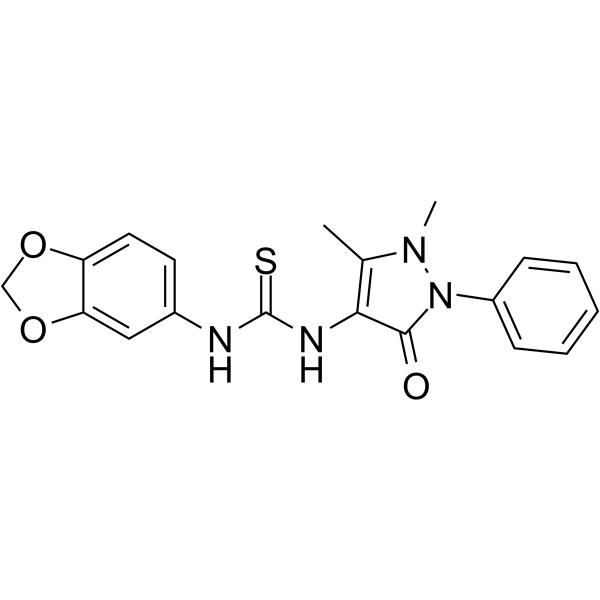
 0 ImagesCat. No.: HY-175445CAS No.: 2417369-99-2GNE-5472 is a potent bifunctional ERα PRRTAC degrader, with its E3 ligand being a pan-IAP antagonist. GNE-5472 antagonizes cIAP1/2, activating the non-classical NF-κB pathway, resulting in a significant upregulation of TNFα expression. GNE-5472 inhibits the proliferation of breast cancer cells and induces cell apoptosis. GNE-5472 can be used for the study of breast cancer.
-
Moexipril
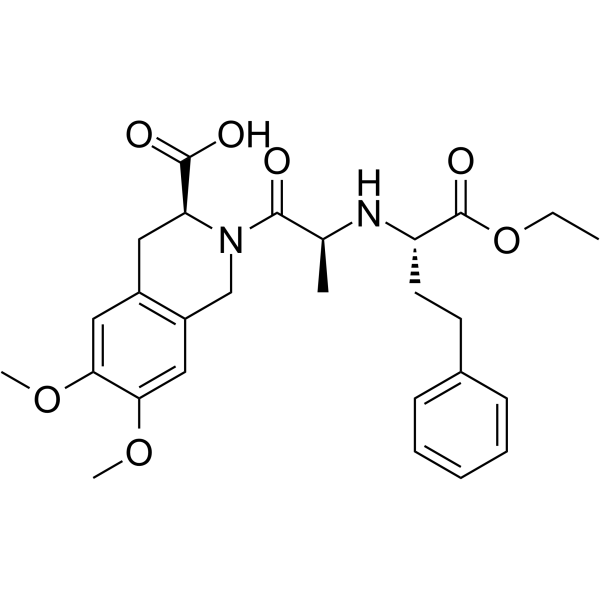 0 ImagesCat. No.: HY-117281CAS No.: 103775-10-6Moexipril is an orally active inhibitor of angiotensin-converting enzyme (ACE), and becomes effective by being hydrolyzed to moexiprila (hydrochloride). Moexipril exhibits antihypertensive and neuroprotective effects-.
-
EVT-401
 0 ImagesCat. No.: HY-178230CAS No.: 951015-69-3EVT-401 is an orally active, potent and highly selective human P2X7R antagonist, with an IC50 of 10 nM and a Ki of 7.6 nM for human P2X7R, and an IC50 of 220 nM for mouse P2X7R. EVT-401 promotes apoptosis and induces cell cycle arrest in human rheumatoid arthritis synovial fibroblasts (RA SF), reduces the production of proinflammatory and joint-destructive mediators, and mitigates aggressive phenotypes. EVT-401 exhibits favorable oral bioavailability and a good safety profile, making it suitable for research into rheumatoid arthritis.
-
PROTAC EZH2 Degrader-9
 0 ImagesCat. No.: HY-179499CAS No.: 2978620-84-5PROTAC EZH2 Degrader-9 is orally active EZH2 PROTAC degrader degrading EZH2 via the ubiquitin-proteasome pathway. PROTAC EZH2 Degrader-9 downregulates PRC2 core subunits and potent inhibition of H3K27me3 without affecting common CRBN neosubstrates while it was selective over GSp'T1 and ikZF1/3. PROTAC EZH2 Degrader-9 exhibits potent antiproliferative activity against multiple cancer cell lines by inducing cell cycle and apoptosis. PROTAC EZH2 Degrader-9 reverses PRC2-mediated gene silencing and inhibiting EZH2 non-catalytic target gene activation. PROTAC EZH2 Degrader-9 can be used for leukemia, lymphoma, and non-small cell lung cancer research.
-
CXJ2080
 0 ImagesCat. No.: HY-183070CXJ2080 is a selective PROTAC-based CDK7 degrader with a DC50 of 0.88 nM. CXJ2080 recruits VHL E3 ligase to induce ubiquitin-proteasome-dependent CDK7 degradation, disrupts the CDK7-cyclin H-MAT1 complex, suppresses CDK7-dependent phosphorylation of RNA polymerase II CTD Ser5, CDK1 Thr161, and CDK2 Thr160. CXJ2080 activates the p53-p21 axis, suppresses MYC-driven signaling, induces leukemia cell cycle arrest, apoptosis, and differentiation, reduces CD117 expression, spares platelets and normal PBMCs, maintains sustained CDK7 degradation post-washout. CXJ2080 can be used for the research of acute leukemia.
-
Withanolide A (Standard)
 0 ImagesCat. No.: HY-N7028RCAS No.: 32911-62-9Withanolide A (Standard) is the analytical standard of Withanolide A. This product is intended for research and analytical applications. Withanolide A is an orally active extract from the Indian herb Ashwagandha. Withanolide A can induce apoptosis. Withanolide A has anti-inflammatory and antitumor activity. Withanolide A can be used in the study of neurodegenerative diseases.
-
G9a-IN-4
 0 ImagesCat. No.: HY-178378G9a-IN-4 is a G9a inhibitor with high selectivity (IC50 = 32 nM). G9a-IN-4 shows high selectivity against the other tested lysine/arginine methyltransferases. G9a-IN-4 exhibits high enzymatic activity against G9a and more potent antiproliferative effects against all tested cancer cells. G9a-IN-4 significantly suppresses the H3K9me2 level. G9a-IN-4 triggers autophagy by inducing the production of ROS, thus leading to cell apoptosis and cell cycle arrest at G0/G1 in CT26 colon cells. G9a-IN-4 can be used for the study of colon cancer.




