



ERK
Extracellular signal regulated kinases
ERKs (Extracellular-signal-regulated kinases) are widely expressed protein kinase intracellular signalling molecules that are involved in functions including the regulation of meiosis, mitosis, and postmitotic functions in differentiated cells. Many different stimuli, including growth factors, cytokines, virus infection, ligands for heterotrimeric G protein-coupled receptors, transforming agents, and carcinogens, activate the ERK pathway. In the MAPK/ERK pathway, Ras activates c-Raf, followed by mitogen-activated protein kinase kinase (abbreviated as MKK, MEK, or MAP2K) and then MAPK1/2 (below). Ras is typically activated by growth hormones through receptor tyrosine kinases and GRB2/SOS, but may also receive other signals. ERKs are known to activate many transcription factors, such as ELK1, and some downstream protein kinases. Disruption of the ERK pathway is common in cancers, especially Ras, c-Raf and receptors such as HER2.
ERK Isoform Specific Products
All Product Categories
-
ERK Inhibitors
(762)
View all products
-
ERK Agonists
(10)
View all products
-
ERK Activators
(267)
View all products
-
ERK Modulators
(19)
View all products
-
ERK Chemical
(1)
View all products
-
ERK Inducers
(17)
View all products
-
ERK Degraders
(2)
View all products
-
ERK Controls
(3)
View all products
-
ERK Ligands
(2)
View all products
-
ERK Related Products (1167)
Related Products (1167)

-
Antibodies (22)
-
ERK Isoform Comparison
-
Multi-target kinase-IN-5
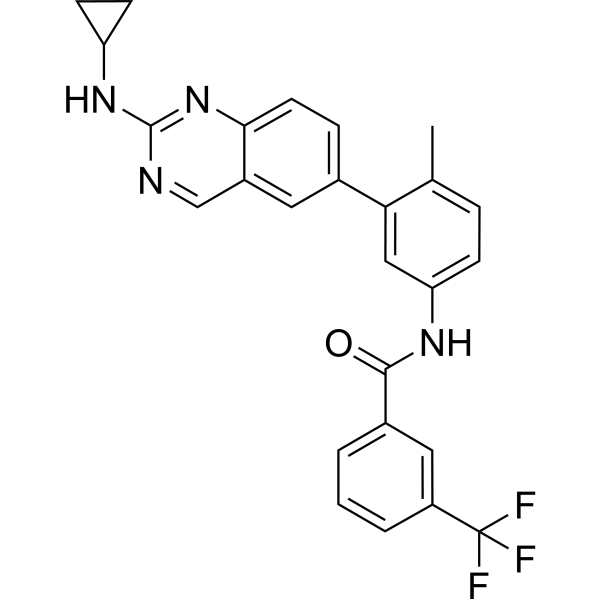
 0 ImagesCat. No.: HY-174128Multi-target kinase-IN-5 (Compound 23) is an orally active ERK1/2 inhibitor (IC50 values are 3.04 nM and 1.57 nM, respectively). Multi-target kinase-IN-5 significantly inhibits cancer cell proliferation, migration and invasion, and induces cell apoptosis and cell cycle arrest. Multi-target kinase-IN-5 inhibits the phosphorylation of ERK1/2 and downregulates the activity of its downstream substrate RSK to exert anti-tumor effects. Multi-target kinase-IN-5 can be used in cancer research.
-
KRAS-IN-51
 0 ImagesCat. No.: HY-186024CAS No.: 3076211-50-9KRAS-IN-51 (Compound 597a) is a KRas G12V inhibitor, with its IC50 for KRas G12V being 2.9 nM; KD values are 17 (at 20°C) and 68 (at 37°C) nM. KRAS-IN-51 inhibits the phosphorylation of pERK. KRAS-IN-51 has anti-proliferative activity against SW620 and MIAPaCa-2. KRAS-IN-51 can be used for research on colorectal cancer and pancreatic cancer.
-
SHP2 inhibitor LY6
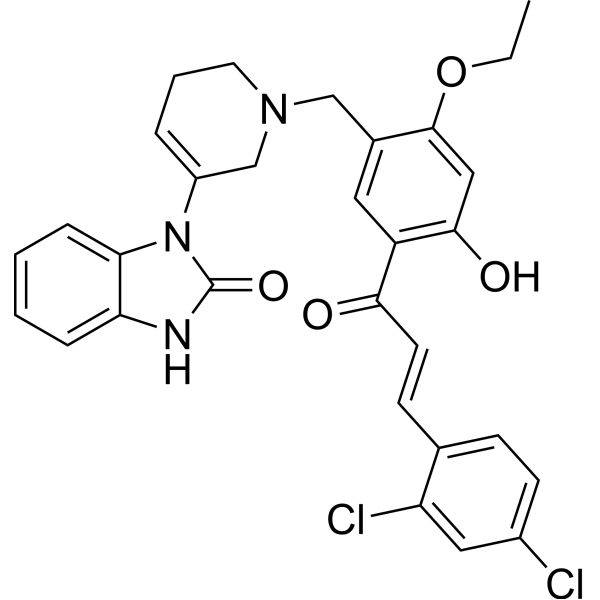 0 ImagesCat. No.: HY-125257CAS No.: 2296718-09-5Synonyms: LY6SHP2 inhibitor LY6 (LY6) is a selective SHP2 inhibitor with an IC50 of 9.8 μM, showing 7-fold selectivity over SHP1. SHP2 inhibitor LY6 inhibits SHP2-mediated cell signaling pathways and suppresses cell proliferation. SHP2 inhibitor LY6 elicits induces apoptosis and G2/M cell cycle arrest in lung cancer cells. SHP2 inhibitor LY6 can be used for the research of B cell acute lymphoblastic leukemia, acute myeloid leukemia, and lung cancer.
-
BMS-986126
 0 ImagesCat. No.: HY-124995CAS No.: 1610017-20-3BMS-986126 is a potent, selective, and orally active IRAK4 inhibitor (IC50 = 5.3 nM). BMS-986126 broadly inhibits MyD88-dependent signaling pathways. BMS-986126 demonstrates robust activity in the MRL/lpr and NZB/NZW murine models of lupus, inhibiting multiple pathogenic responses. BMS-986126 can be used for autoimmune diseases research, such as lupus erythematosus (SLE).
-
Cernuumolide J
 0 ImagesCat. No.: HY-N13294CAS No.: 2019163-02-9Synonyms: TMJ-105Cernuumolide J (TMJ-105) is an JAK2/STAT3 inhibitor. Cernuumolide J induces G2/M phase arrest and apoptosis in HEL leukemia cells by downregulating the phosphorylation of JAK2, STAT3, and Erk, and activating the phosphorylation of JNK and p38 MAPK. Cernuumolide J inhibits HEL leukemia cell growth in a time- and concentration-dependent manner, with an IC50 value of 1.79 μM. Cernuumolide J can be used for research in the field of anti-cancer therapy.
-
Atractylenolide II (Standard)
 0 ImagesCat. No.: HY-N0202RCAS No.: 73069-14-4Synonyms: Asterolide (Standard)Atractylenolide II (Standard) is the analytical standard of Atractylenolide II. This product is intended for research and analytical applications. Atractylenolide II (Asterolide) is a sesquiterpenoid compound. Atractylenolide II can induce G1 phase cell cycle arrest and apoptosis in B16 melanoma cells. Atractylenolide II is an orally effective anticancer agent that can exert anti-melanoma effects by inhibiting the STAT3 signaling pathway. In addition, Atractylenolide II has been shown to ameliorate myocardial fibrosis, oxidative stress, and neuroprotective activity.
-
Acifran (Standard)
 0 ImagesCat. No.: HY-107579RCAS No.: 72420-38-3Synonyms: AY 25712 (Standard)Acifran (Standard) (AY 25712 (Standard)) is the analytical standard of Acifran (HY-107579). This product is intended for research and analytical applications. Acifran (AY 25712) is an orally active, full GPR109A and GPR109B agonist and hypolipidemic agent. Acifran reduces Forskolin (HY-15371)-induced cAMP elevation, triggers ERK1/ERK2 phosphorylation, and inhibits lipolysis in adipose tissue through Gi-coupled GPCR activation. Acifran is used for research on atherosclerosis, hyperlipidemia, and type 2 diabetes.
-
SF-3-030
 0 ImagesCat. No.: HY-180419CAS No.: 1883721-73-0SF-3-030 is a potent, selective and non-ATP competitive ERK1/2 inhibitor. SF-3-030 selectively induces apoptosis in melanoma cells containing mutated BRaf and constitutively active ERK1/2 signalling. SF-3-030 mitigates multiple features of asthma in a murine model of asthma. SF-3-030 can be used for the research of asthma and melanomasup.
-
PROTAC FAK degrader 2
 0 ImagesCat. No.: HY-163709PROTAC FAK degrader 2 is an orally active PROTAC FAK degrader with a DC50 of 60.10 nM. PROTAC FAK degrader 2 forms a ternary complex with FAK and CRBN E3 ubiquitin ligase, driving proteasome-mediated degradation of total and phosphorylated FAK. PROTAC FAK degrader 2 inhibits phosphorylation of AKT and ERK, suppressing their downstream signaling pathways. PROTAC FAK degrader 2 reduces cancer cell viability, adhesion, migration, and invasion. PROTAC FAK degrader 2 exerts anti-tumor activity in HCT8/T tumor xenografts in mice. PROTAC FAK degrader 2 can be used for the research of breast cancer, colorectal cancer, lung cancer.
-
EGFR-IN-451
 0 ImagesCat. No.: HY-116091CAS No.: 220576-72-7EGFR-IN-451 is an EGFR inhibitor with an IC50 value of 0.02 nM. EGFR-IN-451 also inhibits mutant EGFRL858R, EGFRT790M, and EGFRL858R/T790M with IC50 values of 0.26-34 nM. EGFR-IN-451 inhibits AKT and ERK activation and inhibits proliferation of EGFR-mutant cancer cells. EGFR-IN-451 can be used for the research of EGFR-driven cancer.
-
PLS-123
 0 ImagesCat. No.: HY-120406CAS No.: 1431727-04-6LPS-123 is a covalently irreversible BTK inhibitor with an IC50 of < 5 nM. LPS-123 simultaneously inhibits the catalytic activity of BTK at Tyr551 and its self-activation at Tyr223. LPS-123 inhibits phosphorylation of the AKT/mTOR and MAPK signaling pathways, activation of PLCγ2, ERK1/2, p38, AKT, and mTOR, and blocks the production of CCL3 and CCL4 chemokines. LPS-123 exhibits significant anti-proliferative activity against various B-cell lymphoma cell lines and effectively induces apoptosis via a caspase-dependent pathway. LPS-123 also demonstrates significant antitumor activity in the OCI-Ly7 xenograft model. LPS-123 can be used for lymphoma research.
-
A-582941
 0 ImagesCat. No.: HY-59201CAS No.: 848591-89-9A-582941 is a selective, orally active, blood-brain barrier-permeable α7 nAChR agonist, with Ki values of 10.8 nM and 17 nM in rat brain and human frontal cortex, respectively. A-582941 exhibits agonistic activity at 5-HT3 receptors, with a Ki of 150 nM. A-582941 triggers phosphorylation of ERK1/2 and CREB, inhibits GSK-3β via Ser-9 phosphorylation, increases acetylcholine release, induces the expression of Arc and c-Fos, activates brain regions associated with working memory and attention, and reduces cell death caused by nerve growth factor (NGF) deprivation. A-582941 is applicable for the research of Alzheimer's disease and schizophrenia.
-
Flavanone (Standard)
 0 ImagesFlavanone (Standard) is the analytical standard of Flavanone. This product is intended for research and analytical applications. Flavanone is a naturally occurring flavone. Flavanone has inhibitory activity for human estrogen synthetase (aromatase). lavanone is the inhibitor for ERK/p38/NF-κB signaling pathway. Flavanone exhibits oral activity and antitumor efficacy.
-
SHP2-IN-44
 0 ImagesCat. No.: HY-175803CAS No.: 2818955-47-2SHP2-IN-44 (Compound 26) is an allosteric and orally active SHP2 inhibitor with an IC50 of 27 ?nM. SHP2-IN-44 also inhibits ERK phosphorylation (IC50 of 299 ?nM) without off-target hERG activity. SHP2-IN-44 has a broad-spectrum anticancer activity, such as juvenile myelomonocytic leukemia, neuroblastoma and breast cancer. SHP2-IN-44 can be used for Noonan syndrome, LEOPARD syndrome and cancers research.
-
ML138
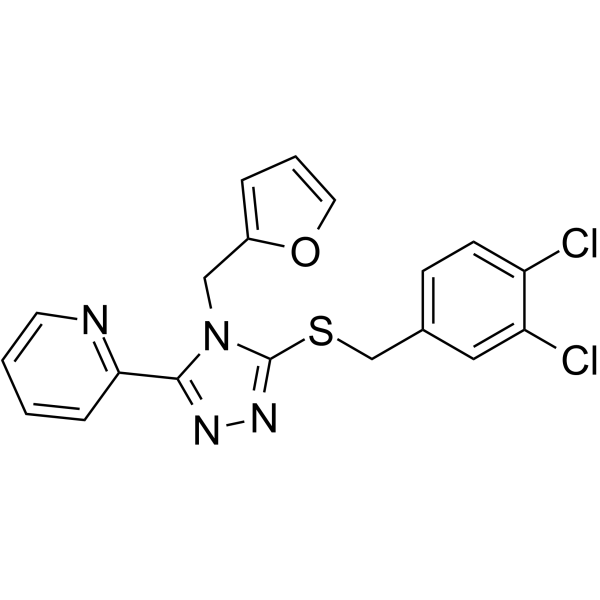 0 ImagesCat. No.: HY-121800CAS No.: 1355243-24-1ML138 is a blood-brain barrier-permeable κ-opioid receptor (KOR) agonist, with an EC50 value of 0.87 μM and a human Ki value of 2.4 nM for human receptors; it exhibits high selectivity for KOR over μ, δ and other receptors. ML138 activates β-arrestin (beta-arrestin)-mediated signaling pathways, stimulates G protein coupling, and activates the downstream extracellular regulated protein kinase 1/2 (ERK1/2) mitogen-activated protein kinase (MAP kinase) signaling pathway. ML138 is applicable to research related to addictive behaviors.
-
RB-CO-PEG5-C2-CO-VH032
 0 ImagesCat. No.: HY-161393RB-CO-PEG5-C2-CO-VH032 is a VHL-recruiting TRIM24 PROTAC degrader composed of an RB-derived short peptide SPRT, a PEG5-C2 linker, and the VHL ligand VH032. RB-CO-PEG5-C2-CO-VH032 recognizes proteins containing the FXXXV motif and recruits VHL to induce degradation of proteins such as TRIM24, thereby upregulating DUSP2, inhibiting ERK/mTOR signaling, and suppressing prostate cancer cell proliferation. RB-CO-PEG5-C2-CO-VH032 can be used for TRIM24 degradation and prostate cancer-related research.
-
β5i-IN-2
 0 ImagesCat. No.: HY-187220CAS No.: 3119216-05-3β5i-IN-2 is a potent, selective, and orally active inhibitor of the immunoproteasome β5i subunit, with an IC50 of 0.08 μM against human β5i. β5i-IN-2 inhibits LPS (HY-D1056)- and IFN-γ-induced expression of IL-1β, IL-6, and TNF-α, and suppresses the JNK, ERK, and NF-κB signaling pathways. β5i-IN-2 can be used in research related to rheumatoid arthritis and ulcerative colitis.
-
BYBC-1
 0 ImagesCat. No.: HY-181284CAS No.: 2563902-57-6BYBC‑1 is a selective G4‑RNA‑targeting ligand with high affinity forKRAS and NRAS G4‑RNAs (Kd = 0.05-0.28 μM). BYBC‑1 stabilizes G4‑RNA structures in KRAS and NRAS mRNA, blocks thePI3K/AKT and MAPK/ERK pathways, activates the DNA damage response (DDR), suppresses energy metabolism, and induces S‑phase arrest and apoptosis. BYBC‑1 exhibits high selectivity over non‑malignant fibroblasts and significantly inhibits the growth of HCT‑116 xenograft tumors in vivo. BYBC‑1 can be used for the study of colorectal cancer.
-
Flurbiprofen axetil solution
 0 ImagesCat. No.: HY-FL101481CAS No.: 91503-79-6Flurbiprofen axetil solution is mainly composed of Flurbiprofen axetil (HY-101481). Flurbiprofen axetil is a non-selective COX inhibitor and a nonsteroidal anti-inflammatory agent with anti-inflammatory and analgesic effects. Flurbiprofen axetil inhibits basal-like breast cancer metastasis by inhibiting the MEK/ERK signaling pathway. Flurbiprofen axetil can promote neuroprotection after focal cerebral ischemia in rats by partially activating PPAR-γ. Flurbiprofen axetil alleviates cerebral ischemia/reperfusion injury by reducing inflammation in a transient global cerebral ischemia/reperfusion rat model. Flurbiprofen axetil can alleviate inflammatory responses and cognitive function in a mild cognitive impairment (MCI) SD rat model through the AMPKα/NF-κB signaling pathway.




