



HDAC6
HDAC6 (histone deacetylase 6) is a unique class IIb histone deacetylase that localizes predominantly in the cytoplasm and preferentially targets non-histone substrates rather than chromatin-associated proteins[1][2]. HDAC6 regulates fundamental cellular functions through deacetylation of α-tubulin, Hsp90, and ubiquitin-associated protein complexes, thereby controlling microtubule dynamics, protein trafficking, stress responses, and protein quality-control mechanisms[2][3][4]. Mechanistically, HDAC6 functions at the intersection of the ubiquitin-proteasome system and autophagy-related pathways, where its ubiquitin-binding capability facilitates the processing and clearance of misfolded or aggregated proteins[3][4]. Therefore, HDAC6 has emerged as an important regulator of cellular proteostasis and cytoskeletal remodeling in both physiological and pathological contexts[2][3]. In disease models, HDAC6 has been implicated in cancer progression, neurodegenerative disorders, and inflammatory conditions through its effects on cell motility, intracellular transport, protein aggregation, and stress signaling pathways[2][4][5]. Increased HDAC6 activity promotes α-tubulin deacetylation and influences processes associated with tumor cell migration and metastasis, while modulation of HDAC6 activity alters axonal transport and protein aggregate handling in neurodegenerative disease models[4][5]. Compared with related HDAC isoforms, HDAC6 is distinguished by its predominantly cytoplasmic localization, preference for non-histone substrates, dual catalytic domains, and zinc-finger ubiquitin-binding domain, features that confer specialized biological functions not shared by most nuclear HDAC family members[2][5]. For experimental applications, HDAC6-selective inhibitors have become widely used chemical probes because they enable investigation of HDAC6-dependent signaling and protein homeostasis pathways while potentially reducing the off-target effects associated with pan-HDAC inhibition[3][6].
References:
- [1]. Park SY, et al. A short guide to histone deacetylases including recent progress on class II enzymes. Exp Mol Med. 2020 Feb;52(2):204-212. [Content Brief]
- [2]. Simões-Pires C, et al. HDAC6 as a target for neurodegenerative diseases: what makes it different from the other HDACs? Mol Neurodegener. 2013 Jan 29;8:7. doi: 10.1186/1750-1326-8-7. PMID: 23356410; PMCID: PMC3615964. [Content Brief]
- [3]. Brindisi M, et al. Old but Gold: Tracking the New Guise of Histone Deacetylase 6 (HDAC6) Enzyme as a Biomarker and Therapeutic Target in Rare Diseases. J Med Chem. 2020 Jan 9;63(1):23-39. [Content Brief]
- [4]. HDAC6 gene information from NCBI.
- [5]. Li G, et al. HDAC6 α-tubulin deacetylase: a potential therapeutic target in neurodegenerative diseases. J Neurol Sci. 2011 May 15;304(1-2):1-8. [Content Brief]
- [6]. Zhang Y, et al. Tanshinone IIA sodium sulfonate facilitates endocytic HMGB1 uptake. Biochem Pharmacol. 2012 Dec 1;84(11):1492-500. [Content Brief]
-
HDAC6 Related Products (335)
Related Products (335)

-
Antibodies (2)
-
FLT3/HDAC-IN-3
 0 ImagesCat. No.: HY-181086CAS No.: 2864394-30-7FLT3/HDAC-IN-3 is a dual inhibitor of FLT3 and HDAC. FLT3/HDAC-IN-3 potently inhibits FLT3 (IC50 = 14 nM), HDAC1 (IC50 = 27 nM), HDAC6 (IC50 = 20 nM), and FLT3D853Y (IC50 = 55 nM), exhibits weak activity against HDAC8, and shows no activity against HDAC4. FLT3/HDAC-IN-3 possesses kinase selectivity, plasma stability, and stability in human liver microsomes. FLT3/HDAC-IN-3 demonstrates anti-proliferative effects in a variety of hematological malignancy cell lines. FLT3/HDAC-IN-3 shows efficacy in the Jeko-1 xenograft model without observed significant toxicity. FLT3/HDAC-IN-3 can be used in the study of hematological malignancies.
-
HDAC6-IN-51
 0 ImagesCat. No.: HY-169226CAS No.: 2994634-78-3HDAC6-IN-51 (Compound 7e) is a selective HDAC6 inhibitor with an IC50 value of 42.9 nM. HDAC6-IN-51 exhibits good anti-lung fibrosis activity.
-
sEH/HDAC6-IN-2
 0 ImagesCat. No.: HY-159171CAS No.: 3009011-58-6sEH/HDAC6-IN-2 is a potent dual soluble epoxide hydrolase (sEH) and HDAC6 inhibitor with IC50s of 0.9 nM, 46.8 nM, and 8 nM for human sEH, mouse sEH, and HDAC6, respectively. sEH/HDAC6-IN-2 can be used for the study of inflammatory pain.
-
AMC-3-030
 0 ImagesCat. No.: HY-180934CAS No.: 2926656-07-5AMC-3-030 is a selective and potent dual inhibitor targeting HDAC6 and chymotrypsin-like proteasome with IC50 values of 884 and 4.17 nM. AMC-3-030 has a proliferation inhibitory effect. AMC-3-030 can reduce α-tubulin and β-actin levels. AMC-3-030 can be used for research of multiple myeloma.
-
HDAC1/6-IN-3
 0 ImagesCat. No.: HY-175176CAS No.: 3038691-85-6HDAC1/6-IN-3 is a potent HDAC inhibitor. HDAC1/6-IN-3 shows excellent inhibitory activities against HDAC1 (IC50 = 1.1 nM) and HDAC6 (IC50 = 2.7 nM). HDAC1/6-IN-3 significantly arrests HepG2 cells at the G0/G1 phase and induces apoptosis and pyroptosis. HDAC1/6-IN-3 exhibits significant antitumor activity in the HepG2 xenograft mode. HDAC1/6-IN-3 can be used for the study of cancers such as liver cancer, lung cancer, colon cancer and breast cancer.
-
Leuxinostat
 0 ImagesCat. No.: HY-162658Leuxinostat is an inhibitor for HDAC with IC50 of 30 nM for hHDAC6. Leuxinostat inhibits the proliferation of cells THP1, K562, U937 and MEK1, induces apoptosis in leukemia cells NB4 and MOLT-4. Leuxinostat inhibits the expansion of hematopoietic stem cells and exhibits antileukemic activity in zebrafish models.
-
Nanatinostat TFA
 0 ImagesCat. No.: HY-13432ACAS No.: 1256448-48-2Synonyms: CHR-3996 TFANanatinostat (CHR-3996) TFA is a potent, class I selective and orally active HDAC inhibitor with IC50s of 3 nM, 4 nM, and 7 nM for HDAC1, HDAC2, and HDAC3, respectively. Nanatinostat TFA has low activity against HDAC5 (IC50 of 200 nM) and HDAC6 (IC50 of 2100 nM). Nanatinostat TFA induces apoptosis in myeloma cells. Nanatinostat TFA has potent anticancer effects, such as myeloma, advanced solid tumours and colorectal cancer.
-
CM-414
 0 ImagesCat. No.: HY-119316CAS No.: 2007971-51-7CM-414 is a brain-penetrant phosphodiesterase 5 (PDE5) and HDAC inhibitor with IC50s of 60 nM, 91 nM, 310 nM, 322 nM and 490 nM for PDE5, HDAC6, HDAC1, HDAC3 and HDAC2, respectively. CM-414 diminishes brain Aβ and tau phosphorylation (pTau) level in Tg2576 mice. CM-414 can be used for the study of Alzheimer's disease (AD).
-
MC2625
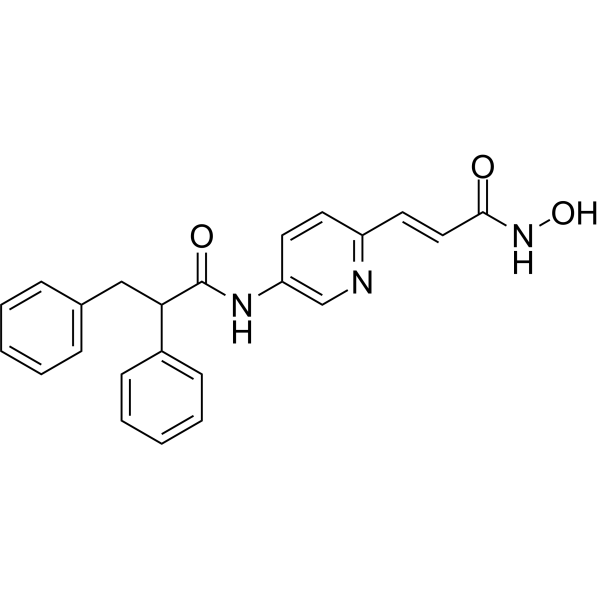 0 ImagesCat. No.: HY-152225CAS No.: 1776116-75-6MC2625 is a potent pyridine-containing histone deacetylase (HDAC) inhibitor. MC2625 show selective HDAC3 and HDAC6 inhibition with IC50s of 80 nM and 11 nM. MC2625 increases acetyl-H3 and acetyl-tubulin levels and inhibits cancer stem cells (CSCs) growth by apoptosis induction.
-
IOR-160
 0 ImagesCat. No.: HY-176561CAS No.: 2421119-78-8IOR-160 is a dual inhibitor of casein kinase 2 (CK2) and HDACs. IOR-160 exhibits high selectivity for CK2 (IC50 = 1.7 nM) and broad inhibitory activity against HDAC (HDAC 1, 2, 3, and 6 with IC50s of 3.3 nM, 24.0 nM, 3.9 nM, and 13.0 nM, respectively, with low activity for HDAC8). IOR-160 modulates key cellular signaling pathways by inhibiting AKT phosphorylation and increasing acetylated α-tubulin. IOR-160 inhibits tumor growth and reduces tumor burden through dual CK2/HDAC inhibition. IOR-160 is indicated for use in triple-negative breast cancer research.
-
HDAC6-IN-69
 0 ImagesCat. No.: HY-180214HDAC6-IN-69 is a brain-penetrant and highly selective HDAC6 inhibitor with an IC50 of 4.0 nM. HDAC6-IN-69 shows >176-fold against other HDAC isoforms. HDAC6-IN-69 engages the target in neuronal cells by dose-dependently upregulating acetylated α-tubulin in virto. HDAC6-IN-69 has neuroprotective effect and can be used for ischemic stroke research .
-
AC-340
 0 ImagesCat. No.: HY-178336CAS No.: 3109965-54-7AC-340 is a potent hybrid VDR agonist/HDAC inhibitor. AC-340 superinduces VDR target genes (e.g., CYP24A1) and inhibits HDAC6 (IC50 = 0.37 μM) with ~10-fold selectivity over HDAC2. AC-340 induces VDR hyperagonism by causing widespread protein hyperacetylation (e.g., tubulin and H3K9/K27), which leads to elevated H3K27 acetylation on VDR target genes. AC-340 can be used for melanoma cancer research.
-
NL-103
 0 ImagesCat. No.: HY-12487CAS No.: 1788896-33-2
-
HDAC-IN-90
 0 ImagesCat. No.: HY-174471CAS No.: 1354547-28-6
-
A2AAR/HDAC-IN-1
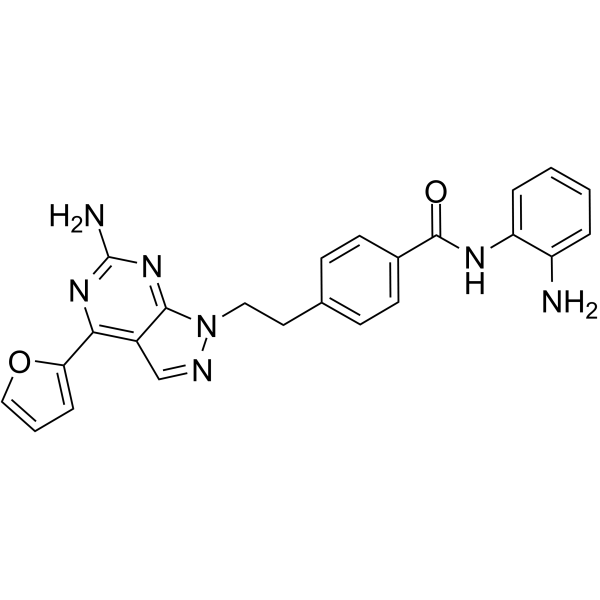 0 ImagesCat. No.: HY-143324CAS No.: 2767560-51-8A2AAR/HDAC-IN-1 (compound 14c) is an orally active, potent and balanced A2AAR/HDAC dual inhibitor, with a Ki of 163.5 nM for A2AAR and an IC50 of 145.3 nM for HDAC1. A2AAR/HDAC-IN-1 shows anticancer activity.

-
HDAC6-IN-62
 0 ImagesCat. No.: HY-174449CAS No.: 3056725-89-1HDAC6-IN-62 (Compound 2.12) is a selective HDAC6 inhibitor, with an IC50 value of 0.25 nM. HDAC6-IN-62 can be used in the research of Charcot-Marie-Tooth disease.
-
Rodin-C
 0 ImagesCat. No.: HY-176868CAS No.: 2065162-16-3Rodin-C is a selective HDAC inhibitor with IC50s of 0.059, 0.18 and 5.39 μM for HDAC1, HDAC2 and HDAC11, respectively, over HDAC3-10. Rodin-C significantly inhibits the HDAC-CoREST complex with low hematological toxicity. Rodin-C can be used for neurologic disorders such as Alzheimer’s disease research.
-
HDAC6-IN-82
 0 ImagesCat. No.: HY-183560CAS No.: 1228571-33-2HDAC6-IN-82 is a selective HDAC6 inhibitor with an IC50 of 4.9 nM against HDAC6. HDAC6-IN-82 inhibits HDAC1 (112 nM), HDAC2 (737 nM), HDAC3 (623 nM), HDAC8 (1140 nM), HDAC10 (91.4 nM) and HDAC11 (219 nM). HDAC6-IN-82 reduces cancer cell viability, induces cell cycle arrest, triggers apoptosis, and increases the acetylation levels of H3K9 and α-tubulin. HDAC6-IN-82 can be used in cancer-related research such as leukemia.
-
HDAC-IN-46
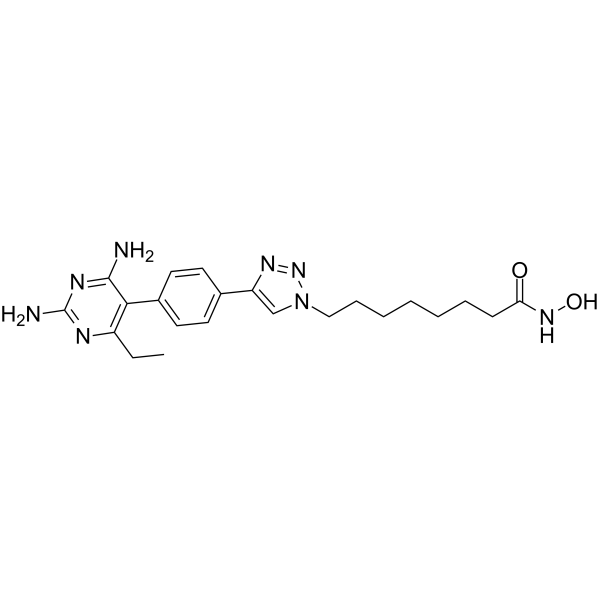 0 ImagesCat. No.: HY-150597CAS No.: 2562386-85-8HDAC-IN-46 (compound 12c) is a potent HDAC inhibitor with an IC50 value of 0.21 μM and 0.021 μM for HDAC1 and HDAC6, respectively. HDAC-IN-46 upregulates p-p38, and downregulates Bcl-xL and cyclin D1 in MDA-MB-231 cells. HDAC-IN-46 induces significant G2 phase arrest and apoptosis. HDAC-IN-46 can be used for researching triple-negative breast cancer (TNBC).




