


1. Search Result
Search Result
Results for "

(±)-CPP

" in MedChemExpress (MCE) Product Catalog:

45

Inhibitors & Agonists

2

Fluorescent Dyes

1

Biochemical Assay Reagents

38

Peptides

2

Natural
Products

3

Recombinant Proteins

9

Antibodies

1

Oligonucleotides

1

GMP Molecules

Cat. No. 상품명 Target 연구분야 Chemical Structure
  • HY-16658B
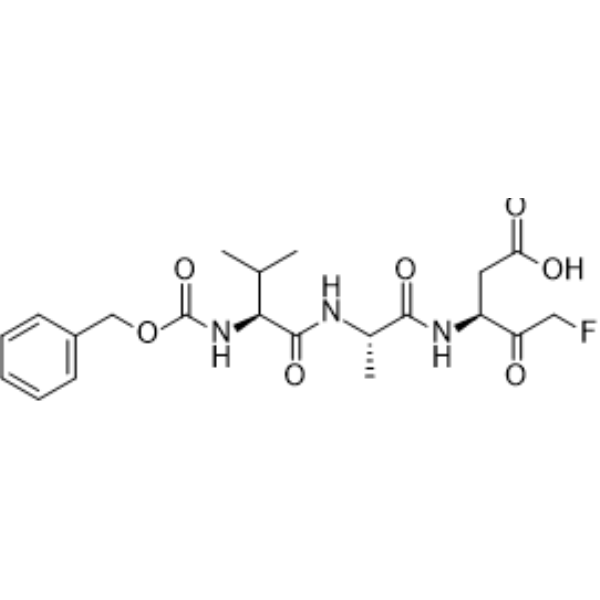
    Z-VAD-FMK
    Maximum Cited Publications
    740 Publications Verification

    Z-VAD(OH)-FMK

    Caspase Apoptosis RIP kinase Glutathione Peroxidase Reactive Oxygen Species (ROS) Inflammation/Immunology Cancer
    Z-VAD-FMK is a pan-caspase inhibitor and also an ICE-like protease inhibitor, which inhibits apoptosis by preventing the processing of CPP32 to its active form. Z-VAD-FMK sensitivity varies primarily due to differential expression of receptor-interacting protein 1 (RIP1). Z-VAD-FMK limits the cryopreservation-induced apoptosis by reducing caspase-3 activity of in vitro produced bovine embryos. Z-VAD-FMK is immunosuppressive in vitro and inhibits T cell proliferation without blocking the processing of caspase-8 and caspase-3. Z-VAD-FMK leads to a decrease in intracellular glutathione (GSH) with a concomitant increase in reactive oxygen species (ROS) levels in activated T cells. Z-VAD-FMK is due to oxidative stress via the depletion of GSH. Z-VAD-FMK can be used for the study of acute pancreatitis .
    Z-VAD-FMK
  • HY-P11072

    Toll-like Receptor (TLR) Interleukin Related TNF Receptor Inflammation/Immunology
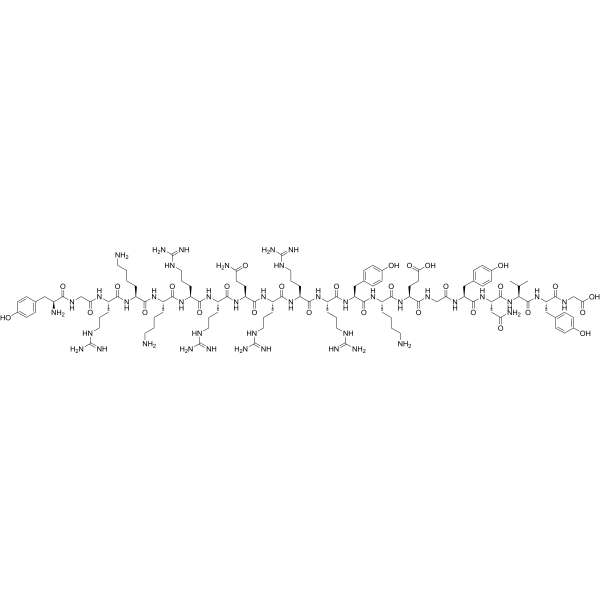
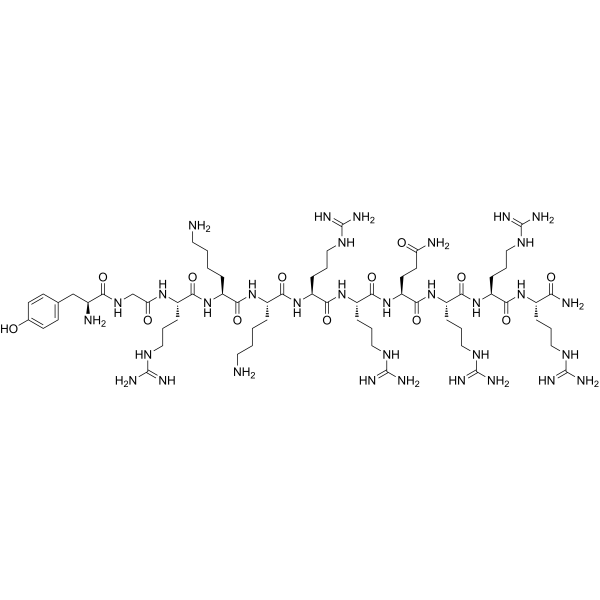
    IRF5-CPP5 is a cytosolic peptide that selectively targeting human IRF5 wirh a Kd of 0.53 μM. IRF5-CPP5 disrupts IRF5 homodimerization and inhibits its nuclear translocation without altering IRF5 phosphorylation levels. IRF5-CPP5 inhibits proinflammatory cytokine (IL-6, IL-1β, TNF-α) production. IRF5-CPP5 can be used for the research of systemic lupus erythematosus .
    IRF5-CPP5
  • HY-P0133

    Nona-L-arginine; Peptide R9

    Ser/Thr Protease Neurological Disease
    (Arg)9 (Nona-L-arginine) is a cell-penetrating peptide (CPP) made up of 9 arginine residues, which is an inhibitor of serine endoprotease Furin. (Arg)9 has neuroprotective property, exhibits neuroprotective activity with an IC50 of 0.78 μM in the glutamic acid model .
    (Arg) 9
  • HY-100814
    (R)-CPP
    1 Publications Verification

    iGluR Neurological Disease
    (R)-CPP is a highly potent NMDA receptor antagonist .
    (R)-CPP
  • HY-101324A

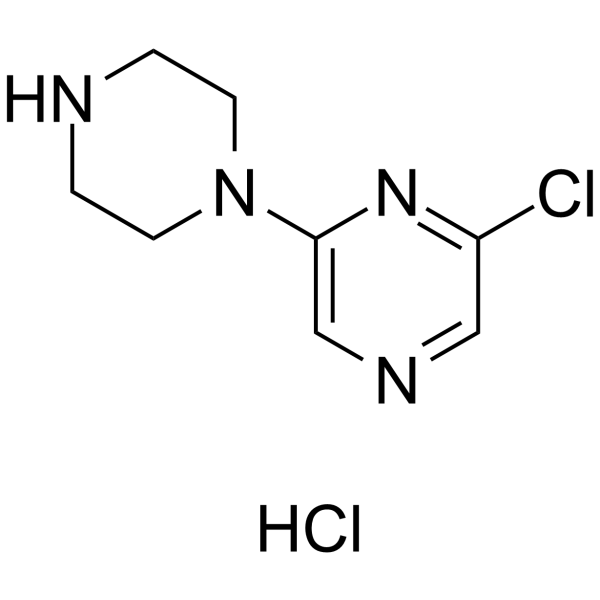
    CPP monohydrochloride

    5-HT Receptor Neurological Disease
    MK-212 (CPP) monohydrochloride is a centrally acting 5-HT1C/5-HT2 agonist. MK-212 monohydrochloride can stimulate phosphoinositide hydrolysis in cerebral cortex .
    MK-212 monohydrochloride
  • HY-P0133A
    (Arg)9 TFA
    1 Publications Verification

    Nona-L-arginine TFA; Peptide R9 TFA

    Ser/Thr Protease Neurological Disease
    (Arg)9 (Nona-L-arginine) TFA is a cell-penetrating peptide (CPP) made up of 9 arginine residues. (Arg)9 TFA has neuroprotective property, exhibits neuroprotective activity with an IC50 of 0.78 μM in the glutamic acid model .
    (Arg)9 TFA
  • HY-P10861A

    Tau Protein Neurological Disease
    RI-AG03 acetate is a proteolytically stable tau aggregation inhibitor that crosses the blood-brain barrier and exhibits oral efficacy. RI-AG03 acetate inhibits tau aggregation and promotes the formation of alternative amorphous aggregates that are non-amyloidogenic. RI-AG03 acetate mediates cellular uptake through direct membrane penetration and macropinocytosis, and its conjugation with cell-penetrating peptide sequences (CPPs) enhances the binding of cells to liposomes. RI-AG03 acetate suppresses aggregation-dependent neurodegenerative and behavioral phenotypes, and extends the lifespan of Drosophila models of tauopathy. RI-AG03 acetate can be used for research on tau-related diseases such as Alzheimer's disease .
    RI-AG03 acetate
  • HY-P2259
    TAT-GluA2 3Y
    2 Publications Verification

    iGluR HIV Integrase Adenosine Receptor Cardiovascular Disease Neurological Disease
    TAT-GluA2 3Y is a blood-brain barrier-permeable AMPA receptor inhibitory peptide that crosses cell membranes via the HIV-1 TAT protein domain. TAT-GluA2 3Y blocks the endocytosis of AMPA receptors, including the internalization of GluA1/GluA2 subunits, by disrupting interactions with the AP2, Brag2 and Syt3-GluA2 complexes, while also inhibiting long-term depression. TAT-GluA2 3Y blocks hypoxia-mediated AMPAR internalization, alleviates A1R-induced persistent synaptic inhibition, and reduces cerebral ischemic volume, neurological deficits and spatial memory deficits. TAT-GluA2 3Y blocks the effect of NLRP3 deficiency on fear generalization, inhibits amphetamine-induced behavioral/neurochemical sensitization, weakens the unconditioned stimulus-conditioned stimulus association of morphine, and promotes the extinction of morphine CPP. TAT-GluA2 3Y can be used in studies related to fear generalization, ischemic stroke, hypoxia, drug addiction and opioid addiction .
    TAT-GluA2 3Y
  • HY-P0133B
    (Arg)9 acetate
    1 Publications Verification

    Nona-L-arginine acetate; Peptide R9 acetate

    Ser/Thr Protease Neurological Disease
    (Arg)9 (Nona-L-arginine) acetate is a cell-penetrating peptide (CPP) made up of 9 arginine residues. (Arg)9 acetate has neuroprotective property, exhibits neuroprotective activity with an IC50 of 0.78 μM in the glutamic acid model .
    (Arg)9 acetate
  • HY-146127A

    Src Others
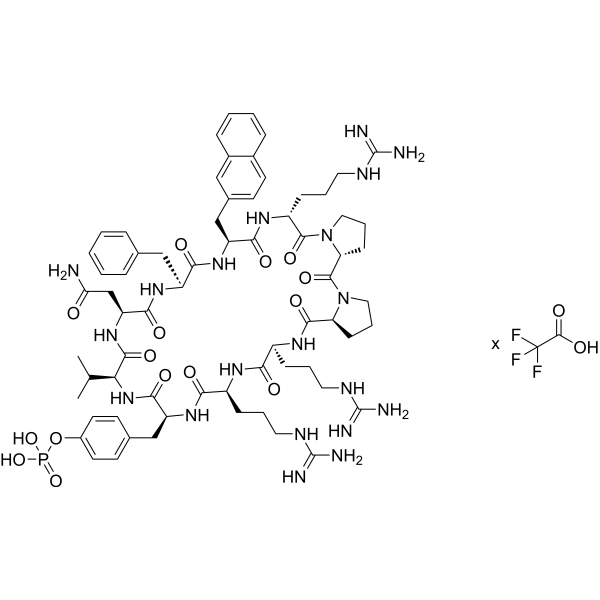
    Grb2 SH2 domain inhibitor 1 TFA is a conformationally restricted cyclic cell penetrating peptide (CPP) containing d-pro-l-pro motif ring (AF Φ Rpprrfq) (where Φ It is L-naphthylalanine, R is D-arginine, P is D-proline), which is mainly used as a cyclic peptide inhibitor.
    Grb2 SH2 domain inhibitor 1 TFA
  • HY-156202

    Histone Demethylase PD-1/PD-L1 Apoptosis Cancer
    Geranylgeranoic acid (Compound 5) is inhibits lysine-specific demethylase 1 (LSD1) with an IC50 value of 46.97 µM. Geranylgeranoic acid induces apoptosis via loss of the mitochondrial membrane potential and activation of interleukin-1β-converting enzyme (ICE) and cysteine protease precursor 32 (CPP32) in Huh7 and PLC/PRF/5 human hepatoma cells and MLE-10 transformed mouse hepatocytes. Geranylgeranoic acid an isoprenoid with anticancer activity, which is found in S. chinensis .
    Geranylgeranoic acid
  • HY-P2500

    Fluorescent Dye Others
    (Arg)9, FAM-labeled, a cell-penetrating peptide (CPP), is a nona-arginine (ARG) with FAM label. CPPs have emerged as powerful tools for delivering bioactive cargoes into the cytosol of intact cells .
    (Arg)9, FAM-labeled
  • HY-100797

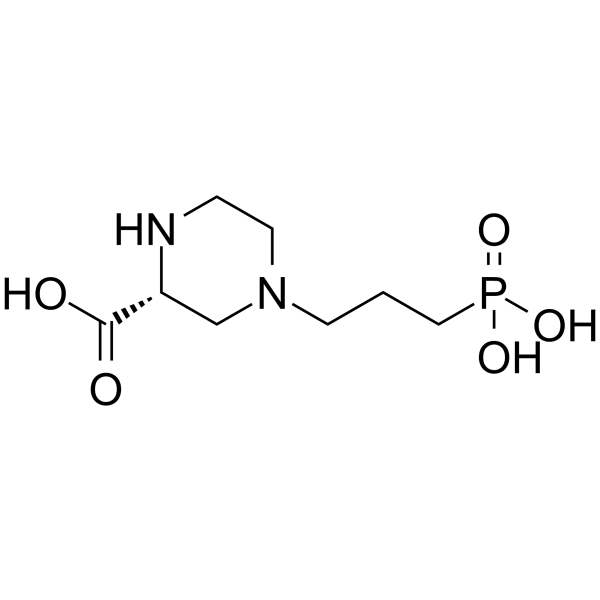
    (±)-CPP

    iGluR Neurological Disease
    (RS)-CPP ((±)-CPP) is a potent and selective NMDA antagonist. (RS)-CPP inhibits central neuron responses, and has anticonvulsant activity .
    (RS)-CPP
  • HY-P1801A

    Cys-[HIV-Tat (47-57)] TFA

    HIV Drug Derivative Others
    Cys-TAT(47-57) (Cys-[HIV-Tat (47-57)]) TFA, TAT (HY-P0281) derivative, is a Cysteine (HY-Y0337)-tagged cell-penetrating peptide (CPP) derived from the HIV TAT protein. Cys-TAT(47-57) TFA can be used for the research for the research of drug delivery .
    Cys-TAT(47-57) TFA
  • HY-116910

    GABA Receptor Neurological Disease
    CPP-115 is a GABA transaminase inactivator with higher affinity and lower retinal toxicity than Vigabatrin (HY-15399). CPP-115 increases brain GABA levels by inhibiting GABA transaminase catabolism. CPP-115 can be used in the study of drug addiction and infantile spasms .
    CPP-115
  • HY-P10861

    Tau Protein Neurological Disease
    RI-AG03 is a proteolytically stable tau aggregation inhibitor that crosses the blood-brain barrier and exhibits oral efficacy. RI-AG03 inhibits tau aggregation and promotes the formation of alternative amorphous aggregates that are non-amyloidogenic. RI-AG03 mediates cellular uptake through direct membrane penetration and macropinocytosis, and its conjugation with cell-penetrating peptide sequences (CPPs) enhances the binding of cells to liposomes. RI-AG03 suppresses aggregation-dependent neurodegenerative and behavioral phenotypes, and extends the lifespan of Drosophila models of tauopathy. RI-AG03 can be used for research on tau-related diseases such as Alzheimer's disease .
    RI-AG03
  • HY-P11208C

    GABA Receptor Inflammation/Immunology
    mNLS-CPP-WSTF TFA is the trifluoroacetate salt of mNLS-CPP-WSTF (HY-P11208). mNLS-CPP-WSTF is a nuclear localization signal (NLS)-cell-penetrating peptide based on the mouse WSTF sequence. mNLS-CPP-WSTF significantly inhibits the GABARAP-WSTF interaction, WSTF degradation and inflammatory gene expression. mNLS-CPP-WSTF effectively attenuates chronic inflammation, liver fibrosis and cartilage damage in metabolic-dysfunction-associated steatohepatitis (MASH) and osteoarthritis (OA) mice model. mNLS-CPP-WSTF is promising for research of chronic inflammatory diseases such as MASH and OA .
    mNLS-CPP-WSTF TFA
  • HY-116181

    Dopamine Receptor Neurological Disease
    YQA14 is a high affinity dopamine D3 receptor antagonist. YQA14 is anti-opioid addiction agent. YQA14 inhibits Morphine/Cocaine-induced conditioned place preference (CPP) in animals .
    YQA14
  • HY-P10514

    Small Interfering RNA (siRNA) Others
    Transportan 10 is a derivative of Transportan (HY-P1732) and is an amphiphilic cell penetrating peptide (CPP). Transportan 10 helps molecules penetrate cell membrane barriers by directly interacting with the lipid bilayer. Transportan 10 can be used in gene therapy or siRNA delivery vector research .
    Transportan 10
  • HY-P10644

    Fluorescent Dye Cancer
    CPP9 is a small, amphipathic, cyclic cell penetrating peptide (CPP). CPPs bind directly to the plasma membrane phospholipids and enter mammalian cells via endocytosis, followed by efficient release from the endosome. CPP9 can be used for intracellular delivery of therapeutic agents and chemical probes .
    CPP9
  • HY-P11208B

    GABA Receptor Inflammation/Immunology
    mNLS-CPP-scramble (TFA) is the trifluoroacetate salt of mNLS-CPP-scramble (HY-P11208A). mNLS-CPP-scramble is a negative control peptide of mNLS-CPP-WSTF. mNLS-CPP-scramble is promising for research of chronic inflammatory diseases (e.g., MASH, osteoarthritis) .
    mNLS-CPP-scramble TFA
  • HY-P11208A

    GABA Receptor Inflammation/Immunology
    mNLS-CPP-scramble is a negative control peptide of mNLS-CPP-WSTF. mNLS-CPP-scramble is promising for research of chronic inflammatory diseases (e.g., MASH, osteoarthritis) .
    mNLS-CPP-scramble
  • HY-P11208

    GABA Receptor Inflammation/Immunology
    mNLS-CPP-WSTF is a nuclear localization signal (NLS)-cell-penetrating peptide based on the mouse WSTF sequence. mNLS-CPP-WSTF significantly inhibits the GABARAP-WSTF interaction, WSTF degradation and inflammatory gene expression. mNLS-CPP-WSTF effectively attenuates chronic inflammation, liver fibrosis and cartilage damage in metabolic-dysfunction-associated steatohepatitis (MASH) and osteoarthritis (OA) mice model. mNLS-CPP-WSTF is promising for research of chronic inflammatory diseases such as MASH and OA .
    mNLS-CPP-WSTF
  • HY-P1324

    Neuropeptide Y Receptor Neurological Disease
    [cPP1-7,NPY19-23,Ala31,Aib32,Gln34]-hPancreatic Polypeptide is a potent and selective neuropeptide Y Y5 receptor agonist with an IC50 of 0.24 nM for binding to the hY5 receptor. [cPP1-7,NPY19-23,Ala31,Aib32,Gln34]-hPancreatic Polypeptide induces a high amount of food intake .
    [cPP1-7,NPY19-23,Ala31,Aib32,Gln34]-hPancreatic Polypeptide
  • HY-P1801

    Cys-[HIV-Tat (47-57)]

    HIV Drug Derivative Others
    Cys-TAT(47-57) (Cys-[HIV-Tat (47-57)]), TAT (HY-P0281) derivative, is a Cysteine (HY-Y0337)-tagged cell-penetrating peptide (CPP) derived from the HIV TAT protein. Cys-TAT(47-57) can be used for the research for the research of drug delivery .
    Cys-TAT(47-57)
  • HY-101324

    CPP

    5-HT Receptor Neurological Disease
    MK-212 (CPP) is a centrally acting 5-HT1C/5-HT2 agonist. MK-212 can stimulate phosphoinositide hydrolysis in cerebral cortex .
    MK-212
  • HY-N14403

    Cathepsin Infection
    6-Hydroxytetrangulol is a CPP32 protease inducer found in Streptomyces sp .
    6-Hydroxytetrangulol
  • HY-105476

    Antibiotic Fungal iGluR Infection Neurological Disease
    TAN 950A is antifungal amino acid antibiotic. TAN 950A has affinity for three excitatory amino acid (EAA) receptor and can inhibit [3H]AMPA, [3H]kainite and [3H]CPP binding competitively. TAN 950A can be used for the researches of infection and neurological disease .
    TAN 950A
  • HY-123889

    Dopamine Receptor Neurological Disease
    VK4-116 (Compound 19) is a selective Dopamine D3 receptor (D3R) antagonist with a Ki of 6.84 nM.VK4-116 significantly inhibits Oxycodone-induced hyperlocomotion and locomotor sensitization in mouse models. VK4-116 with pretreatment also inhibits the acquisition of Oxycodone-induced conditioned place preference (CPP) in rat models .
    VK4-116
  • HY-W110242

    PDHK Metabolic Disease
    (S)-CPP is an allosteric BDK inhibitor. (S)-CPP can be used in the research of type 2 diabetes .
    (S)-CPP
  • HY-16658BG

    Caspase Apoptosis Cancer
    Z-VAD-FMK is a pan-caspase inhibitor and also an ICE-like protease inhibitor, which inhibits apoptosis by preventing the processing of CPP32 to its active form. Z-VAD-FMK sensitivity varies primarily due to differential expression of receptor-interacting protein 1 (RIP1). Z-VAD-FMK limits the cryopreservation-induced apoptosis by reducing caspase-3 activity of in vitro produced bovine embryos. Z-VAD-FMK is immunosuppressive in vitro and inhibits T cell proliferation without blocking the processing of caspase-8 and caspase-3. Z-VAD-FMK leads to a decrease in intracellular glutathione (GSH) with a concomitant increase in reactive oxygen species (ROS) levels in activated T cells. Z-VAD-FMK is due to oxidative stress via the depletion of GSH. Z-VAD-FMK can be used for the study of acute pancreatitis .
    Z-VAD-FMK
  • HY-W110242A

    Endogenous Metabolite Cardiovascular Disease
    (S)-CPP sodium serves as an inhibitor of the branched-chain α-ketoacid dehydrogenase complex (BCKDC) kinase, commonly referred to as BDK or keto acid dehydrogenase kinase. As a negative regulator of BCKDC activity, the inhibition of BDK by (S)-CPP (with an IC50 of 6.3 μM) results in the activation of the complex and a notable decrease in plasma levels of leucine/isoleucine and valine in wild-type mice.
    (S)-CPP sodium
  • HY-RS16324

    Small Interfering RNA (siRNA) Others

    CPP Human Pre-designed siRNA Set A contains three designed siRNAs for CPP gene (Human), as well as a negative control, a positive control, and a FAM-labeled negative control.

    CPP Human Pre-designed siRNA Set A
    CPP Human Pre-designed siRNA Set A
  • HY-P5936

    DEVD-CHO-CPP 32

    Caspase Cancer
    Ac-AAVALLPAVLLALLAP-DEVD-CHO (DEVD-CHO-CPP 32) is a potent and reversible caspase-3 inhibitor .
    Ac-AAVALLPAVLLALLAP-DEVD-CHO
  • HY-P1324A

    Neuropeptide Y Receptor Neurological Disease
    [cPP1-7,NPY19-23,Ala31,Aib32,Gln34]-hPancreatic Polypeptide is a potent and selective neuropeptide Y Y5 receptor agonist with an IC50 of 0.24 nM for binding to the hY5 receptor. [cPP1-7,NPY19-23,Ala31,Aib32,Gln34]-hPancreatic Polypeptide induces a high amount of food intake .
    [cPP1-7,NPY19-23,Ala31,Aib32,Gln34]-hPancreatic polypeptide TFA
  • HY-101324AR

    CPP monohydrochloride (Standard)

    Reference Standards 5-HT Receptor Neurological Disease
    MK-212 (monohydrochloride) (Standard) is the analytical standard of MK-212 (monohydrochloride). This product is intended for research and analytical applications. MK-212 (CPP) monohydrochloride is a centrally acting 5-HT1C/5-HT2 agonist. MK-212 monohydrochloride can stimulate phosphoinositide hydrolysis in cerebral cortex .
    MK-212 monohydrochloride (Standard)
  • HY-111280

    Dopamine Receptor Neurological Disease
    ST 198 is an orally active D3R antagonist. ST 198 can block the expression of nicotine-induced CPP at doses selective for D3R. ST 198 can be used for the research of neurological disease .
    ST 198
  • HY-P3234

    Casein Kinase Others
    Ac-ESMD-CHO is an inhibitor of caspase-3 and caspase-7. Ac-ESMD-CHO inhibits proteolytic cleavage of the caspase-3 precursor peptide (CPP32) at the Glu-Ser-Met-Asp (ESMD) site .
    Ac-ESMD-CHO
  • HY-P4135

    Fluorescent Dye Others
    FITC-LC-Antennapedia Peptide is a FITC labeled Antennapedia Peptide (HY-P0307). Antennapedia Peptide is a cellular-membrane permeable peptides (CPP). FITC-LC-Antennapedia Peptide has good penetration in 3T3 cell line, which was rapidly accumulated into nuclei .
    FITC-LC-Antennapedia Peptide
  • HY-P11792

    E1/E2/E3 Enzyme Cancer
    CP2-CPP is a conjugate of p27 Analogue CP2 (HY-P11020) and Antennapedia Peptide (HY-P0307). CP2-CPP crosses cell membranes and localizes to live cell cytosol. CP2-CPP blocks SCF Skp2/Cks1-p27 interaction to inhibit p27 ubiquitination and degradation, restoring p27 levels and inhibiting cell proliferation. CP2-CPP can be used for the research of cancer, such as breast cancer .
    CP2-CPP
  • HY-185008

    NADPH Oxidase Cardiovascular Disease Inflammation/Immunology
    CPP11G (Compound 11g) is a highly selective NADPH oxidase 2 (Nox2) inhibitor (IC50=20 μM). CPP11G is promising for research of inflammatory diseases (e.g., vasculitis, atherosclerosis) and Nox2-overactivated pathologies (e.g., ischemia-reperfusion injury) .
    CPP11G
  • HY-171664

    ent-CPP

    Endogenous Metabolite Others
    ent-Copalyl diphosphate (ent-CPP) is a terpenoid precursor and metabolite involved in plant biosynthetic pathways. ent-Copalyl diphosphate participates in metabolism of natural products including phytoalexins in rice and maize, and steviol glycoside in Stevia rebaudiana .
    ent-Copalyl diphosphate
  • HY-D3448

    Fluorescent Dye Others
    8-Anthracene-BODIPY 505/515-di iodine (BDP-1) is an iodine-substituted BODIPY derivative and monomer for synthesis of conjugated porous polymer CPP-1. BODIPY dye is a small molecule dye with strong ultraviolet absorption ability, its fluorescence peak is relatively sharp, and the quantum yield is high (Ex/Em = 505/515 nm) .
    8-Anthracene-BODIPY 505/515-di(iodine)
  • HY-179324

    Orexin Receptor (OX Receptor) Neurological Disease
    Orexin receptor antagonist 6 (Compound 72) is a selective orexin 1 receptor (OX1) antagonist with a Ke of 8.5 nM and > 1180-fold selectivity for OX2. Orexin receptor antagonist 6 does not produce its own conditioned place preference (CPP) or aversive effects, and can inhibit the formation of CPP induced by psychoactive substances. Orexin receptor antagonist 6 can be used for research of neurological disease .
    Orexin receptor antagonist 6
  • HY-P11631

    Ligands for E3 Ligase Cancer
    Arg12, a 12-amino acid peptide sequence, is an E3 ubiquitin ligase ligand. Arg12 can be used to synthesize PROTACs, such as PROTAC PLK1 Degrader-2 (HY-180989). Arg12 can also act as a cell transmembrane peptide (CPP), facilitating the entire molecule to enter the cell .
    Arg12

온라인 문의

Your information is safe with us. * Required Fields.

호칭


Country or Region *

고객명 *


회사명 *

Department *


메일주소 *


상품명 *

Cat. No.


Requested quantity *

전화번호 *


비고

온라인 문의

Inquiry Information

상품명:
Cat. No.:
수량:
MCE Japan Authorized Agent:

