Search Result
Results for "
5'-monophosphate phosphodiesterase
" in MedChemExpress (MCE) Product Catalog:
6
Isotope-Labeled Compounds
| Cat. No. |
상품명 |
Target |
연구분야 |
Chemical Structure |
-
- HY-B0442
-
|
|
Phosphodiesterase (PDE)
Endogenous Metabolite
|
Metabolic Disease
Inflammation/Immunology
Endocrinology
Cancer
|
|
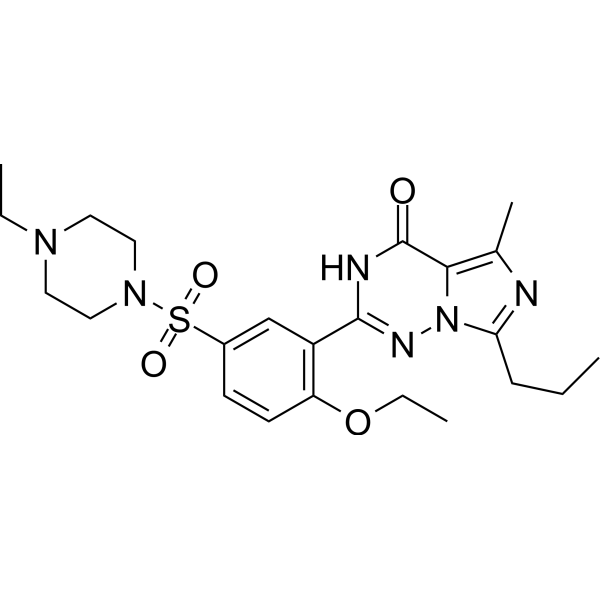
Vardenafil is a selective and orally active inhibitor of phosphodiesterase-5 (PDE5), with an IC50 of 0.7 nM. Vardenafil shows inhibitory towards PDE1, PDE6 with IC50s of 180 nM, and 11 nM, while IC50s are >1000 nM for PDE3 and PDE4 . Vardenafil competitively inhibits cyclic guanosine monophosphate (cGMP) hydrolysis and thus increases cGMP levels . Vardenafil can be used for the research of erectile dysfunction, hepatitis, diabetes [1]-[6].
|
-
-
- HY-18252
-
|
TA1790
|
Phosphodiesterase (PDE)
NO Synthase
Endogenous Metabolite
|
Cardiovascular Disease
Endocrinology
|
|
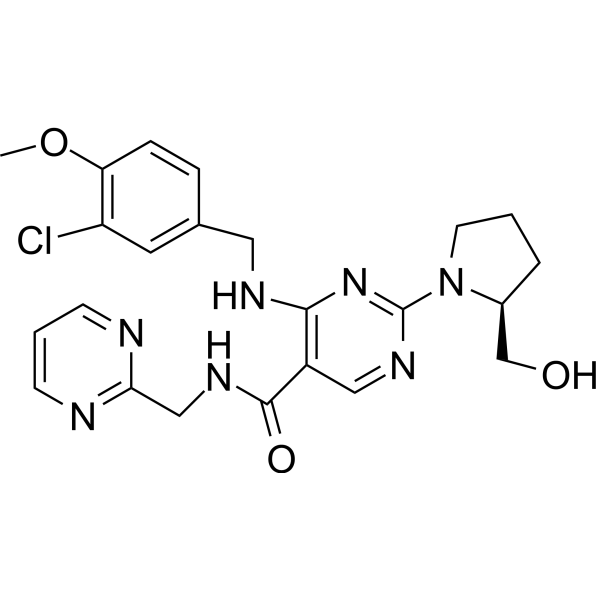
Avanafil (TA-1790) is a potent and selective phosphodiesterase-5 (PDE-5) inhibitor with IC50 values of 5.2 nM, 630 nM, 5700 nM, 6200 nM, 12000 nM, 27000 nM, 51000 nM and 53000 nM for PDE-5, PDE-6, PDE-4, PDE-10, PDE-8, PDE-7, PDE-2 and PDE-1, respectively. Avanafil activates NO/cGMP/PKG signaling-pathway to decrease loss in BMD, bone atrophy, and oxidative stress. Avanafil inhibits cyclic guanosine monophosphate (cGMP) hydrolysis and thus increases cGMP levels. Avanafil can be used for the research of erectile dysfunction and osteoporosis .
|
-
-
- HY-B0442A
-
|
|
Phosphodiesterase (PDE)
Endogenous Metabolite
|
Metabolic Disease
Inflammation/Immunology
Endocrinology
Cancer
|
|
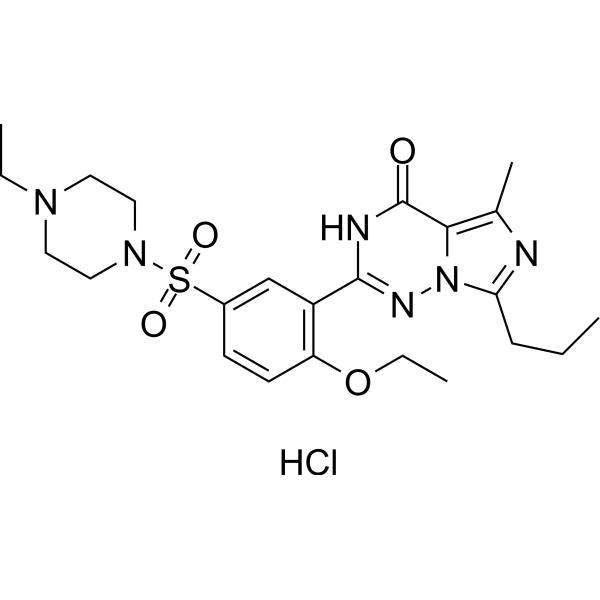
Vardenafil hydrochloride is a selective and orally active inhibitor of phosphodiesterase-5 (PDE5), with an IC50 of 0.7 nM. Vardenafil hydrochloride shows inhibitory towards PDE1, PDE6 with IC50s of 180 nM, and 11 nM, while IC50s are >1000 nM for PDE3 and PDE4 . Vardenafil hydrochloride competitively inhibits cyclic guanosine monophosphate (cGMP) hydrolysis and thus increases cGMP levels . Vardenafil hydrochloride can be used for the research of erectile dysfunction, hepatitis, diabetes [1]-[6].
|
-
-
- HY-B1294
-
|
Inamrinone
|
Phosphodiesterase (PDE)
|
Cardiovascular Disease
|
|
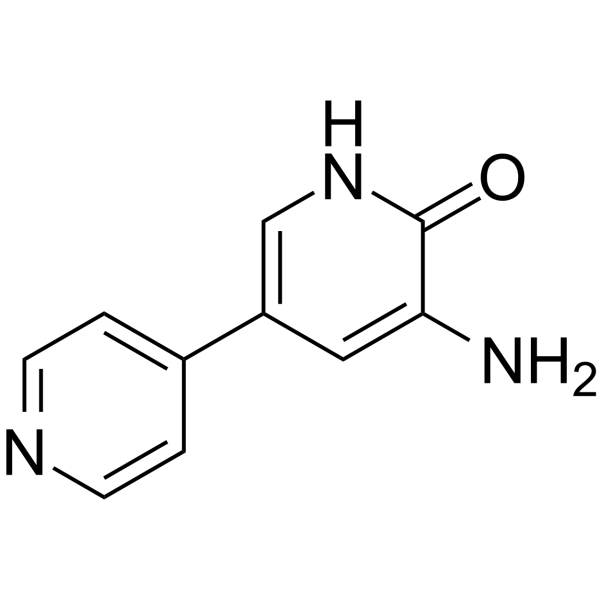
Amrinone (Inamrinone) is a positive inotropic-vasodilator agent. Amrinone is a selective phosphodiesterase III inhibitor that increases cyclic adenosine monophosphate by preventing its breakdown. Amrinone is also an orally active, non-glycosidic and non-catecholamine cardiotonic agent .
|
-
-
- HY-B1209
-
|
7-(β-Hydroxyethyl)theophylline
|
Phosphodiesterase (PDE)
|
Cardiovascular Disease
Inflammation/Immunology
|
|
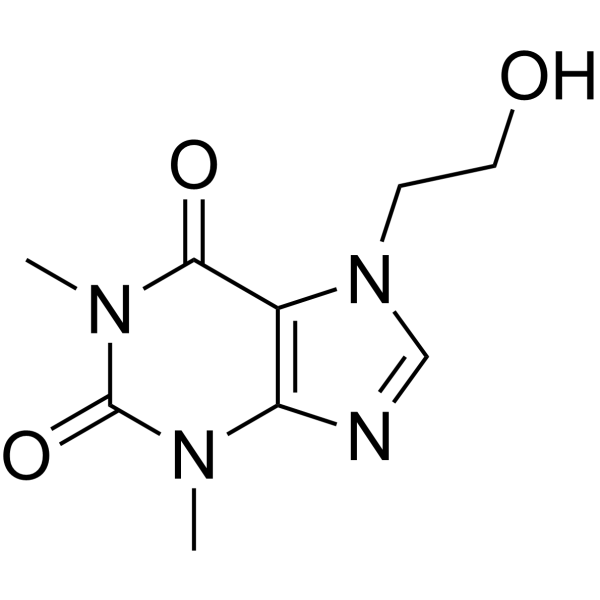
Etofylline (7-(β-Hydroxyethyl) theophylline) is an oral bronchodilator with anti-inflammatory effects. Etofylline inhibits phosphodiesterase and prevents the degradation of cAMP (cyclic adenosine monophosphate), leading to smooth muscle relaxation, reducing inflammatory responses and improving respiratory function. Etofylline affects the development of zebrafish embryos .
|
-
-
- HY-B0442B
-
|
|
Endogenous Metabolite
Phosphodiesterase (PDE)
|
Metabolic Disease
Inflammation/Immunology
Endocrinology
|
|
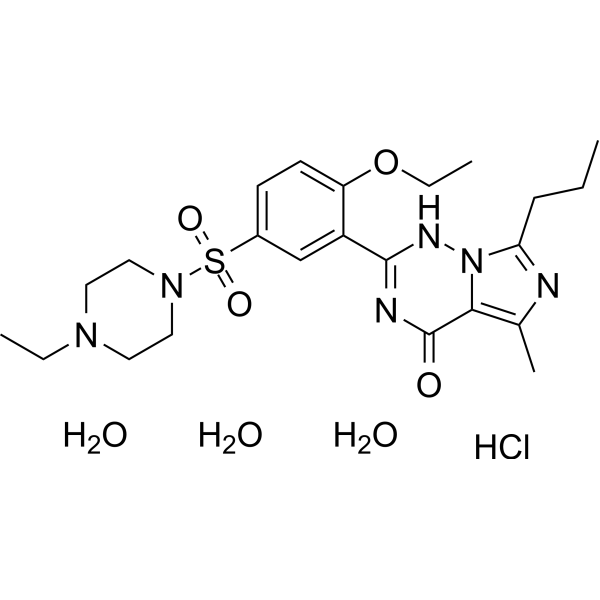
Vardenafil hydrochloride trihydrate is a selective and orally active inhibitor of phosphodiesterase-5 (PDE5), with an IC50 of 0.7 nM. Vardenafil hydrochloride trihydrate shows inhibitory towards PDE1, PDE6 with IC50s of 180 nM, and 11 nM, while IC50s are >1000 nM for PDE3 and PDE4 . Vardenafil hydrochloride trihydrate competitively inhibits cyclic guanosine monophosphate (cGMP) hydrolysis and thus increases cGMP levels . Vardenafil hydrochloride trihydrate can be used for the research of erectile dysfunction, hepatitis, diabetes [1]-[6].
|
-
-
- HY-108974
-
|
|
Phosphodiesterase (PDE)
Calcium Channel
|
Neurological Disease
|
|
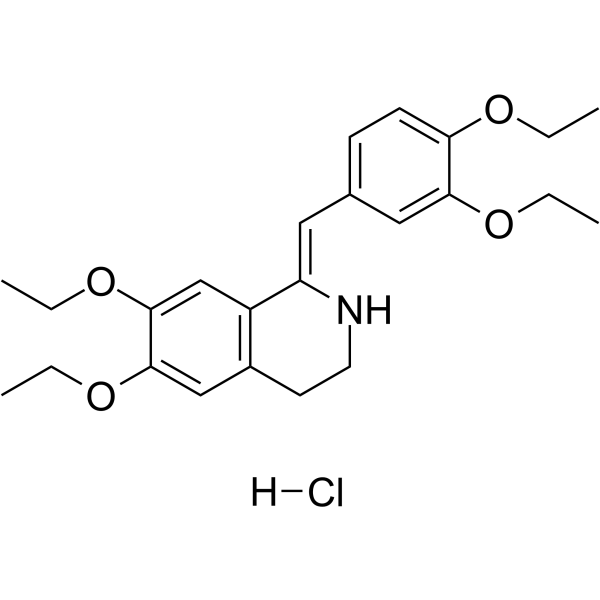
Drotaverine hydrochloride is a type 4 cyclic nucleotide phosphodiesterase (PDE4) inhibitor and an L-type voltage-dependent calcium channel (L-VDCC) blocker, blocks the degradation of 3',5'-cyclic adenosine monophosphate. Drotaverine (hydrochloride) exhibits in vivo antispasmodic efficacy without anticholinergic effects.
|
-
-
- HY-108619
-
|
UK 369003-26
|
Phosphodiesterase (PDE)
|
Neurological Disease
|
|
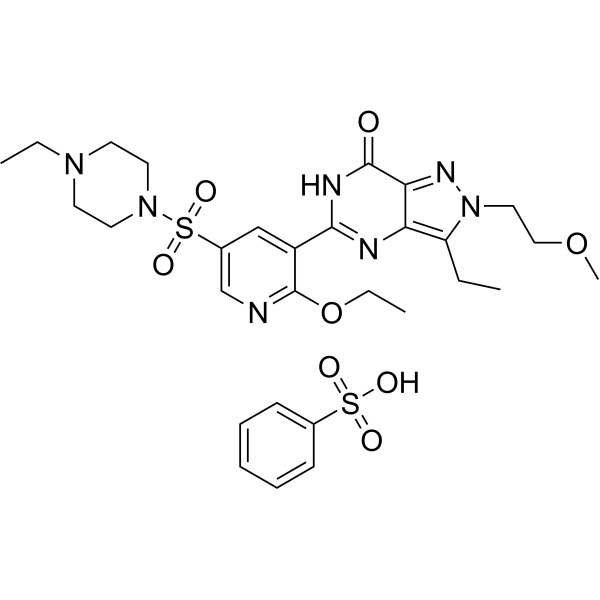
Gisadenafil besylate (UK 369003-26) is a specific, orally active phosphodiesterase 5 (PDE5) inhibitor with an IC50 of 3.6 nM and prevents degradation of cyclic guanosine monophosphate (cGMP) .
|
-
-
- HY-P2867
-
|
3′-Exonuclease
|
Phosphodiesterase (PDE)
|
Neurological Disease
|
|
Phosphodiesterase II (EC 3.1.16.1), namely phosphodiesterase 2, is mainly involved in the hydrolysis of the important second messengers cyclic adenosine monophosphate (cAMP) and cyclic guanosine monophosphate (cGMP), and is often used in biochemical research. Phosphodiesterase II is expressed in a variety of tissues, such as the adrenal medulla, brain, heart, platelets, macrophages and endothelial cells, and is involved in the regulation of many different intracellular processes .
|
-

-
- HY-114727
-
|
|
Phosphodiesterase (PDE)
|
Inflammation/Immunology
|
|
PDE7-IN-4 is a phosphodiesterase 7 (PDE7) inhibitor with activity that increases intracellular cyclic adenosine monophosphate (cAMP) levels. PDE7-IN-4 shows potential inhibitory effects in neurotransmission and anti-inflammatory applications. PDE7-IN-4 exerts its biological activity by acting on the cAMP/cAMP response element binding protein (CREB) pathway. The development of PDE7-IN-4 aims to improve its pharmacokinetic characteristics to more effectively target neurodegenerative diseases and other inflammation-related diseases .
|
-

-
- HY-159857
-
|
Gp(2′-5′)Ap(3′) sodium; 2'5'-GpAp sodium; Guanylyl-(2′→5′)-3′-adenylic acid sodium
|
Nucleoside Antimetabolite/Analog
|
|
|
Gp(2′-5′)Ap sodium is a linear dinucleotide analog after hydrolysis of cyclic guanosine monophosphate- adenosine monophosphate (2’3’-cGAMP) by phosphodiesterases. Due to its linear conformation, 2’5’GpAp is intended to serve as a negative control for 2’3’-cGAMP in type I IFN induction assays.
|
-

-
- HY-B0442AS
-
|
|
Endogenous Metabolite
Phosphodiesterase (PDE)
Isotope-Labeled Compounds
|
Metabolic Disease
Inflammation/Immunology
Endocrinology
|
|
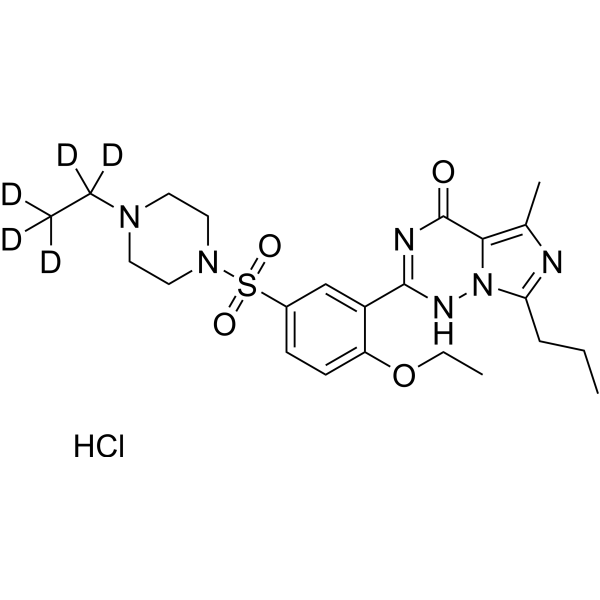
Vardenafil-d5 hydrochloride is deuterated labeled Vardenafil hydrochloride (HY-B0442A). Vardenafil hydrochloride is a selective and orally active inhibitor of phosphodiesterase-5 (PDE5), with an IC50 of 0.7 nM. Vardenafil hydrochloride shows inhibitory towards PDE1, PDE6 with IC50s of 180 nM, and 11 nM, while IC50s are >1000 nM for PDE3 and PDE4 . Vardenafil hydrochloride competitively inhibits cyclic guanosine monophosphate (cGMP) hydrolysis and thus increases cGMP levels . Vardenafil hydrochloride can be used for the research of erectile dysfunction, hepatitis, diabetes [1]-[6].
|
-
-
- HY-137108
-
|
|
PKA
PKG
|
Neurological Disease
|
|
Sp-8-pCPT-cGMPS is a potent cyclic guanosine monophosphate-gated channel agonist and a lipophilic activator of protein kinase G (types I α, I β, and II) and protein kinase A type II with excellent cell membrane permeability and phosphodiesterase stability. Sp-8-pCPT-cGMPS can be used to study the role of cGMP in neural plasticity and synaptic transmission .
|
-

-
- HY-N8209
-
-
-
- HY-P2781
-
-

-
- HY-136520A
-
|
|
Phosphodiesterase (PDE)
|
Metabolic Disease
|
|
(R)-Xanthoanthrafil is a phosphodiesterase-5 (PDE5) inhibitor. (R)-Xanthoanthrafil selectively inhibits PDE5, increasing cyclic guanosine monophosphate (cGMP) levels, leading to smooth muscle relaxation and promoting penile erection. (R)-Xanthoanthrafil can be used to study erectile dysfunction .
|
-

-
- HY-14841
-
|
UK-369003
|
Phosphodiesterase (PDE)
|
Neurological Disease
|
|
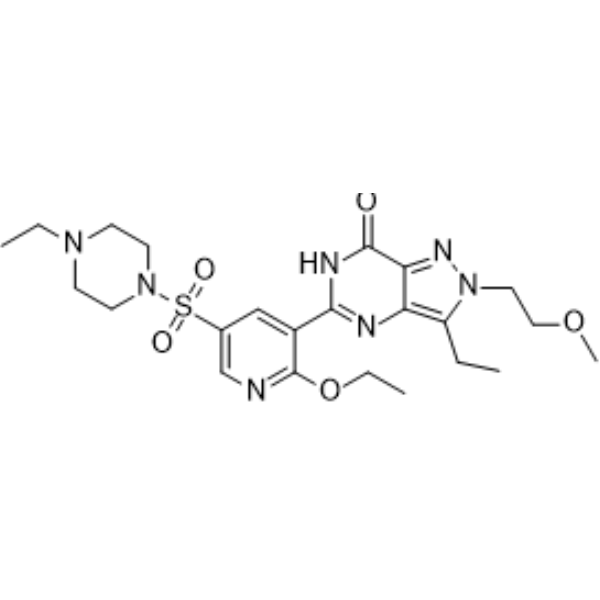
Gisadenafil (UK-369003) is a specific, orally active phosphodiesterase 5 (PDE5) inhibitor with an IC50 of 3.6 nM and prevents degradation of cyclic guanosine monophosphate (cGMP) .
|
-
-
- HY-115269
-
|
|
Phosphodiesterase (PDE)
|
Cardiovascular Disease
|
|
CK-2289 is an inhibitor of type III cyclic 3'5'-adenosine monophosphate phosphodiesterase (PDE). CK-2289 can inhibit platelet aggregation and decreases mean arterial blood pressure. CK-2289 can be used for the research of cardiovascular disease, such as congestive heart failure .
|
-

-
- HY-107022
-
|
|
Phosphodiesterase (PDE)
|
Neurological Disease
|
|
BMS-341400 is an orally active selective phosphodiesterase 5 (PDE5) inhibitor with an IC50 value of 0.3 nM. BMS-341400 reduces the degradation of cyclic guanosine monophosphate (cGMP), thereby enhancing nitric oxide (NO)-mediated relaxation of the smooth muscle of the corpus cavernosum and promoting erection. BMS-341400 can be used to study erectile dysfunction.
|
-

-
- HY-18252A
-
|
TA1790 dibenzenesulfonate
|
Phosphodiesterase (PDE)
NO Synthase
Endogenous Metabolite
|
Cardiovascular Disease
Endocrinology
|
|
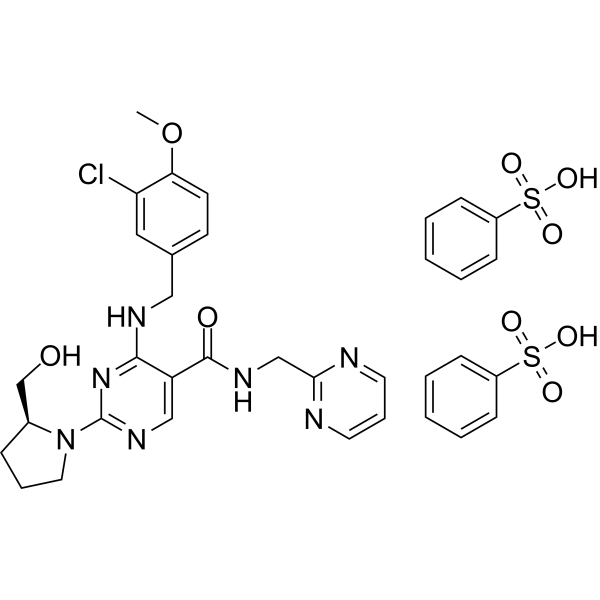
Avanafil (TA-1790) dibenzenesulfonate is a potent and selective phosphodiesterase-5 (PDE-5) inhibitor with IC50 values of 5.2 nM, 630 nM, 5700 nM, 6200 nM, 12000 nM, 27000 nM, 51000 nM and 53000 nM for PDE-5, PDE-6, PDE-4, PDE-10, PDE-8, PDE-7, PDE-2 and PDE-1, respectively. Avanafil dibenzenesulfonate activates NO/cGMP/PKG signaling-pathway to decrease loss in BMD, bone atrophy, and oxidative stress. Avanafil dibenzenesulfonate inhibits cyclic guanosine monophosphate (cGMP) hydrolysis and thus increases cGMP levels. Avanafil dibenzenesulfonate can be used for the research of erectile dysfunction and osteoporosis .
|
-
-
- HY-116850
-
|
EG626; Phthalazinol; SC-32840
|
Phosphodiesterase (PDE)
|
Neurological Disease
|
|
Oxagrelate is a specific inhibitor of cyclic adenosine monophosphate phosphodiesterase and exhibits concentration-dependent inhibition of collagen- and ADP-induced platelet aggregation in vitro .
|
-

-
- HY-N14662
-
|
7′-Desoxygriseolic acid
|
Phosphodiesterase (PDE)
|
Neurological Disease
|
|
Griseolic acid B (7′-Desoxygriseolic acid) has the activity of inhibiting cyclic adenosine monophosphate (cAMP) phosphodiesterase [EC 3.1.4.17] with an IC50 of 0.16 μM .
|
-

-
- HY-114643
-
|
(Rac)-IMR-687
|
Phosphodiesterase (PDE)
|
Cardiovascular Disease
|
|
(Rac)-Tovinontrine ((Rac)-IMR-687) is a phosphodiesterase 9 (PDE9) inhibitor that increases cyclic guanosine monophosphate (cGMP) levels. (Rac)-Tovinontrine is promising for research of thalassemia .
|
-

-
- HY-129210
-
|
|
Phosphodiesterase (PDE)
Potassium Channel
|
Cardiovascular Disease
|
|
KMUP-4, as a xanthine derivative with cGMP-enhancing activity, induces aortic relaxation through endothelium-dependent and independent mechanisms. KMUP-4 increases cytoplasmic cyclic guanosine monophosphate (cGMP) and cyclic adenosine monophosphate (cAMP) levels by inhibiting phosphodiesterases (PDEs) and activating K + channels. KMUP-4 can be used in the study of cardiovascular diseases .
|
-

-
- HY-120241
-
|
K 251-1
|
Phosphodiesterase (PDE)
|
Cancer
|
|
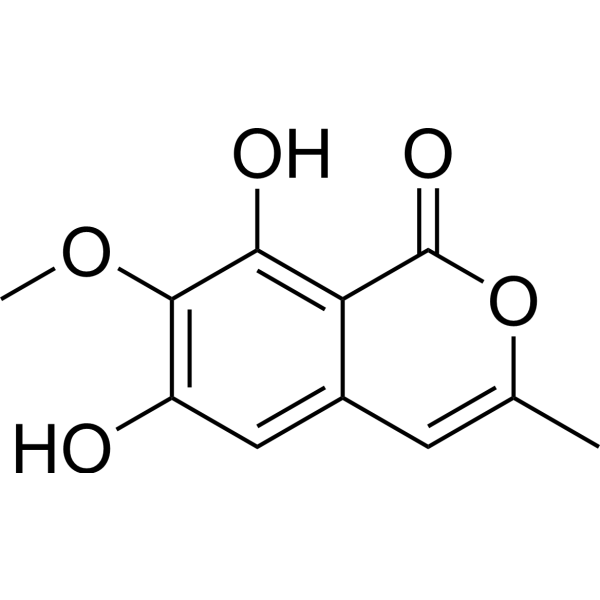
Reticulol (K 251-1) is an inhibitor of cyclic adenosine 3', 5'-monophosphate phosphodiesterase. Reticulol shows antitumor activity independent with cell cycle arrest or apoptosis. Reticulol inhibits cell growth of murine melanoma cells and human lung tumor cells. Reticulol protects its lung metastasis via the bloodstream by inhibiting the growth of B16F10 melanoma .
|
-
-
- HY-134283
-
|
|
PKA
Apoptosis
|
Others
|
|
8-Benzylthio-cAMP is a derivative of cyclic adenosine monophosphate (cAMP). 8-Bn-cAMP is a site-selective activator of cAMP-dependent protein kinases. Compared with cyclic adenosine monophosphate, it is more stable to phosphodiesterase (PDE) hydrolysis and has higher membrane permeability. 8-Bn-cAMP can be used to study the role of cAMP in regulating cell proliferation, differentiation and apoptosis .
|
-

-
- HY-16256
-
|
|
Phosphodiesterase (PDE)
|
Cardiovascular Disease
|
|
Amrinone lactate is a positive inotropic-vasodilator agent. Amrinone lactate is a selective phosphodiesterase III inhibitor that increases cyclic adenosine monophosphate by preventing its breakdown. Amrinone lactate is also an orally active, non-glycosidic and non-catecholamine cardiotonic agent .
|
-

-
- HY-147946
-
|
|
Phosphodiesterase (PDE)
Calcium Channel
|
Inflammation/Immunology
|
|
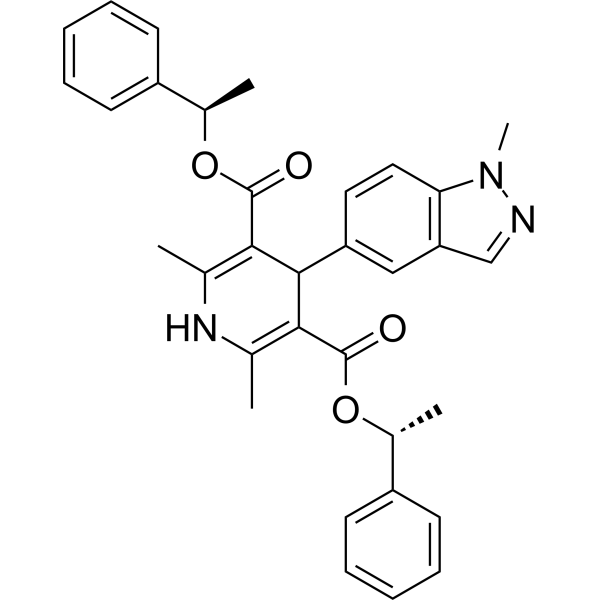
PDE1-IN-4 (compound 2g) is a potent and selective PDE1 (phosphodiesterase-1) inhibitor, with IC50 values of 10, 145, and 354 nM for PDE1C, PDE1A, and PDE1B, respectively. PDE1-IN-4 inhibits myofibroblast differentiation of human lung fibroblasts induced by TGF-β1. PDE1-IN-4 shows anti-fibrosis effects through the regulation of cAMP (3′,5′-cyclic adenosine monophosphate) and cGMP (3′,5′-cyclic guanosine monophosphate). PDE1-IN-4 can be used for idiopathic pulmonary fibrosis (IPF) research .
|
-
-
- HY-N14663
-
|
Dihydrodeoxygriseolic acid
|
Bacterial
|
Infection
|
|
Griseolic acid C (Dihydrodeoxygriseolic acid) is an antibiotic. Griseolic acid C can be found in Streptomyces griseoaurantiacus SANK43894. Griseolic acid C has the activity of inhibiting cyclic adenosine monophosphate (cAMP) phosphodiesterase [EC 3.1.4.17] with an IC50 of 0.12 μM (extracted from rat brain) .
|
-

-
- HY-B0442C
-
|
|
Endogenous Metabolite
Phosphodiesterase (PDE)
|
Metabolic Disease
Inflammation/Immunology
Endocrinology
Cancer
|
|
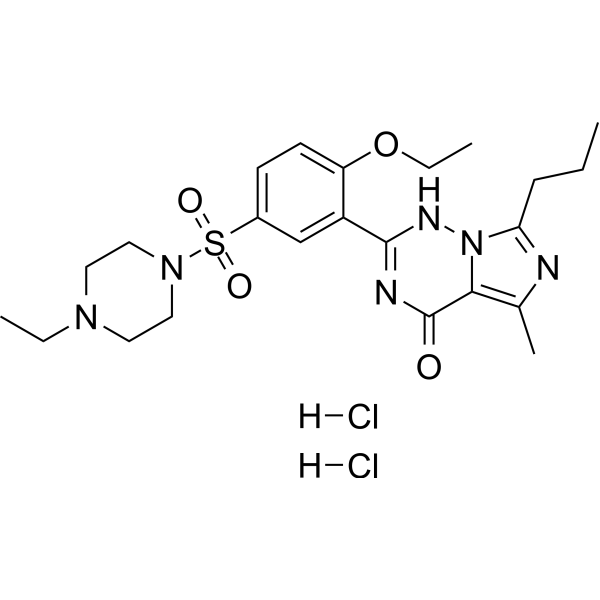
Vardenafil dihydrochloride is a selective and orally active inhibitor of phosphodiesterase-5 (PDE5), with an IC50 of 0.7 nM. Vardenafil dihydrochloride shows inhibitory towards PDE1, PDE6 with IC50s of 180 nM, and 11 nM respectively, while IC50s are >1000 nM for PDE3 and PDE4. Vardenafil dihydrochloride competitively inhibits cyclic guanosine monophosphate (cGMP) hydrolysis and thus increases cGMP levels. Vardenafil dihydrochloride can be used for the research of erectile dysfunction, hepatitis, diabetes - .
|
-
-
- HY-B0442S
-
|
|
Isotope-Labeled Compounds
Phosphodiesterase (PDE)
Endogenous Metabolite
|
Endocrinology
|
|
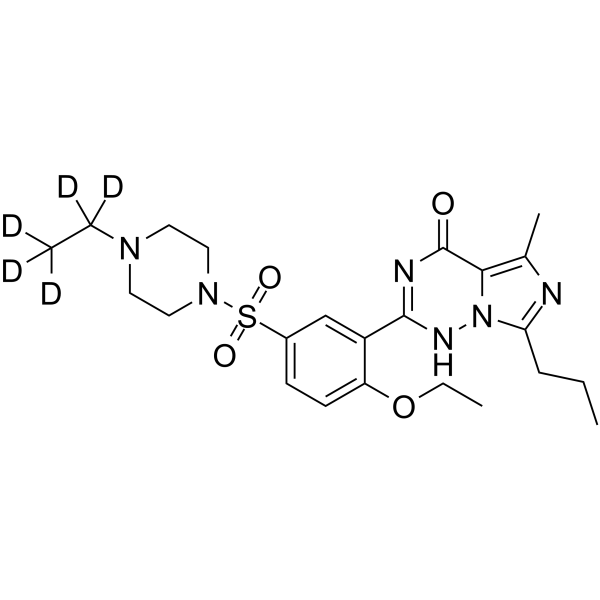
Vardenafil-d5 is deuterium labeled Vardenafil. Vardenafil is a selective, orally active, potent inhibitor of phosphodiesterase-5 (PDE5), with an IC50 of 0.7 nM. Vardenafil shows selectivity over PDE1 (180 nM), PDE6 (11 nM), PDE2, PDE3, and PDE4 (>1000 nM). Vardenafil competitively inhibits cyclic guanosine monophosphate (cGMP) hydrolysis and thus increases cGMP levels. Vardenafil can be used for the research of erectile dysfunction .
|
-
-
- HY-134325
-
|
8-Hydroxy-cAMP
|
PKA
|
Cardiovascular Disease
Metabolic Disease
|
|
8-OH-cAMP (8-Hydroxy-cAMP) is a polar, membrane-impermeable cyclic adenosine monophosphate analog that is resistant to mammalian cyclic nucleotide-dependent phosphodiesterases. As a polar PKA agonist, 8-OH-cAMP is used to study the role of cAMP in the development and progression of cardiovascular and metabolic diseases .
|
-

-
- HY-117715
-
|
|
Phosphodiesterase (PDE)
|
Cardiovascular Disease
|
|
CK-3197 is a weak inhibitor of Peak lll cyclic 3'5'-adenosine monophosphate phosphodiesterase
(CAMP PDEl). CK-3197 has hemodynamic and myocardial energetic effects in vivo. CK-3197 is an imidazolone derivative used as a selective positive inotropic agent for congestive heart failure .
|
-

-
- HY-B1294R
-
|
Inamrinone (Standard)
|
Reference Standards
Phosphodiesterase (PDE)
|
Cardiovascular Disease
|
|
Amrinone (Standard) is the analytical standard of Amrinone. This product is intended for research and analytical applications. Amrinone (Inamrinone) is a positive inotropic-vasodilator agent. Amrinone is a selective phosphodiesterase III inhibitor that increases cyclic adenosine monophosphate by preventing its breakdown. Amrinone is also an orally active, non-glycosidic and non-catecholamine cardiotonic agent .
|
-

-
- HY-108974S
-
|
|
Isotope-Labeled Compounds
Phosphodiesterase (PDE)
Calcium Channel
|
Neurological Disease
|
|
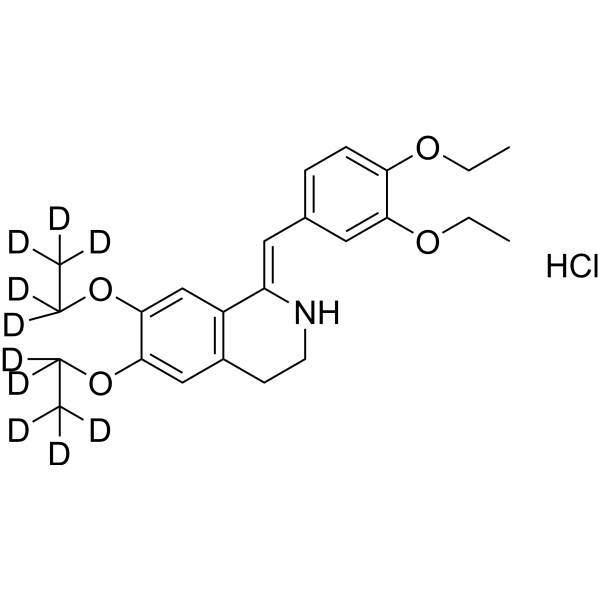
Drotaverine-d10 (hydrochloride) is the deuterium labeled Drotaverine hydrochloride. Drotaverine hydrochloride is a type 4 cyclic nucleotide phosphodiesterase (PDE4) inhibitor and an L-type voltage-dependent calcium channel (L-VDCC) blocker, blocks the degradation of 3',5'-cyclic adenosine monophosphate. Drotaverine hydrochloride exhibits in vivo antispasmodic efficacy without anticholinergic effects .
|
-
-
- HY-108974R
-
|
|
Phosphodiesterase (PDE)
Calcium Channel
Reference Standards
|
Neurological Disease
|
|
Drotaverine (hydrochloride) (Standard) is the analytical standard of Drotaverine (hydrochloride). This product is intended for research and analytical applications. Drotaverine hydrochloride is a type 4 cyclic nucleotide phosphodiesterase (PDE4) inhibitor and an L-type voltage-dependent calcium channel (L-VDCC) blocker, blocks the degradation of 3',5'-cyclic adenosine monophosphate. Drotaverine (hydrochloride) exhibits in vivo antispasmodic efficacy without anticholinergic effects.
|
-

-
- HY-107022A
-
|
|
Phosphodiesterase (PDE)
|
Neurological Disease
|
|
BMS-341400 mesylate is a selective phosphodiesterase 5 (PDE5) inhibitor with an IC50 value of 0.3 nM. BMS-341400 mesylate reduces the degradation of cyclic guanosine monophosphate (cGMP), thereby enhancing nitric oxide (NO)-mediated relaxation of the smooth muscle of the corpus cavernosum and promoting erection. BMS-341400 mesylate can be used to study erectile dysfunction .
|
-

-
- HY-B0442CR
-
|
|
Reference Standards
Endogenous Metabolite
Phosphodiesterase (PDE)
|
Metabolic Disease
Inflammation/Immunology
Endocrinology
Cancer
|
|
Vardenafil (dihydrochloride) (Standard) is the analytical standard of Vardenafil (dihydrochloride). This product is intended for research and analytical applications. Vardenafil dihydrochloride is a selective and orally active inhibitor of phosphodiesterase-5 (PDE5), with an IC50 of 0.7 nM. Vardenafil dihydrochloride shows inhibitory towards PDE1, PDE6 with IC50s of 180 nM, and 11 nM respectively, while IC50s are >1000 nM for PDE3 and PDE4. Vardenafil dihydrochloride competitively inhibits cyclic guanosine monophosphate (cGMP) hydrolysis and thus increases cGMP levels. Vardenafil dihydrochloride can be used for the research of erectile dysfunction, hepatitis, diabetes - .
|
-

-
- HY-B0442AR
-
|
|
Phosphodiesterase (PDE)
Endogenous Metabolite
Reference Standards
|
Metabolic Disease
Inflammation/Immunology
Endocrinology
Cancer
|
|
Vardenafil (hydrochloride) (Standard) is the analytical standard of Vardenafil (hydrochloride). This product is intended for research and analytical applications. Vardenafil hydrochloride is a selective and orally active inhibitor of phosphodiesterase-5 (PDE5), with an IC50 of 0.7 nM. Vardenafil hydrochloride shows inhibitory towards PDE1, PDE6 with IC50s of 180 nM, and 11 nM, while IC50s are >1000 nM for PDE3 and PDE4 . Vardenafil hydrochloride competitively inhibits cyclic guanosine monophosphate (cGMP) hydrolysis and thus increases cGMP levels . Vardenafil hydrochloride can be used for the research of erectile dysfunction, hepatitis, diabetes - .
|
-

-
- HY-B0442R
-
|
|
Reference Standards
Phosphodiesterase (PDE)
Endogenous Metabolite
|
Metabolic Disease
Inflammation/Immunology
Endocrinology
|
|
Vardenafil (Standard) is the analytical standard of Vardenafil. This product is intended for research and analytical applications. Vardenafil is a selective and orally active inhibitor of phosphodiesterase-5 (PDE5), with an IC50 of 0.7 nM. Vardenafil shows inhibitory towards PDE1, PDE6 with IC50s of 180 nM, and 11 nM, while IC50s are >1000 nM for PDE3 and PDE4 . Vardenafil competitively inhibits cyclic guanosine monophosphate (cGMP) hydrolysis and thus increases cGMP levels . Vardenafil can be used for the research of erectile dysfunction, hepatitis, diabetes [1]-[6].
|
-

-
- HY-W049735R
-
|
|
Drug Metabolite
Reference Standards
Endogenous Metabolite
|
Metabolic Disease
|
|
Vardenafil (dihydrochloride) (Standard) is the analytical standard of Vardenafil (dihydrochloride). This product is intended for research and analytical applications. Vardenafil dihydrochloride is a selective and orally active inhibitor of phosphodiesterase-5 (PDE5), with an IC50 of 0.7 nM. Vardenafil dihydrochloride shows inhibitory towards PDE1, PDE6 with IC50s of 180 nM, and 11 nM respectively, while IC50s are >1000 nM for PDE3 and PDE4. Vardenafil dihydrochloride competitively inhibits cyclic guanosine monophosphate (cGMP) hydrolysis and thus increases cGMP levels. Vardenafil dihydrochloride can be used for the research of erectile dysfunction, hepatitis, diabetes - .
|
-

-
- HY-B0442BR
-
|
|
Reference Standards
Endogenous Metabolite
Phosphodiesterase (PDE)
|
Metabolic Disease
Inflammation/Immunology
Endocrinology
|
|
Vardenafil (hydrochloride trihydrate) (Standard) is the analytical standard of Vardenafil (hydrochloride trihydrate). This product is intended for research and analytical applications. Vardenafil hydrochloride trihydrate is a selective and orally active inhibitor of phosphodiesterase-5 (PDE5), with an IC50 of 0.7 nM. Vardenafil hydrochloride trihydrate shows inhibitory towards PDE1, PDE6 with IC50s of 180 nM, and 11 nM, while IC50s are >1000 nM for PDE3 and PDE4 . Vardenafil hydrochloride trihydrate competitively inhibits cyclic guanosine monophosphate (cGMP) hydrolysis and thus increases cGMP levels . Vardenafil hydrochloride trihydrate can be used for the research of erectile dysfunction, hepatitis, diabetes - .
|
-

-
- HY-173360
-
|
|
Phosphodiesterase (PDE)
|
Cardiovascular Disease
|
|
PDE10A-IN-5 (Compound A30) is an inhibitor of phosphodiesterase 10A (PDE10A) with oral activity, and its IC50 value is 3.5 nM. PDE10A-IN-5 exerts the activity of inhibiting pulmonary vascular remodeling by inhibiting PDE10A and activating the cyclic adenosine monophosphate (cAMP)-associated signaling pathway, and can be used for research in the field of pulmonary arterial hypertension .
|
-

-
- HY-117181
-
|
|
Phosphodiesterase (PDE)
Adrenergic Receptor
|
Cardiovascular Disease
|
|
UK-1745 is a cardiotonic agent with vasodilating and antiarrhythmic properties. It increases intracellular levels of cyclic adenosine monophosphate (cAMP) in cardiomyocytes by inhibiting phosphodiesterase III, thereby enhancing myocardial contractility. Additionally, UK-1745 exhibits β-adrenergic receptor blocking activity, which helps reduce the oxygen consumption of the heart and prevent calcium overload. These characteristics make UK-1745 a promising candidate for research in congestive heart failure .
|
-

-
- HY-18252R
-
|
TA1790 (Standard)
|
Reference Standards
Phosphodiesterase (PDE)
NO Synthase
Endogenous Metabolite
|
Cardiovascular Disease
Endocrinology
|
|
Avanafil (Standard) is the analytical standard of Avanafil. This product is intended for research and analytical applications. Avanafil (TA-1790) is a potent and selective phosphodiesterase-5 (PDE-5) inhibitor with IC50 values of 5.2 nM, 630 nM, 5700 nM, 6200 nM, 12000 nM, 27000 nM, 51000 nM and 53000 nM for PDE-5, PDE-6, PDE-4, PDE-10, PDE-8, PDE-7, PDE-2 and PDE-1, respectively. Avanafil activates NO/cGMP/PKG signaling-pathway to decrease loss in BMD, bone atrophy, and oxidative stress. Avanafil inhibits cyclic guanosine monophosphate (cGMP) hydrolysis and thus increases cGMP levels. Avanafil can be used for the research of erectile dysfunction and osteoporosis .
|
-

-
- HY-117803
-
|
OSI-461 free base
|
Apoptosis
|
Cancer
|
|
CP 461 free base (OSI-461 free base) is a novel pro-apoptotic compound with the activity of inhibiting cyclic guanosine monophosphate phosphodiesterase. CP 461 free base exhibits growth inhibitory activity against a variety of human tumor cell lines in vitro. CP 461 free base selectively induces apoptosis in cancer cell lines but has no effect on normal cells. CP 461 free base can be used in the study of renal cell carcinoma, prostate cancer and Crohn's disease .
|
-

-
- HY-18252S3
-
|
TA1790-13C5
|
Isotope-Labeled Compounds
Endogenous Metabolite
Phosphodiesterase (PDE)
NO Synthase
|
Cardiovascular Disease
Endocrinology
|
|
Avanafil- 13C5 (TA1790- 13C5) is 13C labeled Avanafil. Avanafil (TA-1790) is a potent and selective phosphodiesterase-5 (PDE-5) inhibitor with IC50 values of 5.2 nM, 630 nM, 5700 nM, 6200 nM, 12000 nM, 27000 nM, 51000 nM and 53000 nM for PDE-5, PDE-6, PDE-4, PDE-10, PDE-8, PDE-7, PDE-2 and PDE-1, respectively. Avanafil activates NO/cGMP/PKG signaling-pathway to decrease loss in BMD, bone atrophy, and oxidative stress. Avanafil inhibits cyclic guanosine monophosphate (cGMP) hydrolysis and thus increases cGMP levels. Avanafil can be used for the research of erectile dysfunction and osteoporosis .
|
-

-
- HY-18252S1
-
|
|
Endogenous Metabolite
NO Synthase
Phosphodiesterase (PDE)
Isotope-Labeled Compounds
|
Cardiovascular Disease
Endocrinology
|
|
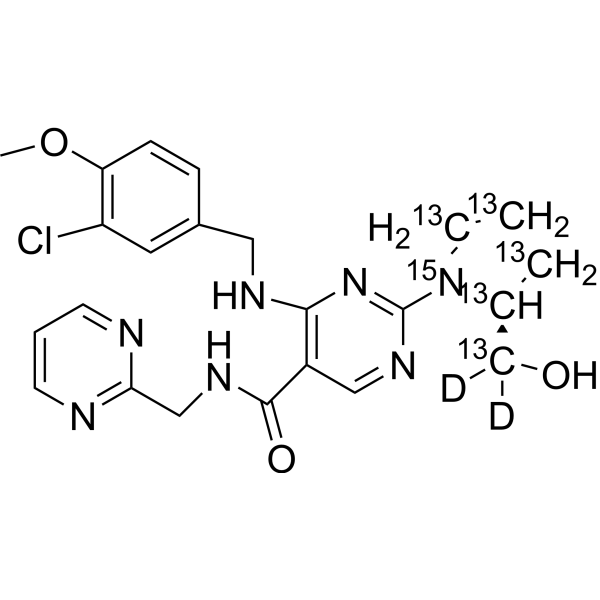
Avanafil- 13C5, 15N,d2 is 15N and deuterated labeled Avanafil (HY-18252). Avanafil (TA-1790) is a potent and selective phosphodiesterase-5 (PDE-5) inhibitor with IC50 values of 5.2 nM, 630 nM, 5700 nM, 6200 nM, 12000 nM, 27000 nM, 51000 nM and 53000 nM for PDE-5, PDE-6, PDE-4, PDE-10, PDE-8, PDE-7, PDE-2 and PDE-1, respectively. Avanafil activates NO/cGMP/PKG signaling-pathway to decrease loss in BMD, bone atrophy, and oxidative stress. Avanafil inhibits cyclic guanosine monophosphate (cGMP) hydrolysis and thus increases cGMP levels. Avanafil can be used for the research of erectile dysfunction and osteoporosis .
|
-
-
- HY-105349
-
|
|
Phosphodiesterase (PDE)
|
Neurological Disease
|
|
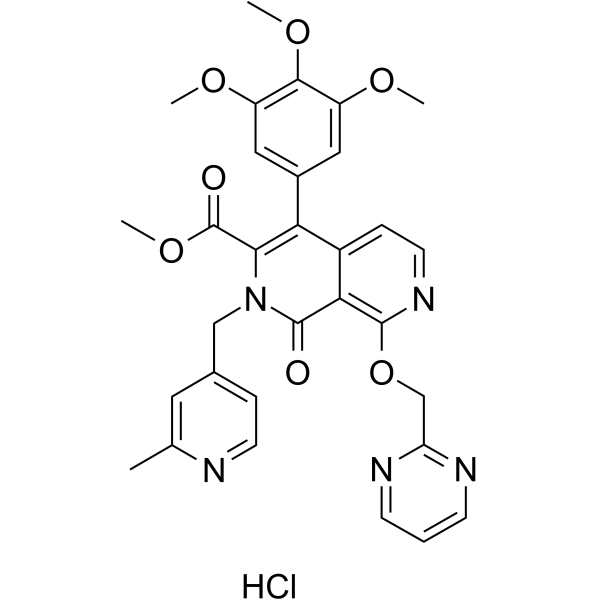
T-0156 is a potent and selective phosphodiesterase type 5 (PDE5) inhibitor. T-0156 specifically inhibits the hydrolysis of cyclic guanosine monophosphate (cGMP) by PDE5 in a competitive manner (IC50=0.23 nM). T-0156 inhibits PDE6 (IC50=56 nM) and has low potencies against PDE1, PDE2, PDE3, and PDE4 (IC50>10 μM). T-0156 enhances the nitric oxide (NO)/cGMP pathway .
|
-
-
- HY-164685
-
|
|
Phosphodiesterase (PDE)
|
Neurological Disease
|
|
T-0156 free base is a potent and selective phosphodiesterase type 5 (PDE5) inhibitor. T-0156 free base specifically inhibits the hydrolysis of cyclic guanosine monophosphate (cGMP) by PDE5 in a competitive manner (IC50=0.23 nM). T-0156 free base inhibits PDE6 (IC50=56 nM) and has low potencies against PDE1, PDE2, PDE3, and PDE4 (IC50>10 μM). T-0156 free base enhances the nitric oxide (NO)/cGMP pathway .
|
-

- HY-106483
-
|
TVX 2706
|
Phosphodiesterase (PDE)
|
Neurological Disease
Inflammation/Immunology
|
|
Nitraquazone (TVX 2706) is an anti-inflammatory and analgesic agent, belonging to the derivatives of Phenylbutazone (HY-B0230). Nitraquazone inhibits phosphodiesterase and enhances the elevation of intracellular cyclic adenosine monophosphate levels. Nitraquazone can be used in research related to anti-inflammation and analgesia .
|
-

- HY-14841S
-
|
UK-369003-d5
|
Isotope-Labeled Compounds
Phosphodiesterase (PDE)
|
Neurological Disease
|
|
Gisadenafil-d5 (UK-369003-d5) is the deuterium labeled Gisadenafil (HY-14841). Gisadenafil (UK-369003) is a specific, orally active phosphodiesterase 5 (PDE5) inhibitor with an IC50 of 3.6 nM and prevents degradation of cyclic guanosine monophosphate (cGMP) .
|
-

- HY-113972R
-
|
|
Reference Standards
Others
|
Inflammation/Immunology
|
|
Avanafil (Standard) is the analytical standard of Avanafil. This product is intended for research and analytical applications. Avanafil (TA-1790) is a potent and selective phosphodiesterase-5 (PDE-5) inhibitor with IC50 values of 5.2 nM, 630 nM, 5700 nM, 6200 nM, 12000 nM, 27000 nM, 51000 nM and 53000 nM for PDE-5, PDE-6, PDE-4, PDE-10, PDE-8, PDE-7, PDE-2 and PDE-1, respectively. Avanafil activates NO/cGMP/PKG signaling-pathway to decrease loss in BMD, bone atrophy, and oxidative stress. Avanafil inhibits cyclic guanosine monophosphate (cGMP) hydrolysis and thus increases cGMP levels. Avanafil can be used for the research of erectile dysfunction and osteoporosis .
|
-

- HY-105931
-
|
RS-82856
|
Phosphodiesterase (PDE)
|
Cardiovascular Disease
Endocrinology
|
|
Lixazinone (RS-82856) is a selective inhibitor of cGMP-inhibited phosphodiesterase (PDE3) with an IC50 value of 22 nM. Lixazinone exhibits positive inotropic effects, afterload reduction and antithrombotic properties. Lixazinone increases cyclic adenosine monophosphate (cAMP) levels in human platelets, inhibits thrombin-induced aggregation of human platelets, and blocks the photolabeling of PDE3 active sites by [ 32P]cGMP. Lixazinone can be used in the research of polycystic kidney disease and congestive heart failure .
|
-

- HY-113822
-
|
RS-82856 hydrogensulfate
|
Phosphodiesterase (PDE)
|
Cardiovascular Disease
Endocrinology
|
|
Lixazinone (RS-82856) hydrogensulfate is a selective inhibitor of cGMP-inhibited phosphodiesterase (PDE3) with an IC50 value of 22 nM. Lixazinone hydrogensulfate exhibits positive inotropic effects, afterload reduction and antithrombotic properties. Lixazinone hydrogensulfate increases cyclic adenosine monophosphate (cAMP) levels in human platelets, inhibits thrombin-induced aggregation of human platelets, and blocks the photolabeling of PDE3 active sites by [ 32P]cGMP. Lixazinone hydrogensulfate can be used in the research of polycystic kidney disease and congestive heart failure .
|
-

| Cat. No. |
상품명 |
Category |
Target |
Chemical Structure |
-
- HY-B0442
-
-
-
- HY-18252
-
|
TA1790
|
Cardiovascular Disease
Natural Products
Classification of Application Fields
Endogenous metabolite
Disease Research Fields
Endocrinology
Source Classification
|
Phosphodiesterase (PDE)
NO Synthase
Endogenous Metabolite
|
|
Avanafil (TA-1790) is a potent and selective phosphodiesterase-5 (PDE-5) inhibitor with IC50 values of 5.2 nM, 630 nM, 5700 nM, 6200 nM, 12000 nM, 27000 nM, 51000 nM and 53000 nM for PDE-5, PDE-6, PDE-4, PDE-10, PDE-8, PDE-7, PDE-2 and PDE-1, respectively. Avanafil activates NO/cGMP/PKG signaling-pathway to decrease loss in BMD, bone atrophy, and oxidative stress. Avanafil inhibits cyclic guanosine monophosphate (cGMP) hydrolysis and thus increases cGMP levels. Avanafil can be used for the research of erectile dysfunction and osteoporosis .
|
-
-
- HY-B0442A
-
-
-
- HY-B0442B
-
-
-
- HY-N8209
-
-
-
- HY-18252A
-
|
TA1790 dibenzenesulfonate
|
Cardiovascular Disease
Natural Products
Classification of Application Fields
Endogenous metabolite
Disease Research Fields
Endocrinology
Source Classification
|
Phosphodiesterase (PDE)
NO Synthase
Endogenous Metabolite
|
|
Avanafil (TA-1790) dibenzenesulfonate is a potent and selective phosphodiesterase-5 (PDE-5) inhibitor with IC50 values of 5.2 nM, 630 nM, 5700 nM, 6200 nM, 12000 nM, 27000 nM, 51000 nM and 53000 nM for PDE-5, PDE-6, PDE-4, PDE-10, PDE-8, PDE-7, PDE-2 and PDE-1, respectively. Avanafil dibenzenesulfonate activates NO/cGMP/PKG signaling-pathway to decrease loss in BMD, bone atrophy, and oxidative stress. Avanafil dibenzenesulfonate inhibits cyclic guanosine monophosphate (cGMP) hydrolysis and thus increases cGMP levels. Avanafil dibenzenesulfonate can be used for the research of erectile dysfunction and osteoporosis .
|
-
-
- HY-N14662
-
-
-
- HY-120241
-
|
K 251-1
|
Microorganisms
Phenols
Polyphenols
Source Classification
|
Phosphodiesterase (PDE)
|
|
Reticulol (K 251-1) is an inhibitor of cyclic adenosine 3', 5'-monophosphate phosphodiesterase. Reticulol shows antitumor activity independent with cell cycle arrest or apoptosis. Reticulol inhibits cell growth of murine melanoma cells and human lung tumor cells. Reticulol protects its lung metastasis via the bloodstream by inhibiting the growth of B16F10 melanoma .
|
-
-
- HY-N14663
-
|
Dihydrodeoxygriseolic acid
|
Microorganisms
Ketones, Aldehydes, Acids
Source Classification
|
Bacterial
|
|
Griseolic acid C (Dihydrodeoxygriseolic acid) is an antibiotic. Griseolic acid C can be found in Streptomyces griseoaurantiacus SANK43894. Griseolic acid C has the activity of inhibiting cyclic adenosine monophosphate (cAMP) phosphodiesterase [EC 3.1.4.17] with an IC50 of 0.12 μM (extracted from rat brain) .
|
-
-
- HY-B0442C
-
-
-
- HY-B0442CR
-
|
|
Structural Classification
Natural Products
Endogenous metabolite
Source Classification
|
Reference Standards
Endogenous Metabolite
Phosphodiesterase (PDE)
|
|
Vardenafil (dihydrochloride) (Standard) is the analytical standard of Vardenafil (dihydrochloride). This product is intended for research and analytical applications. Vardenafil dihydrochloride is a selective and orally active inhibitor of phosphodiesterase-5 (PDE5), with an IC50 of 0.7 nM. Vardenafil dihydrochloride shows inhibitory towards PDE1, PDE6 with IC50s of 180 nM, and 11 nM respectively, while IC50s are >1000 nM for PDE3 and PDE4. Vardenafil dihydrochloride competitively inhibits cyclic guanosine monophosphate (cGMP) hydrolysis and thus increases cGMP levels. Vardenafil dihydrochloride can be used for the research of erectile dysfunction, hepatitis, diabetes - .
|
-
-
- HY-B0442AR
-
|
|
Structural Classification
Natural Products
Endogenous metabolite
Source Classification
|
Phosphodiesterase (PDE)
Endogenous Metabolite
Reference Standards
|
|
Vardenafil (hydrochloride) (Standard) is the analytical standard of Vardenafil (hydrochloride). This product is intended for research and analytical applications. Vardenafil hydrochloride is a selective and orally active inhibitor of phosphodiesterase-5 (PDE5), with an IC50 of 0.7 nM. Vardenafil hydrochloride shows inhibitory towards PDE1, PDE6 with IC50s of 180 nM, and 11 nM, while IC50s are >1000 nM for PDE3 and PDE4 . Vardenafil hydrochloride competitively inhibits cyclic guanosine monophosphate (cGMP) hydrolysis and thus increases cGMP levels . Vardenafil hydrochloride can be used for the research of erectile dysfunction, hepatitis, diabetes - .
|
-
-
- HY-B0442R
-
-
-
- HY-W049735R
-
|
|
Monophenols
Phenols
Endogenous metabolite
Source Classification
|
Drug Metabolite
Reference Standards
Endogenous Metabolite
|
|
Vardenafil (dihydrochloride) (Standard) is the analytical standard of Vardenafil (dihydrochloride). This product is intended for research and analytical applications. Vardenafil dihydrochloride is a selective and orally active inhibitor of phosphodiesterase-5 (PDE5), with an IC50 of 0.7 nM. Vardenafil dihydrochloride shows inhibitory towards PDE1, PDE6 with IC50s of 180 nM, and 11 nM respectively, while IC50s are >1000 nM for PDE3 and PDE4. Vardenafil dihydrochloride competitively inhibits cyclic guanosine monophosphate (cGMP) hydrolysis and thus increases cGMP levels. Vardenafil dihydrochloride can be used for the research of erectile dysfunction, hepatitis, diabetes - .
|
-
-
- HY-B0442BR
-
|
|
Structural Classification
Natural Products
Endogenous metabolite
Source Classification
|
Reference Standards
Endogenous Metabolite
Phosphodiesterase (PDE)
|
|
Vardenafil (hydrochloride trihydrate) (Standard) is the analytical standard of Vardenafil (hydrochloride trihydrate). This product is intended for research and analytical applications. Vardenafil hydrochloride trihydrate is a selective and orally active inhibitor of phosphodiesterase-5 (PDE5), with an IC50 of 0.7 nM. Vardenafil hydrochloride trihydrate shows inhibitory towards PDE1, PDE6 with IC50s of 180 nM, and 11 nM, while IC50s are >1000 nM for PDE3 and PDE4 . Vardenafil hydrochloride trihydrate competitively inhibits cyclic guanosine monophosphate (cGMP) hydrolysis and thus increases cGMP levels . Vardenafil hydrochloride trihydrate can be used for the research of erectile dysfunction, hepatitis, diabetes - .
|
-
-
- HY-18252R
-
|
TA1790 (Standard)
|
Structural Classification
Natural Products
Endogenous metabolite
Source Classification
|
Reference Standards
Phosphodiesterase (PDE)
NO Synthase
Endogenous Metabolite
|
|
Avanafil (Standard) is the analytical standard of Avanafil. This product is intended for research and analytical applications. Avanafil (TA-1790) is a potent and selective phosphodiesterase-5 (PDE-5) inhibitor with IC50 values of 5.2 nM, 630 nM, 5700 nM, 6200 nM, 12000 nM, 27000 nM, 51000 nM and 53000 nM for PDE-5, PDE-6, PDE-4, PDE-10, PDE-8, PDE-7, PDE-2 and PDE-1, respectively. Avanafil activates NO/cGMP/PKG signaling-pathway to decrease loss in BMD, bone atrophy, and oxidative stress. Avanafil inhibits cyclic guanosine monophosphate (cGMP) hydrolysis and thus increases cGMP levels. Avanafil can be used for the research of erectile dysfunction and osteoporosis .
|
-
-
- HY-113972R
-
|
|
Structural Classification
Monophenols
Microorganisms
Marine natural products
Phenols
Marine microorganism
|
Reference Standards
Others
|
|
Avanafil (Standard) is the analytical standard of Avanafil. This product is intended for research and analytical applications. Avanafil (TA-1790) is a potent and selective phosphodiesterase-5 (PDE-5) inhibitor with IC50 values of 5.2 nM, 630 nM, 5700 nM, 6200 nM, 12000 nM, 27000 nM, 51000 nM and 53000 nM for PDE-5, PDE-6, PDE-4, PDE-10, PDE-8, PDE-7, PDE-2 and PDE-1, respectively. Avanafil activates NO/cGMP/PKG signaling-pathway to decrease loss in BMD, bone atrophy, and oxidative stress. Avanafil inhibits cyclic guanosine monophosphate (cGMP) hydrolysis and thus increases cGMP levels. Avanafil can be used for the research of erectile dysfunction and osteoporosis .
|
-
| Cat. No. |
상품명 |
Chemical Structure |
-
- HY-B0442AS
-
|
|
|
Vardenafil-d5 hydrochloride is deuterated labeled Vardenafil hydrochloride (HY-B0442A). Vardenafil hydrochloride is a selective and orally active inhibitor of phosphodiesterase-5 (PDE5), with an IC50 of 0.7 nM. Vardenafil hydrochloride shows inhibitory towards PDE1, PDE6 with IC50s of 180 nM, and 11 nM, while IC50s are >1000 nM for PDE3 and PDE4 . Vardenafil hydrochloride competitively inhibits cyclic guanosine monophosphate (cGMP) hydrolysis and thus increases cGMP levels . Vardenafil hydrochloride can be used for the research of erectile dysfunction, hepatitis, diabetes [1]-[6].
|
-
-
- HY-B0442S
-
|
|
|
Vardenafil-d5 is deuterium labeled Vardenafil. Vardenafil is a selective, orally active, potent inhibitor of phosphodiesterase-5 (PDE5), with an IC50 of 0.7 nM. Vardenafil shows selectivity over PDE1 (180 nM), PDE6 (11 nM), PDE2, PDE3, and PDE4 (>1000 nM). Vardenafil competitively inhibits cyclic guanosine monophosphate (cGMP) hydrolysis and thus increases cGMP levels. Vardenafil can be used for the research of erectile dysfunction .
|
-
-
- HY-108974S
-
|
|
|
Drotaverine-d10 (hydrochloride) is the deuterium labeled Drotaverine hydrochloride. Drotaverine hydrochloride is a type 4 cyclic nucleotide phosphodiesterase (PDE4) inhibitor and an L-type voltage-dependent calcium channel (L-VDCC) blocker, blocks the degradation of 3',5'-cyclic adenosine monophosphate. Drotaverine hydrochloride exhibits in vivo antispasmodic efficacy without anticholinergic effects .
|
-
-
- HY-18252S3
-
|
|
|
Avanafil- 13C5 (TA1790- 13C5) is 13C labeled Avanafil. Avanafil (TA-1790) is a potent and selective phosphodiesterase-5 (PDE-5) inhibitor with IC50 values of 5.2 nM, 630 nM, 5700 nM, 6200 nM, 12000 nM, 27000 nM, 51000 nM and 53000 nM for PDE-5, PDE-6, PDE-4, PDE-10, PDE-8, PDE-7, PDE-2 and PDE-1, respectively. Avanafil activates NO/cGMP/PKG signaling-pathway to decrease loss in BMD, bone atrophy, and oxidative stress. Avanafil inhibits cyclic guanosine monophosphate (cGMP) hydrolysis and thus increases cGMP levels. Avanafil can be used for the research of erectile dysfunction and osteoporosis .
|
-
-
- HY-18252S1
-
|
|
|
Avanafil- 13C5, 15N,d2 is 15N and deuterated labeled Avanafil (HY-18252). Avanafil (TA-1790) is a potent and selective phosphodiesterase-5 (PDE-5) inhibitor with IC50 values of 5.2 nM, 630 nM, 5700 nM, 6200 nM, 12000 nM, 27000 nM, 51000 nM and 53000 nM for PDE-5, PDE-6, PDE-4, PDE-10, PDE-8, PDE-7, PDE-2 and PDE-1, respectively. Avanafil activates NO/cGMP/PKG signaling-pathway to decrease loss in BMD, bone atrophy, and oxidative stress. Avanafil inhibits cyclic guanosine monophosphate (cGMP) hydrolysis and thus increases cGMP levels. Avanafil can be used for the research of erectile dysfunction and osteoporosis .
|
-
-
- HY-14841S
-
|
|
|
Gisadenafil-d5 (UK-369003-d5) is the deuterium labeled Gisadenafil (HY-14841). Gisadenafil (UK-369003) is a specific, orally active phosphodiesterase 5 (PDE5) inhibitor with an IC50 of 3.6 nM and prevents degradation of cyclic guanosine monophosphate (cGMP) .
|
-
| Cat. No. |
상품명 |
|
Classification |
-
- HY-159857
-
|
Gp(2′-5′)Ap(3′) sodium; 2'5'-GpAp sodium; Guanylyl-(2′→5′)-3′-adenylic acid sodium
|
|
Nucleotide Analogs
|
|
Gp(2′-5′)Ap sodium is a linear dinucleotide analog after hydrolysis of cyclic guanosine monophosphate- adenosine monophosphate (2’3’-cGAMP) by phosphodiesterases. Due to its linear conformation, 2’5’GpAp is intended to serve as a negative control for 2’3’-cGAMP in type I IFN induction assays.
|
Your information is safe with us. * Required Fields.
Inquiry Information
- 상품명:
- Cat. No.:
- 수량:
- MCE Japan Authorized Agent:








