
Search Result
Results for "
Cathepsin K
" in MedChemExpress (MCE) Product Catalog:
1
Isotope-Labeled Compounds
| Cat. No. |
Product Name |
Target |
Research Areas |
Chemical Structure |
-
- HY-100223
-
-
-
- HY-10042
-
|
MK-0822
|
Cathepsin
|
Metabolic Disease
Cancer
|
|
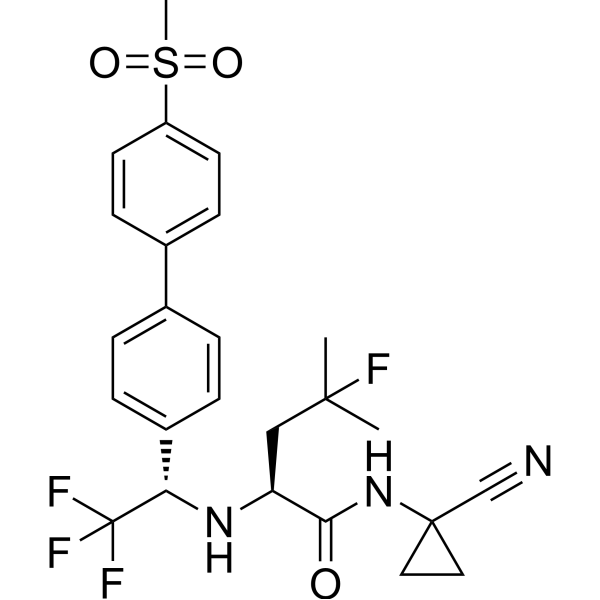
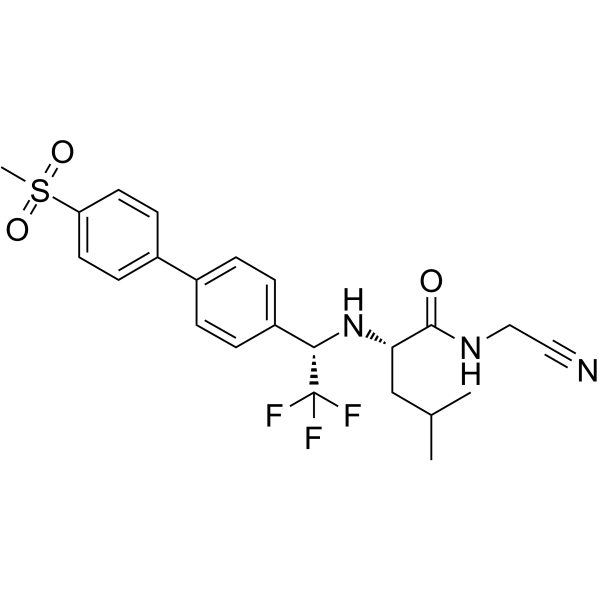
Odanacatib (MK-0822) is a potent and selective inhibitor of cathepsin K, with an IC50 of 0.2 nM for human cathepsin K.
|
-
-
- HY-119293
-
K777
3 Publications Verification
|
Cathepsin
Cytochrome P450
Parasite
SARS-CoV
Filovirus
|
Infection
Inflammation/Immunology
Cancer
|
|
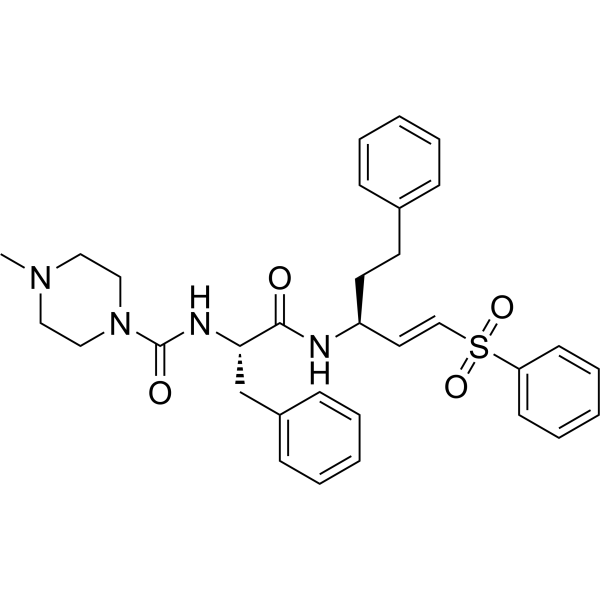
K777 is a potent, orally active and irreversible cysteine protease inhibitor. K777 is also a potent CYP3A4 inhibitor with an IC50 of 60 nM. K777 irreversibly inhibits Cruzain, the major cysteine protease of Trypansoma cruzi, and cathepsins B and L. K777 is a broad-spectrum antiviral by targeting cathepsin-mediated cell entry. K777 inhibits SARS-CoV and EBOV pseudovirus entry with IC50 values of 0.68 nM and 0.87 nM, respectively .
|
-
-
- HY-15100
-
|
AAE581
|
Cathepsin
|
Inflammation/Immunology
|
|
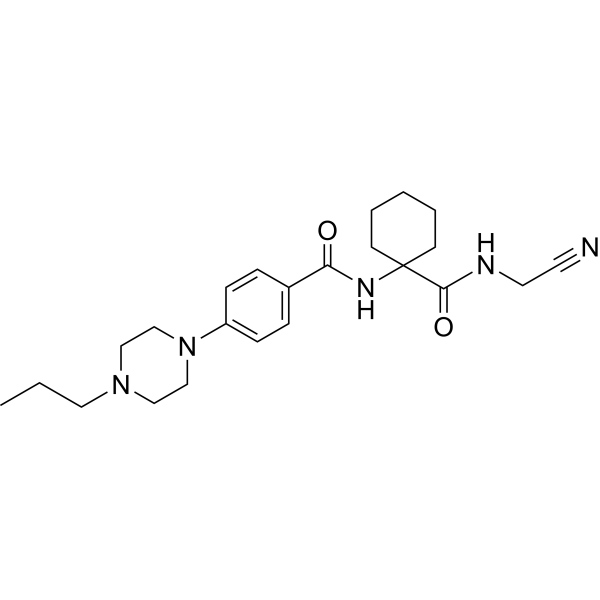
Balicatib (AAE581) is a potent, orally active and selective cathepsin K inhibitor with IC50 values of 22, 61, 48, 2900 nM for cathepsin K, cathepsin B, cathepsin L, cathepsin S, respectively. Balicatib inhibits bone turnover, decreases bone formation rates. Balicatib has the potential for the research of osteoporosis .
|
-
-
- HY-P4373A
-
|
|
Cathepsin
MMP
|
Inflammation/Immunology
|
|
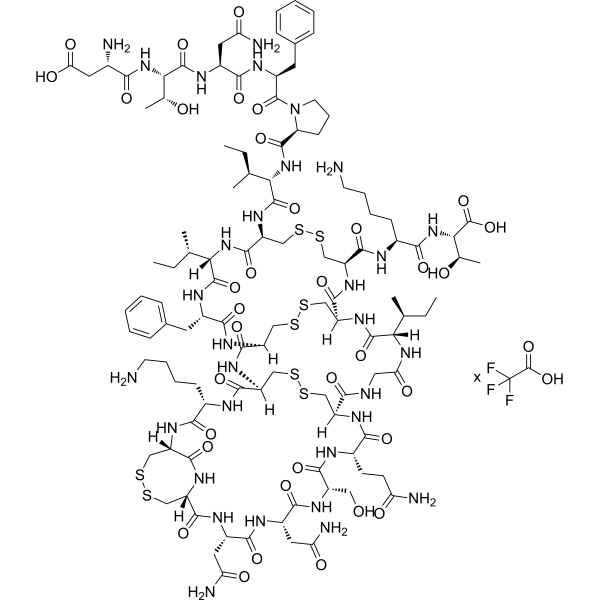
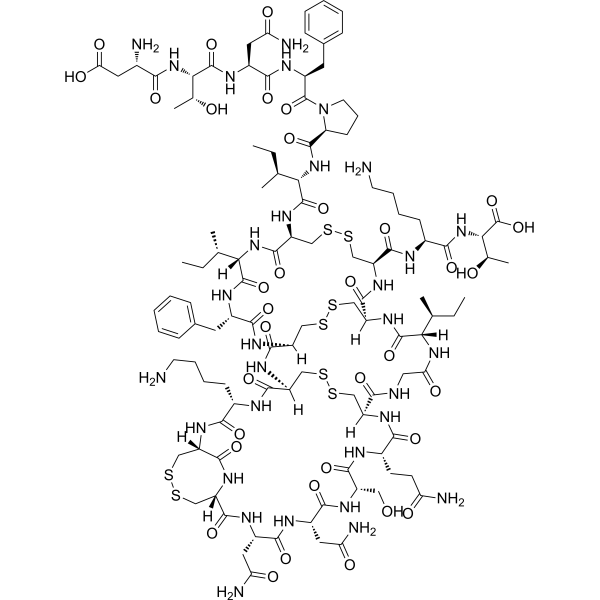
Hepcidin-1 (mouse) TFA is an endogenous peptide hormone involved in the regulation of iron homeostasis. Hepcidin-1 (mouse) TFA upregulates mRNA levels of TRAP, cathepsin K, and MMP-9 and increases TRAP-5b protein secretion. Hepcidin-1 (mouse) TFA downregulates the level of FPN1 protein and increases intracellular iron. Hepcidin-1 (mouse) TFA facilitates osteoclast differentiation .
|
-
-
- HY-103352
-
|
L-235
|
Cathepsin
|
Metabolic Disease
|
|
L-006235 (L-235) is a potent, selective, reversible and orally active inhibitor of cathepsin K, with an IC50 of 5 nM in bone resorption assay. L-006235 shows selectivity for cathepsin K (Ki=0.2 nM) over cathepsin B, cathepsin L, and cathepsin S (Ki=1, 6, and 47 μM, respectively). L-006235 can reduce collagen degradation and prevent bone loss .
|
-
-
- HY-142021
-
|
|
Cathepsin
Parasite
|
Infection
Inflammation/Immunology
|
|
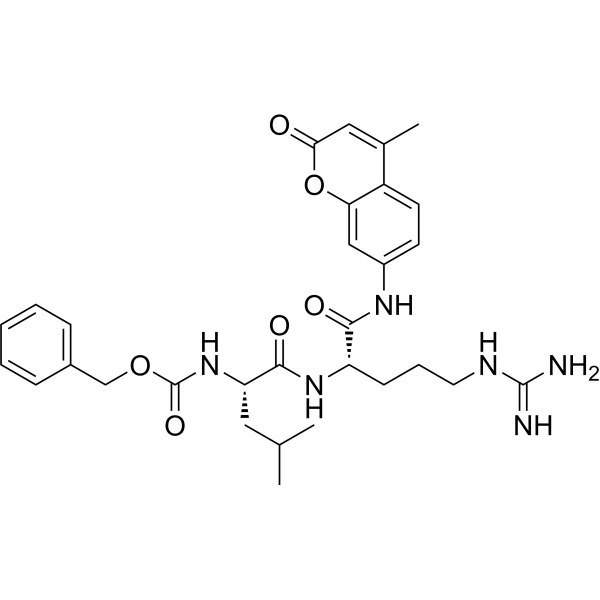
Z-Leu-Arg-AMC is a fluorogenic peptide substrate for cysteine proteases (e.g., Cathepsin) (Ex=350 nm,Em=460 nm). Z-Leu-Arg-AMC is preferentially cleaved by Cathepsin K and S under weakly acidic conditions, while its hydrolysis relies on residual Cathepsin S activity at neutral pH. Z-Leu-Arg-AMC serves as a substrate for recombinant Sphenophorus levis Cathepsin L, falcipain-2, falcipain-3, berghepain-2, knowlepain-2, vivapain-2, as well as falcipain-2 chimeras and constructs. It enables quantitative detection of cysteine protease activity in human inflammatory bronchoalveolar lavage fluid via fluorescence generation. Z-Leu-Arg-AMC can be used in research related to pulmonary inflammatory diseases and malaria .
|
-
-
- HY-146584
-
|
|
Cathepsin
|
Inflammation/Immunology
|
|
Cathepsin C-IN-5 (compound SF38) is a potent, selective and orally active Cathepsin C inhibitor with IC50s of 59.9 nM, 4.26 µM, >5 µM, >5 µM, >5 µM for Cat C, Cat L, Cat S, Cat B, Cat K, respectively. Cathepsin C-IN-5 inhibits the Cat C activity in bone marrow and blood. Cathepsin C-IN-5 decreases the activation of NSPs (neutrophil serine proteases). Cathepsin C-IN-5 shows anti-inflammatory activity .
|
-
-
- HY-10294
-
|
SB-462795
|
Cathepsin
|
Metabolic Disease
Cancer
|
|
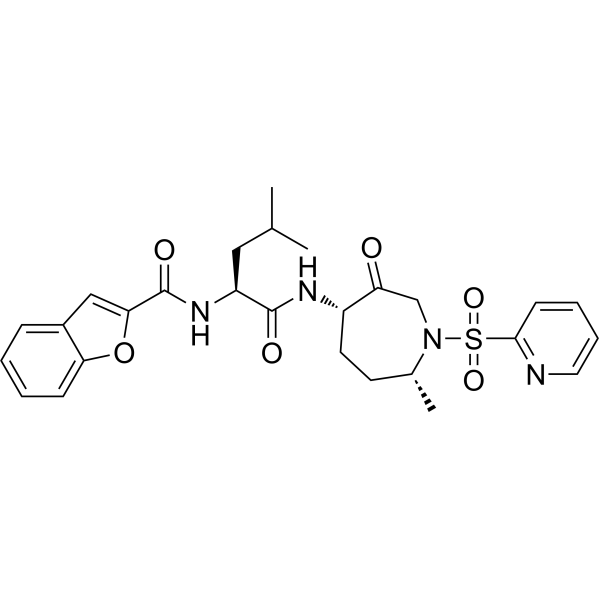
Relacatib (SB-462795) is a novel, potent, and orally active inhibitor of human cathepsins K, L, and V with Ki values of 41 pM, 68 pM, and 53 pM, respectively. Relacatib inhibits endogenous cathepsin K in situ in human osteoclasts and human osteoclast-mediated bone resorption with IC50 values of 45 nM and 70 nM, respectively. Relacatib inhibits bone resorption in vitro in human tissue as well as in cynomolgus monkeys in vivo .
|
-
-
- HY-P4217
-
|
|
Cathepsin
|
Others
|
|
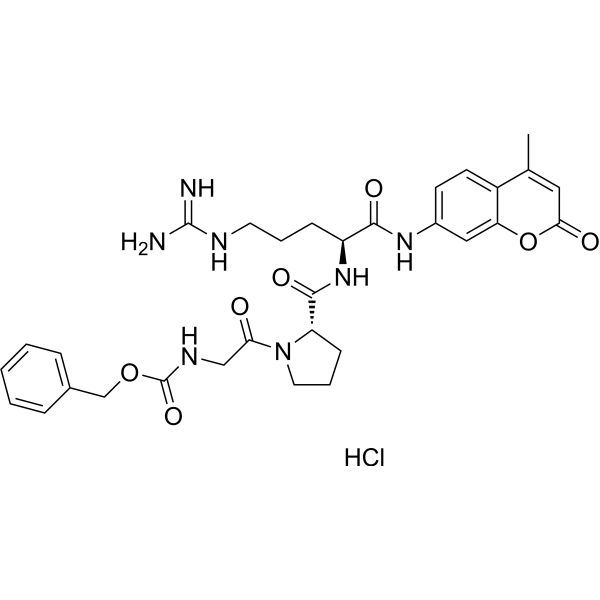
Z-Gly-Pro-Arg-AMC hydrochloride a fluorescent trypsin and cathepsin K substrate. Z-Gly-Pro-Arg-AMC hydrochloride can be used to determine trypsin and cathepsin K activity .
|
-
-
- HY-P3153
-
|
|
Cathepsin
|
Metabolic Disease
|
|
Cathepsin K is a cysteine protease with endo and collagenolytic activities. Cathepsin K induces degradation of bone collagen and can be used for the research of osteoporosis .
|
-
-
- HY-Y0241
-
|
|
Cathepsin
|
Metabolic Disease
|
|
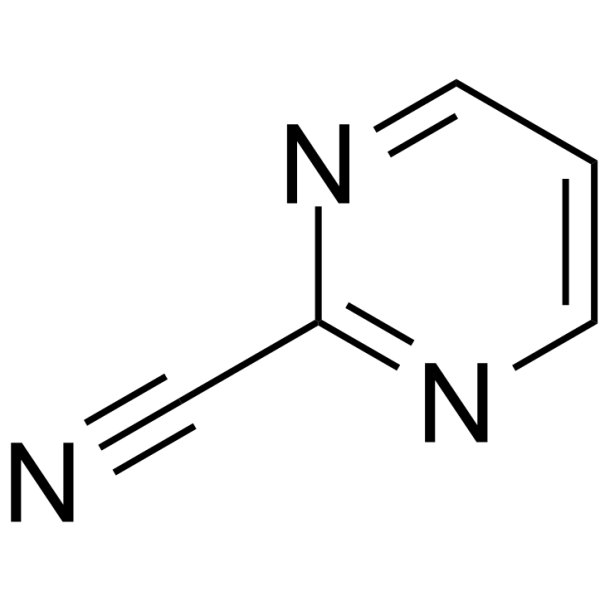
2-Cyanopyrimidine is a potent and non-selective cysteine protease cathepsin K inhibitor with an IC50 of 170 nM. 2-Cyanopyrimidine is used for osteoporos .
|
-
-
- HY-108044
-
|
|
Cathepsin
SARS-CoV
|
Metabolic Disease
|
|
ONO-5334 is a potent, selective and orally active cathepsin K inhibitor with Ki values of 0.10 nM, 0.049 nM and 0.85 nM for human, rabbit and rat cathepsin K, respectively. ONO 5334 is an effective antiviral compound against SAR-COV-2 virus activity with an EC50 value of 500 nM. ONO-5334 has the potential for the study of osteoporosis and COVID-19 disease .
|
-
-
- HY-147774
-
|
|
Cathepsin
|
Others
|
|
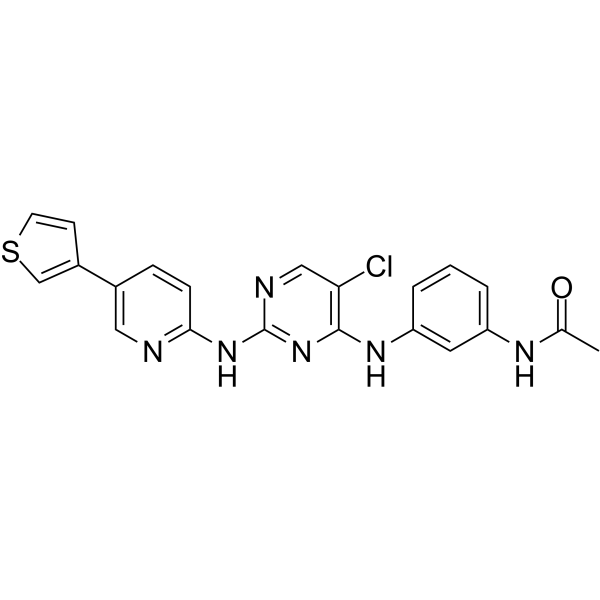
Cathepsin K inhibitor 6 (compound 19) is an inhibitor of cathepsin K (Cat K) with an IC50 of 17 nM. Cathepsin K inhibitor 6 also has inhibitory effects on other isoforms, with IC50s of 0.05 μM (Cat L) and 0.3 μM (Cat B), respectively .
|
-
-
- HY-P4373
-
|
|
Cathepsin
MMP
|
Metabolic Disease
|
|
Hepcidin-1 (mouse) is an endogenous peptide hormone involved in the regulation of iron homeostasis. Hepcidin-1 (mouse) upregulates mRNA levels of TRAP, cathepsin K, and MMP-9 and increases TRAP-5b protein secretion. Hepcidin-1 (mouse) downregulates the level of FPN1 protein and increases intracellular iron. Hepcidin-1 (mouse) facilitates osteoclast differentiation .
|
-
-
- HY-177315
-
|
|
Cathepsin
|
Inflammation/Immunology
Cancer
|
|
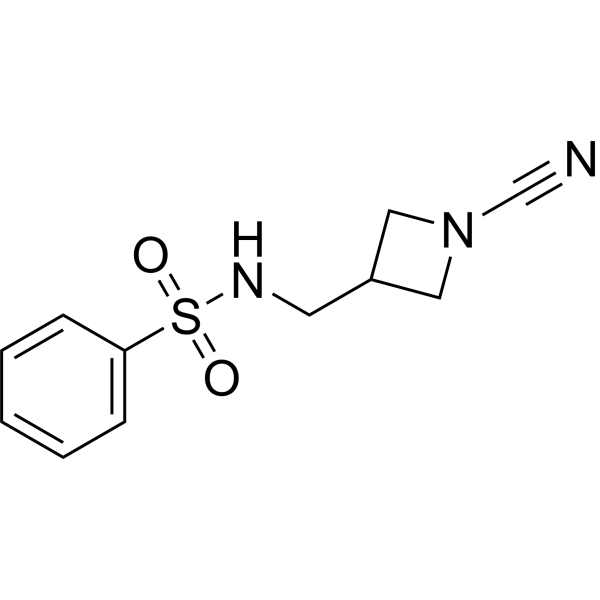
Cathepsin K-IN-8 (cxample 6-60) is a cathepsin K inhibitor that can be used for the study of inflammation, rheumatoid arthritis, osteoarthritis, osteoporosis and tumors .
|
-
-
- HY-143714
-
|
|
Cathepsin
|
Inflammation/Immunology
|
|
Cathepsin K inhibitor 2 is a potent inhibitor of cathepsin K. Cathepsin K, Cat K is a cysteine protease expressed under the control of CTSK gene and closely related to osteoporosis, whose main function is to hydrolyze collagen. Cathepsin K inhibitor 2 has the potential for the research of osteoarthfitis (extracted from patent WO2021147882A1, compound 78) .
|
-
-
- HY-50887
-
|
|
Cathepsin
|
Metabolic Disease
|
|
L-873724 is a potent, orally bioavailable, selective and reversible non-basic cathepsin K inhibitor, with IC50s of 0.2, 178, 264, and 5239 nM for cathepsin K, cathepsin S, cathepsin L, cathepsin B, respectively . L-873724 also exhibits an IC50 of 0.5 nM for rabbit cathepsin K. L-873724 inhibits bone resorption .
|
-
-
- HY-119293A
-
|
|
Cathepsin
Cytochrome P450
Parasite
SARS-CoV
Filovirus
|
Infection
Inflammation/Immunology
Cancer
|
|
K777 tosylate is a potent, orally active and irreversible cysteine protease inhibitor. K777 tosylate is also a potent CYP3A4 inhibitor with an IC50 of 60 nM. K777 tosylate irreversibly inhibits Cruzain, the major cysteine protease of Trypansoma cruzi, and cathepsins B and L. K777 tosylate is a broad-spectrum antiviral by targeting cathepsin-mediated cell entry. K777 tosylate inhibits SARS-CoV and EBOV pseudovirus entry with IC50 values of 0.68 nM and 0.87 nM, respectively .
|
-
-
- HY-152108
-
|
|
SARS-CoV
|
Infection
|
|
SARS-CoV-2 Mpro-IN-6 is a covalent, irreversible and selective SARS-CoV-2 M pro inhibitor with an IC50 of 0.18 μM. SARS-CoV-2 Mpro-IN-6 does not inhibit human cathepsins B, F, K, and L, and caspase 3 .
|
-
-
- HY-P5377
-
|
Cathepsin K substrate
|
Ser/Thr Protease
|
Others
|
|
Abz-HPGGPQ-EDDnp (Cathepsin K substrate) is a biological active peptide. (Cathepsins are a class of globular lysosomal proteases, playing a vital role in mammalian cellular turnover. They degrade polypeptides and are distinguished by their substrate specificities. Cathepsin K is the lysosomal cysteine protease involved in bone remodeling and resorption. It has potential as a drug target in autoimmune diseases and osteoporosis.This FRET peptide can be used to monitor selectively cathepsin K activity in physiological fluids and cell lysates. Abz-HPGGPQ-EDDnp [where Abz represents o-aminobenzoic acid and EDDnp represents N -(2, 4-dinitrophenyl)-ethylenediamine], a substrate initially developed for trypanosomal enzymes, is efficiently cleaved at the Gly-Gly bond by cathepsin K. This peptide is resistant to hydrolysis by cathepsins B, F, H, L, S and V, Ex/Em=340 nm/420 nm.)
|
-
-
- HY-144813
-
|
|
Cathepsin
|
Inflammation/Immunology
Cancer
|
|
Gü2602 is a potent, reversible cathepsin K (CatK) inhibitor with a Ki of 0.013 nM for mature CatK (mCatK). Gü2602 suppresses the autocatalytic activation of the cathepsin K zymogen .
|
-
-
- HY-151524
-
|
|
Cathepsin
|
Inflammation/Immunology
|
|
Cathepsin K inhibitor 3 (compound 23) is a highly selective cathepsin K inhibitor with an IC50 value of 0.5 nM. Cathepsin K inhibitor 3 has a favorable pharmacokinetic profile and may be used in osteoarthritis (OA) disease studies .
|
-
-
- HY-P10061
-
|
|
Cathepsin
|
Cancer
|
|
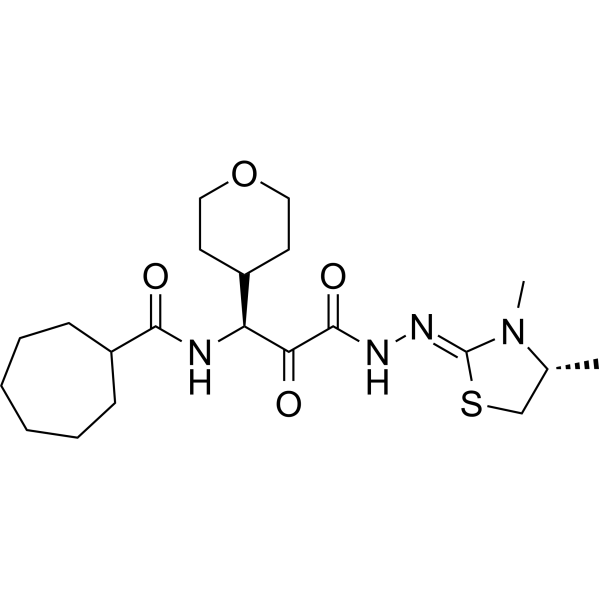
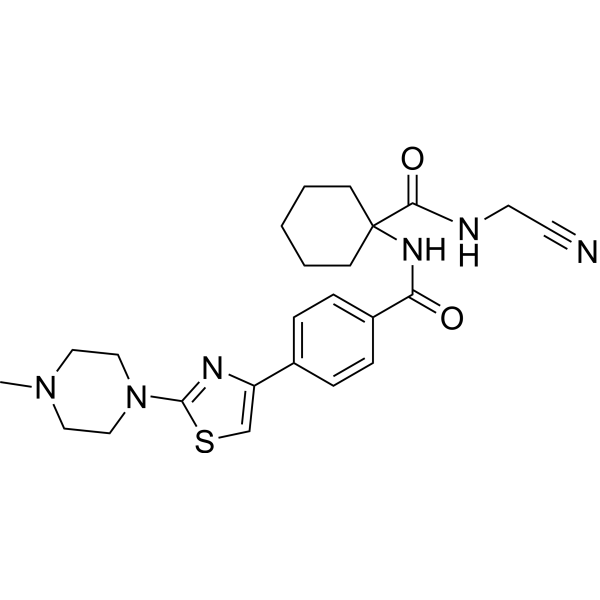
Cathepsin K inhibitor 4 is a potent carbohydrazide Cathepsin K inhibitor with IC50s of 13 nM, 269 nM, 296 nM for human, rat, mouse Cathepsin K, respectively .
|
-
-
- HY-163842
-
|
|
Cathepsin
|
Inflammation/Immunology
|
|
Cathepsin K inhibitor 7 (compound 7) is a Cathepsin K inhibitor with the pKi of 7.3 aganist CatK. Cathepsin K inhibitor 7 can be used for study of osteoporosis .
|
-
-
- HY-113721
-
-
-
- HY-100701
-
-
-
- HY-P10117
-
-
-
- HY-10290
-
|
|
Cathepsin
|
Metabolic Disease
|
|
MK-0674 is a potent, orally bioavailable and selective cathepsin K inhibitor, with an IC50 of 0.4 nM, shows 1156, 1465, 11857 and 243 fold selectivity over Cat B, Cat F, Cat L and Cat S .
|
-
-
- HY-14360
-
|
|
Cathepsin
|
Metabolic Disease
|
|
MK 1256 is a highly selective and orally active inhibitor of tissue protease K (Cat K) with an IC50 of 0.62 nM. MK 1256 shows extremely high selectivity towards other tissue proteases (all > 1100 times), with only a slightly lower selectivity for tissue protease F (Cat F) (110 times). MK 1256 exhibits strong anti-bone resorption activity in the osteoporosis model of rhesus monkeys with ovariectomy. MK 1256 can be used for research on osteoporosis .
|
-
-
- HY-144812
-
|
|
Cathepsin
|
Inflammation/Immunology
Cancer
|
|
Gü1303 is a potent, reversible, slow-binding cathepsin K (CatK) inhibitor with a Ki of 0.91 nM for mature CatK (mCatK). Gü1303 suppresses the autocatalytic activation of the cathepsin K zymogen .
|
-
-
- HY-103352R
-
|
L-235 (Standard)
|
Reference Standards
Cathepsin
|
Metabolic Disease
|
|
L-006235 (Standard) is the analytical standard of L-006235. This product is intended for research and analytical applications. L-006235 (L-235) is a potent, selective, reversible and orally active inhibitor of cathepsin K, with an IC50 of 5 nM in bone resorption assay. L-006235 shows selectivity for cathepsin K (Ki=0.2 nM) over cathepsin B, cathepsin L, and cathepsin S (Ki=1, 6, and 47 μM, respectively). L-006235 can reduce collagen degradation and prevent bone loss .
|
-
-
- HY-179697
-
|
|
Cathepsin
|
Metabolic Disease
|
|
Cathepsin K-IN-9 is a selective, potent and orally active Cathepsin K inhibitor with an IC50 of 6.2 nM. Cathepsin K-IN-9 has IC50 > 10000 nM for cathepsin B, L, and S, showing over 1600-fold selectivity. Cathepsin K-IN-9 has excellent safety and metabolic stability.Cathepsin K-IN-9 can be used for the research of osteoporosis .
|
-
-
- HY-10042S
-
-
-
- HY-149926
-
|
|
Ser/Thr Protease
|
Others
|
|
Cathepsin Inhibitor 3 (Compound 53k) is a non-radioactive intermediate in compound [ 18F] 2k radioactive synthesis, which has selectivity for cathepsin S. Cathepsin Inhibitor 3 can undergo radioactive fluorination and can be used for fluorine-18 labeling research . Cathepsin Inhibitor 3 is a click chemistry reagent, it contains an Alkyne group and can undergo copper-catalyzed azide-alkyne cycloaddition (CuAAc) with molecules containing Azide groups.
|
-
-
- HY-139685
-
|
|
Cathepsin
|
Others
|
|
ABP 25 is an activity-based probe for cathepsin K imaging with excellent potency and selectivity.
|
-
-
- HY-15099
-
|
VEL 0230
|
Cathepsin
|
Inflammation/Immunology
|
|
NC 2300 (VEL-0230)is a selective and orally active cysteine cathepsin inhibitor with the IC50 values of 284, 34.5, and 186 nM for cathepsin B, K, and S, respectively.NC 2300 can be used for study of diseases involving bone mineral disorders .
|
-
-
- HY-100223R
-
|
|
Reference Standards
Cathepsin
Proteasome
Apoptosis
|
Inflammation/Immunology
|
|
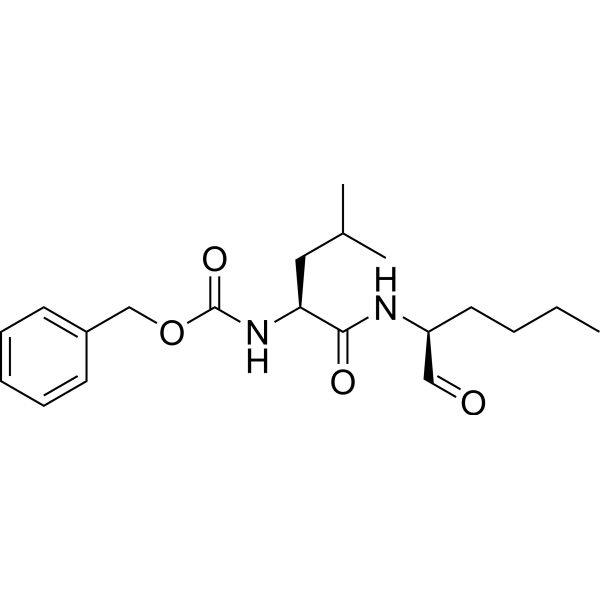
Calpeptin (Standard) is the analytical standard of Calpeptin. This product is intended for research and analytical applications. Calpeptin is a potent, cell penetrating calpain inhibitor, with an ID50 of 40 nM for Calpain I in human platelets . Calpeptin is also an inhibitor of cathepsin K .
|
-
-
- HY-15101
-
|
|
Cathepsin
|
Metabolic Disease
|
|
MV061194 is a selective cathepsin K inhibitor with a human Ki of 2.5 nM. MV061194 can be used for the research of osteoporosis .
|
-
-
- HY-Y0241R
-
-
-
- HY-10042R
-
|
MK-0822 (Standard)
|
Cathepsin
Reference Standards
|
Metabolic Disease
Cancer
|
|
Odanacatib (Standard) is the analytical standard of Odanacatib (HY-10042). This product is intended for research and analytical applications. Odanacatib (MK-0822) is a potent and selective inhibitor of cathepsin K, with an IC50 of 0.2 nM for human cathepsin K.
|
-
-
- HY-181741
-
|
|
Cathepsin
|
Inflammation/Immunology
|
|
PI3K-001 is a cathepsin B-responsive prodrug and antifibrotic agent. PI3K-001 undergoes cathepsin B-mediated cleavage of the Val-Ala linker in fibrotic lung lesions to release an active PI3K inhibitor payload, while it remains stable in healthy tissues. PI3K-001 improves collagen deposition, tissue collapse and alveolar injury in fibrotic lung tissues. PI3K-001 is applicable for the research of pulmonary fibrosis .
|
-
-
- HY-108044R
-
|
|
Reference Standards
Cathepsin
SARS-CoV
|
Metabolic Disease
|
|
ONO-5334 (Standard) is the analytical standard of ONO-5334 (HY-108044). This product is intended for research and analytical applications. ONO-5334 is a potent, selective and orally active cathepsin K inhibitor with Ki values of 0.10 nM, 0.049 nM and 0.85 nM for human, rabbit and rat cathepsin K, respectively. ONO 5334 is an effective antiviral compound against SAR-COV-2 virus activity with an EC50 value of 500 nM. ONO-5334 has the potential for the study of osteoporosis and COVID-19 disease .
|
-
-
- HY-10294R
-
|
SB-462795 (Standard)
|
Reference Standards
Cathepsin
|
Metabolic Disease
Cancer
|
|
Relacatib (Standard) is the analytical standard of Relacatib (HY-10294). This product is intended for research and analytical applications. Relacatib (SB-462795) is a novel, potent, and orally active inhibitor of human cathepsins K, L, and V with Ki values of 41 pM, 68 pM, and 53 pM, respectively. Relacatib inhibits endogenous cathepsin K in situ in human osteoclasts and human osteoclast-mediated bone resorption with IC50 values of 45 nM and 70 nM, respectively. Relacatib inhibits bone resorption in vitro in human tissue as well as in cynomolgus monkeys in vivo .
|
-
-
- HY-181513
-
|
|
Interleukin Related
TNF Receptor
|
Inflammation/Immunology
|
|
DPP-1-IN-2 is a DPP-I inhibitor with a human IC50 of 36.8 nM and oral efficacy. DPP-1-IN-2 binds to intracellular DPP-I, increases its thermal stability, and reduces the activity and expression levels of downstream neutrophil serine proteases by inhibiting its enzymatic activity. DPP-1-IN-2 regulates the secretion of inflammatory factors and chemokines to exert anti-inflammatory effects. DPP-1-IN-2 reverses joint inflammation and tissue damage in adjuvant-induced arthritis rat models. DPP-1-IN-2 is applicable to research related to arthritis .
|
-
-
- HY-182614
-
|
|
Src
Cathepsin
PI3K
Akt
Ras
Raf
ERK
MMP
|
Cancer
|
|
BJ-2302 is a Src kinase inhibitor with an IC50 of 3.23 μM, and inhibits cathepsin S (CTSS) activity .BJ-2302 binds to Src, suppresses PI3K/AKT and Ras/Raf/ERK pathways, and reduces CTSS and MMP-9 expression .BJ-2302 inhibits cancer cell invasion, metastasis, proliferation, and tumor growth .BJ-2302 does not induce cytotoxicity in normal breast epithelial cells .BJ-2302 can be used for the research of breast cancer and triple-negative breast cancer .
|
-
-
- HY-182757
-
|
|
RANKL/RANK
Nuclear Factor of activated T Cells (NFAT)
Cathepsin
|
Metabolic Disease
Inflammation/Immunology
|
|
Y1693 is an orally active RANKL inhibitor with a Kd of 5.03 μM for hRANKL. Y1693 inhibits the activation of the downstream c-fos/NFATc1 signaling pathway by blocking its interaction with RANK. Y1693 significantly inhibits RANKL-induced osteoclast differentiation, F-actin ring formation and bone resorptive activity, while downregulating the mRNA and protein expressions of TRAP, cathepsin K, c-fos and NFATc1. Y1693 shows no obvious cytotoxicity to bone marrow-derived macrophages and osteoclast precursor cells, and exhibits favorable ADME properties. Y1693 improves ovariectomy-induced osteoporosis in mice and reverses ligation-induced periodontal alveolar bone loss. Y1693 is applicable to research related to osteoporosis and periodontal diseases .
|
-
-
- HY-179612
-
|
|
SARS-CoV
Cathepsin
Proteasome
|
Infection
|
|
SARS-CoV-2 3CLpro-IN-34 (Compound 55) is a highly efficient non-covalent inhibitor of the SARS-CoV-2 3CL pro protease (b. SARS-CoV-2 3CL pro protease) with an IC50 of 1.9 μM. SARS-CoV-2 3CLpro-IN-34 can inhibit the 3CL pro protein of SARS-CoV-1, with its IC50 being 3.2 μM, and it shows high selectivity towards host cysteine proteases (such as cathepsins L/K and calpain). SARS-CoV-2 3CLpro-IN-34 exhibits antiviral activity in cells infected with SARS-CoV-2, with its EC50 being 25 μM, and it is not affected by P-gp inhibitors and shows no significant cytotoxicity. SARS-CoV-2 3CLpro-IN-34 can be used for research on SARS-CoV-2 infection .
|
-
| Cat. No. |
Product Name |
Target |
Research Area |
-
- HY-P4373A
-
|
|
Cathepsin
MMP
|
Inflammation/Immunology
|
|
Hepcidin-1 (mouse) TFA is an endogenous peptide hormone involved in the regulation of iron homeostasis. Hepcidin-1 (mouse) TFA upregulates mRNA levels of TRAP, cathepsin K, and MMP-9 and increases TRAP-5b protein secretion. Hepcidin-1 (mouse) TFA downregulates the level of FPN1 protein and increases intracellular iron. Hepcidin-1 (mouse) TFA facilitates osteoclast differentiation .
|
-
- HY-P4217
-
|
|
Cathepsin
|
Others
|
|
Z-Gly-Pro-Arg-AMC hydrochloride a fluorescent trypsin and cathepsin K substrate. Z-Gly-Pro-Arg-AMC hydrochloride can be used to determine trypsin and cathepsin K activity .
|
-
- HY-P4373
-
|
|
Cathepsin
MMP
|
Metabolic Disease
|
|
Hepcidin-1 (mouse) is an endogenous peptide hormone involved in the regulation of iron homeostasis. Hepcidin-1 (mouse) upregulates mRNA levels of TRAP, cathepsin K, and MMP-9 and increases TRAP-5b protein secretion. Hepcidin-1 (mouse) downregulates the level of FPN1 protein and increases intracellular iron. Hepcidin-1 (mouse) facilitates osteoclast differentiation .
|
-
- HY-P5377
-
|
Cathepsin K substrate
|
Ser/Thr Protease
|
Others
|
|
Abz-HPGGPQ-EDDnp (Cathepsin K substrate) is a biological active peptide. (Cathepsins are a class of globular lysosomal proteases, playing a vital role in mammalian cellular turnover. They degrade polypeptides and are distinguished by their substrate specificities. Cathepsin K is the lysosomal cysteine protease involved in bone remodeling and resorption. It has potential as a drug target in autoimmune diseases and osteoporosis.This FRET peptide can be used to monitor selectively cathepsin K activity in physiological fluids and cell lysates. Abz-HPGGPQ-EDDnp [where Abz represents o-aminobenzoic acid and EDDnp represents N -(2, 4-dinitrophenyl)-ethylenediamine], a substrate initially developed for trypanosomal enzymes, is efficiently cleaved at the Gly-Gly bond by cathepsin K. This peptide is resistant to hydrolysis by cathepsins B, F, H, L, S and V, Ex/Em=340 nm/420 nm.)
|
-
- HY-P10061
-
|
|
Cathepsin
|
Cancer
|
|
Cathepsin K inhibitor 4 is a potent carbohydrazide Cathepsin K inhibitor with IC50s of 13 nM, 269 nM, 296 nM for human, rat, mouse Cathepsin K, respectively .
|
-
- HY-P10117
-
| Recombinant Proteins Recommended: |
|
| Cat. No. |
Compare |
Product Name |
Species |
Source |
Image |
Compare Products
|
| Products |
|
| Cat. No. |
|
| Species |
|
| Source |
|
| Tag |
|
| Accession |
|
| Gene ID |
|
| Molecular Weight |
|
| Purity |
|
| Endotoxin Level |
|
| Biological Activity |
|
| Appearance |
|
| Formulation |
|
| Storage & Stability |
|
| Shipping |
|
| Free Sample |
Yes
No
|
| Size |
* This product has been "discontinued".
Optimized version of product available:
|
| Cat. No. |
Product Name |
Chemical Structure |
-
- HY-10042S
-
|
|
|
Odanacatib-d4 is the deuterium labeled Odanacatib (HY-10042). Odanacatib is a potent and selective inhibitor of cathepsin K, with an IC50 of 0.2 nM for human cathepsin K .
|
-
| Cat. No. |
Product Name |
|
Classification |
-
- HY-149926
-
|
|
|
Alkynes
|
|
Cathepsin Inhibitor 3 (Compound 53k) is a non-radioactive intermediate in compound [ 18F] 2k radioactive synthesis, which has selectivity for cathepsin S. Cathepsin Inhibitor 3 can undergo radioactive fluorination and can be used for fluorine-18 labeling research . Cathepsin Inhibitor 3 is a click chemistry reagent, it contains an Alkyne group and can undergo copper-catalyzed azide-alkyne cycloaddition (CuAAc) with molecules containing Azide groups.
|
Your information is safe with us. * Required Fields.
Inquiry Information
- Product Name:
- Cat. No.:
- Quantity:
- MCE Japan Authorized Agent:

