



Odanacatib
Based on 14 publication(s) in Google Scholar
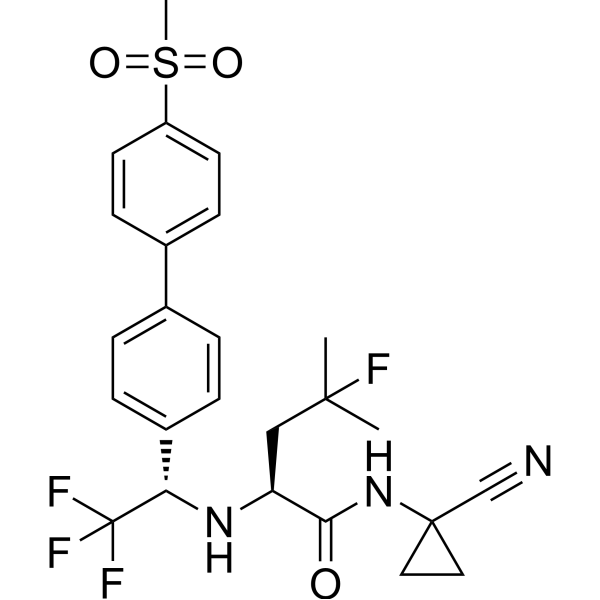
Odanacatib (MK-0822) is a potent and selective inhibitor of cathepsin K, with an IC50 of 0.2 nM for human cathepsin K.
For research use only. We do not sell to patients.
- Purity : 99.78%
- CAS No.: 603139-19-1
- Formula: C25H27F4N3O3S
- Molecular Weight:525.56
-
Storage:Powder -20°C, 3 years , 4°C, 2 years ; In solvent -80°C, 2 years , -20°C, 1 year

To place orders, for customer services and technical support, please contact: MedChemExpress USA
Tel: 609-228-6898 E-mail: [email protected] [email protected]


-
 Biological Activity
-
Chemical Information
-
Solvent & Solubility
- Purity & Documentation
- References
-
 Help & FAQs


-
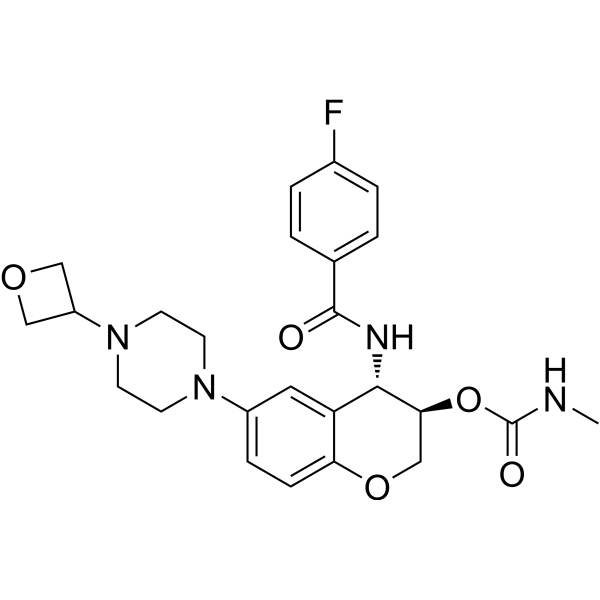
HY-15533
LY 3000328Cathepsin S Inhibitor -
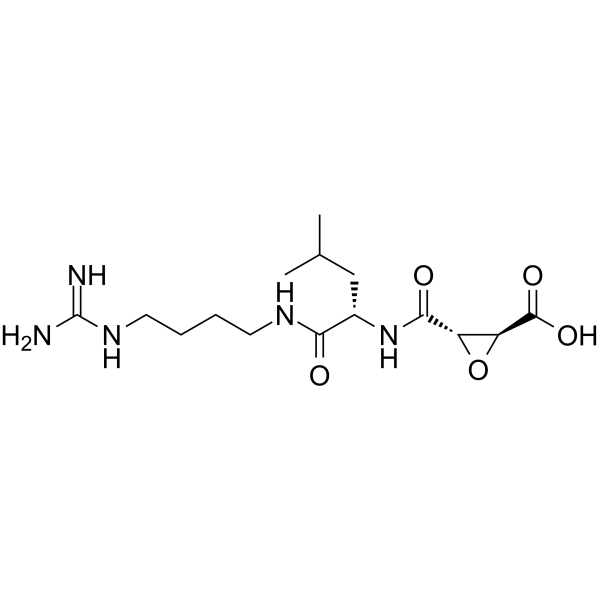
HY-15282
E-64Cysteine Peptidase Inhibitor -
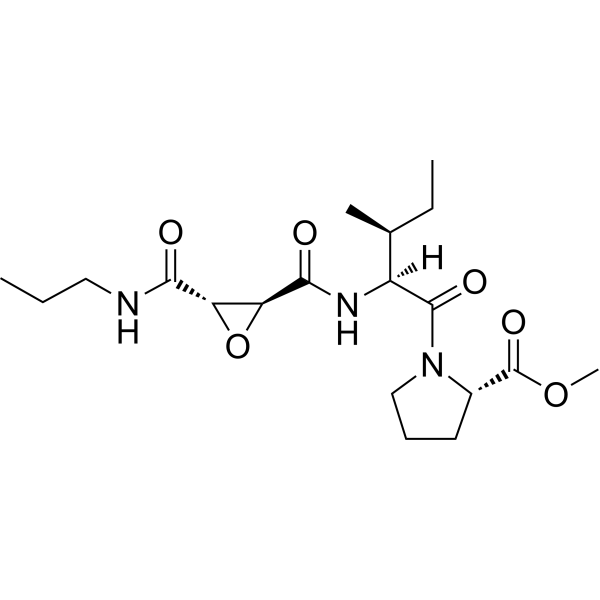
HY-100350
CA-074 methyl esterCathepsin B Inhibitor -
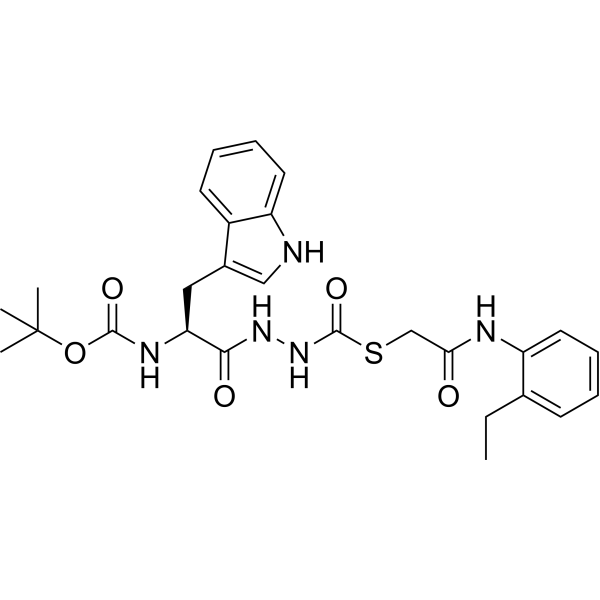
HY-103353
SID 26681509Cathepsin L Inhibitor -
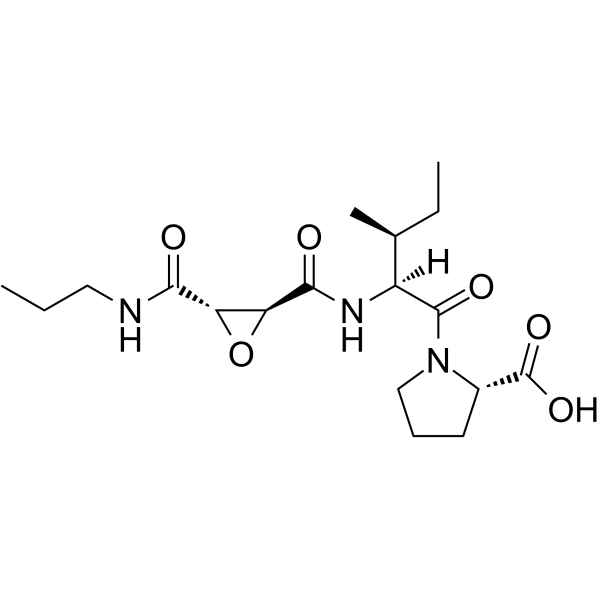
HY-103350
CA-074Cathepsin B Inhibitor -
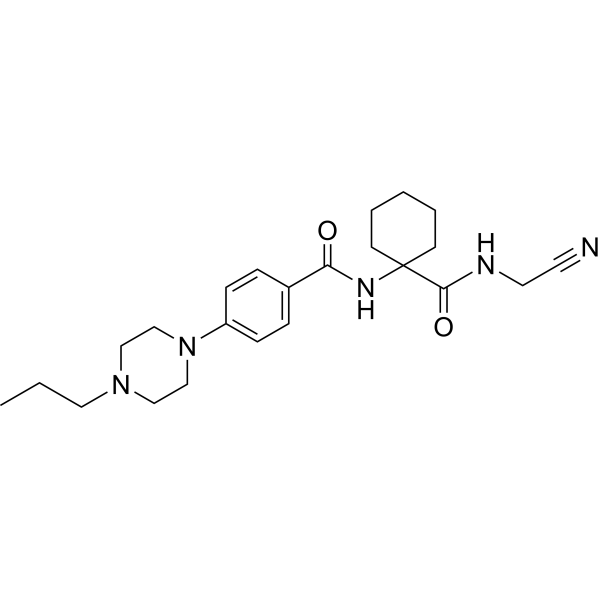
HY-15100
BalicatibCathepsin K Inhibitor -
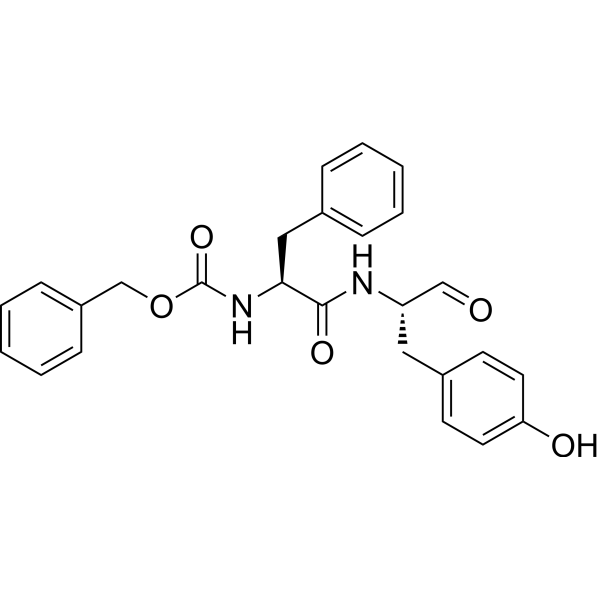
HY-128140
Z-FY-CHOCTSL Inhibitor -
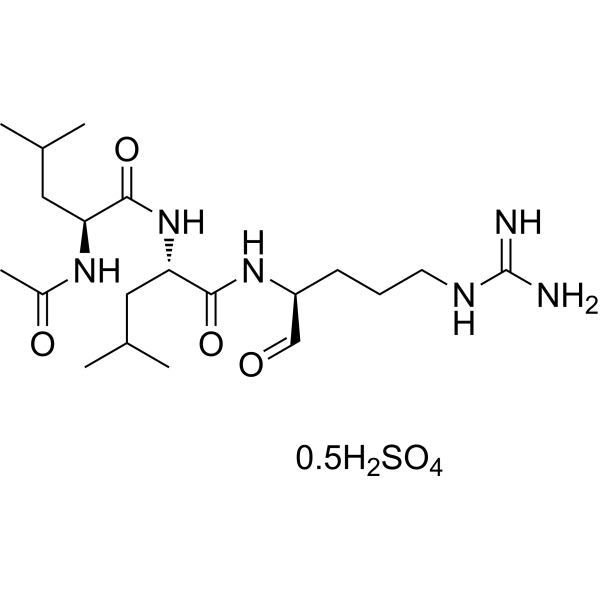
HY-18234A
Leupeptin hemisulfateProtease Inhibitor -
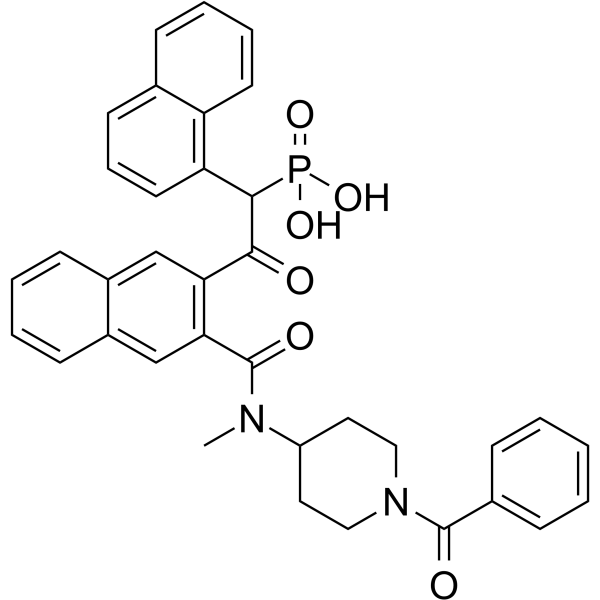
HY-103351
Cathepsin G Inhibitor ICathepsin G Inhibitor -
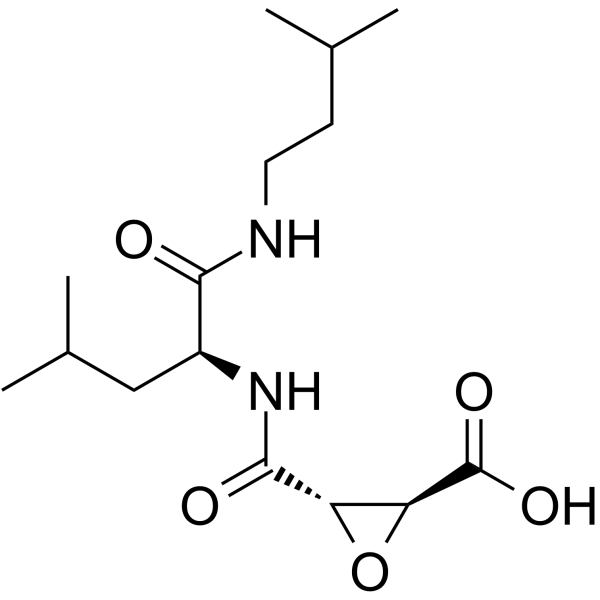
HY-100227
E 64cCalpain Inhibitor -
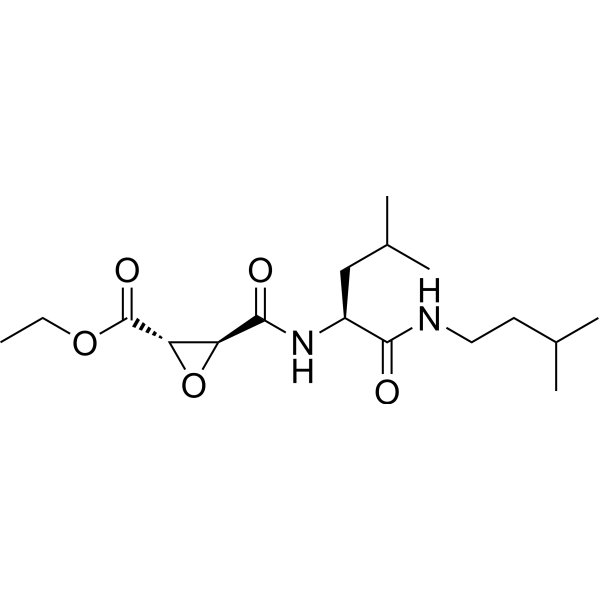
HY-100229
AloxistatinCysteine Protease Inhibitor -
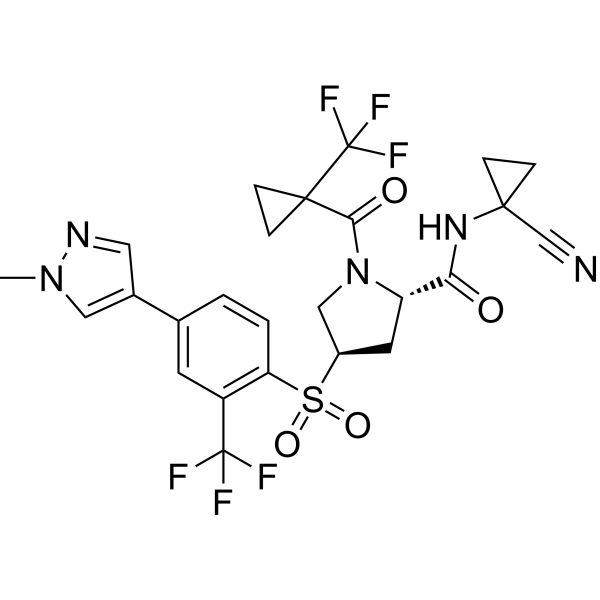
HY-109069
PetesicatibCathepsin S Inhibitor
Publications Citing Use of MedChemExpress (MCE) Odanacatib
More- Autophagy. 2025 May;21(5):934-956. [Abstract]
- Phytomedicine. 2025 Jun:141:156720. [Abstract]
- Cell Prolif. 2021 Jul;54(7):e13058. [Abstract]
- Biomater Adv. 2026 Jul:184:214837. [Abstract]
- Mol Ther Nucleic Acids. 2021 Dec 11:27:456-470. [Abstract]
- Clin Oral Implants Res. 2025 Sep 4. [Abstract]
- Sci Rep. 2022 Jul 16;12(1):12197. [Abstract]
- J Cell Mol Med. 2024 Dec;28(23):e70237. [Abstract]
- iScience. 2024 Feb 21;27(4):109293. [Abstract]
- Clin Oral Investig. 2025 Jan 14;29(1):62. [Abstract]
- Biochem Biophys Res Commun. 2015 Jun 26;462(2):159-64. [Abstract]
- Cornell University. 2026.
- Heliyon. 2023 Aug 18;9(8):e19220. [Abstract]
- Research Square Print. 2022 Jun.
 Customer Validation & Images

-
Cell Proliferation/Viability Assay

-
WB

-
Cell Imaging/Staining

-
RT-PCR

-
Bio/Physico-chemical Assay

All Cathepsin Isoforms
More

Biological Activity
Description
IC50 & Target
|
cathepsin K |
Cellular Effect
|
Cell Line

|
Type | Value | Description | References |
|---|---|---|---|---|
| HepG2 | IC50 |
1050 nM
Compound: 24, odanacatib
|
Inhibition of cathepsin B in human HepG2 cells
Inhibition of cathepsin B in human HepG2 cells
|
[PMID: 18226527] |
| HepG2 | IC50 |
4843 nM
Compound: 24, odanacatib
|
Inhibition of cathepsin L in human HepG2 cells
Inhibition of cathepsin L in human HepG2 cells
|
[PMID: 18226527] |
| Osteoclast | IC50 |
23 nM
Compound: 24, odanacatib
|
Inhibition of bone resorption in rabbit osteoclast
Inhibition of bone resorption in rabbit osteoclast
|
[PMID: 18226527] |
| Ramos | IC50 |
45 nM
Compound: 24, odanacatib
|
Inhibition of cathepsin S in human ramos cells
Inhibition of cathepsin S in human ramos cells
|
[PMID: 18226527] |
| Splenocyte | IC50 |
0.001 μM
Compound: 24, odanacatib
|
Inhibition of MHC 2 invariant chain iip10 in mouse splenocytes
Inhibition of MHC 2 invariant chain iip10 in mouse splenocytes
|
[PMID: 18226527] |
In Vitro
Odanacatib is a weak inhibitor of antigen presentation, measured in a mouse B cell line (IC50=1.5±0.4 μM), compared to the Cat S inhibitor LHVS (IC50=0.001 μM) in the same assay. Odanacatib also shows weak inhibition of the processing of the MHC II invariant chain protein Iip10 in mouse splenocytes compared to LHVS (minimum inhibitory concentration 1-10 μM versus 0.01 μM, respectively)[1].
Odanacatib reduces resorption activity as measured by CTx release (IC50=9.4 nM) or resorption area (IC50=6.5 nM), but has no impact on OC activation. Odanacatib dose-dependently reduces CTx release with an IC50=9.4±1.0 nM. Odanacatib treated OC accumulates labeled degraded bone matrix proteins in CatK containing vesicles[2].
MedChemExpress (MCE) has not independently confirmed the accuracy of these methods. They are for reference only.
In Vivo
The bone volume/total volume (BV/TV) and bone mineral density (BMD) of the OVX?+?ODN-h group is significantly higher than that of the OVX?+?Veh group (p?Runx2, Collagen-1, BSP, Osterix, OPN and SPP1 are significantly lower in the OVX?+?ODN-h group than in the OVX?+?Veh group (p?[4].
MedChemExpress (MCE) has not independently confirmed the accuracy of these methods. They are for reference only.
Clinical Trial
| NCT Number | Sponsor | Condition | Start Date |
Phase
|
|---|---|---|---|---|
| NCT01329991 | 2011-05 | PHASE1 |


Chemical Information
-
CAS No. 603139-19-1
-
Appearance Solid
-
Molecular Weight 525.56
-
Formula C25H27F4N3O3S
-
Color White to yellow
-
SMILES
N#CC1(NC([C@@H](N[C@H](C(F)(F)F)C2=CC=C(C3=CC=C(S(=O)(C)=O)C=C3)C=C2)CC(C)(F)C)=O)CC1
-
Synonyms
MK-0822
-
Shipping
Room temperature in continental US; may vary elsewhere.
-
Storage
Powder -20°C 3 years 4°C 2 years In solvent -80°C 2 years -20°C 1 year


Publications (14)
-
Journal Impact Factor
-
Most Recent
-
Autophagy
2025 May;21(5):934-956. PMID: 39663580 -
Phytomedicine
Sophoraflavanone G as an ectosteric inhibitor of cathepsin K attenuates ovariectomy-induced bone loss by suppressing bone resorption. [Abstract]2025 Jun:141:156720. PMID: 40220429 -
Cell Prolif
Cathepsin K deficiency promotes alveolar bone regeneration by promoting jaw bone marrow mesenchymal stem cells proliferation and differentiation via glycolysis pathway. [Abstract]2021 Jul;54(7):e13058. PMID: 34053135
Odanacatib purchased from MedChemExpress. Usage Cited in: Cell Prolif. 2021 Jul;54(7):e13058. [Abstract]
Influence of Ctsk knockout or inhibition by Odanacatib (ODN) on proliferation of JBMMSC was assessed by CCK‐8.
Odanacatib purchased from MedChemExpress. Usage Cited in: Cell Prolif. 2021 Jul;54(7):e13058. [Abstract]
Expressions of osteogenic‐related proteins of ALP and Runx2 were detected by Western blot treated with Odanacatib (ODN) (1 μM).
Odanacatib purchased from MedChemExpress. Usage Cited in: Cell Prolif. 2021 Jul;54(7):e13058. [Abstract]
Mineralized nodules of JBMMSC were assayed by alizarin red staining after osteogenic induction for 15 d treated with Odanacatib (ODN) (1 μM).
Odanacatib purchased from MedChemExpress. Usage Cited in: Cell Prolif. 2021 Jul;54(7):e13058. [Abstract]
Expression levels of the five differentially expressed genes were confirmed by RT‐qPCR. C, WT and Ctsk‐/‐JBMMSC were stimulated with 1 μmol/L Odanacatib (ODN) or 1 μmol/L DMSO for 48 h.
Odanacatib purchased from MedChemExpress. Usage Cited in: Cell Prolif. 2021 Jul;54(7):e13058. [Abstract]
Lactate production treated with Odanacatib (ODN) (1 μM).
-
Biomater Adv
A composite sustained-release system with immunomodulatory and synergistic osteogenic differentiation effects for repairing inflammatory alveolar bone defects. [Abstract]2026 Jul:184:214837. PMID: 41875609 -
Mol Ther Nucleic Acids
Loss of full-length pumilio 1 abrogates miRNA-221-induced gene p27 silencing-mediated cell proliferation in the heart. [Abstract]2021 Dec 11:27:456-470. PMID: 35036057 -
Clin Oral Implants Res
2025 Sep 4. PMID: 40908780 -
Sci Rep
Hepatitis C virus NS3/4A inhibitors and other drug-like compounds as covalent binders of SARS-CoV-2 main protease. [Abstract]2022 Jul 16;12(1):12197. PMID: 35842458 -
J Cell Mol Med
Endothelial KDM5B Regulated by Piezo1 Contributes to Disturbed Flow Induced Atherosclerotic Plaque Formation. [Abstract]2024 Dec;28(23):e70237. PMID: 39643939 -
iScience
Dysregulated lysosomal exocytosis drives protease-mediated cartilage pathogenesis in multiple lysosomal disorders. [Abstract]2024 Feb 21;27(4):109293. PMID: 38495824 -
Clin Oral Investig
Cytokine expression of soft tissue cells cultured with titanium discs and their respective supernatants in vitro. [Abstract]2025 Jan 14;29(1):62. PMID: 39809969 -
Biochem Biophys Res Commun
Secretion of PDGF isoforms during osteoclastogenesis and its modulation by anti-osteoclast drugs. [Abstract]2015 Jun 26;462(2):159-64. PMID: 25951977 -
-
Heliyon
CD200-CD200R affects cisplatin and paclitaxel sensitivity by regulating cathepsin K-mediated p65 NF-κB signaling in cervical cancer. [Abstract]2023 Aug 18;9(8):e19220. PMID: 37654464 -


Solvent & Solubility
In Vitro:
DMSO : ≥ 25 mg/mL (47.57 mM; Hygroscopic DMSO has a significant impact on the solubility of product, please use newly opened DMSO)
* "≥" means soluble, but saturation unknown.
Please refer to the solubility information to select the appropriate solvent. Once prepared, please aliquot and store the solution to prevent product inactivation from repeated freeze-thaw cycles.
Storage method and period of stock solution: -80°C, 2 years; -20°C, 1 year. When stored at -80°C, please use it within 2 years. When stored at -20°C, please use it within 1 year.
Please refer to the solubility information to select the appropriate solvent. Once prepared, please aliquot and store the solution to prevent product inactivation from repeated freeze-thaw cycles.
Storage method and period of stock solution: -80°C, 2 years; -20°C, 1 year. When stored at -80°C, please use it within 2 years. When stored at -20°C, please use it within 1 year.
Concentration (start) × Volume (start) = Concentration (final) × Volume (final)
In Vivo:
Select the appropriate dissolution method based on your experimental animal and administration route.
- For the following dissolution methods, please ensure to first prepare a clear stock solution using an In Vitro approach and then sequentially add co-solvents:
- To ensure reliable experimental results, the clarified stock solution can be appropriately stored based on storage conditions. As for the working solution for In Vivo experiments, it is recommended to prepare freshly and use it on the same day.
- The percentages shown for the solvents indicate their volumetric ratio in the final prepared solution. If precipitation or phase separation occurs during preparation, heat and/or sonication can be used to aid dissolution.
In Vivo Dissolution Calculator
Please enter the basic information of animal experiments:
-
-
-
-
Recommended: Prepare an additional quantity of animals to account for potential losses during experiments.
Please enter your animal formula composition:
-
%DMSO +
Recommended: Keep the proportion of DMSO in working solution below 2% if your animal is weak.
-
%+
-
+%Tween-80 + +
-
%Saline +
The co-solvents required include: DMSO, . All of co-solvents are available by MedChemExpress (MCE). , Tween 80. All of co-solvents are available by MedChemExpress (MCE).
Working solution concentration: 0.22 mg/mL
Method for preparing stock solution: mg drug dissolved in μL DMSO. Stock solution concentration: mg/mL.
1. Take μL DMSO stock solution;
2. Add μL .
μL , mix evenly;
3. Then add μL Tween 80, mix evenly;
4. Then add μL
Please ensure that the stock solution in the first step is dissolved to a clear state, and add co-solvents in sequence. You can use ultrasonic heating (ultrasonic cleaner, recommended frequency 20-40 kHz), vortexing, etc. to assist dissolution.


Purity & Documentation
-
Data Sheet (282 KB)
-
SDS (418 KB)
- English - EN (418 KB)
- Français - FR (418 KB)
- Deutsch - DE (418 KB)
- Norwegian - NO (418 KB)
- Español - ES (418 KB)
- Swedish - SV (418 KB)
- Italian - IT (418 KB)
- Korean - KR (418 KB)
- Portuguese - PT (418 KB)
-
Handling Instructions (2659 KB)
References
[1]. Jacques Yves Gauthier, et al. The discovery of odanacatib (MK-0822), a selective inhibitor of cathepsin K. Bioorg Med Chem Lett. 2008 Feb 1;18(3):923-8. [Content Brief]
[2]. Leung P, et al. The effects of the cathepsin K inhibitor odanacatib on osteoclastic bone resorption and vesicular trafficking. Bone. 2011 Oct;49(4):623-635. [Content Brief]
[3]. Ng KW. Potential role of odanacatib in the treatment of osteoporosis. Clin Interv Aging. 2012;7:235-47. [Content Brief]
[4]. Yi C, et al. Inhibition of cathepsin K promotes osseointegration of titanium implants in ovariectomised rats. Sci Rep. 2017 Mar 17;7:44682. [Content Brief]


Complete Stock Solution Preparation Table
Please refer to the solubility information to select the appropriate solvent. Once prepared, please aliquot and store the solution to prevent product inactivation from repeated freeze-thaw cycles.
Storage method and period of stock solution: -80°C, 2 years; -20°C, 1 year. When stored at -80°C, please use it within 2 years. When stored at -20°C, please use it within 1 year.
| Optional Solvent | Concentration Solvent Mass | 1 mg | 5 mg | 10 mg | 25 mg |
|---|---|---|---|---|---|
| DMSO | 1 mM | 1.9027 mL | 9.5137 mL | 19.0273 mL | 47.5683 mL |
| 5 mM | 0.3805 mL | 1.9027 mL | 3.8055 mL | 9.5137 mL | |
| 10 mM | 0.1903 mL | 0.9514 mL | 1.9027 mL | 4.7568 mL | |
| 15 mM | 0.1268 mL | 0.6342 mL | 1.2685 mL | 3.1712 mL | |
| 20 mM | 0.0951 mL | 0.4757 mL | 0.9514 mL | 2.3784 mL | |
| 25 mM | 0.0761 mL | 0.3805 mL | 0.7611 mL | 1.9027 mL | |
| 30 mM | 0.0634 mL | 0.3171 mL | 0.6342 mL | 1.5856 mL | |
| 40 mM | 0.0476 mL | 0.2378 mL | 0.4757 mL | 1.1892 mL |


Odanacatib Related Classifications
HY-10042 Related Classifications
 Powered by Bioz