Search Result
Results for "
HCV RNA replication
" in MedChemExpress (MCE) Product Catalog:
5
Isotope-Labeled Compounds
| Cat. No. |
Product Name |
Target |
Research Areas |
Chemical Structure |
-
- HY-15005
-
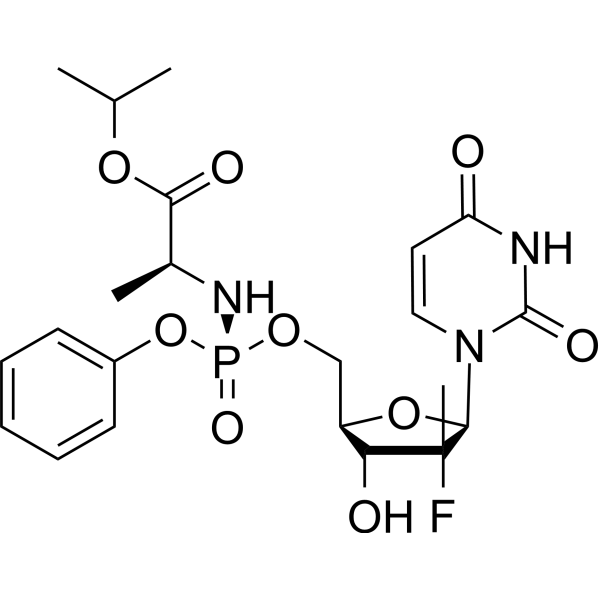
Sofosbuvir
Maximum Cited Publications
117 Publications Verification
GS-7977; PSI-7977
|
HCV
|
Infection
Cancer
|
|
Sofosbuvir (GS-7977) is an HCV RNA replication inhibitor with an EC50 of 92 nM .
|
-
-
- HY-10241
-
|
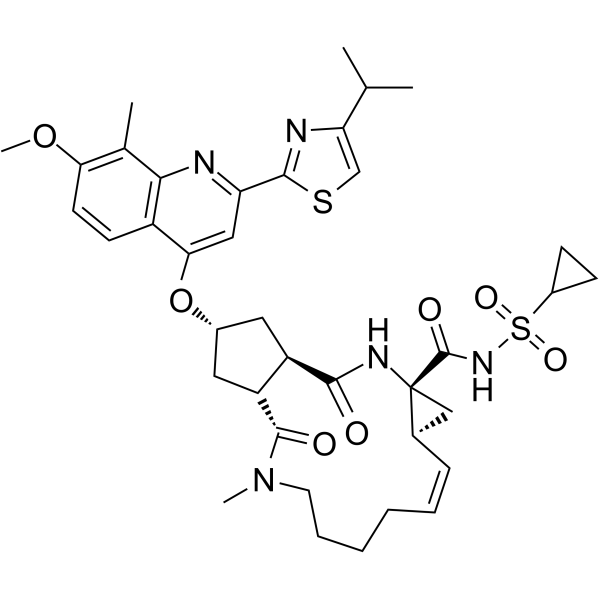
TMC435; TMC435350
|
HCV
HCV Protease
SARS-CoV
DNA/RNA Synthesis
|
Infection
|
|
Simeprevir (TMC435; TMC435350) is an oral, potent and highly specific hepatitis C virus (HCV) NS3/4A protease inhibitor with a Ki of 0.36 nM. Simeprevir inhibits HCV replication with an EC50 of 7.8 nM. Simeprevir also potently suppresses SARS-CoV-2 replication and synergizes with Remdesivir. Simeprevir inhibits the main protease (M pro) and the RNA-dependent RNA polymerase (RdRp) of SARS-CoV-2, and also modulates host immune responses .
|
-
-
- HY-17470
-
|
NSC 289637; HE 69
|
HCV
SARS-CoV
Antibiotic
Parasite
|
Inflammation/Immunology
|
|
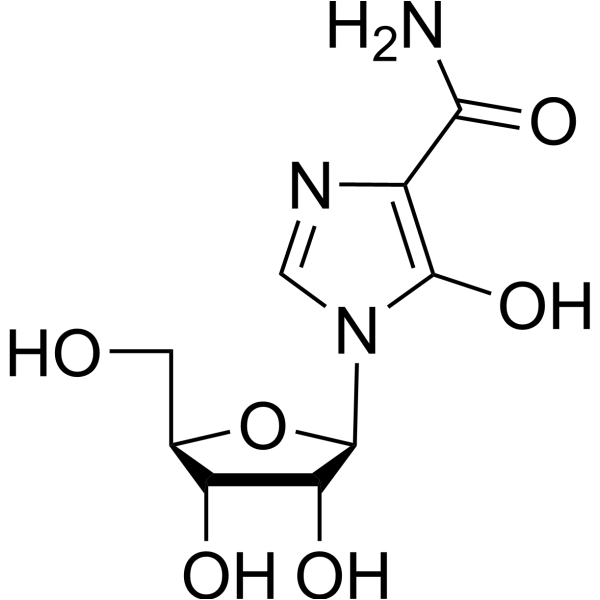
Mizoribine (NSC 289637), an imidazole nucleoside, inhibits HCV RNA replication with IC50 of approximately 100 μM for anti-HCV activity. Immunosuppressant . Mizoribine, an IMPDH inhibitor, inhibits replication of SARS-CoV with IC50s of 3.5 μg/mL and 16 μg/mL for SARS-CoV Frankfurt-1 and SARS-CoV HKU39849, respectively .
|
-
-
- HY-146246
-
|
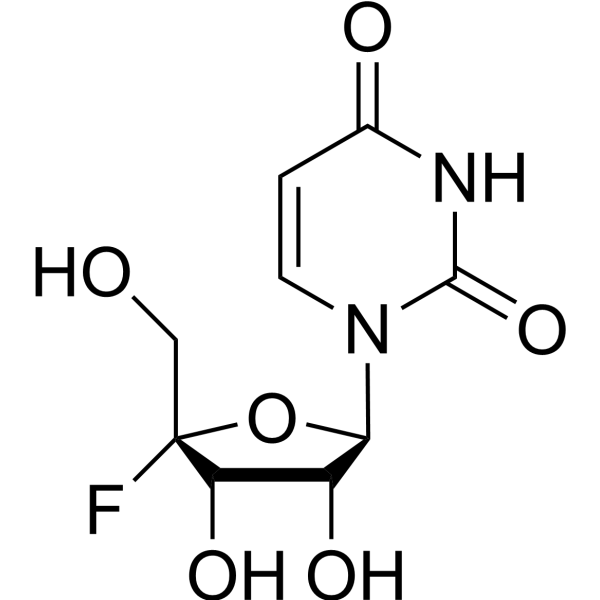
4'-FlU; 4'-Fluorouridine
|
RSV
SARS-CoV
HCV
|
Infection
|
|
EIDD-2749 (4'-Fluorouridine) is an orally active RdRp inhibitor. EIDD-2749 effectively blocks the replication of RSV and SARS-CoV-2. EIDD-2749 also exhibits activity against HCV and lymphocytic choriomeningitis virus (LCMV). EIDD-2749 is a promising oral therapeutic candidate for COVID-19 and is also suitable for research on other RNA viruses .
|
-
-
- HY-W011834
-
|
|
HCV
DNA/RNA Synthesis
|
Infection
|
|
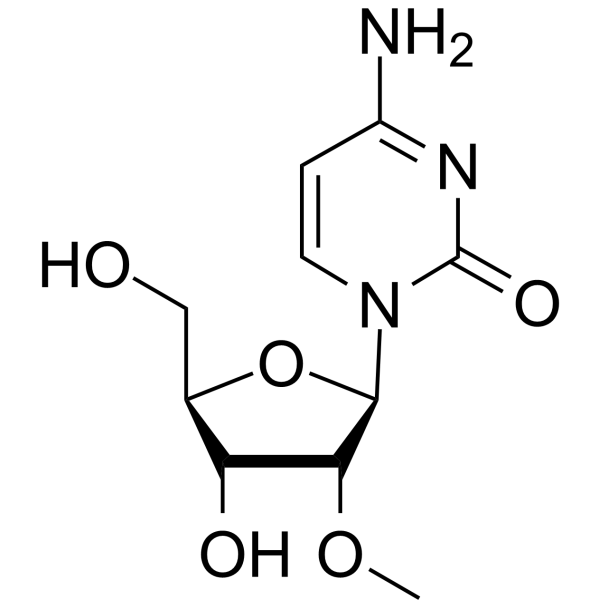
2'-O-Methylcytidine is an orally active 2'-substituted nucleoside as a inhibitor of HCV replication with antiviral activity. 2'-O-Methylcytidine inhibits RNA-dependent RNA polymerase (NS5B)-catalyzed RNA synthesis in vitro, in a manner that is competitive with substrate nucleoside triphosphate .
|
-
-
- HY-125371
-
|
|
HCV
|
Infection
Inflammation/Immunology
|
|
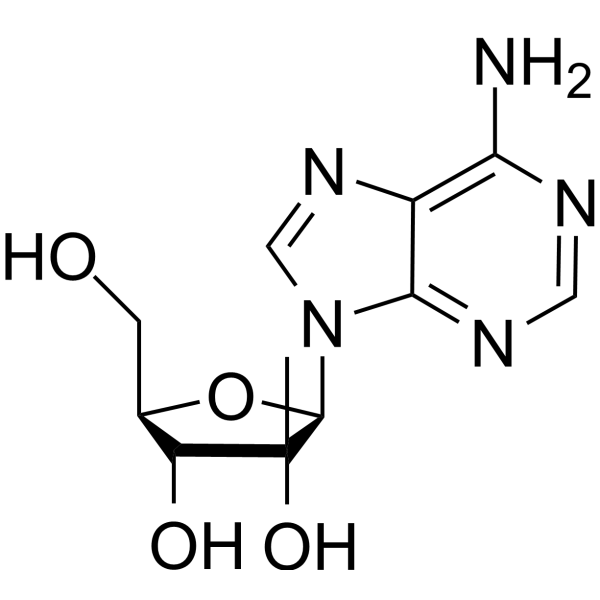
2'-C-Methyladenosine is an inhibitor of hepatitis C virus (HCV) replication. 2'-C-Methyladenosine inhibits HCV replicon and NS5B-catalyzed RNA synthesis with IC50 values of 0.3μM and 1.9 μM, respectively. 2'-C-Methyladenosine also potently inhibits LRV1 in Leishmania guyanensis (Lgy) and Leishmania braziliensis .
|
-
-
- HY-30234A
-
-
-
- HY-N3519
-
|
|
HCV
Branched Chain Amino Acid Transaminase (BCAT)
Interleukin Related
NF-κB
ERK
p38 MAPK
JNK
|
Infection
Inflammation/Immunology
|
|
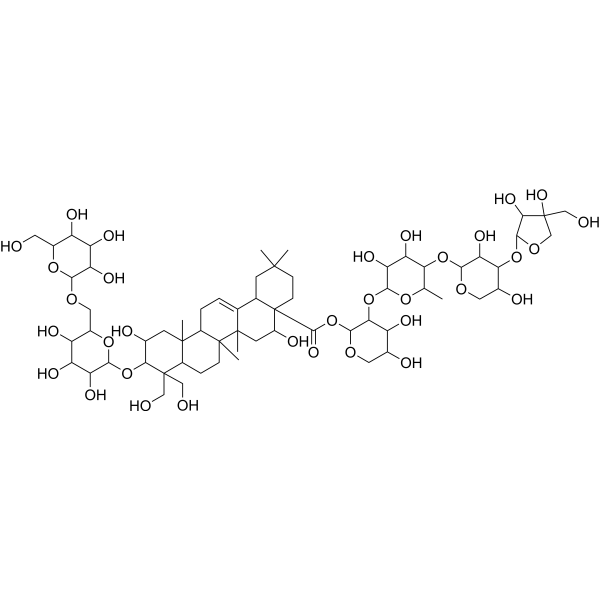
Platycodin D3 is a triterpenoid saponin that can be found in Platycodon grandiflorum. Platycodin D3 exhibits multiple activities including anti-inflammation, regulation of airway mucus secretion, improvement of asthmatic airway inflammation and remodeling, and inhibition of hepatitis C virus (HCV) replication. The IC50 value of Platycodin D3 against HCV NS5B RNA-dependent RNA polymerase is 8 μg/mL. Platycodin D3 can be used in studies related to asthma, hepatitis C virus infection and inflammatory diseases .
|
-
-
- HY-W012282
-
|
|
HCV
|
Infection
|
|
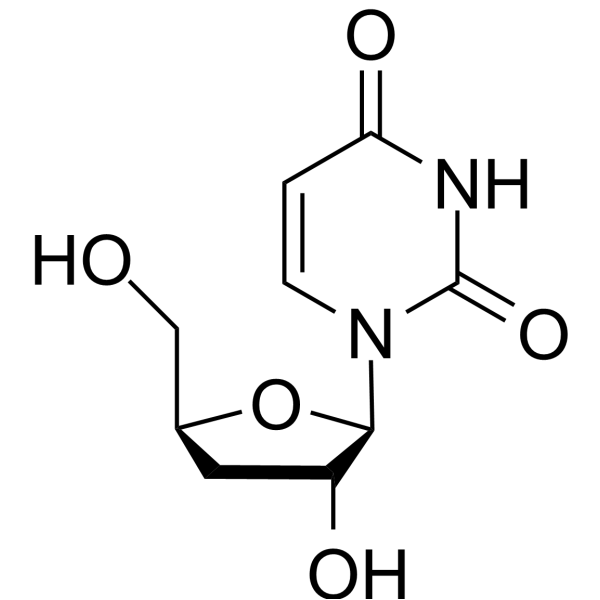
3′-Deoxyuridine is a 3'-deoxynucleoside analog and a 2',3'-dideoxynucleoside. 3′-Deoxyuridine does not inhibit the replication of HCV-like RNA templates or luciferase levels in human cells at the tested concentrations. 3′-Deoxyuridine serves as a substrate for microbial dideoxyribosylation reactions to generate various 2',3'-dideoxynucleosides, but cannot be converted into 2',3'-dideoxycytidine by resting E. coli AJ 2595 cells. 3′-Deoxyuridine can be formed by the deamination of 3'-deoxycytidine by E. coli BM-11 cytidine deaminase, and can also undergo phosphorolytic cleavage to produce uracil and the corresponding pentose phosphate. 3′-Deoxyuridine has been used in research related to HCV and other relevant fields .
|
-
-
- HY-10242
-
|
BILN 2061; BILN 2061ZW
|
HCV
HCV Protease
DNA/RNA Synthesis
|
Infection
|
|
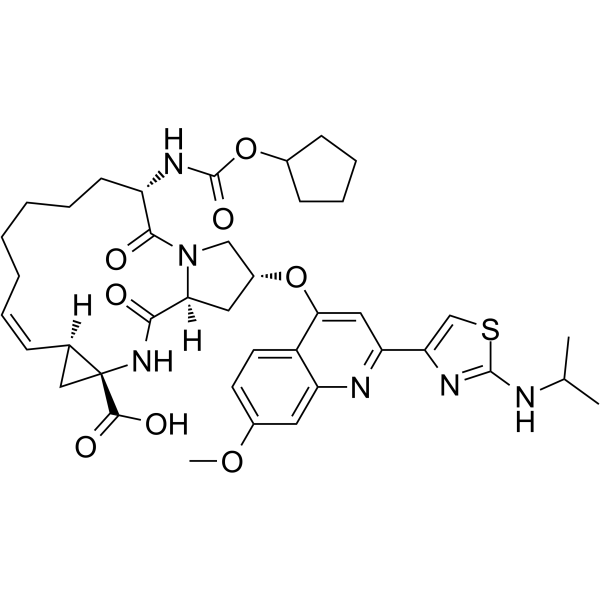
Ciluprevir (BILN 2061; BILN 2061ZW) is an orally active macrocyclic peptide inhibitor of hepatitis C virus (HCV)NS3 protease, with an IC50 of 3 nM. Ciluprevir has Kᵢ values of 0.66 nM and 0.30 nM against genotypes 1b and 1a, respectively. Ciluprevir inhibits HCV RNA replication with an EC50 of 1.2 nM, and its EC50 values against genotypes 1b and 1a are 3 nM and 4 nM, respectively. Ciluprevir shows no significant inhibition against human leukocyte elastase and hepatic cathepsin B. Ciluprevir can be used for genotype 1 HCV infection .
|
-
-
- HY-15005S1
-
|
PSI-7977-d6; GS-7977-d6
|
Isotope-Labeled Compounds
HCV
|
Infection
|
|
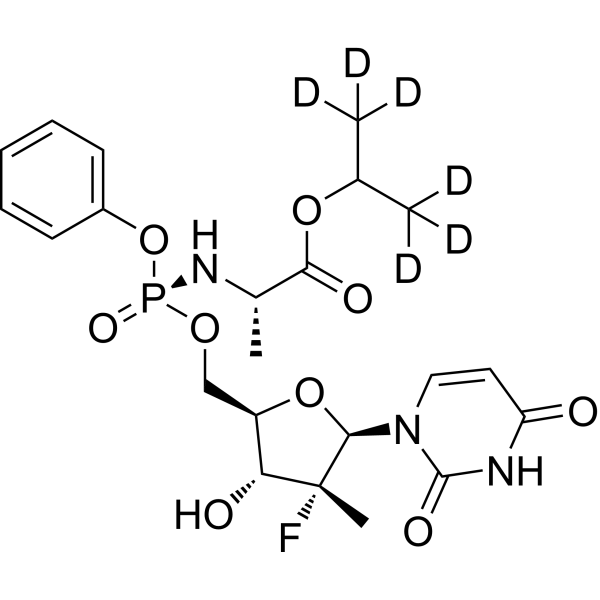
Sofosbuvir-d6 is the deuterium labeled Sofosbuvir. Sofosbuvir (PSI-7977) is an active inhibitor of HCV RNA replication in the HCV replicon assay, demonstrates potent anti-hepatitis C virus (HCV) activity.
|
-
-
- HY-10240
-
|
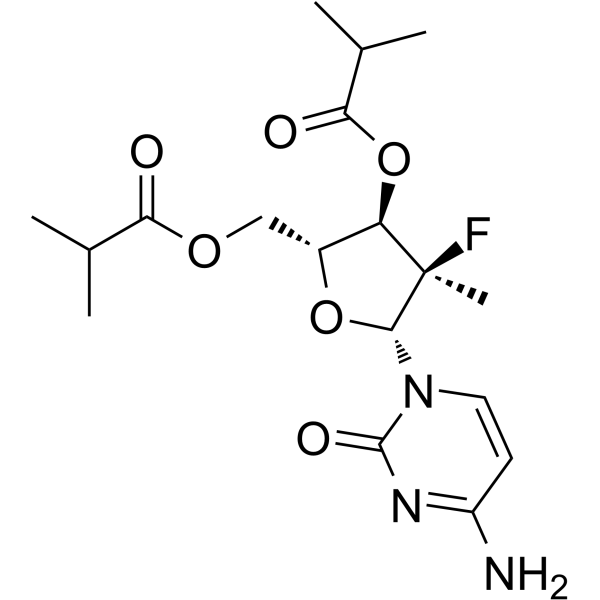
RG 7128; R-7128; PSI 6130 diisobutyrate
|
HCV
|
Infection
|
|
Mericitabine (RG 7128; R-7128) is a nucleoside inhibitor of the HCV NS5B polymerase that acts as an RNA chain terminator and prevents elongation of RNA transcripts during replication.
|
-
-
- HY-10444
-
R-1479
3 Publications Verification
4'-Azidocytidine
|
HCV
DNA/RNA Synthesis
|
Infection
|
|
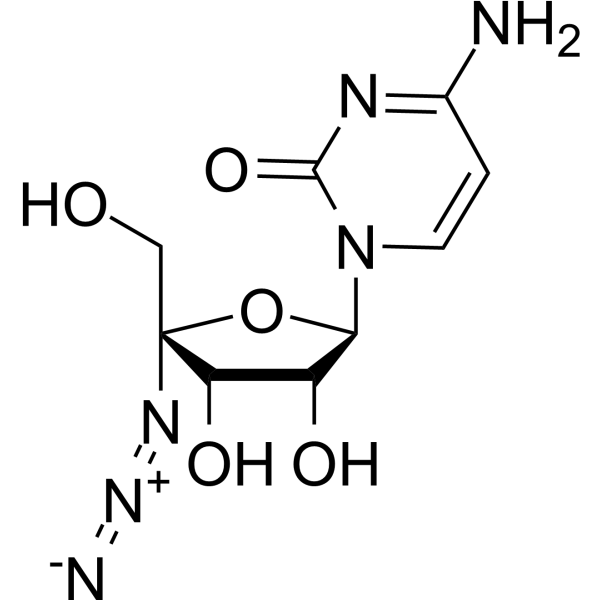
R-1479 (4'-Azidocytidine), a nucleoside analogue, is a specific inhibitor of RNA-dependent RNA polymerase (RdRp) of HCV. R-1479 inhibits HCV replication in the HCV subgenomic replicon system (IC50=1.28 μM) . R-1479 is a click chemistry reagent, it contains an Azide group and can undergo copper-catalyzed azide-alkyne cycloaddition reaction (CuAAc) with molecules containing Alkyne groups. It can also undergo strain-promoted alkyne-azide cycloaddition (SPAAC) reactions with molecules containing DBCO or BCN groups.
|
-
-
- HY-N1341
-
|
|
HCV
HCV Protease
DNA/RNA Synthesis
Bacterial
|
Infection
|
|
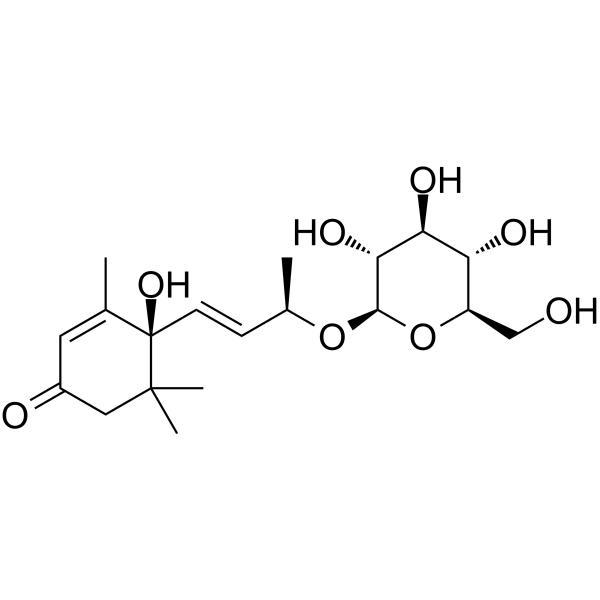
Roseoside is an inhibitor of DNA gyrase and HAV 3C protease, and also inhibits HCV NS5A/B replicase in human systems with an IC50 of 20 μM. Roseoside binds to the active site of enzymes and stabilizes the interaction by forming hydrogen bonds with key amino acid residues. Roseoside inhibits the growth of Gram-positive bacteria, Gram-negative bacteria, and Candida albicans, and interferes with HCV RNA replication in vitro by inhibiting HCV NS5A/B replicase (IC50=20 μM). Roseoside shows no cytotoxicity and serves as a research tool for studies related to bacterial infections, candidiasis, HAV and HCV .
|
-
-
- HY-131603
-
|
3TCTP
|
Reverse Transcriptase
HCV
HBV
SARS-CoV
Drug Derivative
|
Infection
|
|
Lamivudine triphosphate (3TCTP) is a phosphorylated Lamivudine (HY-B0250) (a nucleoside analogue). Lamivudine triphosphate inhibits the reverse transcriptase of HIV or HBV viruses to block viral replication by chain termination. Lamivudine triphosphate is also an inhibitor of the RdRp activity of the NS5B subunit of the HCV. Lamivudine triphosphate can be incorporated into the nascent RNA by the SARS-CoV-2 RdRp, thus halting mutations in the nascent SARS-CoV-2 RNA .
|
-
-
- HY-30234
-
-
-
- HY-15256
-
|
BI 201335
|
HCV Protease
|
Infection
|
|
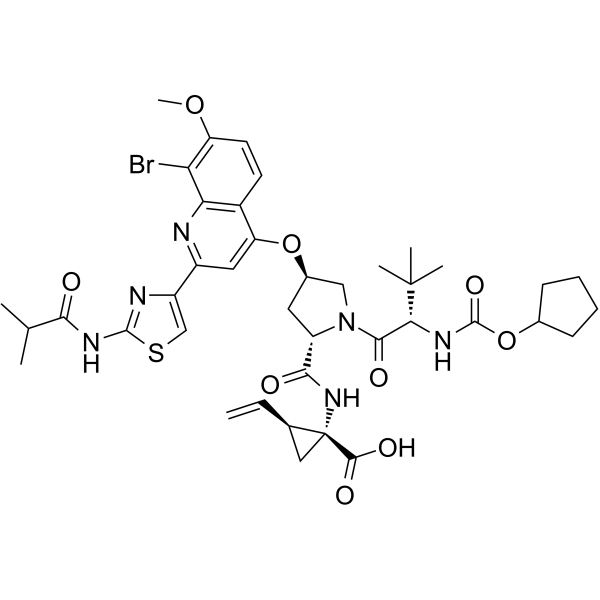
Faldaprevir (BI 201335) is a potent, orally active and selective noncovalent inhibitor of NS3/4A protease of HCV (hepatitis C virus) genotypes 1a and 1b, with Ki values of 2.6 and 2.0 nM, respectively. Faldaprevir inhibits HCV RNA replication, with EC50 values of 6.5 and 3.1 nM, respectively. Faldaprevir has potent antiviral activity against chronic HCV infection .
|
-
-
- HY-W011834R
-
|
|
Reference Standards
HCV
DNA/RNA Synthesis
|
Infection
|
|
2'-O-Methylcytidine (Standard) is the analytical standard of 2'-O-Methylcytidine. This product is intended for research and analytical applications. 2'-O-Methylcytidine is an orally active 2'-substituted nucleoside as a inhibitor of HCV replication with antiviral activity. 2'-O-Methylcytidine inhibits RNA-dependent RNA polymerase (NS5B)-catalyzed RNA synthesis in vitro, in a manner that is competitive with substrate nucleoside triphosphate .
|
-
-
- HY-156215
-
|
|
HCV
|
Infection
|
|
NCI-B16 is a small molecule RNA binder and inhibits HCV viral replication .
|
-
-
- HY-W128400
-
|
|
DNA/RNA Synthesis
HCV
|
Infection
|
|
3′-Deoxy-3′-fluoroguanosine exhibits antiviral activity against tick-borne encephalitis virus (TBEV), through interaction with NS5B RdRp of HCV, resulting in suppression of viral RNA synthesis by disruption of further extension of the replicating viral RNA .
|
-
-
- HY-W011834S
-
|
|
Isotope-Labeled Compounds
HCV
|
Infection
|
|
2'-O-Methylcytidine-d3 is deuterium labeled 2'-O-Methylcytidine (HY-W011834). 2'-O-Methylcytidine is a 2'-substituted nucleoside as a inhibitor of HCV replication. 2'-O-Methylcytidine inhibits RNA-dependent RNA polymerase (NS5B)-catalyzed RNA synthesis in vitro, in a manner that is competitive with substrate nucleoside triphosphate.
|
-
-
- HY-W555382
-
|
2-Nonylquinolin-4(1H)-one
|
HCV
|
Infection
|
|
Pseudane IX, a compound isolated from the leaves of Ruta angustifolia, has strong anti-HCV activity with an IC50 value of 1.4 μg/mL. Pseudane IX reduces HCV RNA replication and viral protein synthesis levels .
|
-
-
- HY-15005R
-
|
GS-7977 (Standard); PSI-7977 (Standard)
|
Reference Standards
HCV
|
Infection
|
|
Sofosbuvir (Standard) is the analytical standard of Sofosbuvir. This product is intended for research and analytical applications. Sofosbuvir (GS-7977) is an HCV RNA replication inhibitor with an EC50 of 92 nM .
|
-
-
- HY-17470R
-
|
NSC 289637 (Standard); HE 69 (Standard)
|
Reference Standards
HCV
SARS-CoV
Antibiotic
Parasite
|
Inflammation/Immunology
|
|
Mizoribine (Standard) is the analytical standard of Mizoribine. This product is intended for research and analytical applications. Mizoribine (NSC 289637), an imidazole nucleoside, inhibits HCV RNA replication with IC50 of approximately 100 μM for anti-HCV activity. Immunosuppressant . Mizoribine, an IMPDH inhibitor, inhibits replication of SARS-CoV with IC50s of 3.5 μg/mL and 16 μg/mL for SARS-CoV Frankfurt-1 and SARS-CoV HKU39849, respectively .
|
-
-
- HY-15005A
-
|
|
HCV
|
Infection
|
|
PSI-7976 is the isomer of PSI-7977. PSI-7977 is an active inhibitor of HCV RNA replication in the HCV replicon assay, demonstrates potent anti-hepatitis C virus (HCV) activity.
|
-
-
- HY-N8188
-
|
|
HCV
HCV Protease
|
Infection
|
|
Dehydrojuncusol, a potent HCV inhibitor, targets HCV NS5A and is able to inhibit RNA replication of replicons harboring resistance mutations to anti-NS5A direct-acting antivirals. Dehydrojuncusol significantly inhibits HCV infection when added after virus inoculation of HCV genotype 2a (EC50=1.35?μM) .
|
-
-
- HY-I0515
-
|
|
HCV
|
Infection
|
|
Sofosbuvir impurity K, an diastereoisomer of Sofosbuvir, is the impurity of Sofosbuvir. Sofosbuvir (PSI-7977) is an inhibitor of HCV RNA replication, demonstrates potent anti-hepatitis C virus activity.
|
-
-
- HY-15005B
-
|
|
Drug Metabolite
|
Others
|
|
Sofosbuvir impurity C is an impurity of Sofosbuvir, Sofosbuvir is an active inhibitor of HCV RNA replication in the HCV replicon assay, demonstrates potent anti-hepatitis C virus (HCV) activity.
|
-
-
- HY-15005S
-
|
PSI-7977-13C,d3; GS-7977-13C,d3
|
Isotope-Labeled Compounds
HCV
|
Infection
|
|
Sofosbuvir- 13C,d3 is the deuterium labeled Sofosbuvir. Sofosbuvir (PSI-7977) is an active inhibitor of HCV RNA replication in the HCV replicon assay, demonstrates potent anti-hepatitis C virus (HCV) activity.
|
-
-
- HY-10241A
-
|
TMC435 sodium; TMC435350 sodium
|
HCV
HCV Protease
SARS-CoV
DNA/RNA Synthesis
|
Infection
|
|
Simeprevir (TMC435; TMC435350) sodium is an oral, potent and highly specific hepatitis C virus (HCV) NS3/4A protease inhibitor with a Ki of 0.36 nM. Simeprevir sodium inhibits HCV replication with an EC50 of 7.8 nM. Simeprevir sodium also potently suppresses SARS-CoV-2 replication and synergizes with Remdesivir. Simeprevir sodium inhibits the main protease (M pro) and the RNA-dependent RNA polymerase (RdRp) of SARS-CoV-2, and also modulates host immune responses .
|
-
-
- HY-15005C
-
|
|
HCV
|
Infection
|
|
Sofosbuvir impurity A, an diastereoisomer of Sofosbuvir, is the impurity of Sofosbuvir. Sofosbuvir (PSI-7977) is an inhibitor of HCV RNA replication, demonstrates potent anti-hepatitis C virus activity.
|
-
-
- HY-I0513
-
|
|
HCV
|
Others
|
|
Sofosbuvir impurity N, an diastereoisomer of Sofosbuvir, is the impurity of Sofosbuvir. Sofosbuvir (PSI-7977) is an inhibitor of HCV RNA replication, demonstrates potent anti-hepatitis C virus activity.
|
-
-
- HY-I0735
-
|
|
HCV
|
Infection
|
|
Sofosbuvir impurity M, an diastereoisomer of Sofosbuvir, is the impurity of Sofosbuvir. Sofosbuvir (PSI-7977) is an inhibitor of HCV RNA replication, demonstrates potent anti-hepatitis C virus activity.
|
-
-
- HY-I0512
-
|
|
HCV
|
Infection
|
|
Sofosbuvir impurity I, an diastereoisomer of Sofosbuvir, is the impurity of Sofosbuvir. Sofosbuvir (PSI-7977) is an inhibitor of HCV RNA replication, demonstrates potent anti-hepatitis C virus activity.
|
-
-
- HY-10241S
-
|
TMC435-13C,d3; TMC435350-13C,d3
|
Isotope-Labeled Compounds
HCV
HCV Protease
SARS-CoV
DNA/RNA Synthesis
|
Infection
|
|
Simeprevir- 13C,d3 is the 13C- and deuterium labeled Simeprevir. Simeprevir is an oral, potent and highly specific hepatitis C virus (HCV) NS3/4A protease inhibitor with a Ki of 0.36 nM. Simeprevir inhibits HCV replication with an EC50 of 7.8 nM. Simeprevir also potently suppresses SARS-CoV-2 replication and synergizes with Remdesivir. Simeprevir inhibits the main protease (Mpro) and the RNA-dependent RNA polymerase (RdRp) of SARS-CoV-2, and also modulates host immune responses .
|
-
-
- HY-131603B
-
|
3TCTP TEA
|
Reverse Transcriptase
HCV
HBV
SARS-CoV
Drug Derivative
|
Infection
|
|
Lamivudine triphosphate (3TCTP) TEA is a phosphorylated Lamivudine (HY-B0250) (a nucleoside analogue). Lamivudine triphosphate TEA inhibits the reverse transcriptase of HIV or HBV viruses to block viral replication by chain termination. Lamivudine triphosphate TEA is also an inhibitor of the RdRp activity of the NS5B subunit of the HCV. Lamivudine triphosphate TEA can be incorporated into the nascent RNA by the SARS-CoV-2 RdRp, thus halting mutations in the nascent SARS-CoV-2 RNA .
|
-
-
- HY-I0719
-
|
|
Drug Metabolite
|
Others
|
|
Sofosbuvir impurity B is an impurity of Sofosbuvir, Sofosbuvir is an active inhibitor of HCV RNA replication in the HCV replicon assay, demonstrates potent anti-hepatitis C virus (HCV) activity.
|
-
-
- HY-I0723
-
|
|
Drug Metabolite
|
Others
|
|
Sofosbuvir impurity D is an impurity of Sofosbuvir, Sofosbuvir is an active inhibitor of HCV RNA replication in the HCV replicon assay, demonstrates potent anti-hepatitis C virus (HCV) activity.
|
-
-
- HY-I0727
-
|
|
Drug Metabolite
|
Others
|
|
Sofosbuvir impurity E is an impurity of Sofosbuvir, Sofosbuvir is an active inhibitor of HCV RNA replication in the HCV replicon assay, demonstrates potent anti-hepatitis C virus (HCV) activity.
|
-
-
- HY-169746
-
|
|
DNA/RNA Synthesis
HCV
|
Infection
|
|
Antiviral agent 63 is a nucleoside analog with anti-HCV activity. Antiviral agent 63 can inhibit viral replication by inhibiting the activity of HCV RNA-dependent RNA polymerase or other virus-related enzymes .
|
-
-
- HY-147885
-
|
|
HCV
|
Infection
|
|
HCV-IN-41 (compound 4) is a highly potent hepatitis C virus (HCV) inhibitor with an EC50 value of 0.006762 nM, 5.183 nM, 1.365 nM and 142.2 nM for HCV genotype 1b, 2a, 3a and 4a, respectively. HCV-IN-41 reduces HCV RNA replication .
|
-
-
- HY-I1196
-
|
|
HCV
|
Infection
|
|
Sofosbuvir impurity L, an diastereoisomer of Sofosbuvir, is the impurity of Sofosbuvir. Sofosbuvir (PSI-7977) is an inhibitor of HCV RNA replication, demonstrates potent anti-hepatitis C virus activity.
|
-
-
- HY-I0938
-
|
|
HCV
|
Infection
|
|
Sofosbuvir impurity H, an diastereoisomer of Sofosbuvir, is the impurity of Sofosbuvir. Sofosbuvir (PSI-7977) is an inhibitor of HCV RNA replication, demonstrates potent anti-hepatitis C virus activity.
|
-
-
- HY-I0406
-
|
|
HCV
|
Infection
|
|
Sofosbuvir impurity F, an diastereoisomer of Sofosbuvir, is the impurity of Sofosbuvir. Sofosbuvir (PSI-7977) is an inhibitor of HCV RNA replication, demonstrates potent anti-hepatitis C virus activity.
|
-
-
- HY-I0408
-
|
|
HCV
|
Others
|
|
Sofosbuvir impurity G, an diastereoisomer of Sofosbuvir, is the impurity of Sofosbuvir. Sofosbuvir (PSI-7977) is an inhibitor of HCV RNA replication, demonstrates potent anti-hepatitis C virus activity.
|
-
-
- HY-I0975
-
|
|
HCV
|
Infection
|
|
Sofosbuvir impurity J, an diastereoisomer of Sofosbuvir, is the impurity of Sofosbuvir. Sofosbuvir (PSI-7977) is an inhibitor of HCV RNA replication, demonstrates potent anti-hepatitis C virus activity.
|
-
-
- HY-10240R
-
|
RG 7128 (Standard); R-7128 (Standard); PSI 6130 diisobutyrate (Standard)
|
Reference Standards
HCV
|
Infection
|
|
Mericitabine (Standard) is the analytical standard of Mericitabine. This product is intended for research and analytical applications. Mericitabine (RG 7128; R-7128) is a nucleoside inhibitor of the HCV NS5B polymerase that acts as an RNA chain terminator and prevents elongation of RNA transcripts during replication.
|
-
-
- HY-15256A
-
|
BI 201335 sodium
|
HCV Protease
|
Infection
|
|
Faldaprevir sodium is a potent, orally active and selective noncovalent inhibitor of NS3/4A protease of HCV (hepatitis C virus) genotypes 1a and 1b, with Ki values of 2.6 and 2.0 nM, respectively. Faldaprevir sodium inhibits HCV RNA replication, with EC50 values of 6.5 and 3.1 nM, respectively. Faldaprevir sodium has potent antiviral activity against chronic HCV infection .
|
-
-
- HY-W555382S
-
|
2-Nonylquinolin-4(1H)-one-d4
|
Isotope-Labeled Compounds
HCV
|
Infection
|
|
Pseudane IX-d4 (2-Nonylquinolin-4(1H)-one-d4) is deuterium labeled Pseudane IX. Pseudane IX, a compound isolated from the leaves of Ruta angustifolia, has strong anti-HCV activity with an IC50 value of 1.4 μg/mL. Pseudane IX reduces HCV RNA replication and viral protein synthesis levels .
|
-
-
- HY-171587
-
|
|
HCV
|
Infection
|
|
3′-Deoxy CTP is a nucleotide analogue and a mandatory chain terminator. 3′-Deoxy CTP can cause chain termination by lacking the 3′-hydroxyl group, inhibiting the RNA synthesis activity of HCV nonstructural protein (NS5B) polymerase and blocking viral replication. 3′-Deoxy CTP can be used to study the chain termination mechanism of HCV polymerase and the development of antiviral drugs .
|
-
- HY-171587A
-
|
|
HCV
|
Infection
|
|
3′-Deoxy CTP trisodium is the sodium salt form of 3′-Deoxy CTP (HY-171587). 3′-Deoxy CTP trisodium is a nucleotide analogue and a mandatory chain terminator. 3′-Deoxy CTP trisodium can cause chain termination by lacking the 3′-hydroxyl group, inhibiting the RNA synthesis activity of HCV nonstructural protein (NS5B) polymerase and blocking viral replication. 3′-Deoxy CTP trisodium can be used to study the chain termination mechanism of HCV polymerase and the development of antiviral drugs .
|
-
- HY-128306
-
|
|
HCV Protease
DNA/RNA Synthesis
|
Infection
|
|
HCV-IN-50 (Compound 2) is a competitive and selective HCV NS5B RNA-dependent RNA polymerase inhibitor with an IC50 of 0.3 μM for NS5B △C21 enzyme over △C55 enzyme. HCV-IN-50 has an antiviral activity and efficiently blocks replication of HCV subgenomic replicons especially mutant replicons .
|
-
- HY-10241R
-
|
TMC435 (Standard); TMC435350 (Standard)
|
Reference Standards
HCV
HCV Protease
SARS-CoV
DNA/RNA Synthesis
|
Infection
|
|
Simeprevir (Standard) is the analytical standard of Simeprevir (HY-10241). This product is intended for research and analytical applications. Simeprevir (TMC435; TMC435350) is an oral, potent and highly specific hepatitis C virus (HCV) NS3/4A protease inhibitor with a Ki of 0.36 nM. Simeprevir inhibits HCV replication with an EC50 of 7.8 nM. Simeprevir also potently suppresses SARS-CoV-2 replication and synergizes with Remdesivir. Simeprevir inhibits the main protease (Mpro) and the RNA-dependent RNA polymerase (RdRp) of SARS-CoV-2, and also modulates host immune responses .
|
-
- HY-10444R
-
|
4'-Azidocytidine (Standard)
|
Reference Standards
HCV
DNA/RNA Synthesis
|
Infection
|
|
R-1479 (Standard) is the analytical standard of R-1479 (HY-10444). This product is intended for research and analytical applications. R-1479 (4'-Azidocytidine), a nucleoside analogue, is a specific inhibitor of RNA-dependent RNA polymerase (RdRp) of HCV. R-1479 inhibits HCV replication in the HCV subgenomic replicon system (IC50=1.28 μM) . R-1479 is a click chemistry reagent, it contains an Azide group and can undergo copper-catalyzed azide-alkyne cycloaddition reaction (CuAAc) with molecules containing Alkyne groups. It can also undergo strain-promoted alkyne-azide cycloaddition (SPAAC) reactions with molecules containing DBCO or BCN groups.
|
-
| Cat. No. |
Product Name |
Category |
Target |
Chemical Structure |
| Cat. No. |
Product Name |
Chemical Structure |
| Cat. No. |
Product Name |
|
Classification |
-
- HY-10444
-
R-1479
3 Publications Verification
4'-Azidocytidine
|
|
Azide
|
|
R-1479 (4'-Azidocytidine), a nucleoside analogue, is a specific inhibitor of RNA-dependent RNA polymerase (RdRp) of HCV. R-1479 inhibits HCV replication in the HCV subgenomic replicon system (IC50=1.28 μM) . R-1479 is a click chemistry reagent, it contains an Azide group and can undergo copper-catalyzed azide-alkyne cycloaddition reaction (CuAAc) with molecules containing Alkyne groups. It can also undergo strain-promoted alkyne-azide cycloaddition (SPAAC) reactions with molecules containing DBCO or BCN groups.
|
| Cat. No. |
Product Name |
|
Classification |
-
- HY-W011834
-
|
|
|
Nucleoside Analogs
Cytidine
|
|
2'-O-Methylcytidine is an orally active 2'-substituted nucleoside as a inhibitor of HCV replication with antiviral activity. 2'-O-Methylcytidine inhibits RNA-dependent RNA polymerase (NS5B)-catalyzed RNA synthesis in vitro, in a manner that is competitive with substrate nucleoside triphosphate .
|
-
- HY-10444
-
R-1479
3 Publications Verification
4'-Azidocytidine
|
|
Nucleoside Analogs
Cytidine
|
|
R-1479 (4'-Azidocytidine), a nucleoside analogue, is a specific inhibitor of RNA-dependent RNA polymerase (RdRp) of HCV. R-1479 inhibits HCV replication in the HCV subgenomic replicon system (IC50=1.28 μM) . R-1479 is a click chemistry reagent, it contains an Azide group and can undergo copper-catalyzed azide-alkyne cycloaddition reaction (CuAAc) with molecules containing Alkyne groups. It can also undergo strain-promoted alkyne-azide cycloaddition (SPAAC) reactions with molecules containing DBCO or BCN groups.
|
Your information is safe with us. * Required Fields.
Inquiry Information
- Product Name:
- Cat. No.:
- Quantity:
- MCE Japan Authorized Agent:

