



Platycodin D3
Based on 1 publication(s) in Google Scholar
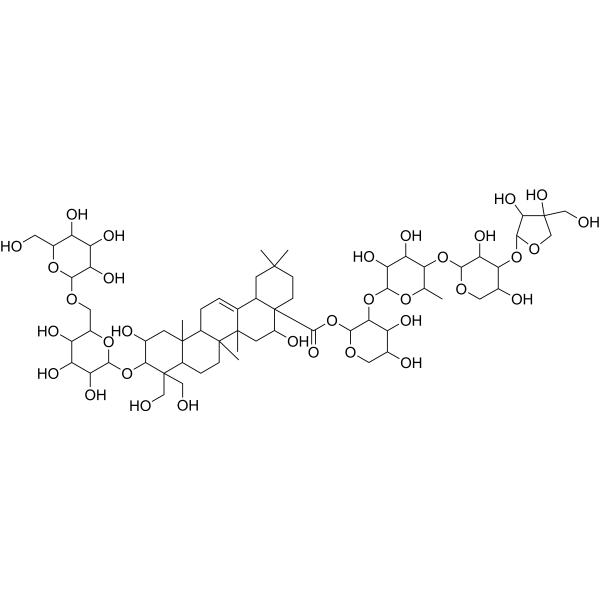
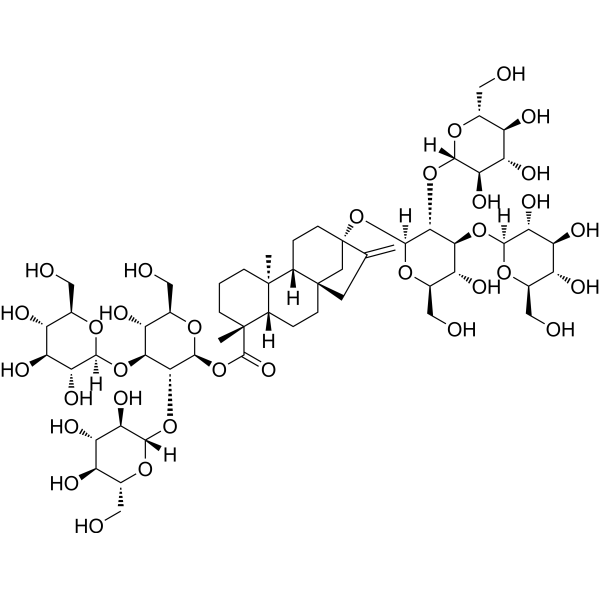
Platycodin D3 is a triterpenoid saponin that can be found in Platycodon grandiflorum. Platycodin D3 exhibits multiple activities including anti-inflammation, regulation of airway mucus secretion, improvement of asthmatic airway inflammation and remodeling, and inhibition of hepatitis C virus (HCV) replication. The IC50 value of Platycodin D3 against HCV NS5B RNA-dependent RNA polymerase is 8 μg/mL. Platycodin D3 can be used in studies related to asthma, hepatitis C virus infection and inflammatory diseases.
Nur für Forschungszwecke. Wir verkaufen nicht an Patienten.
- Reinheit : 98.91%
- CAS. Nr.: 67884-03-1
- Formel: C63H102O33
- Molecular Weight:1387.46
-
Speicherung:
4°C, protect from light
* In solvent : -80°C, 6 months; -20°C, 1 month (protect from light)

To place orders, for customer services and technical support, please contact: MedChemExpress USA
Tel: 609-228-6898 E-mail: [email protected] [email protected]


-
 Biologische Aktivität
-
Chemical Information
- Protokoll
- Reinheit & Dokumentation
- Verweise
-
 Help & FAQs


-
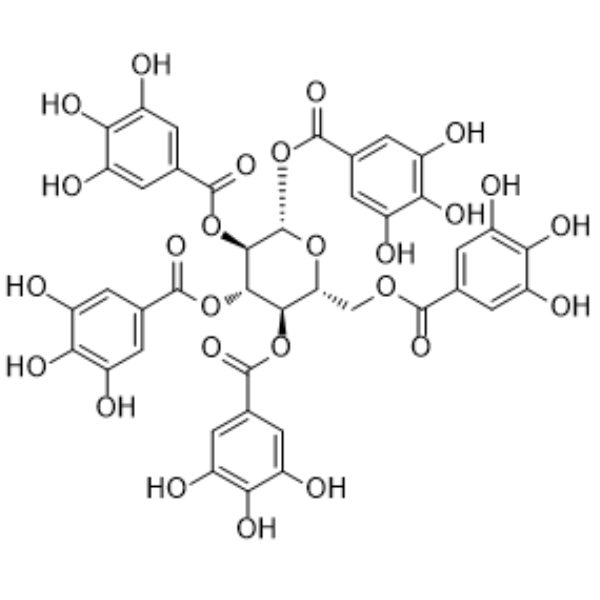
HY-N0527
PentagalloylglucoseAntioxidant -
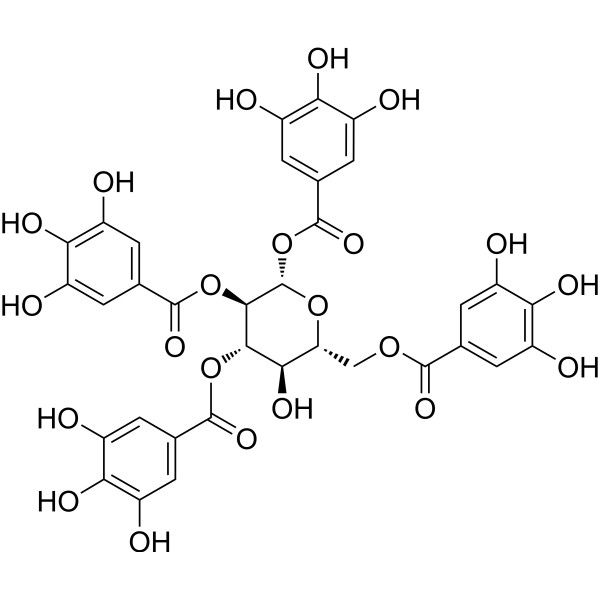
HY-111832
1,2,3,6-TetragalloylglucoseUGT1A1 Inhibitor -
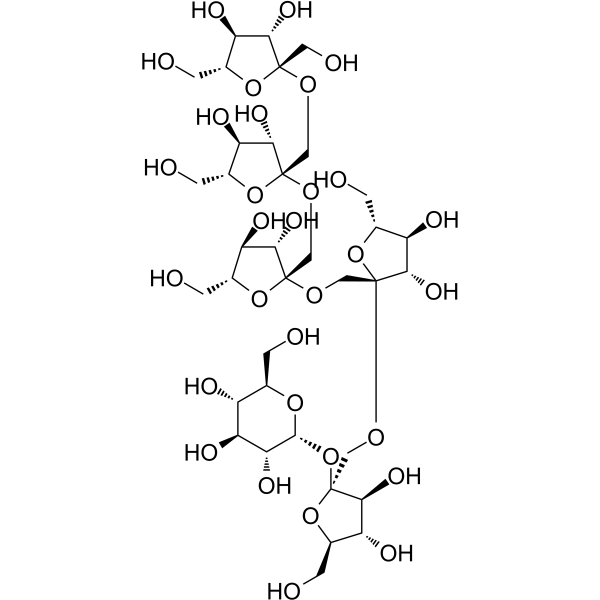
HY-N6838
1,1,1,1-KestohexaoseFructooligosaccharide -
HY-N3520
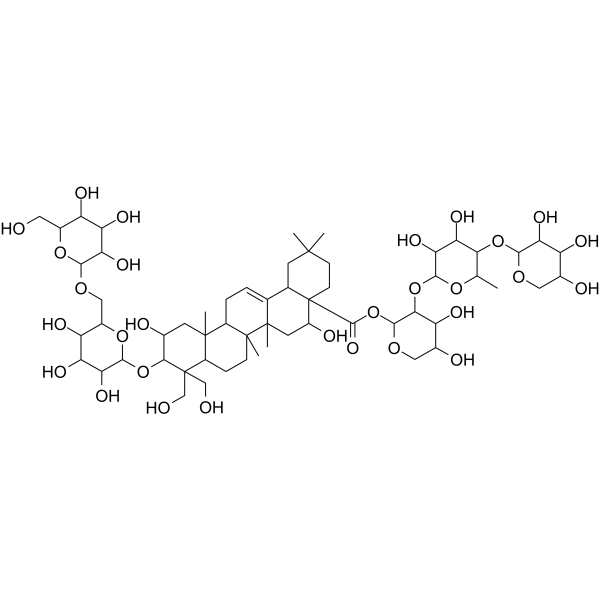
Deapi-platycodin D3 -
HY-N0502
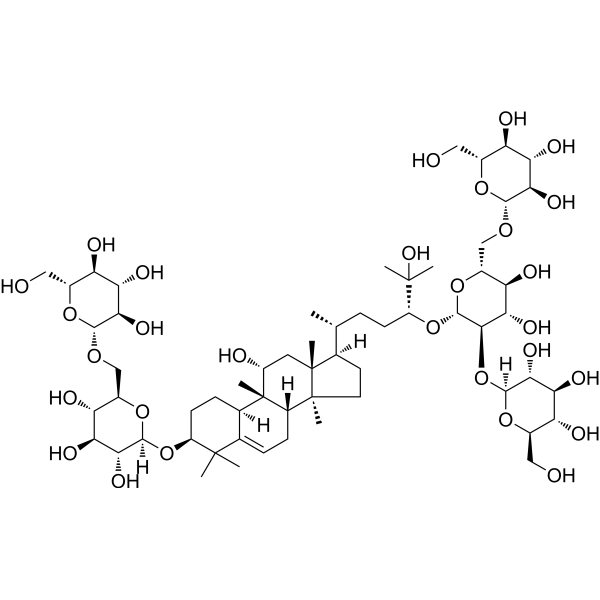
Mogroside VAntioxidant Compound -
HY-N2577
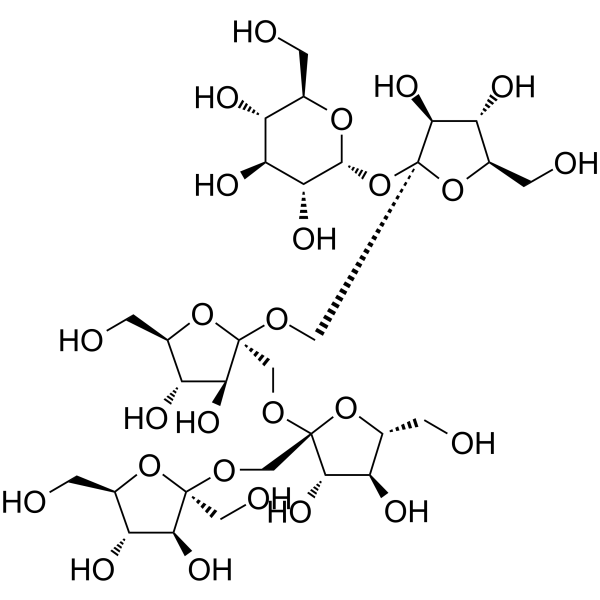
1F-FructofuranosylnystoseFructo-oligose -
HY-N2109
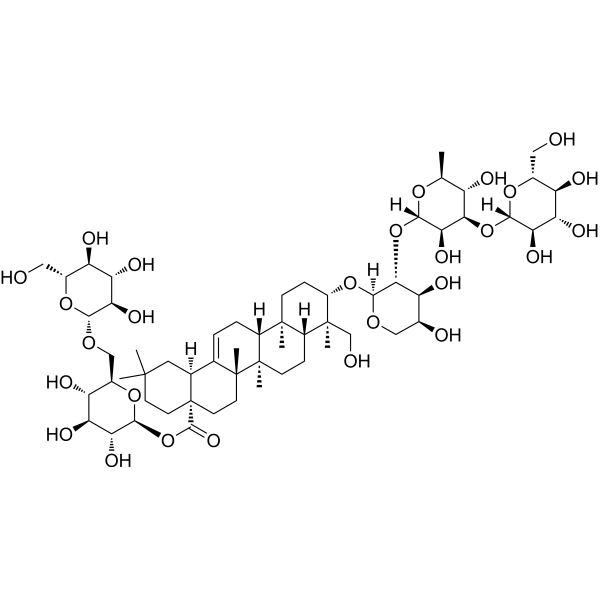
Macranthoidin ASaponin -
HY-N6833
Rebaudioside MSweetener
Publications Citing Use of MedChemExpress (MCE) Platycodin D3
More

Biologische Aktivität
Beschreibung
In Vitro
Platycodin D3 inhibits the activity of HCV NS5B RdRp with an IC50 of 8 μg/mL, and does not inhibit the activity of HCV NS3/4A protease[1].
Platycodin D3 (72 h) inhibits RNA replication of HCV genotype 1b in Huh7 replicon cells, with an EC50 of 2.33 μg/mL and a CC50 of 100 μg/mL in Huh7 cells, indicating low cytotoxicity[1].
Platycodin D3 (48 h) inhibits HCV genotype 2a (JFH1) RNA replication in infected Huh7 cells, with an EC50 of 27 μg/mL[1].
Platycodin D3 (0.5-5 μg/mL; 3 days) dose-dependently inhibits the expression of HCV NS5A protein in Huh7 cells harboring the subgenomic replicon of HCV genotype 1b[1].
Platycodin D3 (0-60 μM; 24 h) dose-dependently inhibits nitric oxide production in RAW 264.7 cells activated by LPS (HY-D1056) and IFN-γ, with an IC50 of 55 μM, and shows no cytotoxicity at concentrations up to 60 μM[2].
Platycodin D3 (20-50 μM; 16-24 h) dose-dependently inhibits iNOS protein expression and upregulates TNF-α mRNA expression in RAW 264.7 cells activated by LPS and IFN-γ[2].
Platycodin D3 (1-100 μM; 30 min pre-incubation) inhibits the production and secretion of MUC5AC mucin in PMA (HY-18739)-induced NCI-H292 cells[3].
MedChemExpress (MCE) has not independently confirmed the accuracy of these methods. They are for reference only.
-
Cell Line:Huh7 cells harboring HCV genotype 1b subgenomic replicon
-
Concentration:0.5, 1, 5 μg/mL
-
Incubation Time:3 days
-
Result:Prominently reduced HCV NS5A protein expression in a dose-dependent manner.
Resulted in near-complete inhibition of NS5A protein levels relative to untreated controls at 5 μg/mL.
In Vivo
MedChemExpress (MCE) has not independently confirmed the accuracy of these methods. They are for reference only.
-
Animal Model:BALB/c (male, 6-8 weeks old, 18-20 g, ovalbumin + aluminum hydroxide-induced asthma)[4]
-
Dosage:20 mg/kg/d; 40 mg/kg/d; 80 mg/kg/d
-
Administration:daily; 8 weeks
-
Result:Enhanced airway dynamic compliance and reduced total airway resistance in a dose-dependent manner following methacholine challenge.
Reduced total inflammatory cells, eosinophils, macrophages, lymphocytes, and neutrophils in BALF in a dose-dependent manne.
Reduced BALF levels of eotaxin, IL-4, IL-5, IL-13, IFN-γ, and serum IgE in a dose-dependent manner.
Reduced lung tissue inflammatory cell infiltration, mucus hypersecretion, and goblet cell hyperplasia in a dose-dependent manner via HE and PAS staining.
Inhibited phosphorylation of NF-κBp65, p38, ERK1/2, and JNK1/2 proteins in lung tissue.


Chemical Information
-
CAS. Nr. 67884-03-1
-
Appearance Solid
-
Molecular Weight 1387.46
-
Formel C63H102O33
-
Color White to off-white
-
SMILES
OC(C(C(OC1C(C(C(O)CO1)OC2C(C(CO)(O)CO2)O)O)C(C)O3)O)C3OC(C(C(O)CO4)O)C4OC(C56C(CC(C)(C)CC6)C7=CCC(C8(C(C(CO)(C(OC9OC(C(O)C(O)C9O)COC%10OC(C(O)C(O)C%10O)CO)C(O)C8)CO)CC%11)C)C%11(C)C7(C)CC5O)=O
-
Structure Classification
-
Initial Source
-
Versand
Room temperature in continental US; may vary elsewhere.
-
Speicherung
4°C, protect from light
* In solvent : -80°C, 6 months; -20°C, 1 month (protect from light)


Publications (1)
-
Journal Impact Factor
-
Most Recent
-
Vet Microbiol
The Chinese medicine monomer Schisandrin C inhibits PRRSV infection by regulating the OGT-PI3K/AKT/mTOR signaling pathway. [Abstract]2026 May:316:110992. PMID: 41865607


Reinheit & Dokumentation
-
Data Sheet (276 KB)
-
SDS (252 KB)
- English - EN (252 KB)
- Français - FR (252 KB)
- Deutsch - DE (252 KB)
- Norwegian - NO (252 KB)
- Español - ES (252 KB)
- Swedish - SV (252 KB)
- Italian - IT (252 KB)
- Korean - KR (252 KB)
- Portuguese - PT (252 KB)
-
Handling Instructions (2659 KB)
Verweise
[1]. Kim JW, et al. Triterpenoid Saponins Isolated from Platycodon grandiflorum Inhibit Hepatitis C Virus Replication. Evid Based Complement Alternat Med. 2013;2013:560417. [Content Brief]
[2]. Wang C, et al. Platycodin D and D3 isolated from the root of Platycodon grandiflorum modulate the production of nitric oxide and secretion of TNF-alpha in activated RAW 264.7 cells. Int Immunopharmacol. 2004;4(8):1039-1049. [Content Brief]
[3]. Ryu J, et al. Effects of the root of Platycodon grandiflorum on airway mucin hypersecretion in vivo and platycodin D(3) and deapi-platycodin on production and secretion of airway mucin in vitro. Phytomedicine. 2014;21(4):529-533. [Content Brief]
[4]. Peng F, et al. Protective Effects of Platycodin D3 on Airway Remodeling and Inflammation via Modulating MAPK/NF-κB Signaling Pathway in Asthma Mice. Evid Based Complement Alternat Med. 2022;2022:1612829. Published 2022 Aug 10. [Content Brief]

Calculators
Konzentration (Stammlösung) × Volumen (Stammlösung) = Konzentration (Ziellösung) × Volumen (Ziellösung)


Platycodin D3 Related Classifications
HY-N3519 Related Classifications
 Powered by Bioz
Keywords
- Platycodin D3
- 67884-03-1
- Platycodin D 3
- Platycodin D-3
- HCV
- Branched Chain Amino Acid Transaminase (BCAT)
- Interleukin Related
- NF-κB
- ERK
- p38 MAPK
- JNK
- NCI-H292 cells
- ERK1/2
- Huh7 cells
- RAW 264.7 cells
- NF-κBp65
- p38 proteins
- human HCV NS5B RNA-dependent RNA polymerase
- asthmatic mice
- JNK1/2
- Platycodon grandiflorum
- Inhibitor
- inhibitor
- inhibit