Search Result
Results for "
L-Phenylalanine
" in MedChemExpress (MCE) Product Catalog:
7
Biochemical Assay Reagents
24
Isotope-Labeled Compounds
| Art. -Nr. |
Produktname |
Target |
Forschungsgebiete |
Chemical Structure |
-
- HY-N0215
-
|
(S)-2-Amino-3-phenylpropionic acid
|
Calcium Channel
iGluR
Endogenous Metabolite
Ligands for E3 Ligase
|
Metabolic Disease
Cancer
|
|
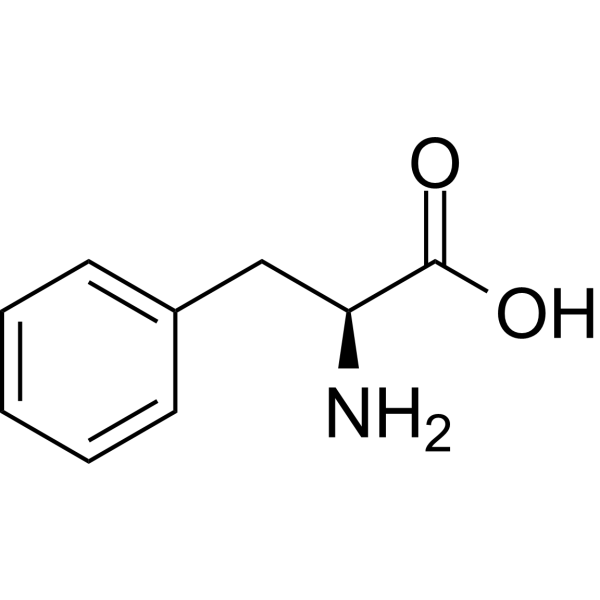
L-Phenylalanine ((S)-2-Amino-3-phenylpropionic acid) is an essential amino acid isolated from Escherichia coli. L-Phenylalanine is a α2δ subunit of voltage-dependent Ca + channels antagonist with a Ki of 980 nM. L-phenylalanine is a competitive antagonist for the glycine- and glutamate-binding sites of N-methyl-D-aspartate receptors (NMDARs) (KB of 573 μM ) and non-NMDARs, respectively. L-Phenylalanine is widely used in the production of food flavors and pharmaceuticals .
|
-
-
- HY-16714
-
|
p-AzidoPhenylalanine; p-Azido-L-Phenylalanine
|
Biochemical Assay Reagents
|
Others
|
|
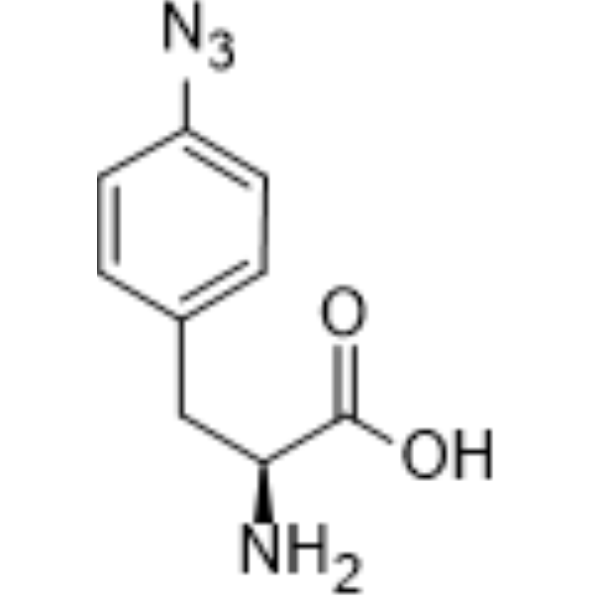
4-Azido-L-phenylalanine is an unnatural amino acid, which is used as an effective vibrational reporter of local protein environments. 4-Azido-L-phenylalanine is a click chemistry reagent, it contains an Azide group and can undergo copper-catalyzed azide-alkyne cycloaddition reaction (CuAAc) with molecules containing Alkyne groups. It can also undergo strain-promoted alkyne-azide cycloaddition (SPAAC) reactions with molecules containing DBCO or BCN groups.
|
-
-
- HY-Y0068
-
|
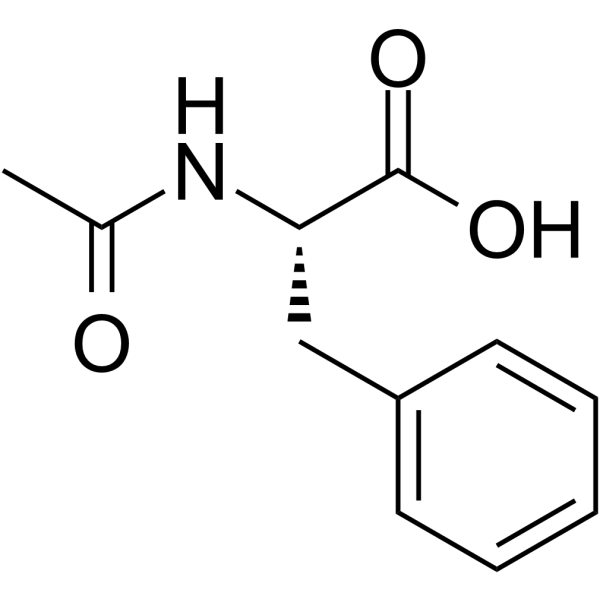
N-AcetylPhenylalanine
|
Endogenous Metabolite
|
Endocrinology
|
|
N-Acetyl-L-phenylalanine (N-Acetylphenylalanine) is a principal acylamino acid. N-Acetyl-L-phenylalanine can be synthesized from L-phenylalanine and acetyl-CoA. N-Acetyl-L-phenylalanine can be used in kidney research .
|
-
-
- HY-N0215S12
-
|
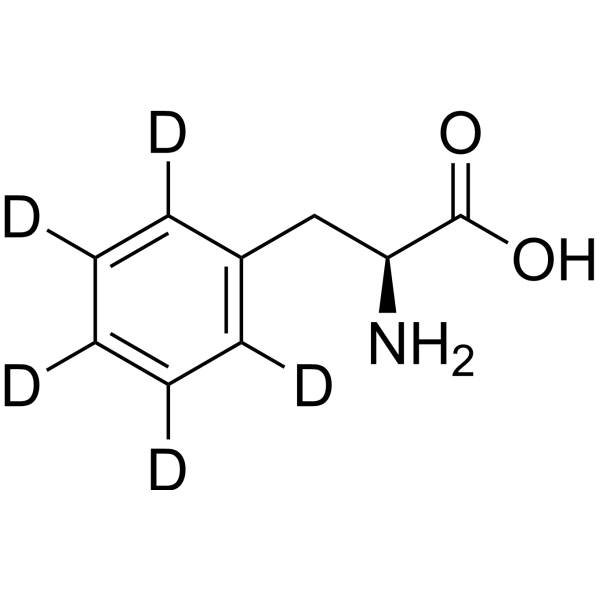
(S)-2-Amino-3-phenylpropionic acid-d5
|
Calcium Channel
iGluR
Endogenous Metabolite
|
Metabolic Disease
|
|
L-Phenylalanine-d5 is the deuterium labeled L-Phenylalanine. L-Phenylalanine ((S)-2-Amino-3-phenylpropionic acid) is an essential amino acid isolated from Escherichia coli. L-Phenylalanine is a α2δ subunit of voltage-dependent Ca+ channels antagonist with a Ki of 980 nM. L-phenylalanine is a competitive antagonist for the glycine- and glutamate-binding sites of N-methyl-D-aspartate receptors (NMDARs) (KB of 573 μM ) and non-NMDARs, respectively. L-Phenylalanine is widely used in the production of food flavors and pharmaceuticals .
|
-
-
- HY-N0215S1
-
|
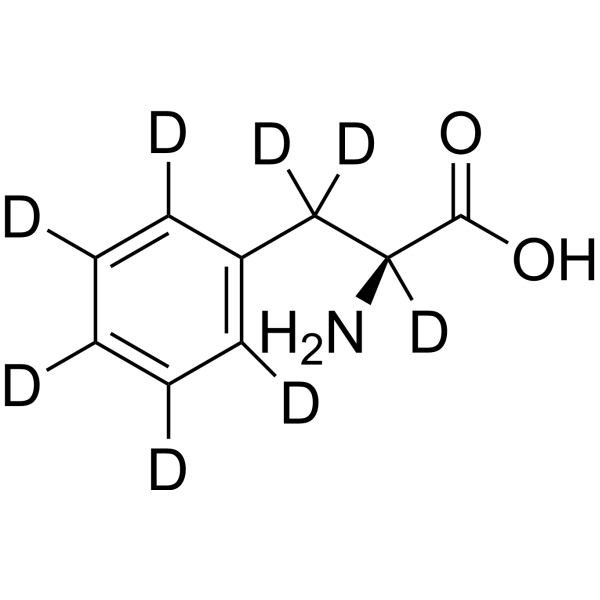
(S)-2-Amino-3-phenylpropionic acid-d8
|
Calcium Channel
iGluR
Endogenous Metabolite
|
Metabolic Disease
|
|
L-Phenylalanine-d8 is the deuterium labeled L-Phenylalanine. L-Phenylalanine ((S)-2-Amino-3-phenylpropionic acid) is an essential amino acid isolated from Escherichia coli. L-Phenylalanine is a α2δ subunit of voltage-dependent Ca+ channels antagonist with a Ki of 980 nM. L-phenylalanine is a competitive antagonist for the glycine- and glutamate-binding sites of N-methyl-D-aspartate receptors (NMDARs) (KB of 573 μM ) and non-NMDARs, respectively. L-Phenylalanine is widely used in the production of food flavors and pharmaceuticals .
|
-
-
- HY-N0215S8
-
|
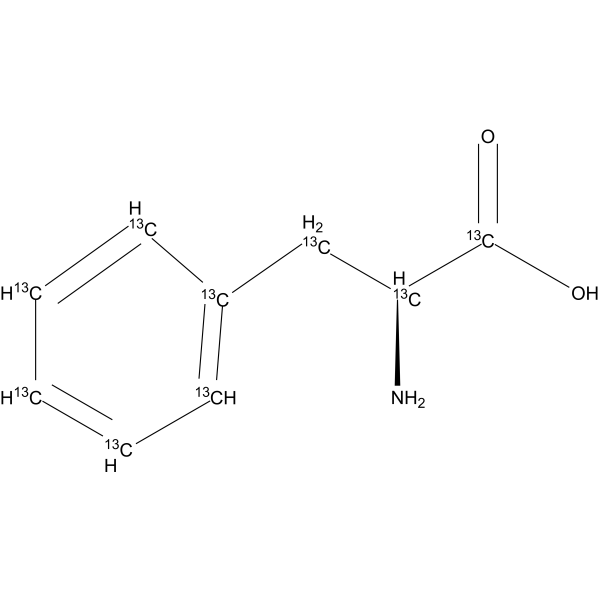
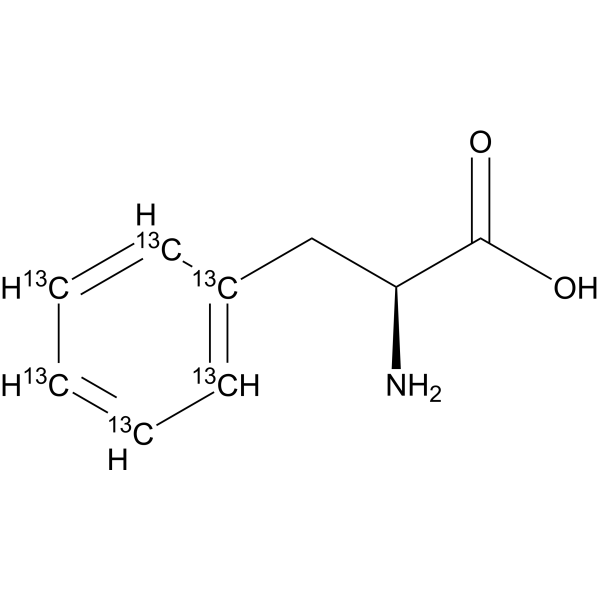
(S)-2-Amino-3-phenylpropionic acid-13C6
|
Isotope-Labeled Compounds
Calcium Channel
iGluR
Endogenous Metabolite
|
Metabolic Disease
|
|
L-Phenylalanine- 13C6 is the 13C-labeled L-Phenylalanine. L-Phenylalanine ((S)-2-Amino-3-phenylpropionic acid) is an essential amino acid isolated from Escherichia coli. L-Phenylalanine is a α2δ subunit of voltage-dependent Ca+ channels antagonist with a Ki of 980 nM. L-phenylalanine is a competitive antagonist for the glycine- and glutamate-binding sites of N-methyl-D-aspartate receptors (NMDARs) (KB of 573 μM ) and non-NMDARs, respectively. L-Phenylalanine is widely used in the production of food flavors and pharmaceuticals .
|
-
-
- HY-16714A
-
|
p-AzidoPhenylalanine hydrochloride; p-Azido-L-Phenylalanine hydrochloride
|
Biochemical Assay Reagents
|
Others
|
|
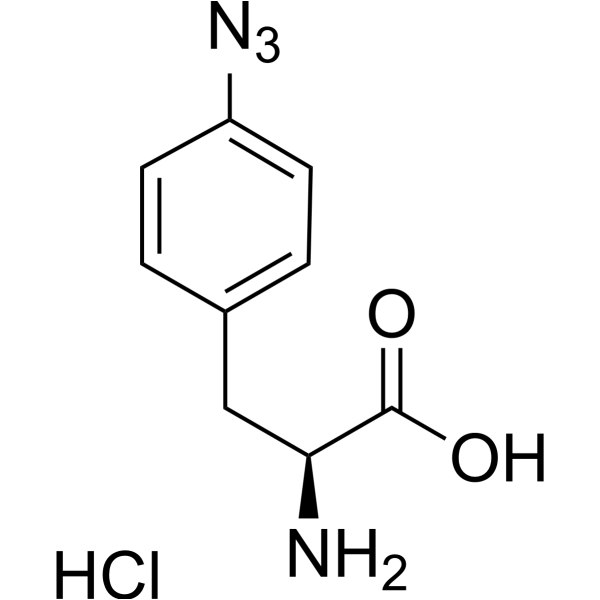
4-Azido-L-phenylalanine hydrochloride is an unnatural amino acid, which is used as an effective vibrational reporter of local protein environments. 4-Azido-L-phenylalanine (hydrochloride) is a click chemistry reagent, it contains an Azide group and can undergo copper-catalyzed azide-alkyne cycloaddition reaction (CuAAc) with molecules containing Alkyne groups. It can also undergo strain-promoted alkyne-azide cycloaddition (SPAAC) reactions with molecules containing DBCO or BCN groups.
|
-
-
- HY-W019599
-
|
L-PCPA
|
5-HT Receptor
Tryptophan Hydroxylase
|
Neurological Disease
|
|
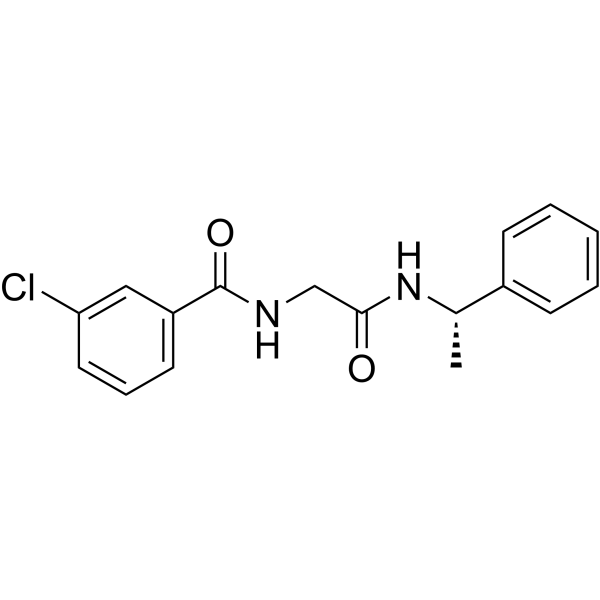
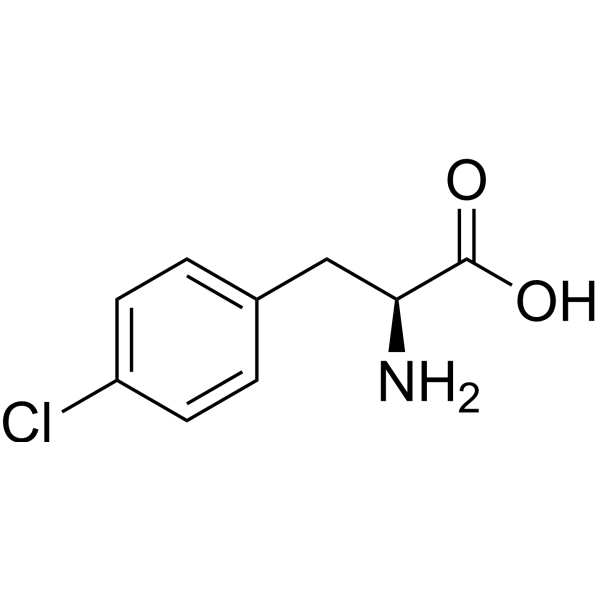
4-Chloro-L-phenylalanine (L-PCPA) is a tryptophan hydroxylase inhibitor targeting TPH1 and TPH2, with the activity of blocking serotonin biosynthesis. 4-Chloro-L-phenylalanine reduces the levels of serotonin and its metabolites in the brain without impairing the survival of serotonergic neurons. 4-Chloro-L-phenylalanine enhances anhedonic, depression-like and anxiety-like behaviors in mice with depleted noradrenergic and dopaminergic neurons. 4-Chloro-L-phenylalanine acts as a decarboxylation substrate for aromatic L-amino acid decarboxylase from Bacillus atrophaeus. 4-Chloro-L-phenylalanine can be used in studies related to Parkinson's disease .
|
-
-
- HY-W013962
-
-
-
- HY-19838
-
|
|
GPR139
|
Neurological Disease
|
|
JNJ-63533054 is a potent, selective and orally active GPR139 agonist with an EC50 of 16 nM for human GPR139 (hGPR139). JNJ-63533054 shows selective for GPR139 over other GPCRs, ion channels, and transporters. JNJ-63533054 can cross the blood-brain barrier (BBB) .
|
-
-
- HY-138207
-
|
|
Mitochondrial Metabolism
Drug Metabolite
|
Inflammation/Immunology
|
|
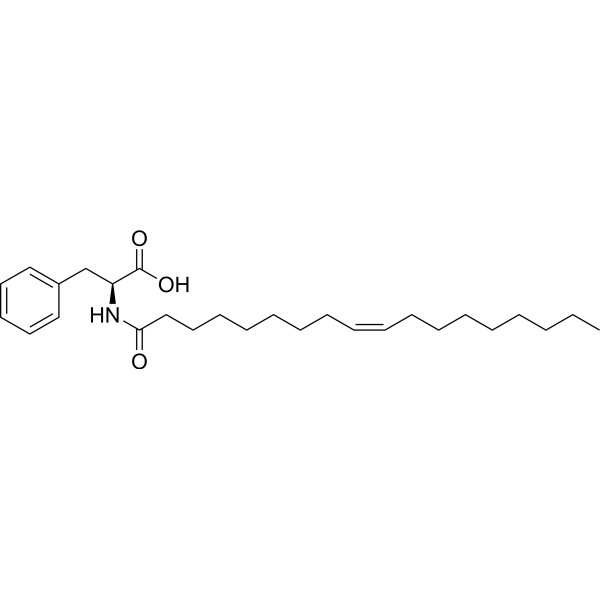
N-Oleoyl-L-phenylalanine is a long-chain N-acyl-L-phenylalanine and also a mitochondrial uncoupler. N-Oleoyl-L-phenylalanine uncouples UCP1-independent respiration in mitochondria, thereby helping to regulate glucose homeostasis. As an endogenous metabolite, the level of N-Oleoyl-L-phenylalanine increases in patients with ulcerative colitis after a high-fat diet. N-Oleoyl-L-phenylalanine can be used in studies related to ulcerative colitis .
|
-
-
- HY-W259767
-
|
|
Amino Acid Derivatives
|
|
|
3-Iodo-L-phenylalanine is an unnatural amino acid that can be used for partial codon redistribution. 3-Iodo-L-phenylalanine has a high efficiency in Ser AGU codon reassignment, and also has a certain effect in Ser UCG codon reassignment. 3-Iodo-L-phenylalanine can be used in the study of genetic code expansion and protein engineering .
|
-
-
- HY-23460
-
|
4-Ethynyl-L-Phenylalanine
|
Tryptophan Hydroxylase
|
Neurological Disease
|
|
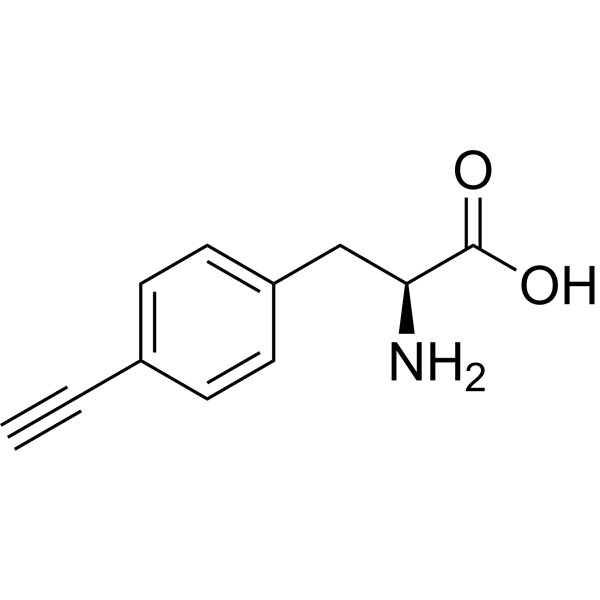
p-Ethynylphenylalanine (4-Ethynyl-L-phenylalanine) is a potent, selective, reversible and competitive inhibitor of tryptophan hydroxylase (TPH), with a Ki of 32.6 μM . p-Ethynylphenylalanine is a click chemistry reagent, it contains an Alkyne group and can undergo copper-catalyzed azide-alkyne cycloaddition (CuAAc) with molecules containing Azide groups.
|
-
-
- HY-W013998
-
-
-
- HY-W012161
-
|
L-Alanyl-L-Phenylalanine; H-Ala-Phe-OH
|
Endogenous Metabolite
Drug Intermediate
|
Others
|
|
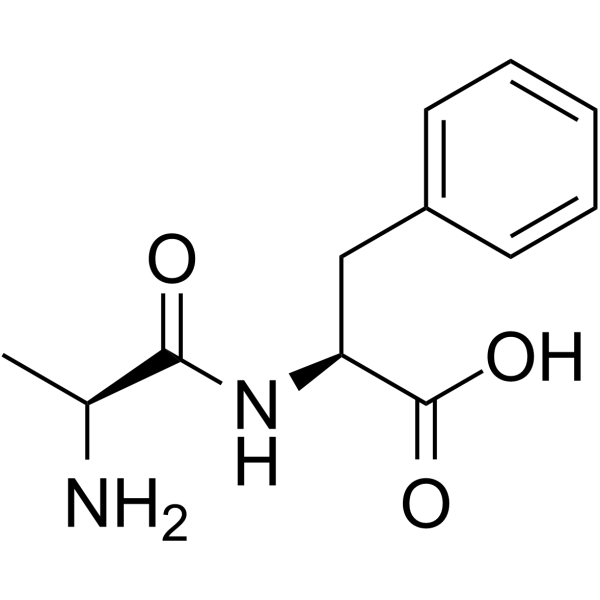
Alanylphenylalanine (L-Alanyl-L-phenylalanine) is a dipeptide. Alanylphenylalanine forms a mononuclear Au (III) complex through bidentate coordination via its carboxyl oxygen atom and deprotonated amide nitrogen atom .
|
-
-
- HY-N0215R
-
|
(S)-2-Amino-3-phenylpropionic acid (Standard)
|
Reference Standards
Calcium Channel
iGluR
Endogenous Metabolite
|
Metabolic Disease
|
|
L-Phenylalanine (Standard) is the analytical standard of L-Phenylalanine. This product is intended for research and analytical applications. L-Phenylalanine ((S)-2-Amino-3-phenylpropionic acid) is an essential amino acid isolated from Escherichia coli. L-Phenylalanine is a α2δ subunit of voltage-dependent Ca+ channels antagonist with a Ki of 980 nM. L-phenylalanine is a competitive antagonist for the glycine- and glutamate-binding sites of N-methyl-D-aspartate receptors (NMDARs) (KB of 573 μM ) and non-NMDARs, respectively. L-Phenylalanine is widely used in the production of food flavors and pharmaceuticals .
|
-
-
- HY-N0215S10
-
|
(S)-2-Amino-3-phenylpropionic acid-13C9
|
Isotope-Labeled Compounds
Calcium Channel
iGluR
Endogenous Metabolite
|
Metabolic Disease
|
|
L-Phenylalanine- 13C9 is the 13C-labeled L-Phenylalanine. L-Phenylalanine ((S)-2-Amino-3-phenylpropionic acid) is an essential amino acid isolated from Escherichia coli. L-Phenylalanine is a α2δ subunit of voltage-dependent Ca+ channels antagonist with a Ki of 980 nM. L-phenylalanine is a competitive antagonist for the glycine- and glutamate-binding sites of N-methyl-D-aspartate receptors (NMDARs) (KB of 573 μM ) and non-NMDARs, respectively. L-Phenylalanine is widely used in the production of food flavors and pharmaceuticals .
|
-
-
- HY-137840
-
|
|
Carboxypeptidase
|
Cancer
|
|
Hippuryl-L-phenylalanine is a substrate of carboxypeptidase. Carboxypeptidase is a protease enzyme that related with obesity, epilepsy and neurodegeneration. Hippuryl-L-phenylalanine can be used for the determination of carboxypeptidase activity .
|
-
-
- HY-23460A
-
|
4-Ethynyl-L-Phenylalanine hydrochloride
|
Tryptophan Hydroxylase
|
Neurological Disease
|
|
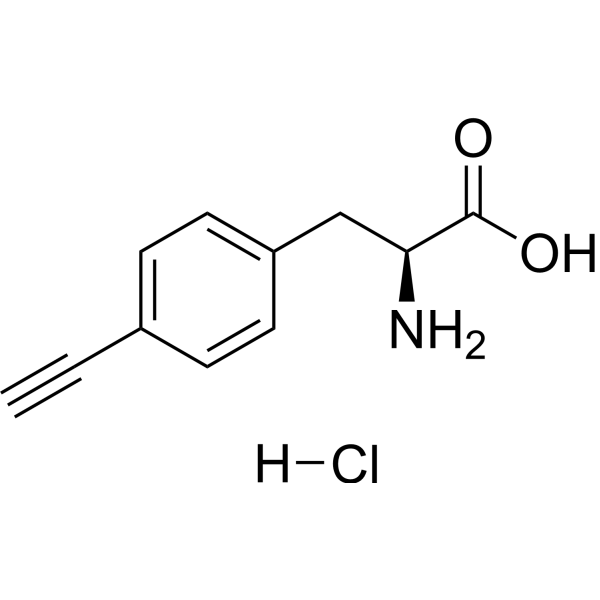
p-Ethynylphenylalanine hydrochloride (4-Ethynyl-L-phenylalanine hydrochloride) is a potent, selective, reversible and competitive inhibitor of tryptophan hydroxylase (TPH), with a Ki of 32.6 μM . p-Ethynylphenylalanine (hydrochloride) is a click chemistry reagent, it contains an Alkyne group and can undergo copper-catalyzed azide-alkyne cycloaddition (CuAAc) with molecules containing Azide groups.
|
-
-
- HY-107378
-
-
-
- HY-W016042
-
|
|
Drug Intermediate
|
Others
|
|
N-Cbz-Hydroxy-L-proline is a chiral N-Cbz-protected amino acid derivative. N-Cbz-Hydroxy-L-proline is commonly used in the synthesis of polypeptides and pharmaceutical intermediates. N-Cbz-Hydroxy-L-proline undergoes decarboxylation under AlCl3/HFIP conditions .
|
-
-
- HY-N0215S5
-
|
(S)-2-Amino-3-phenylpropionic acid-15N
|
Isotope-Labeled Compounds
Calcium Channel
iGluR
Endogenous Metabolite
|
Metabolic Disease
|
|
L-Phenylalanine- 15N is the 15N-labeled L-Phenylalanine. L-Phenylalanine ((S)-2-Amino-3-phenylpropionic acid) is an essential amino acid isolated from Escherichia coli. L-Phenylalanine is a α2δ subunit of voltage-dependent Ca+ channels antagonist with a Ki of 980 nM. L-phenylalanine is a competitive antagonist for the glycine- and glutamate-binding sites of N-methyl-D-aspartate receptors (NMDARs) (KB of 573 μM ) and non-NMDARs, respectively. L-Phenylalanine is widely used in the production of food flavors and pharmaceuticals .
|
-
-
- HY-N0215S11
-
|
(S)-2-Amino-3-phenylpropionic acid-13C9,15N
|
Calcium Channel
iGluR
Endogenous Metabolite
|
Metabolic Disease
|
|
L-Phenylalanine- 13C9, 15N is the 13C- and 15N-labeled L-Phenylalanine. L-Phenylalanine ((S)-2-Amino-3-phenylpropionic acid) is an essential amino acid isolated from Escherichia coli. L-Phenylalanine is a α2δ subunit of voltage-dependent Ca+ channels antagonist with a Ki of 980 nM. L-phenylalanine is a competitive antagonist for the glycine- and glutamate-binding sites of N-methyl-D-aspartate receptors (NMDARs) (KB of 573 μM ) and non-NMDARs, respectively. L-Phenylalanine is widely used in the production of food flavors and pharmaceuticals .
|
-
-
- HY-W016480
-
|
|
Drug Intermediate
|
Infection
Metabolic Disease
|
|
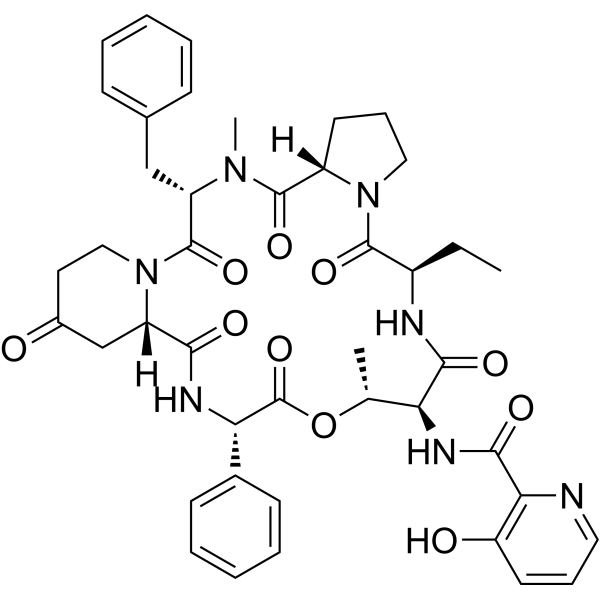
4-Amino-L-phenylalanine is a metabolic intermediate. 4-Amino-L-phenylalanine can be used in the production of Chloramphenicol (HY-B0239) and Pristinamycin I in Streptomyces venezuelae and S. pristinaespiralis, respectively .
|
-
-
- HY-23093
-
-
-
- HY-79908A
-
-
-
- HY-30090
-
-
-
- HY-W011258
-
|
L-Tyrosyl-L-Phenylalanine
|
Xanthine Oxidase
Angiotensin-converting Enzyme (ACE)
|
Inflammation/Immunology
Cancer
|
|
H-Tyr-Phe-OH (L-Tyrosyl-L-phenylalanine) is an orally active inhibitor of Angiotensin converting enzyme (ACE), with an inhibiton rate of 48% at 50 μM. H-Tyr-Phe-OH can be used as an biomarker for differentiating benign thyroid nodules (BTN) from thyroid cancer (TC). H-Tyr-Phe-OH exhibits xanthine oxidase inhibition (uric acid lowering) activity and serves as regulator in IL-8 production in neutrophil-like cells .
|
-
-
- HY-W022228
-
-
-
- HY-34597
-
|
(S)-p-BromoPhenylalanine; L-4-BromoPhenylalanine; L-p-BromoPhenylalanine; p-Bromo-L-Phenylalanine
|
Amino Acid Derivatives
|
Others
|
|
(S)-2-Amino-3-(4-bromophenyl)propanoic acid is a phenylalanine derivative .
|
-
-
- HY-134230
-
|
L-α-aminooxy-β-phenylpropionic acid; AOPP
|
Biochemical Assay Reagents
|
Metabolic Disease
|
|
L-2-Aminooxy-3-phenylpropanoic acid (L-α-aminooxy-β-phenylpropionic acid; AOPP) is an inhibitor of L-phenylalanine ammonia-lyase (PAL). L-2-Aminooxy-3-phenylpropanoic acid inhibits lignification without reducing the number of tracheary elements formed .
|
-
-
- HY-79106
-
|
[1,1'-Biphenyl]-4-propanoic acid, α-amino-, (S)-; 4-Biphenylyl-L-alanine; 4-Phenyl-L-Phenylalanine; BiPhenylalanine
|
Amino Acid Derivatives
|
Others
|
|
L-Biphenylalanine is a phenylalanine derivative .
|
-
-
- HY-W002291
-
|
4-Fluoro-L-Phenylalanine
|
Drug Derivative
|
Infection
|
|
p-Fluoro-L-phenylalanine (4-Fluoro-L-phenylalanine) is a fluorinated derivative of L-phenylalanine (HY-N0215). p-Fluoro-L-phenylalanine specifically binds to the L-leucine-specific receptor of Escherichia coli, with a Kd value of 0.26 μM .
|
-
-
- HY-N0215S3
-
|
(S)-2-Amino-3-phenylpropionic acid-d2
|
Calcium Channel
iGluR
Endogenous Metabolite
|
Metabolic Disease
|
|
L-Phenylalanine-d2 is the deuterium labeled L-Phenylalanine. L-Phenylalanine ((S)-2-Amino-3-phenylpropionic acid) is an essential amino acid isolated from Escherichia coli. L-Phenylalanine is a α2δ subunit of voltage-dependent Ca+ channels antagonist with a Ki of 980 nM. L-phenylalanine is a competitive antagonist for the glycine- and glutamate-binding sites of N-methyl-D-aspartate receptors (NMDARs) (KB of 573 μM ) and non-NMDARs, respectively. L-Phenylalanine is widely used in the production of food flavors and pharmaceuticals .
|
-
-
- HY-N0215S7
-
|
(S)-2-Amino-3-phenylpropionic acid-3-13C
|
Calcium Channel
iGluR
Endogenous Metabolite
|
Metabolic Disease
|
|
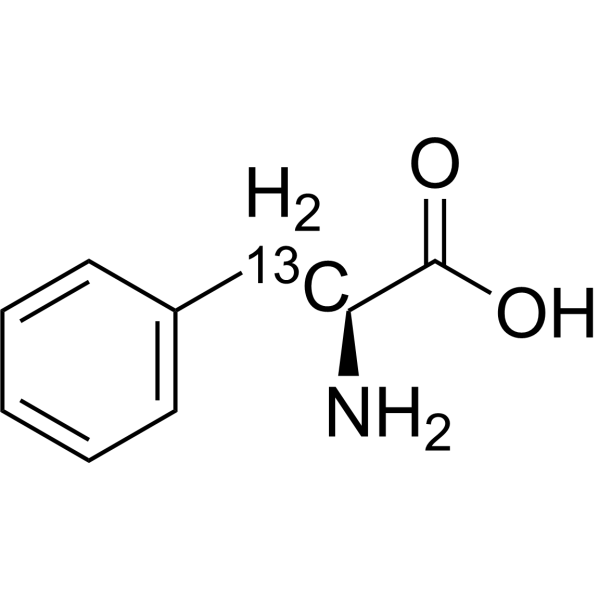
L-Phenylalanine-3- 13C is the 13C-labeled L-Phenylalanine. L-Phenylalanine ((S)-2-Amino-3-phenylpropionic acid) is an essential amino acid isolated from Escherichia coli. L-Phenylalanine is a α2δ subunit of voltage-dependent Ca+ channels antagonist with a Ki of 980 nM. L-phenylalanine is a competitive antagonist for the glycine- and glutamate-binding sites of N-methyl-D-aspartate receptors (NMDARs) (KB of 573 μM ) and non-NMDARs, respectively. L-Phenylalanine is widely used in the production of food flavors and pharmaceuticals .
|
-
-
- HY-118391
-
|
N-Benzoyl-L-Phenylalanine; Bz-L-Phe-OH
|
Carboxypeptidase
|
Others
|
|
Benzoyl-L-phenylalanine (N-Benzoyl-L-phenylalanine) is a chorisate mutase-prephenate dehydrogenase inhibitor .
|
-
-
- HY-W008183
-
-
-
- HY-W088097
-
-
-
- HY-169794
-
|
|
DNA/RNA Synthesis
|
Others
|
|
N-Palmitoyl-phenylalanine is an N-acyl amide that contains the long-chain saturated fatty acid Palmitic acid (HY-N0830) conjugated via an amide bond to the essential amino acid L-Phenylalanine (HY-N0215). N-Palmitoyl-phenylalanine inhibits pre-mRNA splicing in HeLa cell nuclear lysates (IC50 > 400 μM) but has no splicing activity in intact HeLa cells .
|
-
-
- HY-N0215S2
-
|
(S)-2-Amino-3-phenylpropionic acid-13C
|
Isotope-Labeled Compounds
Calcium Channel
iGluR
Endogenous Metabolite
|
Metabolic Disease
|
|
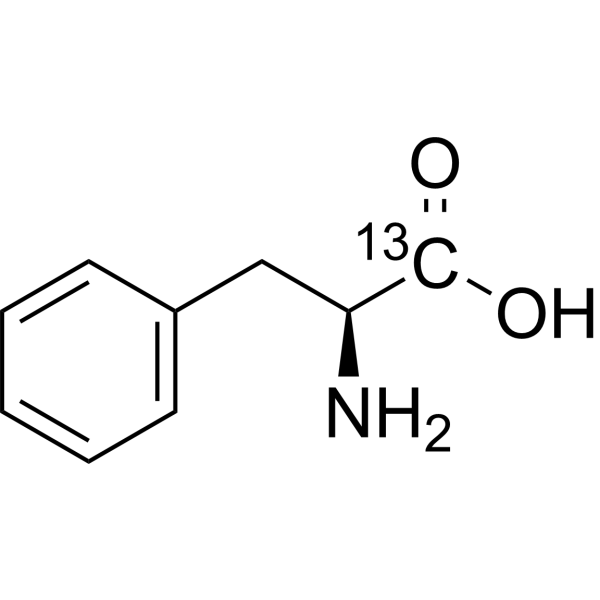
L-Phenylalanine- 13C is the 13C-labeled L-Phenylalanine. L-Phenylalanine ((S)-2-Amino-3-phenylpropionic acid) is an essential amino acid isolated from Escherichia coli. L-Phenylalanine is a α2δ subunit of voltage-dependent Ca+ channels antagonist with a Ki of 980 nM. L-phenylalanine is a competitive antagonist for the glycine- and glutamate-binding sites of N-methyl-D-aspartate receptors (NMDARs) (KB of 573 μM ) and non-NMDARs, respectively. L-Phenylalanine is widely used in the production of food flavors and pharmaceuticals .
|
-
-
- HY-P2825
-
|
TDC; TyrDC
|
Endogenous Metabolite
|
Others
|
|
Tyrosine decarboxylase, Microorganism (TDC) is a tyrosine decarboxylase produced by microorganisms. Tyrosine decarboxylase is a PLP-dependent enzyme that catalyzes the decarboxylation of L-tyrosine, L-phenylalanine, and L-dopa to produce tyramine, 2-phenethylamine, and dopamine, respectively. Tyrosine decarboxylase mediates acid stress resistance, maintains intracellular pH homeostasis, and generates proton motive force .
|
-
-
- HY-N0623S10
-
|
|
Endogenous Metabolite
|
Metabolic Disease
Cancer
|
|
L-Phenylalanine,Indole- 15N is the 15N labeled L-Tryptophan[1]. L-Tryptophan (Tryptophan) is an essential amino acid that is the precursor of serotonin, melatonin, and vitamin B3[2].
|
-
-
- HY-W002416
-
-
-
- HY-P2964
-
|
|
Endogenous Metabolite
|
Metabolic Disease
|
|
Phenylalanine dehydrogenase is an NAD +-dependent oxidoreductase targeting L-phenylalanine. Phenylalanine dehydrogenase catalyzes deamination to phenylpyruvate and NADH as part of amino acid metabolism regulation. Phenylalanine dehydrogenase is promising for research of phenylketonuria (PKU) .
|
-
-
- HY-79096
-
-
-
- HY-P10563
-
|
BHV-1100
|
CD38
|
Cancer
|
|
Noraramtide (BHV-1100) is an antibody recruitment molecule. Noraramtide can specifically bind to CD38 molecules to recruit natural killer (NK) cells. Noraramtide enhances the ability of NK cells to kill tumor cells through antibody-dependent cellular cytotoxicity (ADCC). This mechanism allows NK cells to more effectively recognize and eliminate tumor cells while avoiding mutual killing between NK cells. Noraramtide can be used for the study of autologous cancer immunity .
|
-
-
- HY-164431
-
|
|
Amino Acid Derivatives
|
Others
|
|
4-(Azidomethyl)-L-phenylalanine is an unnatural amino acid with an azidomethyl group at position 4 of L-phenylalanine. 4-(Azidomethyl)-L-phenylalanine can be used as a reporter for probing protein hydration through addition of an azide group .
|
-
-
- HY-N0215S14
-
|
(S)-2-Amino-3-phenylpropionic acid-15N,d8
|
Isotope-Labeled Compounds
Calcium Channel
iGluR
Endogenous Metabolite
|
Metabolic Disease
|
|
L-Phenylalanine- 15N,d8 is the deuterium and 15N-labeled L-Phenylalanine. L-Phenylalanine ((S)-2-Amino-3-phenylpropionic acid) is an essential amino acid isolated from Escherichia coli. L-Phenylalanine is a α2δ subunit of voltage-dependent Ca2+ channels antagonist with a Ki of 980 nM. L-phenylalanine is a competitive antagonist for the glycine- and glutamate-binding sites of N-methyl-D-aspartate receptors (NMDARs) (KB of 573 μM ) and non-NMDARs, respectively. L-Phenylalanine is widely used in the production of food flavors and pharmaceuticals .
|
-
-
- HY-P3350
-
|
|
Bacterial
|
Infection
|
|
LS-BF1 is a stable and low toxic cationic antimicrobial peptide. LS-BF1 displays broad spectrum of antibacterial activity, including the challenging ESKAPE pathogens, by cell membrane disruptive mechanism. LS-BF1 shows good in vivo efficacy for elimination of bacteria in a mouse infection model[1].
|
-
-
- HY-178251S
-
|
|
Isotope-Labeled Compounds
Calcium Channel
iGluR
Endogenous Metabolite
|
Metabolic Disease
Cancer
|
|
L-Phenylalanine-d is the deuterium labeled L-Phenylalanine (HY-N0215). L-Phenylalanine ((S)-2-Amino-3-phenylpropionic acid) is an essential amino acid isolated from Escherichia coli. L-Phenylalanine is a α2δ subunit of voltage-dependent Ca 2+ channels antagonist with a Ki of 980 nM. L-phenylalanine is a competitive antagonist for the glycine- and glutamate-binding sites of N-methyl-D-aspartate receptors (NMDARs) (KB of 573 μM ) and non-NMDARs, respectively. L-Phenylalanine is widely used in the production of food flavors and pharmaceuticals .
|
-
- HY-W329113
-
-
- HY-W016336
-
-
- HY-W022223
-
-
- HY-W738480
-
|
(R)-Tert-Butyl 2-amino-3-phenylpropanoate-d5
|
Isotope-Labeled Compounds
|
Others
|
|
L-Phenylalanine tert-butyl ester-d5 ((R)-Tert-Butyl 2-amino-3-phenylpropanoate-d5) is the deuterium labeled (S)-tert-Butyl 2-amino-3-phenylpropanoate (HY-W108426).
|
-
- HY-N0215S6
-
|
2-Amino-3-phenylpropionic acid-d5 hydrochloride
|
Isotope-Labeled Compounds
Calcium Channel
iGluR
Endogenous Metabolite
|
Metabolic Disease
|
|
DL-Phenylalanine-d5 (hydrochloride) is the deuterium labeled DL-Phenylalanine hydrochloride. L-Phenylalanine hydrochloride is an essential amino acid isolated from Escherichia coli. L-Phenylalanine hydrochloride is a α2δ subunit of voltage-dependent Ca+ channels antagonist with a Ki of 980 nM. L-phenylalanine hydrochloride is a competitive antagonist for the glycine- and glutamate-binding sites of N-methyl-D-aspartate receptors (NMDARs) (KB of 573 μM ) and non-NMDARs, respectively. L-Phenylalanine hydrochloride is widely used in the production of food flavors and pharmaceuticals .
|
-
- HY-79909
-
|
|
Amino Acid Derivatives
|
Others
|
|
L-Phenylalanine, N-[N-[(1,1-dimethylethoxy)carbonyl]-D-leucyl]-, phenylmethyl ester is a phenylalanine derivative .
|
-
- HY-E70939
-
|
|
Amino Acid Decarboxylase
|
Metabolic Disease
|
|
L-Phenylalanine decarboxylase, Streptococcus faecalis (EC 4.1.1.53) belongs to the lyase family and is capable of cleaving carbon-carbon bonds. L-Phenylalanine decarboxylase, Streptococcus faecalis is involved in the metabolism of phenylalanine. This enzyme has one substrate, L-phenylalanine, and two products: phenylethylamine and CO2.
|
-
- HY-P2964A
-
|
|
Endogenous Metabolite
|
Metabolic Disease
|
|
L-Phenylalanine Dehydrogenase, Sporosarcina sp. (EC 1.4.1.20) is a member of a large family of amino-acid dehydrogenases, which has a two-domain, three-dimensional structure.
|
-
- HY-P2082
-
|
|
GnRH Receptor
|
Others
|
|
[D-pGlu1,D-Phe2,D-NaI3,6]-Gn-RH is a gonadotropin-releasing hormone (Gn-RH) agonist that has a dose-dependent inhibitory activity on progesterone secretion from cultured human granulosa cells.
|
-
- HY-105168
-
|
|
Endothelin Receptor
|
Cardiovascular Disease
|
|
TAK 044 is an antagonist of Endothelin Receptor. TAK 044 strongly inhibits ET-induced deterioration in various animal models. TAK 044 can be used in study ET-related diseases such as acute myocardial infarction,acute renal failure, acute hepatic malfunction, and subarachnoid hemorrhage .
|
-
- HY-N0215S
-
|
(S)-2-Amino-3-phenylpropionic acid-d7
|
Isotope-Labeled Compounds
Calcium Channel
iGluR
Endogenous Metabolite
|
Metabolic Disease
|
|
L-Phenylalanine-d7 is the deuterium labeled L-Phenylalanine. L-Phenylalanine ((S)-2-Amino-3-phenylpropionic acid) is an essential amino acid isolated from Escherichia coli. L-Phenylalanine is a α2δ subunit of voltage-dependent Ca+ channels antagonist with a Ki of 980 nM. L-phenylalanine is a competitive antagonist for the glycine- and glutamate-binding sites of N-methyl-D-aspartate receptors (NMDARs) (KB of 573 μM ) and non-NMDARs, respectively. L-Phenylalanine is widely used in the production of food flavors and pharmaceuticals .
|
-
- HY-N0215S13
-
|
(S)-2-Amino-3-phenylpropionic acid-d1
|
Isotope-Labeled Compounds
Calcium Channel
iGluR
Endogenous Metabolite
|
Metabolic Disease
|
|
L-Phenylalanine-d is the deuterium labeled L-Phenylalanine. L-Phenylalanine ((S)-2-Amino-3-phenylpropionic acid) is an essential amino acid isolated from Escherichia coli. L-Phenylalanine is a α2δ subunit of voltage-dependent Ca+ channels antagonist with a Ki of 980 nM. L-phenylalanine is a competitive antagonist for the glycine- and glutamate-binding sites of N-methyl-D-aspartate receptors (NMDARs) (KB of 573 μM ) and non-NMDARs, respectively. L-Phenylalanine is widely used in the production of food flavors and pharmaceuticals .
|
-
- HY-79096S2
-
-
- HY-79096S1
-
-
- HY-79096S
-
-
- HY-Y0068R
-
|
N-AcetylPhenylalanine (Standard)
|
Reference Standards
Endogenous Metabolite
|
Others
|
|
N-Acetyl-L-phenylalanine (Standard) is the analytical standard of N-Acetyl-L-phenylalanine. This product is intended for research and analytical applications. N-Acetyl-L-phenylalanine (N-Acetylphenylalanine), the principal acylamino acid in Escherichia coli, is synthesized from L-phenylalanine and acetyl-CoA .
|
-
- HY-N0215S9
-
|
(S)-2-Amino-3-phenylpropionic acid-13C9,15N,d8
|
Isotope-Labeled Compounds
Calcium Channel
iGluR
Endogenous Metabolite
|
Metabolic Disease
|
|
L-Phenylalanine- 13C9, 15N,d8 is the deuterium, 13C-, and 15-labeled L-Phenylalanine. L-Phenylalanine ((S)-2-Amino-3-phenylpropionic acid) is an essential amino acid isolated from Escherichia coli. L-Phenylalanine is a α2δ subunit of voltage-dependent Ca+ channels antagonist with a Ki of 980 nM. L-phenylalanine is a competitive antagonist for the glycine- and glutamate-binding sites of N-methyl-D-aspartate receptors (NMDARs) (KB of 573 μM ) and non-NMDARs, respectively. L-Phenylalanine is widely used in the production of food flavors and pharmaceuticals .
|
-
- HY-W141812
-
-
- HY-W016480R
-
-
- HY-W101891
-
-
- HY-23093R
-
-
- HY-201283A
-
-
- HY-W141810
-
|
H-Phe(4-NH2)-OH hydrochloride
|
Endogenous Metabolite
|
Others
|
|
4-Amino-L-phenylalanine (H-Phe(4-NH2)-OH) hydrochloride is an endogenous metabolite.
|
-
- HY-134230A
-
|
L-α-aminooxy-β-phenylpropionic acid hydrobromide; AOPP hydrobromide
|
Others
|
Metabolic Disease
|
L-2-Aminooxy-3-phenylpropanoic acid hydrobromide is a potent inhibitor of L-phenylalanine ammonia-lyase .
|
-
- HY-107378R
-
|
ValylPhenylalanine (Standard); H-VAL-PHE-OH (Standard)
|
Endogenous Metabolite
Reference Standards
|
Inflammation/Immunology
|
|
L-Valyl-L-phenylalanine (Standard) is the analytical standard of L-Valyl-L-phenylalanine. This product is intended for research and analytical applications. L-Valyl-L-phenylalanine (Valylphenylalanine; H-VAL-PHE-OH) has been reported as biocompatible polymer.
|
-
- HY-124886
-
|
N-PhenylacetylPhenylalanine
|
Amino Acid Derivatives
|
Others
|
|
N-(Phenylacetyl)-L-phenylalanine (N-Phenylacetylphenylalanine) is an amino acid analog. N-(Phenylacetyl)-L-phenylalanine is produced via the enantioselective acylation of L-phenylalanine catalyzed by penicillin G acylase from Alcaligenes faecalis. N-(Phenylacetyl)-L-phenylalanine undergoes hydrolysis in aqueous media .
|
-
- HY-W013998S
-
-
- HY-W550859
-
|
4-Sulfo-L-Phenylalanine
|
Apoptosis
|
Cancer
|
|
H-Phe(4-SO3H)-OH (4-Sulfo-L-phenylalanine) is a L-phenylalanine (HY-N0215) derivative. H-Phe(4-SO3H)-OH induces apoptosis, chromatin margination, and inhibits cell growth in human colon cancer cells. H-Phe(4-SO3H)-OH can be used for the research of colon cancer .
|
-
- HY-Y0068S
-
|
N-AcetylPhenylalanine-13C2
|
Isotope-Labeled Compounds
Endogenous Metabolite
|
Metabolic Disease
|
|
N-Acetyl-L-phenylalanine- 13C2 (N-Acetylphenylalanine- 13C2) is the 13C-labeled N-Acetyl-L-phenylalanine (HY-Y0068). N-Acetyl-L-phenylalanine (N-Acetylphenylalanine) is a principal acylamino acid. N-Acetyl-L-phenylalanine can be synthesized from L-phenylalanine and acetyl-CoA. N-Acetyl-L-phenylalanine can be used in kidney research.
|
-
- HY-W152405
-
|
H-D-Ala-phe-OH
|
Biochemical Assay Reagents
|
Others
|
|
D-Alanyl-L-phenylalanine (H-D-Ala-phe-OH) is a biochemical reagent that can be used as a biological material or organic compound for life science related research.
|
-
- HY-124886S
-
|
N-PhenylacetylPhenylalanine-d7
|
Isotope-Labeled Compounds
|
Others
|
|
N-(Phenylacetyl)-L-phenylalanine-d7 is the deuterium labeled N-(Phenylacetyl)-L-phenylalanine.
|
-
- HY-W012161R
-
|
L-Alanyl-L-Phenylalanine (Standard); H-Ala-Phe-OH (Standard)
|
Endogenous Metabolite
Reference Standards
|
Others
|
|
Alanylphenylalanine (L-Alanyl-L-phenylalanine) Standard is the analytical standard of Alanylphenylalanine (HY-W012161). This product is intended for research and analytical applications. Alanylphenylalanine (L-Alanyl-L-phenylalanine) is a dipeptide. Alanylphenylalanine forms a mononuclear Au (III) complex through bidentate coordination via its carboxyl oxygen atom and deprotonated amide nitrogen atom .
|
-
- HY-W746944S
-
|
|
Isotope-Labeled Compounds
|
Others
|
|
N-[2-(1H-Indol-3-yl)acetyl]-L-phenylalanine methyl ester-d4 is deuterium labeled N-[2-(1H-Indol-3-yl)acetyl]-L-phenylalanine methyl ester .
|
-
- HY-W267524
-
|
|
Drug Derivative
|
Cancer
|
|
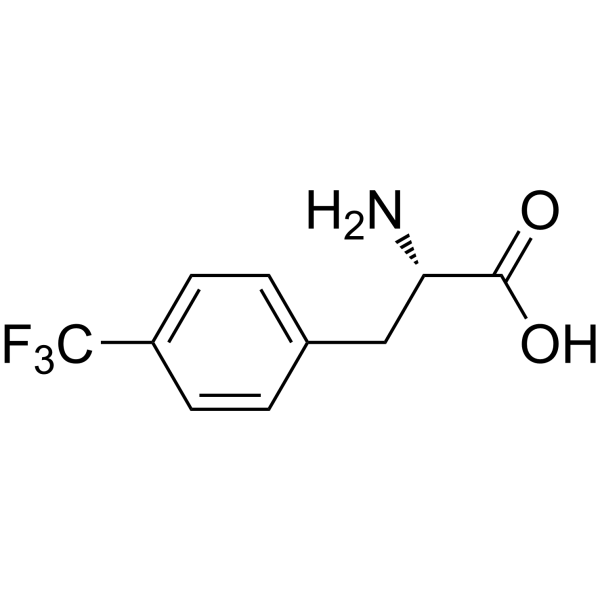
H-Phe (3-CF3)-OH is a phenylalanine derivative targeting the L-type amino acid transporter 1 (LAT1, SLC7A5) as its core target, and it belongs to LAT1 substrates. H-Phe (3-CF3)-OH can be used for prodrug scaffold development and research related to multiple solid tumors .
|
-
- HY-P4948
-
|
|
Biochemical Assay Reagents
|
Others
|
|
Coumarin-phalloidin is a kind of phalloidin labeled with Coumarin (HY-N0709). Coumarin-phalloidin is a new type of actin probe that can be used for triple immunofluorescence microscopic observation of the cell skeleton .
|
-
| Art. -Nr. |
Produktname |
Type |
-
- HY-W259767
-
|
|
Biochemical Assay Reagents
|
|
3-Iodo-L-phenylalanine is an unnatural amino acid that can be used for partial codon redistribution. 3-Iodo-L-phenylalanine has a high efficiency in Ser AGU codon reassignment, and also has a certain effect in Ser UCG codon reassignment. 3-Iodo-L-phenylalanine can be used in the study of genetic code expansion and protein engineering .
|
-
- HY-137840
-
|
|
Biochemical Assay Reagents
|
|
Hippuryl-L-phenylalanine is a substrate of carboxypeptidase. Carboxypeptidase is a protease enzyme that related with obesity, epilepsy and neurodegeneration. Hippuryl-L-phenylalanine can be used for the determination of carboxypeptidase activity .
|
-
- HY-W016042
-
|
|
Biochemical Assay Reagents
|
|
N-Cbz-Hydroxy-L-proline is a chiral N-Cbz-protected amino acid derivative. N-Cbz-Hydroxy-L-proline is commonly used in the synthesis of polypeptides and pharmaceutical intermediates. N-Cbz-Hydroxy-L-proline undergoes decarboxylation under AlCl3/HFIP conditions .
|
-
- HY-W002291
-
|
4-Fluoro-L-Phenylalanine
|
Biochemical Assay Reagents
|
|
p-Fluoro-L-phenylalanine (4-Fluoro-L-phenylalanine) is a fluorinated derivative of L-phenylalanine (HY-N0215). p-Fluoro-L-phenylalanine specifically binds to the L-leucine-specific receptor of Escherichia coli, with a Kd value of 0.26 μM .
|
-
- HY-79096
-
|
|
Biochemical Assay Reagents
|
|
Boc-L-phenylalanine is a Boc-protected L-phenylalanine that can be used in the synthesis of other active compounds. Boc-L-phenylalanine is also a capping agent .
|
-
- HY-W329113
-
-
- HY-W101891
-
| Art. -Nr. |
Produktname |
Target |
Research Area |
-
- HY-W019599
-
|
L-PCPA
|
5-HT Receptor
Tryptophan Hydroxylase
|
Neurological Disease
|
|
4-Chloro-L-phenylalanine (L-PCPA) is a tryptophan hydroxylase inhibitor targeting TPH1 and TPH2, with the activity of blocking serotonin biosynthesis. 4-Chloro-L-phenylalanine reduces the levels of serotonin and its metabolites in the brain without impairing the survival of serotonergic neurons. 4-Chloro-L-phenylalanine enhances anhedonic, depression-like and anxiety-like behaviors in mice with depleted noradrenergic and dopaminergic neurons. 4-Chloro-L-phenylalanine acts as a decarboxylation substrate for aromatic L-amino acid decarboxylase from Bacillus atrophaeus. 4-Chloro-L-phenylalanine can be used in studies related to Parkinson's disease .
|
-
- HY-W013962
-
-
- HY-138207
-
|
|
Mitochondrial Metabolism
Drug Metabolite
|
Inflammation/Immunology
|
|
N-Oleoyl-L-phenylalanine is a long-chain N-acyl-L-phenylalanine and also a mitochondrial uncoupler. N-Oleoyl-L-phenylalanine uncouples UCP1-independent respiration in mitochondria, thereby helping to regulate glucose homeostasis. As an endogenous metabolite, the level of N-Oleoyl-L-phenylalanine increases in patients with ulcerative colitis after a high-fat diet. N-Oleoyl-L-phenylalanine can be used in studies related to ulcerative colitis .
|
-
- HY-W013998
-
-
- HY-79908A
-
-
- HY-30090
-
-
- HY-W011258
-
|
L-Tyrosyl-L-Phenylalanine
|
Xanthine Oxidase
Angiotensin-converting Enzyme (ACE)
|
Inflammation/Immunology
Cancer
|
|
H-Tyr-Phe-OH (L-Tyrosyl-L-phenylalanine) is an orally active inhibitor of Angiotensin converting enzyme (ACE), with an inhibiton rate of 48% at 50 μM. H-Tyr-Phe-OH can be used as an biomarker for differentiating benign thyroid nodules (BTN) from thyroid cancer (TC). H-Tyr-Phe-OH exhibits xanthine oxidase inhibition (uric acid lowering) activity and serves as regulator in IL-8 production in neutrophil-like cells .
|
-
- HY-W022228
-
-
- HY-34597
-
|
(S)-p-BromoPhenylalanine; L-4-BromoPhenylalanine; L-p-BromoPhenylalanine; p-Bromo-L-Phenylalanine
|
Amino Acid Derivatives
|
Others
|
|
(S)-2-Amino-3-(4-bromophenyl)propanoic acid is a phenylalanine derivative .
|
-
- HY-79106
-
|
[1,1'-Biphenyl]-4-propanoic acid, α-amino-, (S)-; 4-Biphenylyl-L-alanine; 4-Phenyl-L-Phenylalanine; BiPhenylalanine
|
Amino Acid Derivatives
|
Others
|
|
L-Biphenylalanine is a phenylalanine derivative .
|
-
- HY-W008183
-
-
- HY-W088097
-
-
- HY-W002416
-
-
- HY-P10563
-
|
BHV-1100
|
CD38
|
Cancer
|
|
Noraramtide (BHV-1100) is an antibody recruitment molecule. Noraramtide can specifically bind to CD38 molecules to recruit natural killer (NK) cells. Noraramtide enhances the ability of NK cells to kill tumor cells through antibody-dependent cellular cytotoxicity (ADCC). This mechanism allows NK cells to more effectively recognize and eliminate tumor cells while avoiding mutual killing between NK cells. Noraramtide can be used for the study of autologous cancer immunity .
|
-
- HY-P3350
-
|
|
Bacterial
|
Infection
|
|
LS-BF1 is a stable and low toxic cationic antimicrobial peptide. LS-BF1 displays broad spectrum of antibacterial activity, including the challenging ESKAPE pathogens, by cell membrane disruptive mechanism. LS-BF1 shows good in vivo efficacy for elimination of bacteria in a mouse infection model[1].
|
-
- HY-W016336
-
-
- HY-W022223
-
-
- HY-79909
-
|
|
Amino Acid Derivatives
|
Others
|
|
L-Phenylalanine, N-[N-[(1,1-dimethylethoxy)carbonyl]-D-leucyl]-, phenylmethyl ester is a phenylalanine derivative .
|
-
- HY-P2082
-
|
|
GnRH Receptor
|
Others
|
|
[D-pGlu1,D-Phe2,D-NaI3,6]-Gn-RH is a gonadotropin-releasing hormone (Gn-RH) agonist that has a dose-dependent inhibitory activity on progesterone secretion from cultured human granulosa cells.
|
-
- HY-105168
-
|
|
Endothelin Receptor
|
Cardiovascular Disease
|
|
TAK 044 is an antagonist of Endothelin Receptor. TAK 044 strongly inhibits ET-induced deterioration in various animal models. TAK 044 can be used in study ET-related diseases such as acute myocardial infarction,acute renal failure, acute hepatic malfunction, and subarachnoid hemorrhage .
|
-
- HY-W141812
-
-
- HY-201283A
-
-
- HY-W141810
-
|
H-Phe(4-NH2)-OH hydrochloride
|
Endogenous Metabolite
|
Others
|
|
4-Amino-L-phenylalanine (H-Phe(4-NH2)-OH) hydrochloride is an endogenous metabolite.
|
-
- HY-W013998S
-
-
- HY-P4948
-
|
|
Biochemical Assay Reagents
|
Others
|
|
Coumarin-phalloidin is a kind of phalloidin labeled with Coumarin (HY-N0709). Coumarin-phalloidin is a new type of actin probe that can be used for triple immunofluorescence microscopic observation of the cell skeleton .
|
| Art. -Nr. |
Produktname |
Category |
Target |
Chemical Structure |
| Art. -Nr. |
Produktname |
Chemical Structure |
-
- HY-N0215S12
-
1 Publications Verification
|
|
L-Phenylalanine-d5 is the deuterium labeled L-Phenylalanine. L-Phenylalanine ((S)-2-Amino-3-phenylpropionic acid) is an essential amino acid isolated from Escherichia coli. L-Phenylalanine is a α2δ subunit of voltage-dependent Ca+ channels antagonist with a Ki of 980 nM. L-phenylalanine is a competitive antagonist for the glycine- and glutamate-binding sites of N-methyl-D-aspartate receptors (NMDARs) (KB of 573 μM ) and non-NMDARs, respectively. L-Phenylalanine is widely used in the production of food flavors and pharmaceuticals .
|
-
-
- HY-N0215S1
-
1 Publications Verification
|
|
L-Phenylalanine-d8 is the deuterium labeled L-Phenylalanine. L-Phenylalanine ((S)-2-Amino-3-phenylpropionic acid) is an essential amino acid isolated from Escherichia coli. L-Phenylalanine is a α2δ subunit of voltage-dependent Ca+ channels antagonist with a Ki of 980 nM. L-phenylalanine is a competitive antagonist for the glycine- and glutamate-binding sites of N-methyl-D-aspartate receptors (NMDARs) (KB of 573 μM ) and non-NMDARs, respectively. L-Phenylalanine is widely used in the production of food flavors and pharmaceuticals .
|
-
-
- HY-N0215S8
-
1 Publications Verification
|
|
L-Phenylalanine- 13C6 is the 13C-labeled L-Phenylalanine. L-Phenylalanine ((S)-2-Amino-3-phenylpropionic acid) is an essential amino acid isolated from Escherichia coli. L-Phenylalanine is a α2δ subunit of voltage-dependent Ca+ channels antagonist with a Ki of 980 nM. L-phenylalanine is a competitive antagonist for the glycine- and glutamate-binding sites of N-methyl-D-aspartate receptors (NMDARs) (KB of 573 μM ) and non-NMDARs, respectively. L-Phenylalanine is widely used in the production of food flavors and pharmaceuticals .
|
-
-
- HY-N0215S10
-
1 Publications Verification
|
|
L-Phenylalanine- 13C9 is the 13C-labeled L-Phenylalanine. L-Phenylalanine ((S)-2-Amino-3-phenylpropionic acid) is an essential amino acid isolated from Escherichia coli. L-Phenylalanine is a α2δ subunit of voltage-dependent Ca+ channels antagonist with a Ki of 980 nM. L-phenylalanine is a competitive antagonist for the glycine- and glutamate-binding sites of N-methyl-D-aspartate receptors (NMDARs) (KB of 573 μM ) and non-NMDARs, respectively. L-Phenylalanine is widely used in the production of food flavors and pharmaceuticals .
|
-
-
- HY-N0215S5
-
|
|
|
L-Phenylalanine- 15N is the 15N-labeled L-Phenylalanine. L-Phenylalanine ((S)-2-Amino-3-phenylpropionic acid) is an essential amino acid isolated from Escherichia coli. L-Phenylalanine is a α2δ subunit of voltage-dependent Ca+ channels antagonist with a Ki of 980 nM. L-phenylalanine is a competitive antagonist for the glycine- and glutamate-binding sites of N-methyl-D-aspartate receptors (NMDARs) (KB of 573 μM ) and non-NMDARs, respectively. L-Phenylalanine is widely used in the production of food flavors and pharmaceuticals .
|
-
-
- HY-N0215S11
-
|
|
|
L-Phenylalanine- 13C9, 15N is the 13C- and 15N-labeled L-Phenylalanine. L-Phenylalanine ((S)-2-Amino-3-phenylpropionic acid) is an essential amino acid isolated from Escherichia coli. L-Phenylalanine is a α2δ subunit of voltage-dependent Ca+ channels antagonist with a Ki of 980 nM. L-phenylalanine is a competitive antagonist for the glycine- and glutamate-binding sites of N-methyl-D-aspartate receptors (NMDARs) (KB of 573 μM ) and non-NMDARs, respectively. L-Phenylalanine is widely used in the production of food flavors and pharmaceuticals .
|
-
-
- HY-N0215S3
-
|
|
|
L-Phenylalanine-d2 is the deuterium labeled L-Phenylalanine. L-Phenylalanine ((S)-2-Amino-3-phenylpropionic acid) is an essential amino acid isolated from Escherichia coli. L-Phenylalanine is a α2δ subunit of voltage-dependent Ca+ channels antagonist with a Ki of 980 nM. L-phenylalanine is a competitive antagonist for the glycine- and glutamate-binding sites of N-methyl-D-aspartate receptors (NMDARs) (KB of 573 μM ) and non-NMDARs, respectively. L-Phenylalanine is widely used in the production of food flavors and pharmaceuticals .
|
-
-
- HY-N0215S7
-
1 Publications Verification
|
|
L-Phenylalanine-3- 13C is the 13C-labeled L-Phenylalanine. L-Phenylalanine ((S)-2-Amino-3-phenylpropionic acid) is an essential amino acid isolated from Escherichia coli. L-Phenylalanine is a α2δ subunit of voltage-dependent Ca+ channels antagonist with a Ki of 980 nM. L-phenylalanine is a competitive antagonist for the glycine- and glutamate-binding sites of N-methyl-D-aspartate receptors (NMDARs) (KB of 573 μM ) and non-NMDARs, respectively. L-Phenylalanine is widely used in the production of food flavors and pharmaceuticals .
|
-
-
- HY-N0215S2
-
1 Publications Verification
|
|
L-Phenylalanine- 13C is the 13C-labeled L-Phenylalanine. L-Phenylalanine ((S)-2-Amino-3-phenylpropionic acid) is an essential amino acid isolated from Escherichia coli. L-Phenylalanine is a α2δ subunit of voltage-dependent Ca+ channels antagonist with a Ki of 980 nM. L-phenylalanine is a competitive antagonist for the glycine- and glutamate-binding sites of N-methyl-D-aspartate receptors (NMDARs) (KB of 573 μM ) and non-NMDARs, respectively. L-Phenylalanine is widely used in the production of food flavors and pharmaceuticals .
|
-
-
- HY-N0623S10
-
|
|
|
L-Phenylalanine,Indole- 15N is the 15N labeled L-Tryptophan[1]. L-Tryptophan (Tryptophan) is an essential amino acid that is the precursor of serotonin, melatonin, and vitamin B3[2].
|
-
-
- HY-N0215S14
-
|
|
|
L-Phenylalanine- 15N,d8 is the deuterium and 15N-labeled L-Phenylalanine. L-Phenylalanine ((S)-2-Amino-3-phenylpropionic acid) is an essential amino acid isolated from Escherichia coli. L-Phenylalanine is a α2δ subunit of voltage-dependent Ca2+ channels antagonist with a Ki of 980 nM. L-phenylalanine is a competitive antagonist for the glycine- and glutamate-binding sites of N-methyl-D-aspartate receptors (NMDARs) (KB of 573 μM ) and non-NMDARs, respectively. L-Phenylalanine is widely used in the production of food flavors and pharmaceuticals .
|
-
-
- HY-178251S
-
|
|
|
L-Phenylalanine-d is the deuterium labeled L-Phenylalanine (HY-N0215). L-Phenylalanine ((S)-2-Amino-3-phenylpropionic acid) is an essential amino acid isolated from Escherichia coli. L-Phenylalanine is a α2δ subunit of voltage-dependent Ca 2+ channels antagonist with a Ki of 980 nM. L-phenylalanine is a competitive antagonist for the glycine- and glutamate-binding sites of N-methyl-D-aspartate receptors (NMDARs) (KB of 573 μM ) and non-NMDARs, respectively. L-Phenylalanine is widely used in the production of food flavors and pharmaceuticals .
|
-
-
- HY-W738480
-
|
|
|
L-Phenylalanine tert-butyl ester-d5 ((R)-Tert-Butyl 2-amino-3-phenylpropanoate-d5) is the deuterium labeled (S)-tert-Butyl 2-amino-3-phenylpropanoate (HY-W108426).
|
-
-
- HY-N0215S6
-
|
|
|
DL-Phenylalanine-d5 (hydrochloride) is the deuterium labeled DL-Phenylalanine hydrochloride. L-Phenylalanine hydrochloride is an essential amino acid isolated from Escherichia coli. L-Phenylalanine hydrochloride is a α2δ subunit of voltage-dependent Ca+ channels antagonist with a Ki of 980 nM. L-phenylalanine hydrochloride is a competitive antagonist for the glycine- and glutamate-binding sites of N-methyl-D-aspartate receptors (NMDARs) (KB of 573 μM ) and non-NMDARs, respectively. L-Phenylalanine hydrochloride is widely used in the production of food flavors and pharmaceuticals .
|
-
-
- HY-N0215S
-
|
|
|
L-Phenylalanine-d7 is the deuterium labeled L-Phenylalanine. L-Phenylalanine ((S)-2-Amino-3-phenylpropionic acid) is an essential amino acid isolated from Escherichia coli. L-Phenylalanine is a α2δ subunit of voltage-dependent Ca+ channels antagonist with a Ki of 980 nM. L-phenylalanine is a competitive antagonist for the glycine- and glutamate-binding sites of N-methyl-D-aspartate receptors (NMDARs) (KB of 573 μM ) and non-NMDARs, respectively. L-Phenylalanine is widely used in the production of food flavors and pharmaceuticals .
|
-
-
- HY-N0215S13
-
|
|
|
L-Phenylalanine-d is the deuterium labeled L-Phenylalanine. L-Phenylalanine ((S)-2-Amino-3-phenylpropionic acid) is an essential amino acid isolated from Escherichia coli. L-Phenylalanine is a α2δ subunit of voltage-dependent Ca+ channels antagonist with a Ki of 980 nM. L-phenylalanine is a competitive antagonist for the glycine- and glutamate-binding sites of N-methyl-D-aspartate receptors (NMDARs) (KB of 573 μM ) and non-NMDARs, respectively. L-Phenylalanine is widely used in the production of food flavors and pharmaceuticals .
|
-
-
- HY-79096S2
-
|
|
|
BOC-L-phenylalanine-d8 is the deuterium labeled BOC-L-phenylalanine (HY-79096). Boc-L-phenylalanine is a Boc-protected L-phenylalanine that can be used in the synthesis of other active compounds. Boc-L-phenylalanine is also a capping agent .
|
-
-
- HY-79096S1
-
|
|
|
BOC-L-phenylalanine-d5 is the deuterium labeled BOC-L-phenylalanine (HY-79096). Boc-L-phenylalanine is a Boc-protected L-phenylalanine that can be used in the synthesis of other active compounds. Boc-L-phenylalanine is also a capping agent .
|
-
-
- HY-79096S
-
|
|
|
BOC-L-Phenylalanine- 13C is a 13C-labeled BOC-L-Phenylalanine (HY-79096). Boc-L-phenylalanine is a Boc-protected L-phenylalanine that can be used in the synthesis of other active compounds. Boc-L-phenylalanine is also a capping agent .
|
-
-
- HY-N0215S9
-
|
|
|
L-Phenylalanine- 13C9, 15N,d8 is the deuterium, 13C-, and 15-labeled L-Phenylalanine. L-Phenylalanine ((S)-2-Amino-3-phenylpropionic acid) is an essential amino acid isolated from Escherichia coli. L-Phenylalanine is a α2δ subunit of voltage-dependent Ca+ channels antagonist with a Ki of 980 nM. L-phenylalanine is a competitive antagonist for the glycine- and glutamate-binding sites of N-methyl-D-aspartate receptors (NMDARs) (KB of 573 μM ) and non-NMDARs, respectively. L-Phenylalanine is widely used in the production of food flavors and pharmaceuticals .
|
-
-
- HY-W013998S
-
|
|
|
Glycyl-L-phenylalanine-d2 is a deuterium labeled Glycyl-L-phenylalanine (HY-W013998). Glycyl-L-phenylalanine is a phenylalanine derivative.
|
-
-
- HY-Y0068S
-
|
|
|
N-Acetyl-L-phenylalanine- 13C2 (N-Acetylphenylalanine- 13C2) is the 13C-labeled N-Acetyl-L-phenylalanine (HY-Y0068). N-Acetyl-L-phenylalanine (N-Acetylphenylalanine) is a principal acylamino acid. N-Acetyl-L-phenylalanine can be synthesized from L-phenylalanine and acetyl-CoA. N-Acetyl-L-phenylalanine can be used in kidney research.
|
-
-
- HY-124886S
-
|
|
|
N-(Phenylacetyl)-L-phenylalanine-d7 is the deuterium labeled N-(Phenylacetyl)-L-phenylalanine.
|
-
-
- HY-W746944S
-
|
|
|
N-[2-(1H-Indol-3-yl)acetyl]-L-phenylalanine methyl ester-d4 is deuterium labeled N-[2-(1H-Indol-3-yl)acetyl]-L-phenylalanine methyl ester .
|
-
| Art. -Nr. |
Produktname |
|
Classification |
-
- HY-16714
-
|
p-AzidoPhenylalanine; p-Azido-L-Phenylalanine
|
|
Azide
|
|
4-Azido-L-phenylalanine is an unnatural amino acid, which is used as an effective vibrational reporter of local protein environments. 4-Azido-L-phenylalanine is a click chemistry reagent, it contains an Azide group and can undergo copper-catalyzed azide-alkyne cycloaddition reaction (CuAAc) with molecules containing Alkyne groups. It can also undergo strain-promoted alkyne-azide cycloaddition (SPAAC) reactions with molecules containing DBCO or BCN groups.
|
-
- HY-16714A
-
|
p-AzidoPhenylalanine hydrochloride; p-Azido-L-Phenylalanine hydrochloride
|
|
Azide
|
|
4-Azido-L-phenylalanine hydrochloride is an unnatural amino acid, which is used as an effective vibrational reporter of local protein environments. 4-Azido-L-phenylalanine (hydrochloride) is a click chemistry reagent, it contains an Azide group and can undergo copper-catalyzed azide-alkyne cycloaddition reaction (CuAAc) with molecules containing Alkyne groups. It can also undergo strain-promoted alkyne-azide cycloaddition (SPAAC) reactions with molecules containing DBCO or BCN groups.
|
-
- HY-23460
-
|
4-Ethynyl-L-Phenylalanine
|
|
Alkynes
|
|
p-Ethynylphenylalanine (4-Ethynyl-L-phenylalanine) is a potent, selective, reversible and competitive inhibitor of tryptophan hydroxylase (TPH), with a Ki of 32.6 μM . p-Ethynylphenylalanine is a click chemistry reagent, it contains an Alkyne group and can undergo copper-catalyzed azide-alkyne cycloaddition (CuAAc) with molecules containing Azide groups.
|
-
- HY-23460A
-
|
4-Ethynyl-L-Phenylalanine hydrochloride
|
|
Alkynes
|
|
p-Ethynylphenylalanine hydrochloride (4-Ethynyl-L-phenylalanine hydrochloride) is a potent, selective, reversible and competitive inhibitor of tryptophan hydroxylase (TPH), with a Ki of 32.6 μM . p-Ethynylphenylalanine (hydrochloride) is a click chemistry reagent, it contains an Alkyne group and can undergo copper-catalyzed azide-alkyne cycloaddition (CuAAc) with molecules containing Azide groups.
|
| Art. -Nr. |
Produktname |
|
Classification |
-
- HY-169794
-
|
|
|
Cationic Lipids
|
|
N-Palmitoyl-phenylalanine is an N-acyl amide that contains the long-chain saturated fatty acid Palmitic acid (HY-N0830) conjugated via an amide bond to the essential amino acid L-Phenylalanine (HY-N0215). N-Palmitoyl-phenylalanine inhibits pre-mRNA splicing in HeLa cell nuclear lysates (IC50 > 400 μM) but has no splicing activity in intact HeLa cells .
|
Your information is safe with us. * Required Fields.
Inquiry Information
- Produktname:
- Art. -Nr.:
- Menge:
- MCE Japan Authorized Agent:

