



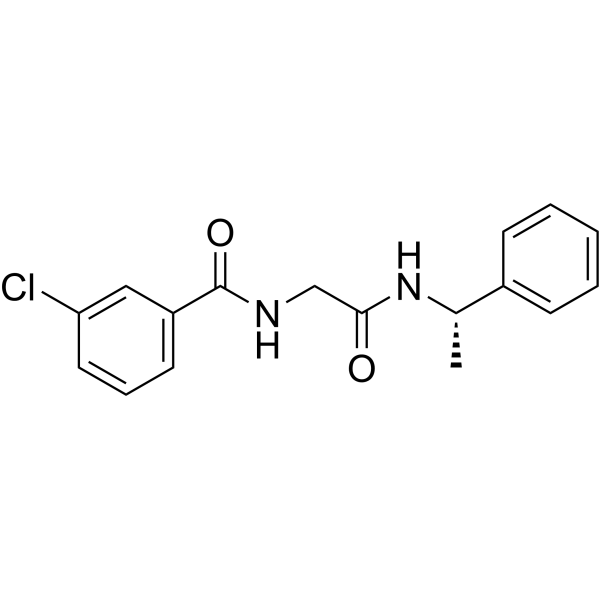
JNJ-63533054
Based on 1 publication(s) in Google Scholar
JNJ-63533054 is a potent, selective and orally active GPR139 agonist with an EC50 of 16 nM for human GPR139 (hGPR139). JNJ-63533054 shows selective for GPR139 over other GPCRs, ion channels, and transporters. JNJ-63533054 can cross the blood-brain barrier (BBB).
For research use only. We do not sell to patients.
- Purity : 99.80%
- CAS No.: 1802326-66-4
- Formula: C17H17ClN2O2
- Molecular Weight:316.78
-
Storage:Powder -20°C, 3 years , 4°C, 2 years ; In solvent -80°C, 2 years , -20°C, 1 year

To place orders, for customer services and technical support, please contact: MedChemExpress USA
Tel: 609-228-6898 E-mail: [email protected] [email protected]


-
 Biological Activity
-
Chemical Information
-
Solvent & Solubility
- Purity & Documentation
- References
-
 Help & FAQs


-
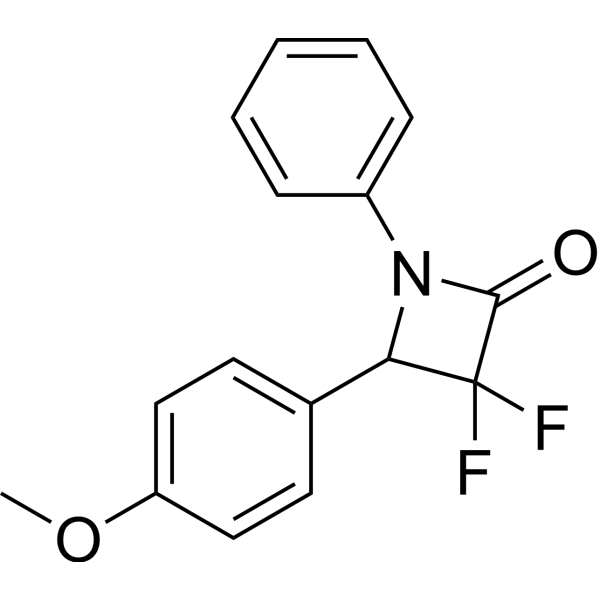
HY-128057
NCRW0005-F05GPR139 Antagonist -
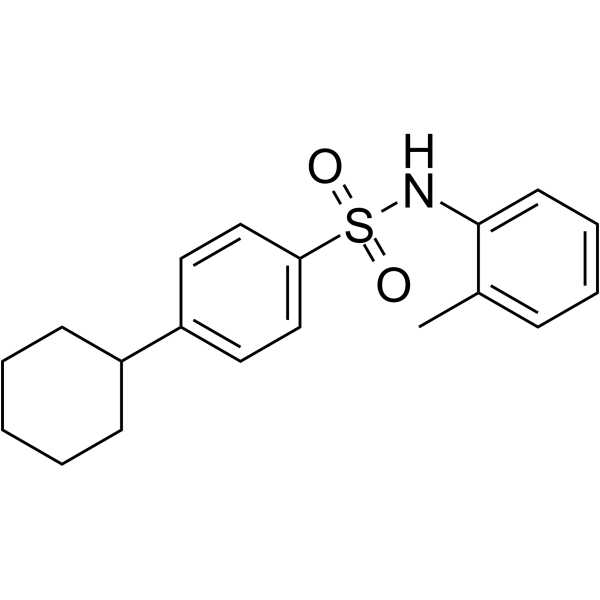
HY-119168
LP-471756GPR139 Antagonist -
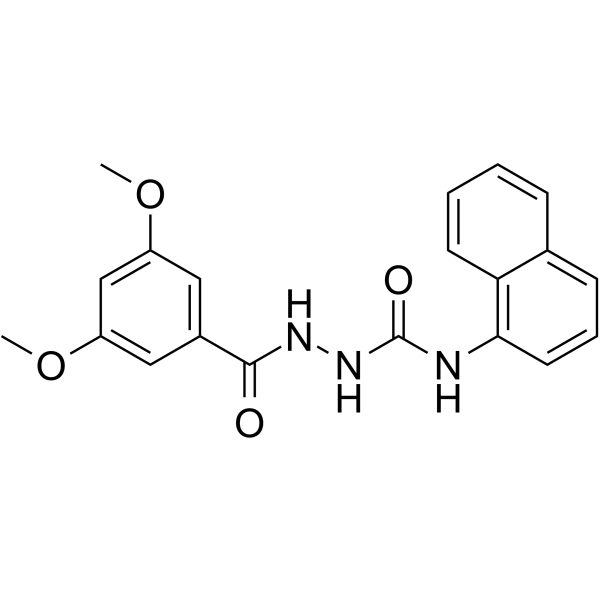
HY-101777
TC-O 9311 -
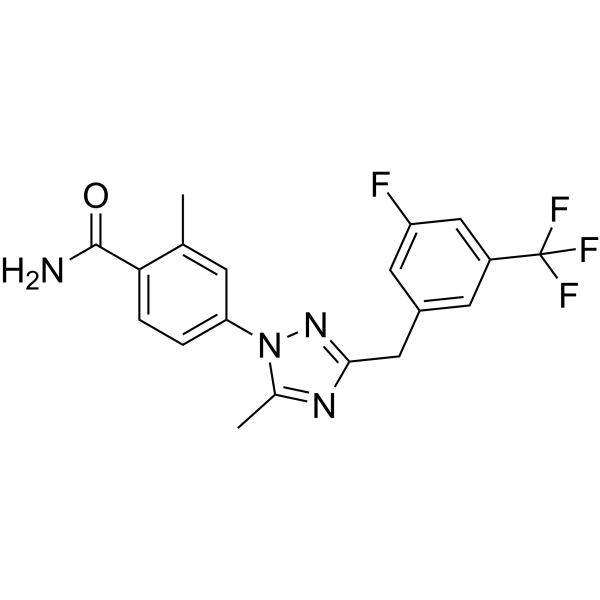
HY-101787
TP-024GPR52 Agonist -
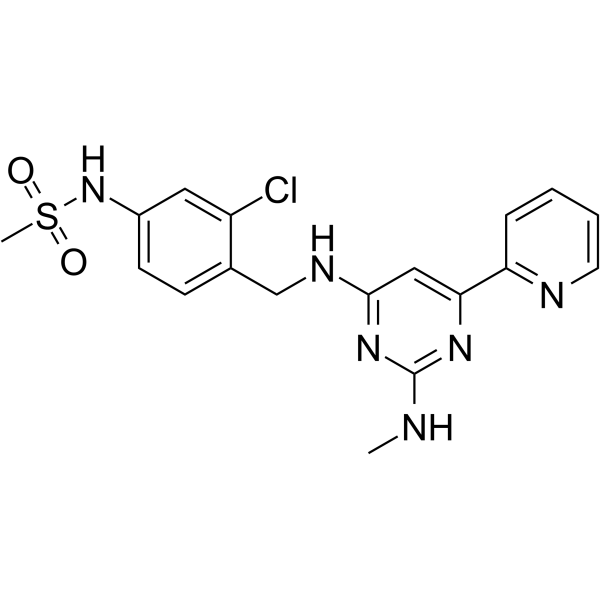
HY-103007
TC-G-1008GPR39 Agonist -
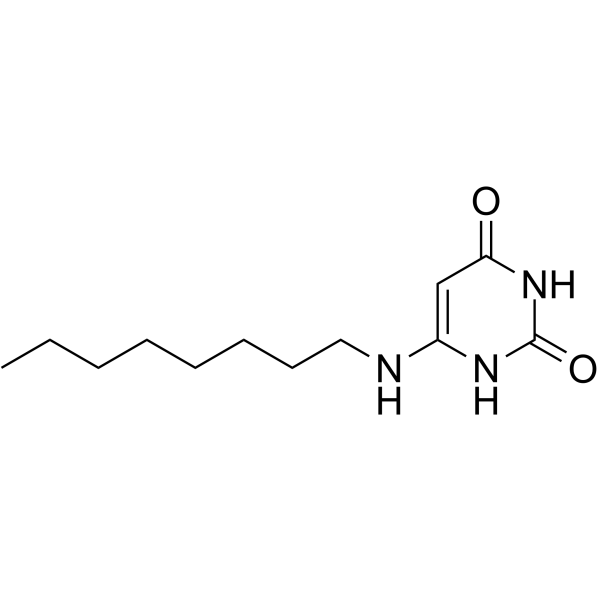
HY-12764
6-OAUGPR84 Agonist -
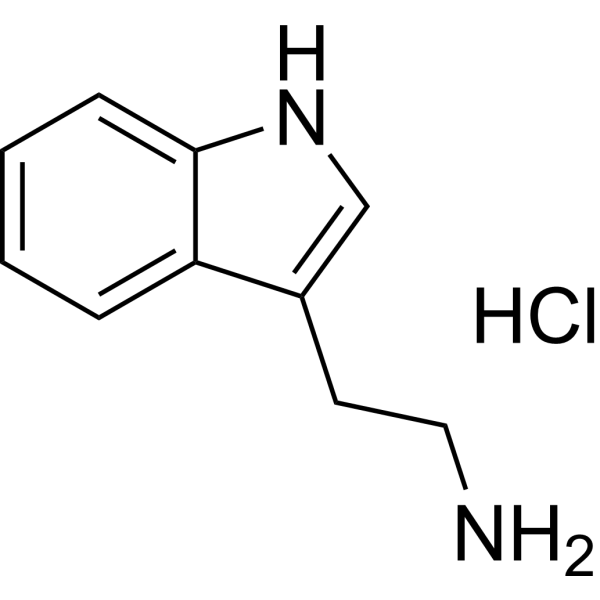
HY-W014971
Tryptamine hydrochlorideBiochemical Assay Reagent -
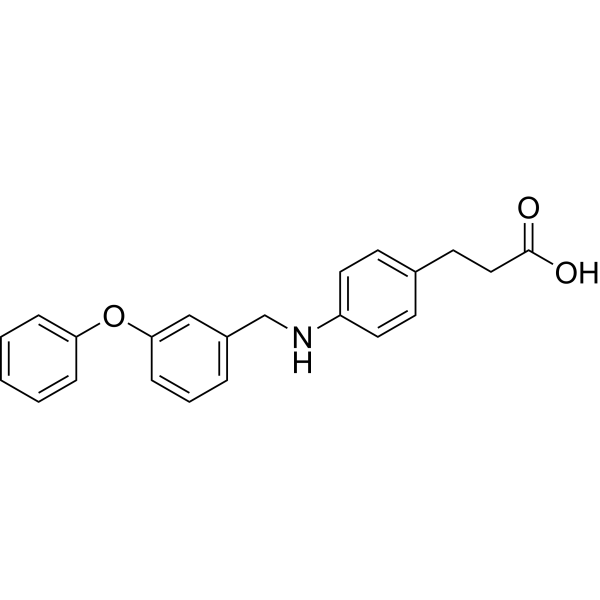
HY-15589
GW9508GPR40 Agonist -
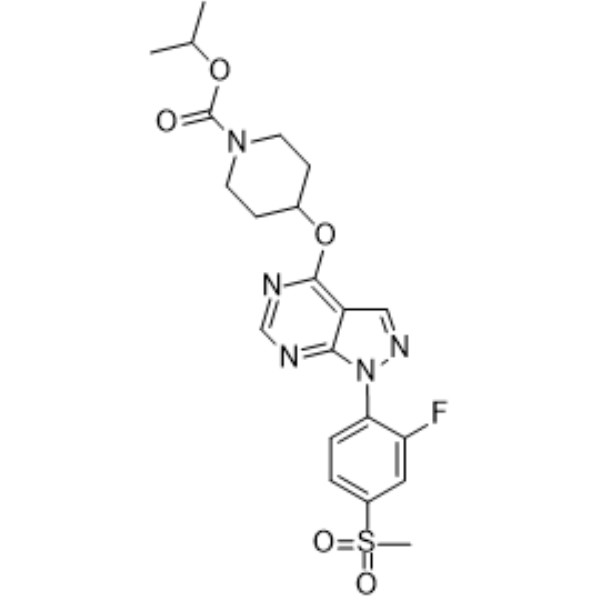
HY-15565
APD668GPR119 Agonist -
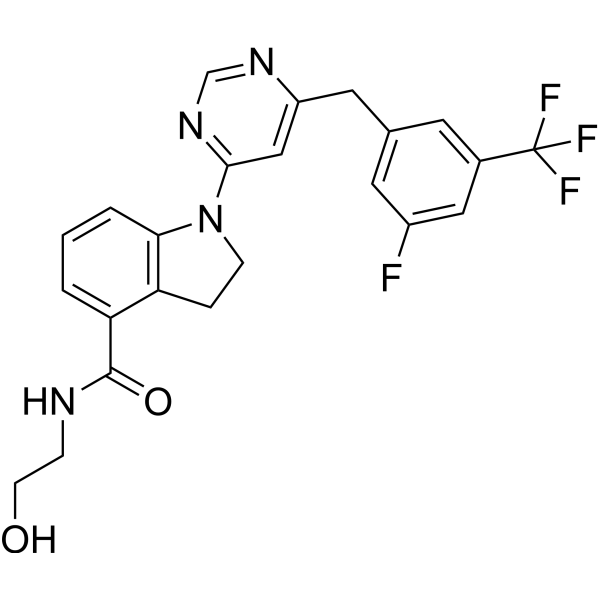
HY-138639
PW0787GPR52 Agonist -
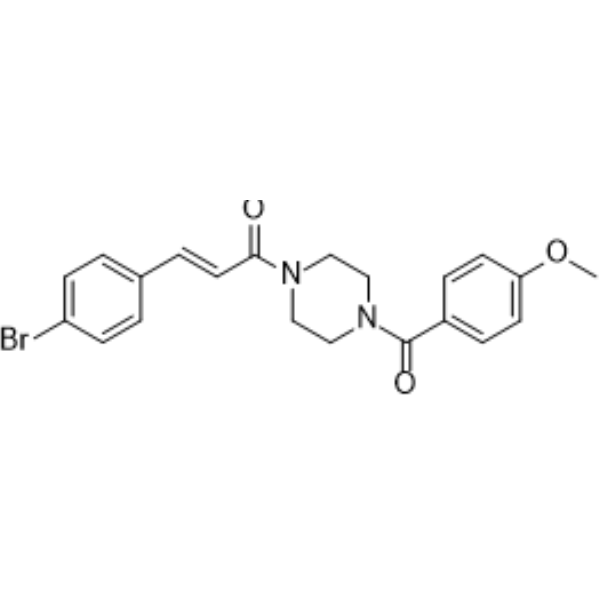
HY-12336
NIBR189EBI2 Antagonist -
HY-15566
APD597GPR119 Agonist
Publications Citing Use of MedChemExpress (MCE) JNJ-63533054
More

Biological Activity
Description
IC50 & Target
EC50: 16 nM (Human GPR139), 63 nM (Rat GPR139) and 28 nM (Mouse GPR139)[1]
Cellular Effect
|
Cell Line

|
Type | Value | Description | References |
|---|---|---|---|---|
| HEK293 | EC50 |
16 nM
Compound: 7c
|
Agonist activity at human GPR139 receptor expressed in HEK293 cells assessed as calcium mobilization by FLIPR assay
Agonist activity at human GPR139 receptor expressed in HEK293 cells assessed as calcium mobilization by FLIPR assay
|
[PMID: 26396690] |
In Vitro
JNJ-63533054 specifically activates human GPR139 in the calcium mobilization (EC50 of 16 nM) and GTPγS binding (EC50 of 17 nM) assays. JNJ-63533054 also activates the rat and mouse GPR139 receptor with similar potency (rat EC50 of 63 nM, mouse EC50 of 28 nM)[1].
?
In a saturation study for human GPR139, a single population of high-affinity binding sites for [3H] JNJ-63533054 is observed (Kd of 10 nM). The Bmax value is 26 pmol/mg of protein. Saturation studies for the rat GPR139 and mouse GPR139 yielded Kd values within the same range (32 nM and 23 nM, respectively; Bmax = 8.5 pmol/mg of protein and 6.2 pmol/mg of protein, respectively)[1].
MedChemExpress (MCE) has not independently confirmed the accuracy of these methods. They are for reference only.
In Vivo
? The pharmacokinetics of JNJ-63533054 (Compound 7c; 1 mg/kg iv; 5 mg/kg po) in rat is examined. The IV clearance is 53 mL/min/kg,? the Cmax is 317 ng/mL (~1 μM), the t1/2 is 2.5 hours,? and JNJ-63533054 is able to cross the blood-brain barrier (BBB) with a brain to plasma ratio (b/p) of 1.2[2].
MedChemExpress (MCE) has not independently confirmed the accuracy of these methods. They are for reference only.
-
Animal Model:Male Sprague-Dawley rats (350-450 g)[1]
-
Dosage:3 mg/kg, 10 mg/kg, and 30 mg/kg
-
Administration:Oral administration; once
-
Result:Induced a dose-dependent reduction in locomotor activity in the first hour.


Chemical Information
-
CAS No. 1802326-66-4
-
Appearance Solid
-
Molecular Weight 316.78
-
Formula C17H17ClN2O2
-
Color White to off-white
-
SMILES
O=C(NCC(N[C@H](C1=CC=CC=C1)C)=O)C2=CC=CC(Cl)=C2
-
Shipping
Room temperature in continental US; may vary elsewhere.
-
Storage
Powder -20°C 3 years 4°C 2 years In solvent -80°C 2 years -20°C 1 year


Publications (1)
-
Journal Impact Factor
-
Most Recent
-
Nat Neurosci
2026 Jun 19. PMID: 42321470


Solvent & Solubility
In Vitro:
DMSO : ≥ 50 mg/mL (157.84 mM; Hygroscopic DMSO has a significant impact on the solubility of product, please use newly opened DMSO)
* "≥" means soluble, but saturation unknown.
Please refer to the solubility information to select the appropriate solvent. Once prepared, please aliquot and store the solution to prevent product inactivation from repeated freeze-thaw cycles.
Storage method and period of stock solution: -80°C, 2 years; -20°C, 1 year. When stored at -80°C, please use it within 2 years. When stored at -20°C, please use it within 1 year.
Please refer to the solubility information to select the appropriate solvent. Once prepared, please aliquot and store the solution to prevent product inactivation from repeated freeze-thaw cycles.
Storage method and period of stock solution: -80°C, 2 years; -20°C, 1 year. When stored at -80°C, please use it within 2 years. When stored at -20°C, please use it within 1 year.
Concentration (start) × Volume (start) = Concentration (final) × Volume (final)
In Vivo:
Select the appropriate dissolution method based on your experimental animal and administration route.
- For the following dissolution methods, please ensure to first prepare a clear stock solution using an In Vitro approach and then sequentially add co-solvents:
- To ensure reliable experimental results, the clarified stock solution can be appropriately stored based on storage conditions. As for the working solution for In Vivo experiments, it is recommended to prepare freshly and use it on the same day.
- The percentages shown for the solvents indicate their volumetric ratio in the final prepared solution. If precipitation or phase separation occurs during preparation, heat and/or sonication can be used to aid dissolution.
Add each solvent one by one: 10% DMSO 40% PEG300 5% Tween-80 45% Saline
Solubility: ≥ 2.5 mg/mL (7.89 mM); Clear solution
This protocol yields a clear solution of ≥ 2.5 mg/mL (saturation unknown).
Taking 1 mL working solution as an example, add 100 μL DMSO stock solution (25.0 mg/mL) to 400 μL PEG300, and mix evenly; then add 50 μL Tween-80 and mix evenly; then add 450 μL Saline to adjust the volume to 1 mL.
Preparation of Saline: Dissolve 0.9 g sodium chloride in ddH₂O and dilute to 100 mL to obtain a clear Saline solution.
In Vivo Dissolution Calculator
Please enter the basic information of animal experiments:
-
-
-
-
Recommended: Prepare an additional quantity of animals to account for potential losses during experiments.
Please enter your animal formula composition:
-
%DMSO +
Recommended: Keep the proportion of DMSO in working solution below 2% if your animal is weak.
-
%+
-
+%Tween-80 + +
-
%Saline +
The co-solvents required include: DMSO, . All of co-solvents are available by MedChemExpress (MCE). , Tween 80. All of co-solvents are available by MedChemExpress (MCE).
Working solution concentration: 0.22 mg/mL
Method for preparing stock solution: mg drug dissolved in μL DMSO. Stock solution concentration: mg/mL.
1. Take μL DMSO stock solution;
2. Add μL .
μL , mix evenly;
3. Then add μL Tween 80, mix evenly;
4. Then add μL
Please ensure that the stock solution in the first step is dissolved to a clear state, and add co-solvents in sequence. You can use ultrasonic heating (ultrasonic cleaner, recommended frequency 20-40 kHz), vortexing, etc. to assist dissolution.


Purity & Documentation
-
Data Sheet (273 KB)
-
SDS (393 KB)
- English - EN (393 KB)
- Français - FR (393 KB)
- Deutsch - DE (393 KB)
- Norwegian - NO (393 KB)
- Español - ES (393 KB)
- Swedish - SV (393 KB)
- Italian - IT (393 KB)
- Korean - KR (393 KB)
- Portuguese - PT (393 KB)
-
Handling Instructions (2659 KB)
References
[1]. Liu C, et al. GPR139, an Orphan Receptor Highly Enriched in the Habenula and Septum, Is Activated by the Essential Amino Acids L-Tryptophan and L-Phenylalanine. Mol Pharmacol. 2015 Nov;88(5):911-25. [Content Brief]
[2]. Dvorak CA, et al. Identification and SAR of Glycine Benzamides as Potent Agonists for the GPR139 Receptor. ACS Med Chem Lett. 2015 Jul 20;6(9):1015-8. [Content Brief]


Complete Stock Solution Preparation Table
Please refer to the solubility information to select the appropriate solvent. Once prepared, please aliquot and store the solution to prevent product inactivation from repeated freeze-thaw cycles.
Storage method and period of stock solution: -80°C, 2 years; -20°C, 1 year. When stored at -80°C, please use it within 2 years. When stored at -20°C, please use it within 1 year.
| Optional Solvent | Concentration Solvent Mass | 1 mg | 5 mg | 10 mg | 25 mg |
|---|---|---|---|---|---|
| DMSO | 1 mM | 3.1568 mL | 15.7838 mL | 31.5676 mL | 78.9191 mL |
| 5 mM | 0.6314 mL | 3.1568 mL | 6.3135 mL | 15.7838 mL | |
| 10 mM | 0.3157 mL | 1.5784 mL | 3.1568 mL | 7.8919 mL | |
| 15 mM | 0.2105 mL | 1.0523 mL | 2.1045 mL | 5.2613 mL | |
| 20 mM | 0.1578 mL | 0.7892 mL | 1.5784 mL | 3.9460 mL | |
| 25 mM | 0.1263 mL | 0.6314 mL | 1.2627 mL | 3.1568 mL | |
| 30 mM | 0.1052 mL | 0.5261 mL | 1.0523 mL | 2.6306 mL | |
| 40 mM | 0.0789 mL | 0.3946 mL | 0.7892 mL | 1.9730 mL | |
| 50 mM | 0.0631 mL | 0.3157 mL | 0.6314 mL | 1.5784 mL | |
| 60 mM | 0.0526 mL | 0.2631 mL | 0.5261 mL | 1.3153 mL | |
| 80 mM | 0.0395 mL | 0.1973 mL | 0.3946 mL | 0.9865 mL | |
| 100 mM | 0.0316 mL | 0.1578 mL | 0.3157 mL | 0.7892 mL |


JNJ-63533054 Related Classifications
HY-19838 Related Classifications
 Powered by Bioz