Search Result
Results for "
MC-amide-C2-amide-(β-D-GlcUA)-amide-PEG1-CH2-CC-885
" in MedChemExpress (MCE) Product Catalog:
9
Biochemical Assay Reagents
| Cat. No. |
Product Name |
Target |
Research Areas |
Chemical Structure |
-
- HY-145448
-
|
|
E3 Ligase Ligand-Linker Conjugates
|
Cancer
|
|
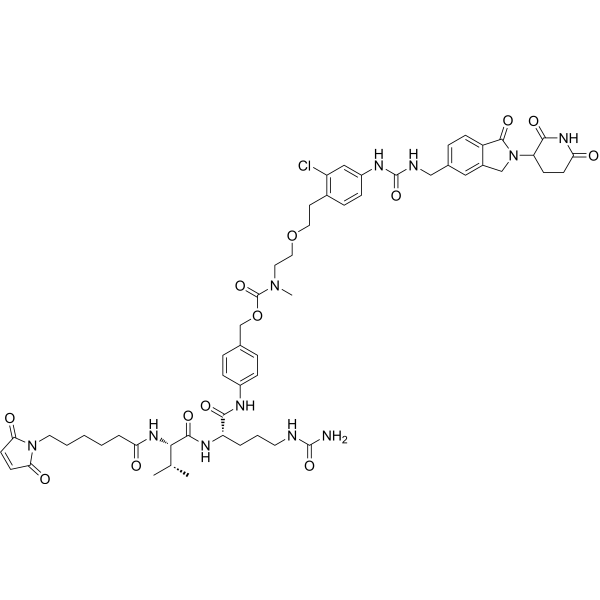
MC-VC-PABC-amide-PEG1-CH2-CC-885 (compound I-1) is a neoDegrader-Linker conjugate, consists of the GSPT1 degrader/molecular glue CC-885 (HY-101488) and a linker. MC-VC-PABC-amide-PEG1-CH2-CC-885 can be conjugated to the antibody DAR3.7 that specifically targets CD56 to synthesize Antibody-Drug Conjugates (ADCs) [1].
|
-
-
- HY-126886
-
|
|
ADC Linker
PROTAC Linkers
|
Cancer
|
|
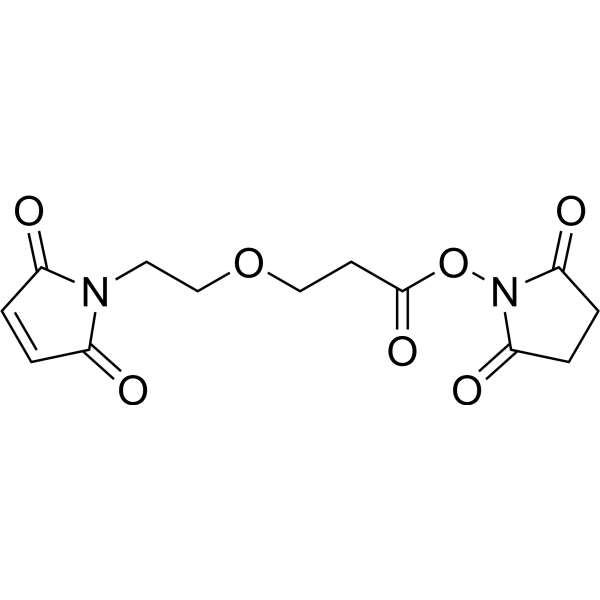
Mal-PEG1-NHS ester is a non-cleavable ADC linker used in the synthesis of antibody-drug conjugates (ADCs). Mal-PEG1-NHS ester is PEG-based PROTAC linker that can be used in the synthesis of PROTACs.
|
-
-
- HY-126513
-
|
|
ADC Linker
|
Cancer
|
|
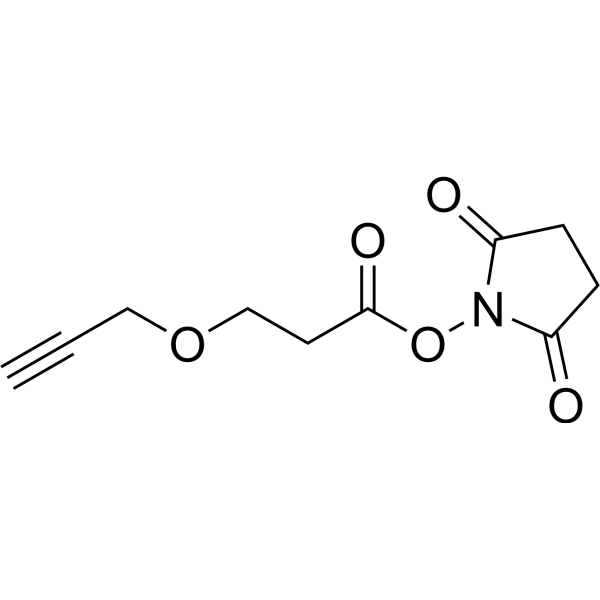
Propargyl-PEG1-NHS ester is a nonclaevable 1-unit PEG linker for antibody-agent-conjugation (ADC). Propargyl-PEG1-NHS ester is a click chemistry reagent, it contains an Alkyne group and can undergo copper-catalyzed azide-alkyne cycloaddition (CuAAc) with molecules containing Azide groups.
|
-
-
- HY-136304
-
-
-
- HY-W055861
-
|
|
ADC Linker
PROTAC Linkers
|
Cancer
|
|
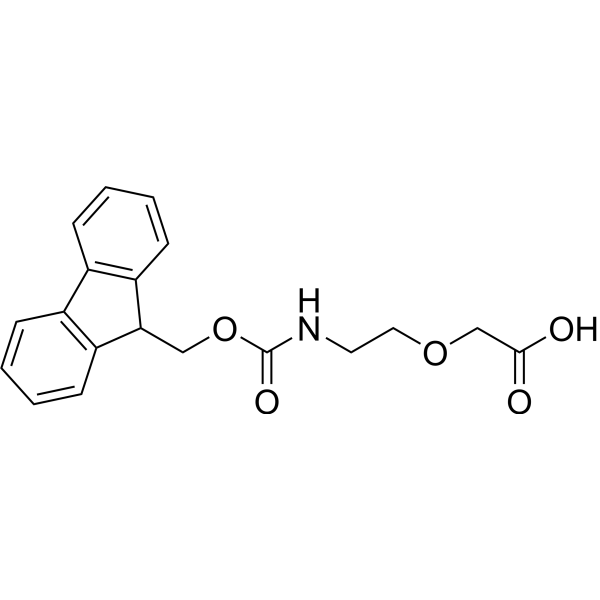
Fmoc-NH-PEG1-CH2COOH is a cleavable ADC linker used in the synthesis of antibody-drug conjugates (ADCs). Fmoc-NH-PEG1-CH2COOH is also a PEG-based PROTAC linker that can be used in the synthesis of PROTACs [1].
|
-
-
- HY-138461
-
|
|
PROTAC Linkers
|
Cancer
|
|
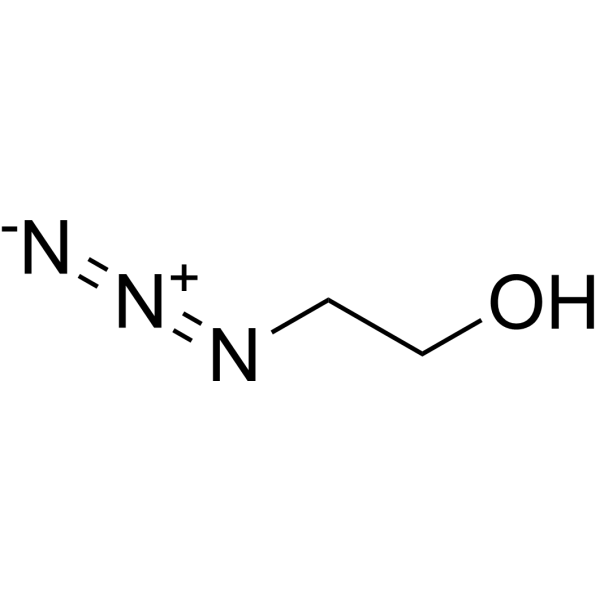
Azido-PEG1 is a PEG-based PROTAC linker that can be used in the synthesis of PROTACs [1]. Azido-PEG1 is a click chemistry reagent, it contains an Azide group and can undergo copper-catalyzed azide-alkyne cycloaddition reaction (CuAAc) with molecules containing Alkyne groups. It can also undergo strain-promoted alkyne-azide cycloaddition (SPAAC) reactions with molecules containing DBCO or BCN groups.
|
-
-
- HY-160497
-
|
|
PROTAC-Linker Conjugates for PAC
|
Cancer
|
|
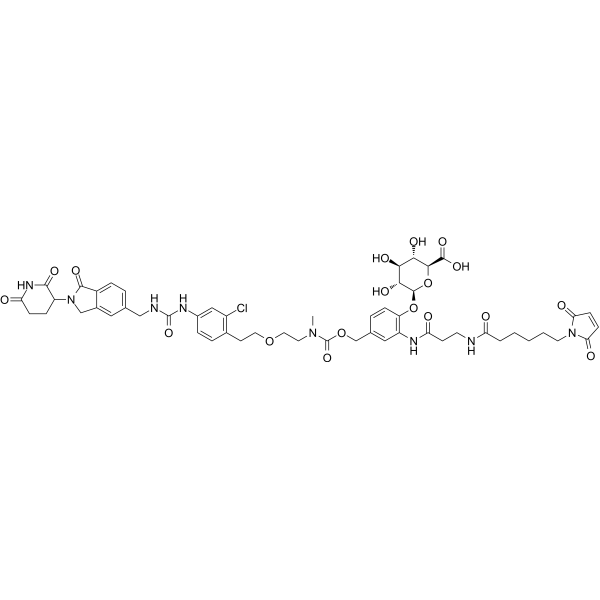
MC-(β-Ala)-PABC-(β-D-GlcUA)-amide-PEG1-CH2-CC-885 (Compound Ie) is a neodegrader conjugate, can be used in the synthesis of antibody neoDegrader conjugate (AnDC) [1].
|
-
-
- HY-133139
-
|
|
E3 Ligase Ligand-Linker Conjugates
|
Cancer
|
|
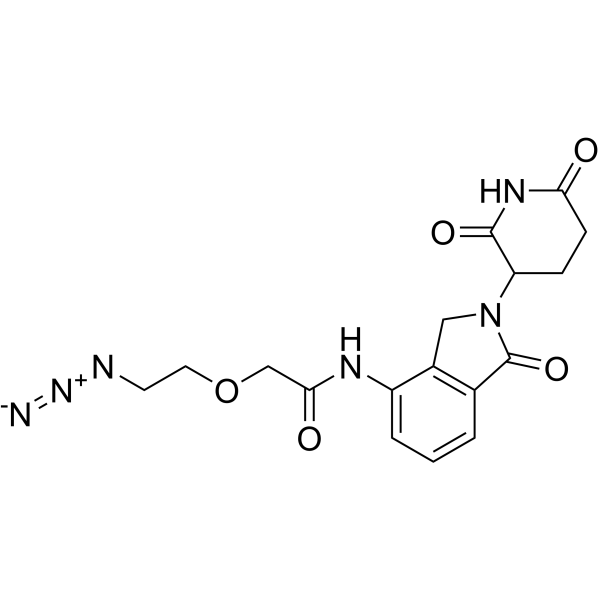
Lenalidomide-PEG1-azide is a E3 ligase lgand-linker conjugate. Lenalidomide-PEG1-azide incorporates the Lenalidomide based cereblon ligand and a linker.?Lenalidomide-PEG1-azide?can be used to design a PROTAC BRD4 Degrader-2 (HY-133136) [1]. Lenalidomide-PEG1-azide is a click chemistry reagent, it contains an Azide group and can undergo copper-catalyzed azide-alkyne cycloaddition reaction (CuAAc) with molecules containing Alkyne groups. It can also undergo strain-promoted alkyne-azide cycloaddition (SPAAC) reactions with molecules containing DBCO or BCN groups.
|
-
-
- HY-130503
-
|
|
ADC Linker
PROTAC Linkers
|
Cancer
|
|
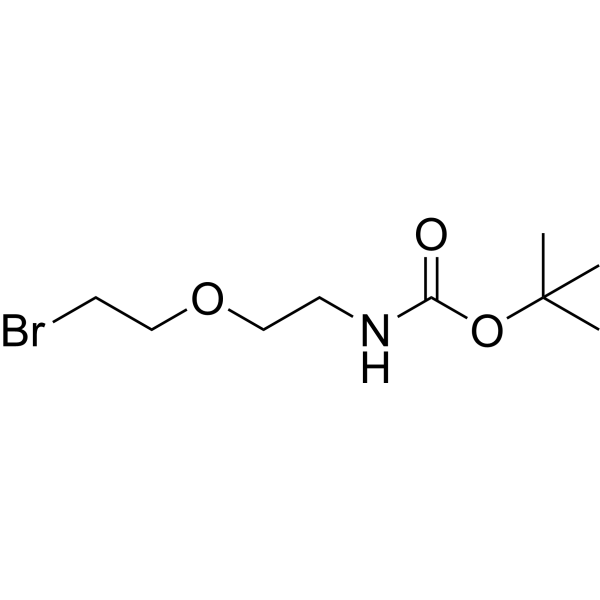
N-Boc-PEG1-bromide is a PEG/Alkyl/ether-based PROTAC linker can be used in the synthesis of PROTACs. N-Boc-PEG1-bromide is a cleavable ADC linker used in the synthesis of antibody-drug conjugates (ADCs) [1].
|
-
-
- HY-W007322
-
|
|
PROTAC Linkers
|
Cancer
|
|
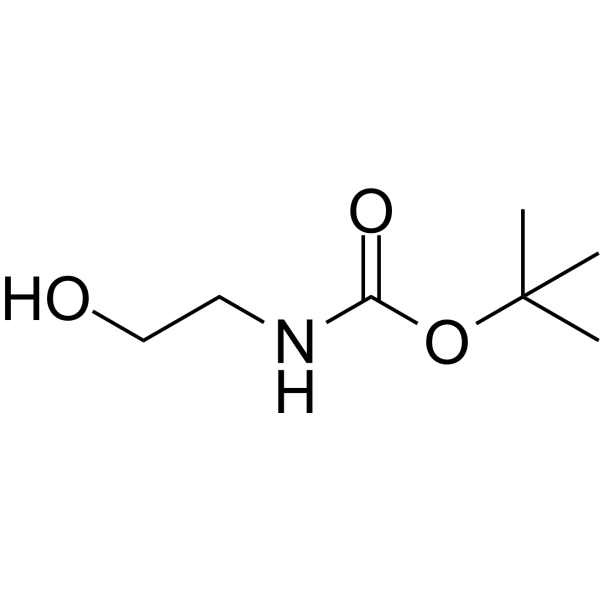
Boc-NH-PEG1-OH is a PEG-based PROTAC linker that can be used in the synthesis of PROTACs [1].
|
-
-
- HY-126960
-
-
-
- HY-130425
-
|
|
PROTAC Linkers
|
Cancer
|
|
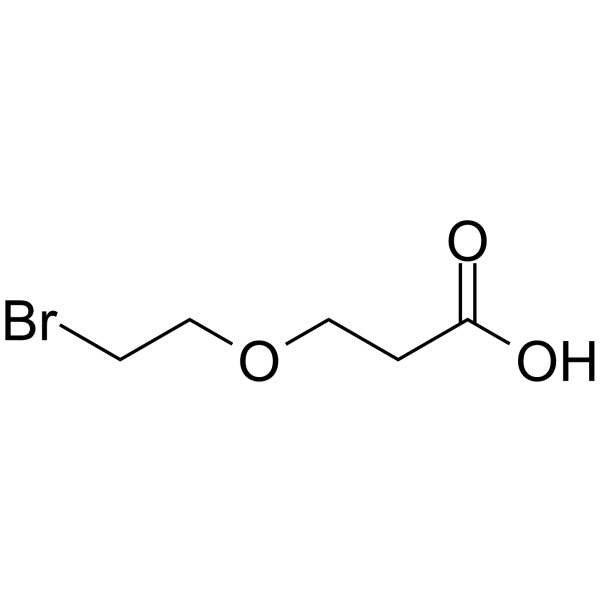
Bromo-PEG1-acid is a PEG-based PROTAC linker can be used in the synthesis of PROTACs [1].
|
-
-
- HY-133138
-
|
|
E3 Ligase Ligand-Linker Conjugates
|
Cancer
|
|
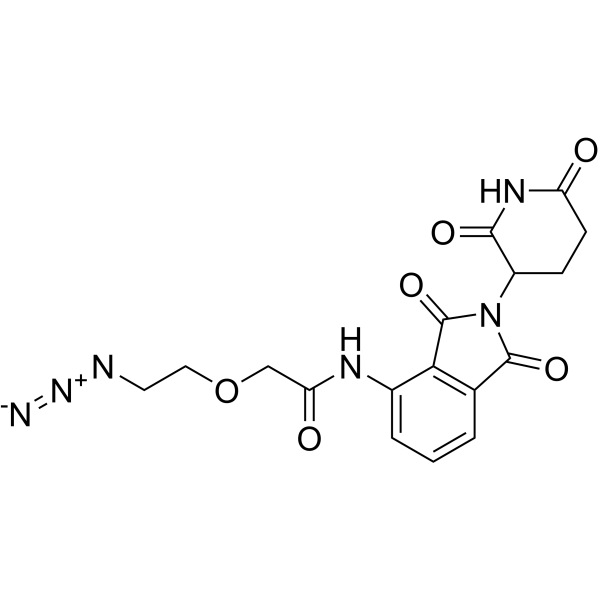
Pomalidomide-PEG1-azide is an E3 ligase lgand-linker conjugate. Pomalidomide-PEG1-azide incorporates the Pomalidomide based cereblon ligand and a linker. Pomalidomide-PEG1-azide can be used to synthesis PROTAC BRD4 Degrader-1 (HY-133131) [1]. PROTAC BRD4 Degrader-1 is a PROTAC connected by ligands for Cereblon and BRD4 with an IC50 of 41.8 nM against BRD4 BD1. PROTAC BRD4 Degrader-1 can effectively degrade BRD4 protein and suppress c-Myc expression.
|
-
-
- HY-161128
-
|
|
E3 Ligase Ligand-Linker Conjugates
|
Cancer
|
|
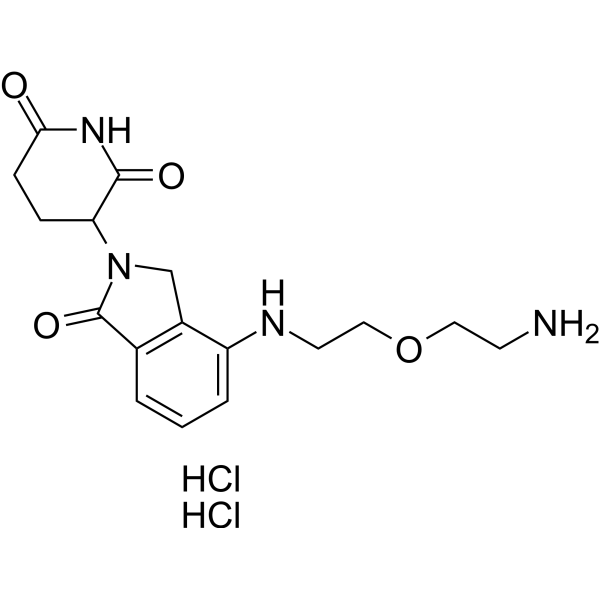
Lenalidomide 4'-PEG1-amine dihydrochloride is the Lenalidomide-based Cereblon ligand used in the recruitment of CRBN protein. Lenalidomide 4'-PEG1-amine dihydrochloride can be connected to the ligand for protein by a linker to form PROTAC [1].
|
-
-
- HY-140271
-
|
|
PROTAC Linkers
|
Cancer
|
|
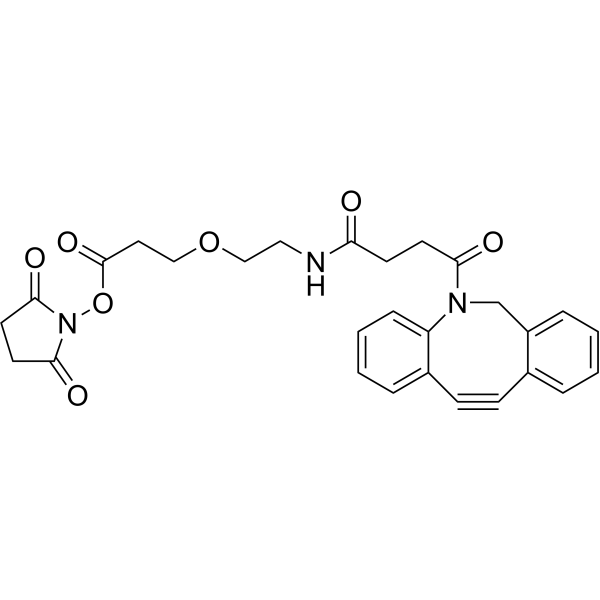
DBCO-PEG1-NHS ester is a PEG-based PROTAC linker that can be used in the synthesis of PROTACs [1]. DBCO-PEG1-NHS ester is a click chemistry reagent, it contains a DBCO group that can undergo strain-promoted alkyne-azide cycloaddition (SPAAC) with molecules containing Azide groups.
|
-
-
- HY-W038771
-
|
|
PROTAC Linkers
|
Cancer
|
|
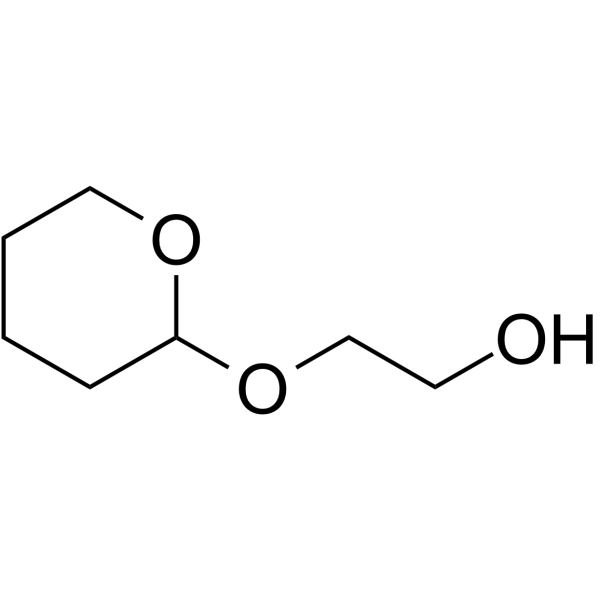
THP-PEG1-alcohol is a PEG-based PROTAC linker that can be used in the synthesis of PROTACs [1].
|
-
-
- HY-116069
-
|
|
PROTAC Linkers
|
Cancer
|
|
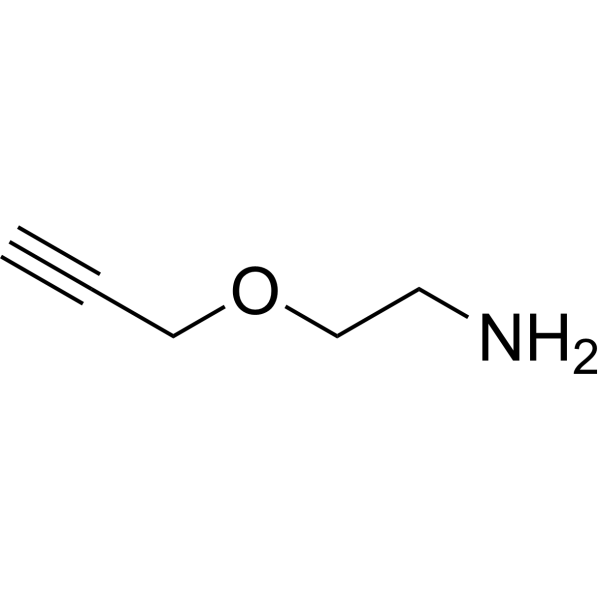
Propargyl-PEG1-NH2 is a PEG-based PROTAC linker can be used in the synthesis of PROTACs [1]. Propargyl-PEG1-NH2 is a click chemistry reagent, it contains an Alkyne group and can undergo copper-catalyzed azide-alkyne cycloaddition (CuAAc) with molecules containing Azide groups.
|
-
-
- HY-130089
-
|
|
ADC Linker
|
Cancer
|
|
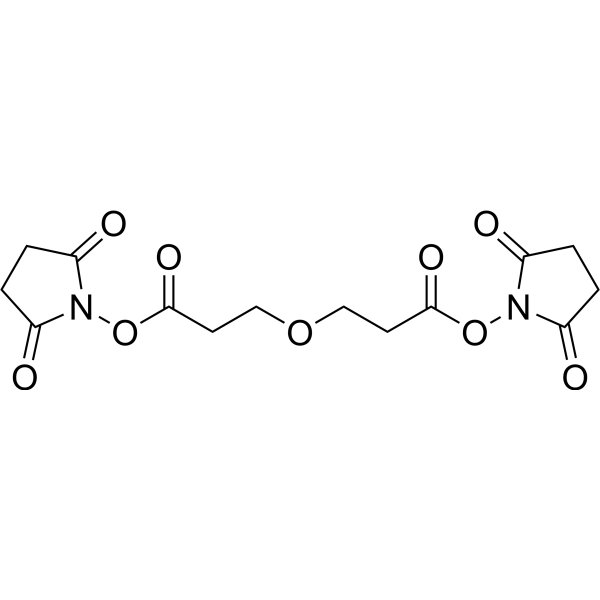
Bis-PEG1-NHS ester is a nonclaevable 1-unit PEG linker for antibody-agent-conjugation (ADC).
|
-
-
- HY-131890
-
|
|
E3 Ligase Ligand-Linker Conjugates
|
Cancer
|
|
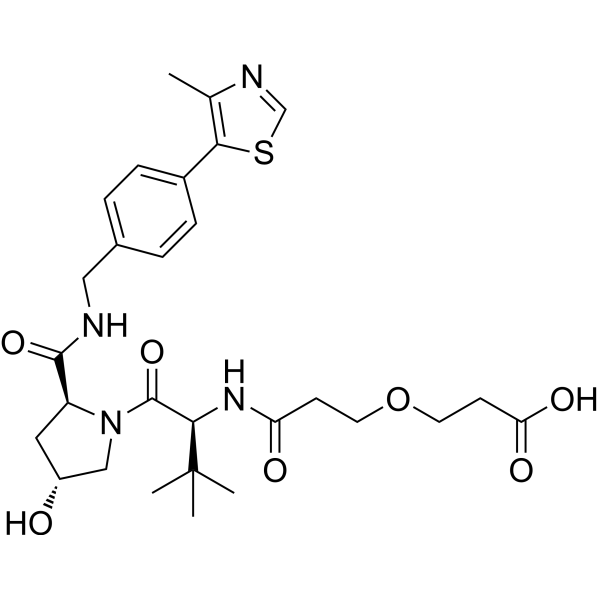
VH032 amide-PEG1-acid (Linker 10) is an E3 ligase ligand-linker conjugate comprising an E3 ligase ligand and a PEG1 linker terminated with a carboxylic acid group. VH032 amide-PEG1-acid can be used for the synthesis of CDK4/6-targeting PROTACs [1].
|
-
-
- HY-W190877
-
|
SH-PEG1-COOH
|
Biochemical Assay Reagents
|
Others
|
|
Thiol-PEG1-acid (SH-PEG1-COOH) is a PEG derivative consisting of a thiol (-SH), 1 PEG unit, and a carboxyl (-COOH). The thiol is a highly reactive chemical group that can react specifically with a variety of molecules to form stable covalent bonds. The carboxyl group can easily form stable amide bonds with amino groups, and can also form ester bonds with hydroxyl groups.
|
-

-
- HY-136008
-
|
VH032-PEG1-NH2
|
E3 Ligase Ligand-Linker Conjugates
|
Cancer
|
|
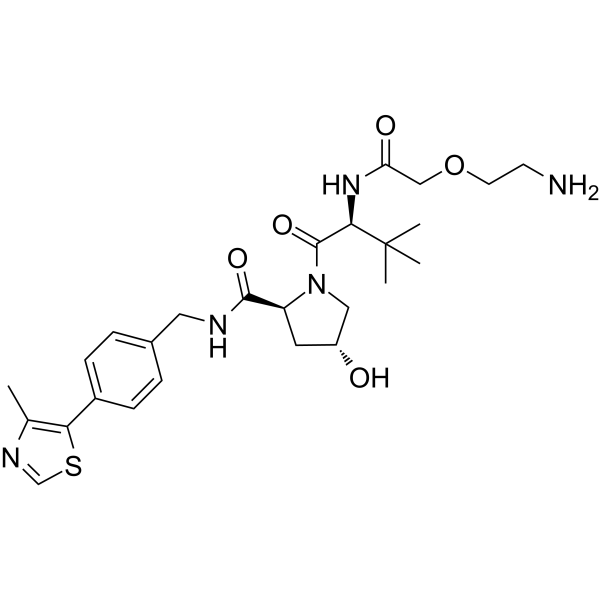
(S,R,S)-AHPC-PEG1-NH2 (VH032-PEG1-NH2) is a synthesized E3 ligase ligand-linker conjugate that incorporates the VH032 based VHL ligand and a linker used in PROTAC technology [1].
|
-
-
- HY-140056
-
|
|
PROTAC Linkers
|
Cancer
|
|
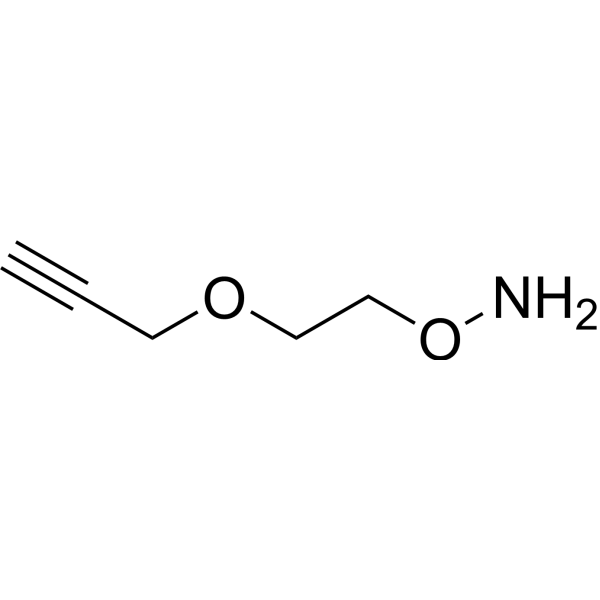
Aminooxy-PEG1-propargyl is a PEG-based PROTAC linker can be used in the synthesis of PROTACs [1]. Aminooxy-PEG1-propargyl is a click chemistry reagent, it contains an Alkyne group and can undergo copper-catalyzed azide-alkyne cycloaddition (CuAAc) with molecules containing Azide groups.
|
-
-
- HY-23166
-
|
|
PROTAC Linkers
|
Cancer
|
|
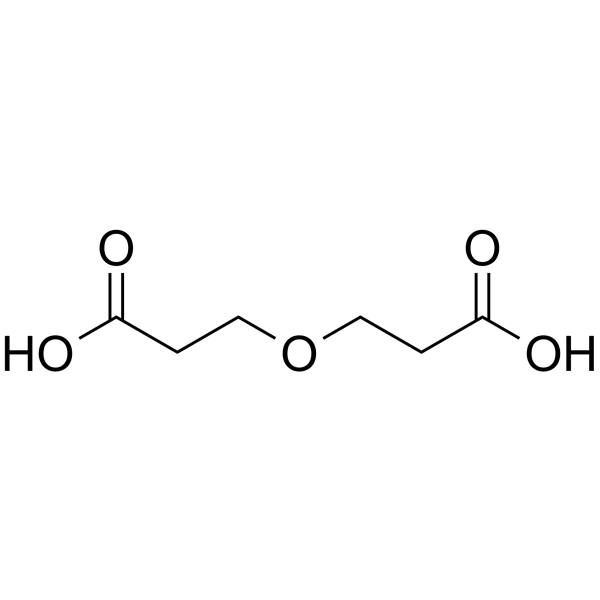
Bis-PEG1-acid is a PEG-based PROTAC linker can be used in the synthesis of PROTACs [1].
|
-
-
- HY-140407
-
|
|
PROTAC Linkers
|
Cancer
|
|
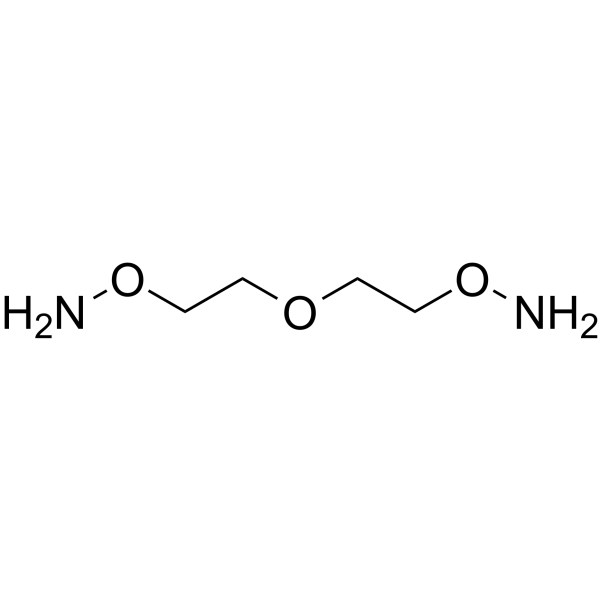
Bis-aminooxy-PEG1 is a PEG-based PROTAC linker that can be used in the synthesis of PROTACs [1].
|
-
-
- HY-114843
-
|
|
PROTAC Linkers
|
Cancer
|
|
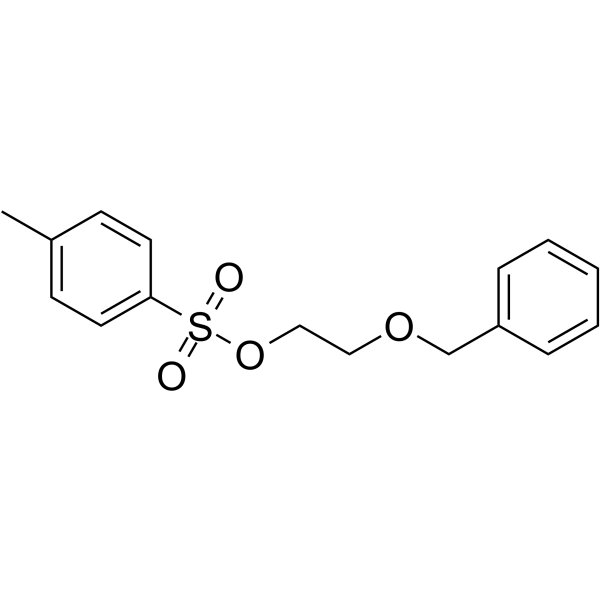
Benzyl-PEG1-Tos is a PEG-based PROTAC linker that can be used in the synthesis of PROTACs [1].
|
-
-
- HY-133494
-
|
|
PROTAC Linkers
|
Cancer
|
|
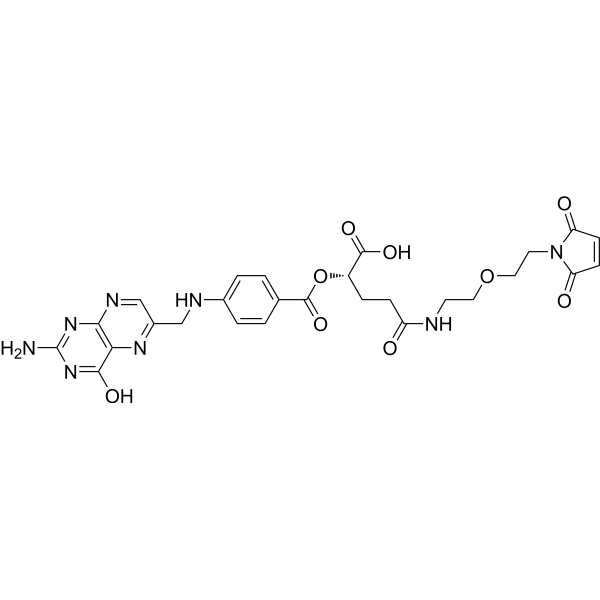
Folate-PEG1-mal is a PEG-based PROTAC linker that can be used in the synthesis of PROTACs [1].
|
-
-
- HY-114512
-
|
|
PROTAC Linkers
|
Cancer
|
|
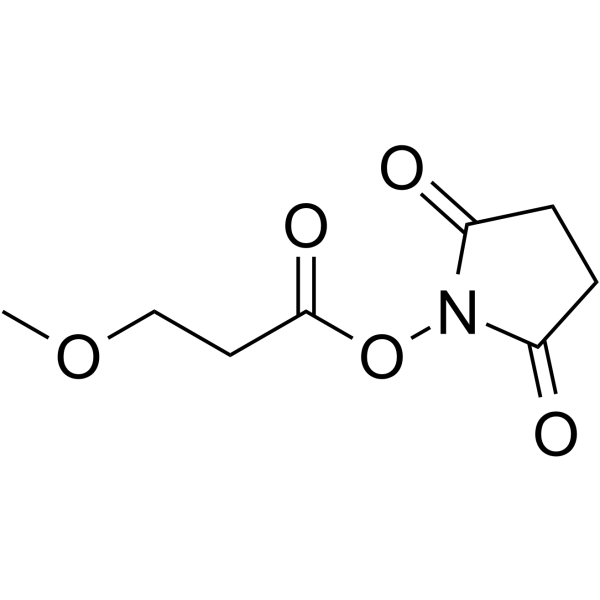
m-PEG1-NHS ester is a PEG/Alkyl/ether-based PROTAC linker can be used in the synthesis of PROTACs.
|
-
-
- HY-140265
-
|
|
PROTAC Linkers
|
Cancer
|
|
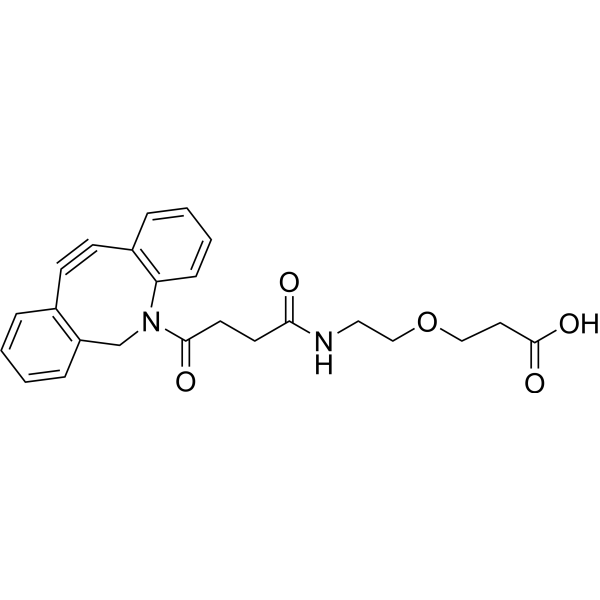
DBCO-PEG1-acid is a PEG-based PROTAC linker that can be used in the synthesis of PROTACs [1]. DBCO-PEG1-acid is a click chemistry reagent, it contains a DBCO group that can undergo strain-promoted alkyne-azide cycloaddition (SPAAC) with molecules containing Azide groups.
|
-
-
- HY-140038
-
|
|
PROTAC Linkers
|
Cancer
|
|
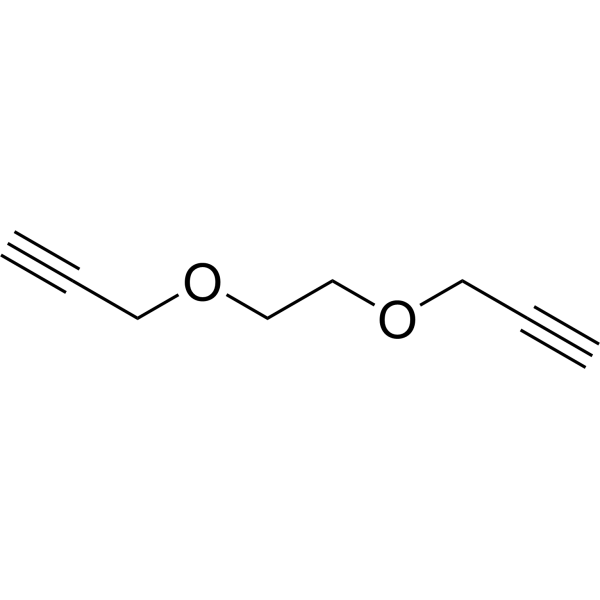
Bis-propargyl-PEG1 is a PEG-based PROTAC linker that can be used in the synthesis of PROTACs [1]. Bis-propargyl-PEG1 is a click chemistry reagent, it contains an Alkyne group and can undergo copper-catalyzed azide-alkyne cycloaddition (CuAAc) with molecules containing Azide groups.
|
-
-
- HY-140154
-
|
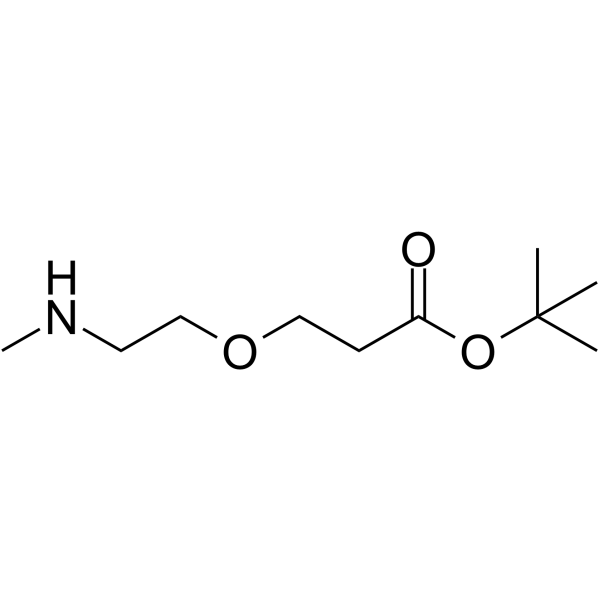
Methylamino-PEG1-t-butyl ester
|
PROTAC Linkers
|
Cancer
|
|
Methylamino-PEG1-Boc is a PEG-based PROTAC linker that can be used in the synthesis of PROTACs [1].
|
-
-
- HY-W096086
-
|
|
PROTAC Linkers
|
Cancer
|
|
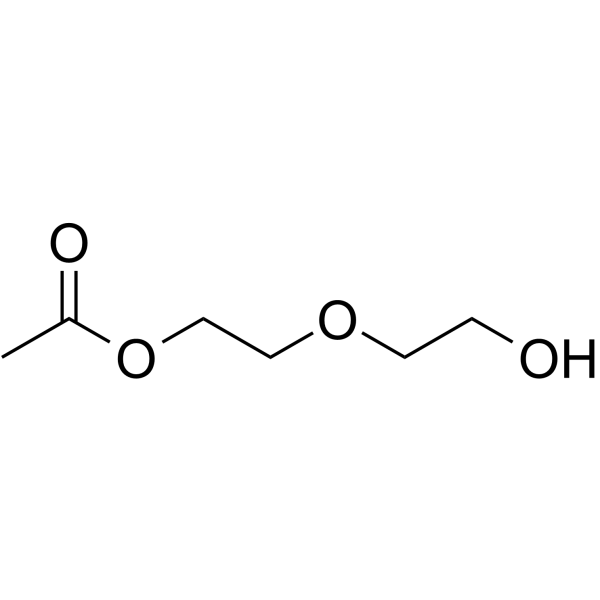
Ethyl acetate-PEG1 is a PEG-based PROTAC linker that can be used in the synthesis of PROTACs [1].
|
-
-
- HY-176962
-
|
|
Influenza Virus
Drug Derivative
|
Infection
|
|
Di(zanamivir-amide(N-Me)-PEG1)-N-PEG4-alkyne is a conjugate of Zanamivir (a viral neuraminidase inhibitor) (HY-13210) and linker. Di(zanamivir-amide(N-Me)-PEG1)-N-PEG4-alkyne can be used for viral infection research [1].
|
-

-
- HY-145255
-
|
|
PROTAC Linkers
Toll-like Receptor (TLR)
|
Inflammation/Immunology
|
|
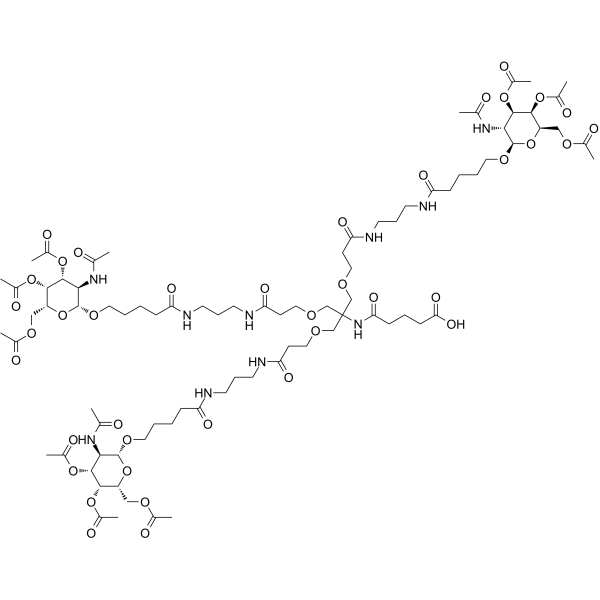
Tri(TLR4-IN-C34-C2-amide-C3-amide-PEG1)-amide-C3-COOH is a linker that incorporates TLR4 inhibitor TLR4-IN-C34. TLR4-IN-C34 inhibits TLR4 in enterocytes and macrophages, and reduces systemic inflammation in mouse models of endotoxemia and necrotizing enterocolitis [1].
|
-
-
- HY-145253
-
|
|
PROTAC Linkers
Toll-like Receptor (TLR)
|
Inflammation/Immunology
|
|
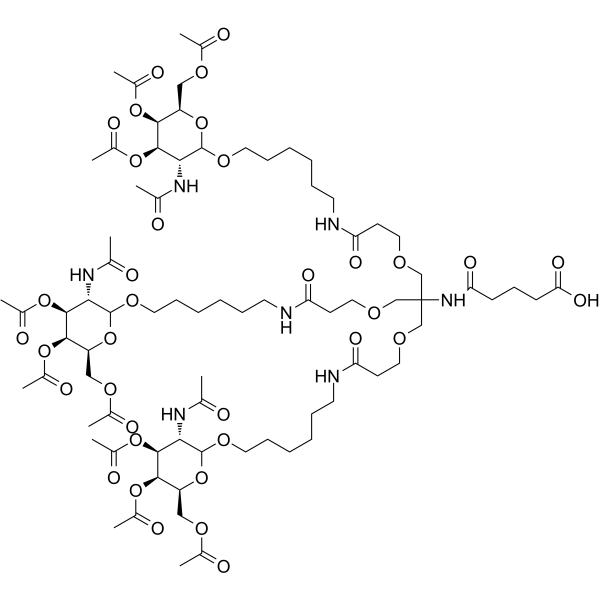
Tri(TLR4-IN-C34-C2-amide-PEG1)-amide-C3-COOH is a linker that incorporates TLR4 inhibitor TLR4-IN-C34. TLR4-IN-C34 inhibits TLR4 in enterocytes and macrophages, and reduces systemic inflammation in mouse models of endotoxemia and necrotizing enterocolitis [1].
|
-
-
- HY-140109
-
|
|
ADC Linker
|
Cancer
|
|
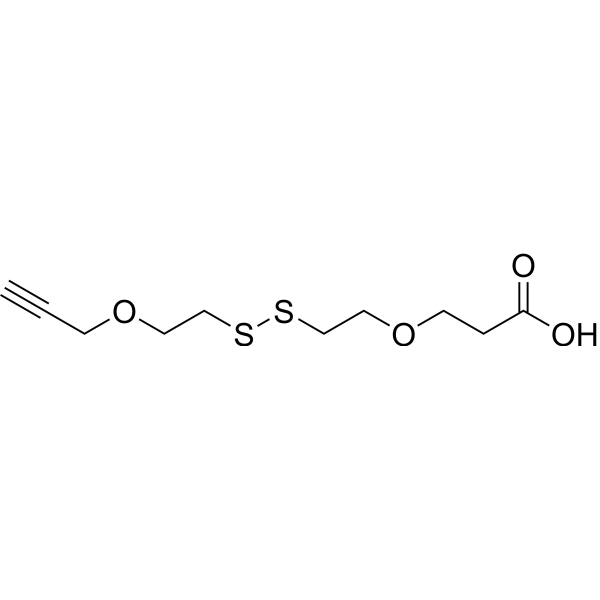
Propargyl-PEG1-SS-PEG1-acid is a cleavable 2 unit PEG ADC linker used in the synthesis of antibody-drug conjugates (ADCs) [1]. Propargyl-PEG1-SS-PEG1-acid is a click chemistry reagent, it contains an Alkyne group and can undergo copper-catalyzed azide-alkyne cycloaddition (CuAAc) with molecules containing Azide groups.
|
-
-
- HY-136008A
-
|
VH032-PEG1-NH2 dihydroCHloride
|
E3 Ligase Ligand-Linker Conjugates
|
Cancer
|
|
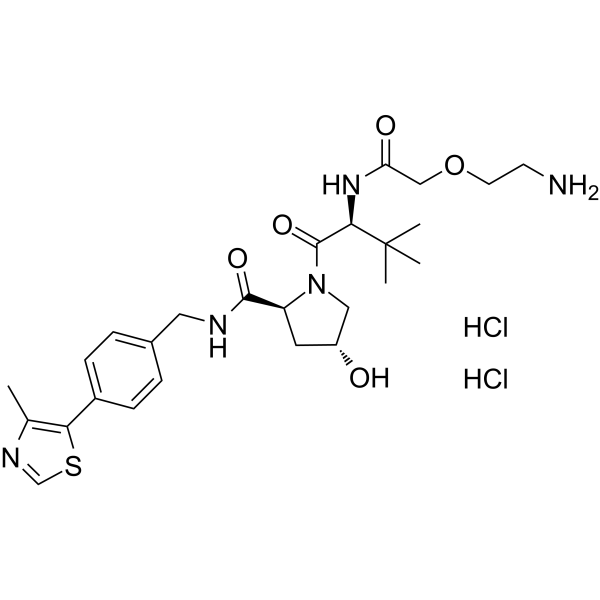
(S,R,S)-AHPC-PEG1-NH2 (VH032-PEG1-NH2) dihydrochloride incorporates a VHL ligand for the E3 ubiquitin ligase and a PROTAC linker. (S,R,S)-AHPC-PEG1-NH2 dihydrochloride can be used to design PROTACs [1].
|
-
-
- HY-174945A
-
|
DSPE-PEG1-N3
|
Biochemical Assay Reagents
|
Others
|
|
DSPE-PEG1-azide (DSPE-PEG1-N3) is an azide containing lipid that can be used to form micelles as nanoparticles for drug delivery. DSPE-PEG1-azide is a click chemistry reagent, it contains an Azide group and can undergo copper-catalyzed azide-alkyne cycloaddition reaction (CuAAc) with molecules containing Alkyne groups. It can also undergo strain-promoted alkyne-azide cycloaddition (SPAAC) reactions with molecules containing DBCO or BCN groups [1].
|
-

-
- HY-140064
-
|
|
PROTAC Linkers
|
Cancer
|
|
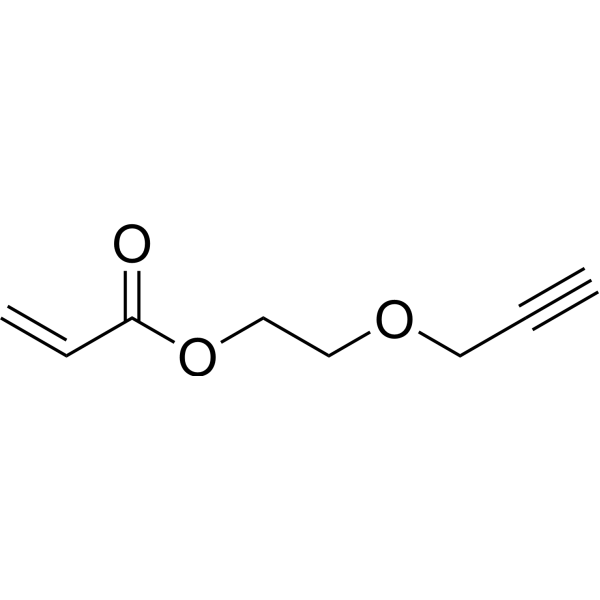
Propargyl-PEG1-acrylate is a PEG-based PROTAC linker that can be used in the synthesis of PROTACs [1]. Propargyl-PEG1-acrylate is a click chemistry reagent, it contains an Alkyne group and can undergo copper-catalyzed azide-alkyne cycloaddition (CuAAc) with molecules containing Azide groups.
|
-
-
- HY-140026
-
|
|
PROTAC Linkers
|
Cancer
|
|
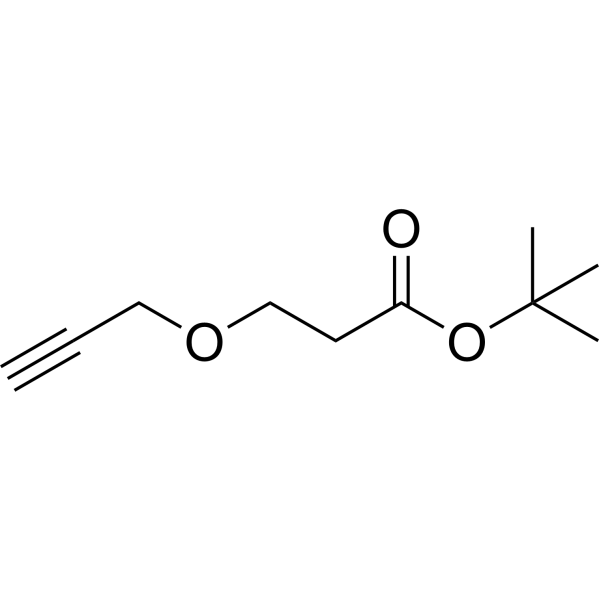
Propargyl-PEG1-Boc is an alkyl/ether-based PROTAC linker that can be used in the synthesis of PROTACs [1]. Propargyl-PEG1-Boc is a click chemistry reagent, it contains an Alkyne group and can undergo copper-catalyzed azide-alkyne cycloaddition (CuAAc) with molecules containing Azide groups.
|
-
-
- HY-133510
-
|
|
PROTAC Linkers
|
Cancer
|
|
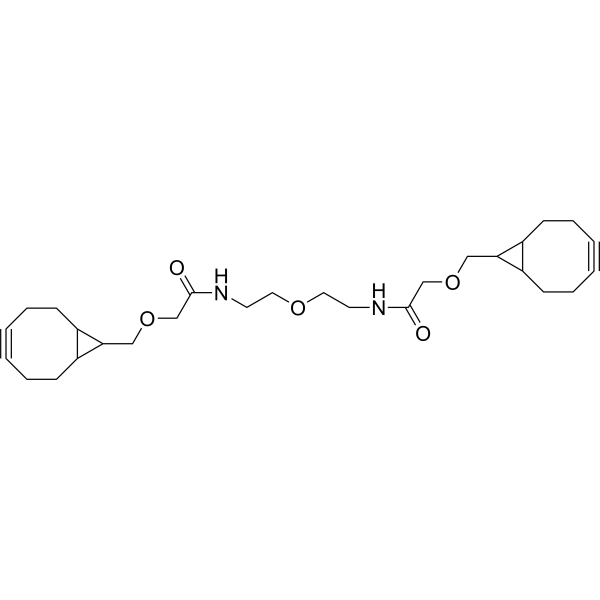
Bis-BCN-PEG1-diamide is a PEG-based PROTAC linker that can be used in the synthesis of PROTACs [1]. Bis-BCN-PEG1-diamide is a click chemistry reagent, it contains a BCN group that can undergo strain-promoted alkyne-azide cycloaddition (SPAAC) with molecules containing Azide groups.
|
-
-
- HY-W190805
-
-

-
- HY-138433
-
|
|
PROTAC Linkers
|
Cancer
|
|
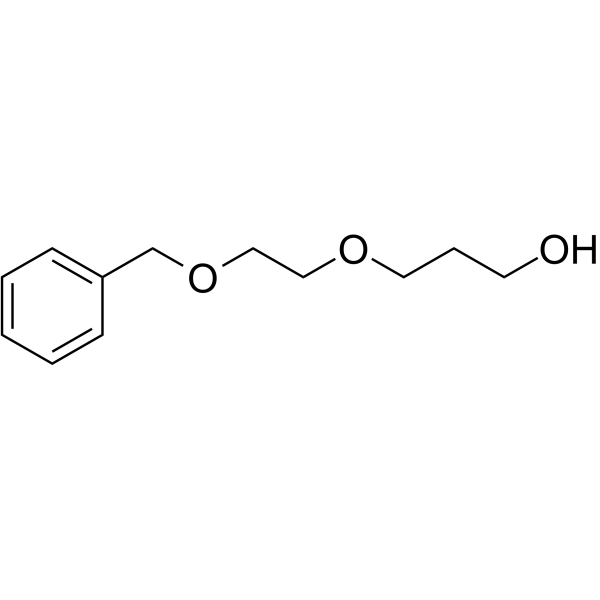
Benzyl-PEG1-propanol is a PEG-based PROTAC linker that can be used in the synthesis of PROTACs [1].
|
-
-
- HY-182813
-
|
|
Drug-Linker Conjugates for ADC
|
Cancer
|
|
MC-amide-C2-amide-(β-D-GlcUA)-amide-PEG1-CH2-CC-885 is a Drug-Linker Conjugates for ADC composed of CC-885 (HY-101488) and a linker. MC-amide-C2-amide-(β-D-GlcUA)-amide-PEG1-CH2-CC-885 conjugates with GemtUZUmab (HY-P99971) to synthesize an ADC (Compound ADC-2). ADC-2 exhibits anti-tumor activity in a leukemia MV-4-11 xenograft model [1].
|
-

-
- HY-145254
-
|
|
Toll-like Receptor (TLR)
|
Inflammation/Immunology
|
|
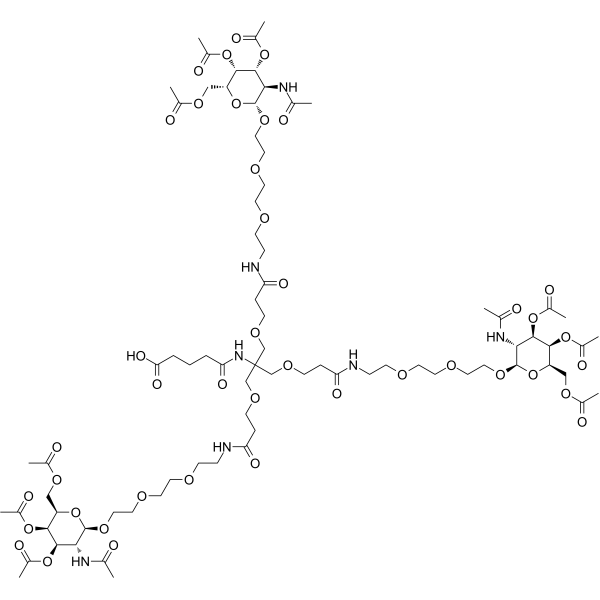
Tri(TLR4-IN-C34-PEG2-amide-PEG1)-amide-C3-COOH is a linker that incorporates TLR4 inhibitor TLR4-IN-C34. TLR4-IN-C34 inhibits TLR4 in enterocytes and macrophages, and reduces systemic inflammation in mouse models of endotoxemia and necrotizing enterocolitis [1].
|
-
-
- HY-140111
-
|
|
ADC Linker
|
Cancer
|
|
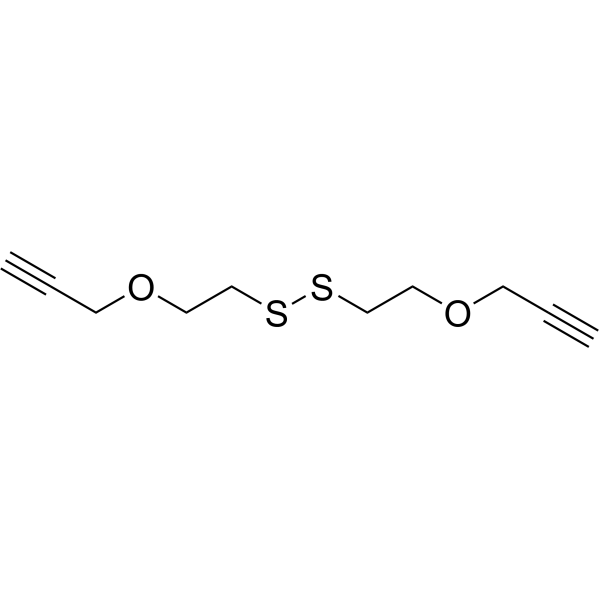
Propargyl-PEG1-SS-PEG1-propargyl is a cleavable 2 unit PEG ADC linker used in the synthesis of antibody-drug conjugates (ADCs) [1]. Propargyl-PEG1-SS-PEG1-propargyl is a click chemistry reagent, it contains an Alkyne group and can undergo copper-catalyzed azide-alkyne cycloaddition (CuAAc) with molecules containing Azide groups.
|
-
-
- HY-140110
-
|
|
ADC Linker
|
Cancer
|
|
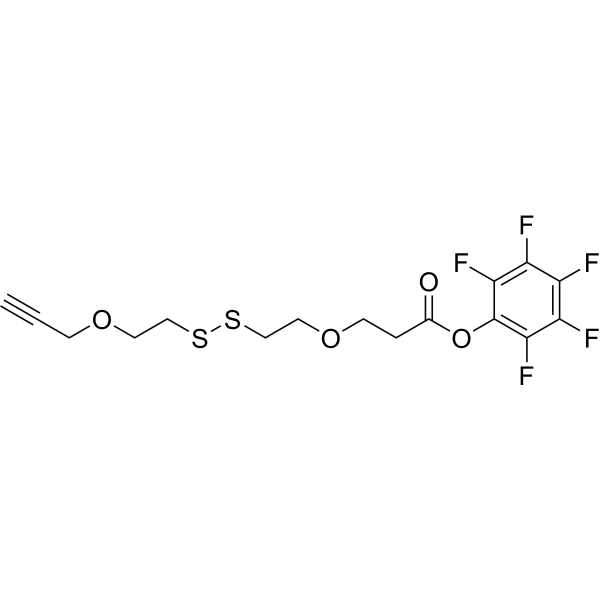
Propargyl-PEG1-SS-PEG1-PFP ester is a cleavable 1 unit PEG ADC linker used in the synthesis of antibody-drug conjugates (ADCs) [1]. Propargyl-PEG1-SS-PEG1-PFP ester is a click chemistry reagent, it contains an Alkyne group and can undergo copper-catalyzed azide-alkyne cycloaddition (CuAAc) with molecules containing Azide groups.
|
-
-
- HY-130690
-
|
|
ADC Linker
PROTAC Linkers
|
Cancer
|
|
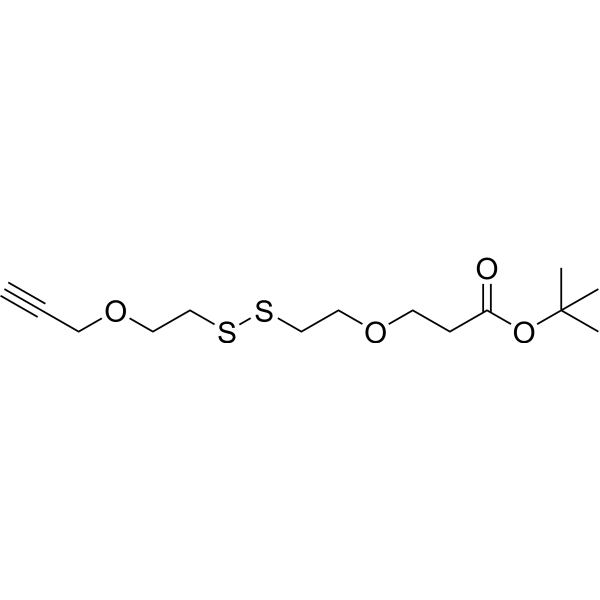
Propargyl-PEG1-SS-PEG1-C2-Boc is a Alkyl/ether-based PROTAC linker can be used in the synthesis of PROTACs. Propargyl-PEG1-SS-PEG1-C2-Boc is a cleavable ADC linker used in the synthesis of antibody-drug conjugates (ADCs) [1]. Propargyl-PEG1-SS-PEG1-C2-Boc is a click chemistry reagent, it contains an Alkyne group and can undergo copper-catalyzed azide-alkyne cycloaddition (CuAAc) with molecules containing Azide groups.
|
-
-
- HY-174946
-
|
DPPE-PEG1-N3
|
Biochemical Assay Reagents
|
Others
|
|
DPPE-PEG1-azide (DPPE-PEG1-N3) is a PEG-modified lipid containing an azide group. DPPE-PEG1-azide can undergo a copper-catalyzed azide-alkyne cycloaddition reaction (CuAAc) with molecules containing an alkynyl group. It can also undergo ring strain-driven alkyne-azide cycloaddition (SPAAC) reactions with molecules containing DBCO or BCN groups [1].
|
-

-
- HY-128847
-
|
PROTAC Linker 26
|
PROTAC Linkers
|
Cancer
|
|
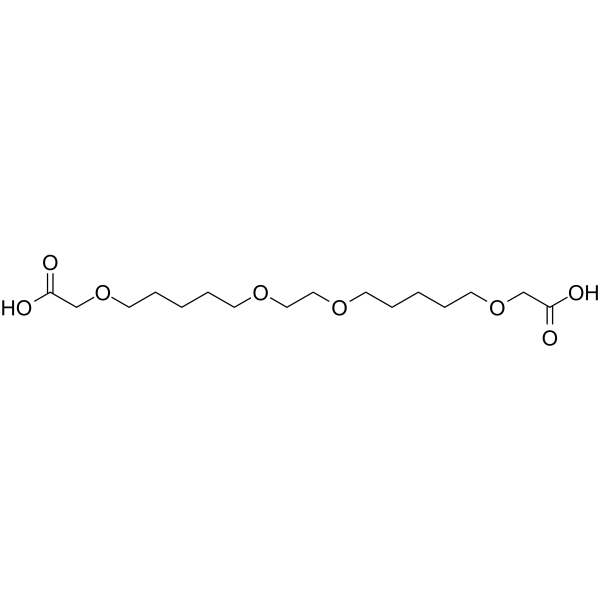
Bis-PEG1-C-PEG1-CH2COOH (PROTAC Linker 26) is a PEG-based PROTAC linker can be used in the synthesis of PROTACs [1].
|
-
-
- HY-140535
-
|
|
Biochemical Assay Reagents
|
Others
|
|
Boc-NH-Bis(acid-PEG1-m) is a PEG derivative contains carboxylic acid moieties. Boc-NH-Bis(acid-PEG1-m) can be conjugated with amine containing molecule [1].
|
-

- HY-140280
-
|
|
PROTAC Linkers
|
Cancer
|
|
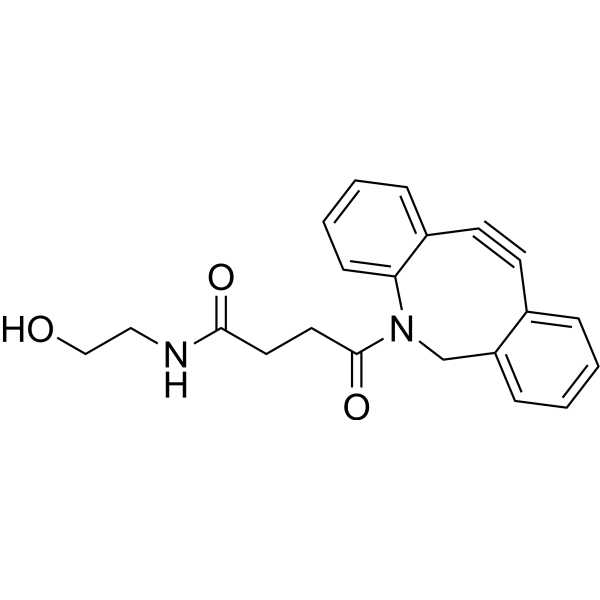
DBCO-PEG1 is a PEG-based PROTAC linker that can be used in the synthesis of PROTACs [1]. DBCO-PEG1 is a click chemistry reagent, it contains a DBCO group that can undergo strain-promoted alkyne-azide cycloaddition (SPAAC) with molecules containing Azide groups.
|
-
- HY-161133
-
|
|
E3 Ligase Ligand-Linker Conjugates
|
Cancer
|
|
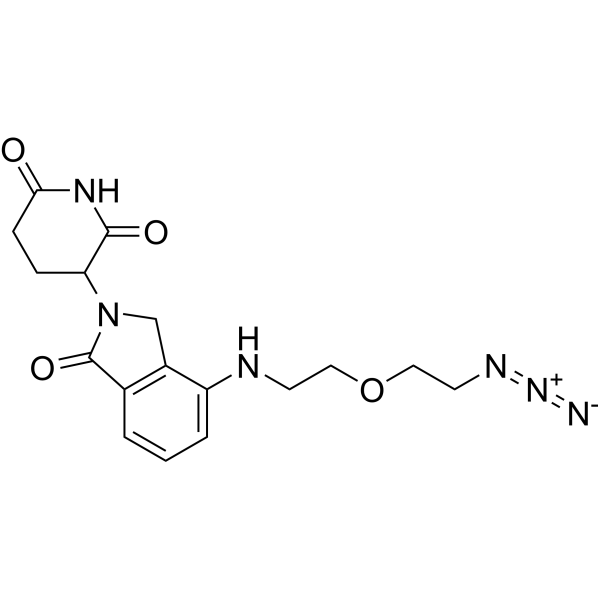
Lenalidomide 4'-PEG1-azide (Compound 4g) is a lenalidomide-derived azide. Lenalidomide 4'-PEG1-azide incorporates the Lenalidomide based cereblon ligand and a linker. Lenalidomide 4'-PEG1-azide is a click chemistry reagent, it contains an Azide group and can undergo copper-catalyzed azide-alkyne cycloaddition reaction (CuAAc) with molecules containing Alkyne groups. Strain-promoted alkyne-azide cycloaddition (SPAAC) can also occur with molecules containing DBCO or BCN groups. [1].
|
-
- HY-140281
-
|
|
PROTAC Linkers
|
Cancer
|
|
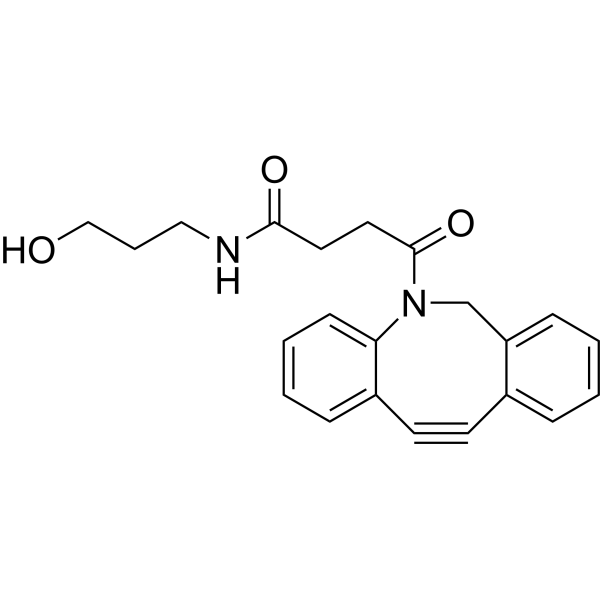
DBCO-C-PEG1 is a PEG-based PROTAC linker that can be used in the synthesis of PROTACs [1]. DBCO-C-PEG1 is a click chemistry reagent, it contains a DBCO group that can undergo strain-promoted alkyne-azide cycloaddition (SPAAC) with molecules containing Azide groups.
|
-
- HY-140032
-
|
Alkyne-ethyl-PEG1-t-butyl ester
|
PROTAC Linkers
|
Cancer
|
|
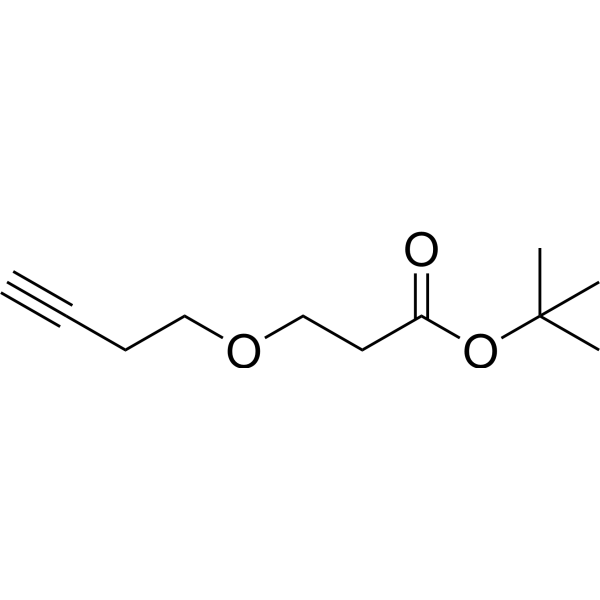
Alkyne-ethyl-PEG1-Boc is a PEG-based PROTAC linker that can be used in the synthesis of PROTACs [1]. Alkyne-ethyl-PEG1-Boc is a click chemistry reagent, it contains an Alkyne group and can undergo copper-catalyzed azide-alkyne cycloaddition (CuAAc) with molecules containing Azide groups.
|
-
- HY-W096146
-
|
|
PROTAC Linkers
|
Cancer
|
|
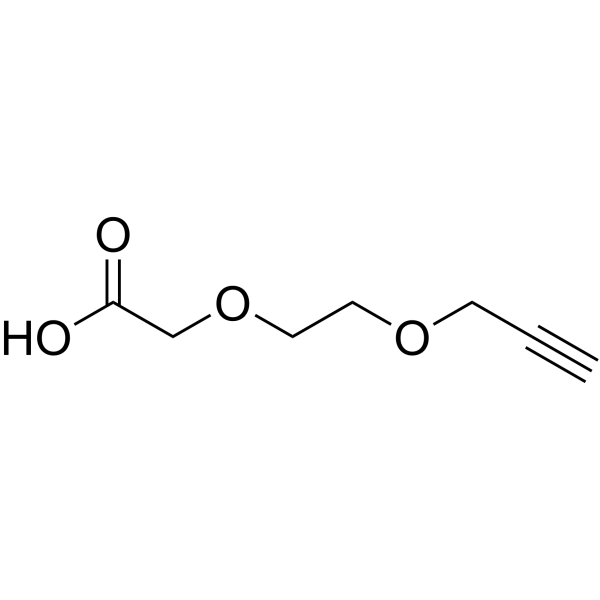
Propynyl-PEG1-Ac is a PEG-based PROTAC linker that can be used in the synthesis of PROTACs [1]. Propynyl-PEG1-Ac is a click chemistry reagent, it contains an Alkyne group and can undergo copper-catalyzed azide-alkyne cycloaddition (CuAAc) with molecules containing Azide groups.
|
-
- HY-138334
-
|
|
PROTAC Linkers
|
Cancer
|
|
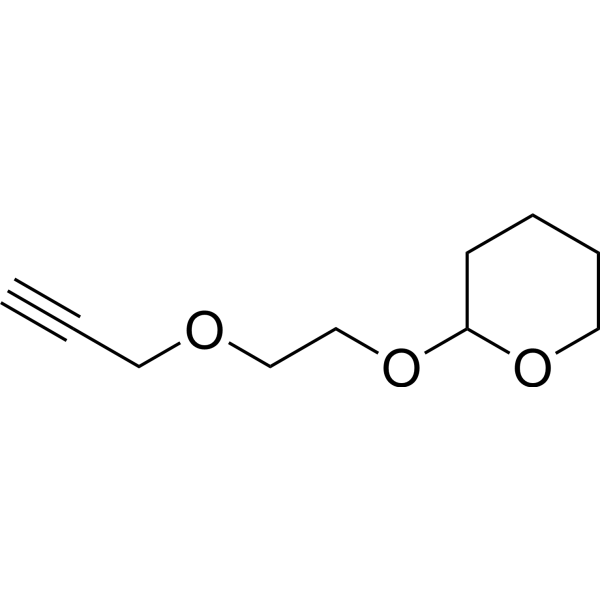
Propargyl-PEG1-THP is a PEG-based PROTAC linker that can be used in the synthesis of PROTACs [1]. Propargyl-PEG1-THP is a click chemistry reagent, it contains an Alkyne group and can undergo copper-catalyzed azide-alkyne cycloaddition (CuAAc) with molecules containing Azide groups.
|
-
- HY-140282
-
|
|
PROTAC Linkers
|
Cancer
|
|
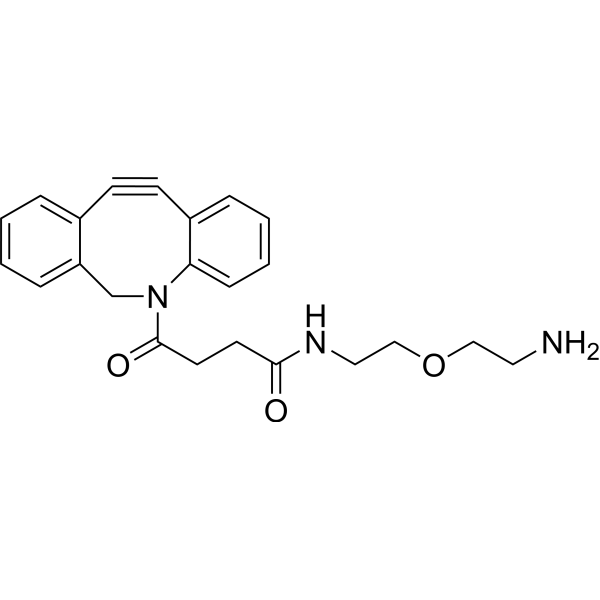
DBCO-PEG1-amine is a PEG-based PROTAC linker that can be used in the synthesis of PROTACs [1]. DBCO-PEG1-amine is a click chemistry reagent, it contains a DBCO group that can undergo strain-promoted alkyne-azide cycloaddition (SPAAC) with molecules containing Azide groups.
|
-
- HY-W190984A
-
|
|
Biochemical Assay Reagents
|
Others
|
|
Desthiobiotin-PEG1-alkyne is a PEG derivative composed of desthiobiotin, 1 PEG unit and alkyne. Desthiobiotin-PEG1-alkyne is a click chemistry reagent. It contains an alkyne group and can undergo copper-catalyzed azide-alkyne cycloaddition reaction (CuAAc) with molecules containing an azide group.
|
-

- HY-140000
-
|
|
PROTAC Linkers
|
Cancer
|
|
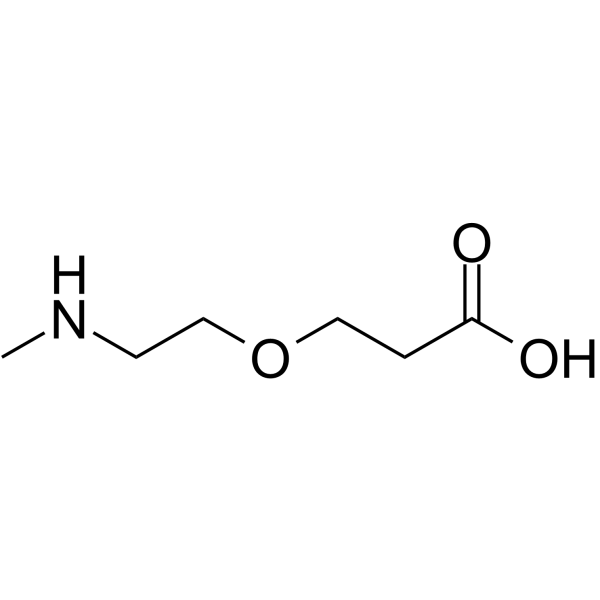
Methylamino-PEG1-acid is a PEG-based PROTAC linker that can be used in the synthesis of PROTACs [1].
|
-
- HY-W096134
-
|
|
PROTAC Linkers
|
Cancer
|
|
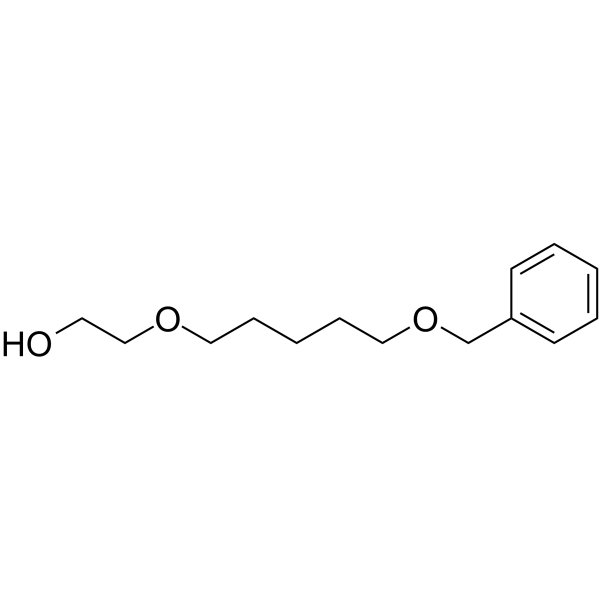
Benzyloxy-C5-PEG1 is a PEG-based PROTAC linker that can be used in the synthesis of PROTACs [1].
|
-
- HY-138455
-
|
|
PROTAC Linkers
|
Cancer
|
|
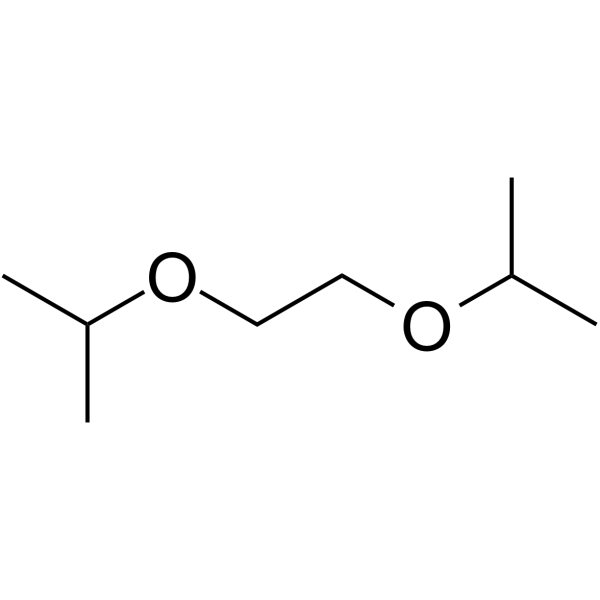
Bis-isopropyl-PEG1 is a PEG-based PROTAC linker that can be used in the synthesis of PROTACs [1].
|
-
- HY-W096155
-
|
|
PROTAC Linkers
|
Cancer
|
|
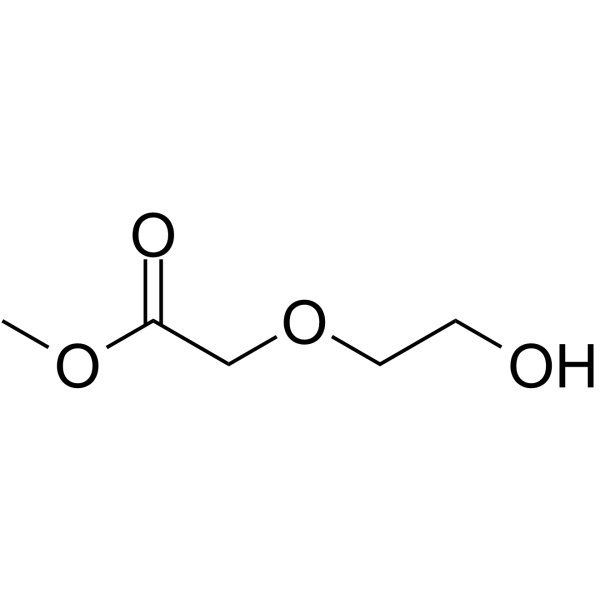
Methyl acetate-PEG1 is a PEG-based PROTAC linker that can be used in the synthesis of PROTACs [1].
|
-
- HY-140289
-
|
|
PROTAC Linkers
|
Cancer
|
|
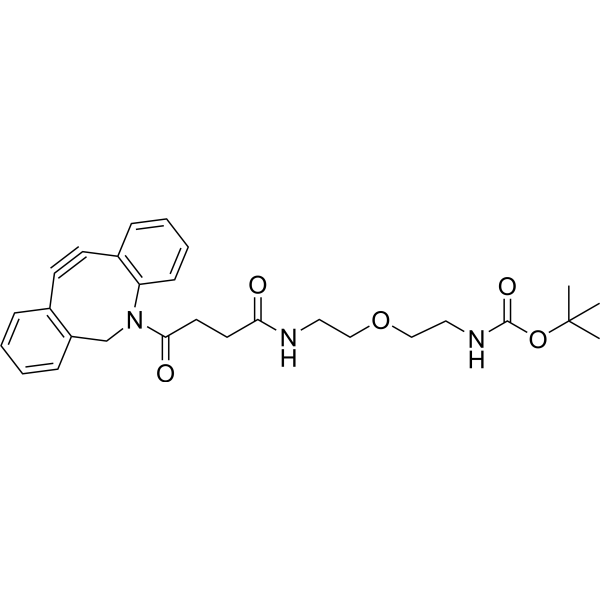
DBCO-PEG1-NH-Boc is a PEG-based PROTAC linker that can be used in the synthesis of PROTACs [1]. DBCO-PEG1-NH-Boc is a click chemistry reagent, it contains a DBCO group that can undergo strain-promoted alkyne-azide cycloaddition (SPAAC) with molecules containing Azide groups.
|
-
- HY-140049
-
|
|
PROTAC Linkers
|
Cancer
|
|
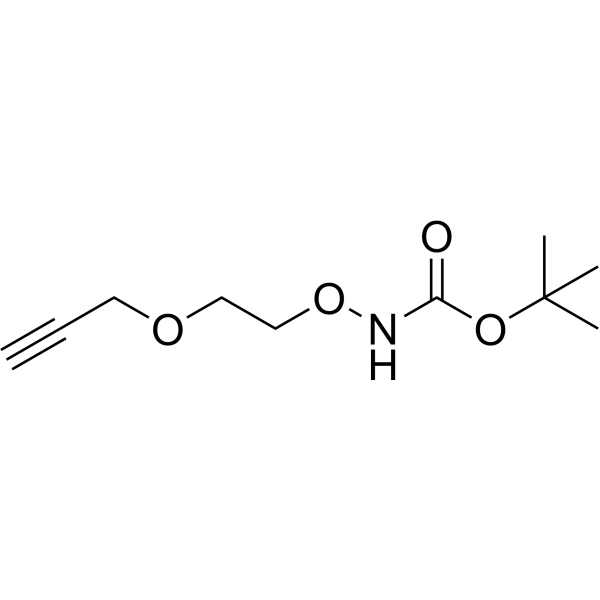
Boc-aminooxy-PEG1-propargyl is a PEG-based PROTAC linker that can be used in the synthesis of PROTACs [1]. Boc-aminooxy-PEG1-propargyl is a click chemistry reagent, it contains an Alkyne group and can undergo copper-catalyzed azide-alkyne cycloaddition (CuAAc) with molecules containing Azide groups.
|
-
- HY-157514
-
|
|
E3 Ligase Ligand-Linker Conjugates
Autophagy
Apoptosis
|
Cancer
|
|
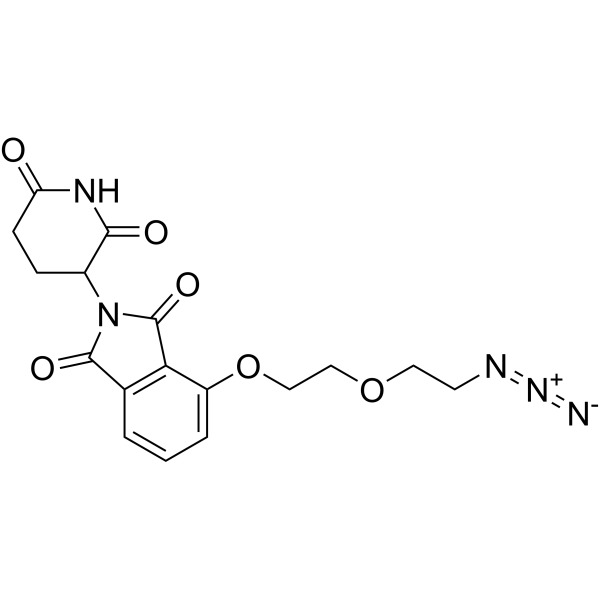
Thalidomide 4'-ether-PEG1-azide is the Thalidomide (HY-14658)-based cereblon ligand used in the recruitment of CRBN protein. Thalidomide 4'-ether-PEG1-azide can be connected to the ligand for protein by a linker to form PROTACs [1].
|
-
- HY-130638
-
|
VH032-O-Ph-PEG1-NH-Boc
|
E3 Ligase Ligand-Linker Conjugates
|
Cancer
|
|
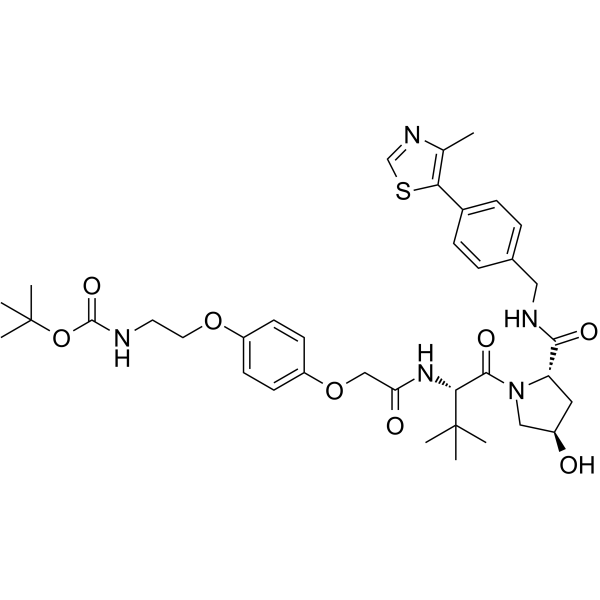
(S,R,S)-AHPC-O-Ph-PEG1-NH-Boc (VH032-O-Ph-PEG1-NH-Boc) is a synthesized E3 ligase ligand-linker conjugate which is used for the EED-targeted PROTAC [1].
|
-
- HY-140989
-
|
|
PROTAC Linkers
|
Cancer
|
|
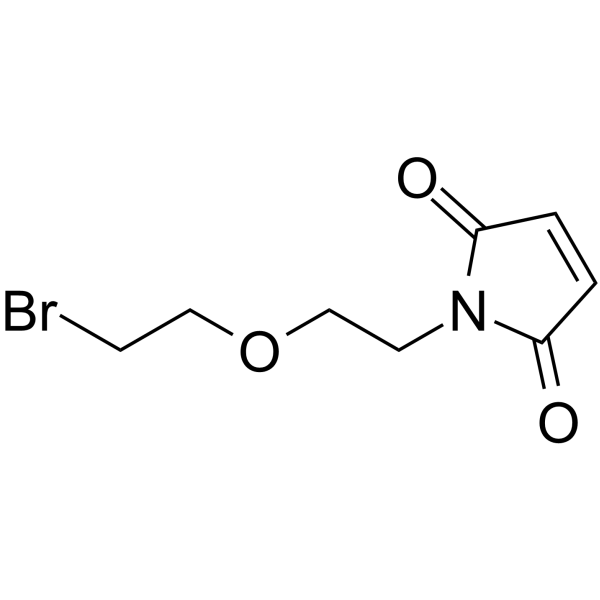
Mal-PEG1-bromide is a PEG-based PROTAC linker that can be used in the synthesis of PROTACs [1].
|
-
- HY-W092895
-
|
|
PROTAC Linkers
|
Cancer
|
|
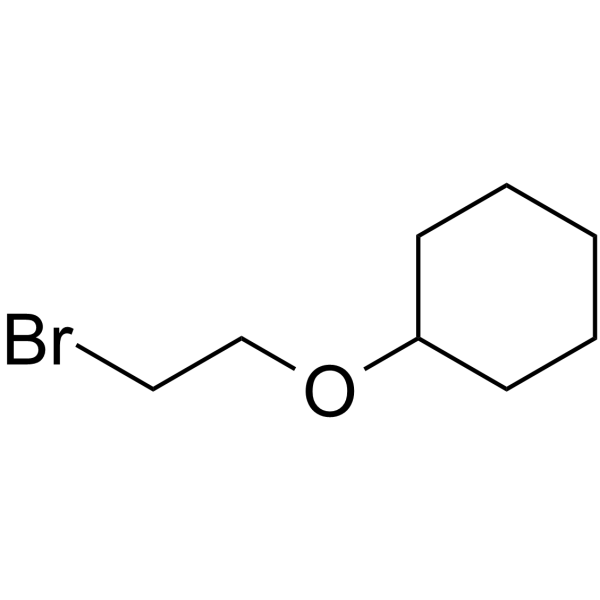
Cyclohexane-PEG1-Br is a PEG-based PROTAC linker that can be used in the synthesis of PROTACs [1].
|
-
- HY-138482
-
|
|
PROTAC Linkers
|
Cancer
|
|
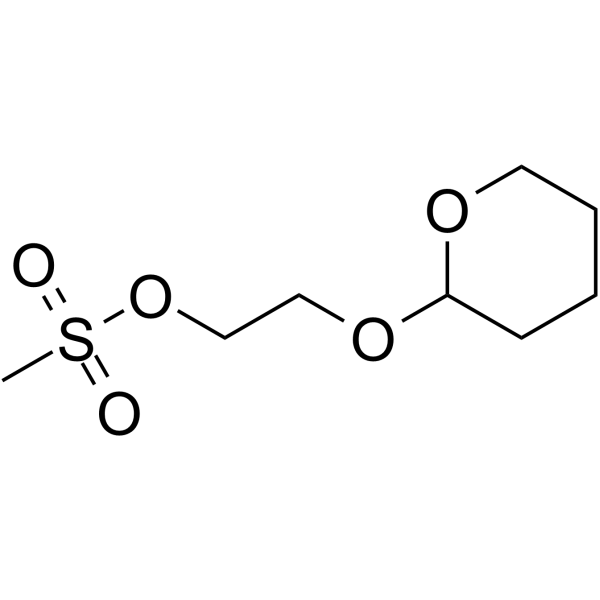
MS-PEG1-THP is a PEG-based PROTAC linker that can be used in the synthesis of PROTACs [1].
|
-
- HY-138342
-
|
|
PROTAC Linkers
|
Cancer
|
|
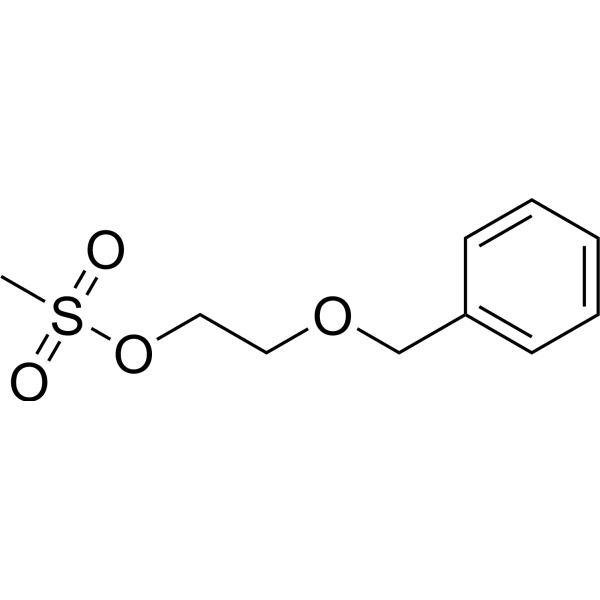
Benzyl-PEG1-MS is a PEG-based PROTAC linker that can be used in the synthesis of PROTACs [1].
|
-
- HY-130568
-
|
|
PROTAC Linkers
|
Cancer
|
|
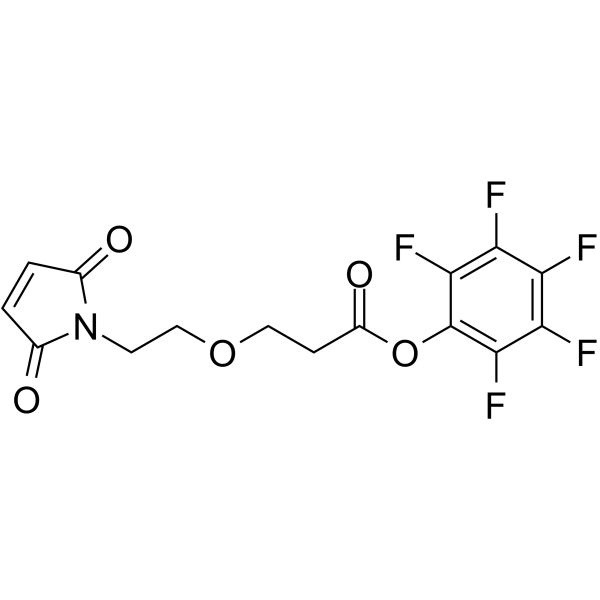
Mal-PEG1-PFP ester is a Alkyl/ether-based PROTAC linker can be used in the synthesis of PROTACs.
|
-
- HY-138531
-
|
|
PROTAC Linkers
|
Cancer
|
|
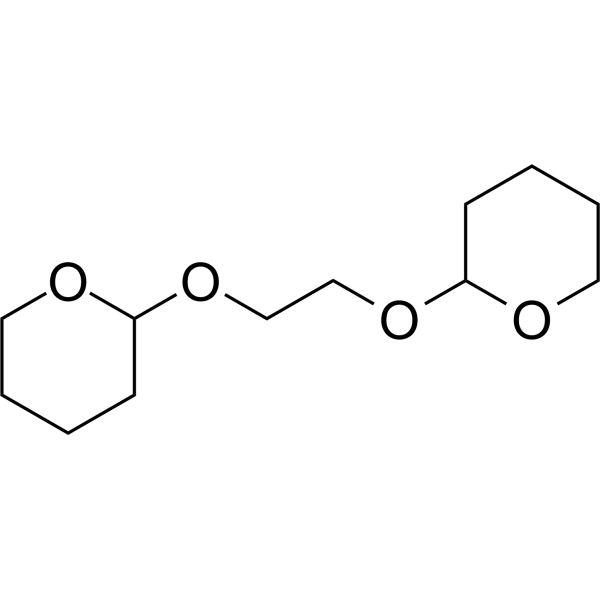
THP-PEG1-THP is a PEG-based PROTAC linker that can be used in the synthesis of PROTACs [1].
|
-
- HY-138368
-
|
|
PROTAC Linkers
|
Cancer
|
|
THP-PEG1-Boc is a PEG-based PROTAC linker that can be used in the synthesis of PROTACs [1].
|
-
- HY-133315
-
|
|
PROTAC Linkers
|
Cancer
|
|
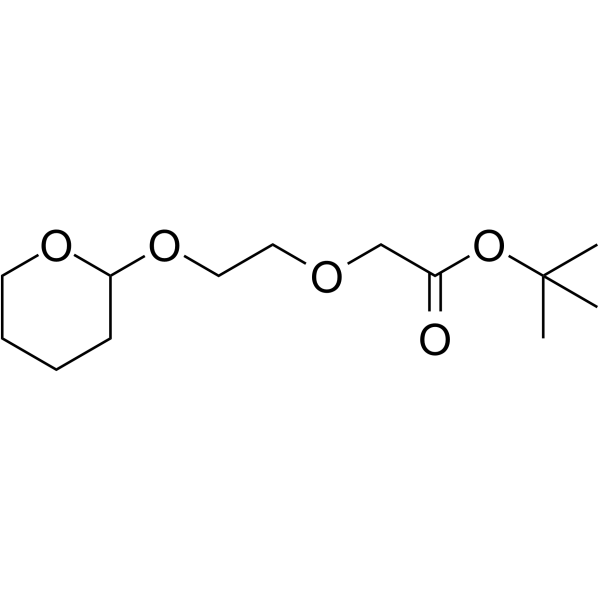
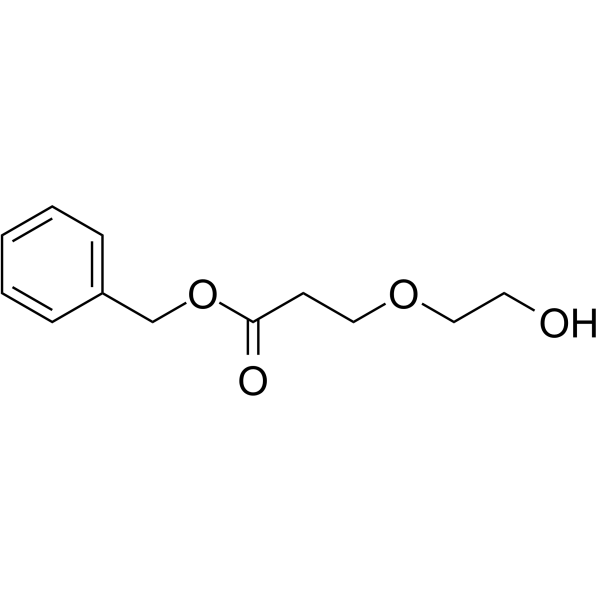
HO-PEG1-benzyl ester is a PEG-based PROTAC linker that can be used in the synthesis of PROTACs [1].
|
-
- HY-W584520
-
|
|
E3 Ligase Ligand-Linker Conjugates
Autophagy
Apoptosis
|
Cancer
|
|
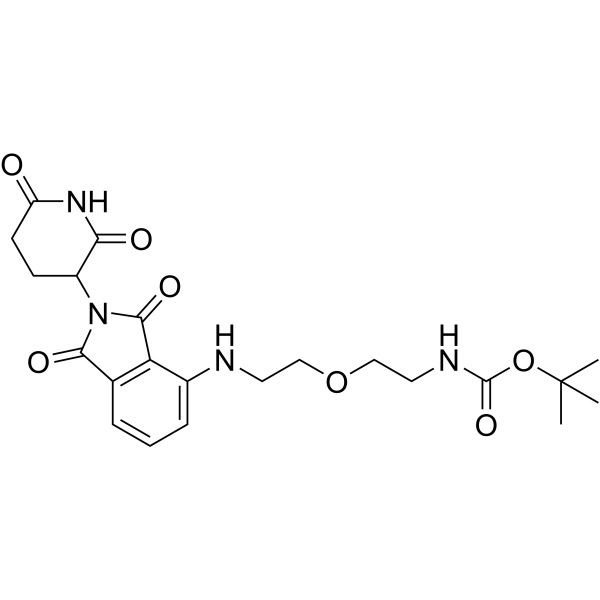
Thalidomide-4-NH-PEG1-NH-Boc is a Boc-modified Thalidomide (HY-14658) that acts as a Cereblon ligand to recruit CRBN protein. The Boc protecting group at the end of Thalidomide-4-NH-PEG1-NH-Boc can be removed under acidic conditions to participate in the synthesis of PROTAC molecules. Thalidomide-4-NH-PEG1-NH-Boc is a key intermediate in the synthesis of CRBN-based PROTAC molecules.
|
-
- HY-W584523
-
|
|
E3 Ligase Ligand-Linker Conjugates
Autophagy
Apoptosis
|
Cancer
|
|
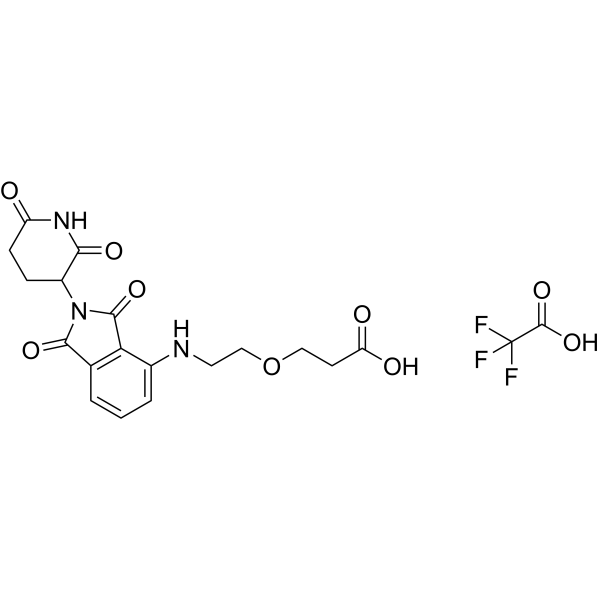
Thalidomide-4-NH-PEG1-COOH TFA is an E3 Ligase Ligand-Linker Conjugate consisting of Thalidomide (HY-14658) and NH-PEG3-NH-Boc. Thalidomide-4-NH-PEG1-COOH TFA acts as a ligand for Cereblon to recruit CRBN protein. Thalidomide-4-NH-PEG1-COOH TFA is a key intermediate in the synthesis of CRBN-based PROTAC molecules.
|
-
- HY-W140808
-
|
|
PROTAC Linkers
|
Cancer
|
|
Propargyl-PEG1-NH2 (hydrochloride) is a PROTAC linker that can be used in the synthesis of PROTACs.
|
-

- HY-133162
-
|
|
PROTAC Linkers
|
Cancer
|
|
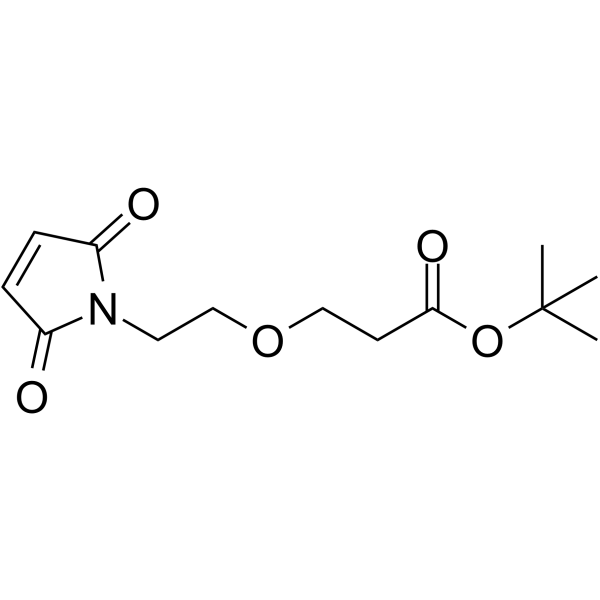
Mal-PEG1-Boc is an alkyl/ether-based PROTAC linker that can be used in the synthesis of PROTACs [1].
|
-
- HY-138473
-
|
|
PROTAC Linkers
|
Cancer
|
|
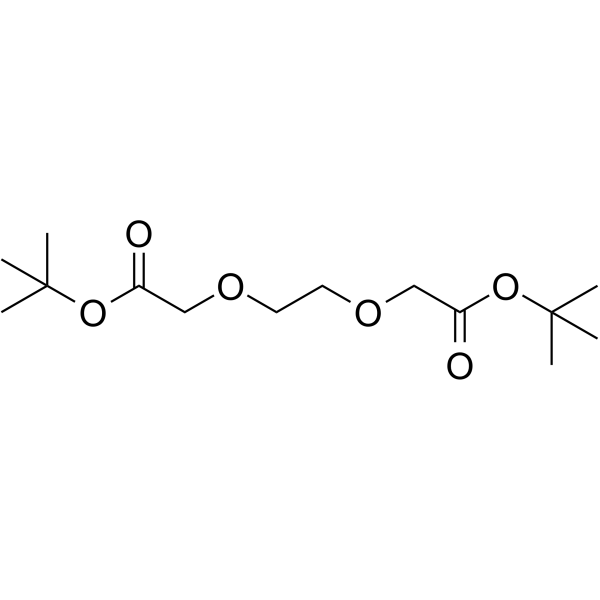
Boc-PEG1-Boc is an alkyl/ether-based PROTAC linker that can be used in the synthesis of PROTACs [1].
|
-
- HY-140108
-
|
|
ADC Linker
|
Cancer
|
|
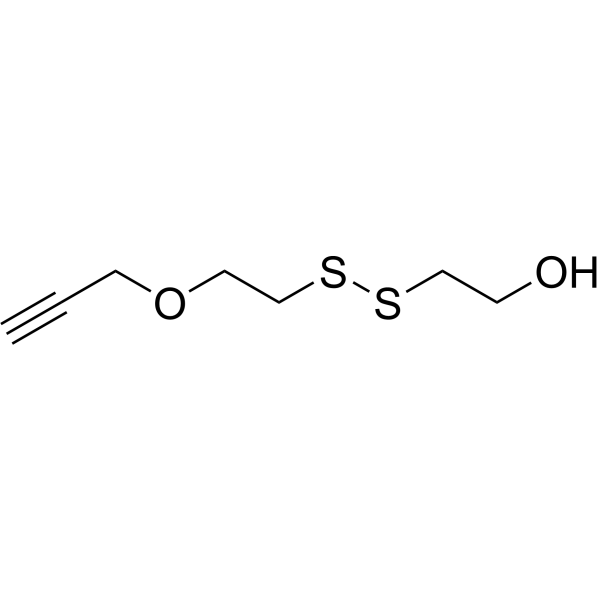
Propargyl-PEG1-SS-alcohol is a cleavable 1 unit PEG ADC linker used in the synthesis of antibody-drug conjugates (ADCs) [1]. Propargyl-PEG1-SS-alcohol is a click chemistry reagent, it contains an Alkyne group and can undergo copper-catalyzed azide-alkyne cycloaddition (CuAAc) with molecules containing Azide groups.
|
-
- HY-134716
-
|
|
PROTAC Linkers
|
Cancer
|
|
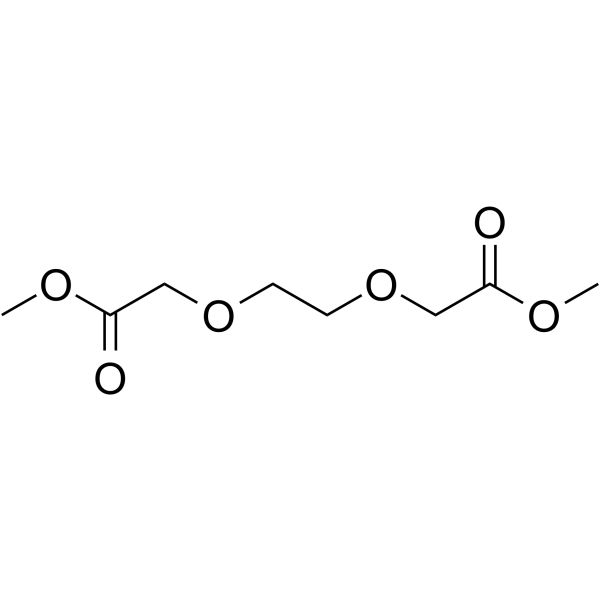
Methyl acetate-PEG1-methyl acetate is a PEG-based PROTAC linker that can be used in the synthesis of PROTACs [1].
|
-
- HY-134732
-
|
|
PROTAC Linkers
|
Cancer
|
|
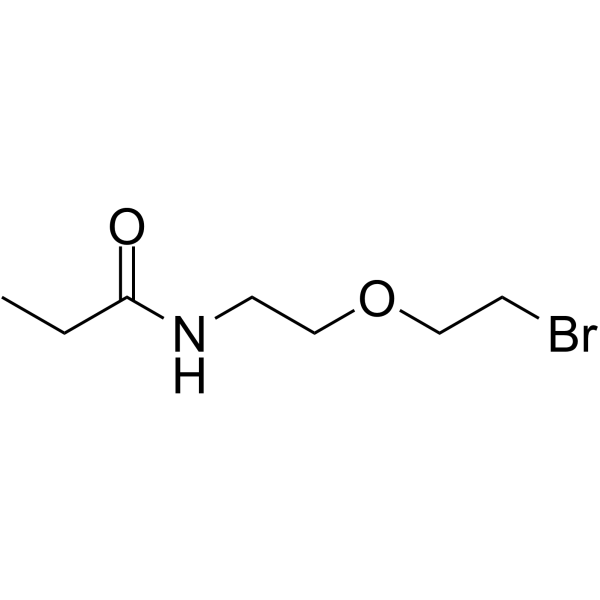
N-Ethylpropionamide-PEG1-Br is a PEG-based PROTAC linker that can be used in the synthesis of PROTACs [1].
|
-
- HY-133499
-
|
|
PROTAC Linkers
|
Cancer
|
|
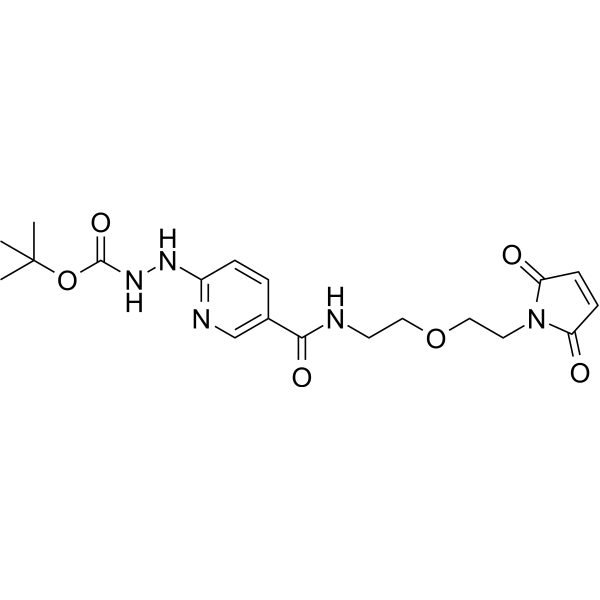
Boc-HyNic-PEG1-mal is a PEG-based PROTAC linker that can be used in the synthesis of PROTACs [1].
|
-
- HY-134735
-
|
|
PROTAC Linkers
|
Cancer
|
|
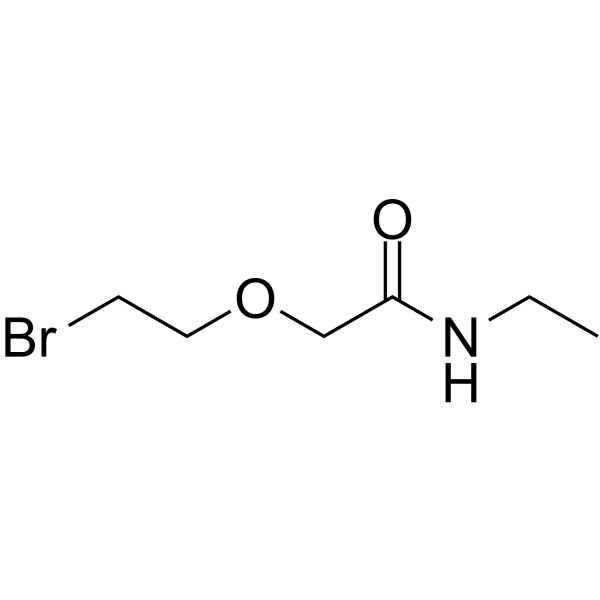
N-Ethylacetamide-PEG1-Br is a PEG-based PROTAC linker that can be used in the synthesis of PROTACs [1].
|
-
- HY-116655
-
|
|
ADC Linker
|
Cancer
|
|
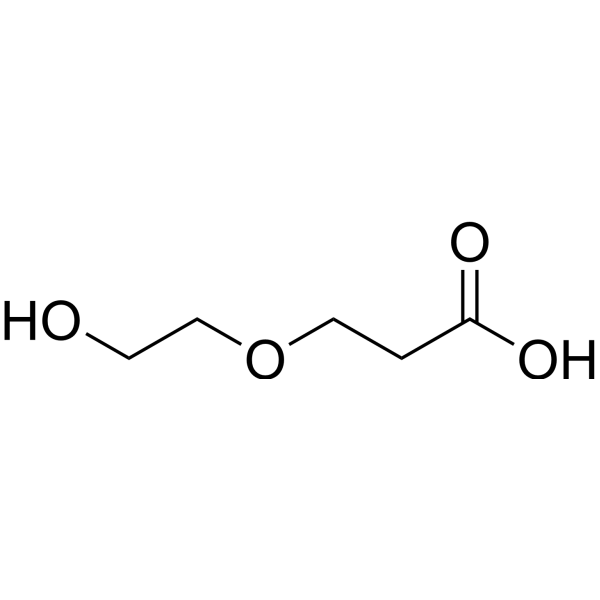
Hydroxy-PEG1-acid is a non-cleavable 1 unit PEG ADC linker used in the synthesis of antibody-drug conjugates (ADCs) [1].
|
-
- HY-W584522
-
|
|
E3 Ligase Ligand-Linker Conjugates
Autophagy
Apoptosis
|
Cancer
|
|
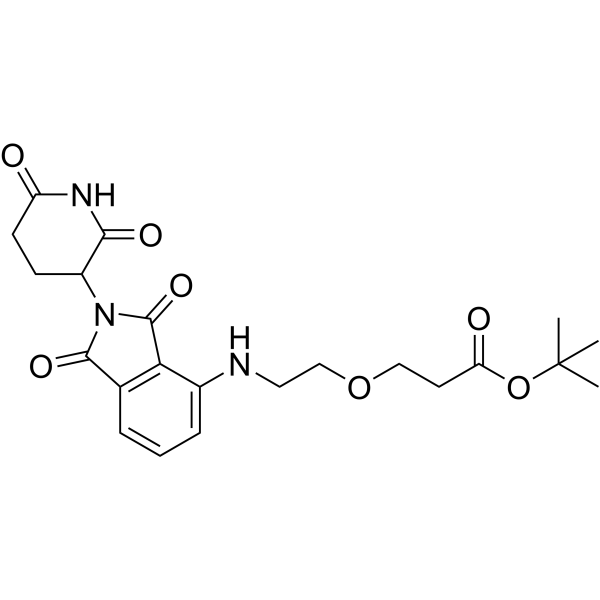
Thalidomide-4-NH-PEG1-COO(t-Bu) is a t-Bu modified Thalidomide (HY-14658), which acts as a Cereblon ligand to recruit CRBN protein. The t-Bu protecting group at the end of Thalidomide-4-NH-PEG1-COO(t-Bu) can be removed under acidic conditions to participate in the synthesis of PROTAC molecules. Thalidomide-4-NH-PEG1-COO(t-Bu) is a key intermediate in the synthesis of CRBN-based PROTAC molecules.
|
-
- HY-W584521
-
|
|
E3 Ligase Ligand-Linker Conjugates
Autophagy
Apoptosis
|
Cancer
|
|
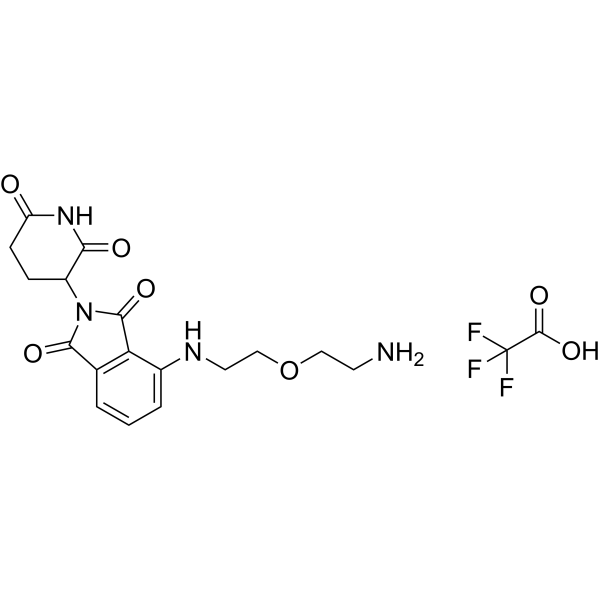
Thalidomide-4-NH-PEG1-NH2 TFA is an E3 Ligase Ligand-Linker Conjugate consisting of Thalidomide (HY-14658) and NH-PEG3-NH-Boc. Thalidomide-4-NH-PEG1-NH2 TFA acts as a ligand for Cereblon to recruit CRBN protein. Thalidomide-4-NH-PEG1-NH2 TFA is a key intermediate in the synthesis of CRBN-based PROTAC molecules.
|
-
- HY-172304
-
|
|
Biochemical Assay Reagents
|
Others
|
|
Phthalimide-PEG1-amine is a biochemical reagent that can be used as a biological material or organic compound for life science related research.
|
-

- HY-W190749
-
|
|
Biochemical Assay Reagents
|
Others
|
|
Aminooxy-PEG1-acid is an aminooxy PEG derivative that can be used for aldehyde or ketone reactions. Aminooxy-PEG1-acid can be used for drug delivery [1].
|
-

- HY-180925
-
|
|
PROTACs
Bcr-Abl
|
Cancer
|
|
Leu-PEG1-Dasa is a potent BCR-ABL PROTAC degrader with a DC50 of 0.48 nM. Leu-PEG1-Dasa uses a single amino acid as the E3 ligand and belongs to a mini-PROTAC, functioning through the N-terminal canonical pathway. Leu-PEG1-Dasa exhibits potent anti-proliferative activity against K562 cells. Leu-PEG1-Dasa can be used for the study of chronic myeloid leukemia (CML) [1].
|
-

- HY-186016
-
|
|
PROTACs
Bcr-Abl
|
Cancer
|
|
Arg-PEG1-Dasa is a mini-PROTAC targeting BCR-ABL. Arg-PEG1-Dasa induces BCR-ABL degradation (EC50 = 0.85 nM) and shows antiproliferative activity in K562 cells (IC50 = 0.36 nM). Arg-PEG1-Dasa can be used for chronic myeloid leukemia research [1].
|
-

- HY-180963
-
|
|
PROTACs
Bcr-Abl
|
Cancer
|
|
Lys-PEG1-Dasa is a BCR-ABL PROTAC degrader with an DC50 of 0.98 nM in K562 cells. Lys-PEG1-Dasa exerts growth inhibitory with IC50 of 0.4569 nM in K562 cells. Lys-PEG1-Dasa can be used for chronic myeloid leukemia research [1] .
|
-

- HY-180962
-
|
|
PROTACs
Bcr-Abl
|
Cancer
|
|
Phe-PEG1-Dasa is a BCR-ABL PROTAC degrader, with its DC50 being 1.56 nM. Phe-PEG1-Dasa uses a single amino acid (Phe) as the E3 ligand and employs the N-end rule pathway to induce the degradation of the target protein, significantly reducing the molecular size, thus being called a mini-PROTAC. Phe-PEG1-Dasa significantly inhibits the proliferation of K562 cells. Phe-PEG1-Dasa can be used for the study of leukemia [1].
|
-

- HY-141121
-
|
|
Drug Intermediate
|
Others
|
|
T-Butoxycarbonyl-PEG1-NHS ester contains a t-boc protecting group and an NHS ester moiety. T-Butoxycarbonyl-PEG1-NHS ester can be used for the modification and labeling of biomolecules.
|
-

- HY-180814
-
|
|
Drug Derivative
Dopamine Receptor
|
Cancer
|
|
SKF-83566-PEG1-pomalidomide is an anti-tumor agent and is formed by the covalent connection of SKF-83566 (HY-103430A) (dopamine D1 receptor antagonist) and Pomalidomide (HY-10984) (immunomodulatory agent). SKF-83566-PEG1-pomalidomide can inhibit cancer cells invasion, migration and colony formation. SKF-83566-PEG1-pomalidomide can inhibit tumor growth and angiogenesis in MDA-MB-231 cell chicken embryo chorioallantoic membrane (CAM) xenograft model. SKF-83566-PEG1-pomalidomide can be used for research of breast cancer [1].
|
-

- HY-180976
-
|
|
PROTACs
α-synuclein
|
Neurological Disease
|
|
Arg-PEG1-Tαsyn is an α-syn PROTAC degrader with a DC50 of 0.28 μM in U251 cells. Arg-PEG1-Tαsyn employs the amino acid arginine (Arg) as the E3 ligase UBR1 ligand and a benzothiazole-aniline variant as the warhead for α-syn. Arg-PEG1-Tαsyn significantly reduces α-syn aggregates and improves the dopaminergic neuronal impairment and the locomotion with safety profile in vivo.Arg-PEG1-Tαsyn shows the high degradation effect in mammalian cells for both wild-type α-syn and the α-syn (A53T) mutant. Arg-PEG1-Tαsyn can be used for Parkinson’s disease research [1] .
|
-

- HY-W1130363
-
|
|
Ligands for E3 Ligase
|
Cancer
|
|
Thalidomide-O-amido-PEG1-azide is an E3 ubiquitin ligase cereblon (CRBN) ligand used to recruit the cereblon protein. Thalidomide-O-amido-PEG1-azide can be linked to a target protein ligand via a linker to form a PROTAC.
|
-

- HY-W190860
-
-

- HY-181499
-
|
|
Proteasome
|
Cancer
|
|
RA190-PEG1-NH2 (Compound S16), RA190 (HY-100739) derivative, is a Proteasome ligand. RA190-PEG1-NH2 can be used to synthesis FKBP12 CAP-TAC degrader RAFKBP12 (HY-181498) [1].
|
-

- HY-W788246
-
-

-
-
HY-L907
-
|
|
12,410 compounds
|
|
The most prominent mechanism of action of kinase inhibitors is their competition with ATP by binding to the hinge region of the kinase protein. Once the kinase is blocked by an inhibitor, it loses the ability to transfer phosphate groups from ATP to other molecules, resulting in the loss of kinase activity.
The hinge-binding region of kinase inhibitors mimics the interaction pattern between the ATP nucleobase and the kinase. MCE extracted thousands of kinase inhibitors from the ChEMBL database and isolated their molecular fragments. In certain cases, the amino and amide groups on the molecular fragments are crucial for binding in the hinge region. Therefore, we enhanced the diversity of the collected results by adding these two groups to unoccupied positions on the ring system. Subsequently, the fragments were assessed for their hinge region binding ability via docking at distinct kinases, we also applied pharmacophore constraints to ensure interactions with key amino acids in the kinase hinge region, ultimately obtaining kinase-related molecular fragments.
MCE provides over 12,410 kinase fragment molecules that meet the above requirements and are available off the shelf, serving as an effective tool for screening and developing drugs targeting kinases.
|
| Cat. No. |
Product Name |
Type |
-
- HY-136304
-
|
|
Biochemical Assay Reagents
|
|
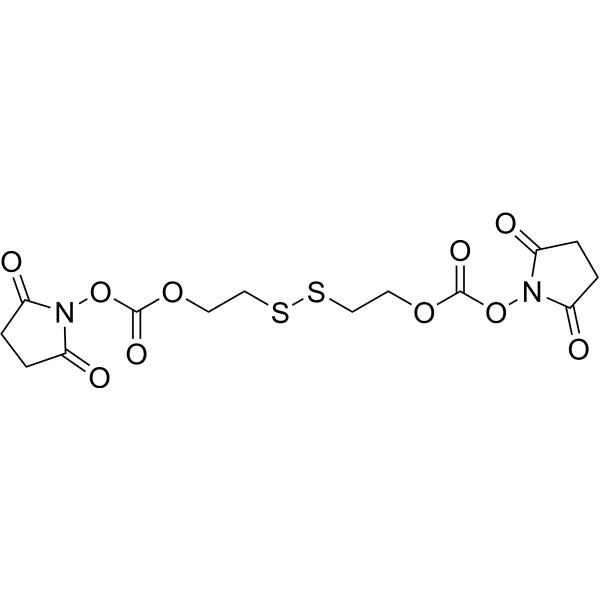
NHS-PEG1-SS-PEG1-NHS is a reversible linker for biomacromolecule link with active small molecule. NHS-PEG1-SS-PEG1-NHS can be used in proteins liposomes or nanoparticles [1].
|
-
- HY-W190877
-
|
SH-PEG1-COOH
|
Biochemical Assay Reagents
|
|
Thiol-PEG1-acid (SH-PEG1-COOH) is a PEG derivative consisting of a thiol (-SH), 1 PEG unit, and a carboxyl (-COOH). The thiol is a highly reactive chemical group that can react specifically with a variety of molecules to form stable covalent bonds. The carboxyl group can easily form stable amide bonds with amino groups, and can also form ester bonds with hydroxyl groups.
|
-
- HY-174945A
-
|
DSPE-PEG1-N3
|
Biochemical Assay Reagents
|
|
DSPE-PEG1-azide (DSPE-PEG1-N3) is an azide containing lipid that can be used to form micelles as nanoparticles for drug delivery. DSPE-PEG1-azide is a click chemistry reagent, it contains an Azide group and can undergo copper-catalyzed azide-alkyne cycloaddition reaction (CuAAc) with molecules containing Alkyne groups. It can also undergo strain-promoted alkyne-azide cycloaddition (SPAAC) reactions with molecules containing DBCO or BCN groups [1].
|
-
- HY-W190805
-
-
- HY-174946
-
|
DPPE-PEG1-N3
|
Biochemical Assay Reagents
|
|
DPPE-PEG1-azide (DPPE-PEG1-N3) is a PEG-modified lipid containing an azide group. DPPE-PEG1-azide can undergo a copper-catalyzed azide-alkyne cycloaddition reaction (CuAAc) with molecules containing an alkynyl group. It can also undergo ring strain-driven alkyne-azide cycloaddition (SPAAC) reactions with molecules containing DBCO or BCN groups [1].
|
-
- HY-W190984A
-
|
|
Biochemical Assay Reagents
|
|
Desthiobiotin-PEG1-alkyne is a PEG derivative composed of desthiobiotin, 1 PEG unit and alkyne. Desthiobiotin-PEG1-alkyne is a click chemistry reagent. It contains an alkyne group and can undergo copper-catalyzed azide-alkyne cycloaddition reaction (CuAAc) with molecules containing an azide group.
|
-
- HY-W190749
-
|
|
Biochemical Assay Reagents
|
|
Aminooxy-PEG1-acid is an aminooxy PEG derivative that can be used for aldehyde or ketone reactions. Aminooxy-PEG1-acid can be used for drug delivery [1].
|
-
- HY-W190860
-
-
- HY-W788246
-
-
- HY-K0226
-
|
|
|
MCE CHO Magnetic Beads (200 nm, 10 mg/mL) contain CHO functional groups, which react with primary amines on proteins or other molecules to form stable amide linkages,can covalently immobilize proteins for the affinity purification of antibodies, antigens and other biomolecules.
|
-
- HY-K0227
-
|
|
|
MCE NHS Magnetic Beads (200 nm, 10 mg/mL) contain N-hydroxysuccinimide (NHS) functional groups, which react with primary amines on proteins or
other molecules to form stable amide linkages,can covalently immobilize proteins for the affinity purification of antibodies, antigens and other
biomolecules.
|
-
- HY-KD1113
-
|
|
|
The Biotinylation Rapid Labelling Kit enables biotinylation of proteins. Based on NHS ester chemistry, the NHS ester-activated fluorescent dye reacts with primary amines in the antibody/protein to be labelled within a pH 7-9 solution, forming stable amide bonds to achieve conjugation with the antibody/protein. Typically, a single IgG molecule can bind 2-8 molecules of biotin. The entire procedure can be completed within two hours.
|
-
- HY-KD1115
-
|
|
|
The DOTA rapid labelling kit enables DOTA labelling of proteins. Based on NHS ester chemistry, NHS ester-activated fluorescent dyes react with primary amines on the antibody/protein to form stable amide bonds at pH 7–9, thereby achieving conjugation with the antibody/protein. Typically, a single IgG molecule can bind 2–8 DOTA molecules. The entire procedure can be completed within 2 hours.
|
-
- HY-KD1114
-
|
|
|
The NOTA Rapid Labelling Kit enables NOTA labelling of proteins. Based on NHS ester chemistry, NHS ester-activated fluorescent dyes react with primary amines on the antibody/protein to be labelled in a pH 7-9 solution, forming stable amide bonds to achieve conjugation with the antibody/protein. Typically, a single IgG molecule can bind 2–8 NOTA molecules. The entire procedure can be completed within two hours.
|
-
- HY-KD1101
-
|
|
|
Green Fluorescent Rapid Labelling Kit (FITC) enables green fluorescent labelling of proteins. Maximum excitation/ emission wavelengths: 488/515 nm. Based on NHS-ester chemistry, the NHS-ester-activated fluorescent dye reacts with primary amines in pH 7-9 solutions to form stable amide bonds, thereby achieving conjugation with antibodies/proteins. Typically, one IgG molecule can bind 2-8 molecules of FITC. The entire procedure can be completed within two hours.
|
-
- HY-KD1106
-
|
|
|
Red Fluorescent Rapid Labelling Kit (AF647) enables red fluorescent labelling of proteins. Maximum excitation/ Emission Wavelength: 647/665 nm. Based on NHS ester chemistry, the NHS ester-activated fluorescent dye reacts with primary amines in the antibody/protein to be labelled at pH 7-9, forming stable amide bonds to achieve conjugation. Typically, one IgG molecule can bind 2-8 molecules of AF647. The entire procedure can be completed within two hours.
|
-
- HY-KD1112
-
|
|
|
TheBlue Fluorescence Rapid Labelling Kit (AF350) enables red fluorescent labelling of proteins. Maximum excitation/ emission wavelengths: 346/442 nm. Based on NHS ester chemistry, the NHS ester-activated fluorescent dye reacts with primary amines in the antibody/protein to be labelled at pH 7-9, forming stable amide bonds to achieve conjugation. Typically, one IgG molecule can bind 2-8 molecules of AF350. The entire procedure can be completed within two hours.
|
-
- HY-KD1103
-
|
|
|
Red Fluorescent Rapid Labelling Kit (CY3) enables red fluorescent labelling of proteins. Maximum excitation/ Emission Wavelength: 550/570 nm. Based on NHS ester chemistry, the NHS ester-activated fluorescent dye reacts with primary amines in the antibody/protein to be labelled at pH 7-9, forming stable amide bonds to achieve conjugation with the antibody/protein. Typically, one IgG molecule can bind 2–8 molecules of CY3. The entire experiment can be completed within 2 hours.
|
-
- HY-KD1111
-
|
|
|
Near-infrared Fluorescent Rapid Labelling Kit (AF750) enables red fluorescent labelling of proteins. Maximum excitation/ Emission Wavelength: 750/775 nm. Based on NHS ester chemistry, the NHS ester-activated fluorescent dye reacts with primary amines in pH 7-9 solutions to form stable amide bonds, thereby achieving conjugation with antibodies/proteins. Typically, one IgG molecule can bind 2-8 molecules of AF750. The entire procedure can be completed within two hours.
|
-
- HY-KD1102
-
|
|
|
Green Fluorescent Rapid Labelling Kit (AF488) enables green fluorescent labelling of proteins. Maximum excitation/ emission wavelengths: 480/525 nm. Based on NHS ester chemistry, the NHS ester-activated fluorescent dye reacts with primary amines in pH 7-9 solutions to form stable amide bonds, thereby achieving conjugation with antibodies/proteins. Typically, one IgG molecule can bind 2-8 molecules of AF488. The entire procedure can be completed within two hours.
|
-
- HY-KD1105
-
|
|
|
Red Fluorescent Rapid Labelling Kit (AF594) enables red fluorescent labelling of proteins. Maximum excitation/ Emission Wavelength: 594/617 nm. Based on NHS ester chemistry, the NHS ester-activated fluorescent dye reacts with primary amines in pH 7-9 solutions to form stable amide bonds, thereby achieving conjugation with antibodies/proteins. Typically, one IgG molecule can bind 2-8 molecules of AF594. The entire procedure can be completed within two hours.
|
-
- HY-KD1104
-
|
|
|
Red Fluorescent Rapid Labelling Kit (AF555) enables red fluorescent labelling of proteins. Maximum excitation/ Emission Wavelength: 555/565 nm. Based on NHS ester chemistry, the NHS ester-activated fluorescent dye reacts with primary amines in pH 7-9 solutions to form stable amide bonds with the target antibody/protein, achieving conjugation. Typically, one IgG molecule can bind 2-8 molecules of AF555. The entire procedure can be completed within two hours.
|
-
- HY-KD1107
-
|
|
|
Deep Red Fluorescent Rapid Labelling Kit (CY5) enables red fluorescent labelling of proteins. Maximum excitation/ emission wavelengths: 649/667 nm. Based on NHS ester chemistry, the NHS ester-activated fluorescent dye reacts with primary amines in the antibody/protein to be labelled at pH 7-9, forming stable amide bonds to achieve conjugation. Typically, one IgG molecule can bind 2–8 molecules of CY5. The entire experiment can be completed within 2 hours.
|
-
- HY-KD1109
-
|
|
|
Near-infrared Fluorescent Rapid Labelling Kit (CY7) enables red fluorescent labelling of proteins. Maximum excitation/ emission wavelengths: 750/773 nm. Based on NHS ester chemistry, the NHS ester-activated fluorescent dye reacts with primary amines in the antibody/protein to be labelled at pH 7-9, forming stable amide bonds to achieve conjugation. Typically, one IgG molecule can bind 2–8 molecules of CY7. The entire experiment can be completed within 2 hours.
|
-
- HY-KD1108
-
|
|
|
Deep Red Fluorescent Rapid Labelling Kit (CY5.5) enables red fluorescent labelling of proteins. Maximum excitation/ emission wavelengths: 678/695 nm. Based on NHS ester chemistry, the NHS ester-activated fluorescent dye reacts with primary amines in the antibody/protein to be labelled at pH 7-9, forming stable amide bonds to achieve conjugation. Typically, one IgG molecule can bind 2-8 molecules of CY5.5. The entire procedure can be completed within two hours.
|
-
- HY-KD1110
-
|
|
|
The Near-Infrared Fluorescence Rapid Labelling Kit (CY7.5) enables red fluorescent labelling of proteins. Maximum excitation/ emission wavelengths: 788/814 nm. Based on NHS ester chemistry, the NHS ester-activated fluorescent dye reacts with primary amines in the antibody/protein to be labelled at pH 7-9, forming stable amide bonds to achieve conjugation. Typically, one IgG molecule can bind 2-8 molecules of CY7.5. The entire procedure can be completed within two hours.
|
| Cat. No. |
Product Name |
|
Classification |
-
- HY-126513
-
|
|
|
Alkynes
ADC Synthesis
|
|
Propargyl-PEG1-NHS ester is a nonclaevable 1-unit PEG linker for antibody-agent-conjugation (ADC). Propargyl-PEG1-NHS ester is a click chemistry reagent, it contains an Alkyne group and can undergo copper-catalyzed azide-alkyne cycloaddition (CuAAc) with molecules containing Azide groups.
|
-
- HY-138461
-
|
|
|
Azide
PROTAC Synthesis
|
|
Azido-PEG1 is a PEG-based PROTAC linker that can be used in the synthesis of PROTACs [1]. Azido-PEG1 is a click chemistry reagent, it contains an Azide group and can undergo copper-catalyzed azide-alkyne cycloaddition reaction (CuAAc) with molecules containing Alkyne groups. It can also undergo strain-promoted alkyne-azide cycloaddition (SPAAC) reactions with molecules containing DBCO or BCN groups.
|
-
- HY-133139
-
|
|
|
Azide
PROTAC Synthesis
|
|
Lenalidomide-PEG1-azide is a E3 ligase lgand-linker conjugate. Lenalidomide-PEG1-azide incorporates the Lenalidomide based cereblon ligand and a linker.?Lenalidomide-PEG1-azide?can be used to design a PROTAC BRD4 Degrader-2 (HY-133136) [1]. Lenalidomide-PEG1-azide is a click chemistry reagent, it contains an Azide group and can undergo copper-catalyzed azide-alkyne cycloaddition reaction (CuAAc) with molecules containing Alkyne groups. It can also undergo strain-promoted alkyne-azide cycloaddition (SPAAC) reactions with molecules containing DBCO or BCN groups.
|
-
- HY-133138
-
|
|
|
PROTAC Synthesis
Azide
|
|
Pomalidomide-PEG1-azide is an E3 ligase lgand-linker conjugate. Pomalidomide-PEG1-azide incorporates the Pomalidomide based cereblon ligand and a linker. Pomalidomide-PEG1-azide can be used to synthesis PROTAC BRD4 Degrader-1 (HY-133131) [1]. PROTAC BRD4 Degrader-1 is a PROTAC connected by ligands for Cereblon and BRD4 with an IC50 of 41.8 nM against BRD4 BD1. PROTAC BRD4 Degrader-1 can effectively degrade BRD4 protein and suppress c-Myc expression.
|
-
- HY-140271
-
|
|
|
PROTAC Synthesis
DBCO
|
|
DBCO-PEG1-NHS ester is a PEG-based PROTAC linker that can be used in the synthesis of PROTACs [1]. DBCO-PEG1-NHS ester is a click chemistry reagent, it contains a DBCO group that can undergo strain-promoted alkyne-azide cycloaddition (SPAAC) with molecules containing Azide groups.
|
-
- HY-116069
-
|
|
|
Alkynes
PROTAC Synthesis
|
|
Propargyl-PEG1-NH2 is a PEG-based PROTAC linker can be used in the synthesis of PROTACs [1]. Propargyl-PEG1-NH2 is a click chemistry reagent, it contains an Alkyne group and can undergo copper-catalyzed azide-alkyne cycloaddition (CuAAc) with molecules containing Azide groups.
|
-
- HY-140056
-
|
|
|
Alkynes
PROTAC Synthesis
|
|
Aminooxy-PEG1-propargyl is a PEG-based PROTAC linker can be used in the synthesis of PROTACs [1]. Aminooxy-PEG1-propargyl is a click chemistry reagent, it contains an Alkyne group and can undergo copper-catalyzed azide-alkyne cycloaddition (CuAAc) with molecules containing Azide groups.
|
-
- HY-140265
-
|
|
|
PROTAC Synthesis
DBCO
|
|
DBCO-PEG1-acid is a PEG-based PROTAC linker that can be used in the synthesis of PROTACs [1]. DBCO-PEG1-acid is a click chemistry reagent, it contains a DBCO group that can undergo strain-promoted alkyne-azide cycloaddition (SPAAC) with molecules containing Azide groups.
|
-
- HY-140038
-
|
|
|
PROTAC Synthesis
Alkynes
|
|
Bis-propargyl-PEG1 is a PEG-based PROTAC linker that can be used in the synthesis of PROTACs [1]. Bis-propargyl-PEG1 is a click chemistry reagent, it contains an Alkyne group and can undergo copper-catalyzed azide-alkyne cycloaddition (CuAAc) with molecules containing Azide groups.
|
-
- HY-176962
-
|
|
|
Alkynes
|
|
Di(zanamivir-amide(N-Me)-PEG1)-N-PEG4-alkyne is a conjugate of Zanamivir (a viral neuraminidase inhibitor) (HY-13210) and linker. Di(zanamivir-amide(N-Me)-PEG1)-N-PEG4-alkyne can be used for viral infection research [1].
|
-
- HY-140109
-
|
|
|
ADC Synthesis
Alkynes
|
|
Propargyl-PEG1-SS-PEG1-acid is a cleavable 2 unit PEG ADC linker used in the synthesis of antibody-drug conjugates (ADCs) [1]. Propargyl-PEG1-SS-PEG1-acid is a click chemistry reagent, it contains an Alkyne group and can undergo copper-catalyzed azide-alkyne cycloaddition (CuAAc) with molecules containing Azide groups.
|
-
- HY-174945A
-
|
DSPE-PEG1-N3
|
|
Azide
|
|
DSPE-PEG1-azide (DSPE-PEG1-N3) is an azide containing lipid that can be used to form micelles as nanoparticles for drug delivery. DSPE-PEG1-azide is a click chemistry reagent, it contains an Azide group and can undergo copper-catalyzed azide-alkyne cycloaddition reaction (CuAAc) with molecules containing Alkyne groups. It can also undergo strain-promoted alkyne-azide cycloaddition (SPAAC) reactions with molecules containing DBCO or BCN groups [1].
|
-
- HY-140064
-
|
|
|
Alkynes
PROTAC Synthesis
|
|
Propargyl-PEG1-acrylate is a PEG-based PROTAC linker that can be used in the synthesis of PROTACs [1]. Propargyl-PEG1-acrylate is a click chemistry reagent, it contains an Alkyne group and can undergo copper-catalyzed azide-alkyne cycloaddition (CuAAc) with molecules containing Azide groups.
|
-
- HY-140026
-
|
|
|
Alkynes
PROTAC Synthesis
|
|
Propargyl-PEG1-Boc is an alkyl/ether-based PROTAC linker that can be used in the synthesis of PROTACs [1]. Propargyl-PEG1-Boc is a click chemistry reagent, it contains an Alkyne group and can undergo copper-catalyzed azide-alkyne cycloaddition (CuAAc) with molecules containing Azide groups.
|
-
- HY-133510
-
|
|
|
BCN
PROTAC Synthesis
|
|
Bis-BCN-PEG1-diamide is a PEG-based PROTAC linker that can be used in the synthesis of PROTACs [1]. Bis-BCN-PEG1-diamide is a click chemistry reagent, it contains a BCN group that can undergo strain-promoted alkyne-azide cycloaddition (SPAAC) with molecules containing Azide groups.
|
-
- HY-140111
-
|
|
|
ADC Synthesis
Alkynes
|
|
Propargyl-PEG1-SS-PEG1-propargyl is a cleavable 2 unit PEG ADC linker used in the synthesis of antibody-drug conjugates (ADCs) [1]. Propargyl-PEG1-SS-PEG1-propargyl is a click chemistry reagent, it contains an Alkyne group and can undergo copper-catalyzed azide-alkyne cycloaddition (CuAAc) with molecules containing Azide groups.
|
-
- HY-140110
-
|
|
|
ADC Synthesis
Alkynes
|
|
Propargyl-PEG1-SS-PEG1-PFP ester is a cleavable 1 unit PEG ADC linker used in the synthesis of antibody-drug conjugates (ADCs) [1]. Propargyl-PEG1-SS-PEG1-PFP ester is a click chemistry reagent, it contains an Alkyne group and can undergo copper-catalyzed azide-alkyne cycloaddition (CuAAc) with molecules containing Azide groups.
|
-
- HY-130690
-
|
|
|
ADC Synthesis
PROTAC Synthesis
Alkynes
|
|
Propargyl-PEG1-SS-PEG1-C2-Boc is a Alkyl/ether-based PROTAC linker can be used in the synthesis of PROTACs. Propargyl-PEG1-SS-PEG1-C2-Boc is a cleavable ADC linker used in the synthesis of antibody-drug conjugates (ADCs) [1]. Propargyl-PEG1-SS-PEG1-C2-Boc is a click chemistry reagent, it contains an Alkyne group and can undergo copper-catalyzed azide-alkyne cycloaddition (CuAAc) with molecules containing Azide groups.
|
-
- HY-140280
-
|
|
|
DBCO
PROTAC Synthesis
|
|
DBCO-PEG1 is a PEG-based PROTAC linker that can be used in the synthesis of PROTACs [1]. DBCO-PEG1 is a click chemistry reagent, it contains a DBCO group that can undergo strain-promoted alkyne-azide cycloaddition (SPAAC) with molecules containing Azide groups.
|
-
- HY-161133
-
|
|
|
Azide
|
|
Lenalidomide 4'-PEG1-azide (Compound 4g) is a lenalidomide-derived azide. Lenalidomide 4'-PEG1-azide incorporates the Lenalidomide based cereblon ligand and a linker. Lenalidomide 4'-PEG1-azide is a click chemistry reagent, it contains an Azide group and can undergo copper-catalyzed azide-alkyne cycloaddition reaction (CuAAc) with molecules containing Alkyne groups. Strain-promoted alkyne-azide cycloaddition (SPAAC) can also occur with molecules containing DBCO or BCN groups. [1].
|
-
- HY-140281
-
|
|
|
PROTAC Synthesis
DBCO
|
|
DBCO-C-PEG1 is a PEG-based PROTAC linker that can be used in the synthesis of PROTACs [1]. DBCO-C-PEG1 is a click chemistry reagent, it contains a DBCO group that can undergo strain-promoted alkyne-azide cycloaddition (SPAAC) with molecules containing Azide groups.
|
-
- HY-140032
-
|
Alkyne-ethyl-PEG1-t-butyl ester
|
|
Alkynes
PROTAC Synthesis
|
|
Alkyne-ethyl-PEG1-Boc is a PEG-based PROTAC linker that can be used in the synthesis of PROTACs [1]. Alkyne-ethyl-PEG1-Boc is a click chemistry reagent, it contains an Alkyne group and can undergo copper-catalyzed azide-alkyne cycloaddition (CuAAc) with molecules containing Azide groups.
|
-
- HY-W096146
-
|
|
|
Alkynes
PROTAC Synthesis
|
|
Propynyl-PEG1-Ac is a PEG-based PROTAC linker that can be used in the synthesis of PROTACs [1]. Propynyl-PEG1-Ac is a click chemistry reagent, it contains an Alkyne group and can undergo copper-catalyzed azide-alkyne cycloaddition (CuAAc) with molecules containing Azide groups.
|
-
- HY-138334
-
|
|
|
Alkynes
PROTAC Synthesis
|
|
Propargyl-PEG1-THP is a PEG-based PROTAC linker that can be used in the synthesis of PROTACs [1]. Propargyl-PEG1-THP is a click chemistry reagent, it contains an Alkyne group and can undergo copper-catalyzed azide-alkyne cycloaddition (CuAAc) with molecules containing Azide groups.
|
-
- HY-140282
-
|
|
|
PROTAC Synthesis
DBCO
|
|
DBCO-PEG1-amine is a PEG-based PROTAC linker that can be used in the synthesis of PROTACs [1]. DBCO-PEG1-amine is a click chemistry reagent, it contains a DBCO group that can undergo strain-promoted alkyne-azide cycloaddition (SPAAC) with molecules containing Azide groups.
|
-
- HY-140289
-
|
|
|
PROTAC Synthesis
DBCO
|
|
DBCO-PEG1-NH-Boc is a PEG-based PROTAC linker that can be used in the synthesis of PROTACs [1]. DBCO-PEG1-NH-Boc is a click chemistry reagent, it contains a DBCO group that can undergo strain-promoted alkyne-azide cycloaddition (SPAAC) with molecules containing Azide groups.
|
-
- HY-140049
-
|
|
|
Alkynes
PROTAC Synthesis
|
|
Boc-aminooxy-PEG1-propargyl is a PEG-based PROTAC linker that can be used in the synthesis of PROTACs [1]. Boc-aminooxy-PEG1-propargyl is a click chemistry reagent, it contains an Alkyne group and can undergo copper-catalyzed azide-alkyne cycloaddition (CuAAc) with molecules containing Azide groups.
|
-
- HY-157514
-
|
|
|
Azide
|
|
Thalidomide 4'-ether-PEG1-azide is the Thalidomide (HY-14658)-based cereblon ligand used in the recruitment of CRBN protein. Thalidomide 4'-ether-PEG1-azide can be connected to the ligand for protein by a linker to form PROTACs [1].
|
-
- HY-W140808
-
|
|
|
Alkynes
|
|
Propargyl-PEG1-NH2 (hydrochloride) is a PROTAC linker that can be used in the synthesis of PROTACs.
|
-
- HY-140108
-
|
|
|
ADC Synthesis
Alkynes
|
|
Propargyl-PEG1-SS-alcohol is a cleavable 1 unit PEG ADC linker used in the synthesis of antibody-drug conjugates (ADCs) [1]. Propargyl-PEG1-SS-alcohol is a click chemistry reagent, it contains an Alkyne group and can undergo copper-catalyzed azide-alkyne cycloaddition (CuAAc) with molecules containing Azide groups.
|
Your information is safe with us. * Required Fields.
Inquiry Information
- Product Name:
- Cat. No.:
- Quantity:
- MCE Japan Authorized Agent:











