



DBCO-PEG1-NHS ester

Based on 1 Customer Validation
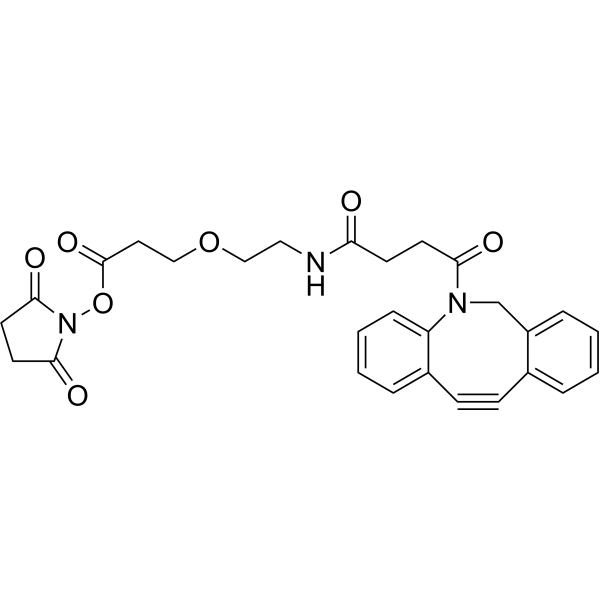
DBCO-PEG1-NHS ester is a PEG-based PROTAC linker that can be used in the synthesis of PROTACs. DBCO-PEG1-NHS ester is a click chemistry reagent, it contains a DBCO group that can undergo strain-promoted alkyne-azide cycloaddition (SPAAC) with molecules containing Azide groups.
Para uso exclusivo en investigación. No vendemos a pacientes.
- Pureza : 95.0%
- No. CAS: 2228857-34-7
- Fòrmula: C28H27N3O7
- Peso molecular:517.53
-
Almacenamiento:Powder -20°C, 3 years , 4°C, 2 years ; In solvent -80°C, 6 months , -20°C, 1 month

To place orders, for customer services and technical support, please contact: MedChemExpress USA
Tel: 609-228-6898 E-mail: [email protected] [email protected]


-
 Actividad biológica
-
Chemical Information
- Protocolo
- Pureza y Documentación
- Referencias
-
 Help & FAQs


-
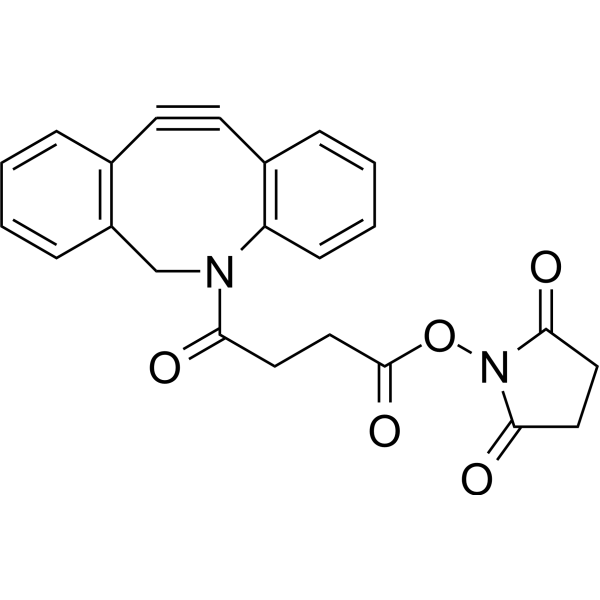
HY-42973
DBCO-NHS esterADC Linker -
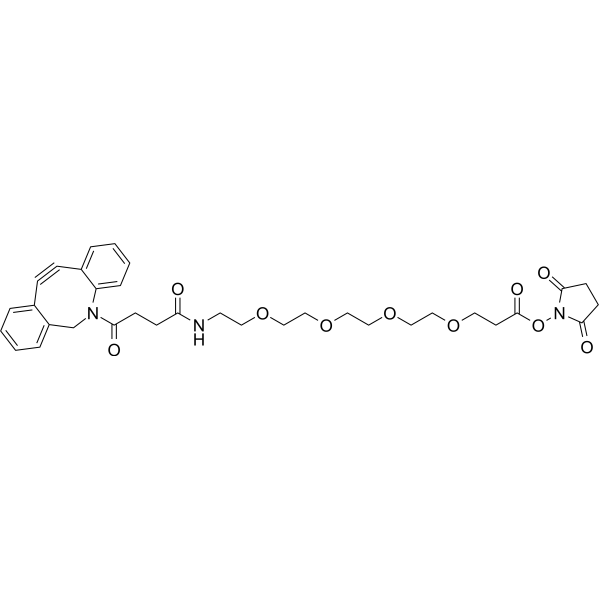
HY-140272
DBCO-PEG4-NHS esterPROTAC Linker -
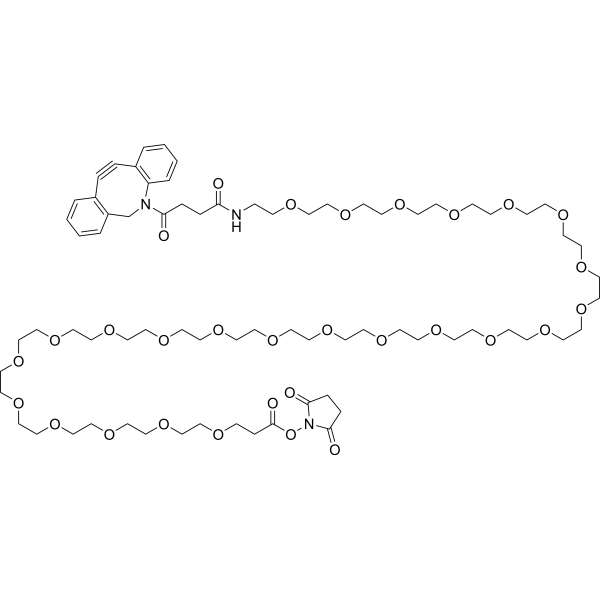
HY-151835
DBCO-PEG24-NHS esterClick Chemical Agent -
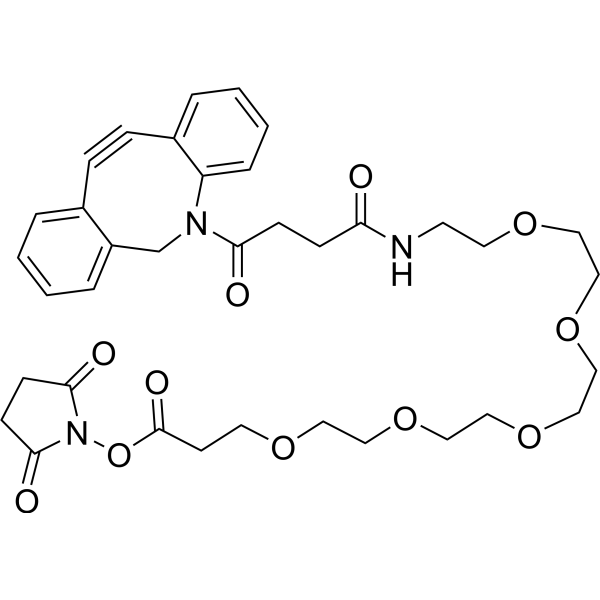
HY-126885
DBCO-PEG5-NHS esterADC/PROTAC Linker -

HY-170528
DBCO-PEG3-NHSPROTAC Linker -
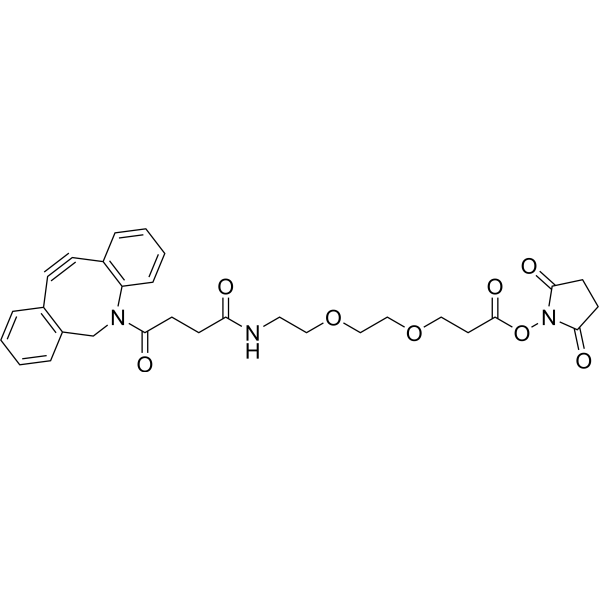
HY-151827
DBCO-PEG2-NHS esterAzide Compound -
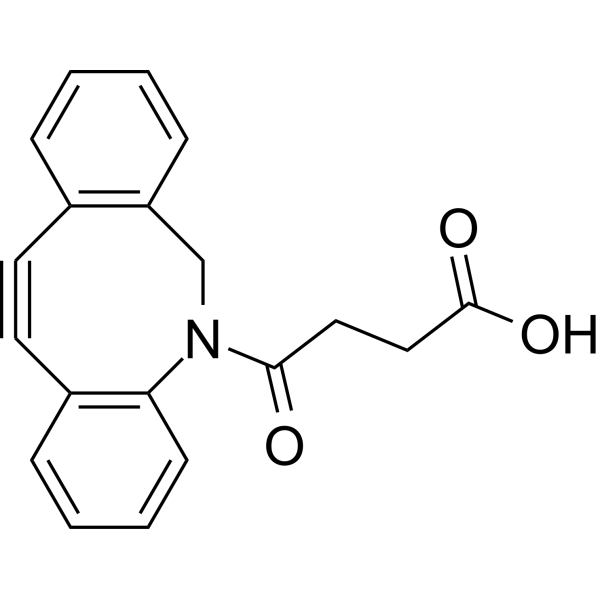
HY-42972
DBCO-acidClick Chemistry Reagent -
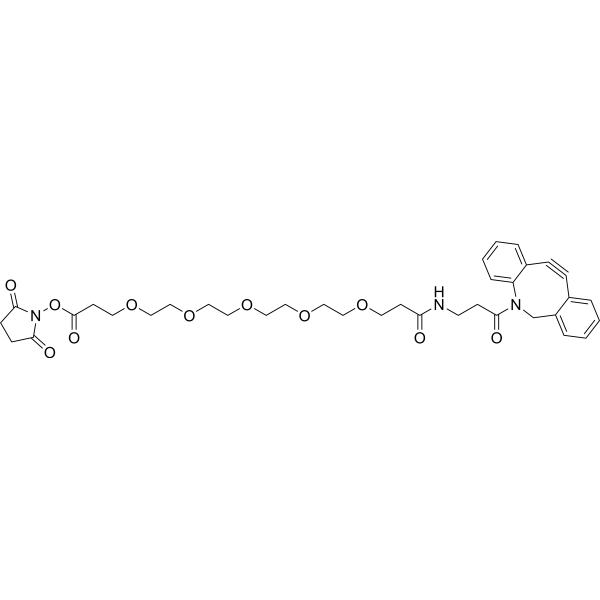
HY-140275
DBCO-NHCO-PEG5-NHS esterPROTAC Linker -
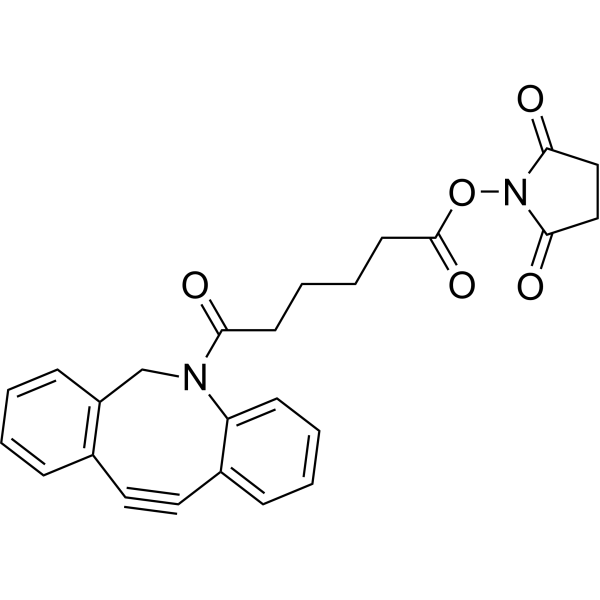
HY-115524
DBCO-NHS ester 2ADC linker -
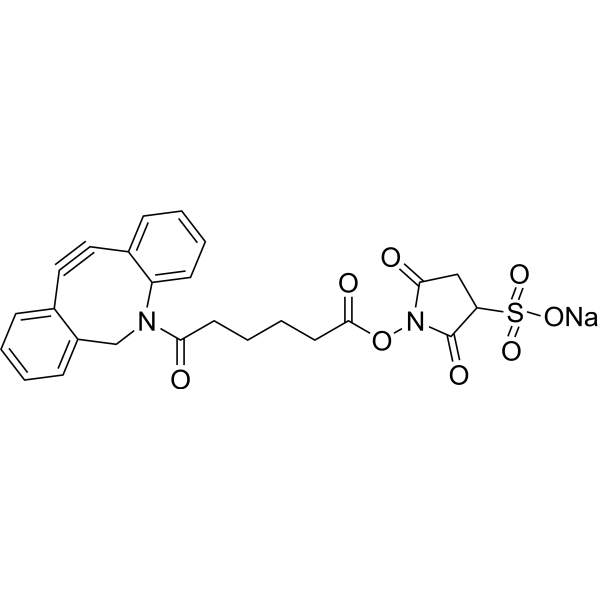
HY-123687
DBCO-Sulfo-NHS ester sodiumADC Linker -
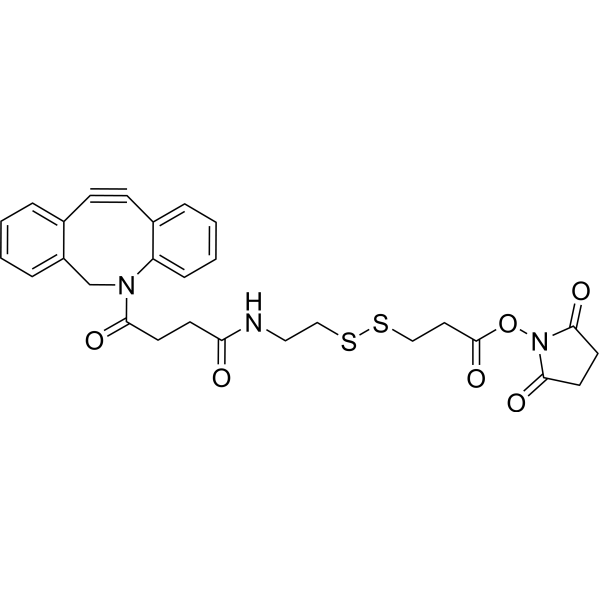
HY-133413
DBCO-CONH-S-S-NHS esterADC Linker -
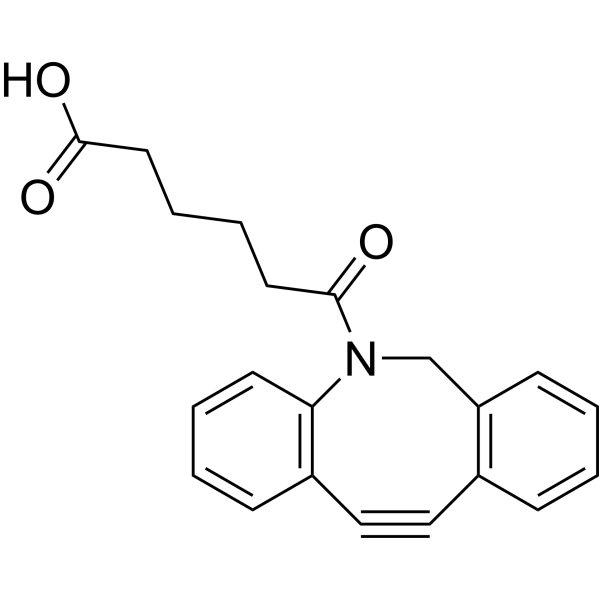
HY-121805
DBCO-C6-acidADC Linker
Ver todos los productos específicos de isoformas PROTAC Linkers
More

Actividad biológica
Descripciòn
IC50 & Target
|
PEGs |
In Vitro
PROTACs contain two different ligands connected by a linker; one is a ligand for an E3 ubiquitin ligase and the other is for the target protein. PROTACs exploit the intracellular ubiquitin-proteasome system to selectively degrade target proteins[1].
MedChemExpress (MCE) has not independently confirmed the accuracy of these methods. They are for reference only.


Chemical Information
-
No. CAS 2228857-34-7
-
Appearance Solid
-
Peso molecular 517.53
-
Fòrmula C28H27N3O7
-
Color Off-white to yellow
-
SMILES
O=C(N1C2=CC=CC=C2C#CC3=CC=CC=C3C1)CCC(NCCOCCC(ON(C4=O)C(CC4)=O)=O)=O
-
Envío
Room temperature in continental US; may vary elsewhere.
-
Almacenamiento
Powder -20°C 3 years 4°C 2 years In solvent -80°C 6 months -20°C 1 month


Pureza y Documentación
-
Ficha de datos (267 KB)
-
SDS (393 KB)
- English - EN (393 KB)
- Français - FR (393 KB)
- Deutsch - DE (393 KB)
- Norwegian - NO (393 KB)
- Español - ES (393 KB)
- Swedish - SV (393 KB)
- Italian - IT (393 KB)
- Korean - KR (393 KB)
- Portuguese - PT (393 KB)
-
Instrucciones de manejo (2659 KB)
Referencias

Calculators
Concentration (start) × Volume (start) = Concentration (final) × Volume (final)


DBCO-PEG1-NHS ester Related Classifications
HY-140271 Related Classifications
 Powered by Bioz