Search Result
Results for "
Sigma+Receptor
" in MedChemExpress (MCE) Product Catalog:
2
Biochemical Assay Reagents
2
Isotope-Labeled Compounds
| Cat. No. |
Product Name |
Target |
Research Areas |
Chemical Structure |
-
- HY-16996A
-
|
|
Sigma Receptor
|
Neurological Disease
|
|
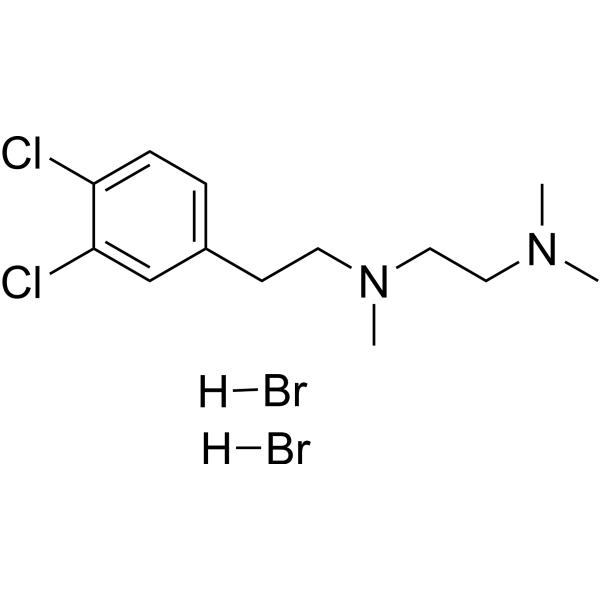
BD-1047 dihydrobromide is a selective functional antagonist of sigma receptors. BD-1047 dihydrobromide attenuates Apomorphine (HY-12723)-induced climbing and Phencyclidine-induced head twitches .
|
-
-
- HY-118901
-
|
Ensidon; G-33040
|
Sigma Receptor
|
Neurological Disease
|
|
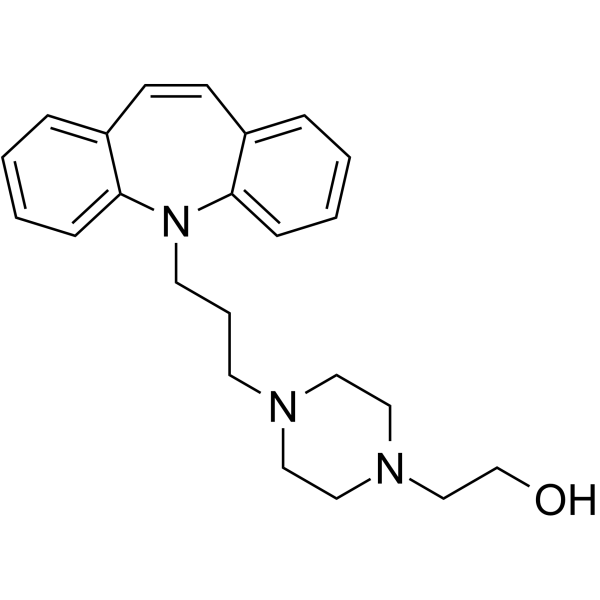
Opipramol (Ensidon) is an atypical tricyclic antidepressant (TCA). Opipramol acts primarily as a sigma (σ) receptor agonist and can potently interact with sigma recognition sites with a Ki value of 50 nM. Opipramol can be used for the research of generalized anxiety disorder (GAD) .
|
-
-
- HY-135608
-
|
|
Sigma Receptor
|
Neurological Disease
|
|
BD-1008 is a nonselective σ receptor antagonist with Kis against σ1 receptor and σ2 receptor of 2 nM and 8 nM. The BD-1008 has an extremely low affinity for the D2 receptor (Ki = 1112 nM) and dopamine transporter (DAT) (Ki > 10,000 nM). BD-1008 significantly antagonizes dopamine release in the shell region of the nucleus accumbens via the σ₂ receptor. BD-1008 blocks the self-administration behavior of σ agonists.BD-1008 can be used for the study of addiction therapy that target the σ receptor .
|
-

-
- HY-90002
-
|
|
Sigma Receptor
|
Neurological Disease
|
|
4-Phenylpiperidine is a σ receptor ligand with a Ki value of 1980 nM for guinea pig σ receptors. 4-Phenylpiperidine binds to σ receptors. 4-Phenylpiperidine is used in psychiatric disease research .
|
-

-
- HY-14218
-
|
1,3-Di-o-tolylguanidine; DTG
|
Sigma Receptor
|
Neurological Disease
|
|
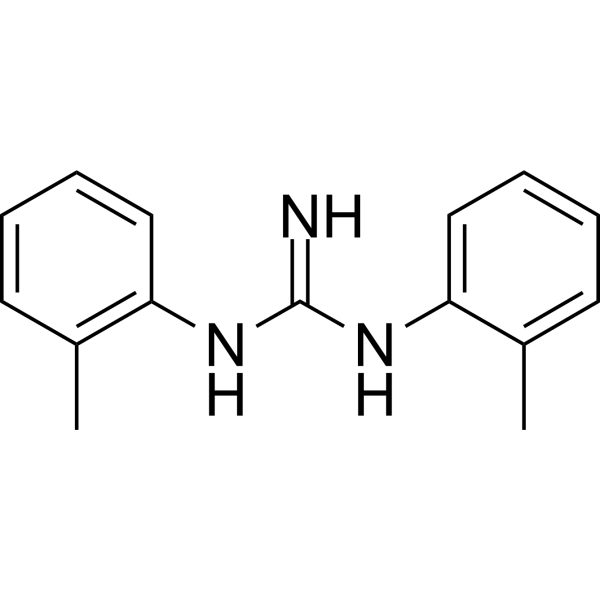
Ditolylguanidine (1,3-Di-o-tolylguanidine) is an agonist of sigma receptor (σ1/σ2 receptor) with Ki values of 69 and 21 nM for σ1 and σ2 receptors, respectively. Ditolylguanidine effectively inhibits the growth of small cell lung cancer cells. Ditolylguanidine can be used for the research of lung cancer .
|
-
-
- HY-108510
-
|
BW 234U dihydrochloride
|
Sigma Receptor
Dopamine Receptor
|
Neurological Disease
Cancer
|
|
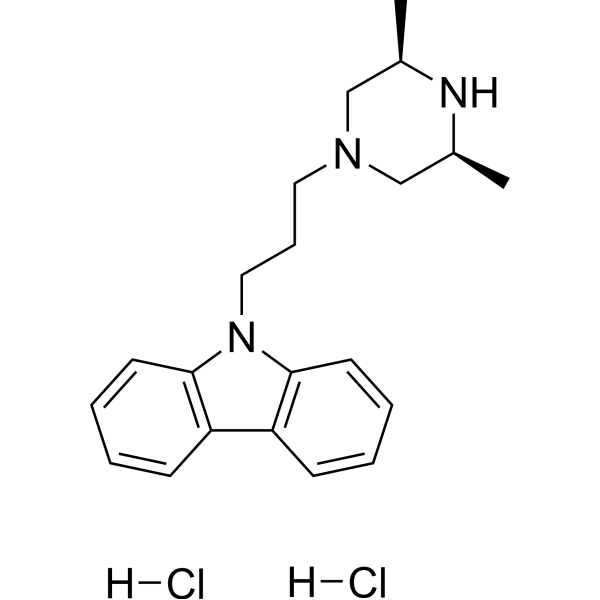
Rimcazole (BW 234U) dihydrochloride is a carbazole derivative that acts in part as a sigma (σ) receptor antagonist. Rimcazole dihydrochloride also binds with moderate affinity to the dopamine transporter and inhibit dopamine uptake. Rimcazole dihydrochloride can reduce locomotor activity and sensitization. Rimcazole dihydrochloride also can be used for the research of cancer .
|
-
-
- HY-155887
-
|
DSPE-PEG-NH2, MW 3400 ammonium
|
Liposome
|
Cancer
|
|
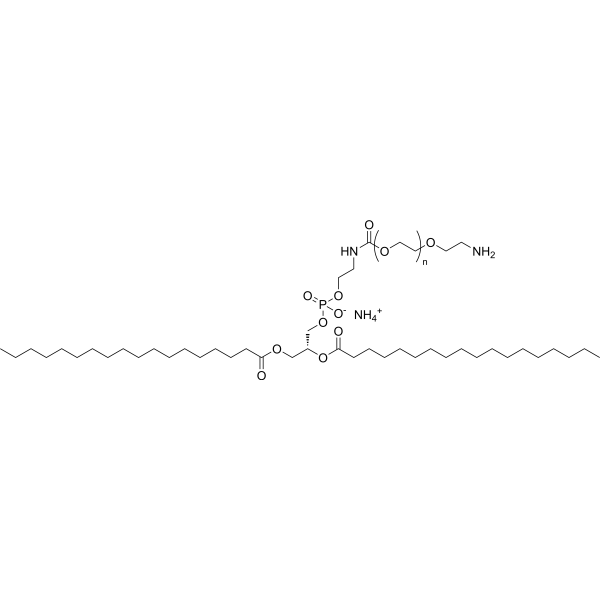
DSPE-PEG-Amine (DSPE-PEG-NH2), MW 3400 ammonium is an amino-functionalized PEGylated phospholipid. It serves not only as a key component for preparing σ receptor-targeted liposomes (such as anisamide-modified lipids) but also as a starting material for synthesizing click chemistry- and tumor-targeted lipids including DSPE-PEG-DBCO (HY-155788) and DSPE-PEG2000-TCO (HY-170704). DSPE-PEG-Amine, MW 3400 ammonium effectively modulates the ζ potential of nanoparticles, enables complexation with nucleic acids or proteins to protect DNA from nuclease degradation, and supports ligand conjugation on the nanoparticle surface. It is used in studies related to DU-145 tumors, breast cancer, and other relevant research .
|
-
-
- HY-136280
-
|
EMD 57445
|
Sigma Receptor
|
Neurological Disease
|
|
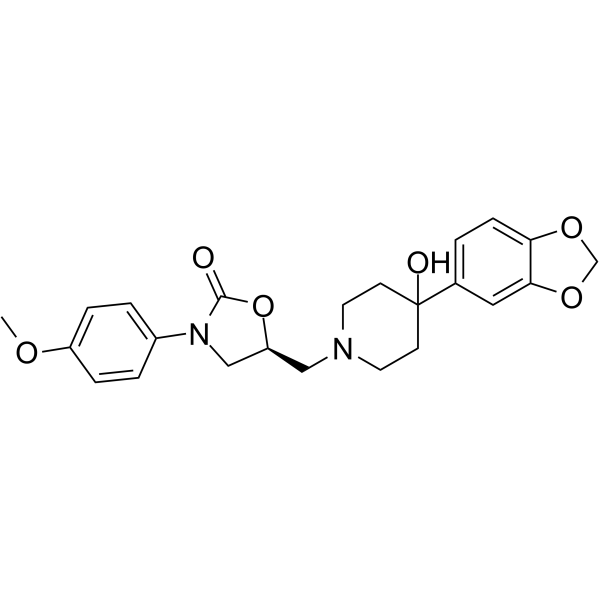
Panamesine (EMD 57445) is a sigma receptor ligand, which has a high affinity (IC50 6 nM) and selectivity for sigma binding sites. Panamesine is a potential atypical neuroleptic agent .
|
-
-
- HY-116594A
-
|
|
Sigma Receptor
5-HT Receptor
|
Neurological Disease
|
|
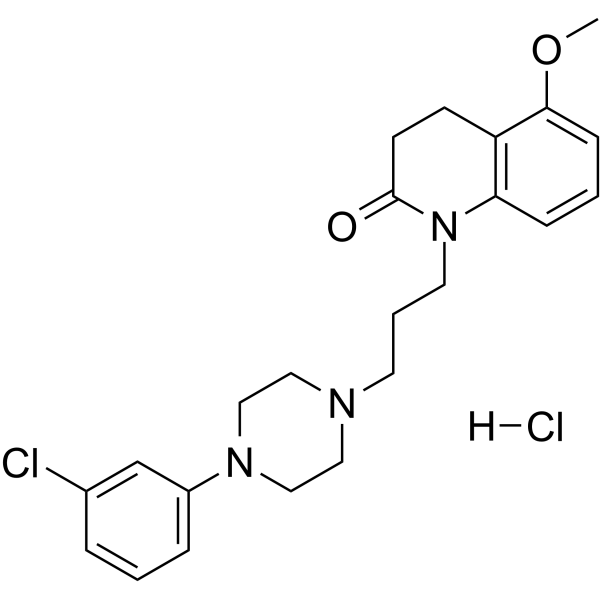
OPC-14523 hydrochloride is an orally active sigma and 5-HT1A receptor agonist, with high affinity for sigma receptors (σ1/2 IC50=47/56 nM), the 5-HT1A receptor (IC50=2.3 nM), and the 5-HT transporter (IC50=80 nM). OPC-14523 hydrochloride shows antidepressant-like activity .
|
-
-
- HY-136281
-
|
|
Sigma Receptor
|
Neurological Disease
|
|
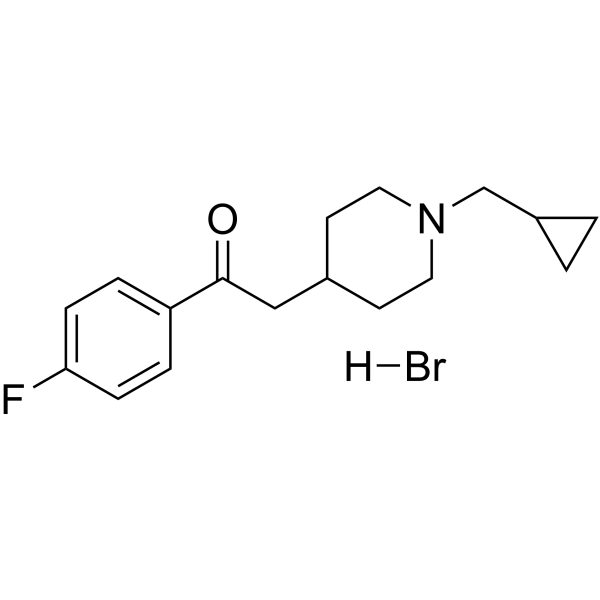
DuP 734 is a sigma receptor antagonist. DuP 734 is a selective and potent sigma and 5-HT2 receptor ligand with weak affinity for D2 receptors. DuP 734 may have antipsychotic activity without the liability of motor side effects typical of neuroleptics .
|
-
-
- HY-169914
-
|
JO 1784 hydrochloride
|
Sigma Receptor
|
Neurological Disease
|
|
Igmesine hydrochloride (JO 1784) is an orally active σ-receptor ligand capable of blocking the increase in colonic electromechanical activity induced by emotional stress. Igmesine hydrochloride also eliminates the colonic motility stimulation induced by dopamine, as well as the stimulation induced by centrally injected D1 or D2 receptor agonists. Furthermore, Igmesine hydrochloride can block the colonic motility responses induced by corticotropin-releasing factor (CRF) and ES through central cholecystokinin (CCK) release and/or activation of supraspinal CCK pathways .
|
-

-
- HY-47228
-
|
|
Sigma Receptor
|
Inflammation/Immunology
|
|
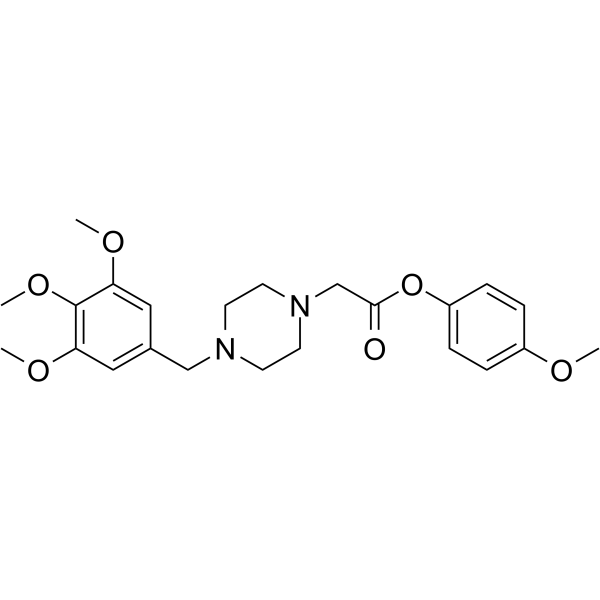
KB-5492 free base is a potent and selective inhibitor of sigma receptor, inhibits specific [ 3H]1,3-di(2-tolyl)guanidine (DTG) binding to the sigma receptor with an IC50 of 3.15 μM. KB-5492 free base is an anti-ulcer agent .
|
-
-
- HY-100966
-
|
|
Sigma Receptor
|
Neurological Disease
|
|
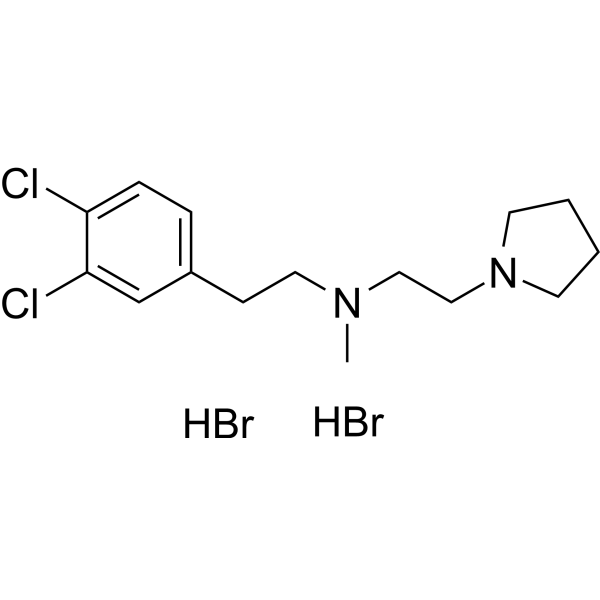
BD-1008 dihydrobromide is a nonselective σ receptor antagonist with Kis against σ1 receptor and σ2 receptor of 2 nM and 8 nM. The BD-1008 dihydrobromide has an extremely low affinity for the D2 receptor (Ki = 1112 nM) and dopamine transporter (DAT) (Ki > 10,000 nM). BD-1008 dihydrobromide significantly antagonizes dopamine release in the shell region of the nucleus accumbens via the σ₂ receptor. BD-1008 dihydrobromide blocks the self-administration behavior of σ agonists.BD-1008 dihydrobromide can be used for the study of addiction therapy that target the σ receptor .
|
-
-
- HY-107047
-
|
RS-1259
|
Cholinesterase (ChE)
Serotonin Transporter
5-HT Receptor
Calcium Channel
Sodium Channel
Sigma Receptor
|
Neurological Disease
|
|
BGC-201259 (RS-1259) is an orally active inhibitor that simultaneously targets acetylcholinesterase (AChE) (IC50 = 101 nM) and serotonin transporter (SERT) (IC50 = 42 nM). BGC-201259 inhibits 5-HT receptor with an IC50 of 90 nM. BGC-201259 exhibits strong weak activity against the NA transporter (IC50 = 7.7 μM), L-type calcium channel (IC50 = 3.6 μM), σ receptor (IC50 = 2 μM), and sodium channel (IC50 = 5.1 μM). BGC-201259 demonstrates synergistic potential in improving cognitive and emotional symptoms by balancing the inhibition of these two targets. BGC-201259 can be used in research on Alzheimer's disease .
|
-

-
- HY-A0139
-
|
NSC 108165; Navan; Navane
|
Sigma Receptor
mAChR
Histamine Receptor
Dopamine Receptor
Adrenergic Receptor
|
Others
|
|
Thiothixene is a typical antipsychotic. It selectively binds to dopamine D2 over D1, D3, and D4 receptors (Kis=0.417, 338, 186.2, and 363.1 nM, respectively). Thiothixene also binds to various serotonin (5-HT), histamine H1, α1- and α2-adrenergic, muscarinic acetylcholine, and sigma receptors (Kis=15-5,754 nM) as well as the dopamine, norepinephrine, and serotonin transporters (Kis=3.16-30 μM). In vivo, thiothixene reduces spontaneous and amphetamine-induced locomotor activity in rats. It enhances latent inhibition, as measured by a decreased lick latency in response to light and foot shock stimuli, which is a measure of selective attention in rats.3 Thiothixene also increases competitive behavior in submissive mice, indicating antidepressant-like behavior.
|
-

-
- HY-173475
-
-

-
- HY-120360
-
|
|
Sigma Receptor
Apoptosis
|
Cancer
|
|
CB-64D is the agonist for sigma receptor 2 and sigma receptor 1 with Ki of 16.5 and 3063 nM. CB-64D induces apoptosis in cancer cell SK-N-SH .
|
-

-
- HY-130179
-
|
|
Apoptosis
|
Neurological Disease
|
|
RC-33 hydrochloride is a selective and metabolically stable σ receptor agonist with activity in enhancing nerve growth factor (NGF)-induced neurite outgrowth. Both enantiomers of RC-33 hydrochloride bind to the σ receptor with similar affinity and show almost equal effectiveness as σ receptor agonists. The R-configured enantiomer of RC-33 hydrochloride shows higher liver metabolic stability in the presence of NADPH. RC-33 hydrochloride was selected as the best candidate for further in vivo studies in animal models of amyotrophic lateral sclerosis .
|
-

-
- HY-120236
-
|
|
Sigma Receptor
|
Neurological Disease
|
|
KSCM-5 is a sigma receptor ligand with high affinity activity on sigma-1 receptor. The Ki value of KSCM-5 is about 34nM, showing significant selectivity. KSCM-5 has potential application value in compound development, especially for diseases related to sigma receptors .
|
-

-
- HY-19120
-
|
|
Sigma Receptor
|
Inflammation/Immunology
|
|
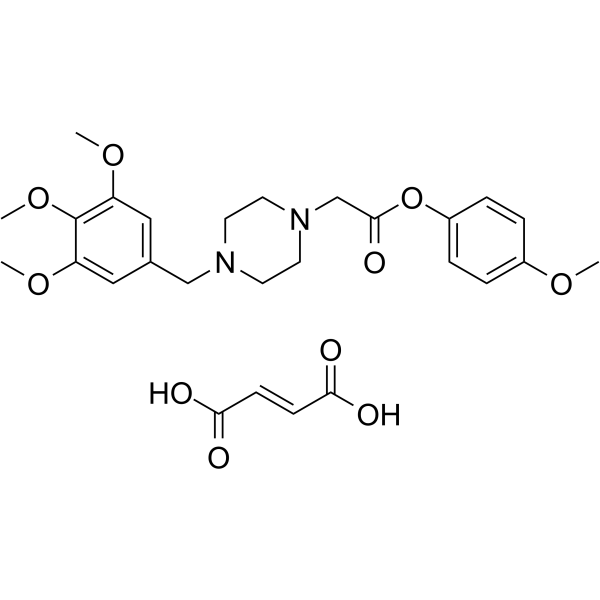
KB-5492 anhydrous is a potent and selective inhibitor of sigma receptor, inhibits specific [ 3H]1,3-di(2-tolyl)guanidine (DTG) binding to the sigma receptor with an IC50 of 3.15 μM. KB-5492 anhydrous is an anti-ulcer agent .
|
-
-
- HY-121470
-
|
AH5183
|
Others
|
Others
|
|
Vesamicol is a compound used to synthesize radiolabeled derivatives that can be used as sigma receptor ligands for tumor targeting inhibition and have shown certain potential in cellular uptake, biodistribution and inhibition experiments.
|
-

-
- HY-16996
-
|
|
Sigma Receptor
|
Neurological Disease
|
|
BD-1047 is a selective functional antagonist of sigma receptors. BD-1047 attenuates Apomorphine (HY-12723)-induced climbing and Phencyclidine-induced head twitches .
|
-

-
- HY-158197
-
|
|
Sigma Receptor
Proteasome
|
Cancer
|
|
RC-106 is a proteasome inhibitor (IC50: 35 μM) and Sigma receptor modulator with anticancer activity. RC-106 has antiproliferative activity against cancer cells including glioblastoma (GB) and multiple myeloma (MM) .
|
-

-
- HY-101626A
-
|
|
Sigma Receptor
|
Neurological Disease
|
|
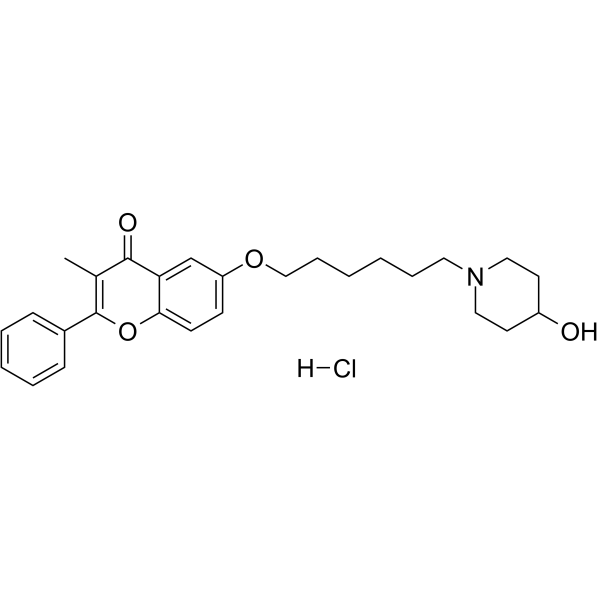
Sigma ligand-1 hydrochloride is a selective sigma receptor ligand with an IC50s of 16 nM, 19 nM at the DTG site and the PPP site, respectively. Sigma ligand-1 hydrochloride has a Ki of 4000 nM at the dopamine D2 receptor .
|
-
-
- HY-101626
-
|
|
Sigma Receptor
|
Neurological Disease
|
|
Sigma ligand-1 is a selective sigma receptor ligand with an IC50s of 16 nM, 19 nM at the DTG site and the PPP site, respectively. Sigma ligand-1 has a Ki of 4000 nM at the dopamine D2 receptor .
|
-
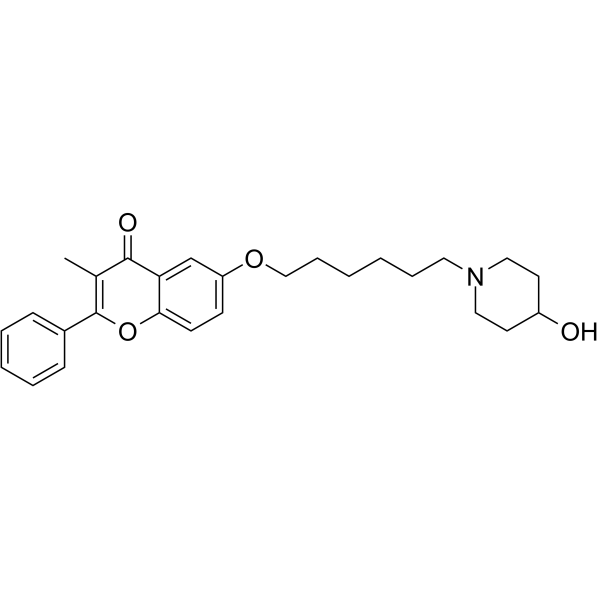
-
- HY-118901A
-
|
Ensidon dihydrochloride; G-33040 dihydrochloride
|
Sigma Receptor
|
Neurological Disease
|
|
Opipramol (Ensidon) is an atypical tricyclic antidepressant (TCA). Opipramol acts primarily as a sigma (σ) receptor agonist and can potently interact with sigma recognition sites with a Ki value of 50 nM. Opipramol can be used for the research of generalized anxiety disorder (GAD) .
|
-

-
- HY-117420
-
|
|
Sigma Receptor
|
Cancer
|
|
CM764 is an activator for sigma receptor with Ki of 86.6 and 3.5 nM for sigma-1 receptor and sigma-2 receptor. CM764 increases cytoplasmic calcium, NAD +/NADH, and ATP levels, and decreases the concentration of ROS .
|
-

-
- HY-118279
-
|
|
Sigma Receptor
|
Neurological Disease
|
|
KSCM-1 is a selective sigma-1 receptor ligand with a Ki of 27.5 nM. KSCM-1 shows more selective for sigma-1 over sigma-2, and shows no significant affinity at non-sigma receptors .
|
-

-
- HY-106153B
-
|
|
Sigma Receptor
|
Neurological Disease
|
|
E-5842 citrate is a σ receptor ligand (Ki: 4 nM for σ1 receptor). E-5842 citrate increases levels of Fos in the medial prefrontal cortex and the nucleus accumbens, without affecting the levels of the protein in the striatum. E-5842 citrate can be used in the research of psychiatric disorders .
|
-

-
- HY-108509
-
|
BMY-14802-1; BMS 181100 hydrochloride
|
Sigma Receptor
5-HT Receptor
Adrenergic Receptor
|
Neurological Disease
|
|
BMY-14802 hydrochloride (BMY-14802-1) is a selective and orally active sigma receptor antagonist with an IC50 of 112 nM. BMY-14802 hydrochloride is also a 5-HT1A and adrenergic α1 receptors agonist. BMY-14802 hydrochloride has antipsychotic effects .
|
-
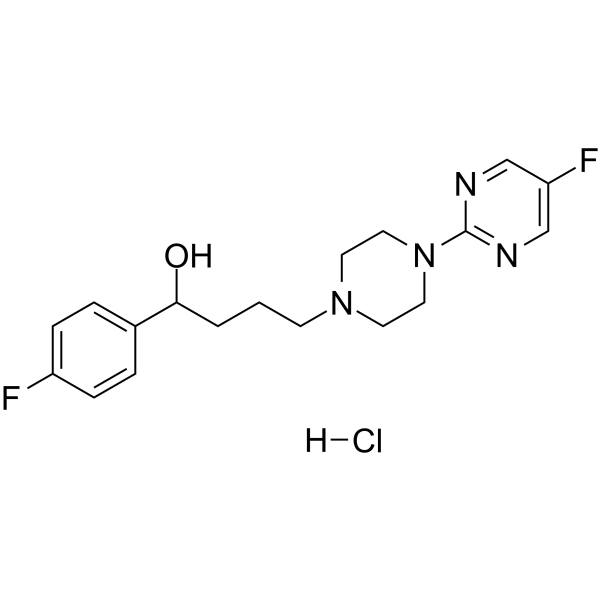
-
- HY-118901R
-
|
Ensidon (Standard); G-33040 (Standard)
|
Reference Standards
Sigma Receptor
|
Neurological Disease
|
|
Opipramol (Standard) is the analytical standard of Opipramol. This product is intended for research and analytical applications. Opipramol (Ensidon) is an atypical tricyclic antidepressant (TCA). Opipramol acts primarily as a sigma (σ) receptor agonist and can potently interact with sigma recognition sites with a Ki value of 50 nM. Opipramol can be used for the research of generalized anxiety disorder (GAD) .
|
-

-
- HY-100966S
-
|
|
Isotope-Labeled Compounds
Sigma Receptor
|
Neurological Disease
|
|
BD-1008-d5 dihydrobromide is the deuterium labeled BD-1008 dihydrobromide (HY-100966). BD-1008 dihydrobromide is a nonselective σ receptor antagonist with Kis against σ1 receptor and σ2 receptor of 2 nM and 8 nM. The BD-1008 dihydrobromide has an extremely low affinity for the D2 receptor (Ki = 1112 nM) and dopamine transporter (DAT) (Ki > 10,000 nM). BD-1008 dihydrobromide significantly antagonizes dopamine release in the shell region of the nucleus accumbens via the σ₂ receptor. BD-1008 dihydrobromide blocks the self-administration behavior of σ agonists.BD-1008 dihydrobromide can be used for the study of addiction therapy that target the σ receptor .
|
-
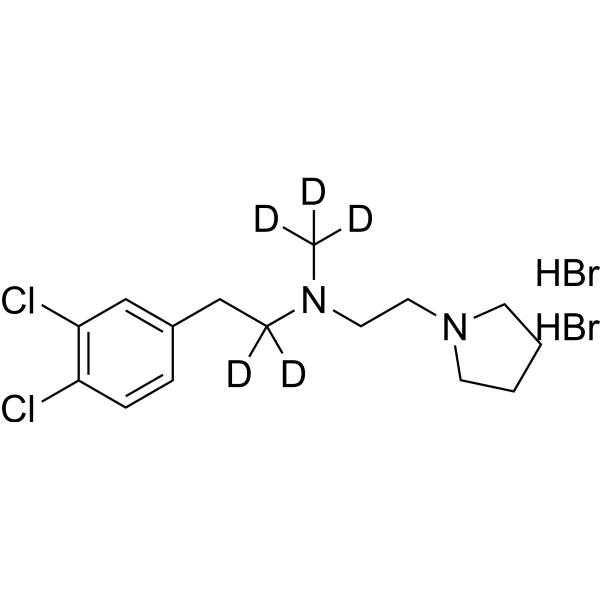
-
- HY-16996AR
-
|
|
Sigma Receptor
|
Neurological Disease
|
|
BD-1047 (dihydrobromide) (Standard) is the analytical standard of BD-1047 (dihydrobromide). This product is intended for research and analytical applications. BD-1047 dihydrobromide is a selective functional antagonist of sigma receptors. BD-1047 dihydrobromide attenuates Apomorphine (HY-12723)-induced climbing and Phencyclidine-induced head twitches .
|
-

-
- HY-155155
-
|
|
SARS-CoV
Sigma Receptor
|
Infection
|
|
SARS-CoV-2-IN-57 (compound (+)-R-26) is a potent inhibitor of SARS-CoV-2 (IC50: 80 nM). SARS-CoV-2-IN-57 has high affinity for Sigma Receptor with Kis of 13.6 nM (S1R) and 14.4 nM (S2R) respectively .
|
-
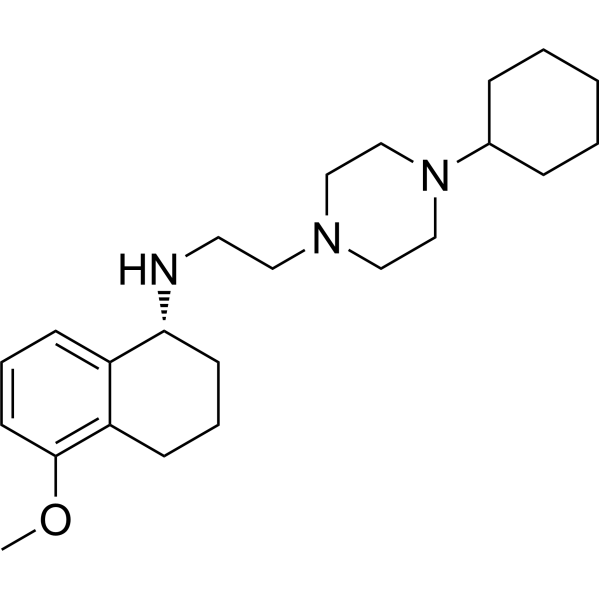
-
- HY-105034
-
|
BMY 13859-1 free base
|
5-HT Receptor
|
Neurological Disease
|
|
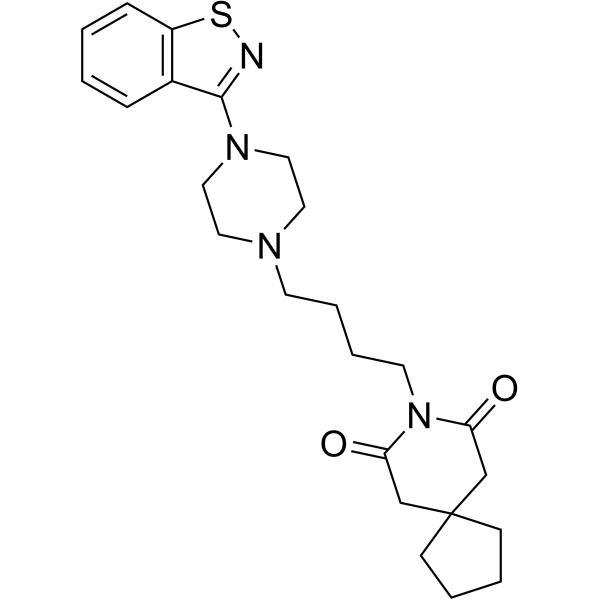
Tiospirone is a 5-HT2 receptor antagonist with affinity for D2, 5-HT1a, and 5-HT7, and sigma receptors. Tiospirone decreases consumption of ethanol while increasing food intake of rats. Tiospirone can also reduce the reinforcing properties of Cocaine exhibited in the conditioned place preference paradigm .
|
-
-
- HY-W714837
-
|
4-Oxo-5-phenylpentanoic acid; 5-Phenyl-4-oxopentanoic acid
|
Bacterial
Fungal
Antibiotic
Drug Intermediate
Endogenous Metabolite
Sigma Receptor
|
Infection
|
|
5-Phenyllevulinic acid (4-Oxo-5-phenylpentanoic acid) is an endogenous fungal metabolite with inhibitory activity against the bacterium B. megaterium, the plant pathogenic fungus S. tritici, and the alga C. fusca. 5-Phenyllevulinic acid is also an intermediate in the synthesis of σ receptor ligands. 5-Phenyllevulinic acid holds potential for research in the field of anti-infection studies .
|
-

-
- HY-107708
-
|
|
iGluR
Sigma Receptor
Potassium Channel
|
Neurological Disease
|
|
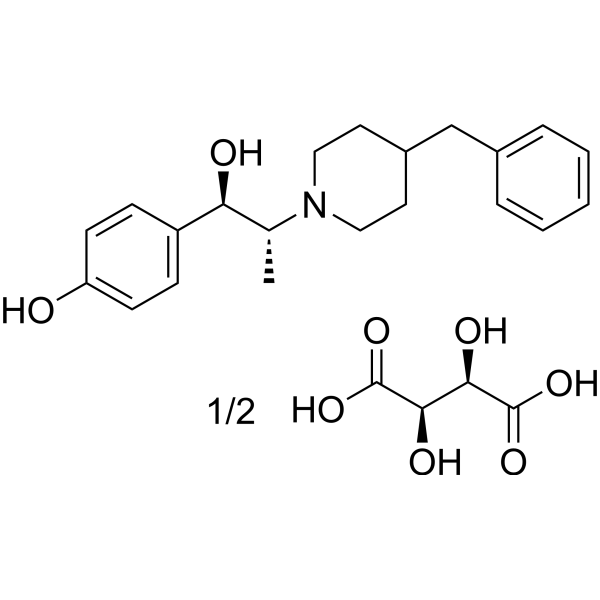
threo Ifenprodil hemitartrate is a σ receptor agonist, with Kis of 59.1 and 2 nM for σ1 and σ2 receptors, respectively. threo Ifenprodil hemitartrate is also a NR2B subunit-selective NMDA receptor antagonist (IC50=0.22 μM). threo Ifenprodil hemitartrate is a hERG potassium channel inhibitor, with an IC 50 of 88 nM, showing antiarrhythmic activity .
|
-
-
- HY-14218R
-
|
1,3-Di-o-tolylguanidine (Standard); DTG (Standard)
|
Sigma Receptor
Reference Standards
|
Neurological Disease
|
|
Ditolylguanidine (Standard) is the analytical standard of Ditolylguanidine. This product is intended for research and analytical applications. Ditolylguanidine (1,3-Di-o-tolylguanidine) is an agonist of sigma receptor (σ1/σ2 receptor) with Ki values of 69 and 21 nM for σ1 and σ2 receptors, respectively. Ditolylguanidine effectively inhibits the growth of small cell lung cancer cells. Ditolylguanidine can be used for the research of lung cancer .
|
-

-
- HY-116594
-
|
|
Sigma Receptor
5-HT Receptor
|
Neurological Disease
|
|
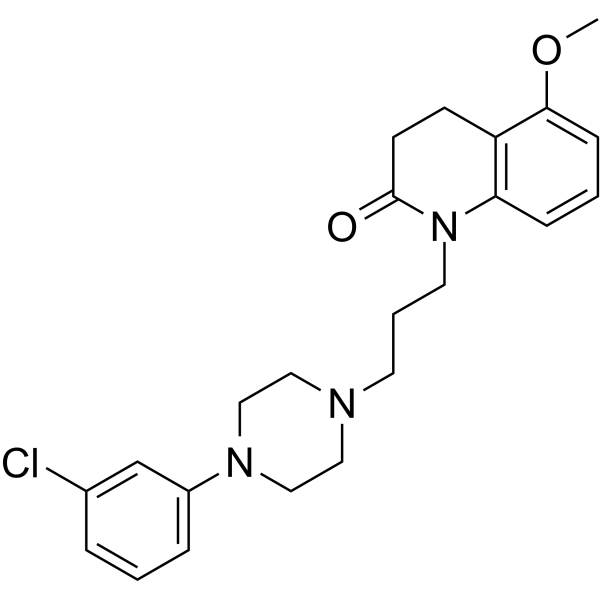
OPC-14523 free base is an orally active sigma and 5-HT1A receptor agonist, with high affinity for sigma receptors (σ1/2 IC50=47/56 nM), the 5-HT1A receptor (IC50=2.3 nM), and the 5-HT transporter (IC50=80 nM). OPC-14523 free base shows antidepressant-like activity .
|
-
-
- HY-149335
-
|
|
Sigma Receptor
Histamine Receptor
|
Neurological Disease
|
|
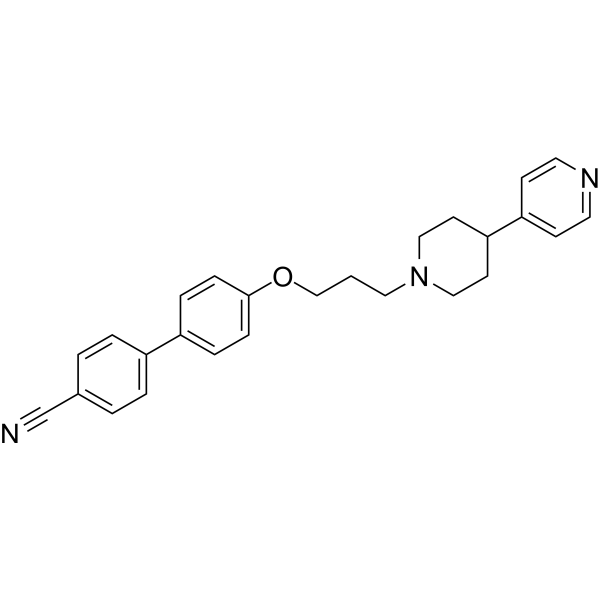
Sigma-1 receptor antagonist 5 (compound 12),a 4-pyridylpiperidine derivative with analgesic activity,is an antagonist of sigma receptor (Ki=4.5 nM (σ1R),10 nM (σ2R)) and histamine H3 (hH3R,Ki=7.7 nM,IC50=215 nM). Sigma-1 receptor antagonist 5 suppresses Capsaicin-induced nociception with antinociceptive activity and shows potent efficacy in nociceptive and neuropathic pain models .
|
-
-
- HY-W748758
-
|
NSC 108165-d8; Navan-d8; Navane-d8
|
Isotope-Labeled Compounds
Dopamine Receptor
Histamine Receptor
mAChR
Adrenergic Receptor
Sigma Receptor
|
Others
|
|
(Z)-Thiothixene-d8 (NSC 108165-d8; Navan-d8; Navane-d8) is the deuterium labeled Thiothixene (HY-A0139). Thiothixene is a typical antipsychotic. It selectively binds to dopamine D2 over D1, D3, and D4 receptors (Kis=0.417, 338, 186.2, and 363.1 nM, respectively). Thiothixene also binds to various serotonin (5-HT), histamine H1, α1- and α2-adrenergic, muscarinic acetylcholine, and sigma receptors (Kis=15-5,754 nM) as well as the dopamine, norepinephrine, and serotonin transporters (Kis=3.16-30 μM). In vivo, thiothixene reduces spontaneous and amphetamine-induced locomotor activity in rats. It enhances latent inhibition, as measured by a decreased lick latency in response to light and foot shock stimuli, which is a measure of selective attention in rats.3 Thiothixene also increases competitive behavior in submissive mice, indicating antidepressant-like behavior.
|
-

-
- HY-101626R
-
|
|
Sigma Receptor
Reference Standards
|
Neurological Disease
|
|
Sigma ligand-1 (Standard) is the analytical standard of Sigma ligand-1 (HY-101626). This product is intended for research and analytical applications. Sigma ligand-1 is a selective sigma receptor ligand with an IC50s of 16 nM, 19 nM at the DTG site and the PPP site, respectively. Sigma ligand-1 has a Ki of 4000 nM at the dopamine D2 receptor .
|
-

-
- HY-101626AR
-
|
|
Sigma Receptor
Reference Standards
|
Neurological Disease
|
|
Sigma ligand-1 (hydrochloride) (Standard) is the analytical standard of Sigma ligand-1 (hydrochloride) (HY-101626A). This product is intended for research and analytical applications. Sigma ligand-1 hydrochloride is a selective sigma receptor ligand with an IC50s of 16 nM, 19 nM at the DTG site and the PPP site, respectively. Sigma ligand-1 hydrochloride has a Ki of 4000 nM at the dopamine D2 receptor .
|
-

-
- HY-108510R
-
|
BW 234U dihydrochloride (Standard)
|
Reference Standards
Sigma Receptor
Dopamine Receptor
|
Neurological Disease
Cancer
|
|
Rimcazole dihydrochloride (Standard) is the analytical standard of Rimcazole (dihydrochloride) (HY-108510). This product is intended for research and analytical applications. Rimcazole (BW 234U) dihydrochloride is a carbazole derivative that acts in part as a sigma (σ) receptor antagonist. Rimcazole dihydrochloride also binds with moderate affinity to the dopamine transporter and inhibit dopamine uptake. Rimcazole dihydrochloride can reduce locomotor activity and sensitization. Rimcazole dihydrochloride also can be used for the research of cancer .
|
-

-
- HY-108509R
-
|
BMY-14802-1 (Standard); BMS 181100 hydrochloride (Standard)
|
Reference Standards
Sigma Receptor
5-HT Receptor
Adrenergic Receptor
|
Neurological Disease
|
|
BMY-14802 hydrochloride (Standard) is the analytical standard of BMY-14802 (hydrochloride) (HY-108509). This product is intended for research and analytical applications. BMY-14802 hydrochloride (BMY-14802-1) is a selective and orally active sigma receptor antagonist with an IC50 of 112 nM. BMY-14802 hydrochloride is also a 5-HT1A and adrenergic α1 receptors agonist. BMY-14802 hydrochloride has antipsychotic effects .
|
-

| Cat. No. |
Product Name |
Type |
-
- HY-90002
-
|
|
Biochemical Assay Reagents
|
|
4-Phenylpiperidine is a σ receptor ligand with a Ki value of 1980 nM for guinea pig σ receptors. 4-Phenylpiperidine binds to σ receptors. 4-Phenylpiperidine is used in psychiatric disease research .
|
-
- HY-155887
-
|
DSPE-PEG-NH2, MW 3400 ammonium
|
Biochemical Assay Reagents
|
|
DSPE-PEG-Amine (DSPE-PEG-NH2), MW 3400 ammonium is an amino-functionalized PEGylated phospholipid. It serves not only as a key component for preparing σ receptor-targeted liposomes (such as anisamide-modified lipids) but also as a starting material for synthesizing click chemistry- and tumor-targeted lipids including DSPE-PEG-DBCO (HY-155788) and DSPE-PEG2000-TCO (HY-170704). DSPE-PEG-Amine, MW 3400 ammonium effectively modulates the ζ potential of nanoparticles, enables complexation with nucleic acids or proteins to protect DNA from nuclease degradation, and supports ligand conjugation on the nanoparticle surface. It is used in studies related to DU-145 tumors, breast cancer, and other relevant research .
|
| Cat. No. |
Product Name |
Chemical Structure |
-
- HY-100966S
-
|
|
|
BD-1008-d5 dihydrobromide is the deuterium labeled BD-1008 dihydrobromide (HY-100966). BD-1008 dihydrobromide is a nonselective σ receptor antagonist with Kis against σ1 receptor and σ2 receptor of 2 nM and 8 nM. The BD-1008 dihydrobromide has an extremely low affinity for the D2 receptor (Ki = 1112 nM) and dopamine transporter (DAT) (Ki > 10,000 nM). BD-1008 dihydrobromide significantly antagonizes dopamine release in the shell region of the nucleus accumbens via the σ₂ receptor. BD-1008 dihydrobromide blocks the self-administration behavior of σ agonists.BD-1008 dihydrobromide can be used for the study of addiction therapy that target the σ receptor .
|
-
-
- HY-W748758
-
|
|
|
(Z)-Thiothixene-d8 (NSC 108165-d8; Navan-d8; Navane-d8) is the deuterium labeled Thiothixene (HY-A0139). Thiothixene is a typical antipsychotic. It selectively binds to dopamine D2 over D1, D3, and D4 receptors (Kis=0.417, 338, 186.2, and 363.1 nM, respectively). Thiothixene also binds to various serotonin (5-HT), histamine H1, α1- and α2-adrenergic, muscarinic acetylcholine, and sigma receptors (Kis=15-5,754 nM) as well as the dopamine, norepinephrine, and serotonin transporters (Kis=3.16-30 μM). In vivo, thiothixene reduces spontaneous and amphetamine-induced locomotor activity in rats. It enhances latent inhibition, as measured by a decreased lick latency in response to light and foot shock stimuli, which is a measure of selective attention in rats.3 Thiothixene also increases competitive behavior in submissive mice, indicating antidepressant-like behavior.
|
-
| Cat. No. |
Product Name |
|
Classification |
-
- HY-155887
-
|
DSPE-PEG-NH2, MW 3400 ammonium
|
|
Pegylated Lipids
|
|
DSPE-PEG-Amine (DSPE-PEG-NH2), MW 3400 ammonium is an amino-functionalized PEGylated phospholipid. It serves not only as a key component for preparing σ receptor-targeted liposomes (such as anisamide-modified lipids) but also as a starting material for synthesizing click chemistry- and tumor-targeted lipids including DSPE-PEG-DBCO (HY-155788) and DSPE-PEG2000-TCO (HY-170704). DSPE-PEG-Amine, MW 3400 ammonium effectively modulates the ζ potential of nanoparticles, enables complexation with nucleic acids or proteins to protect DNA from nuclease degradation, and supports ligand conjugation on the nanoparticle surface. It is used in studies related to DU-145 tumors, breast cancer, and other relevant research .
|
Your information is safe with us. * Required Fields.
Inquiry Information
- Product Name:
- Cat. No.:
- Quantity:
- MCE Japan Authorized Agent:








