1. Search Result
Search Result
Results for "

human astrocytes

" in MedChemExpress (MCE) Product Catalog:

22

Inhibitors & Agonists

1

Fluorescent Dyes

1

Biochemical Assay Reagents

2

Peptides

2

Natural
Products

1

Recombinant Proteins

1

Isotope-Labeled Compounds

1

Click Chemistry

1

Oligonucleotides

Cat. No. Product Name Target Research Areas Chemical Structure
  • HY-121362

    Bacterial Endogenous Metabolite TrxR Infection Neurological Disease Inflammation/Immunology Cancer
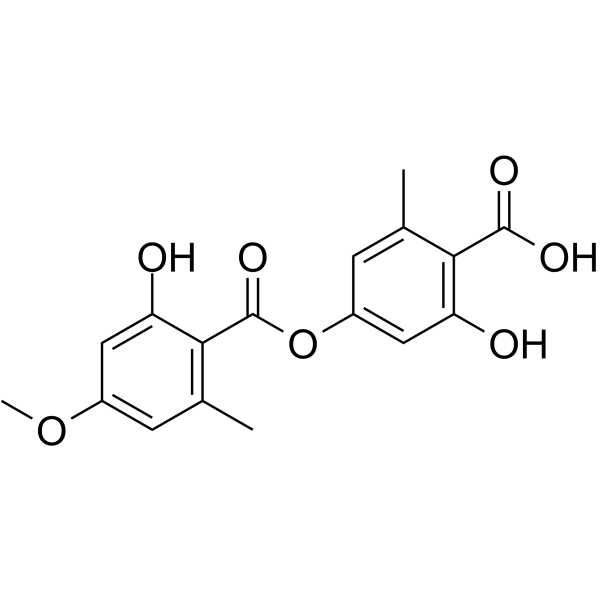
    Evernic Acid is an orally active thioredoxin reductase 1 (TrxR1) inhibitor and antiproliferative agent. Evernic Acid inhibits the proliferation and migration of human breast cancer cells. Evernic Acid blocks the NF-κB pathway by inhibiting p65 nuclear translocation and IκBα phosphorylation, thereby suppressing downstream inflammatory mediators. Evernic Acid acts as an antioxidant, anti-inflammatory agent and neuroprotective agent, protects neurons from cell death, mitochondrial dysfunction and oxidative stress damage, reduces astrocyte activation, and ameliorates dopaminergic neuron loss and neuroinflammation. Evernic Acid inhibits enoyl reductases FabI and FabZ of Plasmodium falciparum. Evernic Acid downregulates the expression of lasB and rhlA genes in Pseudomonas aeruginosa, inhibits quorum sensing and biofilm formation, and exerts antibacterial activity against Gram-positive bacteria, Gram-negative bacteria and fungi. Evernic Acid is applicable to research related to breast cancer, Parkinson's disease, bacterial infections and fungal infections .
    Evernic Acid
  • HY-N7526
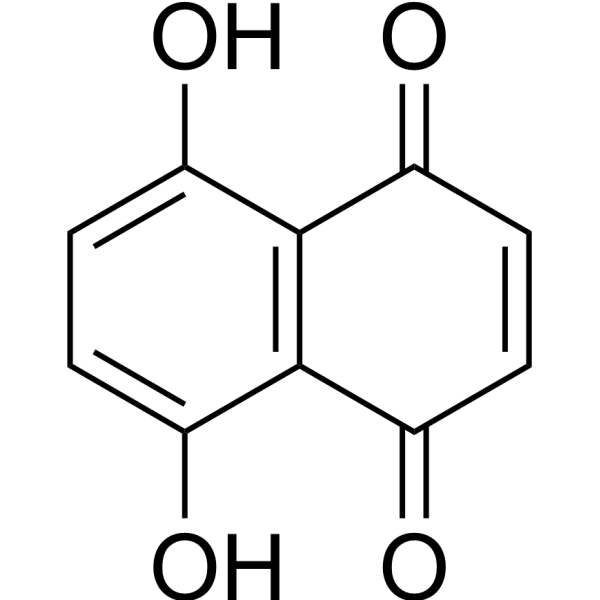
    Naphthazarin
    1 Publications Verification

    DHNQ; 5,8-Dihydroxy-1,4-naphthoquinone

    Apoptosis Autophagy PI3K Akt Neurological Disease Inflammation/Immunology Cancer
    Naphthazarin (DHNQ) is a microtubule depolymerizing agent. Naphthazarin can improve motor function and reduce neuroinflammation in mouse models of Parkinson's disease. Naphthazarin can induce tumor cell apoptosis, autophagy, and cell cycle arrest. Naphthazarin can also induce erythrocyte apoptosis. Naphthazarin can be used in the research of tumors and neurodegenerative diseases .
    Naphthazarin
  • HY-20070

    TNF Receptor Inflammation/Immunology
    BMS-566394 is a selective, orally active TACE (ADAM17) inhibitor. BMS-566394 inhibits LPS-induced TNF-α production in whole blood. BMS-566394 selectively inhibits TACE activity .
    BMS-566394
  • HY-142035
    N-Propargylglycine
    1 Publications Verification

    Mitochondrial Metabolism Neurological Disease Metabolic Disease Inflammation/Immunology Cancer
    N-Propargylglycine is a brain-penetrant and orally active PRODH inhibitor. N-Propargylglycine covalently modifies enzyme-bound FAD and active site lysine, causing enzyme structural distortion, protein decay, and irreversible inhibition of proline and 4-hydroxyproline catabolism. N-Propargylglycine induces UPRmt, upregulates mitochondrial chaperones and YME1L1, enhances mitochondrial proteostasis, blocks astrocytic L-proline consumption, and abolishes L-proline’s ATP-maintaining and viability-protective effects. N-Propargylglycine stimulates neural processes, increases brain proline, hydroxyproline, and sarcosine levels, partially normalizes Huntington’s disease whole brain transcriptomes. N-Propargylglycine reduces hyperoxaluria, prevents calcium oxalate stone formation, reduces kidney tubular damage, and restores weight and survival in Grhpr knockout mice. N-Propargylglycine can be used for the research of breast cancer, neurodegenerative disorders, Huntington’s disease, and primary hyperoxaluria type 2 .
    N-Propargylglycine
  • HY-108615

    GPi 819

    Phosphorylase Cardiovascular Disease Neurological Disease Metabolic Disease
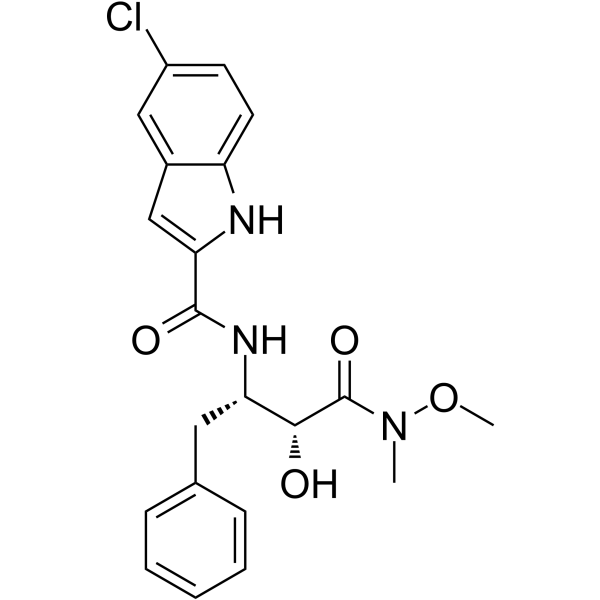
    CP-316819 (GPi 819) is a blood-brain barrier permeable glycogen phosphorylase inhibitor. CP-316819 inhibits hepatic glycogenolysis, safely reduces blood glucose in type 2 diabetes, and rarely induces hypoglycemia. CP-316819 increases brain glycogen reserves, protects neurons, alleviates hypoglycemic brain injury, and inhibits excessive platelet activation, exerting both neuroprotective and vasculoprotective effects. CP-316819 can be used in research related to hypoglycemia, thrombosis, autoimmune inflammatory diseases, and type 2 diabetes .
    CP-316819
  • HY-P10502

    LDLR Infection
    L57 is a low-density lipoprotein receptor-related protein 1 (LRP1)-binding peptide. L57 exhibits high affinity for LRP1, with an EC50 of 45 nM. L57 possesses blood-brain barrier (BBB) permeability and plasma stability. L57 can serve as a carrier for central nervous system drug delivery .
    L57
  • HY-101960A

    AG-183

    EGFR Cancer
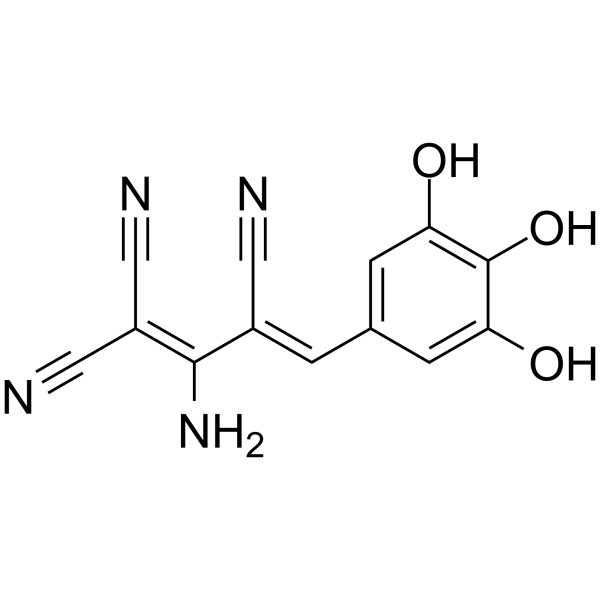
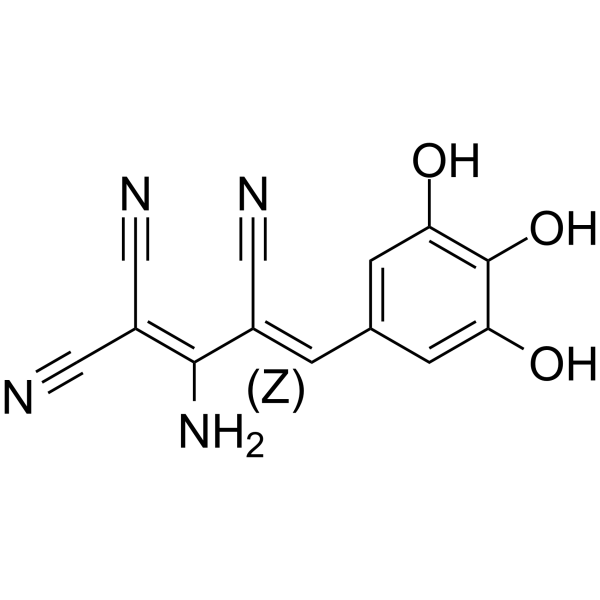
    Tyrphostin A51 is a potent protein tyrosine kinase (PTK) inhibitor. Tyrphostin A51 inhibits the volume-dependent release of [ 3H]taurine in a dose-dependent manner. Tyrphostin A51 markedly reduces cellular tyrosyl phosphorylation level. Tyrphostin A51 inhibits both basal and EGF-induced human bone cell proliferation .
    Tyrphostin A51
  • HY-172705

    Liposome nAChR Neurological Disease
    DSPE-PEG2000-RVG29 is a PEG conjugate composed of DSPE and rabies virus glycoprotein 29 (RVG29). RVG29 specifically binds to nicotinic acetylcholine receptors (nAChR) at the blood-brain barrier (BBB), crosses the BBB, and mediates receptor-dependent transcytosis. DSPE-PEG2000-RVG29 can be used for brain-targeted drug delivery, surface modification of nanocarriers, as well as gene and nucleic acid delivery. DSPE-PEG2000-RVG29 is applicable to research related to hypoxic-ischemic brain injury, Parkinson's disease, and other conditions .
    DSPE-PEG2000-RVG29
  • HY-P10502A

    LDLR Others
    L57 acetate is a Low-density lipoprotein receptor-related protein 1 (LRP1)-binding peptide. L57 acetate exhibits high affinity to LRP1 with Ki of 45 nM. L57 acetate exhibits blood-brain barrier (BBB) permeability and plasma stability. L57 acetate can be utilized as the carrier for CNS drug delivery .
    L57 acetate
  • HY-W049881

    Dopamine Receptor PI3K Monoamine Oxidase Neurological Disease
    9-Methyl-β-carboline is a monoamine oxidase inhibitor and dopaminergic modulator, with an IC50 of 1 μM against human MAO-A and an IC50 of 15.5 μM against human MAO-B. 9-Methyl-β-carboline possesses cognitive enhancement potential and can cross the blood-brain barrier. 9-Methyl-β-carboline increases dopamine levels by inhibiting monoamine oxidase activity and microglial proliferation. 9-Methyl-β-carboline activates PKA/PKC and mitochondrial respiratory chain complex I, promotes neurotrophic factor expression and reduces α-synuclein (α-synuclein) levels, thereby reversing neurotoxin-induced dopaminergic neuron damage. 9-Methyl-β-carboline also regulates the PI3K pathway and exerts an anti-proliferative effect on astrocytes. 9-Methyl-β-carboline is widely used in Parkinson's disease-related studies .
    9-Methyl-β-carboline
  • HY-120717

    mGluR Cytochrome P450 Neurological Disease
    VU6001966 is a brain-penetrant and selective mGlu2 receptor inhibitor. VU6001966 blocks mGlu2 receptor activity, counteracts LY379268 (HY-103558)-mediated blood-brain barrier protection and inflammatory cytokine dampening in microglia under inflammatory conditions. VU6001966 enhances antidepressant effects when combined with Scopolamine (HY-N0296). VU6001966 can be used for the research of major depressive disorder .
    VU6001966
  • HY-115708

    Cer(t18:0/22:0); Ceramide (t18:0/22:0); C22 Phytosphingosine (t18:0/22:0)

    Endogenous Metabolite Metabolic Disease
    C22 Phytoceramide is a sphingolipid that has been found in Moro blood orange (C. sinensis) peels. It has also been found in primary human astrocytes.
    C22 Phytoceramide (t18:0/22:0)
  • HY-115708S

    Isotope-Labeled Compounds Endogenous Metabolite Metabolic Disease
    C22 Phytoceramide-d3 (t18:0/22:0) is a deuterated labeled C22 Phytoceramide (t18:0/22:0) . C22 Phytoceramide is a sphingolipid that has been found in Moro blood orange (C. sinensis) peels. It has also been found in primary human astrocytes.
    C22 Phytoceramide-d3 (t18:0/22:0)
  • HY-101960

    (Z)-AG-183

    EGFR Others
    (Z)-Tyrphostin A51 is the Z configuration of Lanoconazole A51. Tyrphostin A51 is a potent protein tyrosine kinase (PTK) inhibitor. Tyrphostin A51 inhibits the volume-dependent release of [ 3H]taurine in a dose-dependent manner. Tyrphostin A51 markedly reduces cellular tyrosyl phosphorylation level. Tyrphostin A51 inhibits both basal and EGF-induced human bone cell proliferation .
    (Z)-Tyrphostin A51
  • HY-175340

    Potassium Channel TSPO Neurological Disease
    Kv7.2/Kv7.3 activator-3 (GRT-X) is an orally active Kv7.2/Kv7.3 and TSPO activator. Kv7.2/Kv7.3 activator-3 activates Kv7.2/Kv7.3, Kv7.4, and Kv7.5 with EC50 values of 0.37, 2.06, and 0.75 μM, respectively, and binds to TSPO with Ki values of 0.07 μM (rat membrane) and 4.60 μM (human U-118 MG cells). Kv7.2/Kv7.3 activator-3 prevents motor neuron degeneration in mice and humans conditioned by ALS/FTD astrocytes. Kv7.2/Kv7.3 activator-3 stimulates dorsal root ganglion axonal growth through TSPO and Kv7.2/3 activation. Kv7.2/Kv7.3 activator-3 has anti-epileptic effects in epileptic seizure models. Kv7.2/Kv7.3 activator-3 reduces pain hypersensitivity in patients with diabetic neuropathy, promotes neuronal survival and regeneration after cervical neuropathy in rats, and accelerates the recovery of normal function of sensory and motor neurons .
    Kv7.2/Kv7.3 activator-3
  • HY-162682

    5-HT Receptor Neurological Disease
    5-HT6R antagonist 4 (compound 30) is a neutral antagonist of 5-HT6R, with the Ki of 1 nM .
    5-HT6R antagonist 4
  • HY-172586

    GSK-3 PKA Neurological Disease Cancer
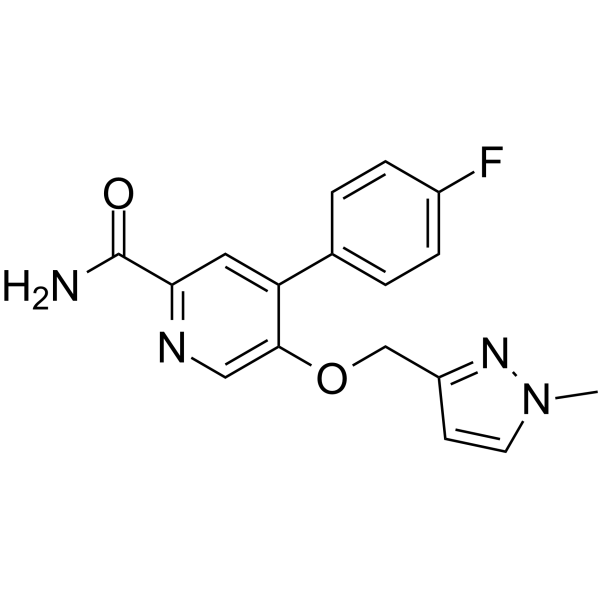
    GSK-3α/β-IN-1 is GSK-3α/β inhibitor with IC50 s of 0.265 μM and 0.255 μM for GSK-3α and GSK-3β, respectively. GSK-3α/β-IN-1 also inhibits PKA with an IC50 of 0.188 μM. GSK-3α/β-IN-1 potently inhibits cell viability of three Glioblastoma (GBM) cell lines (IC50 : 3-6 μM, 72 h) with no toxicity to human astrocytes and good metabolic stability. GSK-3α/β-IN-1 has potential CNS activity in all-human blood-brain barrier (BBB) model of GBM .
    GSK-3α/β-IN-1
  • HY-120267

    Casein Kinase Cardiovascular Disease
    TID43 is a CK2 inhibitor, with an IC50 of 0.3 μM. TID43 can be used for anti-angiogenic research .
    TID43
  • HY-108654

    P2Y Receptor Apoptosis Drug Derivative Phospholipase NO Synthase Neurological Disease Inflammation/Immunology Endocrinology
    PSB 0474 (3-phenacyl-UDP) is a UDP (HY-113359) analog and selective P2Y6 receptor agonist, with an EC50 value of 70 nM for the hP2Y6 receptor. PSB 0474 activates Phospholipase C-coupled receptors to increase intracellular inositol phosphate levels. PSB 0474 enhances NO release by upregulating inducible iNOS and induces Apoptosis. PSB 0474 increases micturition frequency in urine of anesthetized rats, without altering bladder contraction amplitude/duration or causing urothelial damage. PSB 0474 can be used in studies related to chronic brain inflammation .
    PSB 0474
  • HY-180916

    Carbonic Anhydrase Reactive Oxygen Species (ROS) NOD-like Receptor (NLR) Apoptosis Neurological Disease
    CAII-IN-11 (Compound A1) is a dual-target compound that contains a hCA II inhibitor (IC₅₀ = 2 nM) portion and a NO donor portion. CAII-IN-11 also has inhibitory activity against hCA IX, hCA XII, and hCA I, with IC50 values of 6, 3, and 152 nM respectively. CAII-IN-11 significantly increases the intracellular cGMP level in human trabecular meshwork cells. CAII-IN-11 reduces the apoptosis of retinal ganglion cells by reducing oxidative stress (ROS levels), inhibiting astrocytes and the NLRP3 inflammasome activation. CAII-IN-11 has hypotensive activity in rabbit models and can be used for the study of glaucoma .
    CAII-IN-11
  • HY-183586

    Glycosidase NF-κB Interleukin Related Neurological Disease
    G721-0377 is a CHI3L1 modulator with a human Kd value of 45 μM. G721-0377 binds to CHI3L1 and modulates downstream signaling pathways. G721-0377 suppresses CHI3L1-induced NF-κB activation, decreases secretion of CHI3L1 and IL-6. G721-0377 can be used for the research of Alzheimer's disease .
    G721-0377
  • HY-D3225

    Fluorescent Dye Neurological Disease
    MD-B is a •OH Fluorescent probe with blood-brain barrier permeability. MD-B undergoes single-electron oxidation by hydroxyl radicals (•OH), which triggers fluorescence enhancement and enables in-situ imaging of •OH. MD-B allows imaging analysis of hydroxyl radicals (•OH) in the mouse brain, revealing a positive correlation between elevated •OH levels and the severity of depressive phenotypes. MD-B can be used in depression-related research .
    MD-B

Inquiry Online

Your information is safe with us. * Required Fields.

Salutation


Country or Region *

Applicant Name *


Organization Name *

Department *


Email Address *


Product Name *

Cat. No.


Requested quantity *

Phone Number *


Remarks

Inquiry Online

Inquiry Information

Product Name:
Cat. No.:
Quantity:
MCE Japan Authorized Agent:

