1. Search Result
Search Result
Results for "

immunosuppressive+effects

" in MedChemExpress (MCE) Product Catalog:

34

Inhibitors & Agonists

4

Inhibitory Antibodies

7

Natural
Products

3

Isotope-Labeled Compounds

2

Oligonucleotides

Cat. No. Product Name Target Research Areas Chemical Structure
  • HY-B0214
    Prednisone
    Maximum Cited Publications
    17 Publications Verification

    Dehydrocortisone

    Glucocorticoid Receptor Apoptosis Cardiovascular Disease Inflammation/Immunology Endocrinology Cancer
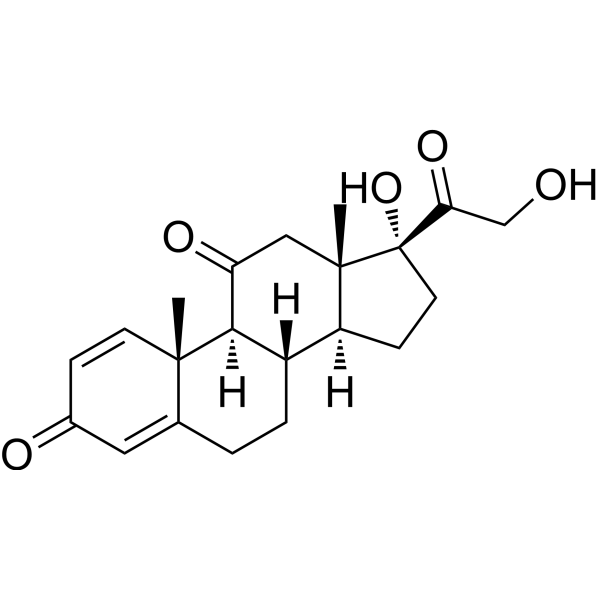
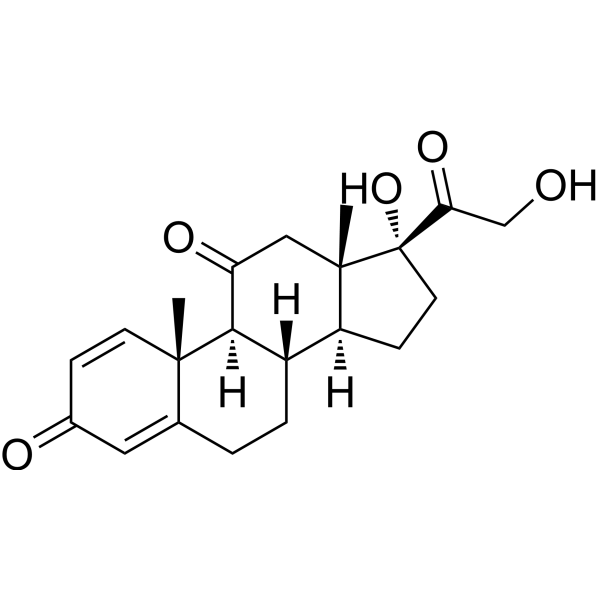
    Prednisone (Adasone) is a corticosteroid agent with anti-inflammatory and immunosuppressive effects that can be used to study diseases related to systemic lupus erythematosus .
    Prednisone
  • HY-150751
    ODN TTAGGG
    3 Publications Verification

    ODN A151

    Toll-like Receptor (TLR) AIM2 Pyroptosis Interleukin Related Inflammation/Immunology
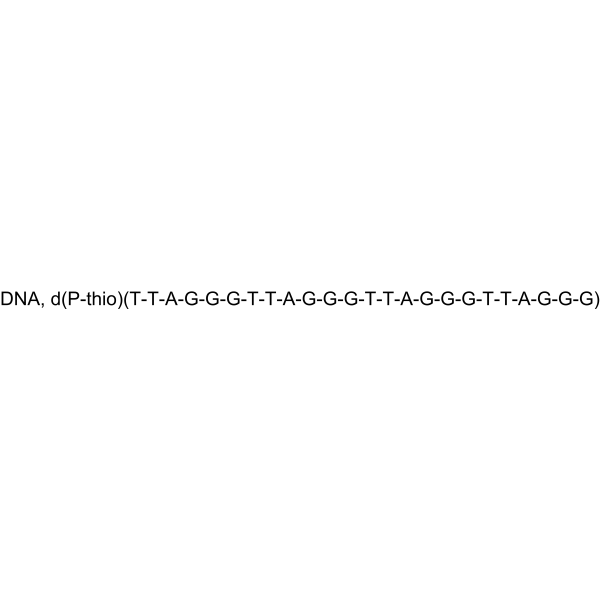
    ODN TTAGGG (ODN A151), an inhibitory oligonucleotide (ODN), is a TLR9, AIM2, and cGAS antagonist. ODN TTAGGG inhibits AIM2 inflammasome activation and cGAS activation through competition with DNA. ODN TTAGGG blocks AIM2-mediated Pyroptosis and inhibits IL-18 production. ODN TTAGGG has immunosuppressive effects and can be used in research on related autoimmune diseases such as lupus erythematosus . ODN TTAGGG sequence: 5'-T-T-A-G-G-G-T-T-A-G-G-G-T-T-A-G-G-G-T-T-A-G-G-G-3'.
    ODN TTAGGG
  • HY-P99117
    Cadonilimab
    1 Publications Verification

    AK104

    PD-1/PD-L1 CTLA-4 Inflammation/Immunology Cancer
    Cadonilimab (AK104) is a humanized tetravalent IgG1 bispecific antibody targeting PD1/CTLA4. Cadonilimab blocks both PD-1 and CTLA-4 pathways, thereby relieving their corresponding immunosuppressive effects and reversing tumor specific T cell exhaustion. Cadonilimab significantly downregulates Fc-mediated effector functions, including antibody-dependent cell-mediated cytotoxicity (ADCC), antibody-dependent cellular phagocytosis (ADCP), complement dependent cytotoxicity (CDC). Cadonilimab can be used for research of metastatic cervical cancer, as well as other malignancies such as gastric cancer, GEJ adenocarcinoma and non-small cell lung cancer (NSCLC) .
    Cadonilimab
  • HY-N0423
    Sophoricoside
    4 Publications Verification

    Others Inflammation/Immunology Cancer
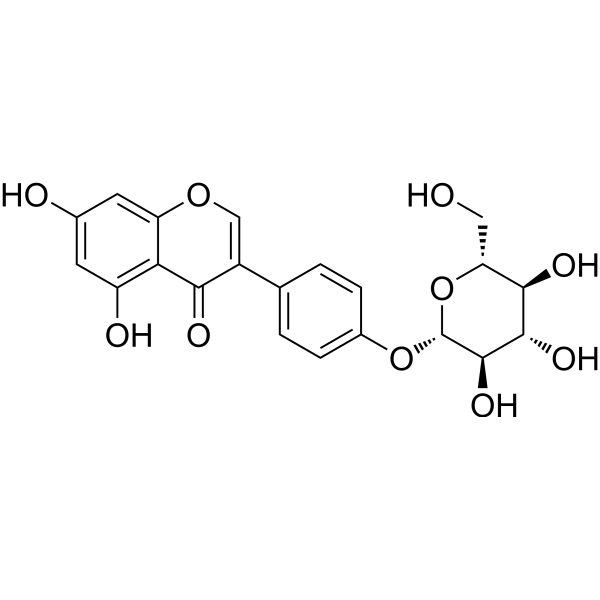
    Sophoricoside is an isoflavone glycoside isolated from Sophora japonica and has anti-inflammatory, anti-cancer and immunosuppressive effects.
    Sophoricoside
  • HY-124586
    Streptonigrin
    1 Publications Verification

    Bruneomycin

    Antibiotic Protein Arginine Deiminase E1/E2/E3 Enzyme HIF/HIF Prolyl-Hydroxylase MDM-2/p53 Apoptosis Infection Inflammation/Immunology Cancer
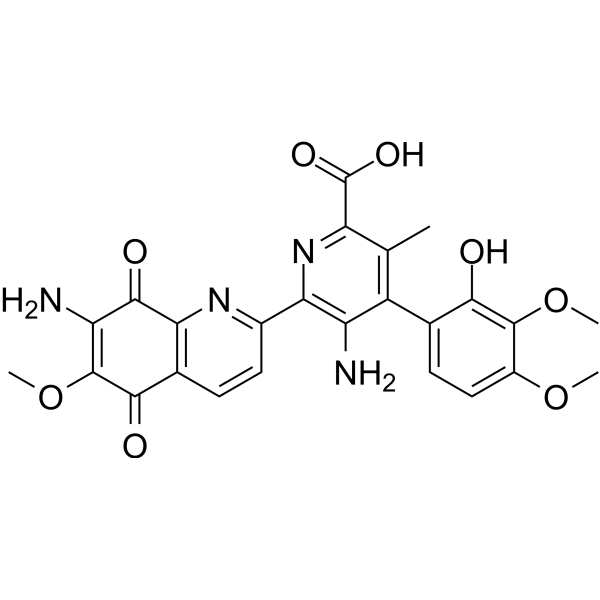
    Streptonigrin (Bruneomycin) is an orally active antibiotic and pan-PAD inhibitor, inhibiting PAD1, PAD2, PAD3 and PAD4 with IC50 of 48.3 μM, 26.1 μM, 0.43 μM and 2.5 μM, respectively. Streptonigrin inhibits SENP1 (IC50 of 0.518 μM) and reduces HIF1α. Streptonigrin increases p53 and Apoptosis. Streptonigrin shows antiviral activity against Rauscher murine leukemia virus. Streptonigrin has immunosuppressive effects. Streptonigrin has antitumor activity against osteosarcoma .
    Streptonigrin
  • HY-N0447
    8-Gingerol
    5 Publications Verification

    TRP Channel Bacterial Apoptosis Autophagy STAT PERK EGFR PI3K Akt mTOR Caspase MMP Infection Cardiovascular Disease Inflammation/Immunology Cancer
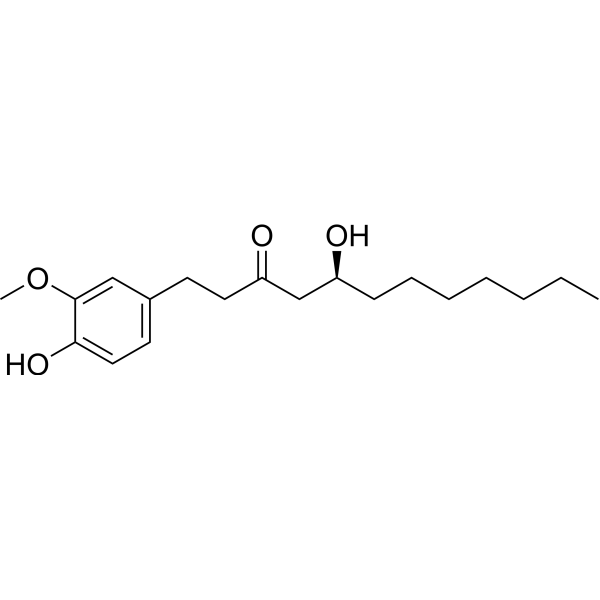
    8-Gingerol can be found in the rhizome of ginger (Z. officinale) and has oral bioactivity. It activates TRPV1, with an EC50 value of 5.0 µM. 8-Gingerol inhibits COX-2 and also suppresses the growth of H. pylori in vitro. Additionally, 8-Gingerol exhibits anticancer, antioxidant, and anti-inflammatory properties by inhibiting the epidermal growth factor receptor (EGFR) and modulating its downstream STAT3/ERK pathway to suppress the proliferation, migration, and invasion of colorectal cancer cells. 8-Gingerol also exerts immunosuppressive effects by inhibiting oxidative stress, inducing cell cycle arrest, promoting apoptosis, and regulating autophagy. Furthermore, 8-Gingerol has cardioprotective effects. 8-Gingerol is promising for research in the fields of cancer, infection, immunosuppression, and cardiovascular diseases.
    8-Gingerol
  • HY-P99315

    BG 9588; Anti-Human CD40L Recombinant Antibody; Hu5c8

    TNF Receptor Inflammation/Immunology
    Ruplizumab (BG 9588) is a humanized anti-CD40L IgG1κ monoclonal antibody. By binding to CD40L, Ruplizumab blocks its interaction with the CD40 receptor, inhibits T-B cell costimulatory signals, and mediates the depletion of activated T cells via the Fc segment. Ruplizumab has immunosuppressive effects. Ruplizumab can be used in the study of systemic lupus erythematosus, organ transplant rejection, and autoimmune diseases. Recommend Isotype Controls: Human IgG1 kappa, Isotype Control (HY-P99001) .
    Ruplizumab
  • HY-17570
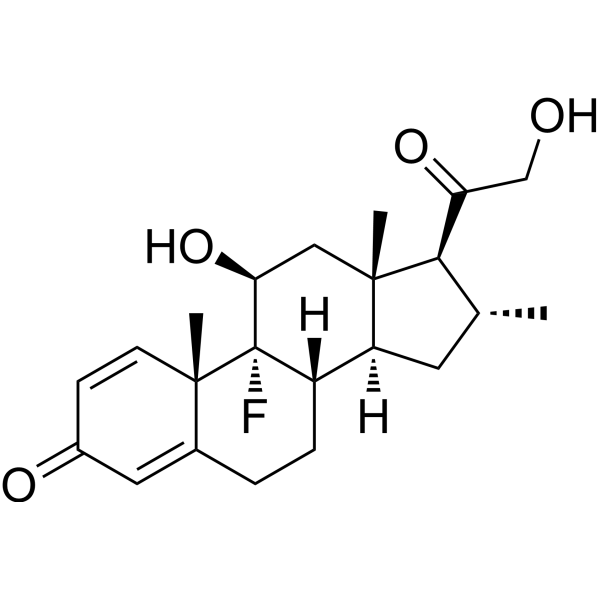
    Desoximetasone
    1 Publications Verification

    Glucocorticoid Receptor Interleukin Related Cytochrome P450 Inflammation/Immunology
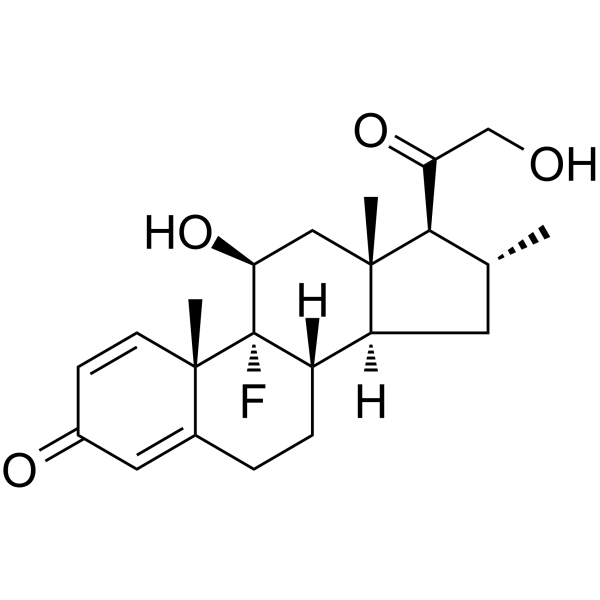
    Desoximetasone is a corticosteroid and a substrate of cytochrome P450 3A4. Desoximetasone has anti-inflammatory, anti-allergic, and immunosuppressive effects. Desoximetasone can be used in the research of various skin diseases, such as skin allergies, atopic dermatitis, and psoriasis .
    Desoximetasone
  • HY-119499

    6-Mercaptoguanosine

    Nucleoside Antimetabolite/Analog Cancer
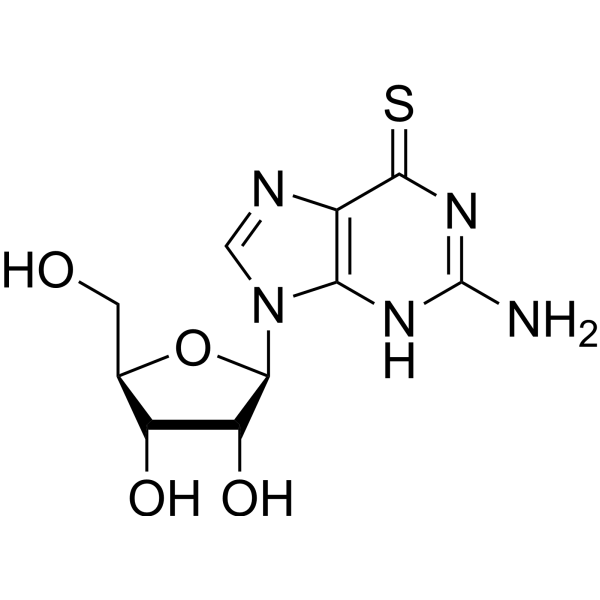
    6-Thioguanosine (6-Mercaptoguanosine), an active nucleoside, is an Azathioprine metabolite. 6-Thioguanosine has immunosuppressive effects .
    6-Thioguanosine
  • HY-B0214R
    Prednisone (Standard)
    Maximum Cited Publications
    17 Publications Verification

    Dehydrocortisone (Standard)

    Reference Standards Glucocorticoid Receptor Apoptosis Inflammation/Immunology Endocrinology Cancer
    Prednisone (Standard) is the analytical standard of Prednisone. This product is intended for research and analytical applications. Prednisone (Adasone) is a corticosteroid agent with anti-inflammatory and immunosuppressive effects that can be used to study diseases related to systemic lupus erythematosus .
    Prednisone (Standard)
  • HY-123794

    Phosphatase Cancer
    MP07-66, a FTY720 analogue, is devoid of immunosuppressive effects and shows promising antitumor effects in chronic lymphocytic leukemia by disruption of the SET-PP2A complex leading to PP2A reactivation .
    MP07-66
  • HY-14370

    LPL Receptor Others Inflammation/Immunology
    LX2931 is an inhibitor of Sphingosine 1-Phosphate Lyase (S1PL). LX2931 works by increasing levels of S1P inside and outside the cell. The decrease in S1PL activity leads to a significant increase in S1P content in tissues, especially in lymphoid tissues which may lead to a restricted exodus of lymphocytes from secondary immune tissues, resulting in lymphocytopenic and immunosuppressive effects in the peripheral circulation. LX2931 can be used in research for the study of autoimmune diseases, especially rheumatoid arthritis .
    LX2931
  • HY-168376

    9(10)-Nitrated oleic acid

    PPAR ERK Akt NO Synthase Metabolic Disease Inflammation/Immunology
    9 (10)-Nitrooleate (9(10)-Nitrated oleic acid) is an endogenous lipid signaling mediator with vasoprotective effects. 9 (10)-Nitrooleate enhances enzymatic activity and improves nitric oxide bioavailability by inducing phosphorylation of Akt and ERK1/2, regulating the multi-site phosphorylation status of eNOS and optimizing its interaction with Hsp90. 9 (10)-Nitrooleate also activates PPARα, PPARδ and PPARγ receptors, thereby regulating adipogenesis, glucose uptake and inflammation-related gene expression, and exhibits immunosuppressive effects by inhibiting neutrophil migration and cytokine secretion. 9 (10)-Nitrooleate is widely used in studies of sepsis and related inflammatory diseases .

    9(10)-Nitrooleate
  • HY-P99545

    r-anti-D

    Biochemical Assay Reagents Others
    Trinbelimab (r-anti-D) is a recombinant anti-D immunoglobulin that targets the RhD antigen. Trinbelimab exerts immunosuppressive effects to block maternal-fetal RhD alloimmunization. Trinbelimab can be used for the study of maternal-fetal immunity associated with RhD incompatibility .
    Trinbelimab
  • HY-B0214S2

    Dehydrocortisone-d4

    Apoptosis Glucocorticoid Receptor Isotope-Labeled Compounds Inflammation/Immunology Endocrinology Cancer
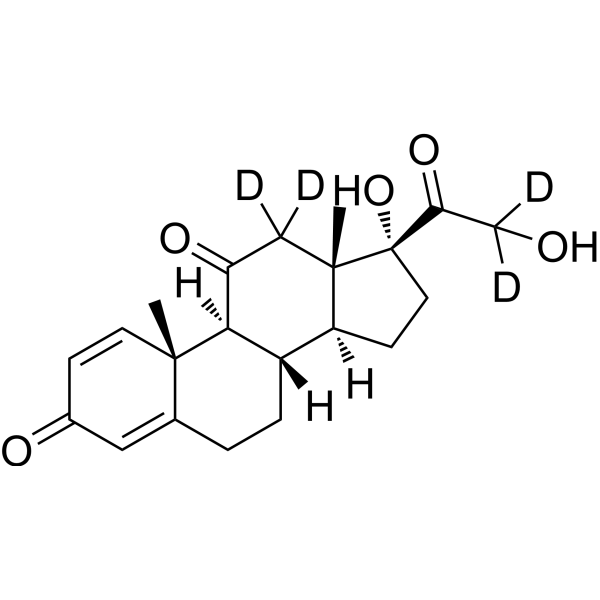
    Prednisone-d4 is deuterated labeled Prednisone (HY-B0214). Prednisone (Adasone) is a corticosteroid agent with anti-inflammatory and immunosuppressive effects that can be used to study diseases related to systemic lupus erythematosus .
    Prednisone-d4
  • HY-147590

    CD73 Inflammation/Immunology
    CD73-IN-9 (compound 2) is a potent inhibitor of CD73. CD73 can catalyze the production of adenosine from extracellular 5'-phosphate adenosine (5'-AMP), and adenosine can induce immunosuppressive effects and promote tumor proliferation and/or metastasis. CD73-IN-9 can be used for the study of tumor-related diseases .
    CD73-IN-9
  • HY-N6857C

    PI3K Itk Phospholipase Inflammation/Immunology
    (±)-Armepavine hydrochloride is a compound that has demonstrated immunosuppressive effects on T lymphocytes and in lupus nephritic mice.
    (±)-Armepavine hydrochloride
  • HY-N0423R

    Reference Standards Others Inflammation/Immunology Cancer
    Sophoricoside (Standard) is the analytical standard of Sophoricoside. This product is intended for research and analytical applications. Sophoricoside is an isoflavone glycoside isolated from Sophora japonica and has anti-inflammatory, anti-cancer and immunosuppressive effects.
    Sophoricoside (Standard)
  • HY-121397

    ROS Kinase Inflammation/Immunology
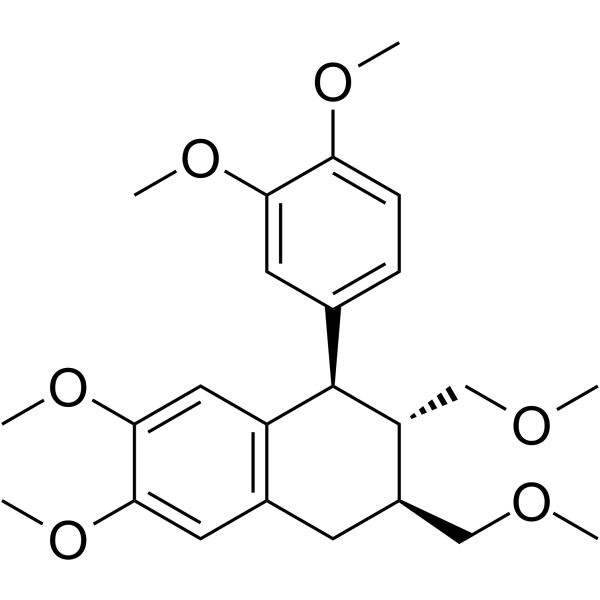
    Phyltetralin (Compound 10) is a natural product than can be isolated from the hexane-ethyl acetate extract of Phyllanthus amarus leaves. Phyltetralin possesses immunosuppressive effects on different lineages of innate immune system .
    Phyltetralin
  • HY-B0214S1

    Dehydrocortisone-d7

    Isotope-Labeled Compounds Apoptosis Glucocorticoid Receptor Cardiovascular Disease Inflammation/Immunology Endocrinology Cancer
    Prednisone-d7 (Dehydrocortisone-d7) is deuterium labeled Prednisone. Prednisone (Adasone) is a corticosteroid agent with anti-inflammatory and immunosuppressive effects that can be used to study diseases related to systemic lupus erythematosus .
    Prednisone-d7
  • HY-119499R

    6-Mercaptoguanosine (Standard)

    Nucleoside Antimetabolite/Analog Reference Standards Cancer
    6-Thioguanosine (Standard) is the analytical standard of 6-Thioguanosine. This product is intended for research and analytical applications. 6-Thioguanosine (6-Mercaptoguanosine), an active nucleoside, is an Azathioprine metabolite. 6-Thioguanosine has immunosuppressive effects .
    6-Thioguanosine (Standard)
  • HY-113271

    Endogenous Metabolite Interleukin Related IFNAR Inflammation/Immunology
    5-Androstenetriol is a systemic radiation protector that can boost the host's immunity, leading to increased resistance to infections. 5-Androstenetriol can raise levels of IL-2, IL-3, and IFN, while countering the immunosuppressive effects of Hydrocortisone (HY-N0583) .
    5-Androstenetriol
  • HY-17570R
    Desoximetasone (Standard)
    1 Publications Verification

    Glucocorticoid Receptor Reference Standards Interleukin Related Cytochrome P450 Inflammation/Immunology
    Desoximetasone (Standard) is the analytical standard of Desoximetasone (HY-17570). This product is intended for research and analytical applications. Desoximetasone is a corticosteroid and a substrate of cytochrome P450 3A4. Desoximetasone has anti-inflammatory, anti-allergic, and immunosuppressive effects. Desoximetasone can be used in the research of various skin diseases, such as skin allergies, atopic dermatitis, and psoriasis .
    Desoximetasone (Standard)
  • HY-B0214S3

    Dehydrocortisone-13C2,d2

    Isotope-Labeled Compounds Glucocorticoid Receptor Apoptosis Cardiovascular Disease Inflammation/Immunology Endocrinology Cancer
    Prednisone- 13C2,d2 (Dehydrocortisone- 13C2,d2) is 13C labeled Prednisone. Prednisone (Adasone) is a corticosteroid agent with anti-inflammatory and immunosuppressive effects that can be used to study diseases related to systemic lupus erythematosus .
    Prednisone-13C2,d2
  • HY-N6857R

    Reference Standards NF-κB Inflammation/Immunology
    Armepavine (Standard) is the analytical standard of Armepavine. This product is intended for research and analytical applications. Armepavine, an active compound from Nelumbo nucifera, exerts not only anti-inflammatory effects on human peripheral blood mononuclear cells, but also immunosuppressive effects on T lymphocytes and on lupus nephritic mice. Armepavine inhibits TNF-α-induced MAPK and NF-κB signaling cascades .
    Armepavine (Standard)
  • HY-147592

    CD73 Inflammation/Immunology Cancer
    CD73-IN-11 (compound 24) is a potent inhibitor of CD73. CD73 can catalyze the production of adenosine from extracellular 5'-phosphate adenosine (5'-AMP), and adenosine can induce immunosuppressive effects and promote tumor proliferation and/or metastasis. CD73-IN-11 can be used for the study of tumor-related diseases .
    CD73-IN-11
  • HY-147591

    CD73 Inflammation/Immunology Cancer
    CD73-IN-10 (compound 4) is a potent inhibitor of CD73. CD73 can catalyze the production of adenosine from extracellular 5'-phosphate adenosine (5'-AMP), and adenosine can induce immunosuppressive effects and promote tumor proliferation and/or metastasis. CD73-IN-10 can be used for the study of tumor-related diseases .
    CD73-IN-10
  • HY-147589

    CD73 Cancer
    CD73-IN-8 (compound 57) is a potent inhibitor of CD73. CD73 can catalyze the production of adenosine from extracellular 5'-phosphate adenosine (5'-AMP), and adenosine can induce immunosuppressive effects and promote tumor proliferation and/or metastasis. CD73-IN-8 can be used for the study of tumor-related diseases .
    CD73-IN-8
  • HY-147588

    CD73 Cancer
    CD73-IN-7 (compound 13) is a potent inhibitor of CD73. CD73 can catalyze the production of adenosine from extracellular 5'-phosphate adenosine (5'-AMP), and adenosine can induce immunosuppressive effects and promote tumor proliferation and/or metastasis. CD73-IN-7 can be used for the study of tumor-related diseases .
    CD73-IN-7
  • HY-N12905

    Antibiotic Bacterial Infection
    Celastramycin A isomer is an isomer of Celastramycin A (HY-122292), an antibiotic against Gram-negative bacteria and Mycobacterium tuberculosis with an MIC of 0.05-3.1 μg/mL. Celastramycin A exerts immunosuppressive effects in Drosophila ex vivo via the immunodeficiency pathway (IC50 of 8 ng/mL), inhibits human innate immune responses via the TNF-α pathway, and inhibits IL-8 production in HUEVC with an IC50 of 60 ng/mL .
    Celastramycin A (isomer)
  • HY-175195

    Adenosine Receptor Interleukin Related IFNAR Cytochrome P450 Inflammation/Immunology Cancer
    Adenosine receptor antagonist 6 is an orally active and selective A2A adenosine receptor (A2AAR) antagonist, with a Ki of 19.18 nM. Adenosine receptor antagonist 6 inhibits 5’-N-ethylcarboxamide adenosine (NECA) (HY-103173)-mediated cAMP production (IC50 = 0.089 μM) and immunosuppression, while promoting IL-2 and IFN-γ secretion. Adenosine receptor antagonist 6 abolishes the immunosuppressive effects of adenosine on T-cell activation and cytokine release. Adenosine receptor antagonist 6 inhibits tumor growth in a CT26/MC38 xenograft model. Adenosine receptor antagonist 6 can be used for the study of colon cancer .
    Adenosine receptor antagonist 6
  • HY-175547

    PROTACs MAP4K ERK Interleukin Related IFNAR Inflammation/Immunology Cancer
    PROTAC HPK1 Degrader-5 is a potent and orally active HPK1 PROTAC degrader (DC50 = 5.0 nM; Dmax ≥ 99%). PROTAC HPK1 Degrader-5 significantly inhibits SLP76 phosphorylation and enhanced ERK pathway activation through degrading HPK1, thereby stimulating IL-2 and IFN-γ release. PROTAC HPK1 Degrader-5 exhibits the ability to overcome the immunosuppressive effects imposed by PGE2, NECA or TGF-β. PROTAC HPK1 Degrader-5 alone efficaciously inhibits tumor growth in an MC38 syngeneic mouse model. PROTAC HPK1 Degrader-5 can be used for the study of tumor (such as colorectal cancer) immunotherapy (Pink: Target protein ligand (HY-175549); Blue: E3 ligand (HY-W023573); Black: Linker; E3 ligand + Linker (HY-175551)) .
    PROTAC HPK1 Degrader-5
  • HY-W517092

    1,2,3,4,7,8,9-HpCDF

    Aryl Hydrocarbon Receptor Cytochrome P450 Metabolic Disease Inflammation/Immunology
    1,2,3,4,7,8,9-Heptachlorodibenzofuran (1,2,3,4,7,8,9-HpCDF) is a compound that induces the expression of CYP1A1 and CYP1B1 genes in human peripheral blood lymphocytes, while also promoting the expression of the aryl hydrocarbon receptor repressor (AhRR). 1,2,3,4,7,8,9-Heptachlorodibenzofuran can increase ethoxyresorufin-O-deethylase (EROD) activity in isolated human peripheral blood lymphocytes in a concentration-dependent manner, which serves as a marker of CYP1A1 activity. Furthermore, 1,2,3,4,7,8,9-Heptachlorodibenzofuran exhibits immunosuppressive effects by reducing the number of splenic plaque-forming cells in mice and increasing aryl hydrocarbon hydroxylase (AHH) activity in liver microsomes of mice injected with sheep red blood cells. 1,2,3,4,7,8,9-Heptachlorodibenzofuran can be used in research in the fields of immunology, metabolic diseases, and environmental toxicology .
    1,2,3,4,7,8,9-Heptachlorodibenzofuran
  • HY-183578

    LPL Receptor Inflammation/Immunology
    TYY-31 is an orally active, selective S1PR1 agonist with an EC50 of 1.13 pM. TYY-31 promotes the phosphorylation of ERK1/2. TYY-31 exerts anti-inflammatory and immunosuppressive effects, ameliorates DSS-induced colitis in mice, and reduces peripheral blood lymphocyte counts in mice in a dose-dependent manner. TYY-31 can be used for the research of ulcerative colitis .
    TYY-31

Inquiry Online

Your information is safe with us. * Required Fields.

Salutation


Country or Region *

Applicant Name *


Organization Name *

Department *


Email Address *


Product Name *

Cat. No.


Requested quantity *

Phone Number *


Remarks

Inquiry Online

Inquiry Information

Product Name:
Cat. No.:
Quantity:
MCE Japan Authorized Agent: