



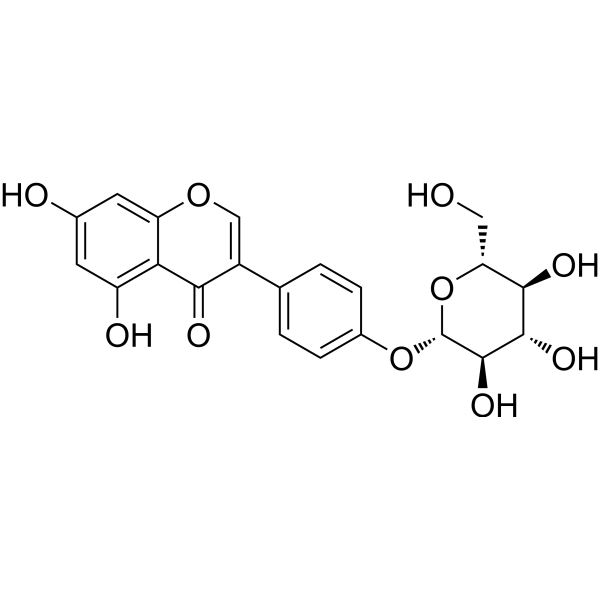
Sophoricoside
Based on 4 publication(s) in Google Scholar
Sophoricoside is an isoflavone glycoside isolated from Sophora japonica and has anti-inflammatory, anti-cancer and immunosuppressive effects.
Para uso exclusivo en investigación. No vendemos a pacientes.
- Pureza : 99.57%
- No. CAS: 152-95-4
- Fòrmula: C21H20O10
- Peso molecular:432.38
-
Almacenamiento:Powder -20°C, 3 years , 4°C, 2 years ; In solvent -80°C, 2 years , -20°C, 1 year

To place orders, for customer services and technical support, please contact: MedChemExpress USA
Tel: 609-228-6898 E-mail: [email protected] [email protected]


-
 Actividad biológica
-
Chemical Information
-
Solvente y solubilidad
- Protocolo
- Pureza y Documentación
- Referencias
-
 Help & FAQs


-
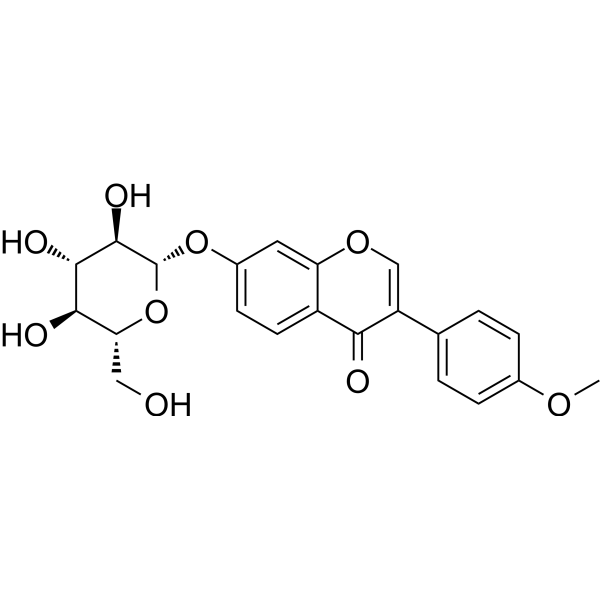
HY-N0270
OnoninIsoflavonoid -
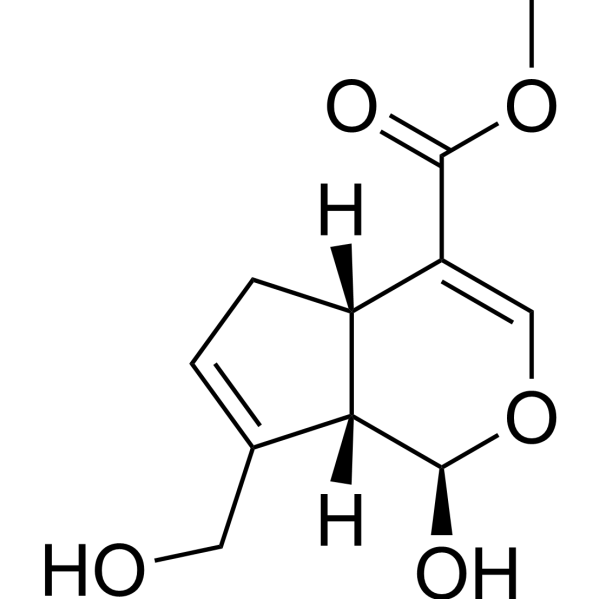
HY-17389
GenipinCrosslinking Reagent -
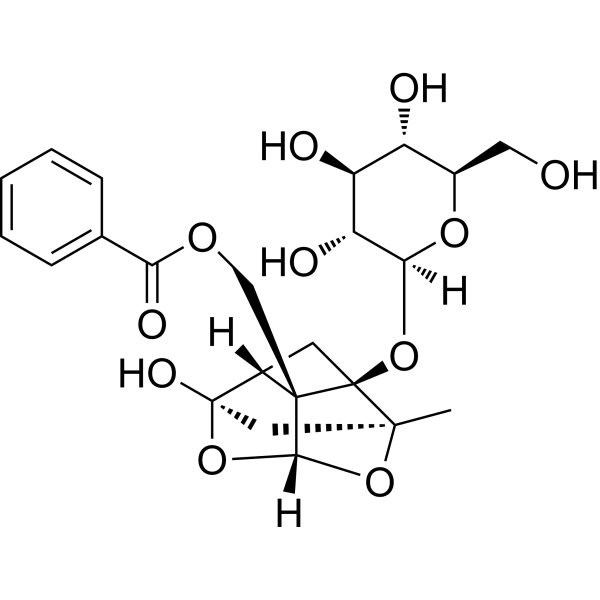
HY-N0293
PaeoniflorinHSP Activator -
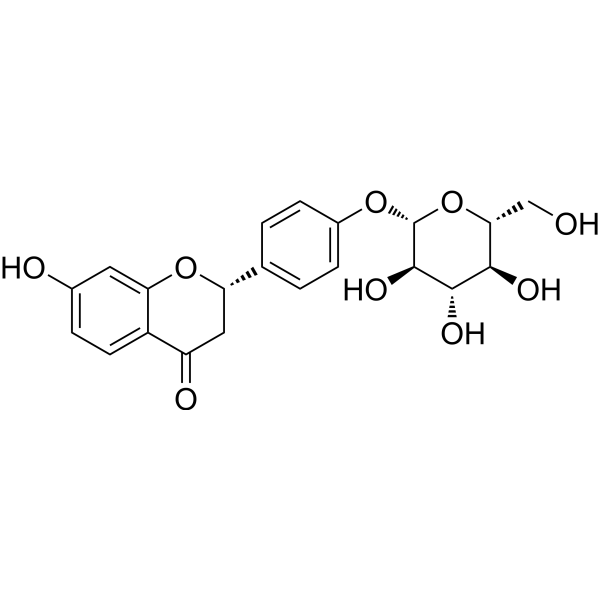
HY-N0376
LiquiritinAKR1C1 Inhibitor -
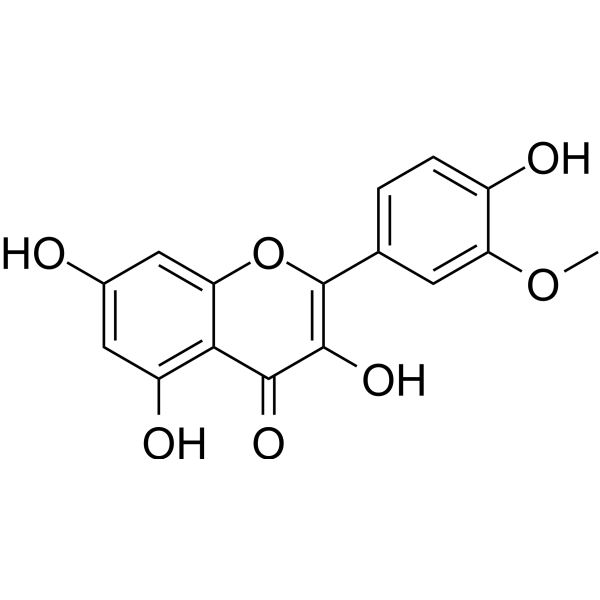
HY-N0776
IsorhamnetinEndogenous Metabolite -
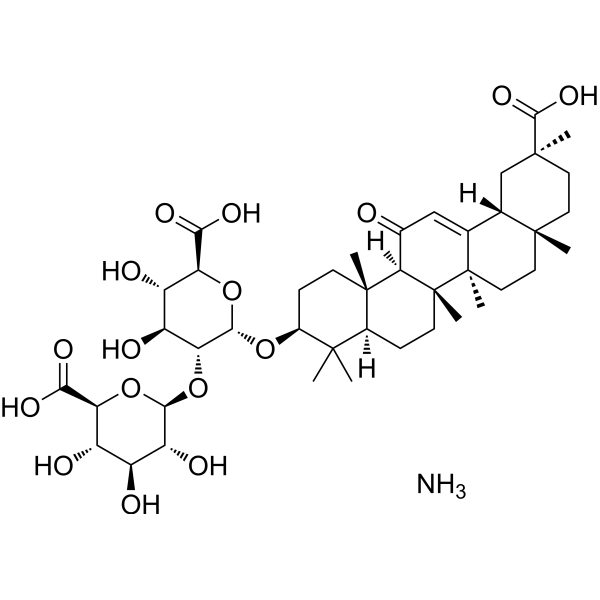
HY-76225
Ammonium glycyrrhizinateAnti-tumor Agent -
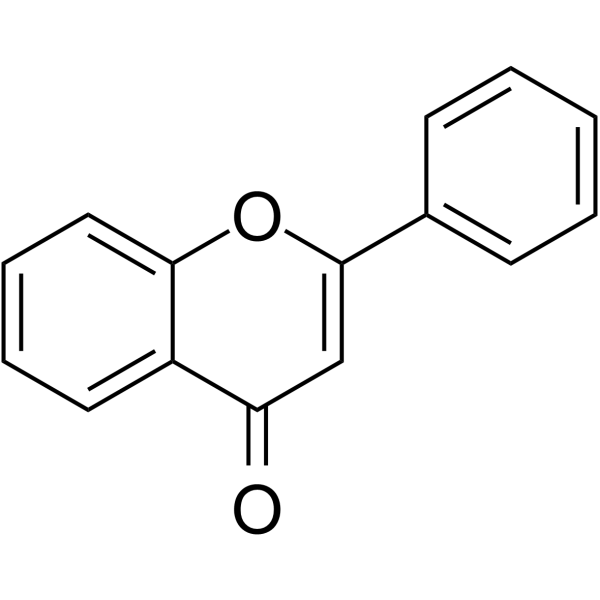
HY-N2424
FlavoneApoptosis Inducer -
HY-N0014
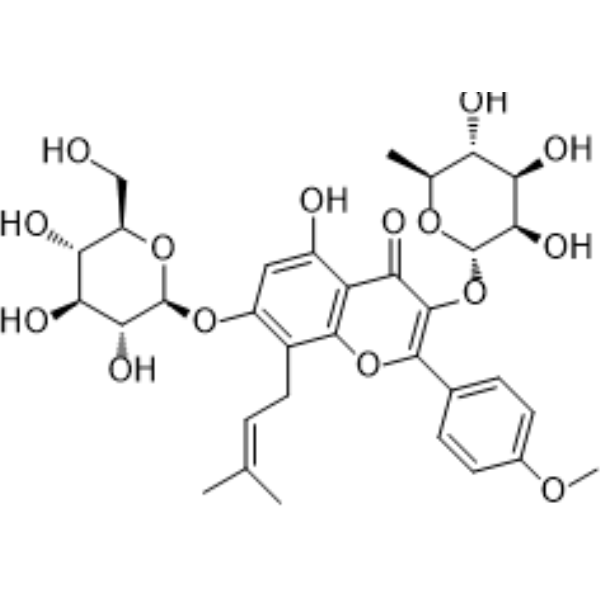
IcariinPPAR Activator -
HY-15449
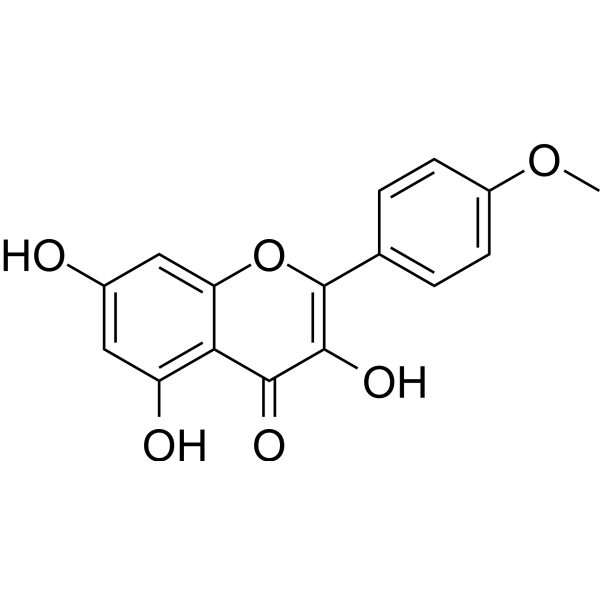
KaempferideAnti-cancer/Anti-inflammatory/Antioxidant -

HY-17389R
Genipin (Standard)Crosslinking Reagent -

HY-N0293R
Paeoniflorin (Standard)HSP Activator -

HY-N0423R
Sophoricoside (Standard)Isoflavone Glycoside
Publications Citing Use of MedChemExpress (MCE) Sophoricoside
More Customer Validation & Images

-
WB

-
Cell Proliferation/Viability Assay

-
Cell Imaging/Staining

-
Cell Migration/Invasion Assay

-
In Vivo Efficacy Study


Actividad biológica
Descripciòn
In Vitro
Sophoricoside is an isoflavone glycoside isolated from Sophora japonica and has anti-inflammatory, anti-cancer and immunosuppressive effects. The results show that Sophoricoside (50 μM) significantly inhibits the PMACI-induced histamine release. The inhibition rate reaches up to 30.24%. The maximal rates of TNF-α, IL-8 and IL-6 inhibition by Sophoricoside (50 μM) are approximately 31.42%, 43.43% and 34.24%, respectively. The rates of the levels of Rel/p65 inhibition in nuclear by Sophoricoside (50 μM) is approximately 50.14%. Results show that the enhanced caspase-1 activity induced by PMACI is significantly reduced by Sophoricoside in a dose-dependent manner[1].
MedChemExpress (MCE) has not independently confirmed the accuracy of these methods. They are for reference only. Further protocols information, click here.
In Vivo
MedChemExpress (MCE) has not independently confirmed the accuracy of these methods. They are for reference only.


Chemical Information
-
No. CAS 152-95-4
-
Appearance Solid
-
Peso molecular 432.38
-
Fòrmula C21H20O10
-
Color White to light brown
-
SMILES
OC1=CC(O)=C(C(C(C2=CC=C(O[C@H]3[C@H](O)[C@@H](O)[C@H](O)[C@@H](CO)O3)C=C2)=CO4)=O)C4=C1
-
Structure Classification
-
Initial Source
-
Envío
Room temperature in continental US; may vary elsewhere.
-
Almacenamiento
Powder -20°C 3 years 4°C 2 years In solvent -80°C 2 years -20°C 1 year


Publications (4)
-
Journal Impact Factor
-
Most Recent
-
NPJ Precis Oncol
METTL21A promotes hepatocellular carcinoma progression via methylating and stabilizing BAG3. [Abstract]2025 Jul 10;9(1):234. PMID: 40640484
Sophoricoside purchased from MedChemExpress. Usage Cited in: NPJ Precis Oncol. 2025 Jul 10;9(1):234. [Abstract]
Western blot analysis of METTL21A and BAG3 expression in Huh7 and PLC/PRF/5 cells following a 72-h treatment with Sophoricoside (Sop) (0, 50, 100, 200 μM) at specified concentrations.
Sophoricoside purchased from MedChemExpress. Usage Cited in: NPJ Precis Oncol. 2025 Jul 10;9(1):234. [Abstract]
The cytotoxic effects of Sophoricoside (Sop) (0, 25, 50, 100 μM). on Huh7 and PLC/PRF/5 cells were assessed using the CCK-8 assay.
Sophoricoside purchased from MedChemExpress. Usage Cited in: NPJ Precis Oncol. 2025 Jul 10;9(1):234. [Abstract]
Representative images and quantitative analyses illustrate the colony formation of Huh7 and PLC/PRF/5 cells treated with various concentrations of Sophoricoside (Sop) (0, 25, 50, 100 μM).
Sophoricoside purchased from MedChemExpress. Usage Cited in: NPJ Precis Oncol. 2025 Jul 10;9(1):234. [Abstract]
Huh7 and PLC/PRF/5 cells were treated with various Sophoricoside (Sop) (0, 50, 100, 200 μM) concentrations for 72 h, and then Transwell assays assessed cell migration and invasion.
Sophoricoside purchased from MedChemExpress. Usage Cited in: NPJ Precis Oncol. 2025 Jul 10;9(1):234. [Abstract]
Subcutaneous tumors from Huh7 xenograft mice treated with 80 mg/kg Sophoricoside (Sop) or vehicle control were imaged, with quantitative analyses of tumor growth trajectories and final tumor weights presented for the xenograft model.
-
Int J Mol Med
Sophoricoside attenuates autoimmune‑mediated liver injury through the regulation of oxidative stress and the NF‑κB signaling pathway. [Abstract]2023 Sep;52(3):78. PMID: 37477163 -
Neuropsychopharmacology
Small-molecule natural product sophoricoside reduces peripheral neuropathic pain via directly blocking of NaV1.6 in dorsal root ganglion nociceptive neurons. [Abstract]2025 Mar;50(4):662-672. PMID: 39414988 -
Coron Artery Dis
Sophoricoside enhances reparative macrophage polarization to promote cardiac repair postmyocardial infarction through PPAR-γ. [Abstract]2025 Jul 21. PMID: 40689420


Solvente y solubilidad
In Vitro:
DMSO : 41.67 mg/mL (96.37 mM; Need ultrasonic; Hygroscopic DMSO has a significant impact on the solubility of product, please use newly opened DMSO)
Please refer to the solubility information to select the appropriate solvent. Once prepared, please aliquot and store the solution to prevent product inactivation from repeated freeze-thaw cycles.
Storage method and period of stock solution: -80°C, 2 years; -20°C, 1 year. When stored at -80°C, please use it within 2 years. When stored at -20°C, please use it within 1 year.
Please refer to the solubility information to select the appropriate solvent. Once prepared, please aliquot and store the solution to prevent product inactivation from repeated freeze-thaw cycles.
Storage method and period of stock solution: -80°C, 2 years; -20°C, 1 year. When stored at -80°C, please use it within 2 years. When stored at -20°C, please use it within 1 year.
Concentration (start) × Volume (start) = Concentration (final) × Volume (final)
In Vivo:
Select the appropriate dissolution method based on your experimental animal and administration route.
- For the following dissolution methods, please ensure to first prepare a clear stock solution using an In Vitro approach and then sequentially add co-solvents:
- To ensure reliable experimental results, the clarified stock solution can be appropriately stored based on storage conditions. As for the working solution for In Vivo experiments, it is recommended to prepare freshly and use it on the same day.
- The percentages shown for the solvents indicate their volumetric ratio in the final prepared solution. If precipitation or phase separation occurs during preparation, heat and/or sonication can be used to aid dissolution.
Add each solvent one by one: 10% DMSO 40% PEG300 5% Tween-80 45% Saline
Solubility: 2.08 mg/mL (4.81 mM); Suspended solution; Need ultrasonic
This protocol yields a suspended solution of 2.08 mg/mL. Suspended solution can be used for oral and intraperitoneal injection.
Taking 1 mL working solution as an example, add 100 μL DMSO stock solution (20.8 mg/mL) to 400 μL PEG300, and mix evenly; then add 50 μL Tween-80 and mix evenly; then add 450 μL Saline to adjust the volume to 1 mL.
Preparation of Saline: Dissolve 0.9 g sodium chloride in ddH₂O and dilute to 100 mL to obtain a clear Saline solution.
Add each solvent one by one: 10% DMSO 90% (20% SBE-β-CD in Saline)
Solubility: ≥ 2.08 mg/mL (4.81 mM); Clear solution
This protocol yields a clear solution of ≥ 2.08 mg/mL (saturation unknown).
Taking 1 mL working solution as an example, add 100 μL DMSO stock solution (20.8 mg/mL) to 900 μL 20% SBE-β-CD in Saline, and mix evenly.
Preparation of 20% SBE-β-CD in Saline (4°C, storage for one week): 2 g SBE-β-CD powder is dissolved in 10 mL Saline, completely dissolve until clear.
In Vivo Dissolution Calculator
Please enter the basic information of animal experiments:
-
-
-
-
Recommended: Prepare an additional quantity of animals to account for potential losses during experiments.
Please enter your animal formula composition:
-
%DMSO +
Recommended: Keep the proportion of DMSO in working solution below 2% if your animal is weak.
-
%+
-
+%Tween-80 + +
-
%Saline +
The co-solvents required include: DMSO, . All of co-solvents are available by MedChemExpress (MCE). , Tween 80. All of co-solvents are available by MedChemExpress (MCE).
Working solution concentration: 0.22 mg/mL
Method for preparing stock solution: mg drug dissolved in μL DMSO. Stock solution concentration: mg/mL.
1. Take μL DMSO stock solution;
2. Add μL .
μL , mix evenly;
3. Then add μL Tween 80, mix evenly;
4. Then add μL
Please ensure that the stock solution in the first step is dissolved to a clear state, and add co-solvents in sequence. You can use ultrasonic heating (ultrasonic cleaner, recommended frequency 20-40 kHz), vortexing, etc. to assist dissolution.

Protocolo
-
Research Protocol for Inflammation-related Diseases
The NLRP3 inflammasome is a cytosolic innate immune signaling platform that integrates priming signals and danger-signal activation to promote caspase-1 activation, maturation of IL-1β and IL-18, and gasdermin D-mediated pyroptotic cell death. The core experimental logic is to determine whether inflammatory disease phenotypes are driven by increased NLRP3 expression, ASC-containing inflammasome assembly, caspase-1 cleavage, GSDMD cleavage, and extracellular release of IL-1β/IL-18 rather than by nonspecific cell injury alone. The pathway is strongly linked to inflammation-related disease phenotypes because monosodium urate crystals activate NALP3/NLRP3 inflammasome signaling in gout-like crystal inflammation, cholesterol crystals activate NLRP3 inflammasomes in atherogenesis models, and DSS-induced intestinal inflammation has been reported to involve NLRP3 inflammasome activity. However, experimental colitis studies also show context-dependent protective effects of NLRP3 inflammasome co


Pureza y Documentación
-
Ficha de datos (278 KB)
-
SDS (254 KB)
- English - EN (254 KB)
- Français - FR (254 KB)
- Deutsch - DE (254 KB)
- Norwegian - NO (254 KB)
- Español - ES (254 KB)
- Swedish - SV (254 KB)
- Italian - IT (254 KB)
- Korean - KR (254 KB)
- Portuguese - PT (254 KB)
-
Instrucciones de manejo (2659 KB)
Referencias


Complete Stock Solution Preparation Table
Please refer to the solubility information to select the appropriate solvent. Once prepared, please aliquot and store the solution to prevent product inactivation from repeated freeze-thaw cycles.
Storage method and period of stock solution: -80°C, 2 years; -20°C, 1 year. When stored at -80°C, please use it within 2 years. When stored at -20°C, please use it within 1 year.
| Optional Solvent | Concentration Solvent Mass | 1 mg | 5 mg | 10 mg | 25 mg |
|---|---|---|---|---|---|
| DMSO | 1 mM | 2.3128 mL | 11.5639 mL | 23.1278 mL | 57.8195 mL |
| 5 mM | 0.4626 mL | 2.3128 mL | 4.6256 mL | 11.5639 mL | |
| 10 mM | 0.2313 mL | 1.1564 mL | 2.3128 mL | 5.7820 mL | |
| 15 mM | 0.1542 mL | 0.7709 mL | 1.5419 mL | 3.8546 mL | |
| 20 mM | 0.1156 mL | 0.5782 mL | 1.1564 mL | 2.8910 mL | |
| 25 mM | 0.0925 mL | 0.4626 mL | 0.9251 mL | 2.3128 mL | |
| 30 mM | 0.0771 mL | 0.3855 mL | 0.7709 mL | 1.9273 mL | |
| 40 mM | 0.0578 mL | 0.2891 mL | 0.5782 mL | 1.4455 mL | |
| 50 mM | 0.0463 mL | 0.2313 mL | 0.4626 mL | 1.1564 mL | |
| 60 mM | 0.0385 mL | 0.1927 mL | 0.3855 mL | 0.9637 mL | |
| 80 mM | 0.0289 mL | 0.1445 mL | 0.2891 mL | 0.7227 mL |


Sophoricoside Related Classifications
HY-N0423 Related Classifications
 Powered by Bioz