1. Search Result
Search Result
Results for "

phytopathogenic fungi

" in MedChemExpress (MCE) Product Catalog:

27

阻害剤およびアゴニスト

2

ペプチド

12

天然物

1

クリックケミストリー

製品番号 製品名 Target 研究分野 構造式
  • HY-163459

    Fungal Infection
    HWY-289 is a semisynthetic protoberberine derivative, has broad-spectrum and potent activities against phytopathogenic fungi, particularly Botrytis cinerea (EC50 = 1.34 μg/mL). HWY-289 changes the morphology of the mycelium and the internal structure of cells. HWY-289 reduces ATP content, ATPase activities, and key enzyme activities in the TCA cycle .
    HWY-289
  • HY-148921

    Fungal Infection
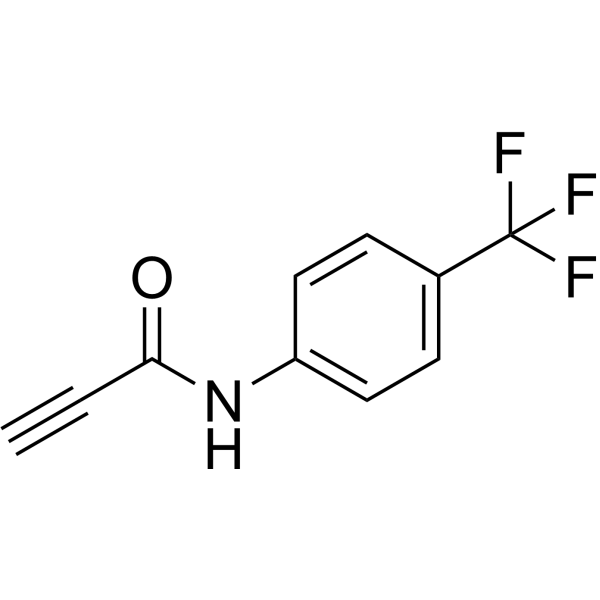
    SDH-IN-2 is a potent succinate dehydrogenase (SDH) inhibitor with an IC50 of 0.55 μg/mL. SDH-IN-2 is also an antifungal agent. SDH-IN-2 inhibits phytopathogenic fungia with average EC50 values of 3.82-9.81 μg/mL for all the fungi . SDH-IN-2 is a click chemistry reagent, it contains an Alkyne group and can undergo copper-catalyzed azide-alkyne cycloaddition (CuAAc) with molecules containing Azide groups.
    SDH-IN-2
  • HY-N8389

    Bacterial Fungal PAK Akt STAT PD-1/PD-L1 Apoptosis CCR Infection Cancer
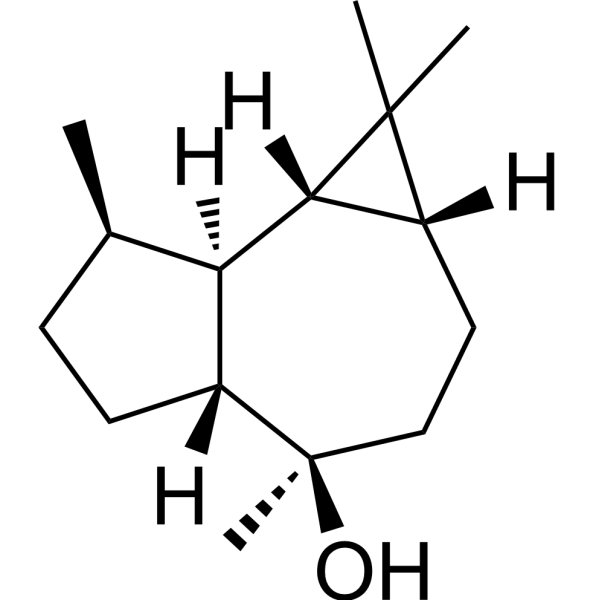
    Globulol is a terpenoid metabolite and Antimicrobial agent. Globulol can be isolated from Alpinia oxyphylla Miq. Globulol binds to PAK4, reduces the expression level of PAK4 in cancer cells, decreases the phosphorylation of AKT, and downregulates the expressions of STAT3, phosphorylated STAT3, and PD-L1. Globulol promotes the secretion of CCL4 by cancer cells. Globulol reduces the viability and proliferation ability of cancer cells, induces G0/G1 cell cycle arrest and Apoptosis in cancer cells, and inhibits cancer cell migration and the integrity of 3D tumor spheres. Globulol enhances the relevant effects of anti-PD-1 agents in the cancer cell microenvironment. Globulol exhibits anticancer activity against liver cancer. Globulol inhibits the mycelial growth of phytopathogenic fungi and the growth of phytopathogenic bacteria. Globulol can be used in studies related to hepatocellular carcinoma .
    Globulol
  • HY-W047478

    NSC 10154

    Fungal Interleukin Related Infection Inflammation/Immunology Cancer
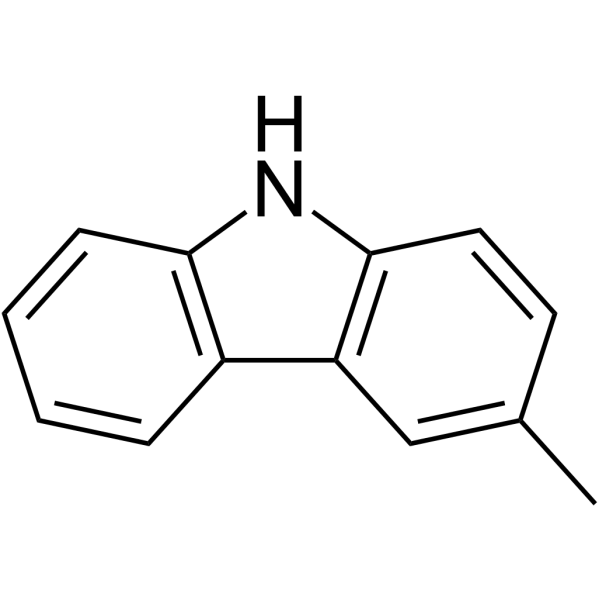
    3-Methylcarbazole (NSC 10154) is a carbazole alkaloid with an IC50 of 25 μg/mL against human fibrosarcoma cells. 3-Methylcarbazole inhibits mycelial growth and conidial germination of a variety of phytopathogenic fungi. 3-Methylcarbazole exhibits anti-inflammatory and antitumor activities. 3-Methylcarbazole can be used in studies related to fibrosarcoma, phytopathogenic fungal infections and inflammatory diseases .
    3-Methylcarbazole
  • HY-P5591

    Fungal Infection
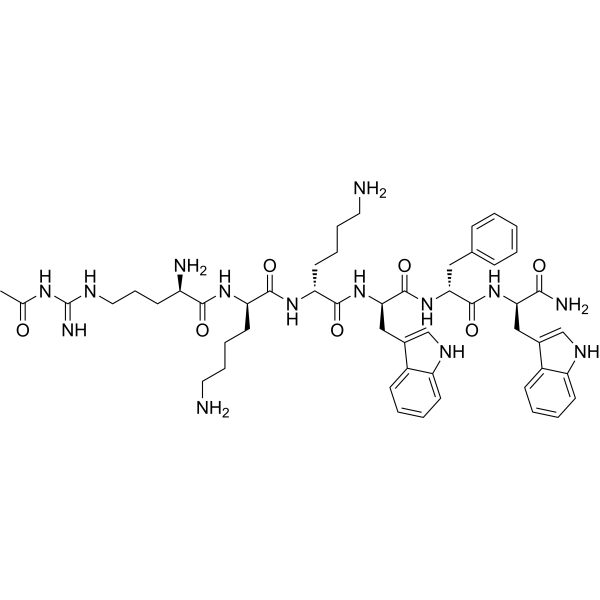
    PAF26 is an antimicrobial peptide against phytopathogenic fungi Penicillium digitatum, Penicillium italicum and Botrytis cinerea .
    PAF26
  • HY-N9573

    Fungal Infection
    Zinniol is a penta-substituted benzene phytotoxin that can be produced by a variety of phytopathogenic fungi. Zinniol can be detected in sunflower tissues in the early stage of infection and may be involved in the occurrence of sunflower diseases .
    Zinniol
  • HY-P11158

    Fungal HIV Reverse Transcriptase Infection Cancer
    Gymnin is a defensin-like antifungal peptide. Gymnin has significant antifungal activities against phytopathogenic and mycotoxigenic fungi. Gymnin inhibits HIV-1 reverse transcriptase with an IC50 of 200 μM and the proliferation of tumor cells. Gymnin has a weak mitogenic activity toward murine splenocytes. Gymnin can be used for plant disease treatments research .
    Gymnin
  • HY-N1117

    Phosphatase NO Synthase Infection Metabolic Disease Cancer
    Tristin is a PTP1B inhibitor (IC50=21.2 μM) with antioxidant and antifungal activities. Tristin inhibits lipid peroxidation and NO production in LPS-stimulated macrophages, and also exhibits activity against a variety of phytopathogenic fungi. Tristin is also able to inhibit cancer cell proliferation. Tristin can be used in the research of diseases associated with phytopathogenic fungal infection, leukemia, type 2 diabetes and inflammatory responses .
    Tristin
  • HY-N14409

    Antibiotic Fungal Infection
    Mycoversilin is an antibiotic. Mycoversilin has the activity of inhibiting skin fungi and phytopathogenic fungi, but has no anti-yeast and bacterial activity. Mycoversilin has a strong inhibitory effect on protein synthesis .
    Mycoversilin
  • HY-N14179

    Fungal Infection Cancer
    Cytovaricin has the activity of inhibiting Yoshida sarcoma cells and has weak anti-phytopathogenic fungi and chlorella activity .
    Cytovaricin
  • HY-185178

    Fungal Infection
    Antifungal agent 157 (Ex.I-339) is a heterocyclyl pyridazine compound and phytopathogenic fungi control agent. Antifungal agent 157 can be used for the research of phytopathogenic fungal infestations .
    Antifungal agent 157
  • HY-122448A

    Bacterial Fungal Infection
    (Rac)-Sativan is an isoflavanoid with a broad spectrum of antimicrobial activity against bacteria and phytopathogenic fungi. (Rac)-Sativan exhibits antituberculosis activity against Mycobacterium tuberculosis H37Rv, with MIC values of 50 µg/mL .
    (Rac)-Sativan
  • HY-N16445

    (-)-Strevertene A

    Endogenous Metabolite Antibiotic Fungal Infection
    Strevertene A ((-)-Strevertene A) (Compound 1), a pentaene macrolide, is a microbial secondary metabolite. Strevertene A is an antibiotic and has a potent antifungal activity. Strevertene A significantly inhibits the mycelial growth of phytopathogenic fungi (such as Alternaria mali, Aspergillus oryzae and Cylindrocarpon destructans) with IC50s of 4-16 μg/mL. Strevertenes A can strongly prevent Fusarium wilt development on tomato plants .
    Strevertene A
  • HY-176552

    Fungal Microtubule/Tubulin Infection
    Tubulin polymerization-IN-83 (Compound A23) is a flavonol derivative. Tubulin polymerization-IN-83 exhibits antifungal activity against various phytopathogenic fungi, with an EC50 of 0.338 μg/mL against Botrytis cinerea. Tubulin polymerization-IN-83 exerts its effects by targeting β-tubulin, disrupting mycelial morphology, and increasing cell membrane permeability, with relatively low ecological and environmental risks .
    Tubulin polymerization-IN-83
  • HY-172804

    Succinate Dehydrogenase Fungal Apoptosis Infection
    SDH-IN-26 (Compound C3) is a succinate dehydrogenase (SDH) inhibitor. SDH-IN-26 exhibits significant inhibitory activity against multiple phytopathogenic fungi, such as Rhizoctonia solani and Botrytis cinerea, with an EC50 value of 0.270 μg/mL against Rhizoctonia solani. SDH-IN-26 damages the integrity of the fungal cell membrane, increases membrane permeability, disrupts cell structure, and reduces the number of mitochondria, thus affecting the normal growth of mycelia. SDH-IN-26 leads to a decrease in mitochondrial membrane potential, and induces cell apoptosis. SDH-IN-26 is promising for research of plant diseases caused by fungi .
    SDH-IN-26
  • HY-N18128

    Fungal Infection
    Hunnemanine is a protoberberine-type isoquinoline alkaloid with significant antifungal activity. At a concentration of 1000 ppm, Hunnemanine completely inhibits spore germination of a variety of phytopathogenic fungi, including Alternaria brassicae, Helminthosporium pennisetti, and Fusarium lini. Hunnemanine can be applied to studies on the infection mechanisms of phytopathogenic fungi and related control strategies .
    Hunnemanine
  • HY-183091

    Fungal Infection
    Antifungal agent 159 is an antifungal agent with broad-spectrum activity against phytopathogenic fungi. Antifungal agent 159 binds tightly to the active sites of exo-β-(1,3)-glucanase, topoisomerase II-DNA-nucleotide, dihydrofolate reductase, sterol 14-α demethylase and chitin synthase. Antifungal agent 159 can be used in studies related to phytopathogenic fungal infections .
    Antifungal agent 159
  • HY-W043791

    Fungal Infection
    4-Dodecyl-2,6-dimethylmorpholine is a morpholine fungicide and plant-growth regulator. 4-Dodecyl-2,6-dimethylmorpholine targets phytopathogenic fungi including Oomycetes, Ascomycetes and Basidiomycetes. 4-Dodecyl-2,6-dimethylmorpholine acts synergistically with acylalanine fungicides to enhance antifungal efficacy and regulate plant growth. 4-Dodecyl-2,6-dimethylmorpholine can be applied to the study of plant fungal diseases and phytopathogenic fungal infections .
    4-Dodecyl-2,6-dimethylmorpholine
  • HY-N17440

    Apoptosis Caspase Bcl-2 Family DNA/RNA Synthesis Bacterial Fungal Infection Inflammation/Immunology Cancer
    2-Methoxyjuglone, a naphthoquinone, is an apoptosis inducer. 2-Methoxyjuglone activates caspase-9 and caspase-3 via the mitochondrial cytochrome c-dependent intrinsic apoptosis cascade. 2-Methoxyjuglone increases pro-apoptotic Bax levels, decreases anti-apoptotic Bcl-2 levels, and promotes mitochondrial cytochrome c release. 2-Methoxyjuglone induces apoptosis morphological features, early apoptosis, S-phase and G2/M-phase cell cycle arrest, and DNA double-strand breaks. 2-Methoxyjuglone exerts activity against Gram-positive bacteria, pathogenic fungi, and phytopathogenic fungi. 2-Methoxyjuglone can be used for the research of hepatocellular carcinoma, osteosarcoma, colon adenocarcinoma, breast cancer, fungal infection, bacterial infection .
    2-Methoxyjuglone
  • HY-W281071

    Fungal Infection
    Antifungal agent 150 is an antifungal agent with activity against phytopathogenic fungi and in planta lesion suppression. Antifungal agent 150 inhibits ergosterol biosynthesis via targeted enzyme interaction. Antifungal agent 150 can be used for the research of plant diseases caused by Rhizoctonia solani, including banded leaf and sheath blight of maize .
    Antifungal agent 150
  • HY-185177

    Fungal Infection
    Antifungal agent 156 (Ex.1-123) is a heterocyclic pyridazine compound and a phytopathogenic fungal control agent, which can be used in studies related to phytopathogenic fungal infection .
    Antifungal agent 156
  • HY-134339

    Fungal Infection
    Dichlobentiazox (Compound B14) is a component of Fungicidal compositions. Dichlobentiazox is used in studies on plant diseases caused by phytopathogenic fungi .
    Dichlobentiazox
  • HY-N19815

    Aspergilol E

    Bacterial Fungal Infection
    Gibellulin A is a natural antimicrobial agent. Gibellulin A inhibits the growth of aquatic bacteria, human pathogenic bacteria and phytopathogenic fungi.Gibellulin A can be used for the research of bacterial and fungal infections .
    Gibellulin A
  • HY-W047478R

    NSC 10154 (Standard)

    Reference Standards Interleukin Related Fungal Infection Inflammation/Immunology Cancer
    3-Methylcarbazole (NSC 10154) Standard is the analytical standard of 3-Methylcarbazole (HY-W047478). This product is intended for research and analytical applications. 3-Methylcarbazole (NSC 10154) is a carbazole alkaloid with an IC50 of 25 μg/mL against human fibrosarcoma cells. 3-Methylcarbazole inhibits mycelial growth and conidial germination of a variety of phytopathogenic fungi. 3-Methylcarbazole exhibits anti-inflammatory and antitumor activities. 3-Methylcarbazole can be used in studies related to fibrosarcoma, phytopathogenic fungal infections and inflammatory diseases.
    3-Methylcarbazole (Standard)
  • HY-W718262

    (Rac)-CGP 52547

    Antibiotic Fungal Bacterial Infection Cancer
    Dihydroaeruginoic acid ((Rac)-CGP 52547), an antifungal antibiotic, is a thiazoline iron chelator. Dihydroaeruginoic acid is the condensation product of salicylate and one cysteine residue. Dihydroaeruginoic acid chelates Fe(III), inhibits DNA replication via ribonucleotide reductase, induces G1/S cell cycle block, reduces leukemia cell clonogenic viability. Dihydroaeruginoic acid inhibits phytopathogenic fungi and bacteria, suppresses Candida albicans development, and inhibits Agrobacterium tumefaciens biofilm formation via extracellular iron sequestration. Dihydroaeruginoic acid can be used for the research of phytopathogenic fungal and bacterial infections, and leukemia .
    Dihydroaeruginoic acid
  • HY-W008927

    Fungal Reactive Oxygen Species (ROS) DNA/RNA Synthesis Apoptosis Infection
    Fluoxastrobin is a fungicide. By binding to NAD-dependent epimerase/dehydratase, Fluoxastrobin interferes with electron transport, reduces ATP production and inhibits mycelial growth, thereby effectively controlling foliar diseases of tea plants. Fluoxastrobin induces oxidative stress by increasing ROS levels and lipid peroxidation, causes DNA damage and promotes apoptosis; meanwhile, it shows high acute toxicity to Danio rerio embryos and larvae. Fluoxastrobin can be used in research related to tea foliar diseases (including tea red leaf spot and tea gray leaf spot) .
    Fluoxastrobin
  • HY-181610

    Succinate Dehydrogenase Fungal Infection
    SDH-IN-45 is a succinate dehydrogenase BcSDH inhibitor and mycelial growth inhibitor targeting Botrytis cinerea, with an IC50 of 5.97 μg/mL against Botrytis cinerea. SDH-IN-45 inhibits succinate dehydrogenase, a component of the mitochondrial electron transport chain, via a unique binding mode, thereby regulating fungal energy metabolism. SDH-IN-45 causes morphological damage to Botrytis cinerea mycelia, leading to collapse and shrinkage of mycelial structures. SDH-IN-45 exhibits in vitro fungicidal activity against Botrytis cinerea. SDH-IN-45 can be used in research related to cucumber gray mold .
    SDH-IN-45

オンラインお問い合わせ

入力情報は安全に管理されます. 必須入力項目.

タイトル


国或いは地域 *

お名前 *


組纖名 *

デパートメント *


メールアドレス *


製品名 *

製品番号


カスタマ需要量 *

電話番号 *


必ず会社名を記載ください。個人への返信は行いません。

備考

バルクお問い合わせ

Inquiry Information

製品名:
製品番号:
数量:
MCE 日本正規代理店:

