Search Result
Results for "
protein+labeling
" in MedChemExpress (MCE) Product Catalog:
21
Biochemical Assay Reagents
| Cat. No. |
Product Name |
Target |
Research Areas |
Chemical Structure |
-
- HY-66019
-
FITC
Maximum Cited Publications
92 Publications Verification
Fluorescein 5-isothiocyanate
|
Fluorescent Dye
|
Inflammation/Immunology
|
|
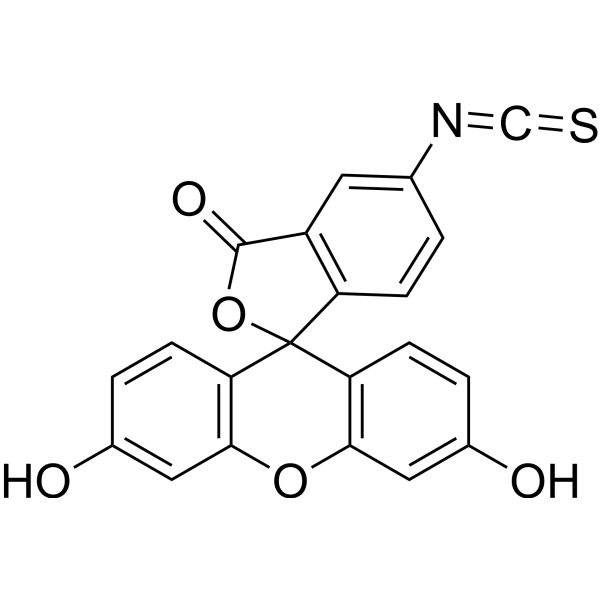
FITC (Fluorescein Isothiocyanate), is one of the green fluorescein derivatives widely used in biology. FITC has the characteristics of high absorptivity and excellent fluorescence quantum yield. The isothiocyanate group of FITC can be combined with amino, sulfhydryl, imidazole, tyrosyl, carbonyl and other groups on the protein, so as to achieve protein labeling including antibodies and lectins. In addition to its use as a protein marker, FITC can also be used as a fluorescent protein tracer to rapidly identify pathogens by labeling antibodies, or for microsequencing of proteins and peptides (HPLC). The maximum excitation wavelength of FITC is 494 nm. Once excited, it fluoresces yellow-green at a maximum emission wavelength of 520 nm. In addition, FITC is also a hapten that can induce contact hypersensitivity (CHS) and induce an atopic dermatitis model .
|
-
-
- HY-D0821
-
|
Sulfo-Cyanine5
|
Fluorescent Dye
|
Others
|
|
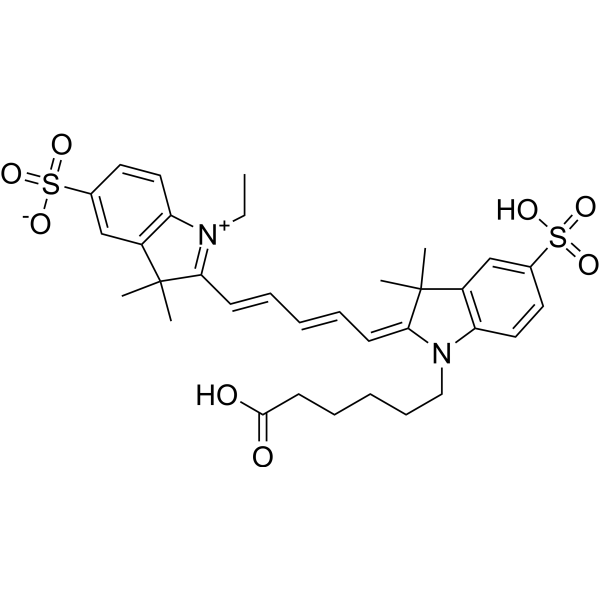
CY5 is a CY dye. CY, short for Cyanine, is a compound consisting of two nitrogen atoms connected by an odd number of methyl units. Cyanine compounds have the characteristics of long wavelength, adjustable absorption and emission, high extinction coefficient, good water solubility and relatively simple synthesis . CY dyes are of en used for the labeling of proteins, antibodies and small molecular compounds. For the labeling of protein antibodies, the combination can be completed through a simple mixing reaction. Below, we introduce the labeling method of protein antibody labeling, which has certain reference significance .
|
-
-
- HY-Y0623
-
|
HOSu; 1-Hydroxy-2,5-pyrrolidinedione
|
Biochemical Assay Reagents
|
Others
|
|
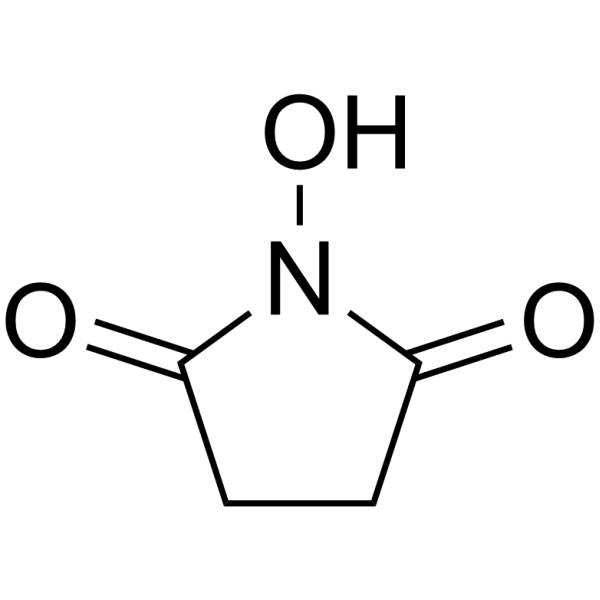
N-Hydroxysuccinimide (HOSu; 1-Hydroxy-2,5-pyrrolidinedione) is a covalent crosslinker commonly used in bioconjugation technology with a primary amine group. N-Hydroxysuccinimide reacts with amino groups (-NH2) to form a stable amide bond, which can modify amino-containing biomolecules. N-Hydroxysuccinimide can be used, for example, for protein labeling with fluorescent dyes and enzymes, surface activation of chromatography supports, microbeads, nanoparticles and microarray slides, and chemical synthesis of peptides. N-Hydroxysuccinimide has a wide range of applications in biomaterial synthesis (such as collagen, chitosan crosslinking), drug delivery systems (such as hydrogel preparation) and tissue engineering .
|
-
-
- HY-D0017
-
|
DNSCl
|
Fluorescent Dye
|
Others
|
|
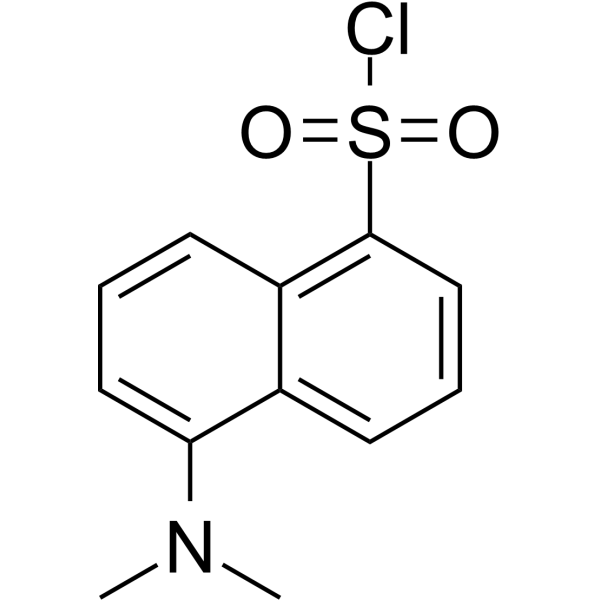
Dansyl chloride is a reagent that produces stable blue or blue-green fluorescent sulfonamide adducts in the reaction of aliphatic and aromatic amines with primary amino groups, and is widely used for modified amino acids, protein sequencing and amino acid analysis .
|
-
-
- HY-D0822
-
CY3
4 Publications Verification
Sulfo-Cyanine3
|
Fluorescent Dye
|
Others
|
|
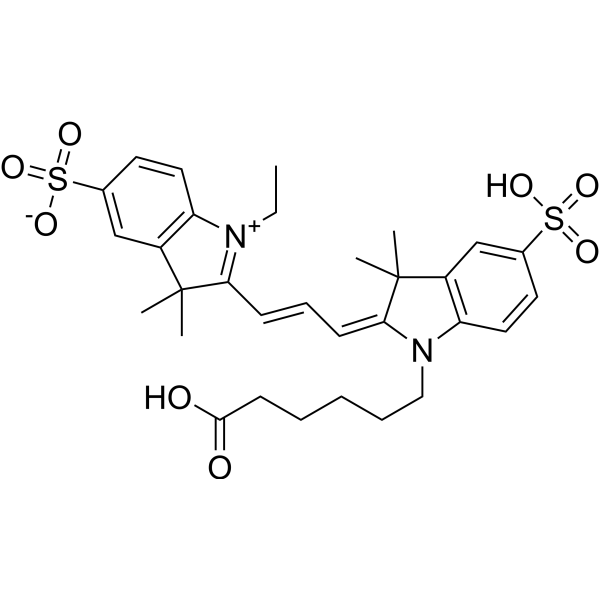
Cy3 (Sulfo-Cyanine3) is an orange-fluorescent label for protein and nucleic acid (λex=554, λem=568).
|
-
-
- HY-110210
-
|
BODIPY FL,SE
|
Fluorescent Dye
|
Others
|
|
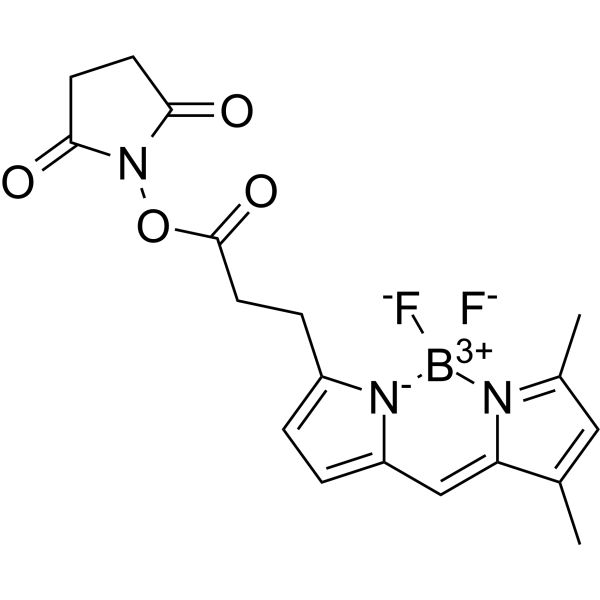
BODIPY FL NHS ester (BODIPY FL, SE) is a cell membranes-penatrable amine-reactive fluorescent probe. The maximum excitation/emission wavelength of the BODIPY-FL NHS ester are 502/511 nm, respectively. BODIPY-FL NHS ester has high stability and is insensitive to the polarity, pH and type of solvent, and can maintain stable fluorescence properties under different environmental conditions. BODIPY-FL NHS ester can be used for the synthesis of protease substrates, live cell imaging, protein labeling and immunoassay .
|
-
-
- HY-D0823
-
CY3-SE
1 Publications Verification
Sulfo-Cy3 NHS ester; Sulfo Cyanine3 NHS ester
|
Fluorescent Dye
|
Others
|
|
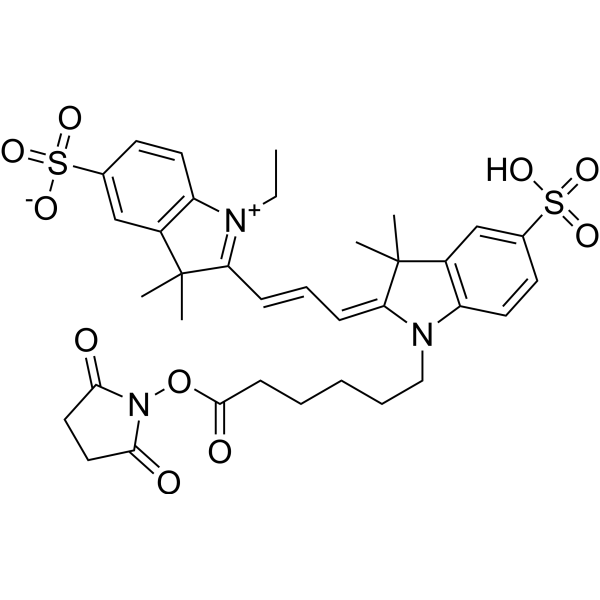
Cy3-SE (Sulfo-Cy3 NHS ester; Sulfo Cyanine3 NHS ester) is a sulfonated cyanine dye-derived fluorescent labeling reagent with λex of about 515 nm and λem of about 568 nm. Cy3-SE can interact with the π-π stacking of biomolecules (e.g., nucleoside monophosphates, proteins), inhibiting the photoisomerization process and increasing the fluorescence quantum yield and lifetime .
|
-
-
- HY-D0715
-
|
Ro 20-7234
|
Fluorescent Dye
|
Others
|
|
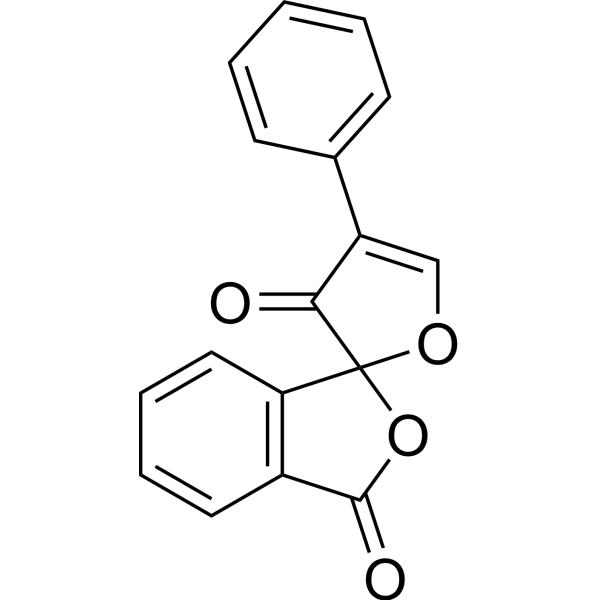
Fluorescamine is a spirocyclic compound that is non-fluorescent. Fluorescamine reacts rapidly with primary amine groups in proteins under alkaline conditions to generate products with strong fluorescence (Ex/Em: 390/475 nm). Fluorescamine can be used to detect amine-containing compounds, including amino acids, peptides, and proteins .
|
-
-
- HY-Y0695
-
|
Naphthol Blue Black
|
Environmental Pollutants
Fluorescent Dye
|
Others
|
|
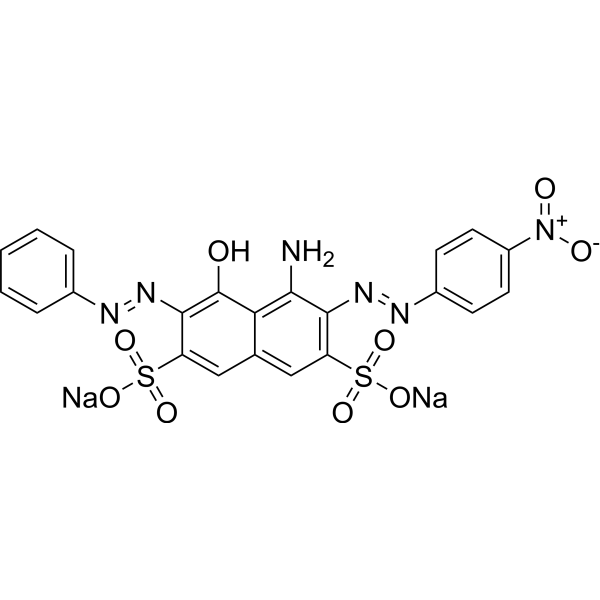
Amido Black 10B (Naphthol Blue Black) is a highly toxic azo dye. Amido Black 10B is genotoxic and mutagenic. Amido Black 10B can cause respiratory problems. Amido Black 10B is used for amino acid dyeing .
|
-
-
- HY-130533
-
|
|
Fluorescent Dye
|
Others
|
|
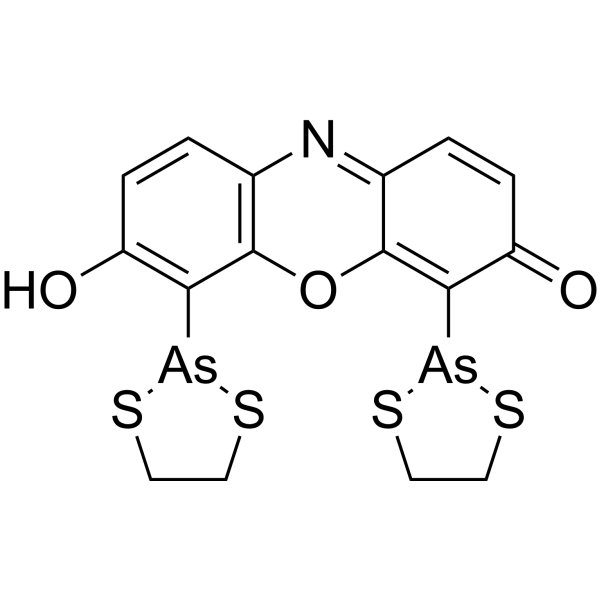
ReAsH-EDT2 is a red fluorescent dye that marks proteins. ReAsH-EDT2 is a membrane-permeable biarsenical compound that binds covalently to tetracysteine sequences which allows the protein to be imaged. ReAsH-EDT2 can be used for protein localization and trafficking. (λex=530 nm, λem=592 nm) .
|
-
-
- HY-15937
-
|
5(6)-Carboxyfluorescein N-hydroxysuccinimide ester; 5(6)-Carboxyfluorescein succinimidyl ester mixed isomers
|
Fluorescent Dye
|
Others
|
|
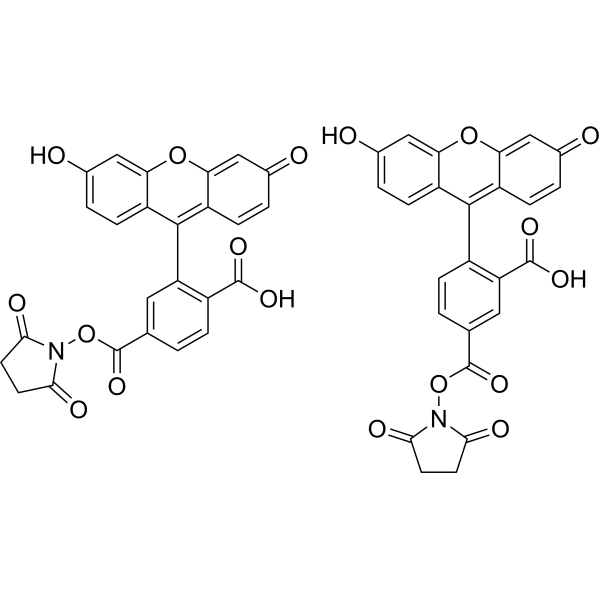
5(6)-FAM SE is a green fluorescent dye widely used for protein labeling.
|
-
-
- HY-D0926
-
Cy7.5
3 Publications Verification
|
Fluorescent Dye
|
Others
|
|
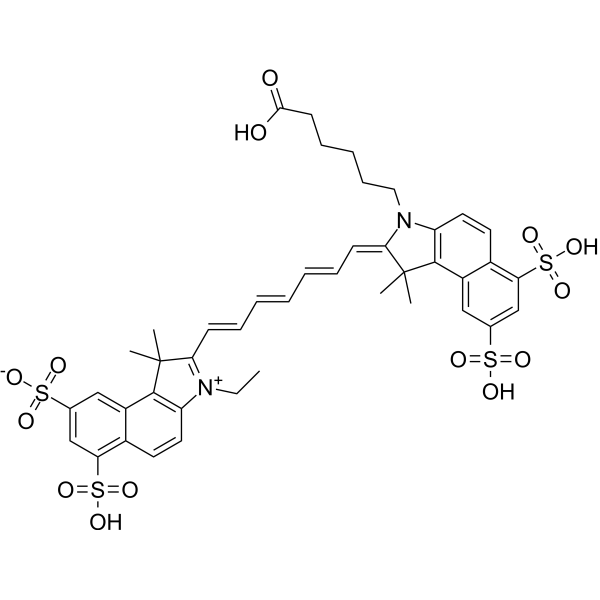
Cy7.5 is a CY dye. CY, short for Cyanine, is a compound consisting of two nitrogen atoms connected by an odd number of methyl units. Cyanine compounds have the characteristics of long wavelength, adjustable absorption and emission, high extinction coefficient, good water solubility and relatively simple synthesis . CY dyes are of en used for the labeling of proteins, antibodies and small molecular compounds. For the labeling of protein antibodies, the combination can be completed through a simple mixing reaction. Below, we introduce the labeling method of protein antibody labeling, which has certain reference significance .
|
-
-
- HY-101890
-
|
DABS-Cl
|
Fluorescent Dye
|
Others
|
|
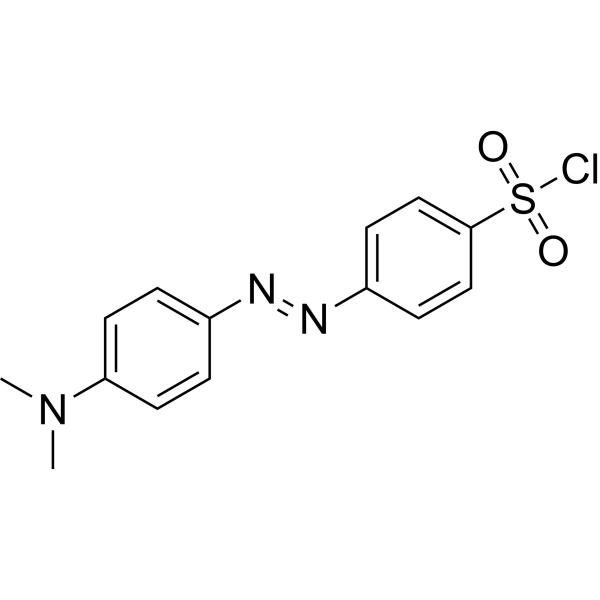
Dabsyl chloride is an amine derivatizing agent, able to give rise to stable products that can be easily monitored spectrophotometrically at 460 nm; Dabsyl chloride also used for labeling amino acids.
|
-
-
- HY-D0832
-
CY5-N3
1 Publications Verification
Sulfo-Cyanine5-azide
|
DNA Stain
Fluorescent Dye
|
Infection
|
|
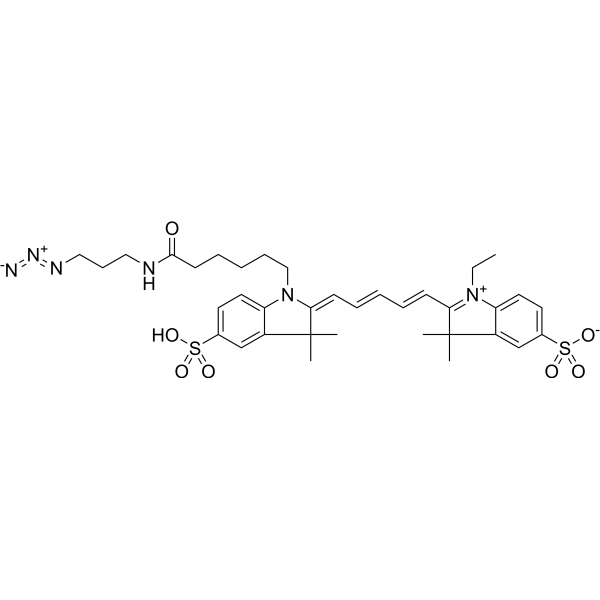
CY5-N3 (Sulfo-Cyanine5-azide) is a Cy5-azide, which is a fluorescent dye (ex/em: 646/662 nm). CY5-N3 is cell membrane permeable and can be used for live cell imaging. CY5-N3 can be used in cell imagine by Click reaction .
|
-
-
- HY-D0827
-
|
Cyanine2
|
Fluorescent Dye
|
Others
|
|
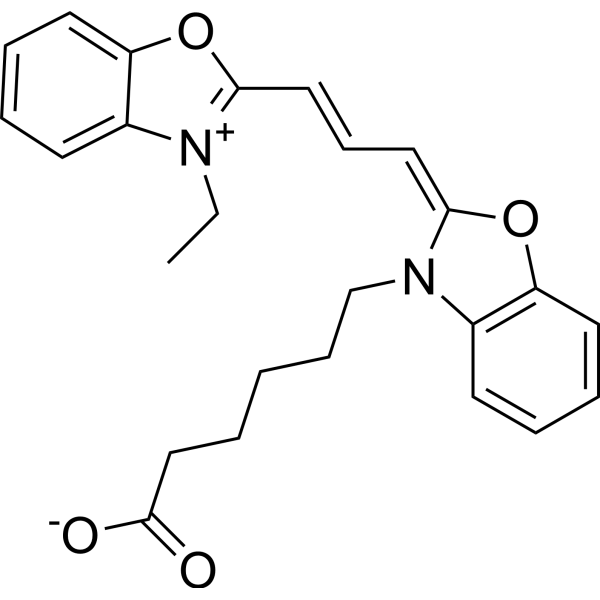
Cyanines are formally compounds with two nitrogen atoms linked by an odd number of methene units. 26 28 The nitrogen atoms are parts of the heterocyclic units (such as indole, benzoxazol, or benzothiazol) . The structures and optical properties of representative cyanine dyes used for in vivo imaging are presented . Cyanines are characterized by long wavelength, tunable absorption and emission, very high extinction coefficient (up to 300,000 M 1 cm 1), good water solubility, and relatively straightforward synthesis .
|
-
-
- HY-130412
-
|
|
Fluorescent Dye
|
Others
|
|
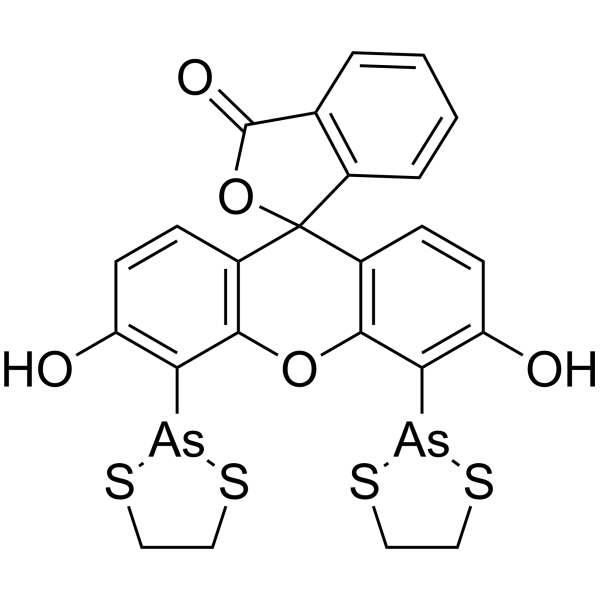
FlAsH-EDT2 is a protein labeling reagent. FlAsH-EDT2 binds to Cys4 with high affinity and emits fluorescence. FlAsH-EDT2 can cross the cell membrane and enter the interior of the cell. FlAsH-EDT2 can only be used for labeling proteins with high concentration .
|
-
-
- HY-D0826
-
|
Cyanine2 Succinimidyl Ester (iodine)
|
Fluorescent Dye
|
Others
|
|
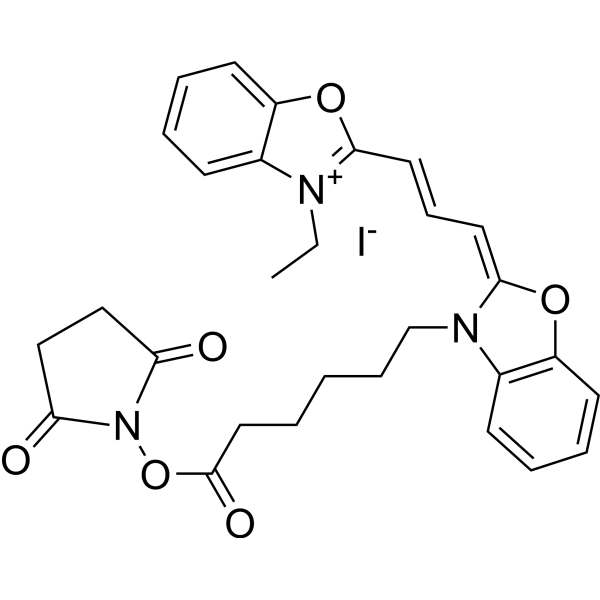
Cy2-SE iodine is a CY dye. CY, short for Cyanine, is a compound consisting of two nitrogen atoms connected by an odd number of methyl units. Cyanine compounds have the characteristics of long wavelength, adjustable absorption and emission, high extinction coefficient, good water solubility and relatively simple synthesis . CY dyes are of en used for the labeling of proteins, antibodies and small molecular compounds. For the labeling of protein antibodies, the combination can be completed through a simple mixing reaction. Below, we introduce the labeling method of protein antibody labeling, which has certain reference significance .
|
-
-
- HY-154801
-
|
|
Biochemical Assay Reagents
|
Others
|
|
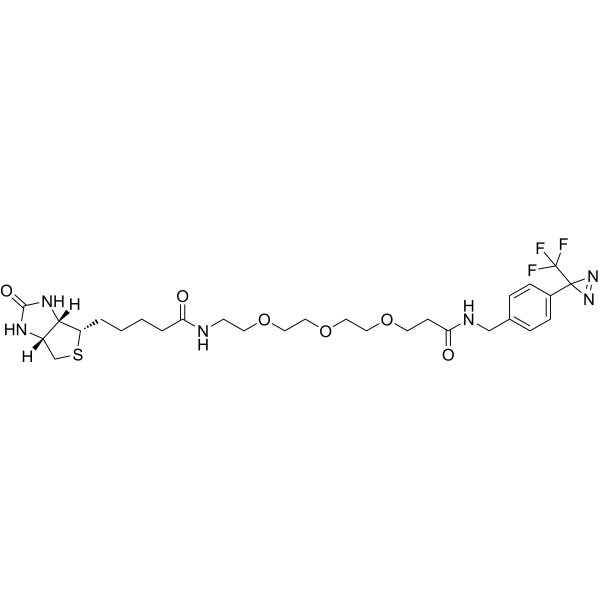
Biotin-PEG3-CONH-Ph-CF3-diazirine is a biotin labeled PEG3 derivative. Biotin-PEG3-CONH-Ph-CF3-diazirine can be used for protein labeling .
|
-
-
- HY-DY1007
-
|
|
Fluorescent Dye
|
Inflammation/Immunology
|
FITC (Fluorescein Isothiocyanate) (solution) , is one of the green fluorescein derivatives widely used in biology. FITC has the characteristics of high absorptivity and excellent fluorescence quantum yield. The isothiocyanate group of FITC can be combined with amino, sulfhydryl, imidazole, tyrosyl, carbonyl and other groups on the protein, so as to achieve protein labeling including antibodies and lectins. In addition to its use as a protein marker, FITC can also be used as a fluorescent protein tracer to rapidly identify pathogens by labeling antibodies, or for microsequencing of proteins and peptides (HPLC). The maximum excitation wavelength of FITC is 494 nm. Once excited, it fluoresces yellow-green at a maximum emission wavelength of 520 nm. In addition, FITC is also a hapten that can induce contact hypersensitivity (CHS) and induce an atopic dermatitis model .
Solvent and concentration: DMSO: 20 mM
The 1 mL volume is defined as the base specification. All larger sizes correspond to incremental volumes of this base.
|
-

-
- HY-W273413
-
|
NBD-H
|
Fluorescent Dye
|
Cancer
|
|
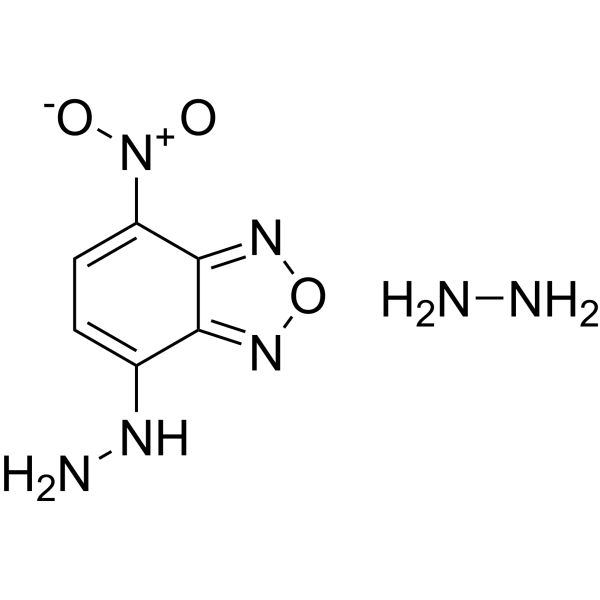
4-Hydrazino-7-nitro-benzofurazan hydrazine adduct (NBD-H) is a fluorescent reagent used for protein labeling .
|
-
-
- HY-W998680
-
|
5-FITC-Maleimide
|
Fluorescent Dye
|
Others
|
|
Fluorescein-maleimide (5-FITC-Maleimide) is a thiol-reactive fluorescent derivatization reagent and non-specific protein labeling reagent. Fluorescein-maleimide covalently binds to protein thiol groups for protein labeling. Fluorescein-maleimide covalently binds to protein amino and imidazole groups under neutral pH conditions. Fluorescein-maleimide is used for fluorescent labeling of proteins, nucleic acids or other molecules containing one or more thiol groups (Ex/Em = 494/519 nm) .
|
-

-
- HY-153845
-
|
|
Biochemical Assay Reagents
|
Others
|
|
RNA Aptamer Broccoli sodium is a 49-nucleotide nucleic acid aptamer that is much shorter than Spinach and Spinach2. It exhibits bright green fluorescence when binding to DFHBI or DFHBI-1T (a soluble analog of the green fluorescent protein label). RNA Aptamer Broccoli sodium can be used for RNA expression or localization in living cells .
|
-

-
- HY-D1390A
-
|
|
Fluorescent Dye
|
Others
|
|
Sulfo-Cy5-Mal is a fluorescent dye derivative composed of a CY5 dye and a maleimide functional group. Sulfo-Cy5-Mal specifically covalently binds to thiol-containing (-SH) biomolecules. Sulfo-Cy5-Mal can be used for protein labeling, antibody conjugation, molecular imaging, and drug delivery studies (Ex/Em = 633 nm/670 nm) .
|
-

-
- HY-D0077
-
|
Oregon green 488
|
Fluorescent Dye
|
Others
|
|
2',7'-Difluorofluorescein (Oregon green 488) is a fluorescein derivative and a pH-sensitive fluorescent probe (pKa ~4.7). Upon excitation at 488 nm, 2',7'-Difluorofluorescein exhibits pH-sensitive fluorescence intensity through the formation of dianions, while its pH sensitivity decreases under excitation at 450 nm, allowing its use in ratiometric pH analysis. 2',7'-Difluorofluorescein can be used for the quantitative analysis of pH values in the range of 2-7 in submicron aerosol particles. 2',7'-Difluorofluorescein undergoes buffer-mediated and buffer-free excited-state proton transfer between different protonated forms, and its cationic form undergoes rapid excited-state deprotonation. 2',7'-Difluorofluorescein is resistant to photodegradation, maintains stable absorption and fluorescence properties within the physiological pH range, and serves as a fluorescent protein label, a component of Ca 2+ indicators, a fluorescent imaging agent, and an anisotropy probe .
|
-

-
- HY-125750
-
-
-
- HY-W093017
-
|
|
Amine N-methyltransferase
|
Others
|
|
4-Chloropyridine is a NNMT (Nicotinamide N-methyltransferase) substrate and suicide inhibition-based protein labeling scaffold precursor.4-Chloropyridine undergoes NNMT-catalyzed pyridine nitrogen methylation to increase C4 electrophilicity, enabling aromatic nucleophilic substitution by NNMT cysteine C159 for covalent NNMT modification and inactivation.4-Chloropyridine can be used for the research of various cancers .
|
-

-
- HY-D0820
-
|
Sulfo-Cyanine5-alkyne
|
Fluorescent Dye
|
Others
|
|
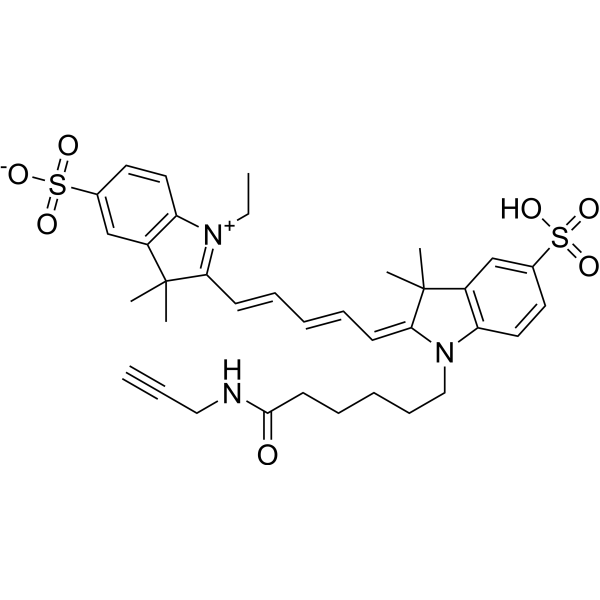
CY5-YNE (Sulfo-Cyanine5-alkyne) is a reactive dye for the labeling of amino-groups in peptides, proteins, and oligonucleotides (Ex: 650 nM; Em: 680 nm). CY5-YNE is a click chemistry reagent, it contains an Alkyne group and can undergo copper-catalyzed azide-alkyne cycloaddition (CuAAc) with molecules containing Azide groups.
|
-
-
- HY-D1261
-
|
Thiol-green 1
|
Fluorescent Dye
|
Others
|
|
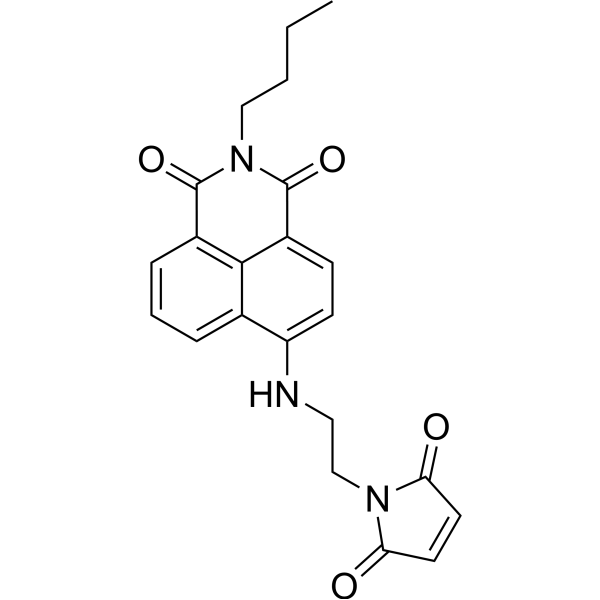
Naph-EA-mal (Thiol-green 1) is a rapid detect and ultrafast turn-on thiol fluorescence probe for protein labeling and bioimaging. Naph-EA-mal (Thiol-green 1) can be used to detect thiols in living cells, label the protein thiols, quantify the concentration of total thiols in cell lysate, and determine the reversible protein thiols oxidation in fixed cells . Ex: 488 nM; Em: 540 nM.
|
-
-
- HY-156404
-
PM-1
2 Publications Verification
|
Fluorescent Dye
|
Others
|
|
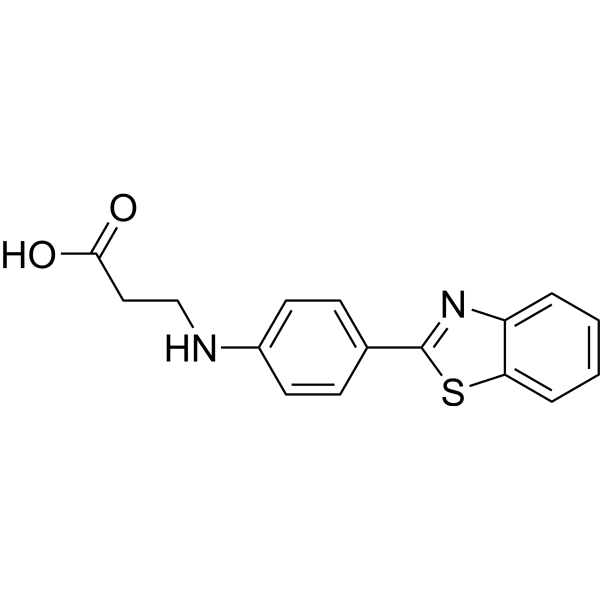
PM-1, a derivative of Thioflavin-T (ThT; HY-D0218), is a small but highly specific plasma membrane (PM) fluorescent dye for specific and long-time membrane imaging of living and fixed cells. PM-1 is embedded directly into the cell membrane and exhibits a very long retention time on the plasma membrane with a half-life of approximately 15 h. PM-1 can be used in combination with protein labeling probes to study ectodomain shedding and endocytosis processes of cell surface proteins .
|
-
-
- HY-145383
-
|
|
Fluorescent Dye
|
Others
|
|
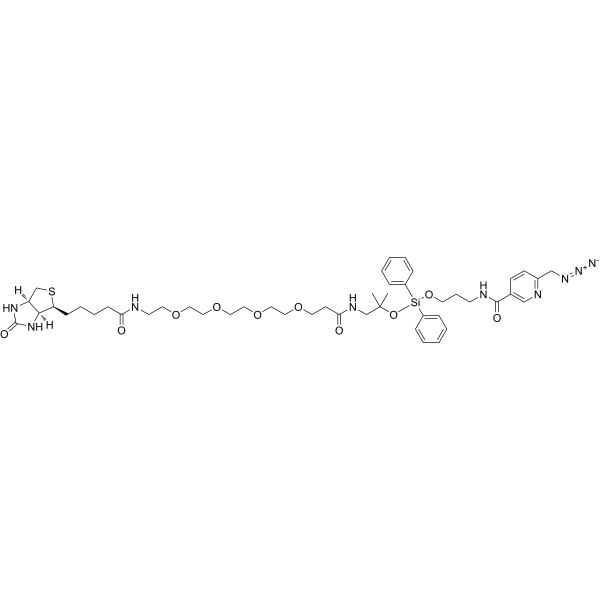
Biotin-PEG4-dialkoxydiphenylsilane-picolyl azide is a clickable, acid-cleavable biotin-picolyl azide. Biotin-PEG4-dialkoxydiphenylsilane-picolyl azide is an enrichment handle of cell surface glycoproteins for protein labeling . It contains an azide group and can undergo copper-catalyzed azide-alkyne cycloaddition (CuAAc) with molecules containing alkyne groups. It can also undergo ring strain-promoted alkyne-azide cycloaddition (SPAAC) with molecules containing DBCO or BCN groups.
|
-
-
- HY-110211
-
|
|
Fluorescent Dye
|
Others
|
|
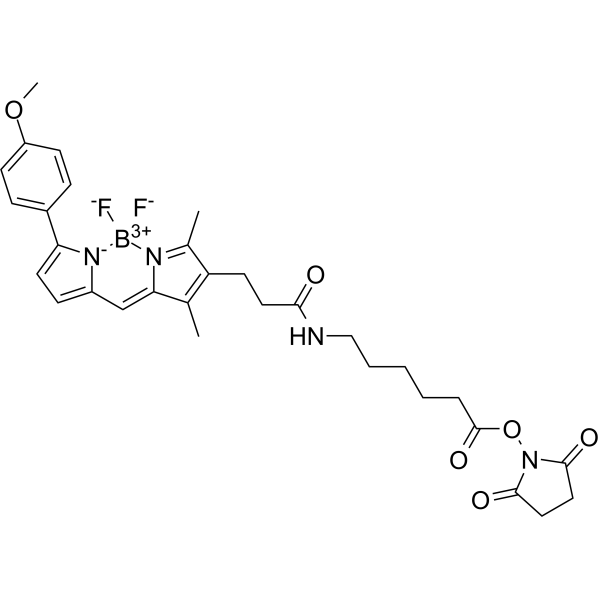
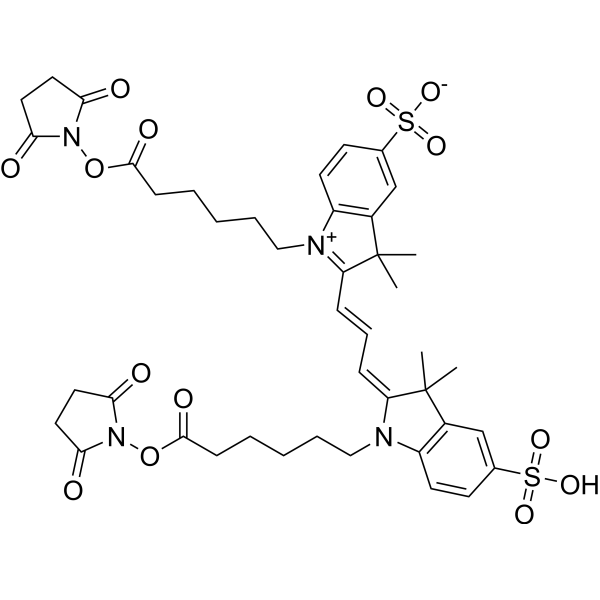
BODIPY TMR-X SE is a potent fluorescent dye. BODIPY TMR-X SE can be used to label the primary amines (R-NH2) of proteins, amine-modified oligonucleotides, and other amine-containing molecules. BODIPY TR-X binds to protein or antibody and has bright, orange fluorescent light. (λex=544 nm, λem=570 nm) .
|
-
-
- HY-D0818
-
|
Sulfo-Cyanine3-alkyne
|
Fluorescent Dye
|
Others
|
|
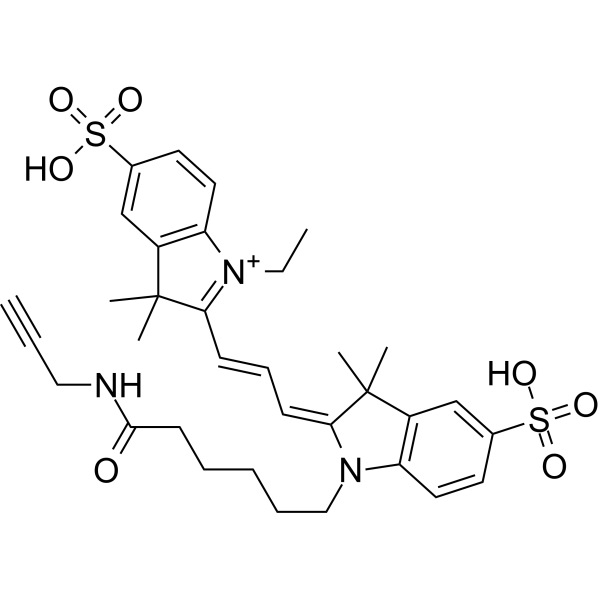
CY3-YNE (Sulfo-Cyanine3-alkyne) is a dye for the labeling of soluble proteins, peptides, and oligonucleotides/DNA. CY3-YNE is a click chemistry reagent, it contains an Alkyne group and can undergo copper-catalyzed azide-alkyne cycloaddition (CuAAc) with molecules containing Azide groups.
|
-
-
- HY-Y0700
-
|
|
Fluorescent Dye
|
Others
|
|
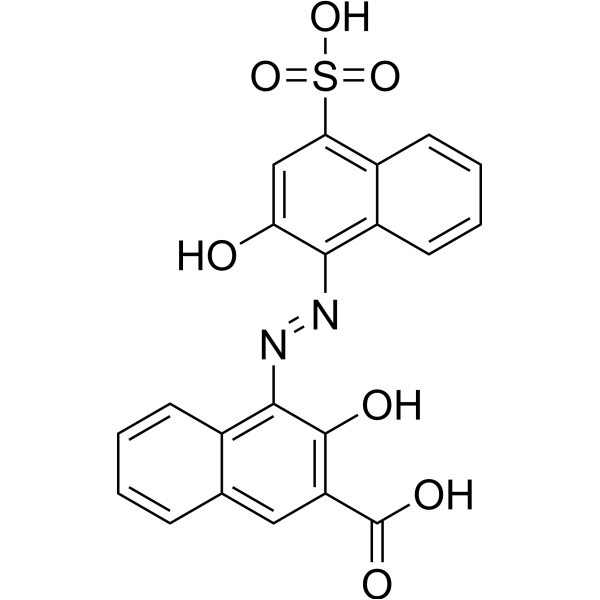
Calconcarboxylic acid, an azo dye, acts as a silver-ion sensitizer to stain protein in SDS-PAGE gels. Calconcarboxylic acid increases silver binding on protein bands or spots by the formation of a silver-dye complex and also increases the reducing power o
|
-
-
- HY-D1406
-
|
|
Fluorescent Dye
|
Others
|
|
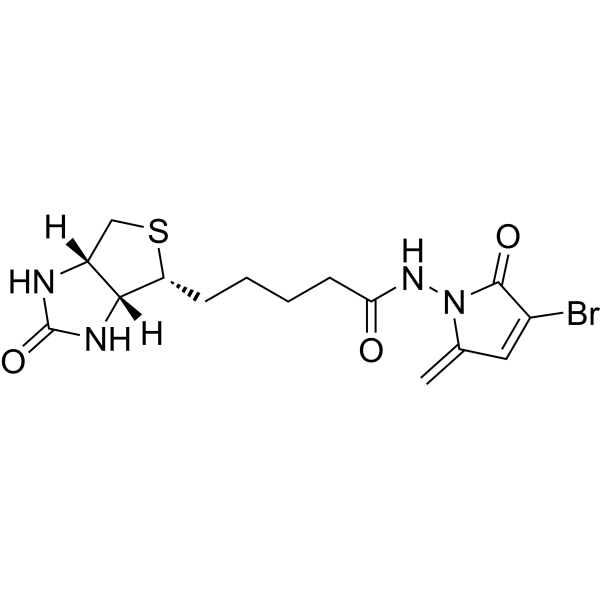
L-Biotin-NH-5MP-Br is a biotin-conjugated 5-Methylene pyrrolone (5MP). 5-Methylene pyrrolones (5MPs) are thiol-specific, reversible bioconjugation reagents for cysteine-specific protein modification, that are commonly used for protein bioconjugation .
|
-
-
- HY-D0968
-
|
Cyanine3
|
Fluorescent Dye
|
Others
|
|
Cy 3 Non-Sulfonated (Cyanine3) is a fluorescent label for protein and nucleic acid.
|
-
-
- HY-D2444
-
|
|
Fluorescent Dye
|
Cancer
|
|
AF555 NHS is a red fluorescent dye with excellent fluorescence properties and light stability. The excitation wavelength is 556 nm and the emission wavelength is 571 nm, which can be used for protein labeling, antibody labeling, and cell imaging .
|
-

-
- HY-D2956
-
|
CLIP-GLA-NHS
|
Biochemical Assay Reagents
|
Others
|
|
BC-GLA-NHS (CLIP-GLA-NHS) is a NHS-labeled CLIP tag, which is an amine-reactive crosslinker and can achieve site-specific protein labeling. The NHS ester of BC-GLA-NHS reacts with the primary amine of the target molecule (such as antibodies, quantum dots) in a pH 7.5-8.5 buffer solution to form a stable amide bond. After coupling, the BC molecule undergoes a nucleophilic substitution reaction with the active site (Cys) of the CLIP-tagged fusion protein, releasing benzylcytosine and forming an irreversible thioether bond, achieving covalent labeling. BC-GLA-NHS can be used for click chemistry labeling .
|
-

-
- HY-D2923
-
|
|
Fluorescent Dye
|
Others
|
|
PA-JF549-Halo ligand is a covalently linked conjugate comprising the photoactivatable fluorescent dye PA-JF549 and a ligand for the HaloTag protein. PA-JF549-Halo ligand exhibts inherent structural properties and predispose it to localize within mitochondria. PA-JF549-Halo ligand combines the exceptional brightness, photostability, and cell permeability of the JF549 dye with photoactivation capabilities and the high specificity characteristic of HaloTag protein labeling technology. PA-JF549-Halo ligand enables high-quality single-molecule imaging and super-resolution imaging of specific proteins within live cells .
|
-

-
- HY-110212
-
|
BODIPY TR-X NHS Ester
|
Fluorescent Dye
|
Others
|
|
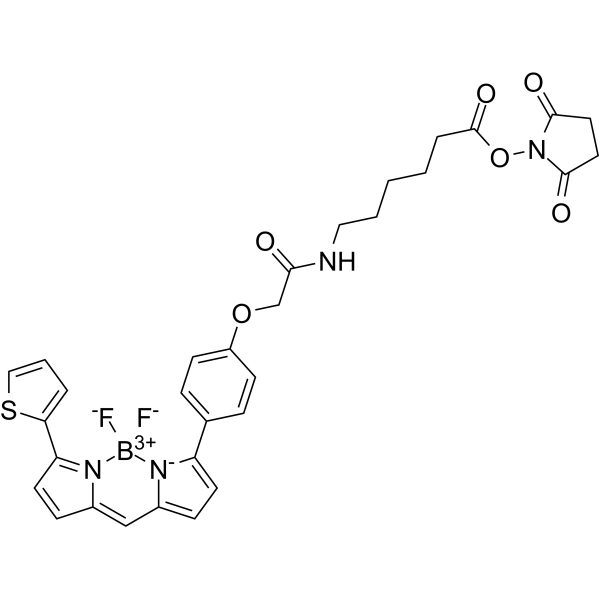
BODIPY TR-X (BODIPY TR-X NHS Ester) is a potent fluorescent dye. BODIPY TR-X can be used to label the primary amines (R-NH2) of proteins, amine-modified oligonucleotides, and other amine-containing molecules. BODIPY TR-X binds to protein or antibody and has bright, red fluorescent light. (λex=545 nm, λem=560 nm) .
|
-
-
- HY-D1607
-
|
|
Fluorescent Dye
|
Others
|
|
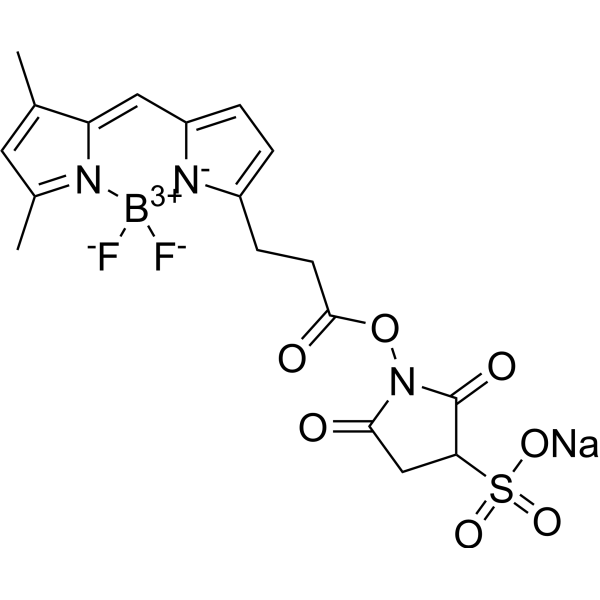
BODIPY FL SSE is a potent fluorescent dye. BODIPY FL SSE is used to label the primary amines (R-NH2) of proteins, amine-modified oligonucleotides, and other amine-containing molecules. BODIPY FL SSE can reactive with primary amines on biomolecules to emit green fluorescence. (λex=502 nm, λem=511 nm) .
|
-
-
- HY-D2931
-
|
|
Fluorescent Dye
|
Others
|
|
SNAP-FAM is a FAM-labeled SNAP tag fluorescent probe, specifically designed for live-cell protein labeling and real-time imaging applications .
|
-

-
- HY-116027A
-
|
Biotin-PEG10-COOH
|
Biochemical Assay Reagents
|
Others
|
|
Biotin-PEG10-acid (Biotin-PEG10-COOH) is a biotin-PEG compound containing a carboxyl group (-COOH) that can be used to react with an amine group (NH2) to form a stable amide bond. Biotin-PEG10-acid can be used for protein labeling and drug delivery research .
|
-

-
- HY-D1390
-
|
|
Fluorescent Dye
|
Others
|
|
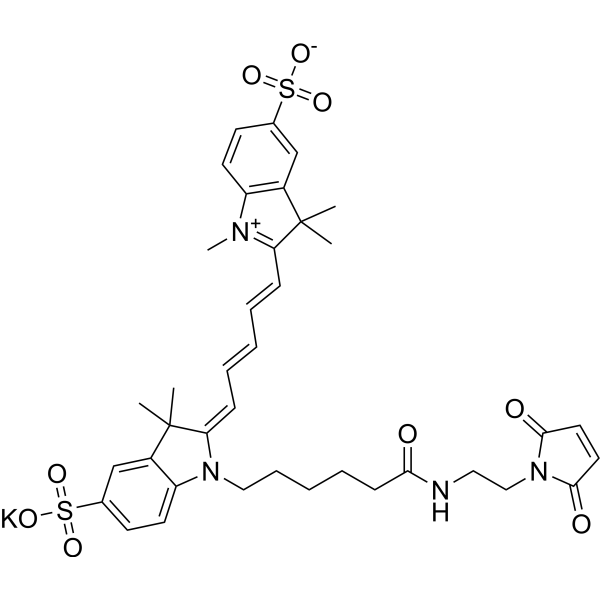
Sulfo-Cy5-Mal potassium is a fluorescent dye derivative composed of a CY5 dye and a maleimide functional group. Sulfo-Cy5-Mal potassium specifically covalently binds to thiol-containing (-SH) biomolecules. Sulfo-Cy5-Mal potassium can be used for protein labeling, antibody conjugation, molecular imaging, and drug delivery studies (Ex/Em = 633 nm/670 nm) .
|
-
-
- HY-D1591
-
|
|
Fluorescent Dye
|
Others
|
|
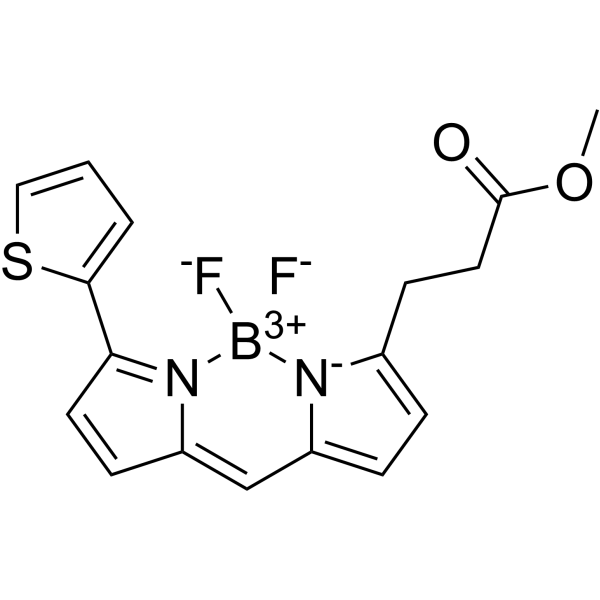
BODIPY R6G methyl ester (compound 5′-1) is a BODIPY-like fluorescent dye with good light stability and insensitive to pH value. BODIPY R6G methyl ester shows good photostability, high sensitivity and insensitive to pH value. BODIPY R6G methyl ester can be used in research areas such as photodynamic research, PH probes, ion recognition, photocatalysis, protein labeling, cell imaging, and proteomic analysis .
|
-
-
- HY-118112
-
|
|
Biochemical Assay Reagents
|
Others
|
|
4-N-Maleimidobenzoicacid-NHS is a PEG linker that finds utility in bioconjugation endeavors and protein labeling ventures. Specifically designed for selective reaction with thiol groups, the maleimide group establishes covalent linkages, thereby facilitating the coupling of proteins, peptides, or diverse molecules to thiol-bearing biomolecules. The NHS ester is able to react specifically and efficiently with primary amines (e.g. the side chain of lysine residues or aminosilane-coated surfaces) at neutral or slightly basic conditions to form a covalent bond.
|
-

-
- HY-D2745
-
|
|
Fluorescent Dye
|
Others
|
|
BP Fluor 594 NHS ester is the most popular tool for modifying proteins or antibodies through the primary amines (Lys), amine-modified oligonucleotides, and other amine-containing biomolecules with BP Fluor 594 label. The labeling occurs most efficiently at pH 7-9 and forms a stable, covalent amide bond. BP Fluor 594 dye can be used for proteins labeling at high molar ratios without significant self-quenching, enabling brighter conjugates and more sensitive detection.
BP Fluor 594 is bright, water-soluble, and pH-insensitive from pH 4 to pH 10 red-fluorescent dye with absorption and emission maxima at 590 and 617 nm, respectively. It can be used with the 561 nm and 594 nm laser lines. BP Fluor 594 dye conjugated to a variety of antibodies, peptides, proteins, tracers, and amplification substrates often used for generation of stable signal in imaging and flow cytometry.
|
-

-
- HY-D1407
-
|
|
Fluorescent Dye
|
Others
|
|
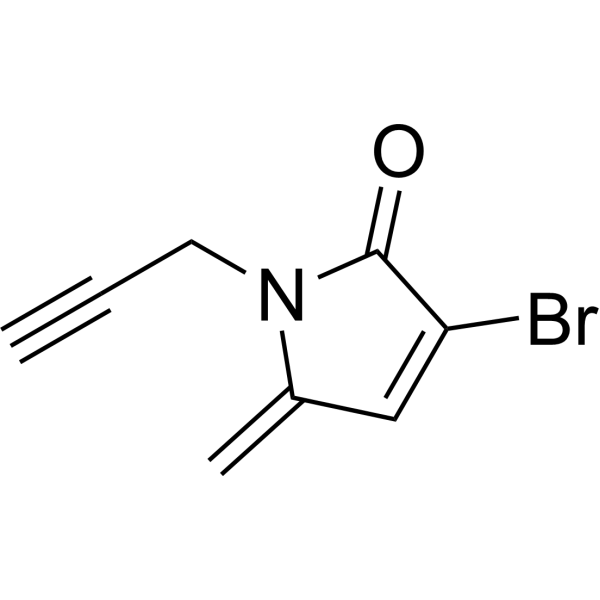
Br-5MP-Propargyl is the derivative of 5-Methylene pyrrolone (5MP). 5-Methylene pyrrolones (5MPs) are thiol-specific, reversible bioconjugation reagents for cysteine-specific protein modification, that are commonly used for protein bioconjugation . Br-5MP-Propargyl is a click chemistry reagent, it contains an Alkyne group and can undergo copper-catalyzed azide-alkyne cycloaddition (CuAAc) with molecules containing Azide groups.
|
-
-
- HY-D2092
-
|
|
Fluorescent Dye
|
Others
|
|
PE-VF680 Maleimide is a double-dye dye that can undergo thiol reaction. It contains maleimide groups that can react with thiol groups to form covalent bonds. Ex/Em=495-566/701 nm. PE-VF680 Maleimide contains two dyes, PE and VF, with excitation wavelengths (Ex) of 495 nm and 566 nm, respectively. PE-VF594 Maleimide has an emission wavelength (Em) of 701 nm.
|
-
-
- HY-D2094
-
|
|
Fluorescent Dye
|
Inflammation/Immunology
Cancer
|
|
PerCP Maleimide is a fluorescent dye that reacts with free sulfhydryl groups on proteins. PerCP is a red fluorescence albuminous dye for immunostaining and Maleimide can be leveraged for the preparation of fluorogenic probe, which is mainly used for the specific detection of thiol analytes .
|
-

-
- HY-D2091
-
|
|
Fluorescent Dye
|
Others
|
|
PE-VF647 Maleimide is a double-dye dye that can undergo thiol reaction. It contains maleimide groups that can react with thiol groups to form covalent bonds. PE-VF647 Maleimide contains two dyes, PE and VF, with excitation wavelengths (Ex) of 495 nm and 566 nm, respectively. PE-VF594 Maleimide has an emission wavelength (Em) of 665 nm.
|
-
- HY-D1404
-
|
|
Fluorescent Dye
|
Others
|
|
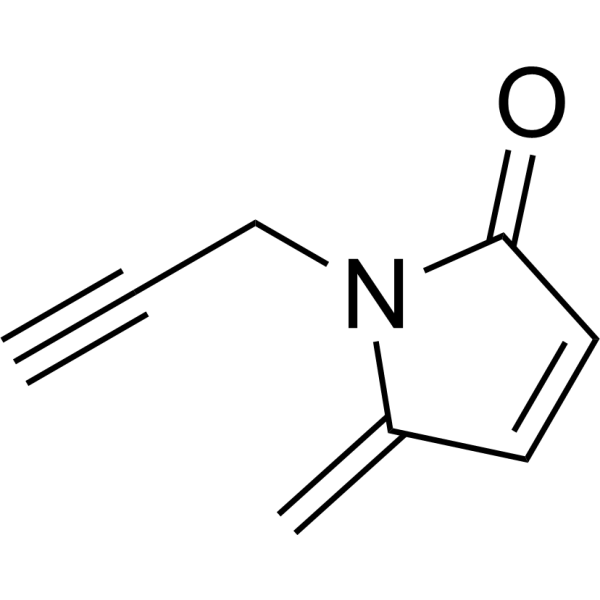
5MP-Propargyl is the derivative of 5-Methylene pyrrolone (5MP). 5-Methylene pyrrolones (5MPs) are thiol-specific, reversible bioconjugation reagents for cysteine-specific protein modification, that are commonly used for protein bioconjugation . 5MP-Propargyl is a click chemistry reagent, it contains an Alkyne group and can undergo copper-catalyzed azide-alkyne cycloaddition (CuAAc) with molecules containing Azide groups.
|
-
- HY-D0715R
-
|
Ro 20-7234 (Standard)
|
Fluorescent Dye
Reference Standards
|
Others
|
|
Fluorescamine (Standard) is the analytical standard of Fluorescamine (HY-D0715). This product is intended for research and analytical applications. Fluorescamine is a spirocyclic compound that is non-fluorescent. Fluorescamine reacts rapidly with primary amine groups in proteins under alkaline conditions to generate products with strong fluorescence (Ex/Em : 390/475 nm). Fluorescamine can be used to detect amine-containing compounds, including amino acids, peptides, and proteins .
|
-

- HY-D1405
-
-
- HY-D1403
-
|
|
Fluorescent Dye
|
Cancer
|
|
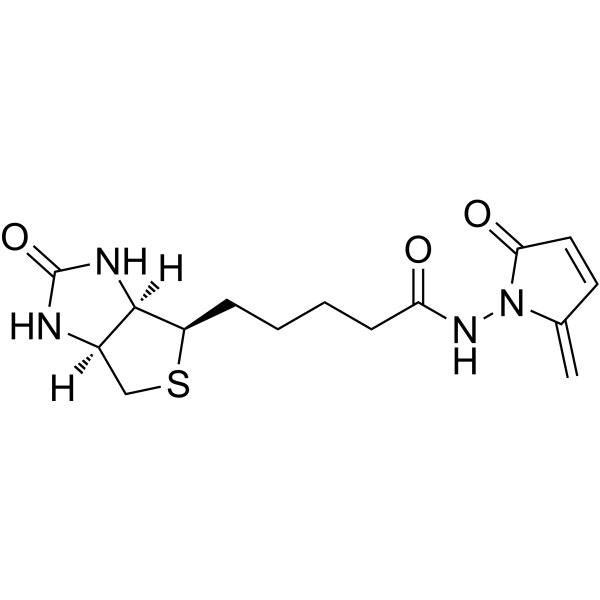
L-Biotin-NH-5MP is a biotin-conjugated 5-Methylene pyrrolone (5MP). 5-Methylene pyrrolones (5MPs) are thiol-specific, reversible bioconjugation reagents for cysteine-specific protein modification, that are commonly used for protein bioconjugation .
|
-
- HY-D2093
-
|
|
Fluorescent Dye
|
Others
|
|
PE-VF750 Maleimide is a thiol-reactive double-dye dye that contains maleimide groups that can react with thiol groups to form covalent bonds. Ex/Em=495-566/777 nm. PE-VF750 Maleimide contains two dyes, PE and VF, with excitation wavelengths (Ex) of 495 nm and 566 nm, respectively. PE-VF594 Maleimide has an emission wavelength (Em) of 777 nm.
|
-
- HY-D2090
-
-

- HY-D1890
-
|
|
Fluorescent Dye
|
Others
|
|
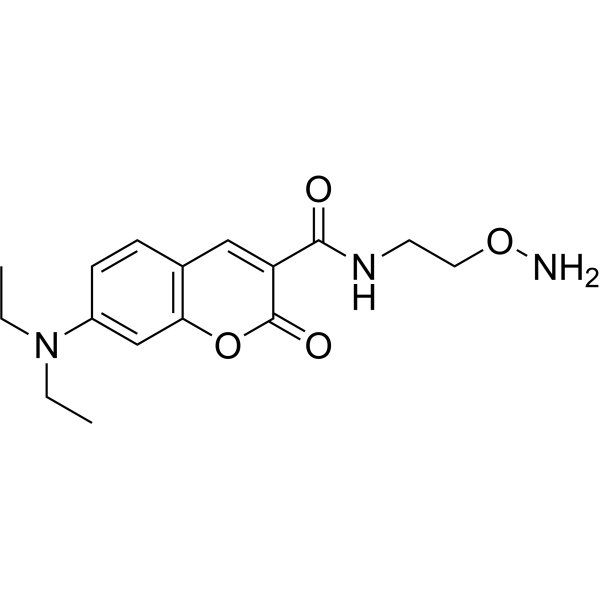
N-(2-Aminooxyethyl)-7-DCCAm (Compound 7) is a fluorescent dye, and can be used for protein labeling .
|
-
- HY-W190865
-
|
Biotin-PEG5-COOH
|
Biochemical Assay Reagents
|
Others
|
|
Biotin-PEG5-acid (Biotin-PEG5-COOH) is a biotin-PEG compound containing a carboxyl group (-COOH) that can be used to react with an amine group (NH2) to form a stable amide bond. Biotin-PEG5-acid can be used for protein labeling and drug delivery research .
|
-

- HY-116027B
-
|
Biotin-PEG11-COOH
|
Biochemical Assay Reagents
|
Others
|
|
Biotin-PEG11-acid (Biotin-PEG11-COOH) is a biotin-PEG compound containing a carboxyl group (-COOH) that can be used to react with an amine group (NH2) to form a stable amide bond. Biotin-PEG11-acid can be used for protein labeling and drug delivery research .
|
-

- HY-167384
-
|
|
Biochemical Assay Reagents
|
Others
|
|
PLLA1000-PEG1000-BIO is a polylactic acid derivative that can form micelles in water. In addition, PLLA1000-PEG1000-BIO can bind tightly to avidin or streptavidin for protein labeling. PLLA1000-PEG1000-BIO can be used in drug delivery research .
|
-

- HY-101890R
-
|
DABS-Cl (Standard)
|
Fluorescent Dye
Reference Standards
|
Others
|
|
Dabsyl chloride (Standard) is the analytical standard of Dabsyl chloride (HY-101890). This product is intended for research and analytical applications. Dabsyl chloride is an amine derivatizing agent, able to give rise to stable products that can be easily monitored spectrophotometrically at 460 nm; Dabsyl chloride also used for labeling amino acids.
|
-

- HY-W354021
-
|
|
Biochemical Assay Reagents
|
Others
|
|
Bis-N-succinimidyl diglycolic acid is a multifunctional crosslinker. Bis-N-succinimidyl diglycolic acid finds application in bioconjugation and protein labeling .
|
-

- HY-D2955
-
|
CLIP-AZIDE
|
Biochemical Assay Reagents
|
Others
|
|
BC-AZIDE (CLIP-AZIDE) is a nitrogen-functionalized protein labeling probe based on the CLIP-tag system. BC-AZIDE can be used for bioorthogonal click chemistry and intracellular orthogonal labeling .
|
-

- HY-167376
-
|
|
Biochemical Assay Reagents
|
Others
|
|
PLLA3000-PEG5000-BIO is a polylactic acid derivative that can form micelles in water. In addition, PLLA3000-PEG5000-BIO can bind tightly to avidin or streptavidin for protein labeling. PLLA3000-PEG5000-BIO can be used in drug delivery research .
|
-

- HY-167373
-
|
|
Biochemical Assay Reagents
|
Others
|
|
PLLA4000-PEG5000-BIO is a polylactic acid derivative that can form micelles in water. In addition, PLLA4000-PEG5000-BIO can bind tightly to avidin or streptavidin for protein labeling. PLLA4000-PEG5000-BIO can be used in drug delivery research .
|
-

- HY-167379
-
|
|
Biochemical Assay Reagents
|
Others
|
|
PLLA2000-PEG5000-BIO is a polylactic acid derivative that can form micelles in water. In addition, PLLA2000-PEG5000-BIO can bind tightly to avidin or streptavidin for protein labeling. PLLA2000-PEG5000-BIO can be used in drug delivery research .
|
-

- HY-167377
-
|
|
Biochemical Assay Reagents
|
Others
|
|
PLLA3000-PEG2000-BIO is a polylactic acid derivative that can form micelles in water. In addition, PLLA3000-PEG2000-BIO can bind tightly to avidin or streptavidin for protein labeling. PLLA3000-PEG2000-BIO can be used in drug delivery research .
|
-

- HY-167380
-
|
|
Biochemical Assay Reagents
|
Others
|
|
PLLA2000-PEG2000-BIO is a polylactic acid derivative that can form micelles in water. In addition, PLLA2000-PEG2000-BIO can bind tightly to avidin or streptavidin for protein labeling. PLLA2000-PEG2000-BIO can be used in drug delivery research .
|
-

- HY-167378
-
|
|
Biochemical Assay Reagents
|
Others
|
|
PLLA3000-PEG1000-BIO is a polylactic acid derivative that can form micelles in water. In addition, PLLA3000-PEG1000-BIO can bind tightly to avidin or streptavidin for protein labeling. PLLA3000-PEG1000-BIO can be used in drug delivery research .
|
-

- HY-167383
-
|
|
Biochemical Assay Reagents
|
Others
|
|
PLLA1000-PEG2000-BIO is a polylactic acid derivative that can form micelles in water. In addition, PLLA1000-PEG2000-BIO can bind tightly to avidin or streptavidin for protein labeling. PLLA1000-PEG2000-BIO can be used in drug delivery research .
|
-

- HY-167381
-
|
|
Biochemical Assay Reagents
|
Others
|
|
PLLA2000-PEG1000-BIO is a polylactic acid derivative that can form micelles in water. In addition, PLLA2000-PEG1000-BIO can bind tightly to avidin or streptavidin for protein labeling. PLLA2000-PEG1000-BIO can be used in drug delivery research .
|
-

- HY-167372
-
|
|
Biochemical Assay Reagents
|
Others
|
|
PLLA5000-PEG1000-BIO is a polylactic acid derivative that can form micelles in water. In addition, PLLA5000-PEG1000-BIO can bind tightly to avidin or streptavidin for protein labeling. PLLA5000-PEG1000-BIO can be used in drug delivery research .
|
-

- HY-167385
-
|
|
Biochemical Assay Reagents
|
Others
|
|
PLLA10000-PEG5000-BIO is a polylactic acid derivative that can form micelles in water. In addition, PLLA10000-PEG5000-BIO can bind tightly to avidin or streptavidin for protein labeling. PLLA10000-PEG5000-BIO can be used in drug delivery research .
|
-

- HY-167370
-
|
|
Biochemical Assay Reagents
|
Others
|
|
PLLA5000-PEG5000-BIO is a polylactic acid derivative that can form micelles in water. In addition, PLLA5000-PEG5000-BIO can bind tightly to avidin or streptavidin for protein labeling. PLLA5000-PEG5000-BIO can be used in drug delivery research .
|
-

- HY-167374
-
|
|
Biochemical Assay Reagents
|
Others
|
|
PLLA4000-PEG2000-BIO is a polylactic acid derivative that can form micelles in water. In addition, PLLA4000-PEG2000-BIO can bind tightly to avidin or streptavidin for protein labeling. PLLA4000-PEG2000-BIO can be used in drug delivery research .
|
-

- HY-167387
-
|
|
Biochemical Assay Reagents
|
Others
|
|
PLLA10000-PEG1000-BIO is a polylactic acid derivative that can form micelles in water. In addition, PLLA10000-PEG1000-BIO can bind tightly to avidin or streptavidin for protein labeling. PLLA10000-PEG1000-BIO can be used in drug delivery research .
|
-

- HY-167386
-
|
|
Biochemical Assay Reagents
|
Others
|
|
PLLA10000-PEG2000-BIO is a polylactic acid derivative that can form micelles in water. In addition, PLLA10000-PEG2000-BIO can bind tightly to avidin or streptavidin for protein labeling. PLLA10000-PEG2000-BIO can be used in drug delivery research .
|
-

- HY-167375
-
|
|
Biochemical Assay Reagents
|
Others
|
|
PLLA4000-PEG1000-BIO is a polylactic acid derivative that can form micelles in water. In addition, PLLA4000-PEG1000-BIO can bind tightly to avidin or streptavidin for protein labeling. PLLA4000-PEG1000-BIO can be used in drug delivery research .
|
-

- HY-167371
-
|
|
Biochemical Assay Reagents
|
Others
|
|
PLLA5000-PEG2000-BIO is a polylactic acid derivative that can form micelles in water. In addition, PLLA5000-PEG2000-BIO can bind tightly to avidin or streptavidin for protein labeling. PLLA5000-PEG2000-BIO can be used in drug delivery research .
|
-

- HY-D2939
-
|
|
Fluorescent Dye
|
Others
|
BGSBD is a SNAP-tag-based fluorescent probe (Ex/Em: 435 nm/516 nm) based on the environmentally sensitive fluorescent group SBD, specifically designed for protein labeling of live cells without washing. BGSBD achieves a 280-fold fluorescence enhancement after labeling by ingeniously utilizing the hydrophobic binding pocket of the SNAP-tag protein, providing an ideal tool for real-time monitoring of protein dynamics within cells .
|
-

| Cat. No. |
Product Name |
Type |
-
- HY-66019
-
FITC
Maximum Cited Publications
92 Publications Verification
Fluorescein 5-isothiocyanate
|
Fluorescent Dyes
|
|
FITC (Fluorescein Isothiocyanate), is one of the green fluorescein derivatives widely used in biology. FITC has the characteristics of high absorptivity and excellent fluorescence quantum yield. The isothiocyanate group of FITC can be combined with amino, sulfhydryl, imidazole, tyrosyl, carbonyl and other groups on the protein, so as to achieve protein labeling including antibodies and lectins. In addition to its use as a protein marker, FITC can also be used as a fluorescent protein tracer to rapidly identify pathogens by labeling antibodies, or for microsequencing of proteins and peptides (HPLC). The maximum excitation wavelength of FITC is 494 nm. Once excited, it fluoresces yellow-green at a maximum emission wavelength of 520 nm. In addition, FITC is also a hapten that can induce contact hypersensitivity (CHS) and induce an atopic dermatitis model .
|
-
- HY-D0821
-
|
Sulfo-Cyanine5
|
Fluorescent Dyes
|
|
CY5 is a CY dye. CY, short for Cyanine, is a compound consisting of two nitrogen atoms connected by an odd number of methyl units. Cyanine compounds have the characteristics of long wavelength, adjustable absorption and emission, high extinction coefficient, good water solubility and relatively simple synthesis . CY dyes are of en used for the labeling of proteins, antibodies and small molecular compounds. For the labeling of protein antibodies, the combination can be completed through a simple mixing reaction. Below, we introduce the labeling method of protein antibody labeling, which has certain reference significance .
|
-
- HY-D0017
-
|
DNSCl
|
Fluorescent Dyes
|
|
Dansyl chloride is a reagent that produces stable blue or blue-green fluorescent sulfonamide adducts in the reaction of aliphatic and aromatic amines with primary amino groups, and is widely used for modified amino acids, protein sequencing and amino acid analysis .
|
-
- HY-D0822
-
CY3
4 Publications Verification
Sulfo-Cyanine3
|
Fluorescent Dyes
|
|
Cy3 (Sulfo-Cyanine3) is an orange-fluorescent label for protein and nucleic acid (λex=554, λem=568).
|
-
- HY-110210
-
|
BODIPY FL,SE
|
Fluorescent Dyes
|
|
BODIPY FL NHS ester (BODIPY FL, SE) is a cell membranes-penatrable amine-reactive fluorescent probe. The maximum excitation/emission wavelength of the BODIPY-FL NHS ester are 502/511 nm, respectively. BODIPY-FL NHS ester has high stability and is insensitive to the polarity, pH and type of solvent, and can maintain stable fluorescence properties under different environmental conditions. BODIPY-FL NHS ester can be used for the synthesis of protease substrates, live cell imaging, protein labeling and immunoassay .
|
-
- HY-D0823
-
CY3-SE
1 Publications Verification
Sulfo-Cy3 NHS ester; Sulfo Cyanine3 NHS ester
|
Fluorescent Dyes
|
|
Cy3-SE (Sulfo-Cy3 NHS ester; Sulfo Cyanine3 NHS ester) is a sulfonated cyanine dye-derived fluorescent labeling reagent with λex of about 515 nm and λem of about 568 nm. Cy3-SE can interact with the π-π stacking of biomolecules (e.g., nucleoside monophosphates, proteins), inhibiting the photoisomerization process and increasing the fluorescence quantum yield and lifetime .
|
-
- HY-D0715
-
|
Ro 20-7234
|
Fluorescent Dyes
|
|
Fluorescamine is a spirocyclic compound that is non-fluorescent. Fluorescamine reacts rapidly with primary amine groups in proteins under alkaline conditions to generate products with strong fluorescence (Ex/Em: 390/475 nm). Fluorescamine can be used to detect amine-containing compounds, including amino acids, peptides, and proteins .
|
-
- HY-Y0695
-
|
Naphthol Blue Black
|
Fluorescent Dyes
|
|
Amido Black 10B (Naphthol Blue Black) is a highly toxic azo dye. Amido Black 10B is genotoxic and mutagenic. Amido Black 10B can cause respiratory problems. Amido Black 10B is used for amino acid dyeing .
|
-
- HY-130533
-
|
|
Fluorescent Dyes
|
|
ReAsH-EDT2 is a red fluorescent dye that marks proteins. ReAsH-EDT2 is a membrane-permeable biarsenical compound that binds covalently to tetracysteine sequences which allows the protein to be imaged. ReAsH-EDT2 can be used for protein localization and trafficking. (λex=530 nm, λem=592 nm) .
|
-
- HY-15937
-
|
5(6)-Carboxyfluorescein N-hydroxysuccinimide ester; 5(6)-Carboxyfluorescein succinimidyl ester mixed isomers
|
Fluorescent Dyes
|
|
5(6)-FAM SE is a green fluorescent dye widely used for protein labeling.
|
-
- HY-D0926
-
Cy7.5
3 Publications Verification
|
Fluorescent Dyes
|
|
Cy7.5 is a CY dye. CY, short for Cyanine, is a compound consisting of two nitrogen atoms connected by an odd number of methyl units. Cyanine compounds have the characteristics of long wavelength, adjustable absorption and emission, high extinction coefficient, good water solubility and relatively simple synthesis . CY dyes are of en used for the labeling of proteins, antibodies and small molecular compounds. For the labeling of protein antibodies, the combination can be completed through a simple mixing reaction. Below, we introduce the labeling method of protein antibody labeling, which has certain reference significance .
|
-
- HY-101890
-
|
DABS-Cl
|
Fluorescent Dyes
|
|
Dabsyl chloride is an amine derivatizing agent, able to give rise to stable products that can be easily monitored spectrophotometrically at 460 nm; Dabsyl chloride also used for labeling amino acids.
|
-
- HY-D0832
-
CY5-N3
1 Publications Verification
Sulfo-Cyanine5-azide
|
Fluorescent Dyes
|
|
CY5-N3 (Sulfo-Cyanine5-azide) is a Cy5-azide, which is a fluorescent dye (ex/em: 646/662 nm). CY5-N3 is cell membrane permeable and can be used for live cell imaging. CY5-N3 can be used in cell imagine by Click reaction .
|
-
- HY-D0827
-
|
Cyanine2
|
Fluorescent Dyes
|
|
Cyanines are formally compounds with two nitrogen atoms linked by an odd number of methene units. 26 28 The nitrogen atoms are parts of the heterocyclic units (such as indole, benzoxazol, or benzothiazol) . The structures and optical properties of representative cyanine dyes used for in vivo imaging are presented . Cyanines are characterized by long wavelength, tunable absorption and emission, very high extinction coefficient (up to 300,000 M 1 cm 1), good water solubility, and relatively straightforward synthesis .
|
-
- HY-D0826
-
|
Cyanine2 Succinimidyl Ester (iodine)
|
Fluorescent Dyes
|
|
Cy2-SE iodine is a CY dye. CY, short for Cyanine, is a compound consisting of two nitrogen atoms connected by an odd number of methyl units. Cyanine compounds have the characteristics of long wavelength, adjustable absorption and emission, high extinction coefficient, good water solubility and relatively simple synthesis . CY dyes are of en used for the labeling of proteins, antibodies and small molecular compounds. For the labeling of protein antibodies, the combination can be completed through a simple mixing reaction. Below, we introduce the labeling method of protein antibody labeling, which has certain reference significance .
|
-
- HY-DY1007
-
|
|
Fluorescent Dyes
|
FITC (Fluorescein Isothiocyanate) (solution) , is one of the green fluorescein derivatives widely used in biology. FITC has the characteristics of high absorptivity and excellent fluorescence quantum yield. The isothiocyanate group of FITC can be combined with amino, sulfhydryl, imidazole, tyrosyl, carbonyl and other groups on the protein, so as to achieve protein labeling including antibodies and lectins. In addition to its use as a protein marker, FITC can also be used as a fluorescent protein tracer to rapidly identify pathogens by labeling antibodies, or for microsequencing of proteins and peptides (HPLC). The maximum excitation wavelength of FITC is 494 nm. Once excited, it fluoresces yellow-green at a maximum emission wavelength of 520 nm. In addition, FITC is also a hapten that can induce contact hypersensitivity (CHS) and induce an atopic dermatitis model .
Solvent and concentration: DMSO: 20 mM
The 1 mL volume is defined as the base specification. All larger sizes correspond to incremental volumes of this base.
|
-
- HY-W273413
-
|
NBD-H
|
Fluorescent Dyes
|
|
4-Hydrazino-7-nitro-benzofurazan hydrazine adduct (NBD-H) is a fluorescent reagent used for protein labeling .
|
-
- HY-W998680
-
|
5-FITC-Maleimide
|
Fluorescent Dyes
|
|
Fluorescein-maleimide (5-FITC-Maleimide) is a thiol-reactive fluorescent derivatization reagent and non-specific protein labeling reagent. Fluorescein-maleimide covalently binds to protein thiol groups for protein labeling. Fluorescein-maleimide covalently binds to protein amino and imidazole groups under neutral pH conditions. Fluorescein-maleimide is used for fluorescent labeling of proteins, nucleic acids or other molecules containing one or more thiol groups (Ex/Em = 494/519 nm) .
|
-
- HY-D1390A
-
|
|
Fluorescent Dyes
|
|
Sulfo-Cy5-Mal is a fluorescent dye derivative composed of a CY5 dye and a maleimide functional group. Sulfo-Cy5-Mal specifically covalently binds to thiol-containing (-SH) biomolecules. Sulfo-Cy5-Mal can be used for protein labeling, antibody conjugation, molecular imaging, and drug delivery studies (Ex/Em = 633 nm/670 nm) .
|
-
- HY-125750
-
|
|
Fluorescent Dyes
|
|
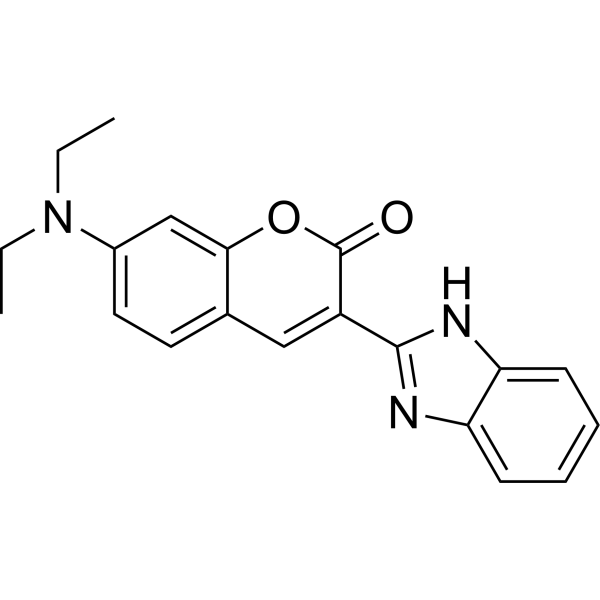
Coumarin 7 is a coumarin laser dye in plants in the form of glycosides .
|
-
- HY-D0820
-
|
Sulfo-Cyanine5-alkyne
|
Fluorescent Dyes
|
|
CY5-YNE (Sulfo-Cyanine5-alkyne) is a reactive dye for the labeling of amino-groups in peptides, proteins, and oligonucleotides (Ex: 650 nM; Em: 680 nm). CY5-YNE is a click chemistry reagent, it contains an Alkyne group and can undergo copper-catalyzed azide-alkyne cycloaddition (CuAAc) with molecules containing Azide groups.
|
-
- HY-D1261
-
|
Thiol-green 1
|
Fluorescent Dyes
|
|
Naph-EA-mal (Thiol-green 1) is a rapid detect and ultrafast turn-on thiol fluorescence probe for protein labeling and bioimaging. Naph-EA-mal (Thiol-green 1) can be used to detect thiols in living cells, label the protein thiols, quantify the concentration of total thiols in cell lysate, and determine the reversible protein thiols oxidation in fixed cells . Ex: 488 nM; Em: 540 nM.
|
-
- HY-156404
-
PM-1
2 Publications Verification
|
Fluorescent Dyes
|
|
PM-1, a derivative of Thioflavin-T (ThT; HY-D0218), is a small but highly specific plasma membrane (PM) fluorescent dye for specific and long-time membrane imaging of living and fixed cells. PM-1 is embedded directly into the cell membrane and exhibits a very long retention time on the plasma membrane with a half-life of approximately 15 h. PM-1 can be used in combination with protein labeling probes to study ectodomain shedding and endocytosis processes of cell surface proteins .
|
-
- HY-145383
-
|
|
Fluorescent Dyes
|
|
Biotin-PEG4-dialkoxydiphenylsilane-picolyl azide is a clickable, acid-cleavable biotin-picolyl azide. Biotin-PEG4-dialkoxydiphenylsilane-picolyl azide is an enrichment handle of cell surface glycoproteins for protein labeling . It contains an azide group and can undergo copper-catalyzed azide-alkyne cycloaddition (CuAAc) with molecules containing alkyne groups. It can also undergo ring strain-promoted alkyne-azide cycloaddition (SPAAC) with molecules containing DBCO or BCN groups.
|
-
- HY-110211
-
|
|
Fluorescent Dyes
|
|
BODIPY TMR-X SE is a potent fluorescent dye. BODIPY TMR-X SE can be used to label the primary amines (R-NH2) of proteins, amine-modified oligonucleotides, and other amine-containing molecules. BODIPY TR-X binds to protein or antibody and has bright, orange fluorescent light. (λex=544 nm, λem=570 nm) .
|
-
- HY-D0818
-
|
Sulfo-Cyanine3-alkyne
|
Fluorescent Dyes
|
|
CY3-YNE (Sulfo-Cyanine3-alkyne) is a dye for the labeling of soluble proteins, peptides, and oligonucleotides/DNA. CY3-YNE is a click chemistry reagent, it contains an Alkyne group and can undergo copper-catalyzed azide-alkyne cycloaddition (CuAAc) with molecules containing Azide groups.
|
-
- HY-Y0700
-
|
|
Fluorescent Dyes
|
|
Calconcarboxylic acid, an azo dye, acts as a silver-ion sensitizer to stain protein in SDS-PAGE gels. Calconcarboxylic acid increases silver binding on protein bands or spots by the formation of a silver-dye complex and also increases the reducing power o
|
-
- HY-D1406
-
|
|
Fluorescent Dyes
|
|
L-Biotin-NH-5MP-Br is a biotin-conjugated 5-Methylene pyrrolone (5MP). 5-Methylene pyrrolones (5MPs) are thiol-specific, reversible bioconjugation reagents for cysteine-specific protein modification, that are commonly used for protein bioconjugation .
|
-
- HY-D0968
-
|
Cyanine3
|
Fluorescent Dyes
|
|
Cy 3 Non-Sulfonated (Cyanine3) is a fluorescent label for protein and nucleic acid.
|
-
- HY-D2444
-
|
|
Fluorescent Dyes
|
|
AF555 NHS is a red fluorescent dye with excellent fluorescence properties and light stability. The excitation wavelength is 556 nm and the emission wavelength is 571 nm, which can be used for protein labeling, antibody labeling, and cell imaging .
|
-
- HY-D2956
-
|
CLIP-GLA-NHS
|
Fluorescent Dyes
|
|
BC-GLA-NHS (CLIP-GLA-NHS) is a NHS-labeled CLIP tag, which is an amine-reactive crosslinker and can achieve site-specific protein labeling. The NHS ester of BC-GLA-NHS reacts with the primary amine of the target molecule (such as antibodies, quantum dots) in a pH 7.5-8.5 buffer solution to form a stable amide bond. After coupling, the BC molecule undergoes a nucleophilic substitution reaction with the active site (Cys) of the CLIP-tagged fusion protein, releasing benzylcytosine and forming an irreversible thioether bond, achieving covalent labeling. BC-GLA-NHS can be used for click chemistry labeling .
|
-
- HY-D2923
-
|
|
Fluorescent Dyes
|
|
PA-JF549-Halo ligand is a covalently linked conjugate comprising the photoactivatable fluorescent dye PA-JF549 and a ligand for the HaloTag protein. PA-JF549-Halo ligand exhibts inherent structural properties and predispose it to localize within mitochondria. PA-JF549-Halo ligand combines the exceptional brightness, photostability, and cell permeability of the JF549 dye with photoactivation capabilities and the high specificity characteristic of HaloTag protein labeling technology. PA-JF549-Halo ligand enables high-quality single-molecule imaging and super-resolution imaging of specific proteins within live cells .
|
-
- HY-110212
-
|
BODIPY TR-X NHS Ester
|
Fluorescent Dyes
|
|
BODIPY TR-X (BODIPY TR-X NHS Ester) is a potent fluorescent dye. BODIPY TR-X can be used to label the primary amines (R-NH2) of proteins, amine-modified oligonucleotides, and other amine-containing molecules. BODIPY TR-X binds to protein or antibody and has bright, red fluorescent light. (λex=545 nm, λem=560 nm) .
|
-
- HY-D1607
-
|
|
Fluorescent Dyes
|
|
BODIPY FL SSE is a potent fluorescent dye. BODIPY FL SSE is used to label the primary amines (R-NH2) of proteins, amine-modified oligonucleotides, and other amine-containing molecules. BODIPY FL SSE can reactive with primary amines on biomolecules to emit green fluorescence. (λex=502 nm, λem=511 nm) .
|
-
- HY-D2931
-
|
|
Fluorescent Dyes
|
|
SNAP-FAM is a FAM-labeled SNAP tag fluorescent probe, specifically designed for live-cell protein labeling and real-time imaging applications .
|
-
- HY-D1390
-
|
|
Fluorescent Dyes
|
|
Sulfo-Cy5-Mal potassium is a fluorescent dye derivative composed of a CY5 dye and a maleimide functional group. Sulfo-Cy5-Mal potassium specifically covalently binds to thiol-containing (-SH) biomolecules. Sulfo-Cy5-Mal potassium can be used for protein labeling, antibody conjugation, molecular imaging, and drug delivery studies (Ex/Em = 633 nm/670 nm) .
|
-
- HY-D1591
-
|
|
Fluorescent Dyes
|
|
BODIPY R6G methyl ester (compound 5′-1) is a BODIPY-like fluorescent dye with good light stability and insensitive to pH value. BODIPY R6G methyl ester shows good photostability, high sensitivity and insensitive to pH value. BODIPY R6G methyl ester can be used in research areas such as photodynamic research, PH probes, ion recognition, photocatalysis, protein labeling, cell imaging, and proteomic analysis .
|
-
- HY-D2745
-
|
|
Fluorescent Dyes
|
|
BP Fluor 594 NHS ester is the most popular tool for modifying proteins or antibodies through the primary amines (Lys), amine-modified oligonucleotides, and other amine-containing biomolecules with BP Fluor 594 label. The labeling occurs most efficiently at pH 7-9 and forms a stable, covalent amide bond. BP Fluor 594 dye can be used for proteins labeling at high molar ratios without significant self-quenching, enabling brighter conjugates and more sensitive detection.
BP Fluor 594 is bright, water-soluble, and pH-insensitive from pH 4 to pH 10 red-fluorescent dye with absorption and emission maxima at 590 and 617 nm, respectively. It can be used with the 561 nm and 594 nm laser lines. BP Fluor 594 dye conjugated to a variety of antibodies, peptides, proteins, tracers, and amplification substrates often used for generation of stable signal in imaging and flow cytometry.
|
-
- HY-D1407
-
|
|
Fluorescent Dyes
|
|
Br-5MP-Propargyl is the derivative of 5-Methylene pyrrolone (5MP). 5-Methylene pyrrolones (5MPs) are thiol-specific, reversible bioconjugation reagents for cysteine-specific protein modification, that are commonly used for protein bioconjugation . Br-5MP-Propargyl is a click chemistry reagent, it contains an Alkyne group and can undergo copper-catalyzed azide-alkyne cycloaddition (CuAAc) with molecules containing Azide groups.
|
-
- HY-D2092
-
|
|
Fluorescent Dyes
|
|
PE-VF680 Maleimide is a double-dye dye that can undergo thiol reaction. It contains maleimide groups that can react with thiol groups to form covalent bonds. Ex/Em=495-566/701 nm. PE-VF680 Maleimide contains two dyes, PE and VF, with excitation wavelengths (Ex) of 495 nm and 566 nm, respectively. PE-VF594 Maleimide has an emission wavelength (Em) of 701 nm.
|
-
- HY-D2094
-
|
|
Fluorescent Dyes
|
|
PerCP Maleimide is a fluorescent dye that reacts with free sulfhydryl groups on proteins. PerCP is a red fluorescence albuminous dye for immunostaining and Maleimide can be leveraged for the preparation of fluorogenic probe, which is mainly used for the specific detection of thiol analytes .
|
-
- HY-D2091
-
|
|
Fluorescent Dyes
|
|
PE-VF647 Maleimide is a double-dye dye that can undergo thiol reaction. It contains maleimide groups that can react with thiol groups to form covalent bonds. PE-VF647 Maleimide contains two dyes, PE and VF, with excitation wavelengths (Ex) of 495 nm and 566 nm, respectively. PE-VF594 Maleimide has an emission wavelength (Em) of 665 nm.
|
-
- HY-D1404
-
|
|
Fluorescent Dyes
|
|
5MP-Propargyl is the derivative of 5-Methylene pyrrolone (5MP). 5-Methylene pyrrolones (5MPs) are thiol-specific, reversible bioconjugation reagents for cysteine-specific protein modification, that are commonly used for protein bioconjugation . 5MP-Propargyl is a click chemistry reagent, it contains an Alkyne group and can undergo copper-catalyzed azide-alkyne cycloaddition (CuAAc) with molecules containing Azide groups.
|
-
- HY-D0715R
-
|
Ro 20-7234 (Standard)
|
Fluorescent Dyes
|
|
Fluorescamine (Standard) is the analytical standard of Fluorescamine (HY-D0715). This product is intended for research and analytical applications. Fluorescamine is a spirocyclic compound that is non-fluorescent. Fluorescamine reacts rapidly with primary amine groups in proteins under alkaline conditions to generate products with strong fluorescence (Ex/Em : 390/475 nm). Fluorescamine can be used to detect amine-containing compounds, including amino acids, peptides, and proteins .
|
-
- HY-D1405
-
|
|
Fluorescent Dyes
|
|
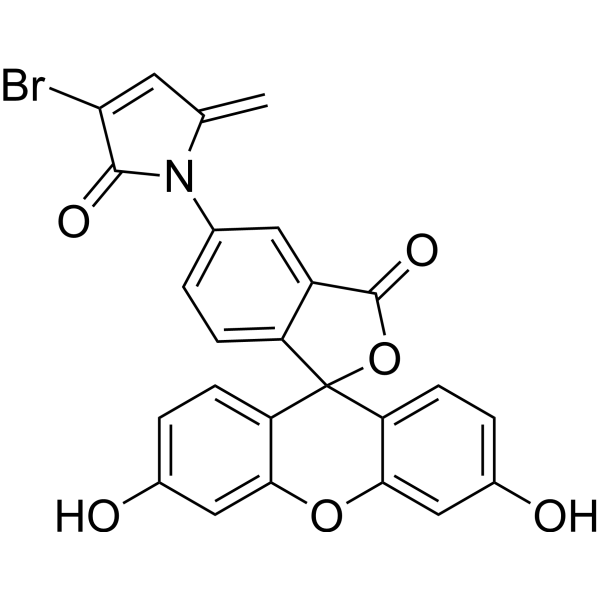
Br-5MP-Fluorescein is a dye reagent for labeling of peptides and proteins .
|
-
- HY-D1403
-
|
|
Fluorescent Dyes
|
|
L-Biotin-NH-5MP is a biotin-conjugated 5-Methylene pyrrolone (5MP). 5-Methylene pyrrolones (5MPs) are thiol-specific, reversible bioconjugation reagents for cysteine-specific protein modification, that are commonly used for protein bioconjugation .
|
-
- HY-D2093
-
|
|
Fluorescent Dyes
|
|
PE-VF750 Maleimide is a thiol-reactive double-dye dye that contains maleimide groups that can react with thiol groups to form covalent bonds. Ex/Em=495-566/777 nm. PE-VF750 Maleimide contains two dyes, PE and VF, with excitation wavelengths (Ex) of 495 nm and 566 nm, respectively. PE-VF594 Maleimide has an emission wavelength (Em) of 777 nm.
|
-
- HY-D2090
-
-
- HY-D1890
-
|
|
Fluorescent Dyes
|
|
N-(2-Aminooxyethyl)-7-DCCAm (Compound 7) is a fluorescent dye, and can be used for protein labeling .
|
-
- HY-101890R
-
|
DABS-Cl (Standard)
|
Fluorescent Dyes
|
|
Dabsyl chloride (Standard) is the analytical standard of Dabsyl chloride (HY-101890). This product is intended for research and analytical applications. Dabsyl chloride is an amine derivatizing agent, able to give rise to stable products that can be easily monitored spectrophotometrically at 460 nm; Dabsyl chloride also used for labeling amino acids.
|
- HY-D2955
-
|
CLIP-AZIDE
|
Fluorescent Dyes
|
|
BC-AZIDE (CLIP-AZIDE) is a nitrogen-functionalized protein labeling probe based on the CLIP-tag system. BC-AZIDE can be used for bioorthogonal click chemistry and intracellular orthogonal labeling .
|
- HY-D2939
-
|
|
Fluorescent Dyes
|
BGSBD is a SNAP-tag-based fluorescent probe (Ex/Em: 435 nm/516 nm) based on the environmentally sensitive fluorescent group SBD, specifically designed for protein labeling of live cells without washing. BGSBD achieves a 280-fold fluorescence enhancement after labeling by ingeniously utilizing the hydrophobic binding pocket of the SNAP-tag protein, providing an ideal tool for real-time monitoring of protein dynamics within cells .
|
| Cat. No. |
Product Name |
Type |
-
- HY-Y0623
-
|
HOSu; 1-Hydroxy-2,5-pyrrolidinedione
|
Biochemical Assay Reagents
|
|
N-Hydroxysuccinimide (HOSu; 1-Hydroxy-2,5-pyrrolidinedione) is a covalent crosslinker commonly used in bioconjugation technology with a primary amine group. N-Hydroxysuccinimide reacts with amino groups (-NH2) to form a stable amide bond, which can modify amino-containing biomolecules. N-Hydroxysuccinimide can be used, for example, for protein labeling with fluorescent dyes and enzymes, surface activation of chromatography supports, microbeads, nanoparticles and microarray slides, and chemical synthesis of peptides. N-Hydroxysuccinimide has a wide range of applications in biomaterial synthesis (such as collagen, chitosan crosslinking), drug delivery systems (such as hydrogel preparation) and tissue engineering .
|
-
- HY-116027A
-
|
Biotin-PEG10-COOH
|
Biochemical Assay Reagents
|
|
Biotin-PEG10-acid (Biotin-PEG10-COOH) is a biotin-PEG compound containing a carboxyl group (-COOH) that can be used to react with an amine group (NH2) to form a stable amide bond. Biotin-PEG10-acid can be used for protein labeling and drug delivery research .
|
-
- HY-W190865
-
|
Biotin-PEG5-COOH
|
Biochemical Assay Reagents
|
|
Biotin-PEG5-acid (Biotin-PEG5-COOH) is a biotin-PEG compound containing a carboxyl group (-COOH) that can be used to react with an amine group (NH2) to form a stable amide bond. Biotin-PEG5-acid can be used for protein labeling and drug delivery research .
|
-
- HY-116027B
-
|
Biotin-PEG11-COOH
|
Biochemical Assay Reagents
|
|
Biotin-PEG11-acid (Biotin-PEG11-COOH) is a biotin-PEG compound containing a carboxyl group (-COOH) that can be used to react with an amine group (NH2) to form a stable amide bond. Biotin-PEG11-acid can be used for protein labeling and drug delivery research .
|
-
- HY-167384
-
|
|
Biochemical Assay Reagents
|
|
PLLA1000-PEG1000-BIO is a polylactic acid derivative that can form micelles in water. In addition, PLLA1000-PEG1000-BIO can bind tightly to avidin or streptavidin for protein labeling. PLLA1000-PEG1000-BIO can be used in drug delivery research .
|
-
- HY-167376
-
|
|
Biochemical Assay Reagents
|
|
PLLA3000-PEG5000-BIO is a polylactic acid derivative that can form micelles in water. In addition, PLLA3000-PEG5000-BIO can bind tightly to avidin or streptavidin for protein labeling. PLLA3000-PEG5000-BIO can be used in drug delivery research .
|
-
- HY-167373
-
|
|
Biochemical Assay Reagents
|
|
PLLA4000-PEG5000-BIO is a polylactic acid derivative that can form micelles in water. In addition, PLLA4000-PEG5000-BIO can bind tightly to avidin or streptavidin for protein labeling. PLLA4000-PEG5000-BIO can be used in drug delivery research .
|
-
- HY-167379
-
|
|
Biochemical Assay Reagents
|
|
PLLA2000-PEG5000-BIO is a polylactic acid derivative that can form micelles in water. In addition, PLLA2000-PEG5000-BIO can bind tightly to avidin or streptavidin for protein labeling. PLLA2000-PEG5000-BIO can be used in drug delivery research .
|
-
- HY-167377
-
|
|
Biochemical Assay Reagents
|
|
PLLA3000-PEG2000-BIO is a polylactic acid derivative that can form micelles in water. In addition, PLLA3000-PEG2000-BIO can bind tightly to avidin or streptavidin for protein labeling. PLLA3000-PEG2000-BIO can be used in drug delivery research .
|
-
- HY-167380
-
|
|
Biochemical Assay Reagents
|
|
PLLA2000-PEG2000-BIO is a polylactic acid derivative that can form micelles in water. In addition, PLLA2000-PEG2000-BIO can bind tightly to avidin or streptavidin for protein labeling. PLLA2000-PEG2000-BIO can be used in drug delivery research .
|
-
- HY-167378
-
|
|
Biochemical Assay Reagents
|
|
PLLA3000-PEG1000-BIO is a polylactic acid derivative that can form micelles in water. In addition, PLLA3000-PEG1000-BIO can bind tightly to avidin or streptavidin for protein labeling. PLLA3000-PEG1000-BIO can be used in drug delivery research .
|
-
- HY-167383
-
|
|
Biochemical Assay Reagents
|
|
PLLA1000-PEG2000-BIO is a polylactic acid derivative that can form micelles in water. In addition, PLLA1000-PEG2000-BIO can bind tightly to avidin or streptavidin for protein labeling. PLLA1000-PEG2000-BIO can be used in drug delivery research .
|
-
- HY-167381
-
|
|
Biochemical Assay Reagents
|
|
PLLA2000-PEG1000-BIO is a polylactic acid derivative that can form micelles in water. In addition, PLLA2000-PEG1000-BIO can bind tightly to avidin or streptavidin for protein labeling. PLLA2000-PEG1000-BIO can be used in drug delivery research .
|
-
- HY-167372
-
|
|
Biochemical Assay Reagents
|
|
PLLA5000-PEG1000-BIO is a polylactic acid derivative that can form micelles in water. In addition, PLLA5000-PEG1000-BIO can bind tightly to avidin or streptavidin for protein labeling. PLLA5000-PEG1000-BIO can be used in drug delivery research .
|
-
- HY-167385
-
|
|
Biochemical Assay Reagents
|
|
PLLA10000-PEG5000-BIO is a polylactic acid derivative that can form micelles in water. In addition, PLLA10000-PEG5000-BIO can bind tightly to avidin or streptavidin for protein labeling. PLLA10000-PEG5000-BIO can be used in drug delivery research .
|
-
- HY-167370
-
|
|
Biochemical Assay Reagents
|
|
PLLA5000-PEG5000-BIO is a polylactic acid derivative that can form micelles in water. In addition, PLLA5000-PEG5000-BIO can bind tightly to avidin or streptavidin for protein labeling. PLLA5000-PEG5000-BIO can be used in drug delivery research .
|
-
- HY-167374
-
|
|
Biochemical Assay Reagents
|
|
PLLA4000-PEG2000-BIO is a polylactic acid derivative that can form micelles in water. In addition, PLLA4000-PEG2000-BIO can bind tightly to avidin or streptavidin for protein labeling. PLLA4000-PEG2000-BIO can be used in drug delivery research .
|
-
- HY-167387
-
|
|
Biochemical Assay Reagents
|
|
PLLA10000-PEG1000-BIO is a polylactic acid derivative that can form micelles in water. In addition, PLLA10000-PEG1000-BIO can bind tightly to avidin or streptavidin for protein labeling. PLLA10000-PEG1000-BIO can be used in drug delivery research .
|
-
- HY-167386
-
|
|
Biochemical Assay Reagents
|
|
PLLA10000-PEG2000-BIO is a polylactic acid derivative that can form micelles in water. In addition, PLLA10000-PEG2000-BIO can bind tightly to avidin or streptavidin for protein labeling. PLLA10000-PEG2000-BIO can be used in drug delivery research .
|
-
- HY-167375
-
|
|
Biochemical Assay Reagents
|
|
PLLA4000-PEG1000-BIO is a polylactic acid derivative that can form micelles in water. In addition, PLLA4000-PEG1000-BIO can bind tightly to avidin or streptavidin for protein labeling. PLLA4000-PEG1000-BIO can be used in drug delivery research .
|
-
- HY-167371
-
|
|
Biochemical Assay Reagents
|
|
PLLA5000-PEG2000-BIO is a polylactic acid derivative that can form micelles in water. In addition, PLLA5000-PEG2000-BIO can bind tightly to avidin or streptavidin for protein labeling. PLLA5000-PEG2000-BIO can be used in drug delivery research .
|
| Cat. No. |
Product Name |
|
Classification |
-
- HY-D0832
-
CY5-N3
1 Publications Verification
Sulfo-Cyanine5-azide
|
|
Labeling and Fluorescence Imaging
Azide
|
|
CY5-N3 (Sulfo-Cyanine5-azide) is a Cy5-azide, which is a fluorescent dye (ex/em: 646/662 nm). CY5-N3 is cell membrane permeable and can be used for live cell imaging. CY5-N3 can be used in cell imagine by Click reaction .
|
-
- HY-D0820
-
|
Sulfo-Cyanine5-alkyne
|
|
Alkynes
Labeling and Fluorescence Imaging
|
|
CY5-YNE (Sulfo-Cyanine5-alkyne) is a reactive dye for the labeling of amino-groups in peptides, proteins, and oligonucleotides (Ex: 650 nM; Em: 680 nm). CY5-YNE is a click chemistry reagent, it contains an Alkyne group and can undergo copper-catalyzed azide-alkyne cycloaddition (CuAAc) with molecules containing Azide groups.
|
-
- HY-145383
-
|
|
|
Azide
|
|
Biotin-PEG4-dialkoxydiphenylsilane-picolyl azide is a clickable, acid-cleavable biotin-picolyl azide. Biotin-PEG4-dialkoxydiphenylsilane-picolyl azide is an enrichment handle of cell surface glycoproteins for protein labeling . It contains an azide group and can undergo copper-catalyzed azide-alkyne cycloaddition (CuAAc) with molecules containing alkyne groups. It can also undergo ring strain-promoted alkyne-azide cycloaddition (SPAAC) with molecules containing DBCO or BCN groups.
|
-
- HY-D0818
-
|
Sulfo-Cyanine3-alkyne
|
|
Alkynes
|
|
CY3-YNE (Sulfo-Cyanine3-alkyne) is a dye for the labeling of soluble proteins, peptides, and oligonucleotides/DNA. CY3-YNE is a click chemistry reagent, it contains an Alkyne group and can undergo copper-catalyzed azide-alkyne cycloaddition (CuAAc) with molecules containing Azide groups.
|
-
- HY-D1407
-
|
|
|
Alkynes
|
|
Br-5MP-Propargyl is the derivative of 5-Methylene pyrrolone (5MP). 5-Methylene pyrrolones (5MPs) are thiol-specific, reversible bioconjugation reagents for cysteine-specific protein modification, that are commonly used for protein bioconjugation . Br-5MP-Propargyl is a click chemistry reagent, it contains an Alkyne group and can undergo copper-catalyzed azide-alkyne cycloaddition (CuAAc) with molecules containing Azide groups.
|
-
- HY-D1404
-
|
|
|
Alkynes
|
|
5MP-Propargyl is the derivative of 5-Methylene pyrrolone (5MP). 5-Methylene pyrrolones (5MPs) are thiol-specific, reversible bioconjugation reagents for cysteine-specific protein modification, that are commonly used for protein bioconjugation . 5MP-Propargyl is a click chemistry reagent, it contains an Alkyne group and can undergo copper-catalyzed azide-alkyne cycloaddition (CuAAc) with molecules containing Azide groups.
|
-
- HY-D2955
-
|
CLIP-AZIDE
|
|
Azide
|
|
BC-AZIDE (CLIP-AZIDE) is a nitrogen-functionalized protein labeling probe based on the CLIP-tag system. BC-AZIDE can be used for bioorthogonal click chemistry and intracellular orthogonal labeling .
|
| Cat. No. |
Product Name |
|
Classification |
-
- HY-153845
-
|
|
|
Aptamers
|
|
RNA Aptamer Broccoli sodium is a 49-nucleotide nucleic acid aptamer that is much shorter than Spinach and Spinach2. It exhibits bright green fluorescence when binding to DFHBI or DFHBI-1T (a soluble analog of the green fluorescent protein label). RNA Aptamer Broccoli sodium can be used for RNA expression or localization in living cells .
|
Your information is safe with us. * Required Fields.
Inquiry Information
- Product Name:
- Cat. No.:
- Quantity:
- MCE Japan Authorized Agent:








