Search Result
Results for "
tau-protein related disease
" in MedChemExpress (MCE) Product Catalog:
| Cat. No. |
Product Name |
Target |
Research Areas |
Chemical Structure |
-
- HY-P99471
-
|
UCB 0107
|
Tau Protein
|
Neurological Disease
|
|
Bepranemab is a humanized IgG4 monoclonal antibody that binds to the central region of tau protein. Bepranemab inhibits the seeding, aggregation of pathological tau protein and the spread of tau pathology to distal brain regions. Bepranemab is applicable to research related to Alzheimer's disease .
|
-

-
- HY-W143216
-
|
Monomethylthionine
|
Amyloid-β
Tau Protein
HSP
|
Neurological Disease
|
|
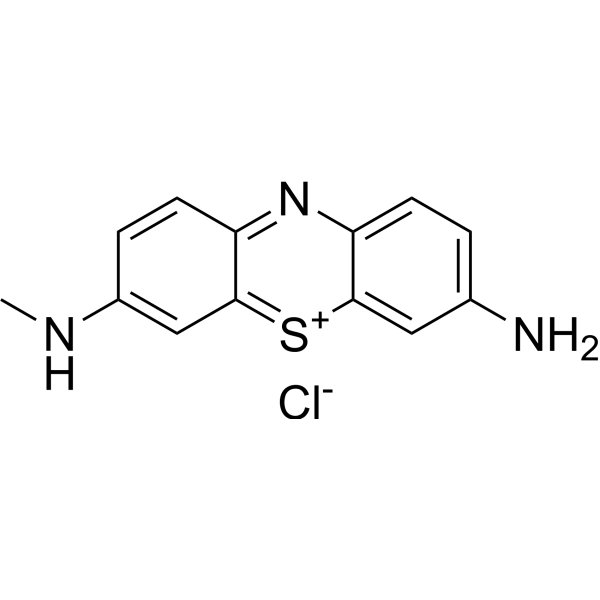
Azure C (Monomethylthionine) acts as a tau oligomer inhibitor and Aβ42 oligomerization inhibitor. Azure C regulates hsp70 ATPase activity, thereby mediating the clearance of tau protein. Azure C reduces the levels of toxic tau oligomers by promoting the formation of non-toxic tau aggregates, rescues neuroblastoma cells from tau oligomer-induced toxicity, and binds to and inhibits Aβ42 oligomerization. Azure C is generated via continuous oxidation of methylene blue or azure B through a horseradish peroxidase-mediated reaction. Azure C can be used in research related to tauopathies, including Alzheimer's disease .
|
-
-
- HY-148907
-
|
|
CaMK
MEK
Mixed Lineage Kinase
RIP kinase
Tau Protein
|
Neurological Disease
|
|
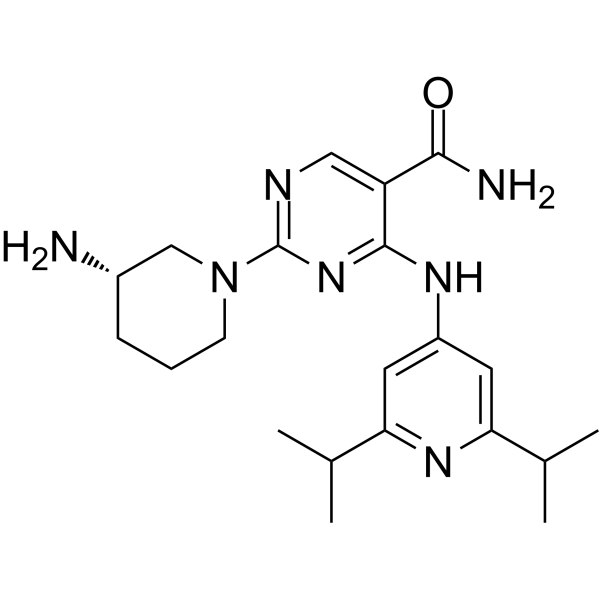
CS640 (Compound 19) is a chemical probe and a calmodulin-dependent kinase inhibitor. CS640 inhibits CaMK1D, CaMK1B, CaMK1A, CaMK1G, MEK5, RIPK4, mLK3 and PIP5K1, with IC50 values of 8, 3, 1, 1, 25 nM, 5.69, 2.75 and 11.2 μM, respectively. CS640 blocks Aβ-induced hyperphosphorylation of tau protein at the Thr181 site, but fails to protect primary mouse cortical neurons from Aβ-induced toxic damage. CS640 is applicable to research related to Alzheimer's disease .
|
-
-
- HY-P990995
-
|
E2814
|
Tau Protein
|
Neurological Disease
|
|
Etalanetug (E2814) is a humanized high-affinity IgG1 antibody that targets tau protein and can cross the blood-brain barrier. Etalanetug inhibits the spread of pathological tau protein through high-affinity binding to the microtubule-binding region (MTBR). Etalanetug can be used in research related to Alzheimer's disease .
|
-

-
- HY-145232
-
|
OGTAC-3
|
PhosTACs
Phosphatase
Tau Protein
|
Neurological Disease
Cancer
|
|
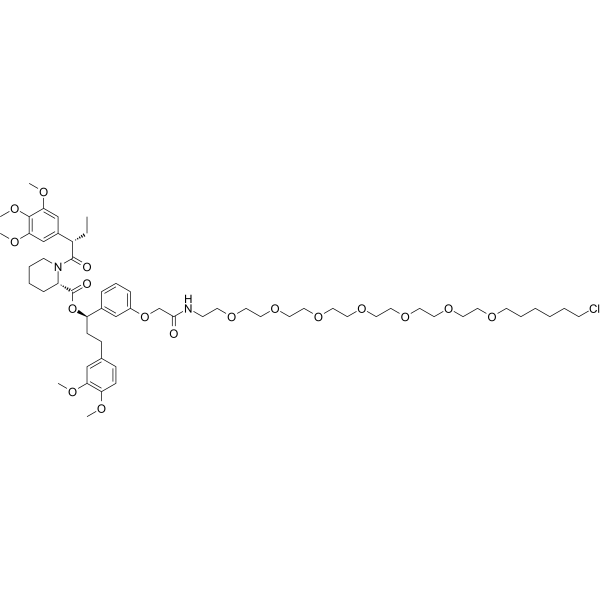
PhosTAC7 is a heterobifunctional molecule named as a Phosphorylation Targeting Chimera (PhosTAC). PhosTAC7 can dephosphorylate the PDCD4 protein, FOXO3a protein, and tau protein by recruiting serine/threonine protein phosphatase 2A (PP2A). PhosTAC7 offers the advantage of selectively modulating the phosphorylation state of individual target proteins, making it a promising tool for research in cancer and tau protein-related neurodegenerative diseases (Alzheimer's disease) .
|
-
-
- HY-138669
-
|
|
PROTACs
Tau Protein
|
Neurological Disease
|
|
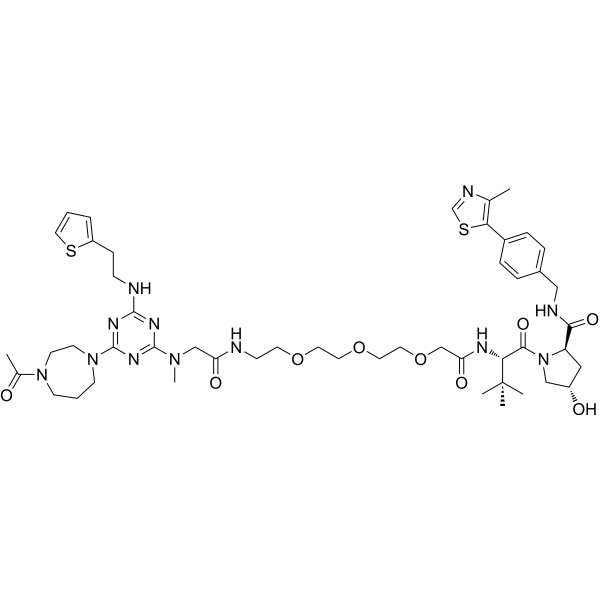
C004019 is a BBB-penetrable and small-molecule PROTAC that targets tau. C004019 can simultaneously recruit tau and E3 ligase, and effectively clear tau proteins by promoting the ubiquitination and proteasome-dependent degradation of tau, thereby improving synaptic and cognitive functions in Alzheimer's disease (AD) mice. C004019 can be used in the research of AD and tau protein-related diseases. (Pink: Ligand for target protein (HY-138679); Black: linker (HY-140189); Blue: E3 Ligase Ligand (HY-138678))
|
-
-
- HY-P991480
-
|
|
Transmembrane Glycoprotein
Tau Protein
Amyloid-β
|
Neurological Disease
Cancer
|
|
ONC-841 is a blood-brain barrier-permeable, humanized monoclonal antibody targeting SIGLEC10. As an immune checkpoint inhibitor, ONC-841 restores the functions of immune effector cells such as T cells and enhances anti-tumor immune responses by blocking inhibitory signals mediated by SIGLEC10. ONC-841 restores the phagocytic and migratory activities of microglia, and promotes the phagocytosis of Amyloid-β and Tau protein aggregates by microglia. ONC-841 is applicable to research related to solid tumors and Alzheimer's disease .
|
-

-
- HY-132582C
-
|
IONIS-MAPTRx sodium; BIIB080 sodium; ISIS 814907 sodium
|
Tau Protein
|
Neurological Disease
|
|
Diranersen (IONIS-MAPTRx) sodium is an antisense oligonucleotide that targets the human MAPT gene to inhibit the production of tau protein. Diranersen sodium can be used in research related to Alzheimer's disease and tauopathies .
|
-

-
- HY-132582
-
|
IONIS-MAPTRx; BIIB080; ISIS 814907
|
Tau Protein
|
Neurological Disease
|
|
Diranersen (IONIS-MAPTRx) is an antisense oligonucleotide that targets the human MAPT gene to inhibit the production of tau protein. Diranersen can be used in research related to Alzheimer's disease and tauopathies .
|
-

-
- HY-162566
-
|
|
Molecular Glues
Calcium Channel
Amyloid-β
Tau Protein
|
Neurological Disease
|
|
REM127 is an orally active, blood-brain barrier-penetrant septin 6/7 molecular glue degrader. REM127 binds to SEPT6 with high affinity and promotes the assembly of SEPT2/6/7 cortical filaments, thereby normalizing cytoplasmic calcium levels, cerebrospinal fluid hyperphosphorylated tau protein levels, synaptic function and cognitive function. REM127 can be used in research related to Alzheimer's disease .
|
-

-
- HY-137557
-
|
APN1607; PM-PBB3
|
Tau Protein
|
Neurological Disease
|
|
Florzolotau (APN1607) is a positron emission tomography (PET) ligand that can be used for the detection of Alzheimer's disease (AD) and other tau proteinopathies. Its binding sites are located in the β-sheet of paired helical filaments (PHFs) and straight filaments (SFs) of tau protein, as well as in the C-shaped cavity of SFs. In addition, APN-1607 binds to intraneuronal inclusions in Alzheimer's disease (AD), primary age-related tauopathy (PART) and posterior cortical atrophy (PCA). Florzolotau shows promise for PET imaging studies of neurological disorders, particularly tau proteinopathies .
|
-

-
- HY-147046
-
-
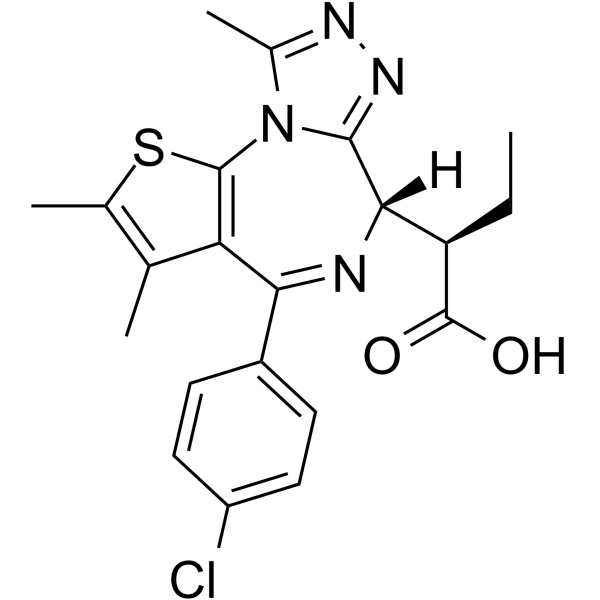
-
- HY-121811
-
|
Lanceolatin C
|
Glycosidase
Phosphatase
Interleukin Related
TNF Receptor
COX
Beclin1
GLUT
FAK
Akt
mTOR
p38 MAPK
Keap1-Nrf2
Apoptosis
Amyloid-β
Tau Protein
Autophagy
|
Neurological Disease
Inflammation/Immunology
Cancer
|
|
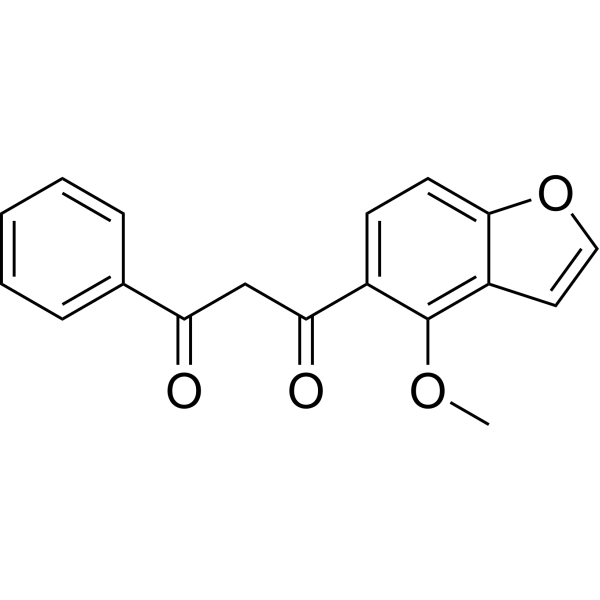
Pongamol (Lanceolatin C) is an orally active flavonoid with an IC50 of 75 μM and a Ki of 58 μM against PTPase-1B, and an IC50 of 103.5 μM against intestinal α-Glycosidase. Pongamol reduces the release of IL‑1β, TNF‑α, COX‑2 and iNOS in cells, reverses the nuclear translocation of NF‑κB, and upregulates the levels of Beclin 1 and LC3 Ⅱ/LC3 Ⅰ. Pongamol promotes glucose uptake by increasing the level of GLUT4 on the surface of skeletal muscle cells. Pongamol inhibits epithelial-mesenchymal transition by suppressing the FAK/Akt-mTOR signaling pathway. Pongamol inhibits neuronal cytotoxicity, suppresses cell apoptosis and extends the lifespan of Caenorhabditis elegans by activating the MAPKs/Nrf2 signaling pathway. Pongamol exerts hypoglycemic effects in diabetic mouse models. Pongamol exhibits antibacterial activity. Pongamol alleviates oxidative stress, neuroinflammation, Aβ deposition and excessive phosphorylation of Tau Protein, and restores autophagy function in Alzheimer's disease mouse models by inhibiting the Akt/mTOR signaling pathway. Pongamol is applicable to research related to Alzheimer's disease, type 2 diabetes, non-small cell lung cancer and postprandial hyperglycemia .
|
-
-
- HY-173291
-
|
|
Tau Protein
|
Neurological Disease
|
|
Tau ligand-1 (Compound 75) is a ligand for aggregated tau protein that can penetrate the blood-brain barrier . In tissues from patients with Alzheimer's disease, progressive supranuclear palsy, corticobasal degeneration, and Pick's disease, Tau ligand-1 exhibits high affinity for aggregated tau protein, with equilibrium dissociation constant (KD) values ranging from 1 to 3.8 nM . Tau ligand-1 can serve as a potential positron emission tomography (PET) tracer and holds promise for application in positron emission tomography imaging studies of tau-related diseases in the central nervous system .
|
-

-
- HY-W338446
-
|
|
Tau Protein
|
Neurological Disease
|
|
BF-170 is a selective tau fibril binding agent with an EC50 of 221 nM. It exhibits good blood-brain barrier permeability, and after intravenous injection in mice, the concentration in brain tissue reaches 9.1% ID/g within 2 minutes (with a brain clearance rate of 0.25% ID/g after 30 minutes). BF-170 can be used as a probe for tau protein pathology imaging in Alzheimer's disease (AD). It plays an important role in early-stage AD research and holds potential for imaging studies of tau-related neurodegenerative diseases .
|
-

-
- HY-162712
-
|
|
Orexin Receptor (OX Receptor)
Tau Protein
|
Neurological Disease
|
|
OX-201 is an orally active, blood-brain barrier-permeable OX2R agonist with an EC50 of 8.0 nM. OX-201 activates OX2R to induce wakefulness and neuronal activation. OX-201 promotes the release of neuron activity-dependent tau protein from neurons into the interstitial fluid of hippocampal tissues. OX-201 is applicable to research related to Alzheimer's disease and tauopathies .
|
-

-
- HY-109116A
-
|
Leukomethylene blue dihydrobromide; LMTM dihydrobromide
|
Tau Protein
|
Neurological Disease
|
|
Hydromethylthionine dihydrobromide (Leukomethylene blue dihydrobromide) is a potent inhibitor of TAU protein aggregation. Hydromethylthionine dihydrobromide reduces neurodegeneration by interacting with TAU proteins and preventing them from forming neurotoxic aggregates. Hydromethylthionine dihydrobromide can be used in the study of Alzheimer's disease and other TAU related disorders .
|
-

-
- HY-168857
-
|
|
GSK-3
Tau Protein
β-catenin
|
Neurological Disease
|
|
GSK-3β inhibitor 24 (Compound 41) is a potent GSK-3β inhibitor with an IC50 of 0.22 nM. GSK-3β inhibitor 24 increases GSK-3β phosphorylation at Ser9 site dose-dependently. GSK-3β inhibitor 24 inhibits the hyperphosphorylation of tau protein by decreasing the p-tau-Ser396 abundance. GSK-3β inhibitor 24 up-regulates β-catenin and neurogenesis-related markers (GAP43 and MAP-2). GSK-3β inhibitor 24 demonstrates remarkable anti-Alzheimer's disease (AD) effects .
|
-

-
- HY-175841
-
|
|
Tau Protein
p38 MAPK
NF-κB
Apoptosis
Bcl-2 Family
ERK
JNK
|
Neurological Disease
|
|
Tau Protein Phosphorylation-IN-1 is a tau protein phosphorylation inhibitor that potently protects PC12 cells against Aβ25–35-induced cytotoxicity (EC50 = 1.93 μM), and can penetrate the blood-brain barrier (BBB).Tau Protein Phosphorylation-IN-1 reverses the hyperphosphorylation of tau, significantly inhibits the expression of certain immune-related cytotoxic factors, suppresses the MAPK and NF-κB signaling pathways, and significantly inhibits the expression of RAGE and the apoptosis factors Bax/Bcl-2, both in vitro and in vivo. Tau Protein Phosphorylation-IN-1 relieves nerve damage, and improves learning and memory in an Alzheimer’s disease (AD) mouse model. Tau Protein Phosphorylation-IN-1 can be used for AD research .
|
-

-
- HY-P990995A
-
|
7G6 Antibody; 7G6-IgG2a
|
Tau Protein
|
Neurological Disease
|
|
Etalanetug (Mouse IgG2a) (7G6 Antibody) is a mouse monoclonal antibody targeting the HVPGG motif in the microtubule-binding domain of tau protein. Etalanetug (Mouse IgG2a) reduces the levels of insoluble tau protein in multiple brain regions and inhibits the seeding and spread of pathological tau protein. Etalanetug (Mouse IgG2a) is applicable to research related to Alzheimer's disease .
|
-

-
- HY-184078
-
|
|
Drug Derivative
Indoleamine 2,3-Dioxygenase (IDO)
Tau Protein
iGluR
|
Neurological Disease
|
|
8-F-2-(Me-Pip-Me)-Tryptanthrin is a tryptanthrin derivative with blood-brain barrier penetration. 8-F-2-(Me-Pip-Me)-Tryptanthrin protects neurons from Aβ-induced apoptosis, inhibits Aβ-induced Tau protein hyperphosphorylation and neuronal synaptic damage, and improves learning and memory abilities in Alzheimer's disease mice. 8-F-2-(Me-Pip-Me)-Tryptanthrin can be used for the research of nervous system diseases, including diseases related to abnormal Tau protein phosphorylation and abnormal PSD-95 function .
|
-

-
- HY-182304
-
|
|
Amyloid-β
α-synuclein
Amylin Receptor
Tau Protein
SOD
|
Neurological Disease
|
|
CLR01 sodium is a blood-brain barrier-permeable anti-aggregation agent. CLR01 sodium inhibits the de novo aggregation of Amyloid-β 40/42, α-synuclein, IAPP, tau protein and SOD1. CLR01 sodium reduces amyloid plaque burden in the cortex of triple-transgenic mice and improves the memory and motor abilities of these mice. CLR01 sodium can be used in research related to Alzheimer's disease, Parkinson's disease, and amyotrophic lateral sclerosis (ALS) .
|
-

-
- HY-183584
-
|
|
GSK-3
Src
DYRK
Tau Protein
Microtubule/Tubulin
|
Neurological Disease
|
|
ARN25699 is a kinase inhibitor with an IC50 of 5.5 nM against GSK-3β, 2.2 nM against FYN-α, and 242.3 nM against DYRK1A, and it exhibits oral bioavailability. ARN25699 reduces hyperphosphorylation of tau protein and promotes microtubule bundle formation. ARN25699 has a broader kinome inhibitory profile and targets kinases associated with the pathogenic mechanisms linked to Alzheimer's disease. ARN25699 can be used in the research of Alzheimer's disease and related tauopathies .
|
-

-
- HY-P992172
-
|
|
Tau Protein
|
Neurological Disease
|
|
ADEL-Y01 is a humanized and parental murine blood-brain barrier-penetrating monoclonal antibody against tau-acK280. ADEL-Y01 specifically recognizes tau-acK280 and its surrounding residues, mediates the neutralization and phagocytosis of acetylated tau aggregates, and interferes with the activity of pathological tau protein. ADEL-Y01 prevents the progression of tauopathies, increases neuronal survival rate, reduces tau-related pathological changes, and improves memory impairment. ADEL-Y01 can be used in research related to Alzheimer's disease and tauopathies .
|
-

-
- HY-137557A
-
|
(E/Z)-APN1607; (E/Z)-PM-PBB3
|
Tau Protein
|
Neurological Disease
|
|
(E/Z)-Florzolotau ((E/Z)-APN1607) is a mixed configuration or unspecified configuration of Florzolotau (HY-137557). Florzolotau (APN1607) is a positron emission tomography (PET) ligand that can be used for the detection of Alzheimer's disease (AD) and other tau proteinopathies. Its binding sites are located in the β-sheet of paired helical filaments (PHFs) and straight filaments (SFs) of tau protein, as well as in the C-shaped cavity of SFs. In addition, APN-1607 binds to intraneuronal inclusions in Alzheimer's disease (AD), primary age-related tauopathy (PART) and posterior cortical atrophy (PCA). Florzolotau shows promise for PET imaging studies of neurological disorders, particularly tau proteinopathies .
|
-

-
- HY-182893
-
|
|
α-synuclein
Reactive Oxygen Species (ROS)
Tyrosine Hydroxylase
|
Neurological Disease
|
|
SK-129 is a blood-brain barrier-permeable inhibitor of α-synuclein (αS) oligomers with a Kd of 221 nM. SK-129 preferentially binds to neurotoxic αS oligomers over physiological αS monomers, inhibits αS aggregation, blocks the interaction and co-aggregation of αS with tau protein, and prevents the maturation of αS-tau condensates into amyloid aggregates. SK-129 reduces ROS production, rescues dopaminergic neuron degeneration, improves motor function, restores endogenous dopamine synthesis, increases the number of Tyrosine Hydroxylase-positive neurons, prevents brain histopathological changes, alleviates neuroinflammation, and improves survival rates in relevant models. SK-129 can be used in research related to Parkinson's disease (PD) and Lewy body dementia (LBD) .
|
-

-
- HY-181926
-
|
|
COX
HDAC
Microtubule/Tubulin
Interleukin Related
Amyloid-β
Tau Protein
|
Neurological Disease
|
|
COX-2/HDAC6-IN-1 (Compound 11e) is a dual COX-2 and HDAC6 inhibitor, with an IC50 of 0.12 μM against HDAC6 and an IC50 of 0.66 μM against COX-2. COX-2/HDAC6-IN-1 enhances the acetylation level of α-tubulin, regulates epigenetic gene expression, and inhibits the expression of pro-inflammatory mediators (COX-2, IL-1β, IL-6 and TNF-α). COX-2/HDAC6-IN-1 promotes Amyloid-β clearance and reduces excessive phosphorylation of Tau protein. COX-2/HDAC6-IN-1 maintains neuronal morphology by stabilizing MAP2, protects synaptic integrity by regulating synapsin, and restores the expression of memory-related genes. COX-2/HDAC6-IN-1 possesses neuroprotective activity and improves learning and memory abilities in Scopolamine (HY-N0296)-induced Alzheimer's disease mouse models. COX-2/HDAC6-IN-1 is applicable to research related to Alzheimer's disease .
|
-

| Cat. No. |
Product Name |
Target |
Research Area |
Image |
-
- HY-P99471
-
|
UCB 0107
|
Tau Protein
|
Neurological Disease
|
|
Bepranemab is a humanized IgG4 monoclonal antibody that binds to the central region of tau protein. Bepranemab inhibits the seeding, aggregation of pathological tau protein and the spread of tau pathology to distal brain regions. Bepranemab is applicable to research related to Alzheimer's disease .
|
-

(5)
-
- HY-P990995
-
|
E2814
|
Tau Protein
|
Neurological Disease
|
|
Etalanetug (E2814) is a humanized high-affinity IgG1 antibody that targets tau protein and can cross the blood-brain barrier. Etalanetug inhibits the spread of pathological tau protein through high-affinity binding to the microtubule-binding region (MTBR). Etalanetug can be used in research related to Alzheimer's disease .
|
-
(5)
-
- HY-P991480
-
|
|
Transmembrane Glycoprotein
Tau Protein
Amyloid-β
|
Neurological Disease
Cancer
|
|
ONC-841 is a blood-brain barrier-permeable, humanized monoclonal antibody targeting SIGLEC10. As an immune checkpoint inhibitor, ONC-841 restores the functions of immune effector cells such as T cells and enhances anti-tumor immune responses by blocking inhibitory signals mediated by SIGLEC10. ONC-841 restores the phagocytic and migratory activities of microglia, and promotes the phagocytosis of Amyloid-β and Tau protein aggregates by microglia. ONC-841 is applicable to research related to solid tumors and Alzheimer's disease .
|
-
(5)
-
- HY-P990995A
-
|
7G6 Antibody; 7G6-IgG2a
|
Tau Protein
|
Neurological Disease
|
|
Etalanetug (Mouse IgG2a) (7G6 Antibody) is a mouse monoclonal antibody targeting the HVPGG motif in the microtubule-binding domain of tau protein. Etalanetug (Mouse IgG2a) reduces the levels of insoluble tau protein in multiple brain regions and inhibits the seeding and spread of pathological tau protein. Etalanetug (Mouse IgG2a) is applicable to research related to Alzheimer's disease .
|
-
(5)
-
- HY-P992172
-
|
|
Tau Protein
|
Neurological Disease
|
|
ADEL-Y01 is a humanized and parental murine blood-brain barrier-penetrating monoclonal antibody against tau-acK280. ADEL-Y01 specifically recognizes tau-acK280 and its surrounding residues, mediates the neutralization and phagocytosis of acetylated tau aggregates, and interferes with the activity of pathological tau protein. ADEL-Y01 prevents the progression of tauopathies, increases neuronal survival rate, reduces tau-related pathological changes, and improves memory impairment. ADEL-Y01 can be used in research related to Alzheimer's disease and tauopathies .
|
-
(5)
| Cat. No. |
Product Name |
Category |
Target |
Chemical Structure |
-
- HY-121811
-
|
Lanceolatin C
|
Structural Classification
Pongamia pinnata (L.) Pierre
Leguminosae
Ketones, Aldehydes, Acids
Derris trifoliata Lour.
Plants
Source Classification
|
Glycosidase
Phosphatase
Interleukin Related
TNF Receptor
COX
Beclin1
GLUT
FAK
Akt
mTOR
p38 MAPK
Keap1-Nrf2
Apoptosis
Amyloid-β
Tau Protein
Autophagy
|
|
Pongamol (Lanceolatin C) is an orally active flavonoid with an IC50 of 75 μM and a Ki of 58 μM against PTPase-1B, and an IC50 of 103.5 μM against intestinal α-Glycosidase. Pongamol reduces the release of IL‑1β, TNF‑α, COX‑2 and iNOS in cells, reverses the nuclear translocation of NF‑κB, and upregulates the levels of Beclin 1 and LC3 Ⅱ/LC3 Ⅰ. Pongamol promotes glucose uptake by increasing the level of GLUT4 on the surface of skeletal muscle cells. Pongamol inhibits epithelial-mesenchymal transition by suppressing the FAK/Akt-mTOR signaling pathway. Pongamol inhibits neuronal cytotoxicity, suppresses cell apoptosis and extends the lifespan of Caenorhabditis elegans by activating the MAPKs/Nrf2 signaling pathway. Pongamol exerts hypoglycemic effects in diabetic mouse models. Pongamol exhibits antibacterial activity. Pongamol alleviates oxidative stress, neuroinflammation, Aβ deposition and excessive phosphorylation of Tau Protein, and restores autophagy function in Alzheimer's disease mouse models by inhibiting the Akt/mTOR signaling pathway. Pongamol is applicable to research related to Alzheimer's disease, type 2 diabetes, non-small cell lung cancer and postprandial hyperglycemia .
|
-
| Cat. No. |
Product Name |
|
Classification |
-
- HY-132582C
-
|
IONIS-MAPTRx sodium; BIIB080 sodium; ISIS 814907 sodium
|
|
Antisense Oligonucleotides
|
|
Diranersen (IONIS-MAPTRx) sodium is an antisense oligonucleotide that targets the human MAPT gene to inhibit the production of tau protein. Diranersen sodium can be used in research related to Alzheimer's disease and tauopathies .
|
-
- HY-132582
-
|
IONIS-MAPTRx; BIIB080; ISIS 814907
|
|
Antisense Oligonucleotides
|
|
Diranersen (IONIS-MAPTRx) is an antisense oligonucleotide that targets the human MAPT gene to inhibit the production of tau protein. Diranersen can be used in research related to Alzheimer's disease and tauopathies .
|
Your information is safe with us. * Required Fields.
Inquiry Information
- Product Name:
- Cat. No.:
- Quantity:
- MCE Japan Authorized Agent:








