Search Result
Results for "
4-chloro-
" in MedChemExpress (MCE) Product Catalog:
32
Biochemical Assay Reagents
19
Isotope-Labeled Compounds
| Cat. No. |
Product Name |
Target |
Research Areas |
Chemical Structure |
-
- HY-B1368
-
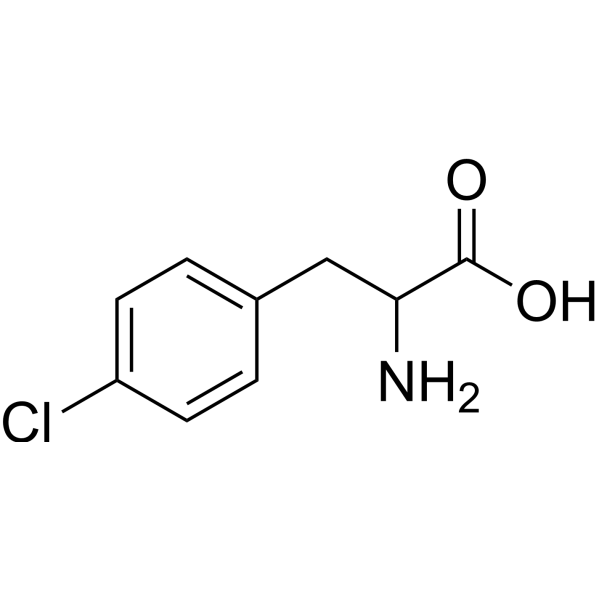
Fenclonine
Maximum Cited Publications
24 Publications Verification
4-chloro-DL-phenylalanine; PCPA; CP-10188
|
Tryptophan Hydroxylase
|
Neurological Disease
Cancer
|
|
Fenclonine is a selective and irreversible tryptophan hydroxylase inhibitor, which is a rate-limiting enzyme in the biosynthesis of serotonin. Fenclonine can be used in carcinoid syndrome research .
|
-
-
- HY-W019599
-
|
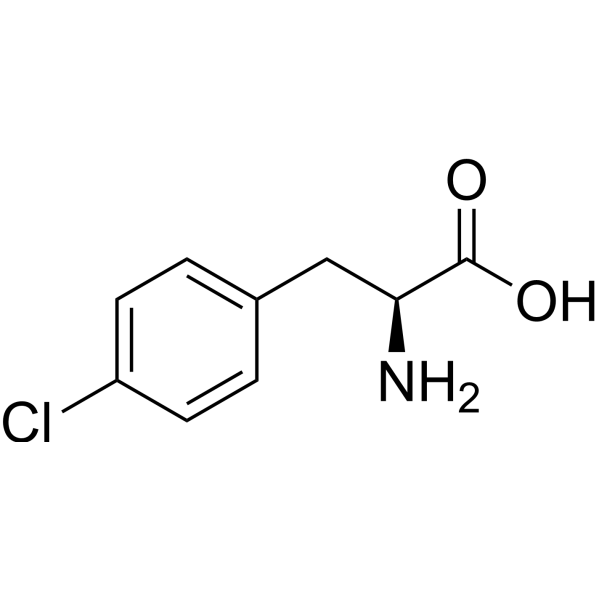
L-PCPA
|
5-HT Receptor
Tryptophan Hydroxylase
|
Neurological Disease
|
|
4-Chloro-L-phenylalanine (L-PCPA) is a tryptophan hydroxylase inhibitor targeting TPH1 and TPH2, with the activity of blocking serotonin biosynthesis. 4-Chloro-L-phenylalanine reduces the levels of serotonin and its metabolites in the brain without impairing the survival of serotonergic neurons. 4-Chloro-L-phenylalanine enhances anhedonic, depression-like and anxiety-like behaviors in mice with depleted noradrenergic and dopaminergic neurons. 4-Chloro-L-phenylalanine acts as a decarboxylation substrate for aromatic L-amino acid decarboxylase from Bacillus atrophaeus. 4-Chloro-L-phenylalanine can be used in studies related to Parkinson's disease .
|
-
-
- HY-101456
-
|
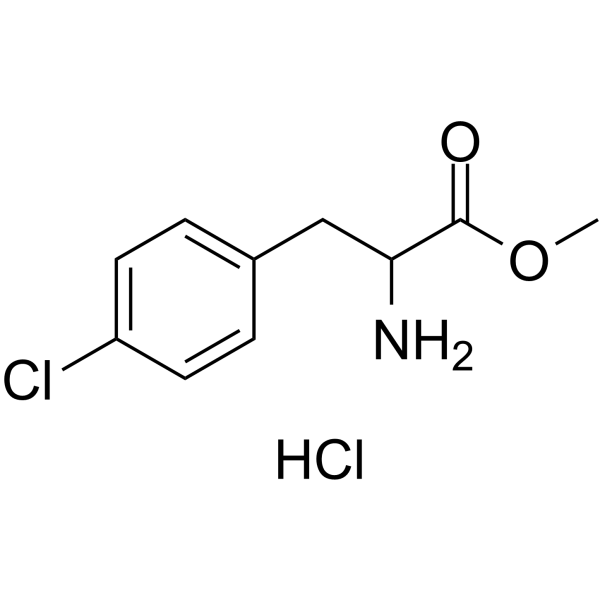
4-chloro-DL-phenylalanine methyl ester hydrochloride
|
Tryptophan Hydroxylase
5-HT Receptor
|
Neurological Disease
|
|
PCPA methyl ester hydrochloride (4-Chloro-DL-phenylalanine methyl ester hydrochloride), a reversible tryptophan hydroxylase inhibitor, is a serotonin (5-HT) synthesis inhibitor. PCPA methyl ester hydrochloride crosses the blood brain barrier and reduces 5-HT central availability .
|
-
-
- HY-40351
-
|
|
Drug Intermediate
|
Others
|
|
4-Chloro-7H-pyrrolo[2,3-d]pyrimidine is a nitrogen-containing heterocyclic organic synthesis intermediate that can be used for the synthesis of JAK and PKB/Akt inhibitors .
|
-
![4-Chloro-7H-pyrrolo[2,3-d]pyrimidine](//file.medchemexpress.com/product_pic/hy-40351.gif)
-
- HY-W755338
-
|
Cl-CCA
|
Biochemical Assay Reagents
|
Others
|
|
4-Chloro-α-cyanocinnamic acid (Cl-CCA) is an advanced, rationally designed MALDI (Matrix-assisted laser desorption ionization) matrix .
|
-

-
- HY-133597
-
|
|
Drug Derivative
|
Others
|
|
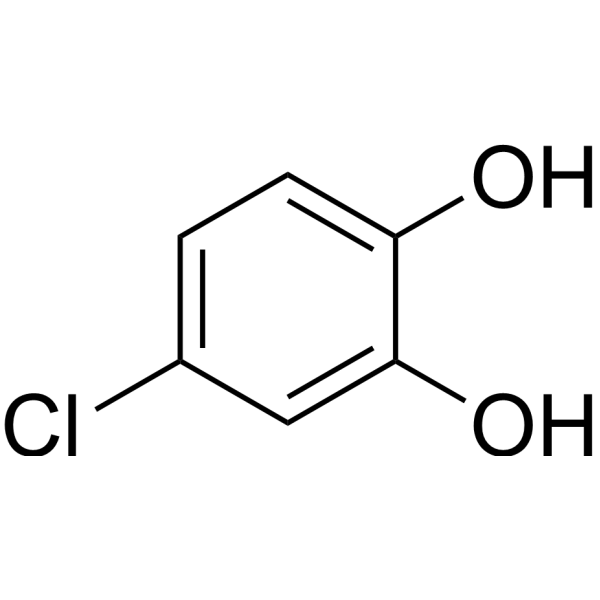
4-Chlorocatechol is a major degradation product of 4-chloro-2-aminophenol (4C2AP). 4-Chlorocatechol is also a substrate for catechol 1,2-dioxygenases and chlorocatechol dioxygenase .
|
-
-
- HY-Y0260
-
|
|
Biochemical Assay Reagents
|
Others
|
|
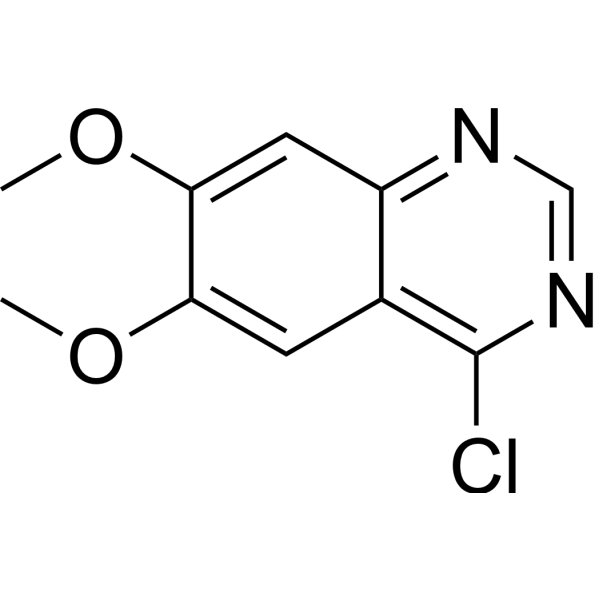
4-Chloro-6,7-dimethoxyquinazoline is a biochemical reagent that can be used as a biological material or organic compound for life science related research.
|
-
-
- HY-W045537
-
|
|
Biochemical Assay Reagents
|
Others
|
|
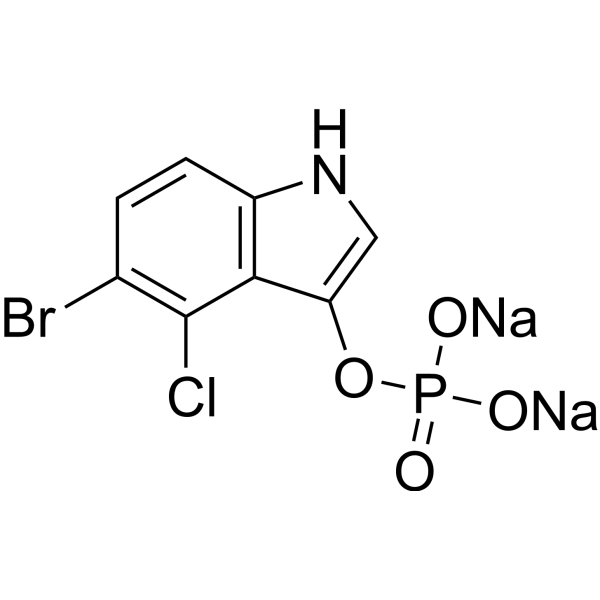
Sodium 5-bromo-4-chloro-1H-indol-3-yl phosphate is commonly used as a substrate for phosphatase assays in biochemistry and molecular biology. This compound is converted by phosphatases to a yellow compound that can be easily measured spectrophotometrically or fluorometrically. Furthermore, it has been used as a useful reagent in enzyme-catalyzed reactions and a tool for studying signal transduction pathways.
|
-
-
- HY-137779
-
|
|
Biochemical Assay Reagents
|
Others
|
|
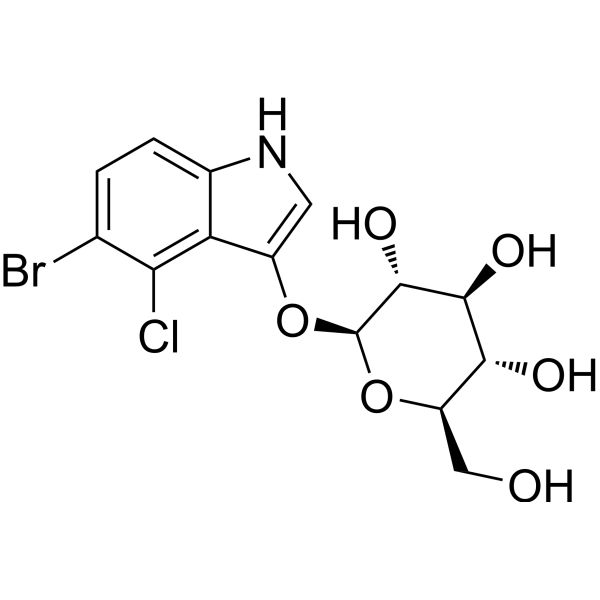
5-Bromo-4-chloro-3-indolyl β-D-glucopyranoside, a chromogenic substrate for the detection of β-galactosidase activity. It is commonly used in molecular biology techniques such as gene expression analysis and reporter gene analysis. When β-galactosidase cleaves X-Gluc, a blue precipitate is produced, which can be observed by microscopy or other detection methods. X-Gluc has high sensitivity and specificity for the detection of β-galactosidase activity, making it a widely used tool in molecular biology research.
|
-
-
- HY-20456
-
|
Oro-6,7-dimethoxyquinol
|
Drug Intermediate
|
Others
|
|
4-Chloro-6,7-dimethoxyquinoline (Oro-6,7-dimethoxyquinol) is a drug intermediate for synthesis of various active compounds.
|
-

-
- HY-45448
-
|
|
Drug Intermediate
|
Others
|
|
4-Chloro-5-nitro-1-tosyl-1H-pyrrolo[2,3-b]pyridine is a drug intermediate for synthesis of various active compounds.
|
-
![4-Chloro-5-nitro-1-tosyl-1H-pyrrolo[2,3-b]pyridine](//file.medchemexpress.com/product_pic/hy-45448.gif)
-
- HY-148718
-
|
|
5-HT Receptor
|
Neurological Disease
|
|
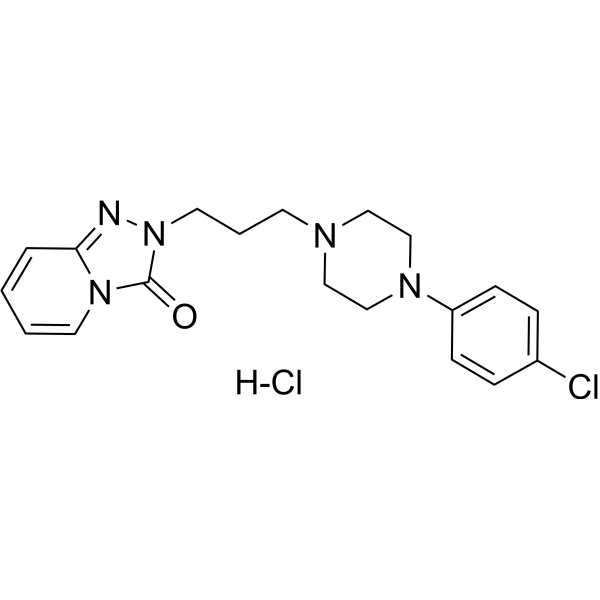
4-Chloro Trazodone hydrochloride is an isomer of Trazodone hydrochloride (HY-B0478). Trazodone hydrochloride is an antidepressant belonging to the class of serotonin receptor antagonists and reuptake inhibitors for treatment of anxiety disorders .
|
-
-
- HY-W012168
-
|
|
Carbonic Anhydrase
|
Metabolic Disease
|
|
4-Chloro-3-sulfamoylbenzoic acid is a weak inhibitor of human carbonic anhydrase isoforms hCA I, hCA II, hCA IV, and hCA IX, and a synthesis intermediate for carbonic anhydrase inhibitors. 4-Chloro-3-sulfamoylbenzoic acid is the major metabolite of tripamide detected in tissues, urine, and feces of rats and rabbits following Tripamide (HY-106570) administration. 4-Chloro-3-sulfamoylbenzoic acid can be used for the study of carbonic anhydrase inhibition and species differences in drug metabolism .
|
-

-
- HY-30013
-
|
|
Biochemical Assay Reagents
|
Others
|
|
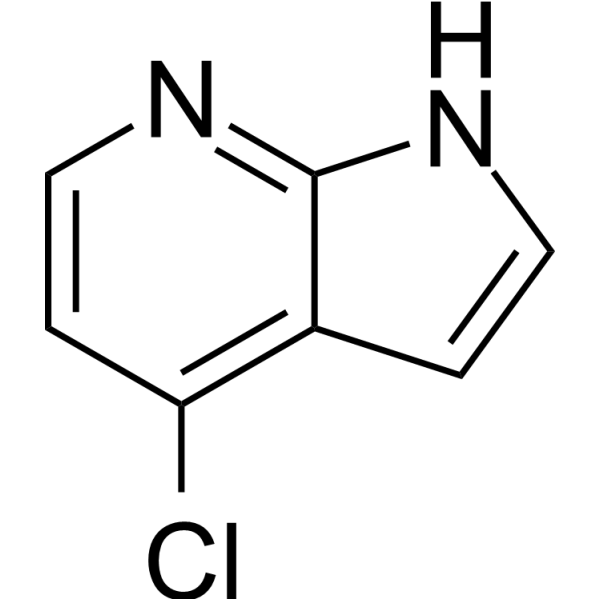
4-Chloro-7-azaindole is a biochemical reagent that can be used as a biological material or organic compound for life science related research.
|
-
-
- HY-76558
-
|
|
Biochemical Assay Reagents
Drug Intermediate
|
Others
|
|
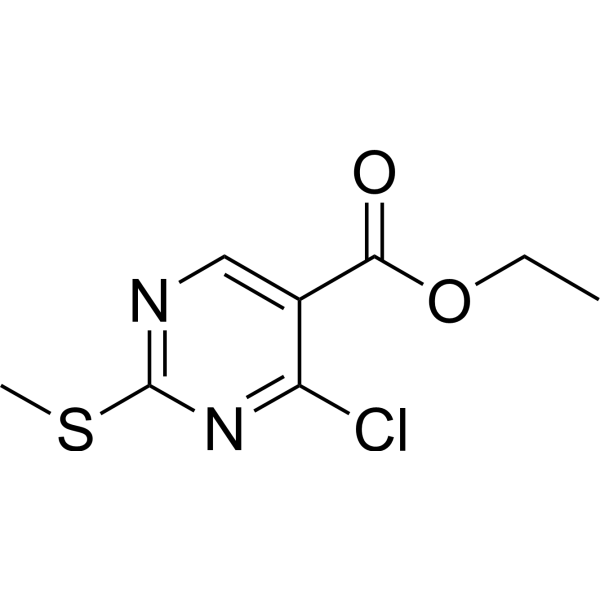
Ethyl 4-chloro-2-(methylthio)pyrimidine-5-carboxylate is a drug intermediate. Ethyl 4-chloro-2-(methylthio)pyrimidine-5-carboxylate can be used to synthesize inhibitors of various kinases such as Cdk4, PDGF, FGF, EGF .
|
-
-
- HY-170719
-
-

-
- HY-W007967
-
|
|
Biochemical Assay Reagents
|
Others
|
|
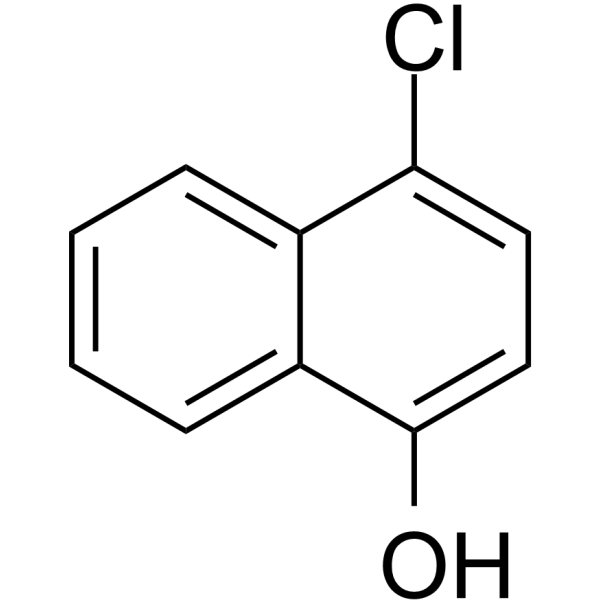
4-Chloronaphthalen-1-ol is a substrate of horseradish peroxidase. 4-Chloronaphthalen-1-ol can be used to visualize protein bands in western blotting and immunohistochemical staining .
|
-
-
- HY-W772850
-
|
4-chloro-DL-phenylalanine hydrochloride; PCPA hydrochloride; CP-10188 hydrochloride
|
Tryptophan Hydroxylase
|
Neurological Disease
Cancer
|
|
Fenclonine hydrochloride is a selective and irreversible tryptophan hydroxylase inhibitor, which is a rate-limiting enzyme in the biosynthesis of serotonin. Fenclonine hydrochloride can be used in carcinoid syndrome research .
|
-

-
- HY-70065
-
|
5-Amino-4-chloro-3-methylisoxazole
|
Drug Intermediate
|
Others
|
|
4-Chloro-3-methylisoxazol-5-amine (5-Amino-4-chloro-3-methylisoxazole) is a drug intermediate for synthesis of various active compounds.
|
-

-
- HY-20559
-
|
|
Drug Intermediate
|
Cancer
|
|
4-Chloro-3-nitrobenzoic acid is a benzoic acid derivative and an important intermediate for the synthesis of anticancer agents. 4-Chloro-3-nitrobenzoic acid shows low cytotoxicity against HepG2, A549 and HeLa cancer cells in vitro (>10,000 μM). 4-Chloro-3-nitrobenzoic acid can block thymidine uptake and inhibit lymphocyte growth. 4-Chloro-3-nitrobenzoic acid serves as a ligand for Cu (II) complexes and is used in the preparation of 10H-pyrazino[2,3-b][1,4]benzothiazine derivatives .
|
-

-
- HY-41551
-
|
Boronic acid,(4-chloro-2-methoxyphenyl)-; 4-chloro-2-methoxybenzeneboronic Acid (contains varying amounts of Anhydride)
|
Biochemical Assay Reagents
|
Others
|
|
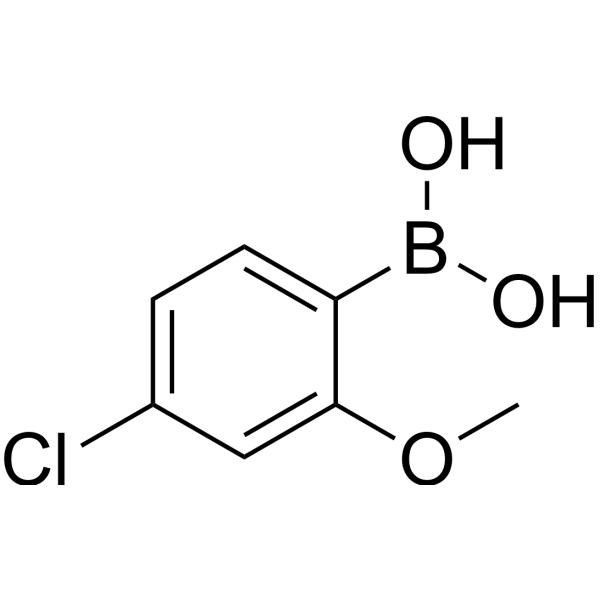
4-Chloro-2-methoxyphenylboronic acid is a biochemical reagent that can be used as a biological material or organic compound for life science related research.
|
-
-
- HY-77826
-
|
|
Epigenetic Reader Domain
|
Cancer
|
|
4-Chloro-N-methylpicolinamide (Compound 3) is a BAZ2A bromodomain inhibitor with a Kd of >500 μM. 4-Chloro-N-methylpicolinamide forms a weak hydrogen bond with the carbonyl oxygen of Pro1817. 4-Chloro-N-methylpicolinamide can be used in the research of invasive prostate cancer .
|
-

-
- HY-79642
-
|
|
Drug Intermediate
|
Others
|
|
4-Chloro-3-(4-ethoxybenzyl)phenol is a drug intermediate for synthesis of various active compounds.
|
-

-
- HY-W107495
-
|
|
Drug Intermediate
|
Others
|
|
3-Bromo-4-chloro-5-methoxybenzoic acid is a drug intermediate for synthesis of various active compounds.
|
-

-
- HY-20553
-
|
|
Drug Intermediate
|
Others
|
|
Methyl 4-chloro-7-azaindole-5-carboxylate is a drug intermediate for synthesis of various active compounds.
|
-

-
- HY-W039169
-
|
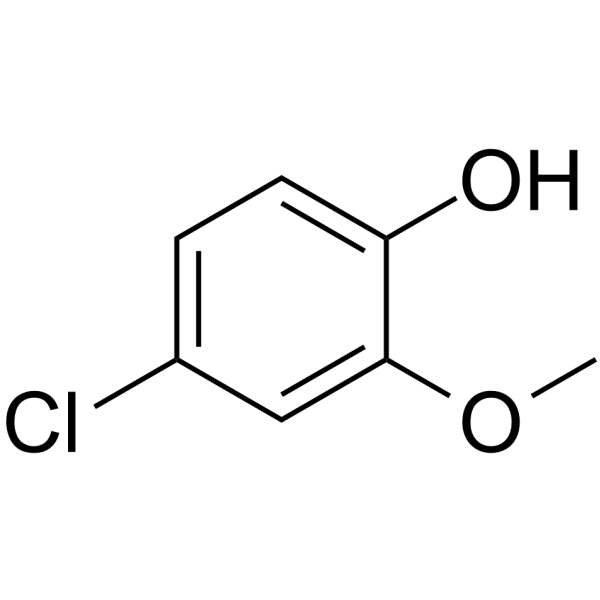
4-chloro-2-methoxyphenol
|
Bacterial
|
Infection
|
|
4-Chloroguaiaco (4-Chloro-2-methoxyphenol) is a phenol derivative, with antimicrobial activity. 4-Chloroguaiaco shows inhibition against S. aureus and E. coli with MICs of both 110 μg/mL .
|
-
-
- HY-20152
-
|
|
Drug Intermediate
|
Others
|
|
2-(4-Chloro-phenoxy)-phenylacetic acid is a drug intermediate for synthesis of various active compounds.
|
-

-
- HY-W460141
-
|
|
Ligands for E3 Ligase
|
Cancer
|
|
Thalidomide 4-chloro is a chlorinated E3 ligase activator. Thalidomide 4-chloro may be used for further derivitization by substitution of chlorine.
|
-

-
- HY-148718R
-
|
|
5-HT Receptor
Reference Standards
|
Neurological Disease
|
|
4-Chloro Trazodone (hydrochloride) (Standard) is the analytical standard of 4-Chloro Trazodone (hydrochloride). This product is intended for research and analytical applications. 4-Chloro Trazodone hydrochloride is an isomer of Trazodone hydrochloride (HY-B0478). Trazodone hydrochloride is an antidepressant belonging to the class of serotonin receptor antagonists and reuptake inhibitors for treatment of anxiety disorders .
|
-

-
- HY-W778362
-
-

-
- HY-W777440
-
-

-
- HY-153822
-
|
|
Tau Protein
|
Neurological Disease
|
|
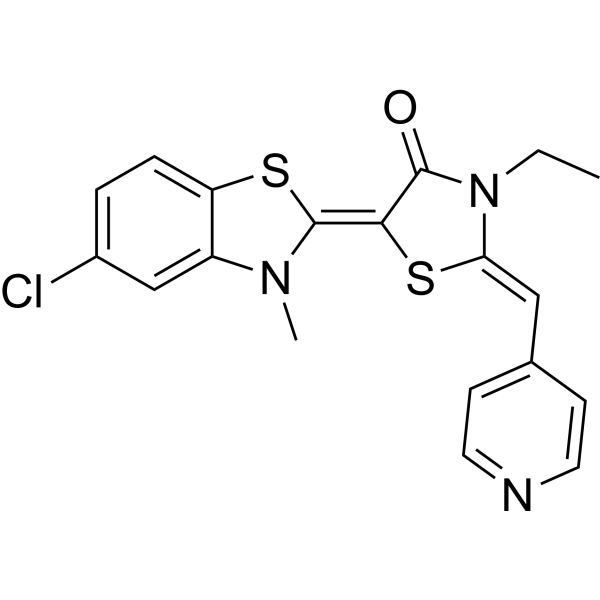
JG-23 is a 4-chloro modified analog with ability to promote t-tau degradation. JG-23 exhibits good metabolic stability with a long T1/2 value (36 min) in mouse liver microsome assays .
|
-
-
- HY-Z1086
-
-

-
- HY-33505
-
-

-
- HY-W016769
-
|
|
Biochemical Assay Reagents
|
Others
|
|
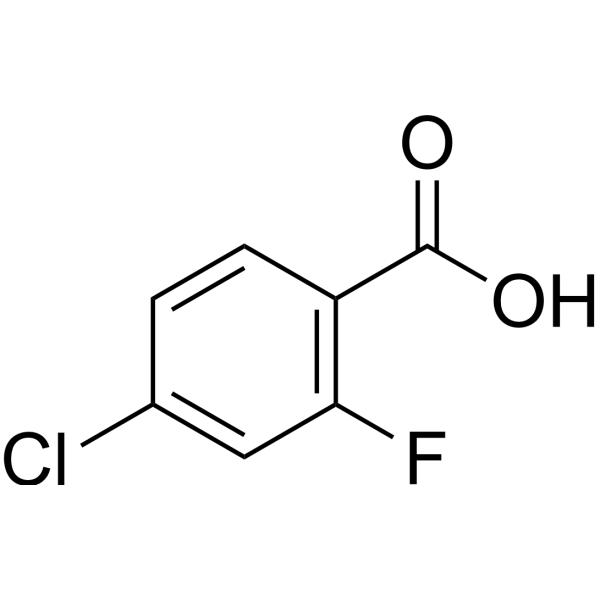
4-Chloro-2-fluorobenzoic acid is a biochemical reagent that can be used as a biological material or organic compound for life science related research.
|
-
-
- HY-32901
-
|
|
Biochemical Assay Reagents
|
Others
|
|
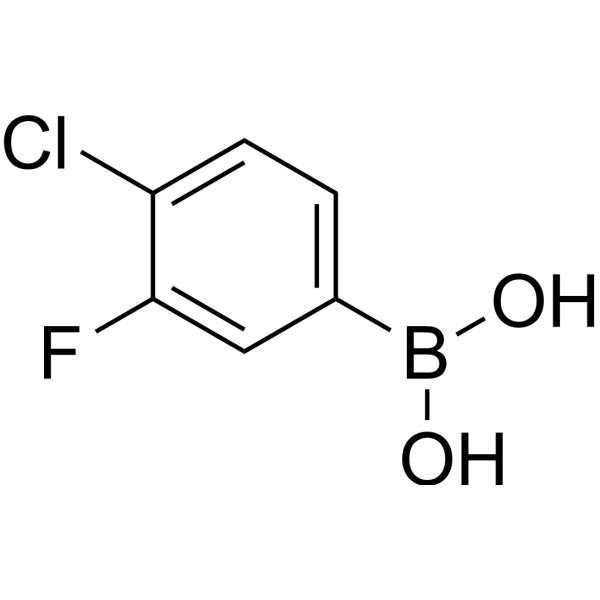
4-Chloro-3-fluorophenylboronic acid is a biochemical reagent that can be used as a biological material or organic compound for life science related research.
|
-
-
- HY-W016155
-
|
|
Biochemical Assay Reagents
|
Others
|
|
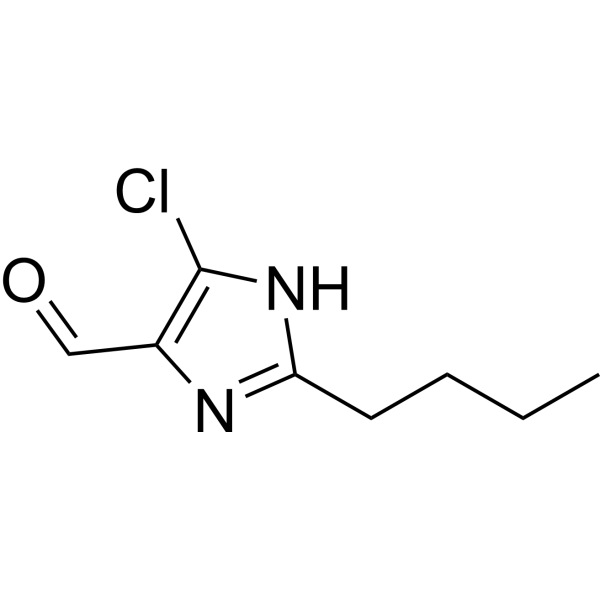
2-Butyl-4-chloro-5-formylimidazole is a biochemical reagent that can be used as a biological material or organic compound for life science related research.
|
-
-
- HY-W094977
-
|
4-chlorobut-1-yne
|
PROTAC Linkers
|
Cancer
|
|
4-Chloro-1-butyne (4-Chlorobut-1-yne) is a PROTAC linker that can be used in the synthesis of PROTACs.
|
-

-
- HY-W007977
-
|
|
Drug Intermediate
|
Cancer
|
|
4-Chloro-6,7-bis(2-methoxyethoxy)quinazoline (Compound 11 and 15) is a building block and synthetic intermediate, which can be used as a precursor in the synthesis of receptor tyrosine kinase (RTK) inhibitors, dual RTK and histone deacetylase (HDAC) inhibitors, and anticancer agents. 4-Chloro-6,7-bis(2-methoxyethoxy)quinazoline can also be used to synthesize EGFR inhibitors, including Erlotinib (HY-50896), with antiproliferative activity .
|
-

-
- HY-15934A
-
-

-
- HY-151083S
-
|
|
Isotope-Labeled Compounds
|
Others
|
|
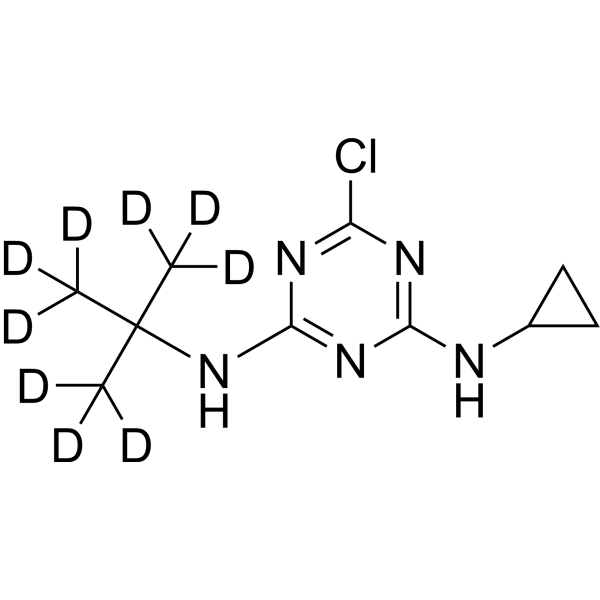
2-tert-Butylamino-d9-4-chloro-6-cyclopropylamino-1,3,5-triazine is the deuterium labeled 2-tert-Butylamino-4-chloro-6-cyclopropylamino-1,3,5-triazine .
|
-
-
- HY-22225
-
|
|
Drug Intermediate
|
Others
|
|
1-(4-Chloro-2-hydroxyphenyl)ethan-1-one is a drug intermediate for synthesis of various active compounds.
|
-

-
- HY-W702903
-
-

-
- HY-W703372
-
|
|
Isotope-Labeled Compounds
|
Others
|
|
4-Chloro bupropion-d9 fumarate is the deuterium labeled 2-(Tert-butylamino)-1-(3,4-dichlorophenyl)propan-1-one fumarate (HY-W703371).
|
-

-
- HY-W023836
-
|
|
Drug Derivative
Pregnane X Receptor (PXR)
|
Others
|
|
4-Chloro-2-(trifluoroacetyl)aniline (Compound 10), an analog of Efavirenz (HY-10572), is a Pregnane X receptor (PXR) ligand. 4-Chloro-2-(trifluoroacetyl)aniline has no PXR activation activity without induction of Cyp3a11 mRNA expression .
|
-

-
- HY-W453545
-
-
-
- HY-W002971
-
|
|
Biochemical Assay Reagents
|
Others
|
|
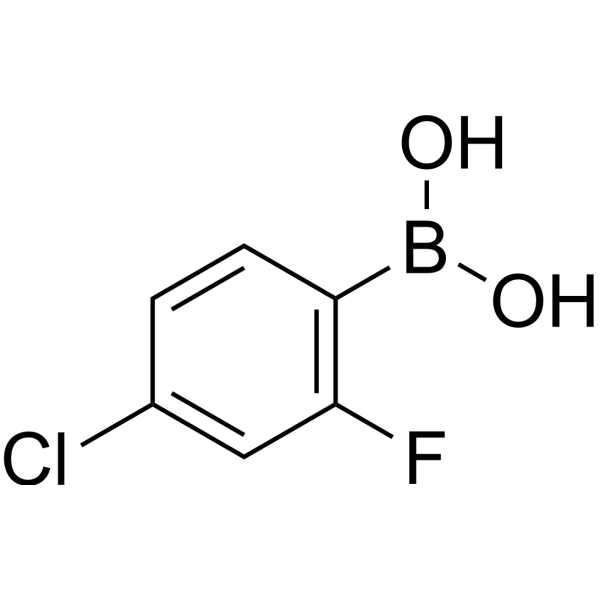
4-Chloro-2-fluorobenzeneboronic acid is a biochemical reagent that can be used as a biological material or organic compound for life science related research.
|
-
-
- HY-W016155R
-
|
|
Biochemical Assay Reagents
Reference Standards
|
Others
|
|
2-Butyl-4-chloro-5-formylimidazole (Standard) is the analytical standard of 2-Butyl-4-chloro-5-formylimidazole. This product is intended for research and analytical applications. 2-Butyl-4-chloro-5-formylimidazole is a biochemical reagent that can be used as a biological material or organic compound for life science related research.
|
-

-
- HY-W740246
-
|
|
Isotope-Labeled Compounds
Biochemical Assay Reagents
|
Others
|
|
2-Butyl-4-chloro-5-formylimidazole-d3 is the deuterium labeled 2-Butyl-4-chloro-5-formylimidazole (HY-W016155). 2-Butyl-4-chloro-5-formylimidazole is a biochemical reagent that can be used as a biological material or organic compound for life science related research.
|
-

-
- HY-34498S
-
|
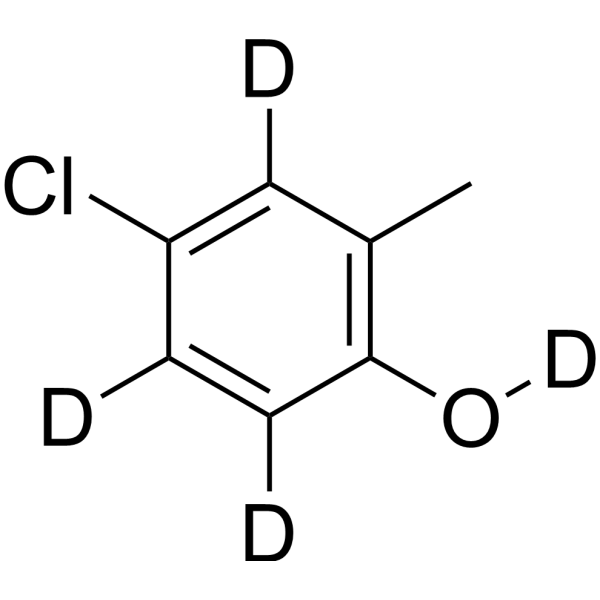
4-chloro-o-cresol-d4; 4-chlorocresol-d4; 5-chloro-2-hydroxytoluene-d4
|
Isotope-Labeled Compounds
|
Others
|
|
4-Chloro-2-methylphenol-d4 is the deuterium labeled 4-Chloro-2-methylphenol .
|
-
- HY-W353908
-
-

- HY-137847
-
-

- HY-W351849
-
-

- HY-116833
-
|
|
Drug Derivative
|
Metabolic Disease
|
|
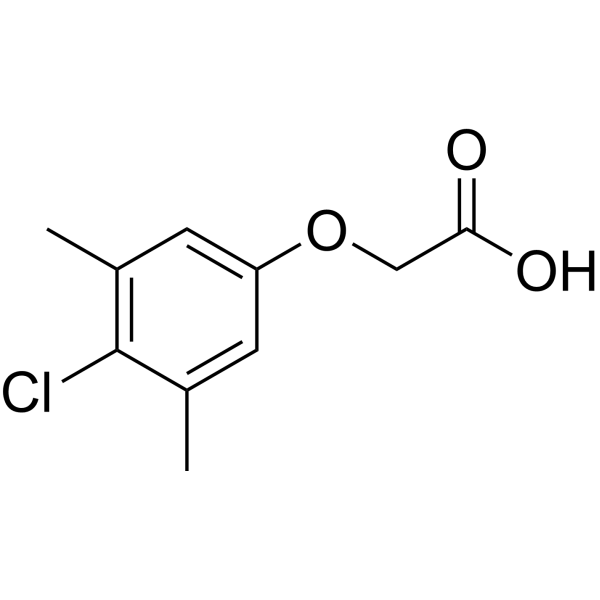
4-Chloro-3,5-dimethylphenoxyacetic acid (compound 602 UC) is a product of masked amide bond hydrolysis of auxin analog 602 (compound 602). Auxin can effectively stimulate hypocotyl growth in wild-type seedlings .
|
-
- HY-W030573
-
-
![((4'-Chloro-[1,1'-biphenyl]-4-yl)sulfonyl)phenylalanine](//file.medchemexpress.com/product_pic/hy-w030573.gif)
- HY-W291944
-
-

- HY-W337201
-
|
|
Fluorescent Dye
|
Others
|
|
5-Bromo-4-chloro-3-indolyl β-D-cellobioside is a chromogenic compound used to detect cellobiohydrolases .
|
-
- HY-W550907
-
|
|
Biochemical Assay Reagents
|
Others
|
|
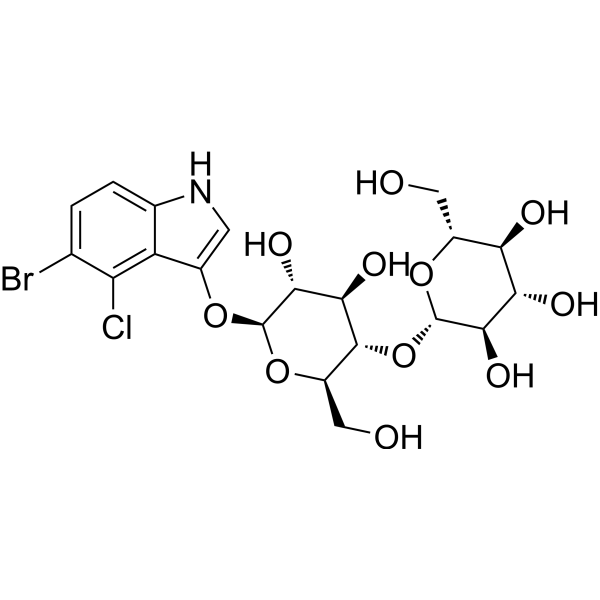
5-Bromo-4-chloro-3-indolyl-α-D-maltotrioside is an enzyme substrate with chemiluminescent properties. It is used in diagnostic assays to detect bacterial and fungal infections and other diseases.
|
-

- HY-131053
-
|
|
Endogenous Metabolite
|
Others
|
|
4-Chloro-N,N-diisopropylbenzamide is an amide bioactive compound utilized as a substrate for cytochrome P450 enzymes in vivo and for acetylcholinesterase in vitro.
|
-

- HY-W708163
-
|
|
Isotope-Labeled Compounds
|
Others
|
|
4-Desacetamido-4-chloro andarine-d4 is the deuterium labeled (S)-3-(4-Chlorophenoxy)-2-hydroxy-2-methyl-N-(4-nitro-3-(trifluoromethyl)phenyl)propanamide (HY-W708162).
|
-

- HY-W739420
-
|
|
Biochemical Assay Reagents
|
Others
|
|
4-Chloro-2-cyclopentylphenyl β-D-galactopyranoside is a class of biochemical reagents used in glycobiology research. Glycobiology studies the structure, synthesis, biology, and evolution of sugars. It involves carbohydrate chemistry, enzymology of glycan formation and degradation, protein-glycan recognition, and the role of glycans in biological systems. This field is closely related to basic research, biomedicine, and biotechnology .
|
-

- HY-W280197
-
-

- HY-W283888
-
|
|
Biochemical Assay Reagents
β-glucuronidase
|
Others
|
|
5-Bromo-4-chloro-1H-indol-3-yl nonanoate is a fluorescent substrate used to detect enzymes. The substrate reacts with various enzymes to produce a fluorescent product, which has been shown to be active against β-galactosidase, α-chymotrypsin, and β-glucuronidase.
|
-

- HY-N12078
-
|
|
Biochemical Assay Reagents
|
Cancer
|
|
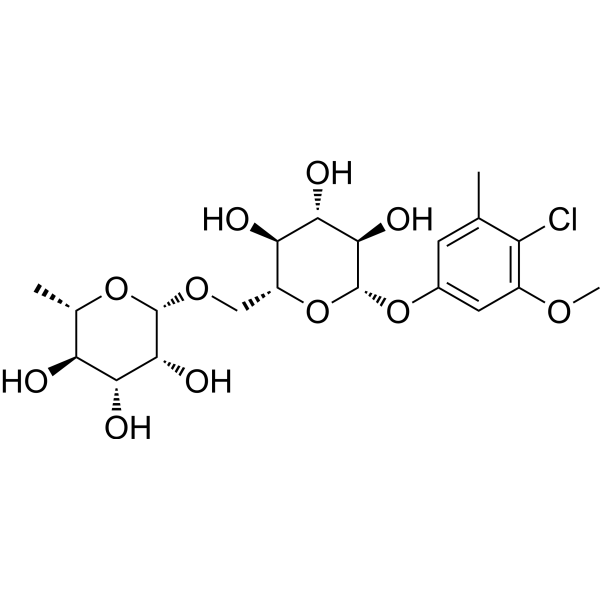
4-Chloro-3-methoxy-5-methylphenyl 6-O-(6-deoxy-β-L-mannopyranosyl)-β-D-glucopyranoside (compound 3) is an anticancer agent and natural product that can effectively inhibit lung cancer proliferation of A549 cells. 4-Chloro-3-methoxy-5-methylphenyl 6-O-(6-deoxy-β-L-mannopyranosyl)-β-D-glucopyranoside is available from Lilium regale and has potential for use in cancer research .
|
-
- HY-W011774
-
|
4-chloro-N-(4-methoxyphenyl)benzamide
|
Biochemical Assay Reagents
|
|
|
N-(p-Chlorobenzoyl)-p-anisidine (4-Chloro-N-(4-methoxyphenyl)benzamide) is a biochemical reagent .
|
-

- HY-W416244
-
|
|
Biochemical Assay Reagents
|
Others
|
|
5-Bromo-4-chloro-3-indolyl 2-acetamido-2-deoxy-α-D-galactopyranoside is a class of biochemical reagents used in glycobiology research. Glycobiology studies the structure, synthesis, biology, and evolution of sugars. It involves carbohydrate chemistry, enzymology of glycan formation and degradation, protein-glycan recognition, and the role of glycans in biological systems. This field is closely related to basic research, biomedicine, and biotechnology .
|
-

- HY-152980
-
|
|
Nucleoside Antimetabolite/Analog
|
Others
|
|
4-Chloro-7-(2-deoxy-β-D-erythro-pentofuranosyl)-7H-pyrrolo[2,3-d]pyrimidine is a pyrimidine nucleoside analog. Pyrimidine nucleoside analogs have a wide range of biochemical and anticancer activities. These include DNA synthesis inhibition, RNA synthesis inhibition, antiviral effects, and immunomodulatory effects .
|
-
![4-Chloro-7-(2-deoxy-β-D-erythro-pentofuranosyl)-7H-pyrrolo[2,3-d]pyrimidine](//file.medchemexpress.com/product_pic/hy-152980.gif)
- HY-152818
-
|
|
Nucleoside Antimetabolite/Analog
|
Others
|
|
4-Chloro-7-(2-β-C-methyl-β-D-ribofuranosyl)-7H-pyrrolo[2,3-d] pyrimidine is a purine nucleoside analogue. Purine nucleoside analogs have broad antitumor activity targeting indolent lymphoid malignancies. Anticancer mechanisms in this process rely on inhibition of DNA synthesis, induction of apoptosis, etc .
|
-
![4-Chloro-7-(2-β-C-methyl-β-D-ribofuranosyl)-7H-pyrrolo[2,3-d] pyrimidine](//file.medchemexpress.com/product_pic/hy-152818.gif)
- HY-152986
-
|
|
Nucleoside Antimetabolite/Analog
|
Others
|
|
4-Chloro-7-(2-deoxy-β-D-erythro-pentofuranosyl)-5-iodo-7H-pyrrolo[2,3-d]pyrimidine is a pyrimidine nucleoside analog. Pyrimidine nucleoside analogs have a wide range of biochemical and anticancer activities. These include DNA synthesis inhibition, RNA synthesis inhibition, antiviral effects, and immunomodulatory effects .
|
-
![4-Chloro-7-(2-deoxy-β-D-erythro-pentofuranosyl)-5-iodo-7H-pyrrolo[2,3-d]pyrimidine](//file.medchemexpress.com/product_pic/hy-152986.gif)
- HY-W185208S
-
|
Methyldesphenylchloridazon-d3;
5-Amino-4-chloro-2-methyl-d3-3(2H)-pyridazinone
|
Isotope-Labeled Compounds
|
Others
|
|
Chloridazon metabolite B1-d3 (Methyldesphenylchloridazon-d3) is deuterium labeled 5-Amino-4-chloro-2-methyl-2,3-dihydropyridazin-3-one .
|
-

- HY-Z2146R
-
|
|
Reference Standards
|
|
|
2-(((4-chloro-3,5-dimethylpyridin-2-yl)methyl)sulfinyl)-6-methoxy-1Hbenzo[d]imidazole (Esomeprazole Impurity) (Standard) is the analytical standard of 2-(((4-chloro-3,5-dimethylpyridin-2-yl)methyl)sulfinyl)-6-methoxy-1Hbenzo[d]imidazole (Esomeprazole Impurity). This product is intended for research and analytical applications.
|
-
![2-(((4-chloro-3,5-dimethylpyridin-2-yl)methyl)sulfinyl)-6-methoxy-1Hbenzo[d]imidazole (Esomeprazole Impurity) (Standard)](//file.medchemexpress.com/product_pic/hy-z2146r.gif)
- HY-152977
-
|
|
Nucleoside Antimetabolite/Analog
|
Others
|
|
4-Chloro-7-(2-deoxy-3,5-bis-O-(p-toluoyl)-β-D-ribofuranosyl)-7H-pyrrolo[2,3-d]pyrimidine is a pyrimidine nucleoside analog. Pyrimidine nucleoside analogs have a wide range of biochemical and anticancer activities. These include DNA synthesis inhibition, RNA synthesis inhibition, antiviral effects, and immunomodulatory effects .
|
-
![4-Chloro-7-(2-deoxy-3,5-bis-O-(p-toluoyl)-β-D-ribofuranosyl)-7H-pyrrolo[2,3-d]pyrimidine](//file.medchemexpress.com/product_pic/hy-152977.gif)
- HY-W007967R
-
-

- HY-B1368R
-
|
4-chloro-DL-phenylalanine (Standard); PCPA (Standard); CP-10188 (Standard)
|
Tryptophan Hydroxylase
Reference Standards
|
Neurological Disease
Cancer
|
|
Fenclonine (Standard) is the analytical standard of Fenclonine. This product is intended for research and analytical applications. Fenclonine is a selective and irreversible tryptophan hydroxylase inhibitor, which is a rate-limiting enzyme in the biosynthesis of serotonin. Fenclonine can be used in carcinoid syndrome research .
|
-

- HY-B0859S
-
|
4-chloro-2-Methylphenoxyacetic acid-13C8
|
Isotope-Labeled Compounds
Herbicide
Cytochrome P450
|
Metabolic Disease
|
|
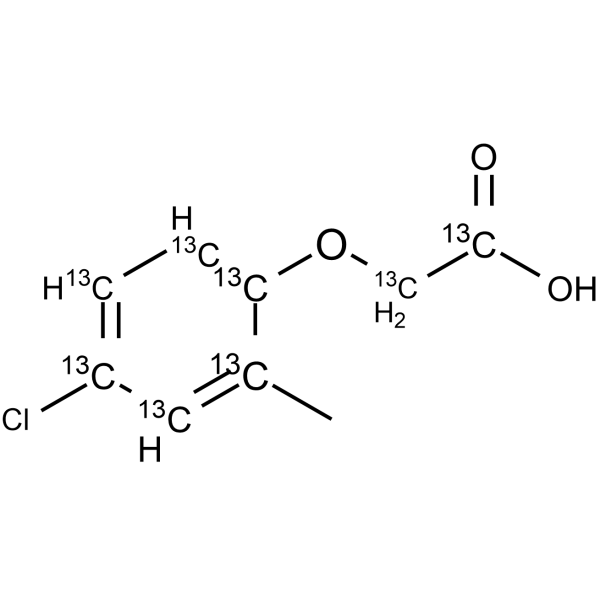
MCPA- 13C8 is the 13C-labeled MCPA (HY-B0859). MCPA is an orally active phenoxyacetic acid herbicide. MCPA interferes with membrane integrity, energy metabolism (decreases ATP levels), and redox balance in plant cells. MCPA increases hepatic cytochrome P-450 levels and increases aniline hydroxylase and 7-ethoxycoumarin O-deethylase activities. MCPA can be used to control broadleaf weeds [4] .
|
-
- HY-176110
-
|
4-chloro-α-diethylamino valerophenone hydrochloride
|
Biochemical Assay Reagents
|
Others
|
|
4-Chloro-N,N-diethylpentedrone (hydrochloride) (4-Chloro-α-diethylamino valerophenone (hydrochloride)) is an cathione. 4-Chloro-N,N-diethylpentedrone (hydrochloride) can be studied in research or used for forensic applications.
|
-

- HY-Z1086R
-
|
|
Reference Standards
|
|
|
4-Chloro-2-methoxybenzonitrile (Standard) is the analytical standard of 4-Chloro-2-methoxybenzonitrile. This product is intended for research and analytical applications.
|
-

- HY-W746679
-
-

- HY-W004586
-
|
4'-chloro-α,α',α''-tripyridyl
|
MOFs
|
Others
|
|
4'-Chloro-2,2':6',2''-terpyridine (4'-Chloro-α,α',α''-tripyridyl) is a metal-organic framework (MOF).
|
-

- HY-34498
-
-

- HY-34483
-
|
|
PROTAC Linkers
|
Cancer
|
|
Methyl 4-chloro-4-oxobutanoate is a PROTAC linker that can be used in the synthesis of PROTACs.
|
-

- HY-W777439
-
-

- HY-W098807
-
|
|
Drug Derivative
|
Cancer
|
|
4-Chloro-7-ethoxyquinoline (Compound 9a), a quinolone derivative, is an anticancer agent. 4-Chloro-7-ethoxyquinoline can inhibit proliferation of HCT-116, RKO, DLD1, HepG2, BGC-823, NCI-H1650 and SK-OV-3 cells with IC50 values of 3.16, 3.87, 2.75, 2.66, 3.91, 3.34 and 3.46μM .
|
-

- HY-W046561
-
|
|
Drug Intermediate
|
Others
|
|
4-Chloro-2,5-difluorophenylboronic acid pinacol ester is a drug intermediate for synthesis of various active compounds.
|
-

- HY-W856188
-
|
|
MOFs
|
Others
|
|
4'-Chloro-4,3':5',4''-terpyridine is a metal-organic framework (MOF).
|
-

- HY-D0909
-
-

- HY-W794636
-
|
|
Herbicide
|
Others
|
|
Sodium 4-(4-chloro-o-tolyloxy)butyrate is a phenoxycarboxylic acid herbicide.
|
-

- HY-23695
-
|
|
Drug Intermediate
|
Others
|
|
4-Chloro-7-fluoropyrrolo[1,2-a]quinoxaline is a drug intermediate for synthesis of various active compounds.
|
-
![4-Chloro-7-fluoropyrrolo[1,2-a]quinoxaline](//file.medchemexpress.com/product_pic/hy-23695.gif)
- HY-W101576R
-
|
4-chloro-1-isobutyl-1H-imidazo[4,5-c]quinoline (Standard)
|
Reference Standards
|
|
|
4-Chloro-1-(2-methylpropyl)-1H-imidazo[4,5-c]quinoline (Standard) is the analytical standard of 4-Chloro-1-(2-methylpropyl)-1H-imidazo[4,5-c]quinoline. This product is intended for research and analytical applications.
|
-
![4-Chloro-1-(2-methylpropyl)-1H-imidazo[4,5-c]quinoline (Standard)](//file.medchemexpress.com/product_pic/hy-w101576r.gif)
- HY-W331804
-
-

- HY-134448
-
-

- HY-W280618S
-
-
- HY-W115490
-
|
|
Ligands for E3 Ligase
|
Others
|
|
4-Chloro-3-(2,4-dioxo-1,3-diazinan-1-yl)benzoic acid is an E3 ligase ligand that can be used in the recruitment of CRBN protein. 4-Chloro-3-(2,4-dioxo-1,3-diazinan-1-yl)benzoic acid can used to synthesis of PROTAC SOS1 degrader-4 (HY-153674) .
|
-

- HY-W642858
-
-

- HY-W568087
-
|
|
Phospholipase
|
Others
|
|
5-Bromo-4-chloro-3-indoxyl myo-inositol-1-phosphate ammonium is a chromogenic substrate that can be used to detect the activity of phosphatidylinositol-specific phospholipase C (PI-PLC) .
|
-

- HY-W275547
-
-

- HY-N9181
-
|
|
Others
|
Others
|
|
4'-Chloro-1'-(5-penta-1,3-diyn-1-yl-2-thienyl)-but-2'-yn-3'-ol is a phytotoxic polyacetylene compound. 4'-Chloro-1'-(5-penta-1,3-diyn-1-yl-2-thienyl)-but-2'-yn-3'-ol can be isolated from the roots and root exudates of Acroptilon repens. It exhibits phytotoxicity and reduces the root length of lettuce .
|
-

- HY-W249108
-
|
1-(4,4-Bis(4-fluorophenyl)butyl)-4-(4-chloro-3-(trifluoromethyl)phenyl)piperidin-4-yl acetate
|
MOFs
|
Others
|
|
1-(4,4-Bis(4-fluorophenyl)butyl)-4-(4-chloro-3-(trifluoromethyl)phenyl)piperidin-4-ol acetate (1-(4,4-Bis(4-fluorophenyl)butyl)-4-(4-chloro-3-(trifluoromethyl)phenyl)piperidin-4-yl acetate) is a metal-organic framework (MOF).
|
-

- HY-101456R
-
|
4-chloro-DL-phenylalanine methyl ester hydrochloride (Standard)
|
Tryptophan Hydroxylase
Reference Standards
5-HT Receptor
|
Neurological Disease
|
|
PCPA methyl ester (hydrochloride) (Standard) is the analytical standard of PCPA methyl ester (hydrochloride) (HY-101456). This product is intended for research and analytical applications. PCPA methyl ester hydrochloride (4-Chloro-DL-phenylalanine methyl ester hydrochloride), a reversible tryptophan hydroxylase inhibitor, is a serotonin (5-HT) synthesis inhibitor. PCPA methyl ester hydrochloride crosses the blood brain barrier and reduces 5-HT central availability .
|
-

- HY-133597R
-
|
|
Drug Derivative
Reference Standards
|
Others
|
|
4-Chlorocatechol (Standard) is the analytical standard of 4-Chlorocatechol. This product is intended for research and analytical applications. 4-Chlorocatechol is a major degradation product of 4-chloro-2-aminophenol (4C2AP). 4-Chlorocatechol is also a substrate for catechol 1,2-dioxygenases and chlorocatechol dioxygenase .
|
-

- HY-22403
-
|
|
Drug Intermediate
|
Others
|
|
tert-Butyl 3-(4-chloro-7H-pyrrolo[2,3-d]pyrimidin-7-yl)pyrrolidine-1-carboxylate is a drug intermediate for synthesis of various active compounds.
|
-
![tert-Butyl 3-(4-chloro-7H-pyrrolo[2,3-d]pyrimidin-7-yl)pyrrolidine-1-carboxylate](//file.medchemexpress.com/product_pic/hy-22403.gif)
- HY-78746A
-
|
|
Amino Acid Derivatives
|
Others
|
|
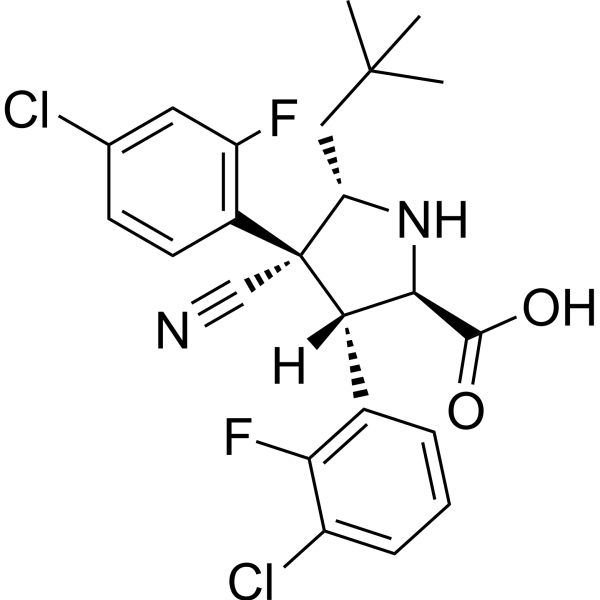
D-Proline, 3-(3-chloro-2-fluorophenyl)-4-(4-chloro-2-fluorophenyl)-4-cyano-5-(2,2-dimethylpropyl)-, (3S,4R,5S)-rel- is a proline derivative .
|
-
- HY-W048413R
-
|
|
Reference Standards
|
|
|
Ethyl (4-chloro-3-(trifluoromethyl)phenyl)carbamate (Standard) is the analytical standard of Ethyl (4-chloro-3-(trifluoromethyl)phenyl)carbamate. This product is intended for research and analytical applications.
|
-

- HY-W059074R
-
|
|
Reference Standards
|
|
|
4-Chloro-3-methoxy-2-methylpyridine (Standard) is the analytical standard of 4-Chloro-3-methoxy-2-methylpyridine. This product is intended for research and analytical applications.
|
-

- HY-132698S
-
|
|
Isotope-Labeled Compounds
|
Others
|
|
2-Amino-4-chloro-N-[(1R,2R)-2-(2,4-difluorophenyl)-2-hydroxy-1-methyl-3-(1H-1,2,4-triazol-1-yl)propyl]benzamide-d3 is the deuterium labeled 2-Amino-4-chloro-N-[(1R,2R)-2-(2,4-difluorophenyl)-2-hydroxy-1-methyl-3-(1H-1,2,4-triazol-1-yl)propyl]benzamide .
|
-
![2-Amino-4-chloro-N-[(1R,2R)-2-(2,4-difluorophenyl)-2-hydroxy-1-methyl-3-(1H-1,2,4-triazol-1-yl)propyl]benzamide-d3](//file.medchemexpress.com/product_pic/hy-132698s.gif)
- HY-Z0610R
-
|
|
Reference Standards
|
|
|
4-Chloro-6-iodo-7H-pyrrolo[2,3-d]pyrimidine (Standard) is the analytical standard of 4-Chloro-6-iodo-7H-pyrrolo[2,3-d]pyrimidine. This product is intended for research and analytical applications.
|
-

- HY-78745
-
|
|
Drug Intermediate
|
Others
|
|
rel-(2R,3S,4R,5S)-3-(3-Chloro-2-fluorophenyl)-4-(4-chloro-2-fluorophenyl)-4-cyano-5-(2,2-dimethylpropyl)pyrrolidine-2-carboxylic acid tert-butyl ester is a drug intermediate for synthesis of various active compounds.
|
-

- HY-I1119R
-
|
|
Reference Standards
|
|
|
(1S)-1,5-Anhydro-1-C-[4-chloro-3-[(4-methoxyphenyl)methyl]phenyl]-D-glucitol (Standard) is the analytical standard of (1S)-1,5-Anhydro-1-C-[4-chloro-3-[(4-methoxyphenyl)methyl]phenyl]-D-glucitol. This product is intended for research and analytical applications.
|
-

- HY-W747631
-
-

- HY-I0032R
-
|
|
Reference Standards
|
|
|
Ethyl chloro[(4-methoxyphenyl)hydrazono]acetate (Standard) is the analytical standard of Ethyl chloro[(4-methoxyphenyl)hydrazono]acetate. This product is intended for research and analytical applications.
|
-

- HY-15925
-
|
NBT
|
Fluorescent Dye
|
Others
|
|
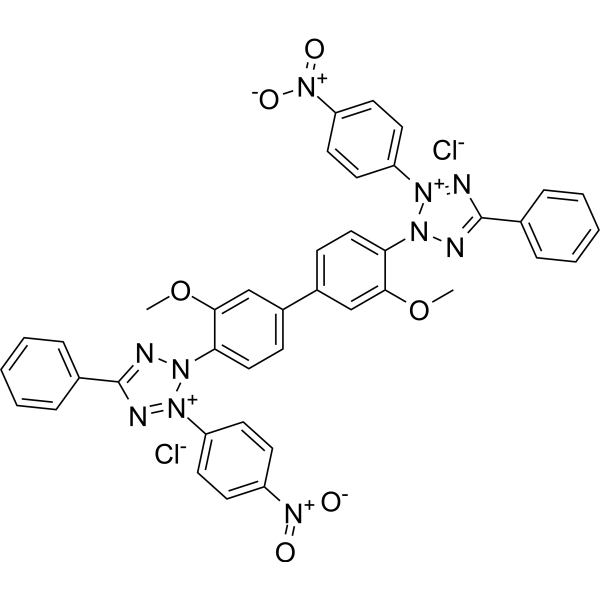
Nitro blue tetrazolium chloride (NBT) is a substrate for dehydrogenases; is used with the alkaline phosphatase substrate 5-Bromo-4-Chloro-3-Indolyl Phosphate (BCIP) in western blotting and immunohistological staining procedures .
|
-
- HY-184261
-
|
|
Biochemical Assay Reagents
|
Others
|
|
1-(1-(2-(3-(But-3-yn-1-yl)-3H-diazirin-3-yl)ethyl)-5-(trifluoromethoxy)-1H-indol-3-yl)-2-(4-chloro-2-methoxyphenyl)-2-((3-methoxy-5-(2-methoxyethoxy)phenyl)amino)ethan-1-one is a click chemistry reagent containing an alkyne group, and it can be used in click chemistry applications.
|
-

- HY-I0692R
-
|
|
Reference Standards
|
|
|
(2R,3R,4R,5R)-5-(4-benzamido-2-oxopyrimidin-1(2H)-yl)-2-((benzoyloxy)methyl)-4-chloro-4-methyltetrahydrofuran-3-yl benzoate (Standard) is the analytical standard of (2R,3R,4R,5R)-5-(4-benzamido-2-oxopyrimidin-1(2H)-yl)-2-((benzoyloxy)methyl)-4-chloro-4-methyltetrahydrofuran-3-yl benzoate. This product is intended for research and analytical applications.
|
-

- HY-W010299S
-
-
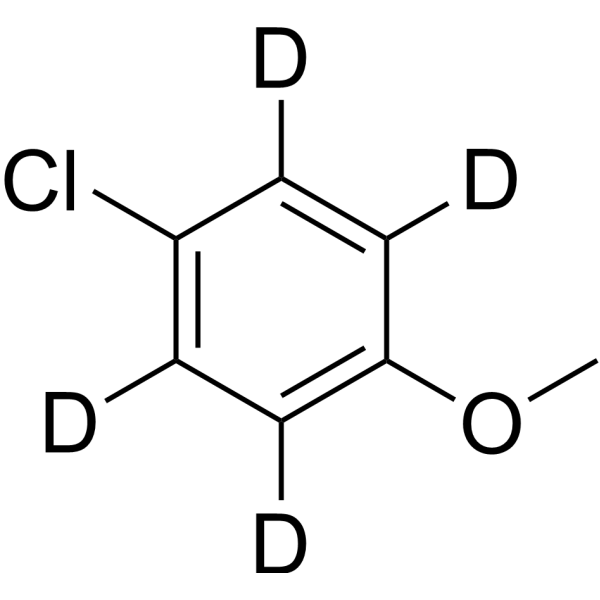
- HY-117199
-
|
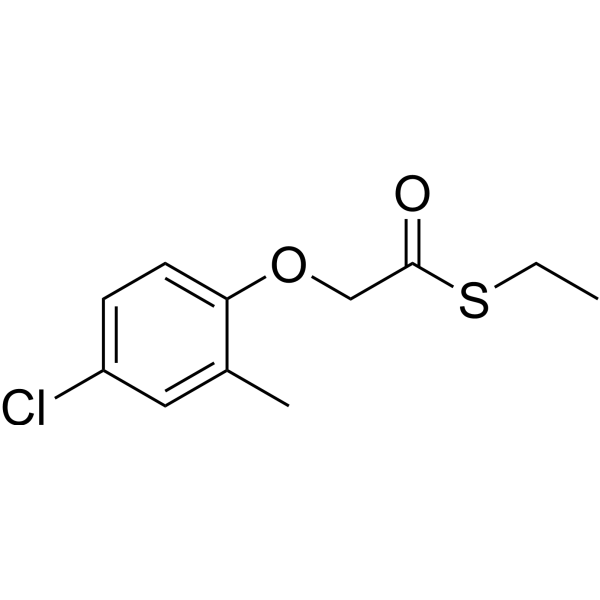
S-Ethyl 4-chloro-o-tolyloxythioacetate; Phenothiol
|
Herbicide
|
Others
|
|
MCPA-thioethyl is a kind of herbicide .
|
-
- HY-W092987
-
-

- HY-P10579
-
123B9
1 Publications Verification
|
Ephrin Receptor
|
Cancer
|
|
123B9, a tumor-homing agent, is a potent and selective EphA2 agonist with a Kd value of 4.0 μM. 123B9 selectively targets the EphA2 tyrosine kinase receptor ligand-binding domain. 123B9 does not appreciably inhibit the ligand binding domains of the most closely related EphA3 and EphA4 receptors .
|
-

- HY-W145053
-
|
Sodium chloro(4-methylbenzenesulfonyl)azanide hydrate
|
Factor Xa
Bacterial
|
Infection
|
|
ChloraMine-T hydrate (Sodium chloro(4-methylbenzenesulfonyl)azanide (hydrate)) is a common reagent in various synthetic processes. It has been used as a reagent in aminohydroxylation and allylic amination reactions, a nitrogen source in aziridination reactions of alkenes and alkenes, and deprotection of sulfur groups in sulfur-containing compounds. It has been used as a reagent in the synthesis of factor Xa inhibitors. ChloraMine-T hydrate (Sodium chloro(4-methylbenzenesulfonyl)azanide (hydrate)) (0.2% w/v) is also an antimicrobial agent that kills Staphylococcus epidermidis, Staphylococcus aureus, Enterococcus faecalis, Escherichia coli, Proteus mirabilis, and Enterococcus cloacae.
|
-

- HY-Z0048R
-
-
![1-C-[4-Chloro-3-[(4-ethoxyphenyl)methyl]phenyl]-D-glucopyranose (Standard)](//file.medchemexpress.com/product_pic/hy-z0048r.gif)
- HY-W711764
-
-

- HY-W051547S
-
|
2-chloro-3-(1-hydroxyethyl)pyridine-d4
|
Isotope-Labeled Compounds
|
Others
|
|
1-(2-Chloropyridin-3-yl)ethanol-d4 (2-Chloro-3-(1-hydroxyethyl)pyridine-d4) is the deuterium labeled 1-(2-Chloropyridin-3-yl)ethanol.
|
-

- HY-I1118R
-
|
|
Reference Standards
|
|
|
(2R,3R,4R,5S,6S)-2-(Acetoxymethyl)-6-(4-chloro-3-(4-methoxybenzyl)phenyl)tetrahydro-2H-pyran-3,4,5-triyl triacetate (Standard) is the analytical standard of (2R,3R,4R,5S,6S)-2-(Acetoxymethyl)-6-(4-chloro-3-(4-methoxybenzyl)phenyl)tetrahydro-2H-pyran-3,4,5-triyl triacetate. This product is intended for research and analytical applications.
|
-

- HY-W103488S
-
-
- HY-I0838R
-
|
|
Reference Standards
|
|
|
(2R,3R,4R,5S,6S)-2-(acetoxymethyl)-6-(4-chloro-3-(4-(((S)-tetrahydrofuran-3-yl)oxy)benzyl)phenyl)tetrahydro-2H-pyran-3,4,5-triyl triacetate (Standard) is the analytical standard of (2R,3R,4R,5S,6S)-2-(acetoxymethyl)-6-(4-chloro-3-(4-(((S)-tetrahydrofuran-3-yl)oxy)benzyl)phenyl)tetrahydro-2H-pyran-3,4,5-triyl triacetate. This product is intended for research and analytical applications.
|
-

- HY-13599S
-
|
2-chloro-2′-deoxyadenosine-d4; CldAdo-d4; 2CdA-d4
|
Isotope-Labeled Compounds
|
Cardiovascular Disease
Cancer
|
|
Cladribine-d4 (2-Chloro-2′-deoxyadenosine-d4) is deuterium labeled Cladribine. Cladribine (2-Chloro-2′-deoxyadenosine), a purine nucleoside analog, is an orally active adenosine deaminase inhibitor. Cladribine functions as an inhibitor of DNA synthesis to block the repair of the damaged DNA. Cladribine can inhibit DNA methylation. Cladribine has anti-lymphoma activity. Cladribine can be used for the research of several hematologic malignancies and multiple sclerosis .
|
-

- HY-42373R
-
-

| Cat. No. |
Product Name |
Type |
-
- HY-15925
-
|
NBT
|
Fluorescent Dyes
|
|
Nitro blue tetrazolium chloride (NBT) is a substrate for dehydrogenases; is used with the alkaline phosphatase substrate 5-Bromo-4-Chloro-3-Indolyl Phosphate (BCIP) in western blotting and immunohistological staining procedures .
|
-
- HY-W337201
-
|
|
Fluorescent Dyes
|
|
5-Bromo-4-chloro-3-indolyl β-D-cellobioside is a chromogenic compound used to detect cellobiohydrolases .
|
| Cat. No. |
Product Name |
Type |
-
- HY-40351
-
|
|
Biochemical Assay Reagents
|
|
4-Chloro-7H-pyrrolo[2,3-d]pyrimidine is a nitrogen-containing heterocyclic organic synthesis intermediate that can be used for the synthesis of JAK and PKB/Akt inhibitors .
|
-
- HY-Y0260
-
|
|
Biochemical Assay Reagents
|
|
4-Chloro-6,7-dimethoxyquinazoline is a biochemical reagent that can be used as a biological material or organic compound for life science related research.
|
-
- HY-W045537
-
|
|
Biochemical Assay Reagents
|
|
Sodium 5-bromo-4-chloro-1H-indol-3-yl phosphate is commonly used as a substrate for phosphatase assays in biochemistry and molecular biology. This compound is converted by phosphatases to a yellow compound that can be easily measured spectrophotometrically or fluorometrically. Furthermore, it has been used as a useful reagent in enzyme-catalyzed reactions and a tool for studying signal transduction pathways.
|
-
- HY-137779
-
|
|
Biochemical Assay Reagents
|
|
5-Bromo-4-chloro-3-indolyl β-D-glucopyranoside, a chromogenic substrate for the detection of β-galactosidase activity. It is commonly used in molecular biology techniques such as gene expression analysis and reporter gene analysis. When β-galactosidase cleaves X-Gluc, a blue precipitate is produced, which can be observed by microscopy or other detection methods. X-Gluc has high sensitivity and specificity for the detection of β-galactosidase activity, making it a widely used tool in molecular biology research.
|
-
- HY-30013
-
|
|
Biochemical Assay Reagents
|
|
4-Chloro-7-azaindole is a biochemical reagent that can be used as a biological material or organic compound for life science related research.
|
-
- HY-76558
-
|
|
Biochemical Assay Reagents
|
|
Ethyl 4-chloro-2-(methylthio)pyrimidine-5-carboxylate is a drug intermediate. Ethyl 4-chloro-2-(methylthio)pyrimidine-5-carboxylate can be used to synthesize inhibitors of various kinases such as Cdk4, PDGF, FGF, EGF .
|
-
- HY-20559
-
|
|
Biochemical Assay Reagents
|
|
4-Chloro-3-nitrobenzoic acid is a benzoic acid derivative and an important intermediate for the synthesis of anticancer agents. 4-Chloro-3-nitrobenzoic acid shows low cytotoxicity against HepG2, A549 and HeLa cancer cells in vitro (>10,000 μM). 4-Chloro-3-nitrobenzoic acid can block thymidine uptake and inhibit lymphocyte growth. 4-Chloro-3-nitrobenzoic acid serves as a ligand for Cu (II) complexes and is used in the preparation of 10H-pyrazino[2,3-b][1,4]benzothiazine derivatives .
|
-
- HY-41551
-
|
Boronic acid,(4-chloro-2-methoxyphenyl)-; 4-chloro-2-methoxybenzeneboronic Acid (contains varying amounts of Anhydride)
|
Biochemical Assay Reagents
|
|
4-Chloro-2-methoxyphenylboronic acid is a biochemical reagent that can be used as a biological material or organic compound for life science related research.
|
-
- HY-33505
-
-
- HY-W016769
-
|
|
Biochemical Assay Reagents
|
|
4-Chloro-2-fluorobenzoic acid is a biochemical reagent that can be used as a biological material or organic compound for life science related research.
|
-
- HY-32901
-
|
|
Biochemical Assay Reagents
|
|
4-Chloro-3-fluorophenylboronic acid is a biochemical reagent that can be used as a biological material or organic compound for life science related research.
|
-
- HY-W016155
-
|
|
Biochemical Assay Reagents
|
|
2-Butyl-4-chloro-5-formylimidazole is a biochemical reagent that can be used as a biological material or organic compound for life science related research.
|
-
- HY-15934A
-
|
|
Biochemical Assay Reagents
|
|
5-Bromo-4-chloro-3-indolyl-α-D-mannopyranoside, 93% is a cationic surfactant commonly used in micelle experiments.
|
-
- HY-77336
-
|
|
Biochemical Assay Reagents
|
|
4-Chloro-5-iodo-1H-pyrrolo[2,3-d]pyrimidine is a biochemical reagent that can be used as a biological material or organic compound for life science related research.
|
-
- HY-W002971
-
|
|
Biochemical Assay Reagents
|
|
4-Chloro-2-fluorobenzeneboronic acid is a biochemical reagent that can be used as a biological material or organic compound for life science related research.
|
-
- HY-W016155R
-
|
|
Biochemical Assay Reagents
|
|
2-Butyl-4-chloro-5-formylimidazole (Standard) is the analytical standard of 2-Butyl-4-chloro-5-formylimidazole. This product is intended for research and analytical applications. 2-Butyl-4-chloro-5-formylimidazole is a biochemical reagent that can be used as a biological material or organic compound for life science related research.
|
-
- HY-W353908
-
-
- HY-137847
-
-
- HY-W351849
-
-
- HY-W291944
-
|
|
Biochemical Assay Reagents
|
|
5-Bromo-4-chloro-3-indolyl-α-L-fucopyranoside can be used as a chromogenic substrate for α-L-Fucosidase.
|
-
- HY-W550907
-
|
|
Biochemical Assay Reagents
|
|
5-Bromo-4-chloro-3-indolyl-α-D-maltotrioside is an enzyme substrate with chemiluminescent properties. It is used in diagnostic assays to detect bacterial and fungal infections and other diseases.
|
-
- HY-W739420
-
|
|
Biochemical Assay Reagents
|
|
4-Chloro-2-cyclopentylphenyl β-D-galactopyranoside is a class of biochemical reagents used in glycobiology research. Glycobiology studies the structure, synthesis, biology, and evolution of sugars. It involves carbohydrate chemistry, enzymology of glycan formation and degradation, protein-glycan recognition, and the role of glycans in biological systems. This field is closely related to basic research, biomedicine, and biotechnology .
|
-
- HY-W280197
-
|
X-α-Glu, 98%
|
Biochemical Assay Reagents
|
|
5-Bromo-4-chloro-3-indolyl-α-D-glucopyranoside, 98% (X-α-Glu, 98%) is a biochemical assay reagent.
|
-
- HY-W283888
-
|
|
Biochemical Assay Reagents
|
|
5-Bromo-4-chloro-1H-indol-3-yl nonanoate is a fluorescent substrate used to detect enzymes. The substrate reacts with various enzymes to produce a fluorescent product, which has been shown to be active against β-galactosidase, α-chymotrypsin, and β-glucuronidase.
|
-
- HY-W011774
-
|
4-chloro-N-(4-methoxyphenyl)benzamide
|
Biochemical Assay Reagents
|
|
N-(p-Chlorobenzoyl)-p-anisidine (4-Chloro-N-(4-methoxyphenyl)benzamide) is a biochemical reagent .
|
-
- HY-W416244
-
|
|
Biochemical Assay Reagents
|
|
5-Bromo-4-chloro-3-indolyl 2-acetamido-2-deoxy-α-D-galactopyranoside is a class of biochemical reagents used in glycobiology research. Glycobiology studies the structure, synthesis, biology, and evolution of sugars. It involves carbohydrate chemistry, enzymology of glycan formation and degradation, protein-glycan recognition, and the role of glycans in biological systems. This field is closely related to basic research, biomedicine, and biotechnology .
|
-
- HY-W747631
-
-
- HY-D0909
-
-
- HY-W331804
-
|
|
Biochemical Assay Reagents
|
|
5-Bromo-4-chloro-3-indolyl β-L-fucopyranoside is a derivative of fucose that can be used in glycobiology research.
|
-
- HY-134448
-
-
- HY-W642858
-
-
- HY-W275547
-
| Cat. No. |
Product Name |
Target |
Research Area |
-
- HY-W019599
-
|
L-PCPA
|
5-HT Receptor
Tryptophan Hydroxylase
|
Neurological Disease
|
|
4-Chloro-L-phenylalanine (L-PCPA) is a tryptophan hydroxylase inhibitor targeting TPH1 and TPH2, with the activity of blocking serotonin biosynthesis. 4-Chloro-L-phenylalanine reduces the levels of serotonin and its metabolites in the brain without impairing the survival of serotonergic neurons. 4-Chloro-L-phenylalanine enhances anhedonic, depression-like and anxiety-like behaviors in mice with depleted noradrenergic and dopaminergic neurons. 4-Chloro-L-phenylalanine acts as a decarboxylation substrate for aromatic L-amino acid decarboxylase from Bacillus atrophaeus. 4-Chloro-L-phenylalanine can be used in studies related to Parkinson's disease .
|
-
- HY-P10579
-
123B9
1 Publications Verification
|
Ephrin Receptor
|
Cancer
|
|
123B9, a tumor-homing agent, is a potent and selective EphA2 agonist with a Kd value of 4.0 μM. 123B9 selectively targets the EphA2 tyrosine kinase receptor ligand-binding domain. 123B9 does not appreciably inhibit the ligand binding domains of the most closely related EphA3 and EphA4 receptors .
|
-
- HY-W030573
-
-
- HY-78746A
-
|
|
Amino Acid Derivatives
|
Others
|
|
D-Proline, 3-(3-chloro-2-fluorophenyl)-4-(4-chloro-2-fluorophenyl)-4-cyano-5-(2,2-dimethylpropyl)-, (3S,4R,5S)-rel- is a proline derivative .
|
| Cat. No. |
Product Name |
Category |
Target |
Chemical Structure |
| Cat. No. |
Product Name |
Chemical Structure |
-
- HY-W778362
-
|
|
|
4-Chloro kynurenine- 13C2, 15N is the 13C- and 15N-labeled (Rac)-4-Chlorokynurenine (HY-124180).
|
-
-
- HY-W777440
-
|
|
|
4-Chloro resorcinol- 13C6 is the 13C-labeled 4-Chlororesorcinol (HY-W015658). 4-Chlorobenzene-1,3-diol is a biochemical reagent that can be used as a biological material or organic compound for life science related research.
|
-
-
- HY-151083S
-
|
|
|
2-tert-Butylamino-d9-4-chloro-6-cyclopropylamino-1,3,5-triazine is the deuterium labeled 2-tert-Butylamino-4-chloro-6-cyclopropylamino-1,3,5-triazine .
|
-
-
- HY-W703372
-
|
|
|
4-Chloro bupropion-d9 fumarate is the deuterium labeled 2-(Tert-butylamino)-1-(3,4-dichlorophenyl)propan-1-one fumarate (HY-W703371).
|
-
-
- HY-W453545
-
|
|
|
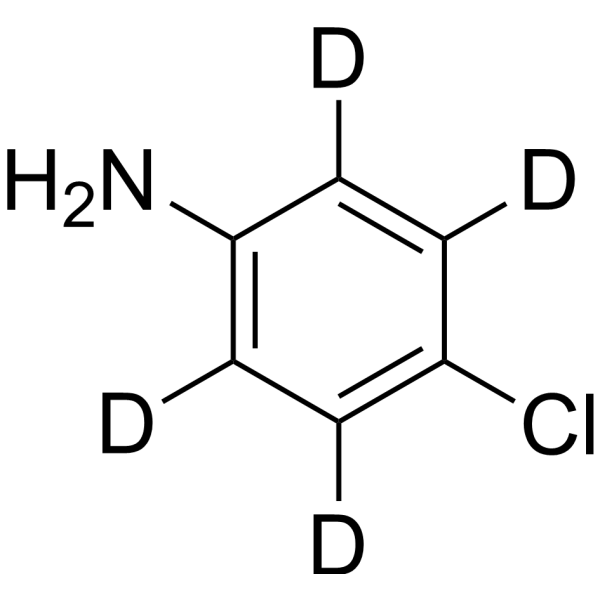
4-Chlorobenzen-2,3,5,6-d4 -amine is the deuterium labeled 4-Chlorobenzen-amine .
|
-
-
- HY-W740246
-
|
|
|
2-Butyl-4-chloro-5-formylimidazole-d3 is the deuterium labeled 2-Butyl-4-chloro-5-formylimidazole (HY-W016155). 2-Butyl-4-chloro-5-formylimidazole is a biochemical reagent that can be used as a biological material or organic compound for life science related research.
|
-
-
- HY-34498S
-
|
|
|
4-Chloro-2-methylphenol-d4 is the deuterium labeled 4-Chloro-2-methylphenol .
|
-
-
- HY-W708163
-
|
|
|
4-Desacetamido-4-chloro andarine-d4 is the deuterium labeled (S)-3-(4-Chlorophenoxy)-2-hydroxy-2-methyl-N-(4-nitro-3-(trifluoromethyl)phenyl)propanamide (HY-W708162).
|
-
-
- HY-W185208S
-
|
|
|
Chloridazon metabolite B1-d3 (Methyldesphenylchloridazon-d3) is deuterium labeled 5-Amino-4-chloro-2-methyl-2,3-dihydropyridazin-3-one .
|
-
-
- HY-W711764
-
|
|
|
1-Chloro-2-(chloromethyl)benzene-3,4,5,6-d4 is the deuterium labeled 1-Chloro-2-(chloromethyl)benzene (HY-W013647).
|
-
-
- HY-B0859S
-
|
|
|
MCPA- 13C8 is the 13C-labeled MCPA (HY-B0859). MCPA is an orally active phenoxyacetic acid herbicide. MCPA interferes with membrane integrity, energy metabolism (decreases ATP levels), and redox balance in plant cells. MCPA increases hepatic cytochrome P-450 levels and increases aniline hydroxylase and 7-ethoxycoumarin O-deethylase activities. MCPA can be used to control broadleaf weeds [4] .
|
-
-
- HY-W103488S
-
|
|
|
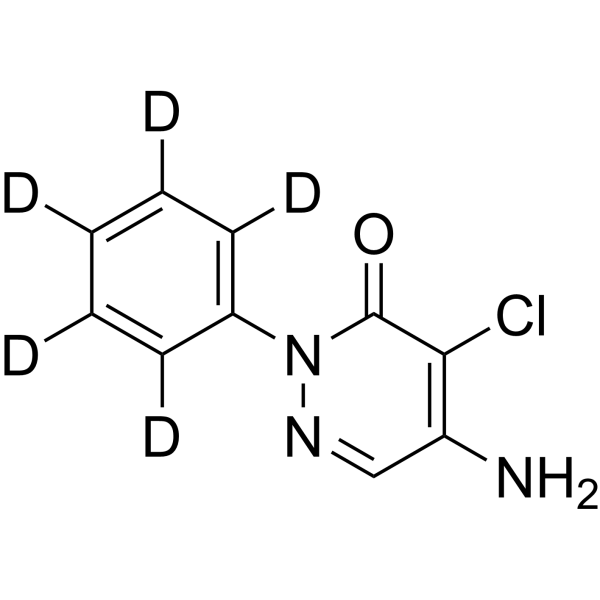
Chloridazon-d5 is the deuterium labeled Chloridazon .
|
-
-
- HY-13599S
-
|
|
|
Cladribine-d4 (2-Chloro-2′-deoxyadenosine-d4) is deuterium labeled Cladribine. Cladribine (2-Chloro-2′-deoxyadenosine), a purine nucleoside analog, is an orally active adenosine deaminase inhibitor. Cladribine functions as an inhibitor of DNA synthesis to block the repair of the damaged DNA. Cladribine can inhibit DNA methylation. Cladribine has anti-lymphoma activity. Cladribine can be used for the research of several hematologic malignancies and multiple sclerosis .
|
-
-
- HY-W746679
-
|
|
|
4-Chloro-4'-fluorobutyrophenone-d4 is the deuterium labeled 4-Chloro-1-(4-fluorophenyl)butan-1-one (HY-42081).
|
-
-
- HY-W777439
-
|
|
|
4-Chloro-6-nitrosoresorcinol- 13C6 is the 13C-labeled 4-Chloro-6-nitrosobenzene-1,3-diol (HY-W699627).
|
-
-
- HY-W280618S
-
|
|
|
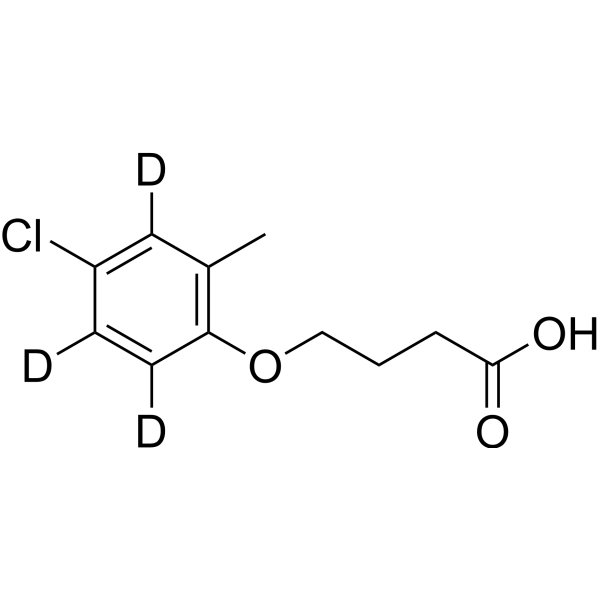
4-(4-Chloro-2-methylphenoxy)butanoic acid-d3 is the deuterium labeled 4-(4-Chloro-2-methylphenoxy)butanoic acid .
|
-
-
- HY-132698S
-
|
|
|
2-Amino-4-chloro-N-[(1R,2R)-2-(2,4-difluorophenyl)-2-hydroxy-1-methyl-3-(1H-1,2,4-triazol-1-yl)propyl]benzamide-d3 is the deuterium labeled 2-Amino-4-chloro-N-[(1R,2R)-2-(2,4-difluorophenyl)-2-hydroxy-1-methyl-3-(1H-1,2,4-triazol-1-yl)propyl]benzamide .
|
-
-
- HY-W010299S
-
|
|
|
1-Chloro-4-methoxybenzene-d4 is the deuterium labeled 1-Chloro-4-methoxybenzene .
|
-
-
- HY-W051547S
-
|
|
|
1-(2-Chloropyridin-3-yl)ethanol-d4 (2-Chloro-3-(1-hydroxyethyl)pyridine-d4) is the deuterium labeled 1-(2-Chloropyridin-3-yl)ethanol.
|
-
| Cat. No. |
Product Name |
|
Classification |
-
- HY-184261
-
|
|
|
Alkynes
|
|
1-(1-(2-(3-(But-3-yn-1-yl)-3H-diazirin-3-yl)ethyl)-5-(trifluoromethoxy)-1H-indol-3-yl)-2-(4-chloro-2-methoxyphenyl)-2-((3-methoxy-5-(2-methoxyethoxy)phenyl)amino)ethan-1-one is a click chemistry reagent containing an alkyne group, and it can be used in click chemistry applications.
|
| Cat. No. |
Product Name |
|
Classification |
-
- HY-152980
-
|
|
|
Nucleoside Analogs
|
|
4-Chloro-7-(2-deoxy-β-D-erythro-pentofuranosyl)-7H-pyrrolo[2,3-d]pyrimidine is a pyrimidine nucleoside analog. Pyrimidine nucleoside analogs have a wide range of biochemical and anticancer activities. These include DNA synthesis inhibition, RNA synthesis inhibition, antiviral effects, and immunomodulatory effects .
|
-
- HY-152818
-
|
|
|
Nucleoside Analogs
|
|
4-Chloro-7-(2-β-C-methyl-β-D-ribofuranosyl)-7H-pyrrolo[2,3-d] pyrimidine is a purine nucleoside analogue. Purine nucleoside analogs have broad antitumor activity targeting indolent lymphoid malignancies. Anticancer mechanisms in this process rely on inhibition of DNA synthesis, induction of apoptosis, etc .
|
-
- HY-152986
-
|
|
|
Nucleoside Analogs
|
|
4-Chloro-7-(2-deoxy-β-D-erythro-pentofuranosyl)-5-iodo-7H-pyrrolo[2,3-d]pyrimidine is a pyrimidine nucleoside analog. Pyrimidine nucleoside analogs have a wide range of biochemical and anticancer activities. These include DNA synthesis inhibition, RNA synthesis inhibition, antiviral effects, and immunomodulatory effects .
|
-
- HY-152977
-
|
|
|
Nucleoside Analogs
|
|
4-Chloro-7-(2-deoxy-3,5-bis-O-(p-toluoyl)-β-D-ribofuranosyl)-7H-pyrrolo[2,3-d]pyrimidine is a pyrimidine nucleoside analog. Pyrimidine nucleoside analogs have a wide range of biochemical and anticancer activities. These include DNA synthesis inhibition, RNA synthesis inhibition, antiviral effects, and immunomodulatory effects .
|
Your information is safe with us. * Required Fields.
Inquiry Information
- Product Name:
- Cat. No.:
- Quantity:
- MCE Japan Authorized Agent:





![4-Chloro-7H-pyrrolo[2,3-d]pyrimidine](http://file.medchemexpress.com/product_pic/hy-40351.gif)


![4-Chloro-5-nitro-1-tosyl-1H-pyrrolo[2,3-b]pyridine](http://file.medchemexpress.com/product_pic/hy-45448.gif)


![((4'-Chloro-[1,1'-biphenyl]-4-yl)sulfonyl)phenylalanine](http://file.medchemexpress.com/product_pic/hy-w030573.gif)


![4-Chloro-7-(2-deoxy-β-D-erythro-pentofuranosyl)-7H-pyrrolo[2,3-d]pyrimidine](http://file.medchemexpress.com/product_pic/hy-152980.gif)
![4-Chloro-7-(2-β-C-methyl-β-D-ribofuranosyl)-7H-pyrrolo[2,3-d] pyrimidine](http://file.medchemexpress.com/product_pic/hy-152818.gif)
![4-Chloro-7-(2-deoxy-β-D-erythro-pentofuranosyl)-5-iodo-7H-pyrrolo[2,3-d]pyrimidine](http://file.medchemexpress.com/product_pic/hy-152986.gif)

![2-(((4-chloro-3,5-dimethylpyridin-2-yl)methyl)sulfinyl)-6-methoxy-1Hbenzo[d]imidazole (Esomeprazole Impurity) (Standard)](http://file.medchemexpress.com/product_pic/hy-z2146r.gif)
![4-Chloro-7-(2-deoxy-3,5-bis-O-(p-toluoyl)-β-D-ribofuranosyl)-7H-pyrrolo[2,3-d]pyrimidine](http://file.medchemexpress.com/product_pic/hy-152977.gif)


![4-Chloro-7-fluoropyrrolo[1,2-a]quinoxaline](http://file.medchemexpress.com/product_pic/hy-23695.gif)
![4-Chloro-1-(2-methylpropyl)-1H-imidazo[4,5-c]quinoline (Standard)](http://file.medchemexpress.com/product_pic/hy-w101576r.gif)


![tert-Butyl 3-(4-chloro-7H-pyrrolo[2,3-d]pyrimidin-7-yl)pyrrolidine-1-carboxylate](http://file.medchemexpress.com/product_pic/hy-22403.gif)


![2-Amino-4-chloro-N-[(1R,2R)-2-(2,4-difluorophenyl)-2-hydroxy-1-methyl-3-(1H-1,2,4-triazol-1-yl)propyl]benzamide-d3](http://file.medchemexpress.com/product_pic/hy-132698s.gif)


![1-C-[4-Chloro-3-[(4-ethoxyphenyl)methyl]phenyl]-D-glucopyranose (Standard)](http://file.medchemexpress.com/product_pic/hy-z0048r.gif)





