



PCPA methyl ester hydrochloride (Standard)
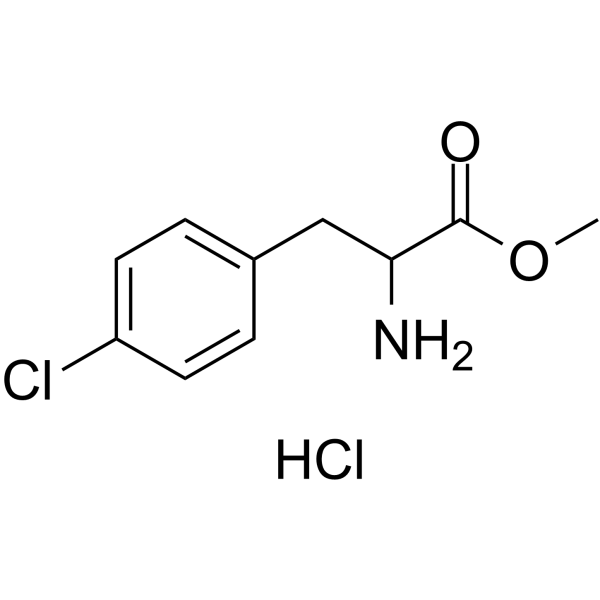
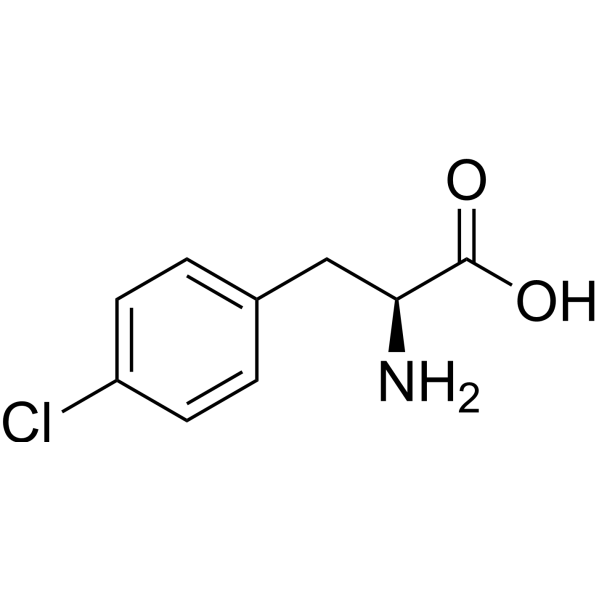
PCPA methyl ester (hydrochloride) (Standard) is the analytical standard of PCPA methyl ester (hydrochloride) (HY-101456). This product is intended for research and analytical applications. PCPA methyl ester hydrochloride (4-Chloro-DL-phenylalanine methyl ester hydrochloride), a reversible tryptophan hydroxylase inhibitor, is a serotonin (5-HT) synthesis inhibitor. PCPA methyl ester hydrochloride crosses the blood brain barrier and reduces 5-HT central availability.
For research use only. We do not sell to patients.
- CAS No.: 14173-40-1
- Formula: C10H13Cl2NO2
- Molecular Weight:250.13
-
Storage:
Please store the product under the recommended conditions in the Certificate of Analysis.


To place orders, for customer services and technical support, please contact: MedChemExpress USA
Tel: 609-228-6898 E-mail: [email protected] [email protected]


-
 Product Information
-
Chemical Information
- Purity & Documentation
-
 Help & FAQs




Product Information
Information
Application
The compound is the grade of analytical standard, which is the reference standard supplied assay. It is commonly used in qualitative, quantitative and methodological research experiments in HPLC, GC and MS.


Chemical Information
-
CAS No. 14173-40-1
-
Molecular Weight 250.13
-
Formula C10H13Cl2NO2
-
SMILES
NC(CC1=CC=C(Cl)C=C1)C(OC)=O.Cl
-
Synonyms
4-Chloro-DL-phenylalanine methyl ester hydrochloride (Standard)
-
Shipping
Room temperature in continental US; may vary elsewhere.
-
Storage
Please store the product under the recommended conditions in the Certificate of Analysis.


Purity & Documentation
References
[1]. Dool-Ri Oh, et al. Sedative and hypnotic effects of Vaccinium bracteatum Thunb. through the regulation of serotonegic and GABA A-ergic systems: Involvement of 5-HT 1A receptor agonistic activity. Biomed Pharmacother. 2019 Jan;109:2218-2227. [Content Brief]
[2]. Fabio Bellia, et al. Transient serotonin depletion at adolescence, but not at early infancy, reduced subsequent anxiety-like behavior and alcohol intake in female mice. Psychopharmacology (Berl). 2021 Jan;238(1):215-225. [Content Brief]
[3]. ocío B Foltran, et al. Neurochemical, Behavioral, and Neurogenic Validation of a Hyposerotonergic Animal Model by Voluntary Oral Consumption of para-Chlorophenylalanine. ACS Chem Neurosci. 2020 Mar 18;11(6):952-959. [Content Brief]

Calculators
Concentration (start) × Volume (start) = Concentration (final) × Volume (final)


PCPA methyl ester hydrochloride (Standard) Related Classifications
HY-101456R Related Classifications
 Powered by Bioz