1. Apoptosis Anti-infection Immunology/Inflammation Epigenetics
  2. Ferroptosis HCV Apoptosis COX Histone Demethylase
  3. Deferiprone

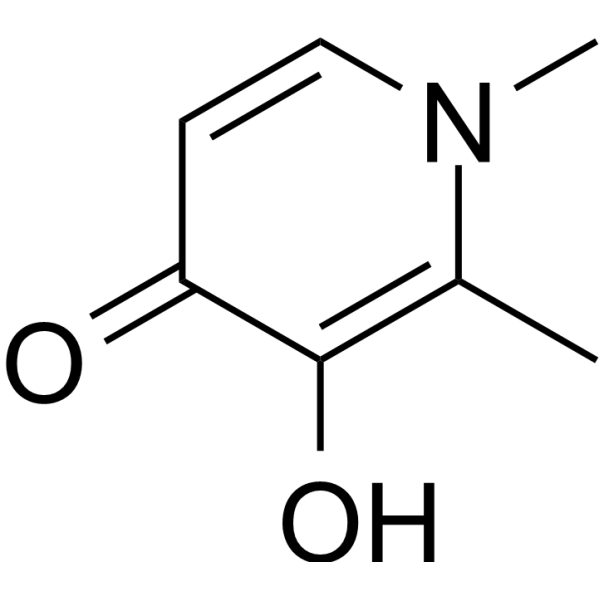
Deferiprone is a potent, orally active, brain-penetrant, cell-penetrant, skin-permeable, free iron chelating agent. Deferiprone inhibits the proliferation and migration, and stimulates apoptosis in tumor cell. Deferiprone can inhibit KDM. Deferiprone has antianemic, neuroprotective, anti-inflammatory, antioxidant, and antidotal activity. Deferiprone can be used in cancer, cardiovascular disease, infection, inflammation, and neurological disease study.

For research use only. We do not sell to patients.

CAS No. : 30652-11-0

Size Price Stock Quantity
Solid + Solvent (Highly Recommended)
10 mM * 1 mL in DMSO
ready for reconstitution
In-stock
Solution
10 mM * 1 mL in DMSO In-stock
Solid
500 mg In-stock
1 g In-stock
5 g In-stock
10 g In-stock
25 g In-stock
50 g In-stock
100 g In-stock
> 100 g   Get quote  

* Please select Quantity before adding items.

This product is a controlled substance and not for sale in your territory.

Customer Review

Based on 47 publication(s) in Google Scholar

Other Forms of Deferiprone:

Top Publications Citing Use of Products

47 Publications Citing Use of MCE Deferiprone

WB
Flow Cytometry
Cell Imaging/Staining
RT-PCR
IF

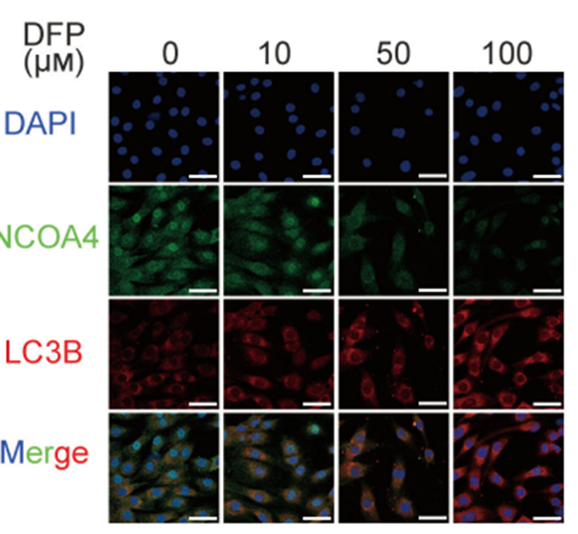
    Deferiprone purchased from MedChemExpress. Usage Cited in: Redox Biol. 2024 May 8:73:103182.  [Abstract]

    Representative fluorescence images of Deferiprone (DFP) (0. 10. 50, 100 μM)-treated or untreated C2C12 cells expressing NCOA4 (green) and LC3B (red).

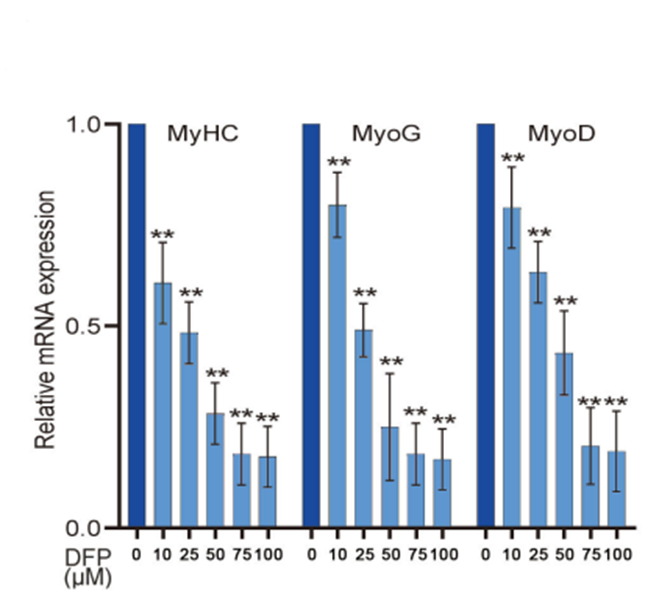
    Deferiprone purchased from MedChemExpress. Usage Cited in: Redox Biol. 2024 May 8:73:103182.  [Abstract]

    mRNA levels of MyHC, MyoD and MyoG in C2C12 cells treated with 0, 10, 25, 50, 75 and 100 µM Deferiprone (DFP) in differentiation medium for 3 days.

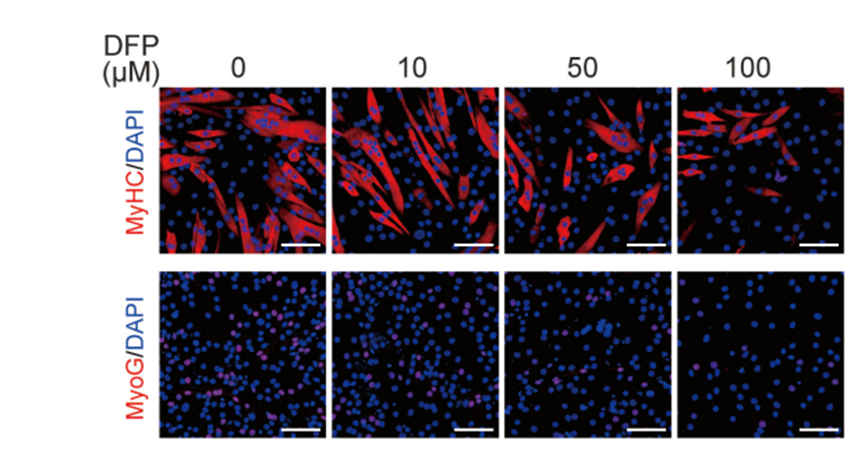
    Deferiprone purchased from MedChemExpress. Usage Cited in: Redox Biol. 2024 May 8:73:103182.  [Abstract]

    Immunofluorescence staining for MyHC, MyoD and MyoG in C2C12 cells treated with 0, 10, 50 and 100 µM Deferiprone (DFP) in differentiation medium for 3 days.

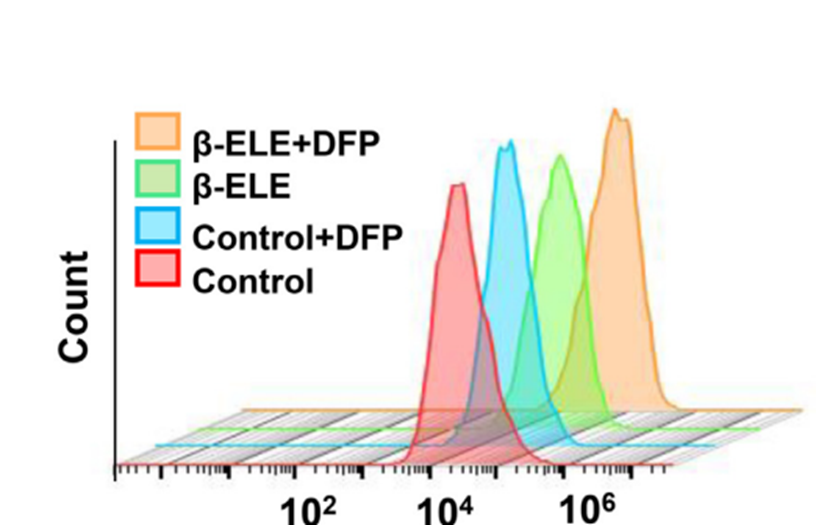
    Deferiprone purchased from MedChemExpress. Usage Cited in: J Adv Res. 2024 Aug:62:257-272.  [Abstract]

    A549 cells were treated with b-ELE for 24 h, CA-AM was added to cells at the final concentration of 0.5 μM, followed by adding iron chelator Deferiprone (DFP, 100 μM) for 1 h.

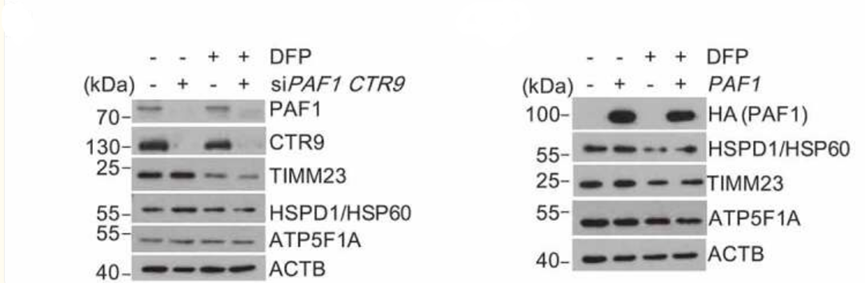
    Deferiprone purchased from MedChemExpress. Usage Cited in: Autophagy. 2020 Aug;16(8):1366-1379.  [Abstract]

    Deferiprone (DFP) (1 mM, 24 h) treatment resulted in a moderate reduction of the levels of TIMM23 and HSPD1/HSP60, and no change of ATP5F1A by immunoblotted.

    View All COX Isoform Specific Products:

    View All Histone Demethylase Isoform Specific Products:

    • Biological Activity

    • Purity & Documentation

    • References

    • Customer Review

    Description

    Deferiprone is a potent, orally active, brain-penetrant, cell-penetrant, skin-permeable, free iron chelating agent. Deferiprone inhibits the proliferation and migration, and stimulates apoptosis in tumor cell. Deferiprone can inhibit KDM. Deferiprone has antianemic, neuroprotective, anti-inflammatory, antioxidant, and antidotal activity. Deferiprone can be used in cancer, cardiovascular disease, infection, inflammation, and neurological disease study[1][2][3][4][5][6][7][8].

    Cellular Effect
    Cell Line Type Value Description References
    A-375 IC50
    27.24 μM
    Compound: DFP
    Cytotoxicity against human A-375 cells assessed as reduction in cell viability preincubated for 4 hrs under dark condition in presence of 5-aminolevulinic acid followed by irradiation with blue light at 2.5 J.cm^-2 energy level for 5 mins and measured after 18 hrs by MTT assay
    Cytotoxicity against human A-375 cells assessed as reduction in cell viability preincubated for 4 hrs under dark condition in presence of 5-aminolevulinic acid followed by irradiation with blue light at 2.5 J.cm^-2 energy level for 5 mins and measured after 18 hrs by MTT assay
    [PMID: 38626642]
    HEK-293T EC50
    40 μM
    Compound: DFP
    Protection against cisplatin-induced cytotoxicity in HEK293T cells assessed as cell viability measured after 24 to 48 hrs by MTT assay
    Protection against cisplatin-induced cytotoxicity in HEK293T cells assessed as cell viability measured after 24 to 48 hrs by MTT assay
    [PMID: 37976709]
    HK-2 CC50
    > 100 μM
    Compound: DFP
    Cytotoxicity against human HK-2 cells assessed as cell growth inhibition incubated for 48 hrs by SRB assay
    Cytotoxicity against human HK-2 cells assessed as cell growth inhibition incubated for 48 hrs by SRB assay
    [PMID: 37976703]
    HK-2 EC50
    > 100 μM
    Compound: DFP
    Inhibition of RSL-3 induced ferroptosis in human HK-2 cells incubated for 48 hrs in presence of FAC
    Inhibition of RSL-3 induced ferroptosis in human HK-2 cells incubated for 48 hrs in presence of FAC
    [PMID: 37976703]
    HL-60 GI50
    > 100 μM
    Compound: 1a
    Cytotoxicity against human HL60 cells by alamar blue assay
    Cytotoxicity against human HL60 cells by alamar blue assay
    [PMID: 23266185]
    HT-22 EC50
    164.6 μM
    Compound: DFP
    Anti-ferroptotic activity in erastin-induced ferroptosis in mouse HT-22 cells assessed as cell viability incubated for 24 hrs by MTT assay
    Anti-ferroptotic activity in erastin-induced ferroptosis in mouse HT-22 cells assessed as cell viability incubated for 24 hrs by MTT assay
    [PMID: 37976709]
    HeLa IC50
    61.84 μM
    Compound: DFP
    Cytotoxicity against human HeLa cells assessed as reduction in cell viability preincubated for 4 hrs under dark condition in presence of 5-aminolevulinic acid followed by irradiation with blue light at 2.5 J.cm^-2 energy level for 5 mins and measured after 18 hrs by MTT assay
    Cytotoxicity against human HeLa cells assessed as reduction in cell viability preincubated for 4 hrs under dark condition in presence of 5-aminolevulinic acid followed by irradiation with blue light at 2.5 J.cm^-2 energy level for 5 mins and measured after 18 hrs by MTT assay
    [PMID: 38626642]
    L1210 IC50
    0.2 μM
    Compound: Deferiprone
    Antiproliferative activity against mouse L1210 cells
    Antiproliferative activity against mouse L1210 cells
    [PMID: 19601577]
    L1210 IC50
    46 μM
    Compound: 4 (LI)
    Inhibitory concentration against growth of murine L1210 cells at 48 hours
    Inhibitory concentration against growth of murine L1210 cells at 48 hours
    [PMID: 15943485]
    L1210 IC50
    46 μM
    Compound: L1
    Compound was tested for the growth inhibition of L1210 cell at a duration of 48 h
    Compound was tested for the growth inhibition of L1210 cell at a duration of 48 h
    [PMID: 14640556]
    L1210 IC50
    55 μM
    Compound: 4 (LI)
    Inhibitory concentration against growth of murine L1210 cells at 96 hours
    Inhibitory concentration against growth of murine L1210 cells at 96 hours
    [PMID: 15943485]
    L1210 IC50
    55 μM
    Compound: L1
    Compound was tested for the growth inhibition of L1210 cell at a duration of 96 h
    Compound was tested for the growth inhibition of L1210 cell at a duration of 96 h
    [PMID: 14640556]
    MCF7 IC50
    64.95 μM
    Compound: DFP
    Cytotoxicity against human MCF7 cells assessed as reduction in cell viability preincubated for 4 hrs under dark condition in presence of 5-aminolevulinic acid followed by irradiation with blue light at 2.5 J.cm^-2 energy level for 5 mins and measured after 18 hrs by MTT assay
    Cytotoxicity against human MCF7 cells assessed as reduction in cell viability preincubated for 4 hrs under dark condition in presence of 5-aminolevulinic acid followed by irradiation with blue light at 2.5 J.cm^-2 energy level for 5 mins and measured after 18 hrs by MTT assay
    [PMID: 38626642]
    SK-N-MC IC50
    165.88 μM
    Compound: 2
    Toxicity in human SK-N-MC cells by MTT method
    Toxicity in human SK-N-MC cells by MTT method
    [PMID: 20041672]
    In Vitro

    Deferiprone (66-660 μM, 48-96 h) has a significant inhibitory effect on proliferation in TRAMP-C2, Myc-CaP, and 22rv1 cells[1].
    Deferiprone (100 μM, up to 192 h) inhibits cell migration in TRAMP-C2, Myc-CaP, and 22rv1 cells[1].
    Deferiprone (100 μM, 24 h) reduces the expression and activity of m-Acon in TRAMP-C2, Myc-CaP, and 22rv1 cells[1].
    Deferiprone (up to 1μM, 0.5-24 h) decreases the free iron in thalassemic red blood cells[2].
    Deferiprone (10 mins) inhibits human platelet aggregation stimulated by AA and ADP and epinephrine and collagen, with the IC50 values of 0.24, 0.25, 3.36 and 3.73 mM, respectively[3].
    Deferiprone (0.1-3.2 μM, 5 mins) inhibits COX-1 activity with the IC50 value of 0.33 μM[3].
    Deferiprone (4 mM, 5 mins) preventes ADP-induced formation of cAMP[3].
    Deferiprone (156.25 μg/mL, 24 h) enhances survival rate and reduces LDH Levels and displays normal cell morphology in aged Fibroblasts[4].
    Deferiprone (25μM, 6 h) amplifies the antibacterial activity of conventional antibiotics against S. epidermidis[5].

    MedChemExpress (MCE) has not independently confirmed the accuracy of these methods. They are for reference only.

    Cell Viability Assay[1]

    Cell Line: TRAMP-C2, Myc-CaP, and 22rv1 cells
    Concentration: 0, 16, 30, 66, 100, 160, 300, 660 μM
    Incubation Time: 48 h, 72 h
    Result: Showed a cytostatic effect in three cell lines with an IC50 and IC90 values of about 50 and 100 μM, respectively.

    Cell Migration Assay [1]

    Cell Line: TRAMP-C2, Myc-CaP, and 22rv1 cells
    Concentration: 100 μM
    Incubation Time: 0 to 30 h for TRAMP-C2, and Myc-CaP; 0 to 192 h for 22rv1
    Result: Inhibited cell migration starting at different time points for each cell line, ranging from 12 h in TRAMP-C2 cell to 48 h in 22rv1 cells, and 30 h in Myc-CaP cells.

    Western Blot Analysis[1]

    Cell Line: TRAMP-C2, Myc-CaP, and 22rv1 cells
    Concentration: 100 μM
    Incubation Time: 24 h
    Result: Reduced the expression of m-Acon, by 2-fold in Myc-CaP and 22 rv1 cells and decreased by 79% in TRAMP-C2 cells.
    In Vivo

    Deferiprone (100 mg/kg/daily for i.g., 4 weeks) has a neuroprotective effect in the rTg(tauP301L)4510 mouse model of tauopathy[6].
    Deferiprone (50-200 mg/kg/daily for p.o., 5-10 day) reduces the nephrotoxicity in Cisplatin (HY-17394)-induced rat acute renal failure[7].
    Deferiprone (13.82, 27.64 mg/kg/d for i.g., 4 weeks) exhibits anti- apoptosis and neuroprotective activity in rat Alzheimer’s disease model[8].

    MedChemExpress (MCE) has not independently confirmed the accuracy of these methods. They are for reference only.

    Animal Model: The rTg(tauP301L)4510 mouse model of tauopathy[6].
    Dosage: 100 mg/kg/daily, 4 weeks
    Administration: Intragastric administration (i.g.)
    Result: Improved Y-maze and open field performance, and decreased 28% iron levels in brain, and reduced AT8-labeled p-tau within the hippocampus in transgenic tau mice.
    Animal Model: Cisplatin(HY-17394)-induced rat acute renal failure model [7]
    Dosage: 50, 100, 200 mg/kg, 5-10 day
    Administration: Oral administration
    Result: Reduced the creatinine, BUN, malondialdehyde, iron concentrations, and the amounts of TfR, and indreased the levels of HIF-1a and related anti-apoptotic genes expression in Cisplatin (HY-17394)-injected animals.
    Animal Model: Aluminium-linked apoptosis in rat hippocampus model (Alzheimer’s disease model) [8]
    Dosage: 13.82, 27.64 mg/kg/d, 4 week
    Administration: Intragastric administration lasting 6 days with 1 day interval per week
    Result: Decreased the apoptosis and the expression of Caspase-3 and Bax, and increased the expression of Bcl-2 in Aluminium-linked apoptosis in rat hippocampus.
    Clinical Trial
    Molecular Weight

    139.15

    Formula

    C7H9NO2

    CAS No.
    Appearance

    Solid

    Color

    Off-white to light yellow

    SMILES

    O=C1C(O)=C(C)N(C)C=C1

    Shipping

    Room temperature in continental US; may vary elsewhere.

    Storage
    Powder -20°C 3 years
    4°C 2 years
    In solvent -80°C 6 months
    -20°C 1 month
    Solvent & Solubility
    In Vitro: 

    DMSO : 7.14 mg/mL (51.31 mM; Need ultrasonic; Hygroscopic DMSO has a significant impact on the solubility of product, please use newly opened DMSO)

    H2O : 3.33 mg/mL (23.93 mM; Need ultrasonic)

    Preparing
    Stock Solutions
    Concentration Solvent Mass 1 mg 5 mg 10 mg
    1 mM 7.1865 mL 35.9324 mL 71.8649 mL
    5 mM 1.4373 mL 7.1865 mL 14.3730 mL
    View the Complete Stock Solution Preparation Table

    * Please refer to the solubility information to select the appropriate solvent. Once prepared, please aliquot and store the solution to prevent product inactivation from repeated freeze-thaw cycles.
    Storage method and period of stock solution: -80°C, 6 months; -20°C, 1 month. When stored at -80°C, please use it within 6 months. When stored at -20°C, please use it within 1 month.

    * Note: If you choose water as the stock solution, please dilute it to the working solution, then filter and sterilize it with a 0.22 μm filter before use.

    • Molarity Calculator

    • Dilution Calculator

    Mass (g) = Concentration (mol/L) × Volume (L) × Molecular Weight (g/mol)

    Mass
    =
    Concentration
    ×
    Volume
    ×
    Molecular Weight *

    Concentration (start) × Volume (start) = Concentration (final) × Volume (final)

    This equation is commonly abbreviated as: C1V1 = C2V2

    Concentration (start)

    C1

    ×
    Volume (start)

    V1

    =
    Concentration (final)

    C2

    ×
    Volume (final)

    V2

    In Vivo:

    Select the appropriate dissolution method based on your experimental animal and administration route.

    For the following dissolution methods, please ensure to first prepare a clear stock solution using an In Vitro approach and then sequentially add co-solvents:
    To ensure reliable experimental results, the clarified stock solution can be appropriately stored based on storage conditions. As for the working solution for in vivo experiments, it is recommended to prepare freshly and use it on the same day.
    The percentages shown for the solvents indicate their volumetric ratio in the final prepared solution. If precipitation or phase separation occurs during preparation, heat and/or sonication can be used to aid dissolution.

    • Protocol 1

      Add each solvent one by one:  10% DMSO    40% PEG300    5% Tween-80    45% Saline

      Solubility: ≥ 0.71 mg/mL (5.10 mM); Clear solution

      This protocol yields a clear solution of ≥ 0.71 mg/mL (saturation unknown).

      Taking 1 mL working solution as an example, add 100 μL DMSO stock solution (7.1 mg/mL) to 400 μL PEG300, and mix evenly; then add 50 μL Tween-80 and mix evenly; then add 450 μL Saline to adjust the volume to 1 mL.

      Preparation of Saline: Dissolve 0.9 g sodium chloride in ddH₂O and dilute to 100 mL to obtain a clear Saline solution.
    • Protocol 2

      Add each solvent one by one:  10% DMSO    90% (20% SBE-β-CD in Saline)

      Solubility: ≥ 0.71 mg/mL (5.10 mM); Clear solution

      This protocol yields a clear solution of ≥ 0.71 mg/mL (saturation unknown).

      Taking 1 mL working solution as an example, add 100 μL DMSO stock solution (7.1 mg/mL) to 900 μL 20% SBE-β-CD in Saline, and mix evenly.

      Preparation of 20% SBE-β-CD in Saline (4°C, storage for one week): 2 g SBE-β-CD powder is dissolved in 10 mL Saline, completely dissolve until clear.

    For the following dissolution methods, please prepare the working solution directly. It is recommended to prepare fresh solutions and use them promptly within a short period of time.
    The percentages shown for the solvents indicate their volumetric ratio in the final prepared solution. If precipitation or phase separation occurs during preparation, heat and/or sonication can be used to aid dissolution.

    • Protocol 1

      Add each solvent one by one:  PBS

      Solubility: 10 mg/mL (71.86 mM); Clear solution; Need ultrasonic

    In Vivo Dissolution Calculator
    Please enter the basic information of animal experiments:

    Dosage

    mg/kg

    Animal weight
    (per animal)

    g

    Dosing volume
    (per animal)

    μL

    Number of animals

    Recommended: Prepare an additional quantity of animals to account for potential losses during experiments.
    Please enter your animal formula composition:
    %
    DMSO +
    +
    %
    Tween-80 +
    %
    Saline
    Recommended: Keep the proportion of DMSO in working solution below 2% if your animal is weak.
    The co-solvents required include: DMSO, . All of co-solvents are available by MedChemExpress (MCE). , Tween 80. All of co-solvents are available by MedChemExpress (MCE).
    Calculation results:
    Working solution concentration: mg/mL
    Method for preparing stock solution: mg drug dissolved in μL  DMSO (Stock solution concentration: mg/mL).
    The concentration of the stock solution you require exceeds the measured solubility. The following solution is for reference only. If necessary, please contact MedChemExpress (MCE).
    Method for preparing in vivo working solution for animal experiments: Take μL DMSO stock solution, add μL . μL , mix evenly, next add μL Tween 80, mix evenly, then add μL Saline.
     If the continuous dosing period exceeds half a month, please choose this protocol carefully.
    Please ensure that the stock solution in the first step is dissolved to a clear state, and add co-solvents in sequence. You can use ultrasonic heating (ultrasonic cleaner, recommended frequency 20-40 kHz), vortexing, etc. to assist dissolution.
    Purity & Documentation

    Purity: 99.98%

    References

    Complete Stock Solution Preparation Table

    * Please refer to the solubility information to select the appropriate solvent. Once prepared, please aliquot and store the solution to prevent product inactivation from repeated freeze-thaw cycles.
    Storage method and period of stock solution: -80°C, 6 months; -20°C, 1 month. When stored at -80°C, please use it within 6 months. When stored at -20°C, please use it within 1 month.

    Optional Solvent Concentration Solvent Mass 1 mg 5 mg 10 mg 25 mg
    H2O / DMSO 1 mM 7.1865 mL 35.9324 mL 71.8649 mL 179.6622 mL
    5 mM 1.4373 mL 7.1865 mL 14.3730 mL 35.9324 mL
    10 mM 0.7186 mL 3.5932 mL 7.1865 mL 17.9662 mL
    15 mM 0.4791 mL 2.3955 mL 4.7910 mL 11.9775 mL
    20 mM 0.3593 mL 1.7966 mL 3.5932 mL 8.9831 mL
    DMSO 25 mM 0.2875 mL 1.4373 mL 2.8746 mL 7.1865 mL
    30 mM 0.2395 mL 1.1977 mL 2.3955 mL 5.9887 mL
    40 mM 0.1797 mL 0.8983 mL 1.7966 mL 4.4916 mL
    50 mM 0.1437 mL 0.7186 mL 1.4373 mL 3.5932 mL

    * Note: If you choose water as the stock solution, please dilute it to the working solution, then filter and sterilize it with a 0.22 μm filter before use.

    • No file chosen (Maximum size is: 1024 Kb)
    • If you have published this work, please enter the PubMed ID.
    • Your name will appear on the site.
    Help & FAQs
    • Do most proteins show cross-species activity?

      Species cross-reactivity must be investigated individually for each product. Many human cytokines will produce a nice response in mouse cell lines, and many mouse proteins will show activity on human cells. Other proteins may have a lower specific activity when used in the opposite species.

    Your Recently Viewed Products:

    Inquiry Online

    Your information is safe with us. * Required Fields.

    Product Name


    Requested Quantity *

    Applicant Name *


    Salutation

    Email Address *


    Phone Number *

    Department


    Organization Name *

    City

    State

    Country or Region *


    Remarks

    Bulk Inquiry

    Inquiry Information

    Product Name:
    Deferiprone
    Cat. No.:
    HY-B0568
    Quantity:
    MCE Japan Authorized Agent: