



KDM6
KDM6 family histone demethylases, primarily KDM6A (UTX) and KDM6B (JMJD3), function as H3K27me3 demethylases that remove a key repressive chromatin mark and thereby promote transcriptional activation of developmentally regulated genes[1][2]. Mechanistically, KDM6A and KDM6B counteract Polycomb-mediated gene silencing by catalyzing H3K27me3 demethylation, enabling chromatin remodeling and activation of lineage-specific transcriptional programs[1][2]. This epigenetic activity is closely linked to HOX gene regulation, cellular differentiation, and normal developmental processes, highlighting the central role of KDM6 proteins in chromatin-dependent gene control[1]. In disease settings, dysregulated KDM6A/KDM6B activity alters H3K27me3 distribution and contributes to transcriptional abnormalities associated with cancer, inflammatory disorders, and other pathological conditions[3]. Compared with related isoforms, KDM6A and KDM6B share H3K27 demethylase activity but exhibit distinct biological functions, expression patterns, and disease associations, indicating that individual family members can regulate context-dependent transcriptional programs[1][3]. For experimental applications, the small-molecule inhibitor GSK-J4 is widely used to suppress KDM6A/KDM6B-mediated H3K27 demethylation, increase cellular H3K27me3 levels, and investigate the functional consequences of KDM6 inhibition in disease models and cellular systems[3][4]. Therefore, KDM6 proteins represent important epigenetic regulators and experimentally tractable targets for studies of chromatin regulation, development, inflammation, and cancer biology[1][3].
References:
- [1]. Agger K, et al. UTX and JMJD3 are histone H3K27 demethylases involved in HOX gene regulation and development. Nature. 2007 Oct 11;449(7163):731-4. [Content Brief]
- [2]. Hong S, et al. Identification of JmjC domain-containing UTX and JMJD3 as histone H3 lysine 27 demethylases. Proc Natl Acad Sci U S A. 2007 Nov 20;104(47):18439-44. [Content Brief]
- [3]. Abu-Hanna J, et al. Therapeutic potential of inhibiting histone 3 lysine 27 demethylases: a review of the literature. Clin Epigenetics. 2022 Aug 1;14(1):98. [Content Brief]
- [4]. Kruidenier L, et al. A selective jumonji H3K27 demethylase inhibitor modulates the proinflammatory macrophage response. Nature. 2012 Aug 16;488(7411):404-8. [Content Brief]
All Product Categories
-
KDM6 Related Products (8)
Related Products (8)

-
GSK-J4
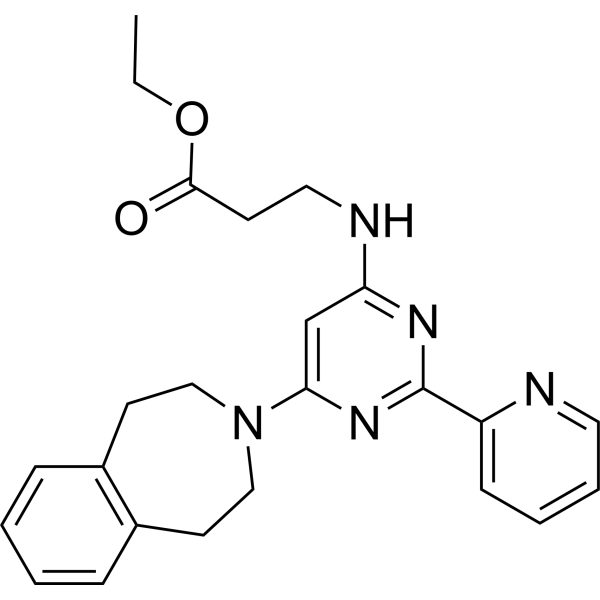 0 ImagesGSK-J4 is a potent dual inhibitor of H3K27me3/me2-demethylases JMJD3/KDM6B and UTX/KDM6A with IC50s of 8.6 and 6.6 μM, respectively. GSK-J4 inhibits LPS-induced TNF-α production in human primary macrophages with an IC50 of 9 μM. GSK J4 is a cell permeable proagent of GSK-J1. GSK-J4 induces endoplasmic reticulum stress-related apoptosis.
-
IOX1
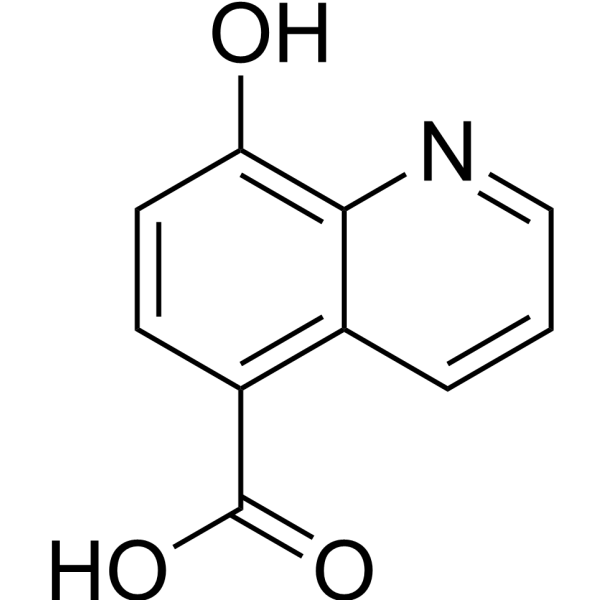 0 ImagesIOX1, a chemical probe, is a potent broad‐spectrum inhibitor of 2OG oxygenases, including the JmjC demethylases. IOX1 inhibits KDM4C, KDM4E, KDM2A, KDM3A and KDM6B with IC50 values of 0.6 μM, 2.3 μM, 1.8 μM, 0.1 μM and 1.4 μM, respectively. IOX1 also inhibits ALKBH5.
-
JIB-04
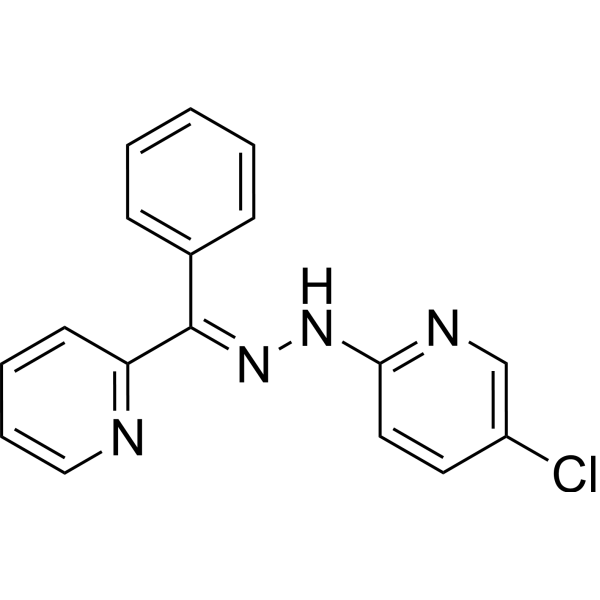 0 ImagesJIB-04 is a pan-selective Jumonji histone demethylase inihibitor with IC50s of 230, 340, 855, 445, 435, 1100, and 290 nM for JARID1A, JMJD2E, JMJD3, JMJD2A, JMJD2B, JMJD2C, and JMJD2D, respectively.
-
GSK-J4 hydrochloride
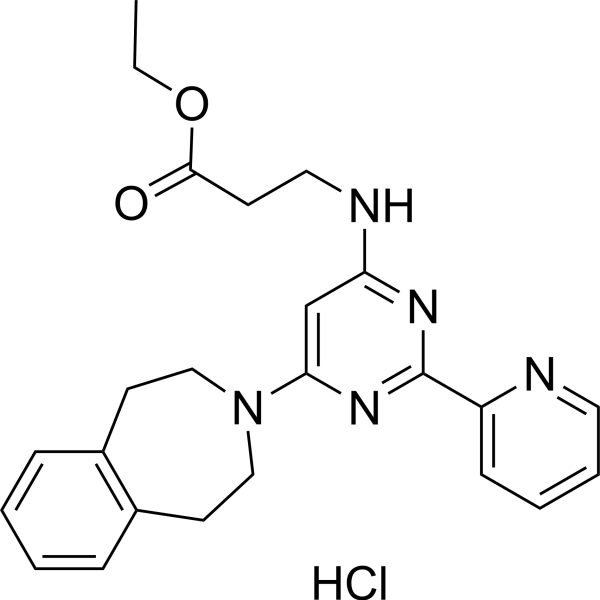 0 ImagesGSK-J4 hydrochloride is a potent dual inhibitor of H3K27me3/me2-demethylases JMJD3/KDM6B and UTX/KDM6A with IC50s of 8.6 and 6.6 μM, respectively. GSK-J4 hydrochloride inhibits LPS-induced TNF-α production in human primary macrophages with an IC50 of 9 μM. GSK-J4 hydrochloride is a cell permeable proagent of GSK-J1.
-
GSK-J1
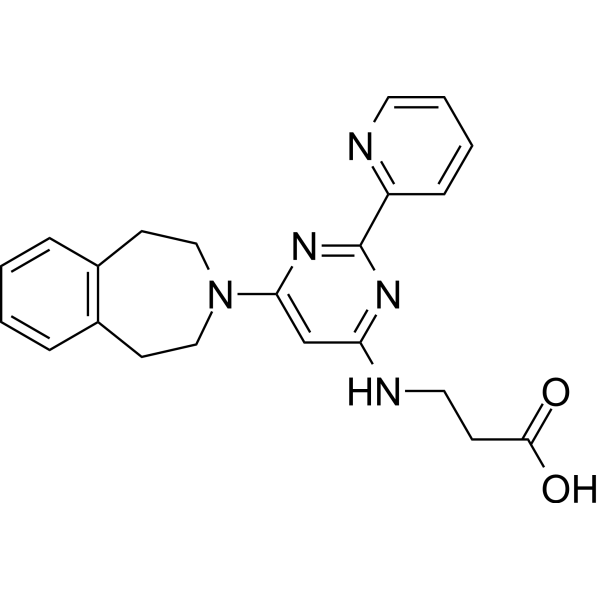 0 ImagesGSK-J1, a chemical probe, is a potent inhibitor of H3K27me3/me2-demethylases JMJD3/KDM6B and UTX/KDM6A, with IC50 of 60 nM towards KDM6B.
-
XL177A (GMP)
 0 ImagesCat. No.: HY-138794GCAS No.: 2417089-74-6XL177A GMP is XL177A (HY-138794) produced by using GMP guidelines. GMP small molecules works appropriately as an auxiliary reagent for cell therapy manufacture. XL177A is a covalent USP7 inhibitor that blocks the deubiquitinase activity of USP7. XL177A destabilizes non-canonical PRC1 complexes or KDM6A and reduces chromatin deposition of H2AK119Ub, thereby relieving the repression of neuronal differentiation programs. Meanwhile, XL177A also regulates the ELOF1-UVSSA-USP7-nuclear β-catenin axis, decreasing the transcription levels of related proteins and the accumulation of nuclear β-catenin. XL177A exerts antiviral effects by reducing the expression levels of coronavirus receptors, and exhibits inhibitory activity against APC-mutated colorectal cancer cells, neuroblastoma, and coronaviruses including SARS-CoV-2 variants. XL177A is mainly used in studies related to colorectal cancer, neuroblastoma, and coronavirus infections.
-
DW-229
 0 ImagesCat. No.: HY-183618DW-229 is a PROTAC degrader derived from Deferiprone (HY-B0568), targeting Fe(II)/α‑ketoglutarate‑dependent histone lysine demethylases (KDMs). DW-229 degrades KDM2A, KDM3A, KDM5B, KDM4A‑C, KDM5C, KDM6B in breast cancer cells. DW-229 shows IC50 < 0.5 μM against MCF‑7 cells and IC50 of 8.87 μM against MDA‑MB‑231 cells, with high cancer cell selectivity. DW-229 can be used for the research of breast cancer, liver cancer, prostate cancer, lung cancer.
-
GSK-J1 lithium salt
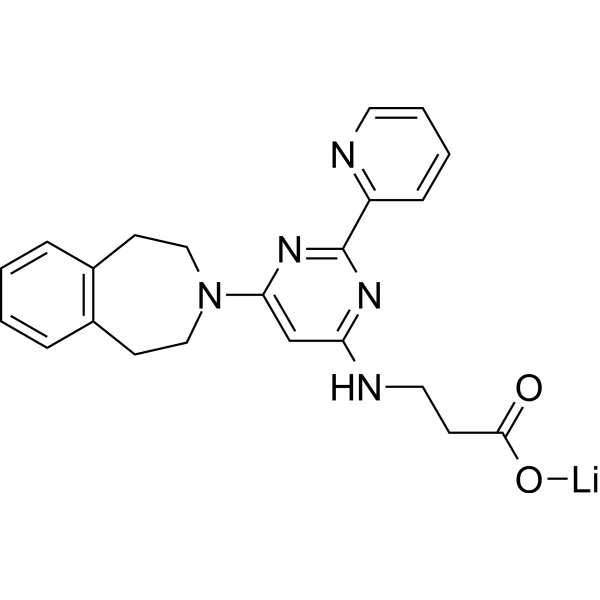 0 ImagesGSK-J1 lithium salt is a potent inhibitor of H3K27me3/me2-demethylases JMJD3/KDM6B and UTX/KDM6A, with IC50 of 60 nM towards KDM6B.



