



GSK-J1
Based on 17 publication(s) in Google Scholar
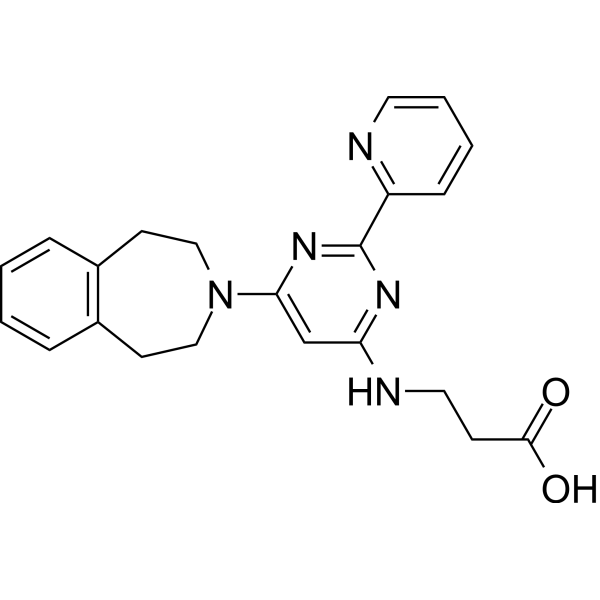
GSK-J1, a chemical probe, is a potent inhibitor of H3K27me3/me2-demethylases JMJD3/KDM6B and UTX/KDM6A, with IC50 of 60 nM towards KDM6B.
商品は「研究用試薬」です。人や動物の医療用・臨床診断用・食品用の製品ではありません。
研究用途以外に使用した場合、当社は一切の責任を負いかねます。
- 純度 : 99.79%
- CAS 番号: 1373422-53-7
- 分子式: C22H23N5O2
- 分子量:389.45
-
保管条件:Powder -20°C, 3 years , 4°C, 2 years ; In solvent -80°C, 2 years , -20°C, 1 year

To place orders, for customer services and technical support, please contact: MedChemExpress USA
Tel: 609-228-6898 E-mail: [email protected] [email protected]


-
 生物活性
生物活性
-
化学情報
-
溶剤 & 溶解度
- 純度とドキュメンテーション
- 参考文献
-
 Help & FAQs


-
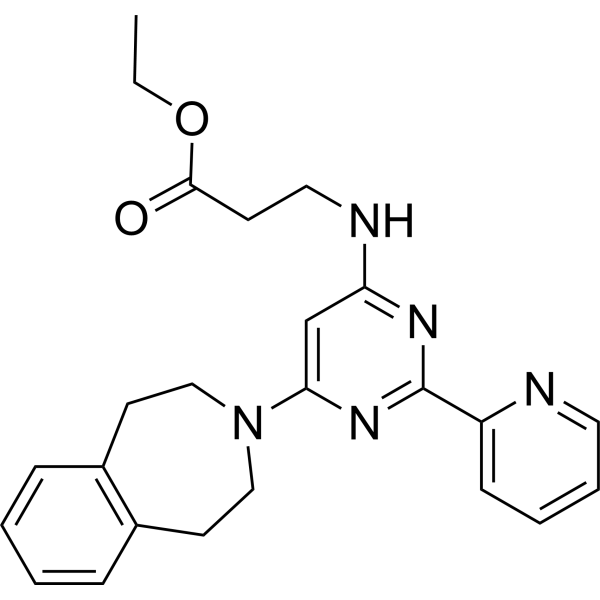
HY-15648B
GSK-J4JMJD3/UTX Inhibitor -
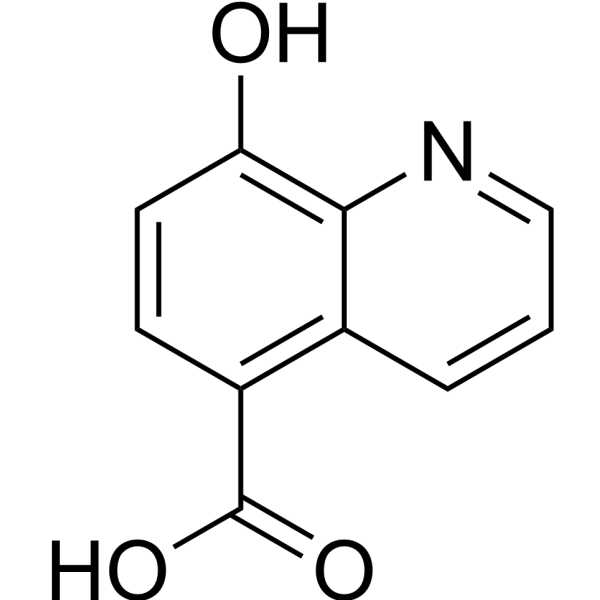
HY-12304
IOX12OG Oxygenases Inhibitor -
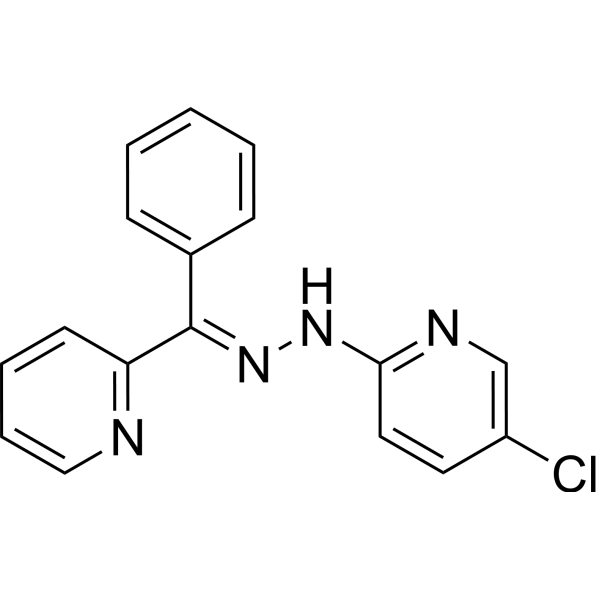
HY-13953
JIB-04Histone Demethylase Inhibitor -
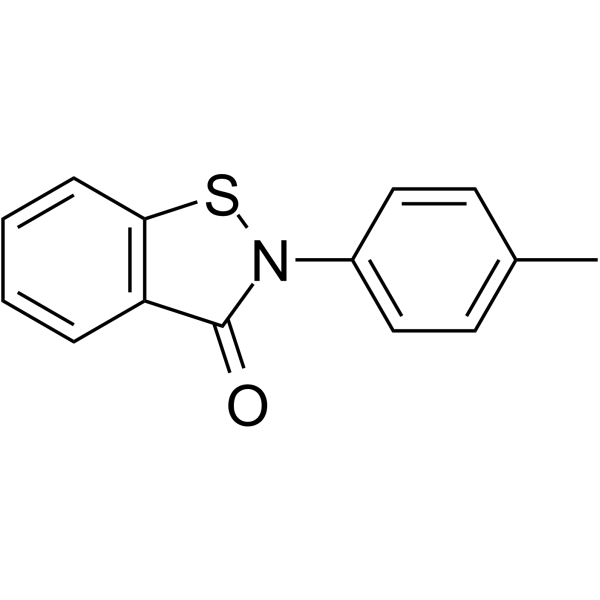
HY-101451
PBITJARID1B Inhibitor -
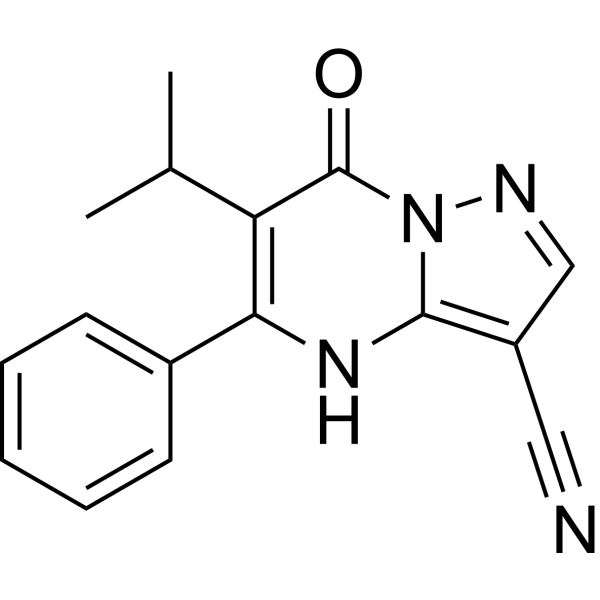
HY-100421
CPI-455KDM5 Inhibitor -
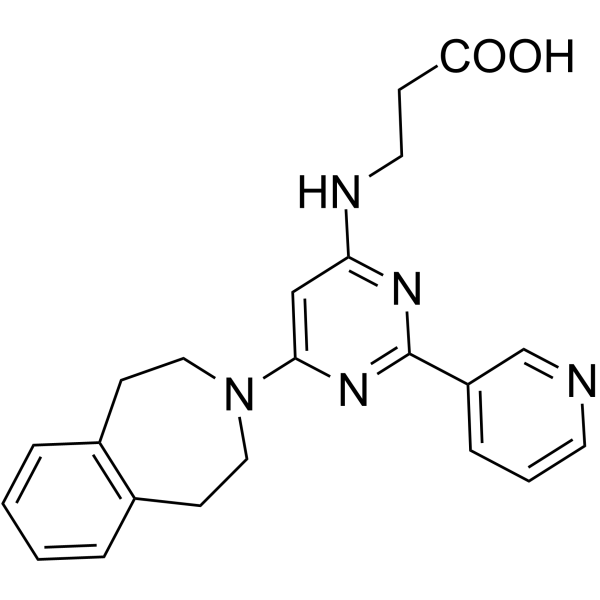
HY-15648A
GSK-J2GSK J1 Inactive Isomer -
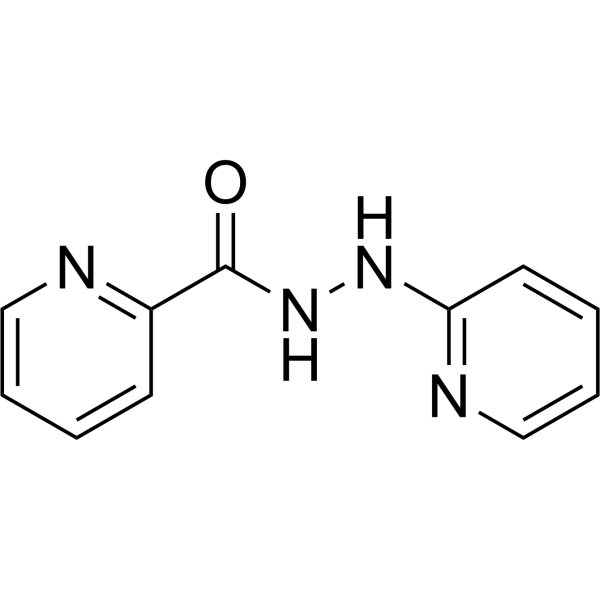
HY-139348
PFI-90KDM3B Inhibitor -
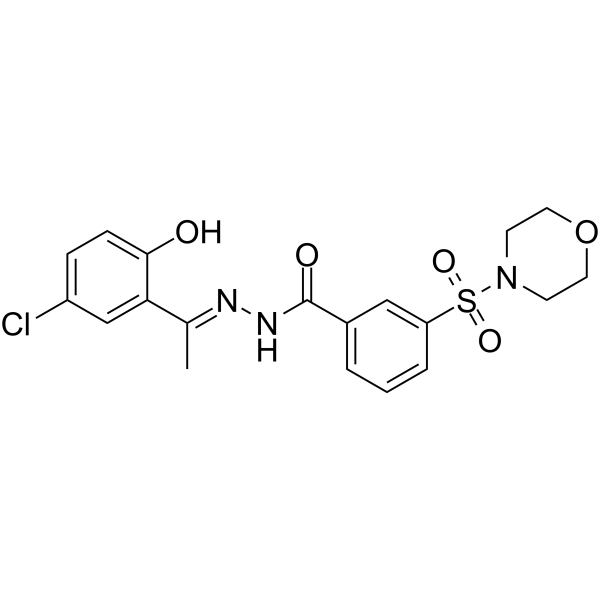
HY-12635
SP2509LSD1 Antagonist -
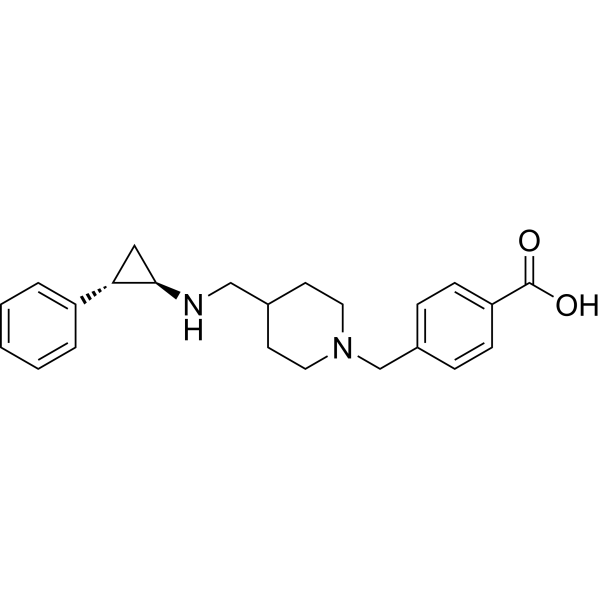
HY-18632
GSK2879552LSD1 Inhibitor -
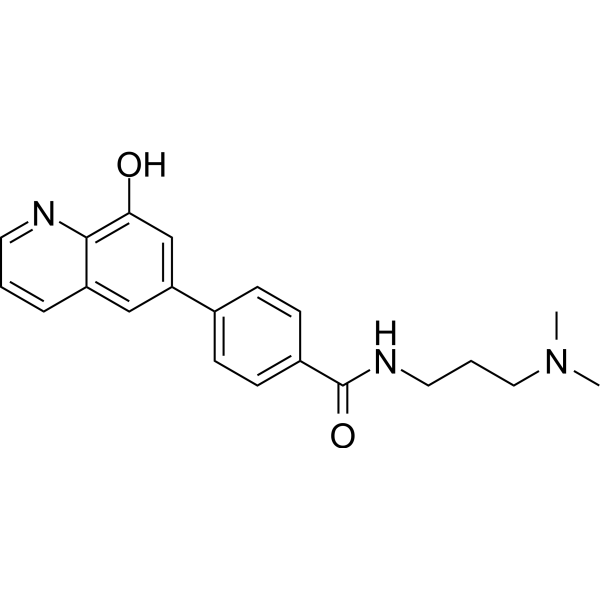
HY-12725
ML324JMJD2 Inhibitor -
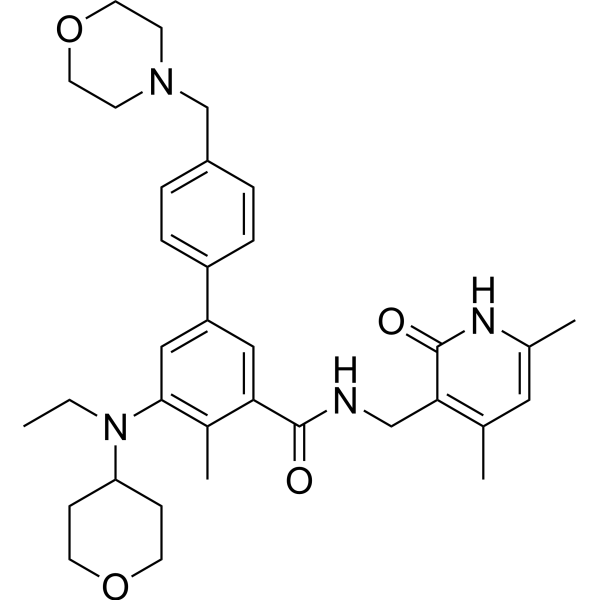
HY-13803
TazemetostatEZH2 Inhibitor -
HY-104048
QC6352KDM4 Inhibitor
MedChemExpress(MCE)の使用を引用している文献 GSK-J1
More- Nat Commun. 2026 Feb 12;17(1):1214. [Abstract]
- J Exp Clin Cancer Res. 2024 May 30;43(1):152. [Abstract]
- Adv Sci (Weinh). 2025 Dec 12:e13762. [Abstract]
- Acta Pharmacol Sin. 2022 Feb;43(2):457-469. [Abstract]
- Oncogene. 2021 Apr;40(15):2711-2724. [Abstract]
- Clin Exp Med. 2025 Nov 25;26(1):33. [Abstract]
- iScience. 2024 May 16;27(6):110011. [Abstract]
- Front Mol Neurosci. 2017 Mar 13:10:51. [Abstract]
- Mol Divers. 2024 Dec;28(6):4403-4424. [Abstract]
- J Chromatogr A. 2020 Feb 22:1613:460625. [Abstract]
- Mol Carcinog. 2025 Nov 18. [Abstract]
- Res Sq. 2025 Aug 12.
- bioRxiv. 2025 Jul 26:2025.07.22.666193. [Abstract]
- SSRN. 2021 Dec.
- Patent. US20200376146A1.
- Patent. US20200376102A1.
- Patent. US20180263995A1.
 Customer Validation & Images

-
Bio/Physico-chemical Assay

-
WB

-
In Vivo Imaging

-
IHC

-
IHC


生物活性
製品説明
IC50 & Target
|
KDM6 |
Cellular Effect
|
Cell Line

|
Type | Value | Description | References |
|---|---|---|---|---|
| HepG2 | IC50 |
39.75 μM
Compound: GSK-J1
|
Antitumor activity against human HepG2 cells assessed as inhibition of cell proliferation incubated for 72 hrs by MTT assay
Antitumor activity against human HepG2 cells assessed as inhibition of cell proliferation incubated for 72 hrs by MTT assay
|
[PMID: 36931124] |
| MCF7 | IC50 |
33.67 μM
Compound: GSK-J1
|
Antitumor activity against human MCF7 cells assessed as inhibition of cell proliferation incubated for 72 hrs by MTT assay
Antitumor activity against human MCF7 cells assessed as inhibition of cell proliferation incubated for 72 hrs by MTT assay
|
[PMID: 36931124] |
| MGC-803 | IC50 |
29.31 μM
Compound: GSK-J1
|
Antitumor activity against human MGC-803 cells assessed as inhibition of cell proliferation incubated for 72 hrs by MTT assay
Antitumor activity against human MGC-803 cells assessed as inhibition of cell proliferation incubated for 72 hrs by MTT assay
|
[PMID: 36931124] |
| PC-3 | IC50 |
20.33 μM
Compound: GSK-J1
|
Antitumor activity against human PC-3 cells assessed as inhibition of cell proliferation incubated for 72 hrs by MTT assay
Antitumor activity against human PC-3 cells assessed as inhibition of cell proliferation incubated for 72 hrs by MTT assay
|
[PMID: 36931124] |
| Sf9 | IC50 |
16 nM
Compound: 4; GSK-J1
|
Inhibition of C-terminal FLAG-tagged human KDM6B expressed in expressed in Sf9 cells pre-incubated for 4 hrs before substrate addition and measured after 1 hr by AlphaScreen assay
Inhibition of C-terminal FLAG-tagged human KDM6B expressed in expressed in Sf9 cells pre-incubated for 4 hrs before substrate addition and measured after 1 hr by AlphaScreen assay
|
[PMID: 30928196] |
体外実験
GSK-J1 is selective for H3K27 demethylases of the KDM6 subfamily and specifically binds to endogenous JMJD3. GSK-J1 inhibits TNF-α production by human primary macrophages in an H3K27-dependent manner[1]. GSK-J1 inhibits the demethylase activity of KDM5C with 8.5-fold increased potency compared with that of KDM5B at 1 mM α-ketoglutarate, with IC50 of 11 μM and 94 μM, respectively[3].
MedChemExpress (MCE) has not independently confirmed the accuracy of these methods. They are for reference only.


化学情報
-
CAS 番号 1373422-53-7
-
性状 Solid
-
分子量 389.45
-
分子式 C22H23N5O2
-
Color White to yellow
-
SMILES
OC(CCNC1=NC(C2=NC=CC=C2)=NC(N(CC3)CCC4=C3C=CC=C4)=C1)=O
-
輸送条件
Room temperature in continental US; may vary elsewhere.
-
保管条件
Powder -20°C 3 years 4°C 2 years In solvent -80°C 2 years -20°C 1 year


Publications (17)
-
Journal Impact Factor
-
Most Recent
-
Nat Commun
Human iPSC-based Modeling of Pulmonary Fibrosis Reveals p300/CBP Inhibition Suppresses Alveolar Transitional Cell State. [Abstract]2026 Feb 12;17(1):1214. PMID: 41680175 -
J Exp Clin Cancer Res
Unveiling the role of HP1α-HDAC1-STAT1 axis as a therapeutic target for HP1α-positive intrahepatic cholangiocarcinoma. [Abstract]2024 May 30;43(1):152. PMID: 38812060 -
Adv Sci (Weinh)
Nap1L4a Cooperates with Scl/Klf1 to Recruit H2A.Z in Mediating Interactions Among Cis-Regulatory Elements and Transcription Required for Primitive Erythropoiesis in Zebrafish. [Abstract]2025 Dec 12:e13762. PMID: 41387107
GSK-J1 purchased from MedChemExpress. Usage Cited in: Adv Sci (Weinh). 2025 Dec 12:e13762. [Abstract]
WISH analysis of gata1a and hbbe3 expression in nap1l4a −/− and WT embryos and in embryos treated with GSK‐J1 (10 μM) at 24 hpf, and box and whisker plots show relative transcriptional levels across groups.
GSK-J1 purchased from MedChemExpress. Usage Cited in: Adv Sci (Weinh). 2025 Dec 12:e13762. [Abstract]
Protein levels of H3K27me3 in nap1l4a −/− and WT embryos and in embryos treated with GSK‐J1 (10 μM) at 24 hpf, and graphs show the relative protein levels.
-
Acta Pharmacol Sin
2022 Feb;43(2):457-469. PMID: 33850273 -
Oncogene
2021 Apr;40(15):2711-2724. PMID: 33712705 -
Clin Exp Med
Corin: a dual inhibitor for KDM1A/HDAC1, suppresses hepatocellular carcinoma by triggering cuproptosis. [Abstract]2025 Nov 25;26(1):33. PMID: 41286164 -
iScience
Transcriptional synergy in human aortic endothelial cells is vulnerable to combination p300/CBP and BET bromodomain inhibition. [Abstract]2024 May 16;27(6):110011. PMID: 38868181 -
Front Mol Neurosci
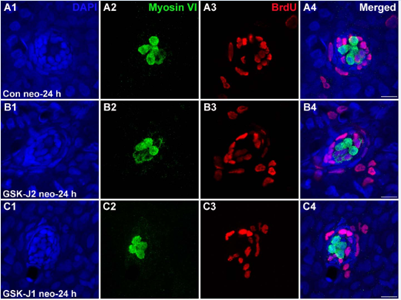
Inhibition of H3K27me3 Histone Demethylase Activity Prevents the Proliferative Regeneration of Zebrafish Lateral Line Neuromasts. [Abstract]2017 Mar 13:10:51. PMID: 28348517
GSK-J1 purchased from MedChemExpress. Usage Cited in: Front Mol Neurosci. 2017 Mar 13:10:51. [Abstract]
GSK-J1 impaired zebrafish hair cell regeneration. 5 dpf larvae are treated with 400 μM Neomycin for 1 h followed by GSK-J1 exposure for 24 in the presence of BrdU. GSK-J1 significantly reduces the numbers of myosinVI-positive (green) hair cells and BrdU-positive (red) replicating cells.
-
Mol Divers
Exploring host epigenetic enzymes as targeted therapies for visceral leishmaniasis: in silico design and in vitro efficacy of KDM6B and ASH1L inhibitors. [Abstract]2024 Dec;28(6):4403-4424. PMID: 38522046 -
J Chromatogr A
Screening of inhibitors against histone demethylation jumonji domain-containing protein 3 by capillary electrophoresis. [Abstract]2020 Feb 22:1613:460625. PMID: 31668999 -
Mol Carcinog
KDM6A Exhibits Antitumor Activities Toward Ovarian Cancer by Epigenetically Activating Transcription of ISG-15. [Abstract]2025 Nov 18. PMID: 41252674 -
-
bioRxiv
2025 Jul 26:2025.07.22.666193. PMID: 40777373
GSK-J1 purchased from MedChemExpress. Usage Cited in: bioRxiv. 2025 Jul 26:2025.07.22.666193. [Abstract]
Morphology and number of normal eggs per well laid by virgin females treated with BATT and either GSK-J2 or GSK-J1.
GSK-J1 purchased from MedChemExpress. Usage Cited in: bioRxiv. 2025 Jul 26:2025.07.22.666193. [Abstract]
DAPI and Fast BBB staining showing the ovary (left) and vitellaria (right) of virgin females treated with BATT and either GSK-J2 or GSK-J1.
-
-
-
-


溶剤 & 溶解度
体外:
DMSO : 50 mg/mL (128.39 mM; Need ultrasonic; Hygroscopic DMSO has a significant impact on the solubility of product, please use newly opened DMSO)
Please refer to the solubility information to select the appropriate solvent. Once prepared, please aliquot and store the solution to prevent product inactivation from repeated freeze-thaw cycles.
Storage method and period of stock solution: -80°C, 2 years; -20°C, 1 year. When stored at -80°C, please use it within 2 years. When stored at -20°C, please use it within 1 year.
Please refer to the solubility information to select the appropriate solvent. Once prepared, please aliquot and store the solution to prevent product inactivation from repeated freeze-thaw cycles.
Storage method and period of stock solution: -80°C, 2 years; -20°C, 1 year. When stored at -80°C, please use it within 2 years. When stored at -20°C, please use it within 1 year.
濃度 (開始) × 体積 (開始) = 濃度 (終了) × 体積 (終了)
体内:
Select the appropriate dissolution method based on your experimental animal and administration route.
- For the following dissolution methods, please ensure to first prepare a clear stock solution using an In Vitro approach and then sequentially add co-solvents:
- To ensure reliable experimental results, the clarified stock solution can be appropriately stored based on storage conditions. As for the working solution for In Vivo experiments, it is recommended to prepare freshly and use it on the same day.
- The percentages shown for the solvents indicate their volumetric ratio in the final prepared solution. If precipitation or phase separation occurs during preparation, heat and/or sonication can be used to aid dissolution.
Add each solvent one by one: 10% DMSO 40% PEG300 5% Tween-80 45% Saline
Solubility: ≥ 2.5 mg/mL (6.42 mM); Clear solution
This protocol yields a clear solution of ≥ 2.5 mg/mL (saturation unknown).
Taking 1 mL working solution as an example, add 100 μL DMSO stock solution (25.0 mg/mL) to 400 μL PEG300, and mix evenly; then add 50 μL Tween-80 and mix evenly; then add 450 μL Saline to adjust the volume to 1 mL.
Preparation of Saline: Dissolve 0.9 g sodium chloride in ddH₂O and dilute to 100 mL to obtain a clear Saline solution.
Add each solvent one by one: 10% DMSO 90% (20% SBE-β-CD in Saline)
Solubility: ≥ 2.5 mg/mL (6.42 mM); Clear solution
This protocol yields a clear solution of ≥ 2.5 mg/mL (saturation unknown).
Taking 1 mL working solution as an example, add 100 μL DMSO stock solution (25.0 mg/mL) to 900 μL 20% SBE-β-CD in Saline, and mix evenly.
Preparation of 20% SBE-β-CD in Saline (4°C, storage for one week): 2 g SBE-β-CD powder is dissolved in 10 mL Saline, completely dissolve until clear.
In Vivo Dissolution Calculator
Please enter the basic information of animal experiments:
-
-
-
-
Recommended: Prepare an additional quantity of animals to account for potential losses during experiments.
Please enter your animal formula composition:
-
%DMSO +
Recommended: Keep the proportion of DMSO in working solution below 2% if your animal is weak.
-
%+
-
+%Tween-80 + +
-
%Saline +
The co-solvents required include: DMSO, . All of co-solvents are available by MedChemExpress (MCE). , Tween 80. All of co-solvents are available by MedChemExpress (MCE).
Working solution concentration: 0.22 mg/mL
Method for preparing stock solution: mg drug dissolved in μL DMSO. Stock solution concentration: mg/mL.
1. Take μL DMSO stock solution;
2. Add μL .
μL , mix evenly;
3. Then add μL Tween 80, mix evenly;
4. Then add μL
Please ensure that the stock solution in the first step is dissolved to a clear state, and add co-solvents in sequence. You can use ultrasonic heating (ultrasonic cleaner, recommended frequency 20-40 kHz), vortexing, etc. to assist dissolution.


純度とドキュメンテーション
-
データシート (277 KB)
-
SDS (394 KB)
- English - EN (394 KB)
- Français - FR (394 KB)
- Deutsch - DE (394 KB)
- Norwegian - NO (394 KB)
- Español - ES (394 KB)
- Swedish - SV (394 KB)
- Italian - IT (394 KB)
- Korean - KR (394 KB)
- Portuguese - PT (394 KB)
-
取扱説明書 (2659 KB)
参考文献
[1]. Kruidenier L, et al. A selective jumonji H3K27 demethylase inhibitor modulates the proinflammatory macrophage response. Nature. 2012 Aug 16;488(7411):404-8. [Content Brief]
[2]. Heinemann B, et al. Inhibition of demethylases by GSK-J1/J4. Nature. 2014 Oct 2;514(7520):E1-2 [Content Brief]
[3]. Horton JR, et al. Characterization of a Linked Jumonji Domain of the KDM5/JARID1 Family of Histone H3 Lysine 4 Demethylases. J Biol Chem. 2016 Feb 5;291(6):2631-46. [Content Brief]


Complete Stock Solution Preparation Table
Please refer to the solubility information to select the appropriate solvent. Once prepared, please aliquot and store the solution to prevent product inactivation from repeated freeze-thaw cycles.
Storage method and period of stock solution: -80°C, 2 years; -20°C, 1 year. When stored at -80°C, please use it within 2 years. When stored at -20°C, please use it within 1 year.
| Optional Solvent | Concentration Solvent Mass | 1 mg | 5 mg | 10 mg | 25 mg |
|---|---|---|---|---|---|
| DMSO | 1 mM | 2.5677 mL | 12.8386 mL | 25.6772 mL | 64.1931 mL |
| 5 mM | 0.5135 mL | 2.5677 mL | 5.1354 mL | 12.8386 mL | |
| 10 mM | 0.2568 mL | 1.2839 mL | 2.5677 mL | 6.4193 mL | |
| 15 mM | 0.1712 mL | 0.8559 mL | 1.7118 mL | 4.2795 mL | |
| 20 mM | 0.1284 mL | 0.6419 mL | 1.2839 mL | 3.2097 mL | |
| 25 mM | 0.1027 mL | 0.5135 mL | 1.0271 mL | 2.5677 mL | |
| 30 mM | 0.0856 mL | 0.4280 mL | 0.8559 mL | 2.1398 mL | |
| 40 mM | 0.0642 mL | 0.3210 mL | 0.6419 mL | 1.6048 mL | |
| 50 mM | 0.0514 mL | 0.2568 mL | 0.5135 mL | 1.2839 mL | |
| 60 mM | 0.0428 mL | 0.2140 mL | 0.4280 mL | 1.0699 mL | |
| 80 mM | 0.0321 mL | 0.1605 mL | 0.3210 mL | 0.8024 mL | |
| 100 mM | 0.0257 mL | 0.1284 mL | 0.2568 mL | 0.6419 mL |


GSK-J1 関連分類
HY-15648 関連分類
 Powered by Bioz