



JNK
c-Jun N-terminal kinase
JNK (c-Jun N-terminal kinase), a kinase subfamily belonging to the MAPK, is activated in response to various stress stimuli and possesses a wide variety of regulatory functions. The JNK family of serine/threonine protein kinases comprises three isoforms (JNK1, JNK2 and JNK3). JNKs are involved in the emergence and progression of diverse pathologies such as neurodegenerative, cardiovascular and metabolic disorders as well as inflammation and cancer.
Similar to the other MAP kinases, JNKs are activated by a phosphorylation cascade generally involving two types of upstream kinases, the so-called MAP kinase kinase kinases (MAP3K, MKKK) and the MAP kinase kinases (MAP2K; MKK). At the MAP2K level, JNKs are activated by MKK4 and MKK7, the former is a common activator of the JNK and the p38 MAP kinase signaling pathway. The JNK cascade shares various intersection points with other pathways making it a part of a complex signaling network.
JNK Isoform Specific Products
All Product Categories
-
JNK Related Products (556)
Related Products (556)

-
Antibodies (16)
-
JNK Isoform Comparison
-
Oxonantenine
 0 ImagesCat. No.: HY-N19654CAS No.: 15358-38-0Oxonantenine is an isoquinoline alkaloid isolated from the seeds of Nandina domestica that exhibits cytotoxicity against cancer cells. Oxonantenine binds to proteins associated with the MAPK and NF-κB signaling pathways, including JUN, MAPK1, p38, MAPK3, ERK, JNK3, and p65. Oxonantenine is one of the main components of Fangji Huangqi Tang. Oxonantenine can be used in studies related to non-small cell lung cancer and rheumatoid arthritis.
-
Oxypeucedanin (Standard)
 0 ImagesOxypeucedanin (Standard) is a furanocoumarin derivative found in Angelica dahurica. Oxypeucedanin (Standard) is an orally active PI3K/AKT/NF-κB, MAPK, and ROS inhibitor. Oxypeucedanin (Standard) induces cell cycle arrest and apoptosis. Oxypeucedanin (Standard) inhibits hKv1.5 channel currents (IC50: 76 nM). Oxypeucedanin (Standard) exhibits anticancer, anti-inflammatory, antioxidant and antiarrhythmic activities.
-
EGFR-PK/JNK-2-IN-1
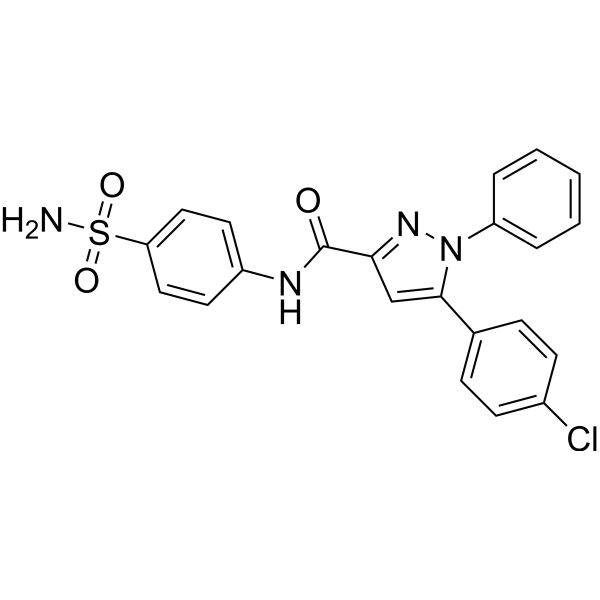 0 ImagesCat. No.: HY-162332CAS No.: 3034838-06-4
-
JNK-1-IN-2
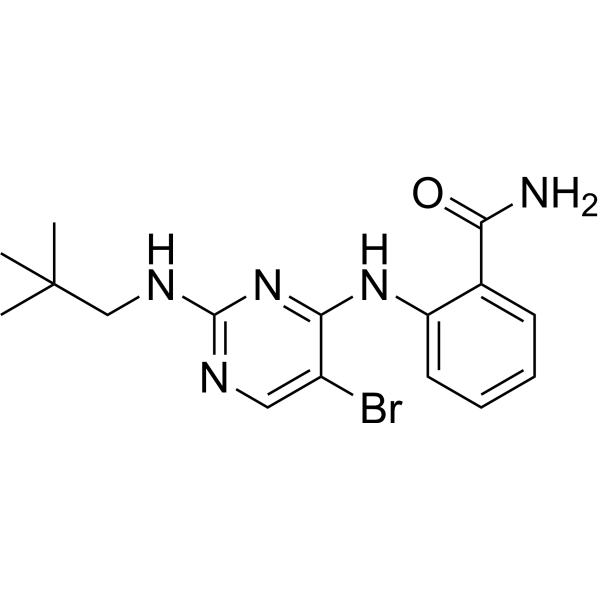 0 ImagesCat. No.: HY-155593CAS No.: 3047792-52-6JNK-1-IN-2 (Compound c6) is a JNK-1 inhibitor (IC50: 33.5 nM). JNK-1-IN-2 also inhibits JNK-2 and JNK-3 with IC50s of 112.9 nM and 33.2 nM. JNK-1-IN-2 inhibits the phosphorylation of c-Jun. JNK-1-IN-2 reverses lung impairment. JNK-1-IN-2 can be used for research of pulmonary fibrosis.
-
JNK3/Wnt/β-catenin modulator-1
 0 ImagesCat. No.: HY-181160JNK3/Wnt/β-catenin modulator-1 is a brain-penetrant JNK3 inhibitor and Wnt/β-catenin activator. JNK3/Wnt/β-catenin modulator-1 decreases Aβ1-42 production and reduced ROS generation. JNK3/Wnt/β-catenin modulator-1 inhibits the activation of JNK and Puma, promotes Beclin-1 expression, reduces GSK-3β and BACE1 expression and activates Wnt/β-catenin signaling. JNK3/Wnt/β-catenin modulator-1 improves cognitive and memory performance, attenuates histopathological brain damage, preserves structure of hippocampal pyramidal cells and cerebral cortical neurons. JNK3/Wnt/β-catenin modulator-1 can be used for the research of Alzheimer's disease.
-
JNK3 inhibitor-5
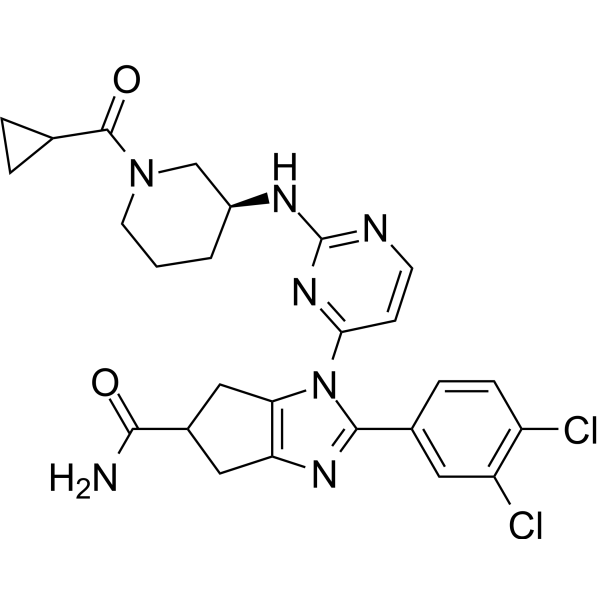 0 ImagesCat. No.: HY-151962CAS No.: 2911640-63-4
-
Berberine hemisulfate (Standard)
 0 ImagesCat. No.: HY-N0716ARCAS No.: 316-41-6Synonyms: Natural Yellow 18 hemisulfate (Standard)Berberine (hemisulfate) (Standard) is the analytical standard of Berberine (hemisulfate). This product is intended for research and analytical applications. Berberine hemisulfate is the hemisulfate form of Berberine (HY-N0716). Berberine hemisulfate is an alkaloid isolated from the Chinese herbal medicine Huanglian. Berberine hemisulfate exhibits anti-inflammatory, antibiobic, antitumor, cardiovascular protective and neuroprotective activity.
-
Necrostatin-21
 0 ImagesCat. No.: HY-W319332CAS No.: 169136-33-8Necrostatin-21 (Compound Nec-21) is a necroptosis inhibitor with an EC50 of 0.5 μM. Necrostatin-21 has a dual inhibitory effect on the RIP1 and JNK3 kinases. Necrostatin-21 can be used for the researches of infection, cardiovascular and neurological disease, such as Alzheimer disease .
-
Multitarget AD-IN-8
 0 ImagesCat. No.: HY-189262Multitarget AD-IN-8 is a blood-brain barrier-penetrant, orally active multitarget inhibitor. Multitarget AD-IN-8 inhibits abnormal Tau phosphorylation at Thr181 and Ser396 sites and attenuates NF-κB phosphorylation. Multitarget AD-IN-8 downregulates BACE1 expression to reduce Aβ production, inhibits the Bax/Bcl-2 pathway, and suppresses Caspase-1 activation. Multitarget AD-IN-8 attenuates p38, ERK1/2, and JNK phosphorylation and inhibits Aβ25-35-induced Apoptosis. Multitarget AD-IN-8 exhibits neuroprotective effects against Aβ25-35-induced injury, ameliorates learning and memory deficits in AD mouse models, and alleviates hippocampal neuronal pathological damage. Multitarget AD-IN-8 can be used for research on Alzheimer's disease.
-
NSC 90469 (Standard)
 0 ImagesCat. No.: HY-114557RCAS No.: 1041-01-6Synonyms: 3,5-Diiodo-L-thyronine (Standard)NSC 90469 (Standard) is the analytical standard of NSC 90469. This product is intended for research and analytical applications. NSC 90469 (3,5-Diiodo-L-thyronine) is an orally active thyroid hormone derivative. NSC 90469 inhibits JNK phosphorylation and NF-κB acetylation, blocks SIRT1 protein expression, induces elevated PGC-1α levels, and stimulates COX activity. NSC 90469 enhances UCP1-mediated thermogenesis, increases hepatic Dio1 activity, inhibits TSH levels and hypothalamic-pituitary-thyroid axis function, enhances lipid metabolism, and regulates energy metabolism via the mitochondrial pathway. NSC 90469 prevents blood glucose reduction, reduces urinary albumin excretion, inhibits renal matrix expansion, decreases TGF-β1 expression, and reduces renal fibronectin and type Ⅳ collagen deposition. NSC 90469 also increases energy expenditure and prevents diet-induced overweight. NSC 90469 can be used in studies related to diabetic nephropathy, hypothyroidism, non-alcoholic fatty liver disease, and diet-induced obesity.
-
BDE 47 (Standard)
 0 ImagesCat. No.: HY-W762011RCAS No.: 5436-43-1BDE 47 (Standard) is the analytical standard of BDE 47. This product is intended for research and analytical applications. BDE 47 targets mitochondria, inhibits mitochondrial oxidative phosphorylation (OXPHOS), decreases mitochondrial membrane potential (MMP) and induces apoptosis in embryonic cell. BDE 47 induces the generation of ROS, and activates the JNK signaling pathway. BDE 47 exhibits embryonic developmental toxicity in zebrafish.
-
Saquinavir mesylate (Standard)
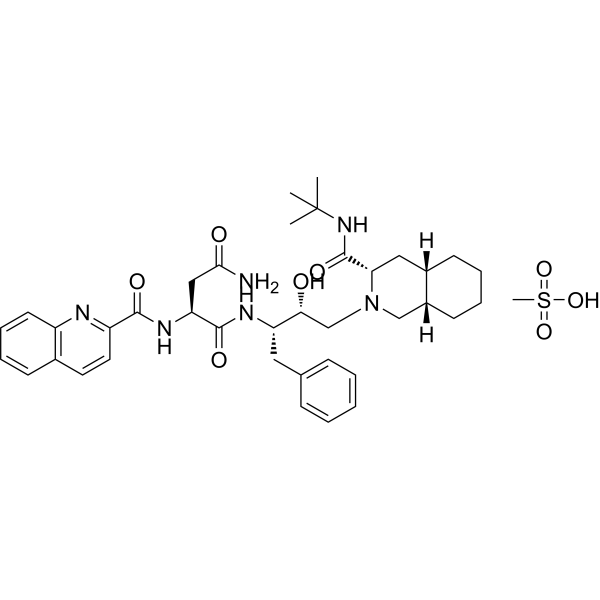 0 ImagesSynonyms: Ro 31-8959/003 (Standard)Saquinavir mesylate (Standard) (Ro 31-8959/003 (Standard)) is the analytical standard of Saquinavir mesylate (HY-17003). This product is intended for research and analytical applications. Saquinavir (Ro 31-8959) mesylate is an orally active HIV protease inhibitor that can be used in the research of AIDS. Saquinavir mesylate also has anti-inflammatory activity and can induce apoptosis of human red blood cells.
-
JNK3 inhibitor-8
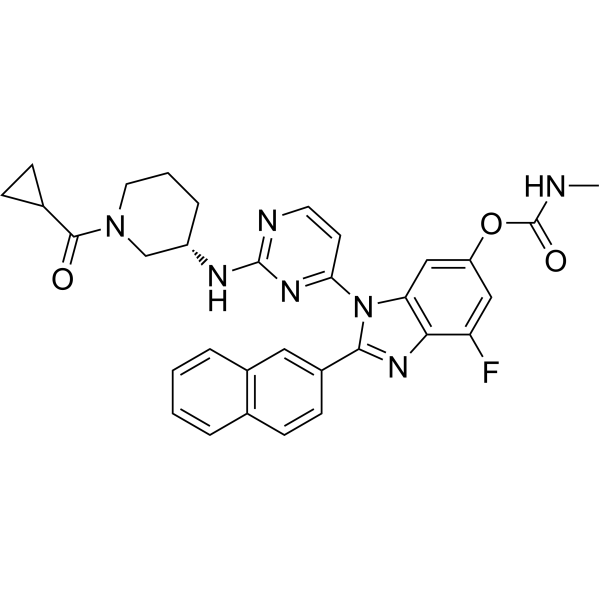 0 ImagesCat. No.: HY-149280CAS No.: 3034676-53-1JNK3 inhibitor-8 is a potent, delective, orally active and cross the blood-brain barrier JNK3 inhibitor with IC50 values of 21, 2203, >10000 nM for JNK3, JNK2, JNK1, respectively. JNK3 inhibitor-8 shows significant neuroprotective effects. JNK3 inhibitor-8 has the potential for the research of Alzheimer’s disease (AD).
-
Chalcomoracin
 0 ImagesCat. No.: HY-N20674CAS No.: 76472-89-4Chalcomoracin is an orally active anticancer agent. Chalcomoracin exhibits anticancer, antibacterial, and α-glucosidase inhibitory activities, with an IC50 of 14.23 µM against yeast α-glucosidase and an IC50 of 5.5 μM against FabI of Staphylococcus aureus. Chalcomoracin reduces the phosphorylation levels of ERK, JNK, and P38; enhances the phosphorylation level of ERK1/2; regulates the MAPK, mTOR, AKT, and p53 signaling pathways; upregulates the expression of Chop, Bip, PINK1, GRP78, and GADD153; and downregulates the expression of Alix. Chalcomoracin induces apoptosis (apoptosis), endoplasmic reticulum stress (endoplasmic reticulum stress), paraptosis (paraptosis), ROS production, mitophagy (mitophagy), and autophagy (autophagy); it inhibits cancer cell viability, colony-forming ability, migration, invasion, proliferation, tumorigenesis, fatty acid synthesis, S. aureus growth, vitreous-stimulated retinal cell activity, and cell cycle progression at the G0/G1 phase. Chalcomoracin can be used in research related to hepatocellular carcinoma, non-small cell lung cancer, triple-negative breast cancer, prostate cancer, proliferative vitreoretinopathy, pancreatic cancer, diabetes, and bacterial infections.
-
MAP4K4-IN-6
 0 ImagesCat. No.: HY-162922MAP4K4-IN-6 (Compound 15f) is a MAP4K4 inhibitor (IC50: 80 nM). MAP4K4-IN-6 reduces the c-Jun phosphorylation. MAP4K4-IN-6 has neuroprotective effects. MAP4K4-IN-6 increases the viability of motor neurons. MAP4K4-IN-6 can be used for research of Amyotrophic lateral sclerosis (ALS).

-
MR2938
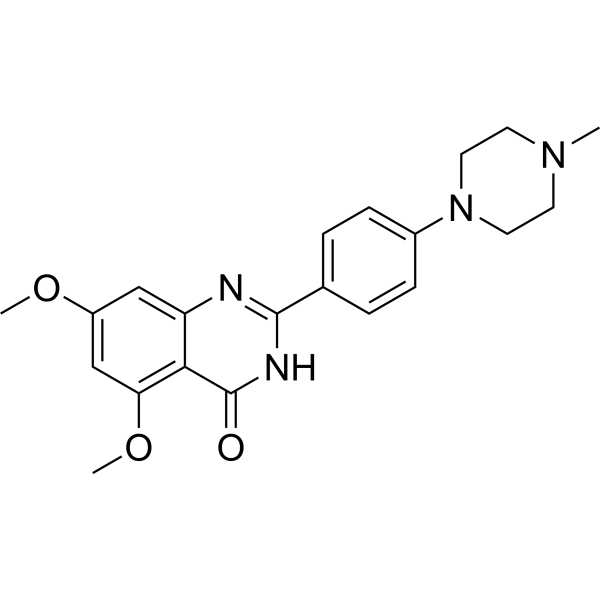 0 ImagesCat. No.: HY-149087CAS No.: 1044870-65-6
-
JNK3 inhibitor-3
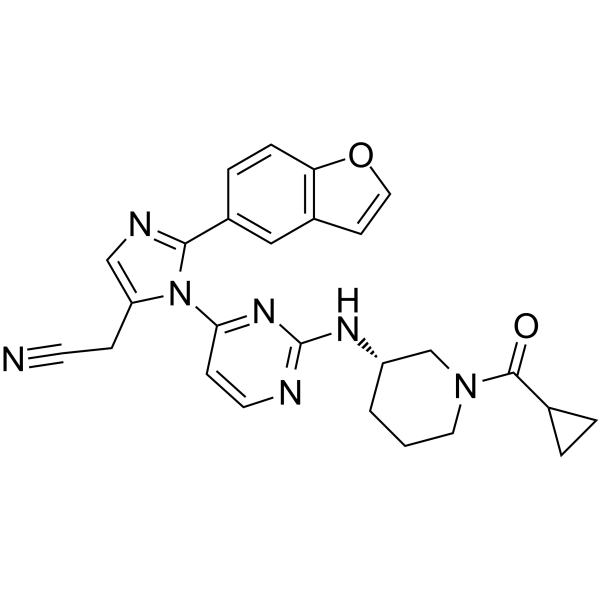 0 ImagesCat. No.: HY-151928CAS No.: 2873465-25-7JNK3 inhibitor-3 (compound 15g) is a selective, BBB permeable and orally active c-Jun N-terminal kinase 3 (JNK3) inhibitor. JNK3 inhibitor-3 has inhibitory activities to JNK1, JNK2 and JNK3 with IC50 values of 147.8, 44.0 and 4.1 nM, respectively. JNK3 inhibitor-3 significantly improves the memory in mouse dementia model. JNK3 inhibitor-3 can be used for the research of Alzheimer’s disease.

-
BRAFV600E/JNK-IN-1
 0 ImagesCat. No.: HY-173153BRAFV600E/JNK-IN-1 (Compound 14c) is an inhibitor of JNK1, JNK2, JNK3 and BRAFV600E, with IC50 values of 0.51 μM, 0.53 μM, 1.02 μM and 0.009 μM, respectively. BRAFV600E/JNK-IN-1 can inhibit the phosphorylation of MEK1/2 and ERK1/2. In addition, BRAFV600E/JNK-IN-1 can inhibit tumor cell proliferation, NO release and PGE2 production, and has anti-tumor and anti-inflammatory activities.




