1. Cell Cycle/DNA Damage Epigenetics
  2. HDAC
  3. Tasquinimod

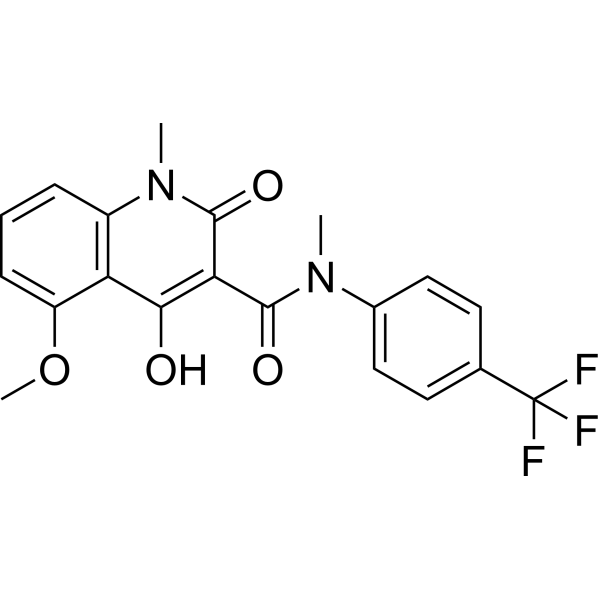
Tasquinimod est un agent antiangiogénique oral, qui a le potentiel pour le traitement de castration-résistant cancer de la prostate. Tasquinimod se lie au domaine de liaison réglementaire Zn2+ de HDAC4 avec Kd de 10-30 nM. Tasquinimod est également un inhibiteur de S100A9.

Tasquinimod is an oral antiangiogenic agent, which has the potential for castration-resistant prostate cancer treatment. Tasquinimod binds to the regulatory Zn2+ binding domain of HDAC4 with Kd of 10-30 nM. Tasquinimod also is a S100A9 inhibitor.

연구목적의 판매만을 진행합니다. 환자를 대상으로 한 판매는 하지 않습니다.

CAS No. : 254964-60-8

사이즈 가격 재고 수량
무료 샘플 (0.1 - 0.2 mg)   지금 신청하기  
Solid + Solvent (Highly Recommended)
10 mM * 1 mL in DMSO
ready for reconstitution
해외재고보유
Solution
10 mM * 1 mL in DMSO 해외재고보유
Solid
5 mg 해외재고보유
10 mg 해외재고보유
50 mg 해외재고보유
100 mg 해외재고보유
200 mg   견적 받기  
500 mg   견적 받기  

* 장바구니에 담기 전 물품의 수량을 선택해 주십시오.

This product is a controlled substance and not for sale in your territory.

고객리뷰

Based on 17 publication(s) in Google Scholar

Other Forms of Tasquinimod:

Top Publications Citing Use of Products

    Tasquinimod purchased from MedChemExpress. Usage Cited in: Cell Death Dis. 2025 Oct 31;16(1):774.  [Abstract]

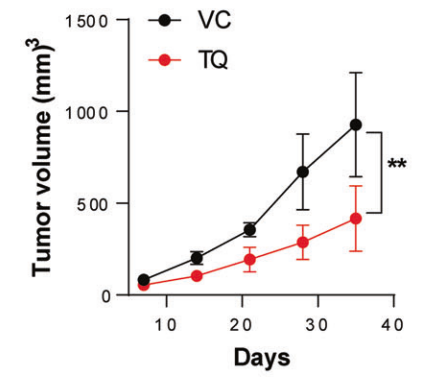
    SBC5 cells were implanted subcutaneously into nude mice (n = 5). Palpable tumors were treated with vehicle control (VC) or Tasquinimod (TQ, 10 mg/kg) for 4 weeks, and tumor volumes were measured externally every week during the Tasquinimod treatment.

    Tasquinimod purchased from MedChemExpress. Usage Cited in: Cell Death Dis. 2025 Oct 31;16(1):774.  [Abstract]

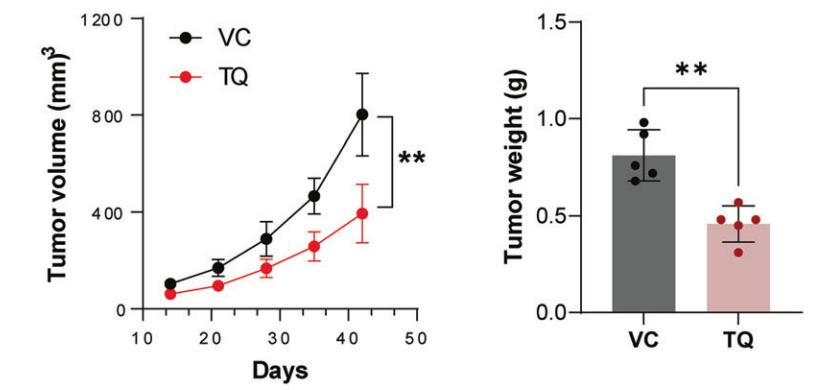
    SCLC PDX was inoculated subcutaneously into the flanks of NSG mice. The PDX-bearing mice were treated with vehicle control (VC) or Tasquinimod (TQ, 10 mg/kg). Tumor volumes were measured externally every week, and tumor weight was calculated at the end of the experiment.

    Tasquinimod purchased from MedChemExpress. Usage Cited in: Cell Death Dis. 2025 Oct 31;16(1):774.  [Abstract]

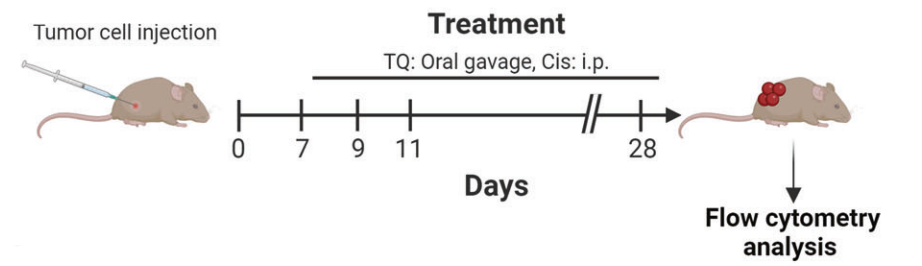
    The experimental schema used to test the effects of Tasquinimod (TQ, oral, 10 mg/kg) and Cisplatin (Cis) alone or in combination (i.p. intraperitoneal) on KP1 tumor growth.

    Tasquinimod purchased from MedChemExpress. Usage Cited in: Adv Sci (Weinh). 2022 Feb 3;e2103675.  [Abstract]

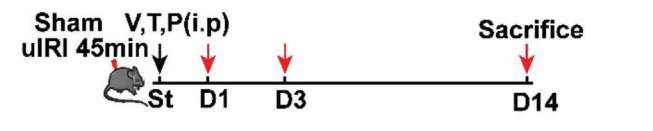
    Flow charts of drug treatments in uIRI animal models. V: vehicle; T: Tasquinimod (5 mg/kg, ip); P: Paquinimod (30 mg/kg).

    Tasquinimod purchased from MedChemExpress. Usage Cited in: Adv Sci (Weinh). 2022 Feb 3;e2103675.  [Abstract]

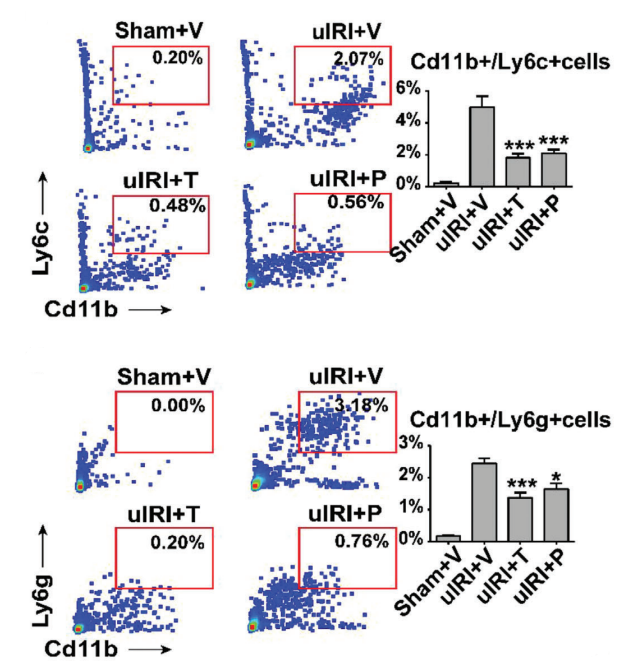
    Flow charts of drug treatments in uIRI animal models. V: vehicle; T: Tasquinimod (5 mg/kg, ip); P: Paquinimod (30 mg/kg). Flow cytometry showing the number of kidney Ims.
    • Biological Activity

    • Protocol

    • 순도&문서

    • References

    • 고객리뷰

    제품 설명

    Tasquinimod is an oral antiangiogenic agent, which has the potential for castration-resistant prostate cancer treatment. Tasquinimod binds to the regulatory Zn2+ binding domain of HDAC4 with Kd of 10-30 nM. Tasquinimod also is a S100A9 inhibitor[1][2][3].

    IC50 & Target[1]

    HDAC4

    10-30 nM (Kd)

    In Vitro

    Tasquinimod suppresses hypoxia induced decrease in histone acetylation without lowering HDAC expression or directly inhibiting HDAC activity. Tasquinimod binds allosterically within the regulatory Zinc domain of HDAC4 with a Kd of 10-30 nM, which results in inhibition of co-localization of N-CoR/HDAC3, thereby inhibiting deacetylation of histones and HDAC4 client transcription factors, such as HIF-1α. TAMs secrete angiogenic factors like VEGF, FGF, TNF- α, and TGF-β when myeloid-derived suppressor cells differentiate. Tasquinimod can suppress tumor angiogenesis due to inhibition of S100A9/TLR4 dependent MDSCs tumor infiltration and/or to inhibition of HDAC4/N-CoR/HDAC3 dependent deacetylation of HIF-1α by MDSCs suppressing their differentiation into TAMs.[1]. Tasquinimod, an orally active quinoline-3-carboxamide, binds with high affinity to HDAC4 and S100A9 in cancer and infiltrating host cells within compromised tumor microenvironment inhibiting adaptive survival pathways needed for an angiogenic response[2]. At 10 μM Tasquinimod, the TSP1 mRNA expression is elevated at 6 h and peaked after 72 h. Moreover, after 72 h exposure the TSP1 mRNA levels is already elevated at a dose of 1 μM Tasquinimod, indicating that Tasquinimod-induced changes in TSP1 mRNA expression occurrs in a dose range. At higher dose levels (i.e. 50-100 μM) the mRNA levels decline at 72 h, indicating additional drug effects at these concentrations. The up-regulation of TSP1 mRNA in LNCaP cells by Tasquinimod is manifested by an increased expression of TSP1 protein, as shown by western blot analysis of cell lysates prepared from cells cultured for 24 h and 72 h. Accompanied by increased intracellular TSP1 protein levels are also a statistically significant (p<0.05) accumulation of extracellular TSP1 in the cell culture medium detected. The extracellular secretion of TSP1 is time dependent and could clearly be detected after 24 h exposure to Tasquinimod at 10 μM. Also, TSP1 mRNA levels are induced by Tasquinimod at 10 μM in the hormone insensitive cell line LNCaP19 but not in DU145 cells[3].

    MedChemExpress (MCE) has not independently confirmed the accuracy of these methods. They are for reference only.

    In Vivo

    The bioavailability and oral absorption of Tasquinimod is excellent when adult male mice (i.e., C57Bl/6J, or athymic nude mice) are given 0.1-30 mg/kg (i.e., 0.2-74 μmoles/kg) via gavage or the drinking water. The potency of Tasquinimod expressed as the daily oral dose of Tasquinimod which inhibits cancer growth by 50% ranges from 0.1-1.0 mg/kg/d (i.e., 0.24-2.40 μmoles/kg/day) against a series (n>5) of human prostate cancer xenografts in immune-deficient mice. Tasquinimod at a chronic dose of 5 mg/kg/day via the drinking water produces > 80% inhibition (p<0.05) of TRAMP-C2 mouse prostate cancer growth in immune-competent syngeneic mice[2]. Nude mice carrying subcutaneous LNCaP tumors are treated with Tasquinimod for 3 weeks. Exposure to Tasquinimod at 1 mg/kg/day and 10 mg/kg/day started on day 7 after inoculation. There is a statistically significant dose dependent reduction in tumor weight both at 1 mg/kg/day and 10 mg/kg/day compare to the untreated control group 28 days after inoculation (p<0.001), illustrating the anti-tumor effect of Tasquinimod[3].

    MedChemExpress (MCE) has not independently confirmed the accuracy of these methods. They are for reference only.

    Clinical Trial
    분자량

    406.36

    화학식

    C20H17F3N2O4

    CAS No.
    Appearance

    Solid

    Color

    White to light yellow

    SMILES

    O=C(C1=C(O)C2=C(N(C)C1=O)C=CC=C2OC)N(C)C3=CC=C(C(F)(F)F)C=C3

    선적

    Room temperature in continental US; may vary elsewhere.

    보관
    Powder -20°C 3 years
    4°C 2 years
    In solvent -80°C 1 year
    -20°C 6 months
    용액&용해도
    In Vitro: 

    DMSO : ≥ 42 mg/mL (103.36 mM; Hygroscopic DMSO has a significant impact on the solubility of product, please use newly opened DMSO)

    H2O : < 0.1 mg/mL (insoluble)

    *"≥" means soluble, but saturation unknown.

    Preparing
    Stock Solutions
    Concentration Solvent Mass 1 mg 5 mg 10 mg
    1 mM 2.4609 mL 12.3044 mL 24.6087 mL
    5 mM 0.4922 mL 2.4609 mL 4.9217 mL
    View the Complete Stock Solution Preparation Table

    * Please refer to the solubility information to select the appropriate solvent. Once prepared, please aliquot and store the solution to prevent product inactivation from repeated freeze-thaw cycles.
    Storage method and period of stock solution: -80°C, 1 year; -20°C, 6 months. When stored at -80°C, please use it within 1 year. When stored at -20°C, please use it within 6 months.

    • 몰농도 계산기

    • 농도 희석 계산기

    Mass (g) = Concentration (mol/L) × Volume (L) × Molecular Weight (g/mol)

    Mass
    =
    Concentration
    ×
    Volume
    ×
    Molecular Weight *

    Concentration (start) × Volume (start) = Concentration (final) × Volume (final)

    This equation is commonly abbreviated as: C1V1 = C2V2

    Concentration (start)

    C1

    ×
    Volume (start)

    V1

    =
    Concentration (final)

    C2

    ×
    Volume (final)

    V2

    In Vivo:

    Select the appropriate dissolution method based on your experimental animal and administration route.

    For the following dissolution methods, please ensure to first prepare a clear stock solution using an In Vitro approach and then sequentially add co-solvents:
    To ensure reliable experimental results, the clarified stock solution can be appropriately stored based on storage conditions. As for the working solution for in vivo experiments, it is recommended to prepare freshly and use it on the same day.
    The percentages shown for the solvents indicate their volumetric ratio in the final prepared solution. If precipitation or phase separation occurs during preparation, heat and/or sonication can be used to aid dissolution.

    • Protocol 1

      Add each solvent one by one:  10% DMSO    40% PEG300    5% Tween-80    45% Saline

      Solubility: ≥ 2.5 mg/mL (6.15 mM); Clear solution

      This protocol yields a clear solution of ≥ 2.5 mg/mL (saturation unknown).

      Taking 1 mL working solution as an example, add 100 μL DMSO stock solution (25.0 mg/mL) to 400 μL PEG300, and mix evenly; then add 50 μL Tween-80 and mix evenly; then add 450 μL Saline to adjust the volume to 1 mL.

      Preparation of Saline: Dissolve 0.9 g sodium chloride in ddH₂O and dilute to 100 mL to obtain a clear Saline solution.
    • Protocol 2

      Add each solvent one by one:  10% DMSO    90% (20% SBE-β-CD in Saline)

      Solubility: ≥ 2.5 mg/mL (6.15 mM); Clear solution

      This protocol yields a clear solution of ≥ 2.5 mg/mL (saturation unknown).

      Taking 1 mL working solution as an example, add 100 μL DMSO stock solution (25.0 mg/mL) to 900 μL 20% SBE-β-CD in Saline, and mix evenly.

      Preparation of 20% SBE-β-CD in Saline (4°C, storage for one week): 2 g SBE-β-CD powder is dissolved in 10 mL Saline, completely dissolve until clear.
    In Vivo Dissolution Calculator
    Please enter the basic information of animal experiments:

    Dosage

    mg/kg

    Animal weight
    (per animal)

    g

    Dosing volume
    (per animal)

    μL

    Number of animals

    Recommended: Prepare an additional quantity of animals to account for potential losses during experiments.
    Please enter your animal formula composition:
    %
    DMSO +
    +
    %
    Tween-80 +
    %
    Saline
    Recommended: Keep the proportion of DMSO in working solution below 2% if your animal is weak.
    The co-solvents required include: DMSO, . All of co-solvents are available by MedChemExpress (MCE). , Tween 80. All of co-solvents are available by MedChemExpress (MCE).
    Calculation results:
    Working solution concentration: mg/mL
    Method for preparing stock solution: mg drug dissolved in μL  DMSO (Stock solution concentration: mg/mL).
    The concentration of the stock solution you require exceeds the measured solubility. The following solution is for reference only. If necessary, please contact MedChemExpress (MCE).
    Method for preparing in vivo working solution for animal experiments: Take μL DMSO stock solution, add μL . μL , mix evenly, next add μL Tween 80, mix evenly, then add μL Saline.
     If the continuous dosing period exceeds half a month, please choose this protocol carefully.
    Please ensure that the stock solution in the first step is dissolved to a clear state, and add co-solvents in sequence. You can use ultrasonic heating (ultrasonic cleaner, recommended frequency 20-40 kHz), vortexing, etc. to assist dissolution.
    순도&문서

    Purity: 99.70%

    References
    Cell Assay 
    [3]

    Two human prostate cancer cell lines, CWR-22RH and LNCaP (ATCC) are both androgen independent, but remain sensitive to androgen stimulation of growth, express PSA and a mutated androgen receptor. The hormone independent cell lines LNCaP19 and DU145 are also tested for TSP1 induction after in vitro exposure to Tasquinimod (0.1-100 μM). CWR-22RH, LNCaP and DU145 are grown in RPMI Medium 1640 containing 10% FCS and L-Glutamine mixture, while LNCAP19 is cultured in RPMI-medium with 10% hormone free (RDCC) FCS[3].

    MCE 는 독립적으로 이러한 방법들의 정확성을 확인하지 않았습니다. 참고용으로만 봐주십시오.

    Animal Administration
    [3]

    Mice[3]
    Nude BALB/c mice are used for subcutaneous implantation of human prostate tumor cells LNCaP and CWR-22RH. Tumor growth is measured with a microcaliper twice a week throughout the experiment, and the final tumor burden is measured by weight on the day of termination of the experiment. Distribution of Tasquinimod at 1 mg/kg/day and 10 mg/kg/day (administered orally via the drinking water) started on day 7 after inoculation.

    MCE 는 독립적으로 이러한 방법들의 정확성을 확인하지 않았습니다. 참고용으로만 봐주십시오.

    References

    Complete Stock Solution Preparation Table

    * Please refer to the solubility information to select the appropriate solvent. Once prepared, please aliquot and store the solution to prevent product inactivation from repeated freeze-thaw cycles.
    Storage method and period of stock solution: -80°C, 1 year; -20°C, 6 months. When stored at -80°C, please use it within 1 year. When stored at -20°C, please use it within 6 months.

    Optional Solvent Concentration Solvent Mass 1 mg 5 mg 10 mg 25 mg
    DMSO 1 mM 2.4609 mL 12.3044 mL 24.6087 mL 61.5218 mL
    5 mM 0.4922 mL 2.4609 mL 4.9217 mL 12.3044 mL
    10 mM 0.2461 mL 1.2304 mL 2.4609 mL 6.1522 mL
    15 mM 0.1641 mL 0.8203 mL 1.6406 mL 4.1015 mL
    20 mM 0.1230 mL 0.6152 mL 1.2304 mL 3.0761 mL
    25 mM 0.0984 mL 0.4922 mL 0.9843 mL 2.4609 mL
    30 mM 0.0820 mL 0.4101 mL 0.8203 mL 2.0507 mL
    40 mM 0.0615 mL 0.3076 mL 0.6152 mL 1.5380 mL
    50 mM 0.0492 mL 0.2461 mL 0.4922 mL 1.2304 mL
    60 mM 0.0410 mL 0.2051 mL 0.4101 mL 1.0254 mL
    80 mM 0.0308 mL 0.1538 mL 0.3076 mL 0.7690 mL
    100 mM 0.0246 mL 0.1230 mL 0.2461 mL 0.6152 mL
    • No file chosen (Maximum size is: 1024 Kb)
    • If you have published this work, please enter the PubMed ID.
    • Your name will appear on the site.
    Help & FAQs
    • Do most proteins show cross-species activity?

      Species cross-reactivity must be investigated individually for each product. Many human cytokines will produce a nice response in mouse cell lines, and many mouse proteins will show activity on human cells. Other proteins may have a lower specific activity when used in the opposite species.

    최근 본 상품:

    온라인 문의

    Your information is safe with us. * Required Fields.

    상품명


    Requested Quantity *

    고객명 *


    호칭

    메일주소 *


    전화번호 *

    Department


    회사명 *

    City

    Country or Region *


    비고

    대량구매 문의

    Inquiry Information

    상품명:
    Tasquinimod
    Cat. No.:
    HY-10528
    수량:
    MCE Japan Authorized Agent: