1. Metabolic Enzyme/Protease Autophagy
  2. Cytochrome P450 Autophagy Endogenous Metabolite
  3. Tetrahydrocurcumin

Tetrahydrocurcumin  (Synonyms: HZIV 81-2)

Cat. No.: HY-N0893 Purity: 98.96%
Handling Instructions Technical Support

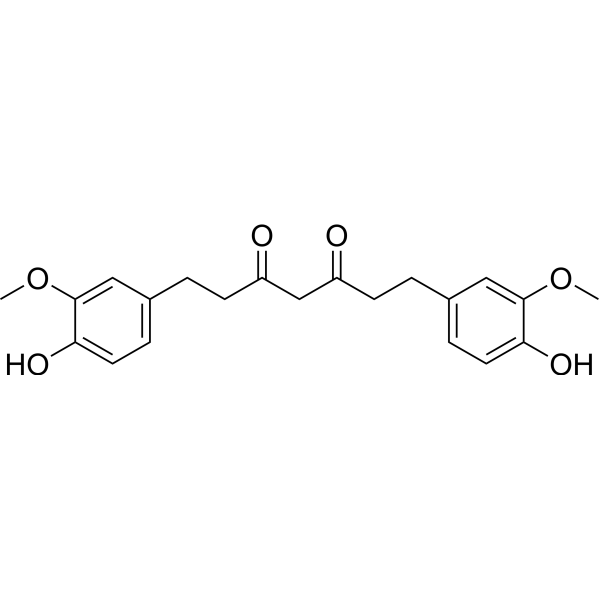
Tetrahydrocurcumin is a Curcuminoid found in turmeric (Curcuma longa) that is produced by the reduction of Curcumin. Tetrahydrocurcumin inhibit CYP2C9 and CYP3A4.

연구목적의 판매만을 진행합니다. 환자를 대상으로 한 판매는 하지 않습니다.

CAS No. : 36062-04-1

사이즈 가격 재고 수량
무료 샘플 (0.1 - 0.2 mg)   지금 신청하기  
Solid + Solvent (Highly Recommended)
10 mM * 1 mL in DMSO
ready for reconstitution
해외재고보유
Solution
10 mM * 1 mL in DMSO 해외재고보유
Solid
5 mg 해외재고보유
10 mg 해외재고보유
25 mg 해외재고보유
50 mg 해외재고보유
100 mg 해외재고보유
200 mg   견적 받기  
500 mg   견적 받기  

* 장바구니에 담기 전 물품의 수량을 선택해 주십시오.

This product is a controlled substance and not for sale in your territory.

고객리뷰

Based on 2 publication(s) in Google Scholar

Other Forms of Tetrahydrocurcumin:

Top Publications Citing Use of Products
In Vivo Imaging
In Vivo Efficacy Study
Apoptosis Analysis
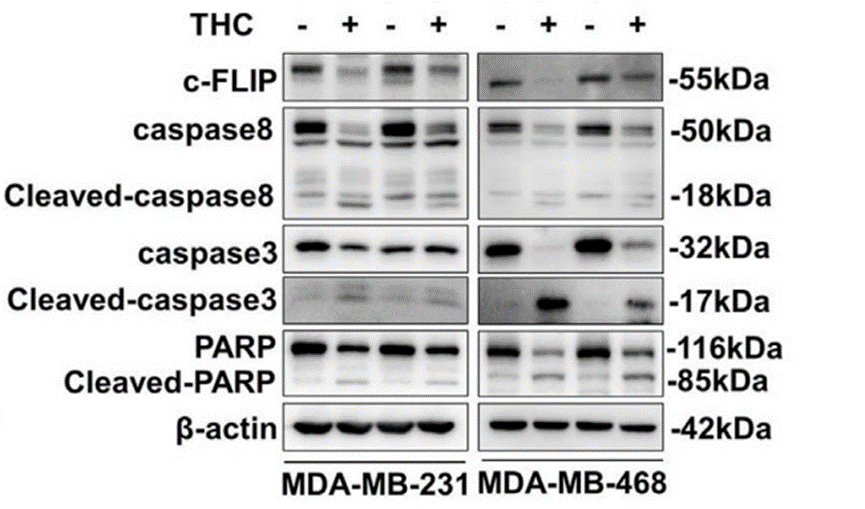
WB
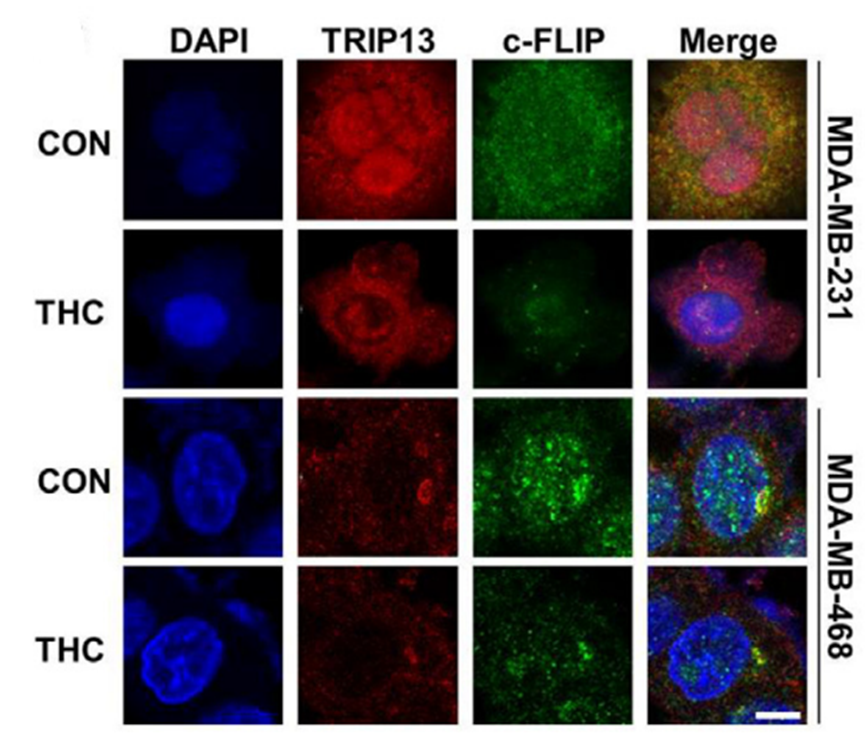
IF

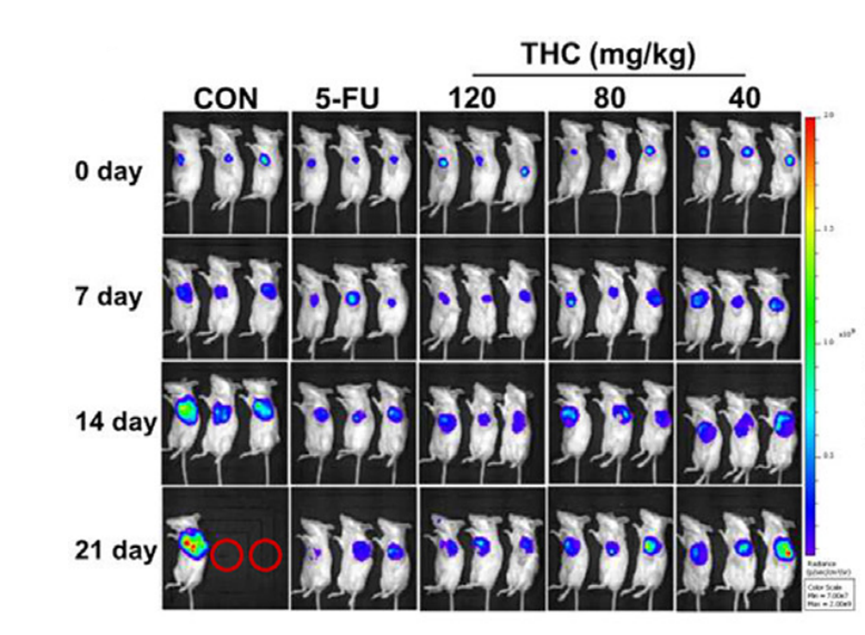
    Tetrahydrocurcumin purchased from MedChemExpress. Usage Cited in: J Adv Res. 2024 Nov 5:S2090-1232(24)00496-X.  [Abstract]

    Time course of in vivo bioluminescence imaging of the 4 T1 cell orthotopic breast cancer treated with Tween·H2O, 5-FU and Tetrahydrocurcumin (THC) (40, 80, 120 mg/kg) from Day 0 (Day of effector cells infusion) to Day 21, and quantitative analysis of fluorescence intensities.

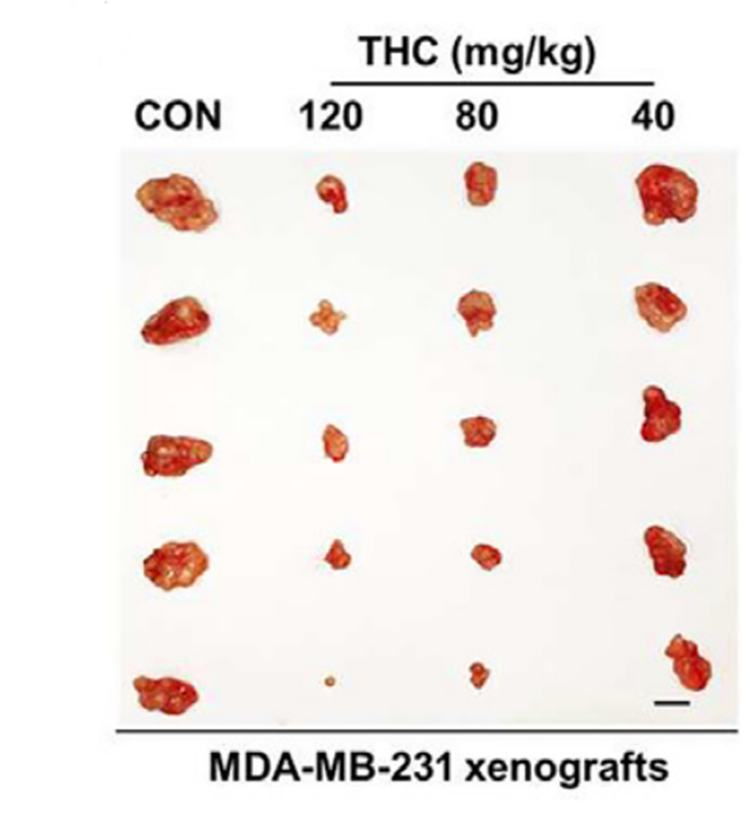
    Tetrahydrocurcumin purchased from MedChemExpress. Usage Cited in: J Adv Res. 2024 Nov 5:S2090-1232(24)00496-X.  [Abstract]

    The representative images of isolated tumors derived from MDA-MB-231 xenografts in nude mice at 21 days after treated with Tween·H2O and Tetrahydrocurcumin (THC) (40, 80, 120 mg/kg).

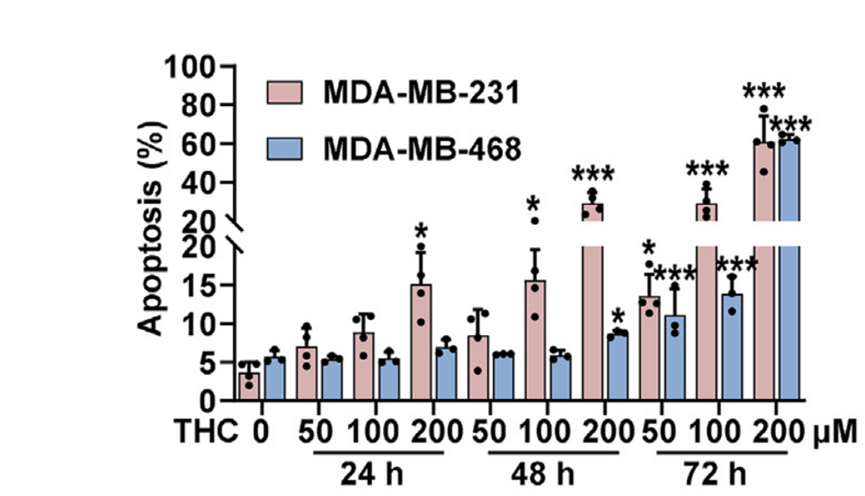
    Tetrahydrocurcumin purchased from MedChemExpress. Usage Cited in: J Adv Res. 2024 Nov 5:S2090-1232(24)00496-X.  [Abstract]

    The apoptosis ratios of MDA-MB-231, and MDA-MB-468 cells treated with different concentrations of Tetrahydrocurcumin (THC) (0, 50, 100 and 200 μM) for 24,48,72 h.

    Tetrahydrocurcumin purchased from MedChemExpress. Usage Cited in: J Adv Res. 2024 Nov 5:S2090-1232(24)00496-X.  [Abstract]

    The expressions of TRIP13 were determined after different concentrations of Tetrahydrocurcumin (THC) (0, 12.5, 25, 50, 100 and 200 μM) for 72 h in MDA-MB-231and MDA-MB-468 cells by western blot assay.

    Tetrahydrocurcumin purchased from MedChemExpress. Usage Cited in: J Adv Res. 2024 Nov 5:S2090-1232(24)00496-X.  [Abstract]

    The colocalization of TRIP13 (red)/c-FLIP (green), USP7 (red)/TRIP13 (green), USP7 (red)/c-FLIP (green) and DAPI to stain nuclei (blue) after treatment with Tetrahydrocurcumin (THC) in MDA-MB-231 and MDA-MB-468 cells.
    • Biological Activity

    • Protocol

    • 순도&문서

    • References

    • 고객리뷰

    제품 설명

    Tetrahydrocurcumin is a Curcuminoid found in turmeric (Curcuma longa) that is produced by the reduction of Curcumin. Tetrahydrocurcumin inhibit CYP2C9 and CYP3A4.

    IC50 & Target[1]

    CYP2C9


    CYP3A4


    Autophagy


    Cellular Effect
    Cell Line Type Value Description References
    HEK293 EC50
    120 μM
    Compound: 31
    Cytotoxicity against HEK293 cells after 16 hrs by alamar blue assay
    Cytotoxicity against HEK293 cells after 16 hrs by alamar blue assay
    [PMID: 20004045]
    HaCaT IC50
    > 50 μM
    Compound: 4
    Inhibition of STAT3 transcriptional activity in human HaCaT cells after 6 hrs by luciferase reporter gene assay
    Inhibition of STAT3 transcriptional activity in human HaCaT cells after 6 hrs by luciferase reporter gene assay
    [PMID: 24920381]
    LNCaP IC50
    > 50 μM
    Compound: 4
    Cytotoxicity against human LNCAP cells assessed as cell viability after 24 hrs by MTT assay
    Cytotoxicity against human LNCAP cells assessed as cell viability after 24 hrs by MTT assay
    [PMID: 24920381]
    PBMC IC50
    > 50 μM
    Compound: 4
    Cytotoxicity against human PBMCs assessed as cell viability after 24 hrs by MTT assay
    Cytotoxicity against human PBMCs assessed as cell viability after 24 hrs by MTT assay
    [PMID: 24920381]
    In Vitro

    Tetrahydrocurcumin (THC) has a number of attractive properties not shared with Curcumin that may make it superior. Tetrahydrocurcumin inhibited lipoxygenase as low as 1 μM. Tetrahydrocurcumin is tested for its ability to inhibit CYP2C9, CYP3A4, CYP1A2 and CYP2D6. Tetrahydrocurcumin yields dose-dependent inhibition of CYP2C9, and to a lesser extent, CYP3A4. Tetrahydrocurcumin exhibits maximum inhibition of CYP2C9 and CYP3A4 at 50 to 100 μM. Tetrahydrocurcumin does not show a consistent dose-response inhibition of CYP1A2 or CYP2D6 over the range of concentrations tested. In some cases, the percent inhibition exceeds 100%. The effect of Tetrahydrocurcumin on cancer cell viability is measured. Sup-T1 cells, T-cell lymphoblastic lymphoma cells, are treated with Tetrahydrocurcumin to determine its ability to induce growth inhibition using an MTS assay, and the corresponding IC50 values are in the mid-to-high micromolar range[1].

    MedChemExpress (MCE) has not independently confirmed the accuracy of these methods. They are for reference only.

    In Vivo

    The serum Tetrahydrocurcumin (THC) concentration versus time curve shows that more than one absorption and distribution phase is present. Initially, a rapid absorption phase with an average Tmax of 6.8 μg/mL at 1 h is observed, followed by a short elimination phase. This is followed by two redistributions with two smaller Tetrahydrocurcumin maxima at 6 and 24 h. Both redistribution phases has similar maxima of about 1 μg/mL. The total amount of Tetrahydrocurcumin excrets unchanged in urine was up to 8 μg at 24 h[1].

    MedChemExpress (MCE) has not independently confirmed the accuracy of these methods. They are for reference only.

    분자량

    372.41

    화학식

    C21H24O6

    CAS No.
    Appearance

    Solid

    Color

    White to off-white

    SMILES

    O=C(CC(CCC1=CC=C(O)C(OC)=C1)=O)CCC2=CC=C(O)C(OC)=C2

    Structure Classification
    Initial Source
    선적

    Room temperature in continental US; may vary elsewhere.

    보관
    Powder -20°C 3 years
    4°C 2 years
    In solvent -80°C 2 years
    -20°C 1 year
    용액&용해도
    In Vitro: 

    DMSO : 100 mg/mL (268.52 mM; Need ultrasonic; Hygroscopic DMSO has a significant impact on the solubility of product, please use newly opened DMSO)

    Preparing
    Stock Solutions
    Concentration Solvent Mass 1 mg 5 mg 10 mg
    1 mM 2.6852 mL 13.4261 mL 26.8521 mL
    5 mM 0.5370 mL 2.6852 mL 5.3704 mL
    View the Complete Stock Solution Preparation Table

    * Please refer to the solubility information to select the appropriate solvent. Once prepared, please aliquot and store the solution to prevent product inactivation from repeated freeze-thaw cycles.
    Storage method and period of stock solution: -80°C, 2 years; -20°C, 1 year. When stored at -80°C, please use it within 2 years. When stored at -20°C, please use it within 1 year.

    • 몰농도 계산기

    • 농도 희석 계산기

    Mass (g) = Concentration (mol/L) × Volume (L) × Molecular Weight (g/mol)

    Mass
    =
    Concentration
    ×
    Volume
    ×
    Molecular Weight *

    Concentration (start) × Volume (start) = Concentration (final) × Volume (final)

    This equation is commonly abbreviated as: C1V1 = C2V2

    Concentration (start)

    C1

    ×
    Volume (start)

    V1

    =
    Concentration (final)

    C2

    ×
    Volume (final)

    V2

    In Vivo:

    Select the appropriate dissolution method based on your experimental animal and administration route.

    For the following dissolution methods, please ensure to first prepare a clear stock solution using an In Vitro approach and then sequentially add co-solvents:
    To ensure reliable experimental results, the clarified stock solution can be appropriately stored based on storage conditions. As for the working solution for in vivo experiments, it is recommended to prepare freshly and use it on the same day.
    The percentages shown for the solvents indicate their volumetric ratio in the final prepared solution. If precipitation or phase separation occurs during preparation, heat and/or sonication can be used to aid dissolution.

    • Protocol 1

      Add each solvent one by one:  10% DMSO    40% PEG300    5% Tween-80    45% Saline

      Solubility: ≥ 2.5 mg/mL (6.71 mM); Clear solution

      This protocol yields a clear solution of ≥ 2.5 mg/mL (saturation unknown).

      Taking 1 mL working solution as an example, add 100 μL DMSO stock solution (25.0 mg/mL) to 400 μL PEG300, and mix evenly; then add 50 μL Tween-80 and mix evenly; then add 450 μL Saline to adjust the volume to 1 mL.

      Preparation of Saline: Dissolve 0.9 g sodium chloride in ddH₂O and dilute to 100 mL to obtain a clear Saline solution.
    • Protocol 2

      Add each solvent one by one:  10% DMSO    90% Corn Oil

      Solubility: ≥ 2.5 mg/mL (6.71 mM); Clear solution

      This protocol yields a clear solution of ≥ 2.5 mg/mL (saturation unknown). If the continuous dosing period exceeds half a month, please choose this protocol carefully.

      Taking 1 mL working solution as an example, add 100 μL DMSO stock solution (25.0 mg/mL) to 900 μL Corn oil, and mix evenly.

    In Vivo Dissolution Calculator
    Please enter the basic information of animal experiments:

    Dosage

    mg/kg

    Animal weight
    (per animal)

    g

    Dosing volume
    (per animal)

    μL

    Number of animals

    Recommended: Prepare an additional quantity of animals to account for potential losses during experiments.
    Please enter your animal formula composition:
    %
    DMSO +
    +
    %
    Tween-80 +
    %
    Saline
    Recommended: Keep the proportion of DMSO in working solution below 2% if your animal is weak.
    The co-solvents required include: DMSO, . All of co-solvents are available by MedChemExpress (MCE). , Tween 80. All of co-solvents are available by MedChemExpress (MCE).
    Calculation results:
    Working solution concentration: mg/mL
    Method for preparing stock solution: mg drug dissolved in μL  DMSO (Stock solution concentration: mg/mL).
    The concentration of the stock solution you require exceeds the measured solubility. The following solution is for reference only. If necessary, please contact MedChemExpress (MCE).
    Method for preparing in vivo working solution for animal experiments: Take μL DMSO stock solution, add μL . μL , mix evenly, next add μL Tween 80, mix evenly, then add μL Saline.
     If the continuous dosing period exceeds half a month, please choose this protocol carefully.
    Please ensure that the stock solution in the first step is dissolved to a clear state, and add co-solvents in sequence. You can use ultrasonic heating (ultrasonic cleaner, recommended frequency 20-40 kHz), vortexing, etc. to assist dissolution.
    순도&문서

    Purity: 98.96%

    References
    Cell Assay 
    [1]

    Sup-T1 cells are cultured in RPMI 1640 supplemented with 10% FBS and 1% Penicillin/Streptomycin at 37°C and 5% CO22. 2×10⁵ cells/mL are seeded in each well and Tetrahydrocurcumin, Curcumin and Calebin-A, at 0.1, 0.5, 1.0, 5.0, 10.0, 50.0 and 100.0 μM dissolved in DMSO, are added to their respective wells and incubated for 24, 48 and 72 h. The MTS reagent is added and incubated for 4 h. Absorbance is recorded at 490 nm in Synergy HT multi-well plate reader and Gen5 data analysis software[1].

    MCE 는 독립적으로 이러한 방법들의 정확성을 확인하지 않았습니다. 참고용으로만 봐주십시오.

    Animal Administration
    [1]

    Rats[1]
    Surgically-modified, exposed jugular vein-catheterized, adult male CD Sprague-Dawley rats (250–300 g) ared used. Each rat is placed in a separate metabolic cage and fasted for 12 h prior to dosing with free access to water. On the day of experiment, the animals (N=3) receive a single dose of Tetrahydrocurcumin by oral gavage (500 mg/kg) in a volume not exceeding 1 mL. Animals have free access to water pre- and post-dosing, and food is provided 2 hours post-dosing. A series of blood samples (0.3 mL) are collected at 0, 15 and 30 min, and 1, 2, 4, 6, 12, 24, 48 and 72 h post-dose. At 72 h after administration, the animals are euthanized and exsanguinated. Immediately after each blood collection time point (except the terminal point), the cannula is flushed with 0.3 mL of 0.9% saline to replenish the collected blood volume. The dead volume of the cannula is replaced with sterile heparin/50% dextrose catheter lock solution to maintain the patency of the cannula as advised in the technical sheet supplied with the animals from Charles River. Following centrifugation of blood samples at 15,000 rpm for 5 min, serum is collected and placed into 2 mL tubes at -20°C until further analysis. Urine samples are collected at 0, 2, 6, 12, 24, 48 and 72 h post-dose and placed in 15 mL tubes. The exact urine volume of each sample is recorded then stored at -20°C until further analysis[1].

    MCE 는 독립적으로 이러한 방법들의 정확성을 확인하지 않았습니다. 참고용으로만 봐주십시오.

    References

    Complete Stock Solution Preparation Table

    * Please refer to the solubility information to select the appropriate solvent. Once prepared, please aliquot and store the solution to prevent product inactivation from repeated freeze-thaw cycles.
    Storage method and period of stock solution: -80°C, 2 years; -20°C, 1 year. When stored at -80°C, please use it within 2 years. When stored at -20°C, please use it within 1 year.

    Optional Solvent Concentration Solvent Mass 1 mg 5 mg 10 mg 25 mg
    DMSO 1 mM 2.6852 mL 13.4261 mL 26.8521 mL 67.1303 mL
    5 mM 0.5370 mL 2.6852 mL 5.3704 mL 13.4261 mL
    10 mM 0.2685 mL 1.3426 mL 2.6852 mL 6.7130 mL
    15 mM 0.1790 mL 0.8951 mL 1.7901 mL 4.4754 mL
    20 mM 0.1343 mL 0.6713 mL 1.3426 mL 3.3565 mL
    25 mM 0.1074 mL 0.5370 mL 1.0741 mL 2.6852 mL
    30 mM 0.0895 mL 0.4475 mL 0.8951 mL 2.2377 mL
    40 mM 0.0671 mL 0.3357 mL 0.6713 mL 1.6783 mL
    50 mM 0.0537 mL 0.2685 mL 0.5370 mL 1.3426 mL
    60 mM 0.0448 mL 0.2238 mL 0.4475 mL 1.1188 mL
    80 mM 0.0336 mL 0.1678 mL 0.3357 mL 0.8391 mL
    100 mM 0.0269 mL 0.1343 mL 0.2685 mL 0.6713 mL
    • No file chosen (Maximum size is: 1024 Kb)
    • If you have published this work, please enter the PubMed ID.
    • Your name will appear on the site.
    Help & FAQs
    • Do most proteins show cross-species activity?

      Species cross-reactivity must be investigated individually for each product. Many human cytokines will produce a nice response in mouse cell lines, and many mouse proteins will show activity on human cells. Other proteins may have a lower specific activity when used in the opposite species.

    최근 본 상품:

    온라인 문의

    Your information is safe with us. * Required Fields.

    상품명


    Requested Quantity *

    고객명 *


    호칭

    메일주소 *


    전화번호 *

    Department


    회사명 *

    City

    Country or Region *


    비고

    대량구매 문의

    Inquiry Information

    상품명:
    Tetrahydrocurcumin
    Cat. No.:
    HY-N0893
    수량:
    MCE Japan Authorized Agent: