
Search Result
Results for "
543
" in MedChemExpress (MCE) Product Catalog:
1
Biochemical Assay Reagents
1
Isotope-Labeled Compounds
| Cat. No. |
Product Name |
Target |
Research Areas |
Chemical Structure |
-
- HY-15425
-
|
Sphingosine Kinase 1 Inhibitor II
|
SphK
LPL Receptor
Apoptosis
Autophagy
|
Cardiovascular Disease
Inflammation/Immunology
Cancer
|
|
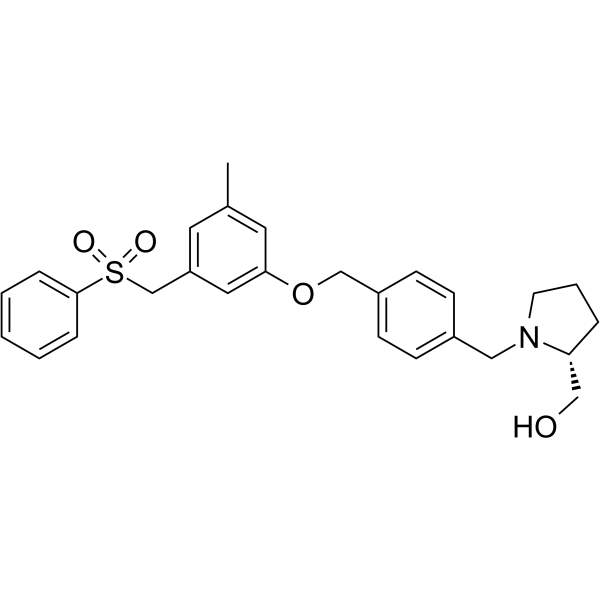
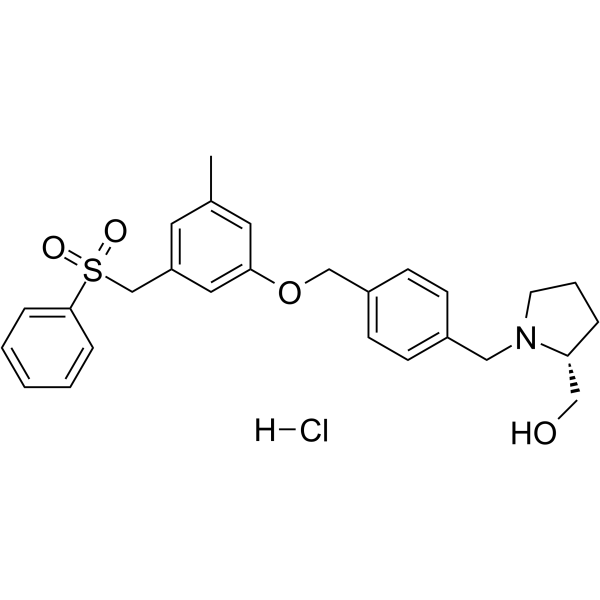
PF-543 (Sphingosine Kinase 1 Inhibitor II) is a potent, selective, reversible and sphingosine-competitive SPHK1 inhibitor with an IC50 of 2 nM and a Ki of 3.6 nM. PF-543 is >100-fold selectivity for SPHK1 over SPHK2. PF-543 is an effective potent inhibitor of sphingosine 1-phosphate (S1P) formation in whole blood with an IC50 of 26.7 nM. PF-543 induces apoptosis, necrosis, and autophagy .
|
-
-
- HY-D1913
-
Fe2Orange
Maximum Cited Publications
25 Publications Verification
|
Fluorescent Dye
|
Others
|
|
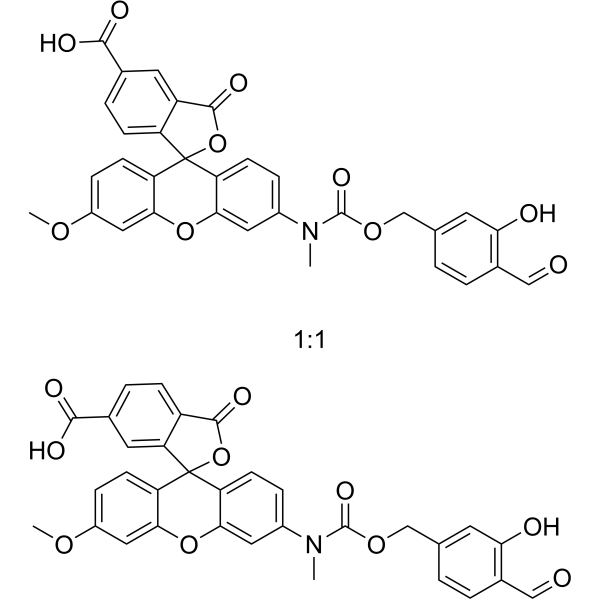
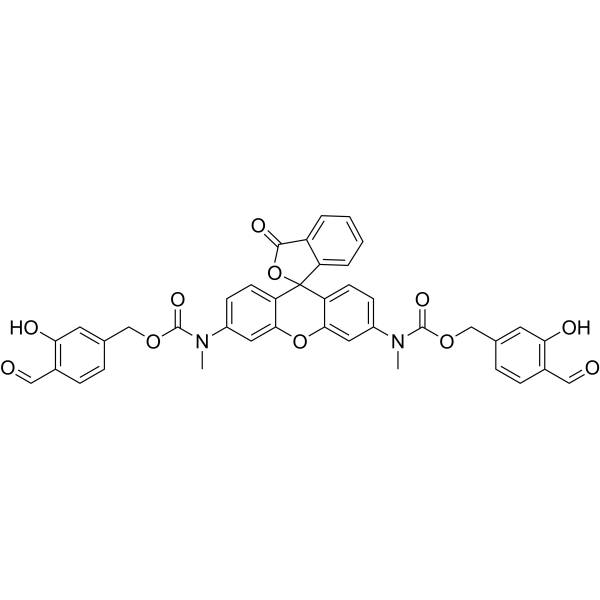
Fe2Orange is a Fe 2+ selective probe with an excitation wavelength of 543 nm and an emission wavelength of 580 nm. Fe2Orange emits fluorescence after binding to intracellular Fe 2+, thereby achieving specific labeling of Fe 2+. Fe2Orange is used to detect the content and distribution of Fe 2+ in cells .
|
-
-
- HY-15096
-
|
FJ-776
|
Fluorescent Dye
HSP
|
Cancer
|
|
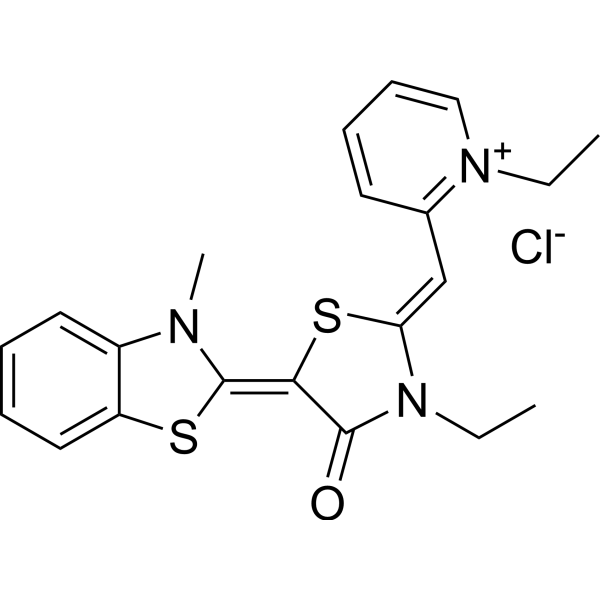
MKT-077 (FJ-776), a highly water-soluble mitochondrial dye, has significant antitumor activity . MKT-077 exhibits low cytotoxicity, and inhibits broad-spectrum human cancer cell lines (colon cancer, breast cancer, pancreatic cancer). MKT-077 inhibits the growth of tumor in nude mice enograft tumor model. Ex/Em=488/543 nm .
|
-
-
- HY-15425A
-
|
Sphingosine Kinase 1 Inhibitor II Citrate
|
SphK
LPL Receptor
Apoptosis
Autophagy
|
Cardiovascular Disease
Inflammation/Immunology
Cancer
|
|
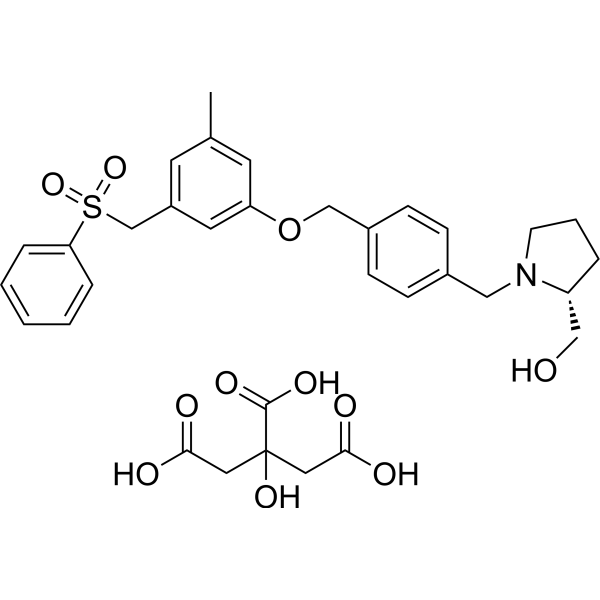
PF-543 Citrate (Sphingosine Kinase 1 Inhibitor II Citrate) is a potent, selective, reversible and sphingosine-competitive SPHK1 inhibitor with an IC50 of 2 nM and a Ki of 3.6 nM. PF-543 Citrate is >100-fold selectivity for SPHK1 over SPHK2. PF-543 Citrate is an effective potent inhibitor of sphingosine 1-phosphate (S1P) formation in whole blood with an IC50 of 26.7 nM. PF-543 Citrate induces apoptosis, necrosis, and autophagy .
|
-
-
- HY-125959
-
Ucf-101
1 Publications Verification
|
Apoptosis
|
Cardiovascular Disease
Neurological Disease
|
|
Ucf-101 is a selective and competitive inhibitor of pro-apoptotic protease Omi/HtrA2, with an IC50 of 9.5 μM for His-Omi. Ucf-101 exhibits very little activity against various other serine proteases (IC50>200 μM). Ucf-101 has a natural red fluorescence at 543 nm that is used to monitor its ability to enter mammalian cells. Ucf-101 has a significant cardioprotective effect against MI/R injury and also has certain neuroprotective effect .
|
-
-
- HY-50856S
-
|
CTP-543; Ruxolitinib d8; Deuterated Ruxolitinib
|
JAK
|
Inflammation/Immunology
|
|
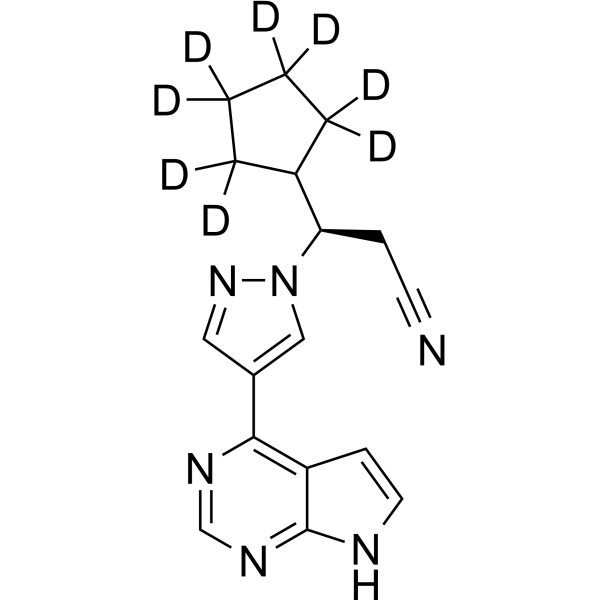
Deuruxolitinib, a deuterated Ruxolitinib (HY-50856), is an orally active JAK1 and JAK2 inhibitor. Deuruxolitinib demonstrates significant hair regrowth effects. Deuruxolitinib can be used for the research of alopecia areata .
|
-
-
- HY-D0304
-
|
Solvent red 49
|
Fluorescent Dye
|
Others
|
|
Rhodamine B base (Solvent red 49) is a fluorescent dye (Ex=543 nM; Em=565 nM) .
|
-
-
- HY-D1157
-
|
|
Fluorescent Dye
Reactive Oxygen Species (ROS)
|
Others
|
|
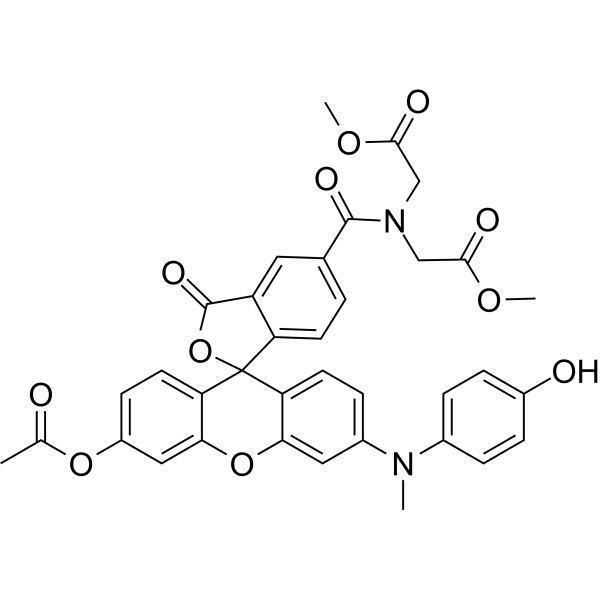
HKPerox-2 is a highly sensitive green fluorescent probe for the specific detection of H2O2 in living cells with a maximum excitation wavelength and emission wavelength of 520 nm and 543 nm, respectively .
|
-
-
- HY-D1148
-
|
|
Fluorescent Dye
|
Others
|
|
HKGreen-4I is a highly sensitive green fluorescent probe for the specific detection of ONOO - in living cells with a maximum excitation wavelength and emission wavelength of 520 nm and 543 nm, respectively .
|
-
-
- HY-114289
-
6-HEX
1 Publications Verification
|
Fluorescent Dye
|
Others
|
|
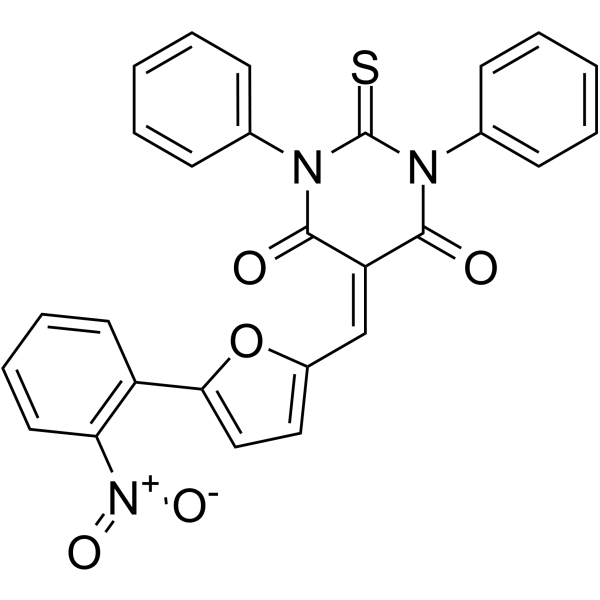
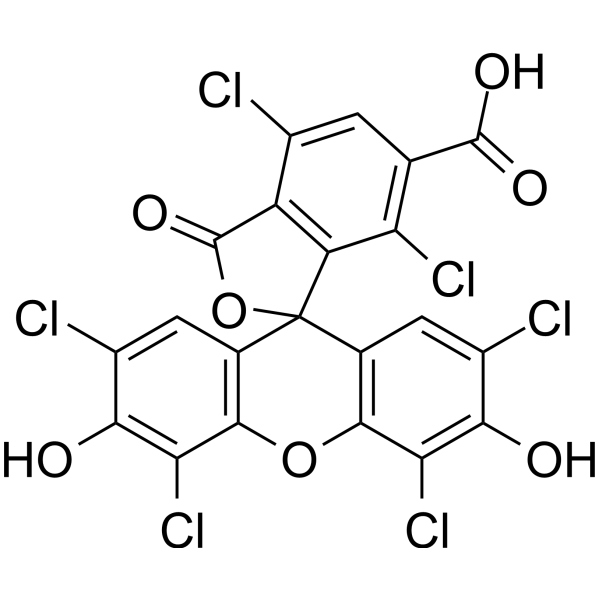
6-HEX is one kind of light base group, the wave length is 532 nm, the wave length is 556 nm. 6-HEX can be used to record nucleic acid sequences and design optical materials. 6-HEX can be used to record nucleic acids at 543 nm radiation, and at 550 nm and 650 nm radiation (5 nm radiation), it can be used to directly locate the base of the cell group .
|
-
-
- HY-N4005
-
|
|
Bacterial
Tyrosinase
|
Infection
Neurological Disease
|
|
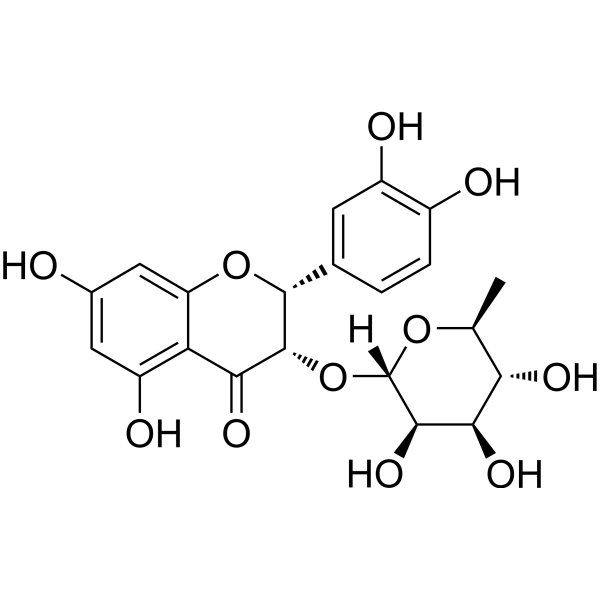
Isoastilbin is a dihydroflavonol glycoside compound in Rhizoma Smilacis glabrae and Astragalus membranaceus. Isoastilbin inhibits glucosyltransferase (GTase) with an IC50 value of 54.3 μg/mL, and also inhibits tyrosinase activity. Isoastilbin shows neuroprotective, antioxidation, antimicrobial and anti-apoptotic properties and has the potential for Alzheimer’s disease research .
|
-
-
- HY-D1704
-
|
|
GABA Receptor
|
Neurological Disease
|
|
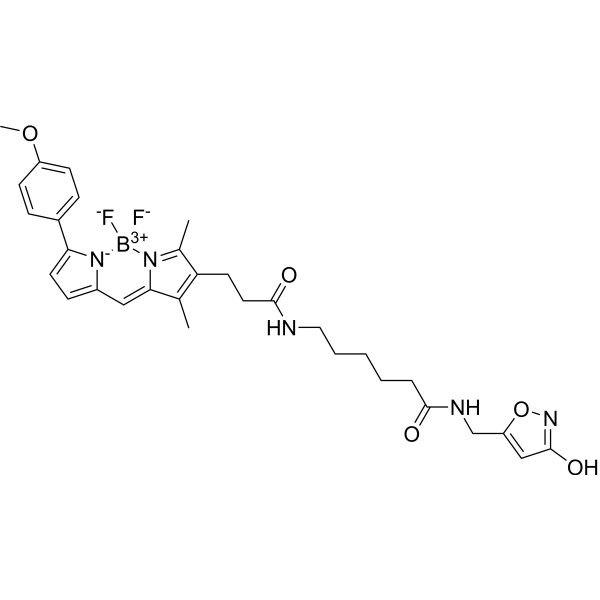
Bodipy TMR-X muscimol is a Bodipy labeled Muscimol (HY-N2313) (Ex=543 nm, Em=572 nm). Muscimol is a GABAA agonist. Bodipy TMR-X muscimol can be used for imaging the spread of reversible brain inactivations .
|
-
-
- HY-100696
-
|
|
Epigenetic Reader Domain
|
Cancer
|
|
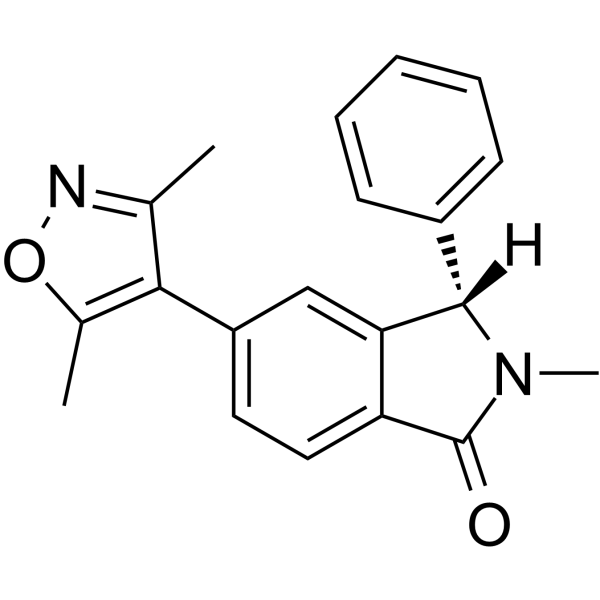
PNZ5 is a potent and isoxazole-based pan-BET inhibitor with high selectivity and potency similar to the well-established (+)-JQ1, with a KD of 5.43 nM for BRD4(1) .
|
-
-
- HY-158739
-
|
|
Fluorescent Dye
|
Cancer
|
|
Rhodamine dithenoyl hydrazide (probe 1) possesses excellent recognition and selectivity for Fe 3+ ion. Rhodamine dithenoyl hydrazide exhibits Excitation/Emission maxima of 543/550-700 nm, respectively .
|
-
-
- HY-15425B
-
|
Sphingosine Kinase 1 Inhibitor II hydrochloride
|
SphK
LPL Receptor
Apoptosis
Autophagy
|
Cardiovascular Disease
Inflammation/Immunology
Cancer
|
|
PF-543 hydrochloride (Sphingosine Kinase 1 Inhibitor II hydrochloride) is a potent, selective, reversible and sphingosine-competitive SPHK1 inhibitor with an IC50 of 2 nM and a Ki of 3.6 nM. PF-543 hydrochloride is >100-fold selectivity for SPHK1 over SPHK2. PF-543 hydrochloride is an effective potent inhibitor of sphingosine 1-phosphate (S1P) formation in whole blood with an IC50 of 26.7 nM. PF-543 hydrochloride induces apoptosis, necrosis, and autophagy .
|
-
-
- HY-P5396A
-
|
|
Amino Acid Decarboxylase
|
Others
|
|
GAD65 (524-543) acetate is a biological active peptide with amino acids 524 to 543 fragment of glutamic acid decarboxylase 65 (GAD65). GAD65 (524-543) acetate is one of the first fragments of the islet antigen to induce proliferative T cell responses in the non-obese diabetic (NOD) mouse model of spontaneous autoimmune diabetes. GAD65 (524-543) acetate is a specific, possibly low affinity, stimulus for the spontaneously arising diabetogenic T cell clone BDC2.5. Immunization with GAD65 (524-543) acetate increases the susceptibility of the NOD mice to type 1 diabetes induced by the adoptive transfer of BDC2.5 T cells .
|
-
-
- HY-130022
-
|
|
Fluorescent Dye
|
Others
|
|
HKPerox-1 is a highly sensitive green fluorescent probe for the specific detection of H2O2 in living cells with a maximum excitation wavelength and emission wavelength of 520 nm and 543 nm, respectively .
|
-
-
- HY-122613
-
|
|
SGLT
|
Metabolic Disease
|
|
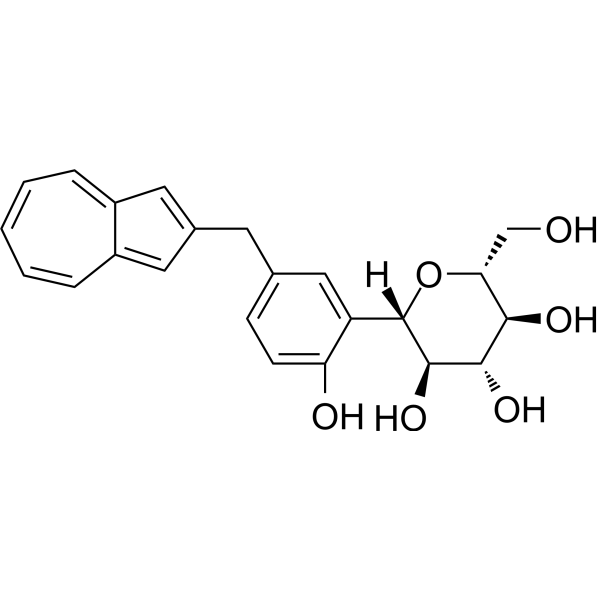
YM543 free base is a potent and orally active sodium-glucose cotransporter (SGLT) 2 inhibitor. YM543 free base reduces blood glucose levels. YM543 free base can be used in research of diabetes .
|
-
-
- HY-108590
-
-
-
- HY-146710
-
|
|
RET
|
Cancer
|
|
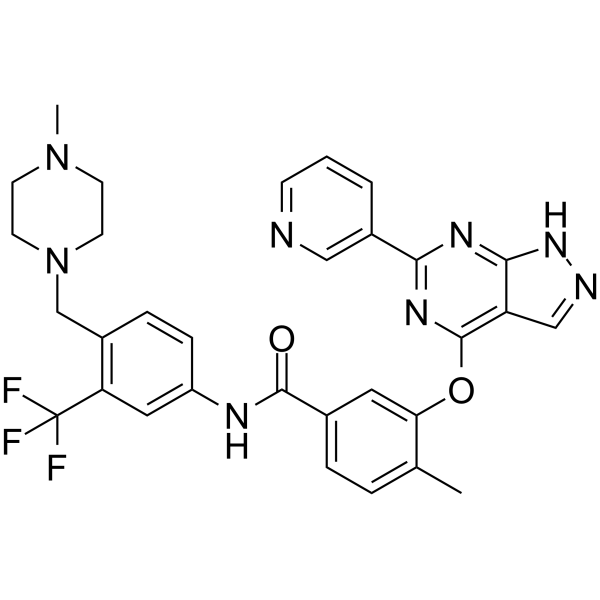
RET-IN-16 is a potent and selective RET inhibitor with IC50s of 3.98 nM, 8.42 nM, 15.05 nM, 7.86 nM, 5.43 nM and 8.86 nM for RET(WT), RET(M918T), RET(V804L), RET(V804M), RET-CCDC6 and RET-KIF5B, respectively. RET-IN-16 has anticancer effects .
|
-
-
- HY-141876
-
|
|
Histone Methyltransferase
Notch
PI3K
Akt
Bcl-2 Family
DNA/RNA Synthesis
|
Cancer
|
|
PRT543 is an orally active selective PRMT5 inhibitor. PRT543 reduces intracellular symmetric dimethylarginine (sDMA) levels, downregulates the expression of genes related to DNA damage repair and DNA replication pathways, and induces abnormal alternative splicing. PRT543 inhibits the MYB, NOTCH1 and PI3K/AKT signaling pathways, promotes nuclear translocation of FOXO1, upregulates the pro-apoptotic protein BAX, and enhances cellular sensitivity to BCL-2 inhibition. PRT543 disrupts the normal RNA splicing process and exerts a synthetic lethal effect on myeloid tumor cells carrying splicing factor mutations. PRT543 can be used in research related to various cancers including breast cancer, ovarian cancer and acute myeloid leukemia .
|
-
-
- HY-103336
-
|
T1117
|
GPR55
Cannabinoid Receptor
|
Cardiovascular Disease
|
|
Tocrifluor 1117 (T1117), a fluorescent form of the cannabinoid CB1 receptor antagonist AM251 (HY-15443), is a selective fluorescent GPR55 ligand. Tocrifluor 1117 is a potent tool for identifying the cellular location of cannabinoid receptors (including GPR55 in living tissues) (Ex/Em=543/590 nm) .
|
-
-
- HY-15112
-
|
|
Prolyl Endopeptidase (PREP)
|
Infection
|
|
JTP-4819 is a potent and specific inhibitor of prolyl endopeptidase (PREP) with IC50s of 0.83 nM (in rat brain supernatant) and 5.43 nM (in Flavobacterium meningosepticum). JTP-4819 has blood-brain penetration, also improves the retention time of amnesia rats induced by Scopolamine (HY-N2096) .
|
-
-
- HY-125327
-
|
|
SGLT
|
Metabolic Disease
|
|
YM-543 is a selective SGLT2 inhibitor that effectively reduces hyperglycemia in type 2 diabetic mice through increased urinary glucose excretion. YM-543 demonstrates potent inhibition of both mouse and human SGLT2 activities at nanomolar concentrations. YM-543, when administered orally, significantly improves glucose tolerance in diabetic models and sustains its effects for over 12 hours. YM-543, in combination with other antidiabetic agents like rosiglitazone or metformin, enhances the therapeutic effects on diabetic symptoms. YM-543 does not affect blood glucose levels in normal mice, indicating its specificity for diabetic conditions.
|
-
-
- HY-W953122
-
|
|
Ligands for E3 Ligase
|
Cancer
|
|
CRBN ligand-543 is an E3 ubiquitin ligase cereblon (CRBN) ligand used to recruit the cereblon protein. CRBN ligand-543 can be linked to a target protein ligand via a linker to form a PROTAC.
|
-
-
- HY-R01626
-
|
|
MicroRNA
|
Cancer
|
|
hsa-miR-543 mimics are small, chemically synthesized double-stranded RNAs that mimic endogenous miRNAs and enable miRNA functional analysis by up-regulation of miRNA activity.
|
-
hsa-miR-543 mimic
hsa-miR-543 mimic
-
- HY-P5396
-
|
|
Amino Acid Decarboxylase
|
Others
|
|
GAD65 (524-543) is a biological active peptide with amino acids 524 to 543 fragment of glutamic acid decarboxylase 65 (GAD65). GAD65 (524-543) is one of the first fragments of islet antigen to induce proliferative T cell responses in the non-obese diabetic (NOD) mouse model of spontaneous autoimmune diabetes. GAD65 (524-543) is a specific, possibly low affinity, stimulus for the spontaneously arising diabetogenic T cell clone BDC2.5. Immunization with GAD65 (524-543) increases the susceptibility of the NOD mice to type 1 diabetes induced by the adoptive transfer of BDC2.5 T cells .
|
-
-
- HY-R04514
-
|
|
MicroRNA
|
Cancer
|
|
rno-miR-543-3p mimics are small, chemically synthesized double-stranded RNAs that mimic endogenous miRNAs and enable miRNA functional analysis by up-regulation of miRNA activity.
|
-
rno-miR-543-3p mimic
-
- HY-R03291
-
|
|
MicroRNA
|
Cancer
|
|
mmu-miR-543-5p mimics are small, chemically synthesized double-stranded RNAs that mimic endogenous miRNAs and enable miRNA functional analysis by up-regulation of miRNA activity.
|
-
mmu-miR-543-5p mimic
-
- HY-14526
-
|
543U76; 5,11-Methenyltetrahydrohomofolate
|
DNA/RNA Synthesis
|
Cancer
|
|
5-DACTHF (543U76) is an inhibitor of purine de novo biosynthesis. 5-DACTHF is a GAR-TFase and AICAR-TFase inhibitor (IC50: 3 and 94 μM). 5-DACTHF is a potent antitumor agent .
|
-
-
- HY-RI03291A
-
|
|
MicroRNA
|
Cancer
|
|
mmu-miR-543-5p antagomirs are chemically-modified oligonucleotides that hybridize with mature miRNAs. The miRNA antagomirs have 2 phosphorothioates at the 5' end, 4 phosphorothioates at the 3' end, 1 cholesterol group at the 3' end, and full-length nucleotide 2'-methoxy modification. The miRNA antagomirs strongly compete with mature miRNAs to prevent the complementary pairing of miRNAs and their target genes, thereby inhibiting miRNAs from functioning. Stability of miRNA antagomirs appears to be significantly higher than miRNA inhibitors, they exhibits enhanced cellular uptake, stability and regulatory activity in vivo.
|
-
mmu-miR-543-5p antagomir
-
- HY-125959R
-
|
|
Apoptosis
|
Cardiovascular Disease
Neurological Disease
|
|
Ucf-101 (Standard) is the analytical standard of Ucf-101. This product is intended for research and analytical applications. Ucf-101 is a selective and competitive inhibitor of pro-apoptotic protease Omi/HtrA2, with an IC50 of 9.5 μM for His-Omi. Ucf-101 exhibits very little activity against various other serine proteases (IC50>200 μM). Ucf-101 has a natural red fluorescence at 543 nm that is used to monitor its ability to enter mammalian cells. Ucf-101 has a significant cardioprotective effect against MI/R injury and also has certain neuroprotective effect .
|
-
-
- HY-112728
-
|
|
Parasite
|
Infection
|
|
MMV024101 shows potency against P. falciparum NF54 with an IC50 value of 543 nM, which has antiplasmodial activity .
|
-
-
- HY-108590R
-
|
XR-543 (Standard)
|
Reference Standards
Potassium Channel
|
Neurological Disease
|
|
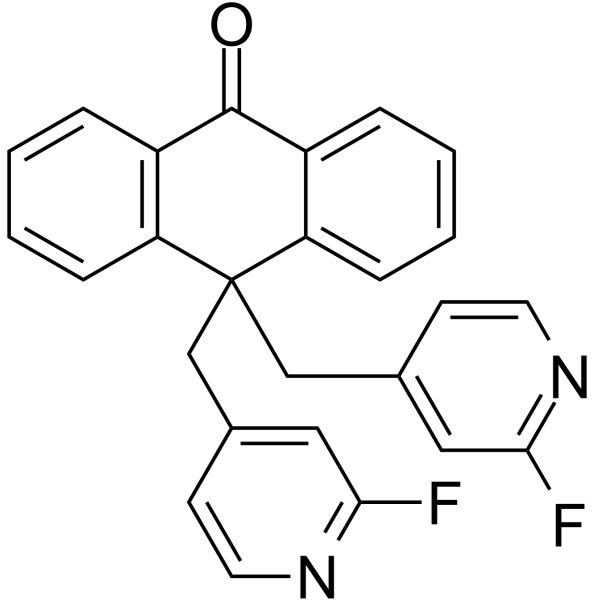
DMP-543 (Standard) is the analytical standard of DMP-543 (HY-108590). This product is intended for research and analytical applications. DMP-543 (XR-543) is a KV7 channel blocker, also acts as a potent neurotransmitter release enhancer .
|
-
-
- HY-169467
-
|
|
5-HT Receptor
Dopamine Receptor
|
Neurological Disease
|
|
5-Chloro-α-methyltryptamine (Compound 7b) is a potent and selective dual DA/5-HT releaser and 5-HT2a agonist. 5-Chloro-α-methyltryptamine releases DA and 5-HT with the EC50 values of 54.3 nM and 16.2 nM, respectively. 5-Chloro-α-methyltryptamine can be used in the study of neurotransmitter .
|
-
-
- HY-W800770
-
|
|
Fluorescent Dye
|
Others
|
|
MB 543 DBCO is a fluroescent agent with a terminal DBCO group. The DBCO group is commonly used for copper-free Click Chemistry reactions due to its strain promoted high energy. MB 543 Alkyne is a very hydrophilic, water-soluble, orange fluorescent dye that has a maximal absorption of 543 nm and emission at 566 nm. The compound is also pH insensitive from pH 3 to pH 10.
|
-
-
- HY-180112
-
|
|
Keap1-Nrf2
Reactive Oxygen Species (ROS)
PI3K
Akt
p38 MAPK
|
Metabolic Disease
|
|
SH543 is a potent anti-osteoporosis agent. SH543 inhibits nuclear factor κB ligand (RANKL)-induced osteoclastogenesis with an IC50 of 3.3 nM. SH543 directly binds to KEAP1, activates the Nrf2-HO-1 antioxidant pathway, reduces ROS levels, and inhibits PI3K-AKT and MAPK signaling pathways. SH543 attenuates pathological bone loss in ovariectomized mice. SH543 can be used for osteoporosis research .
|
-
-
- HY-RI01626
-
|
|
MicroRNA
|
Cancer
|
|
hsa-miR-543 inhibitors are chemically-modified oligonucleotides that hybridize with mature miRNAs. The miRNA inhibitors have full-length nucleotide 2'-methoxy modification. The miRNA inhibitors strongly compete with mature miRNAs to prevent the complementary pairing of miRNAs and their target genes, thereby inhibiting miRNAs from functioning.
|
-
hsa-miR-543 inhibitor
-
- HY-R01626A
-
|
|
MicroRNA
|
Cancer
|
|
hsa-miR-543 agomirs are chemically-modified double-strand miRNA mimics with modified mature miRNA strand: 2 phosphorothioates at the 5' end, 4 phosphorothioates at the 3' end, 3' end cholesterol group, and full-length nucleotide 2'-methoxy modification. They are designed to mimic endogenous miRNAs and recommended for miRNA functional studies. Compared with miRNA mimics, they exhibits enhanced cellular uptake, stability and regulatory activity in vivo.
|
-
hsa-miR-543 agomir
hsa-miR-543 agomir
-
- HY-RI01626A
-
|
|
MicroRNA
|
Cancer
|
|
hsa-miR-543 antagomirs are chemically-modified oligonucleotides that hybridize with mature miRNAs. The miRNA antagomirs have 2 phosphorothioates at the 5' end, 4 phosphorothioates at the 3' end, 1 cholesterol group at the 3' end, and full-length nucleotide 2'-methoxy modification. The miRNA antagomirs strongly compete with mature miRNAs to prevent the complementary pairing of miRNAs and their target genes, thereby inhibiting miRNAs from functioning. Stability of miRNA antagomirs appears to be significantly higher than miRNA inhibitors, they exhibits enhanced cellular uptake, stability and regulatory activity in vivo.
|
-
hsa-miR-543 antagomir
-
- HY-RI04514
-
|
|
MicroRNA
|
Cancer
|
|
rno-miR-543-3p inhibitors are chemically-modified oligonucleotides that hybridize with mature miRNAs. The miRNA inhibitors have full-length nucleotide 2'-methoxy modification. The miRNA inhibitors strongly compete with mature miRNAs to prevent the complementary pairing of miRNAs and their target genes, thereby inhibiting miRNAs from functioning.
|
-
rno-miR-543-3p inhibitor
-
- HY-RI03291
-
|
|
MicroRNA
|
Cancer
|
|
mmu-miR-543-5p inhibitors are chemically-modified oligonucleotides that hybridize with mature miRNAs. The miRNA inhibitors have full-length nucleotide 2'-methoxy modification. The miRNA inhibitors strongly compete with mature miRNAs to prevent the complementary pairing of miRNAs and their target genes, thereby inhibiting miRNAs from functioning.
|
-
mmu-miR-543-5p inhibitor
-
- HY-R03291A
-
|
|
MicroRNA
|
Cancer
|
|
mmu-miR-543-5p agomirs are chemically-modified double-strand miRNA mimics with modified mature miRNA strand: 2 phosphorothioates at the 5' end, 4 phosphorothioates at the 3' end, 3' end cholesterol group, and full-length nucleotide 2'-methoxy modification. They are designed to mimic endogenous miRNAs and recommended for miRNA functional studies. Compared with miRNA mimics, they exhibits enhanced cellular uptake, stability and regulatory activity in vivo.
|
-
mmu-miR-543-5p agomir
-
- HY-R04514A
-
|
|
MicroRNA
|
Cancer
|
|
rno-miR-543-3p agomirs are chemically-modified double-strand miRNA mimics with modified mature miRNA strand: 2 phosphorothioates at the 5' end, 4 phosphorothioates at the 3' end, 3' end cholesterol group, and full-length nucleotide 2'-methoxy modification. They are designed to mimic endogenous miRNAs and recommended for miRNA functional studies. Compared with miRNA mimics, they exhibits enhanced cellular uptake, stability and regulatory activity in vivo.
|
-
rno-miR-543-3p agomir
-
- HY-RI04514A
-
|
|
MicroRNA
|
Cancer
|
|
rno-miR-543-3p antagomirs are chemically-modified oligonucleotides that hybridize with mature miRNAs. The miRNA antagomirs have 2 phosphorothioates at the 5' end, 4 phosphorothioates at the 3' end, 1 cholesterol group at the 3' end, and full-length nucleotide 2'-methoxy modification. The miRNA antagomirs strongly compete with mature miRNAs to prevent the complementary pairing of miRNAs and their target genes, thereby inhibiting miRNAs from functioning. Stability of miRNA antagomirs appears to be significantly higher than miRNA inhibitors, they exhibits enhanced cellular uptake, stability and regulatory activity in vivo.
|
-
rno-miR-543-3p antagomir
-
- HY-D2947
-
|
|
Fluorescent Dye
|
Others
|
|
CLIP-505 is a CLIP-tag specific dye substrate. CLIP-505 is excited using either the 488 or 543 laser line .
|
-
-
- HY-173035
-
|
|
Glycosidase
|
Metabolic Disease
|
|
α-Glucosidase-IN-85 (Compound 8D1) is the inhibitor for α-Glucosidase with an IC50 of 5.43 μM. α-Glucosidase-IN-85 can be used in research of type 2 diabetes .
|
-
-
- HY-181510
-
|
|
Carbonic Anhydrase
|
Others
|
|
CAII-IN-14 (Compound 3o) is a human carbonic anhydrase II (hCA II) inhibitor with a Ki value of 1.65 nM. CAII-IN-14 also inhibits hCA I(Ki = 6.15 nM) and hCA IX(Ki = 5.43 nM). CAII-IN-14 exhibits predicted drug-like properties .
|
-
-
- HY-181166
-
|
|
EGFR
Apoptosis
|
Cancer
|
|
EGFR-IN-194 is a potent EGFR tyrosine kinase inhibitor with an IC50 of 54.3 nM against human EGFR. EGFR-IN-194 induces apoptosis, inhibits migration in cancer cells, selectively promotes invasion in cancer cells, and exhibits antiproliferative effects across multiple cancer cell lines. EGFR-IN-194 can be used for the research of prostate adenocarcinoma, non-small cell lung carcinoma, breast carcinoma, chronic myeloid leukemia .
|
-
-
- HY-159564
-
|
|
COX
NO Synthase
|
Inflammation/Immunology
|
|
iNOS/COX-2-IN-3 (compound 7d) is a dual inhibitor of iNOS and COX-2, with potential anti-inflammatory activity against LPS (HY-D1056)-induced RAW 264.7 cells (IC50=3.48 μM). iNOS/COX-2-IN-3 has good plasma stability, oral activity and gastric safety, and its inhibitory activity on iNOS and COX-2 expression is 5.43-fold and 2.37-fold that of Indomethacin (HY-14397), respectively .
|
-
| Cat. No. |
Product Name |
Type |
-
- HY-D1913
-
Fe2Orange
Maximum Cited Publications
25 Publications Verification
|
Fluorescent Dyes
|
|
Fe2Orange is a Fe 2+ selective probe with an excitation wavelength of 543 nm and an emission wavelength of 580 nm. Fe2Orange emits fluorescence after binding to intracellular Fe 2+, thereby achieving specific labeling of Fe 2+. Fe2Orange is used to detect the content and distribution of Fe 2+ in cells .
|
-
- HY-15096
-
|
FJ-776
|
Fluorescent Dyes
|
|
MKT-077 (FJ-776), a highly water-soluble mitochondrial dye, has significant antitumor activity . MKT-077 exhibits low cytotoxicity, and inhibits broad-spectrum human cancer cell lines (colon cancer, breast cancer, pancreatic cancer). MKT-077 inhibits the growth of tumor in nude mice enograft tumor model. Ex/Em=488/543 nm .
|
-
- HY-D0304
-
|
Solvent red 49
|
Fluorescent Dyes
|
|
Rhodamine B base (Solvent red 49) is a fluorescent dye (Ex=543 nM; Em=565 nM) .
|
-
- HY-D1157
-
|
|
Fluorescent Dyes
|
|
HKPerox-2 is a highly sensitive green fluorescent probe for the specific detection of H2O2 in living cells with a maximum excitation wavelength and emission wavelength of 520 nm and 543 nm, respectively .
|
-
- HY-D1148
-
|
|
Fluorescent Dyes
|
|
HKGreen-4I is a highly sensitive green fluorescent probe for the specific detection of ONOO - in living cells with a maximum excitation wavelength and emission wavelength of 520 nm and 543 nm, respectively .
|
-
- HY-114289
-
6-HEX
1 Publications Verification
|
Fluorescent Dyes
|
|
6-HEX is one kind of light base group, the wave length is 532 nm, the wave length is 556 nm. 6-HEX can be used to record nucleic acid sequences and design optical materials. 6-HEX can be used to record nucleic acids at 543 nm radiation, and at 550 nm and 650 nm radiation (5 nm radiation), it can be used to directly locate the base of the cell group .
|
-
- HY-D1704
-
|
|
Fluorescent Dyes
|
|
Bodipy TMR-X muscimol is a Bodipy labeled Muscimol (HY-N2313) (Ex=543 nm, Em=572 nm). Muscimol is a GABAA agonist. Bodipy TMR-X muscimol can be used for imaging the spread of reversible brain inactivations .
|
-
- HY-158739
-
|
|
Fluorescent Dyes
|
|
Rhodamine dithenoyl hydrazide (probe 1) possesses excellent recognition and selectivity for Fe 3+ ion. Rhodamine dithenoyl hydrazide exhibits Excitation/Emission maxima of 543/550-700 nm, respectively .
|
-
- HY-130022
-
|
|
Fluorescent Dyes
|
|
HKPerox-1 is a highly sensitive green fluorescent probe for the specific detection of H2O2 in living cells with a maximum excitation wavelength and emission wavelength of 520 nm and 543 nm, respectively .
|
-
- HY-D2947
-
|
|
Fluorescent Dyes
|
|
CLIP-505 is a CLIP-tag specific dye substrate. CLIP-505 is excited using either the 488 or 543 laser line .
|
| Cat. No. |
Product Name |
Type |
| Cat. No. |
Product Name |
Target |
Research Area |
-
- HY-P5396A
-
|
|
Amino Acid Decarboxylase
|
Others
|
|
GAD65 (524-543) acetate is a biological active peptide with amino acids 524 to 543 fragment of glutamic acid decarboxylase 65 (GAD65). GAD65 (524-543) acetate is one of the first fragments of the islet antigen to induce proliferative T cell responses in the non-obese diabetic (NOD) mouse model of spontaneous autoimmune diabetes. GAD65 (524-543) acetate is a specific, possibly low affinity, stimulus for the spontaneously arising diabetogenic T cell clone BDC2.5. Immunization with GAD65 (524-543) acetate increases the susceptibility of the NOD mice to type 1 diabetes induced by the adoptive transfer of BDC2.5 T cells .
|
-
- HY-P5396
-
|
|
Amino Acid Decarboxylase
|
Others
|
|
GAD65 (524-543) is a biological active peptide with amino acids 524 to 543 fragment of glutamic acid decarboxylase 65 (GAD65). GAD65 (524-543) is one of the first fragments of islet antigen to induce proliferative T cell responses in the non-obese diabetic (NOD) mouse model of spontaneous autoimmune diabetes. GAD65 (524-543) is a specific, possibly low affinity, stimulus for the spontaneously arising diabetogenic T cell clone BDC2.5. Immunization with GAD65 (524-543) increases the susceptibility of the NOD mice to type 1 diabetes induced by the adoptive transfer of BDC2.5 T cells .
|
| Cat. No. |
Product Name |
Category |
Target |
Chemical Structure |
| Cat. No. |
Product Name |
Chemical Structure |
-
- HY-50856S
-
|
|
|
Deuruxolitinib, a deuterated Ruxolitinib (HY-50856), is an orally active JAK1 and JAK2 inhibitor. Deuruxolitinib demonstrates significant hair regrowth effects. Deuruxolitinib can be used for the research of alopecia areata .
|
-
| Cat. No. |
Compare |
Product Name |
Application |
Reactivity |
Image |
Compare Products
|
| Products |
|
| Cat. No. |
|
| Host |
|
| Reactivity |
|
| Application |
|
Dilution Ratio |
|
| Molecular Weight |
|
| Conjugation |
|
| Clonality |
|
| Immunogen |
|
| Appearance |
|
| Isotype |
|
| Gene ID |
|
| SwissProt ID |
|
| Purity |
|
| Formulation |
|
| Free Sample |
Yes
No
|
| Size |
* This product has been "discontinued".
Optimized version of product available:
|
| Cat. No. |
Product Name |
|
Classification |
-
- HY-159564
-
|
|
|
Azide
|
|
iNOS/COX-2-IN-3 (compound 7d) is a dual inhibitor of iNOS and COX-2, with potential anti-inflammatory activity against LPS (HY-D1056)-induced RAW 264.7 cells (IC50=3.48 μM). iNOS/COX-2-IN-3 has good plasma stability, oral activity and gastric safety, and its inhibitory activity on iNOS and COX-2 expression is 5.43-fold and 2.37-fold that of Indomethacin (HY-14397), respectively .
|
| Cat. No. |
Product Name |
|
Classification |
-
- HY-R01626
-
|
|
|
MicroRNAs
miRNA mimics
|
|
hsa-miR-543 mimics are small, chemically synthesized double-stranded RNAs that mimic endogenous miRNAs and enable miRNA functional analysis by up-regulation of miRNA activity.
|
-
- HY-R04514
-
|
|
|
MicroRNAs
miRNA mimics
|
|
rno-miR-543-3p mimics are small, chemically synthesized double-stranded RNAs that mimic endogenous miRNAs and enable miRNA functional analysis by up-regulation of miRNA activity.
|
-
- HY-R03291
-
|
|
|
MicroRNAs
miRNA mimics
|
|
mmu-miR-543-5p mimics are small, chemically synthesized double-stranded RNAs that mimic endogenous miRNAs and enable miRNA functional analysis by up-regulation of miRNA activity.
|
-
- HY-RI03291A
-
|
|
|
MicroRNAs
miRNA antagomirs
|
|
mmu-miR-543-5p antagomirs are chemically-modified oligonucleotides that hybridize with mature miRNAs. The miRNA antagomirs have 2 phosphorothioates at the 5' end, 4 phosphorothioates at the 3' end, 1 cholesterol group at the 3' end, and full-length nucleotide 2'-methoxy modification. The miRNA antagomirs strongly compete with mature miRNAs to prevent the complementary pairing of miRNAs and their target genes, thereby inhibiting miRNAs from functioning. Stability of miRNA antagomirs appears to be significantly higher than miRNA inhibitors, they exhibits enhanced cellular uptake, stability and regulatory activity in vivo.
|
-
- HY-RI01626
-
|
|
|
MicroRNAs
miRNA inhibitors
|
|
hsa-miR-543 inhibitors are chemically-modified oligonucleotides that hybridize with mature miRNAs. The miRNA inhibitors have full-length nucleotide 2'-methoxy modification. The miRNA inhibitors strongly compete with mature miRNAs to prevent the complementary pairing of miRNAs and their target genes, thereby inhibiting miRNAs from functioning.
|
-
- HY-R01626A
-
|
|
|
MicroRNAs
miRNA agomirs
|
|
hsa-miR-543 agomirs are chemically-modified double-strand miRNA mimics with modified mature miRNA strand: 2 phosphorothioates at the 5' end, 4 phosphorothioates at the 3' end, 3' end cholesterol group, and full-length nucleotide 2'-methoxy modification. They are designed to mimic endogenous miRNAs and recommended for miRNA functional studies. Compared with miRNA mimics, they exhibits enhanced cellular uptake, stability and regulatory activity in vivo.
|
-
- HY-RI01626A
-
|
|
|
MicroRNAs
miRNA antagomirs
|
|
hsa-miR-543 antagomirs are chemically-modified oligonucleotides that hybridize with mature miRNAs. The miRNA antagomirs have 2 phosphorothioates at the 5' end, 4 phosphorothioates at the 3' end, 1 cholesterol group at the 3' end, and full-length nucleotide 2'-methoxy modification. The miRNA antagomirs strongly compete with mature miRNAs to prevent the complementary pairing of miRNAs and their target genes, thereby inhibiting miRNAs from functioning. Stability of miRNA antagomirs appears to be significantly higher than miRNA inhibitors, they exhibits enhanced cellular uptake, stability and regulatory activity in vivo.
|
-
- HY-RI04514
-
|
|
|
MicroRNAs
miRNA inhibitors
|
|
rno-miR-543-3p inhibitors are chemically-modified oligonucleotides that hybridize with mature miRNAs. The miRNA inhibitors have full-length nucleotide 2'-methoxy modification. The miRNA inhibitors strongly compete with mature miRNAs to prevent the complementary pairing of miRNAs and their target genes, thereby inhibiting miRNAs from functioning.
|
-
- HY-RI03291
-
|
|
|
MicroRNAs
miRNA inhibitors
|
|
mmu-miR-543-5p inhibitors are chemically-modified oligonucleotides that hybridize with mature miRNAs. The miRNA inhibitors have full-length nucleotide 2'-methoxy modification. The miRNA inhibitors strongly compete with mature miRNAs to prevent the complementary pairing of miRNAs and their target genes, thereby inhibiting miRNAs from functioning.
|
-
- HY-R03291A
-
|
|
|
MicroRNAs
miRNA agomirs
|
|
mmu-miR-543-5p agomirs are chemically-modified double-strand miRNA mimics with modified mature miRNA strand: 2 phosphorothioates at the 5' end, 4 phosphorothioates at the 3' end, 3' end cholesterol group, and full-length nucleotide 2'-methoxy modification. They are designed to mimic endogenous miRNAs and recommended for miRNA functional studies. Compared with miRNA mimics, they exhibits enhanced cellular uptake, stability and regulatory activity in vivo.
|
-
- HY-R04514A
-
|
|
|
MicroRNAs
miRNA agomirs
|
|
rno-miR-543-3p agomirs are chemically-modified double-strand miRNA mimics with modified mature miRNA strand: 2 phosphorothioates at the 5' end, 4 phosphorothioates at the 3' end, 3' end cholesterol group, and full-length nucleotide 2'-methoxy modification. They are designed to mimic endogenous miRNAs and recommended for miRNA functional studies. Compared with miRNA mimics, they exhibits enhanced cellular uptake, stability and regulatory activity in vivo.
|
-
- HY-RI04514A
-
|
|
|
MicroRNAs
miRNA antagomirs
|
|
rno-miR-543-3p antagomirs are chemically-modified oligonucleotides that hybridize with mature miRNAs. The miRNA antagomirs have 2 phosphorothioates at the 5' end, 4 phosphorothioates at the 3' end, 1 cholesterol group at the 3' end, and full-length nucleotide 2'-methoxy modification. The miRNA antagomirs strongly compete with mature miRNAs to prevent the complementary pairing of miRNAs and their target genes, thereby inhibiting miRNAs from functioning. Stability of miRNA antagomirs appears to be significantly higher than miRNA inhibitors, they exhibits enhanced cellular uptake, stability and regulatory activity in vivo.
|
Your information is safe with us. * Required Fields.
Inquiry Information
- Product Name:
- Cat. No.:
- Quantity:
- MCE Japan Authorized Agent:

