Search Result
Results for "
PCSK9 Inhibitor
" in MedChemExpress (MCE) Product Catalog:
| Cat. No. |
Product Name |
Target |
Research Areas |
Chemical Structure |
-
- HY-148673
-
|
AZD0780; PCSK9-IN-12
|
PCSK9
|
Cardiovascular Disease
Metabolic Disease
|
|
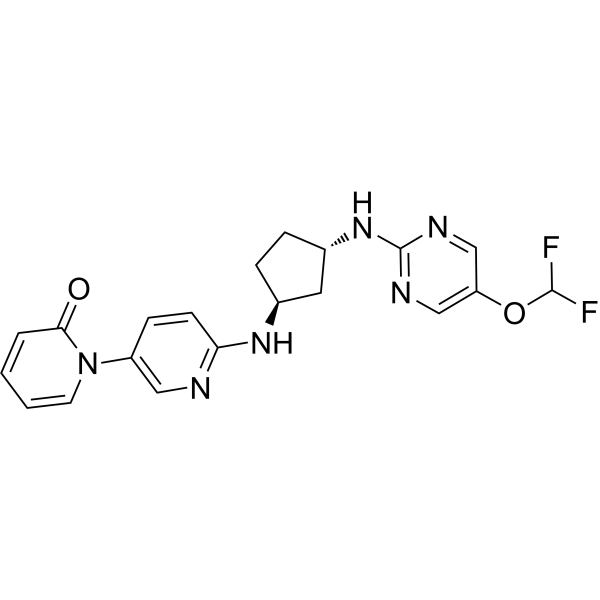
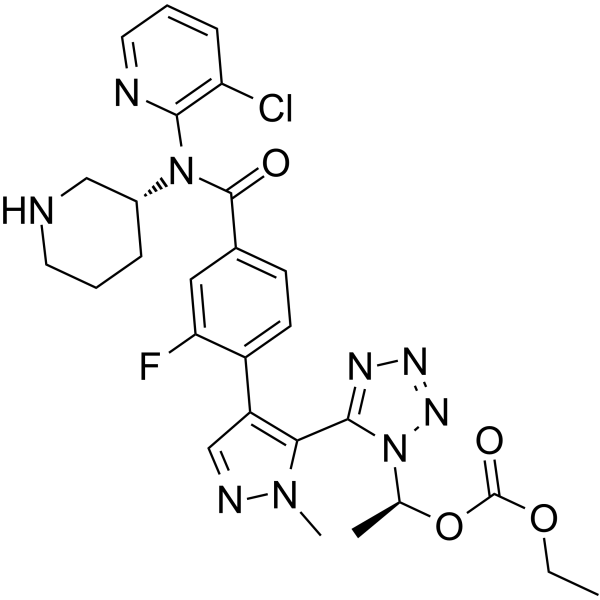
Laroprovstat (AZD0780) is an orall active PCSK9 inhibitor. PCSK9-IN-12 has bind affinity for PCSK9 with a Kd value of <200 nM. Laroprovstat binds to a pocket in the PCSK9 C-terminal domain and does not affect the PCSK9-LDL receptor (LDLR) interaction. Laroprovstat inhibits lysosomal trafficking of PSCK9-LDLR complexes and prevents PCSK9-induced LDLR degradation. Laroprovstat can be used for the research of hypercholesterolemia .
|
-
-
- HY-P9930
-
|
AMG 145
|
NF-κB
Ser/Thr Protease
Toll-like Receptor (TLR)
|
Cardiovascular Disease
Metabolic Disease
Inflammation/Immunology
Cancer
|
|
Evolocumab (AMG 145) is a human monoclonal antibody that inhibits PCSK9. Evolocumab is used in the study of hypercholesterolemia and atherosclerotic cardiovascular disease. Evolocumab binds to circulating PCSK9 protein and inhibits its binding to LDLR. Evolocumab has antioxidant and cytoprotective activities against H2O2-induced oxidative damage to endothelial cells. Evolocumab may also negatively regulate activation of the TLR-4/NF-κB signaling pathway to prevent inflammation .
|
-

-
- HY-P4153
-
|
MK-0616 chloride
|
PCSK9
|
Cardiovascular Disease
|
|
Enlicitide chloride is an orally active inhibitor for PCSK9 that blocks the interaction between LPL receptor and PSCK9, with an IC50 of 2.5 nM. Enlicitide chloride can be used in the study of cardiovascular diseases such as atherosclerosis, hypercholesterolemia, coronary heart disease, metabolic syndrome, acute coronary syndrome or related cardiovascular and cardiometabolic disorders .
|
-

-
- HY-132591
-
-

-
- HY-120088A
-
|
|
PCSK9
|
Cardiovascular Disease
|
|
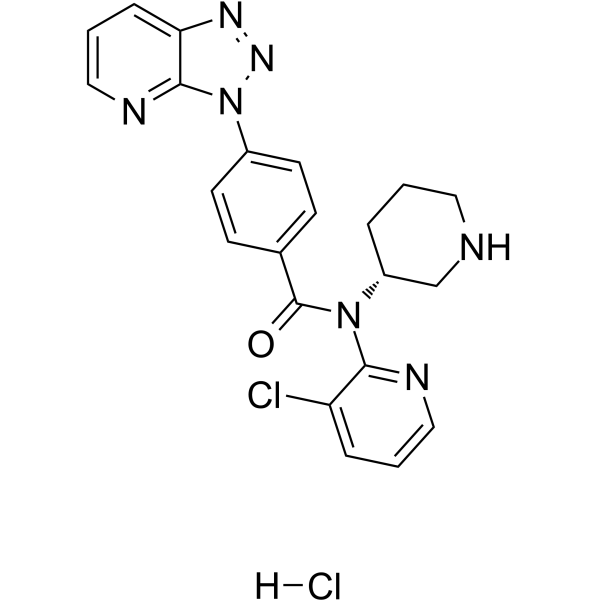
PF-06446846 hydrochloride is an orally active and highly selective inhibitor of translation of Proprotein convertase subtilisin/kexin type 9 (PCSK9). PF-06446846 hydrochloride inhibits PCSK9 by inducing the ribosome to stall around codon 34 .
|
-
-
- HY-P2276
-
|
|
PCSK9
|
Cancer
|
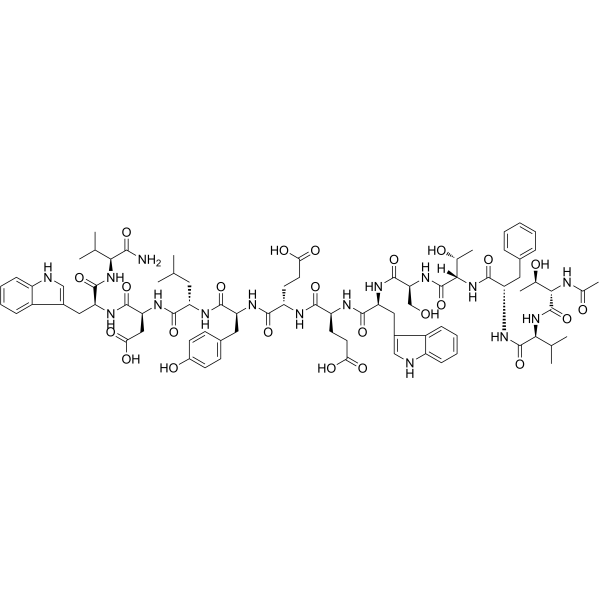
Pep2-8 is a PCSK9 inhibitor with a binding KD of 0.7 μM and an IC50 of 1.4 μM .
|
-
-
- HY-P9928
-
|
REGN 727; SAR 236553
|
PCSK9
NOD-like Receptor (NLR)
Keap1-Nrf2
HMG Family
NF-κB
CX3CR1
|
Cardiovascular Disease
Cancer
|
|
Alirocumab is an anti-PCSK9 human monoclonal antibody. Alirocumab inhibits PCSK9. Alirocumab reduces NLRP3 inflammasome, regulates Nrf2/HO-1, HMGB1/NF-κB and Fractalkine/CX3CR1. Alirocumab increases the ability of the liver to bind LDL-cholesterol (LDL-C) and reduces levels of LDL-C in blood. Alirocumab improves atherosclerosis and inflammation .
|
-

-
- HY-132591A
-
-
-
- HY-W510159
-
|
|
PCSK9
|
Cardiovascular Disease
|
|
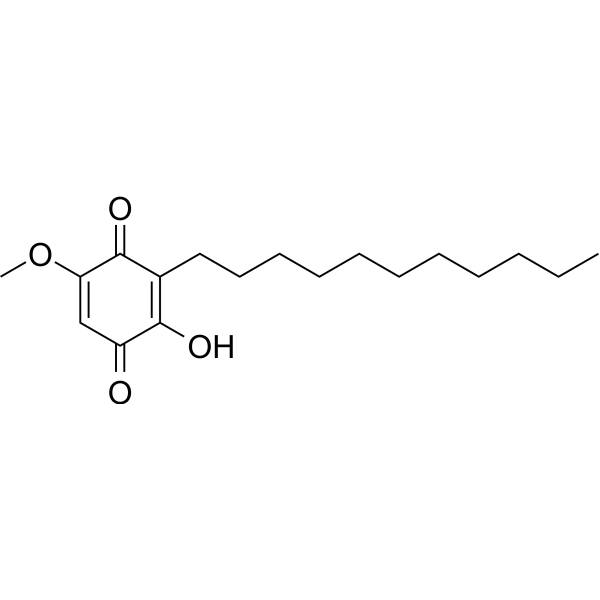
5-O-Methylembelin is a natural isocoumarin that inhibits PCSK9, inducible degrader of the low-density lipoprotein receptor (IDLR), and sterol regulatory element binding protein 2 (SREBP2) mRNA expression .
|
-
-
- HY-P9928A
-
|
REGN 727(anti-PCSK9); SAR 236553(anti-PCSK9)
|
PCSK9
NOD-like Receptor (NLR)
Keap1-Nrf2
HMG Family
NF-κB
CX3CR1
|
Cardiovascular Disease
Cancer
|
|
Alirocumab (anti-PCSK9) is an anti-PCSK9 human monoclonal antibody. Alirocumab (anti-PCSK9) inhibits PCSK9. Alirocumab (anti-PCSK9) reduces NLRP3 inflammasome, regulates Nrf2/HO-1, HMGB1/NF-κB and Fractalkine/CX3CR1. Alirocumab (anti-PCSK9) increases the ability of the liver to bind LDL-cholesterol (LDL-C) and reduces levels of LDL-C in blood. Alirocumab (anti-PCSK9) improves atherosclerosis and inflammation .
|
-

-
- HY-12402
-
|
|
PCSK9
|
Cardiovascular Disease
|
|
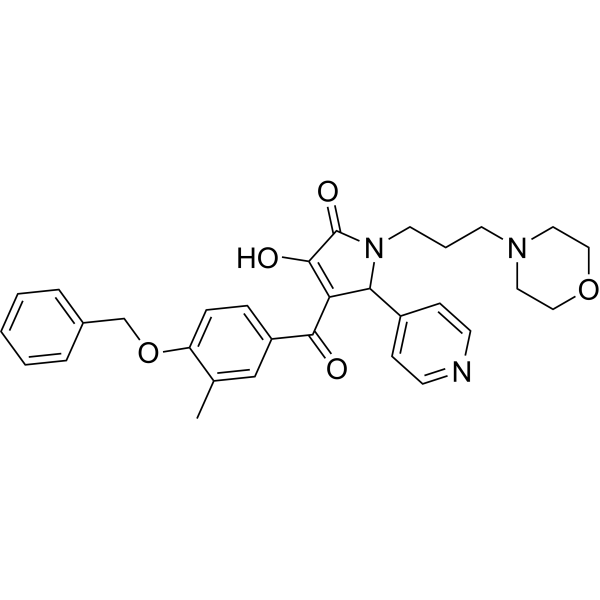
SBC-115076 is a potent proprotein convertase subtilisin/kexin type 9 (PCSK9) inhibitor. PCSK9 is a proprotein convertase, which plays a crucial role in LDL receptor metabolism .
|
-
-
- HY-101354
-
|
PF-00932239
|
PCSK9
|
Cardiovascular Disease
Cancer
|
|
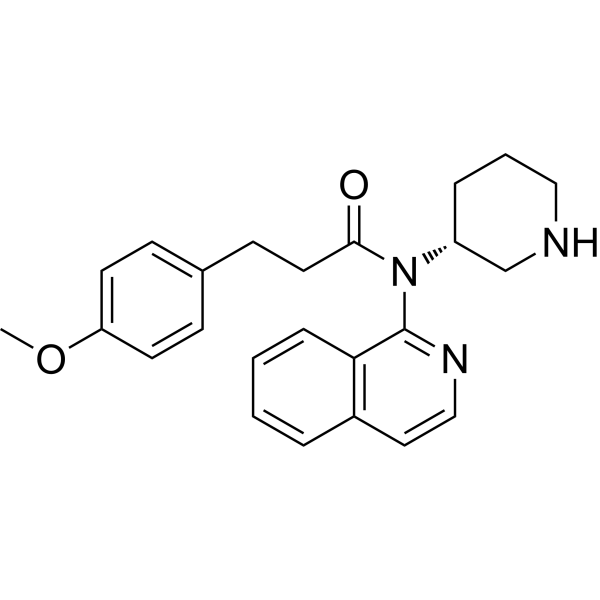
R-IMPP (PF-00932239) is an anti-secretagogue of PCSK9 (IC50=4.8 μM), which targets the 80S ribosome to inhibit PCSK9 protein translation .
|
-
-
- HY-N2127
-
-
-
- HY-101832
-
-
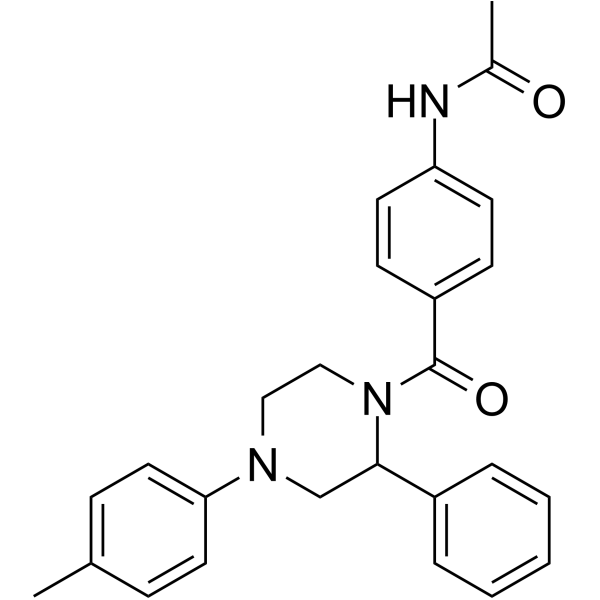
-
- HY-143221
-
|
|
Drug Intermediate
|
Cardiovascular Disease
|
|
AS-Inclisiran sodium is the antisense of Inclisiran (HY-132591). Inclisiran is a double-stranded small interfering RNA (siRNA) molecule. Inclisiran inhibits the transcription of PCSK9. Inclisiran inhibits Pyroptosis, activates PPARγ, and reduces NLRP3, cleaved caspase-1, IL-1β, and IL-18. Inclisiran has anti-inflammatory, lipid-regulating and anti-atherosclerotic activities. Inclisiran can be used in researches of hyperlipidemia and cardiovascular disease (CVD) .
|
-
-
- HY-152221
-
|
|
PCSK9
|
Cardiovascular Disease
Metabolic Disease
|
|
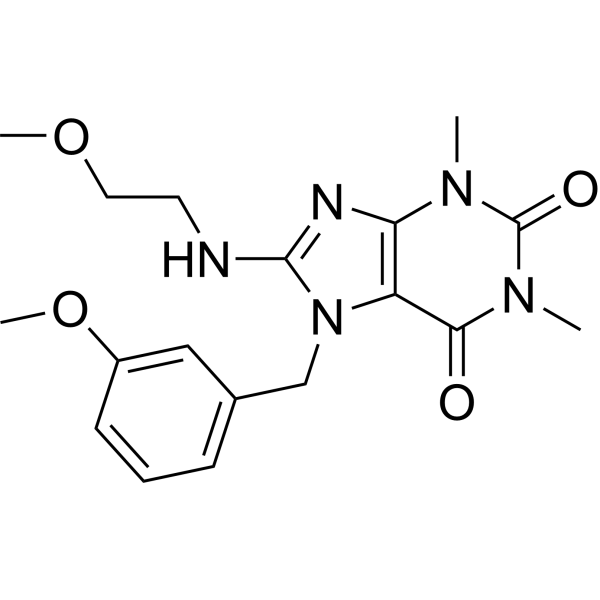
PCSK9-IN-10 is a potent and orally active PCSK9 inhibitor with an IC50 value of 6.4 µM. PCSK9-IN-10 increases the expression of LDLR protein and decreases the expression of PCSK9. PCSK9-IN-10 reduces atherosclerosis progression. PCSK9-IN-10 has the potential for the research of hyperlipidemia .
|
-
-
- HY-P11071
-
|
|
PCSK9
|
Cardiovascular Disease
|
|
PCSK9 Inhibitor, EGF-A is a PCSK9 inhibitor. PCSK9 Inhibitor, EGF-A is residues 293-334 of the EGF-A domain of the low-density lipoprotein (LDL) receptor. PCSK9 Inhibitor, EGF-A can prevent PCSK9-induced intracellular LDLR degradation. PCSK9 Inhibitor, EGF-A can be used in the study of hypercholesterolemia and premature atherosclerosis .
|
-

-
- HY-152223
-
|
|
PCSK9
|
Cardiovascular Disease
|
|
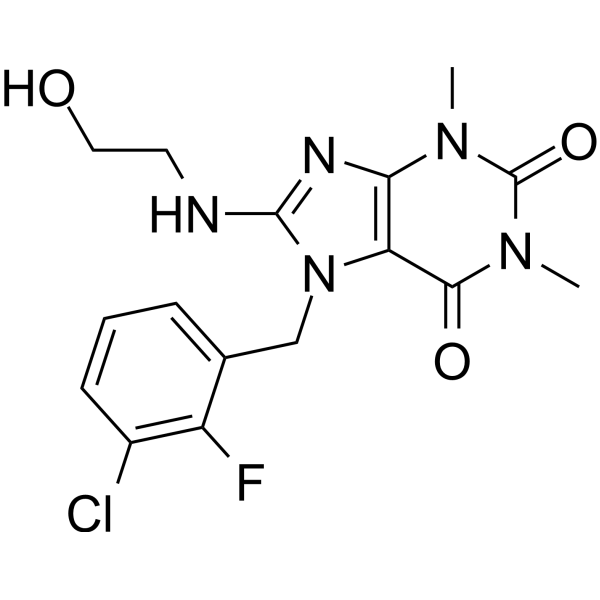
PCSK9-IN-11 (compound 5r) is a potent and orally active PCSK9 inhibitor. PCSK9-IN-11 exhibits PCSK9 transcriptional inhibitory activity in HepG2 cells, with an IC50 of 5.7 μM. PCSK9-IN-11 increases LDL receptor (LDLR) protein level. PCSK9-IN-11 can be used for atherosclerosis research .
|
-
-
- HY-163794
-
|
|
ANGPTL
PCSK9
|
Metabolic Disease
|
|
DC371739 is a potent and orally activity PCSK9 inhibitor. DC371739 decreases the mRNA expression of PCSK9 and ANGPTL3. DC371739 decreases the protein expression of PCSK9 and increases the protein expression of LDLR. DC371739 has the potential for the research of hyperlipidemia .
|
-

-
- HY-157434
-
|
|
PCSK9
|
Cardiovascular Disease
|
|
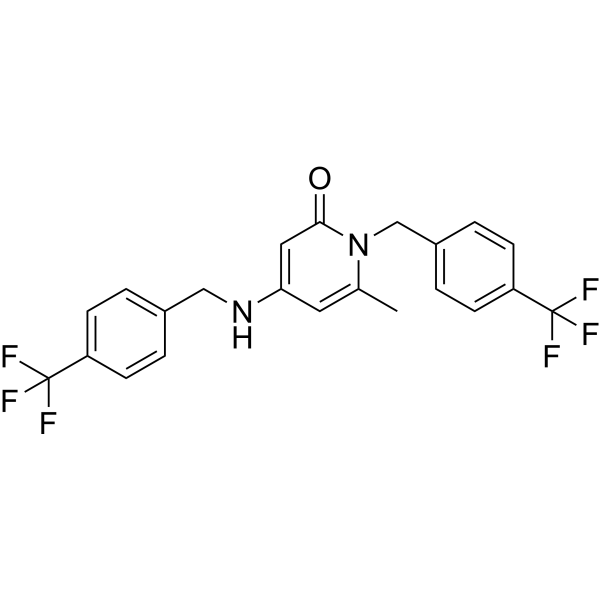
PCSK9-IN-23 (compound 5C) is a potent PCSK9 inhibitor. PCSK9-IN-23 blocks PCSK9 secretion from HepG2 cells, significantly increases LDL receptor (LDLR) expression .
|
-
-
- HY-158827A
-
|
|
PCSK9
|
Metabolic Disease
|
|
AZD8233 sodium, a liver-targeting antisense oligonucleotide (ASO), inhibits subtilisin/kexin type 9 (PCSK9) protein synthesis. AZD8233 sodium increases the available LDL receptors by reducing PCSK9 levels, thereby clearing LDL from the blood and decreasing LDL-C levels.
|
-

-
- HY-143220
-
|
|
PCSK9
Small Interfering RNA (siRNA)
Drug Derivative
|
Cardiovascular Disease
|
|
SS (no Galnac)-Inclisiran sodium is the sense strand of Inclisiran (HY-132591) without GalNAc modification. Inclisiran is a double-stranded small interfering RNA (siRNA) molecule that inhibits the transcription of PCSK-9. SS (no Galnac)-Inclisiran sodium can be used in cardiovascular disease research .
|
-
-
- HY-148758
-
-
-
- HY-P99626
-
|
LY 3015014
|
PCSK9
|
Metabolic Disease
|
|
Frovocimab (LY 3015014) is a humanized IgG4 monoclonal antibody (mAb) that neutralizes PCSK9. Frovocimab inhibits PCSK9 binding to LDL receptor (LDLR) while permitting the normal proteolytic cleavage of the bound intact PCSK9 .
|
-

-
- HY-120088
-
|
|
PCSK9
|
Cardiovascular Disease
|
|
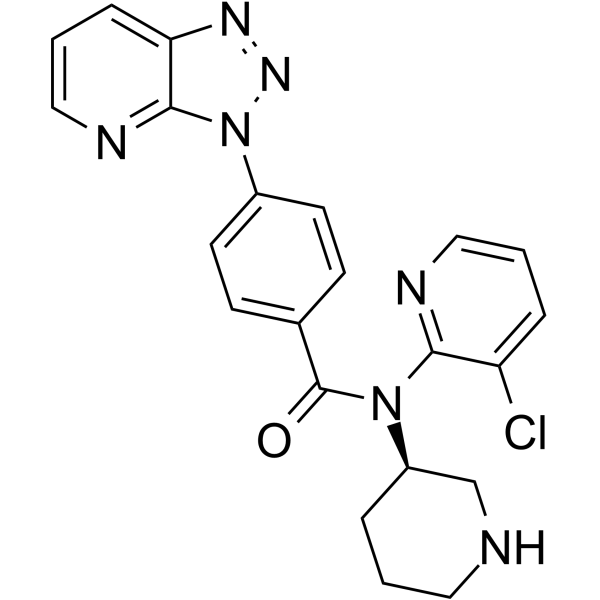
PF-06446846 is an orally active proprotein convertase subtilisin/kexin type 9 (PCSK9) inhibitor. PF-06446846 directly and selectively inhibits translation of PCSK9 by stalling the 80S ribosome in the proximity of codon region .
|
-
-
- HY-P99816
-
|
|
PCSK9
|
Metabolic Disease
|
|
Ralpancizumab is a selective PCSK9 inhibitor with potential application in hemorrhagic stroke .
|
-

-
- HY-141714
-
-
-
- HY-P99552
-
|
IBI-306
|
PCSK9
|
Cardiovascular Disease
|
|
Tafolecimab (IBI-306) is a human lgG2 monoclonal antibody that specifically binds PCSK-9 and reduces LDL-C levels by inhibiting PCSK-9-mediated endocytosis of the LDL receptor, which in turn enhances clearance of LDL-C and leads to a reduction in LDL-C levels. Tafolecimab may be used in studies of hypercholesterolaemia .
|
-

-
- HY-149310
-
|
|
PCSK9
HMG-CoA Reductase (HMGCR)
|
Metabolic Disease
|
|
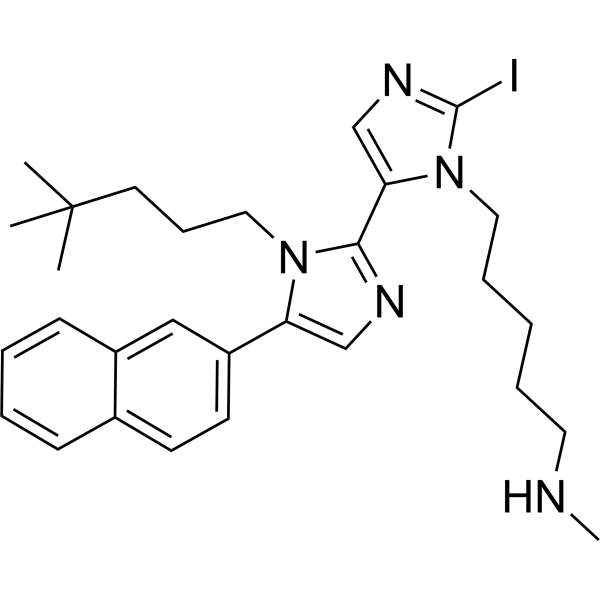
Dim16 is a dual PCSK9 inhibitor and HMG-CoAR inhibitor, with an IC50 of 0.8 nM against human PCSK9 and an IC50 of 146.8 μM against HMG-CoAR. Dim16 disrupts the PCSK9-LDLR protein-protein interaction, inhibits the catalytic activity of HMG-CoAR, enhances cellular uptake of extracellular LDL, and suppresses PCSK9-induced platelet aggregation. Dim16 can be used in research related to hypercholesterolemia .
|
-
-
- HY-112598A
-
|
|
PCSK9
|
Cardiovascular Disease
Metabolic Disease
|
|
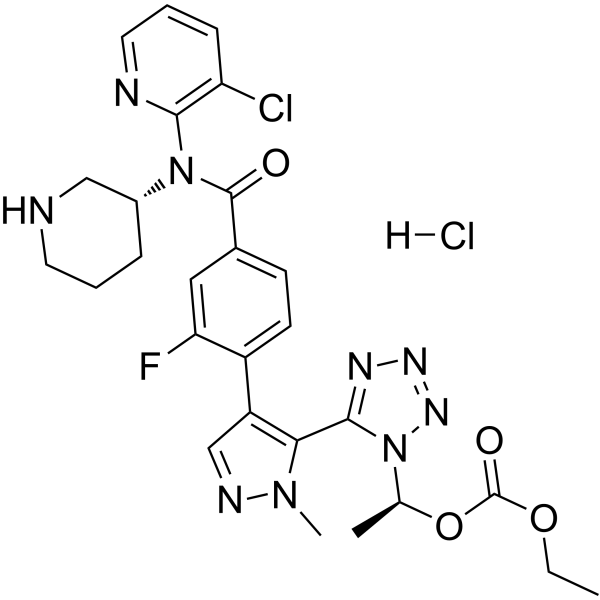
PF-06815345 hydrochloride is an orally active and potent inhibitor of proprotein convertase subtilisin/kexin type 9 (PCSK9) with an IC50 value of 13.4 μM. PF-06815345 hydrochloride significantly decreases the PCSK9 level in vivo in mouse .
|
-
-
- HY-17640
-
|
|
Fatty Acid Synthase (FASN)
Autophagy
|
Metabolic Disease
|
|
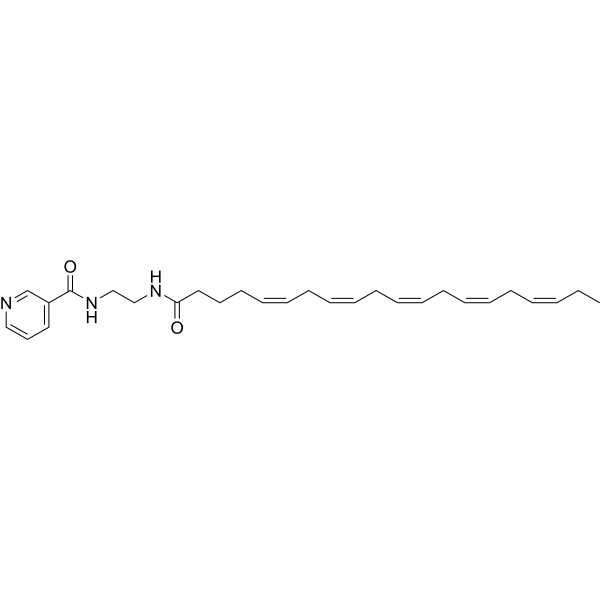
Nicodicosapent is a fatty acid niacin conjugate that is also an inhibitor of the sterol regulatory element binding protein (SREBP), a key regulator of cholesterol metabolism proteins such as PCSK9, HMG-CoA reductase, ATP citrate lyase, and NPC1L1.
|
-
-
- HY-134482
-
-
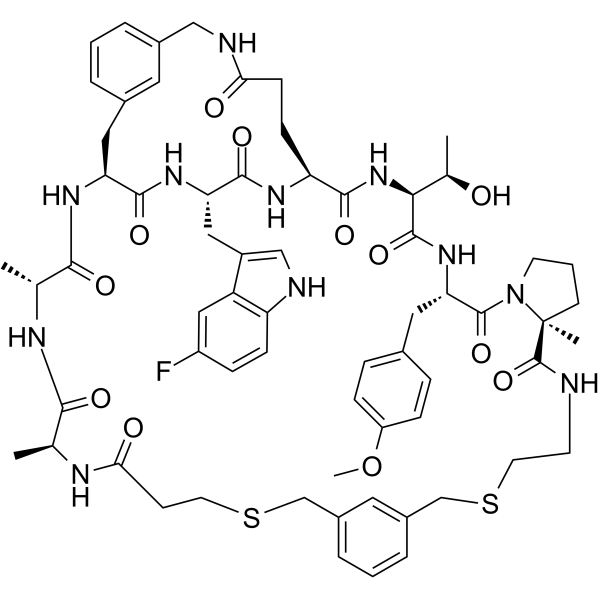
-
- HY-147252A
-
-
-
- HY-160036
-
|
|
PCSK9
|
Metabolic Disease
|
|
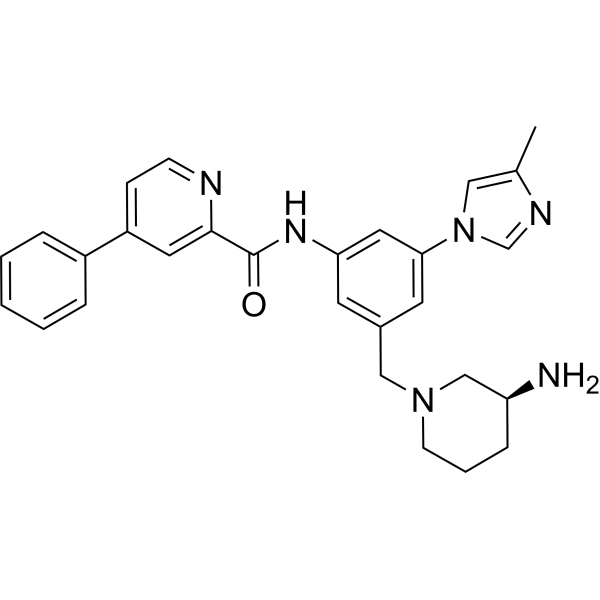
PCSK9-IN-22 (compound 29) is an orally active inhibitor of PCSK9. PCSK9-IN-22 inhibits the interaction of the protein with LDLR in vivo .
|
-
-
- HY-148626
-
|
|
PCSK9
|
Metabolic Disease
|
|
CVI-LM001 is an inhibitor PCSK 9. CVI-LM001 inhibits the interaction of PCSK9 with low-density lipoprotein receptor (LDLR), regulates the level of low-density lipoprotein cholesterol (LDL-C) in the blood, and exhibits lipid-lowering efficacy .
|
-

-
- HY-P991721
-
|
|
PCSK9
|
Cardiovascular Disease
|
|
Ticalicibart is a humanized IgG4κ monoclonal antibody inhibitor targeting PCSK9. Ticalicibart has anti-hyperlipidaemic activity. Ticalicibart can be used for cardiovascular disease like hypercholesterolaemia research .
|
-

-
- HY-179106
-
|
|
PCSK9
|
Cardiovascular Disease
|
|
PCSK9-IN-34 is a small molecule PCSK9 inhibitor. PCSK9-IN-34 can be used for research on cardiovascular conditions .
|
-

-
- HY-161434
-
|
|
PCSK9
|
Metabolic Disease
|
|
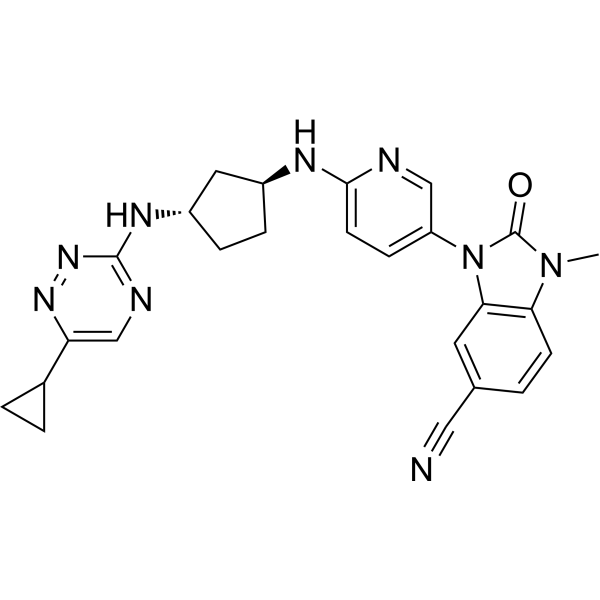
PCSK9-IN-26 (Compound 116) is an PCSK9 inhibitor (IC50 < 1 nM). PCSK9-IN-26 can be used for metabolic research .
|
-
-
- HY-161435
-
|
|
PCSK9
|
Metabolic Disease
|
|
PCSK9-IN-27 (Compound 108) is a PCSK9 inhibitor (IC50: 3.4 nM). PCSK9-IN-27 reduces LDLR degradation and increases LDL-C uptake .
|
-

-
- HY-161939
-
|
|
PCSK9
|
Cardiovascular Disease
|
|
7030B-C5 is a PCSK9 inhibitor (IC50=1.61 μM). 7030B-C5 can significantly reduce plasma cholesterol and triglyceride (TG) levels in vivo and slow the progression of atherosclerosis. 7030B-C5 can be used in the study of cardiovascular diseases .
|
-

-
- HY-112598
-
|
|
PCSK9
|
Metabolic Disease
|
|
PF-06815345 is an orally active and potent inhibitor of proprotein convertase subtilisin/kexin type 9 (PCSK9) with an IC50 value of 13.4 μM. PF-06815345 significantly decreases the PCSK9 level in vivo in mouse .
|
-
-
- HY-175189
-
|
|
PCSK9
|
Metabolic Disease
|
|
PCSK9-IN-33 (Compound 1'f) is a PCSK9 inhibitor with an IC50 of 161 nM. PCSK9-IN-33 can be used for hypercholesterolemia research .
|
-

-
- HY-158827
-
|
|
PCSK9
|
Metabolic Disease
|
|
AZD8233, a liver-targeting antisense oligonucleotide (ASO), inhibits proprotein convertase subtilisin/kexin type 9 (PCSK9) protein synthesis. AZD8233 increases the available LDL receptors by reducing PCSK9 levels, thereby clearing LDL from the blood and decreasing LDL-C levels.
|
-

-
- HY-125916
-
|
|
Endogenous Metabolite
|
Cancer
|
|
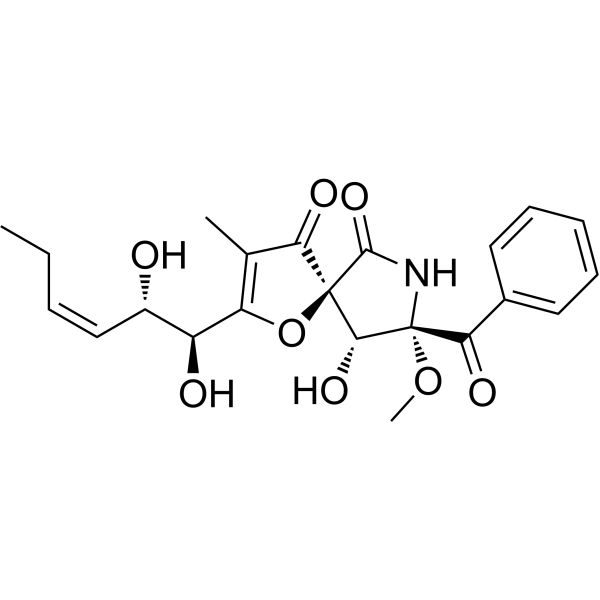
Pseurotin A is a secondary metabolite of Aspergillus and other fungi. Pseurotin A is a competitive inhibitor of chitin synthase and a neuritogenic agent. Pseurotin A inhibits IgE production (IC50 = 3.6 μM). Pseurotin A inhibits the PCSK9-LDLr interaction. Pseurotin A shows dose-dependent reduction of PCSK9, along with increased LDLR levels in hormone-dependent breast cancer cell lines. Pseurotin A exhibits antitumor activity .
|
-
-
- HY-155415
-
|
|
PCSK9
|
Cardiovascular Disease
|
|
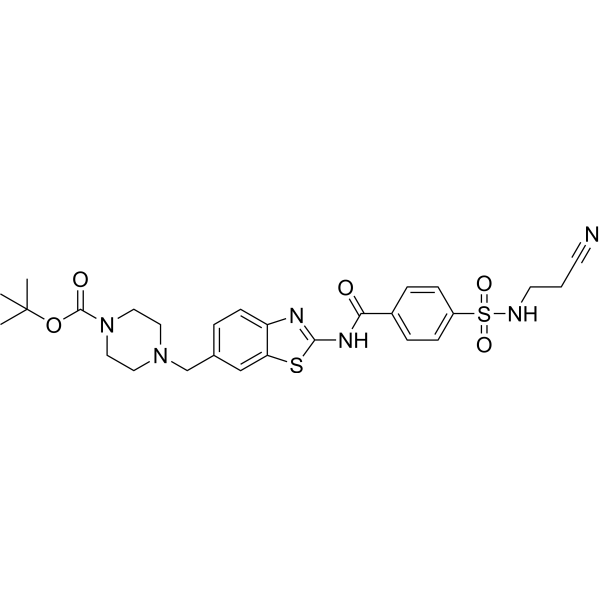
PCSK9-IN-20 (Compound 3i) is a PCSK9 inhibitor with an IC50 of 3.96 µM. PCSK9-IN-20 decreases PCSK9 and increases LDLR protein expression in vitro .
|
-
-
- HY-161941
-
|
|
LDLR
PCSK9
|
Cardiovascular Disease
|
|
MeIm (compound 7) is a high-affinity PCSK9 targeting peptide mimetic with cholesterol-lowering activity. MeIm increases cellular uptake of LDL (EC50=6.04 μM) by inhibiting the binding of PCSK9 to LDLR (IC50=11.2 μM). MeIm can be used in the study of cardiovascular diseases .
|
-

-
- HY-158825
-
|
CIVI007 sodium
|
PCSK9
|
Metabolic Disease
|
|
Cepadacursen sodium is a liver-targeting antisense oligonucleotide (ASO), inhibits proprotein convertase subtilisin/kexin type 9 (PCSK9) protein synthesis. Cepadacursen sodium can be used for hypercholesterolemia research and the prevention of atherosclerotic cardiovascular disease (ASCVD).
|
-

-
- HY-N10702
-
|
|
PCSK9
|
Cardiovascular Disease
|
|
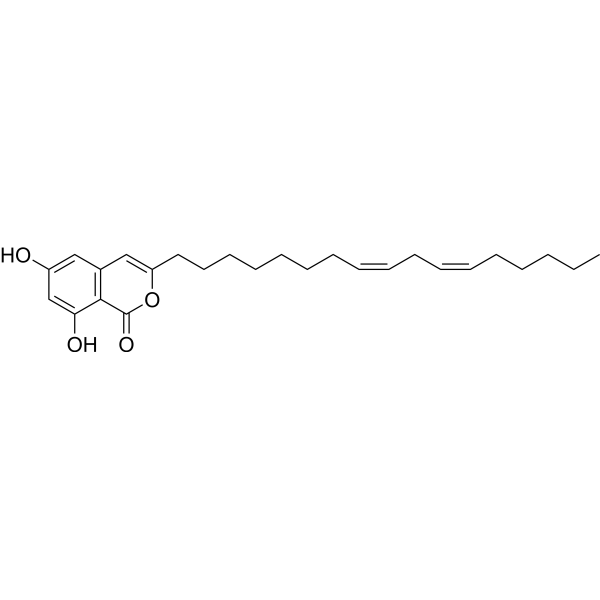
PCSK9-IN-9 is an isocoumarins of natural origin. PCSK9-IN-9 can inhibit proprotein convertase subtilisin-kexin type 9 (PCSK9), IDOL, and SREBP2 mRNA expression. PCSK9-IN-9 inhibits PCSK9 with an IC50 value of 11.9 μM .
|
-
-
- HY-153453
-
|
|
PCSK9
|
Cardiovascular Disease
|
|
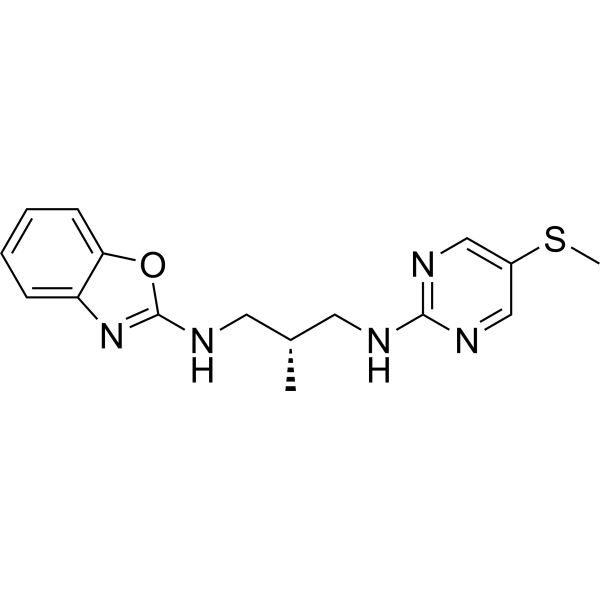
PCSK9-IN-17 is a PCSK9 inhibitor. PCSK9-IN-17 can be used for the research of cholesterol metabolism (WO2020150474A1, compound 105) .
|
-
-
- HY-161940
-
|
|
PCSK9
|
Cardiovascular Disease
|
|
PCSK9-IN-30 (Compound 3f) is a PCSK9 inhibitor. PCSK9-IN-30 interacts with a cryptic binding groove of PCSK9, inhibiting the binding of PCSK9 to the low-density lipoprotein receptor (LDLR) (IC50 = 537 nM), restoring the uptake of low-density lipoprotein (LDL) by liver cells, and ultimately reducing plasma cholesterol levels. PCSK9-IN-30 exhibits good bioavailability in mice and can be used for research in the field of cardiovascular diseases .
|
-

- HY-155006
-
|
|
PCSK9
|
Metabolic Disease
|
|
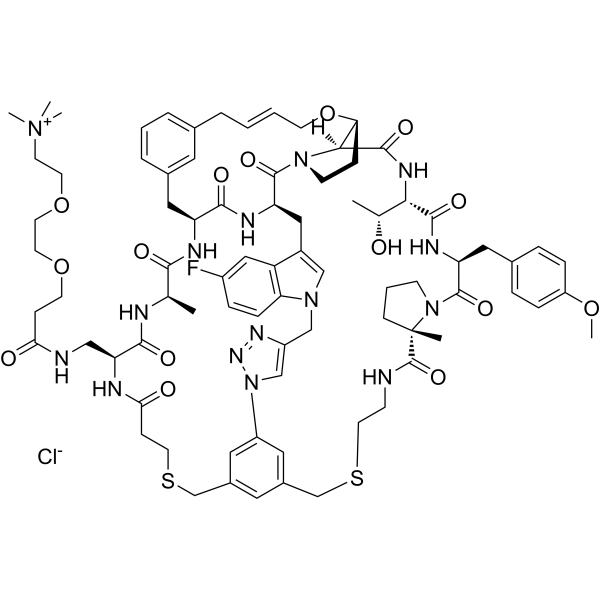
PCSK9-IN-19 (Compound 1) is a PCSK9 inhibitor. PCSK9-IN-19 can be used for research of high LDL-cholesterol levels and prevention of coronary artery disease .
|
-
- HY-153454
-
-
- HY-153391
-
-
- HY-153452
-
|
|
PCSK9
|
Cardiovascular Disease
|
|
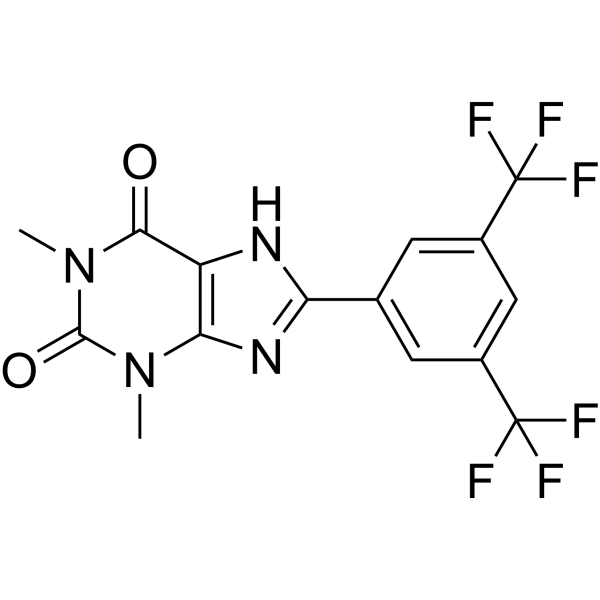
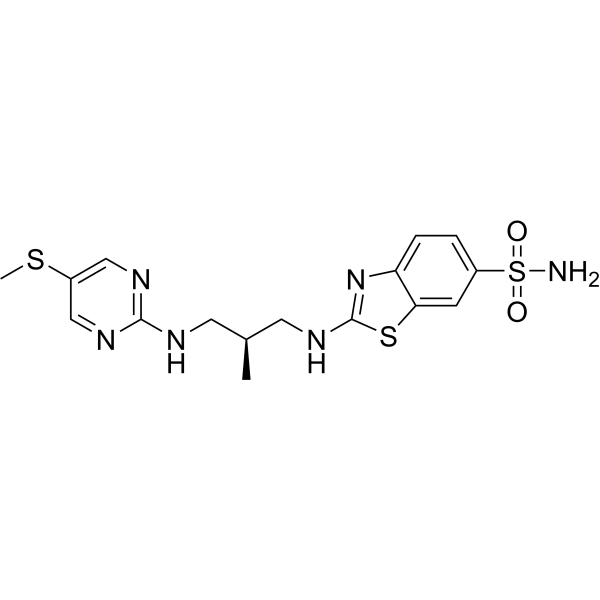
PCSK9-IN-16 is a potent PCSK9 inhibitor. PCSK9-IN-16 is extracted from patent WO2020150474, example 87, has the potential for hypercholesterolemia and other cardiovascular diseases research .
|
-
- HY-153451
-
|
|
PCSK9
|
Metabolic Disease
|
|
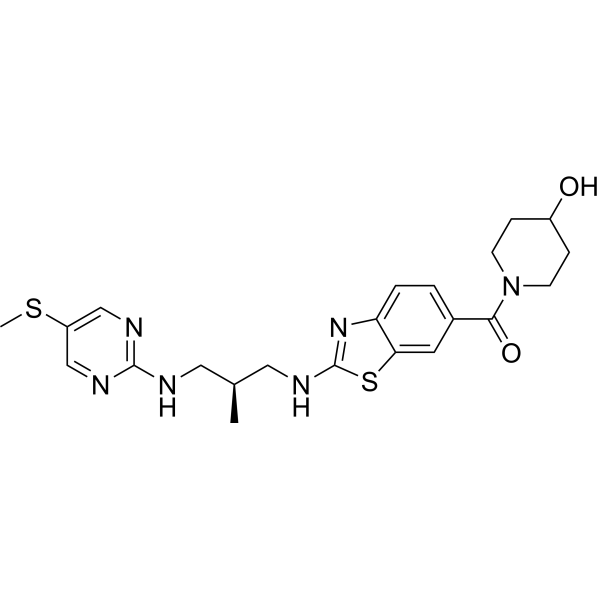
PCSK9-IN-15 (compound 5) is a potent inhibitor of proprotein convertase subtilisin/kexin 9 (PCSK9, KD <200 nM). PCSK9 is involved in cholesterol metabolism and regulates levels of low-density lipoprotein cholesterol (LDL-C) in the blood. PCSK9- in -15 can be used to study cholesterol-lowering and dyslipidemia .
|
-
- HY-168156
-
|
|
PCSK9
|
Cancer
|
|
PCSK9-IN-32 (compund 8) is a PCSK9[1:33]-GFP translation inhibitor .
|
-

- HY-161942
-
|
|
PCSK9
|
Metabolic Disease
|
|
PCSK9-IN-31 (Compound WX002) is an orally active PCSK9 inhibitor. PCSK9-IN-31 can lower low-density lipoprotein cholesterol (LDL-C) and total cholesterol (TC) in high cholesterol fed model rats .
|
-

- HY-161938
-
|
|
PCSK9
LDLR
|
Metabolic Disease
|
|
BRD8518 is a PCSK9 inhibitor (EC50=0.23 μM). BRD8518 lowers blood lipids by upregulating LDLR expression and stimulating LDL uptake. BRD8518 can be used in the study of cardiovascular diseases .
|
-

- HY-148689
-
|
|
PCSK9
|
Metabolic Disease
|
|
SPC4061 an antisense nucleotide, is a potent PCSK9 inhibitor. SPC4061 targets the lock-in nucleic acid (LNA) of PCSK9 for the study of hypercholesterolemia and related diseases .
|
-
- HY-148689A
-
|
|
PCSK9
|
Metabolic Disease
|
|
SPC4061 an antisense nucleotide, sodium is a potent PCSK9 inhibitor. SPC4061 targets the lock-in nucleic acid (LNA) of PCSK9 for the study of hypercholesterolemia and related diseases .
|
-
- HY-147252
-
-

- HY-149310A
-
|
|
PCSK9
HMG-CoA Reductase (HMGCR)
|
Metabolic Disease
|
|
Dim16 hydrochloride is a dual PCSK9 inhibitor and HMG-CoAR inhibitor, with an IC50 of 0.8 nM against human PCSK9 and an IC50 of 146.8 μM against HMG-CoAR. Dim16 hydrochloride disrupts the PCSK9-LDLR protein-protein interaction, inhibits the catalytic activity of HMG-CoAR, enhances cellular uptake of extracellular LDL, and suppresses PCSK9-induced platelet aggregation. Dim16 hydrochloride can be used in research related to hypercholesterolemia .
|
-

- HY-W1126955
-
|
MK-0616 (decanoate)
|
PCSK9
|
Metabolic Disease
Inflammation/Immunology
|
|
Enlicitide (MK-0616) decanoate is an orally active macrocyclic peptide PCSK9 inhibitor. Enlicitide decanoate binds to PCSK9, blocks its interaction with low-density lipoprotein receptor (LDLR), and enhances hepatic clearance of LDL-C. Enlicitide decanoate reduces atherogenic lipoproteins, including non-HDL cholesterol, apolipoprotein B, and lipoprotein (a). Enlicitide decanoate is applicable to research related to hypercholesterolemia, heterozygous familial hypercholesterolemia, and atherosclerotic cardiovascular disease .
|
-

- HY-163141
-
|
|
PCSK9
|
Cardiovascular Disease
|
|
PCSK9-IN-24 (Compound OY3) is a compound that targets PCSK9. PCSK9-IN-24 reduces PCSK9 levels and increases LDL uptake and may be used in atherosclerosis research .
|
-
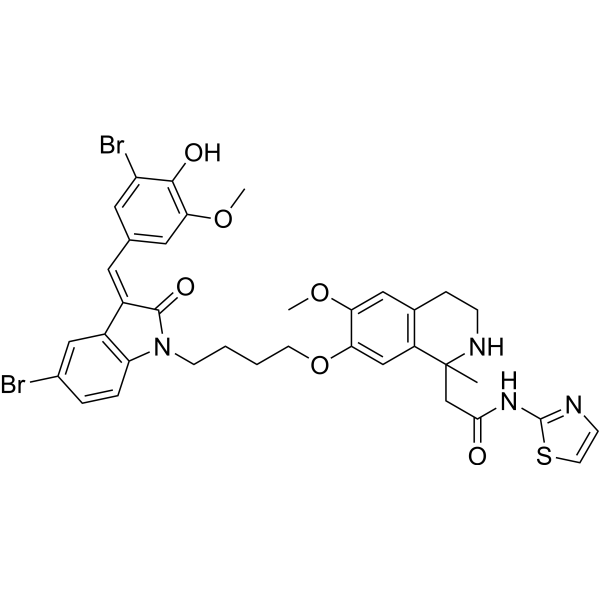
- HY-101832R
-
|
|
PCSK9
Reference Standards
|
Cardiovascular Disease
Metabolic Disease
|
|
SBC-110736 (Standard) is the analytical standard of SBC-110736 (HY-101832). This product is intended for research and analytical applications. SBC-110736 is a proprotein convertase subtilisin kexin type 9 (PCSK9) inhibitor extracted from patent WO2014150395A1 .
|
-

| Cat. No. |
Product Name |
Target |
Research Area |
-
- HY-P4153
-
|
MK-0616 chloride
|
PCSK9
|
Cardiovascular Disease
|
|
Enlicitide chloride is an orally active inhibitor for PCSK9 that blocks the interaction between LPL receptor and PSCK9, with an IC50 of 2.5 nM. Enlicitide chloride can be used in the study of cardiovascular diseases such as atherosclerosis, hypercholesterolemia, coronary heart disease, metabolic syndrome, acute coronary syndrome or related cardiovascular and cardiometabolic disorders .
|
-
- HY-P2276
-
|
|
PCSK9
|
Cancer
|
Pep2-8 is a PCSK9 inhibitor with a binding KD of 0.7 μM and an IC50 of 1.4 μM .
|
-
- HY-P11071
-
|
|
PCSK9
|
Cardiovascular Disease
|
|
PCSK9 Inhibitor, EGF-A is a PCSK9 inhibitor. PCSK9 Inhibitor, EGF-A is residues 293-334 of the EGF-A domain of the low-density lipoprotein (LDL) receptor. PCSK9 Inhibitor, EGF-A can prevent PCSK9-induced intracellular LDLR degradation. PCSK9 Inhibitor, EGF-A can be used in the study of hypercholesterolemia and premature atherosclerosis .
|
-
- HY-W1126955
-
|
MK-0616 (decanoate)
|
PCSK9
|
Metabolic Disease
Inflammation/Immunology
|
|
Enlicitide (MK-0616) decanoate is an orally active macrocyclic peptide PCSK9 inhibitor. Enlicitide decanoate binds to PCSK9, blocks its interaction with low-density lipoprotein receptor (LDLR), and enhances hepatic clearance of LDL-C. Enlicitide decanoate reduces atherogenic lipoproteins, including non-HDL cholesterol, apolipoprotein B, and lipoprotein (a). Enlicitide decanoate is applicable to research related to hypercholesterolemia, heterozygous familial hypercholesterolemia, and atherosclerotic cardiovascular disease .
|
| Cat. No. |
Product Name |
Target |
Research Area |
Image |
-
- HY-P9930
-
|
AMG 145
|
NF-κB
Ser/Thr Protease
Toll-like Receptor (TLR)
|
Cardiovascular Disease
Metabolic Disease
Inflammation/Immunology
Cancer
|
|
Evolocumab (AMG 145) is a human monoclonal antibody that inhibits PCSK9. Evolocumab is used in the study of hypercholesterolemia and atherosclerotic cardiovascular disease. Evolocumab binds to circulating PCSK9 protein and inhibits its binding to LDLR. Evolocumab has antioxidant and cytoprotective activities against H2O2-induced oxidative damage to endothelial cells. Evolocumab may also negatively regulate activation of the TLR-4/NF-κB signaling pathway to prevent inflammation .
|
-

(5)
-
- HY-P9928
-
|
REGN 727; SAR 236553
|
PCSK9
NOD-like Receptor (NLR)
Keap1-Nrf2
HMG Family
NF-κB
CX3CR1
|
Cardiovascular Disease
Cancer
|
|
Alirocumab is an anti-PCSK9 human monoclonal antibody. Alirocumab inhibits PCSK9. Alirocumab reduces NLRP3 inflammasome, regulates Nrf2/HO-1, HMGB1/NF-κB and Fractalkine/CX3CR1. Alirocumab increases the ability of the liver to bind LDL-cholesterol (LDL-C) and reduces levels of LDL-C in blood. Alirocumab improves atherosclerosis and inflammation .
|
-
(5)
-
- HY-P9928A
-
|
REGN 727(anti-PCSK9); SAR 236553(anti-PCSK9)
|
PCSK9
NOD-like Receptor (NLR)
Keap1-Nrf2
HMG Family
NF-κB
CX3CR1
|
Cardiovascular Disease
Cancer
|
|
Alirocumab (anti-PCSK9) is an anti-PCSK9 human monoclonal antibody. Alirocumab (anti-PCSK9) inhibits PCSK9. Alirocumab (anti-PCSK9) reduces NLRP3 inflammasome, regulates Nrf2/HO-1, HMGB1/NF-κB and Fractalkine/CX3CR1. Alirocumab (anti-PCSK9) increases the ability of the liver to bind LDL-cholesterol (LDL-C) and reduces levels of LDL-C in blood. Alirocumab (anti-PCSK9) improves atherosclerosis and inflammation .
|
-
(5)
-
- HY-P99626
-
|
LY 3015014
|
PCSK9
|
Metabolic Disease
|
|
Frovocimab (LY 3015014) is a humanized IgG4 monoclonal antibody (mAb) that neutralizes PCSK9. Frovocimab inhibits PCSK9 binding to LDL receptor (LDLR) while permitting the normal proteolytic cleavage of the bound intact PCSK9 .
|
-
(5)
-
- HY-P99816
-
|
|
PCSK9
|
Metabolic Disease
|
|
Ralpancizumab is a selective PCSK9 inhibitor with potential application in hemorrhagic stroke .
|
-
(5)
-
- HY-P99552
-
|
IBI-306
|
PCSK9
|
Cardiovascular Disease
|
|
Tafolecimab (IBI-306) is a human lgG2 monoclonal antibody that specifically binds PCSK-9 and reduces LDL-C levels by inhibiting PCSK-9-mediated endocytosis of the LDL receptor, which in turn enhances clearance of LDL-C and leads to a reduction in LDL-C levels. Tafolecimab may be used in studies of hypercholesterolaemia .
|
-
(5)
-
- HY-P991721
-
|
|
PCSK9
|
Cardiovascular Disease
|
|
Ticalicibart is a humanized IgG4κ monoclonal antibody inhibitor targeting PCSK9. Ticalicibart has anti-hyperlipidaemic activity. Ticalicibart can be used for cardiovascular disease like hypercholesterolaemia research .
|
-
(5)
| Cat. No. |
Product Name |
Category |
Target |
Chemical Structure |
| Cat. No. |
Product Name |
|
Classification |
-
- HY-132591
-
|
ALN-PCSsc
|
|
siRNAs
siRNA drugs
|
|
Inclisiran is a double-stranded small interfering RNA (siRNA) molecule. Inclisiran inhibits the transcription of PCSK9. Inclisiran inhibits Pyroptosis, activates PPARγ, and reduces NLRP3, cleaved caspase-1, IL-1β, and IL-18. Inclisiran has anti-inflammatory, lipid-regulating and anti-atherosclerotic activities. Inclisiran can be used in researches of hyperlipidemia and cardiovascular disease (CVD) .
|
-
- HY-132591A
-
|
ALN-PCSsc sodium
|
|
siRNAs
siRNA drugs
|
|
Inclisiran sodium is a double-stranded small interfering RNA (siRNA) molecule. Inclisiran sodium inhibits the transcription of PCSK9. Inclisiran sodium inhibits Pyroptosis, activates PPARγ, and reduces NLRP3, cleaved caspase-1, IL-1β, and IL-18. Inclisiran sodium has anti-inflammatory, lipid-regulating and anti-atherosclerotic activities. Inclisiran sodium can be used in researches of hyperlipidemia and cardiovascular disease (CVD) .
|
-
- HY-143221
-
|
|
|
siRNAs
siRNA drugs
|
|
AS-Inclisiran sodium is the antisense of Inclisiran (HY-132591). Inclisiran is a double-stranded small interfering RNA (siRNA) molecule. Inclisiran inhibits the transcription of PCSK9. Inclisiran inhibits Pyroptosis, activates PPARγ, and reduces NLRP3, cleaved caspase-1, IL-1β, and IL-18. Inclisiran has anti-inflammatory, lipid-regulating and anti-atherosclerotic activities. Inclisiran can be used in researches of hyperlipidemia and cardiovascular disease (CVD) .
|
-
- HY-158827A
-
|
|
|
Antisense Oligonucleotides
|
|
AZD8233 sodium, a liver-targeting antisense oligonucleotide (ASO), inhibits subtilisin/kexin type 9 (PCSK9) protein synthesis. AZD8233 sodium increases the available LDL receptors by reducing PCSK9 levels, thereby clearing LDL from the blood and decreasing LDL-C levels.
|
-
- HY-143220
-
|
|
|
siRNAs
siRNA drugs
|
|
SS (no Galnac)-Inclisiran sodium is the sense strand of Inclisiran (HY-132591) without GalNAc modification. Inclisiran is a double-stranded small interfering RNA (siRNA) molecule that inhibits the transcription of PCSK-9. SS (no Galnac)-Inclisiran sodium can be used in cardiovascular disease research .
|
-
- HY-147252A
-
-
- HY-158827
-
|
|
|
Antisense Oligonucleotides
|
|
AZD8233, a liver-targeting antisense oligonucleotide (ASO), inhibits proprotein convertase subtilisin/kexin type 9 (PCSK9) protein synthesis. AZD8233 increases the available LDL receptors by reducing PCSK9 levels, thereby clearing LDL from the blood and decreasing LDL-C levels.
|
-
- HY-158825
-
|
CIVI007 sodium
|
|
Antisense Oligonucleotides
|
|
Cepadacursen sodium is a liver-targeting antisense oligonucleotide (ASO), inhibits proprotein convertase subtilisin/kexin type 9 (PCSK9) protein synthesis. Cepadacursen sodium can be used for hypercholesterolemia research and the prevention of atherosclerotic cardiovascular disease (ASCVD).
|
-
- HY-148689
-
|
|
|
Antisense Oligonucleotides
|
|
SPC4061 an antisense nucleotide, is a potent PCSK9 inhibitor. SPC4061 targets the lock-in nucleic acid (LNA) of PCSK9 for the study of hypercholesterolemia and related diseases .
|
-
- HY-148689A
-
|
|
|
Antisense Oligonucleotides
|
|
SPC4061 an antisense nucleotide, sodium is a potent PCSK9 inhibitor. SPC4061 targets the lock-in nucleic acid (LNA) of PCSK9 for the study of hypercholesterolemia and related diseases .
|
-
- HY-147252
-
Your information is safe with us. * Required Fields.
Inquiry Information
- Product Name:
- Cat. No.:
- Quantity:
- MCE Japan Authorized Agent:








