



Pinostrobin
Based on 3 publication(s) in Google Scholar
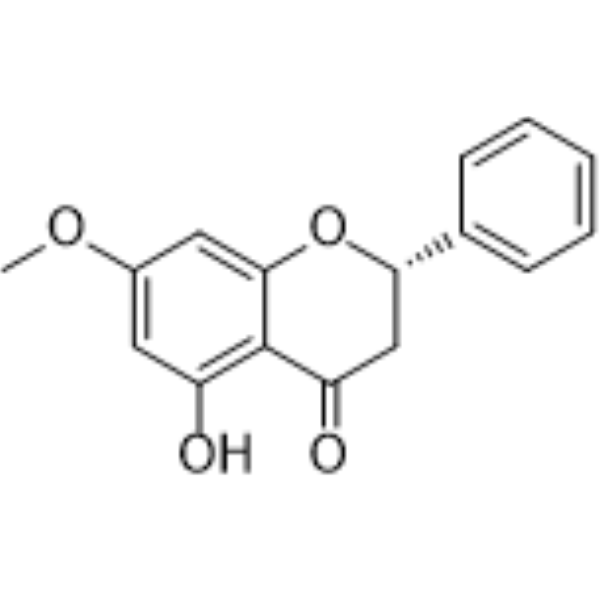
Pinostrobin is a flavonoid with anti-cancer, antioxidant, antiviral and neuroprotective activities. Pinostrobin has oral activity. Pinostrobin is a potent PCSK9 inhibitor that inhibits the catalytic activity of PCSK9. Pinostrobin can be used in the research of viral infections, cancer, leukemia, cardiovascular and cerebrovascular diseases, cirrhosis, inflammation and neurological diseases.
For research use only. We do not sell to patients.
- Purity : 99.98%
- CAS No.: 480-37-5
- Formula: C16H14O4
- Molecular Weight:270.28
-
Storage:
4°C, protect from light
* In solvent : -80°C, 6 months; -20°C, 1 month (protect from light)

To place orders, for customer services and technical support, please contact: MedChemExpress USA
Tel: 609-228-6898 E-mail: [email protected] [email protected]


-
 Biological Activity
-
Chemical Information
-
Solvent & Solubility
- Protocols
- Purity & Documentation
- References
-
 Help & FAQs


-
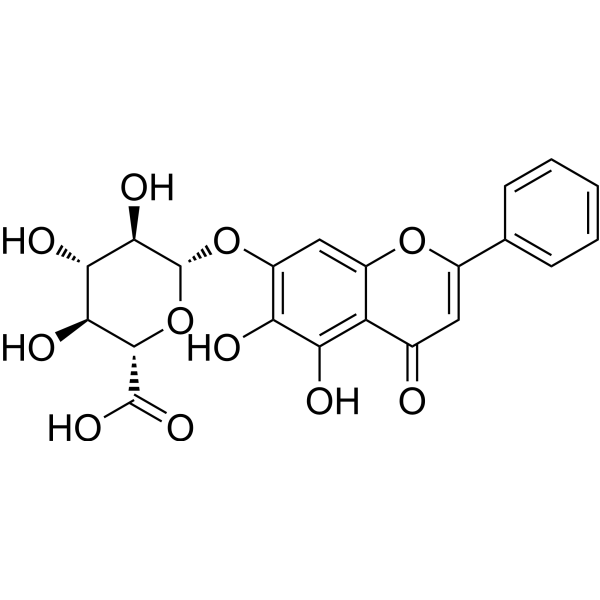
HY-N0197
BaicalinAutophagy Inducer -
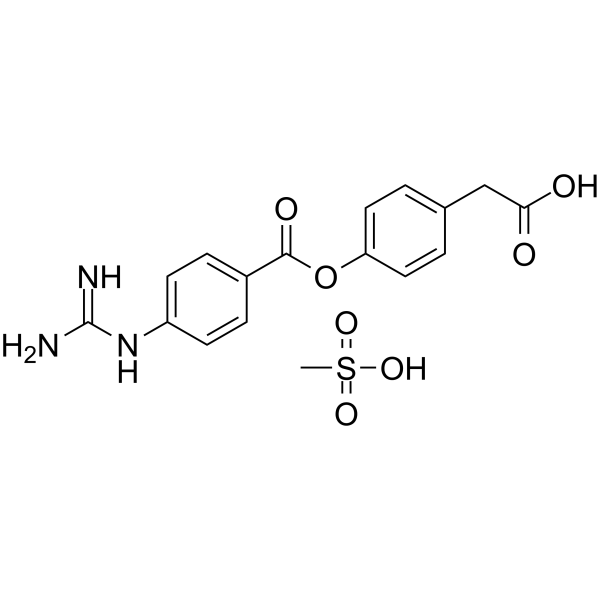
HY-19727A
FOY 251Proteinase Inhibitor -

HY-132591
InclisiranPCSK9 Inhibitor -

HY-P9930
EvolocumabPCSK9 Inhibitor -

HY-P99187
BococizumabAnti-human PCSK9 Antibody -
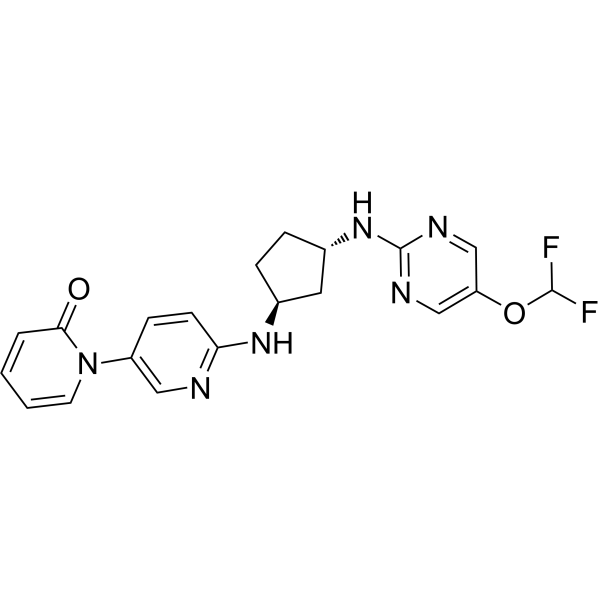
HY-148673
LaroprovstatPCSK9 Inhibitor -

HY-P9928
AlirocumabPCSK9 Inhibitor -
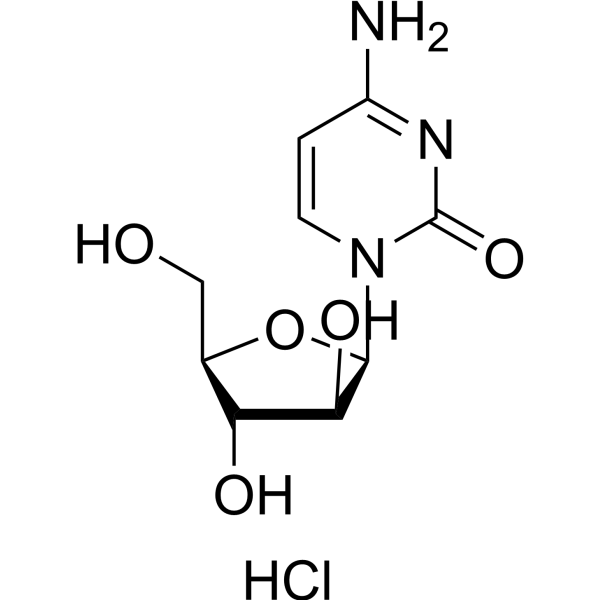
HY-13605A
Cytarabine hydrochlorideDNA Synthesis Inhibitor -

HY-P4153
Enlicitide chloridePCSK9 antagonist -
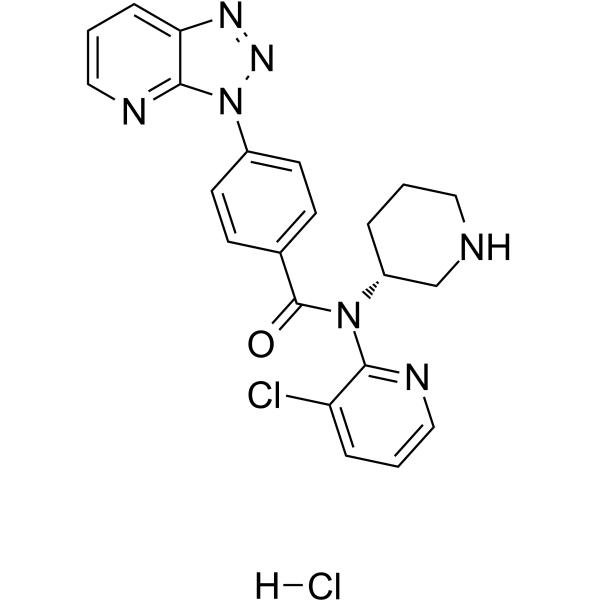
HY-120088A
PF-06446846 hydrochloridePCSK9 Inhibitor -
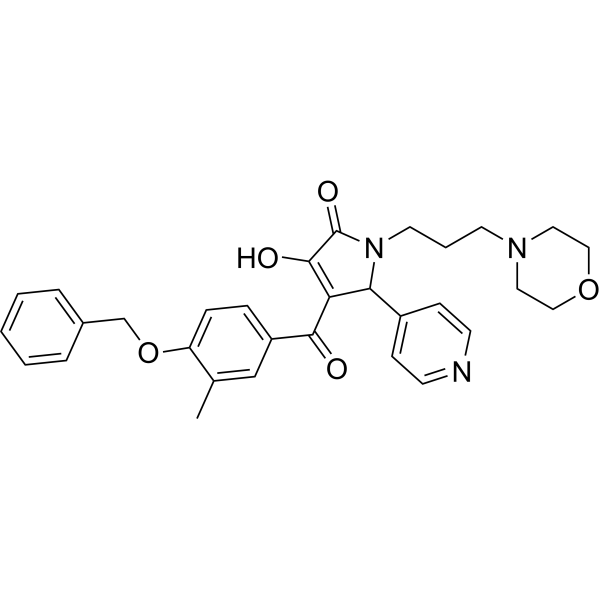
HY-12402
SBC-115076PCSK9 Inhibitor -
HY-P9928A
Alirocumab (anti-PCSK9)PCSK9 Inhibitor
Publications Citing Use of MedChemExpress (MCE) Pinostrobin
More

Biological Activity
Description
IC50 & Target
|
HSV-1 |
TNF-α |
IL-1β |
PCSK9 |
Cellular Effect
|
Cell Line

|
Type | Value | Description | References |
|---|---|---|---|---|
| A549 | EC50 |
>370 μM
Compound: 8
|
Antiproliferative activity against human A549 cells after 72 hrs by MTT assay
Antiproliferative activity against human A549 cells after 72 hrs by MTT assay
|
[PMID: 12027739] |
| B16-BL6 | EC50 |
111 μM
Compound: 8
|
Antiproliferative activity against mouse B16-BL6 cells after 72 hrs by MTT assay
Antiproliferative activity against mouse B16-BL6 cells after 72 hrs by MTT assay
|
[PMID: 12027739] |
| COLO 320DM | IC50 |
>100 μM
Compound: 1
|
Cytotoxicity against human COLO320DM cells after 72 hrs by WST-8 assay
Cytotoxicity against human COLO320DM cells after 72 hrs by WST-8 assay
|
[PMID: 20219370] |
| HeLa | EC50 |
202 μM
Compound: 8
|
Antiproliferative activity against human HeLa cells after 72 hrs by MTT assay
Antiproliferative activity against human HeLa cells after 72 hrs by MTT assay
|
[PMID: 12027739] |
| HT-1080 | EC50 |
156 μM
Compound: 8
|
Antiproliferative activity against human HT1080 cells after 72 hrs by MTT assay
Antiproliferative activity against human HT1080 cells after 72 hrs by MTT assay
|
[PMID: 12027739] |
| MCF7 | IC50 |
>50 μM
Compound: 11
|
Cytotoxicity against human MCF7 cells after 72 hrs by MTS reduction assay
Cytotoxicity against human MCF7 cells after 72 hrs by MTS reduction assay
|
[PMID: 20704331] |
| MCF7 | IC50 |
31 μM
Compound: 2
|
Inhibition of BCRP expressed in MCF-7 MX cells using Hoechst 33342 staining
Inhibition of BCRP expressed in MCF-7 MX cells using Hoechst 33342 staining
|
[PMID: 21354800] |
| MCF7 | IC50 |
84.9 μM
Compound: 1
|
Cytotoxicity against human MCF7 cells after 72 hrs by WST-8 assay
Cytotoxicity against human MCF7 cells after 72 hrs by WST-8 assay
|
[PMID: 20219370] |
| MDCK | IC50 |
8.9 μM
Compound: 2
|
Inhibition of BCRP expressed in MDCK cells using Hoechst 33342 staining
Inhibition of BCRP expressed in MDCK cells using Hoechst 33342 staining
|
[PMID: 21354800] |
| NCI-H460 | IC50 |
>50 μM
Compound: 11
|
Cytotoxicity against human NCI-H460 cells after 72 hrs by MTS reduction assay
Cytotoxicity against human NCI-H460 cells after 72 hrs by MTS reduction assay
|
[PMID: 20704331] |
| PC-3 | IC50 |
86.7 μM
Compound: 1
|
Cytotoxicity against human PC3 cells after 72 hrs by WST-8 assay
Cytotoxicity against human PC3 cells after 72 hrs by WST-8 assay
|
[PMID: 20219370] |
| RAW264.7 | IC50 |
53.5 μM
Compound: 10
|
Antiinflammatory activity in mouse RAW264.7 cells assessed as inhibition of LPS-induced nitric oxide production after 24 hrs by Griess assay
Antiinflammatory activity in mouse RAW264.7 cells assessed as inhibition of LPS-induced nitric oxide production after 24 hrs by Griess assay
|
[PMID: 23743282] |
| SF-268 | IC50 |
>50 μM
Compound: 11
|
Cytotoxicity against human SF268 cells after 72 hrs by MTS reduction assay
Cytotoxicity against human SF268 cells after 72 hrs by MTS reduction assay
|
[PMID: 20704331] |
| SK-BR-3 | IC50 |
94.3 μM
Compound: 1
|
Cytotoxicity against human SK-BR-3 cells after 72 hrs by WST-8 assay
Cytotoxicity against human SK-BR-3 cells after 72 hrs by WST-8 assay
|
[PMID: 20219370] |
In Vitro
Pinostrobin (0-100 μg/mL, 72 h) inhibits HSV-1 virus, with the EC50 value of 22.71 μg/mL[2].
Pinostrobin (25-200 μM, 3 days) promotes melanin production in B16F10 cells by stimulating the expression of related melanin production regulatory factors in cAMP/PKA and p38 MAPK signaling pathways, and is non-toxic to cells[5].
Pinostrobin (130 and 150 μM, 48 h) induces acute leukemia cell NB4 and MOLT-4 apoptosis via the regulation of miR-410-5p and SFRP5[6].
Pinostrobin (0-200 μM, 24-96 h) effectively induces apoptosis through ROS-mediated mitochondrial damage of cervical cancer cells (HeLa, Ca Ski, SiHa), and is not toxic to non-cancer cells HEK293 [7].
MedChemExpress (MCE) has not independently confirmed the accuracy of these methods. They are for reference only.
-
Cell Line:Vero cells
-
Concentration:0-100 μg/mL
-
Incubation Time:72 h
-
Result:The maximum noncytotoxic concentration (TD0) of pinostrobin was calculated as 95.37 ± 7.14μg/mL.
-
Cell Line:B16F10 cell
-
Concentration:25-200 μM
-
Incubation Time:3 days
-
Result:Promoted phosphorylation of related targets under the cascade reaction of cAMP/PKA and p38 MAPK signaling pathways, such as MITF, tyrosinase, trp1, creb, GSK-3β, β-catenin, ERK, p38, etc.
In Vivo
Pinostrobin (Single oral 10 and 20 mg/kg) has an anti-inflammatory effect by inhibiting TNF-α and IL-1β levels in rat models of LPS-induced inflammation [3].
Pinostrobin (daily oral 30 and 60 mg/kg for 2 months) has liver protective effect on liver cirrhosis induced by Thioacetamide (TAA) (HY-Y0698) in rats[4].
Relevant pharmacokinetic parameters of Pinostrobin in rats.[8]
| Route | Dose (mg/kg) | AUC0-t (ng·min/mL) | MRT (h) | Cmax (ng/mL) | Tmax (h) | t1/2 (min) |
| i.g. | 0.5 | 3817.80 | 6.26 | 615.35 | 4 | 4.34 |