1. Search Result
Search Result
Results for "

Pine

" in MedChemExpress (MCE) Product Catalog:

40

Inhibitors & Agonists

2

Biochemical Assay Reagents

1

Peptides

26

Natural
Products

4

Isotope-Labeled Compounds

1

Click Chemistry

Cat. No. Product Name Target Research Areas Chemical Structure
  • HY-N6661

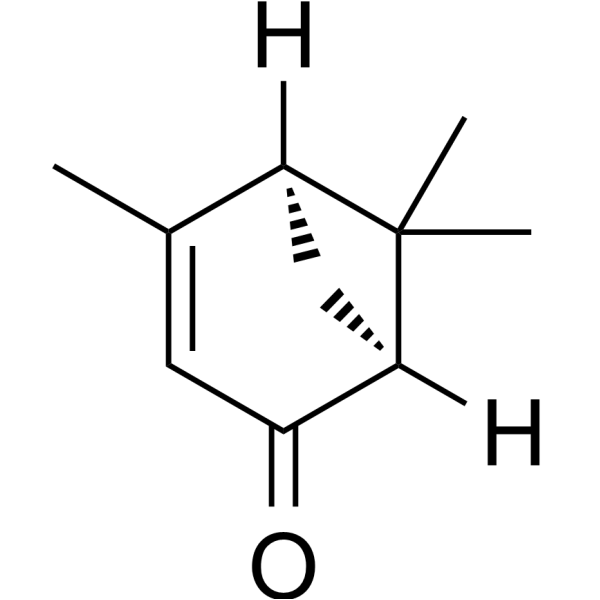
    (-)-Verbenone

    Environmental Pollutants Sex Pheromone Infection Others
    Verbenone is a naturally derived monoterpene ketone and an anti-aggregation pheromone/attractant inhibitor. Verbenone interferes with the responses of Dendroctonus brevicomis and Dendroctonus ponderosae to baited traps. Verbenone can be used in studies related to bark beetle infestations of trees .
    Verbenone
  • HY-NP0147
    Wheat Germ Agglutinin (Fluorescein)
    1 Publications Verification

    WGA (Fluorescein)

    Fluorescent Dye Infection Neurological Disease
    Wheat Germ Agglutinin (WGA) Fluorescein is a classic fluorescent label that specifically binds to sugar residues such as N-acetylglucosamine, N-acetylneuraminic acid and sialic acid. Wheat Germ Agglutinin Fluorescein performs regionally differential fluorescent staining of the ocular surface epithelial glycocalyx to assess its integrity, and causes no damage to the eye at safe concentrations. Wheat Germ Agglutinin Fluorescein is also used for staining structures including red blood cells, cultured cells, bacteria and pine wood nematodes, and facilitates the isolation of wheat-associated plant-growth-promoting rhizobacterial strains. Wheat Germ Agglutinin Fluorescein can be applied to the detection of ocular glycocalyx integrity and the research of related diseases such as pine wilt disease .
    Wheat Germ Agglutinin (Fluorescein)
  • HY-N0508
    Rosin
    2 Publications Verification

    Others Inflammation/Immunology
    Rosin is a natural resin extracted from coniferous trees such as pine trees. Rosin is a frequent contact allergen which induces allergic contact dermatitis. Rosin can be used as emulsifiers, adhesives, and other chemical applications .
    Rosin
  • HY-110028

    Cannabinoid Receptor Fatty Acid Synthase (FASN) Androgen Receptor Endocrinology Cancer
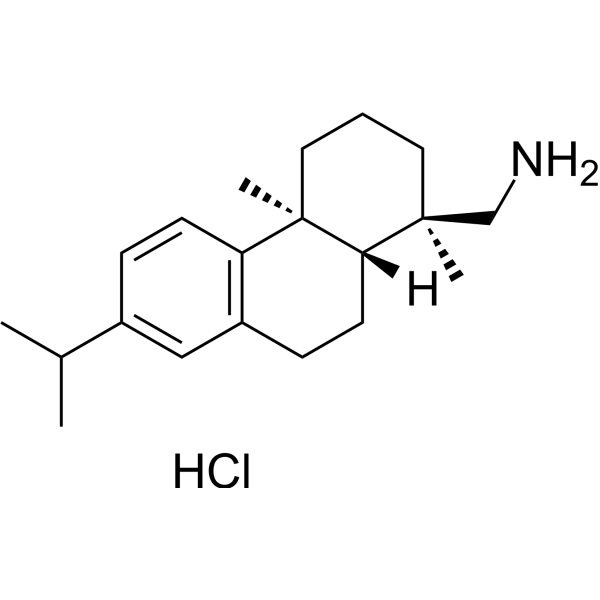
    Leelamine hydrochloride is a tricyclic diterpene molecule that is extracted from the bark of pine trees . Leelamine hydrochloride is a cannabinoid receptor type 1 (CB1) agonist and a inhibitor of SREBP1-regulated fatty acid/lipid synthesis in prostate cancer cells that is not affected by androgen receptor status. Leelamine hydrochloride suppresses transcriptional activity of androgen receptor, which is known to regulate fatty acid synthesis [2,3].
    Leelamine hydrochloride
  • HY-N14039

    Toll-like Receptor (TLR) Interleukin Related Neurological Disease Inflammation/Immunology
    Pinus pinaster bark extract is extracted from the bark of pine bark with antioxidant, anti-inflammatory and neuroprotective effects. Pinus pinaster bark extract increases toll-like receptor (TLR) activity, inducing production of IL-10 .
    Pinus pinaster bark extract
  • HY-N6663

    Environmental Pollutants COX Inflammation/Immunology
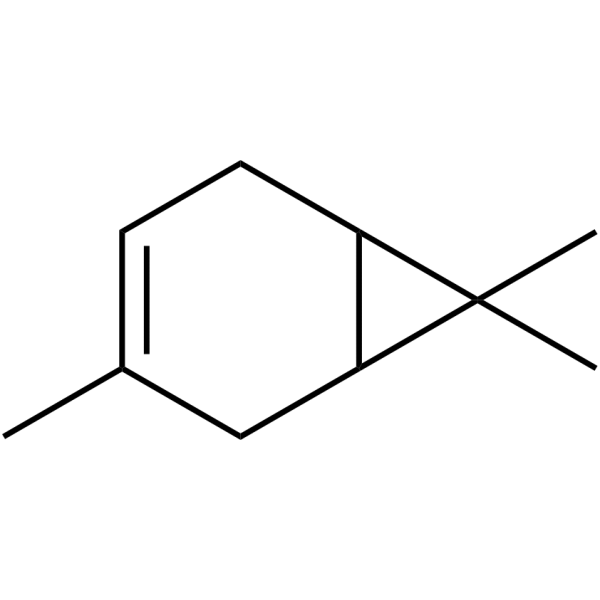
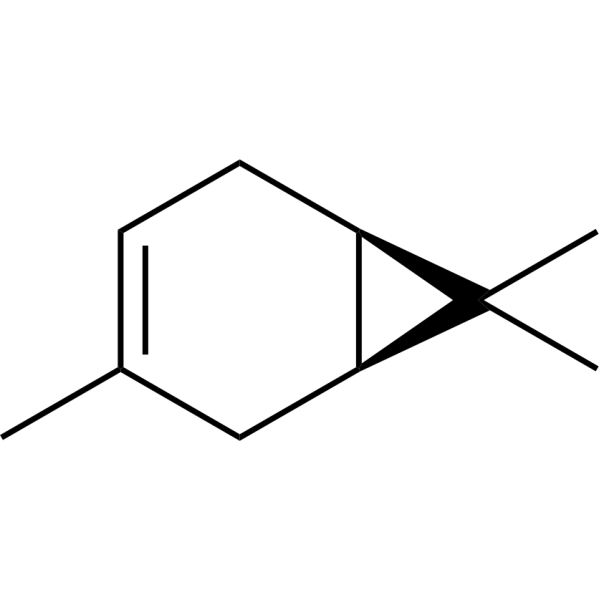
    3-Carene is a bicyclic monoterpene in essential oils extracted from pine trees. 3-Carene inhibits nociceptive stimulus-induced inflammatory infiltrates and COX-2 overexpression, and with antinociceptive effect. 3-Carene stimulates the activity and expression of alkaline phosphatase that is an early phase marker of osteoblastic differentiation .
    3-Carene
  • HY-W278867

    cis-Pinosylvin dimethyl ether

    Cholinesterase (ChE) Inflammation/Immunology
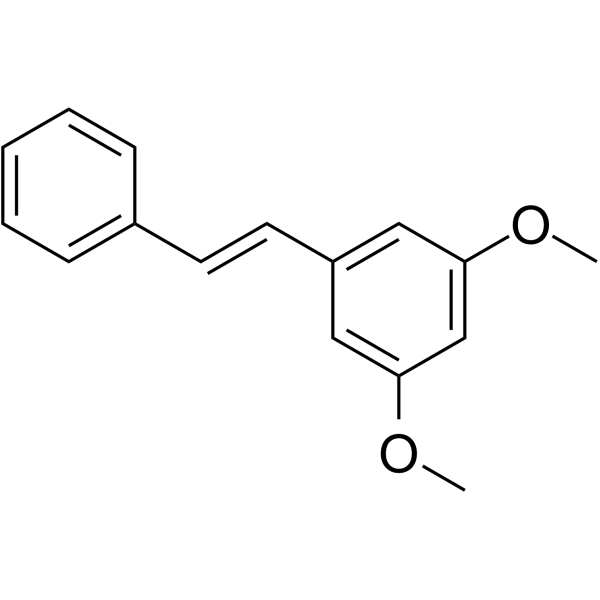
    trans-3,5-Dimethoxystilbene (cis-Pinosylvin dimethyl ether) is a compound that has been isolated from the benzene extract of the bark of jack pine (Pinus bunksiuna) .
    trans-3,5-Dimethoxystilbene
  • HY-W013035

    MBO321

    Environmental Pollutants Endogenous Metabolite Metabolic Disease
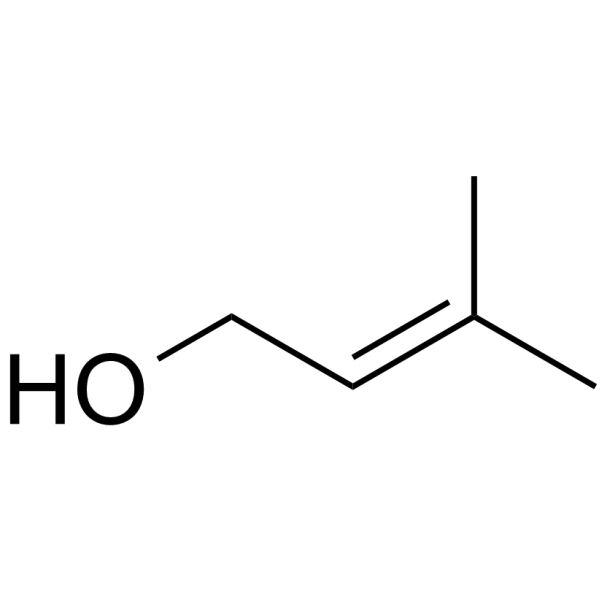
    3-Methyl-2-buten-1-ol (MBO321) is an orally active endogenous metabolite found in pine trees and is used as a fragrance ingredient in cosmetics and detergents. 3-Methyl-2-buten-1-ol passes cell barrier. 3-Methyl-2-buten-1-ol reduces body weight in rats .
    3-Methyl-2-buten-1-ol
  • HY-133620

    Insecticide Infection
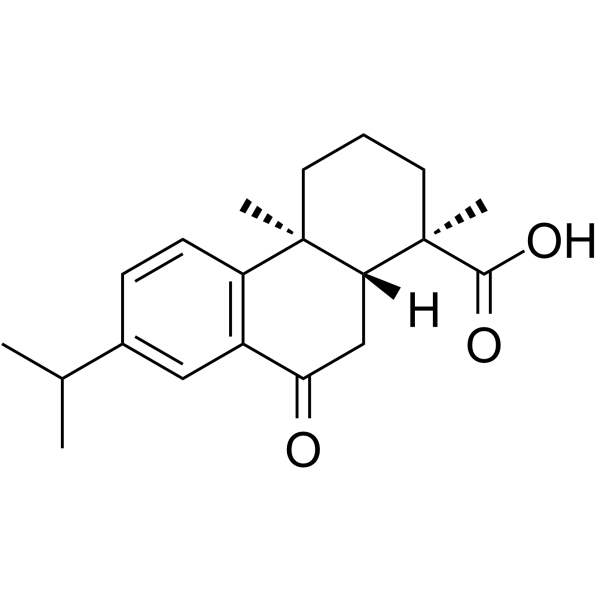
    7-Oxodehydroabietic acid is a diterpene resin acid isolated from the roots of the pine Pinus densiflora. 7-Oxodehydroabietic acid play a defensive role against herbivorous insects via insect endocrine-disrupting activity .
    7-Oxodehydroabietic acid
  • HY-N0508R

    Reference Standards Others Inflammation/Immunology
    Rosin (Standard) is the analytical standard of Rosin. This product is intended for research and analytical applications. Rosin is a natural resin extracted from coniferous trees such as pine trees. Rosin is a frequent contact allergen which induces allergic contact dermatitis. Rosin can be used as emulsifiers, adhesives, and other chemical applications .
    Rosin (Standard)
  • HY-165061

    Sciadonic acid

    Apolipoprotein Inflammation/Immunology
    5(Z),11(Z),14(Z)-Eicosatrienoic acid (Sciadonic acid), a polyunsaturated fatty acid sourced from maritime pine seed oil, gymnospermae leaves and seeds, and freshwater gastropods, has been shown to reduce high-density lipoprotein and ApoA1 levels in transgenic mice expressing human ApoA1 when included in their diet. In vitro studies indicate that it diminishes cholesterol efflux, and when applied topically in its methyl ester form, it alleviates inflammatory processes, likely by displacing arachidonic acid from phospholipid pools and lowering concentrations of downstream inflammatory mediators such as prostaglandin E2 and leukotrienes.
    5(Z),11(Z),14(Z)-Eicosatrienoic acid
  • HY-124187

    Ethyl pinolenate

    Biochemical Assay Reagents Others
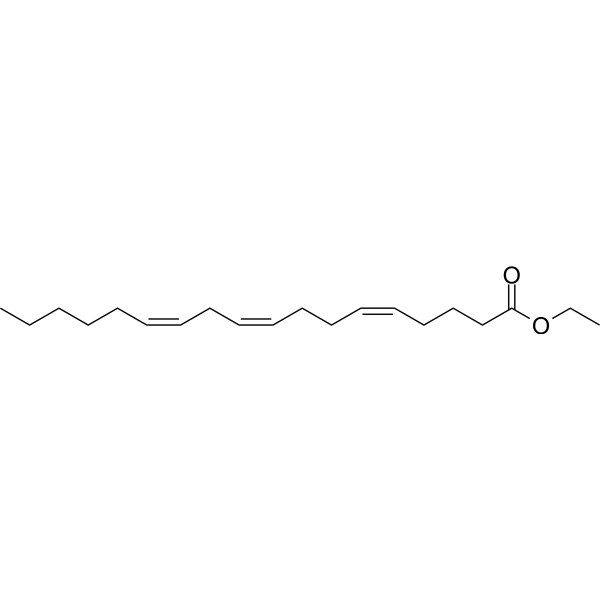
    Pinolenic acid is a polyunsaturated fatty acid found in the seed oils of red pine (Pinus orientalis) and maritime pine (Pinus pinaster). Both oils were found to have lipid-lowering properties. A diet containing marine pine nut oil (MPSO) reduces HDL and ApoA1 levels in transgenic mice expressing human ApoA1. MPSO was found to reduce cholesterol efflux in vitro. Korean pine nut oil supplements may help obesity by reducing appetite. People who take this oil experience an increase in the satiety hormones CCK and GLP-1 and a decrease in appetite. The activity of the oil is attributed to pinolenic acid. Pinolenic acid is not metabolized to arachidonic acid and can reduce the level of arachidonic acid in the phosphatidylinositol fraction of HepG2 cells from 15.9% to 7.0%. Pinolenic acid ethyl ester is a neutral, more lipophilic form of the free acid.
    Pinolenic acid ethyl ester
  • HY-P3472

    Cyclo(L-Pro-L-Ile)

    Amino Acid Derivatives Inflammation/Immunology
    Cyclo(IP) (Cyclo-(L-Pro-L-Ile)), a Diketopiperazine can be derived From Bacillus thuringiensis JCK-1233, results in suppression of PWD severity and increased the expression of defense-related genes similarly to Bacillus thuringiensis JCK-1233 treatment .
    Cyclo(IP)
  • HY-126027

    Drug Isomer COX Inflammation/Immunology
    (+)-3-Carene, a bicyclic monoterpene, is one of the major components of the pine tree essential oils. (+)-3-Carene is a (+)-enantiomer of 3-Carene (HY-N6663) .
    (+)-3-Carene
  • HY-B1290S2

    Phenylethyl alcohol-d5; Phenethyl alcohol-d5; Benzyl carbinol-d5

    Bacterial Virus Protease Antibiotic Infection
    2-Phenylethanol-d5 is the deuterium labeled 2-Phenylethanol . 2-Phenylethanol (Phenethyl alcohol), extracted from rose, carnation, hyacinth, Aleppo pine, orange blossom and other organisms, is a colourless liquid. It has a pleasant floral odor and also an autoantibiotic produced by the fungus Candida albicans . It is used as an additive in cigarettes and also used as a preservative in soaps due to its stability in basic conditions.
    2-Phenylethanol-d5
  • HY-W674037

    Sex Pheromone Endocrinology
    cis-Verbenol is a sex pheromone capable of inhibiting aggregation and inducing dispersion of mountain pine beetles (Dendroctonus ponderosae Hopkins) and can be isolated from pine engravers .
    cis-Verbenol
  • HY-N13233

    Others Others
    Pine Bark Extract is the extract of Pine Bark, with content of OPC 95%.
    Pine Bark Extract
  • HY-B1290S1

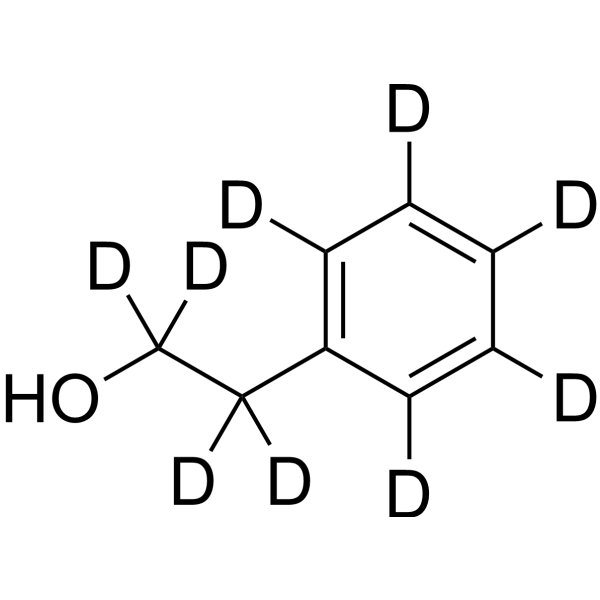
    Phenylethyl alcohol-d9; Phenethyl alcohol-d9; Benzyl carbinol-d9

    Bacterial Virus Protease Antibiotic Infection
    2-Phenylethanol-d9 is the deuterium labeled 2-Phenylethanol . 2-Phenylethanol (Phenethyl alcohol), extracted from rose, carnation, hyacinth, Aleppo pine, orange blossom and other organisms, is a colourless liquid. It has a pleasant floral odor and also an autoantibiotic produced by the fungus Candida albicans . It is used as an additive in cigarettes and also used as a preservative in soaps due to its stability in basic conditions.
    2-Phenylethanol-d9
  • HY-B1290S

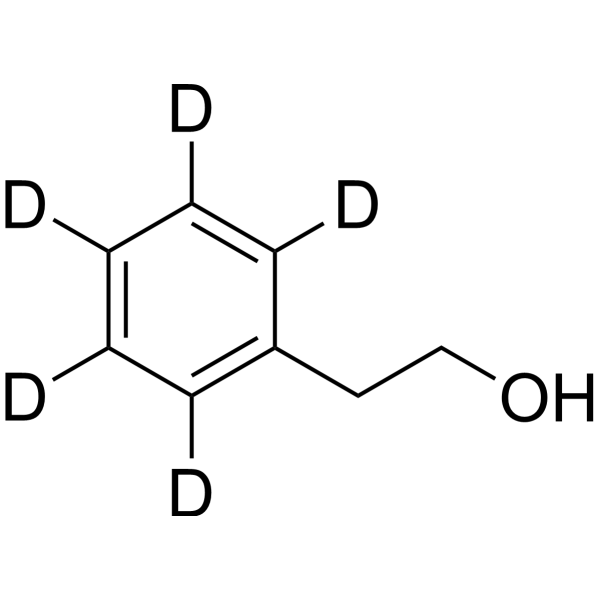
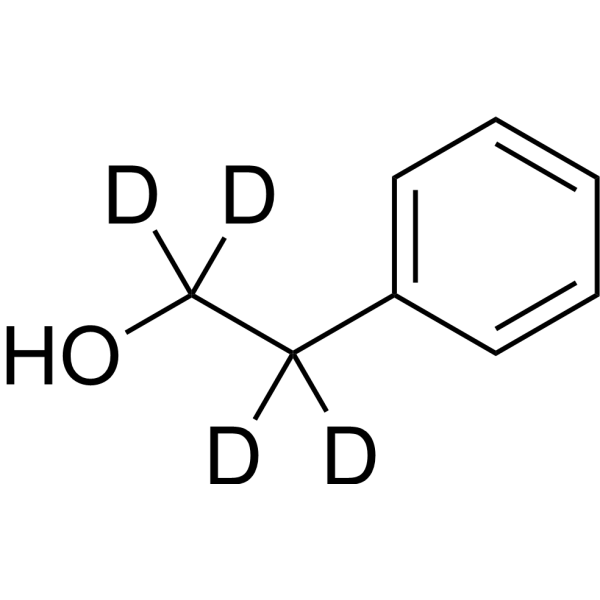
    Phenylethyl alcohol-d4; Phenethyl alcohol-d4; Benzyl carbinol-d4

    Bacterial Virus Protease Antibiotic Infection
    2-Phenylethanol-d4 is the deuterium labeled 2-Phenylethanol . 2-Phenylethanol (Phenethyl alcohol), extracted from rose, carnation, hyacinth, Aleppo pine, orange blossom and other organisms, is a colourless liquid. It has a pleasant floral odor and also an autoantibiotic produced by the fungus Candida albicans . It is used as an additive in cigarettes and also used as a preservative in soaps due to its stability in basic conditions.
    2-Phenylethanol-d4
  • HY-N8504

    NSC 260179; Spectinabilin

    Bacterial Infection
    Neoaureothin is a bacterial metabolite that has been found in Streptomyces. It is an androgen receptor (AR) antagonist that inhibits binding of dihydrotestosterone (DHT) to ARs (IC50=13 μM) and inhibits DHT-induced expression of prostate-specific antigen in LNCaP cells (IC50=1.75 nM). Neoaureothin is cytotoxic to A549, HCT116, and HepG2 cells (IC50s=34.3, 47, and 37.2 μg/mL, respectively). It also has nematocidal activity against the pine wood nematode B. xylophilus (LC50=0.84 μg/mL) and increases survival of P. densiflora trees inoculated with B. xylophilus.
    Neoaureothin
  • HY-N14239

    Parasite Infection
    Jietacin A is a nematicide. Jietacin A exhibits nematicidal activity against pine wood nematodes. Jietacin A can be used in studies related to pine wood nematode infection and pine wilt disease .
    Jietacin A
  • HY-W278867R

    cis-Pinosylvin dimethyl ether (Standard)

    Reference Standards Others Inflammation/Immunology
    trans-3,5-Dimethoxystilbene (cis-Pinosylvin dimethyl ether) is a compound that has been isolated from the benzene extract of the bark of jack pine (Pinus bunksiuna) .
    trans-3,5-Dimethoxystilbene (Standard)
  • HY-N3315

    Others Inflammation/Immunology
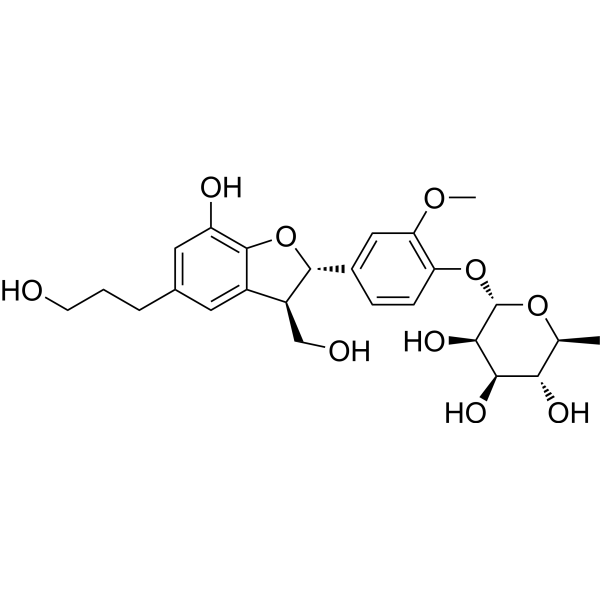
    Massonianoside B is an antioxidant, which can be isolated from Cedrus deodara pine needle. Massonianoside B exhibits radicals scavenging capacities, and restores CCL4-impaired activity of antioxidant enzymes .
    Massonianoside B
  • HY-W013035R

    MBO321 (Standard)

    Reference Standards Endogenous Metabolite Metabolic Disease
    3-Methyl-2-buten-1-ol (Standard) is the analytical standard of 3-Methyl-2-buten-1-ol. This product is intended for research and analytical applications. 3-Methyl-2-buten-1-ol (MBO321) is an orally active endogenous metabolite found in pine trees and is used as a fragrance ingredient in cosmetics and detergents. 3-Methyl-2-buten-1-ol passes cell barrier. 3-Methyl-2-buten-1-ol reduces body weight in rats[1][2][3].
    3-Methyl-2-buten-1-ol (Standard)
  • HY-N1589

    Others Others
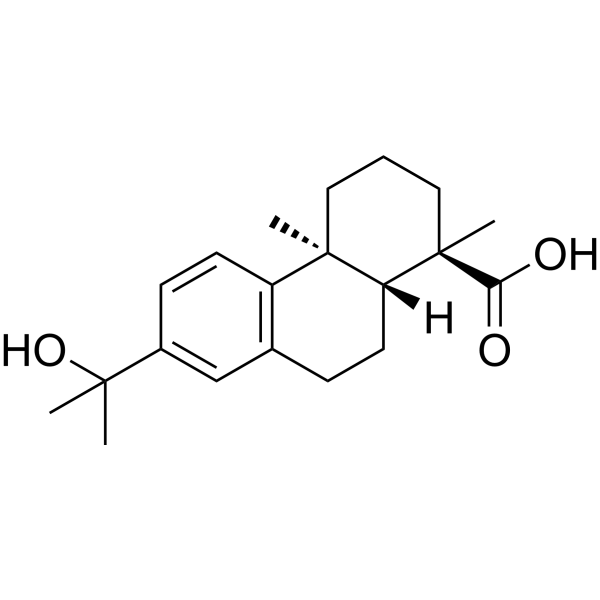
    15-Hydroxydehydroabietic acid is a diterpene compound isolated from the leaves of armand pine .
    15-Hydroxydehydroabietic acid
  • HY-N12922

    Others Endocrinology
    (E,E)-8,10-dodecadienyl acetate is isolated from attractants of pine shoot moths (Rhyacionia rigidana) .
    (E,E)-8,10-dodecadienyl acetate
  • HY-W587916

    Sex Pheromone Endogenous Metabolite Endocrinology
    (Z)-11-Hexadecenoic acid is a sex pheromone capable of attracting male pine processionary moths (Thaumetopoea pityocampa) .
    (Z)-11-Hexadecenoic acid
  • HY-N3754

    Parasite Infection
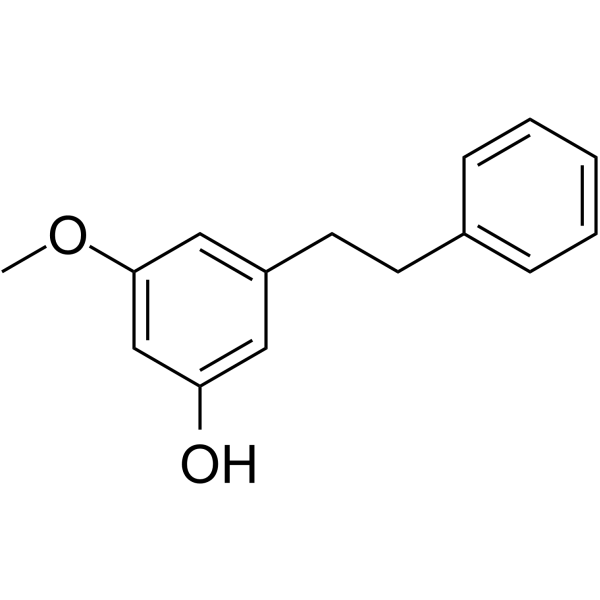
    Dihydropinosylvin monomethyl ether is a natrual compound with nematicidal activity. Dihydropinosylvin monomethyl ether can inhibit pine wood nematodes infection .
    Dihydropinosylvin monomethyl ether
  • HY-N3231

    CM-c2

    Lipoxygenase COX Cancer
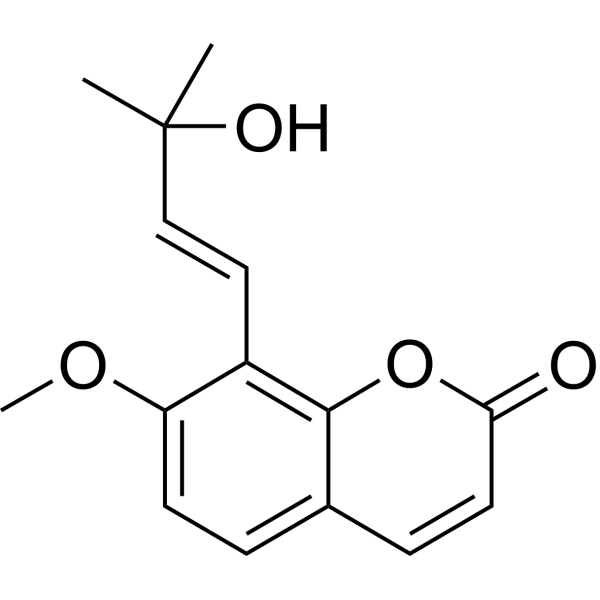
    Murraol (CM-c2), a coumarin, can be isolated from the leaves of Madagascar pine cork (Apiaceae). Murraol has cyclooxygenase (COX) and lipoxygenase inhibitory properties and has an inhibitory effect on the growth of cancer cells .
    Murraol
  • HY-N12002

    Others Others
    Diosgenin-3-O-rhamnosyl(1→2)[glucosyl(1→6)]glucoside (compound 9) is a steroidal saponin, which can be obtained from Paris polyphylla var., Yunnan pine (yunnanensis) Isolated .
    Diosgenin-3-O-rhamnosyl(1→2)[glucosyl(1→6)]glucoside
  • HY-N6663R

    Reference Standards COX Inflammation/Immunology
    3-Carene (Standard) is the analytical standard of 3-Carene. This product is intended for research and analytical applications. 3-Carene is a bicyclic monoterpene in essential oils extracted from pine trees. 3-Carene inhibits nociceptive stimulus-induced inflammatory infiltrates and COX-2 overexpression, and with antinociceptive effect. 3-Carene stimulates the activity and expression of alkaline phosphatase that is an early phase marker of osteoblastic differentiation .
    3-Carene (Standard)
  • HY-W739770

    Isotope-Labeled Compounds Endogenous Metabolite Metabolic Disease
    3-Methyl-2-buten-1-ol-d6 is the deuterium labeled 3-Methyl-2-buten-1-ol (HY-W013035). 3-Methyl-2-buten-1-ol (MBO321) is an orally active endogenous metabolite found in pine trees and is used as a fragrance ingredient in cosmetics and detergents. 3-Methyl-2-buten-1-ol passes cell barrier. 3-Methyl-2-buten-1-ol reduces body weight in rats .
    3-Methyl-2-buten-1-ol-d6
  • HY-N12892

    Others Others
    5,7-Dodecadien-1-ol is a insect sex pheromone, which is secreted by the scots pine pest Dendrolimus pini .
    5,7-Dodecadien-1-ol
  • HY-N17335

    Drug Derivative Others
    7-Hydroxysitosterol is a sterol found in the bark of Scots pine (Pinus sylvestris) .
    7-Hydroxysitosterol
  • HY-N1025

    Others Others
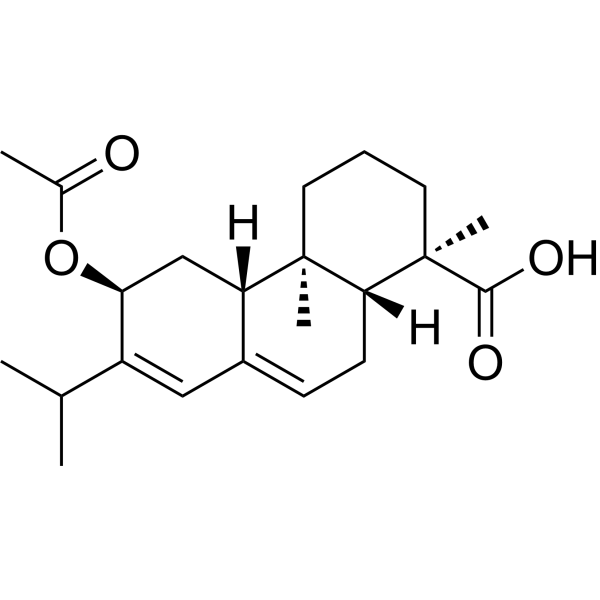
    12-Acetoxyabietic acid is a compound isolated from ponderosa pine oleoresin .
    12-Acetoxyabietic acid
  • HY-W674037R

    Sex Pheromone Reference Standards Endocrinology
    cis-Verbenol (Standard) is the analytical standard of cis-Verbenol (HY-W674037). This product is intended for research and analytical applications. cis-Verbenol is a sex pheromone capable of inhibiting aggregation and inducing dispersion of mountain pine beetles (Dendroctonus ponderosae Hopkins) and can be isolated from pine engravers .
    cis-Verbenol (Standard)
  • HY-N11952

    (−)-Dihydropyrenophorin

    Others Others
    Dihydropyrenophorin (compound 6) is a macrolide that can be isolated from Pinus strobus (eastern white pine) .
    Dihydropyrenophorin
  • HY-171720

    Asc-C6

    Drug Derivative Others
    Ascr#12 (Asc-C6) is an ascaroside derivative that exhibits extremely low activity in inducing the dauer (dormant larval) stage. Ascr#12 enhances the reproductive capacity of the invasive pine wood nematode .
    Ascr#12
  • HY-W714178

    Herbicide Others
    Aziprotryne is a post-emergence selective herbicide active against broadleaf weeds. When tank-mixed with Alachlor (HY-B2014), Aziprotryne provides longer-term weed control in field-grown cabbage plots .
    Aziprotryne
  • HY-171722

    Asc-C9

    Insecticide PGC-1α Infection Cancer
    Ascr#10 (Asc-C9) is an orally active thermogenesis inducer and insecticide that can be obtained from Monochamus alternatus. Ascr#10 binds to the insect adipokinetic hormone (AKH) receptor (Ka=272 µM) and stimulates mitochondrial biogenesis via the PGC1α-UCP4 axis. Consequently, Ascr#10 induces UCP4-mediated uncoupled respiration, reduces the ATP/ADP ratio and accelerates lipid mobilization, thereby driving the thermogenesis process. Ascr#10 delays pupation and exerts specific chemotaxis toward dispersive fourth-stage pinewood nematode LIV larvae. Ascr#10 promotes cold acclimation of Monochamus alternatus larvae through metabolic inhibition and cryoprotectant accumulation, enhancing their survival rate under cold stress. Ascr#10 also induces browning of white adipose tissue and activates brown adipose tissue in mice, thereby helping the body resist cold and tumor growth. Ascr#10 can be widely applied to research related to pine wilt disease, lung tumors and cold stress .
    Ascr#10

Inquiry Online

Your information is safe with us. * Required Fields.

Salutation


Country or Region *

Applicant Name *


Organization Name *

Department *


Email Address *


Product Name *

Cat. No.


Requested quantity *

Phone Number *


Remarks

Inquiry Online

Inquiry Information

Product Name:
Cat. No.:
Quantity:
MCE Japan Authorized Agent: