




Delivery of temperature sensitive items including proteins and kits will be paused on 6/19 for the Juneteenth holiday. For urgent orders please contact customer service.
SppIP (Sakacin P inducer peptide) is a peptide consisting of 19 amino acids . SppIP is an essential inducer for sakacin P production . SppIP can induce the expression of PRRSV GP5 and SARS-CoV-2 spike protein in recombinant Lactobacillus plantarum. SppIP can activate the transcription of the sakacin P promoter to drive the expression of downstream heterologous capsid proteins, increasing the proportion of PCV2d capsid proteins displayed on the cell surface of Lactobacillus plantarum. SppIP can be used in studies related to sakacin P induction .
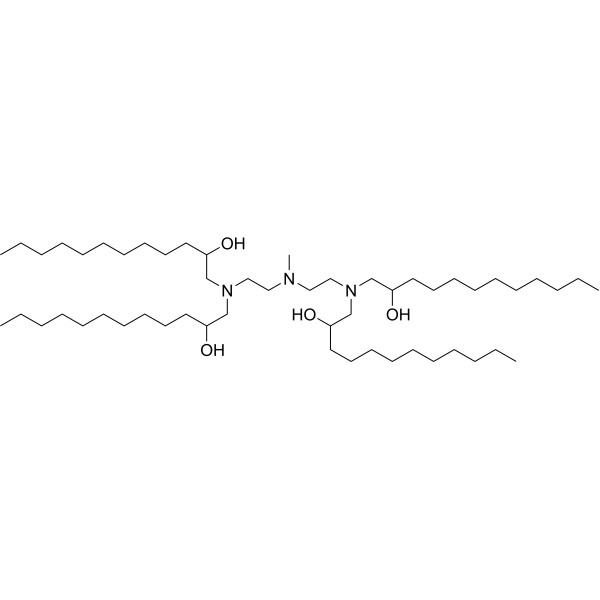
C12-113 is a lipidoid delivery agent that can be used to transfect siRNA into cells. C12-113 can also be combined with other lipids to form lipid nanoparticles (LNPs) for the delivery of mRNA encoding the spikeglycoprotein of severe acute respiratory syndrome coronavirus 2 (SARS-CoV-2) in mice .
Beludavimab (BMS 4182137; VIR 7832) is a monoclonal antibody targeting the spikeglycoprotein of SARS-CoV-2. Beludavimab binds to recombinant spike protein receptor-binding domain (S-RBD) with an EC50 value of 14.9 ng/mL and a Kd of 0.21 nM .
SpikeGlycoprotein (1147-1162) is a linear and broadly neutralizing peptide in the S2 protein of SARS-CoV-2. SpikeGlycoprotein (1147-1162) is conserved across SARS-CoV, BatCoV RaTG13, SARS-CoV-2, and SARS-CoV-2 variants. SpikeGlycoprotein (1147-1162)-targeting mAbs can neutralize both SARS-CoV-2 and SARS-CoV by preventing fusion between the virus and cell membrane. SpikeGlycoprotein (1147-1162) can be used for universal vaccines against SARS-CoV-2 mutants research .
Lomtegovimab (BI 767551) is a human anti-SARS-COV-2spikeglycoprotein monoclonal antibody. Lomtegovimab binds and neutralizes SARS-CoV-2. Lomtegovimab shows antiviral efficacy. Lomtegovimab has the potential for the research of COVID-19 .
Ogalvibart (C-135-LS) is a human anti-SARS-CoV-2 monoclonal antibody (IgG1 type). Ogalvibart binds to the spike (S) glycoprotein receptor-binding domain (RBD) of SARS-CoV-2. Ogalvibart in combination with C144LS (1:1 ratio) shows good preventive activity and can effectively block the development of COVID19 in a rhesus monkey disease model .
Crepidiaside B is a plant-derived active component that can be found in Cichorium intybus. Crepidiaside B acts as a SARS-CoV-2spikeglycoprotein inhibitor and is used in research related to coronavirus disease 2019 (COVID-19) .
VIR-7229 is a human IgG1 monoclonal antibody (mAb) targeting Receptor-Binding Domain, RBD, Spikeglycoprotein. VIR-7229 exerts antiviral activity by competing with ACE2 for binding and inducing S1 protein shedding. VIR-7229 can be used in SARS-CoV-2 infection research. Recommended isotype control: Human IgG1 kappa, Isotype Control (HY-P99001) .
Oberadilol (CID-3047798) is an ACE2 receptor binding agent. Oberadilol binds to the human ACE2 receptor and SARS-CoV proteins (Spike S glycoprotein, protease) with a Kd of 23.18 mM for the SARS-CoV-2 main protease .
SppIP (Sakacin P inducer peptide) is a peptide consisting of 19 amino acids . SppIP is an essential inducer for sakacin P production . SppIP can induce the expression of PRRSV GP5 and SARS-CoV-2 spike protein in recombinant Lactobacillus plantarum. SppIP can activate the transcription of the sakacin P promoter to drive the expression of downstream heterologous capsid proteins, increasing the proportion of PCV2d capsid proteins displayed on the cell surface of Lactobacillus plantarum. SppIP can be used in studies related to sakacin P induction .
SpikeGlycoprotein (1147-1162) is a linear and broadly neutralizing peptide in the S2 protein of SARS-CoV-2. SpikeGlycoprotein (1147-1162) is conserved across SARS-CoV, BatCoV RaTG13, SARS-CoV-2, and SARS-CoV-2 variants. SpikeGlycoprotein (1147-1162)-targeting mAbs can neutralize both SARS-CoV-2 and SARS-CoV by preventing fusion between the virus and cell membrane. SpikeGlycoprotein (1147-1162) can be used for universal vaccines against SARS-CoV-2 mutants research .
Beludavimab (BMS 4182137; VIR 7832) is a monoclonal antibody targeting the spikeglycoprotein of SARS-CoV-2. Beludavimab binds to recombinant spike protein receptor-binding domain (S-RBD) with an EC50 value of 14.9 ng/mL and a Kd of 0.21 nM .
Lomtegovimab (BI 767551) is a human anti-SARS-COV-2spikeglycoprotein monoclonal antibody. Lomtegovimab binds and neutralizes SARS-CoV-2. Lomtegovimab shows antiviral efficacy. Lomtegovimab has the potential for the research of COVID-19 .
Ogalvibart (C-135-LS) is a human anti-SARS-CoV-2 monoclonal antibody (IgG1 type). Ogalvibart binds to the spike (S) glycoprotein receptor-binding domain (RBD) of SARS-CoV-2. Ogalvibart in combination with C144LS (1:1 ratio) shows good preventive activity and can effectively block the development of COVID19 in a rhesus monkey disease model .
VIR-7229 is a human IgG1 monoclonal antibody (mAb) targeting Receptor-Binding Domain, RBD, Spikeglycoprotein. VIR-7229 exerts antiviral activity by competing with ACE2 for binding and inducing S1 protein shedding. VIR-7229 can be used in SARS-CoV-2 infection research. Recommended isotype control: Human IgG1 kappa, Isotype Control (HY-P99001) .
Crepidiaside B is a plant-derived active component that can be found in Cichorium intybus. Crepidiaside B acts as a SARS-CoV-2spikeglycoprotein inhibitor and is used in research related to coronavirus disease 2019 (COVID-19) .
The SARS-CoV-2 S glycoprotein is critical in infection, binding to the ACE2 receptor and allowing viral particles to attach to the host cell membrane. Cleavage of S2/S2′ triggers cell membrane fusion or internalization via endocytosis. SARS-CoV-2 S glycoprotein (P.pastoris, His, SUMO) is the recombinant Virus-derived SARS-CoV-2 S glycoprotein, expressed by P. pastoris , with N-6*His, N-SUMO labeled tag.
The SARS-Cov-2 S glycoprotein is a SARS-Cov-2 S glycoprotein. The amino acid sequence 1261-1267a.a of the SARS-Cov-2 S glycoprotein is transmembrane. The SARS-Cov-2 S glycoprotein is a highly glycosylated trimer, each of which consists of 1260 amino acids (residues 14-1273), divided into four structural domains: the n-terminal domain (NTD), the c-terminal domain (CTD, also known as the receptor-binding domain, RBD), and two subdomains (SD1 and SD2). SARS-CoV-2 S2 Protein (Biotinylated, sf9, His) is the recombinant Virus-derived SARS-CoV-2 S2 protein, expressed by Sf9 insect cells , with C-His labeled tag.
The SARS-Cov-2 S glycoprotein is a SARS-Cov-2 S glycoprotein. The amino acid sequence 1261-1267a.a of the SARS-Cov-2 S glycoprotein is transmembrane. The SARS-Cov-2 S glycoprotein is a highly glycosylated trimer, each of which consists of 1260 amino acids (residues 14-1273), divided into four structural domains: the n-terminal domain (NTD), the c-terminal domain (CTD, also known as the receptor-binding domain, RBD), and two subdomains (SD1 and SD2). SARS-CoV-2 S1 Protein (HEK293, His-Avi) is the recombinant Virus-derived SARS-CoV-2 S1 protein, expressed by HEK293 , with C-Avi, C-His labeled tag.
The SARS-Cov-2 S glycoprotein is a SARS-Cov-2 S glycoprotein. The amino acid sequence 1261-1267a.a of the SARS-Cov-2 S glycoprotein is transmembrane. The SARS-Cov-2 S glycoprotein is a highly glycosylated trimer, each of which consists of 1260 amino acids (residues 14-1273), divided into four structural domains: the n-terminal domain (NTD), the c-terminal domain (CTD, also known as the receptor-binding domain, RBD), and two subdomains (SD1 and SD2). SARS-CoV-2 S1 Protein (Biotinylated, HEK293, His) is the recombinant Virus-derived SARS-CoV-2 S1 protein, expressed by HEK293 , with C-His labeled tag.
The SARS-Cov-2 S glycoprotein is a SARS-Cov-2 S glycoprotein. The amino acid sequence 1261-1267a.a of the SARS-Cov-2 S glycoprotein is transmembrane. The SARS-Cov-2 S glycoprotein is a highly glycosylated trimer, each of which consists of 1260 amino acids (residues 14-1273), divided into four structural domains: the n-terminal domain (NTD), the c-terminal domain (CTD, also known as the receptor-binding domain, RBD), and two subdomains (SD1 and SD2). SARS-CoV-2 S1 Protein (D614G, HEK293, Fc) is the recombinant Virus-derived SARS-CoV-2 S1 protein, expressed by HEK293 , with C-hFc labeled tag.
The SARS-Cov-2 S glycoprotein is a SARS-Cov-2 S glycoprotein. The amino acid sequence 1261-1267a.a of the SARS-Cov-2 S glycoprotein is transmembrane. The SARS-Cov-2 S glycoprotein is a highly glycosylated trimer, each of which consists of 1260 amino acids (residues 14-1273), divided into four structural domains: the n-terminal domain (NTD), the c-terminal domain (CTD, also known as the receptor-binding domain, RBD), and two subdomains (SD1 and SD2). SARS-CoV-2 S1 Protein (D614G, HEK293, His) is the recombinant Virus-derived SARS-CoV-2 S1 protein, expressed by HEK293 , with C-His labeled tag.
The SARS-Cov-2 S glycoprotein is a SARS-Cov-2 S glycoprotein. The amino acid sequence 1261-1267a.a of the SARS-Cov-2 S glycoprotein is transmembrane. The SARS-Cov-2 S glycoprotein is a highly glycosylated trimer, each of which consists of 1260 amino acids (residues 14-1273), divided into four structural domains: the n-terminal domain (NTD), the c-terminal domain (CTD, also known as the receptor-binding domain, RBD), and two subdomains (SD1 and SD2). SARS-CoV-2 S1 Protein (305a.a, HEK293, Fc-Avi) is the recombinant Virus-derived SARS-CoV-2 S1 protein, expressed by HEK293 , with C-Avi, C-hFc labeled tag.
The SARS-Cov-2 S glycoprotein is a SARS-Cov-2 S glycoprotein. The amino acid sequence 1261-1267a.a of the SARS-Cov-2 S glycoprotein is transmembrane. The SARS-Cov-2 S glycoprotein is a highly glycosylated trimer, each of which consists of 1260 amino acids (residues 14-1273), divided into four structural domains: the n-terminal domain (NTD), the c-terminal domain (CTD, also known as the receptor-binding domain, RBD), and two subdomains (SD1 and SD2). SARS-CoV-2 S2 Protein (sf9, Fc) is the recombinant Virus-derived SARS-CoV-2 S2 protein, expressed by Sf9 insect cells , with C-mFc labeled tag.
The SARS-CoV-2 S glycoprotein is critical in infection, binding to the ACE2 receptor and allowing viral particles to attach to the host cell membrane. Cleavage of S2/S2′ triggers cell membrane fusion or internalization via endocytosis. SARS-CoV-2 S glycoprotein (HEK293, His-mFc) is the recombinant Virus-derived SARS-CoV-2 S glycoprotein, expressed by HEK293 , with C-mFc, C-6*His labeled tag.
SARS-CoV-2 S1 Protein, in its Spike protein S1 form, initiates infection by attaching the virion to the cell membrane through host receptor interaction. Simultaneously, Spike protein S2' acts as a viral fusion peptide, revealing itself after S2 cleavage during virus endocytosis. SARS-COV-2 S Trimer Protein (HEK293, Fc) is the recombinant Virus-derived SARS-COV-2 S Trimer protein, expressed by HEK293 , with C-hFc labeled tag.
SARS-CoV-2 S1 Protein, in its Spike protein S1 form, initiates infection by attaching the virion to the cell membrane through host receptor interaction. Simultaneously, Spike protein S2' acts as a viral fusion peptide, revealing itself after S2 cleavage during virus endocytosis. SARS-COV-2 S Trimer Protein (HEK293, His-Avi) is the recombinant Virus-derived SARS-COV-2 S Trimer protein, expressed by HEK293 , with C-Avi, C-His labeled tag.
SARS-CoV-2 S1 Protein, in its Spike protein S1 form, initiates infection by attaching the virion to the cell membrane through host receptor interaction. Simultaneously, Spike protein S2' acts as a viral fusion peptide, revealing itself after S2 cleavage during virus endocytosis. SARS-CoV-2 S Trimer Protein (Biotinylated, HEK293, His-Avi) is the recombinant Virus-derived SARS-CoV-2 S Trimer protein, expressed by HEK293 , with C-Avi, C-His labeled tag.
The SARS-CoV-2 S glycoprotein is critical in infection, binding to the ACE2 receptor and allowing viral particles to attach to the host cell membrane. Cleavage of S2/S2′ triggers cell membrane fusion or internalization via endocytosis. SARS-COV-2 S trimer Protein (BA.2, HEK293, His) is the recombinant virus-derived SARS-COV-2 S trimer protein, expressed by HEK293, with C-His labeled tag, mutations, and furin cleavage site mutants.
SARS-CoV-2 S1 Protein, in its Spike protein S1 form, initiates infection by attaching the virion to the cell membrane through host receptor interaction. Simultaneously, Spike protein S2' acts as a viral fusion peptide, revealing itself after S2 cleavage during virus endocytosis. SARS-COV-2 S Trimer Protein (D614G, HEK293, His-Avi) is the recombinant Virus-derived SARS-COV-2 S Trimer protein, expressed by HEK293 , with C-Avi, C-His labeled tag.
SARS-CoV-2 S1 Protein, in its Spike protein S1 form, initiates infection by attaching the virion to the cell membrane through host receptor interaction. Simultaneously, Spike protein S2' acts as a viral fusion peptide, revealing itself after S2 cleavage during virus endocytosis. SARS-COV-2 S Protein RBD (HEK293, His-Avi) is the recombinant Virus-derived SARS-COV-2 S protein RBD, expressed by HEK293 , with C-Avi, C-His labeled tag.
The SARS-Cov-2 S glycoprotein is a SARS-Cov-2 S glycoprotein. The amino acid sequence 1261-1267a.a of the SARS-Cov-2 S glycoprotein is transmembrane. The SARS-Cov-2 S glycoprotein is a highly glycosylated trimer, each of which consists of 1260 amino acids (residues 14-1273), divided into four structural domains: the n-terminal domain (NTD), the c-terminal domain (CTD, also known as the receptor-binding domain, RBD), and two subdomains (SD1 and SD2). SARS-CoV-2 S1 Protein (Delta, B.1.617.2, His) is the recombinant virus-derived SARS-CoV-2 S1, expressed by HEK293, with C-10*His labeled tag.
SARS-CoV-2 S1 Protein, in its Spike protein S1 form, initiates infection by attaching the virion to the cell membrane through host receptor interaction. Simultaneously, Spike protein S2' acts as a viral fusion peptide, revealing itself after S2 cleavage during virus endocytosis. SARS-CoV-2 S Protein RBD (Biotinylated, HEK293, Fc-Avi) is the recombinant Virus-derived SARS-CoV-2 S protein RBD, expressed by HEK293 , with C-Avi, C-hFc labeled tag.
The SARS-Cov-2 S glycoprotein is a SARS-Cov-2 S glycoprotein. The amino acid sequence 1261-1267a.a of the SARS-Cov-2 S glycoprotein is transmembrane. The SARS-Cov-2 S glycoprotein is a highly glycosylated trimer, each of which consists of 1260 amino acids (residues 14-1273), divided into four structural domains: the n-terminal domain (NTD), the c-terminal domain (CTD, also known as the receptor-binding domain, RBD), and two subdomains (SD1 and SD2). SARS-COV-2 S trimer Protein (XBB.1.16, HEK293, His) is the recombinant virus-derived SARS-COV-2 S trimer, expressed by HEK293, with C-His labeled tag.
SARS-CoV-2 S1 Protein, in its Spike protein S1 form, initiates infection by attaching the virion to the cell membrane through host receptor interaction. Simultaneously, Spike protein S2' acts as a viral fusion peptide, revealing itself after S2 cleavage during virus endocytosis. SARS-CoV-2 S1 Protein (Biotinylated, HEK293, Fc-Avi) is the recombinant Virus-derived SARS-CoV-2 S1 protein, expressed by HEK293 , with C-Avi, C-hFc labeled tag.
SARS-CoV-2 S1 Protein, in its Spike protein S1 form, initiates infection by attaching the virion to the cell membrane through host receptor interaction. Simultaneously, Spike protein S2' acts as a viral fusion peptide, revealing itself after S2 cleavage during virus endocytosis. SARS-COV-2 S1 Protein NTD (HEK293, His-Flag) is the recombinant Virus-derived SARS-COV-2 S1 protein NTD, expressed by HEK293 , with C-His, C-Flag labeled tag.
The SARS-CoV-2 S glycoprotein is critical in infection, binding to the ACE2 receptor and allowing viral particles to attach to the host cell membrane. Cleavage of S2/S2′ triggers cell membrane fusion or internalization via endocytosis. Spike glycoprotein, SARS-CoV-2 (Sf9, His) is the recombinant virus-derived Spike glycoprotein, expressed by Sf9 insect cells, with His labeled tag.
The SARS-Cov-2 S glycoprotein is a SARS-Cov-2 S glycoprotein. The amino acid sequence 1261-1267a.a of the SARS-Cov-2 S glycoprotein is transmembrane. The SARS-Cov-2 S glycoprotein is a highly glycosylated trimer, each of which consists of 1260 amino acids (residues 14-1273), divided into four structural domains: the n-terminal domain (NTD), the c-terminal domain (CTD, also known as the receptor-binding domain, RBD), and two subdomains (SD1 and SD2). SARS-COV-2 S1 Protein (N501Y, HEK293, His) is the recombinant Virus-derived SARS-COV-2 S1 protein, expressed by HEK293 , with C-His labeled tag.
SARS-CoV-2 S1 Protein, in its Spike protein S1 form, initiates infection by attaching the virion to the cell membrane through host receptor interaction. Simultaneously, Spike protein S2' acts as a viral fusion peptide, revealing itself after S2 cleavage during virus endocytosis. SARS-COV-2 S1 Protein (D614G, HEK293, His-Avi) is the recombinant Virus-derived SARS-COV-2 S1 protein, expressed by HEK293 , with C-Avi, C-His labeled tag.
SARS-CoV-2 S1 Protein, in its Spike protein S1 form, initiates infection by attaching the virion to the cell membrane through host receptor interaction. Simultaneously, Spike protein S2' acts as a viral fusion peptide, revealing itself after S2 cleavage during virus endocytosis. SARS-COV-2 S1 Protein (670a.a, HEK293, Fc-Avi) is the recombinant Virus-derived SARS-COV-2 S1 protein, expressed by HEK293 , with C-Avi, C-hFc labeled tag.
The SARS-CoV-2 S glycoprotein is critical in infection, binding to the ACE2 receptor and allowing viral particles to attach to the host cell membrane. Cleavage of S2/S2′ triggers cell membrane fusion or internalization via endocytosis. SARS-CoV-2 S glycoprotein (V987P, HEK293, Strep, His) is the recombinant virus-derived Spike glycoProtein, expressed by HEK293, with Strep, His labeled tag.
SARS-CoV-2 S1 Protein, in its Spike protein S1 form, initiates infection by attaching the virion to the cell membrane through host receptor interaction. Simultaneously, Spike protein S2' acts as a viral fusion peptide, revealing itself after S2 cleavage during virus endocytosis. SARS-CoV-2 S Protein RBD (N501Y, K417N, E484K, HEK293, His) is the recombinant Virus-derived SARS-CoV-2 S protein RBD, expressed by HEK293 , with C-His labeled tag.
SARS-CoV-2 S1 Protein, in its Spike protein S1 form, initiates infection by attaching the virion to the cell membrane through host receptor interaction. Simultaneously, Spike protein S2' acts as a viral fusion peptide, revealing itself after S2 cleavage during virus endocytosis. SARS-CoV-2 S1 Protein (Biotinylated, Omicron, B.1.1.529, HEK293, His-Avi) is a recombinant protein dimer complex containing Virus-derived SARS-CoV-2 S1 protein, expressed by HEK293 , with C-His, C-Avi labeled tag. SARS-CoV-2 S1 Protein (Biotinylated, Omicron, B.1.1.529, HEK293, His-Avi), has molecular weight of 110-120 kDa.
The SARS-Cov-2 S glycoprotein is a SARS-Cov-2 S glycoprotein. The amino acid sequence 1261-1267a.a of the SARS-Cov-2 S glycoprotein is transmembrane. The SARS-Cov-2 S glycoprotein is a highly glycosylated trimer, each of which consists of 1260 amino acids (residues 14-1273), divided into four structural domains: the n-terminal domain (NTD), the c-terminal domain (CTD, also known as the receptor-binding domain, RBD), and two subdomains (SD1 and SD2). SARS-COV-2 S1 Protein (N501Y, K417N, E484K, HEK293, His) is the recombinant Virus-derived SARS-COV-2 S1 protein, expressed by HEK293 , with C-His labeled tag.
The SARS-CoV Spike glycoprotein (S) has three subunits S1, S2' and S2 through alternative splicing. The engagement of the MERS-CoV spike protein S1 with CD26 (also known as dipeptidyl peptidase 4, DPP4) mediates viral attachment to host cells and virus鈥揷ell fusion, thereby initiating infection. S2 mediates fusion of the virion and cellular membranes by acting as a class I viral fusion protein and S2' is unmasked following S2 cleavage occurring upon virus endocytosis. MERS-CoV Spike/S1 Protein (HEK293, His) is the recombinant Virus-derived MERS-CoV Spike/S1 protein, expressed by HEK293 , with C-His labeled tag.
The SARS-CoV Spike glycoprotein (S) has three subunits S1, S2' and S2 through alternative splicing. The engagement of the MERS-CoV spike protein S1 with CD26 (also known as dipeptidyl peptidase 4, DPP4) mediates viral attachment to host cells and virus鈥揷ell fusion, thereby initiating infection. S2 mediates fusion of the virion and cellular membranes by acting as a class I viral fusion protein and S2' is unmasked following S2 cleavage occurring upon virus endocytosis. MERS-CoV Spike/S2 Protein (sf9, His) is the recombinant Virus-derived MERS-CoV Spike/S2 protein, expressed by Sf9 insect cells , with C-His labeled tag.
The SARS-CoV Spike glycoprotein (S) has three subunits S1, S2' and S2 through alternative splicing. The engagement of the MERS-CoV spike protein S1 with CD26 (also known as dipeptidyl peptidase 4, DPP4) mediates viral attachment to host cells and virus鈥揷ell fusion, thereby initiating infection. S2 mediates fusion of the virion and cellular membranes by acting as a class I viral fusion protein and S2' is unmasked following S2 cleavage occurring upon virus endocytosis. MERS-CoV Spike/S Protein RBD (sf9, Fc) is the recombinant Virus-derived MERS-CoV Spike/S protein RBD, expressed by Sf9 insect cells , with C-rFc labeled tag.
The SARS-CoV Spike glycoprotein (S) has three subunits S1, S2' and S2 through alternative splicing. The engagement of the MERS-CoV spike protein S1 with CD26 (also known as dipeptidyl peptidase 4, DPP4) mediates viral attachment to host cells and virus鈥揷ell fusion, thereby initiating infection. S2 mediates fusion of the virion and cellular membranes by acting as a class I viral fusion protein and S2' is unmasked following S2 cleavage occurring upon virus endocytosis. MERS-CoV Spike/S Protein RBD (Biotinylated, sf9, His) is the recombinant Virus-derived MERS-CoV Spike/S protein RBD, expressed by Sf9 insect cells , with C-His labeled tag.
The SARS-CoV Spike glycoprotein (S) has three subunits S1, S2' and S2 through alternative splicing. The engagement of the MERS-CoV spike protein S1 with CD26 (also known as dipeptidyl peptidase 4, DPP4) mediates viral attachment to host cells and virus鈥揷ell fusion, thereby initiating infection. S2 mediates fusion of the virion and cellular membranes by acting as a class I viral fusion protein and S2' is unmasked following S2 cleavage occurring upon virus endocytosis. MERS-CoV Spike/S Protein RBD (sf9, His) is the recombinant Virus-derived MERS-CoV Spike/S protein RBD, expressed by Sf9 insect cells , with C-His labeled tag.
The SARS-Cov-2 S glycoprotein is a SARS-Cov-2 S glycoprotein. The amino acid sequence 1261-1267a.a of the SARS-Cov-2 S glycoprotein is transmembrane. The SARS-Cov-2 S glycoprotein is a highly glycosylated trimer, each of which consists of 1260 amino acids (residues 14-1273), divided into four structural domains: the n-terminal domain (NTD), the c-terminal domain (CTD, also known as the receptor-binding domain, RBD), and two subdomains (SD1 and SD2). SARS-CoV-2 S Protein RBD (HEK293, Fc) is the recombinant Virus-derived SARS-CoV-2 S protein RBD, expressed by HEK293 , with C-hFc labeled tag.
The SARS-Cov-2 S glycoprotein is a SARS-Cov-2 S glycoprotein. The amino acid sequence 1261-1267a.a of the SARS-Cov-2 S glycoprotein is transmembrane. The SARS-Cov-2 S glycoprotein is a highly glycosylated trimer, each of which consists of 1260 amino acids (residues 14-1273), divided into four structural domains: the n-terminal domain (NTD), the c-terminal domain (CTD, also known as the receptor-binding domain, RBD), and two subdomains (SD1 and SD2). SARS-CoV-2 S Protein RBD (HEK293) is the recombinant Virus-derived SARS-CoV-2 S protein RBD, expressed by HEK293 , with tag free.
The SARS-Cov-2 S glycoprotein is a SARS-Cov-2 S glycoprotein. The amino acid sequence 1261-1267a.a of the SARS-Cov-2 S glycoprotein is transmembrane. The SARS-Cov-2 S glycoprotein is a highly glycosylated trimer, each of which consists of 1260 amino acids (residues 14-1273), divided into four structural domains: the n-terminal domain (NTD), the c-terminal domain (CTD, also known as the receptor-binding domain, RBD), and two subdomains (SD1 and SD2). SARS-CoV-2 S1 Protein (HEK293, His) is the recombinant Virus-derived SARS-CoV-2 S1 protein, expressed by HEK293 , with C-His labeled tag.
The SARS-Cov-2 S glycoprotein is a SARS-Cov-2 S glycoprotein. The amino acid sequence 1261-1267a.a of the SARS-Cov-2 S glycoprotein is transmembrane. The SARS-Cov-2 S glycoprotein is a highly glycosylated trimer, each of which consists of 1260 amino acids (residues 14-1273), divided into four structural domains: the n-terminal domain (NTD), the c-terminal domain (CTD, also known as the receptor-binding domain, RBD), and two subdomains (SD1 and SD2). SARS-CoV-2 S Protein RBD (sf9, His) is the recombinant Virus-derived SARS-CoV-2 S protein RBD, expressed by Sf9 insect cells , with C-His labeled tag.
SARS-CoV spike glycoprotein 2 (S2) is a subunit of SARS-CoV Spike glycoprotein, among with S1 and S2'. S2 (668-1255) mediates fusion of the virion and cellular membranes by acting as a class I viral fusion protein, during endocytosis, S2 is cleaved into S2' (798-1255). Internalization into host cell endosomes induces S glycoprotein conformational changes, potentially unmasking the fusion peptide of S2 through cathepsin CTSL proteolysis. SARS-CoV S Protein (S577A, sf9, His) is the recombinant Virus-derived SARS-CoV S protein, expressed by Sf9 insect cells , with C-His labeled tag.
The SARS-CoV Spike glycoprotein (S) has three subunits S1, S2' and S2 through alternative splicing. S protein orchestrates viral entry by attaching the virion to the cell membrane through interactions with human ACE2 and CLEC4M/DC-SIGNR receptors. S protein also impairs target cell killing, cytokine production and down-regulates host tetherin (BST2), countering the antiviral activity of host. SARS-CoV S Protein RBD (HEK293, Fc) is the recombinant Virus-derived SARS-CoV S protein RBD, expressed by HEK293 , with C-mFc labeled tag.
The SARS-CoV Spike glycoprotein (S) has three subunits S1, S2' and S2 through alternative splicing. S protein orchestrates viral entry by attaching the virion to the cell membrane through interactions with human ACE2 and CLEC4M/DC-SIGNR receptors. S protein also impairs target cell killing, cytokine production and down-regulates host tetherin (BST2), countering the antiviral activity of host. SARS-CoV S1 Protein (sf9, His) is the recombinant Virus-derived SARS-CoV S1 protein, expressed by Sf9 insect cells , with C-His labeled tag.
The SARS-CoV Spike glycoprotein (S) has three subunits S1, S2' and S2 through alternative splicing. S protein orchestrates viral entry by attaching the virion to the cell membrane through interactions with human ACE2 and CLEC4M/DC-SIGNR receptors. S protein also impairs target cell killing, cytokine production and down-regulates host tetherin (BST2), countering the antiviral activity of host. SARS-CoV S1 Protein (HEK293, Fc) is the recombinant Virus-derived SARS-CoV S1 protein, expressed by HEK293 , with C-mFc labeled tag.
The SARS-Cov-2 S glycoprotein is a SARS-Cov-2 S glycoprotein. The amino acid sequence 1261-1267a.a of the SARS-Cov-2 S glycoprotein is transmembrane. The SARS-Cov-2 S glycoprotein is a highly glycosylated trimer, each of which consists of 1260 amino acids (residues 14-1273), divided into four structural domains: the n-terminal domain (NTD), the c-terminal domain (CTD, also known as the receptor-binding domain, RBD), and two subdomains (SD1 and SD2). SARS-CoV-2 S Protein RBD (A435S, HEK293, His) is the recombinant Virus-derived SARS-CoV-2 S protein RBD, expressed by HEK293 , with C-His labeled tag.
The SARS-Cov-2 S glycoprotein is a SARS-Cov-2 S glycoprotein. The amino acid sequence 1261-1267a.a of the SARS-Cov-2 S glycoprotein is transmembrane. The SARS-Cov-2 S glycoprotein is a highly glycosylated trimer, each of which consists of 1260 amino acids (residues 14-1273), divided into four structural domains: the n-terminal domain (NTD), the c-terminal domain (CTD, also known as the receptor-binding domain, RBD), and two subdomains (SD1 and SD2). SARS-CoV-2 S Protein RBD (F342L, HEK293, His) is the recombinant Virus-derived SARS-CoV-2 S protein RBD, expressed by HEK293 , with C-His labeled tag.
The SARS-Cov-2 S glycoprotein is a SARS-Cov-2 S glycoprotein. The amino acid sequence 1261-1267a.a of the SARS-Cov-2 S glycoprotein is transmembrane. The SARS-Cov-2 S glycoprotein is a highly glycosylated trimer, each of which consists of 1260 amino acids (residues 14-1273), divided into four structural domains: the n-terminal domain (NTD), the c-terminal domain (CTD, also known as the receptor-binding domain, RBD), and two subdomains (SD1 and SD2). SARS-CoV-2 S Protein RBD (K458R, HEK293, His) is the recombinant Virus-derived SARS-CoV-2 S protein RBD, expressed by HEK293 , with C-His labeled tag.
The SARS-Cov-2 S glycoprotein is a SARS-Cov-2 S glycoprotein. The amino acid sequence 1261-1267a.a of the SARS-Cov-2 S glycoprotein is transmembrane. The SARS-Cov-2 S glycoprotein is a highly glycosylated trimer, each of which consists of 1260 amino acids (residues 14-1273), divided into four structural domains: the n-terminal domain (NTD), the c-terminal domain (CTD, also known as the receptor-binding domain, RBD), and two subdomains (SD1 and SD2). SARS-CoV-2 S Protein RBD (V483A, HEK293, His) is the recombinant Virus-derived SARS-CoV-2 S protein RBD, expressed by HEK293 , with C-His labeled tag.
The SARS-Cov-2 S glycoprotein is a SARS-Cov-2 S glycoprotein. The amino acid sequence 1261-1267a.a of the SARS-Cov-2 S glycoprotein is transmembrane. The SARS-Cov-2 S glycoprotein is a highly glycosylated trimer, each of which consists of 1260 amino acids (residues 14-1273), divided into four structural domains: the n-terminal domain (NTD), the c-terminal domain (CTD, also known as the receptor-binding domain, RBD), and two subdomains (SD1 and SD2). SARS-CoV-2 S Protein RBD (223a.a, HEK293, His) is the recombinant Virus-derived SARS-CoV-2 S protein RBD, expressed by HEK293 , with C-His labeled tag.
The SARS-Cov-2 S glycoprotein is a SARS-Cov-2 S glycoprotein. The amino acid sequence 1261-1267a.a of the SARS-Cov-2 S glycoprotein is transmembrane. The SARS-Cov-2 S glycoprotein is a highly glycosylated trimer, each of which consists of 1260 amino acids (residues 14-1273), divided into four structural domains: the n-terminal domain (NTD), the c-terminal domain (CTD, also known as the receptor-binding domain, RBD), and two subdomains (SD1 and SD2). SARS-CoV-2 S Protein RBD (V367F, HEK293, Fc) is the recombinant Virus-derived SARS-CoV-2 S protein RBD, expressed by HEK293 , with C-mFc labeled tag.
The SARS-Cov-2 S glycoprotein is a SARS-Cov-2 S glycoprotein. The amino acid sequence 1261-1267a.a of the SARS-Cov-2 S glycoprotein is transmembrane. The SARS-Cov-2 S glycoprotein is a highly glycosylated trimer, each of which consists of 1260 amino acids (residues 14-1273), divided into four structural domains: the n-terminal domain (NTD), the c-terminal domain (CTD, also known as the receptor-binding domain, RBD), and two subdomains (SD1 and SD2). SARS-CoV-2 S Protein RBD (HEK293, rFc) is the recombinant Virus-derived SARS-CoV-2 S protein RBD, expressed by HEK293 , with C-rFc labeled tag.
The SARS-Cov-2 S glycoprotein is a SARS-Cov-2 S glycoprotein. The amino acid sequence 1261-1267a.a of the SARS-Cov-2 S glycoprotein is transmembrane. The SARS-Cov-2 S glycoprotein is a highly glycosylated trimer, each of which consists of 1260 amino acids (residues 14-1273), divided into four structural domains: the n-terminal domain (NTD), the c-terminal domain (CTD, also known as the receptor-binding domain, RBD), and two subdomains (SD1 and SD2). SARS-CoV-2 S1 Protein (sf9, His) is the recombinant Virus-derived SARS-CoV-2 S1 protein, expressed by Sf9 insect cells , with C-His labeled tag.
The SARS-Cov-2 S glycoprotein is a SARS-Cov-2 S glycoprotein. The amino acid sequence 1261-1267a.a of the SARS-Cov-2 S glycoprotein is transmembrane. The SARS-Cov-2 S glycoprotein is a highly glycosylated trimer, each of which consists of 1260 amino acids (residues 14-1273), divided into four structural domains: the n-terminal domain (NTD), the c-terminal domain (CTD, also known as the receptor-binding domain, RBD), and two subdomains (SD1 and SD2). SARS-CoV-2 S Protein RBD (N354D, HEK293, His) is the recombinant Virus-derived SARS-CoV-2 S protein RBD, expressed by HEK293 , with C-His labeled tag.
SARS-CoV spike glycoprotein 2 (S2) is a subunit of SARS-CoV Spike glycoprotein, among with S1 and S2'. S2 (668-1255) mediates fusion of the virion and cellular membranes by acting as a class I viral fusion protein, during endocytosis, S2 is cleaved into S2' (798-1255). Internalization into host cell endosomes induces S glycoprotein conformational changes, potentially unmasking the fusion peptide of S2 through cathepsin CTSL proteolysis. SARS-CoV S2 Protein (sf9, His) is the recombinant Virus-derived SARS-CoV S2 protein, expressed by Sf9 insect cells , with C-His labeled tag.
The SARS-CoV Spike glycoprotein (S) has three subunits S1, S2' and S2 through alternative splicing. S protein orchestrates viral entry by attaching the virion to the cell membrane through interactions with human ACE2 and CLEC4M/DC-SIGNR receptors. S protein also impairs target cell killing, cytokine production and down-regulates host tetherin (BST2), countering the antiviral activity of host. SARS-CoV S Protein RBD (sf9, His) is the recombinant Virus-derived SARS-CoV S protein RBD, expressed by Sf9 insect cells , with C-His labeled tag.
The SARS-CoV Spike glycoprotein (S) has three subunits S1, S2' and S2 through alternative splicing. S protein orchestrates viral entry by attaching the virion to the cell membrane through interactions with human ACE2 and CLEC4M/DC-SIGNR receptors. S protein also impairs target cell killing, cytokine production and down-regulates host tetherin (BST2), countering the antiviral activity of host. SARS-CoV S Protein RBD (sf9, Fc) is the recombinant Virus-derived SARS-CoV S protein RBD, expressed by Sf9 insect cells , with C-rFc labeled tag.
The SARS-Cov-2 S glycoprotein is a SARS-Cov-2 S glycoprotein. The amino acid sequence 1261-1267a.a of the SARS-Cov-2 S glycoprotein is transmembrane. The SARS-Cov-2 S glycoprotein is a highly glycosylated trimer, each of which consists of 1260 amino acids (residues 14-1273), divided into four structural domains: the n-terminal domain (NTD), the c-terminal domain (CTD, also known as the receptor-binding domain, RBD), and two subdomains (SD1 and SD2). SARS-CoV-2 S Protein RBD (G476S, HEK293, His) is the recombinant Virus-derived SARS-CoV-2 S protein RBD, expressed by HEK293 , with C-His labeled tag.
The SARS-Cov-2 S glycoprotein is a SARS-Cov-2 S glycoprotein. The amino acid sequence 1261-1267a.a of the SARS-Cov-2 S glycoprotein is transmembrane. The SARS-Cov-2 S glycoprotein is a highly glycosylated trimer, each of which consists of 1260 amino acids (residues 14-1273), divided into four structural domains: the n-terminal domain (NTD), the c-terminal domain (CTD, also known as the receptor-binding domain, RBD), and two subdomains (SD1 and SD2). SARS-CoV-2 S Protein RBD (N370S, HEK293, His) is the recombinant Virus-derived SARS-CoV-2 S protein RBD, expressed by HEK293 , with C-His labeled tag.
The SARS-Cov-2 S glycoprotein is a SARS-Cov-2 S glycoprotein. The amino acid sequence 1261-1267a.a of the SARS-Cov-2 S glycoprotein is transmembrane. The SARS-Cov-2 S glycoprotein is a highly glycosylated trimer, each of which consists of 1260 amino acids (residues 14-1273), divided into four structural domains: the n-terminal domain (NTD), the c-terminal domain (CTD, also known as the receptor-binding domain, RBD), and two subdomains (SD1 and SD2). SARS-CoV-2 S Protein RBD (S477N, HEK293, His) is the recombinant Virus-derived SARS-CoV-2 S protein RBD, expressed by HEK293 , with C-His labeled tag.
The SARS-Cov-2 S glycoprotein is a SARS-Cov-2 S glycoprotein. The amino acid sequence 1261-1267a.a of the SARS-Cov-2 S glycoprotein is transmembrane. The SARS-Cov-2 S glycoprotein is a highly glycosylated trimer, each of which consists of 1260 amino acids (residues 14-1273), divided into four structural domains: the n-terminal domain (NTD), the c-terminal domain (CTD, also known as the receptor-binding domain, RBD), and two subdomains (SD1 and SD2). SARS-CoV-2 S Protein RBD (Y453F, HEK293, His) is the recombinant Virus-derived SARS-CoV-2 S protein RBD, expressed by HEK293 , with C-His labeled tag.
The SARS-Cov-2 S glycoprotein is a SARS-Cov-2 S glycoprotein. The amino acid sequence 1261-1267a.a of the SARS-Cov-2 S glycoprotein is transmembrane. The SARS-Cov-2 S glycoprotein is a highly glycosylated trimer, each of which consists of 1260 amino acids (residues 14-1273), divided into four structural domains: the n-terminal domain (NTD), the c-terminal domain (CTD, also known as the receptor-binding domain, RBD), and two subdomains (SD1 and SD2). SARS-CoV-2 S Protein RBD (Y505C, HEK293, His) is the recombinant Virus-derived SARS-CoV-2 S protein RBD, expressed by HEK293 , with C-His labeled tag.
The SARS-Cov-2 S glycoprotein is a SARS-Cov-2 S glycoprotein. The amino acid sequence 1261-1267a.a of the SARS-Cov-2 S glycoprotein is transmembrane. The SARS-Cov-2 S glycoprotein is a highly glycosylated trimer, each of which consists of 1260 amino acids (residues 14-1273), divided into four structural domains: the n-terminal domain (NTD), the c-terminal domain (CTD, also known as the receptor-binding domain, RBD), and two subdomains (SD1 and SD2). SARS-CoV-2 S1 Protein (Biotinylated, HEK293, Avi-His) is the recombinant Virus-derived SARS-CoV-2 S1 protein, expressed by HEK293 , with C-Avi, C-His labeled tag.
The SARS-Cov-2 S glycoprotein is a SARS-Cov-2 S glycoprotein. The amino acid sequence 1261-1267a.a of the SARS-Cov-2 S glycoprotein is transmembrane. The SARS-Cov-2 S glycoprotein is a highly glycosylated trimer, each of which consists of 1260 amino acids (residues 14-1273), divided into four structural domains: the n-terminal domain (NTD), the c-terminal domain (CTD, also known as the receptor-binding domain, RBD), and two subdomains (SD1 and SD2). SARS-CoV-2 S Protein RBD (V367F, HEK293, His) is the recombinant Virus-derived SARS-CoV-2 S protein RBD, expressed by HEK293 , with C-His labeled tag.
The SARS-Cov-2 S glycoprotein is a SARS-Cov-2 S glycoprotein. The amino acid sequence 1261-1267a.a of the SARS-Cov-2 S glycoprotein is transmembrane. The SARS-Cov-2 S glycoprotein is a highly glycosylated trimer, each of which consists of 1260 amino acids (residues 14-1273), divided into four structural domains: the n-terminal domain (NTD), the c-terminal domain (CTD, also known as the receptor-binding domain, RBD), and two subdomains (SD1 and SD2). SARS-CoV-2 S Protein RBD (W436R, HEK293,His) is the recombinant Virus-derived SARS-CoV-2 S protein RBD, expressed by HEK293 , with C-His labeled tag.
The SARS-Cov-2 S glycoprotein is a SARS-Cov-2 S glycoprotein. The amino acid sequence 1261-1267a.a of the SARS-Cov-2 S glycoprotein is transmembrane. The SARS-Cov-2 S glycoprotein is a highly glycosylated trimer, each of which consists of 1260 amino acids (residues 14-1273), divided into four structural domains: the n-terminal domain (NTD), the c-terminal domain (CTD, also known as the receptor-binding domain, RBD), and two subdomains (SD1 and SD2). SARS-CoV-2 S Protein RBD (HEK293, mFc) is the recombinant Virus-derived SARS-CoV-2 S protein RBD, expressed by HEK293 , with C-mFc labeled tag.
C12-113 is a lipidoid delivery agent that can be used to transfect siRNA into cells. C12-113 can also be combined with other lipids to form lipid nanoparticles (LNPs) for the delivery of mRNA encoding the spikeglycoprotein of severe acute respiratory syndrome coronavirus 2 (SARS-CoV-2) in mice .
Inquiry Online
Your information is safe with us. * Required Fields.
Western blot analysis of extracts from THP-1(lane 2(20μg), Jurkat (lane 3(20μg) and NIH3T3(lane 4(20μg) using FOXO1A (HY-P80132) Rabbit mAb. Proteins were transferred
to a PVDF membrane and blocked with 5% non-fat milk in TBST for 2 hour at room temperature. The primary antibody (1/1000) and Loading control antibody (Beta Actin, HY-P80438, 1/10000) was
used in 5% non-fat milk in TBST at 4°C overnight. Goat Anti-Mouse/Rabbit IgG-HRP Secondary Antibody (1/10000) was used for 1 hour at room temperature.
Western blot analysis of extracts from THP-1(lane 2(20μg), Jurkat (lane 3(20μg) and NIH3T3(lane 4(20μg) using FOXO1A (HY-P80132) Rabbit mAb. Proteins were transferred
to a PVDF membrane and blocked with 5% non-fat milk in TBST for 2 hour at room temperature. The primary antibody (1/1000) and Loading control antibody (Beta Actin, HY-P80438, 1/10000) was
used in 5% non-fat milk in TBST at 4°C overnight. Goat Anti-Mouse/Rabbit IgG-HRP Secondary Antibody (1/10000) was used for 1 hour at room temperature.
Western blot analysis of extracts from THP-1(lane 2(20μg), Jurkat (lane 3(20μg) and NIH3T3(lane 4(20μg) using FOXO1A (HY-P80132) Rabbit mAb. Proteins were transferred
to a PVDF membrane and blocked with 5% non-fat milk in TBST for 2 hour at room temperature. The primary antibody (1/1000) and Loading control antibody (Beta Actin, HY-P80438, 1/10000) was
used in 5% non-fat milk in TBST at 4°C overnight. Goat Anti-Mouse/Rabbit IgG-HRP Secondary Antibody (1/10000) was used for 1 hour at room temperature.
Western blot analysis of extracts from THP-1(lane 2(20μg), Jurkat (lane 3(20μg) and NIH3T3(lane 4(20μg) using FOXO1A (HY-P80132) Rabbit mAb. Proteins were transferred
to a PVDF membrane and blocked with 5% non-fat milk in TBST for 2 hour at room temperature. The primary antibody (1/1000) and Loading control antibody (Beta Actin, HY-P80438, 1/10000) was
MedchemExpress Validation 03
Western blot analysis of extracts from THP-1(lane 2(20μg), Jurkat (lane 3(20μg) and NIH3T3(lane 4(20μg) using FOXO1A (HY-P80132) Rabbit mAb. Proteins were transferred
MedchemExpress Validation 04
Western blot analysis of extracts from THP-1(lane 2(20μg), Jurkat (lane 3(20μg) and NIH3T3(lane 4(20μg) using FOXO1A (HY-P80132) Rabbit mAb. Proteins were transferred
to a PVDF membrane and blocked with 5% non-fat milk in TBST for 2 hour at room temperature. The primary antibody (1/1000) and Loading control antibody (Beta Actin, HY-P80438, 1/10000) was
used in 5% non-fat milk in TBST at 4°C overnight. Goat Anti-Mouse/Rabbit IgG-HRP Secondary Antibody (1/10000) was used for 1 hour at room temperature.
MedchemExpress Validation
Western blot analysis of extracts from THP-1(lane 2(20μg), Jurkat (lane 3(20μg) and NIH3T3(lane 4(20μg) using FOXO1A (HY-P80132) Rabbit mAb. Proteins were transferred
to a PVDF membrane and blocked with 5% non-fat milk in TBST for 2 hour at room temperature. The primary antibody (1/1000) and Loading control antibody (Beta Actin, HY-P80438, 1/10000) was
used in 5% non-fat milk in TBST at 4°C overnight. Goat Anti-Mouse/Rabbit IgG-HRP Secondary Antibody (1/10000) was used for 1 hour at room temperature.
Western blot analysis of extracts from THP-1(lane 2(20μg), Jurkat (lane 3(20μg) and NIH3T3(lane 4(20μg) using FOXO1A (HY-P80132) Rabbit mAb. Proteins were transferred
to a PVDF membrane and blocked with 5% non-fat milk in TBST for 2 hour at room temperature. The primary antibody (1/1000) and Loading control antibody (Beta Actin, HY-P80438, 1/10000) was
used in 5% non-fat milk in TBST at 4°C overnight. Goat Anti-Mouse/Rabbit IgG-HRP Secondary Antibody (1/10000) was used for 1 hour at room temperature.
MedchemExpress Validation
Western blot analysis of extracts from THP-1(lane 2(20μg), Jurkat (lane 3(20μg) and NIH3T3(lane 4(20μg) using FOXO1A (HY-P80132) Rabbit mAb. Proteins were transferred
to a PVDF membrane and blocked with 5% non-fat milk in TBST for 2 hour at room temperature. The primary antibody (1/1000) and Loading control antibody (Beta Actin, HY-P80438, 1/10000) was
used in 5% non-fat milk in TBST at 4°C overnight. Goat Anti-Mouse/Rabbit IgG-HRP Secondary Antibody (1/10000) was used for 1 hour at room temperature.
MedchemExpress Validation
Western blot analysis of extracts from THP-1(lane 2(20μg), Jurkat (lane 3(20μg) and NIH3T3(lane 4(20μg) using FOXO1A (HY-P80132) Rabbit mAb. Proteins were transferred
to a PVDF membrane and blocked with 5% non-fat milk in TBST for 2 hour at room temperature. The primary antibody (1/1000) and Loading control antibody (Beta Actin, HY-P80438, 1/10000) was
used in 5% non-fat milk in TBST at 4°C overnight. Goat Anti-Mouse/Rabbit IgG-HRP Secondary Antibody (1/10000) was used for 1 hour at room temperature.
MedchemExpress Validation
Western blot analysis of extracts from THP-1(lane 2(20μg), Jurkat (lane 3(20μg) and NIH3T3(lane 4(20μg) using FOXO1A (HY-P80132) Rabbit mAb. Proteins were transferred
to a PVDF membrane and blocked with 5% non-fat milk in TBST for 2 hour at room temperature. The primary antibody (1/1000) and Loading control antibody (Beta Actin, HY-P80438, 1/10000) was
used in 5% non-fat milk in TBST at 4°C overnight. Goat Anti-Mouse/Rabbit IgG-HRP Secondary Antibody (1/10000) was used for 1 hour at room temperature.
MedchemExpress Validation
Western blot analysis of extracts from THP-1(lane 2(20μg), Jurkat (lane 3(20μg) and NIH3T3(lane 4(20μg) using FOXO1A (HY-P80132) Rabbit mAb. Proteins were transferred
to a PVDF membrane and blocked with 5% non-fat milk in TBST for 2 hour at room temperature. The primary antibody (1/1000) and Loading control antibody (Beta Actin, HY-P80438, 1/10000) was
used in 5% non-fat milk in TBST at 4°C overnight. Goat Anti-Mouse/Rabbit IgG-HRP Secondary Antibody (1/10000) was used for 1 hour at room temperature.
MedchemExpress Validation
Western blot analysis of extracts from THP-1(lane 2(20μg), Jurkat (lane 3(20μg) and NIH3T3(lane 4(20μg) using FOXO1A (HY-P80132) Rabbit mAb. Proteins were transferred
to a PVDF membrane and blocked with 5% non-fat milk in TBST for 2 hour at room temperature. The primary antibody (1/1000) and Loading control antibody (Beta Actin, HY-P80438, 1/10000) was
used in 5% non-fat milk in TBST at 4°C overnight. Goat Anti-Mouse/Rabbit IgG-HRP Secondary Antibody (1/10000) was used for 1 hour at room temperature.
MedchemExpress Validation
Western blot analysis of extracts from THP-1(lane 2(20μg), Jurkat (lane 3(20μg) and NIH3T3(lane 4(20μg) using FOXO1A (HY-P80132) Rabbit mAb. Proteins were transferred
to a PVDF membrane and blocked with 5% non-fat milk in TBST for 2 hour at room temperature. The primary antibody (1/1000) and Loading control antibody (Beta Actin, HY-P80438, 1/10000) was
used in 5% non-fat milk in TBST at 4°C overnight. Goat Anti-Mouse/Rabbit IgG-HRP Secondary Antibody (1/10000) was used for 1 hour at room temperature.
MedChemExpress values your privacy and your trust is important to us. We use cookies to enhance your website experience. Some cookies are necessary to run the website.
Privacy and Cookie Policy

