


Search Result
Results for "
antithrombotic effects
" in MedChemExpress (MCE) Product Catalog:
1
Isotope-Labeled Compounds
| Cat. No. |
Product Name |
Target |
Research Areas |
Chemical Structure |
-
- HY-N0188
-
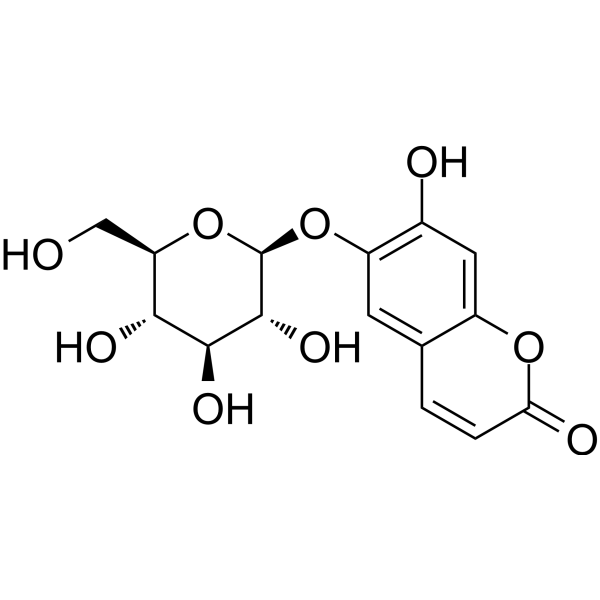
Esculin
5 Publications Verification
|
p38 MAPK
|
Inflammation/Immunology
Cancer
|
|
Esculin is a fluorescent coumarin glucoside, the active ingredient in ash bark. Esculin has antidiabetic effects, improves cognitive impairment in experimental diabetic nephropathy (DN) via the MAPK signaling pathway, and exerts antioxidant stress and anti-inflammatory effects. Esculin also has anticancer, antibacterial, antiviral, neuroprotective, antithrombotic, and therapeutic properties for eye diseases .
|
-
-
- HY-10274
-
|
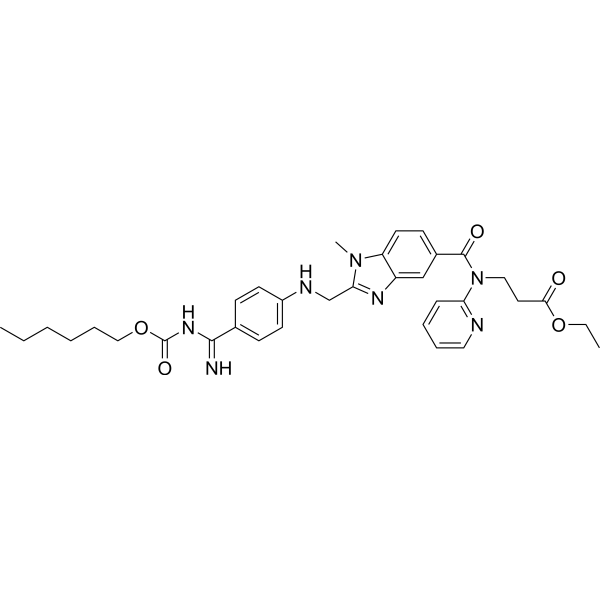
BIBR 1048
|
Thrombin
|
Cardiovascular Disease
|
|
Dabigatran etexilate (BIBR 1048) is an orally active proagent of Dabigatran (a direct inhibitor of thrombin). Dabigatran etexilate has anticoagulant effects and is used for the prophylaxis of venousthromboembolism and stroke due to atrial fibrillation .
|
-
-
- HY-P2813
-
Hirudin
3 Publications Verification
|
Thrombin
Apoptosis
|
Cardiovascular Disease
Cancer
|
|
Hirudin is a thrombin inhibitor with blood anticoagulant property. Hirudin has potent anti-thrombotic, wound repair, anti-fibrosis, anti-tumor and anti-hyperuricemia effects. Hirudin also affects diabetic complications, cerebral hemorrhage, and others .
|
-
-
- HY-P2970
-
|
|
Apoptosis
PARP
Caspase
Bcl-2 Family
Bacterial
Interleukin Related
|
Infection
Inflammation/Immunology
Cancer
|
|
Stem bromelain (EC 3.4.22.32) is a cysteine protease and antibacterial agent. Stem bromelain can be isolated from the stem of the pineapple (Ananas comosus). Stem bromelain induces dose-dependent secretion of IL-12p70, and IL-6, induces Apoptosis, causes cleavage of full-length PARP protein, Caspase 3, and Caspase 9, increases Bax, and decreases Bcl-2. Stem bromelain possesses various fibrinolytic, antiedema, antithrombotic, and anti-inflammatory activities. Stem bromelain also exhibits in vivo antitumor and antileukemic activities, as well as antimetastatic effects. Stem bromelain has antimycobacterial activity. Stem bromelain provides protection against lead poisoning .
|
-
-
- HY-B1271
-
|
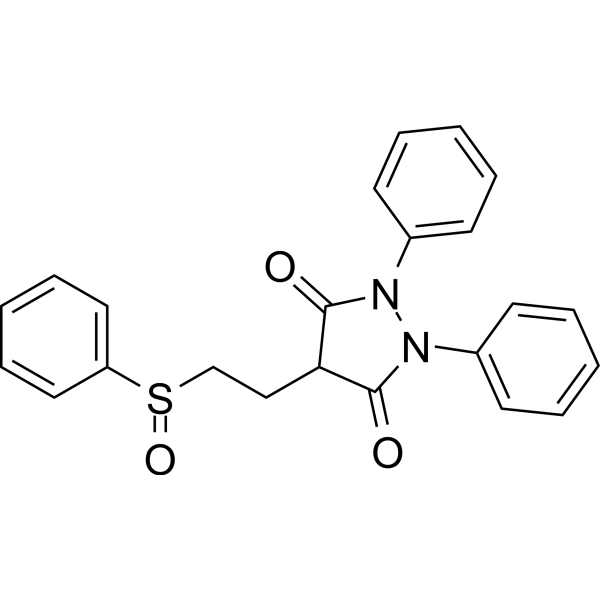
G-28315
|
Endogenous Metabolite
|
Inflammation/Immunology
|
|
Sulfinpyrazone (G-28315) is an orally active and potent uricosuric agent for chronic and intermittent gouty arthritis. Sulfinpyrazone has antithrombotic and platelet inhibitory effects .
|
-
-
- HY-113439
-
12-HETE
2 Publications Verification
|
Apoptosis
|
Cardiovascular Disease
Inflammation/Immunology
|
|
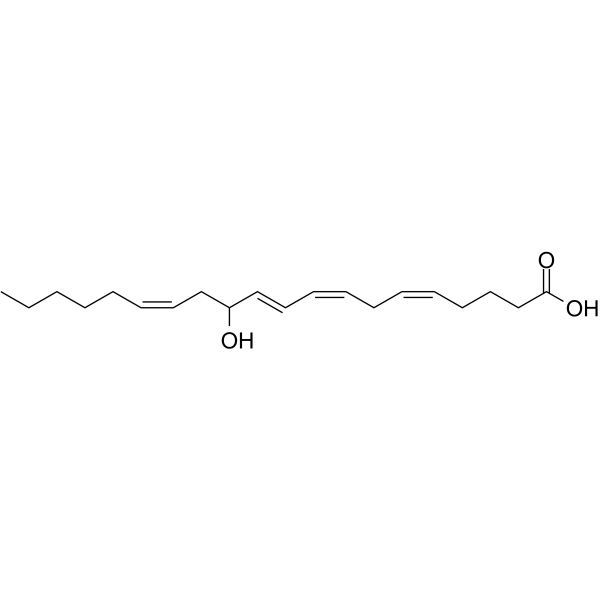
12-HETE, a major metabolic product of arachidonic acid using 12-LOX catalysis, inhibits cell apoptosis in a dose-dependent manner. 12-HETE promotes the activation and nuclear translocation of NF-κB through the integrin-linked kinase (ILK) pathway .12-HETE has both anti-thrombotic and pro-thrombotic effects . 12-HETE is a neuromodulator .
|
-
-
- HY-N3097
-
-
-
- HY-10274A
-
|
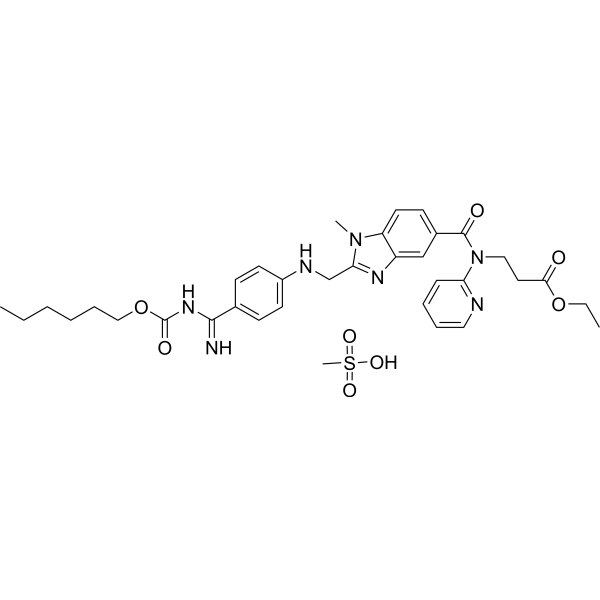
BIBR 1048MS; Dabigatran etexilate methanesulfonate
|
Thrombin
|
Cardiovascular Disease
|
|
Dabigatran etexilate mesylate (BIBR 1048MS) is an orally active proagent of Dabigatran (a direct inhibitor of thrombin). Dabigatran etexilate mesylate has anticoagulant effects and is used for the prophylaxis of venousthromboembolism and stroke due to atrial fibrillation .
|
-
-
- HY-113439S
-
|
|
Apoptosis
|
Cardiovascular Disease
Inflammation/Immunology
|
|
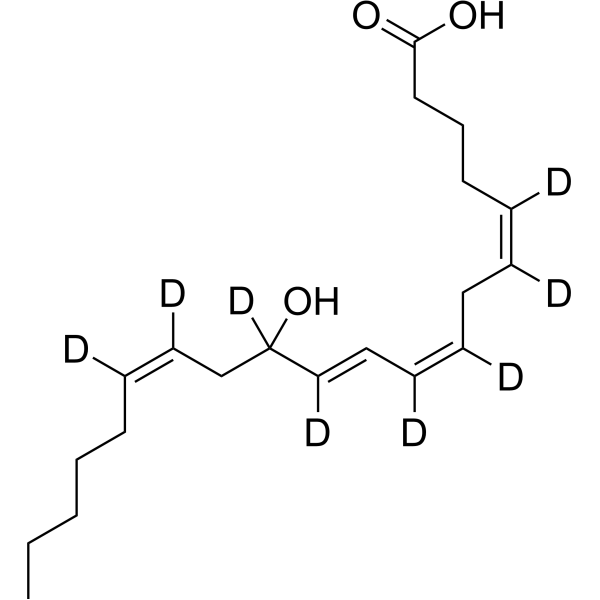
12-HETE-d8 is the deuterium labeled 12-HETE. 12-HETE, a major metabolic product of arachidonic acid using 12-LOX catalysis, inhibits cell apoptosis in a dose-dependent manner. 12-HETE promotes the activation and nuclear translocation of NF-κB through the integrin-linked kinase (ILK) pathway .12-HETE has both anti-thrombotic and pro-thrombotic effects . 12-HETE is a neuromodulator .
|
-
-
- HY-122542
-
|
|
PAI-1
Thrombin
|
Inflammation/Immunology
|
|
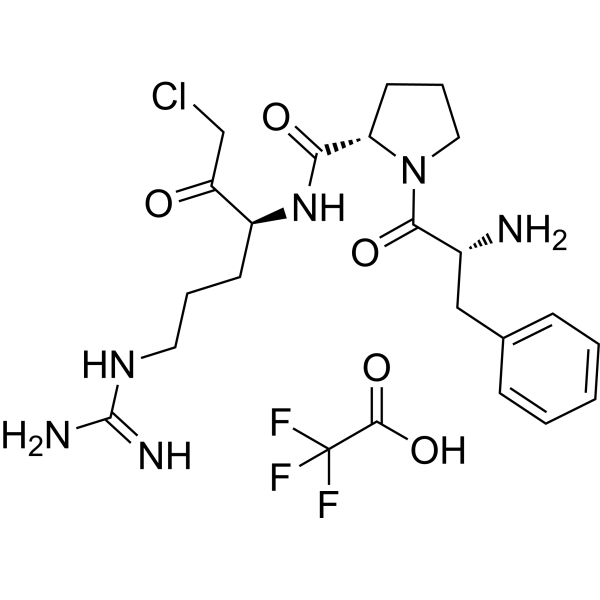
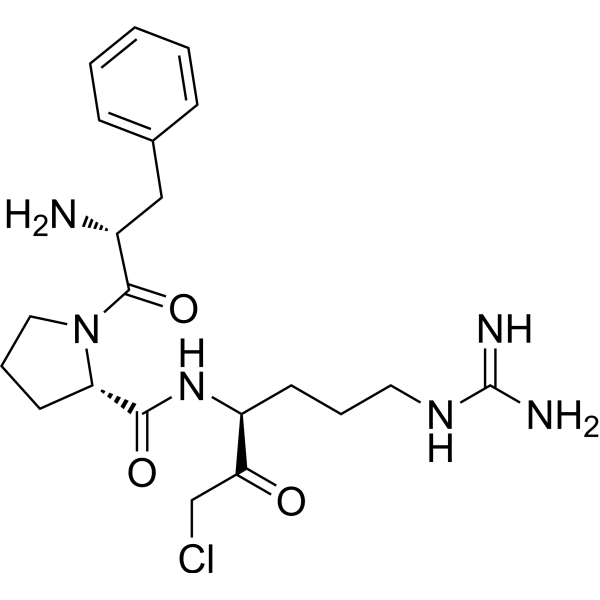
PPACK is a potent, peptidic inhibitor targeting thrombin and granzyme GZMK. PPACK specifically blocks the activities of thrombin and GZMK, thereby inhibiting thrombin-mediated PAR-1 cleavage, as well as downstream inflammatory and procoagulant signaling pathways. Through stabilizing IκB proteins, blocking NF-κB activation and reducing systemic levels of proinflammatory/procoagulant biomarkers, PPACK exerts multiple effects including anti-inflammatory, antithrombotic, barrier repair, and inhibition of atherosclerotic plaque progression. PPACK binds to platelets without interference from kininogen, effectively limiting acute thrombus growth and reducing eosinophil infiltration and goblet cell hyperplasia in asthma models. PPACK is an important tool molecule for investigating the mechanisms of atherosclerosis, asthma and related thromboinflammatory diseases .
|
-
-
- HY-N8903
-
-
-
- HY-118969
-
|
|
Factor Xa
Ser/Thr Protease
|
Cardiovascular Disease
|
|
BMS-262084 is a potent, selective and irreversible inhibitor of factor XIa, with an IC50 of 2.8 nM against human factor XIa. BMS-262084 also inhibits human tryptase (IC50=5 nM). BMS-262084 exhibits antithrombotic effects .
|
-
-
- HY-N1400
-
|
|
PKC
|
Cardiovascular Disease
|
|
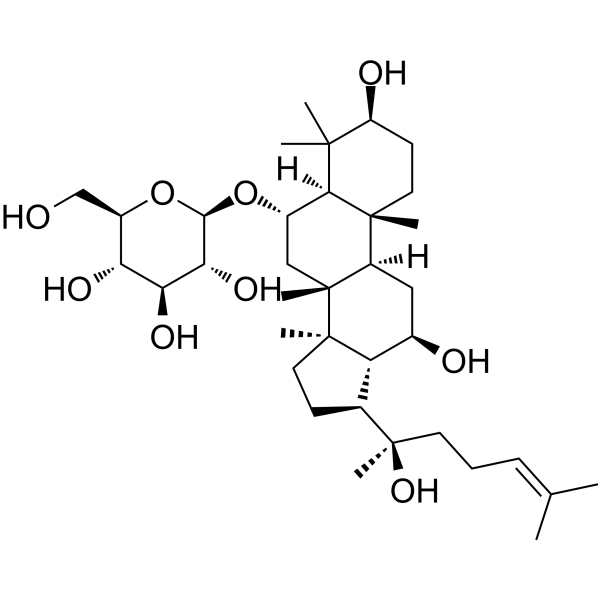
(20R)-Ginsenoside Rh1 is the R-isomer of Ginsenoside Rh1 (HY-N0604), and it is found in red ginseng, ginseng, and other sources. (20R)-Ginsenoside Rh1 inhibits thrombin-induced conversion of fibrinogen to fibrin, exerting anticoagulant and antithrombotic effects .
|
-
-
- HY-124858
-
|
|
STAT
JAK
Apoptosis
|
Cardiovascular Disease
Cancer
|
|
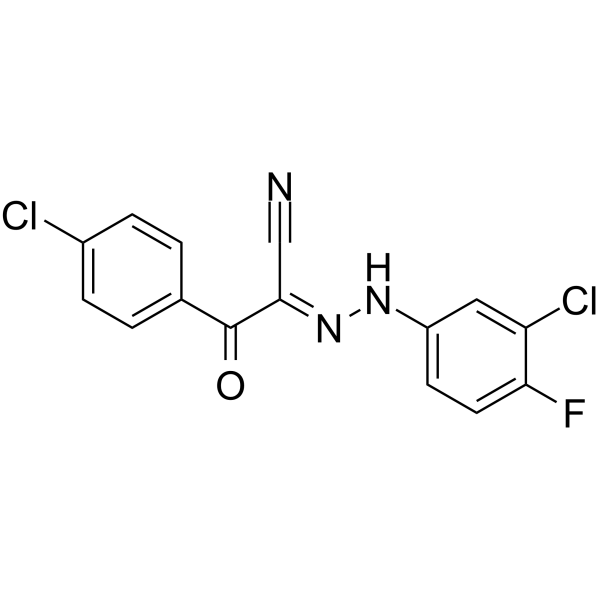
SC99 is an orally active, selective STAT3 inhibitor targeting JAK2-STAT3 pathway. SC99 docks into the ATP-binding pocket of JAK2. SC99 inhibits phosphorylation of JAK2 and STAT3 with no effects on the other kinases associated with STAT3 signaling. SC99 inhibits platelet activation, aggregation and displays potent anti-myeloma, anti-thrombotic activities .
|
-
-
- HY-N2082
-
|
Cacticin
|
Thrombin
COX
ERK
JNK
Factor Xa
|
Cardiovascular Disease
Inflammation/Immunology
|
|
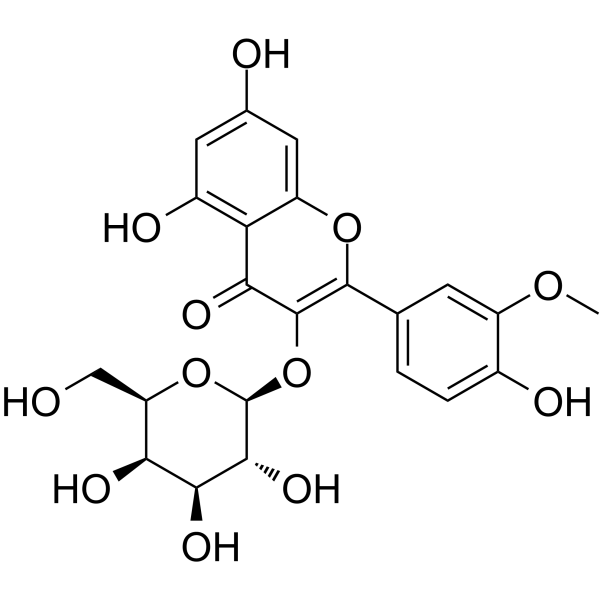
Isorhamnetin 3-O-galactoside (Cacticin) is a flavonoid glycoside that can be isolated from Oenanthe javanica, with antithrombotic and profibrinolytic activities. Isorhamnetin 3-O-galactoside inhibits the activities of thrombin and factor Xa (FXa) and reduces thrombin-catalyzed fibrin polymerization maximum rate. Isorhamnetin 3-O-galactoside suppresses TNF-α-induced PAI-1 secretion, decreases the PAI-1/tissue-type plasminogen activator (t-PA) ratio, and inhibits FXa production and FVa/FXa-mediated thrombin generation. Isorhamnetin 3-O-galactoside exerts protective effects against Carbon tetrachloride (CCl4) (HY-Y0298)-induced hepatic injury in mice. Isorhamnetin 3-O-galactoside can be used for the study of liver injury-related diseases and thrombotic vascular diseases .
|
-
-
- HY-B1271R
-
|
G-28315 (Standard)
|
Reference Standards
Endogenous Metabolite
|
Inflammation/Immunology
|
|
Sulfinpyrazone (Standard) is the analytical standard of Sulfinpyrazone. This product is intended for research and analytical applications. Sulfinpyrazone (G-28315) is an orally active and potent uricosuric agent for chronic and intermittent gouty arthritis. Sulfinpyrazone has antithrombotic and platelet inhibitory effects .
|
-
-
- HY-P99560
-
|
C4G1; YM-337
|
Integrin
|
Cardiovascular Disease
|
|
Tadocizumab (C4G1; YM-337) is a humanized monoclonal antibody tageting integrin αIIbβ3. Tadocizumab has antiplatelet and antithrombotic effects, and can be used for cardiovascular disease research .
|
-
-
- HY-14853
-
|
YM150
|
Factor Xa
Ser/Thr Protease
|
Cardiovascular Disease
|
|
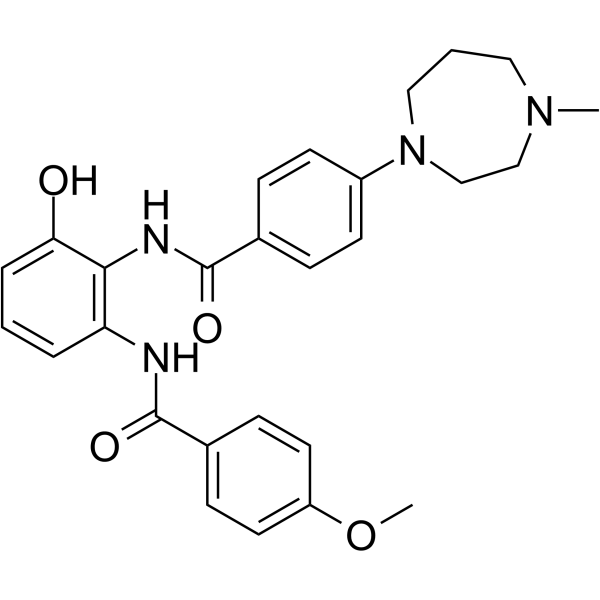
Darexaban (YM150) is a potent, selective and orally active factor Xa (FXa) inhibitor with an IC50 of 54.6 nM. Darexaban shows high selectivity against other related serine proteases, such as trypsin, thrombin, and kallikrein. Darexaban has anticoagulant and antithrombotic effects .
|
-
-
- HY-N0188R
-
|
|
Reference Standards
p38 MAPK
|
Inflammation/Immunology
Cancer
|
|
Esculin (Standard) is the analytical standard of Esculin. This product is intended for research and analytical applications. Esculin is a fluorescent coumarin glucoside, the active ingredient in ash bark. Esculin has antidiabetic effects, improves cognitive impairment in experimental diabetic nephropathy (DN) via the MAPK signaling pathway, and exerts antioxidant stress and anti-inflammatory effects. Esculin also has anticancer, antibacterial, antiviral, neuroprotective, antithrombotic, and therapeutic properties for eye diseases .
|
-
-
- HY-10274R
-
|
BIBR 1048 (Standard)
|
Reference Standards
Thrombin
|
Cardiovascular Disease
|
|
Dabigatran etexilate (Standard) is the analytical standard of Dabigatran etexilate. This product is intended for research and analytical applications. Dabigatran etexilate (BIBR 1048) is an orally active proagent of Dabigatran (a direct inhibitor of thrombin). Dabigatran etexilate has anticoagulant effects and is used for the prophylaxis of venousthromboembolism and stroke due to atrial fibrillation .
|
-
-
- HY-15759A
-
|
Ro 46-6240 hydrate; Ro 46-6240/010 hydrate
|
Thrombin
|
Cardiovascular Disease
|
|
Napsagatran (Ro 46-6240) hydrate is a potent thrombin inhibitor. Napsagatran hydrate exhibits anticoagulant effects in vitro and in vivo. Napsagatran hydrate can be used in antithrombotic research [1][2].
|
-
-
- HY-172905
-
|
|
Others
|
Cardiovascular Disease
|
|
BCX-3607 is an orally active tissue factor/factor VIIa (TF-FVIIa) inhibitor (IC50: 4 nM). BCX-3607 blocks the extrinsic coagulation pathway by inhibiting the TF-FVIIa complex and significantly prolongs the prothrombin time (PT). BCX-3607 has a higher selectivity for TF-FVIIa than other serine proteases (such as thrombin, FXa, etc.). BCX-3607 can reduce thrombus weight and inflammatory response, and has both anti-thrombotic and anti-inflammatory effects. BCX-3607 can be used in the study of thrombosis-related diseases .
|
-
-
- HY-105919
-
|
|
Factor Xa
|
Cardiovascular Disease
|
|
Naroparcil is an orally active antithrombotic agent. Naroparcil exhibits antithrombotic effects in rabbit Wessler stasis model with EC50s of 21.9 mg/kg and 36.0 mg/kg after respectively intravenous injection and oral administration .
|
-
-
- HY-125615
-
|
|
Glycoprotein VI
|
Cardiovascular Disease
Others
|
|
DMP 728 methanesulfonate is a platelet glycoprotein (GP) IIb/IIIa receptor antagonist. DMP 728 methanesulfonate shows dose-dependent antiplatelet and antithrombotic effects. DMP 728 methanesulfonate can be used in the study of effective antithrombotic agents in thromboembolic diseases of coronary and peripheral arteries .
|
-
-
- HY-15759
-
|
Ro 46-6240; Ro 46-6240/010
|
Thrombin
|
Cardiovascular Disease
|
|
Napsagatran (Ro 46-6240) is a potent thrombin inhibitor. Napsagatran exhibits anticoagulant effects in vitro and in vivo. Napsagatran can be used in antithrombotic research [1][2].
|
-
-
- HY-108555
-
|
|
Protease Activated Receptor (PAR)
|
Cardiovascular Disease
|
|
FR171113 is a specific and non-peptide thrombin receptor antagonist. FR171113 exhibits the antithrombotic effects of a PAR1 antagonist. FR171113 inhibits thrombin-induced platelet aggregation with an IC50 of 0.29 μM. .
|
-
-
- HY-P10949
-
|
|
Glycoprotein VI
|
Cardiovascular Disease
|
|
Pep-10L peptide is a glycoprotein VI (GPVI) antagonist with Ki values of 180, 225, and 179 μM for CPR, GPO-1, and Type 1 collagen, respectively. Pep-10L peptide has anti-thrombotic effects .
|
-
-
- HY-19229
-
|
|
Integrin
|
Cardiovascular Disease
|
|
TAK-029 is a potent GP IIb/IIIa antagonist. TAK-029 has potent antithrombotic effects with bleeding time (BT) prolongation in arterial thrombosis models. TAK-029 can be used for the research of various arterial thrombotic diseases .
|
-
-
- HY-18201
-
|
|
Protease Activated Receptor (PAR)
|
Cardiovascular Disease
|
|
SCH-602539 is a selective PAR-1 antagonist. SCH-602539 inhibits platelet aggregation in response to PAR-1-selective high-affinity thrombin receptor agonist peptide. SCH-602539 exhibits synergistic antithrombotic effects when used in combination with Cangrelor (HY-19638) .
|
-
-
- HY-10274AR
-
|
BIBR 1048MS (Standard); Dabigatran etexilate methanesulfonate (Standard)
|
Reference Standards
Thrombin
|
Cardiovascular Disease
|
|
Dabigatran etexilate (mesylate) (Standard) is the analytical standard of Dabigatran etexilate (mesylate). This product is intended for research and analytical applications. Dabigatran etexilate mesylate (BIBR 1048MS) is an orally active proagent of Dabigatran (a direct inhibitor of thrombin). Dabigatran etexilate mesylate has anticoagulant effects and is used for the prophylaxis of venousthromboembolism and stroke due to atrial fibrillation .
|
-
-
- HY-P3082
-
|
|
Endogenous Metabolite
|
Cardiovascular Disease
|
|
SKF 106760 is a potent platelet fibrin receptor (glycoprotein IIb/IIIa) antagonist with significant antiplatelet and antithrombotic activities. SKF 106760 inhibits platelet aggregation in dogs in vitro and prevents thrombus formation in stenotic carotid arteries. SKF 106760 has also shown elimination effects against aspirin-resistant thrombi that develop in the setting of high-grade stenosis .
|
-
-
- HY-N1400R
-
|
|
Reference Standards
PKC
|
Cardiovascular Disease
|
|
(20R)-Ginsenoside Rh1 (Standard) is the analytical standard of (20R)-Ginsenoside Rh1 (HY-N1400). This product is intended for research and analytical applications. (20R)-Ginsenoside Rh1 is the R-isomer of Ginsenoside Rh1 (HY-N0604), and it is found in red ginseng, ginseng, and other sources. (20R)-Ginsenoside Rh1 inhibits thrombin-induced conversion of fibrinogen to fibrin, exerting anticoagulant and antithrombotic effects .
|
-
-
- HY-106115
-
|
RGH 2981; RT-3003
|
Others
|
Cardiovascular Disease
|
|
Vintoperol (RGH 2981; RT-3003) is a potent and orally active antithrombotic agent. Vintoperol interferes with platelet aggregation and has antithrombotic effects, protecting mice from retrograde and anterograde amnesia induced by traumatic brain injury .
|
-
-
- HY-N3097R
-
-
-
- HY-108292R
-
|
|
Reference Standards
PAI-1
Thrombin
|
Cancer
|
|
Propacetamol (hydrochloride) (Standard) is the analytical standard of Propacetamol (hydrochloride). This product is intended for research and analytical applications. Propacetamol hydrochloride is a potent, peptidic inhibitor targeting thrombin and granzyme GZMK. Propacetamol hydrochloride specifically blocks the activities of thrombin and GZMK, thereby inhibiting thrombin-mediated PAR-1 cleavage, as well as downstream inflammatory and procoagulant signaling pathways. Through stabilizing IκB proteins, blocking NF-κB activation and reducing systemic levels of proinflammatory/procoagulant biomarkers, Propacetamol hydrochloride exerts multiple effects including anti-inflammatory, antithrombotic, barrier repair, and inhibition of atherosclerotic plaque progression. Propacetamol hydrochloride binds to platelets without interference from kininogen, effectively limiting acute thrombus growth and reducing eosinophil infiltration and goblet cell hyperplasia in asthma models. Propacetamol hydrochloride is an important tool molecule for investigating the mechanisms of atherosclerosis, asthma and related thromboinflammatory diseases .
|
-
-
- HY-W879307
-
|
|
Drug Derivative
|
Cardiovascular Disease
|
|
CP-201 is a 1,4-Naphthoquinone (HY-W015490) derivative with antiplatelet and antithrombotic activities. CP-201 shows concentration-dependent inhibitory effects on platelet aggregation induced by collagen and thrombin, with IC50 values of 4.1 and 4.6 μM, respectively. CP-201 displays a potent protective effect on pulmonary thrombosis in mice. CP-201 can be used for antithrombotic research .
|
-
-
- HY-P991993
-
|
|
Factor Xa
|
Cardiovascular Disease
|
|
AB054 is a humanized monoclonal antibody targeting factor XII (FXII). AB054 inhibits FXII activation and FXIIa activity through specific binding to the catalytic domain of FXII, and exerts antithrombotic effects in a concentration-dependent manner. AB054 can be used in studies related to thrombosis .
|
-
-
- HY-19175
-
|
FR-144633
|
Thrombin
Integrin
|
Cardiovascular Disease
|
|
FK 633 (FR-144633) is a fibrinogen inhibitor and peptide mimetic GPⅡbⅡa receptor antagonist. FK 633 has anti-platelet and anti-thrombotic effects. FK 633 inhibits ADP-, collagen-, thrombin-, and PAF-induced platelet aggregation with IC50 values of 103, 87, 98, and 239 nM, respectively .
|
-
-
- HY-165360
-
|
|
Thrombin
|
Cardiovascular Disease
|
|
JJ1 is a selective α-thrombin inhibitor with a Ki of 0.019 μM. JJ1 directly binds to the active site of α-thrombin to block its catalytic activity. JJ1 exhibits antithrombotic effects and prolongs activated partial thromboplastin time, prothrombin time, and tail bleeding time in mice. JJ1 can be used for the research of thrombotic diseases .
|
-
-
- HY-105514
-
|
|
Drug Derivative
|
Cardiovascular Disease
|
|
KP-10614 is a potent, orally active platelet aggregation inhibitor. KP-10614 inhibits platelet aggregation induced by ADP with IC50 of 1 nM. KP-10614 causes dose-dependent inhibition of ex vivo platelet aggregation in rats. KP-10614 shows antithrombotic effects in various thrombosis models. KP-10614 can be used for thrombotic diseases research .
|
-
-
- HY-105931
-
|
RS-82856
|
Phosphodiesterase (PDE)
|
Cardiovascular Disease
Endocrinology
|
|
Lixazinone (RS-82856) is a selective inhibitor of cGMP-inhibited phosphodiesterase (PDE3) with an IC50 value of 22 nM. Lixazinone exhibits positive inotropic effects, afterload reduction and antithrombotic properties. Lixazinone increases cyclic adenosine monophosphate (cAMP) levels in human platelets, inhibits thrombin-induced aggregation of human platelets, and blocks the photolabeling of PDE3 active sites by [ 32P]cGMP. Lixazinone can be used in the research of polycystic kidney disease and congestive heart failure .
|
-
-
- HY-113822
-
|
RS-82856 hydrogensulfate
|
Phosphodiesterase (PDE)
|
Cardiovascular Disease
Endocrinology
|
|
Lixazinone (RS-82856) hydrogensulfate is a selective inhibitor of cGMP-inhibited phosphodiesterase (PDE3) with an IC50 value of 22 nM. Lixazinone hydrogensulfate exhibits positive inotropic effects, afterload reduction and antithrombotic properties. Lixazinone hydrogensulfate increases cyclic adenosine monophosphate (cAMP) levels in human platelets, inhibits thrombin-induced aggregation of human platelets, and blocks the photolabeling of PDE3 active sites by [ 32P]cGMP. Lixazinone hydrogensulfate can be used in the research of polycystic kidney disease and congestive heart failure .
|
-
-
- HY-167848
-
|
XL-118
|
Others
|
Cardiovascular Disease
|
|
DMP-728 free base (XL-118) is a highly potent and selective GPIIb/IIIa antagonist with antiplatelet and antithrombotic activities. DMP-728 free base can inhibit ADP-induced human platelet aggregation in vitro, with an IC50 of 46 nmol/L, and can significantly reduce the interaction between fibrinogen and human platelets or Binding of purified human GPIIb/IIIa receptors. DMP-728 free base exhibits dose-dependent antiplatelet effects in anesthetized mongrel dogs, effectively inhibiting ADP-induced platelet aggregation and prolonging template bleeding time .
|
-
| Cat. No. |
Product Name |
Target |
Research Area |
-
- HY-P2813
-
Hirudin
3 Publications Verification
|
Thrombin
Apoptosis
|
Cardiovascular Disease
Cancer
|
|
Hirudin is a thrombin inhibitor with blood anticoagulant property. Hirudin has potent anti-thrombotic, wound repair, anti-fibrosis, anti-tumor and anti-hyperuricemia effects. Hirudin also affects diabetic complications, cerebral hemorrhage, and others .
|
-
- HY-122542
-
|
|
PAI-1
Thrombin
|
Inflammation/Immunology
|
|
PPACK is a potent, peptidic inhibitor targeting thrombin and granzyme GZMK. PPACK specifically blocks the activities of thrombin and GZMK, thereby inhibiting thrombin-mediated PAR-1 cleavage, as well as downstream inflammatory and procoagulant signaling pathways. Through stabilizing IκB proteins, blocking NF-κB activation and reducing systemic levels of proinflammatory/procoagulant biomarkers, PPACK exerts multiple effects including anti-inflammatory, antithrombotic, barrier repair, and inhibition of atherosclerotic plaque progression. PPACK binds to platelets without interference from kininogen, effectively limiting acute thrombus growth and reducing eosinophil infiltration and goblet cell hyperplasia in asthma models. PPACK is an important tool molecule for investigating the mechanisms of atherosclerosis, asthma and related thromboinflammatory diseases .
|
-
- HY-P10949
-
|
|
Glycoprotein VI
|
Cardiovascular Disease
|
|
Pep-10L peptide is a glycoprotein VI (GPVI) antagonist with Ki values of 180, 225, and 179 μM for CPR, GPO-1, and Type 1 collagen, respectively. Pep-10L peptide has anti-thrombotic effects .
|
-
- HY-P3082
-
|
|
Endogenous Metabolite
|
Cardiovascular Disease
|
|
SKF 106760 is a potent platelet fibrin receptor (glycoprotein IIb/IIIa) antagonist with significant antiplatelet and antithrombotic activities. SKF 106760 inhibits platelet aggregation in dogs in vitro and prevents thrombus formation in stenotic carotid arteries. SKF 106760 has also shown elimination effects against aspirin-resistant thrombi that develop in the setting of high-grade stenosis .
|
| Cat. No. |
Product Name |
Target |
Research Area |
Image |
-
- HY-P99560
-
|
C4G1; YM-337
|
Integrin
|
Cardiovascular Disease
|
|
Tadocizumab (C4G1; YM-337) is a humanized monoclonal antibody tageting integrin αIIbβ3. Tadocizumab has antiplatelet and antithrombotic effects, and can be used for cardiovascular disease research .
|
-
(5)
-
- HY-P991993
-
|
|
Factor Xa
|
Cardiovascular Disease
|
|
AB054 is a humanized monoclonal antibody targeting factor XII (FXII). AB054 inhibits FXII activation and FXIIa activity through specific binding to the catalytic domain of FXII, and exerts antithrombotic effects in a concentration-dependent manner. AB054 can be used in studies related to thrombosis .
|
-
(5)
| Cat. No. |
Product Name |
Category |
Target |
Chemical Structure |
-
- HY-N0188
-
-
-
- HY-P2813
-
-
-
- HY-P2970
-
|
|
Ananas comosus(L.) Merr.
Structural Classification
Natural Products
Classification of Application Fields
Bromeliaceae
Plants
Inflammation/Immunology
Disease Research Fields
Cancer
|
Apoptosis
PARP
Caspase
Bcl-2 Family
Bacterial
Interleukin Related
|
|
Stem bromelain (EC 3.4.22.32) is a cysteine protease and antibacterial agent. Stem bromelain can be isolated from the stem of the pineapple (Ananas comosus). Stem bromelain induces dose-dependent secretion of IL-12p70, and IL-6, induces Apoptosis, causes cleavage of full-length PARP protein, Caspase 3, and Caspase 9, increases Bax, and decreases Bcl-2. Stem bromelain possesses various fibrinolytic, antiedema, antithrombotic, and anti-inflammatory activities. Stem bromelain also exhibits in vivo antitumor and antileukemic activities, as well as antimetastatic effects. Stem bromelain has antimycobacterial activity. Stem bromelain provides protection against lead poisoning .
|
-
-
- HY-B1271
-
-
-
- HY-113439
-
12-HETE
2 Publications Verification
|
Microorganisms
Source Classification
|
Apoptosis
|
|
12-HETE, a major metabolic product of arachidonic acid using 12-LOX catalysis, inhibits cell apoptosis in a dose-dependent manner. 12-HETE promotes the activation and nuclear translocation of NF-κB through the integrin-linked kinase (ILK) pathway .12-HETE has both anti-thrombotic and pro-thrombotic effects . 12-HETE is a neuromodulator .
|
-
-
- HY-N3097
-
-
-
- HY-N1400
-
-
-
- HY-N2082
-
|
Cacticin
|
Cardiovascular Disease
Flavonols
Flavonoids
Typhaceae
Classification of Application Fields
Typha angustifolia L.
Phenols
Polyphenols
Plants
Disease Research Fields
Source Classification
|
Thrombin
COX
ERK
JNK
Factor Xa
|
|
Isorhamnetin 3-O-galactoside (Cacticin) is a flavonoid glycoside that can be isolated from Oenanthe javanica, with antithrombotic and profibrinolytic activities. Isorhamnetin 3-O-galactoside inhibits the activities of thrombin and factor Xa (FXa) and reduces thrombin-catalyzed fibrin polymerization maximum rate. Isorhamnetin 3-O-galactoside suppresses TNF-α-induced PAI-1 secretion, decreases the PAI-1/tissue-type plasminogen activator (t-PA) ratio, and inhibits FXa production and FVa/FXa-mediated thrombin generation. Isorhamnetin 3-O-galactoside exerts protective effects against Carbon tetrachloride (CCl4) (HY-Y0298)-induced hepatic injury in mice. Isorhamnetin 3-O-galactoside can be used for the study of liver injury-related diseases and thrombotic vascular diseases .
|
-
-
- HY-B1271R
-
-
-
- HY-N0188R
-
|
|
Structural Classification
Monophenols
other families
Coumarins
Phenols
Phenylpropanoids
Plants
Source Classification
|
Reference Standards
p38 MAPK
|
|
Esculin (Standard) is the analytical standard of Esculin. This product is intended for research and analytical applications. Esculin is a fluorescent coumarin glucoside, the active ingredient in ash bark. Esculin has antidiabetic effects, improves cognitive impairment in experimental diabetic nephropathy (DN) via the MAPK signaling pathway, and exerts antioxidant stress and anti-inflammatory effects. Esculin also has anticancer, antibacterial, antiviral, neuroprotective, antithrombotic, and therapeutic properties for eye diseases .
|
-
-
- HY-N1400R
-
-
-
- HY-N3097R
-
-
| Cat. No. |
Product Name |
Chemical Structure |
-
- HY-113439S
-
2 Publications Verification
|
|
12-HETE-d8 is the deuterium labeled 12-HETE. 12-HETE, a major metabolic product of arachidonic acid using 12-LOX catalysis, inhibits cell apoptosis in a dose-dependent manner. 12-HETE promotes the activation and nuclear translocation of NF-κB through the integrin-linked kinase (ILK) pathway .12-HETE has both anti-thrombotic and pro-thrombotic effects . 12-HETE is a neuromodulator .
|
-
Your information is safe with us. * Required Fields.
Inquiry Information
- Product Name:
- Cat. No.:
- Quantity:
- MCE Japan Authorized Agent:

