Search Result
Results for "
cell-impermeant
" in MedChemExpress (MCE) Product Catalog:
-
- HY-D0861
-
|
|
Biochemical Assay Reagents
|
Inflammation/Immunology
|
|
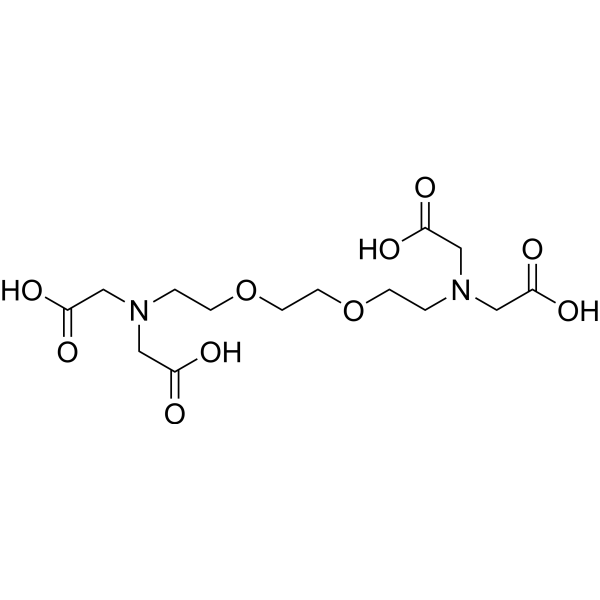
EGTA is a cell-impermeant specific calcium ion chelator. EGTA has an apparent calcium dissociation constant (Kd) of 60.5 nM at physiological pH (7.4) and has very high specificity for Ca 2+ over Mg 2+ (Mg 2+ Kd 1-10 mM). EGTA significantly inhibits the substrate adherence capacity of inflammatory macrophages .
|
-
-
- HY-111496
-
|
|
Biochemical Assay Reagents
|
Others
|
|
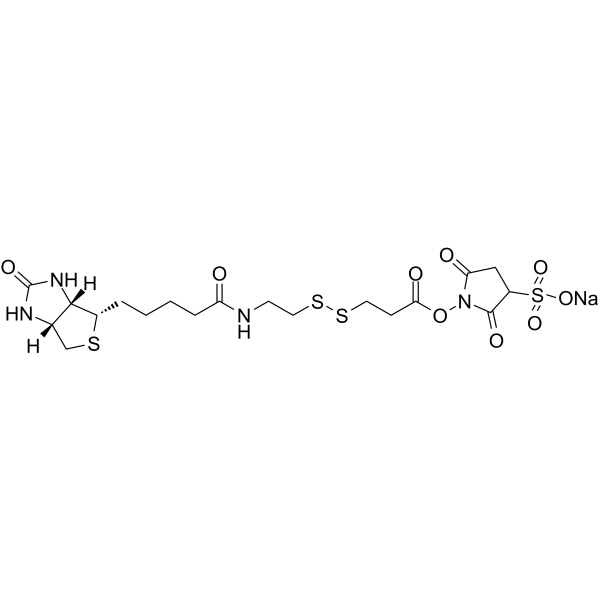
Sulfo-NHS-SS-biotin sodium is a long-chain cleavable and cell-impermeant amine-reactive biotinylation reagent. Sulfo-NHS-SS-biotin sodium can be used for the labeling and purifying of cell-surface protein .
|
-
-
- HY-100168
-
BAPTA
Maximum Cited Publications
36 Publications Verification
|
Phospholipase
|
Others
|
|
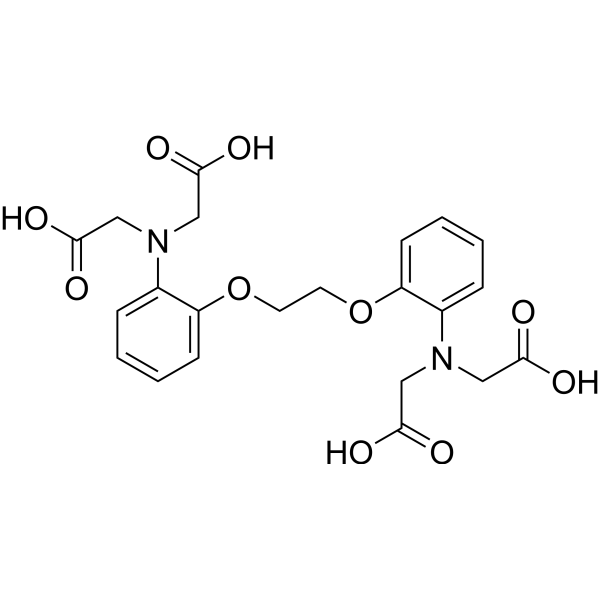
BAPTA is a selective and cell-impermeant chelator for calcium. BAPTA has high selectivity against magnesium and calcium. BAPTA can also inhibit phospholipase C activity independently of their role as Ca 2+ chelators .
|
-
-
- HY-D1020
-
-
-
- HY-D0023
-
|
HPTS; Solvent Green 7
|
Environmental Pollutants
Fluorescent Dye
|
Others
|
|
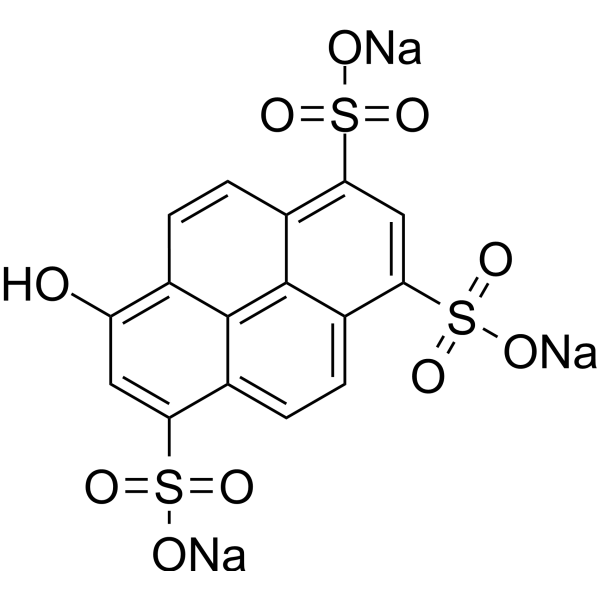
Pyranine (HPTS; Solvent Green 7) is a cell-impermeant pH-sensitive fluorescent indicator. Pyranine acts as a class of fluorescent chemosensor for the Cu + ion. Pyranine is used as a coloring agent, biological stain, optical detecting reagent, and pH indicator (Ex/Em = 450/510 nm) .
|
-
-
- HY-101882
-
BCECF
3 Publications Verification
2′,7′-Bis(2-carboxyethyl)-5(6)-carboxyfluorescein
|
Fluorescent Dye
|
Others
|
|
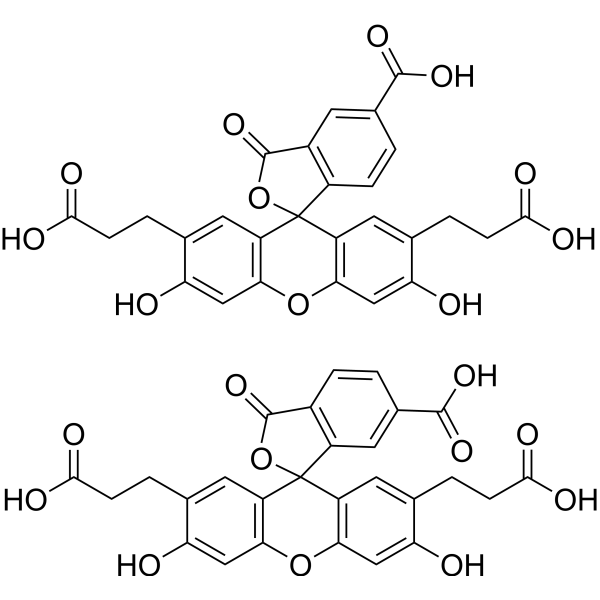
BCECF is a cell-impermeant pH-sensitive fluorescent dye. BCECF allows measurements in the physiological pH range 6.0-8.0. Excitation ratio: 490/440 nm; Emission intensity: 535 nm.
|
-
-
- HY-100168A
-
|
|
Phospholipase
|
Others
|
|
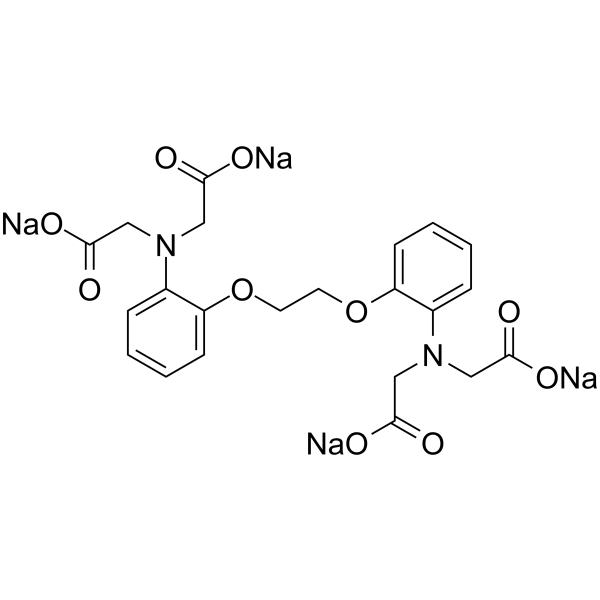
BAPTA tetrasodium is a selective and cell-impermeant chelator for calcium. BAPTA tetrasodium has high selectivity against magnesium and calcium. BAPTA can also inhibit phospholipase C activity independently of their role as Ca 2+ chelators .
|
-
-
- HY-126774
-
DAF-FM
1 Publications Verification
|
Fluorescent Dye
|
Others
|
|
DAF-FM is a cell-impermeant diaminofluorescein, which can be used as fluorescent indicator for nitric oxide (NO) with good pH tolerance .
|
-

-
- HY-D0861A
-
|
|
Biochemical Assay Reagents
|
Inflammation/Immunology
|
|
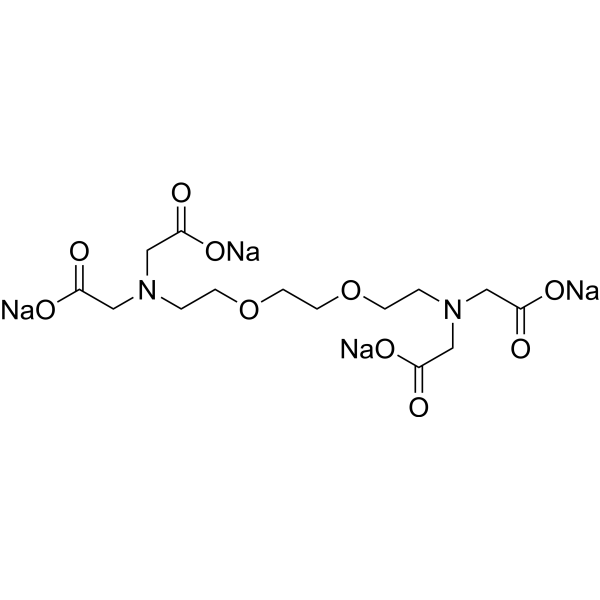
EGTA tetrasodium is a cell-impermeant specific calcium ion chelator. EGTA tetrasodium has an apparent calcium dissociation constant (Kd) of 60.5 nM at physiological pH (7.4) and has very high specificity for Ca 2+ over Mg 2+ (Mg 2+ Kd 1-10 mM). EGTA tetrasodium significantly inhibits the substrate adherence capacity of inflammatory macrophages .
|
-
-
- HY-117070
-
|
|
Fluorescent Dye
|
Others
|
|
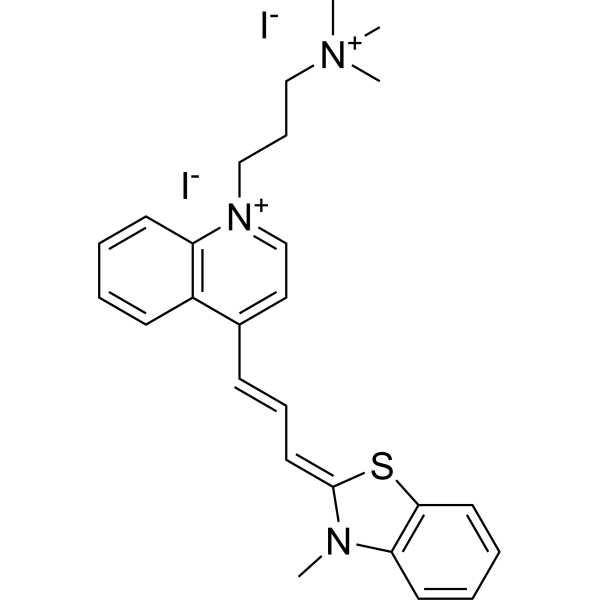
TO-PRO-3 iodide is a cell-impermeant nucleic acid stain. TO-PRO-3 iodide is useful as a nuclear counterstain and dead cell indicator (Ex/Em = 642/661 nm).
|
-
-
- HY-100168B
-
|
|
Phospholipase
|
Others
|
|
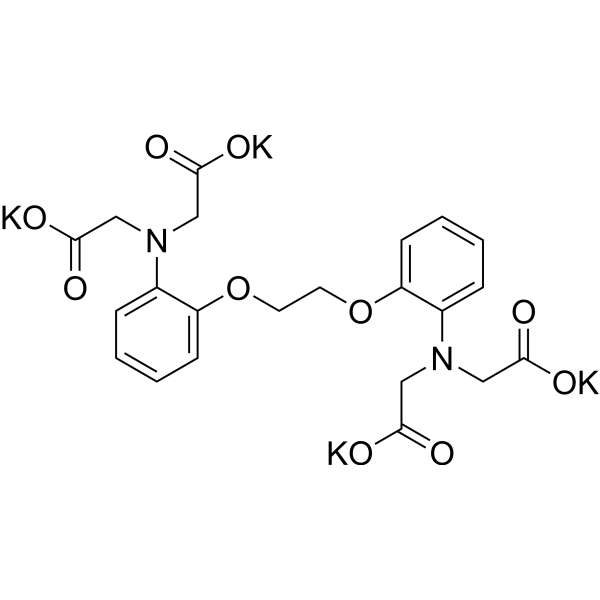
BAPTA tetrapotassium is a selective and cell-impermeant chelator for calcium. BAPTA has high selectivity against magnesium and calcium. BAPTA tetrapotassium can also inhibit phospholipase C activity independently of their role as Ca 2+ chelators .
|
-
-
- HY-D1444
-
|
|
Fluorescent Dye
Bacterial
|
Infection
|
|
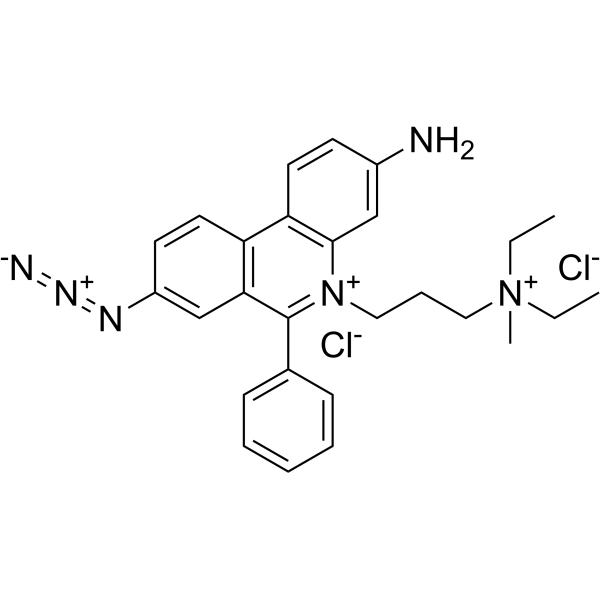
Propidium monoazide is a cell-impermeant photoreactive DNA-binding dye that preferentially binds to dsDNA. Propidium monoazide (PMA) prevents DNA from dead bacteria from being amplified during the PCR. PMA-PCR enhanced both the specificity and the sensitivity of PCR . Propidium monoazide is a click chemistry reagent, it contains an Azide group and can undergo copper-catalyzed azide-alkyne cycloaddition reaction (CuAAc) with molecules containing Alkyne groups. It can also undergo strain-promoted alkyne-azide cycloaddition (SPAAC) reactions with molecules containing DBCO or BCN groups.
|
-
-
- HY-D0982
-
|
|
Fluorescent Dye
|
Others
|
|
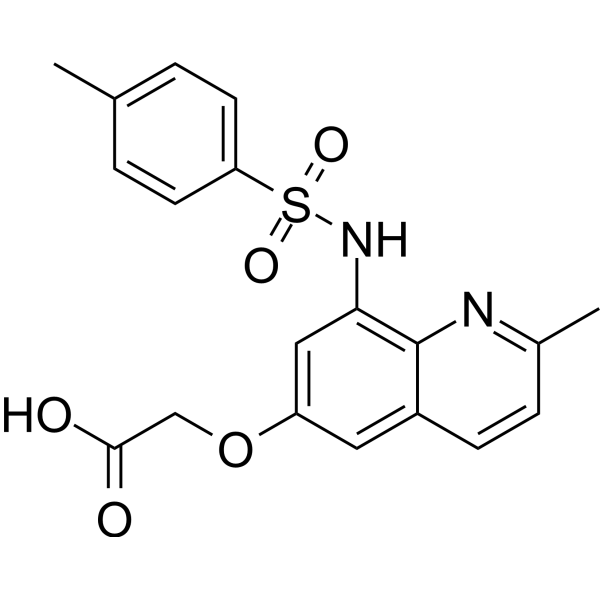
Zinquin is a cell-impermeant fluorescent sensor and used to observe reactive Zn 2+. λex/λem=368/490 nm.
|
-
-
- HY-139646
-
|
|
Fluorescent Dye
|
Neurological Disease
|
|
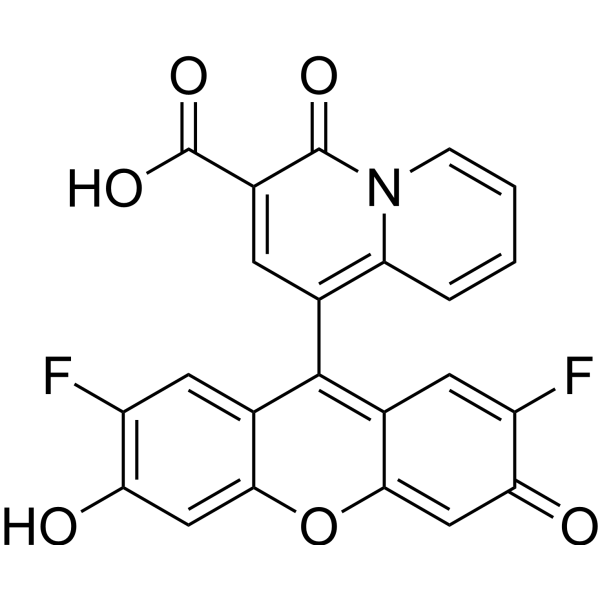
KMG-104 is a cell-impermeant highly selective fluorescent Mg 2+ probe. KMG-104 has been used widely and revealed Mg 2+ mobilization in cytoplasm in various types of cells .
|
-
-
- HY-D1436
-
|
|
Fluorescent Dye
|
Neurological Disease
|
|
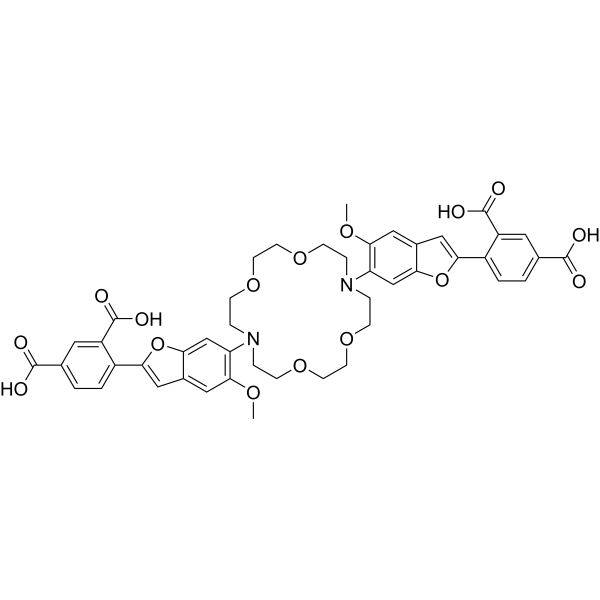
PBFI is the cell-impermeant fluorescent indicator that is widely used for the determination of concentrations of K + (Ex/Em = 340,380/500 nm) .
|
-
-
- HY-D1760
-
|
|
Fluorescent Dye
|
Others
|
|
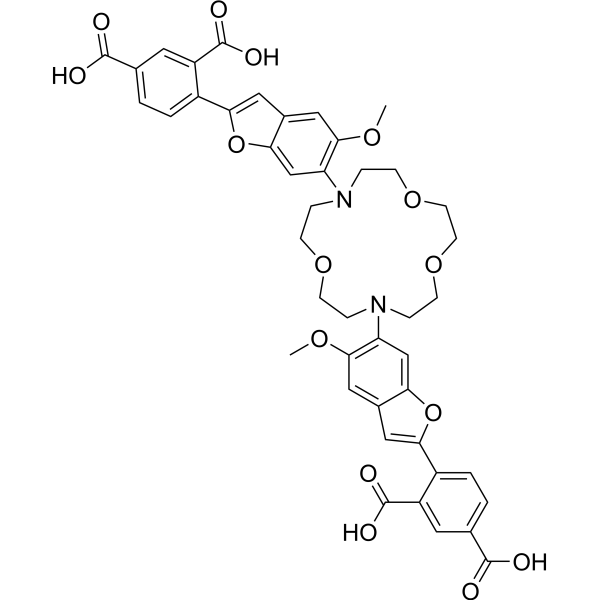
SBFI is a cell-impermeant, fluorescent Na + indicator dye. SBFI is excited at 340 nm and the fluorophore emission is collected at 450 nm . SBFI selective for Na + over K + with Kd values of 20 and 120 mM for these ions, respectively. .
|
-
-
- HY-D1702
-
|
|
Fluorescent Dye
|
Others
|
|
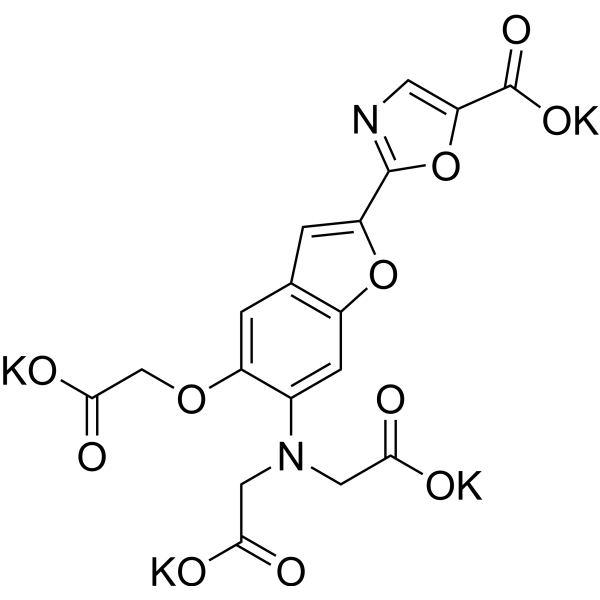
Mag-Fura-2 tetrapotassium is a cell-impermeant UV excitable rational fluorescent Mg 2+/Ca 2+ indicator (Ex=334-360 nm, Em=510 nm). Mag-Fura-2 tetrapotassium can be used for the determination of Mg 2+ and Ca 2+ concentrations .
|
-
-
- HY-D2208
-
|
|
Fluorescent Dye
|
Others
|
|
SYTM Green is a cell impermeant DNA dye that fluoresces green by binding to dsDNA (Ex/Em=503/530 nm). SYTM Green can also be used to stain bacteria, including Gram-positive and Gram-negative bacteria. Note: SYTM Green cannot penetrate living cells, and this product is equivalent to (Ex/Em=488/530 nm) .
|
-

-
- HY-D1631A
-
|
|
Fluorescent Dye
|
Neurological Disease
|
|
Calcium green-5N hexapotassium is a cell-impermeant Ca 2+-sensitive fluorescent probe. Calcium green-5N hexapotassium shows enhancement in fluorescence intensity on binding Ca 2+, and can monitor free Ca 2+ in neurons .
|
-

-
- HY-D1442
-
|
|
Fluorescent Dye
|
Others
|
|
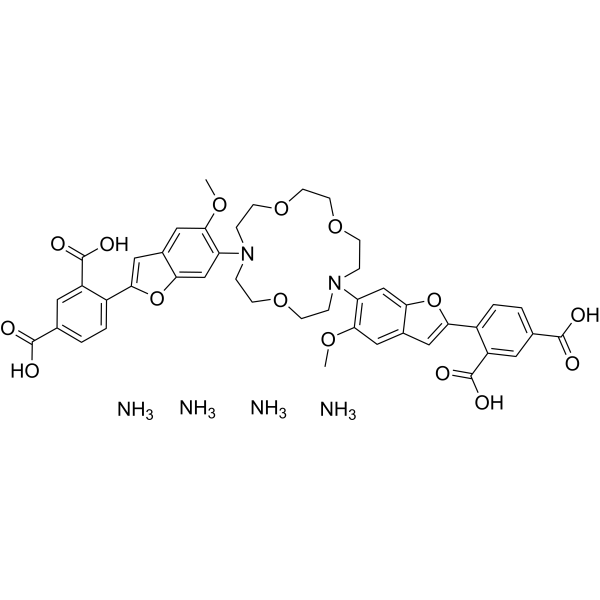
SBFI (tetraammonium), the tetraammonium salt of SBFI, is a cell-impermeant sodium fluorescence indicator. SBFI (tetraammonium) is sodium-sensitive dye. The excitation wavelength is set 333 nm, and the emission wavelength is 539 nm for SBFI .
|
-
-
- HY-D0121
-
|
|
Fluorescent Dye
|
Others
|
|
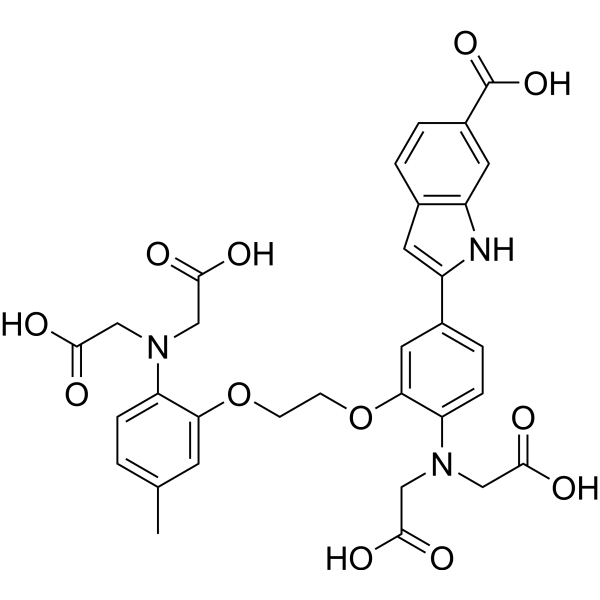
INDO 1 is a cell-impermeant fluorescent Ca 2+ indicator, binds specifically to Ca 2+ while emitting fluorescence, the maximum emission wavelength shifts from 485 nm before binding to 410 nm .
|
-
-
- HY-W127781
-
|
|
Fluorescent Dye
|
Others
|
|
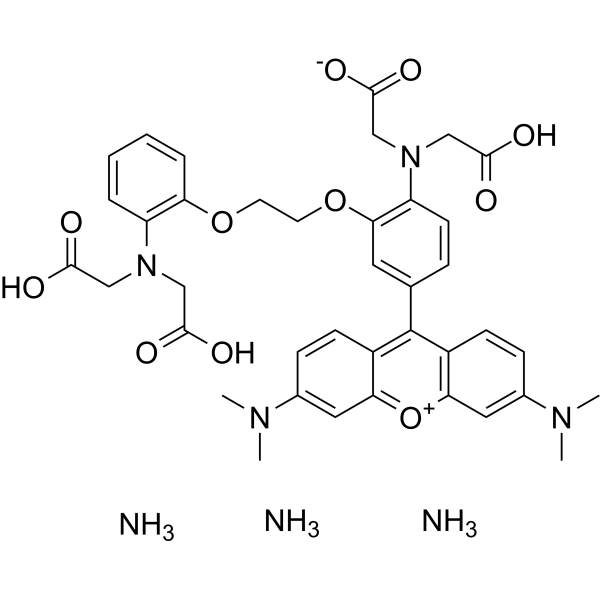
Rhod-2 triammonium is a cell impermeant, red fluorescent calcium indicator. Rhod-2 triammonium exhibits a significant shift in fluorescence intensity upon calcium binding (ex max=549 nm; calcium-free v. ex/em max=552/581 nm; calcium-bound). Unlike the UV-excitable indicators Fura-2 and Indo-1 (HY-D0121), there is no accompanying spectral shift .
|
-
-
- HY-172627
-
|
|
Fluorescent Dye
Calcium Channel
|
Others
|
|
Rhod-FF tripotassium is a Rhod-2 derivative and cell-impermeant calcium indicator (Kd of 320 μM). Rhod-FF tripotassium indicates calcium concentration by fluorescence upon binding to calcium ions, with excitation at 552 nm and emission at 580 nm .
|
-

-
- HY-136894
-
|
|
Fluorescent Dye
|
Others
|
|
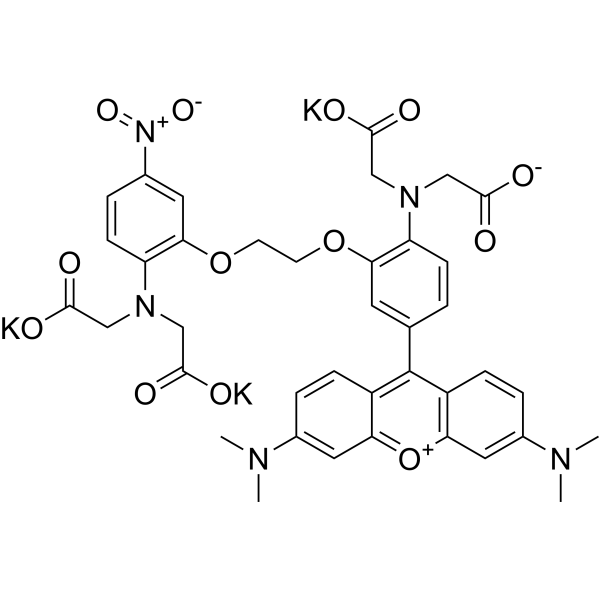
Rhod-5N is a cell-impermeant calcium-binding fluorescent dye composed of a BAPTA chelating group and a rhodamine fluorophore. Rhod-5N is often added to MOPS buffer to complex and indicate cation content. The selectivity of Rhod-5N for Cd 2+ is higher than other interfering cations ((Na+, K+, Mg 2+, Ca 2+, Zn 2+) except Pb 2+), and the detection limit is 3.1 μg/L .
|
-
-
- HY-D1779
-
-
-
- HY-D1761
-
|
|
Fluorescent Dye
|
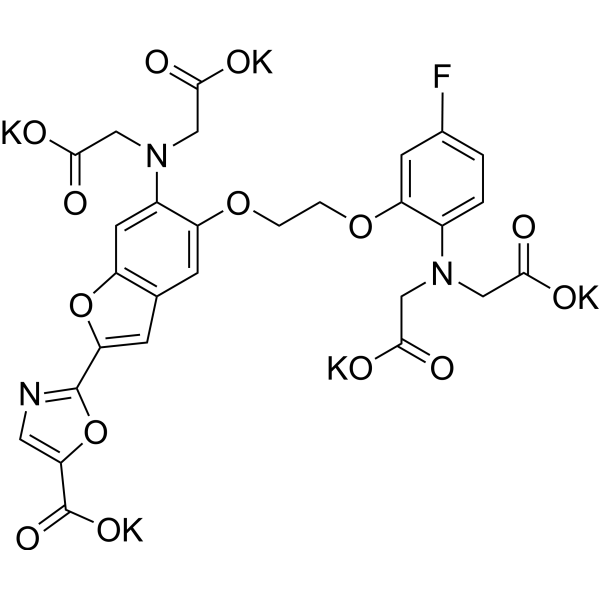
Others
|
|
Fura-4F pentapotassium is a cell-impermeant fluorescent indicator for intracellular calcium ion measurement.
|
-
-
- HY-176031
-
|
|
Fluorescent Dye
|
Others
|
|
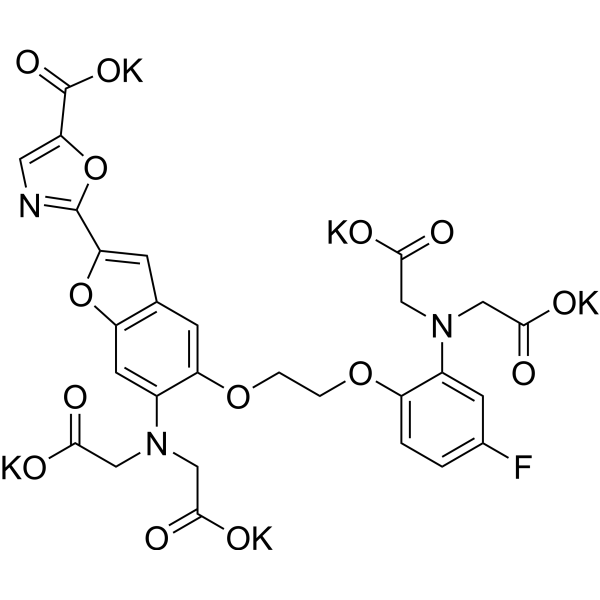
Fluo-2 potassium is a cell-impermeant fluorescent calcium indicator. Fluo-2 potassium binds calcium (Kd: 0.37 μM) with excitation/emission wavelengths of 493/518 nm, respectively .
|
-

-
- HY-D0121A
-
|
|
Fluorescent Dye
|
Others
|
|
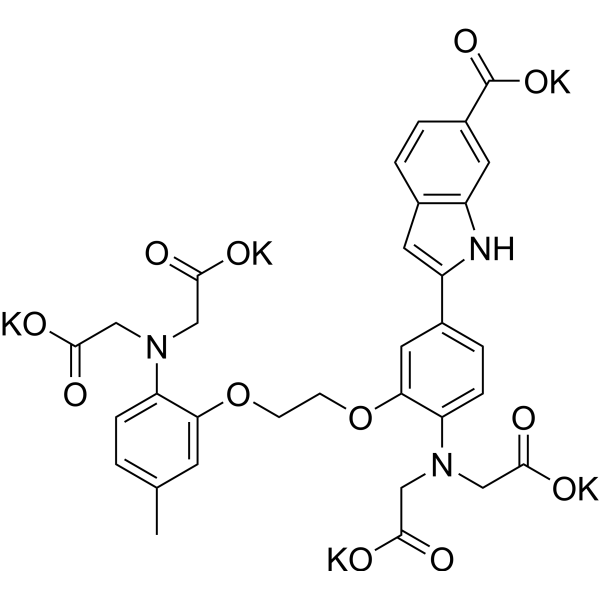
INDO 1 pentapotassium is a cell-impermeant fluorescent Ca 2+ indicator, binds specifically to Ca 2+ while emitting fluorescence, the maximum emission wavelength shifts from 485 nm before binding to 410 nm .
|
-
-
- HY-137128
-
|
|
Fluorescent Dye
|
Others
|
|
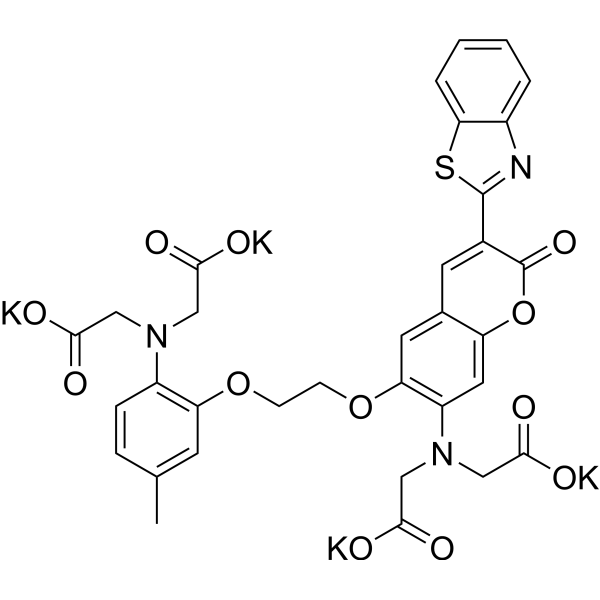
BTC tetrapotassium is a cell-impermeant calcium indicator (Kd approximately 7-26 µM) featuring many desirable properties for cellular calcium imaging, including long excitation wavelengths (400/485 nm), low sensitivity to Mg 2+, and accuracy of ratiometric measurement .
|
-
-
- HY-D0023A
-
|
HPTS hydrate; Solvent Green 7 hydrate
|
Fluorescent Dye
|
Others
|
|
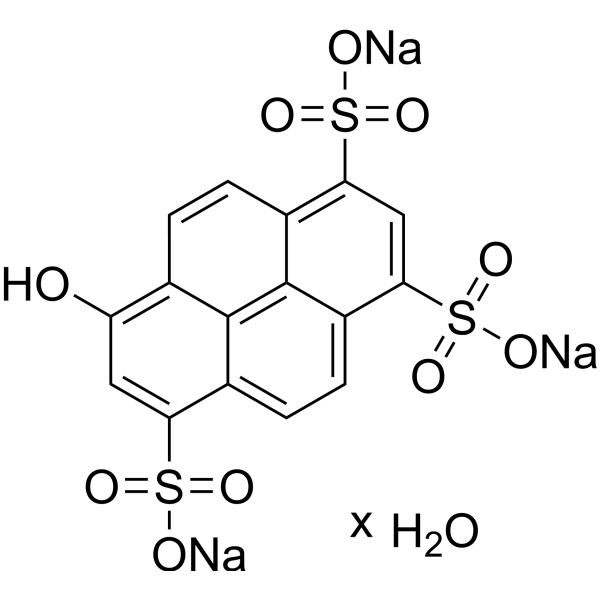
Pyranine (HPTS; Solvent Green 7) hydrate is a cell-impermeant pH-sensitive fluorescent indicator. Pyranine hydrate acts as a class of fluorescent chemosensor for the Cu + ion. Pyranine hydrate is used as a coloring agent, biological stain, optical detecting reagent, and pH indicator (Ex/Em = 450/510 nm) .
|
-
-
- HY-D1447
-
|
|
Fluorescent Dye
|
Others
|
|
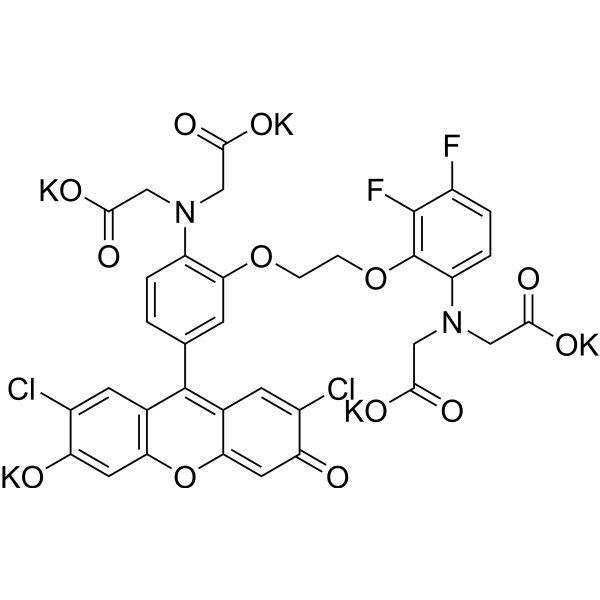
Fluo-3FF pentapotassium is a cell-impermeant fluorescent calcium indicator. Fluo-3FF is a di-fluorinated analog of Fluo-3 with a 100-fold lower affinity than Fluo-3 for calcium (Kds=42 and 0.4 μM, respectively). For its low affinity, Fluo-3FF is used for studying compartments with high concentrations of calcium, such as endoplasmic reticulum, where high affinity dyes will be insensitive to luminal fluctuations.
|
-
-
- HY-100168R
-
|
|
Reference Standards
Phospholipase
|
Others
|
|
BAPTA (Standard) is the analytical standard of BAPTA. This product is intended for research and analytical applications. BBAPTA is a selective and cell-impermeant chelator for calcium. BAPTA, as calcium indicator, has high selectivity against magnesium and calcium. BAPTA is widely used as an intracellular buffer for investigating the effects of Ca 2+ release from intracellular stores or influx via Ca 2+-permeable channels in the plasma membrane. BAPTA can also inhibit phospholipase C activity independently of their role as Ca 2+ chelators .
|
-

-
- HY-D0121B
-
|
|
Fluorescent Dye
|
Others
|
|
INDO 1 pentasodium is a cell-impermeant ratiometric, free calcium ion (Ca 2+) fluorescent indicator that can quantitatively monitor dynamic changes in intracellular free Ca 2+ concentrations. When unbound to Ca 2+ (free state), INDO 1 pentasodium exhibits a peak emission wavelength of 485 nm under UV excitation (350 nm). Upon binding to Ca 2+ (bound state), the emission peak shifts to 405 nm. INDO 1 pentasodium is highly photolabile and susceptible to photobleaching, and its emission spectrum may overlap with the autofluorescence of NADH .
|
-

-
- HY-100168AR
-
|
|
Reference Standards
Phospholipase
|
Others
|
|
BAPTA tetrasodium (Standard) is the analytical standard of BAPTA tetrasodium. This product is intended for research and analytical applications. BAPTA tetrasodium is a selective and cell-impermeant chelator for calcium. BAPTA tetrasodium, as calcium indicator, has high selectivity against magnesium and calcium. BAPTA tetrasodium is widely used as an intracellular buffer for investigating the effects of Ca 2+ release from intracellular stores or influx via Ca 2+-permeable channels in the plasma membrane. BAPTA tetrasodium can also inhibit phospholipase C activity independently of their role as Ca 2+ chelators .
|
-

-
- HY-136784A
-
|
|
Fluorescent Dye
|
Others
|
|
Rhod-2 sodium is a cell impermeant, red fluorescent calcium indicator. Rhod-2 sodium exhibits a significant shift in fluorescence intensity upon calcium binding (ex max=549 nm; calcium-free v. ex/em max=552/581 nm; calcium-bound). Unlike the UV-excitable indicators Fura-2 and Indo-1 (HY-D0121), there is no accompanying spectral shift .
|
-

-
- HY-136784
-
|
|
Fluorescent Dye
|
Others
|
|
Rhod-2 potassium is a cell impermeant, red fluorescent calcium indicator. Rhod-2 potassium exhibits a significant shift in fluorescence intensity upon calcium binding (ex max=549 nm; calcium-free v. ex/em max=552/581 nm; calcium-bound). Unlike the UV-excitable indicators Fura-2 and Indo-1 (HY-D0121), there is no accompanying spectral shift .
|
-

-
- HY-DY1083
-
|
|
Fluorescent Dye
|
Others
|
Zinquin (solution) is a cell-impermeant fluorescent sensor and used to observe reactive Zn 2+. λex/λem=368/490 nm.
Solvent and concentration: DMSO: 5 mM
|
-

-
- HY-W778574
-
|
|
Phospholipase
|
Cardiovascular Disease
Others
Neurological Disease
|
|
BAPTA tetracesium is a selective and cell-impermeant chelator for calcium. BAPTA tetracesium has high selectivity against magnesium and calcium. BAPTA tetracesium can also inhibit phospholipase C activity independently of their role as Ca 2+ chelators .
|
-

-
- HY-DY1099
-
|
7-AAD (solution)
|
DNA/RNA Synthesis
DNA Stain
Bacterial
Antibiotic
|
Cancer
|
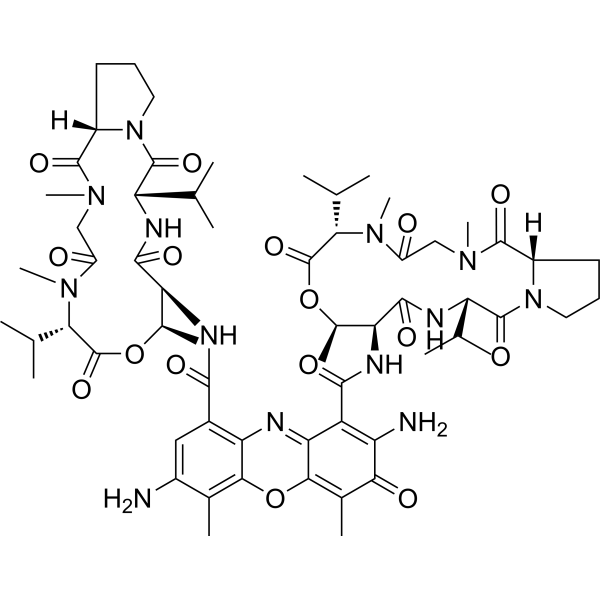
7-Aminoactinomycin D (solution) (7-AAD (solution)) a cell-impermeant fluorescent DNA stain, is a potent RNA polymerase inhibitor. 7-Aminoactinomycin D selectively binds to GC regions of the DNA. 7-Aminoactinomycin D also has antibacterial effects .
Solvent and concentration: DMSO: 1 mg/mL
|
-

-
- HY-DY1098
-
|
2′,7′-Bis(2-carboxyethyl)-5(6)-carboxyfluorescein (solution)
|
Fluorescent Dye
|
Others
|
BCECF (solution) (2′,7′-Bis(2-carboxyethyl)-5(6)-carboxyfluorescein (solution)) is a cell-impermeant pH-sensitive fluorescent dye. BCECF allows measurements in the physiological pH range 6.0-8.0. Excitation ratio: 490/440 nm; Emission intensity: 535 nm.
Solvent and concentration: DMSO: 10 mM
|
-

-
- HY-100168BR
-
|
|
Reference Standards
Phospholipase
|
Others
|
|
BAPTA tetrapotassium (Standard) is the analytical standard of BAPTA tetrapotassium (HY-100168B). This product is intended for research and analytical applications. BAPTA tetrapotassium is a selective and cell-impermeant chelator for calcium. BAPTA tetrapotassium, as calcium indicator, has high selectivity against magnesium and calcium. BAPTA tetrapotassium is widely used as an intracellular buffer for investigating the effects of Ca 2+ release from intracellular stores or influx via Ca 2+-permeable channels in the plasma membrane. BAPTA tetrapotassium can also inhibit phospholipase C activity independently of their role as Ca 2+ chelators .
|
-

-
- HY-D3239
-
|
AF405; Alexa Fluor 405 succinimidyl ester
|
Fluorescent Dye
OAT
|
Others
|
|
AF405 NHS Ester (AF405) is a Fluorescent probe substrate, as well as a substrate for OATP1B1, OATP1B3 and OATP2B1 .
|
-

-
- HY-111496
-
|
|
蛍光色素
|
|
Sulfo-NHS-SS-biotin sodium is a long-chain cleavable and cell-impermeant amine-reactive biotinylation reagent. Sulfo-NHS-SS-biotin sodium can be used for the labeling and purifying of cell-surface protein .
|
-
- HY-D1020
-
|
7-AAD
|
蛍光色素
|
|
7-Aminoactinomycin D (7-AAD) a cell-impermeant fluorescent DNA stain, is a potent RNA polymerase inhibitor. 7-Aminoactinomycin D selectively binds to GC regions of the DNA. 7-Aminoactinomycin D also has antibacterial effects .
|
-
- HY-D0023
-
|
HPTS; Solvent Green 7
|
蛍光色素
|
|
Pyranine (HPTS; Solvent Green 7) is a cell-impermeant pH-sensitive fluorescent indicator. Pyranine acts as a class of fluorescent chemosensor for the Cu + ion. Pyranine is used as a coloring agent, biological stain, optical detecting reagent, and pH indicator (Ex/Em = 450/510 nm) .
|
-
- HY-101882
-
BCECF
3 Publications Verification
2′,7′-Bis(2-carboxyethyl)-5(6)-carboxyfluorescein
|
蛍光色素
|
|
BCECF is a cell-impermeant pH-sensitive fluorescent dye. BCECF allows measurements in the physiological pH range 6.0-8.0. Excitation ratio: 490/440 nm; Emission intensity: 535 nm.
|
-
- HY-126774
-
DAF-FM
1 Publications Verification
|
蛍光色素
|
|
DAF-FM is a cell-impermeant diaminofluorescein, which can be used as fluorescent indicator for nitric oxide (NO) with good pH tolerance .
|
-
- HY-117070
-
|
|
蛍光色素
|
|
TO-PRO-3 iodide is a cell-impermeant nucleic acid stain. TO-PRO-3 iodide is useful as a nuclear counterstain and dead cell indicator (Ex/Em = 642/661 nm).
|
-
- HY-D1444
-
|
|
蛍光色素
|
|
Propidium monoazide is a cell-impermeant photoreactive DNA-binding dye that preferentially binds to dsDNA. Propidium monoazide (PMA) prevents DNA from dead bacteria from being amplified during the PCR. PMA-PCR enhanced both the specificity and the sensitivity of PCR . Propidium monoazide is a click chemistry reagent, it contains an Azide group and can undergo copper-catalyzed azide-alkyne cycloaddition reaction (CuAAc) with molecules containing Alkyne groups. It can also undergo strain-promoted alkyne-azide cycloaddition (SPAAC) reactions with molecules containing DBCO or BCN groups.
|
-
- HY-D0982
-
|
|
蛍光色素
|
|
Zinquin is a cell-impermeant fluorescent sensor and used to observe reactive Zn 2+. λex/λem=368/490 nm.
|
-
- HY-D1436
-
|
|
蛍光色素
|
|
PBFI is the cell-impermeant fluorescent indicator that is widely used for the determination of concentrations of K + (Ex/Em = 340,380/500 nm) .
|
-
- HY-D1760
-
|
|
蛍光色素
|
|
SBFI is a cell-impermeant, fluorescent Na + indicator dye. SBFI is excited at 340 nm and the fluorophore emission is collected at 450 nm . SBFI selective for Na + over K + with Kd values of 20 and 120 mM for these ions, respectively. .
|
-
- HY-D1702
-
|
|
蛍光色素
|
|
Mag-Fura-2 tetrapotassium is a cell-impermeant UV excitable rational fluorescent Mg 2+/Ca 2+ indicator (Ex=334-360 nm, Em=510 nm). Mag-Fura-2 tetrapotassium can be used for the determination of Mg 2+ and Ca 2+ concentrations .
|
-
- HY-D2208
-
|
|
蛍光色素
|
|
SYTM Green is a cell impermeant DNA dye that fluoresces green by binding to dsDNA (Ex/Em=503/530 nm). SYTM Green can also be used to stain bacteria, including Gram-positive and Gram-negative bacteria. Note: SYTM Green cannot penetrate living cells, and this product is equivalent to (Ex/Em=488/530 nm) .
|
-
- HY-D1631A
-
|
|
蛍光色素
|
|
Calcium green-5N hexapotassium is a cell-impermeant Ca 2+-sensitive fluorescent probe. Calcium green-5N hexapotassium shows enhancement in fluorescence intensity on binding Ca 2+, and can monitor free Ca 2+ in neurons .
|
-
- HY-D1442
-
|
|
蛍光色素
|
|
SBFI (tetraammonium), the tetraammonium salt of SBFI, is a cell-impermeant sodium fluorescence indicator. SBFI (tetraammonium) is sodium-sensitive dye. The excitation wavelength is set 333 nm, and the emission wavelength is 539 nm for SBFI .
|
-
- HY-D0121
-
|
|
蛍光色素
|
|
INDO 1 is a cell-impermeant fluorescent Ca 2+ indicator, binds specifically to Ca 2+ while emitting fluorescence, the maximum emission wavelength shifts from 485 nm before binding to 410 nm .
|
-
- HY-136894
-
|
|
蛍光色素
|
|
Rhod-5N is a cell-impermeant calcium-binding fluorescent dye composed of a BAPTA chelating group and a rhodamine fluorophore. Rhod-5N is often added to MOPS buffer to complex and indicate cation content. The selectivity of Rhod-5N for Cd 2+ is higher than other interfering cations ((Na+, K+, Mg 2+, Ca 2+, Zn 2+) except Pb 2+), and the detection limit is 3.1 μg/L .
|
-
- HY-D1779
-
|
|
蛍光色素
|
|
Fura-5F pentapotassium is a cell-impermeant fluorescent calcium indicator.
|
-
- HY-D1761
-
|
|
蛍光色素
|
|
Fura-4F pentapotassium is a cell-impermeant fluorescent indicator for intracellular calcium ion measurement.
|
-
- HY-176031
-
|
|
蛍光色素
|
|
Fluo-2 potassium is a cell-impermeant fluorescent calcium indicator. Fluo-2 potassium binds calcium (Kd: 0.37 μM) with excitation/emission wavelengths of 493/518 nm, respectively .
|
-
- HY-D0121A
-
|
|
蛍光色素
|
|
INDO 1 pentapotassium is a cell-impermeant fluorescent Ca 2+ indicator, binds specifically to Ca 2+ while emitting fluorescence, the maximum emission wavelength shifts from 485 nm before binding to 410 nm .
|
-
- HY-D0023A
-
|
HPTS hydrate; Solvent Green 7 hydrate
|
蛍光色素
|
|
Pyranine (HPTS; Solvent Green 7) hydrate is a cell-impermeant pH-sensitive fluorescent indicator. Pyranine hydrate acts as a class of fluorescent chemosensor for the Cu + ion. Pyranine hydrate is used as a coloring agent, biological stain, optical detecting reagent, and pH indicator (Ex/Em = 450/510 nm) .
|
-
- HY-D1447
-
|
|
蛍光色素
|
|
Fluo-3FF pentapotassium is a cell-impermeant fluorescent calcium indicator. Fluo-3FF is a di-fluorinated analog of Fluo-3 with a 100-fold lower affinity than Fluo-3 for calcium (Kds=42 and 0.4 μM, respectively). For its low affinity, Fluo-3FF is used for studying compartments with high concentrations of calcium, such as endoplasmic reticulum, where high affinity dyes will be insensitive to luminal fluctuations.
|
-
- HY-D0121B
-
|
|
蛍光色素
|
|
INDO 1 pentasodium is a cell-impermeant ratiometric, free calcium ion (Ca 2+) fluorescent indicator that can quantitatively monitor dynamic changes in intracellular free Ca 2+ concentrations. When unbound to Ca 2+ (free state), INDO 1 pentasodium exhibits a peak emission wavelength of 485 nm under UV excitation (350 nm). Upon binding to Ca 2+ (bound state), the emission peak shifts to 405 nm. INDO 1 pentasodium is highly photolabile and susceptible to photobleaching, and its emission spectrum may overlap with the autofluorescence of NADH .
|
-
- HY-136784A
-
|
|
蛍光色素
|
|
Rhod-2 sodium is a cell impermeant, red fluorescent calcium indicator. Rhod-2 sodium exhibits a significant shift in fluorescence intensity upon calcium binding (ex max=549 nm; calcium-free v. ex/em max=552/581 nm; calcium-bound). Unlike the UV-excitable indicators Fura-2 and Indo-1 (HY-D0121), there is no accompanying spectral shift .
|
-
- HY-136784
-
|
|
蛍光色素
|
|
Rhod-2 potassium is a cell impermeant, red fluorescent calcium indicator. Rhod-2 potassium exhibits a significant shift in fluorescence intensity upon calcium binding (ex max=549 nm; calcium-free v. ex/em max=552/581 nm; calcium-bound). Unlike the UV-excitable indicators Fura-2 and Indo-1 (HY-D0121), there is no accompanying spectral shift .
|
-
- HY-DY1083
-
|
|
蛍光色素
|
Zinquin (solution) is a cell-impermeant fluorescent sensor and used to observe reactive Zn 2+. λex/λem=368/490 nm.
Solvent and concentration: DMSO: 5 mM
|
-
- HY-DY1099
-
|
7-AAD (solution)
|
蛍光色素
|
7-Aminoactinomycin D (solution) (7-AAD (solution)) a cell-impermeant fluorescent DNA stain, is a potent RNA polymerase inhibitor. 7-Aminoactinomycin D selectively binds to GC regions of the DNA. 7-Aminoactinomycin D also has antibacterial effects .
Solvent and concentration: DMSO: 1 mg/mL
|
-
- HY-DY1098
-
|
2′,7′-Bis(2-carboxyethyl)-5(6)-carboxyfluorescein (solution)
|
蛍光色素
|
BCECF (solution) (2′,7′-Bis(2-carboxyethyl)-5(6)-carboxyfluorescein (solution)) is a cell-impermeant pH-sensitive fluorescent dye. BCECF allows measurements in the physiological pH range 6.0-8.0. Excitation ratio: 490/440 nm; Emission intensity: 535 nm.
Solvent and concentration: DMSO: 10 mM
|
-
- HY-D3239
-
|
AF405; Alexa Fluor 405 succinimidyl ester
|
蛍光色素
|
|
AF405 NHS Ester (AF405) is a Fluorescent probe substrate, as well as a substrate for OATP1B1, OATP1B3 and OATP2B1 .
|
-
- HY-D0861
-
|
|
生化学アッセイ試薬
|
|
EGTA is a cell-impermeant specific calcium ion chelator. EGTA has an apparent calcium dissociation constant (Kd) of 60.5 nM at physiological pH (7.4) and has very high specificity for Ca 2+ over Mg 2+ (Mg 2+ Kd 1-10 mM). EGTA significantly inhibits the substrate adherence capacity of inflammatory macrophages .
|
-
- HY-100168
-
BAPTA
Maximum Cited Publications
36 Publications Verification
|
生化学アッセイ試薬
|
|
BAPTA is a selective and cell-impermeant chelator for calcium. BAPTA has high selectivity against magnesium and calcium. BAPTA can also inhibit phospholipase C activity independently of their role as Ca 2+ chelators .
|
-
- HY-D0861A
-
|
|
生化学アッセイ試薬
|
|
EGTA tetrasodium is a cell-impermeant specific calcium ion chelator. EGTA tetrasodium has an apparent calcium dissociation constant (Kd) of 60.5 nM at physiological pH (7.4) and has very high specificity for Ca 2+ over Mg 2+ (Mg 2+ Kd 1-10 mM). EGTA tetrasodium significantly inhibits the substrate adherence capacity of inflammatory macrophages .
|
-
- HY-100168B
-
|
|
生化学アッセイ試薬
|
|
BAPTA tetrapotassium is a selective and cell-impermeant chelator for calcium. BAPTA has high selectivity against magnesium and calcium. BAPTA tetrapotassium can also inhibit phospholipase C activity independently of their role as Ca 2+ chelators .
|
-
- HY-W127781
-
|
|
生化学アッセイ試薬
|
|
Rhod-2 triammonium is a cell impermeant, red fluorescent calcium indicator. Rhod-2 triammonium exhibits a significant shift in fluorescence intensity upon calcium binding (ex max=549 nm; calcium-free v. ex/em max=552/581 nm; calcium-bound). Unlike the UV-excitable indicators Fura-2 and Indo-1 (HY-D0121), there is no accompanying spectral shift .
|
-
- HY-100168R
-
|
|
生化学アッセイ試薬
|
|
BAPTA (Standard) is the analytical standard of BAPTA. This product is intended for research and analytical applications. BBAPTA is a selective and cell-impermeant chelator for calcium. BAPTA, as calcium indicator, has high selectivity against magnesium and calcium. BAPTA is widely used as an intracellular buffer for investigating the effects of Ca 2+ release from intracellular stores or influx via Ca 2+-permeable channels in the plasma membrane. BAPTA can also inhibit phospholipase C activity independently of their role as Ca 2+ chelators .
|
-
- HY-100168BR
-
|
|
生化学アッセイ試薬
|
|
BAPTA tetrapotassium (Standard) is the analytical standard of BAPTA tetrapotassium (HY-100168B). This product is intended for research and analytical applications. BAPTA tetrapotassium is a selective and cell-impermeant chelator for calcium. BAPTA tetrapotassium, as calcium indicator, has high selectivity against magnesium and calcium. BAPTA tetrapotassium is widely used as an intracellular buffer for investigating the effects of Ca 2+ release from intracellular stores or influx via Ca 2+-permeable channels in the plasma membrane. BAPTA tetrapotassium can also inhibit phospholipase C activity independently of their role as Ca 2+ chelators .
|
-
- HY-D1444
-
|
|
|
Labeling and Fluorescence Imaging
Azide
|
|
Propidium monoazide is a cell-impermeant photoreactive DNA-binding dye that preferentially binds to dsDNA. Propidium monoazide (PMA) prevents DNA from dead bacteria from being amplified during the PCR. PMA-PCR enhanced both the specificity and the sensitivity of PCR . Propidium monoazide is a click chemistry reagent, it contains an Azide group and can undergo copper-catalyzed azide-alkyne cycloaddition reaction (CuAAc) with molecules containing Alkyne groups. It can also undergo strain-promoted alkyne-azide cycloaddition (SPAAC) reactions with molecules containing DBCO or BCN groups.
|
入力情報は安全に管理されます. ※ 必須入力項目.
Inquiry Information
- 製品名:
- 製品番号:
- 数量:
- MCE 日本正規代理店:





