



Pyranine
Based on 2 publication(s) in Google Scholar
Pyranine (HPTS; Solvent Green 7) is a cell-impermeant pH-sensitive fluorescent indicator. Pyranine acts as a class of fluorescent chemosensor for the Cu+ ion. Pyranine is used as a coloring agent, biological stain, optical detecting reagent, and pH indicator (Ex/Em = 450/510 nm).
For research use only. We do not sell to patients.
- Purity : 99.68%
- CAS No.: 6358-69-6
- Formula: C16H7Na3O10S3
- Molecular Weight:524.39
-
Storage:
4°C, sealed storage, away from moisture and light
* In solvent : -80°C, 6 months; -20°C, 1 month (sealed storage, away from moisture and light)
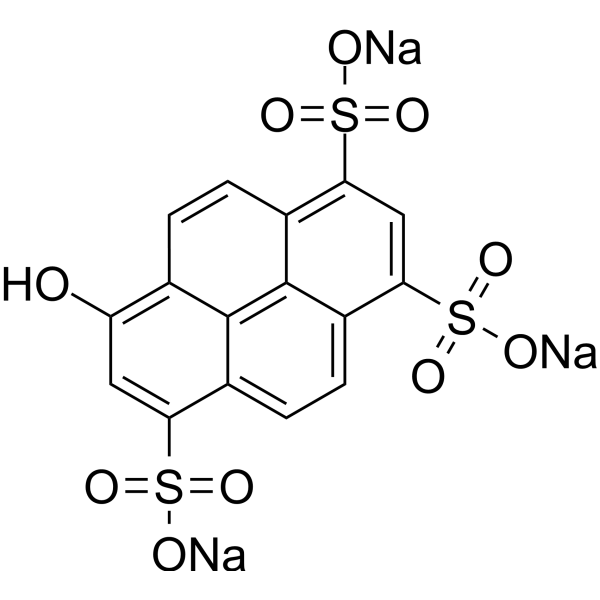

To place orders, for customer services and technical support, please contact: MedChemExpress USA
Tel: 609-228-6898 E-mail: [email protected] [email protected]


-
 Biological Activity
-
Chemical Information
-
Solvent & Solubility
- Purity & Documentation
- References
-
 Help & FAQs


-
HY-D0718
Nile RedHydrophobic Fluorescent Stain -
HY-15534
JC-1Mitochondrial Membrane Potential Probe -
HY-D0974
Sulforhodamine B sodium saltFluorescent Dye -
HY-D0213
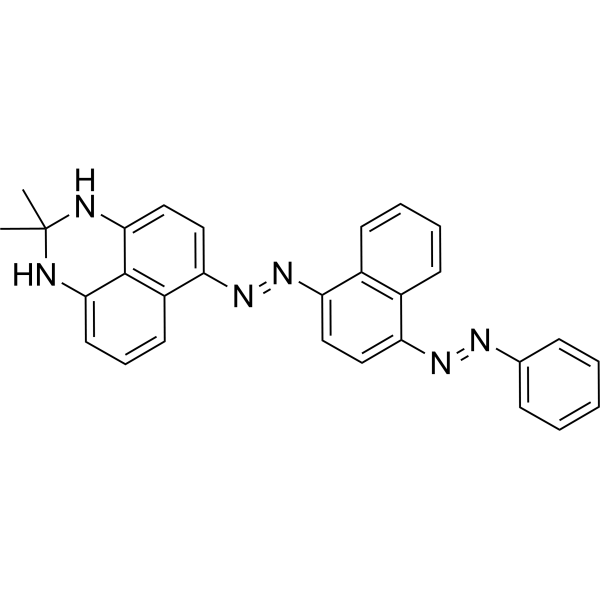
Sudan Black BFat-soluble Diazo Dye -
HY-101882
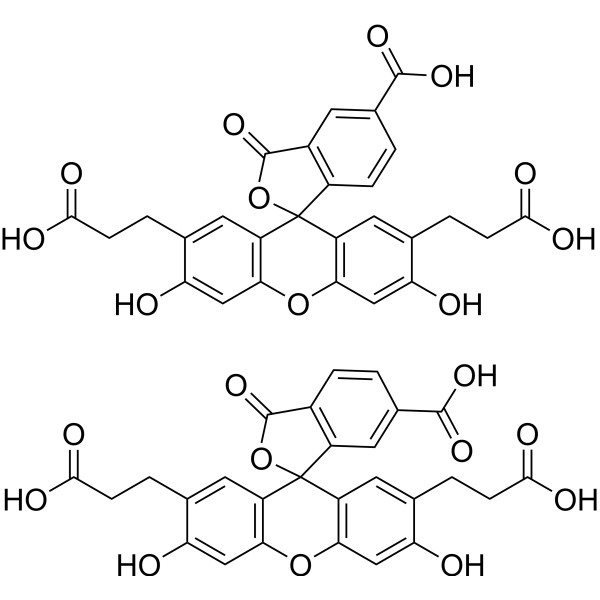
BCECFPH-Sensitive Dye -
HY-K0202
Protein A/G Magnetic Beads -
HY-D0971
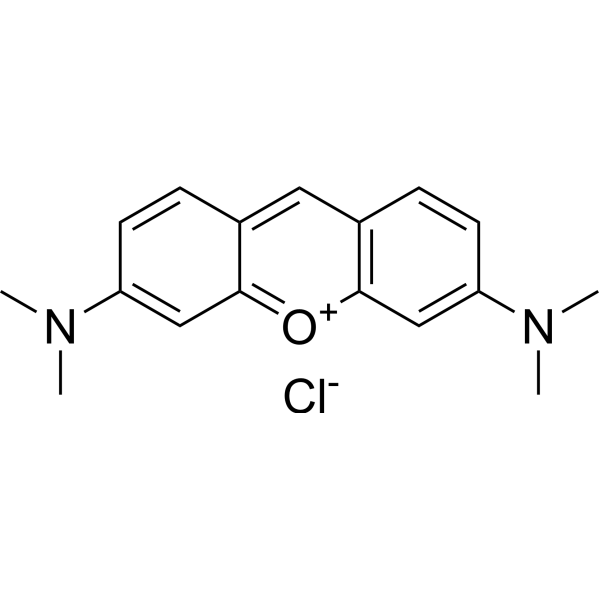
Pyronin YCationic Dye -
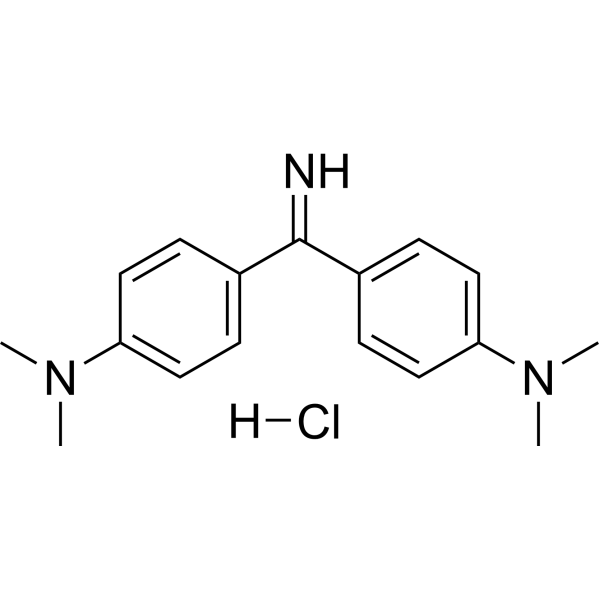
HY-D0933
Auramine OFluorescent Dye -
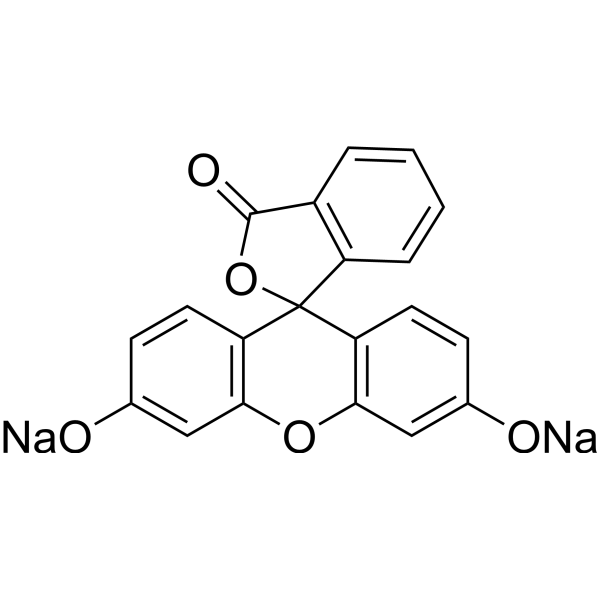
HY-D0208
Fluorescein sodiumFluorescent Tracer -

HY-DY1003
JC-1 (solution)Mitochondrial Membrane Potential Probe -
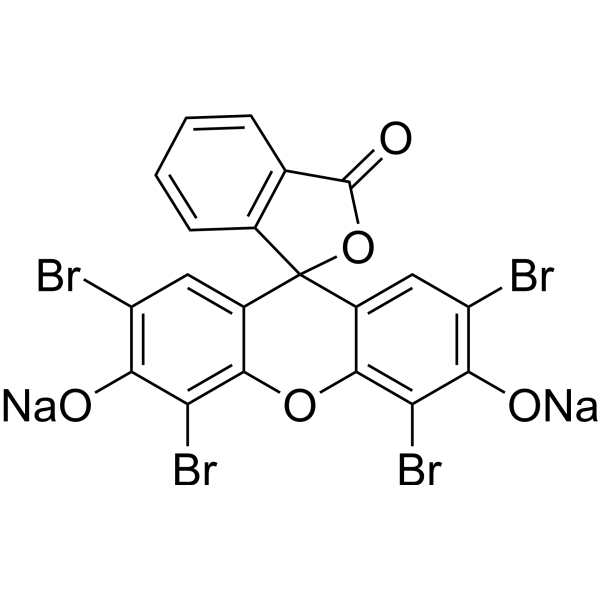
HY-D0505A
Eosin Y disodiumDye Molecule -
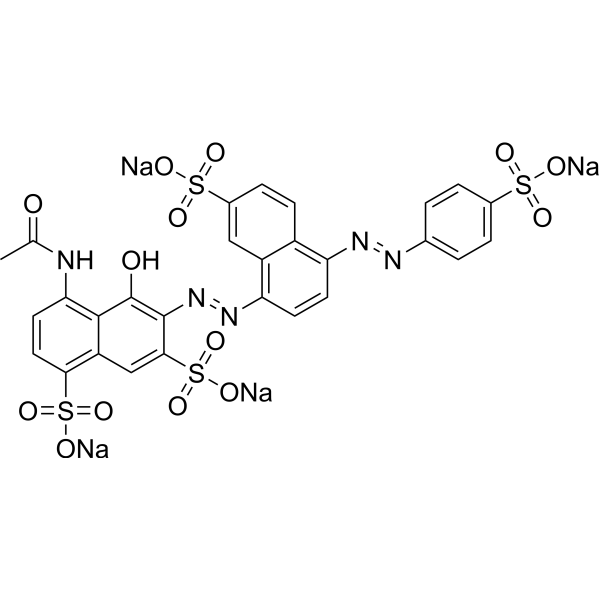
HY-128382
Brilliant Black BNAntiviral Agent
Publications Citing Use of MedChemExpress (MCE) Pyranine
More Customer Validation & Images

-
Bio/Physico-chemical Assay


Biological Activity
Description
In Vitro
Pyranine is capable of discriminating ranges of cations from the Cu+ ion, even in competing environment. Pyranine displays a rapid fluorescence response (t1/2=1.66 min) towards the Cu+ ion, and the micromolar detection limit enables the detection of the ion in environmental samples. The observed stoichiometry of complexation between Pyranine and Cu+ is 2:1[1].
The pH-sensitive fluorescent indicator Pyranine is studied to determine its usefulness as probes for the living cornea and anterior chamber. Adequate concentrations are reached in the cornea and anterior chamber after topical administration; measurements can be made by fluorophotometry for many hours. The pH is calculated by measuring the ratio of fluorescent intensity at two excitation wavelengths, I463/I404, a measurement which is dependent on pH but independent of the concentration of the fluorophore and other variables which can alter the intensity. In the rabbit eye, Pyranine in the cornea and anterior chamber is observed to undergo easily measurable changes in fluorescent ratios associated with lid closure and contact lens wear, indicating its sensitivity to mild changes in pH[2].
MedChemExpress (MCE) has not independently confirmed the accuracy of these methods. They are for reference only.
Emission (Em)
510
Excitation (Ex)
450


Chemical Information
-
CAS No. 6358-69-6
-
Appearance Solid
-
Molecular Weight 524.39
-
Formula C16H7Na3O10S3
-
Color Light yellow to yellow
-
SMILES
O=S(C1=C(C2=C34)C=CC4=C(O)C=C(S(=O)(O[Na])=O)C3=CC=C2C(S(=O)(O[Na])=O)=C1)(O[Na])=O
-
Synonyms
HPTS; Solvent Green 7
-
Shipping
Room temperature in continental US; may vary elsewhere.
-
Storage
4°C, sealed storage, away from moisture and light
* In solvent : -80°C, 6 months; -20°C, 1 month (sealed storage, away from moisture and light)


Publications (2)
-
Journal Impact Factor
-
Most Recent
-
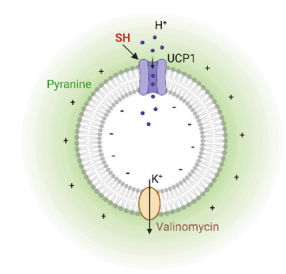
Pyranine purchased from MedChemExpress. Usage Cited in: Food Biosci. 2025 Jul.
Proteoliposomes were diluted to 1 mg/mL lipid concentration with external buffer containing 1 μM Pyranine. SH or palmitic acid was added as indicated. Valinomycin was included to increase K+ permeability, generating a membrane potential that facilitated UCP1- mediated proton transport.
-


Solvent & Solubility
In Vitro:
H2O : 20 mg/mL (38.14 mM; ultrasonic and warming and heat to 60°C)
Please refer to the solubility information to select the appropriate solvent. Once prepared, please aliquot and store the solution to prevent product inactivation from repeated freeze-thaw cycles.
Storage method and period of stock solution: -80°C, 6 months; -20°C, 1 month (sealed storage, away from moisture and light). When stored at -80°C, please use it within 6 months. When stored at -20°C, please use it within 1 month.
* Note: If you choose water as the stock solution, please dilute it to the working solution, then filter and sterilize it with a 0.22 μm filter before use.
Please refer to the solubility information to select the appropriate solvent. Once prepared, please aliquot and store the solution to prevent product inactivation from repeated freeze-thaw cycles.
Storage method and period of stock solution: -80°C, 6 months; -20°C, 1 month (sealed storage, away from moisture and light). When stored at -80°C, please use it within 6 months. When stored at -20°C, please use it within 1 month.
* Note: If you choose water as the stock solution, please dilute it to the working solution, then filter and sterilize it with a 0.22 μm filter before use.
Concentration (start) × Volume (start) = Concentration (final) × Volume (final)


Purity & Documentation
-
Data Sheet (284 KB)
-
SDS (396 KB)
- English - EN (396 KB)
- Français - FR (396 KB)
- Deutsch - DE (396 KB)
- Norwegian - NO (396 KB)
- Español - ES (396 KB)
- Swedish - SV (396 KB)
- Italian - IT (396 KB)
- Korean - KR (396 KB)
- Portuguese - PT (396 KB)
-
Handling Instructions (2659 KB)
References
[1]. Saha T, et al. In vitro sensing of Cu(+) through a green fluorescence rise of pyranine. Photochem Photobiol Sci. 2014 Oct;13(10):1427-33. [Content Brief]
[2]. Thomas JV, et al. The fluorescent indicator pyranine is suitable for measuring stromal and cameral pH in vivo. Exp Eye Res. 1990 Mar;50(3):241-9. [Content Brief]
[3]. Evingür GA, et al. Kinetic models for the dynamical behavior of polyacrylamide (PAAm)-κ-carrageenan (κC) composite gels. J Biol Phys. 2015 Jan;41(1):37-47. [Content Brief]


Complete Stock Solution Preparation Table
Please refer to the solubility information to select the appropriate solvent. Once prepared, please aliquot and store the solution to prevent product inactivation from repeated freeze-thaw cycles.
Storage method and period of stock solution: -80°C, 6 months; -20°C, 1 month (sealed storage, away from moisture and light). When stored at -80°C, please use it within 6 months. When stored at -20°C, please use it within 1 month.
| Optional Solvent | Concentration Solvent Mass | 1 mg | 5 mg | 10 mg | 25 mg |
|---|---|---|---|---|---|
| H2O | 1 mM | 1.9070 mL | 9.5349 mL | 19.0698 mL | 47.6744 mL |
| 5 mM | 0.3814 mL | 1.9070 mL | 3.8140 mL | 9.5349 mL | |
| 10 mM | 0.1907 mL | 0.9535 mL | 1.9070 mL | 4.7674 mL | |
| 15 mM | 0.1271 mL | 0.6357 mL | 1.2713 mL | 3.1783 mL | |
| 20 mM | 0.0953 mL | 0.4767 mL | 0.9535 mL | 2.3837 mL | |
| 25 mM | 0.0763 mL | 0.3814 mL | 0.7628 mL | 1.9070 mL | |
| 30 mM | 0.0636 mL | 0.3178 mL | 0.6357 mL | 1.5891 mL |
* Note: If you choose water as the stock solution, please dilute it to the working solution, then filter and sterilize it with a 0.22 μm filter before use.


Pyranine Related Classifications
HY-D0023 Related Classifications
 Powered by Bioz