
1. Search Result
Search Result
Results for "

lysosomal degradation

" in MedChemExpress (MCE) Product Catalog:

44

Inhibitors & Agonists

1

Screening Libraries

1

Fluorescent Dyes

2

Peptides

2

Inhibitory Antibodies

4

Natural
Products

2

Click Chemistry

Cat. No. Product Name Target Research Areas Chemical Structure
  • HY-148673
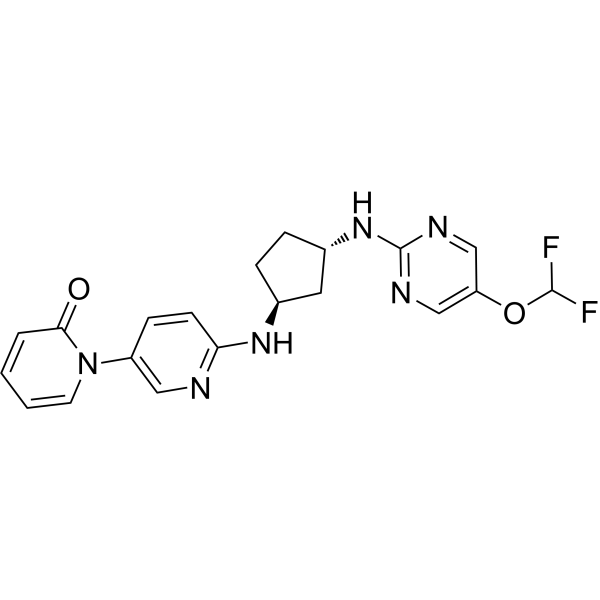
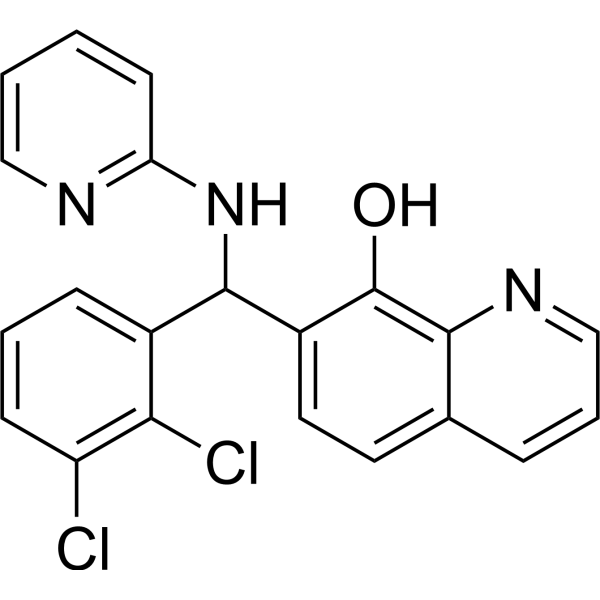
    Laroprovstat
    1 Publications Verification

    AZD0780; PCSK9-IN-12

    PCSK9 Cardiovascular Disease Metabolic Disease
    Laroprovstat (AZD0780) is an orall active PCSK9 inhibitor. PCSK9-IN-12 has bind affinity for PCSK9 with a Kd value of <200 nM. Laroprovstat binds to a pocket in the PCSK9 C-terminal domain and does not affect the PCSK9-LDL receptor (LDLR) interaction. Laroprovstat inhibits lysosomal trafficking of PSCK9-LDLR complexes and prevents PCSK9-induced LDLR degradation. Laroprovstat can be used for the research of hypercholesterolemia .
    Laroprovstat
  • HY-D2449
    DQ-BSA-RED
    2 Publications Verification

    Fluorescent Dye Others
    DQ-BSA-Red is a bovine serum albumin labeled with a red fluorescent dye that can be used to detect lysosomal activity. The excitation wavelength and emission wavelength of DQ-BSA-Red are 590 nm and 620 nm, respectively. The BSA molecule in DQ-BSA-Red is labeled with high concentration of red fluorescent dye in multiple sites, which shows high fluorescence self-inhibition. Once DQ-BSA-RED enters the lysosome, DQ-BSA is cleaved by lysosomal proteases, resulting in unquenched and released fluorescent fragments, emitting bright fluorescence. Inactivated lysosomes are unable to degrade the BSA protein and thus have a lower or even no fluorescent signal .
    DQ-BSA-RED
  • HY-13817
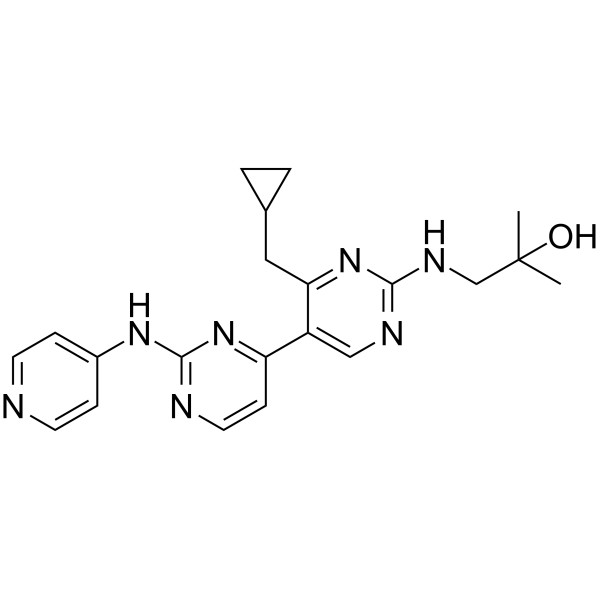
    IU1
    Maximum Cited Publications
    25 Publications Verification

    Deubiquitinase Autophagy Apoptosis Cardiovascular Disease Neurological Disease Endocrinology Cancer
    IU1 is a selective, reversible USP14 inhibitor with an IC50 of 4-5 μM. IU1 binds USP14’s catalytic cleft to block deubiquitinase activity. IU1 induces calpain-dependent Tau cleavage, causes ATP deficits, reduces E1~Ub thioester levels and 26S proteasome assembly. IU1 enhances 26S proteasome chymotrypsin-like activity, modulates LC3B-dependent autophagy flux, reduces cancer cell proliferation and migration, and blocks G0/G1 to S phase cell cycle transition in follicular thyroid cancer cells. IU1 activates autophagy-lysosomal and ubiquitin-proteasome pathways, triggers apoptosis, and reduces cervical cancer cell growth. IU1 enhances degradation of proteasome substrates linked to neurodegenerative disease, accelerates oxidized protein degradation, and increases oxidative stress resistance. IU1 can be used for the research of Alzheimer’s disease, follicular thyroid cancer, ischemic stroke, cervical cancer, and neurodegenerative disease .
    IU1
  • HY-128144
    Lalistat 2
    3 Publications Verification

    Lipase Metabolic Disease
    Lalistat 2 is an inhibitor of many lipases especially Lysosomal acid lipase (LAL, IC50 = 152 nM), which is a key enzyme that degrades neutral lipids at an acidic pH in lysosomes. Lalistat 2 is commonly used to investigate the cell-specific functions of LAL and LAL deficiency in vitro, as well as specifically measure LAL activity in human blood samples or cells .
    Lalistat 2
  • HY-13822
    SKI II
    5+ Cited Publications

    SphK Wnt Apoptosis Cancer
    SKI-II is an oral active and synthetic inhibitor of sphingosine kinase (SK) activity, with IC50 values of 78 μM and 45 μM for SK1 and for SK2, respectively. SKI II causes an irreversible inhibition of SK1 by inducing its lysosomal and/or proteasomal degradation .
    SKI II
  • HY-155747
    FDW028
    1 Publications Verification

    Autophagy Akt mTOR Cancer
    FDW028 a potent and highly selective FUT8 inhibitor. FUT8 exhibits potent anti-tumor activity by defucosylation and impelling lysosomal degradation of B7-H3 through the chaperone-mediated autophagy (CMA) pathway. FDW028 can be used for metastatic colorectal cancer (mCRC) research .
    FDW028
  • HY-107811
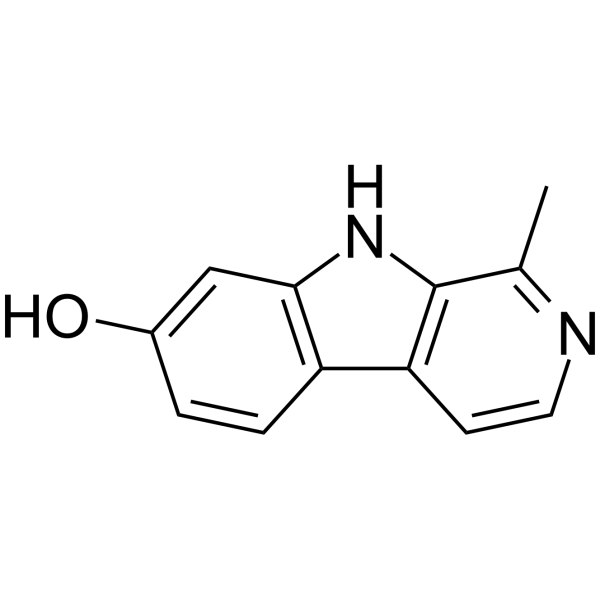
    Harmol
    1 Publications Verification

    Autophagy α-synuclein Apoptosis Monoamine Oxidase Mitosis Neurological Disease Cancer
    Harmol is an orally active β-carboline alkaloid. Harmol is a TFEB activator and monoamine oxidase inhibitor. Harmol can induce cell mitosis, Autophagy and Apoptosis. Harmol promotes the degradation of α-synuclein by regulating the autophagy-lysosomal pathway. Harmol has anti-tumor, anti-depressant and anti-aging activities. Harmol improves motor impairment in a mouse Parkinson's disease model .
    Harmol
  • HY-148118A

    LYTACs Cancer
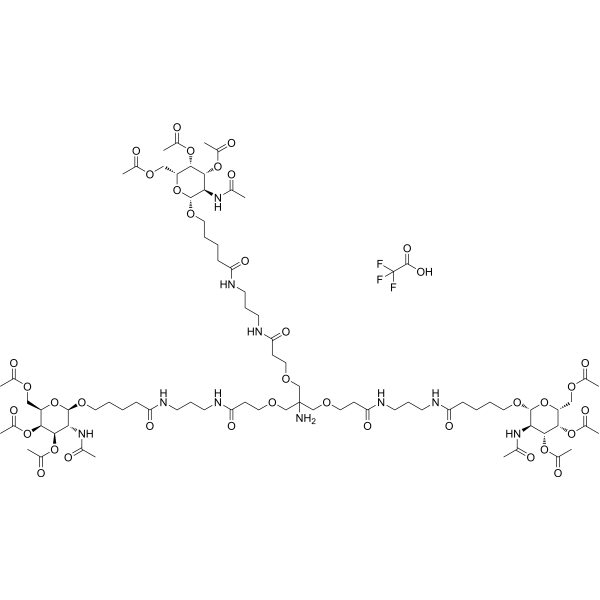
    Tri-GalNAc(OAc)3 TFA is a trivalent N-acetylgalactosamine (GalNAc) derivative that can be used to synthesize GalNAc-LYTAC. Tri-GalNAc is a specific ligand targeting the asialoglycoprotein receptor (ASGPR), mediating the endocytosis and transport of cell surface proteins (such as EGFR, HER2) to lysosomes for degradation by lysosomal targeting chimeras (LYTACs). Tri-GalNAc significantly reduces the level of target proteins and inhibits downstream signaling pathways (such as EGFR-mediated Akt and MAPK signals). Tri-GalNAc(OAc)3 TFA can be used for hepatocyte targeting studies, and can degrade carcinogenic membrane proteins and inhibit tumor cell proliferation in liver cancer cell models .
    Tri-GalNAc(OAc)3 TFA
  • HY-133736

    PROTAC-Linker Conjugates for PAC ADC Payload Epigenetic Reader Domain Cancer
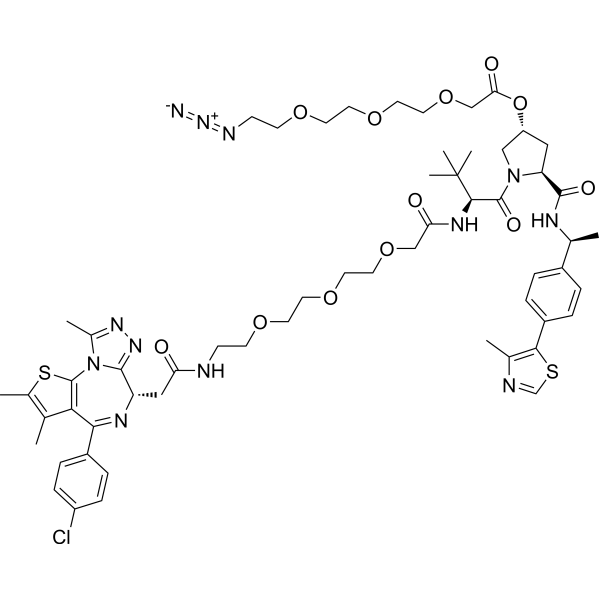
    PROTAC BRD4 Degrader-5-CO-PEG3-N3 is a PROTAC-linker Conjugate for PAC, comprises the BRD4 degrader (MZ 1 (HY-107425) analog) and PEG-based linker. PROTAC BRD4 Degrader-5-CO-PEG3-N3 is a click chemistry reagent, it contains an Azide group and can undergo copper-catalyzed azide-alkyne cycloaddition reaction (CuAAc) with molecules containing Alkyne groups. It can also undergo strain-promoted alkyne-azide cycloaddition (SPAAC) reactions with molecules containing DBCO or BCN groups. PROTAC BRD4 Degrader-5-CO-PEG3-N3 can be used for the research of HER2-positive breast cancer .
    PROTAC BRD4 Degrader-5-CO-PEG3-N3
  • HY-P6438

    Integrin Others Cancer
    Alkyne-cRGD is an integrin ligand. Alkyne-cRGD can be used in the study of degraders. Alkyne-cRGD undergoes copper-catalyzed azide-alkyne cycloaddition reaction .
    Alkyne-cRGD
  • HY-148409

    Ferroptosis Apoptosis Autophagy MDM-2/p53 Cancer
    MMRi62, a ferroptosis inducer targeting MDM2-MDM4 (negative regulators of tumor suppressor p53). MMRi62 shows a P53-independent pro-apoptotic activity against pancreatic ductal adenocarcinoma (PDAC) cells and induce autophagy. MMRi62 inducesferroptosis, resulting in a increase of reactive oxygen and lysosomal degradation of ferritin heavy chain (FTH1). MMRi62 also leads to proteasomal degradation of mutant p53, also inhibits orthotopic xenograft PDAC mouse model in vivo with high frequency mutation characteristics of KRAS and TP53.12 .
    MMRi62
  • HY-123058

    PI3K Autophagy Cancer
    Vps34-IN-4 (compound 19) is a potent, selective, and orally active inhibitor of VPS34. Vps34-IN-4 inhibits the autophagy in vivo. Autophagy is a dynamic process that regulates lysosomal-dependent degradation of cellular components .
    Vps34-IN-4
  • HY-125168
    EGA
    2 Publications Verification

    EGFR Infection Inflammation/Immunology
    EGA is an inhibitor that selectively targets the endosomal trafficking pathways. EGA targets the proteins involved in the endosomal trafficking pathways through which multiple toxins and viruses enter cells. EGA exerts its activity by inhibiting the trafficking from early endosomes to late endosomes, blocking the entry of multiple acid-dependent bacterial toxins and viruses into mammalian cells and delaying the lysosomal targeting and degradation of EGFR .
    EGA
  • HY-161746

    AUTOTACs Autophagy Neurological Disease
    Anle138b-F105 is an autophagy-targeting chimera (AUTOTAC) that targets p62/Sequestosome-1/SQSTM1. Anle138b-F105 binds to the ZZ domain of p62, induces conformational activation, self-oligomerization, interaction with LC3, and formation of autophagosomes. Anle138b-F105 induces autophagic flux of ubiquitin-conjugated aggregated proteins, leading to their lysosomal degradation. Anle138b-F105 is applicable for the research of neurodegenerative proteinopathies .
    Anle138b-F105
  • HY-W489121

    p62 Autophagy Cancer
    YTK-105 is a p62/ZZ binding domain ligand and Autophagy enhancer. YTK-105 activates p62-dependent selective macroautophagy. YTK-105 serves as an autophagy-targeting ligand (ATL) for synthesizing AUTOTAC degraders .
    YTK-105
  • HY-175209

    Keap1-Nrf2 Ferroptosis Reactive Oxygen Species (ROS) Atg8/LC3 Cancer
    Nrf2-IN-4 is a Nrf2 inhibitor. Nrf2-IN-4 induces ferroptosis via NRF2 inhibition. Nrf2-IN-4 disrupts cellular iron homeostasis, facilitates ferritin degradation, and ultimately triggers ferroptosis. Nrf2-IN-4 induces lysosome activation by promoting iron-dependent ROS production and lysosomal acidification. Nrf2-IN-4 demonstrates significant antitumor efficacy. Nrf2-IN-4 can be used for the study of breast cancer .
    Nrf2-IN-4
  • HY-153880

    LYTACs Ras Cancer
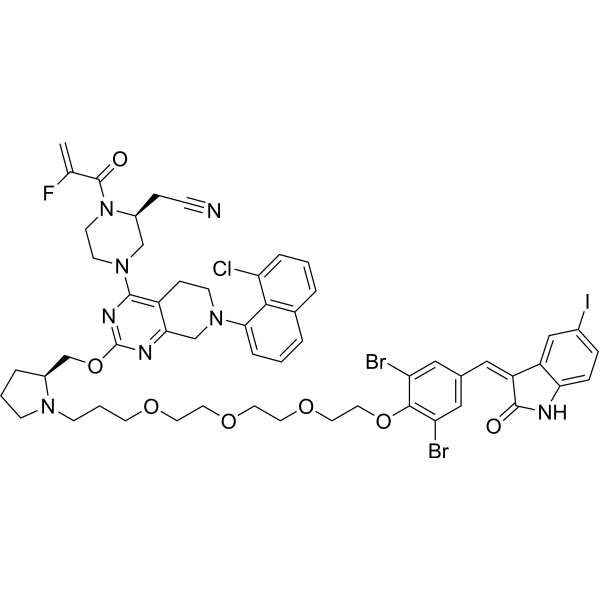
    KRAS degrader-1 is a potent KRAS degrader. KRAS degrader-1 targets specific proteins for degradation via the autophagy-lysosomal degradation pathway. KRAS degrader-1 is suitable for use in cancer research. (Blue: KRAS G12C-IN-72 (HY-128414); Black: Linker (HY-175587); Pink: 5-Iodoindolin-2-one (HY-76986); Blue + Black: KRAS ligand-Linker Conjugate 7 (HY-175586)) .
    KRAS degrader-1
  • HY-125900

    NCA

    Others Cancer
    Neocarzilin A (NCA) reduces BST-2 levels via lysosomal degradation. Neocarzilin A has antimigratory and antiproliferative effects on cancer cells. Neocarzilin A inhibits cancer cell migration via irreversible binding to the synaptic vesicle membrane protein VAT-1 .
    Neocarzilin A
  • HY-150286

    Prion Protein Neurological Disease
    SM875 is a cellular prion protein (PrP) degrader (IC50: 7.87 μM). SM875 targets PrP folding intermediates and promotes its degradation through the autophagy-lysosomal pathway. SM875 only acts on nascent, immature PrP molecules and has no effect on mature PrP before synthesis. SM875 can inhibit prion replication and has potential in the study of neurodegenerative diseases (i.e., prion diseases) .
    SM875
  • HY-174468

    LYTACs PD-1/PD-L1 HSP Cancer
    dPDL1-4 is a potent and selective eHSPTAC eHSP90 PD-L1 degrader with DC50s of 7.77 μM and 6.52 μM in HeLa and B16F10 cells. dPDL1-4 bridges eHSP90 with the target protein, inducing lysosomal degradation. dPDL1-4 can degrade PD-L1 significantly and inhibits tumor growth. dPDL1-4 can be used for the study of cervical cancer and melanoma. ((Pink: eHSP90 ligand (HY-174476); Blue: PD-L1 ligand (HY-116274); Black: Linker (HY-W021787); HSP ligand + linker: HY-174799)) .
    dPDL1-4
  • HY-125859E

    Glutathione Peroxidase Bacterial Infection Inflammation/Immunology
    Myeloperoxidase, Human Neutrophil is a peroxidase. Myeloperoxidase, Human Neutrophil is a potent antibacterial agent by catalyzing the H2O2-dependent oxidation of chloride anion to generate hypochlorous acid. Myeloperoxidase, Human Neutrophil catalyzes the degradation of N-retinyl-idene-N-retinylethanolamine, a toxic form of retinal lipofuscin. Myeloperoxidase, Human Neutrophil also triggers lysosomal stress and cell death. Myeloperoxidase, Human Neutrophil can be used for the researches of inflammation and infection .
    Myeloperoxidase, Human Neutrophil
  • HY-175209A

    Keap1-Nrf2 Ferroptosis Reactive Oxygen Species (ROS) Atg8/LC3 Cancer
    Nrf2-IN-4 (Compound PhcY) hydrobromide is a Nrf2 inhibitor. Nrf2-IN-4 hydrobromide induces ferroptosis via NRF2 inhibition. Nrf2-IN-4 hydrobromide disrupts cellular iron homeostasis, facilitates ferritin degradation, and ultimately triggers ferroptosis. Nrf2-IN-4 hydrobromide induces lysosome activation by promoting iron-dependent ROS production and lysosomal acidification. Nrf2-IN-4 hydrobromide demonstrates significant antitumor efficacy. Nrf2-IN-4 hydrobromide can be used for the study of breast cancer .
    Nrf2-IN-4 hydrobromide
  • HY-162972

    PROTACs PD-1/PD-L1 Inflammation/Immunology Cancer
    PROTAC PD-L1 degrader-2 is a PD-L1 PROTAC degrader with an IC50 of 197.4 nM and a Kd of 301 nM. PROTAC PD-L1 degrader-2 induces PD-L1 endocytosis, drives degradation via the proteasomal and lysosomal pathways, and inhibits the PD-1/PD-L1 interaction. As an immune activator, PROTAC PD-L1 degrader-2 increases the levels of CD4 +, CD8 +, granzyme B and perforin. PROTAC PD-L1 degrader-2 can be used in studies related to colon cancer immunology .
    PROTAC PD-L1 degrader-2
  • HY-147656

    ATTECs NAMPT Autophagy Cancer
    NAMPT degrader-1 (Compound A3), an autophagosome-tethering compound (ATTEC), is an nicotinamide phosphoribosyltransferase (NAMPT) degrader with an IC50 of 0.023 μM. NAMPT degrader-1 significantly induces the degradation of NAMPT through the autophagy-lysosomal pathway and shows excellent cellular antitumor potency .
    NAMPT degrader-1
  • HY-107811A

    Autophagy α-synuclein Apoptosis Monoamine Oxidase Mitosis Neurological Disease Cancer
    Harmol hydrochloride is an orally active β-carboline alkaloid. Harmol hydrochloride is a TFEB activator and monoamine oxidase inhibitor. Harmol hydrochloride can induce cell mitosis, Autophagy and Apoptosis. Harmol hydrochloride promotes the degradation of α-synuclein by regulating the autophagy-lysosomal pathway. Harmol hydrochloride has anti-tumor, anti-depressant and anti-aging activities. Harmol hydrochloride improves motor impairment in a mouse Parkinson's disease model .
    Harmol hydrochloride
  • HY-P5377

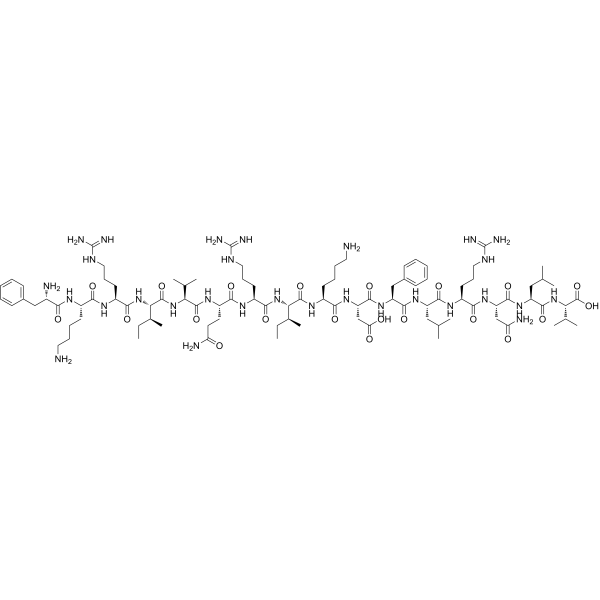
    Cathepsin K substrate

    Ser/Thr Protease Others
    Abz-HPGGPQ-EDDnp (Cathepsin K substrate) is a biological active peptide. (Cathepsins are a class of globular lysosomal proteases, playing a vital role in mammalian cellular turnover. They degrade polypeptides and are distinguished by their substrate specificities. Cathepsin K is the lysosomal cysteine protease involved in bone remodeling and resorption. It has potential as a drug target in autoimmune diseases and osteoporosis.This FRET peptide can be used to monitor selectively cathepsin K activity in physiological fluids and cell lysates. Abz-HPGGPQ-EDDnp [where Abz represents o-aminobenzoic acid and EDDnp represents N -(2, 4-dinitrophenyl)-ethylenediamine], a substrate initially developed for trypanosomal enzymes, is efficiently cleaved at the Gly-Gly bond by cathepsin K. This peptide is resistant to hydrolysis by cathepsins B, F, H, L, S and V, Ex/Em=340 nm/420 nm.)
    Abz-HPGGPQ-EDDnp
  • HY-169385

    AUTOTACs Androgen Receptor Cancer
    ATC-324 is an bivalent AR (Androgen Receptor) degrader based on the protein degradation technology platform AUTOphagy-TArgeting Chimera (AUTOTAC). ATC-324 induces the formation of AR/p62 complex, leading to autophagy-lysosomal degradation of AR. ATC-324 can reduce nuclear AR levels and downregulate target gene expression of AR and AR-v7, and also has a degradation effect on common AR mutants in PCa . ATC-324 is composed of target-binding ligand (TBL) Enzalutamide (HY-70002) and p62/SQSTM1 autophagy-targeting ligand (ATL) YT 6-2 analog-1 (HY-169386), connected by Boc-NH-PEG4-CH2CH2NH2 (HY-W008352). Among them, the active control of the target protein ligand is Enzalutamide carboxylic acid (HY-70002B), and the conjugate composed of the autophagy-targeting ligand and the linker is YT 6-2-PEG3-C2-NH2 (HY-169387).
    ATC-324
  • HY-175392

    PROTACs Epoxide Hydrolase Metabolic Disease Inflammation/Immunology
    PROTAC sEH-degrader-3 (Compound 1a) is a targeted sEH PROTAC degrader that can selectively degrade sEH in the cytosol without affecting sEH in peroxisomes. PROTAC sEH-degrader-3 degrades sEH through a CRBN-dependent lysosomal pathway rather than the proteasome, with an IC50 of 0.8 nM against hsEH. PROTAC sEH-degrader-3 can inhibit endoplasmic reticulum stress and can be used in the research of inflammation, metabolic diseases, and other diseases related to endoplasmic reticulum stress. (Pink: sEH inhibitor (HY-114266); Black: Linker (HY-W008352); Blue: E3 Ligase Ligand (HY-14658)) .
    PROTAC sEH-degrader-3
  • HY-203817

    Autophagy Apoptosis Mitochondrial Metabolism Cancer
    IITZ-02 is a lysosomotropic Autophagy inhibitor. IITZ-02 enhances autophagosome accumulation but inhibits autophagosomal degradation by impairing lysosomal function, finally inducing the inhibition of autophagy. IITZ-02 abolishes mitochondrial membrane potential and induces apoptosis through the mitochondria-mediated pathway. IITZ-02 has a potent antitumor activity in MDA-MB-231 xenograft mouse models. IITZ-02 can be used for cancers research .
    IITZ-02
  • HY-173150

    YAP Cancer
    Hapalindole Q (Compound (+)-1) is an autophagy (Autophagy) inhibitor targeting YAP1. Hapalindole Q binds to the Hippo pathway transcription factor YAP1 with a Kd of 9.13 μM and induces its degradation via the chaperone-mediated autophagy (CMA) pathway. This process inhibits Rab7-mediated fusion of autophagosomes and lysosomes, thereby reducing overall autophagy levels without affecting lysosomal function. Hapalindole Q holds promise for research in cancer (e.g., liver cancer, breast cancer, etc.) .
    Hapalindole Q
  • HY-107811R

    Apoptosis Monoamine Oxidase Autophagy α-synuclein Mitosis Reference Standards Neurological Disease Cancer
    Harmol (Standard) is the analytical standard of Harmol (HY-107811). This product is intended for research and analytical applications. Harmol hydrochloride is an orally active β-carboline alkaloid. Harmol hydrochloride is a TFEB activator and monoamine oxidase inhibitor. Harmol can induce cell mitosis, Autophagy and Apoptosis. Harmol promotes the degradation of α-synuclein by regulating the autophagy-lysosomal pathway. Harmol has anti-tumor, anti-depressant and anti-aging activities. Harmol improves motor impairment in a mouse Parkinson's disease model .
    Harmol (Standard)
  • HY-183061

    LYTACs Epigenetic Reader Domain Neurological Disease Cancer
    MrTAC-8, methylarginine-targeting chimera (MrTAC), is a BRD4 degrader with DC50 values of 46 nM in HeLa cells. MrTAC-8 recruits PRMT1, PRMT3, PRMT4, PRMT5, and PRMT7 to target proteins, inducing arginine methylation that triggers lysosomal degradation. MrTAC-8 degrades proteins across diverse subcellular localizations and independent of native proteolytic routes. MrTAC-8 can be used for the research of cervical cancer, glioblastoma .
    MrTAC-8
  • HY-181829

    EGFR PSMA LYTACs Cancer
    Ctx-L3 is a selective EGFR PTAC (PSMA-targeted chimera) degrader (DC50: 4.3 pM in LNCaP cells) and LYTAC. Ctx-L3 recruits prostate-specific membrane antigen (PSMA) and mediates lysosomal degradation of EGFR in PSMA-positive prostate cancer cells. Ctx-L3 exhibits degrading activity against EGFR in prostate cancer cells. Ctx-L3 is applicable to related research on prostate cancer .
    Ctx-L3
  • HY-181830

    PD-1/PD-L1 PSMA LYTACs Cancer
    Atz-L5 is a PD-L1 PTAC (PSMA-targeted chimera) degrader (DC50: 18 pM in PC3-PIP cells; 2 pM in LNCaP cells) and LYTAC. Atz-L5 promotes lysosomal degradation of PD-L1 in PSMA-positive prostate cancer cells. Atz-L5 is applicable to the research of prostate cancer .
    Atz-L5
  • HY-P992066

    Discoidin Domain Receptor Inflammation/Immunology
    Anti-Mouse DDR2 Antibody (DAB0065) is a mAb that specifically targets mouse discoidin domain receptor DDR2 without cross-reacting with DDR1. Anti-Mouse DDR2 Antibody (DAB0065) binds to the extracellular domain of native mouse DDR2, induces endocytosis and lysosomal degradation of DDR2, and this process is independent of collagen binding. Anti-Mouse DDR2 Antibody (DAB0065) exhibits significant therapeutic effects in both the unilateral ureteral obstruction (UUO) mouse model of renal fibrosis and the bleomycin (HY-108345)-induced mouse model of pulmonary fibrosis, effectively downregulating the mRNA expression of type I collagen Col1a1 and fibronectin Fn1. Anti-Mouse DDR2 Antibody (DAB0065) can be humanized and has the potential to be developed as a targeted agent for diseases such as idiopathic pulmonary fibrosis and renal fibrosis .
    Anti-Mouse DDR2 Antibody (DAB0065)
  • HY-180571

    PROTACs CCR Cancer
    LUF7996 is a CCR2 PROTAC Degrader degrading CCR2 with DC50 = 2.6 μM. LUF7996 demonstrates engagement of both and the E3 ligase cereblon and displays sustain and concentration-dependent degradation of CCR2. LUF7996 reliance on the lysosomal pathway to induce CCR2 degradation. LUF7996 efficiently inhibits monocyte migration in virto .
    LUF7996
  • HY-183660

    Autophagy Amyloid-β Tau Protein Neurological Disease
    F-SLOH is a brain-penerant and orally active TFEB activator and amyloid-β inhibitor with an IC50 of 3.4 μM against amyloid-β. F-SLOH promotes nuclear translocation of TFEB, driving autophagy and lysosomal biogenesis. F-SLOH reduces amyloid-β oligomers and Tau aggregates via autophagy lysosomal degradation pathway. F-SLOH can be used for the research of Alzheimer’s disease .
    F-SLOH
  • HY-179558

    PD-1/PD-L1 Cancer
    MS1-96 is an orally active PD-L1 (programmed death-ligand 1) degrader. MS1-96 effectively reduced PD-L1 protein levels across multiple colorectal cancer (CRC) cell lines. MS1-96 directly binds to PD-L1 (KD = 2.58 μM) and enhances the interaction between HIP1R and PD-L1, thereby altering the intracellular trafficking of PD-L1 within clathrin-coated vesicles. MS1-96 induces abnormal N-glycosylation of PD-L1, destabilizing the protein and hastening its lysosome-mediated degradation. MS1-96 can be used for the study of colorectal cancer .
    MS1-96
  • HY-183717

    Cancer
    M4K3233 is a selective ALK2 PROTAC degrader with a pDC50 of 7.3 and a pIC50 of 6.6. M4K3233 recruits CRBN to form a ternary complex with ALK2, mediating ALK2 degradation via the proteasomal and lysosomal pathways. M4K3233 induces moderate downregulation of RIPK2 and significant downregulation of SIK3 in mammalian cells. M4K3233 is applicable to research related to glioblastoma .
    M4K3233
  • HY-180222

    CDK Cancer
    KGA-4066 is a novel non-ATP-competitive CDK2 inhibitor. KGA-4066 inhibits CDK2/Cyclin A2 with an IC50 value of 236.7 nM, disrupts their interaction, promots CDK2 degradation via the lysosomal pathway. KGA-4066 has anticancer activity against hepatocellular carcinoma .
    KGA-4066
  • HY-186196

    Ferroptosis Reactive Oxygen Species (ROS) Cancer
    Fentomycin-1 is a ferroptosis inducer. Fentomycin-1 activates lysosomal iron 2+ under acidic conditions with hydrogen peroxide to form a reactive iron-oxo species, which induces oxidative degradation, oxidation, and lipolysis of membrane phospholipids, triggering ferroptosis. Fentomycin-1 can be used for the research of pancreatic ductal adenocarcinoma, breast cancer metastasis, and melanoma .
    Fentomycin-1
  • HY-182959

    Hsp-targeting Chimeras LYTACs PD-1/PD-L1 HSP Cancer
    Hsp70TAC PD-1 Degrader-2 is a PD-L1 Hsp70TAC (Hsp70-targeting Chimeras) degrader with Kd values of 0.36 μM. Hsp70TAC PD-1 Degrader-2 forms a ternary complex with Hsp70 and PD-L1 to drive PD-L1 degradation. Hsp70TAC PD-1 Degrader-2 induces degradation of mature membrane-bound PD-L1 in an Hsp70-dependent manner and via caveolin-mediated endocytosis and lysosomal trafficking. Hsp70TAC PD-1 Degrader-2 accumulates preferentially in tumor cells with elevated Hsp70 expression for tumor-selective PD-L1 degradation. Hsp70TAC PD-1 Degrader-2 can be used for the research of cancer, such as breast invasive carcinoma, glioblastoma multiforme, diffuse large b-cell lymphoma . (Pink: PD-1/PD-L1 ligand (HY-19745A); Blue: Hsp70 ligand (HY-182979); Black: linker (HY-182982)).
    Hsp70TAC PD-1 Degrader-2
  • HY-183257

    Autophagy Beclin1 Reactive Oxygen Species (ROS) p97 Cancer
    ATI-1 is an autophagy initiation inhibitor. ATI-1 targets valosin-containing protein (VCP/p97, disrupts its interaction with UFL1, impairs UFMylation homeostasis associated with VCP, promotes polyubiquitination and degradation of Beclin1, and blocks the formation of early autophagosomes. ATI-1 induces synergistic death of autophagy-dependent malignant tumor cells under nutrient deprivation conditions, accompanied by decreased mitochondrial membrane potential, reduced ROS levels and lysosomal stress. ATI-1 exhibits anti-tumor efficacy in a pancreatic adenocarcinoma xenograft mouse model. ATI-1 can be used for the research of pancreatic adenocarcinoma and lung cancer .
    ATI-1
  • HY-P991888

    STAT Cardiovascular Disease Cancer
    INCA033989 is a fully human IgG1 monoclonal antibody targeting mutCALR (KD = 1.75 nM for mutCALR del52; KD = 6.78 nM for mutCALR ins5). INCA033989 antagonizes mutCALR-driven signaling and proliferation. INCA033989 selectively inhibits pSTAT3/pSTAT5. INCA033989 prevents thrombocytosis and reduces the expansion of mutCALR-positive cells. INCA033989 is useful for research on myeloproliferative neoplasms .
    INCA033989

Inquiry Online

Your information is safe with us. * Required Fields.

Salutation


Country or Region *

Applicant Name *


Organization Name *

Department *


Email Address *


Product Name *

Cat. No.


Requested quantity *

Phone Number *


Remarks

Inquiry Online

Inquiry Information

Product Name:
Cat. No.:
Quantity:
MCE Japan Authorized Agent:

