Search Result
Results for "
rat D2 receptor
" in MedChemExpress (MCE) Product Catalog:
1
Isotope-Labeled Compounds
| Cat. No. |
Product Name |
Target |
Research Areas |
Chemical Structure |
-
- HY-14542
-
|
CP-88059
|
5-HT Receptor
Dopamine Receptor
|
Neurological Disease
|
|
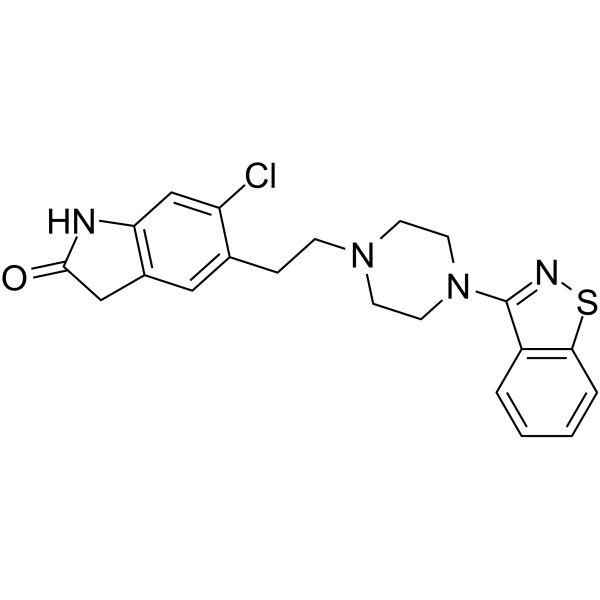
Ziprasidone (CP-88059), an orally active antipsychotic agent, is a combined 5-HT and dopamine receptor antagonist . Ziprasidone mesylate trihydrate has affinities for Rat D2 (Ki=4.8 nM), 5-HT2A (Ki=0.42 nM) and 5-HT1A (Ki=3.4 nM) .
|
-
-
- HY-10435A
-
|
(±)-SKF-82958 hydrobromide; Chloro-APB hydrobromide
|
Dopamine Receptor
|
Neurological Disease
|
|
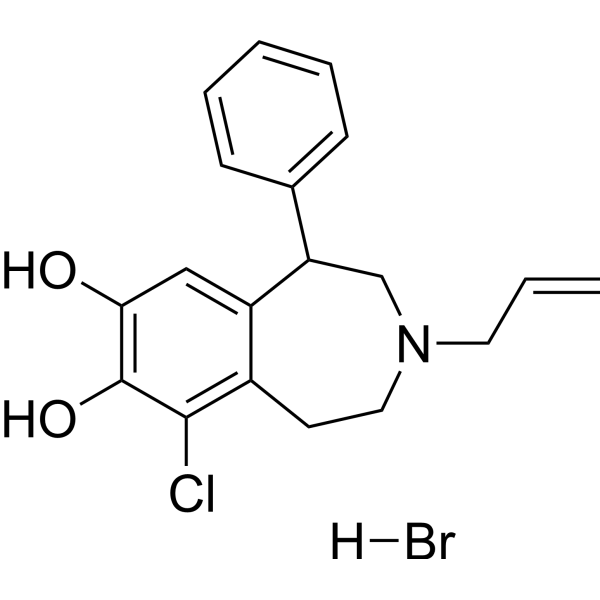
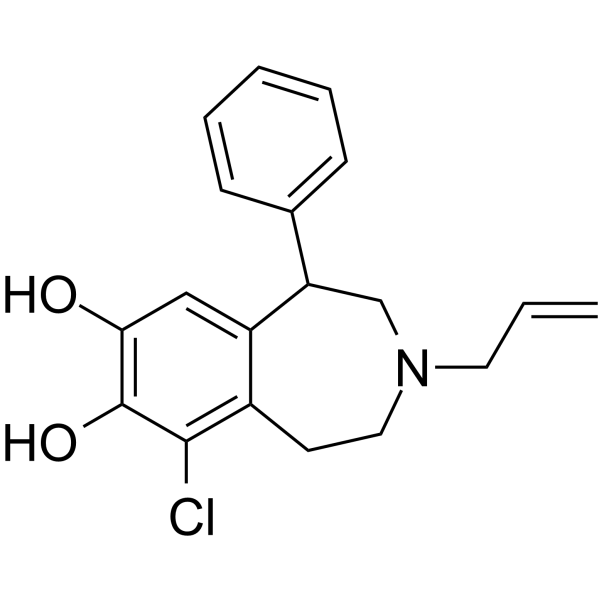
SKF-82958 ((±)-SKF 82958) hydrobromide is a dopamine D1 receptor full agonist (K0.5=4 nM), displays selective for D1 over D2 receptors (K0.5=73 nM). SKF-82958 hydrobromide induces dopamine D1 receptor-dependent adenylate cyclase activity in rat striatal membranes (EC50=491 nM) .
|
-
-
- HY-17407
-
|
CP 88059 hydrochloride monohydrate
|
5-HT Receptor
Dopamine Receptor
|
Neurological Disease
|
|
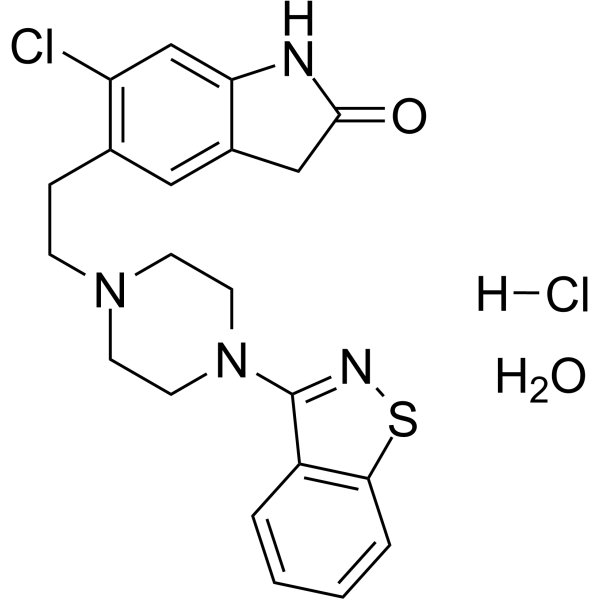
Ziprasidone (CP-88059) hydrochloride monohydrate is an orally active combined 5-HT and dopamine receptor antagonist . Ziprasidone hydrochloride monohydrate has affinities for Rat D2 (Ki=4.8 nM), 5-HT2A (Ki=0.42 nM) and 5-HT1A (Ki=3.4 nM) .
|
-
-
- HY-14542A
-
|
CP-88059 hydrochloride
|
5-HT Receptor
Dopamine Receptor
|
Neurological Disease
|
|
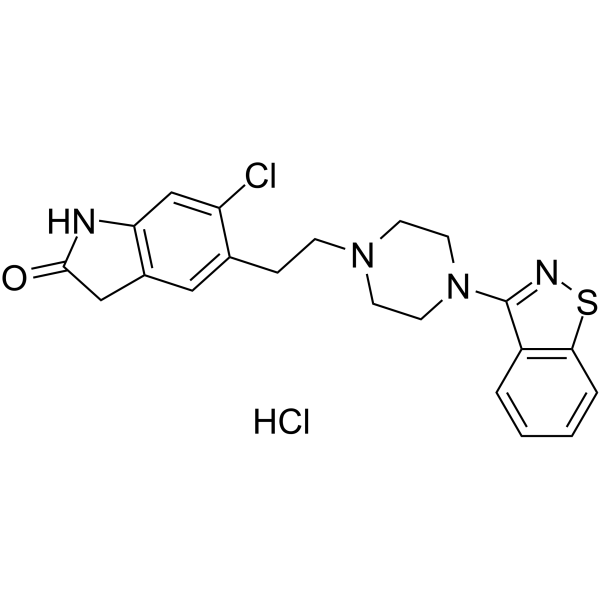
Ziprasidone (CP-88059) hydrochloride is an orally active combined 5-HT and dopamine receptor antagonist . Ziprasidone hydrochloride has affinities for Rat D2 (Ki=4.8 nM), 5-HT2A (Ki=0.42 nM) and 5-HT1A (Ki=3.4 nM) .
|
-
-
- HY-100656
-
|
|
Dopamine Receptor
5-HT Receptor
|
Neurological Disease
|
|
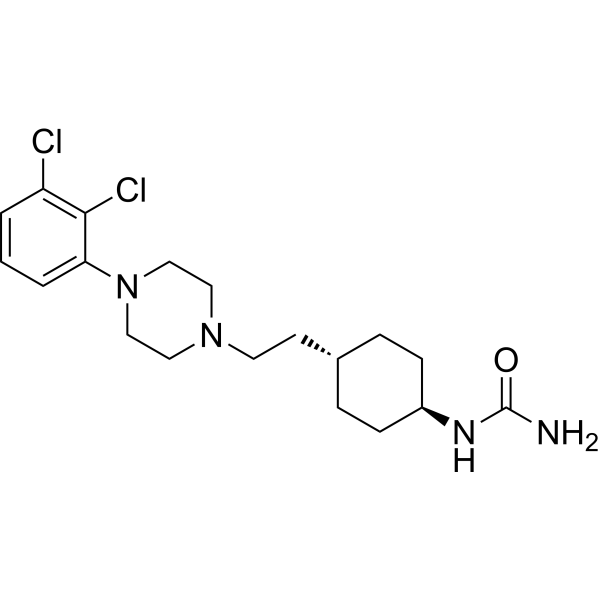
Desmethyl cariprazine is a major active metabolite of cariprazine, with activities at human dopamine receptors and serotonin receptors, showing a pEC50 of 8.90 at human D2 receptors, a pEC50 of 8.09 at D3 receptors, and a pEC50 of 6.28 at 5-HT1A receptors. Desmethyl cariprazine inhibits forskolin-induced cAMP production at D2, D3 and 5-HT1A receptors, and suppresses serotonin-induced Ca 2+ release at 5-HT2B receptors. Desmethyl cariprazine is applicable to research related to schizophrenia, bipolar disorder type I and bipolar disorder.
|
-
-
- HY-107969
-
|
|
Dopamine Receptor
COX
NO Synthase
|
Neurological Disease
Cancer
|
|
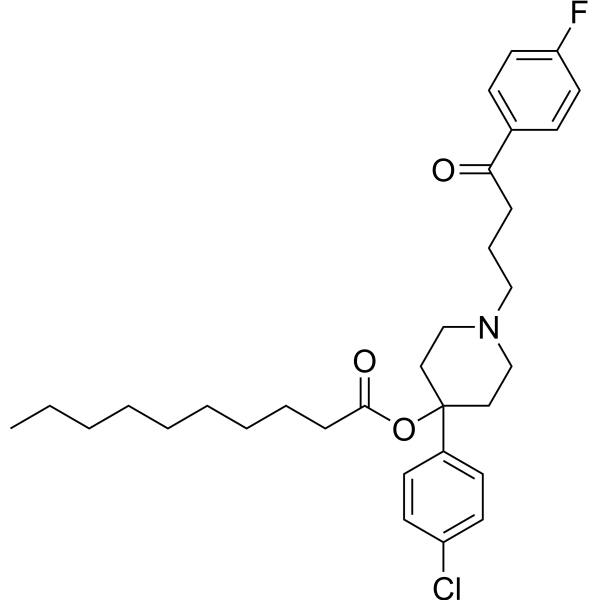
Haloperidol decanoate is a depot preparation of haloperidol, a commonly used butyrophenone derivative with antipsychotic activity. Haloperidol decanoate can increase the striatal D2 receptor in rat. Haloperidol decanoate can improve conditions of psychoses (mainly schizophrenia). Haloperidol decanoate can lead to increased accumulation of the dopamine metabolites homo-vanillic acid. Haloperidol decanoate can reduce intestinal transport, increase gastric emptying and reduce acid output in rat model .
|
-
-
- HY-110000
-
|
|
Dopamine Receptor
|
Neurological Disease
|
|
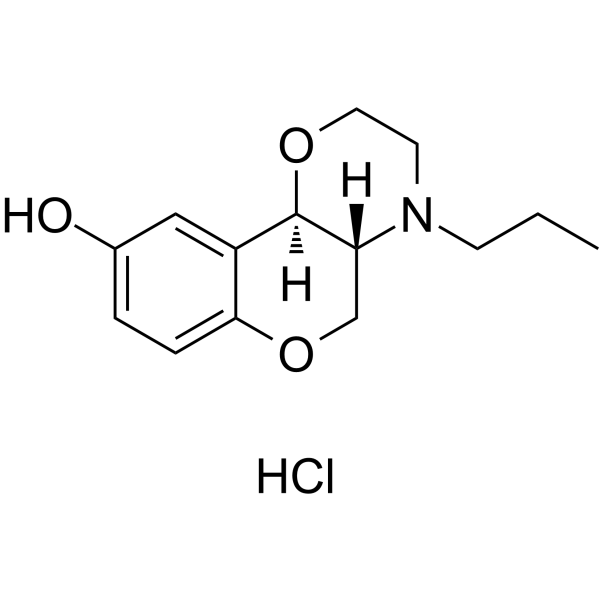
(+)-PD 128907 hydrochloride is a selective dopamine D2/D3 receptor agonist, with Kis of 1.7, 0.84 nM for human and rat D3 receptors, 179, 770 n M for human and rat D3 receptors, respectively.
|
-
-
- HY-100820
-
|
EMD 128130
|
5-HT Receptor
Dopamine Receptor
|
Neurological Disease
|
|
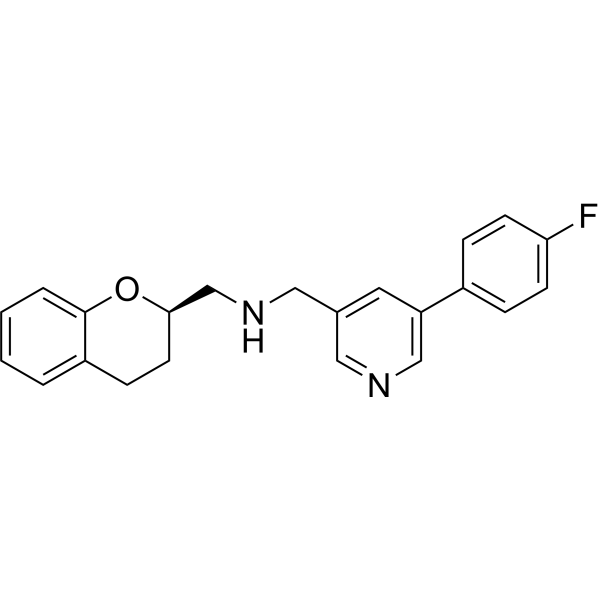
Sarizotan (EMD 128130) is an orally active serotonin 5-HT1A receptor and dopamine receptor agonist. Sarizotan (EMD 128130) exhibits IC50 values of 6.5 nM (rat 5-HT1A), 0.1 nM (human 5-HT1A), 15.1 nM (rat D2), 17 nM (human D2), 6.8 nM (human D3) and 2.4 nM (human D4.2), respectively .
|
-
-
- HY-130344
-
|
|
Dopamine Receptor
Sigma Receptor
|
Neurological Disease
|
|
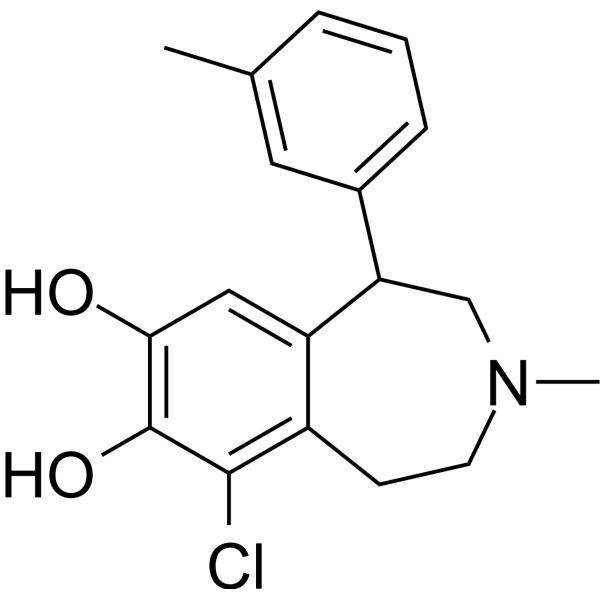
SKF83959 is a potent and selective dopamine D1-like receptor partial agonist. SKF83959 Ki values for rat D1, D5, D2 and D3 receptors are 1.18, 7.56, 920 and 399 nM, respectively. SKF83959 is a potent allosteric modulator of sigma (σ)-1 receptor. SKF83959 belongs to benzazepine family and has improvements on cognitive dysfunction. SKF83959 can be used for the research of Alzheimer's disease and depression .
|
-
-
- HY-100658
-
|
|
5-HT Receptor
Dopamine Receptor
|
Neurological Disease
|
|
Didesmethyl cariprazine is an orally active, BBB-permeable metabolite of Cariprazine (HY-14763). Didesmethyl cariprazine is a partial agonist at the D2 and D3 receptors, full agonist at the 5-HT1A receptor, and antagonist at the human 5-HT2B receptor (Ki: 1.41 nM (human D2L), 0.056 nM (human D3), 1.7 nM (human 5-HT1A), 0.52 nM (human 5-HT2B)). Didesmethyl cariprazine dose-dependently inhibits the spontaneous activity of rat midbrain dopaminergic neurons .
|
-
-
- HY-106584
-
|
Clospipramine
|
Drug Derivative
Dopamine Receptor
5-HT Receptor
|
Neurological Disease
|
|
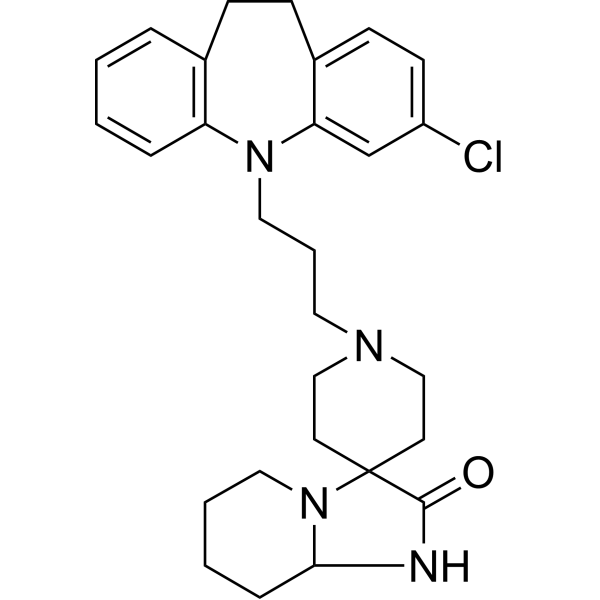
Mosapramine (Clospipramine) is an orally active antipsychotic agent and one of the metabolites of Clocapramine (HY-B2073) after oral absorption. Mosapramine exerts its effects by specifically binding to striatal dopamine D2 receptors and frontal lobe 5-HT2 receptors, with a D2/5-HT2 receptor occupancy ratio of 7.4. Mosapramine induces typical neuropharmacological responses in rat brain regions, including extrapyramidal symptoms, hyperprolactinemia, increased salivation, constipation, and upregulated Fos protein expression. Mosapramine also features a reduced incidence of weight loss. Mosapramine is applicable to research related to schizophrenia .
|
-
-
- HY-14840
-
|
Carphedon
|
nAChR
Dopamine Transporter
GABA Receptor
iGluR
|
Neurological Disease
|
|
Phenylpiracetam (Carphedon) is a positive allosteric modulator of nicotinic acetylcholine receptors (nAChR) with an IC50 of 5.86 μM. Phenylpiracetam is applicable to studies on scopolamine (Scopolamine) (HY-N0296)-induced amnesia, depression and immune stress .
|
-
-
- HY-P0079
-
|
Neuromedin N (rat, mouse, porcine, canine)
|
Dopamine Receptor
|
Neurological Disease
|
|
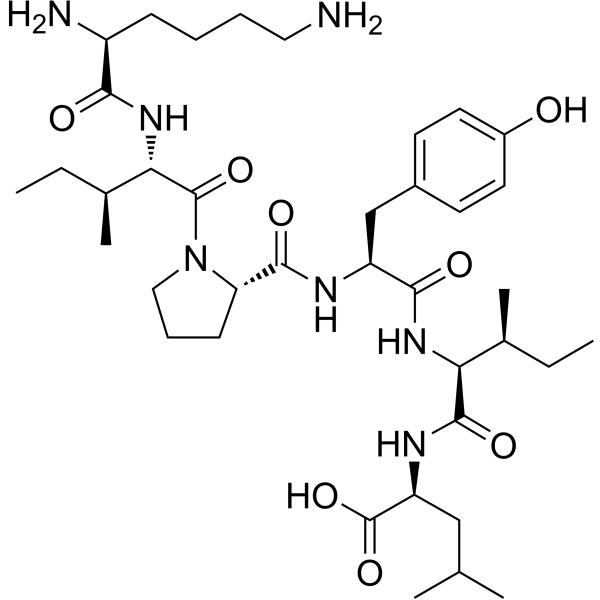
Neuromedin N is a potent modulator of dopamine D2 receptor agonist binding in rat neostriatal membranes.
|
-
-
- HY-12783A
-
|
|
GABA Receptor
|
Neurological Disease
|
|
SCH 50911 is a selective, orally active, blood-brain barrier permeable GABA-B receptor (GABA-B Receptor) antagonist with an IC50 of 1.1 μM in rats. SCH 50911 blocks baclofen-induced antitussive effects, regulates neuronal firing and GABA release. SCH 50911 promotes spontaneous seizures during withdrawal in ethanol-dependent rats, alters reward-related neurotransmission, and reduces or suppresses lever responding and self-administration behaviors of alcohol and sucrose in rats. SCH 50911 is applicable to research related to ethanol withdrawal syndrome, absence epilepsy and alcohol use disorder .
|
-
-
- HY-106432A
-
|
SB-202026 hydrochloride; Memric hydrochloride
|
mAChR
Dopamine Receptor
|
Neurological Disease
|
|
Sabcomeline (SB-202026; Memric) hydrochloride is a muscarinic receptor agonist capable of crossing the blood-brain barrier. Sabcomeline hydrochloride exhibits affinity for all hM1 to hM5 subtypes (pKi=6.72-7.23), and shows near-full agonism at the hM3 receptor, inducing extracellular acidification. Sabcomeline hydrochloride alters the binding kinetics of dopamine D2 receptors through neural network regulation. Sabcomeline hydrochloride also causes minimal cardiovascular changes, effectively reverses spatial memory deficits in rodents and induces conditioned taste aversion. Sabcomeline hydrochloride is an important tool compound in studies of Alzheimer's disease and related neurodegenerative diseases .
|
-
-
- HY-W742532
-
|
N-Ethyl-nor-LSD
|
5-HT Receptor
Dopamine Receptor
|
Neurological Disease
|
|
ETH-LAD (N-Ethyl-nor-LSD) is an activator for 5-HT2A receptor with Ki of 5.1 nM. ETH-LAD exhibits affinity for dopamine receptor D1 and dopamine receptor D2 with Ki of 22.1 nM and 4.4 nM. ETH-LAD acts as psychoactive substance in rat model .
|
-
-
- HY-13213
-
|
AM211 free acid
|
Prostaglandin Receptor
|
Inflammation/Immunology
Endocrinology
|
|
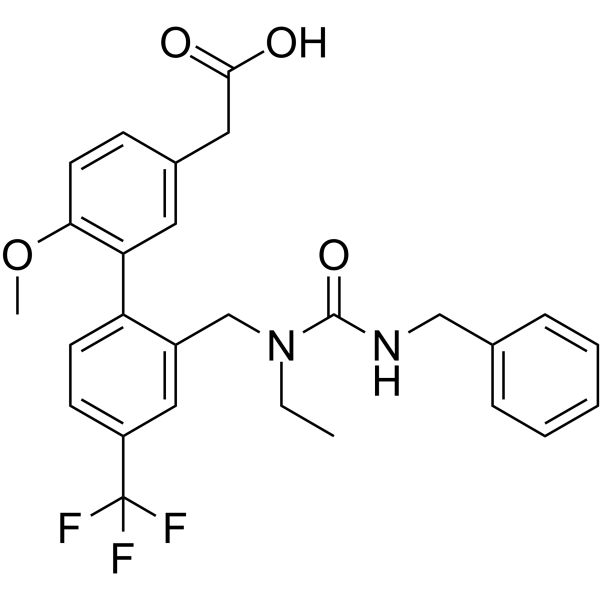
AM211 is a potent, selective and orally bioavailable prostaglandin D2 (PGD2) receptor type 2 (DP2) antagonist, with IC50s of 4.9 nM, 7.8 nM, 4.9 nM, 10.4 nM for human, mouse, guinea pig, and rat DP2, respectively.
|
-
-
- HY-103409
-
|
|
Dopamine Receptor
|
Neurological Disease
|
|
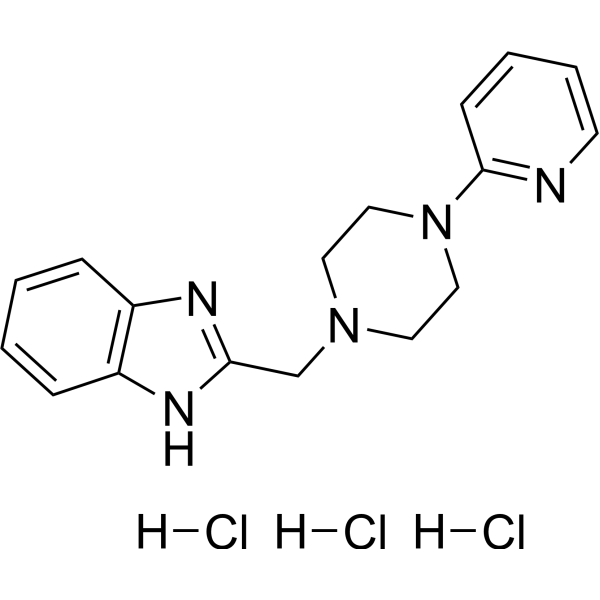
ABT-724 trihydrochloride is a potent and highly selective dopamine D4 receptor agonist with an EC50 of 12.4 nM for human dopamine D4 receptor. ABT-724 trihydrochloride is a potent partial agonist at the rat D4 (EC50 of 14.3 nM) and the ferret D4 receptor (EC50 of 23.2 nM), and has no effect on dopamine D1, D2, D3, or D5 receptors. ABT-724 trihydrochloride could be useful for the treatment of erectile dysfunction and has favorable side-effect profile .
|
-
-
- HY-103412
-
|
|
Dopamine Receptor
Sigma Receptor
|
Neurological Disease
|
|
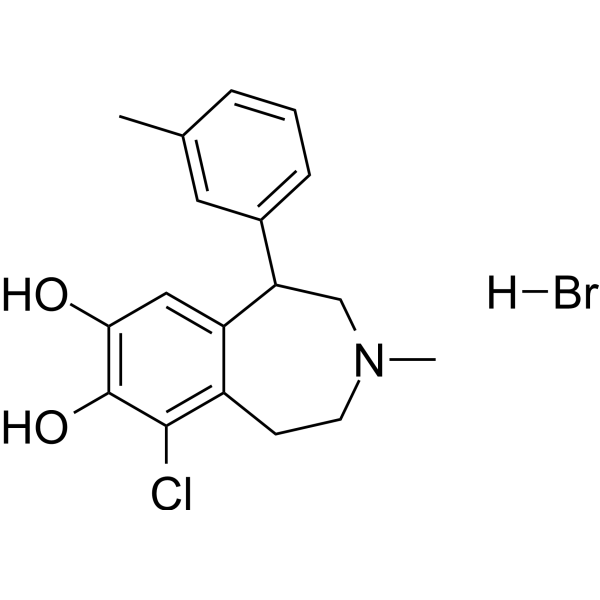
SKF83959 hydrobromide is a potent and selective dopamine D1-like receptor partial agonist. SKF83959 hydrobromide Ki values for rat D1, D5, D2 and D3 receptors are 1.18, 7.56, 920 and 399 nM, respectively. SKF83959 hydrobromide is a potent allosteric modulator of sigma (σ)-1 receptor. SKF83959 hydrobromide belongs to benzazepine family and has improvements on cognitive dysfunction. SKF83959 hydrobromide can be used for the research of Alzheimer's disease and depression .
|
-
-
- HY-P10405A
-
|
|
Dopamine Receptor
|
Neurological Disease
|
|
TAT-D1 peptide acetate is a dopamine D1-D2 receptor heterodimer inhibitor. TAT-D1 peptide acetate disrupts the function of dopamine D1-D2 receptor heteromers, enhances subchronic amphetamine-induced locomotor activity, and exacerbates the expression of amphetamine-induced locomotor sensitization. TAT-D1 peptide acetate produces rapid anxiolytic and antidepressant-like effects in rat models of depression and anxiety, and inhibits c-fos expression in the nucleus accumbens of rats. TAT-D1 peptide acetate can be used in the research of psychostimulant addiction, depression and anxiety disorders .
|
-
-
- HY-13706
-
|
TM30089 Racemate
|
Prostaglandin Receptor
|
Endocrinology
Cancer
|
|
CAY10471 Racemate (TM30089 Racemate) is a potent and highly selective prostaglandin D2 receptor CRTH2 antagonist, with a Ki of 0.6 nM for hCRTH2, selective over human thromboxane A2 receptor TP (Ki, >10000 nM) or PGD2 receptor DP (Ki, 1200 nM). CAY10471 Racemate also has effect on mouse and rat orthologs of CRTH2 .
|
-
-
- HY-14330
-
|
|
Dopamine Receptor
|
Neurological Disease
|
|
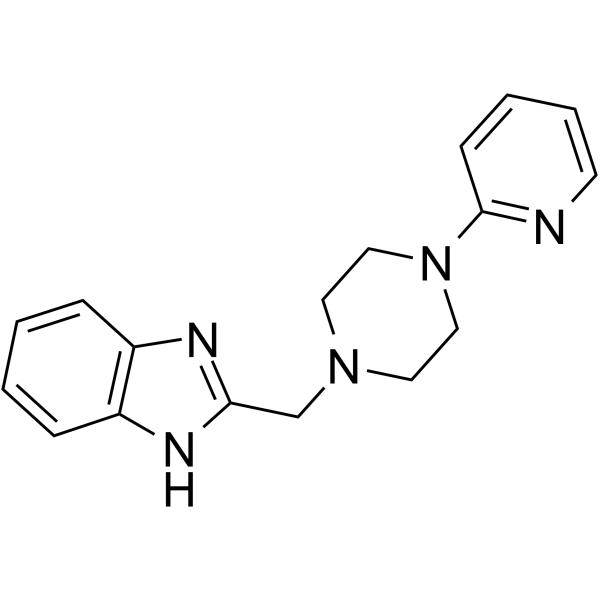
ABT-724, a chemical probe, is a potent and highly selective dopamine D4 receptor agonist with an EC50 of 12.4 nM for human dopamine D4 receptor. ABT-724 is a potent partial agonist at the rat D4 (EC50 of 14.3 nM) and the ferret D4 receptor (EC50 of 23.2 nM). ABT-724 has no effect on dopamine D1, D2, D3, or D5 receptors. ABT-724 could be useful for the treatment of erectile dysfunction and has favorable side-effect profile .
|
-
-
- HY-P10405
-
|
|
Dopamine Receptor
|
Neurological Disease
|
|
TAT-D1 peptide is a dopamine D1-D2 receptor heterodimer inhibitor. TAT-D1 peptide disrupts the function of dopamine D1-D2 receptor heteromers, enhances subchronic amphetamine-induced locomotor activity, and exacerbates the expression of amphetamine-induced locomotor sensitization. TAT-D1 peptide produces rapid anxiolytic and antidepressant-like effects in rat models of depression and anxiety, and inhibits c-fos expression in the nucleus accumbens of rats. TAT-D1 peptide can be used in the research of psychostimulant addiction, depression and anxiety disorders .
|
-
-
- HY-10435
-
|
(±)-SKF-82958; Chloro-APB
|
Dopamine Receptor
|
Neurological Disease
|
|
SKF-82958 ((±)-SKF 82958) is a dopamine D1 receptor full agonist (K0.5=4 nM), displays selective for D1 over D2 receptors (K0.5=73 nM). SKF-82958 induces dopamine D1 receptor-dependent adenylate cyclase activity in rat striatal membranes (EC50=491 nM) .
|
-
-
- HY-14542C
-
|
CP-88059 mesylate
|
5-HT Receptor
Dopamine Receptor
|
Neurological Disease
|
|
Ziprasidone (CP-88059) mesylate is an orally active combined 5-HT and dopamine receptor antagonist . Ziprasidone mesylate has affinities for Rat D2 (Ki=4.8 nM), 5-HT2A (Ki=0.42 nM) and 5-HT1A (Ki=3.4 nM) .
|
-
-
- HY-14542B
-
|
CP-88059 mesylate trihydrate
|
5-HT Receptor
Dopamine Receptor
|
Neurological Disease
|
|
Ziprasidone (CP-88059) mesylate trihydrate is an orally active combined 5-HT and dopamine receptor antagonist . Ziprasidone mesylate trihydrate has affinities for Rat D2 (Ki=4.8 nM), 5-HT2A (Ki=0.42 nM) and 5-HT1A (Ki=3.4 nM) .
|
-
-
- HY-114618
-
|
|
Dopamine Receptor
|
Neurological Disease
|
|
S33084 is a dopamine D(3)-receptor antagonist with the pKi values of 8.72, 8.62 and 6.82 of cloned rat dopamine D3 receptor, native rat dopamine D3 and D2 receptor .
|
-
-
- HY-100820B
-
|
EMD 128130 dihydrochloride
|
5-HT Receptor
Dopamine Receptor
|
Neurological Disease
|
|
Sarizotan dihydrochloride (EMD 128130) is an orally active serotonin 5-HT1A receptor and dopamine receptor agonist. Sarizotan (EMD 128130) exhibits IC50 values of 6.5 nM (rat 5-HT1A), 0.1 nM (human 5-HT1A), 15.1 nM (rat D2), 17 nM (human D2), 6.8 nM (human D3) and 2.4 nM (human D4.2), respectively .
|
-
-
- HY-100820A
-
|
EMD 128130 hydrochloride
|
5-HT Receptor
Dopamine Receptor
|
Neurological Disease
|
|
Sarizotan hydrochloride is an orally active serotonin 5-HT1A receptor and dopamine receptor agonist. Sarizotan hydrochloride (EMD 128130) exhibits IC50 values of 6.5 nM (rat 5-HT1A), 0.1 nM (human 5-HT1A), 15.1 nM (rat D2), 17 nM (human D2), 6.8 nM (human D3) and 2.4 nM (human D4.2), respectively .
|
-
-
- HY-101641
-
-
-
- HY-111066
-
|
|
Dopamine Receptor
|
Others
|
|
JNJ-37822681 is a fast dissociating D2 antagonist with activity in inhibiting schizophrenia. JNJ-37822681 has high specificity for D2 receptors and is effective in animal models, inducing increased levels of extracellular serotonin, dopamine, and norepinephrine in the rat cerebral cortex, and exhibiting antidepressant activity in the mouse tail suspension test, while having a good brain distribution and lower prolactin release.
|
-
-
- HY-100820R
-
|
EMD 128130 (Standard)
|
Reference Standards
5-HT Receptor
Dopamine Receptor
|
Neurological Disease
|
|
Sarizotan (Standard) is the analytical standard of Sarizotan. This product is intended for research and analytical applications. Sarizotan (EMD 128130) is an orally active serotonin 5-HT1A receptor and dopamine receptor agonist. Sarizotan (EMD 128130) exhibits IC50 values of 6.5 nM (rat 5-HT1A), 0.1 nM (human 5-HT1A), 15.1 nM (rat D2), 17 nM (human D2), 6.8 nM (human D3) and 2.4 nM (human D4.2), respectively .
|
-
-
- HY-100539
-
|
|
Dopamine Receptor
|
Others
|
|
PD 128907 is a D3 receptor ligand with activities of activating dopamine receptors, inhibiting cell firing, and inhibiting dopamine release. The active (+) enantiomer of PD 128907 has high affinity and selectivity for rat D3 dopamine receptors. PD 128907 inhibits cell firing in the ventral tegmental area and substantia nigra pars compacta with EC50 values of 33nM and 38nM, respectively. PD 128907 also inhibits dopamine release in the caudate putamen with an EC50 of 66nM. However, the selective D2 receptor antagonist L-741,626 has high affinity for receptors activated by PD 128907, indicating that the effects of PD 128907 are more likely on D2 autoreceptors rather than D3 dopamine receptor subtypes.
|
-
-
- HY-114578
-
|
|
Dopamine Receptor
5-HT Receptor
|
Neurological Disease
|
|
PD 118717 is a selective dopamine (DA) D-2 autoreceptor agonist. PD 118717 has significant affinity for 5-HT1A but not 5-HT1B and 5-HT2 receptors. PD 118717 is active in antagonizing the tau-Butyrolactone-induced accumulation of dopa in rat striatum and mesolimbic regions. PD 118717 exhibits an antipsychotic-like profile .
|
-
-
- HY-171328
-
|
|
Dopamine Receptor
|
Neurological Disease
|
|
RG-15 is the orally active antagonist for dopamine receptor that exhibits goof affinity to human D2 receptor and human D3 receptor with pKi of 8.23 and 10.49. RG-15 inhibits dopamine-stimulated [ 35S]GTPγS binding with IC50 of 21.2 nM (rat striatal membranes), 36.7 nM (mouse A9 cells expressing human D2L receptors) and 7.2 nM (CHO cells expressing human D3 receptors). RG-15 increases the turnover and biosynthesis of dopamine in mouse striatum and olfactory bulb, exhibiting antipsychotic activity .
|
-
-
- HY-10435AR
-
|
(±)-SKF-82958 hydrobromide (Standard); Chloro-APB hydrobromide (Standard)
|
Reference Standards
Dopamine Receptor
|
Neurological Disease
|
|
SKF-82958 (hydrobromide) (Standard) is the analytical standard of SKF-82958 (hydrobromide). This product is intended for research and analytical applications. SKF-82958 ((±)-SKF 82958) hydrobromide is a dopamine D1 receptor full agonist (K0.5=4 nM), displays selective for D1 over D2 receptors (K0.5=73 nM). SKF-82958 hydrobromide induces dopamine D1 receptor-dependent adenylate cyclase activity in rat striatal membranes (EC50=491 nM) .
|
-
-
- HY-17407R
-
|
CP 88059 hydrochloride monohydrate (Standard)
|
Reference Standards
5-HT Receptor
Dopamine Receptor
|
Neurological Disease
|
|
Ziprasidone (hydrochloride monohydrate) (Standard) is the analytical standard of Ziprasidone (hydrochloride monohydrate). This product is intended for research and analytical applications. Ziprasidone (CP-88059) hydrochloride monohydrate is an orally active combined 5-HT and dopamine receptor antagonist . Ziprasidone hydrochloride monohydrate has affinities for Rat D2 (Ki=4.8 nM), 5-HT2A (Ki=0.42 nM) and 5-HT1A (Ki=3.4 nM) .
|
-
-
- HY-107969R
-
|
|
Dopamine Receptor
Reference Standards
COX
NO Synthase
|
Neurological Disease
|
|
Haloperidol decanoate (Standard) is the analytical standard of Haloperidol decanoate. This product is intended for research and analytical applications. Haloperidol decanoate is a depot preparation of haloperidol, a commonly used butyrophenone derivative with antipsychotic activity. Haloperidol decanoate can increase the striatal D2 receptor in rat. Haloperidol decanoate can improve conditions of psychoses (mainly schizophrenia). Haloperidol decanoate can lead to increased accumulation of the dopamine metabolites homo-vanillic acid. Haloperidol decanoate can reduce intestinal transport, increase gastric emptying and reduce acid output in rat model .
|
-
-
- HY-14542R
-
|
CP-88059 (Standard)
|
5-HT Receptor
Dopamine Receptor
Reference Standards
|
Neurological Disease
|
|
Ziprasidone (Standard) is the analytical standard of Ziprasidone. This product is intended for research and analytical applications. Ziprasidone (CP-88059), an orally active antipsychotic agent, is a combined 5-HT and dopamine receptor antagonist . Ziprasidone mesylate trihydrate has affinities for Rat D2 (Ki=4.8 nM), 5-HT2A (Ki=0.42 nM) and 5-HT1A (Ki=3.4 nM) .
|
-
-
- HY-100057
-
|
6-Hydroxybuspirone; 6'-Hydroxybuspirone; BMS 528215
|
5-HT Receptor
Drug Metabolite
Dopamine Receptor
|
Neurological Disease
|
|
BMY 28674 (6-Hydroxybuspirone) is the active metabolite of the anxiolytic buspirone (HY-B1115A) and is metabolized by CYP3A4.4. BMY 28674 binds to the serotonin (5-HT) receptor subtype 5-HT1A in the rat hippocampus and dorsal raphe (EC50s are 4 and 1 μM, respectively) and is an antagonist of dopamine D2, D3, and D4 receptors (IC50s are 3.1, 4.9, and 0.85 μM, respectively). BMY 28674 also inhibits organic cation transporter 1 (OCT1), OCT2, and OCT3 expressing human transporters in S2 proximal tubule cells in a concentration-dependent manner.
|
-
-
- HY-123189
-
|
|
Dopamine Receptor
|
Neurological Disease
|
|
LY 171859 is a D2 receptor agonist with significant reductase activity. LY 171859 exhibits enzymatic activity in the cytoplasm of liver, lung, and kidney, and also contains significant reductase activity in rat and human blood. LY 171859 has higher hepatic reductase activity in guinea pigs, followed by hamsters, rabbits, rats, and mice. The substrate of LY 171859 shows an apparent Km of 5.6 μM. The reduction reaction of LY 171859 is NADPH-dependent with an apparent Km of 14.8 μM. Only the A-side hydrogen of NADPH is incorporated in the reduction product of LY 171859. The reaction of LY 171859 is inhibited by cyanide and thiol reagents, and phenobarbital does not induce its activity in rats .
|
-
-
- HY-N15735
-
|
2-Caffeoylpiscidic acid
|
Calcium Channel
|
Cardiovascular Disease
|
|
Cimicifugic acid D (2-Caffeoylpiscidic acid) is a benzyltartaric acid ester that induces vasodilation of precontracted rat aortic strips and endothelium-independent relaxation mechanism. Cimicifugic acid D inhibits extracellular Ca 2+ influx through receptor-operated Ca 2+ channels (ROC) in Norepinephrine (HY-13715)-induced contraction of rat aortic strips, without affecting voltage-dependent Ca 2+ channels (VDC) or K +-induced contractions .
|
-
-
- HY-131531A
-
|
5-Hydroxy-DPAT
|
Dopamine Receptor
|
Endocrinology
|
|
5-OH-DPAT (5-Hydroxy-DPAT) is a potent and selective dopamine D2-receptor agonist lacking effects at 5-HT receptors. 5-OH-DPAT produces a moderate facilitation of the male rat sexual behavior .
|
-
-
- HY-13213A
-
-
-
- HY-103409R
-
|
|
Reference Standards
Dopamine Receptor
|
Neurological Disease
|
|
ABT-724 trihydrochloride (Standard) is the analytical standard of ABT-724 trihydrochloride (HY-103409). This product is intended for research and analytical applications. ABT-724 trihydrochloride is a potent and highly selective dopamine D4 receptor agonist with an EC50 of 12.4 nM for human dopamine D4 receptor. ABT-724 trihydrochloride is a potent partial agonist at the rat D4 (EC50 of 14.3 nM) and the ferret D4 receptor (EC50 of 23.2 nM), and has no effect on dopamine D1, D2, D3, or D5 receptors. ABT-724 trihydrochloride could be useful for the treatment of erectile dysfunction and has favorable side-effect profile .
|
-
-
- HY-100658S
-
|
|
Isotope-Labeled Compounds
5-HT Receptor
Dopamine Receptor
|
Neurological Disease
|
|
Didesmethyl cariprazine-d8 is the deuterium labeled Didesmethyl cariprazine (HY-100658). Didesmethyl cariprazine is an orally active, BBB-permeable metabolite of Cariprazine (HY-14763). Didesmethyl cariprazine is a partial agonist at the D2 and D3 receptors, full agonist at the 5-HT1A receptor, and antagonist at the human 5-HT2B receptor (Ki: 1.41 nM (human D2L), 0.056 nM (human D3), 1.7 nM (human 5-HT1A), 0.52 nM (human 5-HT2B)). Didesmethyl cariprazine dose-dependently inhibits the spontaneous activity of rat midbrain dopaminergic neurons.
|
-
-
- HY-100658R
-
|
|
5-HT Receptor
Reference Standards
Dopamine Receptor
|
Neurological Disease
|
|
Didesmethyl cariprazine (Standard) is the analytical standard of Didesmethyl cariprazine (HY-100658). This product is intended for research and analytical applications. Didesmethyl cariprazine is an orally active, BBB-permeable metabolite of Cariprazine (HY-14763). Didesmethyl cariprazine is a partial agonist at the D2 and D3 receptors, full agonist at the 5-HT1A receptor, and antagonist at the human 5-HT2B receptor (Ki: 1.41 nM (human D2L), 0.056 nM (human D3), 1.7 nM (human 5-HT1A), 0.52 nM (human 5-HT2B)). Didesmethyl cariprazine dose-dependently inhibits the spontaneous activity of rat midbrain dopaminergic neurons .
|
-
-
- HY-182381
-
|
|
Dopamine Receptor
|
Neurological Disease
|
|
FLA-797 is a brain-penetrant dopamine D2 receptor blocker and very low affinity for dopamine D1 receptors. FLA-797 selectively binds to and blocks postsynaptic dopamine D2 receptors. FLA-797 induces catalepsy in male rats. FLA-797 blocks dopamine agonist-induced hypothermia in male rats. FLA-797 contributes marginally to the dopamine D2 receptor-blocking activity of Remoxipride (HY-101313) in male rats. FLA-797 does not mimic the atypical antipsychotic profile of Remoxipride. FLA-797 can be used for research on mental disorders .
|
-
-
- HY-121675A
-
|
BOL-148 D-Tartrate; Bromolysergide D-Tartrate
|
5-HT Receptor
G protein-coupled Bile Acid Receptor 1
|
Neurological Disease
|
|
2-Bromo-LSD D-Tartrate (BOL-148 D-Tartrate) is a blood-brain barrier-permeable 5-HT2A partial agonist and competitive partial antagonist. 2-Bromo-LSD D-Tartrate acts as both a potent partial agonist (with an EC50 of 0.81 nM for Gq dissociation) and a potent partial antagonist (with a KB of 0.18 nM for Gq dissociation) at the 5-HT2A receptor. 2-Bromo-LSD D-Tartrate exhibits partial agonist activity at multiple aminergic GPCRs, including 5-HT2A. 2-Bromo-LSD D-Tartrate lacks 5-HT2B agonist activity. 2-Bromo-LSD D-Tartrate induces dendritogenesis and spinogenesis. 2-Bromo-LSD D-Tartrate reverses the behavioral effects of chronic stress and increases active coping behaviors in mice .
|
-
-
- HY-183776
-
|
|
Dopamine Receptor
|
Others
|
|
Dopamine D3 receptor agonist-2 is a selective dopamine D3 receptor partial agonist with a Ki of 0.268 nM. Dopamine D3 receptor agonist-2 exhibits 29-fold selectivity over dopamine D2 receptor (Ki= 7.67nM) .
|
-
| Cat. No. |
Product Name |
Target |
Research Area |
-
- HY-P0079
-
|
Neuromedin N (rat, mouse, porcine, canine)
|
Dopamine Receptor
|
Neurological Disease
|
|
Neuromedin N is a potent modulator of dopamine D2 receptor agonist binding in rat neostriatal membranes.
|
-
- HY-P10405A
-
|
|
Dopamine Receptor
|
Neurological Disease
|
|
TAT-D1 peptide acetate is a dopamine D1-D2 receptor heterodimer inhibitor. TAT-D1 peptide acetate disrupts the function of dopamine D1-D2 receptor heteromers, enhances subchronic amphetamine-induced locomotor activity, and exacerbates the expression of amphetamine-induced locomotor sensitization. TAT-D1 peptide acetate produces rapid anxiolytic and antidepressant-like effects in rat models of depression and anxiety, and inhibits c-fos expression in the nucleus accumbens of rats. TAT-D1 peptide acetate can be used in the research of psychostimulant addiction, depression and anxiety disorders .
|
-
- HY-P10405
-
|
|
Dopamine Receptor
|
Neurological Disease
|
|
TAT-D1 peptide is a dopamine D1-D2 receptor heterodimer inhibitor. TAT-D1 peptide disrupts the function of dopamine D1-D2 receptor heteromers, enhances subchronic amphetamine-induced locomotor activity, and exacerbates the expression of amphetamine-induced locomotor sensitization. TAT-D1 peptide produces rapid anxiolytic and antidepressant-like effects in rat models of depression and anxiety, and inhibits c-fos expression in the nucleus accumbens of rats. TAT-D1 peptide can be used in the research of psychostimulant addiction, depression and anxiety disorders .
|
| Cat. No. |
Product Name |
Category |
Target |
Chemical Structure |
-
- HY-N15735
-
|
2-Caffeoylpiscidic acid
|
Ranunculaceae
Phenols
Polyphenols
Plants
Cimicifuga racemosa (L.) Nutt.
Source Classification
|
Calcium Channel
|
|
Cimicifugic acid D (2-Caffeoylpiscidic acid) is a benzyltartaric acid ester that induces vasodilation of precontracted rat aortic strips and endothelium-independent relaxation mechanism. Cimicifugic acid D inhibits extracellular Ca 2+ influx through receptor-operated Ca 2+ channels (ROC) in Norepinephrine (HY-13715)-induced contraction of rat aortic strips, without affecting voltage-dependent Ca 2+ channels (VDC) or K +-induced contractions .
|
-
| Cat. No. |
Product Name |
Chemical Structure |
-
- HY-100658S
-
|
|
|
Didesmethyl cariprazine-d8 is the deuterium labeled Didesmethyl cariprazine (HY-100658). Didesmethyl cariprazine is an orally active, BBB-permeable metabolite of Cariprazine (HY-14763). Didesmethyl cariprazine is a partial agonist at the D2 and D3 receptors, full agonist at the 5-HT1A receptor, and antagonist at the human 5-HT2B receptor (Ki: 1.41 nM (human D2L), 0.056 nM (human D3), 1.7 nM (human 5-HT1A), 0.52 nM (human 5-HT2B)). Didesmethyl cariprazine dose-dependently inhibits the spontaneous activity of rat midbrain dopaminergic neurons.
|
-
Your information is safe with us. * Required Fields.
Inquiry Information
- Product Name:
- Cat. No.:
- Quantity:
- MCE Japan Authorized Agent:

